


You have heard the horror stories about data breaches, leaked personal chats, and payment fraud on digital platforms. When it comes to a white-label AstroTalk app, the concern becomes even more serious because users share extremely sensitive data — birth details, personal problems, financial transactions, and private conversations with astrologers.
In 2025, app safety is no longer a “technical feature” — it is a business survival requirement. With stricter data protection laws, rising cybercrime, and growing consumer awareness, even a single security flaw can destroy brand trust overnight.
This guide gives you an honest, practical assessment of white-label AstroTalk app security — what the real risks are, what safety standards your platform must meet, and how you can launch with confidence using enterprise-grade protection.
Understanding White-Label AstroTalk App Security Landscape
What “White-Label Security” Actually Means
In a white-label AstroTalk app, security responsibility is shared between the technology provider and the business owner. The core infrastructure, codebase, APIs, and cloud architecture are built by the provider, while data handling practices, user access control, and compliance enforcement remain the responsibility of the app owner. True security means protection across all three layers: application, server, and data.
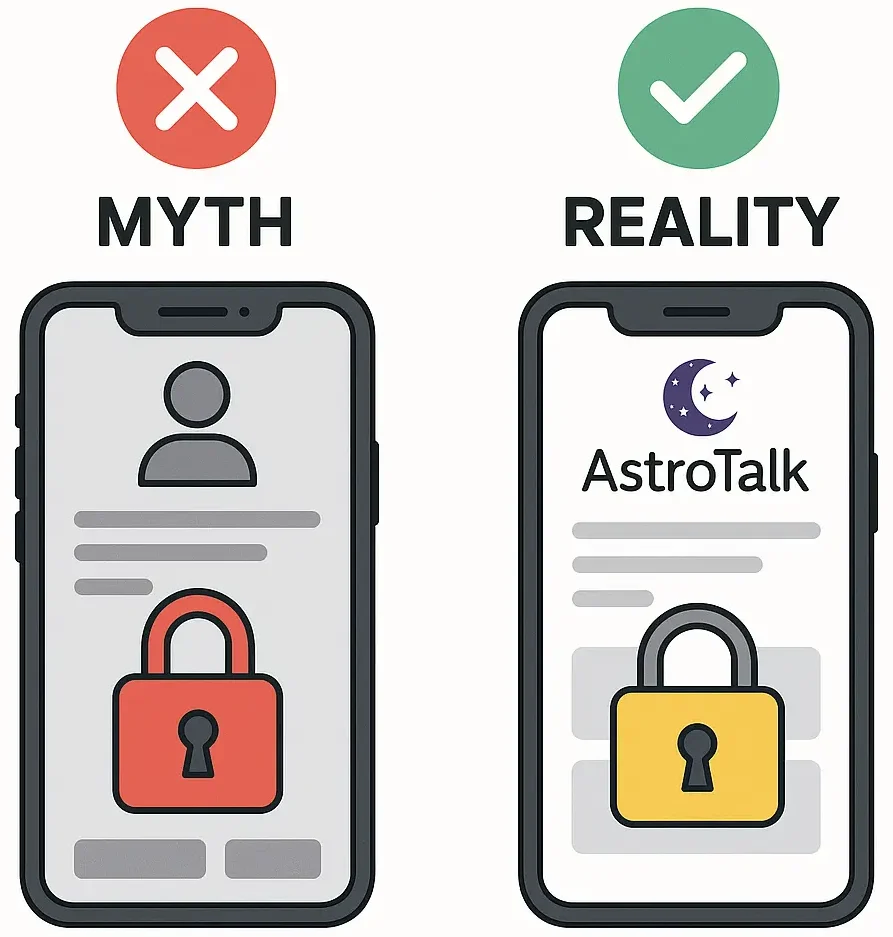
Why People Worry About White-Label AstroTalk Apps
Astrology platforms handle:
- Personally identifiable information (name, DOB, location)
- Payment card and UPI data
- Private chat and call histories
- Horoscope and life consultation records
Current Threat Landscape for AstroTalk-Type Platforms (2025)
In 2025, astrology and consultation apps are targeted by:
- API abuse and data scraping
- Payment gateway fraud
- Session hijacking and account takeover
- Insider threats from poorly vetted astrologers
- Malware injection via third-party SDKs
According to recent cybersecurity industry reports, service-based apps that process payments and chats fall among the top 5 most targeted mobile application categories for data breaches globally.
Security Standards in 2025
Modern white-label AstroTalk apps must now align with:
- Zero-Trust cloud architecture
- Privacy-by-design frameworks
- Mandatory breach reporting timelines
- Enforced encryption at rest and in transit
- Continuous vulnerability scanning
Security is no longer optional or “after launch.” It is enforced at the infrastructure level.
Real-World Statistics on App Security Incidents
- Over 62% of mobile app data breaches in 2024 involved misconfigured cloud storage.
- More than 70% of breached applications lacked proper API security hardening.
- Payment-enabled apps accounted for nearly 58% of financial cybercrime incidents reported globally.
- Platforms without 2-factor authentication were 4× more likely to suffer account takeover attacks.
These numbers clearly show that safety failures usually come from weak implementation, not from the white-label model itself.
Key Security Risks & How to Identify Them
Data Protection & Privacy Risks
A white-label AstroTalk app handles deeply sensitive personal and financial information, making data protection the most critical risk area.
- User Personal Information: Names, dates of birth, phone numbers, locations, and profile data must be encrypted and access-controlled. Any exposure here leads to identity theft and legal action.
- Payment Data Security: Card details, UPI IDs, wallet balances, and transaction logs must follow strict PCI DSS rules. Even a minor payment vulnerability can trigger financial fraud.
- Location Tracking Concerns: Real-time location access for regional matching, if poorly configured, can expose users to stalking and physical risk.
- GDPR/CCPA Compliance: Failure to provide consent management, data deletion rights, and data access controls can result in heavy regulatory fines and forced platform shutdowns.
Technical Vulnerabilities
These weaknesses often originate during poor development or rushed deployment.
- Code Quality Issues: Insecure coding practices lead to SQL injection, cross-site scripting, and authentication bypass vulnerabilities.
- Server Security Gaps: Open ports, weak firewall rules, and improper access control can allow attackers to penetrate the system backend.
- API Vulnerabilities: Astrology apps rely heavily on APIs for payments, chat, calls, matchmaking, and recommendations. Insecure APIs are the number one cause of modern app breaches.
- Third-Party Integrations: Payment gateways, chat SDKs, analytics tools, and notification services all introduce external risk vectors if not vetted and monitored.
Business Risks
Security failures directly affect business survival, not just technology.
- Legal Liability: Breaches can trigger lawsuits, government investigations, and compliance audits.
- Reputation Damage: Trust once lost in a consultation-based app is extremely difficult to regain.
- Financial Losses: Direct fraud losses, legal costs, compensation to users, and revenue drops can cripple a young business.
- Regulatory Penalties: Data protection authorities impose strict penalties for mishandling personal information, especially in India, the EU, and the US.
White-Label AstroTalk App Risk Assessment Checklist
Use this to quickly evaluate your current risk posture:
- Is all user data encrypted at rest and in transit?
- Are admin panels protected with multi-factor authentication?
- Is there a formal data retention and deletion policy?
- Are APIs protected with authentication tokens and rate limiting?
- Are third-party plugins security audited?
- Is there a live monitoring system for suspicious activity?
- Does your provider conduct regular penetration testing?
- Is a documented incident response plan in place?
If even 2–3 of these checks fail, your platform is operating in a high-risk zone.
Read more : – Best AstroTalk Clone Scripts in 2025: Features & Pricing Compared
Security Standards Your White-Label AstroTalk App Must Meet
Essential Certifications
To operate safely and legally in 2025, a white-label AstroTalk app must comply with globally recognized security and privacy certifications. These are not “optional trust badges” — they are core business requirements.
- ISO 27001 Compliance: Ensures a formal Information Security Management System (ISMS) is implemented to manage data risks systematically.
- SOC 2 Type II: Verifies that the service provider maintains long-term controls over data security, confidentiality, and system availability.
- GDPR Compliance: Mandatory for handling data of users from the European Union, enforcing consent, data access rights, and breach reporting within 72 hours.
- HIPAA (If Health Data Is Used): Required when apps expand into wellness, counseling, or mental health–linked astrology services.
- PCI DSS for Payments: Mandatory for any platform that processes cards, wallets, or UPI payments to prevent financial fraud.
Without these certifications, scaling globally becomes legally risky and operationally fragile.
Technical Security Requirements
Beyond certifications, your white-label AstroTalk app must be built on strong technical security foundations:
- End-to-End Encryption: All chats, calls, transactions, and personal data must be encrypted end-to-end using AES-256 and TLS 1.3 standards.
- Secure Authentication (2FA/OAuth): Multi-factor authentication and OAuth-based logins prevent unauthorized account access.
- Regular Security Audits: Internal and third-party audits must be conducted quarterly to identify new vulnerabilities.
- Penetration Testing: Ethical hacking simulations must be performed before launch and after major updates.
- SSL Certificates: All data transfers must be protected with SSL/TLS certificates across web and mobile clients.
- Secure API Design: APIs must use token-based authentication, IP whitelisting, and rate limiting to block abuse.
These controls work together to create multiple defensive layers — ensuring that even if one layer fails, the system remains protected.
Security Standards Comparison Table (2025)
| Security Area | Minimum Requirement | Enterprise-Grade Requirement |
|---|---|---|
| Data Encryption | TLS + Basic Encryption | TLS 1.3 + AES-256 End-to-End |
| Authentication | Password-Based Login | 2FA + OAuth + Device Verification |
| Payments | Gateway-Level PCI | Full PCI DSS + Tokenized Payments |
| Cloud Security | Basic Firewall | Zero-Trust Architecture + WAF |
| Compliance | Privacy Policy Only | GDPR + SOC 2 + ISO 27001 |
| Audits | Annual Audit | Quarterly Security Audits |
| API Protection | API Keys | OAuth Tokens + Rate Limiting + IP Control |
| Monitoring | Manual Logs | 24/7 Automated Security Monitoring |
This table highlights the gap between “minimum compliance” and true enterprise-grade protection. A serious white-label AstroTalk app must operate at the enterprise level to survive in 2025’s threat environment.
Red Flags: How to Spot Unsafe White-Label Providers
Warning Signs of an Unsafe White-Label Provider
Choosing the wrong technology partner is the fastest way to introduce security risks into your white-label AstroTalk app. The following red flags indicate a high probability of future breaches and compliance failures:

Any one of these warning signs should trigger deeper investigation. Multiple red flags should immediately disqualify the provider.
Evaluation Checklist Before Finalizing a Provider
Use this checklist as part of your due diligence process before selecting a white-label AstroTalk app partner:
- Questions to Ask Providers
- How is user data encrypted at rest and in transit?
- Do you follow ISO 27001 or SOC 2 controls?
- How often are security audits conducted?
- What is your breach response time and protocol?
- How are third-party integrations vetted?
- Do you provide role-based access control for admin systems?
- Documents to Request
- Latest security audit or penetration test report
- Compliance certificates (PCI DSS, ISO, GDPR readiness)
- Data processing agreement (DPA)
- Disaster recovery and business continuity plan
- Testing Procedures
- Pre-launch vulnerability scanning
- Load testing for API endpoints
- Payment gateway security verification
- Role-based access testing for admins and astrologers
- Due Diligence Steps
- Verify past client security record
- Check history of any publicly reported breaches
- Validate cloud infrastructure provider reputation
- Review update and patch management policy
If a provider hesitates to share this information, it is a strong indicator that security maturity is low.
Best Practices for Secure White-Label AstroTalk App Implementation
Pre-Launch Security Measures
Before your white-label AstroTalk app goes live, security must be engineered into every layer of the platform. Pre-launch is the only stage where vulnerabilities can be eliminated without damaging user trust.
- Security Audit Process: A full system audit must be completed before public release, covering mobile apps, web panels, APIs, and cloud servers.
- Code Review Requirements: Source code should be reviewed for insecure functions, hard-coded credentials, and third-party library risks.
- Infrastructure Hardening: Cloud servers must be configured with firewalls, intrusion detection systems, private networking, and access logs.
- Compliance Verification: GDPR, PCI DSS, and regional data protection laws must be validated through documented checks before accepting real user data.
- Staff Training Programs: Admins, support staff, and astrologers must be trained in data privacy, account security, and phishing prevention.
Skipping any of these steps increases the probability of a post-launch breach by several multiples.
Post-Launch Monitoring & Ongoing Protection
Security does not end after deployment. In fact, most breaches occur months after launch due to weak monitoring or delayed patching.
- Continuous Security Monitoring: Automated tools must track unusual login patterns, failed payment attempts, and API abuse in real time.
- Regular Updates and Patches: Operating systems, frameworks, and plugins must be updated on a fixed schedule to remove known vulnerabilities.
- Incident Response Planning: A defined response workflow should exist for detection, containment, notification, and system recovery during a breach.
- User Data Management: Strict policies must govern access to chat histories, call recordings, and personal information.
- Backup and Recovery Systems: Encrypted daily backups with off-site storage and rapid restoration mechanisms are essential for business continuity.
Security Implementation Timeline (Ideal Practice)
- Week 1: Infrastructure hardening, firewall setup, access control configuration
- Week 2: Code audit, vulnerability scanning, penetration testing
- Week 3: Compliance verification, payment security validation, disaster recovery setup
- Week 4: Staff security training, final audit, staged rollout with live monitoring activated
Following this structured timeline ensures that your white-label AstroTalk app enters the market with mature, production-grade security rather than experimental safeguards.
Legal & Compliance Considerations
Regulatory Requirements for White-Label AstroTalk Apps
Operating a white-label AstroTalk app in 2025 requires strict adherence to regional and industry-specific data protection laws. Non-compliance can result in heavy fines, forced service suspension, and permanent loss of market trust.
- Data Protection Laws by Region:
- India: Digital Personal Data Protection Act (DPDP Act, 2023)
- European Union: GDPR
- United States: CCPA, CPRA
- Middle East & APAC: Local data residency and privacy laws
- Industry-Specific Regulations:
If your app extends into wellness, therapy, or mental health consultation, additional health data regulations may apply. - User Consent Management:
Explicit user consent must be collected for data processing, location access, recording of chats or calls, and marketing communication. - Privacy Policy Requirements:
Policies must clearly explain:- What data is collected
- How it is used
- How long it is stored
- How users can delete or export their data
- Terms of Service Essentials:
Must define platform responsibility limits, astrologer accountability, refund policies, dispute resolution, and jurisdiction of law.
Liability Protection for App Owners
Security is not only a technical issue but also a legal shield. Proper legal structuring protects the business if a breach or dispute occurs.
- Insurance Requirements:
Cyber liability insurance covering:- Data breach costs
- Legal defense
- User compensation
- Regulatory penalties
- Legal Disclaimers:
Clear disclaimers stating that astrology advice is for informational purposes only help reduce professional liability risk. - User Agreements:
Binding agreements must define:- User responsibilities
- Acceptable usage
- Data rights
- Termination conditions
- Incident Reporting Protocols:
Law mandates breach disclosure within defined timelines (72 hours under GDPR). Delayed reporting increases fines and legal exposure. - Regulatory Compliance Monitoring:
Continuous monitoring is required because regulations are frequently updated. What is compliant today may become non-compliant within a year.
Compliance Checklist by Region (High-Level)
- India: DPDP Act compliance, consent logs, breach notification system, secure data processing standards
- EU: GDPR consent control, data portability, right to be forgotten, DPA agreements
- USA: CCPA/CPRA user rights, opt-out management, data sale disclosures
- Global Operations: Cross-border data transfer safeguards, encryption enforcement, audit readiness
Failure in any one of these areas can interrupt your business operations without warning.
Why Miracuves White-Label AstroTalk App is Your Safest Choice
Miracuves Security Advantages
When it comes to building a secure white-label AstroTalk app, Miracuves follows a security-first engineering framework designed for consultation, payment, and communication-heavy platforms. Security is not treated as an add-on feature but as the core foundation of the system.
- Enterprise-Grade Security Architecture: Every AstroTalk app is built on hardened cloud infrastructure with multi-layer firewalls, intrusion detection systems, and zero-trust access control.
- Regular Security Audits and Certifications: Miracuves platforms undergo scheduled internal and third-party audits to continuously validate system integrity and vulnerability resilience.
- GDPR and Global Compliance by Default: Built-in data privacy architecture supports GDPR, DPDP Act (India), and CCPA readiness from day one.
- 24/7 Security Monitoring: Automated systems monitor server activity, authentication attempts, payment behavior, and API usage in real time.
- Encrypted Data Transmission: All data—chats, calls, horoscopes, and user profiles—are protected with enterprise-level encryption in transit and at rest.
- Secure Payment Processing: PCI DSS-aligned payment processing ensures card, UPI, and wallet transactions remain protected from financial fraud.
- Regular Security Updates: Security patches, dependency upgrades, and framework updates are deployed through a controlled update schedule.
- Insurance Coverage Included: Cyber risk and professional liability coverage protects both platform owners and end users in case of an adverse security event.
Unlike generic development vendors, Miracuves follows a standardized security governance model across all deployments, ensuring every AstroTalk app benefits from the same battle-tested protection framework.
Conclusion
Do not compromise on security. Miracuves white-label AstroTalk app solutions come with enterprise-grade security built in by design. With 600+ successful projects and zero major security breaches recorded, Miracuves is trusted by businesses worldwide for safe, compliant consultation platforms. Get a free security assessment and see how your AstroTalk app can launch with maximum protection and full regulatory confidence.
A white-label AstroTalk app can be just as secure as any enterprise platform—provided it is built with the right security architecture, compliance controls, and continuous monitoring. In 2025, safety is not a feature you add later; it is the foundation on which long-term user trust and business success are built.
FAQs
1. How secure is white-label vs custom development?
A professionally built white-label AstroTalk app is often more secure than custom builds because it benefits from repeated testing, audits, and production hardening.
2. What happens if there is a security breach?
Breach response includes system isolation, user notification, regulatory reporting, forensic analysis, and data recovery through secure backups.
3. Who is responsible for security updates?
The provider manages core system updates, while the app owner must ensure timely deployment and policy enforcement.
4. How is user data protected in white-label apps?
Through end-to-end encryption, role-based access control, secure cloud storage, and strict data handling policies.
5. What compliance certifications should I look for?
ISO 27001, SOC 2 Type II, GDPR, DPDP Act (India), and PCI DSS for payments.
6. Can white-label apps meet enterprise security standards?
Yes, when built on hardened cloud infrastructure with continuous audits and monitoring.
7. How often should security audits be conducted?
At least quarterly, with penetration testing after every major update.
8. What is included in the Miracuves security package?
Encrypted infrastructure, secure payments, 24/7 monitoring, compliance readiness, regular audits, and cyber risk coverage.
9. How do I handle security in different countries?
By implementing region-specific data protection laws, localized consent management, and controlled cross-border data transfers.
10. What insurance is needed for app security?
Cyber liability insurance, professional indemnity insurance, and data breach coverage.
Related Articles