


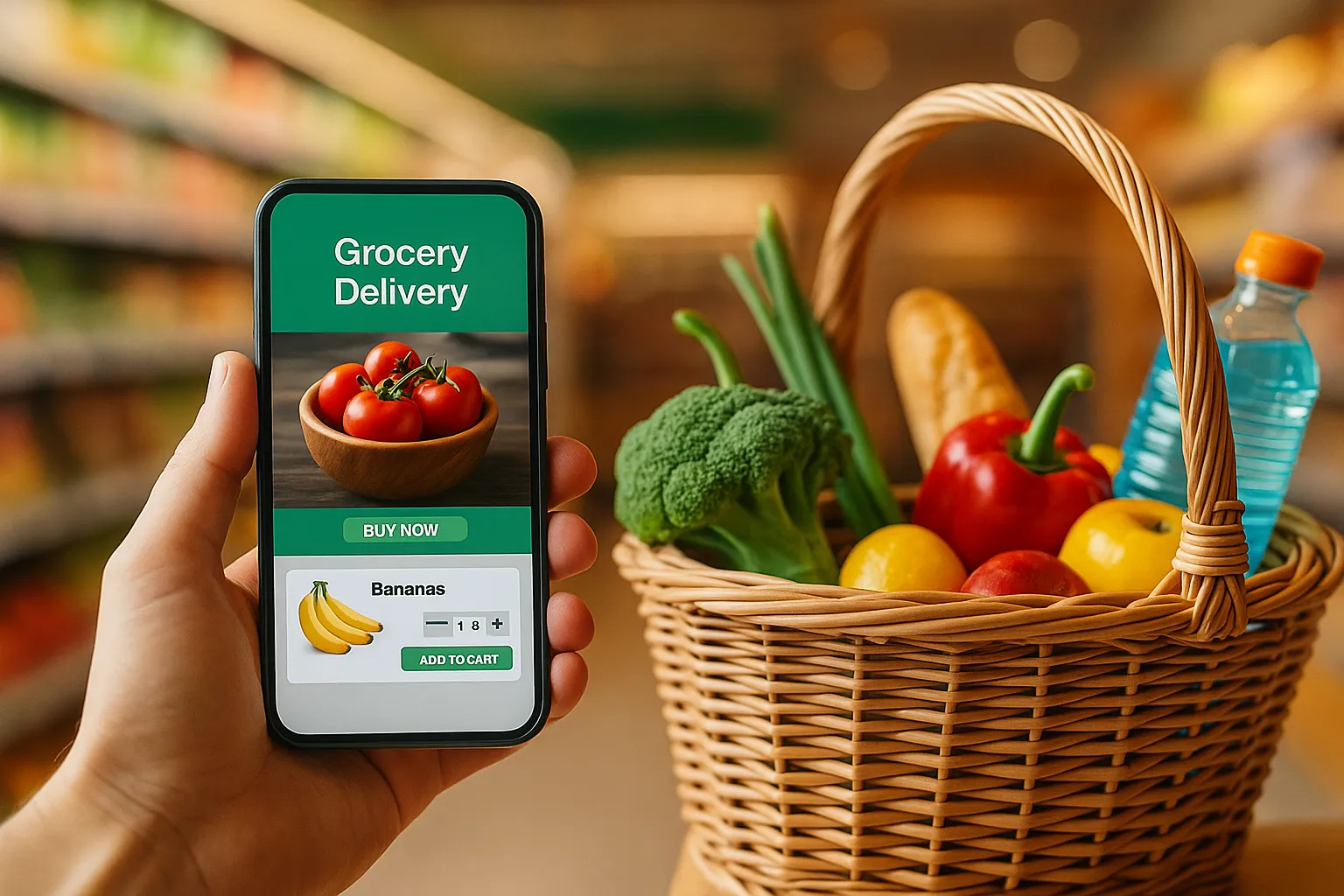
Remember when grocery shopping meant spending weekends navigating crowded aisles, standing in checkout lines, and juggling bags back to the car? That reality has shifted dramatically. In today’s fast-paced digital economy, customers want the entire grocery experience—from selecting fresh veggies to checking out weekly deals—delivered straight to their doorstep.
The rise of online grocery platforms has made that possible. And BigBasket, one of the pioneers in India, set the tone for convenience, scale, and reliability. As more consumers lean into digital grocery shopping, entrepreneurs are eyeing the market with a clear goal: build something fast, functional, and profitable.
That’s where BigBasket clone scripts come in. These pre-built, customizable platforms give you the power to launch your own online grocery business without reinventing the wheel. And in 2026, the available options are more robust than ever. Let’s explore the top features, pricing, and critical considerations before you choose a BigBasket clone script.
Why BigBasket Still Matters in 2026
BigBasket’s journey from a niche e-grocery startup to a household name offers crucial insights for aspiring grocery-tech founders. The platform mastered essential logistics like real-time inventory updates, hyperlocal delivery models, and customer trust. With urban and semi-urban consumers now relying on mobile apps for their essentials, grocery delivery is no longer a novelty—it’s a necessity.
This shift opens up a goldmine for regional entrepreneurs, local supermarket chains, and even new-age founders who want to address specific dietary or demographic niches. Whether it’s organic-only delivery, single-brand grocery stores, or regional language support, the BigBasket blueprint can be repurposed for countless applications.
What to Look For in a BigBasket Clone Script
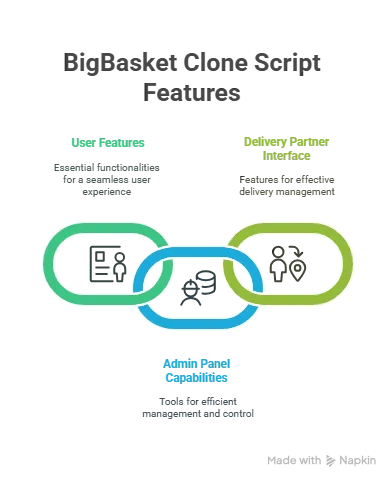
A good clone script doesn’t just mimic the UI. It must replicate the core engine of operations—inventory syncing, real-time logistics, and high-order throughput. Here are the features you should expect in any modern BigBasket clone script in 2026.
Essential User Features
- Intuitive product catalog with filters and categories
- Real-time availability of SKUs
- Scheduled and express delivery options
- Wallet system, loyalty points, and coupon integration
- Reorder option for past purchases
- Secure payment gateways (UPI, card, COD)
Admin Panel Capabilities
- Inventory management with supplier integration
- Dynamic pricing engine for flash sales
- Delivery slot control and fleet assignment
- Reporting dashboard for orders, revenue, and user behavior
- CRM and push notification system
- Tax, commission, and invoice automation
Delivery Partner Interface
- Geo-location tracking
- Delivery time windows and status updates
- Payment reconciliation and earnings tracking
- Delivery feedback and issue reporting
Standout Features in 2026 Clone Solutions
Several clone providers in 2026 have gone beyond standard grocery delivery logic. Here’s what sets the best options apart:
- AI-powered recommendation engine
- Voice search for product discovery
- Dark store compatibility for hyper-fast delivery
- Integration with smart fridges and IoT inventory sensors
- Multi-store aggregation for marketplace models
- Advanced order splitting and bundling logic for large orders
For example, some clone solutions allow your platform to act both as a seller and an aggregator—letting users order from multiple vendors in one go. Others focus on B2B modules, enabling restaurants or caterers to place bulk grocery orders.
Read More : Reasons startup choose our BigBasket clone over custom development
Cost Factors & Pricing Breakdown
BigBasket-Style Online Grocery Delivery Platform — Market Price
| Development Level | Inclusions | Estimated Market Price (USD) |
|---|---|---|
| 1. Basic BigBasket-Style MVP | Core grocery ordering website with customer registration & login, product catalog by categories (fruits, vegetables, dairy, staples, personal care, etc.), search & filters (brand, price, pack size), product detail pages, cart & checkout, simple delivery slot selection, basic order history, and a simple admin panel to manage categories, products, and orders. | $50,000 |
| 2. Full-Feature BigBasket-Like Platform | Everything in MVP plus multi-warehouse inventory handling, advanced filters and substitutions, wishlists, coupons & promo codes, wallet/credit, multiple payment methods (cards, net banking, UPI, wallets, COD), scheduled and express delivery slots, promo banners, push/SMS/email notifications, return/refund workflows, and detailed analytics for orders, customers, and product performance. | $120,000 |
| 3. Enterprise-Grade Grocery Commerce Ecosystem | Multi-city & multi-zone setup, separate picker/driver app or panel, route & batch optimization, complex pricing (MRP, discounts, memberships), subscription/recurring orders, loyalty & rewards programs, integrations with ERP/POS/warehouses, advanced promotions engine, marketing automation, enterprise reporting, and highly scalable cloud hosting with monitoring and security hardening. | $240,000+ |
These prices reflect the typical global custom development cost of building a BigBasket-style online grocery marketplace from scratch — including catalog engine, inventory logic, delivery workflows, payments, security, and scalable infrastructure.
Miracuves Pricing for a BigBasket-Like Platform
Miracuves Price: $2,899
In the Miracuves solutions pricing sheet, the BigBasket-style grocery delivery platform is a PHP-based ready-made on-demand grocery marketplace with a Listed Price (LP) of $2,899. It includes complete product catalog management, customer ordering flow, warehouse/delivery configuration, offers & coupons, and a powerful admin backend — delivered as a white-label BigBasket-style solution instead of a long, risky custom build.
Note: This package includes full non-encrypted source code, backend/API setup, web front-end, admin panel configuration, and deployment assistance — so you can host, customize, and scale your BigBasket-like grocery platform fully under your own brand. Launch your BigBasket-style grocery delivery marketplace with Miracuves and go live in just 3–9 days with a fully branded, revenue-ready platform.
Delivery Timeline for a BigBasket-Like Platform with Miracuves
Estimated deployment timeline: 3–9 days, depending on:
- Number of cities/zones, warehouses, and delivery coverage areas
- Catalog size and structure (categories, brands, pack sizes, variants)
- Required monetization options (discounts, coupons, membership plans, delivery fees)
- Design, UI customization, and branding (theme, layout, banners, product cards)
- Localization needs (languages, currencies, tax rules, slot timings by region)
- Payment gateway & communication integrations (UPI, cards, wallets, SMS, email, WhatsApp)
- Hosting environment, domain & SSL configuration, and performance optimization scope
Tech Stack
Built using PHP + MySQL with modular APIs — enabling secure customer onboarding, catalog & inventory management, grocery ordering workflows, warehouse and delivery coordination, and scalable performance for high-demand BigBasket-style online grocery delivery platforms.
Use Cases and Market Segments to Target
Launching a grocery delivery app isn’t just about going head-to-head with national players. There are dozens of niche opportunities where BigBasket clones can thrive.
- Local Supermarkets – Take your offline grocery brand online with real-time stock syncing
- Organic/Niche Brands – Focused SKUs for health-conscious consumers
- Tier-2 and Tier-3 Cities – Offer delivery where the big players haven’t reached
- Corporate or Campus Deliveries – Scheduled drop-offs for institutions
- Ethnic/Regional Specialties – Local spices, grains, or ingredients that big platforms ignore
Each of these use cases has its own delivery expectations, UI needs, and monetization strategies. A good clone script will give you the flexibility to cater to these markets.
Read More : Top BigBasket App Features Explained
Monetization Options You Should Build In
The grocery business is low-margin but high-volume. To make the most of your BigBasket clone, you’ll need to layer multiple monetization streams:
- Delivery fees based on urgency or location
- Vendor commissions for every order processed
- Subscription models for premium delivery or loyalty benefits
- Ad space within the app for brand placements
- Private label products for higher-margin sales
- Affiliate product links for kitchen appliances or recipe kits
Maximizing profitability comes down to increasing average order value and repeat purchase frequency—both achievable with the right tech foundation.
Read More : Bigbasket’s Marketing Strategy: How It Became a Grocery Giant
Conclusion
Grocery delivery is no longer a futuristic concept—it’s a utility. And as users demand smarter, faster, and more personalized services, the opportunity to build your own grocery delivery platform grows stronger. BigBasket’s model remains a benchmark in the industry, but with the right clone script, you can bring that power to your own community, region, or niche.
Whether you’re launching a startup from scratch or digitizing a family-run supermarket, investing in a robust BigBasket clone script in 2026 could be your fastest route to market dominance.
At Miracuves, we help innovators launch high-performance app clones that are fast, scalable, and monetization-ready. Ready to turn your idea into reality? Let’s build together.
FAQs
What is a BigBasket Clone Script?
It’s a pre-built software solution that replicates the core functionality of BigBasket, including product catalogs, order management, and delivery systems, allowing entrepreneurs to launch a grocery delivery app quickly.
Is a clone script customizable?
Yes, most clone scripts are modular and can be tailored to your branding, region, delivery logic, and even unique business models like subscription-based groceries or multi-vendor setups.
How long does it take to launch a BigBasket clone?
A basic setup can go live in 3–9 days, while a fully customized solution with advanced integrations may take 6–10 weeks.
Can I add local language support?
Absolutely. Modern clone platforms allow multi-language integration, which is essential for regional outreach.
What kind of support do clone providers offer?
Most offer deployment assistance, post-launch bug fixes, and premium support plans. The level of support varies based on your provider and pricing tier.
Do I need technical knowledge to run it?
Not necessarily. While initial setup may need developers, once deployed, most admin panels are built for non-technical founders and managers to operate easily.