



You’ve heard the horror stories about data breaches, leaked payment details, and apps getting shut down due to compliance failures. When it comes to launching a white-label Flaviar app, these fears are not exaggerated — they are real business risks.
Alcohol-focused platforms sit at a sensitive intersection of payments, personal data, age verification, and regional regulations. In 2025, regulators are stricter, users are more privacy-aware, and cyberattacks are more targeted than ever. A single security lapse can result in heavy fines, payment gateway bans, reputational damage, or even permanent app takedowns.
This is why safety is no longer a “technical feature” — it is a core business requirement.
In this guide, we’ll break down:
- How secure a white-label Flaviar app really is
- What security risks most founders overlook
- Which compliance standards actually matter
- And how to choose a security-first provider instead of a risky shortcut
This is not marketing fluff. It’s an honest security assessment with practical guidance, designed for founders who want to build a compliant, scalable, and trustworthy alcohol marketplace app in 2025 — without putting their business at risk.
Understanding White-Label Flaviar App Security Landscape
What “White-Label App Security” Actually Means
When we talk about white-label Flaviar app security, we are not just talking about whether the app “works” or has login protection. Security in this context means how safely the entire platform handles user identity, alcohol compliance data, payments, vendor operations, and regional regulations.
A secure white-label app must protect:
- Customer personal information
- Age verification records
- Alcohol purchase history
- Payment and billing data
- Vendor and inventory data
- Admin access and system controls
Security is not a single feature — it is an architecture-level responsibility.
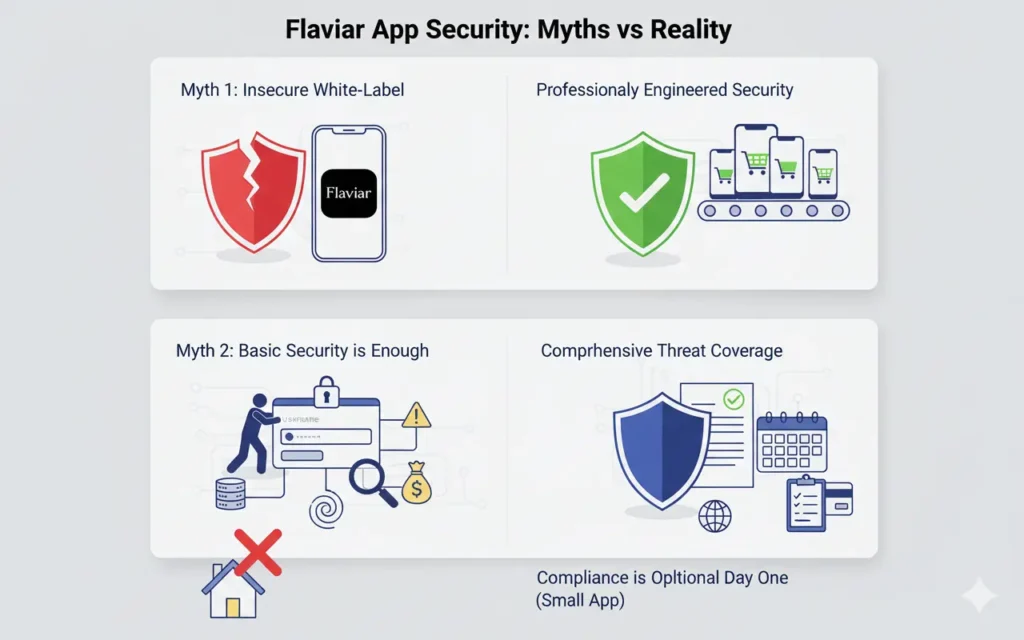
Why People Worry About White-Label Flaviar Apps
Founders are right to be cautious because alcohol-focused apps face higher scrutiny than many other marketplaces.
Key concerns include:
- Underage access risks
- Location-based alcohol restrictions
- Payment processor compliance
- Data retention policies
- Vendor licensing verification
- Cross-border legal exposure
Any weakness in these areas can trigger enforcement actions.
Current Threat Landscape for Alcohol Commerce Apps
In 2025, alcohol marketplace apps face targeted threats such as:
- Credential stuffing attacks on user accounts
- API abuse targeting age verification endpoints
- Payment fraud and chargeback manipulation
- Admin panel brute-force attempts
- Data scraping of customer purchase behavior
Alcohol apps are attractive targets because they combine high-value transactions with regulated data.
Security Standards in 2025
Modern white-label Flaviar app security must align with:
- Zero-trust infrastructure models
- Encrypted data at rest and in transit
- Role-based access control (RBAC)
- Continuous vulnerability scanning
- Real-time fraud detection
Security is now an ongoing process, not a one-time setup.
Real-World Security Statistics (2024–2025)
- Over 60% of marketplace app breaches originate from unsecured APIs
- Payment-related breaches account for nearly 40% of app security incidents
- Apps without regular security audits are 3x more likely to face compliance penalties
- Alcohol and regulated commerce apps face higher chargeback scrutiny from payment gateways
These numbers explain why shortcuts in security often lead to business shutdowns.
Read more : – Flaviar Revenue Model: How Flaviar Makes Money in 2025
Key Security Risks & How to Identify Them
High-Risk Area 1: Data Protection & Privacy
A white-label Flaviar app processes some of the most sensitive user data in regulated commerce. Any weakness here directly exposes your business to legal and financial consequences.
User Personal Information
- Names, emails, phone numbers, and addresses must be encrypted and access-restricted
- Improper storage can lead to identity theft and regulatory violations
Payment Data Security
- Card details must never be stored on your servers
- Tokenization and PCI DSS–compliant payment gateways are mandatory
Age Verification & Location Tracking
- Age verification data is legally sensitive and must be securely stored
- Location data must follow consent-based access and retention policies
GDPR & CCPA Compliance
- Users must be able to access, export, and delete their data
- Data collection must be minimal and purpose-driven
High-Risk Area 2: Technical Vulnerabilities
Technical gaps are the most common reason white-label apps get compromised.
Code Quality Issues
- Hardcoded credentials
- Poor input validation
- Insecure authentication flows
Server Security Gaps
- Misconfigured cloud storage
- No firewall or intrusion detection
- Lack of environment separation (dev, staging, production)
API Vulnerabilities
- Open or undocumented endpoints
- Missing rate limiting
- Weak authentication tokens
Third-Party Integrations
- Unverified age verification services
- Outdated payment SDKs
- External analytics with excessive permissions
High-Risk Area 3: Business-Level Risks
Security failures don’t stop at technical damage — they escalate into business disasters.
Legal Liability
- Fines for underage access
- Data protection penalties
- License revocation risks
Reputation Damage
- Loss of user trust
- Public breach disclosures
- App store takedowns
Financial Losses
- Chargebacks and fraud
- Legal expenses
- Emergency remediation costs
Regulatory Penalties
- GDPR fines up to 4% of annual revenue
- Payment gateway suspension
- Regional alcohol authority actions
White-Label Flaviar App Risk Assessment Checklist
Use this checklist before choosing a provider:
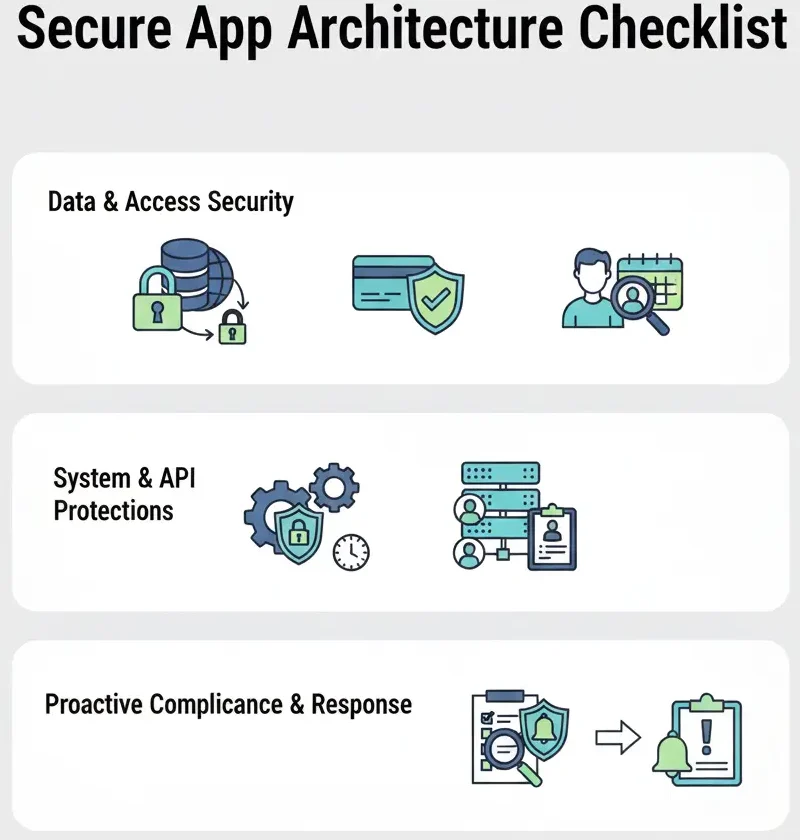
If even one of these answers is unclear, the risk is already high.
Read more : – Business Model of Flaviar : Complete Strategy Breakdown
Security Standards Your White-Label Flaviar App Must Meet
Security for a white-label Flaviar app cannot be based on assumptions or verbal assurances. In 2025, security is measured by verifiable standards, certifications, and technical controls. If a provider cannot demonstrate these clearly, the platform is not enterprise-ready.
Essential Compliance Certifications
ISO 27001 – Information Security Management
- Ensures structured security policies, access controls, and risk management
- Confirms that security is handled at an organizational level, not just in code
SOC 2 Type II
- Validates how customer data is handled over time
- Focuses on security, availability, confidentiality, and integrity
GDPR Compliance
- Mandatory for apps serving users in the EU
- Covers consent management, data minimization, and user rights
HIPAA (If Applicable)
- Required only if health-related data is involved
- Rare for alcohol apps, but relevant in wellness integrations
PCI DSS for Payments
- Mandatory for any app processing card payments
- Prevents storage of sensitive cardholder data
Technical Security Requirements
End-to-End Encryption
- Data encrypted during transmission and storage
- Protection against man-in-the-middle attacks
Secure Authentication
- Two-factor authentication for admin access
- OAuth-based login for users
- Strong password policies and hashing
Regular Security Audits
- Quarterly vulnerability assessments
- Annual third-party penetration testing
Penetration Testing
- Simulated real-world attack scenarios
- Identifies exploitable weaknesses before attackers do
SSL Certificates
- HTTPS enforced across all environments
- Automatic certificate renewal
Secure API Design
- Token-based authentication
- Rate limiting and request validation
- IP whitelisting for admin APIs
Security Standards Comparison Table
| Security Requirement | Minimum Expectation | Enterprise-Grade Standard |
|---|---|---|
| Data Encryption | In transit only | In transit + at rest |
| Authentication | Password-based | 2FA + OAuth |
| Payment Handling | Basic gateway | PCI DSS–certified providers |
| API Security | Token access | Token + rate limiting |
| Audits | One-time | Continuous & third-party |
| Compliance | Verbal assurance | Documented certifications |
Meeting these standards is not optional. In regulated marketplaces like alcohol commerce, failure to comply often results in forced shutdowns rather than warnings.
Red Flags – How to Spot Unsafe White-Label Providers
Many security failures don’t happen because founders ignored security — they happen because providers hid weaknesses behind low pricing and vague promises. Knowing the warning signs can save your business before damage occurs.
Major Warning Signs You Should Never Ignore
No Security Documentation
- Provider cannot share security architecture details
- No written data handling or breach response policy
Unusually Cheap Pricing Without Explanation
- Security infrastructure is expensive
- Extremely low prices often mean shared servers or outdated code
No Compliance Certifications
- No ISO 27001 or SOC 2 evidence
- “We follow best practices” without proof
Outdated Technology Stack
- Unsupported frameworks
- No regular updates or patching cycle
Poor Code Quality
- No code review process
- No automated testing
- Hardcoded credentials
No Security Update Policy
- Updates only “on request”
- No scheduled maintenance cycles
Lack of Backup & Disaster Recovery
- No automated backups
- No recovery time objectives defined
No Insurance Coverage
- No cyber liability insurance
- No breach compensation support
Evaluation Checklist Before Finalizing a Provider
Questions to Ask
- How is user data encrypted and stored?
- How often are security audits conducted?
- Who is responsible for security updates post-launch?
- How is age verification data protected?
Documents to Request
- ISO or SOC compliance reports
- Data processing agreements
- Incident response policy
- Backup and recovery documentation
Testing Procedures
- Penetration testing reports
- API security validation
- Load and stress testing results
Due Diligence Steps
- Verify past client security history
- Ask for real compliance proof, not screenshots
- Review admin access controls
If a provider avoids these discussions, it’s not a communication issue — it’s a security risk.
Best Practices for Secure White-Label Flaviar App Implementation
Security does not end when your white-label Flaviar app goes live. The safest platforms treat security as a continuous operational discipline, not a launch checklist.
Pre-Launch Security Best Practices
Security Audit Process
- Conduct a full application security audit before deployment
- Review authentication flows, APIs, admin access, and data storage
Code Review Requirements
- Mandatory peer code reviews
- Automated static code analysis
- Removal of hardcoded credentials and debug logs
Infrastructure Hardening
- Isolated production environments
- Firewalls and intrusion detection systems
- Secure cloud configurations
Compliance Verification
- Confirm GDPR and regional alcohol regulations
- Verify payment gateway PCI DSS compliance
Staff Training Programs
- Admin and support staff security training
- Access limited strictly by role
Post-Launch Security Monitoring
Continuous Security Monitoring
- Real-time threat detection
- Automated alerts for unusual behavior
Regular Updates and Patches
- Monthly security patches
- Immediate fixes for critical vulnerabilities
Incident Response Planning
- Defined escalation paths
- Communication protocols
- Regulatory notification timelines
User Data Management
- Periodic data audits
- Secure data deletion workflows
Backup and Recovery Systems
- Encrypted daily backups
- Tested recovery procedures
Security Implementation Timeline
| Phase | Security Focus |
|---|---|
| Planning | Risk assessment & compliance mapping |
| Development | Secure coding & API protection |
| Pre-Launch | Audits & penetration testing |
| Launch | Monitoring & access control |
| Post-Launch | Continuous updates & compliance |
Apps that skip any phase increase long-term risk exponentially.
Legal & Compliance Considerations
For a white-label Flaviar app, security is tightly linked with legal accountability. In regulated alcohol commerce, technical security failures often become legal violations within hours.
Regulatory Requirements You Must Address
Data Protection Laws by Region
- GDPR (EU): Lawful data processing, user consent, right to erasure
- CCPA / CPRA (USA): Data transparency, opt-out rights, disclosure controls
- India DPDP Act: Purpose limitation and consent-based data usage
Failure to comply can trigger penalties even without a breach.
Alcohol-Specific Regulations
- Mandatory age verification logging
- Location-based alcohol sale restrictions
- Vendor license validation and audit trails
User Consent Management
- Clear consent capture for data usage
- Separate consent for location tracking and marketing
Privacy Policy Requirements
- Plain-language data usage explanation
- Disclosure of third-party services
- Data retention duration
Terms of Service Essentials
- User responsibilities
- Alcohol purchase disclaimers
- Jurisdiction-specific legal clauses
Liability Protection Measures
Insurance Requirements
- Cyber liability insurance
- Data breach response coverage
Legal Disclaimers
- Platform responsibility boundaries
- Vendor accountability clauses
User Agreements
- Clear age verification responsibility
- Fraud prevention cooperation terms
Incident Reporting Protocols
- Regulatory reporting timelines
- User notification processes
Ongoing Compliance Monitoring
- Regular legal reviews
- Policy updates aligned with law changes
Compliance Checklist by Region
| Region | Key Laws | Mandatory Actions |
|---|---|---|
| EU | GDPR | Consent, data rights, breach reporting |
| USA | CCPA, State alcohol laws | Disclosure, opt-out, verification |
| India | DPDP Act | Consent, storage limitation |
| Global | PCI DSS | Secure payment processing |
Ignoring compliance is not a cost-saving move — it is a future liability multiplier.
Why Miracuves White-Label Flaviar App Is Your Safest Choice
Security is not an add-on at Miracuves. It is embedded into the architecture, processes, and delivery model of every white-label Flaviar app we build. This approach is why our platforms are trusted for regulated, high-risk business categories.
Miracuves Security-First Advantages
Enterprise-Grade Security Architecture
- Secure-by-design infrastructure
- Isolated environments for each client
- Role-based access across admin, vendor, and support panels
Verified Compliance Standards
- ISO 27001–aligned security processes
- SOC 2–ready operational controls
- GDPR and CCPA compliance by default
24/7 Security Monitoring
- Continuous system health checks
- Automated alerts for suspicious activity
Encrypted Data Transmission
- End-to-end encryption for user and vendor data
- Secure storage with encryption at rest
Secure Payment Processing
- PCI DSS–compliant payment gateway integrations
- No sensitive card data stored on app servers
Proactive Security Updates
- Regular vulnerability patches
- Framework and dependency updates
Risk Protection & Insurance
- Cyber risk mitigation planning
- Support during security incidents
Why Businesses Trust Miracuves
- 600+ successful platform launches
- Zero major reported security breaches
- Experience in regulated app categories
- Transparent security documentation
- Long-term security support model
Final Thought
Don’t compromise on security.
Miracuves white-label Flaviar app solutions are built with enterprise-grade security from day one. With over 600 successfully delivered platforms and a proven security track record, we help businesses launch compliant, scalable, and safe alcohol commerce apps.
Get a free security assessment and understand exactly how your platform will be protected before you launch
Launching a white-label Flaviar app in 2025 is not just about speed or features — it is about trust, compliance, and long-term survival. Security failures in regulated marketplaces don’t fade quietly; they escalate into legal action, platform bans, and brand damage.
FAQs
1. How secure is a white-label Flaviar app compared to custom development?
A white-label Flaviar app can be equally or more secure than custom development when built on a tested architecture with audits, compliance controls, and ongoing updates. Security depends on implementation quality, not the development model.
2. What happens if there is a security breach?
A secure provider follows a defined incident response plan that includes breach containment, user notification, regulatory reporting, and system hardening. Lack of a response plan is a major red flag.
3. Who is responsible security updates after launch?
The provider should handle core security updates, patches, and infrastructure hardening, while the business manages operational access controls and policies.
4. How is user data protected in a white-label Flaviar app?
User data is protected through encryption at rest and in transit, role-based access, secure APIs, and compliance-driven data retention policies.
5. What compliance certifications should I look for?
At minimum: ISO 27001–aligned processes, GDPR compliance, PCI DSS for payments, and SOC 2 readiness for enterprise credibility.
6. Can a white-label Flaviar app meet enterprise security standards?
Yes, when built with secure architecture, audited infrastructure, and continuous monitoring, white-label apps can meet enterprise and regulatory standards.
7. How often should security audits be conducted?
Vulnerability scans should be continuous, with formal security audits at least annually and penetration testing after major updates.
8. What is included in Miracuves’ security package?
Miracuves provides secure architecture, encrypted data handling, compliance-ready frameworks, regular updates, monitoring support, and incident-response guidance.
9. How do you manage security across different countries?
Security is handled through region-specific compliance mapping, configurable consent systems, and adaptable data storage policies.
10. What insurance is required for app security?
Cyber liability and data breach insurance are strongly recommended to cover legal, regulatory, and recovery costs.
Related Articles: