




From a domestic Chinese B2B directory to a globally recognized wholesale sourcing platform, Made-in-China.com has played a crucial role in connecting manufacturers with international buyers. Today, the global B2B ecommerce market is projected to cross $25 trillion by 2028, with cross-border trade platforms driving a major share of that growth. Thousands of exporters and manufacturers rely on digital sourcing platforms to generate leads, manage inquiries, and close high-value deals without traditional intermediaries.
For entrepreneurs in 2025, understanding the Made-in-China Clone Scripts model is no longer optional if you want to enter global trade, manufacturing, or supplier aggregation markets. Unlike simple ecommerce marketplaces, this model focuses on verified suppliers, RFQ workflows, bulk pricing, and long-term B2B relationships. A well-executed Made-in-China clone can unlock recurring revenue through subscriptions, premium listings, lead credits, and enterprise buyer tools while positioning your platform as a trusted sourcing hub.
With rising demand for alternative supply chains outside traditional marketplaces, founders who launch early with the right technology stack and business logic have a significant advantage. This is exactly where Miracuves helps entrepreneurs transform a complex B2B marketplace vision into a scalable, revenue-ready platform.
What Makes a Great Made-in-China Clone?
A great Made-in-China clone in 2025 is not just a directory of suppliers. It is a performance-driven B2B trade ecosystem designed to handle high-volume listings, complex buyer inquiries, and long-term supplier relationships at scale. Entrepreneurs often fail when they treat B2B sourcing like B2C ecommerce. The winners build platforms optimized for trust, speed, and enterprise-grade workflows. Modern buyers expect instant supplier discovery, verified credentials, fast communication, and data-backed confidence before initiating deals that can run into six or seven figures.
At a technical level, a high-quality Made-in-China clone must deliver consistent performance under heavy traffic. Top platforms maintain average response times under 300ms even with millions of SKUs and supplier profiles. Uptime reliability of 99.9% is critical because global buyers operate across time zones and expect uninterrupted access. UI and UX must feel simple despite underlying complexity, allowing buyers to compare suppliers, request quotes, and track negotiations without friction.
Scalability and monetization readiness define greatness in 2025. The platform should support rapid onboarding of new manufacturers, multilingual content delivery, AI-powered supplier recommendations, and flexible pricing tiers. Trust mechanisms such as blockchain-backed verification and AI fraud detection are no longer optional. They are key differentiators that separate premium B2B marketplaces from low-quality directories.
Key characteristics of a great Made-in-China clone include:
• High-performance search with category, MOQ, certification, and region filters
• Supplier verification systems with document validation and trust badges
• RFQ and bulk inquiry workflows optimized for enterprise buyers
• AI-powered product matching and lead scoring for suppliers
• Monetization via subscriptions, featured listings, and lead credits
• Cross-border readiness with multi-currency, multilingual, and compliance support
Technical benchmarks expected in 2025:
• Average API response time below 300ms
• 99.9% platform uptime with cloud auto-scaling
• Secure role-based access control for buyers, suppliers, and admins
• End-to-end encryption for communication and document exchange
Comparison of Modern Made-in-China Clone Differentiators:
Basic Clone: Supplier listings, category browsing, manual inquiries, limited analytics
Professional Clone: Verified suppliers, RFQ automation, subscription plans, analytics dashboard
Enterprise Clone: AI recommendations, blockchain verification, ERP integrations, global compliance tools
Miracuves builds Made-in-China clone solutions with these benchmarks at the core, ensuring founders do not just launch fast but launch with infrastructure capable of supporting global B2B trade from day one.
Essential Features Every Made-in-China Clone Must Have
Building a Made-in-China-style B2B marketplace in 2025 requires much more than supplier listings and inquiry forms. The most successful platforms are designed as multi-layered trade ecosystems, where buyers, manufacturers, and administrators operate seamlessly within a single digital infrastructure. Each layer must be optimized for speed, trust, and scale while supporting long sales cycles and high-value transactions.
User Side (Buyers) — Discovery, Confidence, Conversion
For buyers, the experience must reduce friction in supplier discovery and decision-making. Enterprise buyers expect clarity, credibility, and fast responses. AI-powered search and personalization now play a major role in surfacing the right suppliers based on product type, MOQ, certifications, and past inquiry behavior. Secure messaging, RFQ workflows, and quotation tracking keep negotiations organized and professional. Advanced platforms achieve higher retention by offering saved searches, supplier comparison tools, and smart alerts when new matching manufacturers join the platform.
Buyer-side essentials include:
• Advanced supplier and product search with AI ranking
• RFQ and bulk inquiry management with status tracking
• Supplier comparison tools and saved shortlists
• Multi-language and multi-currency support for global trade
• Secure chat, document exchange, and quotation history
Supplier Side (Manufacturers & Exporters) — Visibility, Leads, Revenue
Suppliers join these platforms to generate qualified leads, not just traffic. A modern Made-in-China clone must provide manufacturers with real-time insights into buyer interest, inquiry quality, and conversion potential. AI-driven lead scoring helps suppliers prioritize high-intent buyers, while automated follow-ups reduce response delays. Earnings dashboards, subscription management, and promotion tools allow suppliers to scale their visibility and ROI.
Supplier-side essentials include:
• Profile and catalog management with certification uploads
• Lead inbox with AI-based inquiry scoring
• Real-time notifications and response automation
• Subscription plans, featured listings, and lead credit usage
• Analytics dashboards showing views, inquiries, and conversions
Admin Panel — Control, Automation, Scalability
The admin layer is the backbone of the entire marketplace. Admins must be able to verify suppliers, moderate content, manage subscriptions, and analyze platform-wide performance without manual bottlenecks. Automation is critical in 2025. AI-based fraud detection, document verification, and supplier approval workflows dramatically reduce operational overhead while improving trust across the platform.
Admin panel essentials include:
• Supplier verification and approval workflows
• Subscription, pricing, and monetization control
• Platform-wide analytics and reporting dashboards
• AI fraud detection and quality scoring
• Content moderation and compliance management
Advanced 2025 Features That Drive Competitive Advantage
Leading Made-in-China clones are now integrating next-generation technologies to stand out in crowded markets. AI-based personalization improves match quality, while blockchain verification increases trust in supplier credentials. AR onboarding helps suppliers visually showcase factories and production lines, boosting buyer confidence before first contact.
Advanced features include:
• AI-powered supplier recommendations and buyer intent prediction
• Blockchain-backed supplier verification and audit trails
• AR-based factory tours and product demonstrations
• API integrations with ERP, CRM, logistics, and payment providers
Technical Architecture Requirements
To support millions of listings and concurrent users, the platform must be built on a scalable cloud architecture with load balancing and microservices. Security layers such as encrypted APIs, role-based access control, and compliance-ready data handling are mandatory for global operations. Third-party integrations enable automation across logistics, payments, and trade documentation.
Feature Tier Comparison
Basic: Supplier listings, manual inquiries, basic admin control
Professional: Verified suppliers, RFQ automation, subscriptions, analytics
Enterprise: AI personalization, blockchain verification, ERP integrations, global compliance tools
Miracuves implements all these layers into its Made-in-China clone scripts using a modular, future-ready architecture. Founders can launch with essential features and seamlessly upgrade to enterprise-grade capabilities as their marketplace scales.
Cost Factors & Pricing Breakdown
Made-in-China–Like B2B Wholesale Marketplace Development — Market Price
| Development Level | Inclusions | Estimated Market Price (USD) |
|---|---|---|
| 1. Basic B2B Marketplace MVP | Supplier & buyer registration, product listings, categories, search & filters, inquiry system, basic messaging, and a simple admin panel. | $50,000 |
| 2. Mid-Level B2B Trading Platform | Web + mobile UI/UX, supplier storefronts, RFQ management, bulk pricing, reviews & ratings, notifications, payment integrations, and analytics dashboards. | $120,000 |
| 3. Advanced B2B Wholesale Platform | Verified suppliers, multi-language & multi-currency support, escrow-style payments, logistics integrations, subscription plans, compliance tools, and enterprise-grade scalability. | $240,000+ |
These figures represent the typical global investment required to build a large-scale B2B wholesale marketplace similar to Made-in-China, covering supplier discovery, bulk trade workflows, and cross-border commerce.
Miracuves Pricing for a Made-in-China–Like Platform
Miracuves Price: Starts at $15,999
This package delivers a complete B2B wholesale marketplace foundation including supplier onboarding, product catalog management, RFQ & inquiry workflows, buyer–seller messaging, bulk pricing controls, secure checkout flows, and a unified admin backend — designed for scalability and international trade operations.
Note:
Includes full source code, backend setup, frontend integration, admin configuration, API connections, and deployment assistance — enabling you to launch a fully branded Made-in-China–style platform with long-term flexibility.
Launch Your Made-in-China–Style B2B Marketplace — Contact Us Today
Delivery Timeline for a Made-in-China–Like Platform with Miracuves
The typical delivery timeframe is 30–90 days, depending on:
- Number of supplier categories and products
- RFQ, bulk pricing, and negotiation complexity
- Localization requirements (languages, currencies, trade rules)
- Branding & UI/UX customization
- Payment gateway and logistics integrations
- Additional compliance or verification modules
Tech Stack
Built using a JS-based architecture, ideal for modern B2B marketplaces requiring scalability, modular components, real-time interactions, and high-volume catalog handling across multiple regions.
Customization & White-Label Option
Building a Made-in-China–style B2B sourcing and manufacturing marketplace isn’t just about launching a platform — it’s about creating a trusted global trade ecosystem that connects buyers with verified manufacturers at scale. A sourcing platform should never feel generic. It must adapt to industry-specific workflows, international trade requirements, and supplier-buyer communication models while reinforcing credibility and transparency.
Miracuves delivers a fully white-label B2B sourcing solution that allows complete visual, functional, and operational customization. Whether you are targeting industrial manufacturing, electronics sourcing, textile suppliers, or bulk commodity trade, the platform can be tailored to your brand identity and global market positioning.
Why Customization Matters
In modern B2B trade, buyers expect more than just supplier listings. They demand structured catalogs, verified suppliers, clear RFQ workflows, and reliable communication channels. Customization enables your platform to reflect your niche, simplify procurement, and stand out from generic sourcing portals.
What You Can Customize
Complete UI/UX Personalization
Customize layouts, dashboards, category navigation, supplier profiles, product listing pages, and overall theme to match your brand and target industries.
Flexible Trade Workflows
Modify supplier onboarding, verification processes, RFQ logic, quotation comparison, pricing visibility, MOQ rules, and buyer-seller interaction flows.
Feature-Level Adjustments
Add or remove modules such as supplier certifications, factory audit badges, document uploads, escrow workflows, trade assurance tools, and negotiation systems.
Marketplace Model Options
Operate as a global B2B sourcing marketplace, a niche manufacturer directory, a verified supplier network, or a hybrid wholesale ecosystem based on your strategy.
White-Label Branding
Apply your own domain, brand kit, typography, icons, email templates, and platform identity to create a fully owned sourcing ecosystem.
Backend & Integrations
Integrate ERP systems, CRM tools, logistics partners, inspection agencies, analytics platforms, messaging services, and third-party trade APIs.
Monetization Upgrades
Enable supplier subscription plans, premium listings, RFQ boosts, verification fees, lead credits, and advertising placements to drive platform revenue.
How Miracuves Handles Customization
Miracuves follows a structured customization workflow designed for founders and enterprises that need clarity, speed, and scalability.
- Requirement Understanding
We analyze your sourcing niche, buyer geography, supplier base, and operational requirements. - Planning & Breakdowns
Customization tasks are divided into well-defined modules for efficient execution. - Design & Development
UI/UX enhancements, workflow logic, and sourcing features are implemented according to your roadmap. - Testing & Quality Assurance
Performance, usability, security, and scalability testing ensure the platform is enterprise-ready. - Deployment
Your fully white-labeled sourcing platform goes live with complete branding and configuration.
Real Examples from the Miracuves Portfolio
Miracuves has powered 9k+ successfully launched marketplaces, including:
- Global B2B sourcing platforms for industrial manufacturers
- Export-import marketplaces connecting buyers with verified factories
- Wholesale trade ecosystems with RFQ-driven procurement models
- Supplier discovery platforms for electronics, textiles, and machinery
These real-world deployments demonstrate how customization transforms a sourcing marketplace into a scalable, trust-driven global trade business.
Launch Strategy & Market Entry
Launching a Made-in-China-style B2B marketplace is not just a technical milestone. It is a strategic market-entry decision that determines whether your platform attracts quality suppliers, serious buyers, and long-term revenue. Successful founders approach launch like a controlled expansion, not a public experiment.
Before going live, a structured pre-launch checklist ensures the platform is stable, compliant, and conversion-ready. Testing must cover not only functionality but also trust indicators such as supplier verification, messaging reliability, and search accuracy. App store readiness is less critical for B2B web-first platforms, but server performance, security audits, and data compliance are non-negotiable.
Pre-launch essentials:
• Load and stress testing for high-volume listings and concurrent inquiries
• Supplier verification workflows and moderation checks
• Compliance setup for data protection and cross-border communication
• Payment, subscription, and invoice validation
• Analytics and event tracking configuration
Market entry strategy varies by region and must align with supplier behavior and buyer expectations. In Asia, early traction often comes from supplier acquisition and aggressive onboarding incentives. In MENA regions, trust and verification play a larger role, making premium supplier tiers more effective. European markets demand compliance clarity, while U.S. buyers prioritize transparency, response speed, and credibility.
Regional launch tactics:
• Asia: Supplier-first growth, category-focused onboarding, competitive pricing
• MENA: Verified supplier emphasis, premium visibility packages
• Europe: Compliance-driven messaging, quality-focused supplier curation
• U.S.: Niche specialization, fast RFQ response, strong trust signals
User acquisition in B2B marketplaces relies less on virality and more on structured growth loops. Influencer campaigns in manufacturing niches, export communities, and trade forums drive early visibility. Referral systems encourage suppliers to invite peers, while buyer retention funnels focus on saved searches, alerts, and personalized recommendations.
Proven monetization models in 2025:
• Monthly and annual supplier subscriptions
• Featured listings and priority search placement
• Pay-per-lead or lead credit systems
• Enterprise buyer tools and data access
Miracuves supports founders beyond deployment by providing end-to-end launch assistance. From cloud server setup and security configuration to a structured 90-day post-launch growth roadmap, entrepreneurs receive clear guidance on scaling without operational chaos.
Why Choose Miracuves for Your Made-in-China Clone
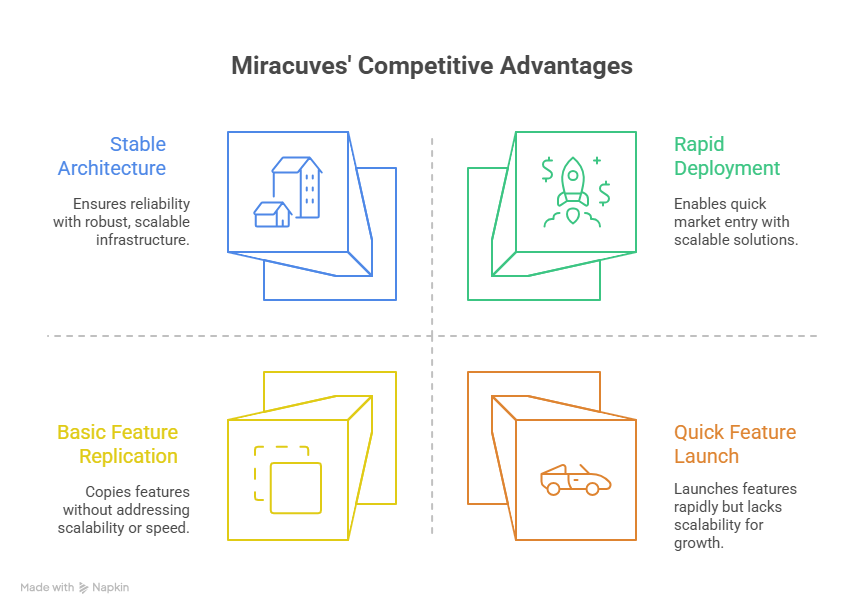
Every successful B2B marketplace has one thing in common: a technology partner that understands scale, trust, and long-term growth. Building a Made-in-China-style platform is not about copying features; it is about replicating a proven business engine while avoiding the risks that cause most marketplaces to fail. This is where Miracuves stands apart.
Miracuves has delivered over 9k+ production-ready marketplace deployments across ecommerce, logistics, fintech, and B2B trade platforms. This experience translates into predictable delivery, stable architecture, and solutions that are built for real-world usage, not demos. Founders benefit from a deployment process that prioritizes speed without compromising security or scalability.
One of the strongest differentiators is Miracuves’ rapid delivery cycle. Instead of waiting months to enter the market, entrepreneurs can launch their Made-in-China clone in a matter of days. This early entry advantage allows founders to onboard suppliers faster, validate demand, and start generating revenue while competitors are still in development.
What founders gain with Miracuves:
• 9k+ successful deployments across global markets
• 60 days of free post-launch technical support
• Full non-encrypted source-code ownership
• Future-proof, scalable architecture built for growth
Miracuves solutions are designed to evolve. Founders can start with a focused marketplace and progressively expand into new categories, regions, and enterprise integrations without rewriting core systems. This long-term flexibility protects investment and supports sustained growth.
Final Thought
Launching a Made-in-China-style B2B marketplace in 2025 is not about following trends; it is about understanding how global trade truly works and positioning your platform where manufacturers and buyers already need better solutions. The real power of this model lies in trust-driven sourcing, verified suppliers, efficient RFQ workflows, and scalable monetization. Entrepreneurs who master this business logic gain a long-term advantage that goes far beyond short-term traffic or listings.
By leveraging proven clone technology instead of starting from zero, founders dramatically reduce risk, accelerate time-to-market, and retain full control over their platform’s evolution. When the right technical foundation is paired with focused market entry and a clear growth roadmap, niche B2B marketplaces can scale faster, monetize earlier, and compete confidently against established players.
Miracuves empowers entrepreneurs to launch smarter, scale strategically, and build authoritative sourcing platforms without unnecessary complexity. With the right execution and the right technology partner, your Made-in-China clone can become a trusted global trade hub rather than just another marketplace.
Ready to launch your Made-in-China clone? Get a free consultation and a detailed project roadmap from Miracuves — trusted by 1500+ entrepreneurs worldwide.
FAQs
How quickly can Miracuves deploy my Made-in-China clone?
Deployment can be completed in days using a production-ready framework, allowing founders to enter the market much faster than traditional development cycles.
What’s included in the Miracuves clone package?
The package includes full non-encrypted source code, backend and admin panel setup, deployment assistance, and a fully operational marketplace ecosystem ready for scaling.
Can I get full source-code access?
Yes. You receive complete ownership of the source code, giving you freedom to customize, extend, and scale the platform without restrictions.
How does Miracuves ensure scalability?
The platform is built on a cloud-ready architecture with load balancing, modular services, and performance optimization to support high traffic and large supplier volumes.
Does Miracuves assist with app store approval?
Yes. Miracuves provides guidance and technical support for publishing on relevant platforms and ensures compliance with submission requirements.
Is post-launch maintenance included?
Yes. Sixty days of free post-launch technical support is included to ensure smooth operations and early-stage stability.
Can Miracuves integrate custom payment gateways?
Custom payment gateways, invoicing systems, and regional payment solutions can be integrated based on your market requirements.
What’s the upgrade and update policy?
The platform supports modular upgrades, allowing you to add features, integrations, and performance enhancements without rebuilding the system.
How does white-labeling work?
White-labeling removes all third-party branding and delivers a fully branded platform under your domain, logo, and business identity.
What kind of ongoing support can I expect?
Beyond the initial support period, flexible maintenance and enhancement plans are available to support long-term growth and feature evolution.
Related Articles
- Best Walmart Clone Scripts in 2025: Features & Pricing Compared
- Best Etsy Clone Scripts in 2025: Features & Pricing Compared
- Best Flipkart Clone Scripts in 2025: Features & Pricing Compared
- How to Develop an E-commerce and Online Shopping Platform App
- Best Alibaba Clone Scripts in 2025: Features & Pricing Compared