



You’ve heard the horror stories — grocery apps leaking customer addresses, payment data being exposed, and platforms getting shut down due to compliance failures. If you’re considering launching a white-label OneCart app, the first question on your mind isn’t features or pricing — it’s safety.
And rightly so.
In 2026, grocery delivery platforms handle some of the most sensitive data in the app economy: real-time location tracking, recurring payment details, personal addresses, order histories, and vendor information. A single security lapse can lead to financial losses, legal penalties, and permanent brand damage.
White-label apps often get unfairly labeled as “less secure,” but the reality is more nuanced. Security is not determined by whether an app is white-label or custom-built — it depends entirely on how the platform is engineered, audited, and maintained.
This guide provides an honest, no-marketing-spin assessment of white-label OneCart app security. We’ll break down real risks, current threat landscapes, compliance requirements, and the exact standards your grocery delivery app must meet to be safe, scalable, and legally compliant.
You’ll also learn how security-first providers like Miracuves eliminate these risks at the architecture level — not as an afterthought.
Understanding White-Label OneCart App Security Landscape
What “White-Label OneCart App Security” Actually Means
White-label OneCart app security refers to the built-in protection mechanisms, compliance readiness, and ongoing security processes embedded into a ready-made grocery delivery platform that is customized for your brand.
It does not mean:
- Shared or public code exposed to everyone
- Weak security because it’s prebuilt
- Less control over data
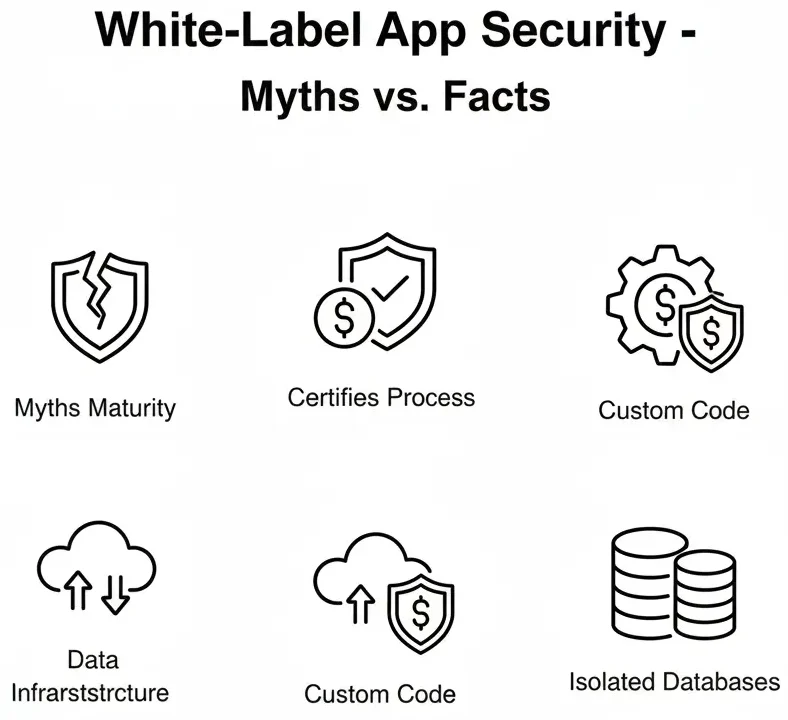
In reality, a professionally built white-label OneCart app uses the same security architecture principles as enterprise custom platforms, but with standardized, tested, and hardened implementations.
Security depends on:
- Code quality and architecture
- Infrastructure design
- Compliance implementation
- Update and monitoring discipline
- Provider accountability
Not the development model itself.
Why People Worry About White-Label OneCart Apps
The concern around white-label grocery delivery apps is understandable because these platforms deal with:
- Customer names, phone numbers, and addresses
- Real-time delivery location tracking
- Online payments and wallets
- Vendor pricing and inventory data
- Order frequency and behavioral data
Additionally, the grocery delivery segment is:
- High-volume
- Transaction-heavy
- Location-sensitive
- Highly regulated in many regions
Low-quality providers have amplified fear by selling cheap scripts with:
- No encryption
- Shared servers
- Zero compliance
- No audit trail
These are provider failures, not white-label limitations.
Current Threat Landscape for OneCart-Type Platforms
In 2026, grocery delivery and on-demand commerce apps face highly targeted threats:
Data Breaches
- Cloud misconfigurations exposing databases
- Poor access control for admin dashboards
Payment Exploits
- Insecure payment gateways
- Token leakage
- Non-PCI-compliant storage
API Attacks
- Unsecured REST APIs
- Broken authentication
- Excessive data exposure
Account Takeovers
- Weak password policies
- No multi-factor authentication
- Poor session management
Industry reports show that over 62% of retail and delivery app breaches originate from API vulnerabilities, not UI-level flaws.
Security Standards in 2026 for Grocery Delivery Apps
A white-label OneCart app in 2026 is expected to align with:
- Zero Trust security architecture
- Encryption-first data handling
- Continuous vulnerability scanning
- Privacy-by-design principles
- Compliance-driven development
Security is no longer optional or “post-launch” — regulators, payment providers, and app stores now expect proof of compliance before scale.
Real-World Security Statistics
- Over 71% of consumers abandon apps after a single security incident
- Grocery and retail apps rank among the top 5 targets for credential stuffing attacks
- Regulatory penalties for data privacy violations increased by 38% year-over-year globally
- PCI DSS non-compliance accounts for nearly half of payment-related breaches
These numbers explain why serious founders evaluate security first, features second.
Key Security Risks & How to Identify Them
Launching a white-label OneCart app without understanding its risk surface is one of the fastest ways to expose your business to legal, financial, and reputational damage. Grocery delivery apps carry a multi-layered risk profile because they combine payments, location data, and personal information in a single ecosystem.
Below are the highest-risk areas you must evaluate before launch.
Data Protection & Privacy Risks
User Personal Information
The OneCart app collects names, phone numbers, email addresses, delivery addresses, and order histories. If this data is:
- Stored without encryption
- Accessible through unsecured admin panels
- Logged improperly
It becomes an immediate compliance and breach risk.
How to identify the risk
- Ask where and how user data is stored
- Verify encryption at rest and in transit
- Confirm role-based access controls
Payment Data Security
Payment handling is the most regulated component of a grocery app.
Common failures include:
- Storing card data locally
- Weak payment tokenization
- Non-certified payment gateways
A single violation can lead to PCI DSS penalties, payment bans, and financial losses.
How to identify the risk
- Confirm PCI DSS compliance
- Ensure payments are processed via certified gateways
- Validate token-based transaction flows
Location Tracking Concerns
Real-time location tracking exposes:
- Customer movement patterns
- Delivery agent routes
- High-frequency behavioral data
If location data is retained longer than necessary or shared improperly, it violates privacy laws.
How to identify the risk
- Review data retention policies
- Check anonymization mechanisms
- Ensure user consent controls are in place
GDPR and CCPA Compliance Gaps
Many white-label apps fail here.
Common gaps include:
- No user data deletion option
- Missing consent logs
- No data portability mechanisms
How to identify the risk
- Ask for GDPR/CCPA readiness documentation
- Validate user rights management features
- Confirm audit logs and consent tracking
Technical Vulnerabilities
Code Quality Issues
Poorly written or outdated code increases exposure to:
- Injection attacks
- Authentication bypass
- Broken access control
How to identify the risk
- Request secure code review reports
- Check OWASP Top 10 alignment
- Verify version control practices
Server Security Gaps
Infrastructure misconfiguration remains the leading cause of app data leaks.
Red flags include:
- Shared hosting
- No firewall rules
- No intrusion detection systems
How to identify the risk
- Confirm cloud provider standards
- Review network segmentation
- Ask about DDoS protection
API Vulnerabilities
OneCart-type apps rely heavily on APIs for:
- Orders
- Payments
- Vendor operations
- Delivery tracking
Weak APIs expose entire systems.
How to identify the risk
- Check API authentication methods
- Ensure rate limiting is enabled
- Validate request validation layers
Third-Party Integrations
Every integration increases attack surface.
Risky integrations include:
- Unverified payment plugins
- Poorly maintained analytics tools
- Insecure SMS or email gateways
How to identify the risk
- Review vendor security policies
- Check update frequency
- Confirm integration isolation
Business-Level Risks
Legal Liability
Security failures can result in:
- Lawsuits
- Regulatory investigations
- Contract termination
Reputation Damage
Trust loss is often irreversible in grocery delivery platforms, where repeat usage is critical.
Financial Losses
Costs include:
Regulatory Penalties
Non-compliance can trigger:
- GDPR fines up to 4% of annual revenue
- Payment gateway suspension
- App store delisting
White-Label OneCart App Risk Assessment Checklist
Use this checklist before finalizing any provider:
- Data encrypted at rest and in transit
- PCI DSS–compliant payment flow
- Secure APIs with authentication and rate limiting
- GDPR/CCPA-ready data controls
- Regular security audits and testing
- Isolated infrastructure per client
- Incident response plan documented
If even one item is unclear, the risk is not worth taking.
Security Standards Your White-Label OneCart App Must Meet
If a white-label OneCart app does not meet formal security and compliance standards, it is not production-ready — regardless of how good the UI or features look. In 2026, regulators, payment providers, and enterprise partners expect documented proof of security, not verbal assurances.
Below are the non-negotiable standards your grocery delivery app must satisfy.
Essential Security Certifications
ISO 27001 Compliance
ISO 27001 validates that the provider follows a structured Information Security Management System (ISMS).
What it ensures:
- Risk-based security controls
- Access management policies
- Incident response procedures
- Continuous security improvement
Without ISO 27001, security processes are usually informal or inconsistent.
SOC 2 Type II
SOC 2 Type II evaluates how security controls operate over time, not just their existence.
It covers:
- Security
- Availability
- Confidentiality
- Processing integrity
- Privacy
For OneCart-type apps handling transactions and personal data, SOC 2 Type II is a strong trust signal for enterprise readiness.
GDPR Compliance
Mandatory for platforms operating in or serving users in the EU.
Key requirements:
- Explicit user consent
- Right to access and delete data
- Data minimization
- Breach notification within 72 hours
A compliant white-label OneCart app must include built-in GDPR workflows, not manual processes.
HIPAA (If Applicable)
Required only if the grocery platform handles:
- Prescription medicines
- Health-related data
If your OneCart app includes pharmacy or wellness delivery, HIPAA alignment becomes essential.
PCI DSS for Payments
PCI DSS compliance is mandatory for any app processing card payments.
It ensures:
- Secure payment transmission
- Tokenization of card data
- No storage of sensitive payment information
Non-compliance often results in payment gateway suspension.
Technical Security Requirements
End-to-End Encryption
All sensitive data must be encrypted:
- In transit using TLS 1.2+
- At rest using industry-grade encryption standards
This prevents interception even if infrastructure is compromised.
Secure Authentication Systems
A secure OneCart app must support:
- Two-factor authentication
- OAuth-based login
- Secure password hashing
- Session expiration controls
Authentication is the first defense layer against account takeovers.
Regular Security Audits
One-time audits are insufficient.
Required practices:
- Scheduled vulnerability assessments
- Continuous risk scanning
- Independent third-party audits
Penetration Testing
Pen testing simulates real-world attacks.
It helps identify:
- Privilege escalation flaws
- API vulnerabilities
- Authentication weaknesses
A serious provider conducts penetration testing at least annually.
SSL Certificates
All domains and subdomains must be SSL-secured.
This is mandatory for:
- User trust
- App store approval
- SEO and browser security warnings
Secure API Design
APIs should follow:
- OAuth 2.0 or token-based authentication
- Rate limiting
- Input validation
- Error masking
APIs are the backbone of grocery delivery apps — insecure APIs equal insecure platforms.
Security Standards Comparison Table
| Security Area | Minimum Requirement | Enterprise-Grade Standard |
|---|---|---|
| Data Encryption | TLS for transit | TLS + encrypted storage |
| Payments | Gateway integration | PCI DSS certified flow |
| Access Control | Basic login | Role-based + MFA |
| Compliance | Privacy policy | GDPR, SOC 2, ISO |
| Audits | One-time testing | Continuous monitoring |
| APIs | Token-based | Rate-limited + logged |
If your white-label OneCart app does not meet the enterprise-grade column, it is not future-proof.
Read more : – Onecart Features Breakdown for Startup Founders
Red Flags: How to Spot Unsafe White-Label Providers
Not all white-label OneCart app providers operate at the same security maturity level. In fact, many security incidents in grocery delivery platforms can be traced back to poor provider selection, not technical complexity.
Understanding these red flags can save you from costly mistakes.
Warning Signs You Should Never Ignore
No Security Documentation
If a provider cannot share:
- Security architecture overview
- Data handling policies
- Compliance documentation
It usually means security has not been formally implemented.
Unrealistically Cheap Pricing Without Explanation
Security costs money.
Extremely low pricing often indicates:
- Shared servers
- No audits
- Outdated code
- Zero compliance investment
A secure OneCart app requires infrastructure, monitoring, and expertise — not shortcuts.
No Compliance Certifications
If a provider claims compliance but cannot show:
- ISO certificates
- SOC reports
- GDPR readiness documents
Those claims are not verifiable.
Outdated Technology Stack
Legacy frameworks increase vulnerability exposure.
Risks include:
- Unpatched dependencies
- Unsupported libraries
- Incompatibility with modern security tools
Poor Code Quality
Indicators of weak code:
- No version control process
- Hardcoded credentials
- No modular architecture
Poor code quality is a long-term security liability.
No Security Update Policy
Security is continuous.
If the provider does not offer:
- Regular patches
- Dependency updates
- Threat response cycles
Your app will fall behind attackers.
Lack of Data Backup Systems
Without automated backups:
- Data loss becomes permanent
- Recovery after breaches is impossible
A reliable OneCart app must include encrypted, redundant backups.
No Insurance Coverage
Security incidents can lead to lawsuits and claims.
Providers without:
- Cyber liability insurance
- Professional indemnity coverage
Expose you directly to financial risk.
Evaluation Checklist Before Choosing a Provider
Questions to Ask
- How is user data encrypted and stored?
- What compliance standards do you meet?
- How often are security audits conducted?
- What happens if a breach occurs?
- Who is responsible for security updates?
Documents to Request
- Security audit reports
- Compliance certificates
- Incident response plan
- Data retention policy
- Backup and recovery documentation
Testing Procedures
- Request staging access for testing
- Validate authentication flows
- Perform basic vulnerability scans
- Review API documentation
Due Diligence Steps
- Verify company background
- Check past security incidents
- Review client references
- Confirm long-term update support
If a provider avoids transparency at this stage, it will only worsen after launch.
Best Practices for Secure White-Label OneCart App Implementation
Even with a secure platform, how you implement and operate your white-label OneCart app determines long-term safety. Security is not a one-time setup — it is a continuous lifecycle process that begins before launch and extends throughout the app’s operation.
Pre-Launch Security Practices
Comprehensive Security Audit
Before going live, conduct a full audit covering:
- Application code
- APIs
- Infrastructure
- Data storage
This ensures no critical vulnerabilities exist at launch.
Secure Code Review
Code should be reviewed for:
- OWASP Top 10 vulnerabilities
- Authentication and authorization flaws
- Data exposure risks
A mature provider follows peer-reviewed and automated code analysis practices.
Infrastructure Hardening
Your OneCart app infrastructure must include:
- Isolated cloud environments
- Firewall and network segmentation
- DDoS protection
- Intrusion detection systems
Infrastructure is the most common breach point when neglected.
Compliance Verification
Confirm all regulatory requirements are met:
- GDPR and regional data laws
- PCI DSS for payments
- Industry-specific obligations
Compliance should be verifiable, not promised.
Staff Training Programs
Human error causes many breaches.
Training should cover:
- Admin access handling
- Phishing awareness
- Incident reporting procedures
Security culture matters as much as technology.
Post-Launch Security Monitoring
Continuous Security Monitoring
Real-time monitoring detects:
- Suspicious login behavior
- API abuse
- Unusual transaction patterns
Early detection dramatically reduces damage.
Regular Updates and Patches
Security patches must be applied:
- For application code
- For third-party libraries
- For server operating systems
Delays create exploitable windows.
Incident Response Planning
Every OneCart app must have:
- A documented breach response plan
- Defined response timelines
- Communication protocols
Preparedness limits financial and reputational impact.
User Data Management
Data should be:
- Stored only as long as necessary
- Anonymized where possible
- Easily removable upon user request
This supports compliance and reduces exposure.
Backup and Recovery Systems
Backups should be:
- Encrypted
- Automated
- Tested regularly
Recovery readiness determines survival after incidents.
Security Implementation Timeline
- Week 1–2: Security audit and code review
- Week 3: Infrastructure hardening and access controls
- Week 4: Compliance validation and penetration testing
- Launch: Monitoring and logging activated
- Ongoing: Updates, audits, and incident simulations
A structured timeline prevents security gaps during growth.
Legal & Compliance Considerations
Security failures are not just technical problems — they are legal and regulatory liabilities. In 2026, operating a white-label OneCart app without proper legal and compliance frameworks can result in fines, lawsuits, forced shutdowns, or app store removal.
Understanding your obligations is essential before scaling.
Regulatory Requirements
Data Protection Laws by Region
Different regions impose different legal responsibilities on grocery delivery apps.
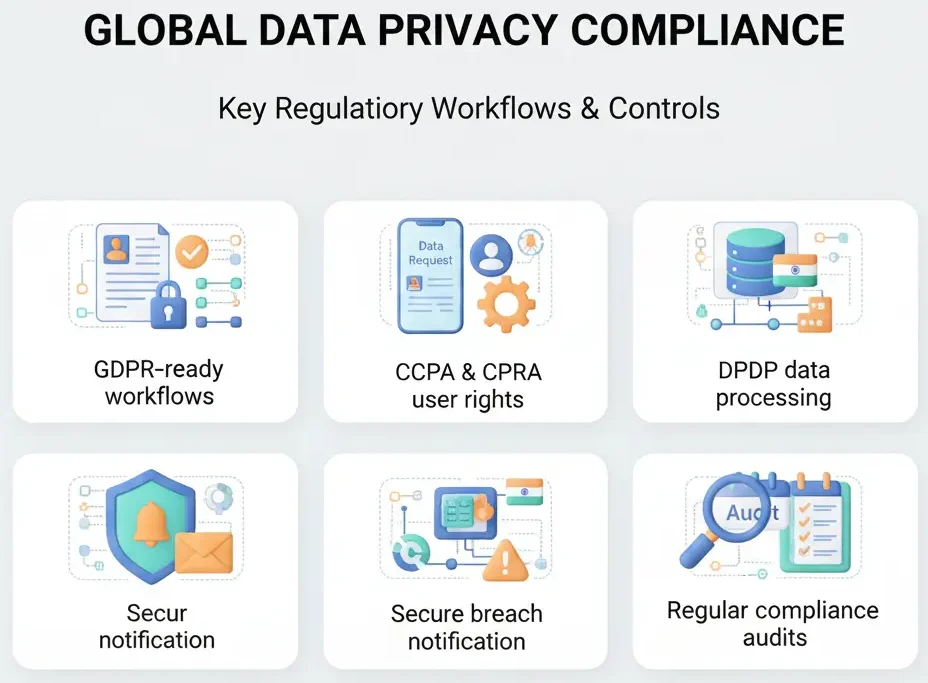
- European Union: GDPR mandates consent, data minimization, breach disclosure, and user rights management
- United States: CCPA and CPRA govern consumer data access, deletion, and transparency
- India: Digital Personal Data Protection Act (DPDP) regulates collection, processing, and storage of personal data
- Middle East: PDPL and similar frameworks enforce strict data residency and consent rules
A white-label OneCart app must support region-specific compliance controls, not a one-size-fits-all approach.
Industry-Specific Regulations
Depending on features, additional laws may apply:
- Food safety and traceability regulations
- Pharmacy and medical delivery rules
- Local commerce and consumer protection laws
Failure to align with sector-specific regulations increases enforcement risk.
User Consent Management
Legal compliance requires:
- Explicit opt-in for data collection
- Clear consent logs
- Granular permission controls
Consent must be recorded, retrievable, and auditable.
Privacy Policy Requirements
Your privacy policy must:
- Clearly state data usage purposes
- Define retention periods
- Explain user rights
- Identify third-party processors
Generic or copied policies are often legally invalid.
Terms of Service Essentials
Well-defined terms help limit liability.
They should include:
- User responsibilities
- Platform limitations
- Dispute resolution mechanisms
- Termination clauses
Liability Protection Strategies
Insurance Requirements
Serious operators carry:
- Cyber liability insurance
- Professional indemnity coverage
- Data breach response coverage
Insurance reduces financial exposure after incidents.
Legal Disclaimers
Disclaimers help manage expectations around:
- Delivery delays
- Data availability
- Third-party service dependencies
User Agreements
Contracts must clarify:
- Data ownership
- Platform responsibility limits
- Acceptable usage policies
Incident Reporting Protocols
Regulations often require:
- User notification within defined timeframes
- Authority reporting
- Remediation documentation
Prepared protocols prevent panic-driven mistakes.
Ongoing Compliance Monitoring
Compliance is not static.
It requires:
- Legal updates tracking
- Policy revisions
- Audit readiness
Non-compliance due to outdated policies is still punishable.
A white-label OneCart app that ignores compliance planning is exposed to long-term legal risk.
Why Miracuves White-Label OneCart App Is Your Safest Choice
When it comes to security, not all white-label OneCart apps are built with the same philosophy. Many providers treat security as a feature add-on. Miracuves treats security as core infrastructure — engineered into the platform from day one.
This difference is what separates scalable, trusted grocery delivery businesses from platforms that struggle with risk, compliance, and credibility.
Miracuves Security-First Architecture
Enterprise-Grade Security by Design
Miracuves white-label OneCart app solutions are built using enterprise security principles, including:
- Isolated infrastructure per client
- Role-based access control across admin, vendor, and delivery panels
- Secure-by-default configurations
This prevents cross-tenant data exposure and internal misuse.
Regular Security Audits and Certifications
Miracuves follows structured audit processes, including:
- Periodic security assessments
- Vulnerability scanning
- Compliance validation
This ensures the platform stays aligned with evolving threat landscapes and regulatory expectations.
GDPR and CCPA Compliant by Default
Instead of retrofitting compliance, Miracuves embeds:
- Consent management workflows
- User data access and deletion controls
- Audit-ready activity logs
This allows businesses to expand globally without reengineering compliance layers.
24/7 Security Monitoring
Continuous monitoring detects:
- Suspicious access attempts
- API abuse
- Abnormal transaction behavior
Early detection minimizes breach impact and downtime.
Encrypted Data Transmission
All sensitive data is protected through:
- Secure transport layer encryption
- Encrypted storage for critical information
Even in worst-case scenarios, exposed data remains unreadable.
Secure Payment Processing
Miracuves OneCart app integrates:
- PCI DSS–compliant payment gateways
- Tokenized transaction flows
- No local storage of card data
This significantly reduces financial and compliance risk.
Regular Security Updates
Security does not stop at launch.
Miracuves provides:
- Ongoing patch management
- Dependency updates
- Infrastructure security enhancements
This keeps the platform resilient against emerging threats.
Insurance Coverage Included
Unlike many providers, Miracuves includes:
- Professional liability coverage
- Security risk mitigation support
This adds an extra layer of protection for business owners.
Why Businesses Trust Miracuves
Miracuves has delivered 600+ white-label platforms across on-demand, marketplace, and delivery verticals — with zero major reported security breaches.
Security is not promised. It is proven through process, documentation, and operational discipline.
Read more : – How to Hire the Best OneCart Clone Developer
Conclusion
Don’t compromise on security. Miracuves white-label OneCart app solutions come with enterprise-grade security built in from the start. With over 600 successful projects and a security-first development approach, Miracuves helps businesses launch safe, compliant, and scalable grocery delivery platforms. Get a free security assessment and see why growing businesses trust Miracuves for secure OneCart app deployments.
White-label technology is no longer the risky shortcut it once was — but only when security is treated as a foundation, not a feature. A white-label OneCart app can be just as safe, compliant, and enterprise-ready as a custom-built platform if it is designed, audited, and maintained correctly.
The real risk does not come from choosing a white-label app.
It comes from choosing the wrong provider.
FAQs
1. How secure is a white-label OneCart app compared to custom development?
A white-label OneCart app can be equally secure or more secure than custom development when it follows enterprise security standards, regular audits, and compliance-driven architecture. Security depends on execution, not the development model.
2. What happens if there is a security breach?
A secure OneCart app must have an incident response plan that includes breach containment, user notification, regulatory reporting, and system remediation. Providers like Miracuves follow predefined response protocols to minimize impact.
3. Who is responsible for security updates in a white-label OneCart app?
The provider is responsible for core platform security updates, patches, and vulnerability fixes, while the business must follow operational security best practices such as admin access control.
4. How is user data protected in a white-label OneCart app?
User data is protected through encryption in transit and at rest, role-based access control, secure APIs, and strict data retention policies aligned with privacy laws.
5. What compliance certifications should I look for?
At minimum, look for ISO 27001, GDPR compliance, PCI DSS for payments, and SOC 2 Type II for enterprise readiness.
6. Can a white-label OneCart app meet enterprise security standards?
Yes. When built with isolated infrastructure, audited code, compliance workflows, and continuous monitoring, a white-label OneCart app can meet full enterprise security requirements.
7. How often should security audits be conducted?
Security audits should be conducted at least annually, with continuous vulnerability monitoring and regular penetration testing for critical systems.
8. What is included in Miracuves’ security package?
Miracuves includes encrypted data handling, secure payment processing, compliance-ready architecture, regular updates, monitoring, and documented security processes.
9. How is security managed across different countries?
A compliant OneCart app supports region-specific data protection laws through configurable consent management, data residency controls, and legal policy alignment.
10. What insurance is needed for app security?
Cyber liability insurance and professional indemnity coverage are recommended to protect against financial losses arising from security incide
Related Articles: