
Launching a mobile app is exciting, but one question decides whether the idea becomes a real business: how will the app make money?
Many startups build great apps but fail because they never plan a clear revenue strategy. A successful app needs a business model that turns users into sustainable revenue.
Companies like Uber, Spotify, Airbnb, and Netflix did not just build popular apps. They built apps with strong monetization models that generate consistent income.
If you are planning to launch an app, understanding the right app business model is essential. With the right guidance and development support from Miracuves, businesses can build scalable and profitable digital products. In this guide, we will explore the most profitable app business models used by successful startups and how you can choose the right one for your app.
Why Choosing the Right App Business Model Matters
An app business model defines how your app generates revenue and sustains growth. Without the right monetization strategy, even a popular app can struggle financially.
A strong business model helps founders:
- generate predictable revenue
- attract investors
- scale faster
- maintain long-term profitability
For example, subscription-based apps generate recurring income, while marketplace apps earn commissions from transactions.
Before developing your product, it is important to understand how different monetization models work and which one fits your app idea.
Many startups work with experienced mobile app development services to plan both the product and the monetization strategy from the beginning.
How Mobile Apps Generate Revenue
Mobile apps typically earn money through a few core methods. These include charging users directly, earning commission on transactions, showing advertisements, or offering premium features.
Most successful apps combine multiple monetization methods rather than relying on just one.
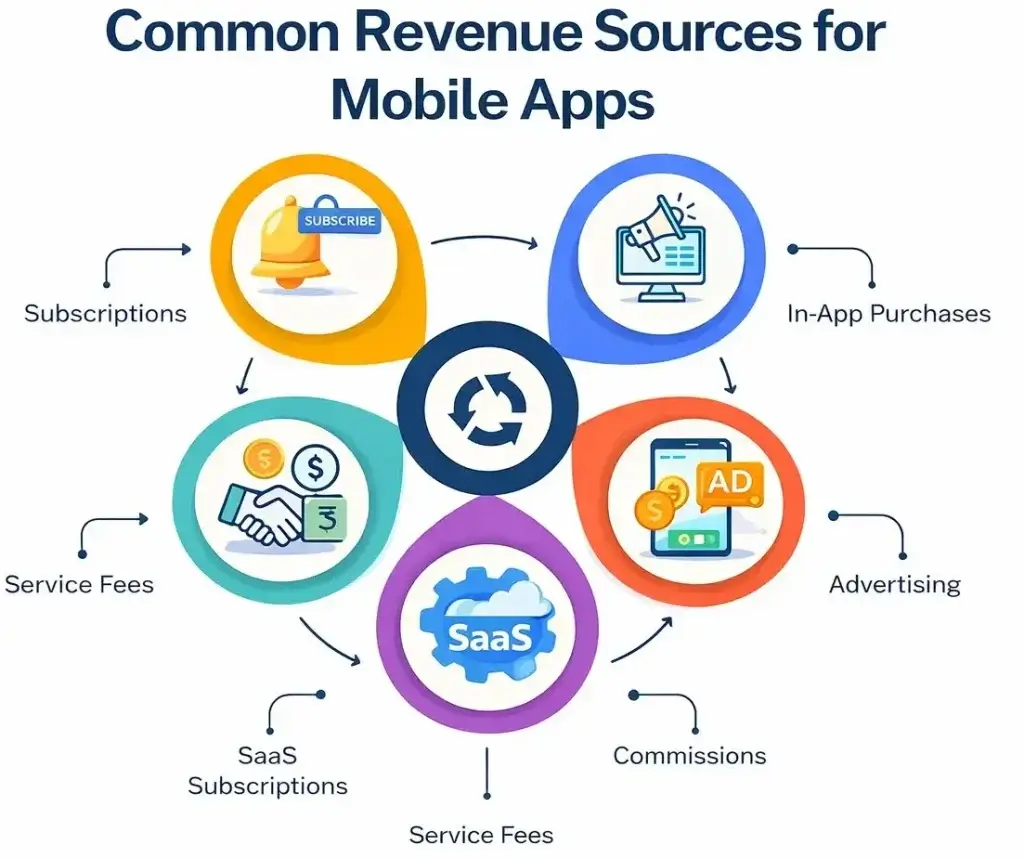
Understanding these options helps founders design apps that generate income while still delivering value to users.
10 App Business Models That Actually Make Money
Below are the most profitable and widely used app business models in today’s digital economy. These models are used by many successful apps to generate steady revenue and build sustainable businesses.
From subscription platforms like Netflix to marketplace giants like Uber and Airbnb, different apps choose different monetization strategies depending on their users and services. Understanding how these models work can help founders, startups, and entrepreneurs choose the right strategy before launching their app.
In the following section, we will explore the most effective app business models that actually generate revenue, along with real examples of companies successfully using them.
1. Subscription Model
The subscription model is one of the most profitable app business models because it generates recurring monthly or yearly revenue.
Users pay a fixed amount to access content or services continuously.
Examples include:
- Netflix
- Spotify
- Headspace
- Notion
This model works well for apps offering continuous value such as content platforms, SaaS tools, learning apps, and productivity tools.
Advantages include predictable revenue and stronger customer retention.
2. Freemium Model
Freemium apps offer a free version of the product while charging for premium features.
This model attracts a large number of users quickly and converts a portion of them into paying customers.
Popular examples include:
- Dropbox
- Canva
- Zoom
Users can access basic features for free but must upgrade for advanced tools, storage, or functionality.
Freemium works best when the free version demonstrates strong value but encourages upgrading.
3. Marketplace Commission Model
Marketplace apps connect buyers and sellers and earn money by taking a percentage of each transaction.
This model is extremely scalable because revenue grows with platform activity.
Well-known examples include:
- Uber
- Airbnb
- Fiverr
- Upwork
Marketplace platforms can earn through commissions, listing fees, or service charges.
Many entrepreneurs build these platforms using marketplace app development solutions to launch quickly.
4. In-App Purchases
In-app purchases allow users to buy digital goods or features directly within the app.
This model is widely used in gaming and entertainment apps.
Examples include:
- mobile games like Clash of Clans
- dating apps such as Tinder
- social apps offering premium stickers or filters
Users can buy items such as virtual currency, additional content, or special features.
This model works best when purchases enhance the user experience without making the app feel restrictive.
5. Advertising Model
Apps using the advertising model generate revenue by displaying ads to users.
Ad revenue typically comes from impressions or clicks.
Popular platforms using advertising include:
- TikTok
- YouTube
- news apps
Advertising works best when apps have large user bases and high engagement.
However, excessive advertising can harm the user experience, so balance is important.
6. SaaS App Business Model
Software as a Service apps charge users recurring fees for accessing cloud-based software.
This model is common in productivity tools, CRM platforms, and business software.
Examples include:
- Slack
- HubSpot
- Salesforce
- Notion
SaaS models often include different pricing tiers depending on features and usage.
Startups often invest in SaaS platform development because of its predictable revenue and scalability.
7. Transaction Fee Model
Apps using the transaction fee model earn revenue by charging a small fee whenever users complete a transaction.
Financial and payment apps commonly use this model.
Examples include:
- PayPal
- Stripe
- Robinhood
Each payment, transfer, or investment generates a small fee that becomes significant at scale.
This model works best for financial services, payment platforms, and digital wallets.
8. On-Demand Service Model
On-demand apps connect users with service providers instantly.
Revenue usually comes from service commissions or booking fees.
Examples include:
- Uber
- DoorDash
- Urban Company
These platforms provide services such as transportation, food delivery, or home services.
On-demand apps grow rapidly when they solve everyday problems.
9. API Monetization Model
API-based platforms allow developers to use their technology by paying per request or subscription.
Examples include:
- OpenAI
- Twilio
- Stripe
Businesses integrate these APIs into their own products.
This model is powerful because it allows companies to monetize technology infrastructure.
Many AI platforms follow this model, especially those offering AI automation platforms.
10. Data Monetization Model
Some platforms generate revenue by analyzing and selling aggregated data insights.
This approach is common in analytics platforms and market intelligence tools.
Examples include:
- marketing analytics platforms
- consumer insight platforms
- location intelligence tools
Data monetization must be handled responsibly and follow privacy regulations.
Comparison of App Business Models
Different monetization models work better depending on the type of app, target audience, and user behavior. The table below compares the most common app business models, their revenue potential, and examples of apps using them.
| Model | Revenue Potential | Best For | Example Apps |
|---|---|---|---|
| Subscription | High recurring revenue with predictable monthly income | SaaS platforms, content streaming apps, learning platforms | Netflix, Spotify |
| Freemium | High user acquisition with conversion to paid features | Productivity apps, cloud tools, design platforms | Canva, Dropbox |
| Marketplace | Scalable revenue through commissions on transactions | Service platforms, rental platforms, gig economy apps | Uber, Airbnb |
| In-App Purchases | High engagement and additional revenue from digital goods | Mobile games, entertainment apps, dating apps | Clash of Clans, Tinder |
| Advertising | Revenue based on impressions and user engagement | Social media apps, news apps, free content platforms | TikTok, Facebook |
| SaaS | Stable recurring revenue from subscription tiers | Business tools, collaboration platforms, CRM software | Slack, Notion |
| Transaction Fees | Earns a percentage or fixed fee for each transaction | Fintech platforms, payment gateways, investment apps | PayPal, Stripe |
| On-Demand Services | Revenue through booking fees or service commissions | Transportation, delivery services, home services | Uber, DoorDash |
| API Monetization | Revenue from developers using APIs or infrastructure | Technology platforms, AI tools, communication APIs | Twilio, OpenAI |
| Data Monetization | Revenue from aggregated insights and analytics | Data platforms, market research tools, analytics companies | Analytics platforms |
This table helps founders quickly understand which app business model may work best depending on the product type and the audience they want to serve.
How to Choose the Right Business Model for Your App
Selecting the right monetization strategy depends on several factors.
Understand Your Users
Ask important questions such as:
- Are users willing to pay monthly?
- Do they prefer free services supported by ads?
- Would they buy premium features?
User behavior plays a major role in choosing the right model.
Evaluate Market Demand
Study successful apps in your industry and analyze their monetization strategies.
This can reveal which models work best in your niche.
Consider Long-Term Scalability
Some models generate revenue only when transactions occur, while others provide recurring income.
Subscription and SaaS models often provide more stable growth.
Combine Multiple Monetization Strategies
Many successful apps use hybrid monetization strategies.
For example:
- freemium + subscription
- ads + in-app purchases
- marketplace + service fees
Combining models can increase revenue while keeping the user experience balanced.
Common Monetization Mistakes Startups Make
Even strong and well-designed products can fail if the monetization strategy is not carefully planned. A great app may attract users, but without a clear way to generate revenue, it becomes difficult to sustain development, marketing, and long-term growth. Proper monetization planning ensures that the product not only delivers value to users but also creates a sustainable and profitable business model.
If monetization interrupts the experience, users may leave.
How Miracuves Helps Build Profitable Apps
Turning an app idea into a successful digital product requires both technical expertise and a strong business strategy.
Miracuves helps startups and businesses build scalable platforms using proven app monetization models.
Entrepreneurs can explore app development solutions at Miracuves to launch digital products faster and more efficiently.
Miracuves provides:
- ready-made app solutions for faster product launches
- clone app development for proven business models
- SaaS platform development for subscription businesses
- marketplace platforms for service and product ecosystems
- AI automation platforms for modern digital solutions
Whether you want to build a SaaS product, marketplace platform, or on-demand service app, Miracuves helps transform ideas into profitable digital businesses.
Conclusion
Building a successful app requires more than great design and functionality. A clear monetization strategy is essential for long-term growth.
The most successful startups choose business models that match their users, product value, and market demand. Subscription platforms generate predictable revenue, marketplaces scale with transactions, and freemium models attract large user bases. The key is choosing a business model that fits your product, target audience, and user experience.
If you’re planning to build a profitable app but aren’t sure which model will work best, the right development partner can make a big difference. You can also Talk to miracuves team experts to discuss your app idea and get expert guidance on building a scalable and revenue-driven app.
FAQs
1. What is the most profitable app business model?
Subscription models and SaaS platforms are often the most profitable because they generate recurring revenue and predictable cash flow.
2. Do free apps really make money?
Yes. Many free apps earn revenue through advertising, in-app purchases, and freemium upgrades.
3. Can one app use multiple monetization models?
Yes. Many successful apps combine strategies such as freemium with subscriptions or ads with in-app purchases.
4. What business model is best for startups?
The best model depends on the type of app, target audience, and user behavior. Subscription, freemium, and marketplace models are commonly used by startups.
Related Articles
Miracuves is an independent software development company. We are not affiliated with, connected to, sponsored by, or endorsed by any company or product named in this article.
Terms such as “X Clone” are used descriptively. It is how the software industry refers to building a platform with functionality comparable to a known service, and how clients search for it.
The entire design and codebase of our products is built by our own team. Our products contain no code, design, graphics, or content originating from any third-party website or applications.
All third-party names and marks referenced in this article are the property of their respective owners, referenced solely to identify the services discussed.