

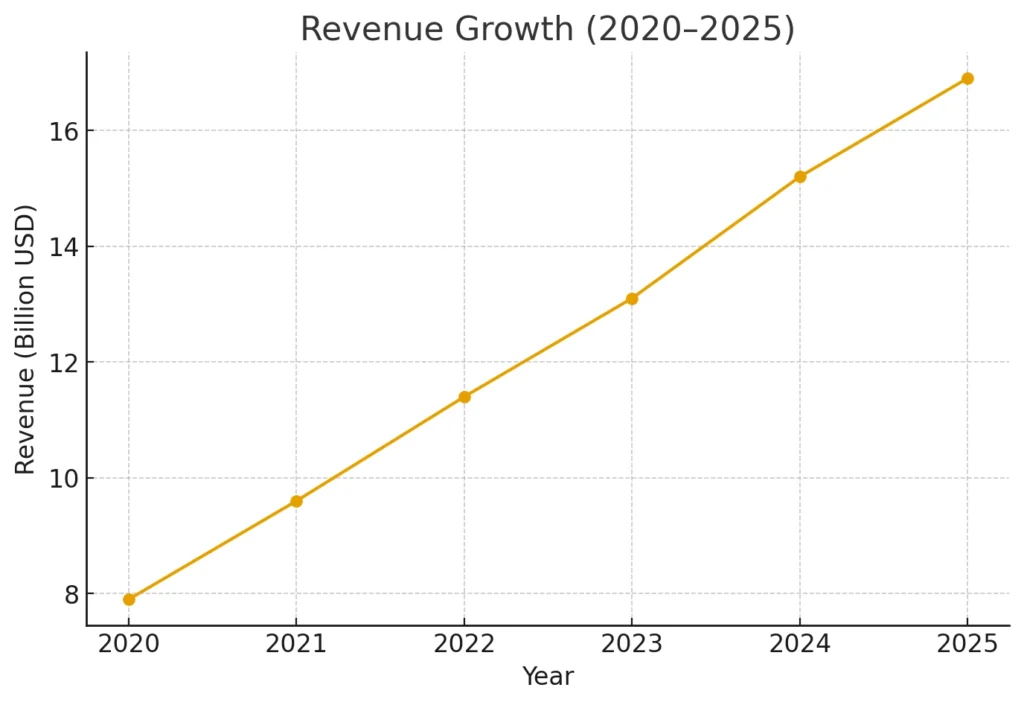
Spotify crossed $16.9 billion in annual revenue in 2026, proving that music streaming remains one of the most powerful and scalable digital business models of our time. What makes Spotify’s model so impressive isn’t just its massive user base—but the way it monetizes every layer of the listening experience through subscriptions, ads, creator tools, and intelligent personalization.
For entrepreneurs, understanding how Spotify structures its revenue engine is critical. This model demonstrates how a digital platform can turn engagement, data, and content distribution into predictable recurring revenue. By studying Spotify’s approach, founders can build high-growth streaming platforms that replicate the same monetization strengths—while innovating in niche markets where demand is exploding.
Spotify Clone Revenue Overview – The Big Picture
Valuation (2025): ~$40B
Annual Revenue (2025): $16.9B
YoY Growth: ~11%
Revenue by Region:
- Europe: 30%
- North America: 29%
- Latin America: 22%
- Asia-Pacific & Others: 19%
Profit Margin: Spotify turned repeat quarterly profits in 2025 with ~5–7% net margin, driven by subscription growth and reduced licensing costs.
Market Position:
Spotify leads global streaming with ~33% share, ahead of Apple Music (~15%) and Amazon Music (~13%).
Primary Revenue Streams Deep Dive
1. Premium Subscriptions (64% of total revenue)
Spotify’s main income source.
How it works: Monthly/annual subscription fees unlock ad-free listening, offline mode, and better audio quality.
2025 Pricing: $10.99–$16.99 depending on plan
2025 Contribution: ~$10.8B globally
Example: Family plans greatly improve retention and LTV.
2. Advertising Revenue (13%)
Free-tier users hear ads between songs.
Ad Formats: Audio ads, video ads, sponsored playlists, display ads
2025 Contribution: ~$2.2B
Why it works: Massive user base → high CPM rates.
3. Creator Monetization & Marketplace Tools (10%)
Spotify sells tools & services to artists:
- Promotion features
- Analytics tools
- Paid placements
- Merch integration fees
2025 Contribution: ~$1.6B
4. Podcast Monetization (10%)
Through:
- Podcast ads
- Subscription podcasts
- Spotify’s AI ad marketplace
2025 Contribution: ~$1.7B
Podcasts have much lower licensing costs, increasing margin.
5. Licensing, Partnerships & Enterprise Deals (3%)
B2B revenue from partnerships with:
- Telcos
- OEMs
- Education institutes
2025 Contribution: ~$500M
Read More: Business Model of Spotify – How It Earns in 2025
Revenue Share Table
| Revenue Stream | % Share | 2025 Contribution |
|---|---|---|
| Premium Subscriptions | 64% | $10.8B |
| Advertising | 13% | $2.2B |
| Creator Marketplace | 10% | $1.6B |
| Podcasts | 10% | $1.7B |
| Partnerships | 3% | $0.5B |
The Fee Structure Explained
User-Side Fees
- Monthly subscription fees
- Premium plan differential pricing
- Regional pricing adjustments
Provider-Side Fees
- Revenue-sharing with artists
- Commission on promotional placements
- Fees on creator tools and podcast monetization
Hidden Revenue Layers
- AI ad targeting
- Behavioral analytics licensing
- Algorithmic playlist sponsorships
Regional Pricing
Lower-income markets get discounted plans to maximize adoption.
Fee Structure Table
| User Type | Fees Charged | Notes |
|---|---|---|
| Free Users | Ads served | CPM/CPC model |
| Premium Users | Monthly fees | Tier-based |
| Artists | Commission on tools | Marketplace revenue |
| Podcasters | Ad revenue share | Lower cost base |
| Partners | Licensing fees | White-label deals |
How Spotify Clone Maximizes Revenue Per User
Segmentation
Tailored plans: student, individual, duo, family.
Upselling
AI-driven prompts push users to premium.
Cross-selling
Merch, concert tickets, exclusive releases.
Dynamic Pricing
Regional & time-based pricing increases conversion.
Retention Monetization
Longer playlists & algorithmic personalization keep users streaming more.
LTV Optimization
Predictive analytics to minimize churn.
Psychological Pricing
$9.99 pricing sweet spot for emotional purchase.
Real Example
A user costing $1.70/month in licensing can generate $9.99 subscription revenue → ~83% gross margin on subscription before royalties.
Cost Structure & Profit Margins
Tech Infrastructure
Servers, CDN, transcoding, AI personalization
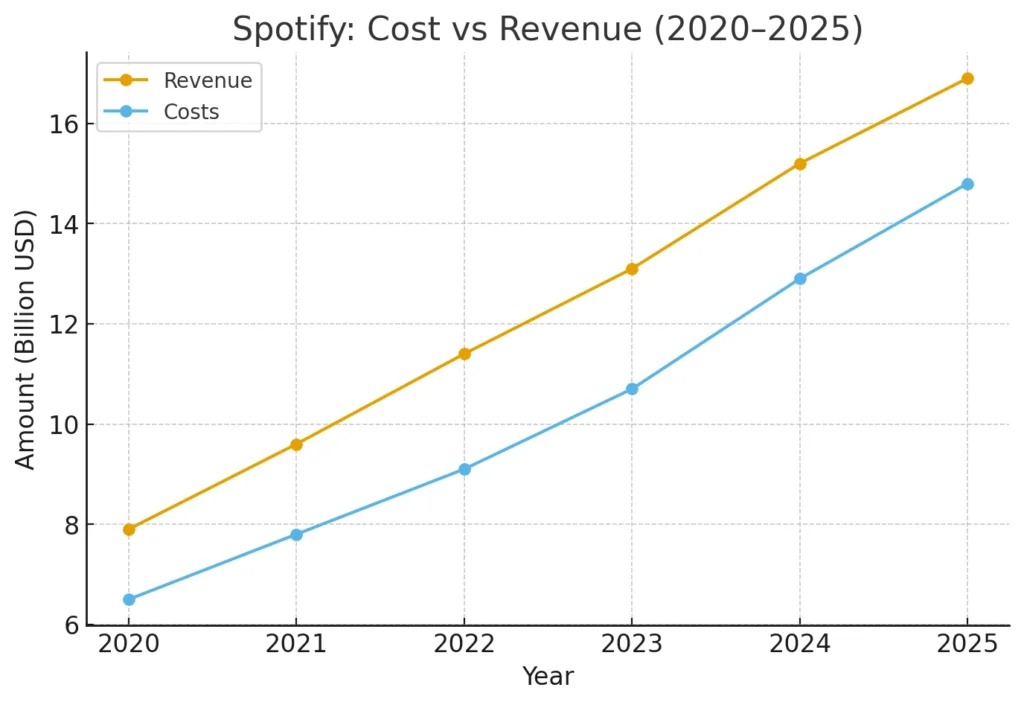
Annual cost: ~$3B
Marketing / CAC
Aggressive partnerships, influencer campaigns
Cost: ~$2.4B
Operations
Royalties, staff, direct costs
Cost: ~$9B (biggest expense)
R&D
Innovation, AI music recommendation
Cost: ~$1.5B
Unit Economics
- CAC: $8–$12
- Payback: 4–6 months
Profitability Path
Subscription growth + reduced royalty burden → higher margins.
Margin Optimization
- AI-driven ad placements
- Reduced dependency on licensed catalog
- More original podcast content
Future Revenue Opportunities & Innovations
New Revenue Streams
- AI-generated playlist subscriptions
- Artist premium dashboards
- Fan-to-artist micro-payments
AI/ML Monetization
AI-based music recommendations boost retention and engagement.
Expansion Markets
Massive growth expected in India, Africa, Southeast Asia.
Emerging Features (2025–2027)
- Auto-curated mood playlists
- Voice personalization
- Real-time fan interaction tools
Threats/Risks
- Rising artist royalty demands
- Competition from YouTube Music & TikTok Sounds
- Increasing licensing costs
Opportunities for New Players
A Spotify Clone can build niche streaming models (regional, genre-specific, AI-personalized).
Lessons for Entrepreneurs & Your Opportunity
What Works
Subscription-first, ads-second approach.
What to Replicate
Engagement loops built around personalization.
Market Gaps
Localized content, language-based streaming, and bundled ecosystem products.
Model Improvements
- Better creator payouts
- Transparent dashboards
- Hybrid subscription + micro-payment systems
Final Thought
Spotify’s billion-dollar model proves how valuable a streaming platform can become when monetization, personalization, and retention work together. With Miracuves, entrepreneurs can replicate these winning strategies through a fully optimized Spotify Clone built for scale. Our ready-to-launch solutions integrate subscription billing, ad engines, creator monetization, and AI-powered recommendations—giving your platform the same revenue strengths as the industry leader.
FAQs
1. How much does a Spotify Clone make per transaction?
It earns 10–35% depending on subscription or creator marketplace fees.
2. What’s the most profitable revenue stream?
Premium subscriptions.
3. How does pricing compare to competitors?
Similar to Apple Music and Amazon, but more flexible globally.
4. What percentage does it take from providers?
Usually 10–30% depending on tools and promotions.
5. How has the model evolved?
Shift toward podcasts, creator tools, and AI-driven ads.
6. Can small platforms use similar models?
Yes—subscription + ads work even for niche apps.
7. What’s the minimum scale for profitability?
~100k–300k monthly active users depending on licensing costs.
8. How to implement similar revenue models?
Use modular monetization: ads, subscriptions, marketplace fees.
9. What are alternatives?
Freemium model, pay-per-download, micro-transactions.
Miracuves is an independent software development company. We are not affiliated with, connected to, sponsored by, or endorsed by any company or product named in this article.
Terms such as “X Clone” are used descriptively. It is how the software industry refers to building a platform with functionality comparable to a known service, and how clients search for it.
The entire design and codebase of our products is built by our own team. Our products contain no code, design, graphics, or content originating from any third-party website or applications.
All third-party names and marks referenced in this article are the property of their respective owners, referenced solely to identify the services discussed.