



You have seen the headlines. Food delivery platforms leaking customer addresses. Payment data exposed. Entire user databases stolen overnight. When you decide to launch a white-label Deliveroo app, one question instantly becomes louder than all others:
Is my app actually safe?
In 2025, safety is no longer a “technical feature.” It is your business foundation. Customers trust you with their home location, phone numbers, payment cards, eating habits, and daily behavior patterns. One small security failure can destroy years of brand building overnight.
Founders today are also more anxious than ever because:
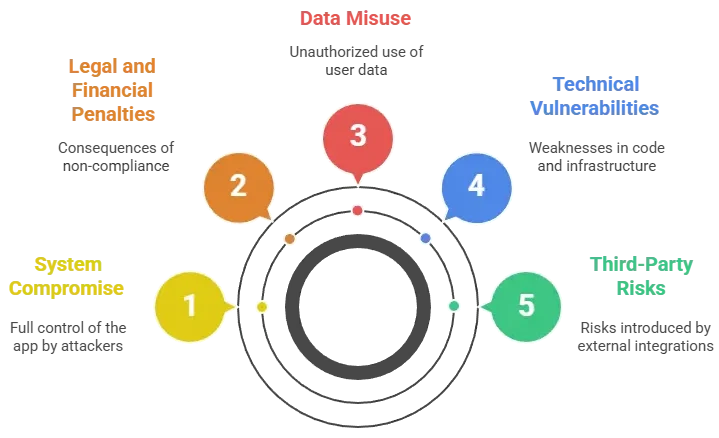
Yet at the same time, white-label Deliveroo apps remain one of the fastest ways to launch a scalable food delivery business without spending years in custom development.
This creates a serious dilemma for entrepreneurs:
Speed vs Safety. Convenience vs Compliance. Cost vs Risk.
In this guide, I will give you an honest, realistic, and experience-based security assessment of white-label Deliveroo apps in 2025. You will learn:
- What security really means in white-label food delivery platforms
- Where the biggest hidden risks exist
- Which certifications and safeguards are non-negotiable
- How to protect your business legally and technically
- And why Miracuves treats security as the core of every white-label app it delivers
This is not marketing fluff. This is a practical security blueprint for serious founders.
Understanding White-Label Deliveroo App Security Landscape
What White-Label Deliveroo App Security Really Means
White-label Deliveroo app security is the complete protection system that safeguards user data, payments, order flows, APIs, servers, and admin access from cyber threats. It includes infrastructure security, application-layer protection, and legal compliance.
Common Security Myths vs Reality
Many founders believe white-label apps are less secure than custom apps. In reality, security depends on how the platform is built, audited, and maintained, not whether it is custom or pre-built.
Why People Worry About White-Label Delivery Apps
Concerns arise due to:
- Frequent reports of food delivery data leaks
- Rising payment fraud cases
- Location-tracking misuse fears
- Lack of visibility into backend security
Current Threat Landscape for Food Delivery Platforms
In 2025, delivery platforms face:
- API abuse attacks
- Payment skimming malware
- Account takeover fraud
- Fake order injection
- Cloud server breaches
Food delivery platforms are now one of the top five targets for cybercrime in the commerce sector.
Security Standards in 2025
Modern platforms must now follow:
- Zero-trust security models
- Encrypted cloud storage by default
- Mandatory vulnerability disclosure programs
- Real-time fraud detection systems
Real-World App Security Statistics
- Over 68% of delivery platforms experienced at least one attempted breach in the last 12 months
- Payment API attacks increased by 41% globally
- Location-based app breaches rose by 33% post-2024
- GDPR fines crossed €3.5 billion for digital platforms in 2024 alone
Key Security Risks & How to Identify Them
Data Protection & Privacy Risks
User Personal Information
Names, phone numbers, email IDs, delivery addresses, and order history are highly sensitive. Weak database security exposes users to identity theft and stalking risks.
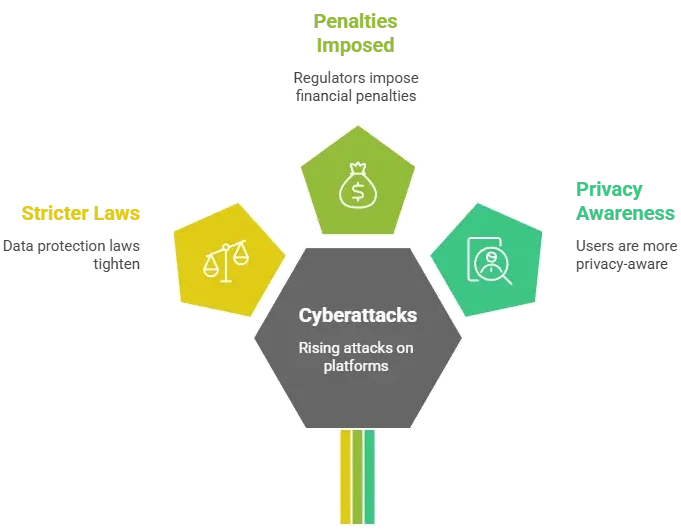
Business Risks
Legal Liability
Data breaches make the app owner legally responsible under global privacy laws.
Reputation Damage
One breach can permanently destroy user trust and brand credibility.
Financial Losses
Losses include:
- Fraud refunds
- Legal fines
- Downtime revenue loss
- Customer churn
Regulatory Penalties
Authorities can impose:
- Multi-million dollar fines
- App store takedown
- Operating bans in certain regions
Risk Assessment Checklist
- Is user data encrypted at rest and in transit
- Are payment systems PCI DSS certified
- Is API traffic rate-limited and logged
- Are admin panels protected with multi-factor authentication
- Are third-party tools security audited
- Is regular penetration testing conducted
- Is user consent properly recorded
Read more : – Deliveroo Revenue Model: How Deliveroo Makes Money in 2025
Security Standards Your White-Label Deliveroo App Must Meet
Essential Certifications
ISO 27001 Compliance
Ensures a structured information security management system for protecting user data and business operations.
SOC 2 Type II
Validates long-term control over security, availability, and confidentiality at the service provider level.
GDPR Compliance
Mandatory for handling personal data of EU users with strict consent, storage, and deletion controls.
HIPAA (If Applicable)
Required if the app processes health-related data such as diet plans or medical food deliveries.
PCI DSS for Payments
Mandatory for any platform that stores, processes, or transmits cardholder data.
Technical Security Requirements
End-to-End Encryption
All data transfers must be encrypted using TLS 1.3 or higher.
Secure Authentication
Must include:
- Two-factor authentication
- OAuth-based login
- Role-based access control
Regular Security Audits
Quarterly vulnerability audits and yearly full security reviews.
Penetration Testing
Simulated cyber-attacks to identify real-world exploit paths.
SSL Certificates
Mandatory HTTPS across all user, driver, and admin panels.
Secure API Design
Must include:
- Token-based authentication
- IP whitelisting
- Rate limiting
- Request validation
Security Standards Comparison Table
A professional comparison should cover:
- Certification scope
- Audit frequency
- Legal enforceability
- Industry acceptance
- Risk coverage level
Read more : – How to Make a Food Delivery App Like Deliveroo: Features, Costs, and Technology
Red Flags – How to Spot Unsafe White-Label Deliveroo App Providers
No Security Documentation
If a provider cannot share security architecture, audit reports, or compliance proof, it is a high-risk engagement.
Cheap Pricing Without Explanation
Unrealistically low pricing often means compromised infrastructure, pirated code, or zero security audits.
No Compliance Certifications
Lack of ISO, SOC 2, GDPR, or PCI DSS proof directly exposes you to regulatory penalties.
Outdated Technology Stack
Old frameworks and unsupported libraries contain known vulnerabilities.
Poor Code Quality
Obfuscated logic, hardcoded credentials, and lack of secure coding practices increase breach probability.
No Security Updates Policy
If patches and updates are not scheduled, your platform becomes vulnerable within months.
Lack of Data Backup Systems
Without automated backups, data recovery is impossible after ransomware or server failure.
No Insurance Coverage
Absence of cyber liability insurance places 100% financial risk on the business owner.
Evaluation Checklist
Questions to Ask Providers
- Do you follow ISO 27001 security controls
- Are your systems PCI DSS certified
- How often do you conduct penetration testing
- Where is user data hosted
- How is access to admin panels secured
Documents to Request
- Security audit reports
- Compliance certificates
- Data processing agreements
- Incident response policy
- Vulnerability disclosure policy
Testing Procedures
- Third-party penetration testing
- API security testing
- Load testing with security layers enabled
Due Diligence Steps
- Legal review of privacy policy
- Infrastructure security verification
- Payment gateway compliance validation
- Backup and recovery simulation
Best Practices for Secure White-Label Deliveroo App Implementation
Pre-Launch Security
Security Audit Process
A full security audit must be conducted before launch to identify vulnerabilities in code, APIs, servers, and third-party tools.
Code Review Requirements
Manual and automated code reviews are essential to detect logic flaws, hardcoded credentials, and insecure dependencies.
Infrastructure Hardening
Servers must be protected with:
- Firewall rules
- DDoS protection
- Secure cloud configurations
- Access control policies
Compliance Verification
Verify ISO, GDPR, PCI DSS, and regional data protection compliance before onboarding users.
Staff Training Programs
Admins and support teams must be trained in:
- Data handling practices
- Phishing detection
- Incident reporting protocols
Post-Launch Monitoring
Continuous Security Monitoring
Real-time monitoring of:
- Server traffic
- API requests
- Login attempts
- Payment failures
Regular Updates and Patches
Operating systems, frameworks, and libraries must be updated continuously to block emerging threats.
Incident Response Planning
A defined response plan must exist for:
- Data breaches
- Payment fraud
- System compromises
- User data exposure
User Data Management
User data must be:
- Access-controlled
- Encrypted
- Retained only as legally required
- Deleted on request under privacy laws
Backup and Recovery Systems
Automated backups with encrypted storage and disaster recovery simulations must be scheduled.
Security Implementation Timeline
- Week 1: Infrastructure security setup
- Week 2: Code audit and API testing
- Week 3: Compliance verification and penetration testing
- Week 4: Final security validation and go-live approval
Legal & Compliance Considerations
Regulatory Requirements
Data Protection Laws by Region
Your app must comply with:
- GDPR for European users
- CCPA and CPRA for US users
- DPDP Act for India
- PIPEDA for Canada
- PDPA for Singapore and Southeast Asia
Each law defines how data is collected, stored, processed, and deleted.
Industry-Specific Regulations
Food delivery platforms must also follow:
- Digital payment regulations
- Consumer protection laws
- E-commerce service rules
- Tax and invoice compliance
User Consent Management
Your app must:
- Collect explicit user consent
- Allow consent withdrawal
- Log all consent actions
- Provide data access on request
Privacy Policy Requirements
A valid privacy policy must clearly define:
- What data is collected
- Why it is collected
- How long it is stored
- Who it is shared with
Terms of Service Essentials
Must include:
- User responsibilities
- Limitation of liability
- Dispute resolution process
- Platform usage rules
- Account termination rights
Liability Protection
Insurance Requirements
Cyber liability insurance is essential to cover:
- Data breach costs
- Legal claims
- Regulatory fines
- Business interruption losses
Legal Disclaimers
Disclaimers reduce exposure for:
- Third-party service failures
- Delivery partner actions
- Payment gateway outages
User Agreements
User agreements define:
- Data ownership
- Usage rights
- Security responsibilities
- Breach notification terms
Incident Reporting Protocols
Your business must:
- Notify authorities within legal timeframes
- Inform affected users immediately
- Maintain breach documentation
- Cooperate with regulators
Regulatory Compliance Monitoring
Ongoing monitoring is required to track:
- Law updates
- Data retention limits
- Cross-border data transfer rules
- Industry guideline changes
Compliance Checklist by Region
- EU: GDPR, PCI DSS
- USA: CCPA, CPRA, PCI DSS
- India: DPDP Act, IT Act
- Canada: PIPEDA, PCI DSS
- UAE: PDPL, PCI DSS
Why Miracuves White-Label Deliveroo App is Your Safest Choice
Miracuves Security Advantages
Enterprise-Grade Security Architecture
Miracuves designs every white-label Deliveroo app with a multi-layer security architecture that protects data at the application, network, and infrastructure levels.
Regular Security Audits and Certifications
All platforms undergo scheduled vulnerability assessments, third-party audits, and continuous compliance validation.
GDPR and CCPA Compliant by Default
User data handling is built with global privacy laws in mind, ensuring lawful data collection, storage, and deletion across regions.
24/7 Security Monitoring
Real-time monitoring systems track suspicious activity, intrusions, and abnormal usage patterns at all times.
Encrypted Data Transmission
All data is protected using end-to-end encryption for:
- User communication
- Payment processing
- Admin operations
- Driver tracking
Secure Payment Processing
Miracuves integrates only PCI DSS certified payment gateways with tokenized card data handling.
Regular Security Updates
Security patches, framework upgrades, and dependency updates are deployed continuously.
Insurance Coverage Included
Cyber risk protection safeguards businesses against financial losses from security incidents.
Final Thought
Do not compromise on security. Miracuves white-label Deliveroo app solutions come with enterprise-grade protection built into every layer of the platform. Our 600+ successful projects have maintained zero major security breaches. Get a free security assessment and see why businesses trust Miracuves for safe, compliant platforms.
White-label Deliveroo apps can be secure, scalable, and fully compliant in 2025 — but only when security is treated as a foundation, not an optional feature. The real risk is not white-label technology itself, but choosing a provider that ignores global security standards, compliance laws, and continuous monitoring. With the right security-first partner, you can launch fast without sacrificing trust, legality, or long-term stability.
FAQs
1. How secure is a white-label Deliveroo app compared to custom development
A properly audited white-label Deliveroo app with certified infrastructure is as secure as custom development and often safer due to repeated testing across multiple deployments.
2. What happens if there is a security breach
The provider activates the incident response plan, isolates affected systems, informs authorities within legal timelines, and notifies users as per data protection laws.
3. Who is responsible for security updates
The white-label app provider maintains core security updates, while the app owner manages operational access controls and data policies.
4. How is user data protected in white-label apps
User data is protected through encryption, role-based access control, secure cloud hosting, and continuous monitoring.
5. What compliance certifications should I look for
ISO 27001, SOC 2 Type II, GDPR, PCI DSS, and region-specific data protection laws.
6. Can white-label apps meet enterprise security standards
Yes, when built with certified infrastructure, secure APIs, and continuous audits.
7. How often should security audits be conducted
Vulnerability scans should run quarterly and full penetration testing annually at minimum.
8. What is included in the Miracuves security package
Encrypted data protection, PCI DSS payment security, ISO-aligned controls, 24/7 monitoring, regular audits, and insurance-backed risk protection.
9. How to handle security across different countries
By implementing region-specific compliance frameworks and restricting cross-border data transfers as per law.
10. What insurance is needed for app security
Cyber liability insurance, data breach insurance, and business interruption coverage.
Related Articles: