Key Takeaways
What You’ll Learn
- Swiggy-like apps help launch a food delivery platform faster than building everything from scratch.
- Core food delivery features include restaurant listings, real-time order tracking, delivery partner management, and secure payment integration.
- White-label solutions can reduce development time, technical complexity, and early launch costs.
- Monetization models such as delivery fees, commissions, surge pricing, ads, and subscription models create multiple revenue streams.
- Pricing depends on platform scope, delivery logistics, payment setup, order management, and admin-side operational controls.
Stats That Matter
- Food delivery businesses are built around high-frequency daily orders that increase repeat usage.
- A Swiggy-style platform connects restaurants, delivery partners, and customers within one ecosystem.
- Quick delivery experience improves retention because users expect speed and reliability.
- Integrated payments and easy checkout make repeat orders faster and more convenient.
- A strong delivery platform needs restaurant partnerships, delivery fleet, and consistent operations to scale effectively.
Real Insights
- Start with high-demand areas where food delivery usage is frequent before expanding to new locations.
- Seamless user experience matters because customers expect quick browsing, ordering, and tracking.
- Strong delivery partner network is essential before scaling customer acquisition.
- Delivery speed, order accuracy, and payment reliability directly affect retention and trust.
- Long-term growth depends on local restaurant partnerships, scalable logistics, and efficient order management.
Imagine it’s a rainy evening in Mumbai. You’re craving a hot plate of biryani but stepping outside is the last thing you want to do. With just a few taps, Swiggy brings your meal from your favorite restaurant straight to your door — fast, fresh, and exactly how you like it.
That’s the power of Swiggy, India’s most popular on-demand delivery platform. Launched in 2014 by Sriharsha Majety, Nandan Reddy, and Rahul Jaimini, Swiggy started as a small food delivery service in Bengaluru and has since transformed into a multi-service ecosystem covering food, groceries, and even instant deliveries via Swiggy Instamart and Swiggy Genie.
Today, Swiggy operates in over 650 cities across India, serving millions of daily orders and partnering with thousands of restaurants and delivery partners. Its impact on how Indians eat and shop online has made it one of the most influential tech startups in the country, valued at over $10 billion (as of 2026).
What is Swiggy? The Simple Explanation
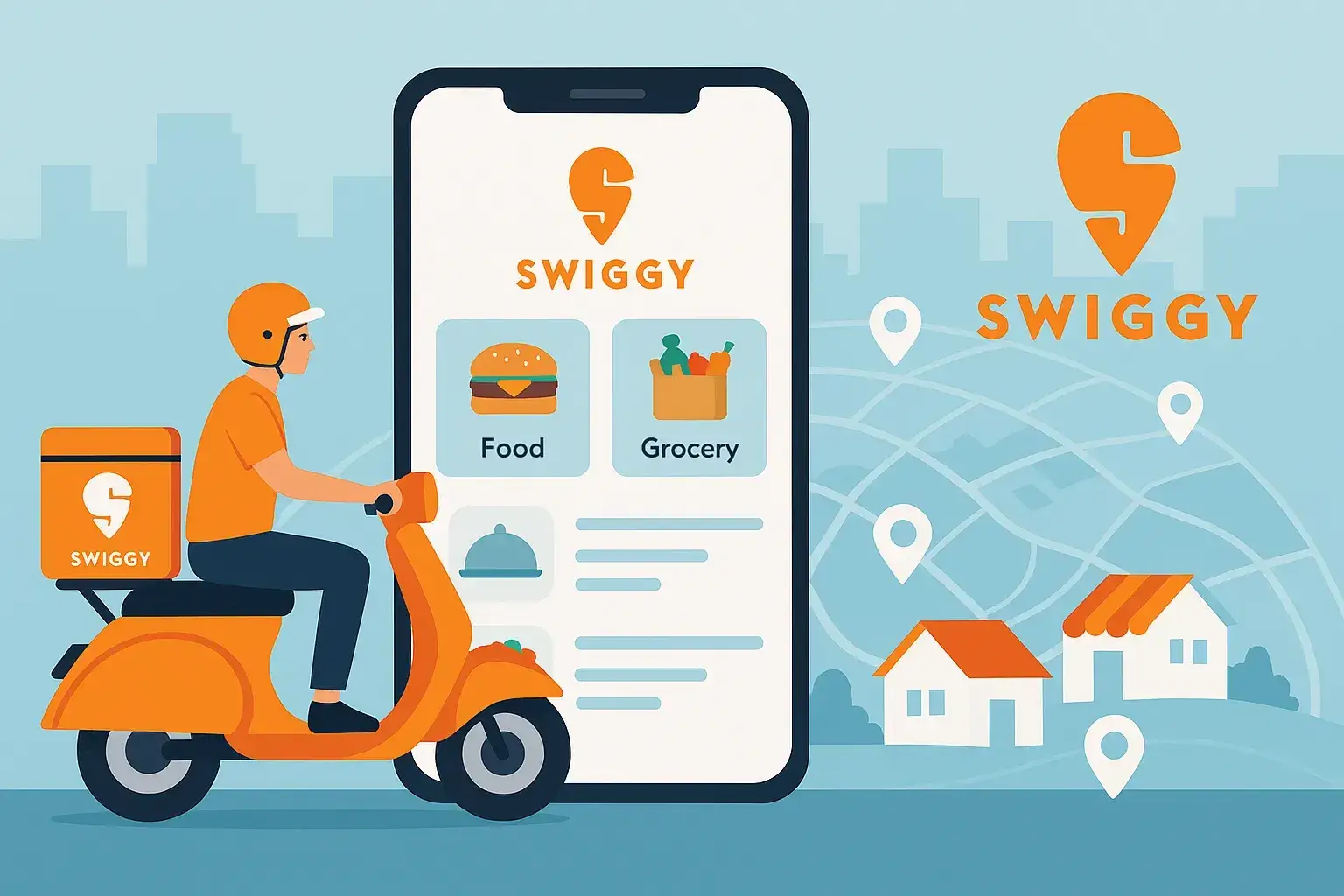
At its core, Swiggy is an on-demand food and grocery delivery platform that connects users with local restaurants, cloud kitchens, and stores. Through its app or website, customers can browse menus, place orders, and get food or essentials delivered to their doorstep within minutes.
The Core Problem It Solves
Before Swiggy, food delivery in India was inconsistent — long wait times, limited options, and unreliable tracking. Swiggy changed that by introducing a seamless digital experience, real-time tracking, and a massive delivery fleet that ensures customers can order from any restaurant, even those that don’t traditionally offer delivery.
Target Users and Use Cases
Swiggy caters to:
- Busy professionals who want quick meal options.
- Students looking for affordable local eats.
- Families ordering food together.
- Shoppers using Swiggy Instamart for groceries and essentials.
- Anyone needing quick pick-up and drop services through Swiggy Genie.
Current Market Position (2026 Data)
As of 2026, Swiggy holds a 48% market share in India’s online food delivery space, slightly ahead of Zomato in Tier-2 and Tier-3 cities. With over 50 million active users, Swiggy delivers more than 2.5 million orders per day across categories.
Why Swiggy Became Successful
Swiggy’s success lies in its hyperlocal logistics model, AI-driven order assignment, and customer-first approach. The platform doesn’t just connect restaurants to customers — it controls the full delivery chain, ensuring reliability and consistency. Its focus on innovation, from Instamart’s 10-minute deliveries to AI-powered personalized recommendations, has kept it far ahead of competitors.
Read more: Create a Food Delivery App Like Swiggy: Key Features, Cost, and Development Process
How Does Swiggy Work? Step-by-Step Breakdown
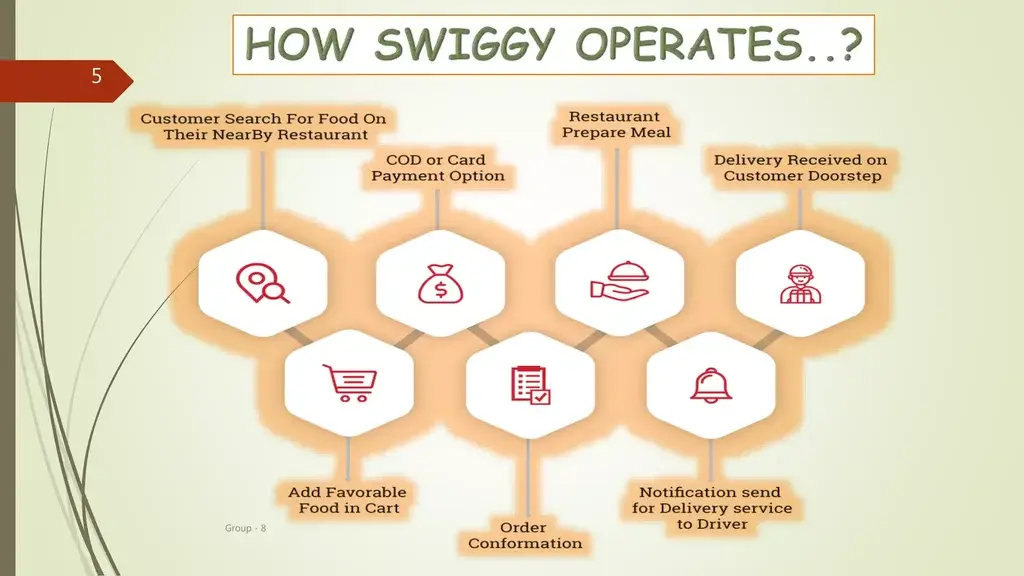
Swiggy’s magic lies in its three-way ecosystem — connecting users, restaurants (or stores), and delivery partners through a powerful digital platform. Let’s break down how it all works.
For Users
- Account Creation:
Users sign up using their phone number or Google account, set their location, and instantly see nearby restaurants or stores. - Browsing & Ordering:
The app shows curated menus, offers, ratings, and estimated delivery times. With smart search and filters, users can easily find cuisines, dishes, or brands. - Placing an Order:
Once an order is placed, the app auto-assigns a delivery partner and updates real-time progress — from “restaurant accepted” to “out for delivery.” - Payment Options:
Swiggy supports UPI, cards, wallets, and even “Swiggy Money” for quick checkouts. - Delivery Experience:
Orders arrive within 30–45 minutes for food or under 15 minutes for Instamart deliveries. Users can rate restaurants, delivery partners, and overall experience.
Example:
A user in Delhi orders a burger from Burger King. Swiggy finds the nearest outlet, assigns a delivery partner, tracks preparation and delivery in real-time, and delivers it in under 30 minutes — all visible on the app.
For Service Providers (Restaurants & Stores)
- Onboarding:
Restaurants register on Swiggy Partner App, upload menus, pricing, and photos. - Order Management:
Orders appear instantly on their dashboard. Once accepted, the restaurant prepares food while Swiggy handles delivery logistics. - Revenue Model:
Swiggy charges 15–25% commission per order, depending on location and order volume. Restaurants gain access to analytics, marketing tools, and premium visibility options.
For Delivery Partners
- Sign-Up Process:
Delivery executives register via the Swiggy Delivery Partner App, undergo verification, and choose flexible working hours. - Earnings & Commissions:
Partners earn per delivery plus bonuses during peak hours. Typical earnings in 2026 range between ₹25,000–₹45,000 per month, depending on city and hours. - Operational Flow:
Once assigned, the delivery partner picks up the order and delivers it using optimized route algorithms powered by Swiggy’s logistics engine.
Technical Overview (Simple)
Swiggy’s platform runs on a real-time order allocation system powered by AI and machine learning.
- It matches demand (orders) and supply (delivery partners) dynamically.
- Uses predictive algorithms to estimate preparation times.
- Relies on GPS, cloud servers, and microservices architecture for scalability and speed.
- Handles millions of simultaneous transactions daily with near-zero downtime.
Swiggy’s Business Model Explained
Swiggy’s business model revolves around convenience, scalability, and multi-service monetization. Over time, it has evolved from a simple food delivery app into a diversified hyperlocal commerce platform, generating income through multiple channels.
How Swiggy Makes Money (All Revenue Streams)
- Commissions from Restaurants & Stores:
Swiggy charges restaurants and stores 15–30% per order as commission. Premium partners with high visibility pay additional promotional fees. - Delivery Fees from Customers:
Users pay ₹25–₹50 per delivery, depending on distance, time, and surge hours. Instamart and Genie orders have separate dynamic delivery charges. - Swiggy One Membership:
A subscription plan offering free deliveries, priority support, and exclusive offers. In 2026, Swiggy One has over 5 million active subscribers, contributing to consistent recurring revenue. - Advertising & Sponsored Listings:
Restaurants and brands pay for in-app ads, banner placements, and priority search rankings, making it a significant non-delivery revenue stream. - Instamart (Quick Commerce):
Swiggy Instamart generates revenue through direct product margins, brand collaborations, and delivery fees for 10–20 minute grocery delivery. - Swiggy Genie (Pick-Up & Drop Service):
A commission-based model where users pay per delivery for errands or item transfers. - Corporate Partnerships & API Integrations:
Swiggy partners with corporate offices for bulk meal programs and white-label delivery integrations. - Swiggy Dineout (Restaurant Booking & Discounts):
Since acquiring Dineout in 2022, Swiggy earns via restaurant commissions, premium plans, and customer cashback offers.
Pricing Structure (2026 Snapshot)
| Service | Pricing / Commission | Revenue Source |
| Food Delivery | 15–30% commission | Restaurants |
| Instamart | 10–20% margin + delivery fee | Swiggy direct |
| Swiggy One | ₹299/month | Subscription |
| Delivery Fee | ₹25–₹50/order | Users |
| Swiggy Dineout | 5–10% commission | Restaurants |
| Ads & Promotions | ₹1,000–₹50,000/month | Merchants |
Market Size & Growth
The Indian food delivery market crossed $25 billion in 2026, growing at a CAGR of 18%. Swiggy, with its stronghold in both food and quick commerce, is capturing multiple market segments simultaneously. Instamart alone contributes 30% of total revenue, making it one of Swiggy’s fastest-growing divisions.
Profit Margin Insights
While still investing heavily in expansion, Swiggy achieved operational profitability in select metros in 2026, thanks to improved delivery logistics, dynamic pricing, and subscription retention.
Key Features That Make Swiggy Successful
Swiggy’s rise to dominance isn’t just about logistics — it’s about user experience, innovation, and trust. Each feature has been thoughtfully designed to solve real-world challenges while keeping the platform simple and enjoyable to use.
Top 10 Features That Define Swiggy’s Success
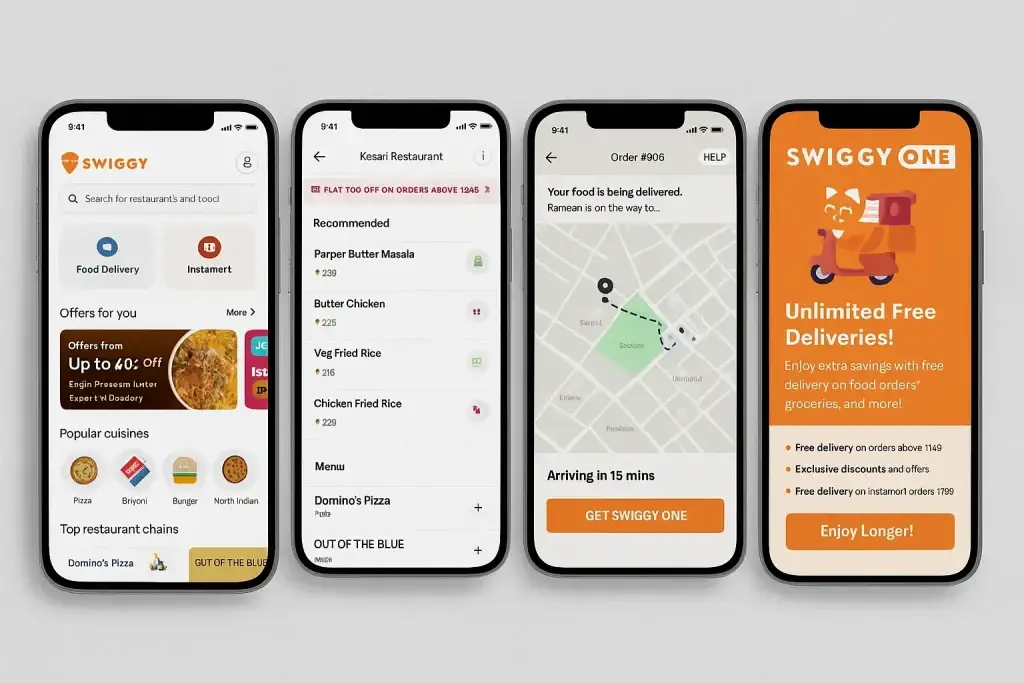
- Real-Time Order Tracking
Users can watch their order move from the kitchen to their door. The map view updates live, giving full transparency and reducing anxiety during long waits. - Smart Search & Recommendations
Swiggy’s AI analyzes user history and local trends to suggest the perfect meal or grocery combo. In 2026, it even suggests “Mood-based Meals” — like comfort food on rainy days. - Swiggy Instamart (10–20 Min Grocery Delivery)
Swiggy’s quick-commerce innovation now competes directly with Zepto and Blinkit, offering instant groceries through dark stores across major cities. - Swiggy Genie
A hyperlocal service that lets users send packages, pick up forgotten items, or deliver documents — making Swiggy a full-service local delivery app. - Swiggy One Membership
A single subscription covering free deliveries, priority service, and exclusive partner offers. This has built strong brand loyalty and steady revenue. - Scheduled Orders & Pre-Orders
Users can pre-schedule meals — a favorite among office-goers and party planners. It ensures restaurants prepare at the right time for hassle-free dining. - Group Orders & Party Mode
Swiggy’s group ordering system simplifies multiple selections from different users under one bill — perfect for families and corporate lunch sessions. - AI-Powered Logistics System
Swiggy uses machine learning for delivery partner assignment, route optimization, and demand prediction. It’s why orders arrive faster with fewer errors. - Personalized Offers & Gamified Rewards
Frequent users get custom coupons, streak rewards, and milestone badges — encouraging repeat orders while boosting retention. - Multi-Service Integration
The unified Swiggy app integrates food, groceries, dine-out, and parcel delivery in one ecosystem, giving users every convenience in a single interface.
Read more: Essential Swiggy Features for Delivery App Startups
Recent 2026 Updates
- Voice Ordering & Chatbot Support: Swiggy now supports in-app voice commands for searching and ordering.
- AI-Powered Restaurant Rating Predictor: Helps users decide where to order based on predicted satisfaction scores.
- Carbon Footprint Tracker: Users can see the environmental impact of each order — a move toward eco-conscious delivery.
What Sets Swiggy Apart
Unlike competitors that depend heavily on third-party logistics or separate apps, Swiggy’s unified approach creates speed, reliability, and emotional connection. Its deep integration with restaurants and data-driven personalization keeps users coming back daily.
The Technology Behind Swiggy
Swiggy’s technological foundation is what makes it one of the most efficient and scalable on-demand platforms in India. It combines real-time data processing, AI-driven optimization, and microservice-based architecture to deliver millions of seamless transactions daily.
Tech Stack Overview (Simplified)
Swiggy uses a modern, cloud-based architecture designed for high performance and scalability. Here’s a simplified look at the key components:
- Frontend: React Native (for mobile apps), React.js (for web)
- Backend: Node.js, Python (Flask/Django), Java (for legacy services)
- Database: PostgreSQL, MongoDB, Redis (for caching)
- Hosting & Cloud: AWS and Google Cloud Platform (GCP)
- Microservices: Docker and Kubernetes for container orchestration
- Payment Gateway: Razorpay, Paytm, UPI, and internal wallet APIs
This combination ensures fast loading times, quick updates, and seamless synchronization between users, restaurants, and delivery partners.
Real-Time Features
Swiggy’s hallmark is its ability to operate in real-time:
- Live Order Tracking: Uses GPS and WebSocket connections to constantly update delivery locations.
- Dynamic Order Allocation: AI automatically assigns the best-suited delivery partner based on location, traffic, and workload.
- Smart ETA Predictions: Machine learning models predict preparation and travel time with remarkable accuracy.
Data Handling and Privacy
Swiggy manages millions of user data points daily, so it prioritizes data security through:
- End-to-end encryption for transactions.
- Secure tokenization for payments.
- Anonymized analytics for personalization without compromising privacy.
It also complies with India’s Digital Personal Data Protection Act (DPDP 2023) and global best practices in user data management.
Scalability Approach
Swiggy’s microservices model allows independent scaling of services like payments, tracking, or menu management. During festival seasons or IPL matches — when orders spike by up to 300% — Swiggy can scale automatically using AWS autoscaling and Kubernetes clusters.
Mobile App vs Web Platform
While the Swiggy app remains its primary channel (accounting for 85% of orders), the web platform supports office and desktop users with integrated features like Dineout booking and bulk orders. Both platforms sync seamlessly through cloud APIs.
API Integrations
Swiggy’s APIs connect with:
- Payment gateways
- Restaurant POS systems
- Marketing & CRM tools
- Third-party logistics partners (for remote zones)
This open ecosystem allows Swiggy to expand without rebuilding from scratch — ideal for scaling to new markets or integrating new verticals.
Why This Tech Matters for Business
By blending AI, automation, and reliable cloud infrastructure, Swiggy ensures:
- Faster deliveries
- Reduced operational costs
- Personalized experiences
- Long-term scalability
It’s the backbone of Swiggy’s dominance — enabling millions of orders with precision and minimal downtime.
Swiggy’s Impact & Market Opportunity
Swiggy has gone far beyond being just a food delivery service — it has redefined how India experiences convenience. From empowering local restaurants to building one of the country’s largest gig workforces, Swiggy’s impact reaches economic, social, and technological levels.
Industry Disruption
Before Swiggy, food delivery in India was largely unorganized. Swiggy brought:
- Real-time tracking and reliability to local food delivery.
- Data-driven demand forecasting that helps restaurants scale.
- New economic opportunities for delivery partners and small businesses.
Swiggy’s “logistics-as-a-service” model inspired dozens of startups — not just in food, but in medicine delivery, grocery logistics, and hyperlocal services.
Market Statistics and Growth (2026)
- Valuation: Over $10.2 billion, making it one of India’s top decacorns.
- Active Users: 50+ million monthly active customers.
- Delivery Partners: 350,000+ across India.
- Restaurants Listed: Over 200,000 nationwide.
- Order Volume: 2.5+ million deliveries per day.
- Instamart Share: 30% of total Swiggy revenue, growing at 28% YoY.
These numbers show Swiggy’s growing role in India’s $25 billion online delivery market.
User Demographics and Behavior
Swiggy’s audience spans:
- Millennials & Gen Z (18–35 years) — 70% of its user base.
- Tier-2 and Tier-3 city users — fastest-growing segment in 2026.
- Working professionals who use Swiggy 4–5 times a week for convenience.
- Families using Instamart for groceries and essentials.
Behavioral trends show that late-night orders and 10-minute groceries are among Swiggy’s most popular services.
Geographic Presence
Swiggy operates in 650+ Indian cities, including top metros like Bengaluru, Mumbai, Delhi, and emerging regions like Guwahati, Indore, and Kochi.
It’s also exploring cross-border cloud kitchen collaborations in the UAE and Southeast Asia — marking the first phase of its international ambition.
Future Projections
Experts predict that by 2027, Swiggy could serve 5 million orders per day and expand its quick-commerce network to 1,000+ dark stores. AI-driven personalization and sustainability initiatives will remain key growth pillars.
Opportunities for Entrepreneurs
Swiggy’s journey shows how massive the on-demand service opportunity is — not just for food, but for:
- Grocery and medicine delivery
- Hyperlocal logistics
- Niche delivery startups (pet food, gifts, etc.)
- White-label delivery SaaS models
Entrepreneurs looking to build similar platforms can tap into this multi-billion-dollar ecosystem with the right technology and scalability mindset.
Transition:
This massive success is why many entrepreneurs today are looking to create Swiggy-like platforms that offer convenience, reliability, and scalability — all while capturing their local markets efficiently.
Building Your Own Swiggy-Like Platform
Creating an app like Swiggy isn’t just about food delivery — it’s about building a robust ecosystem that connects local businesses, customers, and delivery partners under one seamless experience. Entrepreneurs today can tap into this growing demand by launching custom Swiggy-like solutions tailored to their target markets.
Why Businesses Want Swiggy Clones
- Proven Business Model:
Swiggy’s success demonstrates that on-demand delivery works — whether for food, groceries, or essentials. - High Scalability:
The same core technology can power multiple verticals — like restaurants, pharmacies, or grocery chains. - Faster Market Entry:
With ready-made Swiggy clone scripts, startups can launch in weeks, not months. - Lucrative Returns:
High user retention, recurring orders, and multi-stream monetization make it a profitable model.
Key Considerations for Development
- Platform Type: Decide between food-only or multi-service (food + grocery + parcel).
- Local Vendor Partnerships: Build strong relationships for reliability and retention.
- Delivery Network: Create efficient logistics with incentives for delivery partners.
- Payment Integration: Enable multiple options — UPI, cards, wallets, and COD.
- Regulatory Compliance: Ensure licensing, food safety, and data protection adherence.
Global Cost Factors & Pricing Breakdown
The technology stack behind your platform plays a major role in how much it costs, how fast it can launch, and how efficiently it can handle food delivery operations as it grows. Some businesses need a faster and more affordable launch, while others require a more advanced setup to manage high order volumes, real-time delivery tracking, and multi-city expansion.
Here is a simple comparison of common global development approaches for a Swiggy-like food delivery platform:
PHP/Laravel is often the most practical choice for launching a Swiggy-like food delivery platform quickly and affordably. Node.js/Python fits better when real-time order tracking and heavier data movement become more important, while Go microservices are better suited for enterprise-scale Swiggy-like platforms with higher concurrency and more complex infrastructure needs.
Miracuves Swiggy-Like App Solution Cost and Tech Stack
Miracuves Pricing for a Swiggy-Like Food Delivery App developed in PHP/Laravel with Flutter Apps for $3,399 USD (One-Time Price) in just 6 days
Get a fully developed, deployment-ready platform modeled after Swiggy. Built on a rock-solid PHP/Laravel foundation, this complete package includes everything you need to launch and scale:
- Core Workflows: Food delivery operations, restaurant listings, order management, and real-time delivery tracking.
- Built-in Finance: In-app wallet logic, dynamic pricing, delivery charges, and seamless payment integrations.
- Management Hub: Comprehensive restaurant, delivery partner management, and a centralized admin backend.
- Launch-Ready: Fully prepped for your custom branding, configuration, and immediate market entry.
Why Is Swiggy-Like App Development More Affordable?
Most advanced food delivery platforms push businesses toward expensive architectures like Node.js or Go. Building from scratch with those frameworks requires highly specialized, expensive engineering teams, which drives the cost into the tens or hundreds of thousands of dollars.
We took a smarter, more practical approach:
- You Aren’t Paying for Ground-Up Development: Our food delivery engine is already developed, battle-tested, and ready to deploy. You skip the inflated costs and months of waiting associated with building from scratch.
- The Power of PHP / Laravel: We built this on one of the most reliable, globally adopted frameworks in the world. Not only does this keep our upfront costs down, but it also protects your future budget. PHP has a massive global talent pool, making it incredibly easy and cost-effective for you to find developers for future scaling or customizations.
You get an enterprise-capable, heavy-duty foundation without the inflated development cost.
Note: This cost is for the solution, re-branding, deployment, and source code only.
Conclusion
Swiggy has redefined convenience in India’s digital economy — merging food, groceries, and on-demand logistics into one unified experience. Its success is built on cutting-edge technology, customer obsession, and operational excellence that continuously sets new industry standards.
As India embraces the digital lifestyle even more deeply, Swiggy’s model will inspire a new generation of entrepreneurs to build smarter, faster, and more inclusive delivery ecosystems.
Partner with Miracuves to turn your idea into a powerful on-demand delivery platform in just days. Contact us here to get a free consultation and start your journey today!
FAQs
How does Swiggy make money?
Through restaurant commissions (15–30%), delivery fees, ads, subscriptions, and Instamart revenue.
Is Swiggy available in my country?
Swiggy serves 650+ Indian cities and is expanding to UAE and Southeast Asia in 2026.
How much does Swiggy charge users?
Delivery fees range from ₹25–₹50; Swiggy One members enjoy free and faster deliveries.
What’s the commission for restaurants?
Restaurants pay 15–30% per order, based on city, order volume, and promotions.
How does Swiggy ensure safety?
By using verified partners, hygiene-rated restaurants, and 24/7 support with tracking.
Can I build something like Swiggy?
Yes, with Miracuves’ ready Swiggy clone solution — customizable and launch-ready.
What makes Swiggy different from competitors?
It offers faster delivery, AI-driven personalization, and a complete on-demand ecosystem.
How many users does Swiggy have in 2026?
Over 50 million active users and 2.5+ million daily orders across India.
What technology does Swiggy use?
React Native, Node.js, Python, AWS, and Kubernetes power its scalable platform.
How can I create an app like Swiggy?
Use Miracuves’ Swiggy Clone with full apps, admin panel, and AI-powered logistics.
Related Articles:
Miracuves is an independent software development company. We are not affiliated with, connected to, sponsored by, or endorsed by any company or product named in this article.
Terms such as “X Clone” are used descriptively. It is how the software industry refers to building a platform with functionality comparable to a known service, and how clients search for it.
The entire design and codebase of our products is built by our own team. Our products contain no code, design, graphics, or content originating from any third-party website or applications.
All third-party names and marks referenced in this article are the property of their respective owners, referenced solely to identify the services discussed.