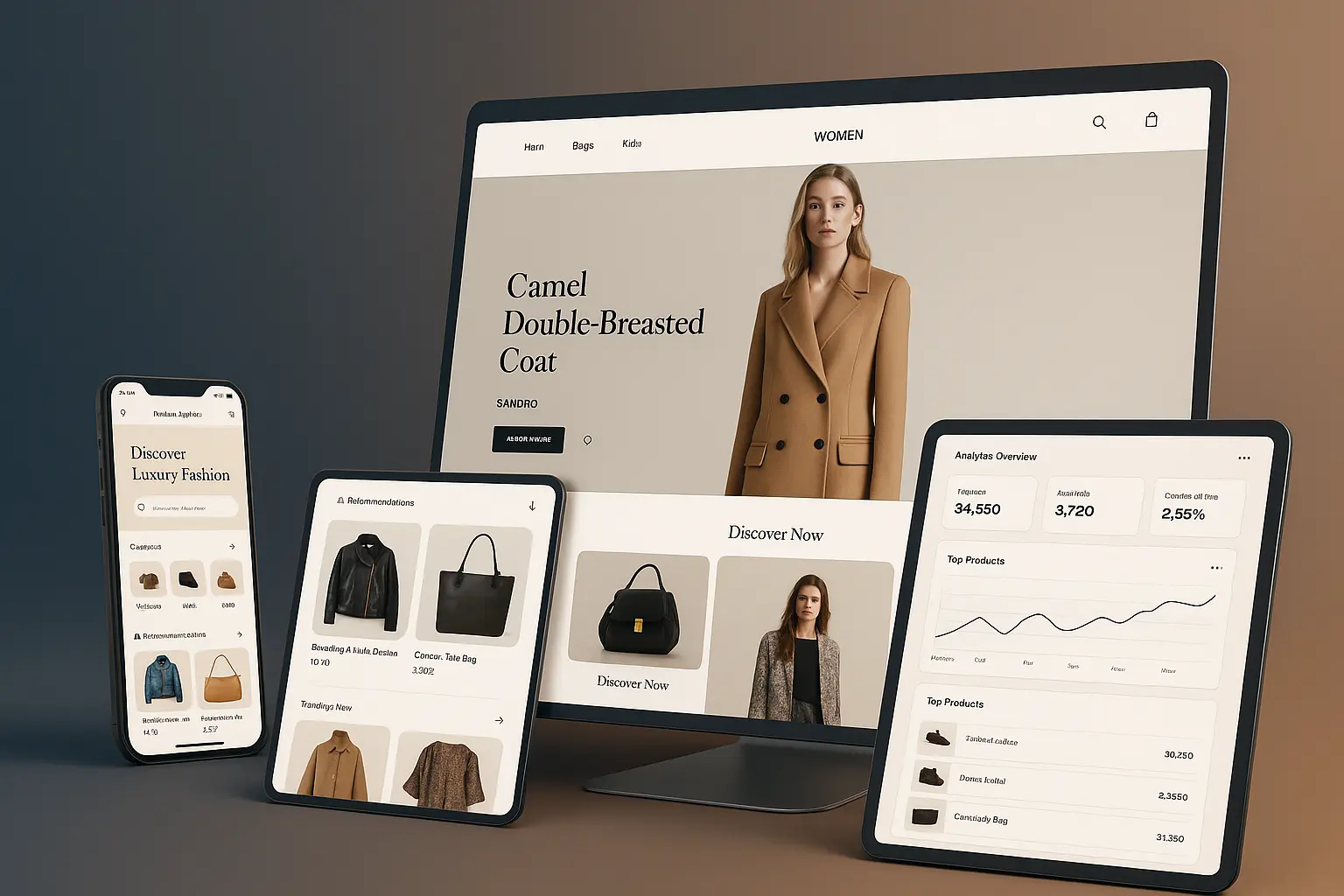
From a small London startup to a billion-dollar global luxury fashion platform, Farfetch has redefined how consumers discover and purchase high-end designer items online. In 2025, the fashion-tech market continues to thrive — projected to surpass $1.2 trillion globally, driven by AI personalization, real-time inventory systems, and social commerce trends. Entrepreneurs worldwide are now tapping into this growth wave using Farfetch Clone Scripts to build premium marketplaces quickly and affordably.
For founders, understanding the Farfetch model isn’t just about replicating design — it’s about decoding its ecosystem: multi-vendor operations, curated branding, and seamless cross-border logistics. The Miracuves Farfetch Clone provides this entire framework — ready to launch within 30–90 days, empowering entrepreneurs to step into the luxury eCommerce arena with speed, scalability, and ownership.
What Makes a Great Farfetch Clone?
A great Farfetch Clone in 2025 isn’t just a marketplace — it’s a tech-driven luxury ecosystem. To compete in the fast-evolving online fashion space, your platform must deliver speed, scalability, personalization, and seamless user experience. Today’s customers expect more than just listings; they expect curated storytelling, trusted brands, and one-click convenience.
At its core, a successful Farfetch Clone combines four vital pillars:
- Performance: Pages load under 2 seconds with a backend response time below 300ms, ensuring smooth navigation across mobile and web.
- Scalability: Cloud-native architecture supporting 10,000+ concurrent users with automated load balancing.
- UI/UX Excellence: Premium, minimalistic design reflecting luxury aesthetics — intuitive product filters, wishlist features, and immersive product galleries.
- Monetization Potential: Multiple revenue channels like commission fees, vendor subscriptions, and exclusive brand collaborations.
In 2025, emerging technologies shape what defines a “great” clone. Integrating AI-driven product recommendations, blockchain-based authenticity verification, and AR virtual try-on experiences isn’t optional anymore — it’s essential for retaining discerning customers.
Modern Farfetch Clone Differentiators (2025 Comparison Table)
| Feature Aspect | Standard eCommerce Platforms | Modern Farfetch Clone (Miracuves) |
|---|---|---|
| Response Time | 800ms–1s | Under 300ms optimized with CDN |
| Uptime Reliability | 97–98% | 99.9% with cloud auto-scaling |
| User Experience | Generic templates | Luxury-focused minimal UI/UX |
| Technology Stack | PHP-based | Node.js + React + Flutter |
| AI Integration | Limited | Smart recommendations + AR try-on |
| Monetization Options | 1–2 channels | 5+ diversified revenue streams |
Essential Features Every Farfetch Clone Must Have
A high-performing Farfetch Clone App thrives on how well its ecosystem connects users, brands, and technology. To mirror the sophistication of Farfetch’s global platform, each layer — from user experience to backend management — must deliver both functionality and emotional engagement.
1. User Side – Experience & Retention
Modern users demand convenience, discovery, and trust. The Farfetch Clone by Miracuves focuses on creating a seamless shopping journey:
- Personalized Feed: AI-driven recommendations based on browsing behavior, fashion style, and purchase history.
- Advanced Search & Filters: Multi-layered filters by designer, price range, style, color, and size.
- AR Try-On Experience: Virtual fitting room powered by 3D product visualization.
- Wishlist & Notifications: Real-time alerts for price drops, new arrivals, and restocks.
- Multi-Currency & Multilingual Support: For global buyers across regions like Europe, Asia, and the Middle East.
2. Vendor / Brand Panel – Powering Global Designers
Vendors need full control over inventory, pricing, and order management. The Miracuves Farfetch Clone ensures brand empowerment through:
- Dedicated Storefront: Each brand gets a customizable mini-site within the platform.
- Real-Time Analytics: Track sales, customer insights, and conversion metrics.
- Automated Inventory Sync: API-based stock updates to avoid over-selling.
- Commission & Payout Dashboard: Transparent reporting of every transaction.
3. Admin Panel – Total Control & Automation
For entrepreneurs, the admin panel is where business intelligence meets automation.
- Comprehensive Dashboard: Track active users, live orders, revenue flow, and vendor stats.
- AI-Powered Insights: Predict trends and automate campaign suggestions.
- Multi-Level Access Control: Assign roles for managers, moderators, and finance teams.
- Security Framework: AES-256 encryption, SSL authentication, and GDPR compliance.
4. Advanced 2025 Innovations
The Miracuves Farfetch Clone integrates AI-based product tagging, blockchain verification for authenticity, and voice commerce features to future-proof operations. Scalability ensures handling 50K+ products without lag, while integrated APIs streamline logistics and marketing automation.
Feature Comparison Table: Basic vs Professional vs Enterprise
| Feature Set | Basic | Professional | Enterprise |
|---|---|---|---|
| User Profiles & Product Listings | ✅ | ✅ | ✅ |
| Vendor Management | ❌ | ✅ | ✅ |
| AI Recommendations | ❌ | ✅ | ✅ |
| AR Try-On | ❌ | ❌ | ✅ |
| Multi-Currency Support | ✅ | ✅ | ✅ |
| Blockchain Verification | ❌ | ❌ | ✅ |
| Real-Time Analytics | ❌ | ✅ | ✅ |
| Delivery Integration | ✅ | ✅ | ✅ |
| Custom Branding | ❌ | ✅ | ✅ |
| Support Period | 30 Days | 60 Days | 90 Days |
Real Cost & Investment Analysis
Building a Farfetch-style luxury fashion marketplace in 2025 requires a deep understanding of high-end UI/UX, multi-vendor curation, luxury product workflows, long-term operational costs, and ROI potential. Luxury marketplaces operate at high volume, depend heavily on brand-grade visuals, and must deliver an exceptionally smooth browsing experience. Without proper planning, founders often overspend, miscalculate operational expenses, or underestimate timelines.
Creating a full-scale Farfetch-like platform from scratch can take 6–12 months and costs between $70,000 and $300,000, depending on region, expertise, and tech stack. This is why modern founders increasingly choose ready-made Farfetch-style marketplace frameworks that significantly reduce development cost and time-to-market — enabling faster go-live, lower investment risk, and more budget allocation toward branding, influencer partnerships, and designer onboarding.
Luxury marketplaces also include hidden operational costs that many founders ignore. These include server costs for ultra-high-resolution images, content moderation workflows, advanced catalog systems, fraud prevention, and returns/exchange automation. With Miracuves’ optimized architecture and in-built marketplace modules, these recurring expenses are significantly reduced to more predictable ranges.
Hidden Costs Entrepreneurs Must Consider
- High-volume cloud hosting & CDN usage (luxury images require high bandwidth)
- High-resolution asset storage, compression & optimization
- Payment gateway fees, international currency conversion, fraud prevention
- Returns, exchange & reverse logistics workflows
- Security compliance (GDPR, PCI-DSS)
- Product tagging, brand categorization, multi-vendor catalog management
- Mobile app publishing, renewals & ongoing updates
- Continuous enhancements, new features & marketplace rollout cycles
ROI Examples for Luxury Fashion Marketplaces
- Luxury marketplaces often experience higher AOV due to premium product pricing and curated selections
- Designer marketplaces can scale to $500K–$1.5M ARR within 12–18 months through:
- Brand storefront subscriptions
- Sponsored placements
- Seasonal curated edits
- Influencer-driven drops
- Commission-based revenue
- Premium product authentication add-ons
- Strong repeat-buyer behavior increases LTV (Lifetime Value), creating sustainable long-term ROI
Time-to-Market Comparison (2025)
| Development Model | Launch Time | Reliability | Long-Term Cost | Scalability |
|---|---|---|---|---|
| DIY Builders | 12–18 months | Low | High | Low |
| Freelancers | 8–14 months | Medium | Medium–High | Limited |
| Traditional Agencies | 6–12 months | High | Very High | High |
This outlines the global market landscape for developing a Farfetch-style luxury marketplace in 2025.
Read More : What is Farfetch and How Does It Work?
Cost Factors & Pricing Breakdown
Farfetch-Like Marketplace Development — Market Price
| Development Level | Inclusions | Estimated Market Price (USD) |
|---|---|---|
| 1. Basic Luxury Fashion MVP | Premium storefront, designer product listings, cart & checkout, single payment gateway, catalog system, standard admin panel | $40,000 |
| 2. Mid-Level Designer Marketplace | Web + mobile-ready UI/UX, multi-vendor brand onboarding, curated collections, advanced filters, analytics dashboard, shipping integrations | $120,000 |
| 3. Advanced Farfetch-Level Platform | Multi-vendor luxury marketplace, AI search, custom themes, product authentication, returns workflow, multi-currency, native apps, enterprise scalability | $250,000+ |
Farfetch-Style Marketplace Development
The prices above reflect the global market cost of developing a Farfetch-style luxury ecommerce marketplace — typically ranging from $40,000 to over $250,000, with delivery timelines of 6–12 months, depending on functionality, integrations, and scalability needs.
Miracuves Pricing for a Farfetch-Style Platform
Miracuves Price: Starts at $13,333
This pricing is positioned for a feature-rich, multi-vendor luxury marketplace platform that includes essential modules such as designer onboarding, catalog management, curated collections, advanced filtering, and mobile app support — with the flexibility to expand into enterprise-grade features as required.
Note:
This includes full non-encrypted source code, complete deployment support, backend and API setup, admin panel configuration, and assistance with publishing on the Google Play Store and Apple App Store — ensuring your marketplace is fully operational and launch-ready.
Get Your Farfetch-Style Luxury Marketplace — Contact Us Today
Delivery Timeline for a Farfetch-Style Platform with Miracuves
A typical development timeline for a Farfetch-style platform is 30–90 days, depending on:
- Scope of multi-vendor / multi-brand modules
- Required payment gateways, tax rules, and regions
- Level of custom UI/UX design
- Product authentication, curation & returns workflows
- Extent of plugin ecosystem, APIs, and third-party integrations
Tech Stack
We preferably will be using JS for building the entire solution and the flutter / react js for apps considering speed, scalability and one code for multi platforms to have less effort managing and further development. Other tech stacks can be discussed and arranged upon request.
Customization & White-Label Options
Launching a Farfetch-style luxury marketplace requires more than a basic ecommerce template. Luxury shoppers expect premium UI/UX, high-resolution visuals, personalized recommendations, smooth navigation, and a curated shopping experience. To stand out in the luxury fashion industry, your platform must reflect your brand identity, niche focus, and customer experience goals — which makes customization essential.
Miracuves offers a fully white-label Farfetch-style solution that adapts to your brand’s visual language, marketplace structure, product workflows, vendor systems, and long-term scaling goals. Whether you’re building a designer marketplace, boutique network, or premium multi-brand platform, the system can be tailored precisely to your requirements.
Why Customization Matters
Luxury ecommerce is dynamic and visually driven. Founders often need:
- A unique UI/UX tailored to luxury fashion
- High-quality product grids, editorial-style pages, and lookbook modules
- Flexible vendor workflows for designer onboarding
- Advanced filters for sizes, fits, fabrics, and curated collections
- Integration of AI-based styling and recommendation engines
- Region-specific tax, shipping, and marketplace logic
Customization ensures your Farfetch-style marketplace delivers an elevated, premium, and high-converting customer journey.
What You Can Customize
UI/UX & Branding
Custom themes, luxury typography, product cards, editorial banners, collection pages, and homepage layouts optimized for fashion discovery.
Workflow Enhancements
Vendor onboarding, product approvals, authentication workflows, returns/exchange logic, curated collections, and styling workflows.
Feature-Level Upgrades
AI recommendations, trend engines, designer storefronts, content blocks, and curated editorial modules.
Marketplace Structure Adaptation
Support for single-brand, multi-brand, boutique networks, or hybrid B2C + C2C selling models.
Full White-Label Branding
Custom domain, logo, icon sets, brand identity kit, and complete visual personalization for web + mobile apps.
Backend Integrations
Logistics APIs, CRM tools, influencer platforms, analytics dashboards, ERP systems, and inventory management.
Monetization Add-Ons
Vendor subscriptions, sponsored placements, promoted products, premium seller tiers, lookbook ads, and seasonal campaign modules.
How Miracuves Handles Customization
- Requirement Analysis
Understanding your brand vision, target audience, platform goals, and design direction. - Sprint Planning
Requirements are broken into micro-sprints for predictable execution. - Design & Development
UI/UX modifications, layout enhancements, backend workflows, and integration modules built as needed. - Testing & Quality Assurance
Ensuring performance, usability, responsiveness, and security validation. - Deployment
Your fully customized, white-label Farfetch-style marketplace goes live with complete backend + app setup.
Real Examples from the Miracuves Portfolio
Miracuves has delivered 600+ customized ecommerce solutions, including:
- Multi-brand luxury fashion marketplaces
- Boutique & designer apparel platforms
- High-fashion resale marketplaces
- Influencer-led apparel & accessories destinations
- Curated boutique networks & premium storefronts
Launch Strategy & Market Entry
Building your Farfetch Clone is only half the journey — the real success lies in how you launch and scale it. In 2025’s hyper-competitive eCommerce landscape, a strategic, data-driven launch plan determines whether your platform becomes the next breakout marketplace or fades into digital noise. Miracuves empowers founders not only with ready-made technology but also with a proven market entry and growth roadmap.
1. Pre-Launch Checklist
Before going live, ensure every part of your system and business flow is bulletproof:
- Functional Testing: End-to-end QA of checkout, vendor onboarding, and payments.
- Performance Audit: Optimize load times to under 2 seconds across all devices.
- Security Compliance: Ensure GDPR, PCI DSS, and ISO 27001 alignment.
- App Store Readiness: Properly formatted listings, preview images, and optimized metadata.
- Marketing Collateral: Create social teasers, influencer previews, and email drip sequences.
2. Regional Market Entry Strategies
Each region demands localized strategy and infrastructure:
- Asia: Leverage celebrity influencer marketing and integrate local wallets like Paytm or Alipay.
- MENA: Focus on multilingual UX (Arabic-English) and luxury brand partnerships.
- Europe: Prioritize sustainability messaging, eco-friendly logistics, and EU-compliant taxation.
- U.S.: Tap into TikTok and Instagram fashion trends with referral and loyalty programs.
3. User Acquisition & Retention Framework
A scalable growth model combines organic traction with performance-driven campaigns.
- Influencer & Creator Partnerships: Collaborate with micro-influencers for niche credibility.
- Referral Loops: Offer users incentives for bringing new customers or vendors.
- Personalized Onboarding: Use AI onboarding flows to tailor experience from first login.
- Push & Email Automation: Re-engage inactive users with curated fashion drops and exclusive deals.
4. Monetization Models That Work in 2025
Miracuves’ Farfetch Clone supports multiple revenue streams to diversify income:
- Commission-Based: 10–20% per transaction, ideal for early-stage startups.
- Vendor Subscriptions: Premium monthly plans for featured placement and analytics tools.
- Brand Collaborations: Sponsored sections for exclusive designer collections.
- Affiliate Program: Earn from traffic-driven conversions through partner sites.
5. Miracuves’ End-to-End Launch Support
Miracuves doesn’t stop at deployment — it provides full post-launch assistance covering:
- Server setup & load testing.
- SEO & app store optimization guidance.
- Marketing automation integration.
- First 90-day growth plan including retention funnels and analytics training.
By combining rapid setup with a structured market strategy, founders can launch globally-ready marketplaces in under 90 days, leveraging Miracuves’ expertise in both technology and go-to-market execution.
Why Choose Miracuves for Your Farfetch Clone
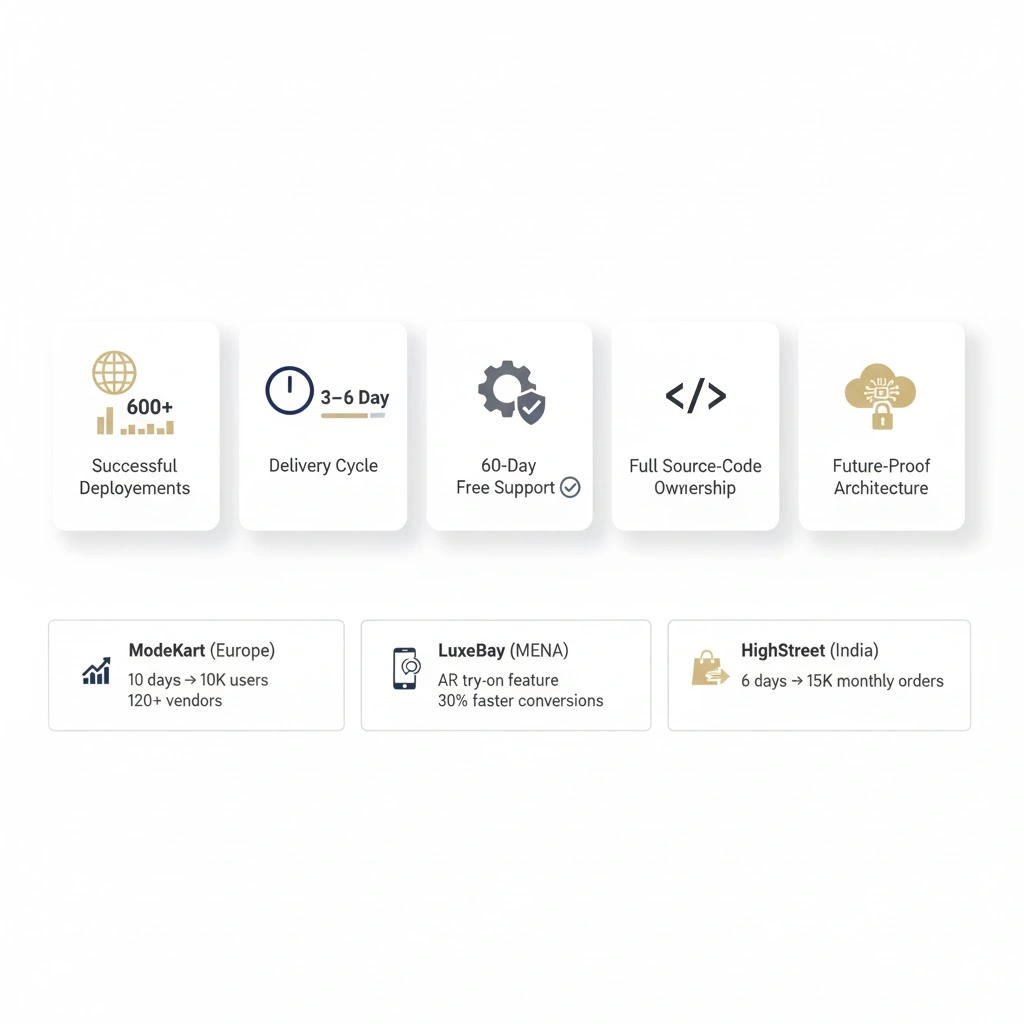
In a crowded digital market where countless agencies promise speed and scalability, Miracuves stands apart as a technology partner built for founders — not freelancers. The company’s approach combines deep technical expertise with a startup-centric mindset, making it the preferred choice for entrepreneurs aiming to replicate Farfetch’s luxury eCommerce success.
Miracuves’ Core Strengths
- 600+ Successful Deployments: Proven experience across 25+ countries and multiple industries including fashion tech, SaaS, and logistics. Each deployment is battle-tested for performance and reliability.
- Free 60-Day Post-Launch Support: Continuous assistance with bug fixes, performance optimization, and system upgrades to ensure smooth business scaling.
- Full Source-Code Ownership: Unlike SaaS-based resellers, Miracuves provides 100% access to source code, giving founders total freedom to customize and expand.
- Future-Proof Architecture: Built using Node.js, React, Flutter, and MongoDB — optimized for 99.9% uptime, multi-cloud deployment, and AI readiness.
Miracuves’ Promise to Founders
When you choose Miracuves, you’re not just buying code; you’re gaining a complete launch ecosystem. The platform handles everything from app setup to growth tracking, empowering you to focus on what truly matters — building your brand.
Final Thought
The luxury fashion industry is evolving faster than ever — powered by technology, personalization, and a new wave of digital-first consumers. Entrepreneurs entering this space need more than just an app; they need a complete ecosystem that delivers value, trust, and speed.
A Farfetch Clone Script is not merely a shortcut; it’s a strategic foundation to replicate a proven business model while avoiding years of trial and error. With Miracuves’ clone solutions, founders can bridge the gap between vision and execution — launching market-ready platforms in 30–90 days, backed by full source-code ownership and end-to-end technical support.
In a world where innovation moves by the second, those who act fast lead the market. Miracuves empowers founders to launch faster, scale smarter, and own their digital destiny. The future of fashion commerce is not just about style — it’s about smart execution, and Miracuves ensures you’re always a step ahead.
Ready to launch your Farfetch Clone and dominate the luxury fashion eCommerce space? Get a free consultation and a detailed project roadmap from Miracuves — trusted by over 200 global entrepreneurs to turn app ideas into revenue-ready ventures.
FAQs — Farfetch Clone Script (Miracuves)
1. How quickly can Miracuves deploy my Farfetch Clone?
Miracuves can deliver a ready-to-launch Farfetch Clone within 30–90 days, depending on customization and feature scope.
2. What’s included in the Miracuves clone package?
Each package includes a user app, vendor panel, and admin dashboard with built-in features like multi-currency support, analytics, and secure payments.
3. Can I get full source-code access?
Yes — Miracuves provides 100% source-code ownership, allowing you full freedom to customize, rebrand, or scale your platform.
4. How does Miracuves ensure scalability?
The clone is built with a cloud-native, modular architecture capable of handling 10,000+ concurrent users and 99.9% uptime.
5. Does Miracuves assist with app store approval?
Absolutely. The team supports you throughout app store and Play Store submission, ensuring compliance with all listing guidelines.
6. Is post-launch maintenance included?
Yes, you receive free 60-day post-launch support covering bug fixes, performance optimization, and deployment assistance.
7. Can Miracuves integrate custom payment gateways?
Yes. The solution supports integration with PayPal, Stripe, Razorpay, crypto wallets, and regional gateways like Paytm or Alipay.
8. What’s the upgrade/update policy?
Clients receive regular updates for framework improvements, security patches, and new feature releases aligned with global trends.
9. How does white-labeling work?
Your clone app is launched under your own brand name, logo, and domain, with no reference to Miracuves — a complete white-label setup.
10. What kind of ongoing support can I expect?
Beyond initial delivery, Miracuves offers custom upgrade plans, marketing guidance, and technical maintenance for long-term growth.
Related Articles
- Best Etsy Clone Scripts in 2025: Features & Pricing Compared
- Best Walmart Clone Scripts in 2025: Features & Pricing Compared
- Best OneCart Clone Scripts in 2025: Features & Pricing Compared
- Best ASOS Clone Script 2025 – Launch Your Fashion Marketplace in Days
- Best Shein Clone Scripts 2025 – Build Your Global Fashion App Fast