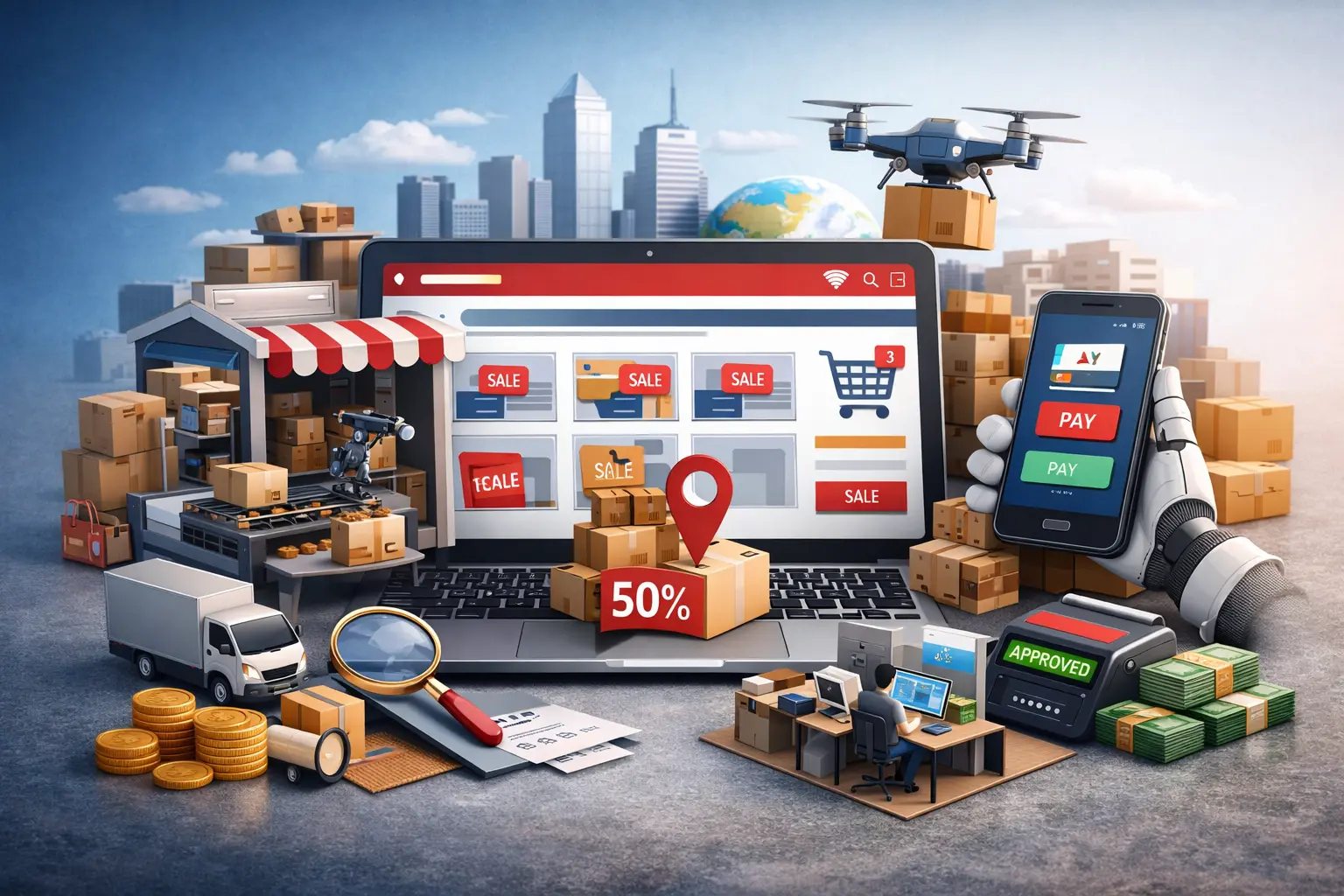
In ecommerce, brands don’t get “revived” unless there’s real demand behind the name. That’s why the 2024 relaunch of Overstock.com grabbed attention: a comeback built around what shoppers never stop chasing—crazy-good deals and a familiar bargain-hunter experience.
But Overstock’s story is bigger than discounts. It’s a playbook for entrepreneurs: start with a sharp value proposition, build trust through consistent customer experience, and scale with operational discipline. The company’s journey includes major strategic moves—like winning the $21.5 million bid for Bed Bath & Beyond’s name and digital assets (a reminder that brand + traffic + data can be as valuable as inventory).
So why does this clone model matter in 2025? Because ecommerce is still expanding, but competition is tighter and customer acquisition is pricier—meaning your platform must be faster to launch, clearer to position, and smarter in retention from day one. eMarketer projected US ecommerce sales growth of 5.0% in 2025 (a “steady, not explosive” market where execution wins).
In this guide, we’ll break down what it takes to build a modern Overstock-style marketplace using Best Overstock Clone Scripts 2025, including the strategy, features, and product decisions founders need to get right. And we’ll show how Miracuves Clone Solutions helps entrepreneurs launch an Overstock clone with scalable architecture, strong UX, and a revenue-ready foundation—without the delays and guesswork that kill momentum.
What Makes a Great Overstock Clone?
A great Overstock clone in 2025 isn’t “an ecommerce website with discounts.” It’s a deal-first marketplace system built to handle fast-moving inventory, price-sensitive shoppers, and high mobile traffic—without lag, broken search, or messy returns. Overstock’s own positioning is literally about finding “the best online deals” across home-focused categories, which means your clone must win on discovery and trust as much as price.
In practical terms, the strongest Overstock Clone Development builds are the ones that feel effortless: users land, immediately see relevant deals, filter in seconds, compare options, and checkout without friction. That “effortless” experience is a technical achievement—your storefront, search, pricing engine, and inventory layer must stay stable during traffic spikes, promotions, and catalog refreshes. Google’s Core Web Vitals guidance is a useful north star for this: keep the main content loading fast (LCP target within 2.5s) and interactions responsive (INP under 200ms) so the store feels smooth on real devices.
A great clone in 2025 is also “AI-native,” but in a responsible way. AI influences how people shop (chatbots, guided discovery, automated support), and retailers are actively using AI to drive smarter merchandising and pricing strategies. That means your Best Overstock Clone Scripts 2025 should include AI that improves conversion and reduces operational load—not AI that confuses users or damages trust. At the same time, modern marketplaces benefit from transparency layers: things like blockchain-backed verification for high-risk items, supplier proofs, warranty authenticity, or audit trails in the seller ecosystem (especially helpful when you scale beyond “single-warehouse retail” into multi-vendor marketplaces).
What defines a “great clone” in 2025? (summary points)
- Performance that feels instant: aim for p95 API responses under ~300ms for core actions (search, add-to-cart, checkout) and keep Web Vitals in the “good” range to protect conversions and SEO.
- Reliability you can promise: architect for 99.9%+ availability with multi-AZ deployments and resilient services; even major cloud providers publish “nines” as SLA targets when you deploy properly.
- Deal discovery UX: strong search + filters, “deal badges,” price-drop alerts, wishlists, recently viewed, and comparison flows built for fast decisions.
- Monetization baked in: marketplace commissions, promoted listings, sponsored placements, bundles, loyalty tiers, and cart-level upsells that don’t feel spammy.
- AI automation where it matters: personalized deal feeds, smart sorting, dynamic merchandising, return triage, and support deflection with human handoff.
- Cross-platform by default: responsive web + Android + iOS, plus push notifications, deep links, and analytics consistency (because mobile dominates ecommerce behavior in many markets). Reuters
- Marketplace-grade trust: seller verification, fraud checks, review integrity, return policy clarity, and dispute workflows (admin-first thinking).
Must-have “modern clone” capabilities (AI + blockchain + integrations)
- AI: personalized deals feed, “similar items” engine, automated email/push triggers, smart customer support assistant, and demand forecasting for replenishment/closeouts.
- Blockchain transparency (selective): supplier verification, authenticity proofs for premium categories, immutable transaction/audit trails for disputes, and coupon/promo abuse tracking.
- Cross-platform integrations: payment gateways, tax/shipping calculators, CRM/email automation, analytics, fraud tools, warehouse/ERP, and multi-seller onboarding flows.
Technical benchmarks you should design for
- UX speed targets: LCP ≤ 2.5s, INP < 200ms, CLS kept low to avoid layout “jumps” during loading.
- Platform uptime targets: design for “nines” availability and fault tolerance (multi-AZ, redundancy, graceful degradation).
- Scalability: elastic catalog indexing, cache-first product pages, async order processing, and queue-based notifications during peak loads.
Table: Modern Overstock clones and their differentiators
| Clone variant (positioning) | Differentiator that wins in 2025 | Best for | Core build focus |
|---|---|---|---|
| Deal-First Multi-Vendor Marketplace | Seller ecosystem + commission + promoted listings | Fast category expansion | Seller portal, commission rules, fraud controls |
| Flash-Deals / Limited-Time Drops | Scarcity UX + timed promos + queue protection | Viral promos & high spikes | promo engine, rate limiting, inventory locks |
| Home & Decor “Curated Bargains” | Style-first browsing + bundles + room inspiration | Higher AOV categories | visual discovery, recommendations, merchandising tools |
| Off-Price Loyalty + Rewards | Tiered pricing + cashback/points + referrals | Retention-led growth | loyalty wallet, referral loops, lifecycle automation |
| Liquidation / Closeout Aggregator | Sourcing pipeline + bulk deals + B2B options | Inventory-heavy operators | supplier onboarding, bulk pricing, logistics integrations |
Essential Features Every Overstock Clone Must Have
A modern Overstock-style marketplace wins when it feels like a “deal discovery engine” on top of a stable ecommerce core. In 2025, shoppers browse fast, compare faster, and abandon instantly if pages stutter—especially on mobile, where a large share of transactions already happen. So your Overstock Clone Development can’t be just catalog + cart; it must be engineered for speed, trust, and retention loops from day one, while still giving your team full control through an admin-first operating system.
Core functional layers (story-first, then structured)
Imagine a user opens your app during a weekend flash sale: they land on a deals feed, tap filters, open three products, add one to cart, apply a coupon, and checkout—all within a minute. If search is slow, filters lag, or checkout errors appear, you don’t just lose a sale—you lose future sessions because deal shoppers are habit-driven. That’s why the Best Overstock Clone Script 2025 should be designed around three layers: customer experience, admin control, and seller/ops execution.
1) User Side (Experience, Convenience, Retention)
Your shopper interface must make “finding value” effortless and repeatable. Performance targets matter for UX and SEO; Google’s Web Vitals guidance is a strong baseline (LCP around 2.5s, INP about 200ms, CLS about 0.1 for a good experience).
Must-have user features (2025-ready):
- Deals-first home feed: category deal blocks, limited-time offers, “best value” badges, price-drop highlights
- Search that sells: typo-tolerant search, smart suggestions, filter + sort that responds instantly
- Product confidence: reviews/Q&A, delivery ETA, return policy clarity, warranty info, seller ratings (if marketplace)
- Retention tools: wishlist, back-in-stock alerts, price-drop alerts, personalized deal notifications, recently viewed
- Checkout that never fails: multiple payment options, address autofill, saved cards, one-tap reorder, coupon validation without errors
2) Admin Panel (Control, Analytics, Automation)
Admin is where profit is protected. In deal-led marketplaces, small controls (promotions, pricing rules, inventory sync) determine whether campaigns make money or bleed margin.
Must-have admin capabilities:
- Catalog & pricing command center: bulk import, variant management, promo rules, coupon constraints, scheduled price drops
- Order ops: pick/pack/ship workflow, returns/refunds, RTO handling, partial refunds, exchange flows
- Growth analytics: cohort retention, funnel drop-offs, AOV, CAC/ROAS inputs, category performance, search-to-buy tracking
- Automation: auto-tagging deals, fraud/risk rules, return triage, customer support routing, seller compliance checks
3) Seller / Ops Side (Real-time execution, Earnings, Intelligence)
If you enable multiple vendors, your seller portal is the growth lever. It must be simple enough for fast onboarding, but strict enough to maintain quality and prevent fraud.
Must-have seller/ops features:
- Seller onboarding + verification: KYB/KYC workflow, bank verification, tax docs, category approvals
- Inventory & fulfillment: stock updates, SKU mapping, shipping templates, cancellation controls, SLA tracking
- Earnings dashboard: payouts, commissions, fees breakdown, dispute management
- Smart recommendations: “best price band” suggestions, promo participation suggestions, low-stock alerts, quality score nudges
Advanced 2025 features (use selectively, but build the hooks)
- AI-based personalization: deal feed ranking, “similar items,” bundle suggestions, smarter email/push triggers; many consumers already expect personalized experiences and AI is rapidly expanding across ecommerce use cases.
- AI support automation with human handoff: instant order status, returns initiation, refund timelines, warranty checks; consumer expectations around AI-assisted service are rising.
- AR onboarding (where it fits): quick visual guides for furniture/home categories (room fit hints, size guidance)
- Blockchain verification (where trust is critical): supplier authenticity proofs, dispute audit trails for high-risk categories
Technical architecture requirements (scalability, load, security, integrations)
To make the product feel fast and safe, your architecture should be built like a system, not a single app:
- Scalability: CDN + edge caching for PDP/PLP, elastic search/indexing, queue-based order processing, event-driven notifications
- Load handling: rate limiting for flash deals, inventory locks during checkout, async payment verification, fail-safe fallbacks
- Security layers: PCI-aligned payment handling, tokenization, 2FA for admin/sellers, WAF + bot protection, audit logs
- Third-party APIs: payments, shipping aggregators, tax, email/SMS/push, fraud scoring, analytics/warehouse/ERP
[Image markers: Feature flowcharts]
Feature comparison table (Basic vs Professional vs Enterprise)
| Feature Area | Basic (MVP) | Professional (Growth) | Enterprise (Scale) |
|---|---|---|---|
| Deals experience | Deal homepage + coupons | Personalization + price-drop alerts | Dynamic merchandising + advanced promo engine |
| Search & filters | Standard search + basic filters | Fast faceted search + synonyms | Personalized ranking + multi-index scaling |
| Payments | 1–2 gateways | Multi-gateway + wallets | Multi-region routing + fraud scoring |
| Orders & returns | Basic order tracking | Returns/refunds workflows | Advanced RMA + SLA automation + dispute tooling |
| Admin analytics | Basic reports | Funnel + cohort insights | Forecasting + margin analytics + BI integrations |
| Marketplace sellers | Not included / limited | Seller portal + commissions | Full KYB/KYC + quality scoring + compliance automation |
| Performance targets | Good UX baseline | Web Vitals-focused optimization | Multi-region + high availability design |
| Security | Standard auth | 2FA for admin/sellers | Audit logs + advanced risk controls |
How Miracuves implements this in its clone scripts
Miracuves Clone Solutions focuses on building an Overstock clone as a “deal-led commerce engine,” not a generic store:
- Modular architecture: plug-in promo engine, search layer, seller layer, and analytics without rewriting the core
- Performance-first UX: Web Vitals-aligned front-end patterns and caching strategy so browsing stays smooth under campaign traffic
- Admin-first operations: pricing rules, campaign scheduling, return controls, and dashboards designed for daily execution
- AI hooks done right: personalization and automation features that improve conversion and reduce support load (with safe human handoff)
Cost Factors & Pricing Breakdown
Overstock-Like Online Retail Marketplace Development — Market Price
| Development Level | Inclusions | Estimated Market Price (USD) |
|---|---|---|
| 1. Basic Retail Marketplace MVP | Product listings, categories, search & filters, cart & checkout, user accounts, order tracking, and a simple admin panel. | $50,000 |
| 2. Mid-Level eCommerce Marketplace | Web + mobile UI/UX, multi-vendor onboarding, inventory management, coupons & deals, reviews & ratings, notifications, multiple payment options, and analytics dashboards. | $120,000 |
| 3. Advanced Overstock-Level Platform | Deal & discount engine, personalized recommendations, multi-warehouse support, subscription pricing, loyalty programs, fraud prevention, and enterprise-grade scalability. | $240,000+ |
These figures represent the typical global investment required to build a large-scale online retail marketplace similar to Overstock — focused on deals, catalog depth, and high-volume transactions.
Miracuves Pricing for an Overstock-Like Platform
Miracuves Price: Starts at $15,999
This package includes a complete retail marketplace foundation with product & catalog management, vendor onboarding, discount & deal logic, checkout workflows, order management, user accounts, and a unified admin backend — designed for long-term scalability and performance.
Note:
Includes full source code, backend setup, frontend integration, admin configuration, API connections, and deployment assistance — enabling you to launch a fully branded Overstock-style platform with complete ownership.
Launch Your Overstock-Style Online Marketplace — Contact Us Today
Delivery Timeline for an Overstock-Like Platform with Miracuves
The typical delivery timeframe is 30–90 days, depending on:
- Number of product categories & SKUs
- Deal engines & promotional logic
- Vendor and warehouse workflows
- Branding & UI/UX customization
- Payment gateway & logistics integrations
- Performance and scalability requirements
Tech Stack
Built using a JS-based architecture, ideal for modern retail marketplaces that require scalability, modular services, fast search & filters, and high-performance catalog handling.
Customization & White-Label Option
Building an Overstock-style online retail marketplace isn’t just about selling products at scale — it’s about creating a performance-driven ecommerce ecosystem that combines large product catalogs, deal-based merchandising, supplier integrations, and a seamless buying experience. A platform like this must support high traffic volumes, complex inventory flows, and aggressive pricing strategies while maintaining speed, reliability, and trust.
Miracuves delivers a fully white-label Overstock-style solution that enables deep customization across storefront experience, product discovery, supplier management, promotions, and backend operations. Whether you are targeting home goods, furniture, lifestyle products, or multi-category retail, the platform can be tailored to your brand and growth strategy.
Why Customization Matters
Large-scale retail marketplaces demand flexibility. Buyers expect fast browsing, relevant deals, transparent pricing, and reliable fulfillment. Customization ensures your platform adapts to changing product mixes, supplier relationships, promotional campaigns, and customer expectations—without compromising performance.
What You Can Customize
Complete UI/UX Personalization
Customize homepage layouts, category navigation, product listing pages, deal sections, banners, filters, search behavior, and overall visual identity to match your retail brand.
Product Catalog & Inventory Workflows
Configure multi-category catalogs, supplier-based inventory syncing, bulk product imports, SKU management, pricing rules, stock visibility, and availability logic.
Deals, Discounts & Promotions
Set up flash sales, clearance deals, bundled offers, seasonal campaigns, coupon systems, dynamic pricing logic, and personalized deal recommendations.
Marketplace & Supplier Management
Onboard multiple suppliers or brands, define commission structures, manage product approvals, supplier dashboards, performance scoring, and compliance rules.
Checkout, Payments & Fulfillment
Customize cart logic, multi-supplier checkout, shipping rules, delivery options, returns handling, refunds, tax configuration, and order lifecycle tracking.
Customer Accounts & Engagement
User profiles, order history, wishlists, saved searches, reviews and ratings, loyalty programs, notifications, and personalized shopping feeds.
Backend Integrations
Integrate payment gateways, logistics partners, ERP/CRM systems, warehouse management tools, analytics platforms, and customer support software.
Monetization & Revenue Models
Enable commission-based sales, advertising placements, promoted listings, featured deals, subscription perks, and data-driven upsell opportunities.
How Miracuves Handles Customization
Miracuves follows a structured customization approach designed for high-volume ecommerce platforms.
- Requirement Understanding
Analysis of your retail categories, supplier model, and traffic expectations. - Planning & Breakdowns
Customization tasks are organized into scalable modules for efficient execution. - Design & Development
UI/UX enhancements, catalog logic, and promotion engines are implemented according to your roadmap. - Testing & Quality Assurance
Load testing, performance optimization, security validation, and usability checks ensure platform stability. - Deployment
Your fully white-labeled retail marketplace goes live with complete branding and operational setup.
Real Examples from the Miracuves Portfolio
Miracuves has powered 600+ successful ecommerce and marketplace deployments, including:
- Large-scale retail marketplaces with multi-supplier catalogs
- Deal-driven ecommerce platforms focused on home and lifestyle products
- High-traffic online stores with advanced promotions and analytics
- White-label retail platforms integrated with logistics and ERP systems
These real-world deployments demonstrate how customization transforms an Overstock-style marketplace into a scalable, conversion-focused retail business.
Launch Strategy & Market Entry
A great Overstock clone doesn’t win because it exists—it wins because it launches with supply, trust, and a repeatable growth loop. In 2025, the biggest mistake founders make is shipping an ecommerce app and hoping demand appears. With a deals-led marketplace, you must launch like a media + commerce hybrid: create urgency, build habit, then lock retention through value and reliability.
Pre-launch checklist (the “don’t embarrass yourself on launch day” list)
Product readiness:
- Test real journeys: browse → filter → product view → add to cart → coupon → payment → refund
- Load testing: simulate sale-day spikes (search, cart, checkout, notifications)
- Core Web Vitals checks to protect SEO and conversion performance
- Security basics: secure auth, admin 2FA, rate limiting, audit logs, WAF/bot protection
Operations readiness: - Returns policy clarity: written rules, category-specific exceptions, refund timelines
- Shipping SLAs: ETA definitions by region, delayed delivery handling, courier escalation flow
- Catalog discipline: clean titles, consistent attributes, real images, and accurate stock
Growth readiness: - Tracking: analytics events for search, add-to-cart, checkout drop-off, coupon usage, repeat buyers
- Lifecycle automation: welcome flow, price-drop alerts, abandoned cart, win-back sequence
- App store preparation: screenshots, keyword-optimized descriptions, support email, privacy policy
Regional entry strategies (Asia, MENA, Europe, U.S.)
Asia (India/SEA)
- What works: aggressive deals + trust messaging + fast delivery expectations
- Tactics: COD/UPI options (where relevant), local language UI, “deal of the day,” referral-first growth
- Differentiator: category focus (home, electronics, beauty, refurbished) + high-frequency notifications without spam
MENA - What works: premium home categories + curated bargains + strong customer support
- Tactics: localized onboarding, region-friendly payment options, influencer-led trust building
- Differentiator: strong warranty/returns clarity and high-touch support for early adopters
Europe - What works: transparency and reliability; buyers care about policy clarity and delivery accuracy
- Tactics: clear returns, data privacy hygiene, localized tax/shipping rules, trust seals and verified sellers
- Differentiator: clean UX, fewer gimmicks, stronger post-purchase experience
U.S. - What works: niche positioning (not “everything store”), fast discovery, strong content + deals
- Tactics: SEO-led product discovery, email list building, seasonal campaigns, loyalty perks
- Differentiator: merchandising quality and repeat buyer mechanics (alerts, personalized deals, rewards)
How Miracuves supports launch end-to-end (30–90 day build timeline aligned)
Miracuves doesn’t just deliver code; it supports the first real business moments:
- Infrastructure setup: hosting, CDN, monitoring, backups, uptime planning
- Release planning: staged rollout (beta region → full launch) to protect reputation
- Growth instrumentation: analytics events + dashboards so decisions are data-backed
- Operational training: admin workflows, promo scheduling, returns handling, seller ops (if marketplace)
- First 90-day roadmap: what to ship, what to market, and what to optimize based on early cohort behavior
Why Choose Miracuves for Your Overstock Clone
If you’re building an Overstock-style marketplace, your real competitor isn’t another app—it’s the customer’s patience. Deal shoppers move fast. If discovery is slow, checkout breaks, or returns feel messy, they don’t complain—they bounce and never return. That’s why founders who win in 2025 don’t just “get an app built.” They choose a partner that can ship a deal-led commerce engine with performance, operational control, and scalability baked in.
Miracuves is built for that reality. Instead of starting from scratch every time, Miracuves approaches Overstock Clone Development with a proven architecture mindset: launch quickly, validate supply + demand, then scale features without rewriting the foundation. That’s how you go from “idea” to “revenue” without burning months on rework.
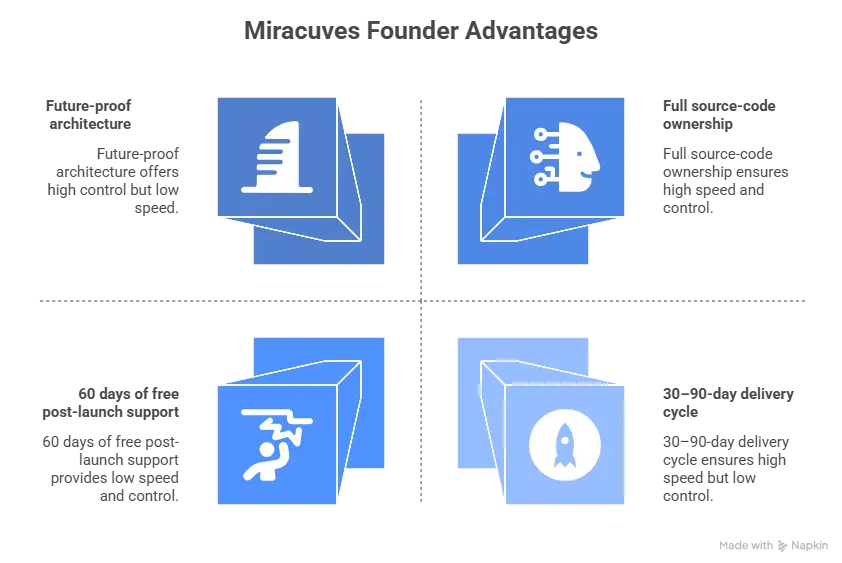
What you get with Miracuves (the founder advantages)
- 600+ successful deployments: execution experience across marketplaces and high-traffic platforms means fewer surprises and stronger delivery discipline
- 30–90-day delivery cycle: you go live faster, start acquiring users earlier, and begin validating unit economics while competitors are still planning
- 60 days of free post-launch support: early-stage stability matters; fixes and tuning in the first weeks protect retention and reviews
- Full source-code ownership: you own the platform, can extend it anytime, and are never locked into hidden dependencies
- Future-proof architecture: performance-first UX patterns, scalable backend structure, and clean admin tooling so operations don’t collapse as orders grow
Short success stories (transformation-style, founder relatable)
1) From “discount catalog” to repeat-buyer engine
A founder launched with a tight category focus and a clean deals feed. After launch, the biggest lift came from retention mechanics—price-drop alerts, wishlists, and weekly steals campaigns. Result: repeat sessions increased because users had a reason to return even when they weren’t ready to buy the first time.
2) A closeout model that didn’t break during campaigns
Another team ran timed promotions with limited inventory. The key upgrade was operational control: inventory locks, promo scheduling rules, and a stable checkout flow. Result: fewer failed payments, fewer oversells, and less support chaos during peak hours.
3) Multi-vendor expansion without losing trust
A single-seller deals platform expanded into a marketplace. The difference-maker was seller verification + admin enforcement: onboarding checks, SLA tracking, and dispute workflows. Result: growth in supply without destroying buyer confidence.
Final Thought
Building an Overstock-style marketplace in 2025 is not about copying a storefront—it’s about mastering the business logic behind deal-driven ecommerce: fast discovery, real trust, smooth operations, and repeat purchases. When you understand why people come back for bargains, and you engineer your platform to make that behavior effortless, you’re no longer “just another ecommerce app.” You become a habit.
The smartest founders don’t try to perfect everything before launch. They validate a niche, launch quickly, instrument the funnel, and improve what the data proves matters. That’s exactly where an Overstock clone model shines: you can start with a focused category and a strong deals experience, then scale into new verticals, seller ecosystems, and smarter monetization as traction grows.
With Miracuves Clone Solutions, you get the advantage of a build approach designed for entrepreneurs: faster time-to-market within 30–90 days, a scalable foundation, and the operational controls needed to run a real marketplace—not just a pretty app. The result is simple: you launch faster, learn faster, and grow smarter—so you can dominate a niche before bigger players even notice.
Ready to launch your Overstock clone? Get a free consultation and detailed project roadmap from Miracuves — trusted by 200+ entrepreneurs worldwide.
FAQs
How quickly can Miracuves deploy my Overstock clone?
Miracuves typically delivers an Overstock-style clone within 30–90 days, depending on your scope (MVP vs growth vs enterprise features) and integration complexity.
What’s included in the Miracuves clone package?
You get a complete buyer-side experience (web/app), an admin panel to manage catalog, pricing/promotions, orders, returns, users, and analytics, plus the required infrastructure guidance for launch and scaling.
Can I get full source-code access?
Yes. Miracuves provides full source-code ownership, so you control customization, scaling, and future upgrades without platform lock-in.
How does Miracuves ensure scalability?
Miracuves designs the platform with scalable architecture patterns like caching, optimized search/indexing, queue-based processing, and performance-first UX so your marketplace can handle growth and campaign traffic spikes reliably.
Does Miracuves assist with app store approval?
Yes. Miracuves can guide you through the submission readiness checklist (assets, policies, technical compliance, build stability) to reduce rejection risk and speed up approvals.
Is post-launch maintenance included?
Miracuves includes 60 days of free post-launch support, covering early stability fixes, tuning, and critical adjustments after go-live.
Can Miracuves integrate custom payment gateways?
Yes. Miracuves can integrate popular gateways and also support custom payment gateway integration based on your target region, compliance requirements, and checkout flow.
What’s the upgrade/update policy?
Upgrades are handled in a structured way: feature roadmap planning, staged releases, testing, and deployment. This helps you evolve from MVP to growth features without disrupting live operations.
How does white-labeling work?
White-labeling means the platform is branded entirely as your business—logo, name, app assets, themes, templates, domain, and user communications—so customers never see third-party branding.
What kind of ongoing support can I expect?
Beyond initial support, Miracuves can provide continued iteration and scaling assistance—performance optimization, feature expansion, integrations, and growth-focused product improvements as your marketplace evolves.
Related Articles
- Best Faire Clone Scripts 2025: Build a B2B Wholesale Marketplace That Scales
- Best Shopify Clone Scripts 2025: Build a Scalable eCommerce Platform Faster
- Best BigCommerce Clone Scripts 2025: Build a Scalable SaaS Ecommerce Platform
- Best WooCommerce Clone Scripts 2025: Build a Scalable Ecommerce Platform from Day One
- Best Wish Clone Scripts 2025: Build a High-Profit Social Commerce App
- Best DHgate Clone Scripts 2025: Build a Global B2B Wholesale Marketplace Faster
- Best BigCommerce Clone Scripts 2025: Build a Scalable SaaS Ecommerce Platform