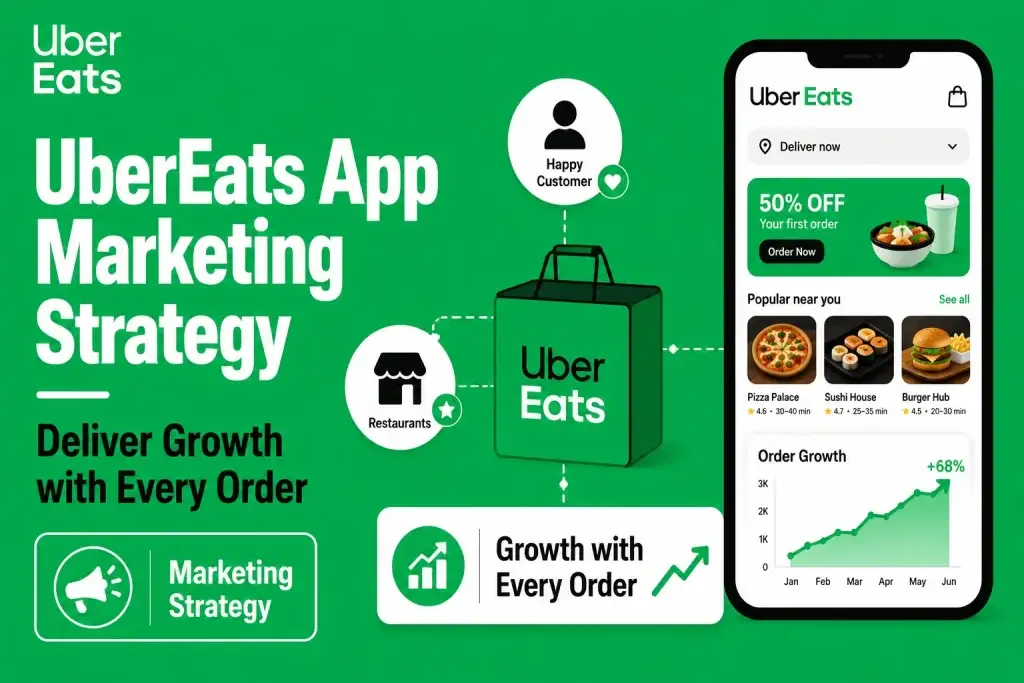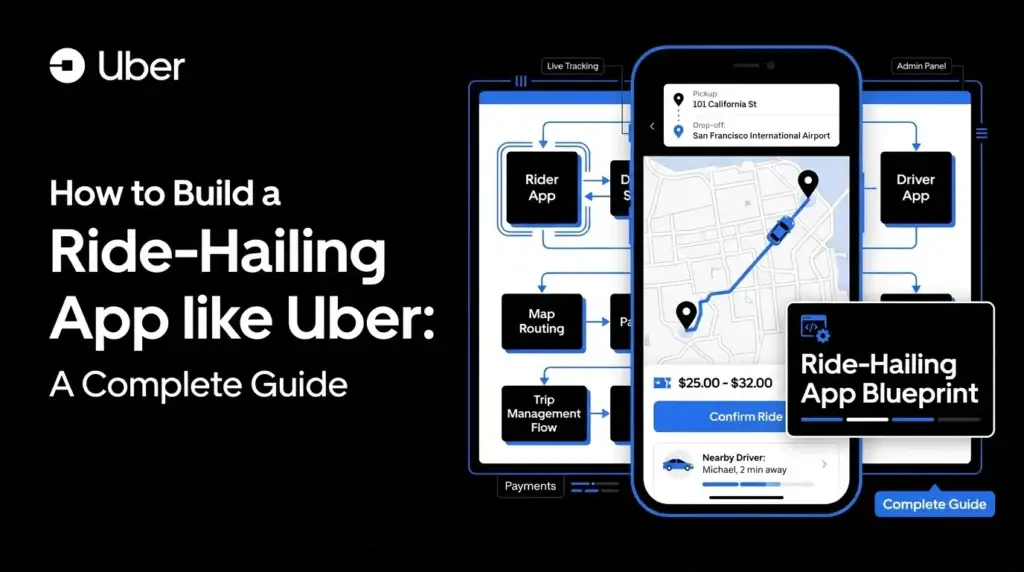



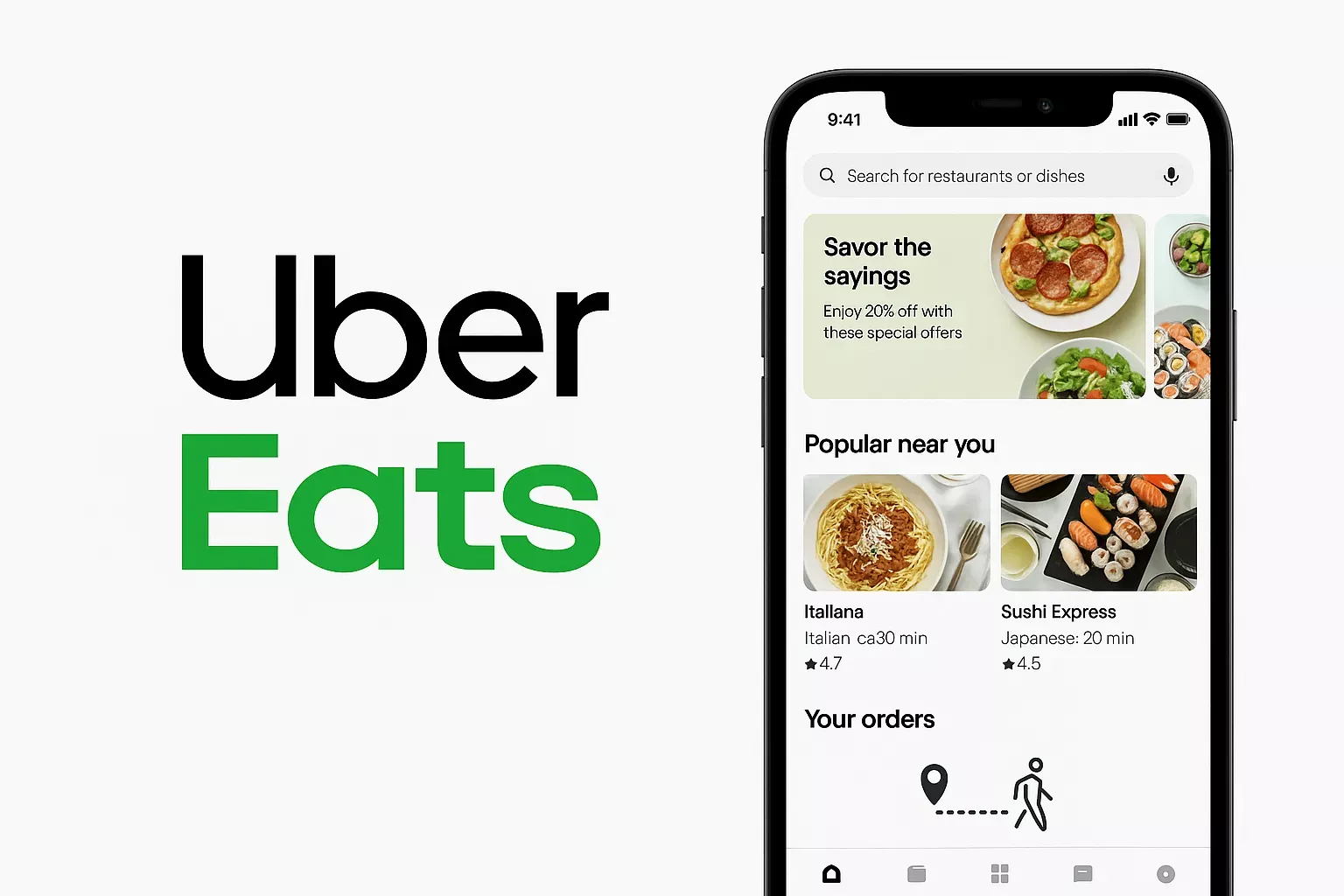
Imagine you’re craving your favorite sushi at 11 PM, and within 25 minutes, it’s delivered hot to your door — all with a few taps. That’s the convenience UberEats brought into our lives. Launched as a food delivery extension of Uber’s ride-hailing empire, the platform transformed how we experience restaurants, delivery, and even local discovery.
Since its global rollout, UberEats has become one of the top 3 food delivery apps worldwide, serving over 130 million users monthly and partnering with 900,000+ restaurants across 6,000+ cities. Its impact goes far beyond food — it’s a masterclass in real-time logistics, AI-driven personalization, and scalable technology.
What is UberEats? The Simple Explanation
At its core, UberEats is an on-demand food delivery app that connects hungry users with local restaurants and delivery partners. It allows users to browse menus, place food orders, and get meals delivered to their doorsteps — all through a seamless mobile or web experience.
UberEats solves a critical modern problem: the need for quick, reliable, and contactless food delivery. It caters to three groups:
- Users who want convenience and variety.
- Restaurants seeking higher order volumes without extra seating.
- Delivery partners looking for flexible income opportunities.
In 2025, UberEats holds a strong position in the $500+ billion global online food delivery market, generating over $12 billion in annual revenue. Its success lies in combining Uber’s vast logistics network, real-time tracking, and intelligent recommendation systems that personalize menus for every user.
UberEats became successful because it reimagined food delivery as a tech-driven ecosystem — optimizing time, trust, and taste through innovation.
Read more: How to Build an App Like UberEats: Full-Stack Developer’s Guide
How Does UberEats Work? Step-by-Step Breakdown
UberEats operates as a three-sided marketplace — connecting users, restaurants, and delivery partners through smart technology and real-time coordination.
For Users
- Sign Up / Log In:
Users create an account via email, phone, or Google/Apple login. - Browse & Select:
The app displays nearby restaurants using GPS. Users can filter by cuisine, delivery time, price, or ratings. - Order Placement:
Add food items to the cart, customize them, apply coupons, and confirm the order with multiple payment options — cards, wallets, or UPI (in India). - Real-Time Tracking:
After the order is accepted, users can track preparation and delivery live on a map. - Delivery & Feedback:
Orders are delivered within 25–40 minutes. Users can rate food, delivery experience, and restaurants.
Riya orders a pizza from Domino’s on UberEats. The restaurant accepts, a nearby delivery partner picks it up, and she tracks the live location until it arrives.
For Restaurants
- Onboarding Process:
Restaurants register via UberEats’ merchant platform, upload menus, pricing, and operating hours. - Receiving Orders:
When a user orders, restaurants get instant notifications through the dashboard or app. - Preparation & Dispatch:
Once the meal is ready, a delivery partner is auto-assigned based on proximity and ratings. - Earnings Structure:
Restaurants typically pay 25%–30% commission per order, depending on region and exclusivity deals.
For Delivery Partners
- Registration:
Riders sign up through the Uber Driver app and complete background checks. - Work Flexibility:
They can go online/offline anytime and accept delivery requests near them. - Earnings & Commission:
Partners earn per delivery (base fare + distance + surge). UberEats charges a small service fee (10–20%) on total earnings.
Technical Overview (Simple Terms)
- Frontend: Mobile apps (iOS & Android) and a web platform.
- Backend: Cloud-based servers manage order requests, routing, and payments in real time.
- Core Logic: Smart algorithms assign the nearest available driver and optimize routes for speed.
- Integration: GPS for tracking, Maps API for routes, and Payment APIs for transactions.

UberEats’s Business Model Explained
UberEats follows a multi-revenue business model designed to generate income from multiple sources — users, restaurants, and delivery partners — while ensuring convenience and scalability.
1. Commission from Restaurants
Restaurants are charged a 25%–35% commission on every order placed via UberEats. Premium visibility or featured listing options can raise this rate.
- Example: If a restaurant earns $100 from an order, UberEats keeps $30.
- Purpose: Covers platform use, delivery network, and customer acquisition.
2. Delivery Fee from Users
Customers pay a delivery charge based on:
- Distance
- Location (urban vs. suburban)
- Surge hours
Typical range: $1.50 to $6 per order in most countries.
This goes partly to the delivery partner and partly to UberEats as a service fee.
3. Surge & Small Order Fees
- Surge Pricing: During high-demand hours, UberEats adds dynamic surcharges to manage order volume.
- Small Order Fees: Orders below a minimum value (e.g., $10) incur extra fees.
4. Subscription Revenue (Uber One)
UberEats introduced Uber One, a subscription model that provides:
- Free deliveries
- 5–10% discounts on orders
- Priority support
Monthly cost: around $9.99
This has become a strong recurring revenue stream in 2025.
5. Advertising & Promotions
Restaurants pay for sponsored listings and “Boost Ads” to appear higher in the app feed.
These in-app promotions generate substantial ad revenue — estimated at over $1 billion annually as of 2025.
6. Data & Partnerships
UberEats collaborates with brands and analytics partners to share anonymized consumer insights, helping optimize marketing campaigns.
Market Size & Growth Stats (2025)
- Global online food delivery market: $505 billion
- UberEats market share: ~25% in the U.S., 15% globally
- Annual revenue (2025 projection): $12.4 billion
- Profitability: Estimated 14% net margin post-COVID logistics optimization

Read more: Decoding the UberEats Business Model: A Comprehensive Development Guide
Key Features That Make UberEats Successful
UberEats isn’t just a delivery app — it’s a smart ecosystem built around real-time decision-making, user personalization, and operational efficiency. Here are the top features that define its global success:
1. Real-Time Order Tracking
Users can track their food in real time — from kitchen to doorstep — using GPS-based live maps.
Why it matters: Builds transparency and trust while keeping users engaged throughout the order process.
2. Smart Restaurant Discovery
AI-driven algorithms personalize restaurant listings based on location, preferences, and past behavior.
Technical innovation: Uses machine learning for predictive recommendations and faster search results.
3. Seamless Ordering & Payments
A frictionless checkout experience with support for cards, wallets, UPI, and PayPal ensures quick transactions.
Benefit: Increases conversion and reduces cart abandonment.
4. Efficient Delivery Network
UberEats uses Uber’s logistics infrastructure to assign the nearest available rider, ensuring faster delivery times.
Tech element: Route optimization powered by Google Maps API and Uber’s proprietary routing engine.
5. Real-Time Chat Support
Integrated in-app messaging connects users, delivery partners, and restaurants directly.
Why it matters: Reduces delivery errors and boosts satisfaction.
6. Personalized Recommendations
AI suggests dishes and restaurants users are likely to order again, improving retention and engagement.
7. Multi-Language & Multi-Currency Support
With operations across 6,000+ cities, the app supports multiple languages and payment modes, ensuring accessibility worldwide.
8. Uber One Integration
Subscribers of Uber One enjoy benefits like free delivery, exclusive offers, and cross-service rewards (Uber Rides + UberEats).
Effect: Increases customer lifetime value and brand loyalty.
9. AI-Powered Demand Forecasting
UberEats predicts peak demand zones to position riders strategically, reducing wait times and cancellations.
10. Safety & Contactless Delivery
COVID-accelerated innovations like no-contact delivery and driver background checks remain integral features in 2025.
Recent 2025 Updates
- AI Voice Ordering via UberEats Assistant
- Sustainability Mode: Carbon footprint data per order
- Drone Delivery Tests in select cities
- Group Ordering 2.0 with shared payment split options
The Technology Behind UberEats
Behind UberEats’ simple interface lies a powerful, scalable, and data-driven technology stack that ensures millions of orders are handled every day with precision and speed. Let’s break it down in simple terms
1. Tech Stack Overview (Simplified)
| Layer | Technology Used | Purpose |
| Frontend | React Native, Swift (iOS), Kotlin (Android) | Cross-platform mobile apps |
| Backend | Node.js, GoLang, Python | Real-time order management & logic |
| Database | PostgreSQL, Cassandra, Redis | Storing users, orders & menu data |
| Cloud Hosting | AWS, Google Cloud | High scalability & reliability |
| Maps & Routing | Google Maps API, Mapbox | Real-time GPS tracking & route optimization |
| Payments | Stripe, PayPal, Razorpay (region-based) | Secure multi-currency transactions |
2. Real-Time Features Explanation
UberEats uses event-driven architecture that updates users instantly whenever something changes — like food status or driver location.
Every tap triggers real-time data updates through:
- WebSockets & Firebase for instant push notifications
- Microservices architecture for modular scalability
- Kafka for real-time message streaming between services
Result: Live tracking, dynamic pricing, and delivery allocation without delays.
3. Data Handling & Privacy
UberEats implements end-to-end encryption and tokenized payment gateways to secure user data.
Additionally, AI-driven fraud detection systems analyze transactions in real-time to identify suspicious patterns.
All operations comply with GDPR, CCPA, and local data protection laws in 2025.
4. Scalability Approach
The platform scales automatically with demand spikes using Kubernetes and Docker containerization.
This allows UberEats to handle millions of concurrent users — especially during global events, holidays, or weekend surges.
5. Mobile App vs Web Platform
- Mobile App: Designed for quick, intuitive ordering and live tracking.
- Web Platform: More suitable for browsing menus and scheduling future deliveries.
Both sync through a unified backend API, ensuring real-time consistency.
6. API Integrations
UberEats integrates multiple APIs to create a connected ecosystem:
- Maps APIs: Routing & navigation
- Payment APIs: Secure online payments
- SMS/Email APIs: Notifications & receipts
- AI APIs: Predictive recommendations & image recognition for menu items
7. Why This Tech Matters for Business
This technology foundation gives UberEats:
- Faster response times
- Near-zero downtime
- AI-driven operational intelligence
- Easy scalability for new markets
For businesses planning to launch a similar platform, Miracuves provides UberEats Clone solutions with pre-built technology stacks based on these same scalable principles — customized for your region and business model.
UberEats’s Impact & Market Opportunity
UberEats didn’t just change how we order food — it redefined the global food delivery economy. Its success has created a ripple effect across restaurants, delivery startups, and consumer behavior worldwide.
Industry Disruption
Before UberEats, food delivery was limited to phone calls and fixed menus. UberEats turned it into an on-demand digital marketplace, offering:
- Real-time restaurant visibility
- Transparent pricing
- Automated delivery logistics
This model transformed thousands of local restaurants into digital-first businesses.
Market Statistics (2025 Snapshot)
- Global Online Food Delivery Market: $505 billion
- Projected CAGR (2025–2030): 12.8%
- UberEats Global Share: 15%
- U.S. Market Share: 25%
- Monthly Active Users: 130+ million
- Restaurant Partners: 900,000+
- Average Order Value: $22
- Annual Revenue (2025): $12.4 billion
User Demographics & Behavior
- Age Group: 18–45 years dominate 70% of orders
- Peak Hours: 12–2 PM & 7–10 PM
- Top Categories: Burgers, Asian food, and healthy bowls
- Key Drivers: Convenience, discounts, and loyalty benefits
Users today expect speed, personalization, and transparency, and UberEats delivers all three seamlessly.
Geographic Presence
UberEats operates in 6,000+ cities across 45+ countries, with strong footholds in:
- North America (USA, Canada)
- Europe (UK, France, Germany)
- Asia-Pacific (India, Japan, Australia)
- Latin America (Mexico, Brazil)
Its regional approach — customizing pricing, language, and restaurant types — has fueled sustainable growth.
Future Projections
- AI-driven logistics to predict and fulfill orders faster
- Autonomous drone & robot deliveries for zero-delay last-mile service
- Dark kitchens expansion (cloud-based kitchens for faster prep)
- Sustainability initiatives to reduce delivery emissions
The global food tech market is expected to cross $750 billion by 2030, and UberEats is projected to remain among its top players.
Opportunities for Entrepreneurs
UberEats’s model opens massive opportunities for startups and entrepreneurs:
- Regional food delivery platforms
- Niche-focused delivery apps (e.g., vegan, desserts, local cuisines)
- Corporate meal platforms
- B2B catering and logistics integrations
Its proven scalability has inspired the rise of UberEats Clone Apps built for local markets — each leveraging real-time logistics, AI recommendations, and payment flexibility.
This massive success is why many entrepreneurs want to create similar platforms that replicate UberEats’s speed, convenience, and technology — customized for their own markets and audiences.
Building Your Own UberEats-Like Platform
Creating a successful UberEats-like food delivery app in 2025 requires more than just a clone — it demands strategic customization, robust technology, and a seamless user experience tailored to your market.
Why Businesses Want UberEats Clones
The UberEats model has proven that real-time logistics + hyperlocal convenience = billion-dollar success. Entrepreneurs choose UberEats clones to:
- Launch faster using a proven framework
- Save 70%+ in development time and cost
- Customize features for specific geographies or cuisines
- Access pre-tested, scalable technology from day one
Key Considerations Before Development
- Market Research: Identify your niche — local, health-focused, premium, or quick service.
- Business Model Choice: Decide between commission-based, subscription, or hybrid models.
- Delivery Network Setup: Recruit and manage reliable drivers or partner with third-party logistics.
- Restaurant Onboarding Strategy: Offer incentives to attract top local restaurants early.
- Technology Stack: Ensure scalability and real-time tracking features.
- Payment Integrations: Enable multiple secure options for global and regional transactions.
- Marketing Plan: Focus on user retention, not just acquisition — loyalty programs and rewards work best.
Cost Factors & Pricing Breakdown
Ubereats-Like App Development — Market Price
| Development Level | Inclusions | Estimated Market Price (USD) |
| Basic Food Delivery MVP | Restaurant listings, menu display, simple orders, basic delivery flow | $60,000 |
| Mid-Level Food Delivery Platform | Restaurant dashboards, courier app, ratings & reviews, real-time order tracking, mobile apps | $180,000 |
| Advanced Platform (UberEats-scale) | High-concurrency backend, multi-region logistics routing, AI-driven dispatch engine, optimized routing, native apps | $250,000+ |
These amounts reflect the global market cost to build an UberEats-style food delivery platform from scratch, typically requiring 6–12 months of development depending on routing complexity, restaurant integrations, and real-time delivery logistics.
Miracuves Ubereats-Style Marketplace Pricing
Miracuves Price: Starts at $2,899
This solution is built using robust frameworks — Web using PHP + MySQL and Apps using Flutter, ensuring smooth performance, reliable routing, and fast real-time order updates.
Note: This includes full non-encrypted source code, deployment support, backend setup, admin panel configuration, and publishing on the Google Play Store and Apple App Store—delivering a complete, launch-ready food delivery platform.
Delivery Timeline for UberEats
Deployment is ultra-fast — 6 Days, since this is a fully developed readymade solution requiring only branding, configuration, and server setup.
Tech Stack
This solution is built with robust frameworks — Web using PHP, MySQL & Apps using Flutter, optimized for performance, stability, and easy maintenance. Other tech stacks can be discussed and arranged upon request — Contact us
Essential Features to Include
- Multi-vendor food marketplace
- Real-time GPS tracking
- Restaurant and delivery dashboards
- Secure payments and wallets
- Ratings, reviews, and chat support
- Push notifications
- Advanced analytics dashboard
- AI-driven recommendations
Conclusion
UberEats has revolutionized how people experience food — blending technology, convenience, and real-time delivery into a single seamless ecosystem. Its success story proves one thing: on-demand delivery isn’t just a trend — it’s the future of dining.
In 2025, users expect instant gratification, personalized menus, and contactless delivery. Businesses that can provide these — backed by scalable tech and smart logistics — are thriving. This is exactly where UberEats Clone platforms come in.
By adopting a ready-made, customizable solution, entrepreneurs can launch faster, spend less, and innovate more, focusing on growth instead of building from scratch. Whether you’re targeting a local market or a global audience, the opportunity in the food delivery space is massive and expanding every year.
FAQs
Q:1 How does UberEats make money?
UberEats earns revenue from restaurant commissions (25–35%), delivery fees, subscription plans (Uber One), and in-app advertising.
Q:2 Is UberEats available in my country?
As of 2025, UberEats operates in over 45 countries and 6,000+ cities, including major markets like the U.S., India, UK, Japan, and Australia.
Q:3 How much does UberEats charge users?
Users pay a delivery fee ranging from $1.50 to $6 depending on distance, location, and demand. Small orders may include an additional fee.
Q:4 What’s the commission for restaurants and service providers?
Restaurants typically pay 25%–35% commission per order, while delivery partners pay a small service fee (10–20%) deducted from earnings.
Q:5 How does UberEats ensure safety?
UberEats ensures safety with background-verified delivery partners, GPS tracking, contactless delivery, and in-app support for emergencies.
Q:6 Can I build something similar to UberEats?
Absolutely! You can create your own UberEats-like food delivery app using Miracuves’ pre-built clone solutions, customized for your market and audience.
Q:7 What makes UberEats different from competitors?
UberEats stands out with real-time order tracking, AI-driven recommendations, fast delivery logistics, and a global restaurant network unmatched by most rivals.
Q:8 How many users does UberEats have?
In 2025, UberEats has 130+ million active users globally and partners with over 900,000 restaurants.
Q:9 What technology does UberEats use?
UberEats uses React Native, Node.js, Google Maps API, AWS, and AI/ML algorithms for real-time tracking, demand forecasting, and personalization.
Q:10 How can I create an app like UberEats?
To create your own UberEats-like app, choose Miracuves.com, which offers ready-made UberEats Clone Scripts, AI-powered features, and 3-9 day launch timelines.
Related Articles: