


Key Takeaways
What You’ll Learn
- 9flats operates as a rental marketplace where users book accommodations directly from property owners.
- User data protection is critical due to personal, payment, and booking information involved.
- Secure authentication systems help prevent unauthorized access and account misuse.
- Encrypted transactions ensure safe payments between guests and hosts.
- Trust and safety mechanisms are essential for building a reliable rental ecosystem.
Stats That Matter
- Vacation rental platforms handle millions of transactions annually, increasing security risks.
- Cyberattacks on travel platforms have grown by over 30% in recent years.
- Payment fraud and identity theft are among the top risks in rental apps.
- Secure platforms see higher user retention and booking confidence.
- Data protection regulations are becoming a key requirement for global platforms.
Real Insights
- User trust drives bookings, and security directly impacts platform growth.
- Strong platforms combine secure payments, verified users, and transparent listings.
- Real-time monitoring helps reduce fraudulent activities and suspicious behavior.
- Compliance with global data laws is essential for scaling internationally.
- Reliable security systems create a safe experience for both guests and property owners.
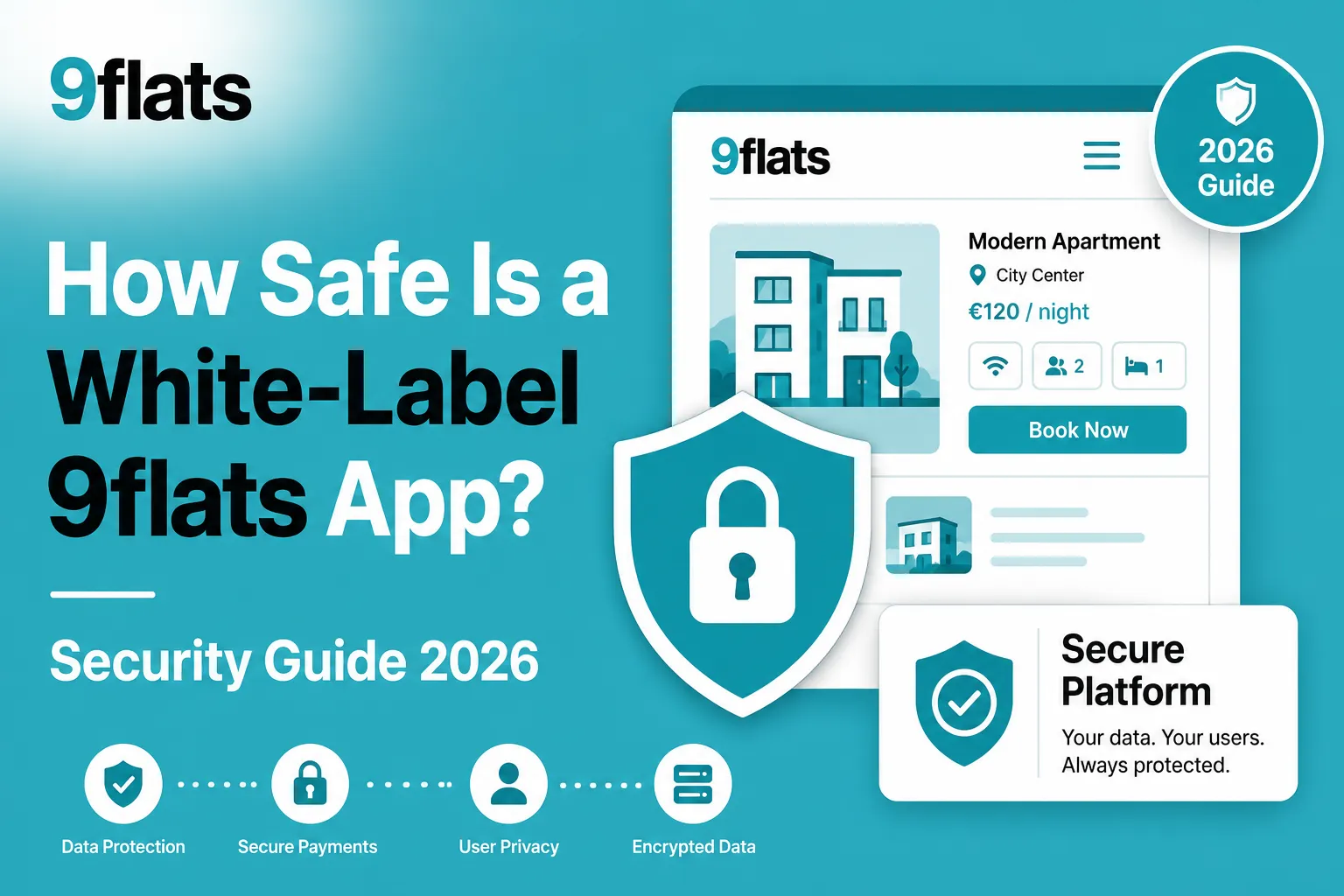
You’ve probably heard the horror stories—rental apps leaking user data, payment details getting exposed, or platforms getting blocked due to compliance failures. When you’re planning a white-label 9flats app, the biggest question isn’t features or design. It’s safety.
In 2026, short-stay rental apps handle sensitive data every day—identity details, location tracking, booking history, and payment information. One weak security decision can damage trust overnight and attract legal trouble you didn’t plan for.
This guide gives you an honest security assessment of white-label 9flats clone-style apps. We’ll break down real risks, current compliance requirements, and practical ways to protect your platform—while showing how Miracuves approaches app security as a foundation, not an afterthought.
Understanding White-Label 9flats App Security Landscape
What “White-Label App Security” Actually Means
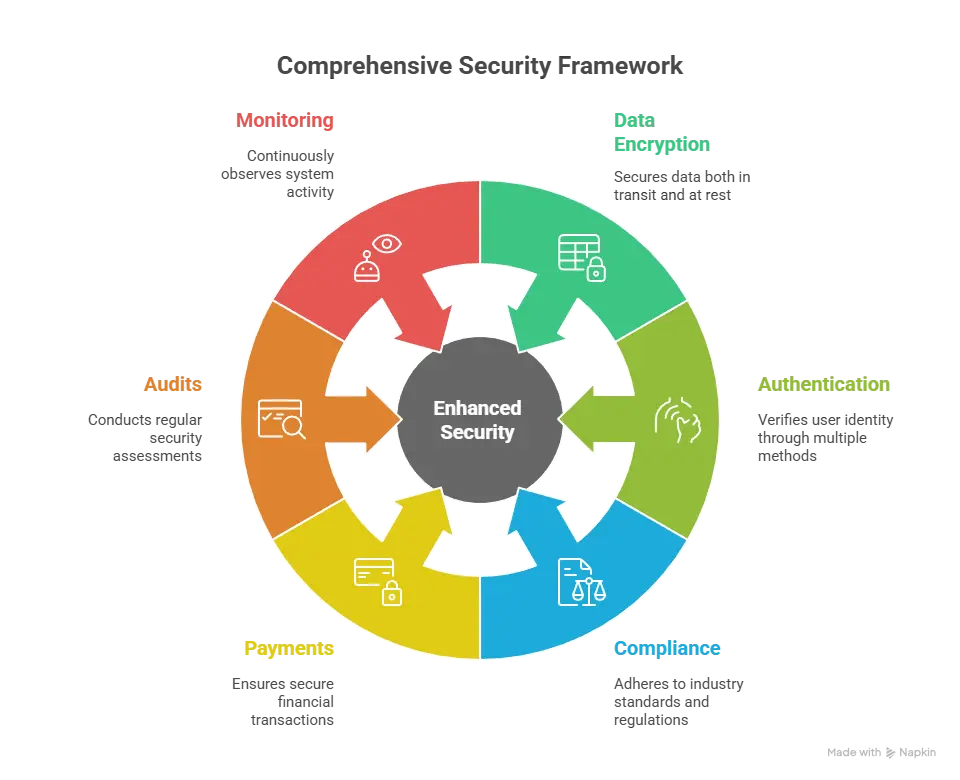
White-label app security refers to how securely an app is built, deployed, and maintained when the core platform is reused and branded for different businesses. In a white-label 9flats-style app, security is not just about code—it includes infrastructure, data handling policies, compliance readiness, and long-term maintenance practices.
Unlike custom development where security depends entirely on your in-house team, white-label app security depends heavily on the provider’s architecture decisions. If security is weak at the core, rebranding won’t fix it.
Common Security Myths vs Reality
Many founders assume white-label apps are automatically less secure. That’s not always true.
The real risk isn’t white-label itself—it’s poorly engineered white-label apps. A well-architected white-label 9flats app can meet the same enterprise security standards as a custom-built platform, sometimes faster and more reliably.
Another myth is that “security can be added later.” In reality, security must be designed into the app from day one. Retrofitting encryption, compliance, or audit logging later is costly and risky.
Why People Worry About White-Label Apps
Concerns usually come from real incidents:
- Shared codebases with no isolation
- Outdated frameworks reused across clients
- No visibility into how user data is stored
- Lack of compliance documentation
For rental apps like 9flats, these fears are amplified because users share addresses, stay durations, identity proofs, and payment information. Any breach directly impacts physical safety and legal exposure.
Current Threat Landscape for 9flats-Type Apps
In 2026, accommodation and rental apps face consistent threats:
- Account takeover through weak authentication
- API abuse exposing booking and host data
- Payment fraud and chargeback exploitation
- Location data misuse
- Third-party service vulnerabilities (maps, payments, messaging)
Attackers increasingly target mid-sized platforms, assuming weaker defenses than global brands.
Security Standards in 2026
Modern app security expectations have evolved. A white-label 9flats app in 2026 is expected to follow:
- Zero-trust access principles
- Encrypted data at rest and in transit
- Secure API gateways
- Continuous vulnerability monitoring
- Region-specific data residency controls
Security is no longer a competitive advantage—it’s a baseline requirement.
Real-World Security Incident Statistics
Industry reports show that hospitality and rental apps are among the top sectors affected by data exposure incidents. The majority of breaches are caused by:
- Misconfigured servers
- Weak access controls
- Unpatched vulnerabilities
- Poor third-party integration security
Most of these incidents were preventable with proper white-label app security governance.
Read more : – 9flats App Marketing Strategy | Turn Rooms into Revenue
Key Security Risks & How to Identify Them
High-Risk Area 1: Data Protection & Privacy
User Personal Information
A white-label 9flats app stores names, phone numbers, email IDs, identity proofs, and booking history. If access controls are weak or data is stored without encryption, attackers can extract entire user profiles in a single breach.
Payment Data Security
Rental apps process card payments, refunds, and deposits. Without PCI DSS–compliant handling, payment data can be intercepted or misused, leading to fraud, chargebacks, and regulatory action.
Location Tracking Concerns
Check-in and stay location data is extremely sensitive. Improper access control can expose where users are staying, when properties are vacant, and host availability patterns.
GDPR and CCPA Compliance Risks
Failure to manage consent, data deletion requests, or user data export properly can result in heavy penalties, especially for apps operating across multiple regions.
High-Risk Area 2: Technical Vulnerabilities
Code Quality Issues
Poorly written or reused code without audits increases the risk of injection attacks, broken authentication, and data leakage.
Server Security Gaps
Unsecured cloud storage, weak firewall rules, and exposed admin panels are among the most common causes of rental app breaches.
API Vulnerabilities
APIs handle bookings, payments, reviews, and messaging. Weak authentication or missing rate limits allow attackers to scrape or manipulate data.
Third-Party Integrations
Maps, payment gateways, messaging services, and analytics tools can become entry points if not properly secured and monitored.
High-Risk Area 3: Business-Level Risks
Legal Liability
A data breach can make the app owner legally responsible, even if the issue originated from the white-label provider.
Reputation Damage
Trust is the core currency of rental apps. One security incident can permanently damage brand credibility.
Financial Losses
Costs include fines, compensation, forensic audits, legal fees, and platform downtime.
Regulatory Penalties
Non-compliance with data protection laws can lead to significant penalties and operational restrictions.
White-Label 9flats App Risk Assessment Checklist
- Is user data encrypted at rest and in transit?
- Are payment flows PCI DSS compliant?
- Are APIs protected with authentication and rate limits?
- Is access role-based for admins and support teams?
- Are third-party services regularly reviewed?
- Is there a documented incident response plan?
- Are compliance audits conducted regularly?
Read more : Business Model of 9flats | How the Platform Earns Revenue
Security Standards Your White-Label 9flats App Must Meet
Essential Security Certifications
ISO 27001 Compliance
ISO 27001 ensures that the app follows a structured information security management system. For a white-label 9flats app, this means defined controls for data access, risk assessment, and incident handling across the entire platform.
SOC 2 Type II
SOC 2 Type II focuses on how securely data is handled over time. It validates controls around security, availability, confidentiality, and processing integrity—critical for apps handling bookings and payments continuously.
GDPR Compliance
GDPR is mandatory if your app serves users in the EU. It governs consent management, data minimization, breach notification timelines, and user rights such as data access and deletion.
HIPAA (If Applicable)
While not always required for rental apps, HIPAA may apply if the app processes health-related data for long stays, assisted accommodations, or special-needs housing.
PCI DSS for Payments
Any white-label 9flats app processing card payments must follow PCI DSS standards to prevent card data exposure and fraud.
Technical Security Requirements
End-to-End Encryption
All sensitive data—including personal details, messages, and payment references—must be encrypted during transmission and storage.
Secure Authentication
Strong authentication mechanisms such as two-factor authentication and OAuth-based login prevent account takeover and unauthorized access.
Regular Security Audits
Periodic internal and third-party audits help identify vulnerabilities before attackers do.
Penetration Testing
Ethical hacking simulations expose real-world attack paths and validate the app’s defenses.
SSL Certificates
SSL encryption ensures secure communication between users, servers, and third-party services.
Secure API Design
APIs must use authentication tokens, rate limiting, and strict permission controls to prevent misuse.
Security Standards Comparison Table
| Security Area | Minimum Requirement | Enterprise-Grade Standard |
|---|---|---|
| Data Encryption | SSL in transit | End-to-end encryption at rest & transit |
| Authentication | Password-based login | 2FA, OAuth, role-based access |
| Compliance | Basic GDPR alignment | GDPR, SOC 2 Type II, ISO 27001 |
| Payments | Gateway-level security | Full PCI DSS compliance |
| Audits | Occasional checks | Regular third-party audits |
| Monitoring | Manual alerts | 24/7 automated monitoring |
Read more : Revenue Model of 9flats: How It Monetizes Short-Term Rentals
Red Flags – How to Spot Unsafe White-Label Providers
Warning Signs You Should Never Ignore
No Security Documentation
If a provider cannot share security architecture details, audit reports, or compliance documents, it usually means security was never a priority.
Unrealistically Cheap Pricing
Low pricing without a clear explanation often signals shortcuts in infrastructure, security testing, and long-term maintenance.
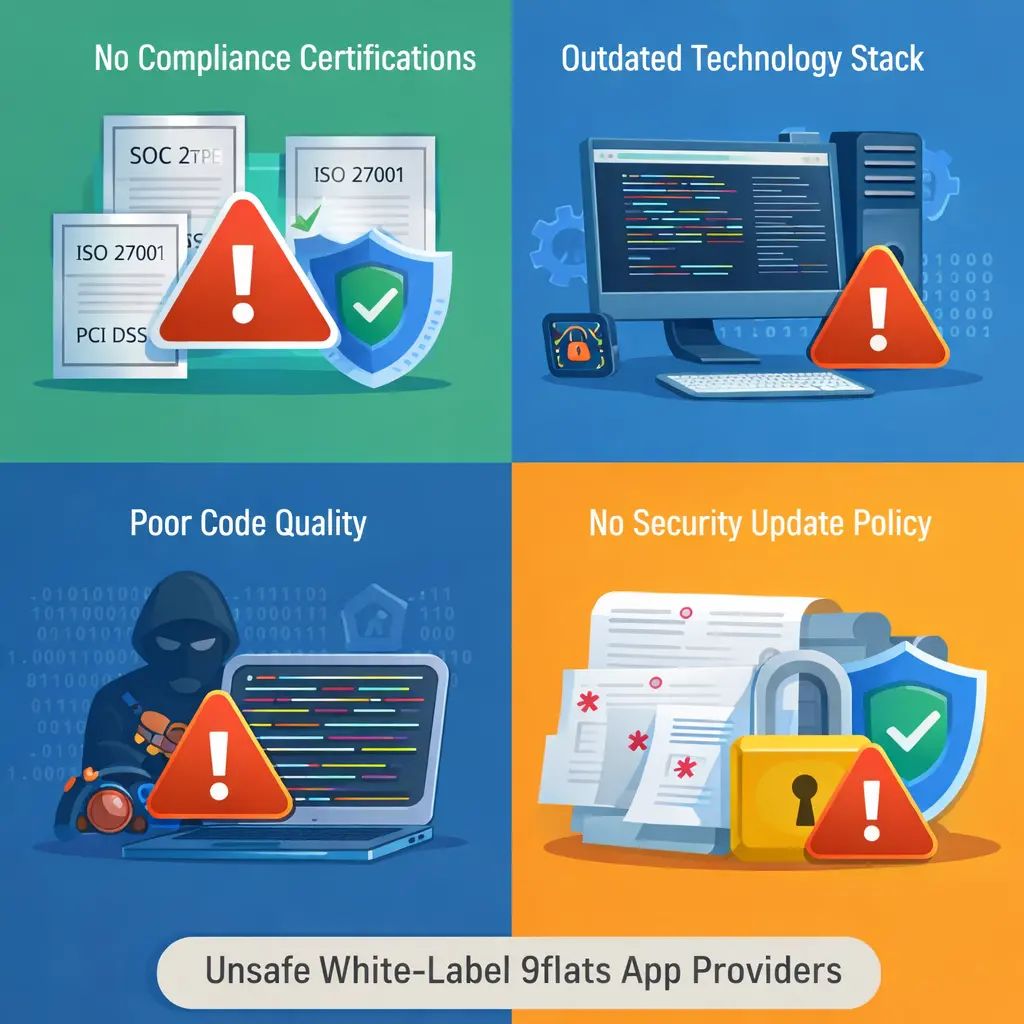
No Compliance Certifications
A serious white-label 9flats app provider should clearly state GDPR, PCI DSS, and other applicable compliance standards.
Outdated Technology Stack
Old frameworks and unsupported libraries are common entry points for attackers.
Poor Code Quality
Lack of coding standards, no version control, and no peer review increase vulnerability risks.
No Security Update Policy
Security threats evolve constantly. If updates are not planned and documented, the app becomes unsafe over time.
No Data Backup Systems
Without automated backups and recovery plans, data loss can be permanent after an incident.
No Insurance Coverage
Reputable providers carry cyber liability insurance to protect both themselves and their clients.
Provider Evaluation Checklist
Critical Questions to Ask
- How is user data encrypted and stored?
- What compliance standards does the app meet?
- How often are security audits performed?
- Who is responsible for security updates?
- What happens if a breach occurs?
Documents to Request
- Security architecture overview
- Compliance certificates
- Audit and penetration test summaries
- Data processing agreements
- Incident response policy
Testing Procedures
- Demo access for admin and user roles
- API security testing reports
- Load and stress testing results
- Backup restoration tests
Due Diligence Steps
- Verify certifications independently
- Review client references
- Assess long-term support commitments
- Confirm post-launch security responsibilities
Read more : – 9flats Feature List Every Travel App Founder Should Know
Best Practices for Secure White-Label 9flats App Implementation
Pre-Launch Security Measures
Security Audit Process
Before launch, the app should undergo a full security audit covering code, infrastructure, APIs, and third-party services. This helps identify vulnerabilities early.
Code Review Requirements
Every module must be reviewed for secure coding practices, access controls, and data handling logic to prevent common attack vectors.
Infrastructure Hardening
Servers, databases, and cloud environments should be configured with strict firewall rules, access controls, and monitoring tools.
Compliance Verification
Confirm that GDPR, PCI DSS, and regional data protection requirements are fully implemented before onboarding users.
Staff Training Programs
Admin and support teams should be trained on data handling, access permissions, and incident reporting procedures.
Post-Launch Security Monitoring
Continuous Security Monitoring
Real-time monitoring helps detect suspicious activity, unauthorized access attempts, and abnormal usage patterns.
Regular Updates and Patches
Security patches and dependency updates must be applied consistently to prevent exploitation of known vulnerabilities.
Incident Response Planning
A documented incident response plan ensures quick containment, investigation, and communication if a security issue arises.
User Data Management
Clear policies for data access, retention, and deletion reduce exposure and improve compliance.
Backup and Recovery Systems
Automated backups and tested recovery procedures protect against data loss and ransomware incidents.
Legal & Compliance Considerations
Regulatory Requirements
Data Protection Laws by Region
A white-label 9flats app operating globally must comply with region-specific data laws. GDPR applies in the EU, CCPA and CPRA in California, and similar data protection regulations exist across Asia and other regions.
Industry-Specific Regulations
Short-stay rental apps may also be subject to local housing, tourism, and consumer protection laws depending on operating regions.
User Consent Management
The app must clearly capture user consent for data collection, cookies, and communication, with transparent opt-in and opt-out mechanisms.
Privacy Policy Requirements
Privacy policies should clearly explain what data is collected, how it is used, where it is stored, and how users can exercise their rights.
Terms of Service Essentials
Terms must define platform responsibilities, user obligations, dispute resolution, and limitations of liability.
Liability Protection Measures
Insurance Requirements
Cyber liability insurance helps cover costs related to data breaches, legal claims, and regulatory penalties.
Legal Disclaimers
Clear disclaimers limit exposure by defining service scope and platform responsibilities.
User Agreements
Strong agreements protect the app owner by setting acceptable use policies and security responsibilities.
Incident Reporting Protocols
Defined breach notification processes help meet legal deadlines and maintain transparency.
Compliance Monitoring
Regular legal reviews ensure ongoing compliance as regulations evolve.
Compliance Checklist by Region
| Region | Key Regulations | Core Requirements |
|---|---|---|
| EU | GDPR | Consent, data rights, breach notification |
| USA | CCPA, CPRA | Data access, deletion rights |
| UK | UK GDPR | Data transparency and protection |
| Asia | Local DP laws | Data residency and security controls |
| Global | PCI DSS | Secure payment processing |
Why Miracuves White-Label 9flats App Is Your Safest Choice
Miracuves Security-First Architecture
Miracuves designs every white-label 9flats app with security built into the core architecture. Data protection, access control, and compliance are addressed at the system level, not added later as patches.
Enterprise-Grade Security Controls
Miracuves apps follow enterprise-grade security practices, including encrypted data storage, secure APIs, and role-based access control to minimize internal and external risks.
Compliance by Default
All Miracuves white-label 9flats apps are built to align with GDPR and CCPA requirements from day one. Payment flows follow PCI DSS standards, ensuring safe and compliant transactions.
Continuous Monitoring and Updates
Security does not stop at launch. Miracuves provides continuous monitoring, regular updates, and proactive vulnerability management to protect the app against emerging threats.
Proven Track Record
With 9k+ successful projects delivered across multiple industries, Miracuves has maintained a strong security record with no major reported security breaches across its white-label platforms.
Risk Mitigation and Support
Miracuves supports incident response planning, backup systems, and recovery processes, helping businesses stay operational even during unexpected security events.
Final Thought
A white-label 9flats app can be safe, scalable, and fully compliant—but only if security is treated as a foundation, not a feature. The real risk isn’t choosing a white-label apps, it’s choosing the wrong provider.With the right security standards, audits, and governance in place, businesses can launch faster without sacrificing trust. This is where a security-first approach like Miracuves makes the difference.
FAQs
1. How secure is a white-label 9flats app compared to custom development?
A well-architected white-label app can match or exceed custom app security when built with certified standards, audits, and continuous monitoring.
2. What happens if there is a security breach?
A proper incident response plan includes containment, investigation, user notification, regulatory reporting, and system hardening.
3. Who is responsible for security updates?
Security updates are typically managed by the white-label provider, while the app owner ensures operational compliance.
4. How is user data protected in a white-label app?
Data is protected using encryption, access controls, secure servers, and compliance-driven data handling policies.
5. What compliance certifications should I look for?
At minimum: GDPR compliance, PCI DSS for payments, and enterprise security frameworks like ISO 27001 or SOC 2 Type II.
6. Can white-label apps meet enterprise security standards?
Yes, when built with secure architecture, audited code, and regulated infrastructure.
7. How often should security audits be conducted?
Audits should be performed before launch and at regular intervals after deployment.
8. What is included in the Miracuves security package?
Secure architecture, compliance-ready systems, encrypted data handling, monitoring, updates, and incident support.
9. How is security handled across different countries?
Regional data protection laws are applied through localized compliance controls and data governance policies.
10. What insurance is needed for app security?
Cyber liability insurance is recommended to cover legal, regulatory, and financial risks.
Related Articles: