


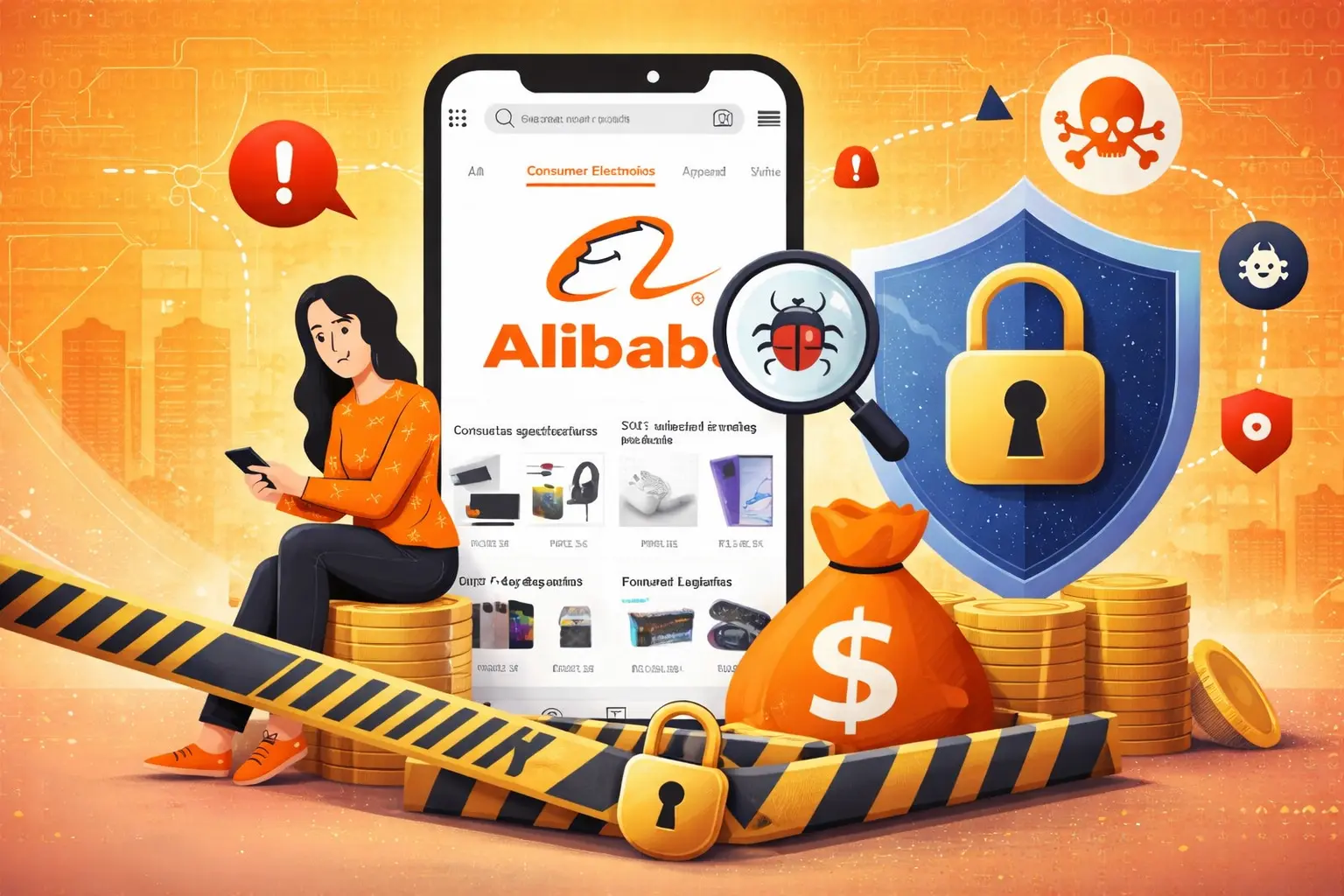
You have heard the horror stories.
Marketplace apps leaking supplier data, payment systems getting compromised, and businesses facing legal notices because of poor security decisions.
In 2026, security is no longer a “technical feature.” It is a business survival requirement.
If you are planning to launch a white-label Alibaba app, the first question investors, enterprise buyers, and even suppliers will ask is simple:
Is it safe?
This guide gives you an honest, practical security assessment of white-label Alibaba apps in 2026.
No fear-mongering. No marketing fluff. Just real risks, real standards, and real solutions—based on how modern B2B marketplace apps are actually attacked and protected today.
I will also explain how security-first platforms like Miracuves design white-label Alibaba apps to meet enterprise-grade safety expectations from day one.
Understanding White-Label Alibaba App Security Landscape
What White-Label Alibaba App Security Actually Means
White-label Alibaba app security refers to how safely a ready-made B2B marketplace app handles data, transactions, and business operations once it is branded and launched under your company name.
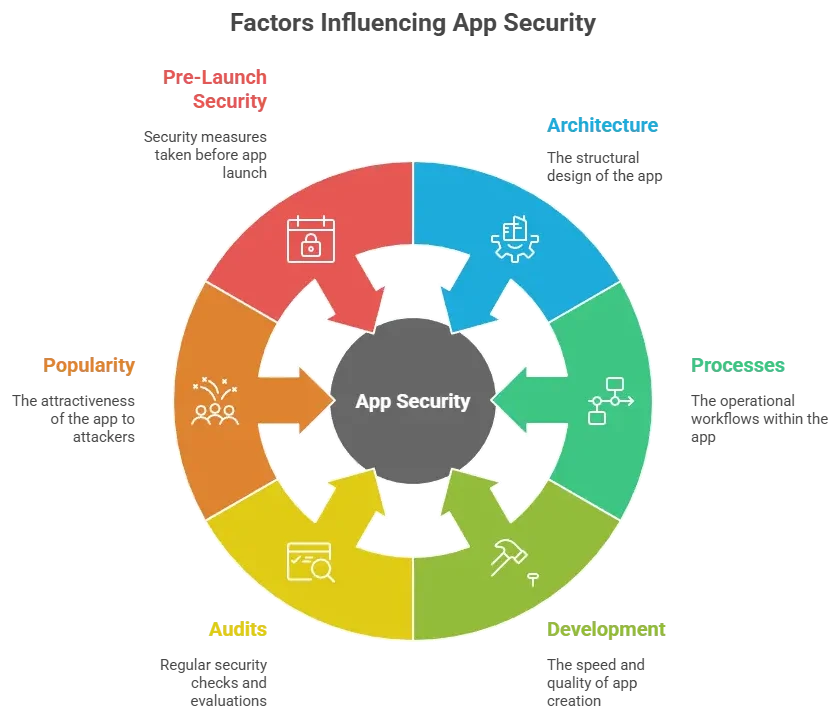
In 2026, security is not just about writing “secure code.” It includes how the app is architected, how data flows between buyers and suppliers, how payments are processed, and how compliance is maintained across multiple countries.
A secure white-label Alibaba app must protect:
Supplier business data
Buyer identities and transaction history
Pricing, contracts, and negotiations
Payment and escrow workflows
Cross-border data transfers
Security responsibility does not disappear just because the app is white-label. Once you launch, you are legally and operationally responsible.
Why Businesses Worry About White-Label Alibaba Apps
The concern is valid. A white-label Alibaba app handles:
- Large supplier catalogs
- Bulk order negotiations
- High-value B2B transactions
- International payments
- Multi-country compliance
Any weakness can expose thousands of suppliers and buyers at once. In 2026, a single breach can permanently damage brand trust, especially in B2B environments where reputation matters more than marketing.
Current Threat Landscape for Alibaba-Type Marketplace Apps (2026)
Alibaba-style apps face targeted threats such as:
- Account takeover attacks on supplier dashboards
- API abuse to scrape pricing and supplier data
- Payment redirection and escrow manipulation
- Fake supplier onboarding using stolen identities
- Insider threats through admin access misuse
According to global app security reports in 2026, B2B marketplace apps rank among the top five most attacked platforms, mainly due to high transaction values and sensitive business data.
Security Standards Expected in 2026
In 2026, a serious white-label Alibaba app is expected to follow:
- Zero-trust security architecture
- Default encryption for all data flows
- Strict role-based access control
- Continuous vulnerability scanning
- Regulatory compliance by region
If a provider does not openly discuss these standards, it is a warning sign.
Real-World Security Statistics (2026)
- Over 68% of marketplace app breaches originate from unsecured APIs
- Nearly 45% of data leaks are caused by misconfigured cloud storage
- Apps without regular penetration testing are 3x more likely to be breached
- Compliance fines related to data protection have increased by over 40% since 2024
These numbers explain why security is now a board-level discussion, not just a developer task.
Key Security Risks & How to Identify Them
High-Risk Area 1: Data Protection & Privacy
A white-label Alibaba app processes highly sensitive business data. In 2026, data protection failures are the most expensive security mistakes marketplace businesses make.
User & Supplier Personal Information
This includes names, business identities, contact details, tax information, and trade documents. Weak access controls or poor encryption can expose entire supplier networks.
Payment Data Security
Alibaba-type apps handle large B2B transactions, escrow flows, and recurring payments. If payment data is not isolated and protected under PCI DSS standards, financial theft becomes a real risk.
Location Tracking & Trade Data
Many marketplace apps track shipment locations, warehouse details, and trade routes. In 2026, this information is considered sensitive commercial intelligence and must be protected accordingly.
GDPR, CCPA & Global Privacy Compliance
Cross-border marketplaces must comply with multiple privacy laws. Improper consent handling or data storage practices can result in severe penalties and platform bans.
High-Risk Area 2: Technical Vulnerabilities
Code Quality Issues
Poorly written or reused code often contains hidden vulnerabilities. In white-label apps, lack of code review is one of the biggest risks.
Server & Infrastructure Gaps
Misconfigured cloud servers, open ports, and weak firewall rules remain a leading cause of breaches in 2026.
API Vulnerabilities
Alibaba-type apps rely heavily on APIs. Insecure APIs allow attackers to access pricing data, supplier details, or even admin functions.
Third-Party Integrations
Payment gateways, logistics services, CRM tools, and analytics platforms can introduce security gaps if not properly vetted.
High-Risk Area 3: Business-Level Risks
Legal Liability
When a breach happens, responsibility falls on the app owner—not the white-label provider—unless contracts clearly define liability.
Reputation Damage
In B2B marketplaces, trust is currency. One public security incident can destroy years of relationship-building.
Financial Losses
Beyond stolen funds, businesses face downtime, refunds, legal fees, and increased insurance premiums.
Regulatory Penalties
Data protection authorities in 2026 actively enforce compliance. Non-compliance fines are no longer negotiable warnings.
White-Label Alibaba App Risk Assessment Checklist
- Does the app encrypt data at rest and in transit?
- Are admin and supplier roles strictly separated?
- Is API access rate-limited and authenticated?
- Are payment systems PCI DSS compliant?
- Is user consent properly logged and auditable?
- Are regular security audits documented?
- Is there a breach response and notification plan?
If you cannot confidently answer “yes” to all of these, the app carries measurable security risk.
Read more : –Alibaba Features Explained: A Guide for Startup Founders
Security Standards Your White-Label Alibaba App Must Meet
Essential Security Certifications in 2026
In 2026, enterprise buyers and regulators expect measurable, third-party–verified security. A white-label Alibaba app without certifications is considered high risk.
ISO 27001 Compliance
This standard ensures a formal Information Security Management System (ISMS). It proves that security is not ad hoc but governed by documented processes, audits, and continuous improvement.
SOC 2 Type II
SOC 2 Type II validates how user data is handled over time, not just at a single point. In 2026, serious B2B platforms are expected to meet Trust Service Criteria for security, availability, and confidentiality.
GDPR Compliance
Mandatory for apps handling EU user data. This includes lawful data processing, consent management, data minimization, breach notification, and right-to-erasure workflows.
HIPAA (If Applicable)
If the app supports medical, pharmaceutical, or regulated supply chains, HIPAA compliance may be required for handling sensitive health-related data.
PCI DSS for Payments
Any app processing payments or escrow must meet PCI DSS standards. In 2026, non-compliance often leads to payment gateway termination.
Technical Security Requirements for 2026
End-to-End Encryption
All sensitive data must be encrypted both at rest and in transit. This includes messages, contracts, payment references, and supplier documents.
Secure Authentication
Strong authentication mechanisms such as OAuth 2.0, multi-factor authentication, and role-based access control are mandatory for admin, supplier, and buyer accounts.
Regular Security Audits
Security audits should be conducted at least quarterly, with documented remediation steps.
Penetration Testing
Annual or biannual penetration testing helps uncover real-world attack paths before attackers do.
SSL & Certificate Management
Valid SSL certificates with automated renewal are essential to prevent man-in-the-middle attacks.
Secure API Design
APIs must use authentication tokens, rate limiting, request validation, and logging to prevent abuse.
Security Standards Comparison Table (2026)
| Security Standard | Purpose | Mandatory for Alibaba-Type Apps |
|---|---|---|
| ISO 27001 | Governance & risk management | Strongly recommended |
| SOC 2 Type II | Ongoing data security assurance | Expected by enterprises |
| GDPR | User data protection (EU) | Mandatory |
| PCI DSS | Payment security | Mandatory |
| Penetration Testing | Real-world attack simulation | Mandatory |
| Encryption Standards | Data confidentiality | Mandatory |
If a white-label provider cannot clearly explain how these standards are implemented, the app is not enterprise-ready.
Red Flags – How to Spot Unsafe White-Label Providers
Warning Signs You Should Not Ignore
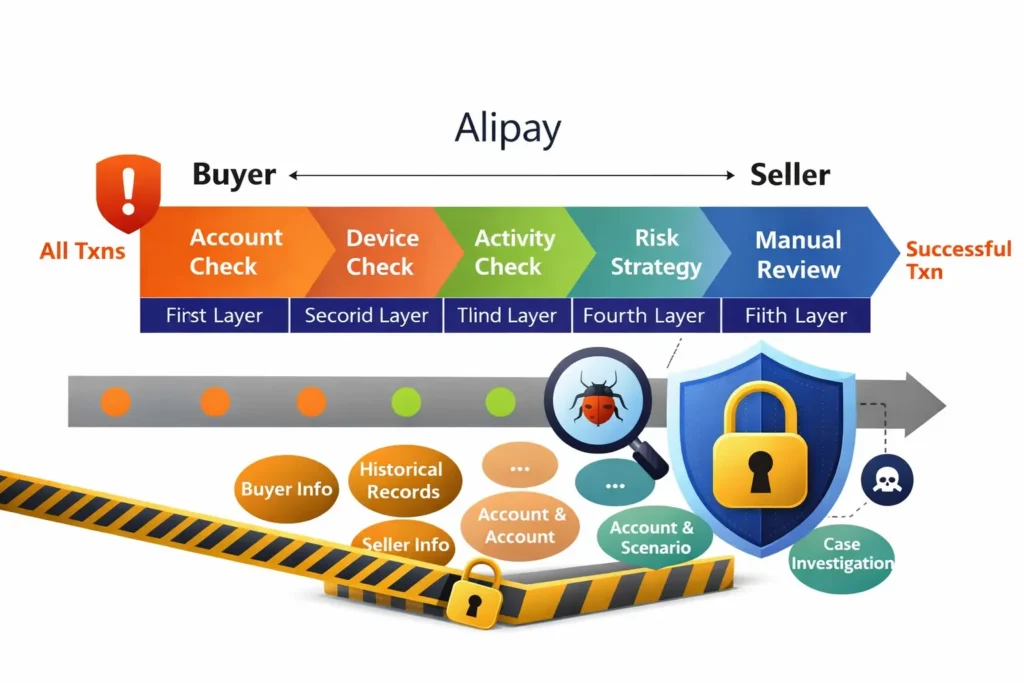
In 2026, unsafe white-label Alibaba app providers often reveal themselves long before any contract is signed. The warning signs are usually visible if you know where to look.
No Security Documentation
If a provider cannot share security architecture details, audit reports, or compliance policies, it usually means security was never a priority.
Unrealistically Cheap Pricing
Security costs money. Extremely low pricing without a clear explanation often indicates shortcuts in infrastructure, audits, or skilled security resources.
No Compliance Certifications
Providers who say “we follow GDPR” but cannot show certification, processes, or legal documentation are exposing you to regulatory risk.
Outdated Technology Stack
Legacy frameworks, unsupported libraries, and old server configurations are common entry points for attackers in 2026.
Poor Code Quality
Messy, undocumented code increases vulnerability risks and makes future security updates difficult.
No Defined Security Update Policy
If there is no commitment to regular patches and upgrades, your app will fall behind evolving threats.
Lack of Data Backup & Recovery Systems
Without secure backups, a ransomware attack or system failure can permanently destroy marketplace data.
No Cyber Insurance Coverage
In 2026, responsible providers carry cyber liability insurance. Absence of coverage puts the entire risk on your business.
White-Label Provider Evaluation Checklist
Critical Questions to Ask
- How is user and supplier data encrypted?
- What security certifications do you currently hold?
- How often are security audits performed?
- Who is responsible for incident response?
- How are third-party integrations vetted?
Documents You Should Request
- ISO or SOC compliance reports
- Data protection and privacy policies
- Incident response and breach notification plans
- Penetration testing summaries
- Backup and disaster recovery documentation
Testing & Due Diligence Steps
- Request a demo of admin access controls
- Review API authentication methods
- Conduct a third-party security assessment
- Verify compliance claims with auditors
- Check past security incident history
If a provider hesitates or avoids these questions, consider it a serious risk indicator.
Read more : – Business Model of Alibaba : Revenue Streams & Strategy
Best Practices for Secure White-Label Alibaba App Implementation
Pre-Launch Security Best Practices (2026)
Launching a white-label Alibaba app without proper security preparation is one of the most common mistakes businesses make. In 2026, security must be embedded before the first user signs up.
Comprehensive Security Audit
A full security audit should review code quality, infrastructure setup, API security, and data handling workflows. This helps identify vulnerabilities early.
Strict Code Review Process
Every module, especially payment, messaging, and supplier management, must go through manual and automated code reviews.
Infrastructure Hardening
Servers should be protected using firewalls, private networks, intrusion detection systems, and least-privilege access controls.
Compliance Verification
Before launch, confirm GDPR, PCI DSS, and regional compliance requirements are fully implemented and documented.
Team & Staff Security Training
Admin teams should be trained on access management, phishing prevention, and incident reporting procedures.
Post-Launch Security Monitoring & Maintenance
Continuous Security Monitoring
Real-time monitoring tools should track unusual activity, login anomalies, and API abuse patterns.
Regular Updates & Patch Management
Security patches must be applied quickly as vulnerabilities are discovered. Delayed updates are a leading cause of breaches in 2026.
Incident Response Planning
A clear incident response plan ensures fast containment, user notification, and regulatory compliance in case of a breach.
User Data Management
Data retention and deletion policies should align with legal requirements and user consent preferences.
Backup & Disaster Recovery Systems
Encrypted backups stored across multiple regions ensure business continuity during cyber incidents.
Security Implementation Timeline (2026)
Week 1–2: Security audit and risk assessment
Week 3–4: Code review and infrastructure hardening
Week 5: Compliance validation and penetration testing
Week 6: Staff training and incident response setup
Ongoing: Monitoring, updates, and audits
Following this structured timeline significantly reduces security risks for white-label Alibaba apps.
Legal & Compliance Considerations
Regulatory Requirements by Region (2026)
Operating a white-label Alibaba app means handling cross-border data, payments, and trade information. In 2026, legal compliance is tightly linked to app security.
Global Data Protection Laws
Different regions enforce different rules, but all focus on user data protection and transparency.
- Europe: GDPR requires lawful data processing, user consent, breach notification within 72 hours, and data portability
- United States: CCPA and state-level privacy laws focus on data access rights and opt-out mechanisms
- Asia-Pacific: PDPA-style regulations emphasize consent, purpose limitation, and secure storage
- Middle East: Data residency and cross-border transfer restrictions are increasingly enforced
Failure to comply can result in fines, platform bans, and legal action against the app owner.
Industry-Specific Regulations
Alibaba-type apps serving regulated industries must meet additional legal requirements.
- Pharmaceutical and medical supply chains may require HIPAA-like safeguards
- Financial trade and escrow services must meet payment and anti-fraud regulations
- Export-controlled goods require strict access and audit logging
In 2026, regulators actively audit digital marketplaces, not just banks and healthcare apps.
User Consent & Policy Requirements
A secure white-label Alibaba app must clearly document:
- What data is collected and why
- How long data is stored
- Who has access to data
- How users can request deletion or export
Privacy policies and terms of service are not optional documents. They are enforceable legal agreements.
Liability Protection for App Owners
Cyber Insurance Requirements
In 2026, many enterprise partners require proof of cyber liability insurance before onboarding.
Clear Legal Disclaimers
User agreements must define responsibilities, data usage, and dispute resolution mechanisms.
Incident Reporting Protocols
Legal frameworks require timely reporting to authorities and affected users after a breach.
Ongoing Compliance Monitoring
Compliance is not a one-time task. Laws evolve, and apps must adapt continuously.
Compliance Checklist by Region (2026)
- GDPR compliance for EU users
- CCPA compliance for US users
- PCI DSS for payment handling
- Local data residency compliance
- Breach notification workflows
- Documented consent management
Meeting these requirements protects not only users but also the long-term viability of your business.
Why Miracuves White-Label Alibaba App Is Your Safest Choice
Miracuves Security-First Approach (2026)
In 2026, businesses no longer choose white-label platforms based only on features or speed to market. They choose based on risk reduction. This is where Miracuves stands apart.
Miracuves designs every white-label Alibaba app with security embedded at the architecture level, not added later as a patch.
Miracuves Security Advantages
Enterprise-Grade Security Architecture
Miracuves apps are built using modular, isolated components. This limits blast radius in case of any security incident and protects critical systems like payments and admin controls.
Certified Security & Regular Audits
Miracuves follows industry-recognized security standards and conducts regular internal and third-party security audits to ensure continuous compliance in 2026.
GDPR & Global Privacy Compliance by Default
User consent, data access controls, and privacy workflows are built into the core of the app, not added as plugins.
24/7 Security Monitoring
Continuous monitoring detects abnormal behavior, unauthorized access attempts, and API abuse in real time.
Encrypted Data Transmission
All sensitive data is encrypted in transit and at rest using modern encryption standards suitable for enterprise marketplaces.
Secure Payment Processing
Payment flows are designed to meet PCI DSS requirements, reducing fraud risk and protecting high-value B2B transactions.
Regular Security Updates
Miracuves maintains a structured update cycle to address new vulnerabilities and evolving threats.
Insurance Coverage Included
Cyber risk mitigation includes insurance-backed protection, reducing financial exposure in the event of incidents.
Final Thought
Do not compromise on security in 2026.
Miracuves white-label Alibaba app solutions are built with enterprise-grade security from day one. With 600+ successful projects and zero major security breaches, Miracuves helps businesses launch compliant, trusted, and scalable marketplace apps.
Get a free security assessment and see why serious businesses trust Miracuves for safe, regulation-ready platforms.
In 2026, the real question is not whether you can launch a white-label Alibaba app.
It is whether you can protect it.
FAQs
1. How secure is a white-label Alibaba app compared to custom development?
In 2026, security depends on architecture and processes, not development type. A well-audited white-label Alibaba app can be as secure as, or more secure than, rushed custom development.
2. What happens if there is a security breach?
A proper setup includes incident response plans, user notification workflows, regulatory reporting, and insurance-backed risk mitigation to limit damage.
3. Who is responsible for security updates?
The app owner is legally responsible, but a security-first provider like Miracuves manages regular updates, patches, and vulnerability fixes.
4. How is user and supplier data protected?
Data is protected through encryption at rest and in transit, role-based access controls, secure APIs, and continuous monitoring.
5. What compliance certifications should I look for in 2026?
ISO 27001, SOC 2 Type II, GDPR, and PCI DSS are essential for Alibaba-type marketplace apps operating globally.
6. Can white-label Alibaba apps meet enterprise security standards?
Yes. With the right provider, white-label Alibaba apps can meet and maintain enterprise-grade security requirements in 2026.
7. How often should security audits be conducted?
At minimum, quarterly internal audits and annual third-party penetration testing are recommended in 2026.
8. What is included in Miracuves’ security package?
Secure architecture, compliance-ready design, encrypted data handling, regular audits, monitoring, updates, and insurance-backed protection.
9. How is security handled across different countries?
Regional compliance rules are enforced through data residency controls, consent management, and localized legal policies.
10. What insurance is required for app security?
Cyber liability insurance is strongly recommended in 2026 to cover data breaches, downtime, and legal exposure.
Related Articles :