



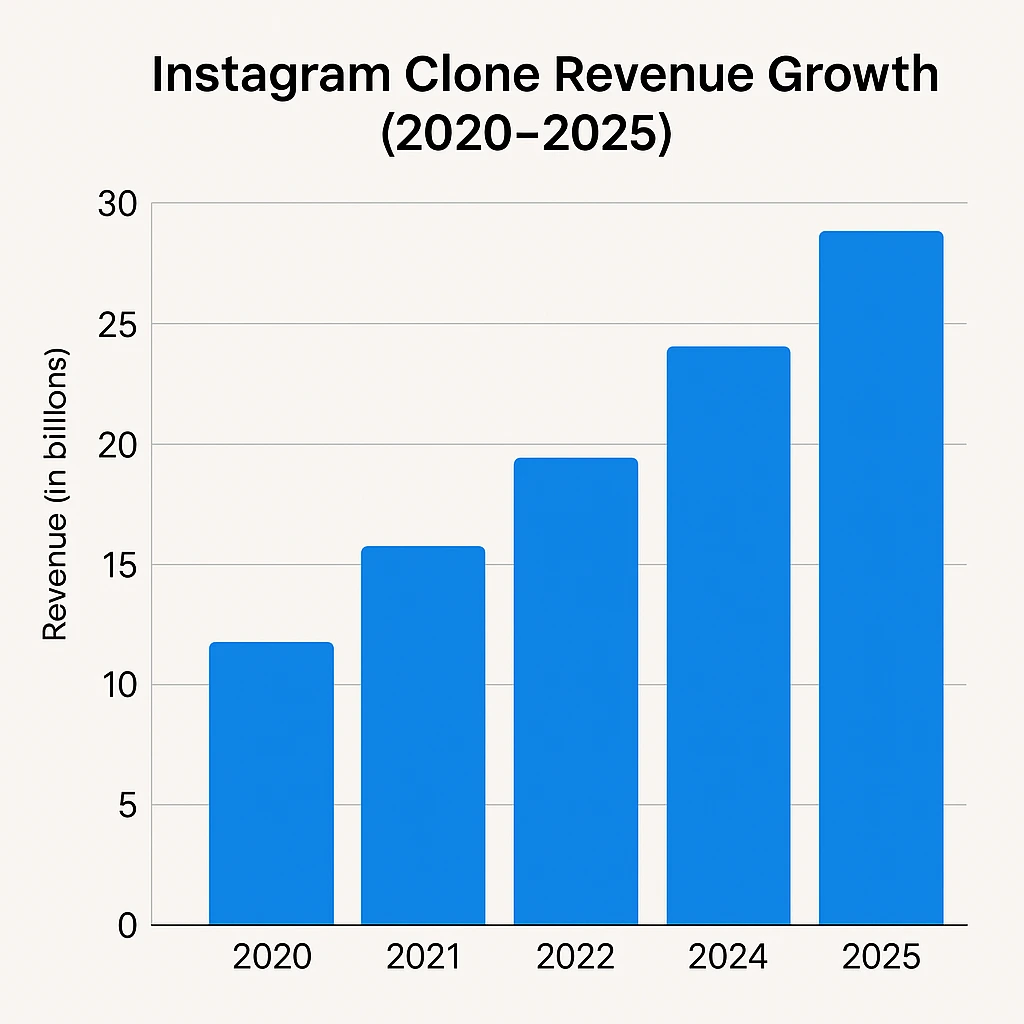
Instagram’s revenue engine is one of the strongest in the global digital economy, consistently generating tens of billions in yearly ad revenue while expanding into commerce, creator tools, and AI-driven engagement. What makes Instagram exceptional is not just its audience size but its ability to turn attention into measurable, recurring income at scale. This model has become a blueprint for social-media monetization worldwide.
For entrepreneurs building Instagram-style platforms, understanding how Instagram blends user experience with monetization is essential. The platform’s success is rooted in strategic ad placement, seamless shopping integration, creator-focused incentives, and advanced personalization — elements that can be adapted and applied to new apps. When these components come together, an Instagram clone isn’t just a photo-sharing app; it becomes a high-growth revenue engine.
With a strong monetization structure and scalable architecture, even a niche or region-focused Instagram-like app can achieve rapid market penetration. Miracuves enables founders to tap into this proven model by delivering ready-to-launch, revenue-optimized Instagram clone solutions in as little as 3–9 days, helping entrepreneurs enter the market faster and compete with confidence.
Instagram Clone Revenue Overview – The Big Picture
An Instagram-like app in 2025 can tap into the same explosive digital creator economy that pushed social platforms into multibillion-dollar valuations. Successful photo-video sharing apps earn through ads, shopping features, subscriptions, and branded content tools.
Estimated market insights for 2025:
• Global social-media advertising crossed over $220B
• Instagram-style platforms earned billions through short-video monetization
• Average revenue per user (ARPU) grew 12–18% YoY
• The creator economy exceeded $250B in value
Region-wise revenue potential:
• North America: Highest ARPU
• Europe: Strong commerce-driven revenue
• Asia-Pacific: Fastest user growth
• Middle East & Africa: High engagement, rising ad spend
Profit margins:
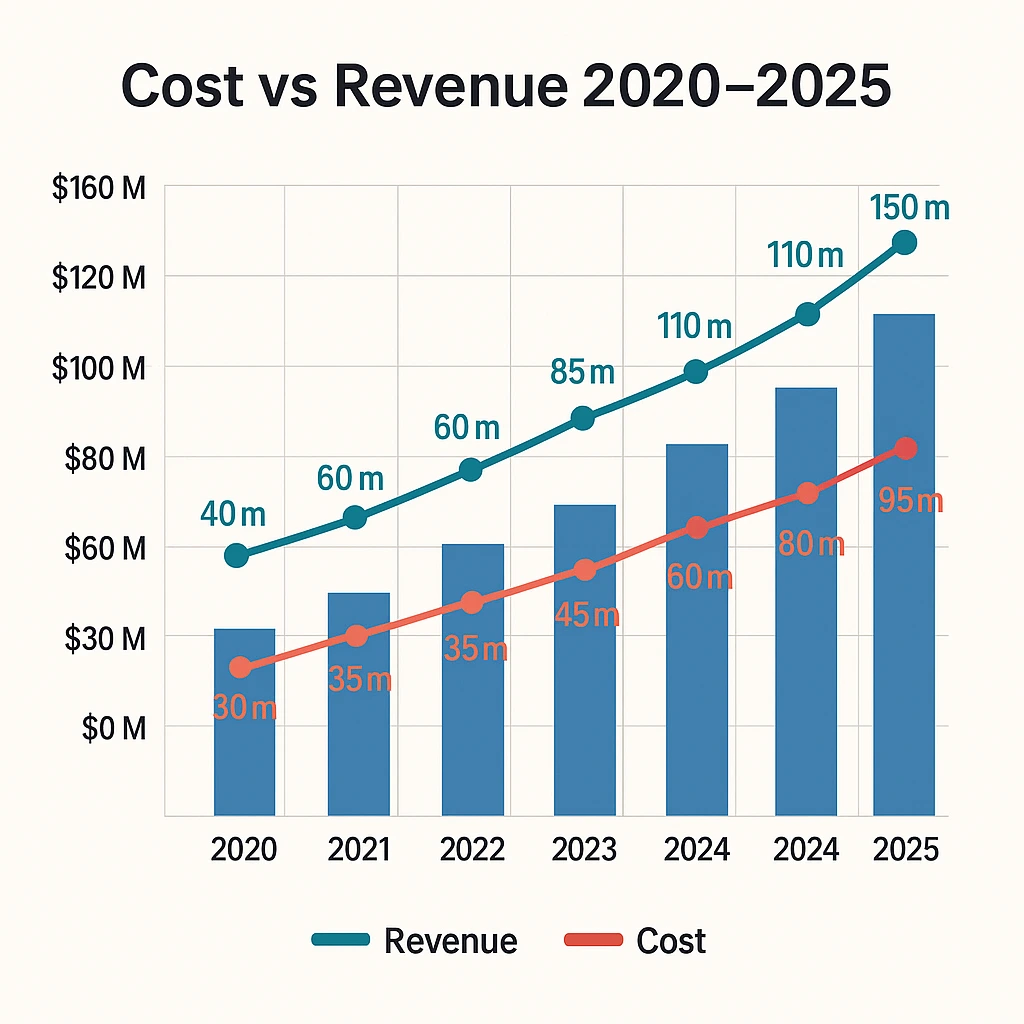
Ad-driven platforms typically operate with margins of 25–38% when scaled due to low distribution costs and high advertiser demand.
Read More: What Is Instagram and How It Works for Creators & Startups
Primary Revenue Streams Deep Dive
Revenue Stream #1: In-Feed Advertising (40–50%)
This is the core income engine. Brands pay to place ads inside the app’s feed. Pricing is based on impressions and engagement. High-engagement niches (fashion, fitness, travel) drive premium ad rates.
Revenue Stream #2: Story & Reels Ads (25–30%)
Short-form video ads generate powerful engagement. In 2025, Reels-style ads became one of the top contributors to social platform revenue due to higher completion rates and better user retention.
Revenue Stream #3: Creator Monetization Tools (10–15%)
Instagram-style apps earn by taking a percentage from:
• Creator tips
• Live-stream badges
• Paid shoutouts
• Fan subscriptions
Platforms typically take 10–30% depending on features.
Revenue Stream #4: In-App Shopping & Commerce Fees (10–20%)
Instagram popularized product tagging and integrated shopping. Clone apps earn by charging:
• Seller commissions
• Marketplace fees
• Checkout fees
• Catalog promotion fees
Revenue Stream #5: Sponsored Content Amplification (5–10%)
Brands pay to boost creators’ posts for wider reach. This indirectly increases overall platform revenue per advertiser.
Revenue Stream Breakdown Table
| Revenue Stream | Percentage Share (Approx.) |
|---|---|
| In-Feed Ads | 40–50% |
| Story/Reels Ads | 25–30% |
| Creator Monetization | 10–15% |
| Shopping Fees | 10–20% |
| Sponsored Amplification | 5–10% |
The Fee Structure Explained
User-Side Fees
Most users access content free, but revenue comes from:
• Premium subscriptions
• Paid filters or AR effects
• Ad-free mode
Creator-Side Fees
• Commission on earnings
• Marketplace onboarding fees
• Promotional boosts
Business/Brand Fees
• Paid advertising
• Catalog listing fees
• Lead-generation features
Regional Pricing Differences
• North America: Highest ad spend
• Europe: Higher subscription volumes
• Asia-Pacific: Low CPM but massive scale
Read More: Why Startup Prefer Instagram Clone Over Custom Development
Fee Structure Table
| User Type | Fees |
|---|---|
| Users | Optional subscription, premium effects |
| Creators | 10–30% commission, boost fees |
| Businesses | Ads, catalog fees, campaign tools |
How Instagram Clone Apps Maximize Revenue Per User
Segmentation
Users categorized by behavior, interests, and spending habits increase personalization and ad value.
Upselling
Premium filters, advanced editing tools, and creator monetization features increase ARPU.
Cross-Selling
Shopping integration encourages purchases directly inside posts and videos.
Dynamic Pricing
Ad auctions adjust based on demand, niche, and engagement levels.
Retention Monetization
High retention leads to:
• More ad impressions
• More creator earnings
• Higher LTV
LTV Optimization Methods
• Personalized feeds
• Habit-loop notifications
• Creator-driven engagement cycles
Real Examples
• Users interacting with 15+ posts daily produce 3x more ad impressions
• Reels consumption increases time-spent by 35–50%
• Commerce posts boost average revenue per session by 22%
Cost Structure & Profit Margins
Tech Infrastructure
• Server costs
• Video processing
• CDN usage
• Storage for high-resolution media
Marketing/CAC
Acquiring creators is expensive but essential for network growth.
Operations
• Moderation team
• Support
• Fraud prevention
• Compliance checks
R&D
Development of new AR/VR filters, AI recommendations, and performance upgrades.
Unit Economics
High LTV + scalable content = strong profitability once the app reaches critical mass.
Profitability Path
An Instagram-style platform typically becomes profitable when:
• Daily active users (DAU) exceed 500K–1M
• Advertisers onboard at scale
• Shopping features mature
Read More: Best Instagram Clone Scripts in 2025 | Photo Sharing App Solutions
Future Revenue Opportunities & Innovations
• AI-powered recommendation engines
• Personalized shopping models
• Decentralized creator payouts
• Marketplace for digital goods
• Global expansion in emerging markets
• Micro-subscriptions for exclusive content
• Smart AR commerce (try-before-buy filters)
Key risks:
• Privacy regulations
• Creator migration to other platforms
• Rising infrastructure costs
Opportunities for new players:
• Hyper-niche social networks
• Region-focused social platforms
• Commerce-heavy creator ecosystems
Lessons for Entrepreneurs & Your Opportunity
What works:
• Strong creator ecosystem
• High-engagement short-video formats
• Commerce + content integration
What to replicate:
• Multi-layer monetization
• Scalable ad engine
• Personalized content algorithms
Market gaps:
• Creator payment transparency
• Localized content marketplaces
• Niche social communities
Want to build a platform with Instagram’s proven revenue model?Miracuves helps entrepreneurs launch revenue-generating social apps with built-in monetization features. Our Instagram clone scripts come with flexible revenue models you can customize. In fact, some clients see revenue within 30 days of launch, and Miracuves delivers ready-to-launch solutions in 3–9 days guaranteed. If you want advanced language scripts or enhanced functionalities, Miracuves will provide that as well.
Get a free consultation to map out your revenue strategy.
Final Thought
An Instagram clone can become a powerful revenue engine when built with the right monetization foundation and a scalable user experience. With Miracuves, entrepreneurs don’t just get a clone — they get a fully engineered, revenue-ready ecosystem designed to grow with their business. From ad modules to creator monetization and advanced engagement tools, Miracuves ensures your platform is optimized for high retention, strong ARPU, and long-term profitability. And with our 30–90 day deployment, you can enter the market faster, start earning sooner, and scale confidently with enterprise-grade technology backing your vision.
FAQs
1. How much does an Instagram-style app make per transaction?
Usually 10–30% from creator earnings or shopping fees.
2. What’s the most profitable revenue stream?
In-feed and video ads generate the highest income.
3. How does pricing compare to competitors?
Instagram-clone models offer flexible CPM/CPC pricing based on niche and region.
4. What percentage does the platform take from creators?
Commonly 10–30% depending on the monetization tool.
5. How has the revenue model evolved?
Shift from only ads to video, creator tools, shopping, and subscriptions.
6. Can small platforms use similar models?
Yes — niche social apps perform extremely well with these frameworks.
7. What’s the minimum scale for profitability?
Typically 500K–1M daily active users depending on infrastructure costs.
8. How to implement similar revenue models?
Use ads, shopping, subscriptions, and creator monetization to diversify income.
9. What are alternatives to Instagram’s model?
Subscription-only apps, community-based monetization, and NFT-driven ecosystems.
10. How quickly can similar platforms monetize?
With Miracuves setup, revenue can begin within weeks.
Related Articles:
Twitter Revenue Model: How Twitter Makes Money in 2025
X Revenue Model: How X Makes Money
Facebook Revenue Model 2025 : Inside the World’s Top Social Platform