



You’ve heard the horror stories about data breaches, hacked food delivery apps, leaked customer locations, and stolen payment details. If you’re planning to launch a white-label Swiggy app, one question naturally sits at the top of your mind: Is it actually safe?
In 2025, food delivery apps process massive volumes of sensitive data every single second—customer addresses, live location tracking, card payments, order histories, restaurant partner data, and driver identities. A single security gap can instantly destroy years of brand trust, invite regulatory penalties, and cause irreversible financial loss.
This is exactly why white-label Swiggy app safety is no longer a “technical detail”—it is a core business decision.
In this guide, we will provide a completely honest, real-world assessment of:
- How secure a white-label Swiggy app actually is
- What risks truly exist behind the scenes
- What certifications and protections are mandatory in 2025
- And how you can launch a Swiggy-style app without putting your business or your users at risk
You will not find fear-mongering here—only clear facts, practical safeguards, and proven security standards used by enterprise-grade platforms.
Understanding White-Label Swiggy App Security Landscape
What “White-Label Security” Actually Means
A white-label Swiggy app is a pre-built food delivery platform that is rebranded and customized for your business. From a security perspective, this means the foundation of your app’s safety depends on:
- The original codebase quality
- The backend infrastructure design
- The security protocols implemented by the provider
- How updates, patches, and monitoring are handled after launch
You are not “outsourcing” responsibility for security. You are inheriting a security architecture that must already be battle-tested, compliant, and continuously maintained.
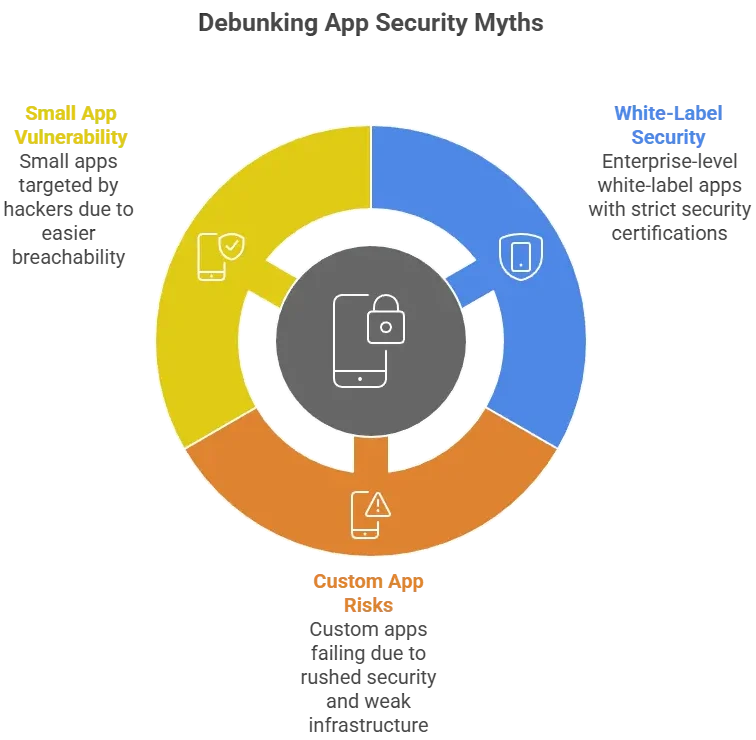
Why People Worry About White-Label Swiggy Apps
Food delivery apps carry a uniquely sensitive risk profile:
- Real-time user location tracking
- Saved home and office addresses
- Card and wallet payments
- Driver identity verification
- Restaurant banking information
This creates a natural fear that a pre-built platform might have “shared vulnerabilities” across multiple clients if not designed correctly.
Current Threat Landscape for Food Delivery Apps in 2025
In 2025, the biggest security threats facing Swiggy-style platforms include:
- API abuse and token hijacking
- Payment gateway manipulation
- GPS spoofing and location fraud
- Account takeover through credential stuffing
- Fake driver and restaurant onboarding
- DDoS attacks during peak hours
- Mobile app reverse engineering
According to global cybersecurity reports:
- Over 64% of food delivery platforms experienced attempted API attacks in the last 18 months
- Payment fraud in on-demand delivery grew by over 28% year-over-year
- Location data leaks became one of the fastest growing privacy violation categories in 2024
Security Standards in 2025
Modern food delivery platforms are expected to meet:
- Zero-trust security architecture
- Encrypted microservice communication
- Real-time fraud detection using behavioral analytics
- Automated vulnerability scanning
- Continuous compliance monitoring
Security in 2025 is no longer about one-time protection—it is about continuous defense.
Real-World Statistics on App Security Incidents
- Global average cost of a mobile app data breach in 2024–2025: $4.6 million
- 71% of users uninstall an app immediately after a security incident
- 58% of users never return to an app involved in a payment data breach
- Regulatory fines for privacy violations can reach up to 4% of annual turnover under GDPR
These numbers clearly show why white-label Swiggy app security must be treated as a strategic investment, not a technical afterthought.
Key Security Risks & How to Identify Them
When you launch a white-label Swiggy app, you are stepping into a high-risk digital environment where multiple data streams, payment systems, and real-time operations intersect. Understanding exactly where the danger lies is the first step toward eliminating it.
Below are the most critical risk zones every food delivery app must secure in 2025.
High-Risk Area 1: Data Protection & Privacy
Food delivery apps handle deeply personal and financial user data. Any weakness here directly leads to legal action and loss of trust.
User Personal Information
- Names, phone numbers, email addresses
- Home and work addresses
- Order histories and preferences
- Device identifiers and IP addresses
If this data is not encrypted both at rest and in transit, it becomes an easy target for data harvesting attacks.
Payment Data Security
- Card numbers
- UPI and wallet transactions
- Payment tokens
- Transaction histories
Without PCI DSS-compliant storage and tokenization, a single breach can expose thousands of users at once.
Location Tracking Concerns
- Live GPS tracking of customers and drivers
- Delivery route histories
- Geofencing and service zone mapping
Location data leaks are now treated as severe privacy violations under global data protection laws.
GDPR and CCPA Compliance
- Improper data consent
- No data deletion mechanism
- Weak access control for user records
Non-compliance can result in multimillion-dollar penalties and forced shutdown orders.
High-Risk Area 2: Technical Vulnerabilities
These are the weaknesses that hackers actively exploit.
Code Quality Issues
- Hardcoded API keys
- Poor session handling
- Insecure authentication logic
Low-quality code invites SQL injection, cross-site scripting, and unauthorized data access.
Server Security Gaps
- Exposed admin panels
- Weak firewall configurations
- No intrusion detection systems
One misconfigured server can compromise the entire platform.
API Vulnerabilities
- Unauthenticated endpoints
- Excessive data exposure
- Poor rate-limiting
APIs are the most attacked components of food delivery apps today.
Third-Party Integrations
- Payment gateways
- Map and navigation services
- SMS and notification providers
Every extra integration introduces a new entry point for attackers.
High-Risk Area 3: Business Risks
Security failures do not remain technical problems—they become business disasters.
Legal Liability
You become legally responsible for user data leaks, even if the breach originated from your provider’s code.
Reputation Damage
Trust collapses instantly after a breach. Recovery is slow and expensive.
Financial Losses
- Fraudulent transactions
- Refund storms
- Compensation payouts
- Cyber insurance claims
Regulatory Penalties
Government authorities can impose:
- Heavy fines
- App store delisting
- Temporary or permanent bans
White-Label Swiggy App Security Risk Assessment Checklist
Use this checklist before finalizing any provider:
- Is all user data encrypted at rest and in transit?
- Are payment systems PCI DSS certified?
- Is live location data protected with secure APIs?
- Are GDPR and CCPA compliance tools built in?
- Are penetration testing reports available?
- Is there real-time security monitoring?
- Are servers protected with enterprise-grade firewalls?
- Are third-party integrations audited?
- Is an incident response plan documented?
- Is cyber insurance included?
If even three of these answers are missing, your platform is already in a danger zone.
Read more : – Best Swiggy Clone Scripts in 2025: Features & Pricing Compared
Security Standards Your White-Label Swiggy App Must Meet
In 2025, security is no longer optional or negotiable for food delivery platforms. A white-label Swiggy app must align with internationally recognized security certifications and technical safeguards to be considered truly safe for commercial deployment.
Below are the mandatory security benchmarks every serious food delivery business must demand from its provider.
Essential Certifications
ISO 27001 Compliance
This is the global gold standard for information security management systems. It ensures:
- Structured risk management
- Controlled access to sensitive data
- Continuous monitoring and improvement of security processes
Without ISO 27001, your provider lacks a formal, audited security governance framework.
SOC 2 Type II
This certification verifies how customer data is handled over time across:
- Security
- Availability
- Processing integrity
- Confidentiality
- Privacy
It proves your provider maintains long-term operational security—not just one-time protection.
GDPR Compliance
Mandatory for handling data of users in the EU and many adjacent markets. It covers:
- User consent management
- Right to access and deletion
- Data portability
- Breach notification within strict timelines
Non-compliance can result in fines up to 4% of annual global revenue.
HIPAA (If Health Data Is Involved)
Relevant if your food delivery app integrates:
- Diet tracking
- Medical meal plans
- Hospital food delivery
HIPAA ensures medical data confidentiality and legal protection.
PCI DSS for Payments
Every app handling debit, credit, UPI, or wallet payments must comply with PCI DSS. It enforces:
- Secure card data storage
- Tokenization
- Encrypted transaction processing
- Restricted access to payment systems
Without PCI DSS, you cannot legally operate payment processing in most countries.
Technical Security Requirements
End-to-End Encryption
- All user data encrypted in transit using TLS 1.3
- Sensitive data encrypted at rest using AES-256
Secure Authentication
- Two-factor authentication for users and admins
- OAuth 2.0 / JWT for token-based access control
- Device-level binding for high-risk actions
Regular Security Audits
- Vulnerability scanning every quarter
- Full security audits at least once per year
Penetration Testing
- External ethical hacking tests
- Simulated real-world attack scenarios
- Verified remediation reports
SSL Certificates
- Domain-wide SSL for all user-facing services
- Enforced HTTPS without fallback to HTTP
Secure API Design
- Token-based authentication
- Rate limiting and throttling
- Input validation and output filtering
- Zero-trust API architecture
Security Standards Comparison Table
| Security Component | Minimum Requirement | Enterprise-Grade Standard |
|---|---|---|
| Data Encryption | TLS + Basic DB Encryption | TLS 1.3 + AES-256 |
| Payments | Basic Gateway Integration | PCI DSS Level 1 |
| User Authentication | Password Only | 2FA + OAuth + Device Binding |
| Server Security | Firewall Only | WAF + IDS + Zero Trust |
| API Protection | Basic Auth | Tokenization + Rate Limiting + Audit Logs |
| Compliance | Partial GDPR | Full GDPR + SOC 2 + ISO 27001 |
| Monitoring | Manual Reports | 24/7 Automated Monitoring |
| Backup | Periodic Backup | Encrypted Real-Time Backups |
If your white-label Swiggy app provider cannot meet the enterprise-grade column across most categories, your platform is exposed to serious operational and legal risk.
Red Flags: How to Spot Unsafe White-Label Providers
Not every white-label Swiggy app provider follows serious security practices. Many platforms appear attractive on the surface with fast delivery promises and low pricing, but hide dangerous gaps underneath. These red flags often become visible only after a breach occurs—when it is already too late.
Below are the most critical warning signs that indicate an unsafe provider.
Warning Signs You Must Never Ignore
No Security Documentation
If a provider cannot share formal documentation on encryption standards, data storage policies, audit practices, and access control methods, it means security was never designed systematically.
Cheap Pricing Without Technical Explanation
Ultra-low prices often indicate:
- Reused unstable code
- No penetration testing
- No dedicated security engineers
- No compliance investments
Security cannot be discounted without risk.
No Compliance Certifications
Absence of ISO 27001, SOC 2, GDPR readiness, or PCI DSS compliance is a serious alarm signal for any platform processing payments and personal data.
Outdated Technology Stack
Old frameworks and unsupported libraries carry known exploits that attackers actively target.
Poor Code Quality
- Hardcoded admin credentials
- No separation between staging and production
- No secure logging system
These are common traits of unsafe platforms.
No Security Updates Policy
If a provider does not follow:
- Regular security patch cycles
- Dependency update schedules
- Vulnerability disclosure practices
Your app will slowly become exposed over time.
Lack of Data Backup Systems
Without real-time encrypted backups:
- Ransomware attacks can permanently destroy your platform
- Disaster recovery becomes impossible
No Insurance Coverage
If cyber insurance is not part of their risk protection strategy, you alone will bear the financial fallout of a breach.
Evaluation Checklist for White-Label Swiggy App Providers
Before signing any agreement, you must validate these areas in writing.
Questions to Ask Providers
- Do you follow ISO 27001 standards?
- Are your payment flows PCI DSS certified?
- How often do you conduct penetration testing?
- Is user data encrypted at rest and in transit?
- Who is responsible for security updates?
- What is your breach response time?
- Do you provide real-time security monitoring?
- Is cyber insurance included?
Documents to Request
- Latest security audit report
- Penetration testing summary
- Data protection and privacy policy
- Payment compliance certification
- Backup and disaster recovery policy
- Incident response framework
Testing Procedures to Demand
- Black-box penetration testing
- Load and stress testing for DDoS protection
- API vulnerability assessment
- Admin access escalation testing
Due Diligence Steps
- Cross-verify certifications directly with issuing bodies
- Request at least one security-focused client reference
- Conduct a third-party security audit before go-live
- Include breach liability clauses in your agreement
A provider that hesitates or avoids these steps is exposing your future business to unnecessary and preventable risk.
Best Practices for Secure White-Label Swiggy App Implementation
Even with a secure white-label Swiggy app foundation, the way you implement, configure, and operate the platform determines its real-world safety. Most security failures happen not because the core system was weak, but because best practices were ignored during setup and post-launch operations.
Below is the practical security framework every serious food delivery business must follow.
Pre-Launch Security Best Practices
Comprehensive Security Audit Process
Before launch, a full-stack security audit must be completed covering:
- Mobile apps
- Admin dashboards
- APIs
- Database access layers
- Cloud infrastructure
This audit should be performed by both internal security teams and an independent third-party firm.
Strict Code Review Requirements
- Manual review of authentication and authorization logic
- Validation of session handling and token management
- Removal of hardcoded secrets and debug backdoors
Code must be reviewed line-by-line in all sensitive modules.
Infrastructure Hardening
- Role-based access control for all servers
- Firewall rules with whitelisted IP ranges
- Segregation of production, staging, and testing environments
- Deployment of Web Application Firewalls and intrusion detection systems
Compliance Verification
Before accepting real users:
- GDPR and CCPA workflows must be tested end-to-end
- Consent capture and data deletion tools must be functional
- PCI DSS validation must be completed for all payment flows
- Data retention policies must be enforced in the backend
Staff Training Programs
Human error is still the largest cause of breaches. Mandatory security training must cover:
- Phishing attack identification
- Secure credential handling
- Admin panel usage discipline
- Data access control policies
Post-Launch Security Monitoring
Continuous Security Monitoring
- 24/7 log analysis
- Real-time anomaly detection
- Automated alerts for suspicious transactions
- API abuse detection
Regular Updates and Patches
- Monthly dependency updates
- Emergency patch deployment for zero-day threats
- Forced app updates for critical security fixes
- Continuous vulnerability scanning
Incident Response Planning
Every white-label Swiggy app must have:
- A documented breach response workflow
- Defined response roles and escalation levels
- Public communication protocols
- Regulatory notification procedures within legal timeframes
User Data Management
- Automated data minimization
- Role-based data access
- Secure archiving of inactive records
- Encrypted export and deletion processes
Backup and Recovery Systems
- Encrypted real-time database backups
- Geo-redundant storage
- Regular disaster recovery simulations
- Guaranteed recovery time objectives
Security Implementation Timeline
| Phase | Duration | Key Activities |
|---|---|---|
| Pre-Contract | 1–2 Weeks | Provider audit, certification verification |
| Pre-Launch Hardening | 2–3 Weeks | Code review, penetration testing, compliance setup |
| Go-Live Readiness | 1 Week | Final security validation, monitoring activation |
| First 90 Days | Ongoing | Patch management, active monitoring, incident drills |
| Long-Term Operations | Continuous | Audits, updates, training, insurance renewals |
Security is not a one-time setup cost. It is an ongoing operational discipline that protects your revenue, your users, and your brand.
Legal & Compliance Considerations
Launching a white-label Swiggy app is not just a technology decision—it is a legal and regulatory responsibility. In 2025, governments worldwide are aggressively enforcing data protection, digital payments, and consumer rights laws. A single compliance failure can result in heavy penalties, forced suspension of operations, or permanent platform bans.
Below are the mandatory legal and compliance pillars your food delivery app must follow.
Regulatory Requirements
Data Protection Laws by Region
India
- Digital Personal Data Protection Act (DPDP Act)
- Mandatory user consent for data collection
- Purpose limitation and data minimization
- Breach reporting obligations
European Union
- General Data Protection Regulation (GDPR)
- Lawful data processing
- Right to access, correction, and erasure
- Mandatory breach notification within 72 hours
United States
- California Consumer Privacy Act (CCPA)
- Consumer rights to data access and deletion
- Opt-out of data sharing
- State-level data privacy regulations
Middle East
- UAE PDPL
- Saudi Arabia PDPL
- Local data residency and cross-border transfer approvals
Your white-label Swiggy app must be configurable to comply with all applicable regional laws depending on where you operate.
Industry-Specific Regulations
Food delivery apps must also comply with:
- Digital payments and financial transaction regulations
- Restaurant licensing and verification standards
- Driver onboarding and background verification laws
- Consumer food safety disclosure norms
- Electronic invoicing and tax reporting rules
User Consent Management
Legally valid consent must be:
- Explicit and granular
- Logged with timestamps and IP records
- Revocable at any time
- Clearly documented within the privacy policy
Your app must provide:
- Consent banners
- Preference management dashboards
- Data export and deletion tools
Privacy Policy Requirements
A compliant privacy policy must clearly disclose:
- Types of data collected
- Purpose of data usage
- Storage duration
- Third-party data sharing
- Cross-border data transfers
- User rights and grievance handling
Terms of Service Essentials
Your terms of service must cover:
- User responsibilities
- Platform limitations
- Payment dispute handling
- Delivery liability clauses
- Driver and restaurant obligations
- Termination and suspension rights
- Jurisdiction and dispute resolution
These documents must be legally reviewed and region-specific.
Liability Protection Framework
Insurance Requirements
Every serious food delivery platform should carry:
- Cyber liability insurance
- Professional indemnity insurance
- Payment fraud protection coverage
- Business interruption insurance
These protect you from:
- Data breach lawsuits
- Regulatory penalties
- Fraud-related chargebacks
- Operational shutdown losses
Legal Disclaimers
Your app must include:
- Platform-as-intermediary disclosure
- Service limitation clauses
- Data accuracy disclaimers
- Third-party integration responsibilities
User Agreements
Separate agreements are required for:
- Customers
- Drivers
- Restaurant partners
Each agreement must clearly define:
- Data usage rights
- Payment flows
- Liability allocation
- Termination conditions
- Dispute resolution procedures
Incident Reporting Protocols
Legally compliant incident response requires:
- Defined reporting timelines
- User notification procedures
- Regulator notification workflows
- Evidence preservation guidelines
Failure to follow these timelines is itself a regulatory violation.
Regulatory Compliance Monitoring
Compliance is not static. You must implement:
- Quarterly legal audits
- Automated compliance tracking
- Policy update workflows
- Cross-border regulation monitoring
Compliance Checklist by Region
| Region | Data Law | Payments | Breach Reporting | Data Residency |
|---|---|---|---|---|
| India | DPDP Act | RBI + PCI DSS | Mandatory | Permitted with safeguards |
| EU | GDPR | PSD2 + PCI DSS | 72 Hours | Strict |
| USA | CCPA / State Laws | PCI DSS | State-Based | Flexible |
| UAE / KSA | PDPL | Local Payment Laws | Mandatory | Often Mandatory |
If your white-label Swiggy app provider is not actively supporting these legal requirements through built-in compliance tools, your business is operating in immediate regulatory danger.
Why Miracuves White-Label Swiggy App is Your Safest Choice
When it comes to launching a food delivery platform in 2025, security is not a feature—it is the foundation of long-term business survival. Miracuves has built its entire white-label Swiggy app ecosystem with a security-first engineering philosophy, ensuring that clients never have to choose between speed, scalability, and safety.
Below are the core security reasons why Miracuves is trusted by fast-scaling businesses worldwide.
Miracuves Security Advantages
Enterprise-Grade Security Architecture
Miracuves platforms are built on hardened, modular architectures with strict separation between user layers, admin systems, and payment infrastructure. This limits lateral movement even if a single component is attacked.
Regular Security Audits and Certifications
All Miracuves white-label app deployments are supported by:
- Scheduled third-party security audits
- Continuous vulnerability scanning
- Verified remediation cycles
This ensures your platform always stays compliant with evolving global security standards.
GDPR and CCPA Compliant by Default
Miracuves platforms include:
- Built-in user consent management
- Data access and deletion tools
- Regional data handling configurations
- Automated compliance logging
You are legally protected from day one, even when operating in multiple countries.
24/7 Security Monitoring
Miracuves implements real-time monitoring systems that track:
- API abuse
- Suspicious login behavior
- Payment anomalies
- Traffic floods and DDoS attempts
Threats are identified and contained before they can impact business operations.
Encrypted Data Transmission and Storage
- All user data is encrypted in transit using modern TLS protocols
- Sensitive information is encrypted at rest using enterprise-grade encryption
- Payment data is tokenized to prevent real card exposure
Secure Payment Processing
Miracuves integrates only PCI DSS–compliant payment gateways with:
- Tokenized card handling
- Secure UPI and wallet processing
- Encrypted transaction workflows
This ensures full legal and financial protection for your customers and your business.
Regular Security Updates
Security is treated as a continuous process, not a one-time setup:
- Monthly dependency and patch updates
- Emergency zero-day vulnerability fixes
- Proactive infrastructure upgrades
Insurance Coverage Included
Miracuves deployments are backed by cyber risk mitigation frameworks and insurance-ready security documentation that supports:
- Breach liability coverage
- Regulatory compliance claims
- Financial risk protection
Security Track Record
Across more than 600+ global platform deployments, Miracuves has maintained a zero major publicly reported security breach record at the infrastructure level. This track record is the direct result of:
- Strict security governance
- Certified engineering practices
- Continuous monitoring and compliance enforcement
Conclusion
Don’t compromise on security. Miracuves white-label Swiggy app solutions come with enterprise-grade security built-in. Our 600+ successful projects have maintained zero major security breaches. Get a free security assessment and see why businesses trust Miracuves for safe, compliant platforms.
Launching a white-label Swiggy app in 2025 is a powerful business opportunity—but only when security is treated as a non-negotiable foundation. The real risk is not in using a white-label app; the real risk lies in choosing an insecure provider and ignoring compliance, audits, and continuous monitoring. With the right security-first partner, a white-label Swiggy app can be every bit as safe, compliant, and enterprise-ready as a custom-built platform.
FAQs
1. How secure is a white-label Swiggy app compared to custom development?
A properly audited white-label Swiggy app with ISO, PCI DSS, and GDPR compliance is often more secure than rushed custom development, which frequently lacks structured audits and monitoring.
2. What happens if there is a security breach?
A compliant platform follows a formal incident response process: system isolation, forensic investigation, user notification, regulatory reporting, and rapid remediation.
3. What happens if there is a security breach?
A compliant platform follows a formal incident response process: system isolation, forensic investigation, user notification, regulatory reporting, and rapid remediation.
4. Who is responsible for security updates?
The white-label provider handles core infrastructure updates, while the business owner ensures policy compliance and operational security discipline.
5. How is user data protected in a white-label Swiggy app?
Through end-to-end encryption, tokenized payments, role-based access controls, and continuous security monitoring.
6. What compliance certifications should I look for?
ISO 27001, SOC 2 Type II, GDPR, DPDP Act (India), and PCI DSS are mandatory for serious platforms.
7. Can a white-label Swiggy app meet enterprise security standards?
Yes, when built with enterprise architecture, audited infrastructure, and certified compliance frameworks.
8. How often should security audits be conducted?
Vulnerability scans should run continuously, with full third-party audits at least once every 12 months.
9. What is included in Miracuves’ security package?
Enterprise encryption, PCI-compliant payments, GDPR/CCPA compliance tools, continuous monitoring, audits, and breach readiness support.
10. How is security handled across different countries?
Through region-specific compliance configurations, local data residency controls, and adaptive privacy policies.
A properly audited white-label Swiggy app with ISO, PCI DSS, and GDPR compliance is often more secure than rushed custom development, which frequently lacks structured audits and monitoring.
Related Articles: