Key Takeaways
What You’ll Learn
- Swiggy clone scripts help entrepreneurs launch faster by offering a ready-made food delivery platform instead of building the complete system from scratch.
- A strong clone script usually includes essential features for customers, restaurants, delivery partners, and admins to manage orders, payments, tracking, and operations.
- Pricing depends on feature depth and customization, including restaurant workflows, delivery logic, payment setup, app platforms, and backend control requirements.
- The right solution is not only about development cost, but also about scalability, launch readiness, and how well the script supports real food delivery operations.
- Choosing the right Swiggy clone early can reduce technical risk, save development time, and help startups enter the delivery market with a more practical business model.
Stats That Matter
- Food delivery startups often prefer clone-based platforms because they reduce time-to-market compared to full custom development.
- Feature completeness matters more than feature count, especially in areas like order flow, restaurant onboarding, delivery tracking, payments, and admin control.
- Pricing increases with customization when businesses need unique delivery workflows, advanced dispatch logic, multi-restaurant support, or location-based operational features.
- Multi-role architecture is essential because customer apps, delivery partner apps, restaurant panels, and admin dashboards all need connected but different workflows.
- A practical Swiggy clone performs best when technology, delivery reliability, and marketplace operations are aligned from the start.
Real Insights
- The best Swiggy clone script is the one that supports real delivery operations, not the one that only looks feature-rich in a product demo.
- Startups should focus first on core delivery categories and expand only after validating order demand, restaurant response, and delivery efficiency.
- A lower-cost script can become expensive later if it lacks scalability, admin flexibility, or strong restaurant and driver management tools.
- Reliable order flow, live tracking, and payment handling are often more important than packing too many advanced features into the first launch.
- For most founders, the smartest choice is a clone solution that balances affordability, feature readiness, and long-term growth potential.
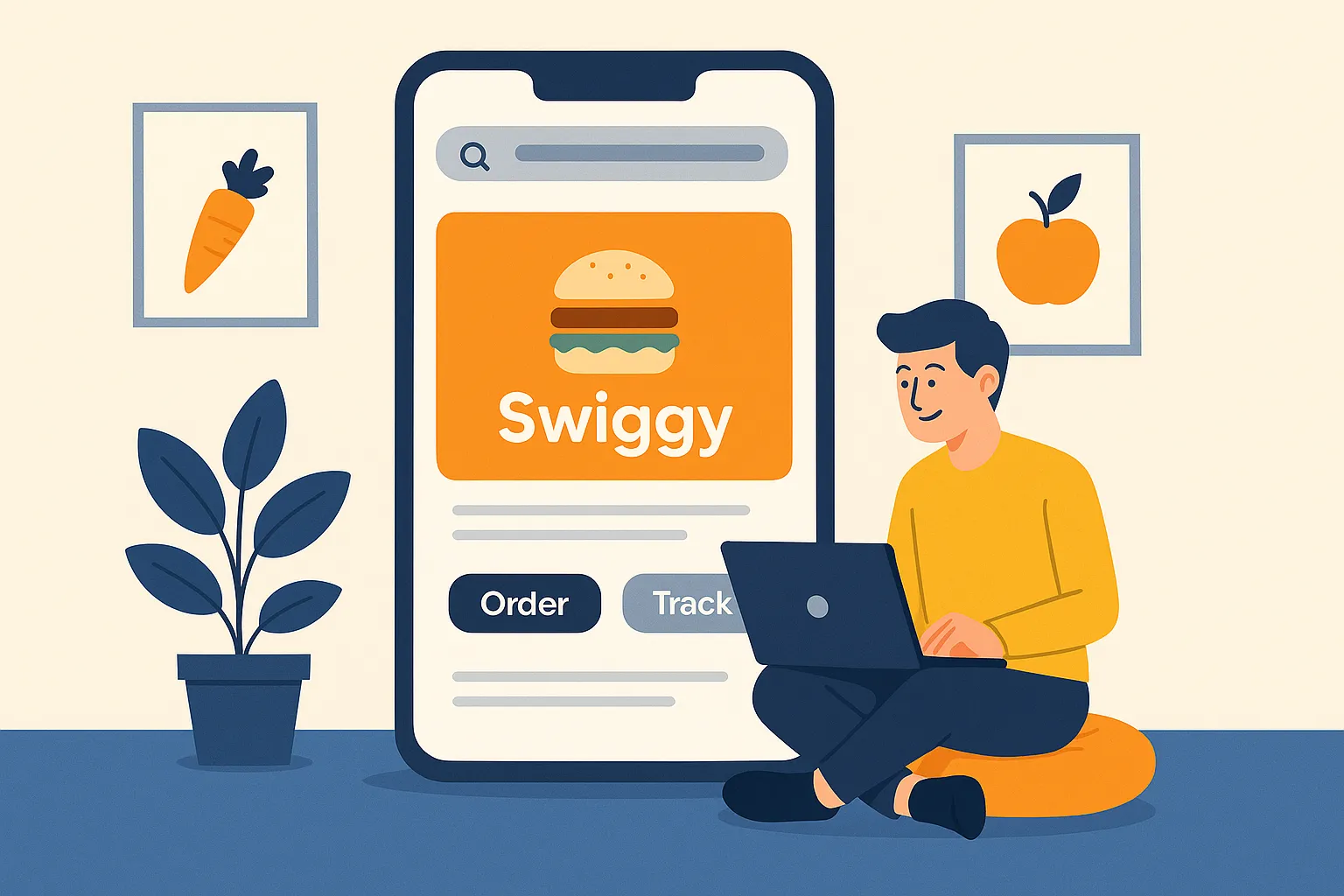
Remember when ordering food online used to be a weekend thing? In 2026, it’s Tuesday lunch, post-gym dinner, midnight snacks, and everything in between. People aren’t just eating at home—they’re living through apps. And Swiggy Clone Script have trained us to expect food at our doorstep with just a couple of taps
But here’s the secret sauce: there’s still plenty of room on the menu. Swiggy doesn’t own every local market or every niche audience. That’s why building your own food delivery app using a platform like Swiggy isn’t just doable—it’s a seriously tasty opportunity. Whether you’re eyeing tier-2 cities, specific cuisines, or restaurant-only tie-ins, Swiggy clone Script make it easy to launch fast, scale smarter, and serve better
In fact, many entrepreneurs are already riding the wave by localizing delivery experiences or mixing things up with features like dine-in pre-orders, dark kitchens, or subscription meals. The right Swiggy clone script gives you everything you need—without burning a hole in your budget
Must-Have Features in a Swiggy Clone Script
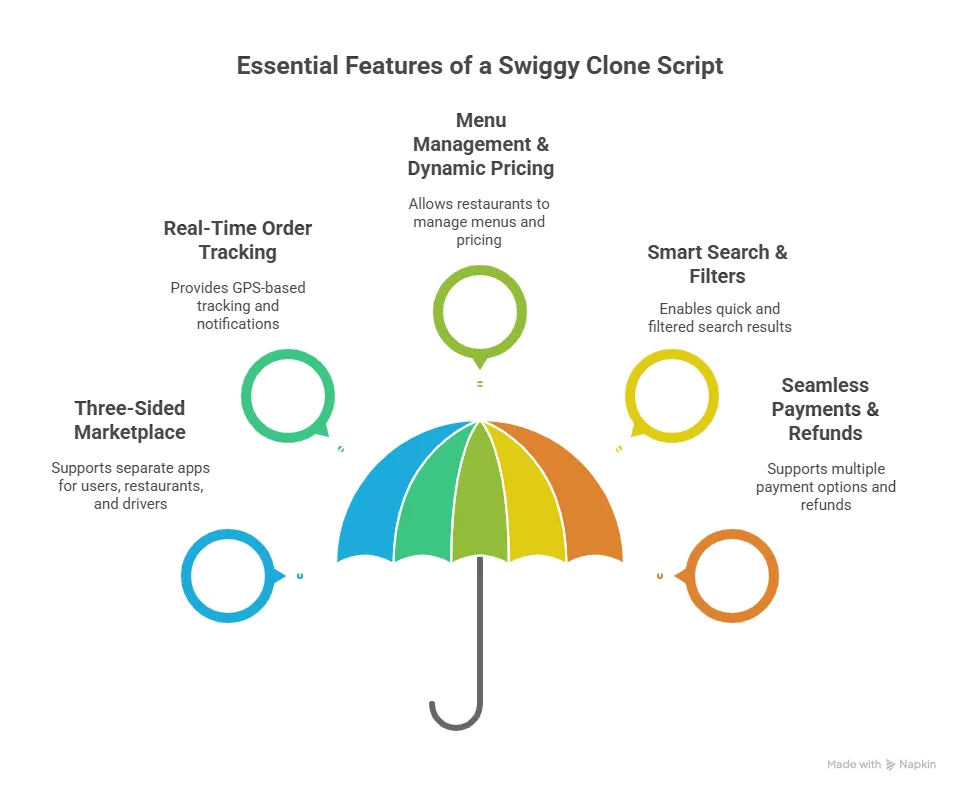
1. Three-Sided Marketplace
Your platform isn’t just for users. You’re juggling restaurant owners, delivery drivers, and hungry customers. That means your Swiggy clone script must support separate apps or dashboards for all three. From accepting orders to assigning deliveries to tracking routes—every role needs a clear, user-friendly flow
2. Real-Time Order Tracking
No one wants to guess where their food is. GPS-based real-time tracking, order status notifications, and delivery ETAs are baseline features now. Your script should integrate with Google Maps or Mapbox and offer both customer-side and delivery-side tracking
3. Menu Management & Dynamic Pricing
Restaurants need flexibility. Whether it’s updating menus, toggling item availability, offering combo deals, or surge pricing during weekends—your admin panel must give vendors the power to manage their offerings on the fly
4. Smart Search & Filters
Hungry users don’t want to scroll. They want to type “paneer tikka” and get results fast. Your script should support keyword search, filters by rating, cuisine, delivery time, and dietary tags. Bonus if you integrate trending dishes and custom recommendation engines
5. Seamless Payments & Refunds
Support for multiple gateways, digital wallets, and cash-on-delivery is essential. The script should handle partial refunds, tips for delivery partners, and restaurant-side commission tracking with clarity. A built-in wallet system is a huge plus for repeat orders and promotions
Read More : Essential Swiggy Features for Delivery App Startups
Advanced Features That Stand Out in 2026
- AI-Based Delivery Routing: Helps drivers avoid traffic and reduce delivery time
- Pre-Order Scheduling: Let users order meals hours or days in advance
- Group Ordering: Great for office lunches or friend meetups
- Subscription Meals: Weekly/monthly tiffin plans with auto-pay and delivery slots
- Table Reservation Add-On: For hybrid apps that also support dine-in experiences
- Dark Kitchen Integration: Virtual brands can plug directly into the app with no storefront
- Loyalty Points & Coupons: Keep users coming back with gamified rewards
Global Cost Factors & Pricing Breakdown
The technology stack behind your platform plays a major role in how much it costs, how fast it can launch, and how efficiently it can handle food delivery operations as it grows. Some businesses need a faster and more affordable launch, while others require a more advanced setup to manage high order volumes, real-time delivery tracking, and multi-city expansion.
Here is a simple comparison of common global development approaches for a Swiggy-like food delivery platform:
PHP/Laravel is often the most practical choice for launching a Swiggy-like food delivery platform quickly and affordably. Node.js/Python fits better when real-time order tracking and heavier data movement become more important, while Go microservices are better suited for enterprise-scale Swiggy-like platforms with higher concurrency and more complex infrastructure needs.
Miracuves Swiggy-Like App Solution Cost and Tech Stack
Miracuves Pricing for a Swiggy-Like Food Delivery App developed in PHP/Laravel with Flutter Apps for $3,399 USD (One-Time Price) in just 6 days
Get a fully developed, deployment-ready platform modeled after Swiggy. Built on a rock-solid PHP/Laravel foundation, this complete package includes everything you need to launch and scale:
- Core Workflows: Food delivery operations, restaurant listings, order management, and real-time delivery tracking.
- Built-in Finance: In-app wallet logic, dynamic pricing, delivery charges, and seamless payment integrations.
- Management Hub: Comprehensive restaurant, delivery partner management, and a centralized admin backend.
- Launch-Ready: Fully prepped for your custom branding, configuration, and immediate market entry.
Why Is Swiggy-Like App Development More Affordable?
Most advanced food delivery platforms push businesses toward expensive architectures like Node.js or Go. Building from scratch with those frameworks requires highly specialized, expensive engineering teams, which drives the cost into the tens or hundreds of thousands of dollars.
We took a smarter, more practical approach:
- You Aren’t Paying for Ground-Up Development: Our food delivery engine is already developed, battle-tested, and ready to deploy. You skip the inflated costs and months of waiting associated with building from scratch.
- The Power of PHP / Laravel: We built this on one of the most reliable, globally adopted frameworks in the world. Not only does this keep our upfront costs down, but it also protects your future budget. PHP has a massive global talent pool, making it incredibly easy and cost-effective for you to find developers for future scaling or customizations.
You get an enterprise-capable, heavy-duty foundation without the inflated development cost.
Note: This cost is for the solution, re-branding, deployment, and source code only.
Who Should Launch a Swiggy Clone?
1. Local Food Aggregators: Own a city or region by onboarding local restaurants, bakeries, and tiffin centers. Regional dominance works better than trying to go national too fast
2. Cloud Kitchen Entrepreneurs: If you run or partner with cloud kitchens, a Swiggy clone gives you total control over branding, orders, delivery, and customer loyalty—no third-party fees
3. Niche Cuisine Platforms: Focus on vegan food, desserts, regional Indian cuisines, or even pet food delivery. When you go niche, you create a stronger bond with a smaller but loyal audience
4. Community Platforms: Colleges, apartment complexes, and co-living spaces are perfect for hyperlocal delivery apps. You can offer student discounts, meal plans, or combo offers that Swiggy never will
5. Franchise Chains: Run a restaurant chain? Cut out third-party apps and own your customer data. A custom Swiggy clone can bring better margins and stronger brand recall
What’s New in 2026’s Swiggy Clone Script?
The 2026 batch of clone Script have leveled up big time. Look for:
- Driver Optimization Algorithms: Assign deliveries based on location, load, and ETA
- Voice Search Ordering: Let users place orders hands-free
- Contactless Delivery Modes: Especially useful for apartment deliveries and offices
- Order from Multiple Restaurants: Combine orders into a single delivery flow
- Environmental Impact Trackers: Appeal to eco-conscious users with packaging and carbon info
The best Script don’t just replicate Swiggy—they elevate the experience
Read More : Create a Food Delivery App Like Swiggy: Key Features, Cost, and Development Process
Conclusion
Food delivery isn’t a luxury anymore—it’s utility, convenience, and sometimes even survival on busy days. If you’re thinking about jumping into the on-demand food delivery space, a Swiggy clone script offers the fastest and most affordable route. The key is to know your niche, pick a scalable script, and focus on consistent user experience
At Miracuves, we help innovators launch high-performance app clones that are fast, scalable, and monetization-ready. Ready to turn your idea into reality? Let’s build together
FAQs :-
Can I launch a food delivery app like Swiggy without a development team?
Yes. With the right clone script, you get source code, UI, admin panel, and apps—all customizable without deep tech knowledge
How do I earn revenue from a Swiggy clone app?
You can charge restaurant commissions, delivery fees, platform subscriptions, or offer premium placements. Loyalty and ad modules also open up revenue
Do these Script support real-time delivery tracking?
Absolutely. Most high-quality Swiggy clones come with GPS tracking, live updates, and ETAs for both customers and admins
What’s the minimum time to launch?
With a production-ready script and minimal branding changes, you could go live in 6 Days guaranteed delivery . More custom features will extend timelines
Is it possible to include grocery or alcohol delivery?
Yes. Many Script are modular and let you add new product categories like groceries, liquor, or even pharmacy items with separate vendor onboarding
How do I onboard restaurants and drivers?
Most Swiggy clone Script include vendor and delivery partner onboarding flows, KYC modules, profile setup, and document upload systems
Related Articles
Miracuves is an independent software development company. We are not affiliated with, connected to, sponsored by, or endorsed by any company or product named in this article.
Terms such as “X Clone” are used descriptively. It is how the software industry refers to building a platform with functionality comparable to a known service, and how clients search for it.
The entire design and codebase of our products is built by our own team. Our products contain no code, design, graphics, or content originating from any third-party website or applications.
All third-party names and marks referenced in this article are the property of their respective owners, referenced solely to identify the services discussed.