
Key Takeaways
What You’ll Learn
- Rapid app deployment helps founders move from idea validation to market launch much faster.
- Lean MVP planning reduces unnecessary development delays and infrastructure complexity.
- Fast-launch strategies improve product-market fit discovery through real user feedback.
- Modern development frameworks, cloud infrastructure, and reusable systems accelerate deployment timelines.
- The goal is to help startups launch scalable products quickly without sacrificing user experience or future growth.
Stats That Matter
- Many startup failures happen because products take too long to reach the market.
- Modern founders increasingly prioritize MVP launches over large-scale initial development.
- Cloud deployment systems and reusable architectures significantly reduce launch timelines.
- Early user feedback helps startups improve onboarding, retention, pricing, and feature prioritization.
- Fast execution creates faster learning cycles, which improves startup adaptability and long-term scalability.
Real Insights
- Launching faster allows founders to validate demand before investing heavily in advanced infrastructure.
- A simple, focused MVP often performs better than an overbuilt first version with unnecessary features.
- Reusable backend systems, scalable APIs, and modern frameworks reduce technical bottlenecks during launch.
- Video platforms, marketplaces, SaaS products, and on-demand apps all benefit from rapid deployment strategies.
- Long-term startup success depends on balancing launch speed, scalability planning, infrastructure stability, and continuous learning.
The startup ecosystem has changed dramatically over the last few years. Earlier, founders often spent months planning products, building large engineering teams, designing complicated feature sets, and preparing long development cycles before ever launching publicly. Today, that approach is becoming increasingly risky.
Modern digital markets move extremely fast. Customer expectations evolve quickly, competitors launch products continuously, and user attention shifts rapidly. In this environment, startups that delay execution often lose valuable momentum before they even begin acquiring users.
This is why rapid app deployment has become one of the most important strategies in modern startup app development.
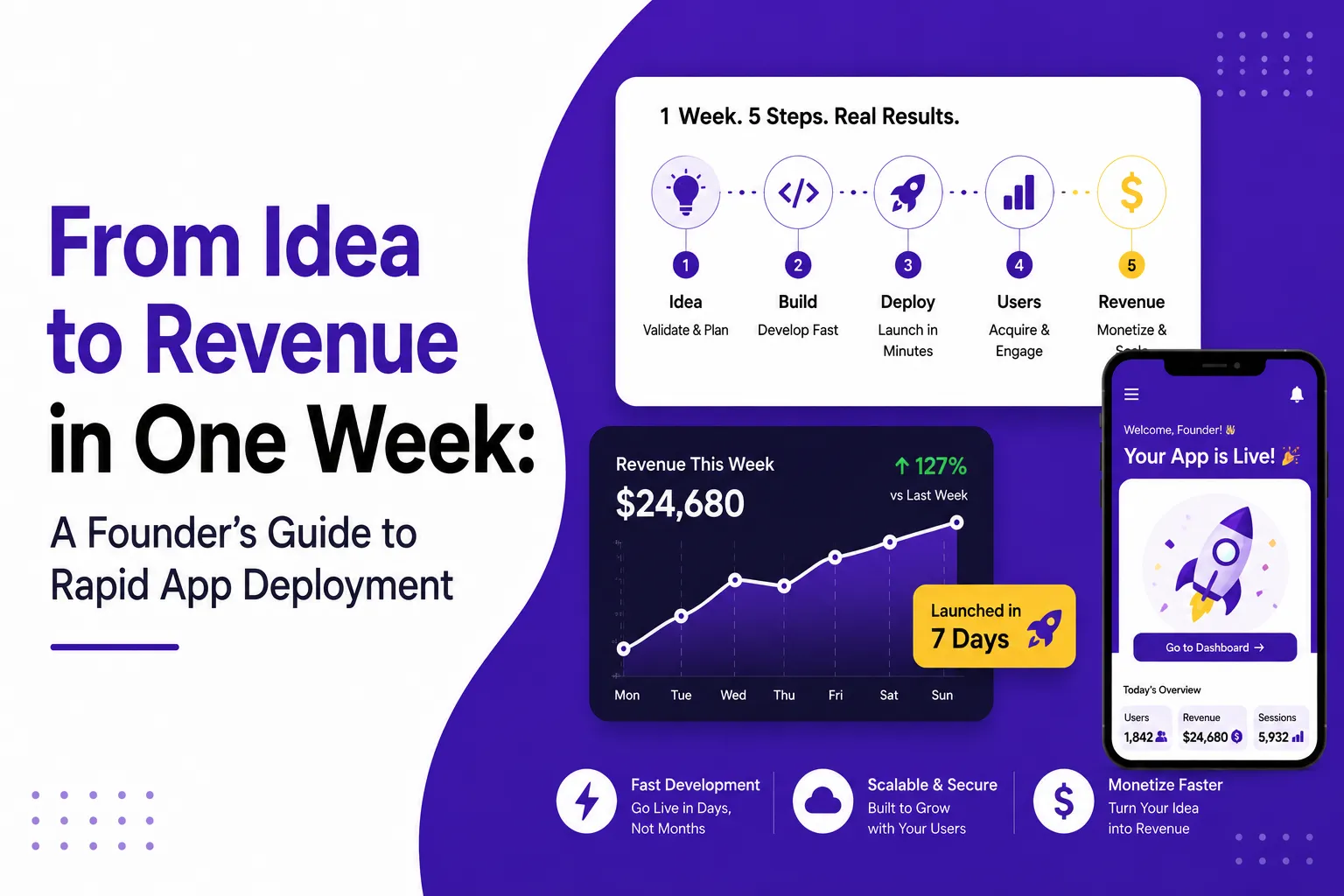
Instead of trying to build a perfect product immediately, successful startups now focus on launching lean MVPs quickly, validating market demand early, collecting real customer feedback, and improving products continuously after deployment.
The biggest advantage of rapid deployment is not simply speed. The real advantage is faster learning.
When startups launch earlier, they gain access to:
- Real customer behavior
- Product engagement patterns
- Revenue opportunities
- Retention insights
- Market validation
This helps founders reduce wasted development while improving product-market fit faster.
Many modern startup ecosystems, including Miracuves, now prioritize lean product execution, scalable infrastructure planning, rapid MVP launch systems, and ready-made solutions that help founders move from idea to revenue much faster while reducing development complexity and launch timelines.
This guide explains how startups can launch app fast using practical frameworks, scalable deployment methods, lean MVP development, and modern startup growth strategies.
Why Speed Matters More Than Perfection in Modern Startup Launches
The startup world increasingly rewards execution speed more than polished perfection. Markets evolve rapidly, and customer behavior changes continuously. Founders who spend too much time planning often lose opportunities to competitors who validate ideas earlier.
A fast launch gives startups access to something more valuable than internal planning: real market feedback.
Instead of relying entirely on assumptions, founders can study:
- How users interact with the product
- Which features create engagement
- Where customers lose interest
- What users are willing to pay for
- Which onboarding flows improve retention
This creates faster product learning cycles and healthier startup growth.
The Problem With Traditional Startup Development
Traditional startup development often focused heavily on large feature sets before launch. Teams would spend months building advanced systems without understanding whether users actually wanted the product.
This usually created:
- Long development cycles
- Higher engineering costs
- Delayed customer validation
- Slower iteration
- Reduced flexibility
Modern startup execution works differently. Founders now prioritize lean launches, smaller MVPs, scalable infrastructure, and continuous optimization.
Before understanding why rapid deployment works better, it is helpful to compare traditional startup development with lean product execution models.
| Traditional Startup Model | Rapid Launch Model |
|---|---|
| Long planning cycles | Fast validation cycles |
| Large feature scope | Core feature prioritization |
| Delayed customer feedback | Early market feedback |
| High upfront investment | Lean development spending |
| Slow iteration | Continuous optimization |
Rapid startup app development helps businesses adapt faster while reducing wasted development cycles.
Why Fast Launches Improve Startup Survival
Many startups fail not because of poor engineering, but because they delay learning for too long.
The longer development continues before validation:
- The higher the infrastructure costs become
- The more assumptions influence product decisions
- The harder it becomes to pivot quickly
- The slower monetization testing becomes
Fast launches shorten learning cycles. Instead of debating ideas internally for months, startups can improve products using real-world customer behavior.
This allows founders to:
- Improve onboarding faster
- Identify retention issues earlier
- Test monetization quickly
- Optimize engagement continuously
Modern startup growth strategy depends heavily on rapid iteration and continuous customer learning.
Read More :- The True Cost of Waiting : Why Fast App Development Beats Long Timelines
What Rapid App Deployment Actually Means
Rapid app deployment does not mean sacrificing quality or releasing unstable products carelessly. It means focusing development only on the functionality required to deliver the product’s core value.
Instead of building massive systems immediately, startups prioritize:
- Lean MVP development
- Faster release cycles
- Scalable infrastructure
- Modular product architecture
- Continuous product optimization
The goal is not to build less. The goal is to build smarter and validate faster.
Lean MVP Development
A lean MVP focuses only on the essential functionality needed to solve the primary user problem.
Many successful startups began with extremely small MVPs because lean products allow founders to:
- Launch faster
- Reduce engineering waste
- Improve scalability planning
- Learn directly from customers
Instead of creating complex systems immediately, startups gradually expand functionality after validation.
Why Rapid Deployment Works Better
The traditional belief that startups need fully developed platforms before launch is no longer realistic in many digital markets.
Rapid deployment works because it:
- Reduces unnecessary development
- Accelerates customer validation
- Improves adaptability
- Helps startups monetize earlier
- Creates faster product iteration cycles
This approach is especially effective for scalable startup apps operating in highly competitive industries like SaaS, fintech, AI platforms, and creator ecosystems.
Common Startup Mistakes Before Launch
Many startups struggle before reaching traction because founders overcomplicate the launch process.
Instead of focusing on one clear problem, teams often attempt to build oversized products immediately. This increases engineering complexity while slowing down validation.
Building Too Many Features
Feature bloat remains one of the biggest startup problems.
Many founders try to include:
- Advanced automation
- Complex integrations
- Enterprise-level dashboards
- AI recommendation systems
- Large admin infrastructures
before even validating whether users care about the core product experience.
Successful MVPs usually focus on solving one important problem extremely well before expanding functionality.
Delaying Product Launches
Many startups postpone deployment waiting for:
- Better design
- Additional funding
- More engineering resources
- Perfect market timing
Unfortunately, perfect timing rarely exists.
Startups that launch earlier often gain stronger market insights because they begin learning directly from real customers.
Overengineering Infrastructure
Some startups build enterprise-grade systems before validating demand.
This creates:
- High infrastructure costs
- Slower deployment
- Increased maintenance
- Reduced product flexibility
Modern startup infrastructure should scale gradually alongside user growth instead of becoming unnecessarily complex too early.
Ignoring Monetization Early
Revenue planning is often delayed until after user growth begins. However, startups that test monetization early usually discover stronger long-term business models.
Early monetization testing helps founders understand:
- Customer willingness to pay
- Revenue scalability
- Pricing effectiveness
- User retention quality
This creates healthier long-term startup sustainability.
Read More :- Mobile App Development from Scratch : The Ultimate Guide
Step-by-Step Framework to Launch an App Fast
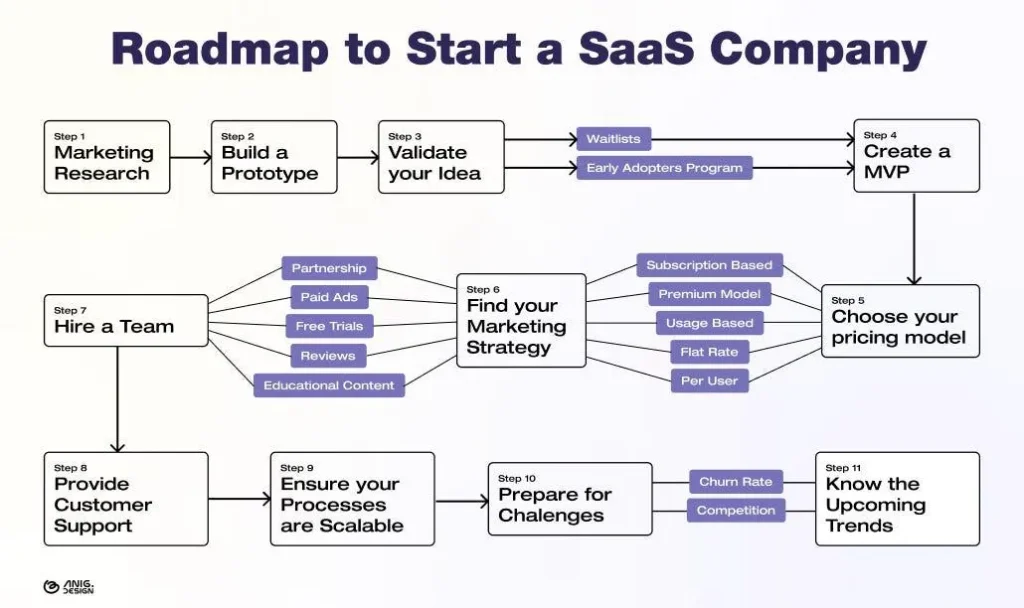
Step 1 — Validate the Problem Quickly
Before development begins, founders should confirm that the problem they are solving actually matters to users.
Startup product validation is one of the most important parts of lean startup execution because it reduces the risk of building products without market demand.
The objective is to understand:
- Whether users care about the problem
- How painful the issue actually is
- If customers actively seek solutions
- Whether users are willing to pay
Validation can happen through landing pages, founder interviews, waitlists, Reddit discussions, niche communities, and social audience feedback.
Even simple validation systems can reveal whether users are genuinely interested in the solution.
Why Validation Matters So Much
Skipping validation often leads to massive development waste.
A startup may spend months building advanced systems only to discover:
- The market is too small
- Users do not care about the problem
- The target audience behaves differently than expected
Validation helps reduce these risks significantly while improving execution clarity.
Step 2 — Build Only the Core MVP Features
The MVP development process should focus only on the functionality required to deliver the product’s primary value.
For example, a short video app MVP may only require:
- User onboarding
- Video upload
- Basic content feed
- Simple engagement features
Advanced recommendation systems, AI moderation, creator monetization systems, and enterprise dashboards can be added gradually after validation.
Before defining product priorities, founders should clearly separate essential MVP functionality from future expansion systems.
| Core MVP Features | Expansion Features |
|---|---|
| User authentication | AI personalization |
| Core functionality | Enterprise automation |
| Basic analytics | Advanced integrations |
| Payment systems | Large-scale admin systems |
This lean approach allows startups to reduce engineering complexity while accelerating deployment speed.
Why Smaller MVPs Often Perform Better
Smaller MVPs improve:
- Deployment speed
- Product flexibility
- Customer learning cycles
- Scalability planning
Instead of waiting months for perfect execution, startups can improve products continuously using real customer behavior.
Step 3 — Use Scalable Ready-Made Infrastructure
Modern startups reduce deployment timelines dramatically by using reusable infrastructure systems instead of building everything from scratch.
Reusable systems help founders focus more on product growth and validation instead of repetitive engineering work.
Modern scalable infrastructure often includes:
- API-first architecture
- Cloud-native hosting
- Reusable backend services
- White-label deployment frameworks
- Starter admin systems
For example, businesses exploring scalable video platform solutions can accelerate startup app development using ready-made deployment systems instead of rebuilding complex streaming infrastructure, content delivery architecture, and engagement systems independently.
Benefits of Reusable Infrastructure
Reusable systems improve:
- Deployment speed
- Infrastructure consistency
- Product scalability
- Faster iteration cycles
- Engineering efficiency
This helps startups launch faster while maintaining long-term scalability.
Step 4 — Prepare Monetization Before Launch
Revenue planning should begin before deployment instead of after growth starts.
Many startups struggle because they focus only on user acquisition without validating sustainable monetization systems early enough.
Modern startups commonly use:
- Subscription systems
- Marketplace commissions
- Freemium upgrades
- Advertising models
- Creator monetization
- Enterprise pricing
Each monetization model works differently depending on the product category and audience behavior.
Before selecting a revenue strategy, founders should compare how quickly each model can generate sustainable income.
| Revenue Model | Best For | Revenue Speed |
|---|---|---|
| Subscription Plans | SaaS platforms | Medium |
| Marketplace Commissions | Marketplace apps | Fast |
| Advertising | Content platforms | Medium |
| Freemium Upgrades | Consumer apps | Slow to Medium |
| Enterprise Plans | B2B platforms | High |
Early monetization testing creates stronger business planning while improving long-term scalability forecasting.

Step 5 — Launch Before You Feel Ready
Most successful founders admit they launched earlier than expected.
This happens because real customer feedback is far more valuable than endless internal planning.
Launching early helps startups:
- Discover engagement problems
- Improve onboarding systems
- Test monetization quickly
- Optimize user experience continuously
Perfect launches rarely exist. Fast iteration creates stronger long-term products.
Why Real Users Matter More Than Internal Assumptions
Internal product discussions often fail to predict real customer behavior accurately.
Once real users begin interacting with products, startups usually discover:
- Unexpected usage patterns
- Hidden retention problems
- Different customer priorities
- Better monetization opportunities
This creates much healthier product learning cycles.
Step 6 — Track Early User Signals
After launch, startups should closely monitor product analytics and user behavior.
Analytics-driven iteration is one of the most important parts of lean startup execution because it allows founders to improve products using real-world data instead of assumptions.
Important startup metrics include:
- Retention rate
- Activation rate
- Revenue conversion
- Engagement duration
- Daily active users
Before evaluating growth performance, founders should understand what each metric reveals about customer behavior and product quality.
| Metric | Purpose |
|---|---|
| Retention Rate | Measures long-term product value |
| Activation Rate | Tracks onboarding effectiveness |
| Revenue Conversion | Validates monetization |
| Engagement Time | Measures product stickiness |
| Daily Active Users | Indicates growth momentum |
These insights help startups improve onboarding, retention, monetization, and scalability planning.
How Startups Reduce Development Time Without Sacrificing Scalability
Many founders believe that launching products quickly automatically creates long-term scalability problems. In reality, modern startup infrastructure has changed significantly. Today, startups can deploy products rapidly while still preparing for future growth, higher traffic, and expanding feature requirements.
The key is not building everything at once. The key is building flexible systems that can evolve gradually as the product grows.
Modern startup app development now relies heavily on cloud-native infrastructure, modular architecture, reusable backend systems, and API-driven development. These approaches help startups reduce engineering complexity while improving deployment speed and long-term scalability.
Instead of spending months building complex systems from scratch, startups can now focus on launching lean MVPs quickly and expanding infrastructure only when user demand increases.
Modular Architecture
Modular architecture allows startups to build products in smaller, flexible components instead of creating one large monolithic system. This makes development much easier to manage because different parts of the application can be improved or expanded independently.
For example, user authentication, notifications, analytics, payment systems, and admin dashboards can all operate as separate modules connected through scalable backend infrastructure.
This approach helps startups:
- Improve product maintainability
- Release updates faster
- Scale features gradually
- Reduce development bottlenecks
Modular systems also improve long-term flexibility because startups can replace or upgrade individual components without rebuilding the entire platform.
API Integrations
Modern startups reduce development time significantly through API integrations. Instead of building every feature internally, startups connect external services for commonly used functionality.
This often includes:
- Authentication systems
- Payment gateways
- Push notifications
- Analytics tracking
- Cloud storage services
Using APIs helps startups avoid repetitive engineering work while accelerating deployment speed. It also allows founders to focus more on core product innovation instead of rebuilding standard infrastructure repeatedly.
For lean MVP development, API-driven architecture can reduce development timelines dramatically while maintaining scalability and reliability.
Cloud-Native Infrastructure
Cloud-native deployment has become one of the biggest advantages for modern startups. Instead of relying on fixed hosting systems, cloud infrastructure allows products to scale dynamically based on traffic and usage patterns.
This improves:
- Deployment speed
- Infrastructure flexibility
- Performance optimization
- Scalability readiness
Cloud-native systems also help startups reduce operational overhead because infrastructure management becomes more automated and scalable over time.
Reusable Infrastructure Systems
Reusable backend systems allow startups to accelerate product development without compromising future scalability. Instead of rebuilding common infrastructure repeatedly, founders can use scalable frameworks and reusable deployment components.
Reusable infrastructure improves:
- Engineering efficiency
- Product consistency
- Faster deployment cycles
- Long-term scalability planning
This is especially important for startups planning to launch scalable SaaS platforms, marketplaces, fintech applications, or creator ecosystems where infrastructure demands can increase rapidly.
Lean startup execution works best when products combine rapid deployment with scalable technical planning. Startups that use modular architecture, API integrations, cloud-native deployment, and reusable infrastructure systems can launch faster while still remaining prepared for long-term growth and continuous product expansion.
Essential Tools That Help Founders Launch Faster
Modern startup acceleration depends heavily on selecting the right tools for design, development, analytics, deployment, and infrastructure management. The right technology stack can dramatically reduce development timelines, improve product scalability, and help startups move from idea to launch much faster.
Today’s startups no longer need to build every system from scratch. Modern development ecosystems provide powerful frameworks, cloud infrastructure platforms, analytics tools, and deployment systems that help founders accelerate MVP launches while maintaining scalability for future growth.
Choosing the right tools early is important because startup infrastructure decisions directly affect:
- Deployment speed
- Product flexibility
- Engineering efficiency
- Scalability readiness
- Long-term maintenance
Instead of focusing only on launch speed, founders should prioritize tools that support both rapid deployment and continuous product expansion.
Design & Prototyping Tools
Before development begins, startups need to validate product ideas and user experience flows quickly. Design and prototyping tools help founders visualize interfaces, test workflows, and improve usability before investing heavily in engineering.
Platforms like Figma have become extremely popular because they allow product teams, designers, and developers to collaborate in real time. Founders can create wireframes, interactive prototypes, onboarding flows, and product layouts much faster compared to traditional design workflows.
Modern prototyping tools help startups:
- Validate ideas early
- Improve UI/UX planning
- Reduce redesign costs
- Accelerate development handoff
This creates a much smoother MVP development process.
Frontend Development Frameworks
Frontend frameworks play a major role in rapid app deployment because they help startups build scalable interfaces quickly across multiple devices and platforms.
Frameworks like Flutter and React allow startups to develop modern applications faster while maintaining flexibility for future scalability.
Flutter is widely used for cross-platform mobile app development because it allows businesses to launch Android and iOS applications from a single codebase. React is commonly used for scalable web applications and modern frontend systems.
Using modern frontend frameworks helps startups:
- Reduce development time
- Improve product consistency
- Accelerate deployment cycles
- Support scalable UI architecture
This becomes especially important for startups planning rapid MVP launches.
Backend & Database Infrastructure
Scalable backend infrastructure is critical for long-term product flexibility. Modern startups often use backend technologies like Node.js because they support fast development, API-driven architecture, and scalable cloud deployment.
Database systems such as PostgreSQL are also widely used because they offer strong reliability, scalability, and structured data management for growing applications.
Strong backend infrastructure improves:
- Product performance
- Scalability readiness
- Faster API integrations
- Infrastructure flexibility
Founders who choose scalable backend systems early usually reduce migration complexity later.
Analytics & Product Monitoring Tools
Once an MVP launches, analytics become one of the most important parts of startup growth.
Analytics platforms such as Mixpanel and Google Analytics help startups understand how users interact with products after deployment.
These platforms help founders track:
- User engagement
- Retention behavior
- Conversion rates
- Onboarding performance
- Revenue signals
Instead of relying on assumptions, startups can improve products using real customer behavior and product usage data.
Cloud Infrastructure & Hosting Platforms
Cloud infrastructure providers are essential for startups planning scalable deployment and long-term growth.
Platforms like Amazon Web Services and Cloudflare help businesses improve:
- Deployment speed
- Scalability
- Product reliability
- Security
- Infrastructure automation
Hosting platforms such as Vercel also help startups deploy frontend applications quickly while improving performance optimization and continuous deployment workflows.
Cloud-native infrastructure allows startups to scale gradually instead of rebuilding hosting systems as traffic grows.
Before selecting a startup technology stack, founders should prioritize scalability, flexibility, deployment speed, and long-term maintainability.
| Startup Stage | Recommended Tools |
|---|---|
| MVP Design | Figma |
| Frontend | Flutter / React |
| Backend | Node.js |
| Database | PostgreSQL |
| Hosting | AWS / Vercel |
| Analytics | Mixpanel |
Choosing scalable tools early helps startups reduce future migration challenges while improving development efficiency, deployment speed, and long-term scalability readiness.
Why Fast Launches Create Better Learning Cycles
One of the biggest advantages of rapid app deployment is faster learning. Startups that launch early gain access to real customer behavior much sooner, allowing founders to improve products based on actual market feedback instead of assumptions.
Many startups spend months planning features internally without understanding how users will truly interact with the product. While internal discussions and research are important, real-world usage often reveals completely different customer priorities, engagement patterns, and retention behaviors.
Fast launches help startups move from theoretical planning to practical validation. Instead of guessing what users want, founders can analyze how customers actually use the product, which features drive engagement, where users drop off, and what improvements create better retention.
This creates a much healthier product iteration cycle because startups can continuously optimize the product using real usage data.
Faster Customer Feedback
Early launches allow startups to collect direct customer insights much sooner. Founders can identify onboarding friction, engagement gaps, usability issues, and retention problems before investing heavily in large-scale development.
This helps startups reduce wasted development while improving product quality over time.
Better Product-Market Fit Discovery
Product-market fit rarely happens instantly. Most successful startups improve gradually through continuous iteration and customer learning.
Fast deployment allows startups to:
- Observe engagement patterns
- Improve onboarding systems
- Test pricing models
- Identify retention issues
- Optimize feature prioritization
These insights help founders understand which parts of the product create the most value for users.
Faster Iteration and Scalability Planning
When startups receive customer feedback earlier, they can prioritize development more effectively. Instead of expanding unnecessary features, founders can focus engineering resources on systems that directly improve engagement, retention, and monetization.
This also improves scalability planning because infrastructure expansion can happen gradually based on real product growth instead of assumptions.
The faster startups learn from real users, the faster they improve products, optimize growth strategies, and move closer to sustainable long-term scalability.
Read More :- Ultimate Guide to Custom iOS App Development Services
Why Choose Miracuves for Rapid Startup App Deployment
Rapid startup deployment requires more than just faster coding. Modern startups need scalable infrastructure, lean execution planning, flexible architecture, and monetization-ready systems to launch successfully in competitive markets.
Miracuves focuses on helping startups reduce deployment timelines while maintaining long-term scalability and product flexibility. Instead of spending months building oversized systems before validation, founders can launch lean MVPs faster using scalable deployment frameworks and reusable infrastructure systems.
Businesses exploring startup app development solutions often prioritize rapid MVP execution because early launches help reduce development waste, improve customer validation, and accelerate product-market fit discovery.
MVP-Focused Product Development
Miracuves emphasizes lean MVP development strategies that help startups launch with only the most important features first. This allows founders to validate ideas quickly, collect real customer feedback, and improve products continuously instead of delaying launches for months.
Scalable Infrastructure Planning
Fast deployment should not create future scalability problems. Miracuves uses cloud-native architecture, modular systems, and reusable infrastructure frameworks that support long-term product growth while keeping deployment flexible and efficient.
Faster Cloud-Native Deployment
Modern cloud deployment systems help startups launch faster while improving scalability, infrastructure reliability, and product performance. This allows founders to focus more on growth and customer acquisition instead of managing complex infrastructure manually.
Monetization-Ready Product Strategy
Revenue planning is an important part of startup scalability. Miracuves helps founders prepare products for subscriptions, marketplace commissions, freemium systems, and other monetization models early in the deployment process.
Before choosing a deployment strategy, founders should understand how scalable execution frameworks improve both launch speed and future growth readiness.
| Focus Area | Startup Benefit |
|---|---|
| MVP Development | Faster market validation |
| Scalable Infrastructure | Better long-term growth |
| Cloud-Native Systems | Faster deployment |
| Revenue Planning | Monetization readiness |
| Lean Execution | Reduced development waste |
Scalable deployment frameworks help startups move from idea to revenue faster while maintaining flexibility for continuous product growth and optimization.
Conclusion
In today’s fast-moving digital economy, startups that execute quickly often gain the biggest advantage. The ability to validate ideas early, launch lean products, and improve continuously has become far more valuable than spending months chasing perfection behind closed doors.
Rapid app deployment allows founders to reduce wasted development cycles, understand real customer behavior faster, and discover scalable revenue opportunities before competitors fully react. Instead of relying on assumptions, modern startups now grow through continuous validation, rapid iteration, and data-driven decision-making.
The future of startup app development will continue moving toward lean MVP launches, cloud-native infrastructure, scalable deployment systems, and faster product learning cycles. Founders who adapt quickly will be better positioned to build products that survive, scale, and generate long-term revenue in increasingly competitive markets.
If you’re planning to launch a scalable startup product and want to reduce development timelines without sacrificing quality or future scalability, this is the right time to explore a faster execution strategy. A well-planned MVP launch can help transform an idea into a real revenue-generating business much sooner than traditional development approaches.
Ready to launch your startup faster with a scalable MVP strategy? Schedule a free consultation with the Miracuves team to discuss your product idea, deployment roadmap, and growth-focused launch plan.
FAQs :-
What is rapid app deployment?
Rapid app deployment is the process of launching a functional MVP quickly using lean development strategies and scalable infrastructure.
How fast can a startup launch an MVP?
Depending on complexity, many startups can launch an MVP within days or weeks using reusable systems and focused feature prioritization.
Why do startups launch MVPs instead of full products?
MVPs help startups validate demand, reduce risk, and collect real user feedback before investing heavily in large-scale development.
What are the benefits of launching early?
Early launches help startups validate markets faster, improve products sooner, and discover monetization opportunities earlier.
How do founders validate app ideas quickly?
Founders often use landing pages, waitlists, interviews, community discussions, and social feedback to validate demand.
What tools help startups launch faster?
Popular tools include Figma, Flutter, React, Firebase, AWS, and analytics platforms like Mixpanel.
How can startups monetize early?
Startups can test subscriptions, commissions, transaction fees, ads, or freemium models during early launch stages.
Does rapid deployment affect scalability?
Not necessarily. Modern cloud-native infrastructure allows startups to deploy quickly while maintaining scalability.
What features should an MVP include?
An MVP should include only the core features required to solve the primary user problem.
Why is speed important in startup app development?
Speed improves learning cycles, accelerates market validation, reduces wasted development costs, and helps startups adapt faster.
Related Articles :-
Miracuves is an independent software development company. We are not affiliated with, connected to, sponsored by, or endorsed by any company or product named in this article.
Terms such as “X Clone” are used descriptively. It is how the software industry refers to building a platform with functionality comparable to a known service, and how clients search for it.
The entire design and codebase of our products is built by our own team. Our products contain no code, design, graphics, or content originating from any third-party website or applications.
All third-party names and marks referenced in this article are the property of their respective owners, referenced solely to identify the services discussed.