
Ride-hailing apps have transformed urban mobility by making transportation faster, more convenient, and accessible. From daily commutes to late-night rides, users now expect seamless booking, real-time tracking, and reliable service—all from their smartphones.
For businesses and startups, building a ride-hailing app offers a strong opportunity. However, success in this space requires more than just launching an app. It demands the right business model, efficient technology, user-focused features, and a clear growth strategy.
This guide covers everything you need to know about ride-hailing app development, helping you understand how to build, launch, and scale your platform effectively.
Understanding the Ride Hailing Business Model
Choosing the right business model is the foundation of your app.
1. Aggregator Model
The app connects riders with independent drivers.
Flow: User → App → Driver → Ride completed
Best for: Startups and marketplaces
2. Ownership Model
The company owns vehicles and employs drivers.
Flow: User → App → Company driver → Ride
Best for: Businesses wanting full control
3. Hybrid Model
A mix of aggregator and owned fleet.
Best for: Scaling businesses with flexibility
Key Features of a Ride Hailing App
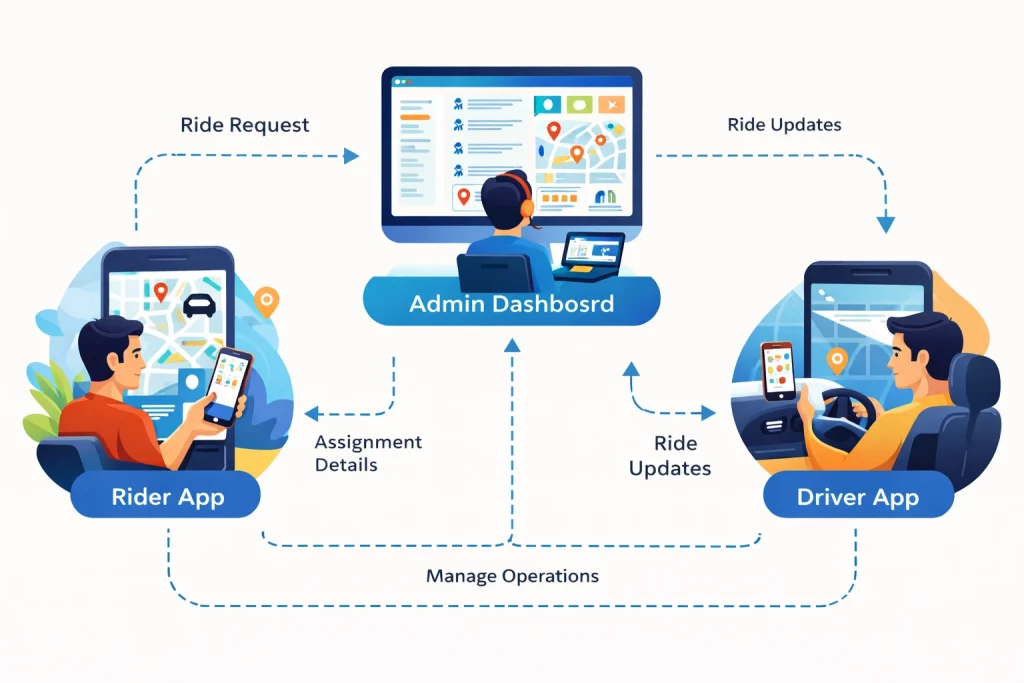
A successful app must balance user convenience, driver efficiency, and admin control.
Rider App Features
- Easy signup/login
- Ride booking (instant & scheduled)
- Real-time GPS tracking
- Fare estimation
- Multiple payment options
- Ratings and reviews
Driver App Features
- Ride request alerts
- Navigation and route optimization
- Earnings dashboard
- Availability toggle
Admin Panel Features
- User and driver management
- Pricing and commission control
- Analytics dashboard
- Dispute management
Read More: How to Build a Ride Pooling App Like Hitch: Cost, Features and Tech Stack
How a Ride Hailing App Works
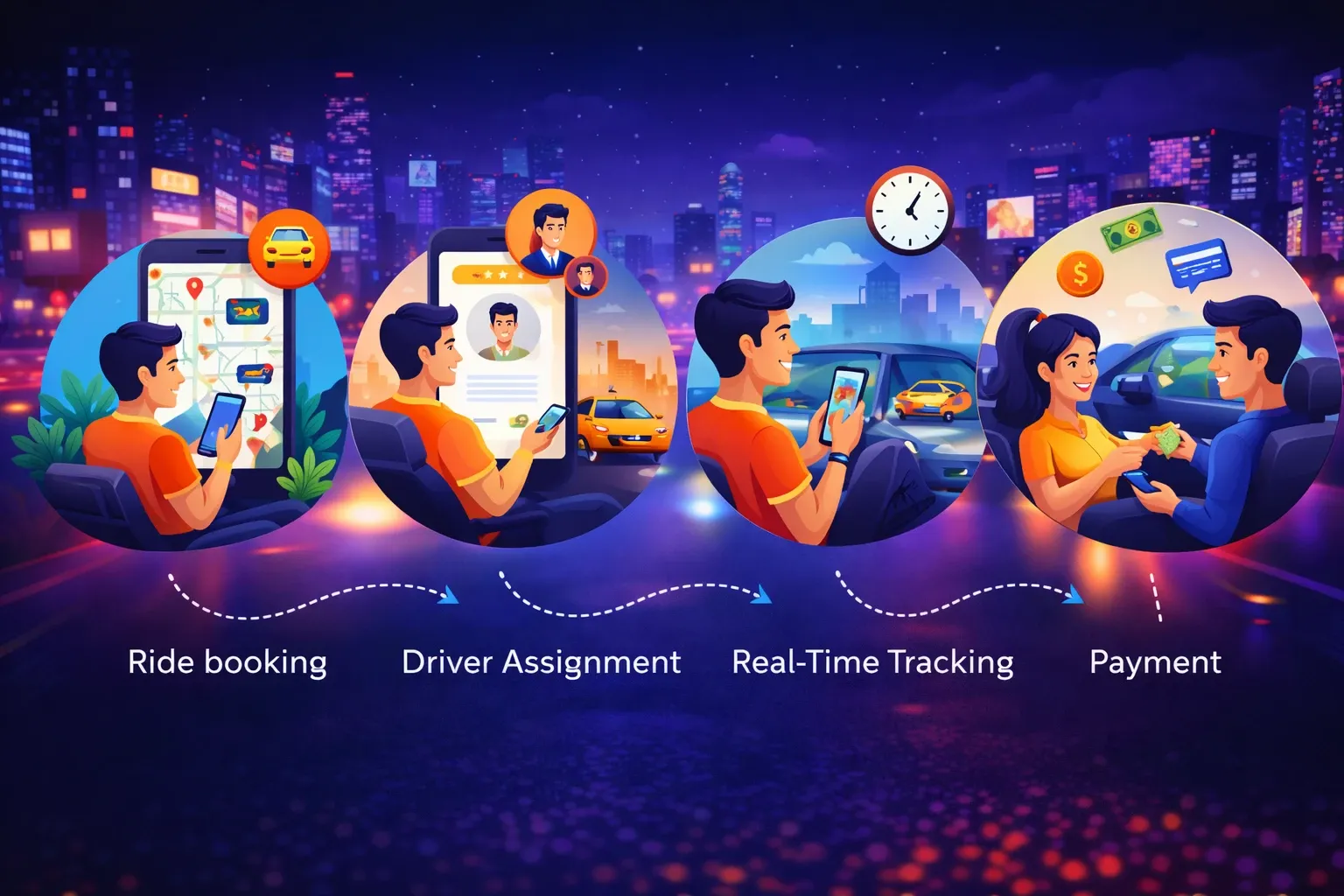
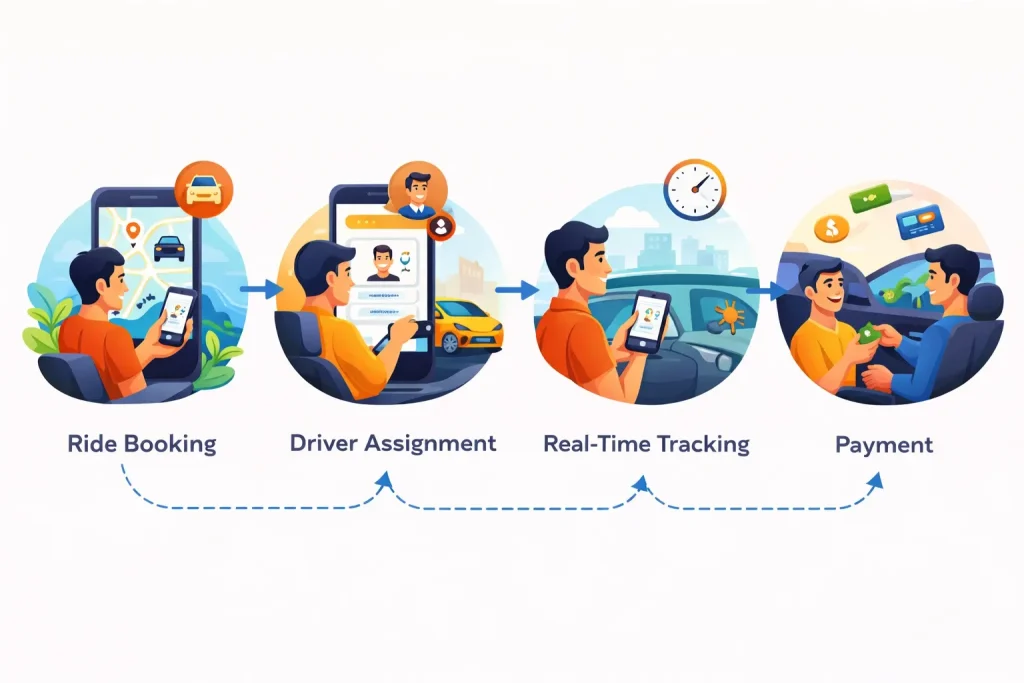
- User enters pickup and drop location
- App calculates fare and shows available drivers
- User confirms the ride
- Driver accepts the request
- Real-time tracking begins
- Ride is completed and payment is processed
Technology Stack for Ride Hailing App Development
| Component | Recommended Technologies |
|---|---|
| Frontend | Flutter, React Native |
| Backend | Node.js, Django |
| Database | PostgreSQL, MongoDB |
| Maps & GPS | Google Maps API |
| Cloud | AWS, Google Cloud |
| Payments | Stripe, Razorpay |
Development Process Step-by-Step
1. Market Research
Understand your target audience and competitors.
2. Define MVP Features
Start small with essential features.
3. UI/UX Design
Focus on clarity, speed, and ease of use.
4. App Development
Build frontend and backend with API integrations.
5. Testing
Ensure smooth performance and bug-free experience.
6. Launch
Deploy on app stores and monitor feedback.
7. Post-Launch Improvements
Add features and optimize performance based on user data.
Cost of Ride Hailing App Development
| Development Level | Description | Estimated Cost (USD) |
|---|---|---|
| Basic MVP | Core booking, basic tracking | $20,000 – $50,000 |
| Mid-Level App | Real-time tracking, payments, dashboards | $50,000 – $120,000 |
| Advanced Platform | AI routing, analytics, scalability | $120,000+ |
Key Cost Factors
Challenges in Ride Hailing App Development
Real-Time Tracking Accuracy
Requires strong GPS and backend systems.
Driver Availability
Balancing supply and demand is critical.
User Retention
Competition is high, so experience matters.
Pricing Strategy
Fare calculation must be fair and competitive.
Best Practices for Building a Ride Hailing App
- Focus on fast and simple booking flow
- Optimize app performance and load time
- Ensure secure and flexible payment options
- Use analytics to improve operations
- Provide strong customer support
Ride Hailing App vs Clone Script
| Aspect | Custom Development | Clone Script |
|---|---|---|
| Cost | Higher | Lower |
| Time to Market | Longer | Faster |
| Scalability | High | Limited |
| Customization | Full control | Restricted |
Conclusion
Ride-hailing app development offers strong business potential, but success depends on execution. From choosing the right model to building scalable technology and delivering a seamless user experience, every decision plays a critical role.
Starting with an MVP and improving based on real user feedback is often the smartest approach to building a sustainable platform.
If you’re planning to launch a ride-hailing app, partnering with an experienced development team can simplify the journey. Miracuves helps businesses build scalable, feature-rich on-demand apps tailored to their market and growth goals.
FAQs
1. What are the must-have features?
Booking, tracking, payments, and ratings.
2.How much does it cost?
Around $20,000 to $120,000+ depending on features.
3. Which tech stack is best?
Flutter/React Native with Node.js backend and Google Maps.
4. How do ride-hailing apps make money?
Commissions, surge pricing, and subscriptions.
5. Is custom better than clone scripts?
Custom apps are more scalable and flexible.
Miracuves is an independent software development company. We are not affiliated with, connected to, sponsored by, or endorsed by any company or product named in this article.
Terms such as “X Clone” are used descriptively. It is how the software industry refers to building a platform with functionality comparable to a known service, and how clients search for it.
The entire design and codebase of our products is built by our own team. Our products contain no code, design, graphics, or content originating from any third-party website or applications.
All third-party names and marks referenced in this article are the property of their respective owners, referenced solely to identify the services discussed.