


Key Takeaways
What You’ll Learn
- EdTech app development focuses on creating digital learning platforms for students, teachers, and institutions.
- Features like live classes, course management, quizzes, progress tracking, and certificates improve learning engagement.
- AI-powered personalization helps learners access content based on their pace, goals, and performance.
- Secure payments, user management, and scalable backend systems are essential for growth.
- Choosing the right development approach helps startups and enterprises launch faster and scale efficiently.
Stats That Matter
- The global EdTech market continues growing as online learning adoption increases worldwide.
- Mobile learning apps are becoming a major part of digital education strategies.
- AI, gamification, and interactive content are improving learner retention and completion rates.
- Schools, coaching institutes, and enterprises are investing more in custom learning platforms.
- Subscription-based learning apps and course marketplaces are creating strong recurring revenue opportunities.
Real Insights
- Successful EdTech apps are built around learning outcomes, not just digital content delivery.
- Simple onboarding and smooth navigation improve adoption among students and educators.
- Progress tracking and analytics help institutions measure learning performance more effectively.
- Secure video streaming and content protection are important for paid course platforms.
- Long-term EdTech growth depends on accessibility, personalization, and consistent learner engagement.
The way people learn has changed dramatically over the past decade. From school classrooms to professional training, digital platforms have become a central part of education. This shift has created a strong demand for EdTech applications that are not just functional, but engaging, scalable, and learner-focused.
If you’re planning to build an EdTech app, the challenge is not just about development—it’s about creating a meaningful learning experience. This guide will walk you through everything you need to know, from understanding the core concept to choosing the right features, technology, and development approach.
What is an EdTech App?
An EdTech (Education Technology) app is a digital platform designed to facilitate learning through technology. These apps can serve different purposes such as:
- Online courses and e-learning platforms
- Virtual classrooms and tutoring apps
- Skill development and certification platforms
- Language learning applications
- Test preparation and assessment tools
At its core, an EdTech app connects learners, educators, and content in a structured and interactive way.
Understanding the Market and User Intent
Before building an EdTech app, it’s important to understand what users actually need. Most users are looking for:
- Flexible learning schedules
- Interactive and engaging content
- Personalized learning experiences
- Affordable alternatives to traditional education
- Easy-to-use platforms
Ignoring these expectations often leads to low engagement and high drop-off rates.
Types of EdTech Apps You Can Build
Choosing the right type of app depends on your target audience and business goals.
1. E-Learning Platforms
Platforms offering structured courses with video lessons, quizzes, and certifications.
2. Live Tutoring Apps
Apps that connect students with tutors in real time through video sessions.
3. Language Learning Apps
Gamified platforms focused on improving speaking, reading, and writing skills.
4. Test Preparation Apps
Apps designed for competitive exams with mock tests and analytics.
5. Skill Development Platforms
Apps focused on professional skills like coding, marketing, or design.
Key Features of a Successful EdTech App
A strong feature set is what separates a useful app from an average one.
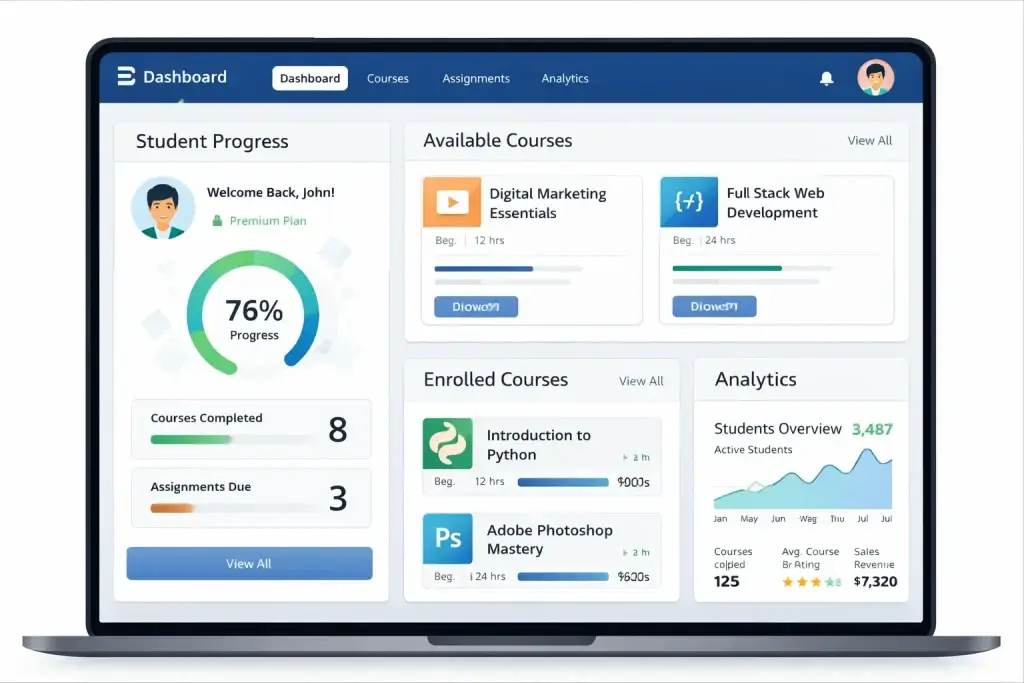
User Panel (Students)
- Easy registration and profile management
- Course browsing and enrollment
- Video lessons and downloadable resources
- Progress tracking and performance analytics
- Interactive quizzes and assessments
Instructor Panel
- Course creation and content upload
- Live session management
- Student performance tracking
- Revenue and earnings dashboard
Admin Panel
- User and course management
- Payment and subscription control
- Analytics and reporting
- Content moderation
Advanced Features
- AI-based personalized learning paths
- Gamification (badges, leaderboards)
- Offline access
- Multi-language support
- Push notifications
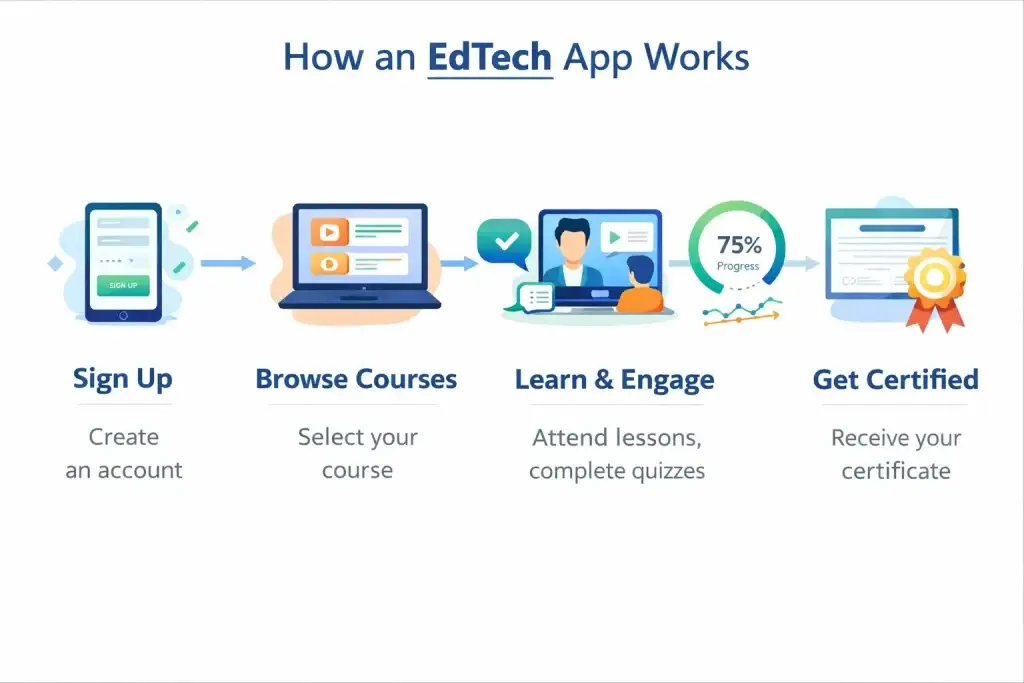
How EdTech Apps Work (Step-by-Step Flow)
Understanding the workflow helps in designing better user experience.
- User signs up and creates a profile
- Browses or searches for courses
- Enrolls in a course (free or paid)
- Starts learning through videos or live classes
- Completes quizzes and assignments
- Tracks progress and receives certification
Technology Stack for EdTech App Development
Choosing the right tech stack is critical for performance and scalability.
| Component | Technologies |
|---|---|
| Frontend | React Native, Flutter |
| Backend | Node.js, Django, Laravel |
| Database | MongoDB, PostgreSQL |
| Video Streaming | WebRTC, AWS IVS, Vimeo API |
| Cloud Hosting | AWS, Google Cloud, Azure |
| Payment Gateway | Stripe, Razorpay, PayPal |
The choice depends on your budget, scalability needs, and feature complexity.
Step-by-Step EdTech App Development Process
1. Define Your Idea and Target Audience
Identify:
- Who your users are
- What problem you’re solving
- What makes your app unique
2. Market Research and Competitor Analysis
Study existing platforms to understand:
- What works well
- What users complain about
- Gaps you can fill
3. Feature Planning and MVP Development
Start with a Minimum Viable Product (MVP) that includes:
- Core features
- Basic UI/UX
- Essential functionality
This helps you validate your idea before scaling.
4. UI/UX Design
Focus on:
- Clean navigation
- Engaging visuals
- Easy course access
5. Development Phase
Build:
- Frontend (user interface)
- Backend (logic and database)
- Integrations (payments, video, notifications)
6. Testing and Quality Assurance
Ensure:
- Bug-free performance
- Smooth user experience
- Compatibility across devices
7. Launch and Deployment
Deploy your app on:
- App Store (iOS)
- Google Play Store (Android)
8. Post-Launch Improvements
- Collect user feedback
- Add new features
- Improve performance
Monetization Models for EdTech Apps
Choosing the right revenue model is key to sustainability.
| Model | Description |
|---|---|
| Subscription | Monthly or yearly access |
| Pay-per-course | One-time payment for courses |
| Freemium | Free basic features + paid premium |
| Ads | Revenue through advertisements |
| Certification Fees | Charge for official certificates |
Common Challenges in EdTech App Development
Building an EdTech app comes with its own set of challenges:
- Maintaining user engagement over time
- Creating high-quality content
- Ensuring smooth video streaming
- Scaling infrastructure with growing users
- Data security and privacy compliance
Addressing these early can save significant time and cost later.
Best Practices for Building a Successful EdTech App
- Keep the user interface simple and intuitive
- Focus on personalized learning experiences
- Use gamification to increase engagement
- Optimize app performance for low-bandwidth users
- Continuously update content and features
Conclusion
EdTech app development is not just about building software—it’s about creating a meaningful learning ecosystem. A successful platform combines the right technology, engaging content, and a deep understanding of user needs.
By focusing on usability, scalability, and real educational value, you can build an app that not only attracts users but keeps them coming back.
Ready to Build Your EdTech App?
If you’re planning to launch a powerful and scalable EdTech platform, working with the right development partner can make all the difference.
Miracuves specializes in building custom EdTech solutions tailored to your business goals—whether you’re creating an e-learning platform, tutoring app, or skill development marketplace.
Start with a clear idea, and let the right technology bring it to life.
FAQs
1. How much does it cost to develop an EdTech app?
The cost depends on features, complexity, and development approach. A basic MVP can start from a moderate budget, while advanced platforms with AI and live streaming require higher investment.
2. How long does it take to build an EdTech app?
The time required to build an EdTech app depends on its features, integrations, and customization needs. A ready-made EdTech solution from Miracuves Solutions can be launched in as little as 6 days, while fully customized EdTech platforms with live classes, assessments, AI features, and scalable learning systems typically take 30–60 days to develop.
3. Do I need AI in my EdTech app?
AI is not mandatory but highly valuable. It helps in:
Personalizing learning paths
Improving recommendations
Enhancing user engagement
4. Which platform should I launch first—Android or iOS?
It depends on your target audience. Many startups begin with Android due to wider reach, then expand to iOS.
5. What features are essential for an EdTech app?
Key features include user registration, course access, video lessons, quizzes, progress tracking, and secure payments.
Miracuves is an independent software development company. We are not affiliated with, connected to, sponsored by, or endorsed by any company or product named in this article.
Terms such as “X Clone” are used descriptively. It is how the software industry refers to building a platform with functionality comparable to a known service, and how clients search for it.
The entire design and codebase of our products is built by our own team. Our products contain no code, design, graphics, or content originating from any third-party website or applications.
All third-party names and marks referenced in this article are the property of their respective owners, referenced solely to identify the services discussed.