Case study · 2021

Three verticals opened together, not phased in: Leeft 2021.

Leeft opened with three verticals at once instead of phasing them in.

  • Gojek Clone · MXJek
LeeftGojek Clone · 2021
LeeftClient · Gojek Clone
Solution
Gojek Clone
Product
MXJek
Delivered
2021
Base build
6 working days
Blocks reused
19 of 24
Source code
Transferred
5applications on the base
19blocks reused unchanged
5per-client blocks on this base

Leeft opened with three verticals.

Leeft, a 2021 Gojek Clone engagement, opened its super-app with three verticals. The team said this was only possible because dispatch and the merchant tooling already existed.

We opened with three verticals rather than phasing them, which was only possible because dispatch and the merchant tooling already existed. Our work was the market and the payment partners. Delivered inside a month.

Leeft Team, Founding team, Leeft

Leeft wanted every vertical open on day one.

Leeft, a 2021 Miracuves client, opened its multi-service super-app with three verticals live together, built on MXJek, the Gojek Clone base.

One way to start a multi-service app is one line of business first, with the rest added later. Leeft's founding team took the other route and launched three verticals at the same time, a choice its testimonial puts at the center of the project.

The team tied that choice to one condition. Opening several verticals at once only worked because the dispatch system and the tools for merchants existed before Leeft's project started, so neither had to be written from nothing.

The record credits the project to Leeft's founding team rather than a named person. It does not name the three verticals, the market or the payment partners, so the page keeps to the record.

Leeft at a glance

ClientLeeft, credited to its founding team
Delivered2021
BaseGojek Clone, product MXJek
Launch planThree verticals together, not phased
Custom workIts market and its payment partners
Source codeTransferred to Leeft

From Leeft's two choices to three live verticals.

Leeft chose the market, Miracuves built in the payment partners, the base supplied dispatch and merchant tooling, and three verticals opened at once.

Leeft brought

The marketnot named in the record
Payment partnerschosen by Leeft, built in by Miracuves
No phasingall three verticals at launch

Gojek Clone base

Dispatchalready existed
Merchant toolingalready existed
Customer and driver apps

MXJek, ready before Leeft's project started

Outcome

Three verticals open together
Delivered inside a monthLeeft's own measure

Phasing versus opening wide in super-apps.

Because Leeft's market is not on file, the context here is the launch question it faced: start with one service, or open several at once.

01
Gojek, 2015KrASIA reports that Gojek's app went online in January 2015 offering four services together: GoRide, the GoSend delivery service, GoMart for groceries and GoFood.
02
Payments came laterThe same KrASIA history dates Gojek's e-payment arm, GoPay, to 2016, a year after those first services went live.
03
Grab, from 2012Singapore's National Library Board records that Grab began as MyTeksi, a taxi-hailing app in Malaysia. GrabPay followed in 2017, and GrabFood was piloted in May 2018.
04
Leeft's routeLeeft followed neither timeline exactly: it opened three verticals together, with the payment partners, which Miracuves built in, named as part of the work.

Four questions Leeft answered itself.

The founding team named the market and the payment partners as the work, with Miracuves building in the partners, alongside the decision to skip a phased rollout.

01
Open all three at onceLeeft decided against a phased launch. Its three verticals went live together, which the team linked to dispatch and merchant tools already being in place.
02
Choose the marketPicking the market was Leeft's own work, by the team's account. Neither the country nor the city appears in the record.
03
Line up payment partnersLeeft chose its payment partners and Miracuves built them in. On today's Gojek Clone base, gateways run on the operator's own account, onboarded with KYC done.
04
Pick the three verticalsThe three are not named on record. The base today offers tiles for rides, meals, groceries, parcels and home services, all paid from one balance.

What opening three verticals at once required.

Running several verticals from launch puts load on the shared systems underneath, and Leeft's team named two of them as already solved.

One dispatch for every vertical

With three verticals live from the start, every order type needed a driver assigned and tracked from the first day.

What was doneThe base's dispatch and matching block, covering assignment, ETA and retries, already existed, which the team gives as the reason the plan worked.

Merchants across three lines

Vendors in each vertical needed their own way to manage listings and incoming orders at launch, not months later.

What was doneMerchant tooling was already there: the base's vendor app handles menu, stock and orders, backed by a multi-store catalog.

One way to pay everywhere

Customers moving between verticals needed payments to work the same way in each of them.

What was doneThe base keeps a shared wallet with payouts and a ledger across service lines, and Miracuves connected Leeft's payment partners to it.

The MXJek base and Leeft's own layer.

Most of Leeft's platform came ready from the Gojek Clone base; the parts specific to Leeft were its market and its payment partners.

Five surfaces came ready on the base. Customers ordered, tracked and paid in their own app; vendors and drivers each had an app, drivers seeing jobs, routes and earnings; a fleet manager covered zones and loads; admins handled disputes and payouts.

Beneath them ran an order lifecycle that tracks states and cancellations, GPS tracking with driver management, KYC for accounts and documents, ratings with in-trip messaging, and analytics on sales, delivery and demand.

For every client, Miracuves stands up the base within 6 working days and schedules customization as its own work. Delivery inside a month is the figure Leeft's team gives for its own project.

Set for Leeft

MarketLeeft's choice, not named on record
Payment partnersChosen by Leeft, built in by Miracuves; not named
VerticalsThree, opened together
Per-client blocksVerticals, gateways, pricing, brand, languages, currencies

Reused from the Gojek Clone base

Customer app
Vendor app
Driver app
Fleet manager
Admin console
API gateway
Realtime channel
Event bus
Order lifecycle
Dispatch & matching
Multi-store catalogue
Live tracking
Wallet & payouts
Identity & KYC
Chat, calls & ratings
Analytics
Transactional store
Cache & realtime
Object storage

Per-client blocks on the Gojek Clone base

Store verticals
Payment gateways
Pricing & commission
Brand & theming
Languages & currencies

What made three verticals possible.

Dispatch and the merchant tooling were the existing pieces that let Leeft open three verticals together.

Gojek Clone architecture MXJek / filled = per-client blocks
Gojek Clone: the architecture, and one order traced through it 5 client surfaces reach an edge of gateway, realtime channel and event bus. The base holds 8 services, of which Order lifecycle is the source of truth, and 5 blocks are built for each client. Partner services sit behind a boundary and are chosen by the client. Underneath, one order is traced across 5 steps. 19 of 24 blocks are reused unchanged. Gojek Clone MXJek Fourteen documented builds were made on this base. The filled blocks are set per client. Ships ready-made Per-client blocks Surfaces Edge The base - already built Partner boundary Data Customer app order, track, pay Vendor app menu, stock, orders Driver app jobs, route, earnings Fleet manager zones, agents, loads Admin console users, disputes, payouts API gateway auth, rate limits, idempotency Realtime channel order status, locations Event bus async fan-out, retries Order lifecycle states, cancellations SOURCE OF TRUTH Dispatch & matching assignment, ETA, retry Multi-store catalogue listings, stock, search Live tracking GPS, driver management Wallet & payouts balances, ledger, splits Identity & KYC accounts, documents, roles Chat, calls & ratings in-trip comms, reviews Analytics sales, delivery, demand Per-client blocks Store verticals grocery, food, pharmacy, parcel Payment gateways your providers and cash Pricing & commission fares, surge, take rate Brand & theming identity across all surfaces Languages & currencies the markets you operate in chosen by the client Maps & routing their key Payment gateway their merchant account Push & SMS their sender Object storage their bucket Transactional store orders, ledger, identities Cache & realtime locations, sessions Object storage documents, media one order, end to end every step below runs on blocks that already existed 1 Order basket, address, pay 2 Accept vendor confirms, prep time 3 Dispatch nearest driver assigned 4 Deliver live tracking to the door 5 Settle vendor, driver, commission 19 of 24 blocks reused unchanged 5 per-client blocks

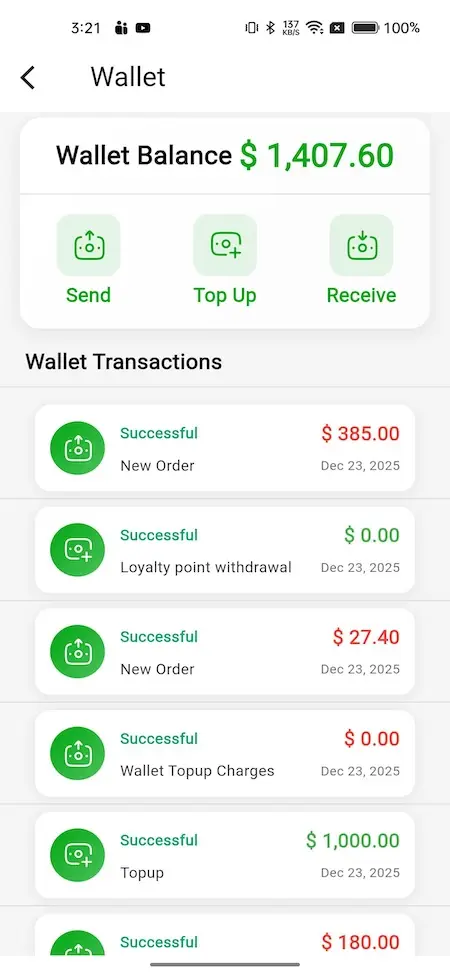
Base screens behind a multi-vertical launch.

These screens come from today's Gojek Clone base and carry demo data; Leeft's branded 2021 app is not shown.
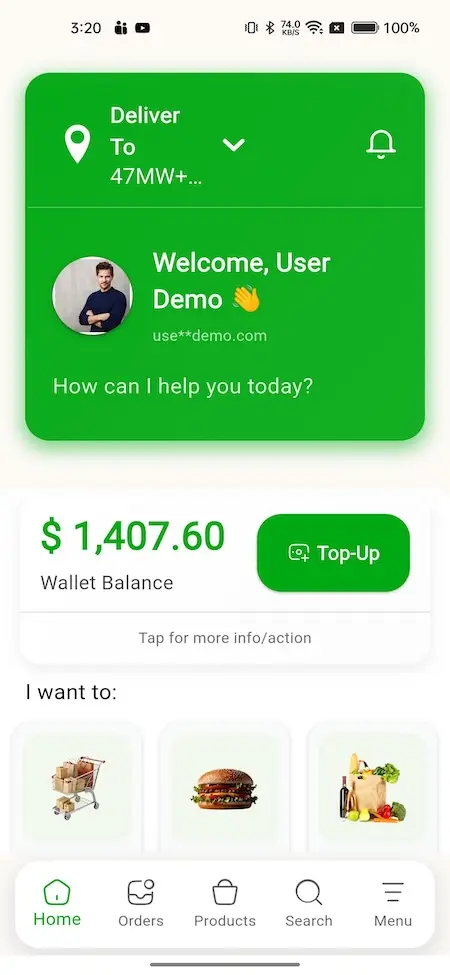
Gojek Clone base home screen for a demo user with a delivery address, a wallet balance with a Top-Up button and three service tiles for shopping, food and groceries
HomeThe base's home screen, with a wallet balance, a Top-Up button and service tiles under the line I want to.
Gojek Clone base wallet screen with Send, Top Up and Receive buttons above a list of demo wallet transactions for orders, a top-up and a loyalty point withdrawal
WalletThe base's wallet, where one balance covers orders, top-ups and loyalty point withdrawals.

Leeft's launch, as its team reported it.

Three verticals opened together, and delivered inside a month.

Reported by Leeft TeamFounding team, Leeft

Delivered
2021
Base
Gojek Clone (MXJek)
Source code
Transferred

Inside a month is Leeft's own measure of delivery; Miracuves records 6 working days for a base build.

Questions about Leeft's three-vertical launch.

What did Leeft build with Miracuves?

A multi-service super-app, delivered in 2021 on the Gojek Clone base, MXJek, with the source code transferred to Leeft.

Why did Leeft not phase its verticals?

Its founding team opened three verticals together and tied that to dispatch and merchant tools being ready on the base before the project.

Which parts were specific to Leeft?

The market, which Leeft chose, and the payment partners, which Miracuves built in. Neither is named on file.

How long did the Leeft project take?

Leeft's team says it was delivered inside a month. Miracuves records 6 working days for the Gojek Clone base itself, with customization planned as separate work.

Does this page cover Leeft after 2021?

No. Everything here describes the 2021 build alone and makes no claim about Leeft's platform now.


Disclaimer

Miracuves is an independent software development company. We are not affiliated with, connected to, sponsored by, or endorsed by any of the brands or platforms named on this page.

Why these names

Names of the form “Brand Clone” are used descriptively. It is how the software industry refers to building a platform with functionality comparable to a known service, and how clients search for it.

Who built this

The entire design and codebase of our products is built by our own team. Our products contain no code, design, graphics, or content originating from any third-party website or application.

Trademarks

All third-party names and marks listed on this page are the property of their respective owners, referenced solely to describe the category of software offered.