Binance Clone App - White-Label Centralized Crypto Exchange
Miracuves' white-label Binance clone comes ready-made with spot and futures markets, P2P escrow, staking pools and a token launchpad, as source code you own for a trader website, an admin panel and Android and iOS Flutter apps, live within six working days.
Every product runs on one account and one wallet, so a trader moves from spot to staking without registering again, after passing the KYC levels you configure. Store review, KYC and market-data providers, liquidity and the license your market requires stay with you; trading bots and an NFT marketplace are add-ons, each quoted on its own. A chain outside the built-in list is scoped and quoted in writing, then built in 2-8 weeks.
Launch in 6 Days with
- Source Code
- Trader Website
- Flutter Apps
- Admin Panel
- Matching + Ledger
- Database Schema
StackFlutter · React · Node.js · Tailwind CSS · MySQL
Exchange activity
- Spot order matchedSpot
- Futures position openedFutures
- Deposit confirmed on chainWallets
- Withdrawal waiting for approvalWithdrawals
- P2P trade released from escrowP2P
- Stake started in a poolStaking
- KYC application approvedKYC
- Launchpad contribution receivedLaunchpad
- Spot order matchedSpot
- Futures position openedFutures
- Deposit confirmed on chainWallets
- Withdrawal waiting for approvalWithdrawals
- P2P trade released from escrowP2P
- Stake started in a poolStaking
- KYC application approvedKYC
- Launchpad contribution receivedLaunchpad

- 15Chains in the Admintwelve built in, plus Solana, Tron and Monero as extended chains
- 5App TabsHome, Market, Trade, Futures and Wallet, in a dark theme
- 0%Revenue Share With Miracuvesno cut of trading, withdrawal or P2P fees
- 3Wallet Fee Leversa percentage transfer fee, a chain withdrawal fee and a spot wallet percentage
- 6Days to Launchand if the delay is ours, we keep going free
- $5,199Paid Once, Not Rentedsource code yours, no per-seat fee, no monthly rental
Live in six working days, or we keep working free until you launch. Every build carries 60 days guidance, 6 months bug fixes and 12 months updates.Verify every figure
Annurax Exchange Opened on This Base
A licensed team launched Annurax Exchange in 2024 on the Binance clone base, reusing 20 of 25 building blocks and taking the source at handover.
Custody Split Hot and Cold
Hot and cold storage stay separate, chain listeners confirm each deposit, and no coin leaves before its withdrawal passes an approval step.
Fiat Runs Through Your Partner
Coins arrive at a deposit address on each chain; the bank or fiat partner is yours to pick, and we connect the one you choose without applying on your behalf.
01See it live
Live in Action
Binance Clone Demo - Trader App, Web Platform & Admin Panel
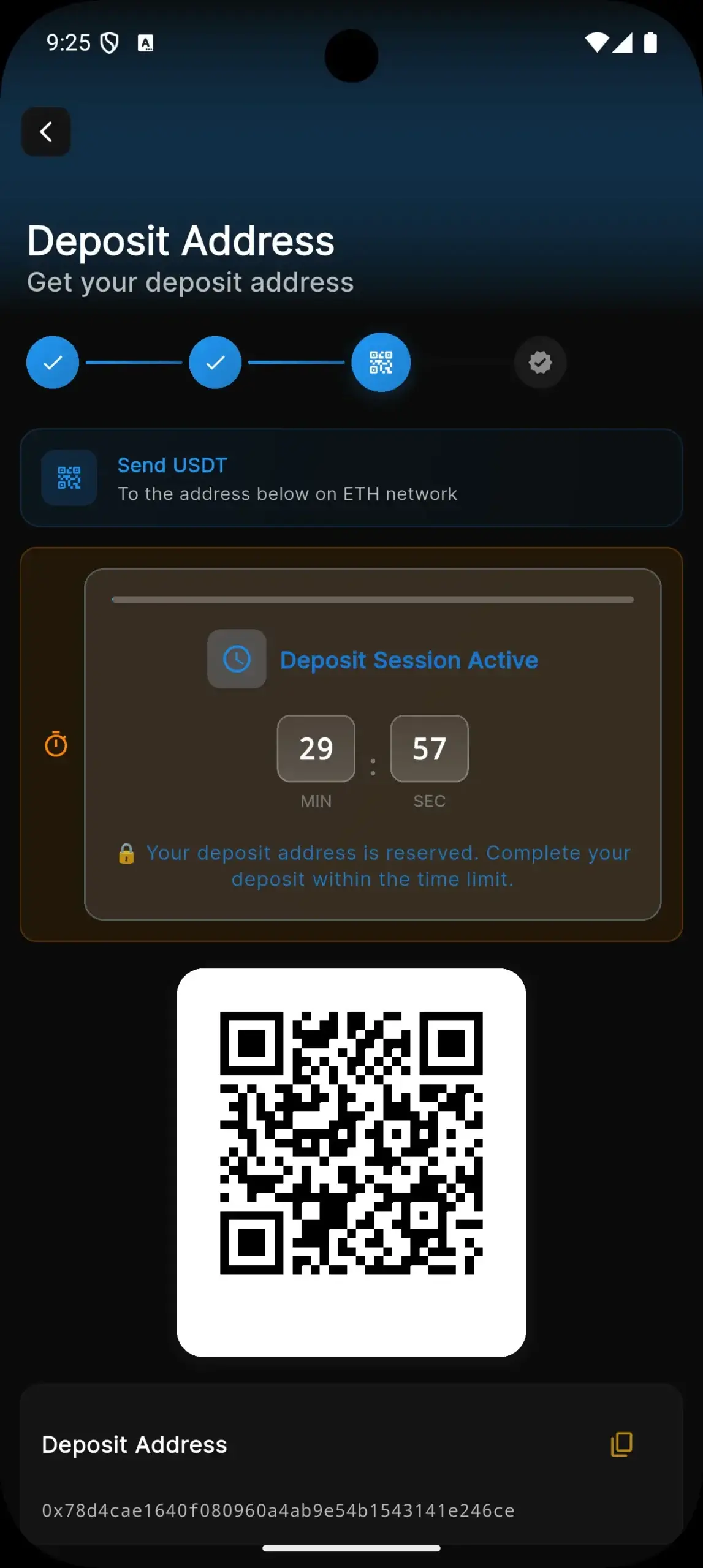
Try the Miracuves Binance Clone hands-on. One shared login opens the trader app and the web platform, and the admin login is shared on a guided call. Inside the Miracuves Binance clone demo you can scan the markets, open a deposit address, look at the staking pools and check how KYC is prompted.
Binance Clone - Trader App
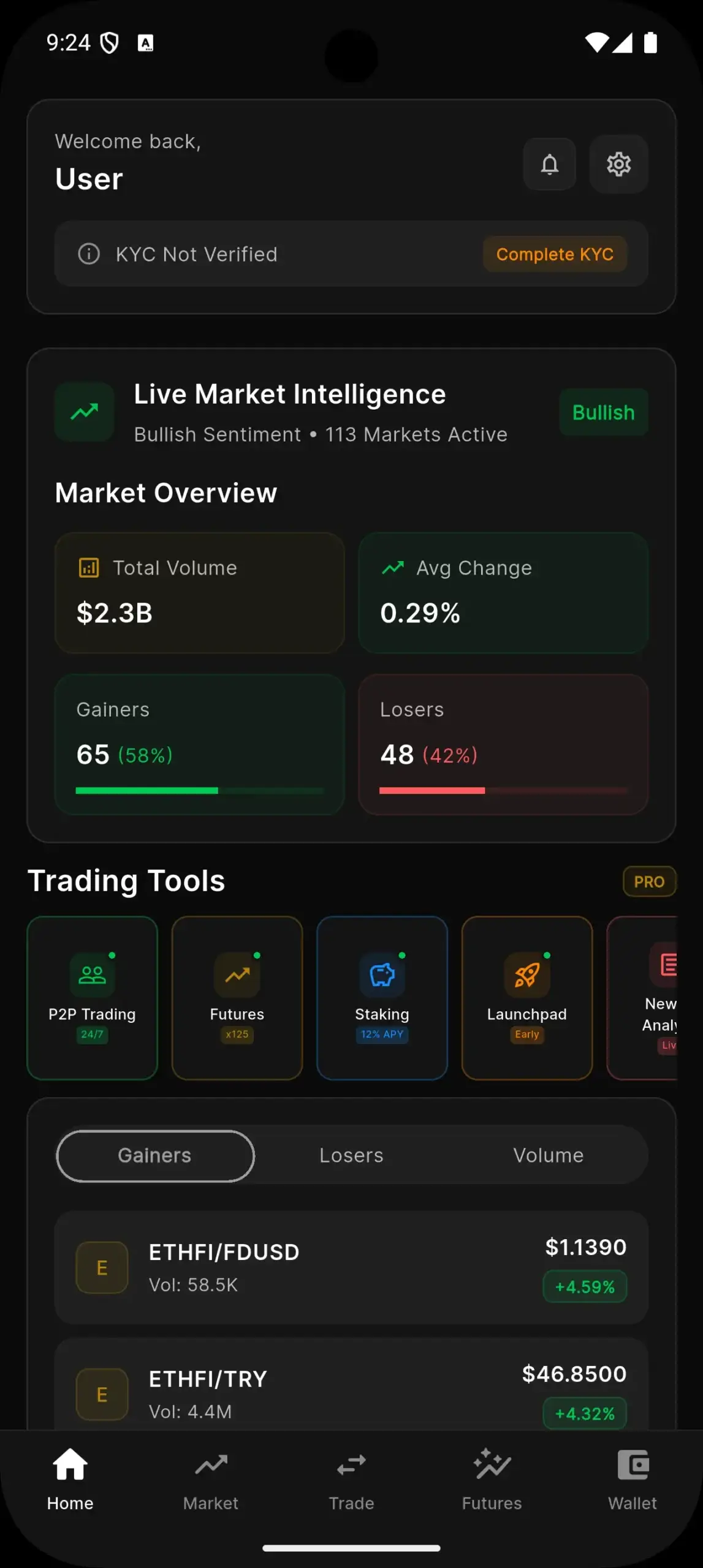
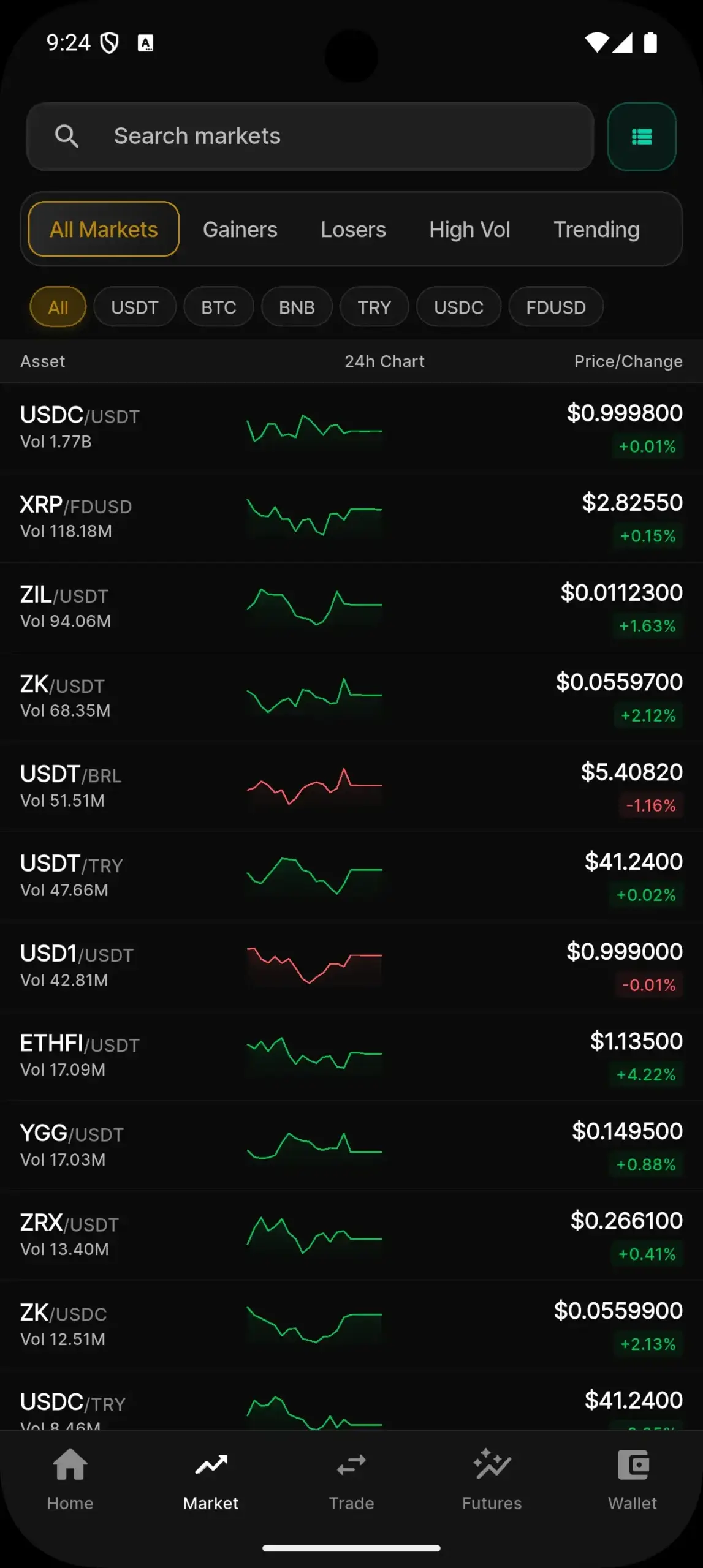
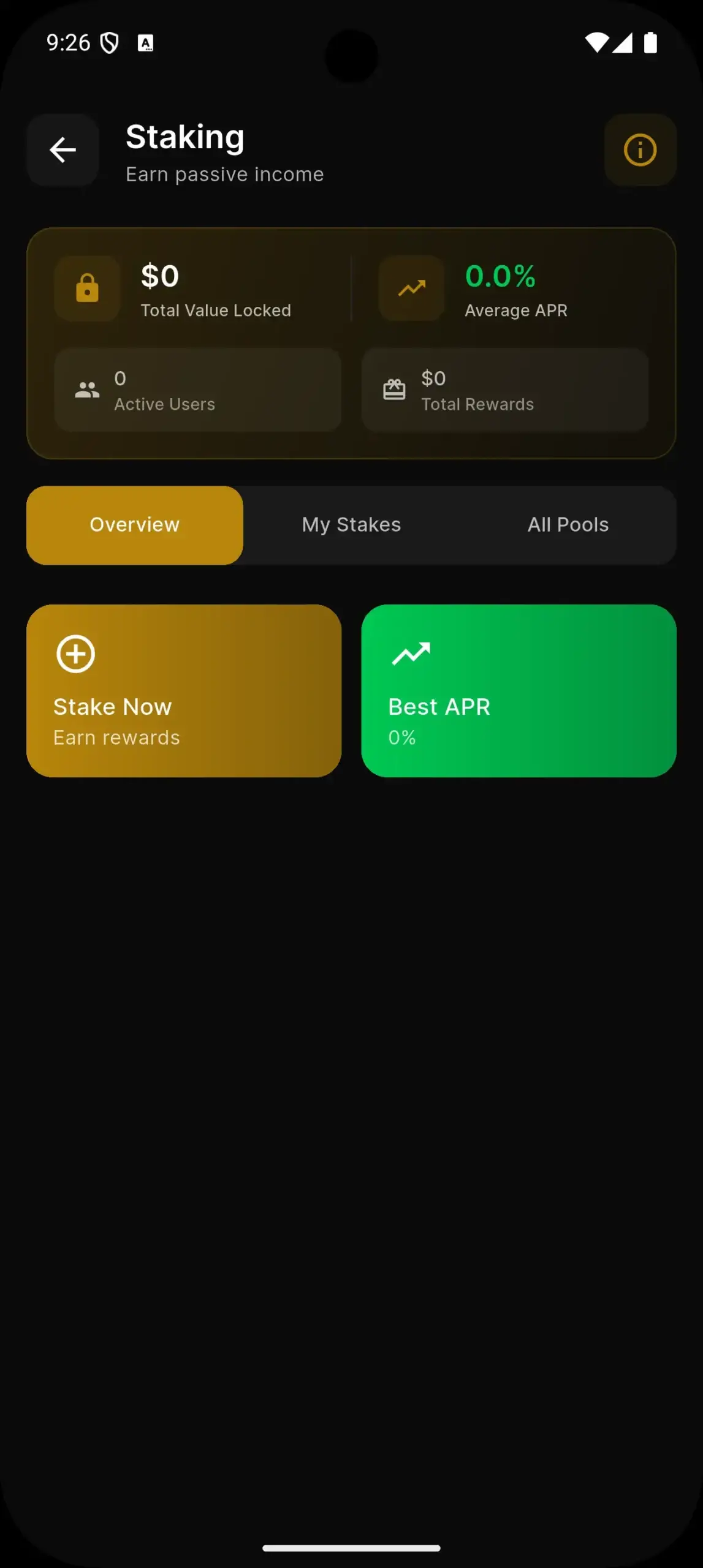
The exchange on a phone: Home with market overview and KYC status, a searchable markets list, a deposit address with a QR code, staking pools and the account profile.
- 1Open the app portal and pick your phone
- 2Sign in with the demo login below
- 3Explore: Home, Market, Wallet, Staking
user@demo.com | User_321
Binance Clone - Web Platform
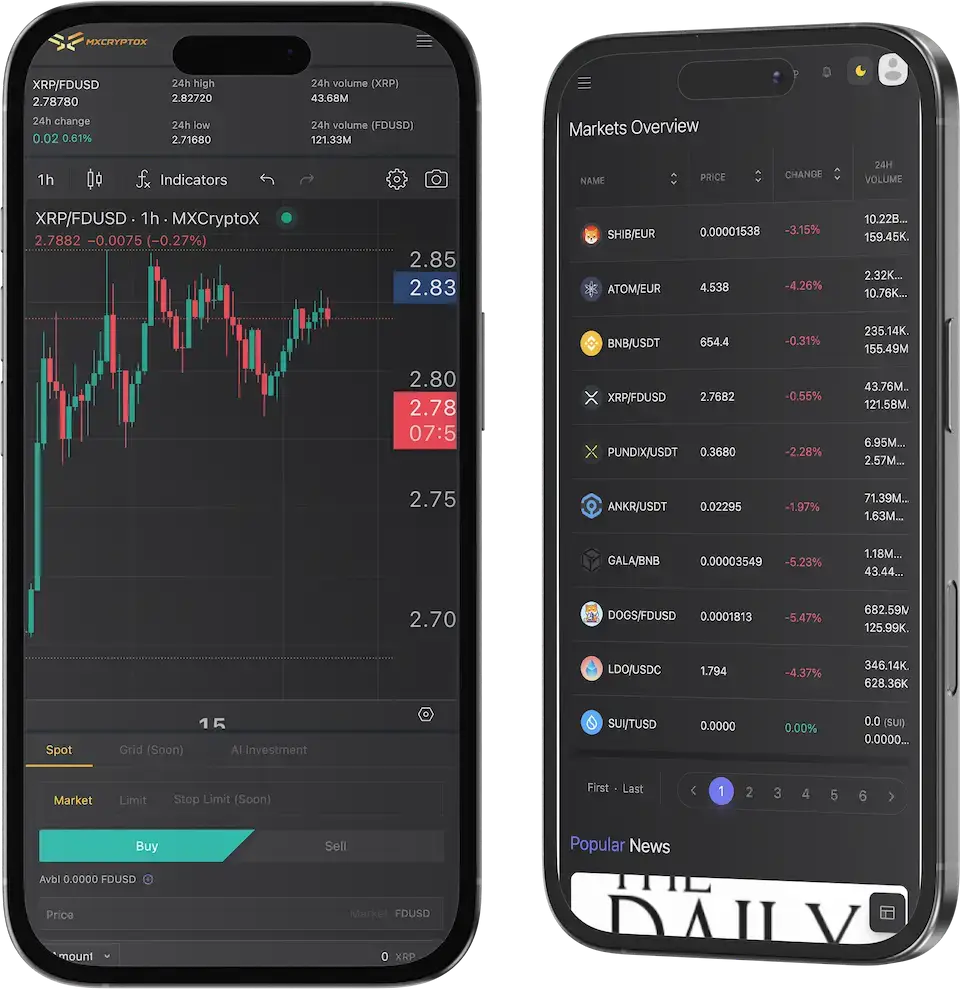
The same exchange in a browser: a markets overview with price, 24-hour change and volume per pair, then the trading, wallet and account pages.
- 1Open the demo site in a browser tab
- 2Sign in with the demo login below
- 3Explore: Markets, Trade, Wallet, Account
user@demo.com | User_321
Admin Panel - Chains, Assets, Pairs & KYC
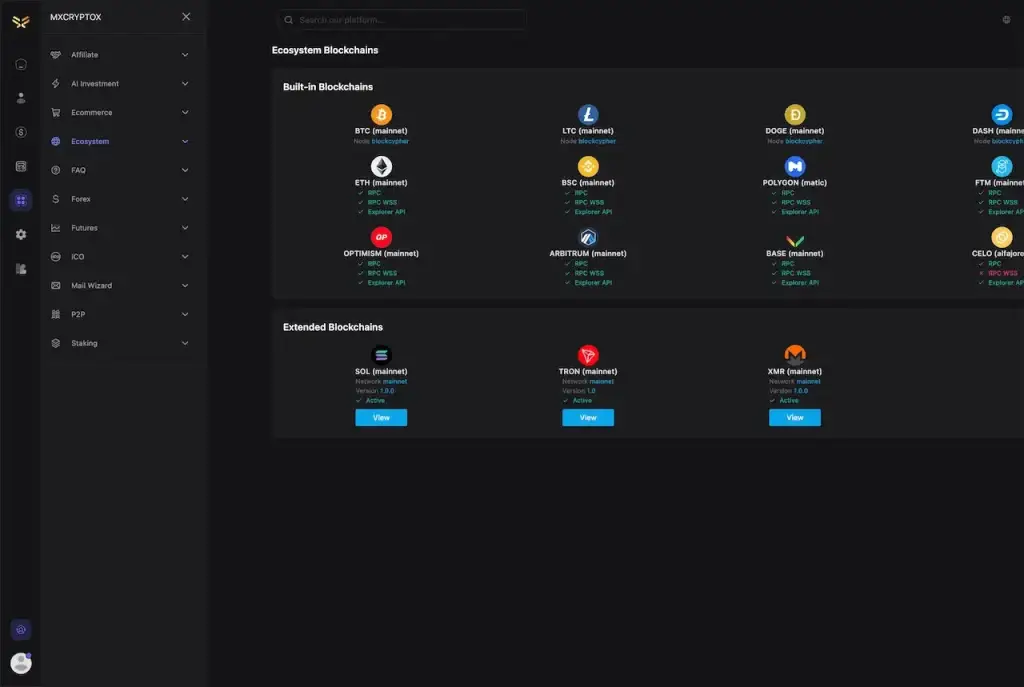
The operator console. Its menus include Ecosystem, Futures, Forex, ICO, P2P, Staking and Affiliate, with the chain manager listing built-in and extended blockchains.
- 1Open the admin panel on the demo host
- 2Ask the team for the admin login
- 3Explore: Ecosystem, Futures, P2P, Staking
shared on a guided call
Launchpad & Futures Walkthrough
Some surfaces are best shown with an engineer beside you: futures and the token launchpad, set up around your own listing plan instead of the public demo data.
- 1Pick a 30-minute slot
- 2Tell us your markets and token plan
- 3We open the matching surfaces together
available on request
See It With Us
Video Tour of a Binance-Like Exchange: Markets, Wallets, Staking & Admin Panel
The quickest way to judge an exchange is to watch an engineer drive it. In 30 minutes we open the trader app, the web platform and the admin panel and tie each screen to your own plan: your first pairs, your fee schedule, your KYC levels and your launch date.
Schedule a live walkthrough call.Every Screen Mapped
Mobile App Flows for a Binance-Style Exchange - Admin Chain Manager & Device Views
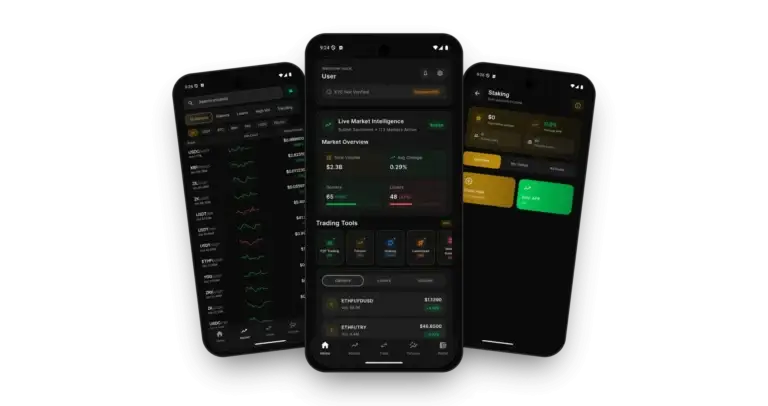
From sign-in to a staking pool, the trader app, the admin ecosystem page and the phone-sized exchange of the Miracuves Binance clone appear here as real screens, in the order a trader meets them.
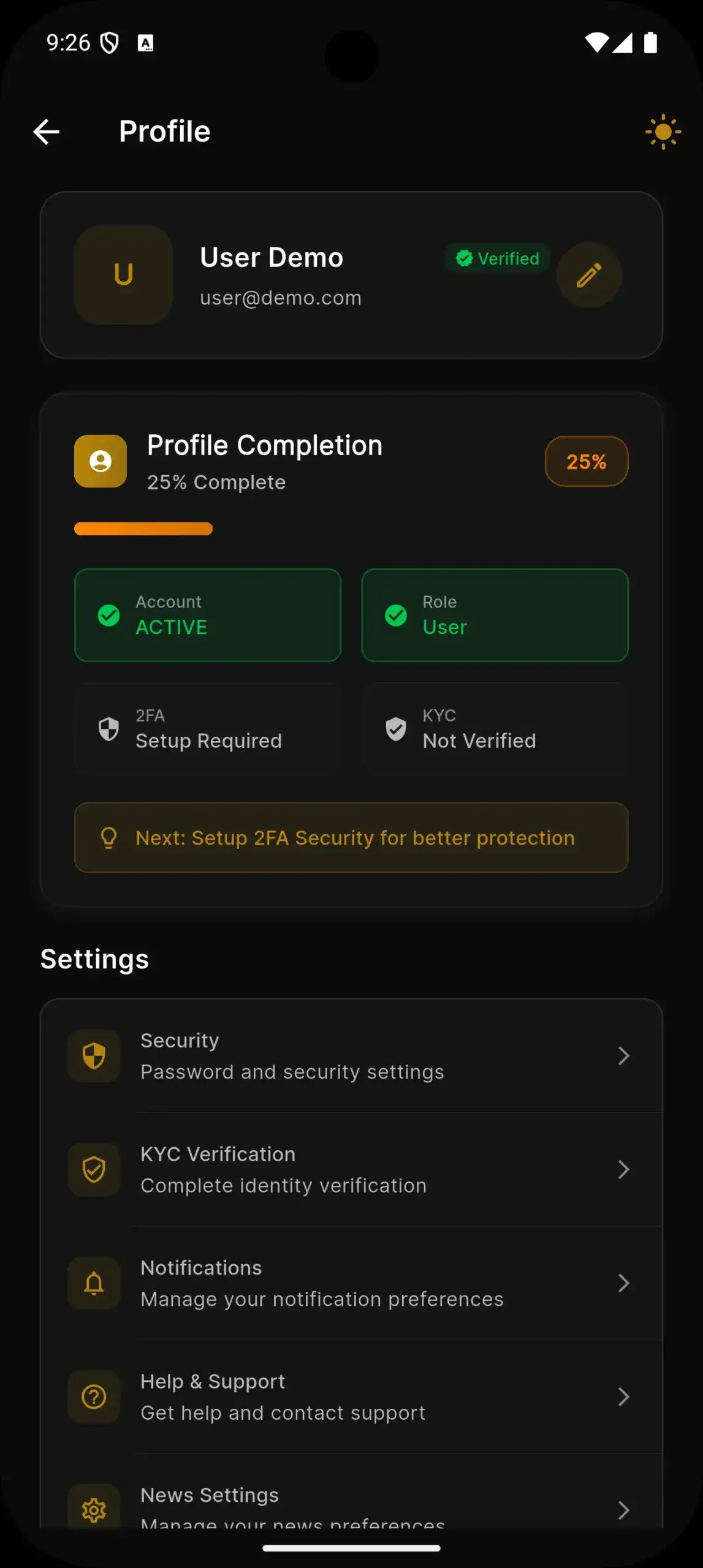
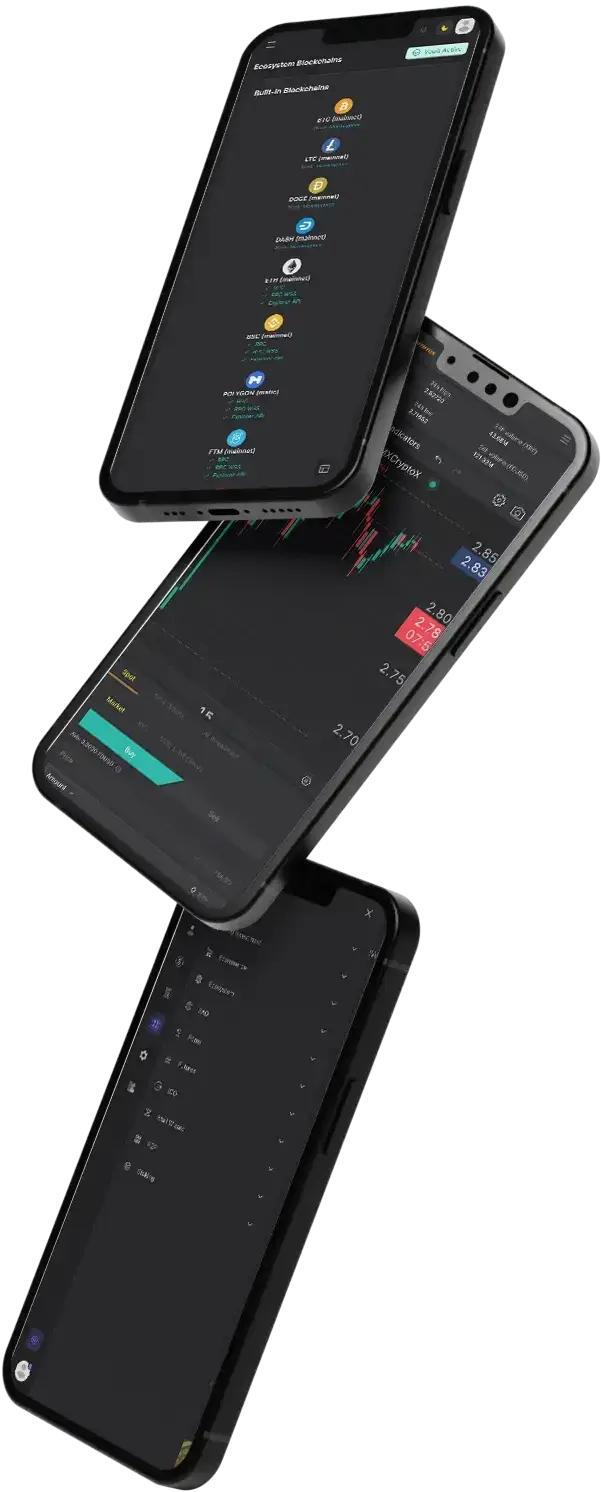


Follow a trader from sign-in through the Home screen and the markets list to a funded wallet and a staking pool, and follow an operator through the admin ecosystem page where chains are listed and activated.
02Proof
Client Voices
Binance Clone Client Reviews - Exchange Founders in Their Own Words
What clients say about building on Miracuves bases. The first two come from teams that opened exchanges on this one; the other six come from other industries and are shown exactly as their authors gave them.
“We had a licence sitting idle and every quote we pulled came back six figures on a nine-month timeline. Miracuves had a matching engine, settlement and the trading surface already built, so we spent our time on branding, the on-ramp and our reward token instead of on order books. The platform was running inside a month, and we have had no settlement incidents since.”
“We needed a centralized exchange with KYC, wallets, and mobile apps before our token launch — every US quote came back at six figures and 9 months. Miracuves had a battle-tested exchange base that already covered matching, settlement and the trading UI. We reused that and layered our own branding, a custom USD on-ramp, and the ORCA reward token. Staging was up in 6 weeks, live users by week 14. Building from scratch would have burned 8–10 engineering months and roughly $400k in salaries alone. Six months in, we've processed three figures of millions in volume with zero settlement incidents.”
“Every HMS I tried was built for general physicians, with no lesion mapping, no before/after tracking, and no procedure-based billing. Their MXHealth base gave us the patient app, doctor app, EMR and video consult out of the box. Front-desk time on scheduling and follow-ups is down ~70%, and we went fully digital in 9 months, where a fully custom job would have been 18.”
“Turo is the obvious reference, but the Caribbean specifics, from different insurance norms to different payment rails, meant we needed a real partner, not just a clone. Miracuves’s MXCar base covered the listing, the trip flow, and the host payouts. We launched in 6 working days and are live in three islands.”
“The team was running it on a dispatcher and a Google Sheet, and we needed a real platform quickly, because we were about to onboard a major retail client. Miracuves’s Delivery Genie base gave us the rider app, the dispatch console, and live tracking. We launched in 6 weeks and cleared 4x the previous order volume in the first month.”
“We were running it on phone calls and a paper calendar, and we were losing bookings to bigger OTAs. Miracuves’s GetmyBoat Clone base gave us the calendar, the booking flow, and the payment engine. Online bookings are up roughly 70% in the first six months, and the ops team finally has a live view of the fleet.”
“Building a compliant telehealth stack from scratch in three markets would have been a year-plus effort. Miracuves’s MXHealth base covered the patient and doctor apps, video consult, e-prescription and the pharmacy integrations. We launched in our first market in 9 weeks and rolled out to two more in the following six months.”
“We were juggling spreadsheets, a third-party GPS provider, and a phone. We needed a single operations console. Miracuves’s MXLogistics base covered the trip lifecycle, the driver app, and the customer tracking page. We’ve cut operations admin time by about 40%.”
Proof in Production
Binance Clone Case Study - Annurax Exchange Trading Venue
How a licensed team stood up a centralized crypto exchange on the Miracuves Binance Clone base. Summarized from the published case study, which describes what was delivered in 2024.
Annurax Exchange held a license and needed a trading venue. Miracuves built on the Binance Clone base, spent the effort on the parts that were the client's own, and transferred the source code at handover.

- A license already held, but every quote for the trading platform ran to six figures and nine months
- Matching, settlement and the trading screens are slow and risky to write from nothing
- Listed markets, the token and the KYC policy were commercial calls only the client could make
- Open the exchange without writing the engine, the ledger and the trading surface again
- Spend the effort on branding, the on-ramp and the reward token
- Hold the source code, schema and deployment configuration outright
- Spot, futures and forex, P2P with escrow and the binary and practice surfaces the published case study lists, each with its own permissions
- Five client decisions implemented: listed markets, the token, KYC and AML policy, fee schedule, brand and theming
- Deployment to the client's own hosting, with apps submitted from the client's developer accounts
- Source, schema, deployment configuration and architecture notes handed over
- Build window of 6 working days on the ready-made base
“We had a licence sitting idle and every quote we pulled came back six figures on a nine-month timeline. Miracuves had a matching engine, settlement and the trading surface already built, so we spent our time on branding, the on-ramp and our reward token instead of on order books. The platform was running inside a month, and we have had no settlement incidents since.”Anton Barbaro · Founder & CEO, Annurax Exchange
03The product
The Basics
What a White-Label Binance App Does for Traders and Operators
Miracuves ships this Binance clone as a ready-made centralized crypto exchange. Traders sign up, pass KYC, send coins to per-chain deposit addresses and then trade spot and futures markets, stake, deal peer to peer or join token launches, while the operator sets pairs, fees and withdrawal rules in an admin panel.

Breadth, Not Just a Chart
Spot, futures, P2P, staking and a launchpad share one account and one wallet, so the exchange can add a product at a time without a second sign-up.
Not a Locked Box
You get the unencrypted source for the web platform, the apps and the admin panel, so your own engineers can change screens and rules with no per-seat fee.
Plain About What Is Extra
Trading bots, liquidity pools, an NFT marketplace and social trading are add-ons, each quoted on its own. Each one is scoped to your venue and priced on its own.
Web, Android & iOS
What Is a Binance Clone Script?
The hard part of an exchange sits under the trading screen: an order book and matching logic that agree with a ledger, wallets that confirm deposits on several chains, and admin controls over who may withdraw what. Those parts arrive built, and you can test them in the demo before you decide.

- 01Spot and futures markets with live charts
- 02Multi-chain deposit addresses and wallets
- 03KYC levels, P2P trades and staking pools
- 04Launchpad rounds for your own token
- 05Admin panel for pairs, fees and profit reports
You receive three surfaces: the trader website, Flutter apps for Android and iOS, and an admin panel, with the complete source code for each.
Everything Included
Binance Clone Features - Spot, Futures, Wallets, KYC, P2P, Staking, Launchpad & Admin
You can check each capability of Miracuves' Binance clone below against a trader screen, the admin console, the release log or the Annurax case study. Anything that needs an extra module is named as an add-on further down the page.
Spot Trading & Live Markets
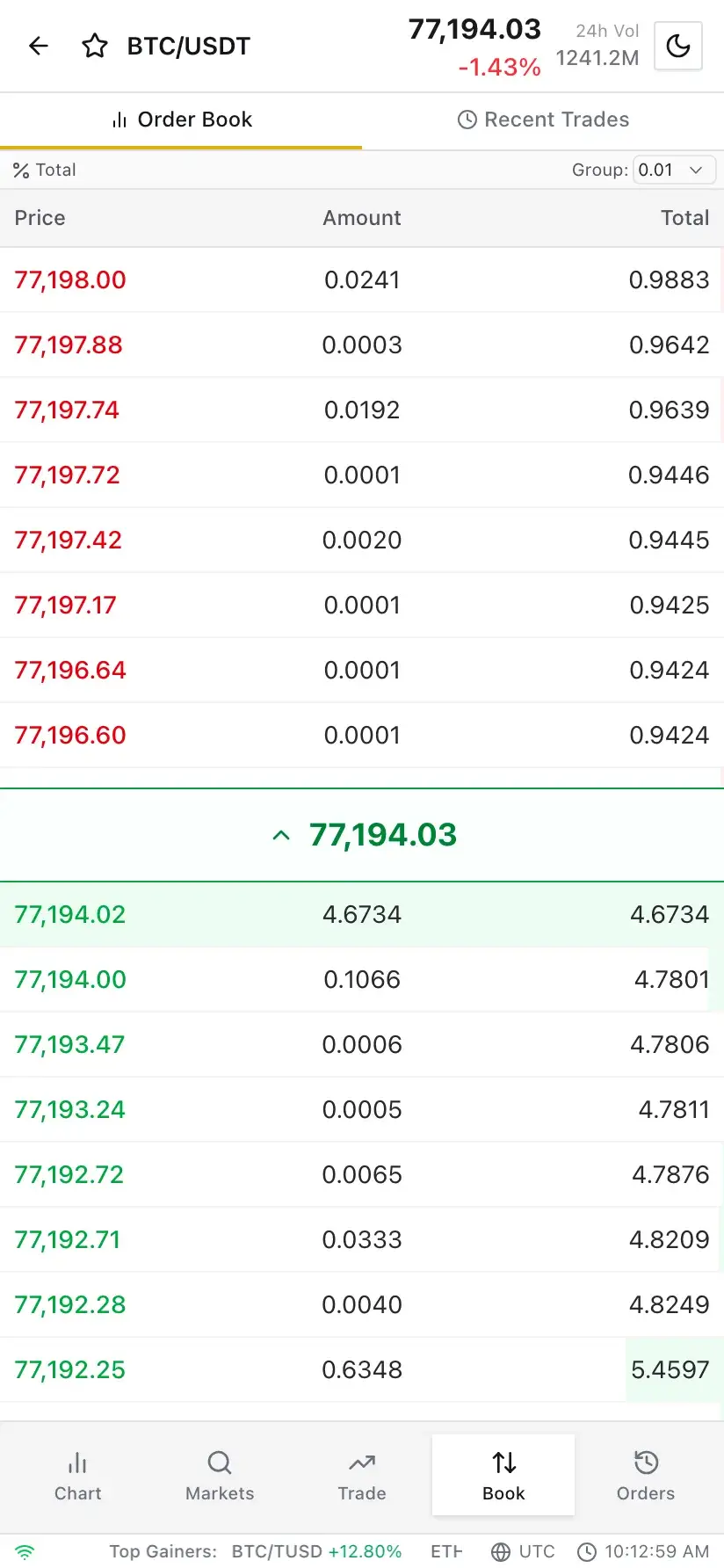
Traders open a pair, read the chart and the order book and place an order. The markets list shows price, 24-hour change and volume for every pair.
- Markets list with price, 24h change and volume
- Gainers, losers, high-volume and trending tabs
- Quote-asset filters such as USDT, BTC, BNB and USDC
- Candlestick chart with indicators beside a buy and sell panel
- Market and limit orders on the Spot tab
- Price-time priority matching with a live order book and tickers
Futures Trading
A Futures tab sits in the app navigation, backed by leverage settings and by exposure limits on the admin side.
- Futures tab in the app navigation
- Leverage settings
- Exposure caps and liquidation rules for leveraged positions
- Risk alerts and position limits in the admin
- Futures and Forex menus in the admin panel
Chains, Wallets & Deposits
Each user gets deposit addresses per chain, shown with a QR code and a time-limited deposit session, while the operator manages master and custodial wallets.
- Deposit screen with a QR code and a countdown timer
- Network named on the screen, such as ETH
- Twelve built-in chains including Bitcoin, Ethereum, BSC and Polygon
- Solana, Tron and Monero as extended chains
- Master wallets and user wallets generated per chain
- Custodial wallet search and transactions in the admin
KYC & Account Security
The Home screen shows KYC status with a Complete KYC prompt, the admin reviews applications by level, and the profile screen carries a two-factor setup prompt.
- KYC status and a prompt on the Home screen
- KYC applications with levels and templates in the admin
- Rejection modal and handling of document errors
- Two-factor authentication setup on the profile screen
- Email sign-in and Continue with Google
- User activity logs and access control
P2P Trading & Escrow
Traders deal directly with each other through offers and trades, with funds held in escrow until release and disputes handled by the operator.
- P2P menu with offers and trades
- Escrow hold, release and dispute handling
- Payment Methods at the top of the user P2P menu
- Offer card shows the remaining balance in the trade currency
- P2P profit tracked in the admin
Staking Pools
The Staking screen shows total value locked, average APR and active users, with Overview, My Stakes and All Pools tabs.
- Overview, My Stakes and All Pools tabs
- Total value locked and average APR tiles
- Stake Now and Best APR shortcuts
- Rewards and active-stake counters
- Staking menu in the admin panel
- Rewards history inside the wallet dashboard
Token Launchpad & Listings
A Launchpad shortcut sits among the trading tools, and the admin has an ICO menu, so a token round can run on your own venue.
- Launchpad shortcut in the Trading Tools row
- ICO menu in the admin panel
- Token deployment and import with clearer error handling
- ICO contributions counted in the profit reports
- Add, edit or delist coins and tokens from asset management
- Listed markets are configuration, not a rebuild
Home Screen & Market Intelligence
The Home screen opens with a welcome line and KYC status, then a market overview of total volume and average change, gainers and losers, and a row of trading tools.
- Welcome header with KYC status
- Total volume and average change tiles
- Gainers and losers counters with percentages
- Trading Tools row: P2P, Futures, Staking and Launchpad
- Live Market Intelligence banner with market sentiment
Fees, Rewards & Affiliates
Fee settings sit in the admin: maker and taker per pair, transfer percentages and chain fees on withdrawals, plus affiliate programs that reward referrals.
- Maker and taker fee settings per pair
- Percentage transfer fee setting
- Wallet withdraw chain fee setting
- Spot wallet withdraw percentage fee
- Affiliate program with unilevel and binary trees
- Wallet generation for affiliate reward claims
Mobile Trading Apps
Flutter apps for Android and iOS carry five bottom tabs and a dark theme, with a Home screen of live market intelligence and shortcuts to the trading tools.
- Android and iOS apps written in Flutter
- Home, Market, Trade, Futures and Wallet tabs
- Search field and quote-asset filters on the Market tab
- Profile with security settings, notifications and help
- Dark theme across the app
Admin: Users, Assets & Pairs
One console covers users, coins and tokens, trading pairs with their fees, risk limits and the chain manager.
- Users with KYC status and access control
- Add, edit or delist coins and tokens
- Trading pair setup with fees
- Leverage, exposure and position limits
- Ecosystem page for built-in and extended chains
- Export user details to Excel
Withdrawals, Profit & Reports
Withdrawals can be approved by hand or automatically, and the admin profit pages total what the exchange earns from each product line.
- Withdrawal approval by hand or automatically in settings
- Processing status until a withdrawal is finalized
- Fee refund when a spot withdrawal is rejected
- Profit management and profit analysis pages
- Profit across withdrawals, transfers, P2P trades and ICO contributions
- Email notices for withdrawal confirmations and failures
- Fiat currency rates through an exchange-rate API
Before you buy, note this: The exchange arrives rebranded to your identity and deployed in 6 days of our build time. You bring hosting and a domain, a verified developer account for the stores, your branding and business details, keys for the KYC and market-data providers you choose, and the license or registration your market requires. Store review sits with Apple and Google and falls outside those 6 days.
How Operators Earn
Binance Clone Revenue Models - Trading Fees, Futures, Withdrawals, Staking & Launches
A crypto exchange like Binance earns on every product it lists, so Miracuves gives each fee line its own setting and a change to one leaves the rest untouched.
Spot fees usually carry the early volume; derivatives, staking and token launches widen the mix as the venue matures.
- 01
Spot Trading Fees
A maker or taker percentage on each matched order. Fees are set per pair in the admin panel, so a new listing can start cheap and a busy pair can be tiered.
- 02
Futures Fees
Leveraged products earn on position size, and the risk limits in the admin keep exposure inside what you decide to carry.
- 03
Withdrawal & Transfer Fees
The admin carries a percentage transfer fee, a wallet chain fee and a spot withdrawal percentage, so network cost and your margin are separate lines.
- 04
Staking Commission
Staking pools show total value locked and APR; whether you keep a share of the rewards a pool pays is a pricing choice that sits with you.
- 05
P2P Trade Fees
Admin profit tracking already counts earnings from P2P trades, so a fee on each escrowed deal is one more line to switch on.
- 06
Launchpad & Listing Fees
ICO contributions feed the same profit reports, and listing a coin or token is an admin action you can charge for.
| Revenue stream | How it is charged | Take rateTypical take rate | What sets the ceiling |
|---|---|---|---|
| Spot Trading Fees | A percentage of each matched order, split into maker and taker rates and tiered by trading volume. | Kraken lists 0.40% maker and 0.80% taker at entry. Binance lists 0.100% / 0.100% for its base level, 0.075% with BNB. | Volume tiers pull the rate down fast: Kraken's top published tier is 0.0% maker and 0.05% taker. Gemini's filing implies about 0.18% of volume in exchange revenue (our arithmetic). |
| Futures Fees | A percentage of position size or order value when a leveraged position opens or closes. | Hyperliquid lists 0.045% taker and 0.015% maker at its base tier. GMX charges 0.04% or 0.06% of position size. | What rival venues charge for perpetuals and how much leverage you allow. Coinbase reported institutional transaction revenue up 39% to $479.7m in 2025, driven by derivatives. |
| Staking Commission | A share of the rewards a pool pays out, taken before payout, rather than a fee for joining. | Kraken lists a 20% commission on flexible staking with an on-chain unbonding period and on Rewards program assets. | What stakers will accept against raw on-chain yield. Coinbase reported $677.4m of blockchain rewards revenue in 2025, 4% lower than 2024. |
| Withdrawal & Transfer Fees | A fixed chain fee, a percentage of the amount, or both, set as admin withdrawal and transfer fees. | No common rate. Kraken says its deposit and withdrawal fees depend on the method and the currency used. | The network cost of each coin and what rivals charge for the same asset. The platform can apply a fixed chain fee so the destination wallet receives the full amount. |
How to read this. The spot and staking figures come from the Kraken fee schedule and the Binance fee page, the derivatives figures from the Hyperliquid and GMX documentation, and the revenue lines from the Coinbase and Gemini annual reports on Form 10-K. Fee pages are published price lists and the filings are audited company reports; the 0.18% is our arithmetic on Gemini's reported figures. Treat all of it as modeling input, not a quote and not a forecast of what your venue will earn, and set your own schedule in the admin panel.
Binance Clone Revenue Model, Stage by Stage
The Binance clone keeps each fee line apart in the admin, so a new exchange can earn from spot pairs first and add wallet, staking, P2P, futures and launchpad income as volume and trust build.
Launch
Maker and taker fees on a handful of liquid spot pairs carry the first months, set per pair in the admin so a fresh listing can start cheap.
Traction
As wallets get busy, withdrawal and transfer fees and a staking commission start to count, and P2P trade fees add a line the profit reports already track.
Scale
A mature venue turns on futures fees inside the risk limits you choose, and charges for launchpad rounds and token listings through the same finance pages.
Maker, taker, withdrawal and staking income lands with your entity in full, since the Binance clone carries a 0% revenue share to Miracuves.
Operate It Day to Day
Admin Panel of the Binance-Like Exchange - Chains, Users, Pairs, Withdrawals & Profit Reports
The admin console Miracuves ships covers the exchange operator's day: which chains are live, who is verified, which pairs trade at what fee, which withdrawals wait for approval and what the venue earned.


Admin Panel Sections
- 01
Ecosystem & Chains
A chain manager lists built-in and extended blockchains with their RPC and explorer endpoints, and has a page to activate, install and update more.
- 02
Users & KYC
Review users and their KYC applications by level, follow activity logs, set access control and export user details to Excel.
- 03
Assets & Trading Pairs
Add, edit or delist coins and tokens, create or remove trading pairs and set the fees that apply to each of them.
- 04
Futures, Forex & Risk
Futures and Forex menus sit beside risk controls: alerts, leverage settings and position limits for the products you switch on.
- 05
Withdrawals & Wallets
Approve withdrawals by hand or automatically, follow the Processing status, and search custodial wallets by blockchain.
- 06
Profit Management & Analysis
Finance pages total what the exchange earns from withdrawals, transfers, P2P trades and ICO contributions.
- 07
P2P, ICO & Staking Menus
Dedicated menus to oversee peer trades, token sale rounds and staking pools, each in its own section of the console.
- 08
Affiliates & Mail Wizard
Run the affiliate program with unilevel and binary trees, and use the Mail Wizard menu for messages to your users.
Money Movement
The finance side of the console, from a deposit confirmation to a processed withdrawal.
- Percentage transfer fee and wallet chain fee settings
- Fixed chain fee so the target wallet receives the full amount
- Fee refund when a spot withdrawal is rejected
- Fee entries removed when an admin removes a transaction
Settings & Tools
The controls behind pricing data and the daily routine.
- Exchange provider markets and currencies importer
- Multiple fiat currency rates through an exchange-rate API
- Regular or priority mining fee rate
- HEIC and HEIF uploads converted to JPG
Need the console to do more? Extra chains or exchange providers, more KYC levels, a custom approval step for withdrawals or different profit reports are scoped on their own. Tell us what your finance and compliance teams need and we will quote it in writing.
04Package and price
The Full Package
Binance Clone Script Package: Source Code, Wallet Apps & Exchange Deployment
Miracuves hands over Binance clone software that is already trading: trader site, Flutter apps, admin console and a matching engine tied to its settlement ledger, plus the source and database schema it all runs on. It is yours entirely, with no per-seat or per-trade charge and nothing to license before the venue runs. What the price leaves out is spend paid to others: hosting and storage, an identity and KYC provider, market-data keys, liquidity and banking, store accounts, security testing, and the license, counsel and compliance staff your market needs. Extra chains, providers or modules are quoted in writing before work starts.
$ git clone your-exchange Full Source Code
The complete source for the web platform and the mobile apps, with no encryption, so your team can change it to suit your business.
- Web platform source, unencrypted
- Flutter source for the Android and iOS apps
- Yours to modify, extend and redeploy
- Delivered into your own repository
Schema & Migrations
The database structure behind users, orders, wallets, KYC, pairs and fees, delivered so it can be rebuilt from empty.
- Database schema with migrations
- MySQL data tier
- Users, wallets, orders and KYC records
- Pairs, fees and ledger entries
Matching & Ledger Core
The engine that matches orders and the ledger that records every fill, with the streams that publish the book and tickers.
- Price-time priority matching engine
- Append-only double-entry settlement ledger
- Order book and ticker streams
- Event bus with retries
Trader Website
The responsive public platform with markets, trading screens, wallet and account pages, built to carry your brand.
- Markets overview with price, change and volume
- Trading, wallet and staking pages
- P2P menu and launchpad entry points
- Responsive on phone-sized screens
Trader Apps
Two Flutter apps, one for Android and one for iOS, covering Home, Market, Trade, Futures and Wallet, with a dark theme throughout.
- Android and iOS from one Flutter codebase
- Home, Market, Trade, Futures and Wallet tabs
- Deposit address with QR code, staking pools
- Publishing from your own developer accounts


Admin Panel
The operator console with the chain manager, users and KYC, assets and pairs, risk limits, withdrawals, profit reports and the P2P, ICO and staking menus.
- Ecosystem chain manager and wallet search
- Users, KYC review and access control
- Assets, pairs, fees and risk limits
- Withdrawals, profit management and analysis
Access & Security Layer
Separate roles for trader and admin, an API gateway in front of the services and the protections the platform ships with.
- Separate roles with their own permissions
- API gateway with authentication and rate limits
- Two-factor setup prompt on the profile screen
- Credentials kept out of the repository
Handover & Support
Branding and deployment done for you, a handover pack, and the three support periods that run side by side from launch.
- Rebranding with your logo, icons and colors
- Deployment to your hosting
- Deployment configuration and architecture notes
- 60 days guidance, 6 months bug fixes, 12 months updates
Want to see it before deciding? Log in to the demo as a trader, or ask for a guided tour. We can walk you through the markets list, a deposit address, a staking pool and the admin ecosystem page, each set against your own exchange plan.
Transparent Pricing
How Much Does It Cost to Build a Crypto Exchange Like Binance?
The launch-ready white-label Binance Clone is a fixed price of $5,199. Work beyond the base, such as add-ons, extra chains or exchange providers, or custom flows, is scoped and quoted separately in writing. Licenses, liquidity and KYC providers are your own costs and are not part of it.
Professional
Ready-Made Launch PackageChosen by: Teams holding a license, regional exchanges, brokers and fintechs adding a crypto venue
The exchange arrives as the demo shows it, rebranded to your logo, icons and colors, and deployed on your own hosting.
Get StartedEnterprise
Custom Builds for Larger ScopeChosen by: Exchange groups, multi-region operators, institutional desks
Need products or integrations the base does not have? We build to your requirements and agree the scope and price before work starts.
Request a QuoteBinance Clone Development Cost in 2026
Miracuves prices the Binance clone at $5,199, paid once, for the demo exchange in full: spot, futures, P2P escrow, staking and launchpad on one wallet, the price-time matching engine and settlement ledger, trader site, admin console, Flutter apps and source with schema. No trade or seat adds to it, and the venue is deployed to your own hosting in six working days.
What moves your total sits outside the software invoice
- Licensing, legal counsel and compliance staff for each market
- KYC, identity and market-data provider accounts
- Liquidity, banking and your fiat partner
- Hosting, storage and pre-launch security testing
- Store developer accounts, plus any add-on such as trading bots
A chain the admin does not list yet, another exchange provider or a bespoke withdrawal flow each gets its own fixed written quote, and building it takes 2-8 weeks.
Compare Your Options
Ready-Made Binance Clone vs Custom Development vs SaaS
Three routes to a Binance-style cryptocurrency exchange app, the Miracuves clone being one, are set side by side on time, cost, ownership and control, so you can match the route to your license, budget and launch date.
| Criteria | MiracuvesReady-Made Binance Clone | Custom Development | SaaS |
|---|---|---|---|
| Launch time | Live in 6 working days; store review follows | Quoted in writing, 2-8 weeks for extra scope | Quick sign-up, on the vendor timetable |
| Upfront cost | $5,199, paid once | Priced in writing after scoping | Low entry, then a recurring subscription |
| Source code ownership | Full unencrypted source and schema handed over | Yours if the contract assigns it | Stays with the vendor |
| Customization | Any change, by your team or ours | Built to your spec from the start | Limited to the settings offered |
| Ongoing fees | No revenue share and no monthly rental | Your own developers or a retainer | Monthly fees, often tied to users or volume |
| Branding & app-store listing | Your brand on web, admin and Flutter apps | Your brand once the build ships | Vendor branding or partial white-label |
| Best for | Licensed teams that want a venue now | Exchanges whose needs no base covers | Testing an idea before owning a stack |
Same product, other editions: Crypto Exchange Script · MEXC Clone · Browse all Cryptocurrency solutions
Where It Fits
Use Cases for a Crypto Exchange App Like Binance - Regional Exchange, Derivatives, P2P, Launchpad & Staking
Exchange operators who launch on the Miracuves Binance clone each lean hardest on a different product, from spot pairs to staking pools and launchpad rounds. A regional exchange puts spot pairs and fees first, a derivatives desk puts risk controls first, and a token project puts the launchpad first. You set the emphasis in configuration.
Swipe · 6
Open with a handful of liquid pairs in your local market, set your own maker and taker fees and add products one at a time as volume grows.

Give active traders futures and leverage beside spot, with exposure caps, position limits and risk alerts that you configure in the admin.

Let users trade with each other through offers, payment methods and escrow, while the admin tracks the profit from every peer trade.

Run a token round on your own platform, list the token afterwards and keep contributions, listings and trading in one console.

Lead with staking pools, total value locked and an APR users can see, then bring them into spot trading from the same wallet.

Grow through the affiliate program: referral rewards, unilevel and binary reward trees and affiliate wallets, with KYC levels that fit your community.

Binance Clone Business Model: Three Ways to Run It
Which Binance clone business model fits depends on the product you lead with: local spot pairs, several products on one account, or a token sale. One licensed install of the Miracuves exchange can run any of the three venues below.
Spot-first regional venue
A regional exchange lists local pairs, sets its own maker and taker fees and earns from trading and withdrawals in its own language and market.
Multi-product venue
A broader venue stacks futures, P2P escrow and staking on the same account and wallet, so each trader can generate fees on several lines at once.
Token-led venue
A token project runs launchpad rounds, lists its token afterwards and keeps contributions, listing fees and order flow on a platform it owns.
Whichever venue you pick, your entity holds the exchange license, since Miracuves supplies the software and never applies on your behalf.
One product, six ways to use it. All six cases share the trader site, the apps and the admin panel. What differs is which pairs you list, which products you switch on, which KYC levels you require and how it is branded, so there is a single codebase to look after.
Talk to Our TeamMarket Timing
Why Build a Crypto Exchange in 2026?
Retail interest in crypto trading comes in waves, and most traders still sit on a handful of large venues. A branded exchange gives a regional operator, a broker or a token project a place to serve its own audience and keep the fees that venue earns.
01Traders Want One Venue for Many Products
A trader who can move from spot to futures, a staking pool or a token round without a second account has fewer reasons to leave. One login and one wallet are the whole pitch.
02Local Markets Still Want Local Venues
Fiat routes, languages and listings differ by country. A venue built around one region's coins, rules and payment habits is something a global platform rarely tailors.
03Token Projects Need a Place to Launch
A project with its own token often wants a launchpad round and a listing on a venue it can talk to. Owning that venue turns a service fee into your own revenue line.
04You Keep the Order Flow and the Data
With the ledger, user records and fee settings in your own database, what the venue learns about its traders stays with the business that earned it.
05The Hard Middle Already Exists
Matching, settlement, wallets on several chains and an admin panel are most of an exchange. Writing them again is slow and risky, and here they are already built and demonstrable.
06Rules Differ, So Plan the Route Early
Regimes for crypto businesses are written market by market. Deciding which one applies to you before you build keeps the technical work and the license application moving together.
Platform by the Numbers
Chains Listed in the Admin
Surfaces, One Codebase
App Tabs
Days of Build Time
Most of the effort in an exchange is the unglamorous middle: order matching engine, a trustworthy ledger, wallet and withdrawal handling, and the admin console that reconciles it. Here it is already built.
Industries
Industries That Run a Binance-Style Exchange
Any business that wants its own trading venue, from a regional exchange to a token project, can run it on Miracuves' Binance clone. Crypto exchanges list spot and futures pairs. Regional operators serve one country in its own language. Brokerages and fintech apps add a crypto desk. Neobanks and payment companies bring digital assets to existing customers. Token projects run a launchpad and a listing. P2P marketplaces connect buyers and sellers with escrow. Trading communities add practice accounts and staking. Web3 start-ups build a branded venue on a base that already works.
one codebaseMXCrypto
- 01CeCrypto Exchanges
- 02ReRegional Exchanges
- 03BrBrokerages
- 04FaFintech Apps
- 05NeNeobanks
- 06TpToken Projects
- 07LaLaunchpads
- 08PpP2P Marketplaces
- 09TcTrading Communities
- 10WsWeb3 Start-Ups
- 11SsStaking Services
- 12PcPayment Companies
Miracuves’ Binance Clone is a centralized exchange platform you can adapt to many trading business models, with the engine, wallets and admin console carrying your name from the first screen.
06Under the hood
End to End
How a Binance Clone App Works - Sign In, Fund, Stake & Manage the Account
To a trader, the exchange Miracuves builds is a few taps. Underneath it is a strict chain of account checks, matching, settlement and wallet movement. Below is the journey from sign-in to a funded wallet, followed by the architecture that carries it.
Trader Journey - From Sign-In to a Funded Wallet
Swipe · 6
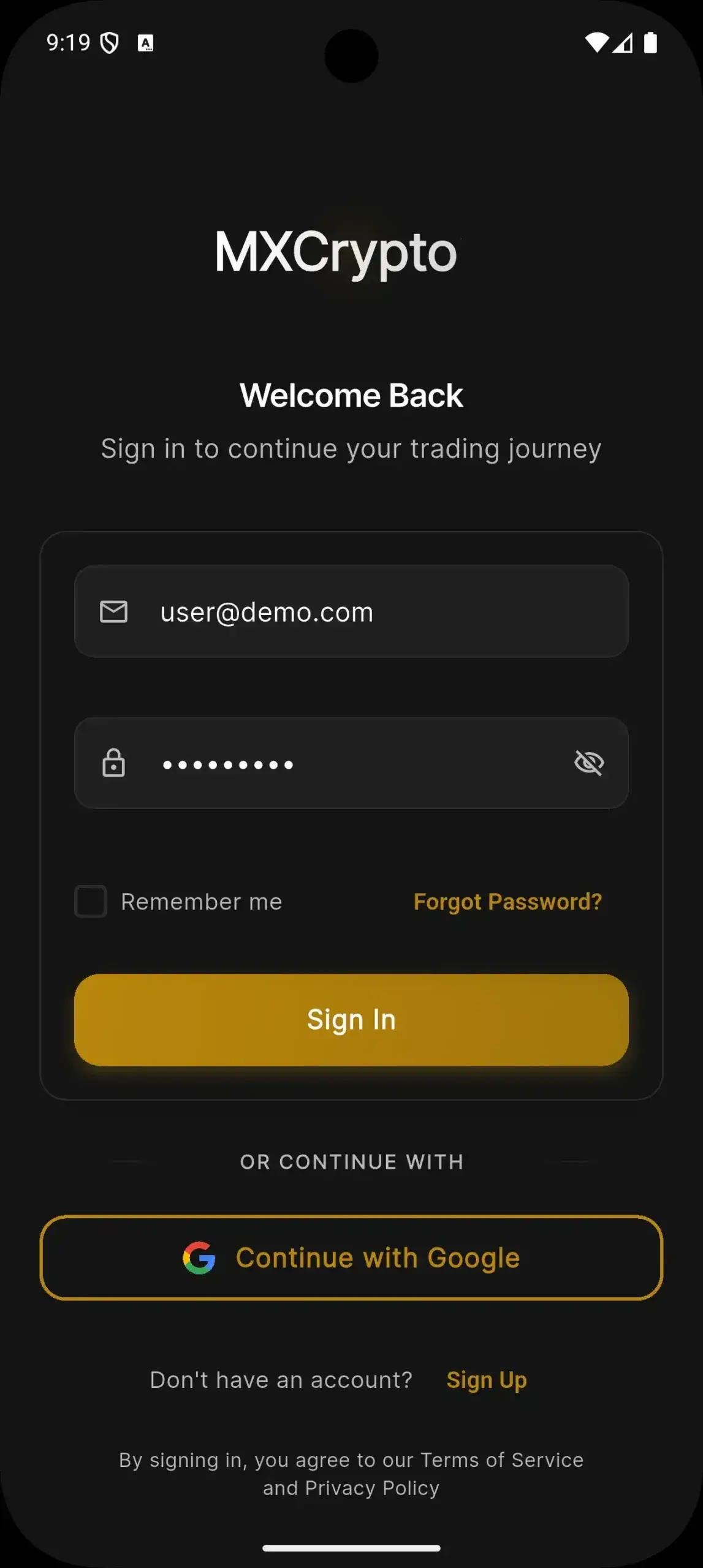
- 1Create a Crypto Exchange Account
A new trader signs up or logs in with email and password, or with Google, and the Binance clone app opens straight onto the exchange.
- Email and password sign-in
- Continue with Google
- Sign-up and forgot-password links
- 2Check KYC Status and the Market Overview
The home screen shows whether KYC is done, offers a Complete KYC prompt, sums up the market and lines up the trading tools.
- KYC status with a Complete KYC prompt
- Total volume, average change, gainers and losers
- Trading Tools: P2P, Futures, Staking, Launchpad
- 3Find a Crypto Trading Pair
In the Market tab every pair carries its price and 24-hour change, and filters sort pairs by gainers, losers, volume or quote asset.
- Search markets by pair
- Gainers, Losers, High Vol and Trending
- USDT, BTC, BNB and USDC filters
- 4Deposit Crypto Into the Wallet
To deposit crypto, the trader picks a network and receives an address with a QR code, valid for a timed deposit session.
- Network named on the screen
- QR code and copyable address
- Time-limited deposit session
- 5Stake Coins or Trade Spot and Futures
Staking pools list value locked and APR, while the Spot and Futures tabs let a trader act on a market straight away.
- Overview, My Stakes and All Pools
- Stake Now and Best APR shortcuts
- Spot and Futures tabs
- 6Secure and Verify the Account
The profile screen tracks completion, role and verification status, with security settings, KYC, notifications and help close at hand.
- Profile completion and account status
- Two-factor setup and KYC verification
- Notifications, help and support
How It's Built
Architecture of the Binance-Like Platform & Order Flow
- 01Part 01
Separate Surfaces, Separate Permissions
Trader, operator and admin surfaces are separate applications, each with its own permissions, so a trader never reaches the operator console.
- 02Part 02
Matching Engine & Order Book
Orders meet in a price-time priority book, and the book and tickers stream out to the screens as real-time market data.
- 03Part 03
Settlement Ledger
Every fill posts to an append-only double-entry ledger, so a balance can always be re-derived from the entries behind it.
- 04Part 04
Wallets & Chain Listeners
Chain listeners confirm deposits, withdrawals pass an approval step, and hot and cold storage stay separate.
- 05Part 05
Risk & Liquidation
Exposure caps and leverage controls guard leveraged positions, with limits that the operator sets in the admin.
- 06Part 06
Events & Background Work
Notifications, verification jobs and retries run through an event bus, away from the path an order takes.
Under the Hood
Binance Clone Tech Stack - React, Node.js, MySQL, Flutter & Multi-Chain Wallets
Miracuves built the Binance clone on React and Node.js for the web tier, MySQL for consistent balances, Flutter for native-feeling trader apps and listeners for several blockchains. Here is what the platform is built with, stated as listed on the product pages and in the release log.
Web Platform
- Trader website and admin panel
- ReactJS and NodeJS as listed on the product sheet
- Tailwind CSS interface with a dark theme
- Responsive on phone-sized screens
Data Tier
- MySQL as the data tier
- Append-only double-entry settlement ledger
- Schema and migrations delivered with the source
- Rebuildable from empty
Trader Apps
- Flutter full-component apps with current dependencies
- One codebase for Android and iOS
- Home, Market, Trade, Futures and Wallet tabs
- Published from your own developer accounts
Order Book & Streams
- REST and WebSocket APIs for market data
- Order book and ticker streams
- Event bus with fan-out and retries
- Queue worker that verifies pending deposits
Chains & Wallets
- Twelve built-in chains listed in the admin
- Solana and Tron as extended chains
- Master and user wallet generation per chain
- Deposit listeners and a withdrawal queue
Market & Rate Data
- Exchange provider connectors, including XT in the release log
- Provider markets and currencies importer
- Fiat rates through Open Exchange Rates and a currency API
- Your own provider accounts and keys
The web and admin side is listed as ReactJS and NodeJS with Tailwind CSS and PNPM, on MySQL, and the apps are Flutter. KYC, market-data and fiat-rate providers need your own accounts and keys, which you supply at deployment. Every technology named here is mainstream and easy to hire for.
Build to Scale
Built to Scale - Separate Parts, Gateway Limits & Room to Grow
Miracuves builds this exchange as separate parts around shared building blocks, so adding pairs, users and chains comes down to capacity and configuration rather than a rewrite. Peak load depends on your hosting and your traffic, and we size it with you.
Separate Applications, Separate Release Paths. Trader, operator and admin surfaces each carry their own permissions, so a change to one does not have to ship with the others.
One Book, One Ledger. The matching engine and the settlement ledger agree on every fill, which gives the venue a single answer to the question of what a balance is.
Documents Stored Apart From the App. Identity documents sit in object storage in your own bucket and region, which keeps the application tier light as the user base grows.
Events Off the Hot Path. Notifications, retries and verification jobs fan out through an event bus, so they do not slow the path an order takes.
Separate Applications
Trader, operator and admin surfaces are separate applications with their own permissions and release paths, so each can change without touching the others.
One Book, One Ledger
A price-time priority matching engine feeds an append-only double-entry ledger, so each fill leaves a record that balances can be rebuilt from.
- Price-time priority matching
- Append-only double-entry entries
- Order book and ticker streams
- Spot and futures books
Rate-Limited Gateway
Requests pass an API gateway that handles authentication and rate limits before they reach the trading logic.
- Authentication at the gateway
- Rate limits on public traffic
- Separate logins per role
- Two-factor setup for accounts
Documents Stored Apart
Identity documents are kept in object storage in your own bucket and region instead of in the application tier.
- Your bucket, your region
- Documents served separately
- KYC review in the admin
- Document errors flagged to applicants
Events With Retries
Notifications, verification jobs and withdrawal processing run through an event bus with fan-out and retries.
- Fan-out to several consumers
- Retries on failed jobs
- Pending-deposit verification worker
- Withdrawal queue and Processing status
Documented Hand-Over
Source, schema, deployment configuration and architecture notes are handed over so another team can run the platform unaided.
Room to Change and Grow. Every exchange ends up needing something particular to its market or its token. With the complete source code and a conventional stack, adding a pair type, a rule or an integration is ordinary development work that your team or ours can carry out.
If you are launching an exchange: Begin with the pairs and users you can bring in and grow on the one deployment you already have. As volume rises, capacity is a hosting and configuration decision, and anything beyond the base is scoped and quoted on its own.
07Security and trust
Built to Be Checked
Security in a White-Label Binance Exchange - Role Separation, Custody Controls & Honest Limits
Every Binance clone Miracuves delivers holds identities, balances and withdrawal rights, which puts three controls first: who sees what, how coins move out and which checks run before launch. This section says what the platform does and what remains your work.
- 01 · RolesRole Separation
Each surface sees only what its role permits, enforced on the server rather than hidden in the interface, so a trader cannot open the operator console.
- Listing Review: Pairs and tokens are added by the operator in the admin, so what the exchange lists is a decision with a name on it, not an automatic feed.
- Dispute Handling: P2P escrow holds can go to a dispute, and the people who decide those disputes are your own staff, using the trade record behind each case.
- 02 · AuditAudit Trail
The base keeps a record of who changed what and when, so a dispute over an order or a withdrawal can be answered with a record instead of a recollection.
- KYC Gates: Higher limits and withdrawals can sit behind the KYC levels you configure, and the admin reviews applications, rejections and document errors.
- 03 · TransportTransport & Storage
Traffic runs over TLS, credentials are stored hashed, and sensitive values at rest are encrypted rather than merely obscured.
- Two-Factor Setup: The profile screen prompts users to set up two-factor authentication. Making it mandatory for withdrawals is a policy you decide.
- 04 · SecretsSecrets Handling
Keys live in environment configuration on your own infrastructure, never inside the repository that is handed over.
- Named Launch Tasks: Penetration testing, key rotation, a restore drill, a custody review and a token or contract review are listed as pre-launch work, not assumed to be done.
- 05 · CustodyCustody & Withdrawal Controls
Hot and cold storage are kept separate, and every withdrawal passes an approval step before coins leave the platform.
- Withdrawal Approval: Approval can be manual or automatic. Which one you run, and the limits around it, are settings you choose before launch.
- 06 · BackupsBackups & Restore
A backup and restore drill is planned before launch, because an untested backup is a guess and an exchange cannot afford guesses.
Hashed credentials, TLS on every connection, KYC levels and a withdrawal approval step sit on top of an audit trail that shows who changed what and when. The go-live calendar we draw up with you carries a pen test, a key rotation round, a restore drill and a wallet-setup review. Withdrawal approvals and KYC levels are written around the ISO 27001, SOC 2, PCI DSS, AML/KYC and GDPR controls. Independent audit partners guide the exchange through its audit, and the addressee of the attestation is your company (see exchange audit record).
Discuss Security Before LaunchRegulatory Clarification
Licensing & Operator Readiness for a Binance-Style Exchange - Software Scope and Your Compliance Program
A Binance Clone is software, not a license. Miracuves builds and hands over the platform layer: the matching engine and ledger, wallets on several chains, KYC review tools, withdrawal approval, fee settings and an admin console. Operating an exchange that lists assets, holds user funds and moves coins on behalf of customers is a regulated activity almost everywhere. That authority sits with your own registered or licensed entity, and with the banking, custody and KYC partners you choose. We build to their APIs; we do not replace them and we do not act as one.
The base is built with role separation, an audit trail, hashed credentials and KYC and withdrawal gates, so a review of your own program starts from working tooling instead of a blank page. Registration and licensing are granted to the operating entity, against its own policies, hosting and records.
What the Software Delivers
Spot and futures markets, an order book and ledger, deposit addresses and wallets per chain, KYC levels with review and rejection handling, withdrawal approval, fee and risk settings, profit reports and an audit trail. Delivered as source code you own.
What Only a License Delivers
The right to list assets for the public, to hold customer funds and coins, and to report to a regulator. That comes from a registration or license held by your own entity and from partners who hold their own. Software cannot substitute for it, and neither can Miracuves.
Policies and Providers Stay Yours
The KYC and AML policy, the sanctions and Travel Rule tooling you connect, the identity provider, the banking or fiat partner, the liquidity you bring and the wording of your terms are yours to choose and to answer for. We can connect the provider you pick, but we do not apply on your behalf.
Jurisdiction Decides the Route
The EU asks for authorization as a crypto-asset service provider under MiCA. In the US a business registers with FinCEN and obtains state money transmitter licenses, or a BitLicense in New York. The UK requires FCA registration, and India requires registration with FIU-IND. Confirm your route with specialist counsel; Miracuves does not provide legal, licensing or investment advice.
08Grow the platform
- Spot, futures & P2P markets
- Wallets & multi-chain deposits
- KYC, staking & launchpad
- Admin panel & profit reports
Adding a module
- 1Pick what you need
Bots, pools, NFTs or social trading, now or after launch.
- 2Price agreed first
Each module gets its own written scope and quote before any work begins.
- 3Handed over as code
The module is added to the source you already hold.
Go Further
Add-Ons for an Exchange Like Binance - Bots, Liquidity Pools, an NFT Marketplace & Social Trading
Out of the box, the Miracuves exchange runs end to end, and the demo can walk you through it. The four modules below are optional extras, and each is priced separately because the scope depends on your venue.
Drag to explore · hover to pause
- 01Trading
Auto Trading Bots
Let users automate their strategies with technical indicators, risk-management settings and algorithmic rules, so they can keep trading while they are away from the screen.
Trading · Bots - 02Trading
Liquidity Pool
Let users supply liquidity to chosen trading pairs and earn a share of the trading fees, giving investors a second reason to hold assets on your venue.
Liquidity · Pools
- 03Ecosystem
NFT Marketplace
A marketplace where users buy, sell and trade unique digital assets, so artists and collectors can sit inside the same ecosystem as traders.
NFT · Marketplace - 04Ecosystem
Social Trading
Let users follow experienced traders, learn from them and choose to copy their trades automatically, which builds a community around the venue.
Social · Trading
The Crypto & Fintech Suite
Building a Crypto or Fintech Product? We Have the Neighbors Covered.
The Binance Clone is one platform in a wider crypto and fintech suite. If your plan reaches past a centralized exchange, these four connect naturally.
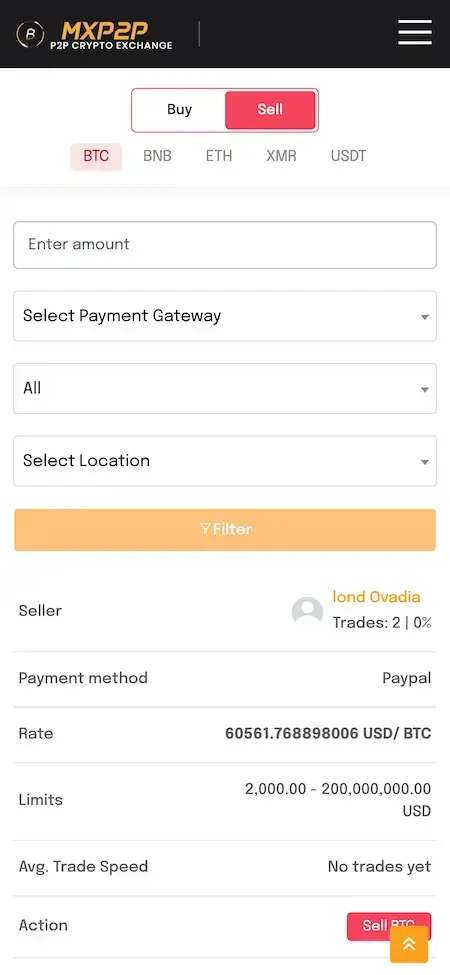
01A peer-to-peer crypto marketplace with Buy and Sell offers, coin filters, payment gateways and trade requests between users.
Explore Solution
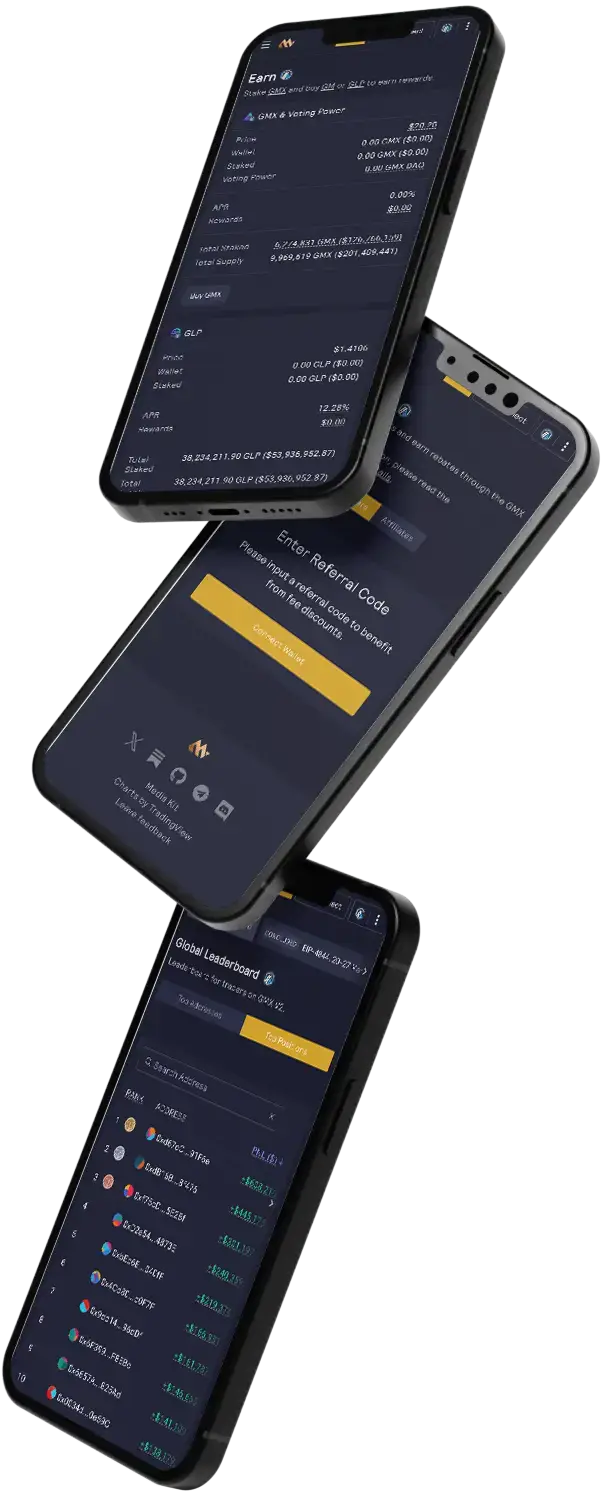
02An on-chain perpetuals trading platform with earn, referral and leaderboard screens, built for wallet-based trading.
Explore Solution
03A token sale platform with staged rounds, account balances, transaction history and an activity log for contributors.
Explore Solution
04A digital banking platform with accounts, cards and money transfers for customers, and an admin console for operators.
Explore Solution09The business case
Market Benchmarks
Crypto Exchange Market Benchmarks - Independent 2025-2026 Data
The revenue models above are ours. The figures below are not. They come from the Coinbase annual report on Form 10-K, the Gemini annual report on Form 10-K, the Bank for International Settlements and Kraken's published fee schedule, reproduced as published. They show how listed exchanges earn from trading and what published fees look like, so you can test your own business case against sources you can check.
59% of Coinbase Net Revenue Came From Trading
Coinbase's annual report on Form 10-K shows total transaction revenue of $4.06 billion in 2025, up 2 percent and equal to 59 percent of net revenue of $6.88 billion, against 63 percent in 2024. Consumer transaction revenue fell 3 percent to $3.32 billion: a lower average blended fee rate, as volume moved to users paying lower fees, outweighed a 7 percent rise in consumer Trading Volume.
$52.7bn Trading Volume, $93m Exchange Revenue
Gemini's annual report on Form 10-K reports 2025 Trading Volume of $52.7 billion, up from $38.6 billion, of which institutional was $46.0 billion and retail $6.7 billion. Exchange revenue across crypto assets totaled $93 million, about 0.18 percent of volume (our arithmetic on reported figures). Total revenue was $179.6 million against an operating loss of $345.7 million.
$320bn Stablecoin Market, Used Mainly to Trade
The Bank for International Settlements reports in its Annual Economic Report 2026 that stablecoin market capitalization was around $320 billion at end-May 2026, and that the main use of stablecoins so far has been crypto trading. It estimates annual stablecoin transaction volume at $28 trillion in 2025, and calls current use modest next to bank deposits.
Kraken Spot Fees: 0.40% Maker, 0.80% Taker
Kraken publishes a tiered maker-taker spot schedule. The entry tier, from $0 of 30-day volume, charges 0.40 percent maker and 0.80 percent taker. Fees fall with volume, assets on platform or futures volume, and the top Pro 5 tier at $500M+ of 30-day spot volume charges 0.0 percent maker and 0.05 percent taker. It shows how steeply an exchange discounts for scale.
Coinbase Global, Inc., Annual Report on Form 10-K for the year ended 31 December 2025, signed 12 February 2026 - sec.gov
Gemini Space Station, Inc., Annual Report on Form 10-K for the year ended 31 December 2025, filed 31 March 2026 - sec.gov
Bank for International Settlements, Annual Economic Report 2026, Chapter III: Anchoring trust in money: innovation beyond stablecoins, 23 June 2026 - bis.org
Kraken (Payward, Inc.), Fee schedule, accessed October 2026 - kraken.com
All figures are the publishers’ own filings, estimates and published fees, reproduced as published. The Gemini 0.18 percent is our arithmetic on reported figures (exchange revenue divided by Trading Volume). They describe the market and published price lists, not the performance of any platform Miracuves builds, and nothing here is investment advice or a revenue projection for your business.
The Commercial Case
Marketability, Revenue Potential & Business Prospects
An exchange earns when traders trust it enough to fund it and keep trading. Everything that follows is about making those two decisions easier, and about owning the venue, its order flow and its fee schedule once they have been made. None of it is investment advice.
- 01
Fees on Every Matched Order
Revenue follows trading activity rather than headcount, so the same console that runs ten pairs can run a hundred.
- 02
Several Lines, One Console
Spot and derivatives fees, withdrawal fees, staking commission, P2P and launches each have their own setting, so one line can go live while the rest stay off. Affiliate rewards are the one line that pays out rather than earns, and every rate, from maker and taker fees to the staking commission, is typed in by you before the first pair opens.
- 03
Owned Traders and Order Flow
User records, KYC outcomes and trading history sit in your database, so the value the venue builds up stays with you.
- 04
Exit Optionality
You hold the complete source code and the schema, so a later change of host, team or direction needs no one's permission.
- Spot Trading Fees
- Futures Fees
- Withdrawal & Transfer Fees
- Staking Commission
- P2P Trade Fees
- Launchpad & Listing Fees
Defensibility comes from liquidity, trust and the audience you serve rather than from features.
- 01Verified, funded traders do not casually move
- 02A regional or token community is hard for a global platform to copy
- 03That accumulation starts at launch and stays in your database
- 04Careful listing and honest compliance are the second moat
These three cases differ only in how many traders are active, and each names the lever that leads at that size. They are examples for planning conversations, not predictions of what any exchange will earn.
Spot trading fees carry early revenue.
A focused exchange with a few liquid pairs, where the maker and taker fees on each matched order cover running costs. Illustrative size, not a forecast.
Spot fees plus withdrawal fees and staking.
A regional exchange where wallets are busy, so withdrawal fees and a staking commission start to matter beside trading fees. Illustrative size, not a forecast.
Several products, with futures and launches active.
A venue with derivatives, P2P and token rounds running together, where the profit reports show which line to push next. Illustrative size, not a forecast.
10Why Miracuves
Why Miracuves
Miracuves Compared With Other Binance Clone Developers
An exchange can be pieced together from open-source code, commissioned from a freelancer or agency, or bought as a working base from builders who have already shipped one. Whoever you shortlist, put the same questions to them: can a balance be rebuilt from its ledger entries, who approves coins leaving the platform, does the source come unencrypted with the schema, how many chains work end to end, where identity documents live, and which modules sit in the price.
Why Founders Choose Miracuves
- 01
Breadth Out of the Box
Spot, futures, P2P with escrow, staking and a launchpad ship in one base, where a generic script often stops at a spot screen.
- 02
A Real Ledger Underneath
Fills post to an append-only double-entry ledger beside a price-time priority engine, which is what lets balances be checked.
- 03
Compliance Tooling, Honest Claims
KYC levels, review and rejection handling and withdrawal approval exist; the license, the policy and the providers are named as yours.
- 04
Full Source Code Ownership
The whole codebase arrives unencrypted, with the schema and deployment notes, so nobody can reprice it or change the terms later.
- 05
A Base That Has Shipped Before
The same base carried Annurax Exchange in 2024, with 20 of 25 building blocks reused as they were, and the published case study shows the ledger of what was built.
- 06
Plain Readiness Language
This page says what is a base feature, what is an add-on and what you supply yourself, including licenses, KYC providers and store accounts.
How to Choose a Binance Clone Development Company
Judge a Binance clone development vendor by what its live exchange proves about matching, ledger and custody.
What to look for Miracuves
- Proof in the product One demo login opens the trader app and web exchange today
- A ledger you can check Any balance re-derives from the fills recorded behind it
- Custody controls Hot and cold storage apart, approval on every withdrawal
- A client on the same base Annurax Exchange launched on it in 2024, reusing 20 of 25 blocks
- Source ownership Matching, wallet and ledger code unencrypted, with MySQL schema and migrations
- Support after launch 60 days of guidance, then bug fixes for 6 months and updates for 12
Walk away from any vendor who
- Cannot rebuild a balance from its ledger entries
- Lets coins leave without an approval step
- Says a license comes with the software
- Shows a spot screen and calls it an exchange
- Ships encrypted source without the schema
How the Binance Clone Stacks Up Against Scripts and Agencies, Row by Row
| Criteria | MiracuvesMiracuves Binance Clone | Generic Exchange Script | Custom Dev Agency |
|---|---|---|---|
| Time to Launch | 6 days of our build time | Weeks of setup and debugging | Scoped per project, usually months |
| Source-Code Ownership | Complete, unencrypted | Open license terms, no exclusive rights | Usually yes |
| Trading Depth | Spot, futures, P2P, staking and launchpad | Often spot only | Whatever the budget allows |
| Wallets & Chains | Multi-chain deposit addresses and master wallets | Varies by script | Custom integration |
| Admin & Reports | Pairs, KYC, withdrawals and profit reports | Thin or absent | Built to order, extra cost |
| KYC & Compliance Tooling | KYC levels and review; policy and license stay yours | Manual setup | Built to order |
| Security Posture | Role separation, audit trail, withdrawal approval | Community patches only | Varies widely |
| Cost vs Speed vs Quality | Fixed price, fast, tested base | Low price, high effort | Expensive and slow |
| Ongoing Support & Updates | 60 days guidance, 6 months bug fixes, 12 months updates | Community support only | Set by the contract |
Few routes to an exchange survive their first real week of trading unchanged. This is where they part ways.
Talk to Our TeamChangelog
Exchange Release Log - Versions & Updates
Release notes for the platform, newest first. The notes carry no dates, and lines that name only internal tooling are left out.
| Version | Changes | What changed |
|---|---|---|
| V5.5.6 | 8 updates, 4 fixes | Added or updated Rebuilt the application on a modular architecture for easier scaling Redesigned interface with dark mode, accessibility improvements and responsive layouts Interface languages: English, Spanish, Hindi and Arabic Analytics dashboards with advanced reporting Sign-in with Google Chat and notification center CSV and JSON import and export Setup wizard with inline validation Fixed Duplicate entries in reporting modules Layout inconsistencies on mobile and desktop Deployment script error on Ubuntu Memory leak in background jobs |
| V4.6.0 | 6 updates | Added or updated Token deployment and import, with clearer error handling Prevention of self-crossing orders Cancellation of partially filled orders with correct refunds, and canceled orders kept in the system Custodial wallet search by blockchain and longer transaction pagination Wallet generator for affiliate reward claims Deposit handlers for the supported chains and a worker that verifies pending deposits |
| V4.4.9 | 9 updates, 4 fixes | Added or updated New About Us page Admin finance pages for profit management and profit analysis Payment Methods moved to the top of the P2P menu Responsive wallet-type selection on deposit, withdrawal and transfer pages Admin profit calculated on withdrawals, transfers, P2P trades and ICO contributions Percentage transfer fee, wallet withdraw chain fee and spot wallet withdraw percentage fee settings User details export to Excel HEIC and HEIF images converted to JPG on upload Clearer network selection, dark-mode lists and a dark KYC rejection modal Fixed Ecosystem token structure missing in integrated add-ons KYC applicants unable to view applications with document errors KYC cancel button still sending applications, the max-level calculation and an extra level added on rejection P2P trades of every user visible to admins on the user side |
| V4.4.8 | 3 fixes | Fixed Access-token refresh using the refresh token Unilevel and binary nodes not registering in the affiliate system, and the main node missing when a user had no referrals Duplicate node requests on the multi-level network page |
| V4.4.6 | 3 updates | Added or updated User ID shown in the name column of user management Full Tron support: service handler, master and user wallet generation, balance lookup, address activation check, deposits, withdrawals, transaction parsing, fee estimator and the TRX native token Tron installable and activatable from the extended blockchains manager |
| V4.4.5 | 5 updates, 3 fixes | Added or updated Full Solana support: master and user wallets, balances, the native SOL token, deposits, transfers, withdrawals and a withdrawal queue Email templates for ecosystem withdrawal confirmations and failures A Processing status for withdrawals until they are finalized XT exchange provider support: order book, orders, trades, tickers, charts, deposits, withdrawals and a markets and currencies importer Extended blockchains card and a page to activate, install and update blockchains Fixed Auto-approval of withdrawals Deposit expiration settings Network settings not reading all data in some cases |
| V4.4.3 | 9 updates, 3 fixes | Added or updated BTC fee calculator Spending check for transaction outputs and better error handling on swaps Internal withdrawals treated as zero-fee transfers Fee refund when a spot withdrawal is rejected or fails Automated withdrawal approval setting Multiple fiat currency rates through an exchange-rate API Regular or priority mining fee rate Back button on the provider markets page returns to the selected provider P2P offer card shows the remaining wallet balance in the trade currency Fixed Internal transfers replacing the target wallet chain address Custodial fund transfers within the ecosystem Google Analytics not capturing client visits |
Let's build together
Let's take your exchange idea and make it a working platform.
Book a free consultation and leave with a clear timeline and honest answers to your questions. We would rather earn your trust than close a fast sale.
- First reply in under 2 hrs
- Free consultation
- No lock-in contracts
- Full source code ownership
11Learn more
Blog & Resources
Guides on Starting a Crypto Exchange Like Binance
Stay up to date with guides on how exchanges are built, how their revenue lines work and what to weigh before you choose a base.

The product4 questions
01What exactly do we mean by a Binance Clone Script?
A Binance Clone Script is ready-made software for a centralized crypto exchange. The Miracuves Binance Clone covers spot and futures markets, P2P with escrow, staking pools, a token launchpad, multi-chain wallets, KYC review and an admin panel, and it ships as a trader website, Flutter apps and the complete source code, rebranded to you.
02Can users trade multiple cryptocurrencies on the Binance Clone App?
Yes. The markets list shows many pairs with price, 24-hour change and volume, filtered by quote assets such as USDT, BTC, BNB and USDC, and the admin lists twelve built-in chains plus Solana, Tron and Monero as extended ones. Which pairs and coins your exchange lists is your decision, made in the admin panel.
03Can I add my own tokens or blockchains?
Your own token can be listed through asset management and launched through the launchpad. Chains are managed on the admin ecosystem page, where built-in and extended blockchains are activated, and the release log shows Solana and Tron arriving as extended chains. A chain that is not in the list is custom work that we scope and quote on its own.
04Does the app offer staking and rewards?
Yes. The Staking screen shows total value locked, average APR and active users, with Overview, My Stakes and All Pools tabs, and the admin panel has a Staking menu. Rewards, any commission you keep and the pools you open are choices you make before launch.
Trading, KYC & security3 questions
05Is the Binance Clone legal to operate?
The software is a white-label product, and it is lawful to build and to sell. Running an exchange is a different matter: most markets ask for a registration or license, KYC and AML controls and sometimes local rules on specific products. The license belongs to your own entity, and Miracuves does not give legal advice, so check your route with specialist counsel.
06How secure is the solution?
Security starts on the server: roles are kept apart, an audit trail records changes, credentials are hashed, traffic uses TLS and keys stay out of the repository. KYC levels and withdrawal approval sit on top, and the pen test, the key rotation round and the restore drill each get a slot in the plan we map out with you.
07Is the app secure for users' funds and data?
Funds are protected by the controls you configure: separate hot and cold storage, a withdrawal approval step, KYC gates and a two-factor setup prompt on the profile screen. Identity documents live in object storage in your own bucket and region. A custody review and security testing slot into the launch plan with you.
Admin, money & payments5 questions
08What controls do I get in the Admin Panel?
The admin panel covers the chain manager, users and KYC applications, assets, trading pairs, risk limits, withdrawal approval, wallets, and the Futures, Forex, ICO, P2P, Staking and Affiliate menus. Finance pages show profit management and analysis across withdrawals, transfers, P2P trades and ICO contributions.
09Can I customize fees and trading pairs?
Yes. You create or remove pairs, set maker and taker fees, and configure a percentage transfer fee, a wallet withdraw chain fee and a spot wallet withdraw percentage. A fixed chain fee can be applied so the destination wallet receives the full amount while the sender pays the fees.
10Who handles hosting, uptime and capacity?
You do, on hosting you choose, and we deploy the platform there. Miracuves does not run managed hosting and gives no uptime guarantee, because uptime depends on your servers. We help you size capacity before launch, and the 60 days of guidance and 6 months of priority bug fixes cover the platform itself.
11What is the realistic path to first revenue?
Most exchanges start with spot trading fees, because a fee schedule is the one revenue line that needs no extra product: the first matched order earns it. Withdrawal fees follow as wallets fill, and staking commission, P2P fees and launchpad rounds come once there are enough users to want them. Other lines sometimes named for this kind of venue, such as sponsored listings or API access, depend on your own commercial arrangements and are agreed rather than built in.
12How defensible is a crypto exchange?
Defensibility comes from liquidity, trust and the audience you serve rather than from features. Traders who have verified accounts, funded wallets and a trading history do not casually move, and a market built around one region or one token community is hard for a global platform to copy. The platform helps by letting that accumulation start at launch and by keeping it in your own database. Careful listing decisions and honest compliance are the second moat, because a venue people trust is slow to replace.
Launch & Miracuves10 questions
13How fast can I launch my Binance-like exchange with Miracuves?
Ready-made delivery takes 6 days of Miracuves build time, covering rebranding, deployment to your hosting and handover of the source. Store review by Apple and Google is separate and sits outside those 6 days, and so do your license, your KYC provider onboarding and your own listing preparation.
14Will the complete source code be mine?
Yes. You receive the complete source code for the web platform, the admin panel and the Flutter apps with no encryption, plus the database schema, deployment configuration and architecture notes, so your team can change anything without our permission.
15What do I need to supply before launch?
Hosting and a domain, a verified developer account the apps are published from, your branding and business details, the keys for the KYC and market-data providers you choose, and the license or registration your market asks for. We do not apply to providers or regulators on your behalf.
16What makes Miracuves the right team to build a Binance clone?
Because the matching engine, ledger, wallets and admin panel arrive working, on a base that already carried Annurax Exchange in 2024 with 20 of 25 building blocks reused. Miracuves has been building software since 2010, with 9,000+ projects delivered for 6,000+ clients and 90+ ready-made solutions. The Binance Clone is a fixed $5,199, goes live in 6 working days, and comes with 60 days of guidance, 6 months of priority bug fixes and 12 months of product updates, with a first response in under 2 hours Monday to Saturday, 10:00-19:00 IST.
17How much does a Binance clone cost?
Binance clone pricing is one fixed $5,199, paid once, with no revenue share and no monthly rental. That buys the trader website, admin panel, Flutter apps and complete source, rebranded and deployed in 6 working days. Extra chains, add-ons or custom flows get a written quote, with delivery in 2-8 weeks.
18Is a ready-made Binance clone better than custom development?
For most exchange founders, yes. A custom build means designing a matching engine, ledger, wallets and KYC review from nothing, and its price is only known after scoping. The ready-made base arrives working, is live in 6 working days and already carried Annurax Exchange in 2024. Custom work still has a place for products the base lacks, and we quote that in writing before anything starts.
19What is the business model of an app like Binance?
An exchange like Binance earns from trading activity rather than sign-ups. Fees on spot and futures trades come first, and withdrawal fees, staking commission, P2P trade fees and launchpad rounds follow as users fund their wallets. All of it stays with you, because Miracuves claims no revenue share, and the profit pages in the admin show which line is earning most.
20What is the step-by-step process to launch my Binance clone?
You start in the demo, as a trader and as an admin. Next comes a short brief: brand assets, the pairs and products you will open with, and your hosting. We then rebrand the website, admin and apps, deploy them on your servers, set chains, fees and roles, and hand over the source, live in 6 working days. App Store and Google Play review follows on Apple and Google timing.
21Who can launch a business on the Binance clone?
Any business that wants its own trading venue can use it. That includes licensed teams, regional exchanges serving one country, brokerages and fintech apps adding a crypto desk, neobanks and payment companies, token projects running a launchpad, P2P marketplaces with escrow and Web3 start-ups. The license and registration stay with your own entity.
22Can I launch the Binance clone with only a few products and add more later?
Yes. Spot, futures, P2P, staking and the launchpad share one account and one wallet, so you can add a product at a time without a second sign-up. A sensible start is a handful of liquid pairs in your local market with your own maker and taker fees, then more products as volume grows.
Go Deeper on Building an Exchange Like Binance
Find the guides, the case study and the related pages, and how it all fits together.
How to Build an App Like Binance: A Developer's Guide
Read the guide→Talk to an expert →Fixed price, paid once
See pricing→ServiceCrypto exchange development
See the service→IndustryWeb3, crypto and blockchain
See the industry→Annurax Exchange
A centralized exchange delivered on this product in 6 working days, with the 20 reused blocks, the 5 built for the client and what the client supplied.
Read the case study→GuideBusiness model
How a centralized exchange is structured and where each of its revenue lines comes from.
Read the guide→Disclaimer
Miracuves is an independent software development company. We are not affiliated with, connected to, sponsored by, or endorsed by Binance.
Read our full Legal Notice & Disclaimer →“Binance Clone” is used descriptively. It is how the software industry refers to building a platform with functionality similar to Binance, and how clients search for it.
The entire design and codebase is built by our own team. The product contains no code, design, graphics, or content originating from the Binance website or applications.
Binance and all other third-party names and marks are the property of their respective owners, referenced here solely to describe the category of software offered.