Case study · 2024

A Florida super-app timed to a rival's funding round.

MyRidi, a multi-service super-app in Florida, had to reach market before a competitor closed its funding round.

  • Gojek Clone · MXJek
MMyRidiMyRIDI Technologies Inc
MMyRidiClient · Gojek Clone
Solution
Gojek Clone
Product
MXJek
Delivered
2024
Stack
JS+PHP
Base build
6 working days
Blocks reused
19 of 24
Source code
Transferred
5applications on the base
19blocks reused unchanged
5per-client blocks on this base

MyRidi, rides, food and courier in Florida.

MyRidi, billed as MyRIDI Technologies Inc, is a multi-service super-app in Florida covering rides, food, courier and a growing marketplace. Its co-founder and CEO said timeline was everything because a competitor was closing a funding round.

MyRidi is a multi-service super-app in Florida — rides, food, courier, and a growing marketplace. We needed to get to market before a competitor closed their funding round, so timeline was everything. Miracuves's MXSuperApp base had the rider/driver apps, the dispatch, and the merchant console. We added our local payment partners, our French/English bilingual flow, and a custom intercity-ride module. We launched in 8 weeks, and the platform has handled over 1.2 million trips since. A custom build would have been at least 9 months and a different funding situation.

Roger Hickman, Co-founder & CEO, MyRIDI Technologies Inc

Florida rides, food and courier against a clock.

MyRIDI Technologies Inc brought Miracuves a Florida super-app for rides, food, courier and a growing marketplace, with a launch date set by a rival's funding round.

MyRidi's plan was one platform for four lines of business in Florida: rides, food, courier and a marketplace that was still growing. Roger Hickman, its co-founder and CEO, put timing above everything else, because a competitor was about to close a funding round.

The Projects List records the engagement as running from December 2024 to January 2025, with Roger as the client contact and myridi.com as the website. It was the client's second project with Miracuves; the first, in 2021, was a separate taxi solution. MXJek, the Gojek Clone base, was the starting point, with dispatch, a merchant console and the rider and driver apps in place.

MyRidi at a glance

ClientMyRIDI Technologies Inc
MarketFlorida
ServicesRides, food, courier and a growing marketplace
EngagementDecember 2024 to January 2025
BaseGojek Clone (MXJek)
DeadlineAhead of a rival's funding round

One base, four services, three additions.

The MXJek base supplied the apps and dispatch that MyRidi's four services ran on, and Miracuves built the three additions MyRidi's account lists.

Already in the base

Rider and driver apps
Dispatch
Merchant console

MyRidi in Florida

Rideswith an intercity module
Food
Courier
Marketplacestill growing

On the Gojek Clone base (MXJek)

Built by Miracuves on top

Local payment partners
French and English flowone bilingual customer flow
Intercity-ride modulebuilt by Miracuves

Florida's rules for app-based rides.

MyRidi ran its rides in Florida, where one state statute governs ride-hailing apps; the rows below summarize it and are not part of MyRidi's record.

01
State law onlySection 627.748 of the Florida Statutes says transportation network companies are governed exclusively by state law, including in places that regulated them before July 1, 2017.
02
No local licensesCounties and cities may not tax prearranged rides, license these companies, or impose local rules on their rates, entry or operation.
03
InsuranceWhile a driver is logged on without a ride, primary cover starts at $50,000 per person, $100,000 per incident and $25,000 for property; during a prearranged ride it rises to $1 million.
04
Driver checksBefore a driver starts, the statute requires local and national criminal checks, a search of the National Sex Offender Public Website and a driving history report, with the criminal check repeated every three years.
05
Airports and seaportsAirports and seaports keep the right to charge reasonable pickup fees and to designate pickup and staging locations.
06
In the MyRidi appMyRidi's App Store listing names driver verification among the rider app's features.

Four questions settled before launch.

Before MyRidi could open in Florida, four questions about time, services, money and language had to be answered on the Gojek base.

01
A date set by a rivalLaunch had to come before a competitor closed its funding round, so the ready base, not a build from scratch, was the starting point.
02
Which services to openRides, food and courier from the start, with a marketplace that was still growing, all under the one MyRidi name.
03
How customers would payOut of the box the base offered PayPal, Stripe, Paytm and Razorpay, and regional gateways were a separate add-on. Miracuves added MyRidi's local payment partners on top.
04
Two languagesMiracuves built MyRidi's customer flow in French and English. On this base, languages and currencies are one of five blocks set for each client.

The hard parts of MyRidi's launch.

Each hard part came from MyRidi's deadline or its market, and each was met either by the base or by an addition on top of it.

Beating a funding window

MyRidi needed to reach customers ahead of a rival whose funding round was about to close, and its CEO judged that a custom build would have taken at least nine months.

What was doneThe project started from the MXJek base, whose rider and driver apps, dispatch and merchant console were already in place, and MyRidi reported launching in eight weeks.

Rides between cities

MyRidi wanted intercity rides, which the Gojek base's product page does not list among its service lines.

What was doneMiracuves built a custom intercity-ride module for MyRidi on top of the base's ride booking.

A flow in two languages

MyRidi needed its customer flow in French as well as English.

What was doneMiracuves built a bilingual French and English flow for MyRidi; on this base, languages are among the blocks set for each client.

Local payment rails

MyRidi worked with local payment partners, and regional gateways sit outside the base's standard gateway set.

What was doneMiracuves added those local payment partners on top of the base.

The MXJek base and the layer built for MyRidi.

Nineteen of the 24 blocks on this Gojek base carry over unchanged from build to build; the layer Miracuves built for MyRidi covered payments, two languages and intercity rides.

MyRidi's account, which calls the base MXSuperApp (the earlier name of MXJek), lists what came from it: dispatch, a merchant console, and apps for riders and drivers.

The base page describes Flutter apps for users, vendors and drivers, a website, and admin, vendor and manager panels. Its service lines run from ride booking, food and grocery to pharmacy, e-commerce, parcels, home services and bookings, with one wallet shared across them.

This base fixes five blocks per client, from brand and theming to languages and currencies. The base itself takes 6 working days for every client; the additions Miracuves built were timed separately, and the source code was transferred.

Built for MyRidi

PaymentsLocal payment partners
LanguagesA bilingual French and English flow
RidesA custom intercity-ride module
SourcesMyRidi's own account and the CEO's confirmation
Set per clientBrand, verticals, pricing, gateways, languages and currencies
Stack on recordJS and PHP

Reused from the Gojek Clone base

Customer app
Vendor app
Driver app
Fleet manager
Admin console
API gateway
Realtime channel
Event bus
Order lifecycle
Dispatch & matching
Multi-store catalogue
Live tracking
Wallet & payouts
Identity & KYC
Chat, calls & ratings
Analytics
Transactional store
Cache & realtime
Object storage

Per-client blocks on the Gojek Clone base

Store verticals
Payment gateways
Pricing & commission
Brand & theming
Languages & currencies

Base apps, then the additions Miracuves built.

From the base came rider and driver apps, dispatch and the merchant console, with the additions Miracuves built for MyRidi on top.

Gojek Clone architecture MXJek / filled = per-client blocks
Gojek Clone: the architecture, and one order traced through it 5 client surfaces reach an edge of gateway, realtime channel and event bus. The base holds 8 services, of which Order lifecycle is the source of truth, and 5 blocks are built for each client. Partner services sit behind a boundary and are chosen by the client. Underneath, one order is traced across 5 steps. 19 of 24 blocks are reused unchanged. Gojek Clone MXJek Fourteen documented builds were made on this base. The filled blocks are set per client. Ships ready-made Per-client blocks Surfaces Edge The base - already built Partner boundary Data Customer app order, track, pay Vendor app menu, stock, orders Driver app jobs, route, earnings Fleet manager zones, agents, loads Admin console users, disputes, payouts API gateway auth, rate limits, idempotency Realtime channel order status, locations Event bus async fan-out, retries Order lifecycle states, cancellations SOURCE OF TRUTH Dispatch & matching assignment, ETA, retry Multi-store catalogue listings, stock, search Live tracking GPS, driver management Wallet & payouts balances, ledger, splits Identity & KYC accounts, documents, roles Chat, calls & ratings in-trip comms, reviews Analytics sales, delivery, demand Per-client blocks Store verticals grocery, food, pharmacy, parcel Payment gateways your providers and cash Pricing & commission fares, surge, take rate Brand & theming identity across all surfaces Languages & currencies the markets you operate in chosen by the client Maps & routing their key Payment gateway their merchant account Push & SMS their sender Object storage their bucket Transactional store orders, ledger, identities Cache & realtime locations, sessions Object storage documents, media one order, end to end every step below runs on blocks that already existed 1 Order basket, address, pay 2 Accept vendor confirms, prep time 3 Dispatch nearest driver assigned 4 Deliver live tracking to the door 5 Settle vendor, driver, commission PHP LARAVEL · FLUTTER APPS · MYSQL · NODE · REACT 19 of 24 blocks reused unchanged 5 per-client blocks

MyRidi's apps in test runs.

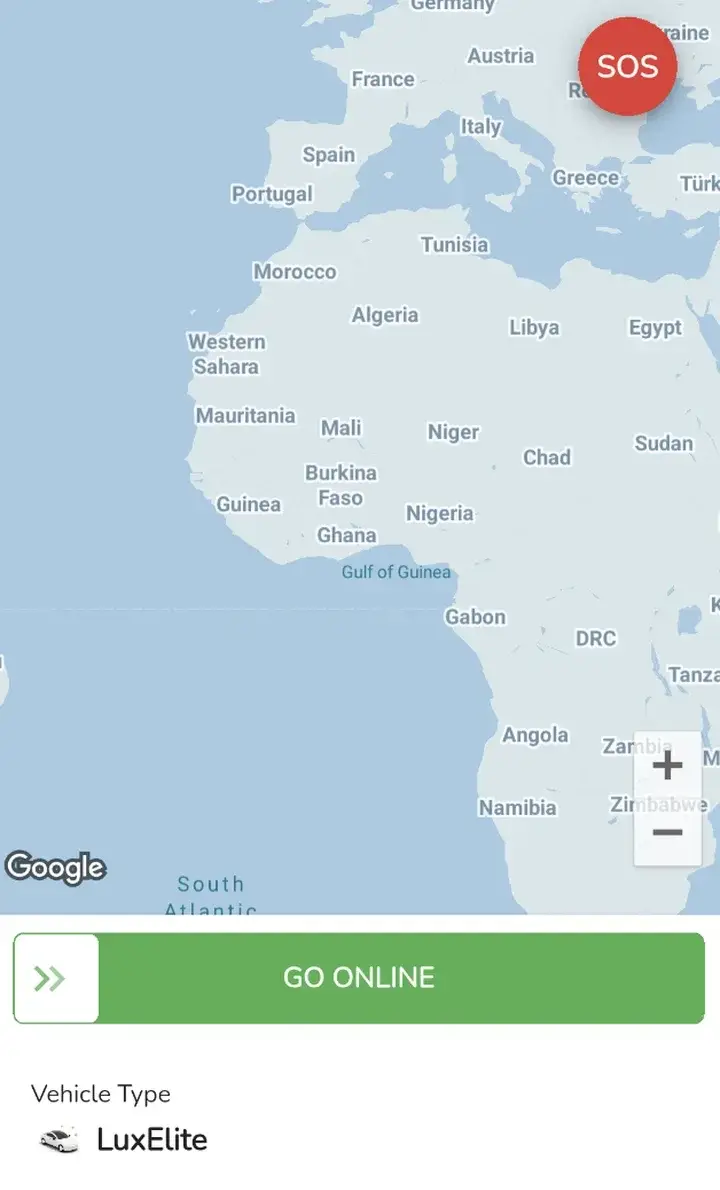
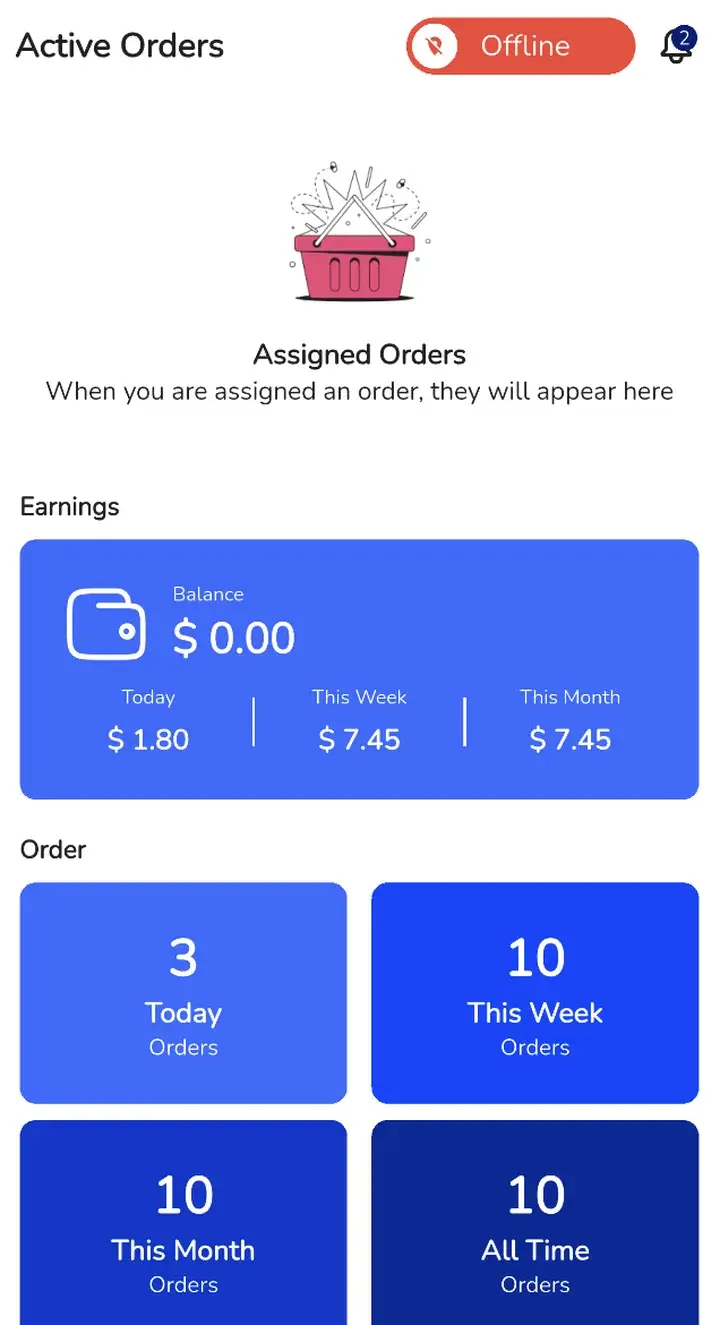
Three screens from MyRidi's own apps, captured in July and August 2025 with a demo account and test orders.
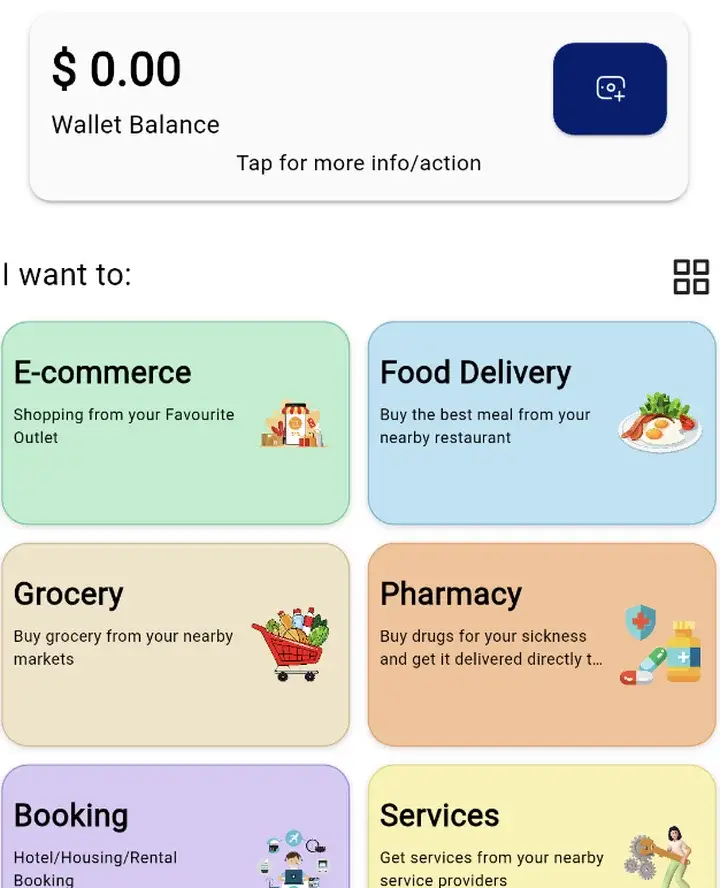
MyRidi customer app home screen with a wallet balance card and tiles for e-commerce, food delivery, grocery, pharmacy, booking and services
Customer homeA wallet balance above six service tiles: e-commerce, food delivery, grocery, pharmacy, booking and services.
MyRidi store app Active Orders screen with an Offline switch, an earnings card with balance, today, week and month totals, and order count tiles
Store dashboardAn online and offline switch, earnings for today, the week and the month, and order counts.
MyRidi Provider app home screen with a map, an SOS button, a Go Online swipe control and the vehicle type
Provider homeA map with an SOS button, a swipe control to go online, and the driver's vehicle type.

Riders, providers, stores and the web.

MyRidi reached its users through three apps in each store, MyRidi, a merchant app and MyRidi Provider, plus a web storefront at myridi.com.

01
Riders and customersThe customer app opened on a wallet balance and service tiles. Its App Store listing offers on-demand and scheduled rides, live driver tracking, and payment by cash, card or wallet.
02
Providers on the roadThe provider app had an online switch, an SOS button and a new-order alert with a countdown, pickup and drop-off, the fare and a swipe to accept.
03
Stores and merchantsThe store app showed active orders, earnings by day, week and month, and a wallet that could be topped up and listed the system charge on each order.
04
The web storefrontmyridi.com carried parcel sending with package types and courier vendors, nearby vendors, and sign-up paths for sellers and riders.

What MyRidi reported after launch.

Launched in 8 weeks, with over 1.2 million trips since.

Reported by Roger HickmanCo-founder & CEO, MyRIDI Technologies Inc

Launch
8 weeks, by the client's account
Store listings
MyRidi, MyRidi Provider and the merchant app, on the App Store and Google Play
Source code
Transferred to MyRIDI Technologies Inc

The 8 weeks and 1.2 million trips are MyRidi's own figures, from Roger Hickman's account.

MyRidi's build, question by question.

What did MyRidi launch?

A Florida super-app for rides, food and courier, plus a marketplace that was still growing, built on the Gojek Clone base (MXJek).

Which three additions did Miracuves build for MyRidi?

Local payment partners, a bilingual French and English flow and a custom intercity-ride module, the three additions MyRidi's account lists. The base already supplied dispatch, the merchant console, and one app each for riders and drivers.

Why was timing so tight for MyRidi?

A competitor was closing a funding round, and MyRidi wanted to be in the market first. Its CEO put a custom build at nine months or more.

How long did MyRidi's launch take?

MyRidi reported launching in eight weeks, and the Projects List dates the engagement December 2024 to January 2025. The base itself takes 6 working days for every client; the additions were timed separately.

Which apps did MyRidi publish?

Three on each store: MyRidi, MyRidi Provider, and a merchant app listed as MyRidi Merchant on iOS and MyRidi Store on Google Play.

What has MyRidi reported since launch?

Over 1.2 million trips on the platform, by Roger Hickman's account; the figure carries no date.

Disclaimer

Miracuves is an independent software development company. We are not affiliated with, connected to, sponsored by, or endorsed by any of the brands or platforms named on this page.

Why these names

Names of the form “Brand Clone” are used descriptively. It is how the software industry refers to building a platform with functionality comparable to a known service, and how clients search for it.

Who built this

The entire design and codebase of our products is built by our own team. Our products contain no code, design, graphics, or content originating from any third-party website or application.

Trademarks

All third-party names and marks listed on this page are the property of their respective owners, referenced solely to describe the category of software offered.