Paxful Clone App - White-Label Offer-Based P2P Bitcoin Exchange
Built by Miracuves, a ready-made, white-label Paxful clone ships a website for traders, a panel for sellers, an admin console and buyer and seller Flutter apps for iOS and Android, plus the complete unencrypted source you own, rebranded and installed in six working days.
Every offer states a coin, a rate, a range and the one payment method its owner accepts, so buyers trade only where they can pay, and escrow keeps the coins until each side confirms. Four optional modules are priced one by one, and VASP, CASP or money-transmitter status is yours to obtain. Extra reports or a second sign-off on withdrawals are scoped and priced in writing before work starts, then delivered in 2-8 weeks.
Launch in 6 Days with
- Full Source Code
- Trader Site
- Seller Panel
- Operator Console
- Two Flutter Apps
- Publishing Help
StackFlutter · VueJS · Laravel 11 · PHP 8.3 · MySQL · Firebase · Twilio
Marketplace activity
- Offer publishedOffers
- Buyer sent a trade requestTrades
- Escrow holds the coinsEscrow
- Buyer marked the payment as sentTrades
- Coins released after confirmationEscrow
- Review added to a profileReviews
- A member reported a tradeReported
- Withdrawal approvedWithdrawals
- Offer publishedOffers
- Buyer sent a trade requestTrades
- Escrow holds the coinsEscrow
- Buyer marked the payment as sentTrades
- Coins released after confirmationEscrow
- Review added to a profileReviews
- A member reported a tradeReported
- Withdrawal approvedWithdrawals

- 5Offer Board Filterspayment gateway, currency, coin, amount and location
- 3Reputation Signalspublic profile, post-trade reviews and average trade speed
- 0%Revenue Share With Miracuvesno royalty on your trade commission or deposit and withdrawal charges
- 100%Source Codewebsite and both Flutter apps, readable, without a runtime license
- 6Days to Launchand if the delay is ours, we keep going free
- $2,799Paid Once, Not Rentedsource code yours, no per-seat fee, no monthly rental
Live in six working days, or we keep working free until you launch. Every build carries 60 days guidance, 6 months bug fixes and 12 months updates.Verify every figure
Several Currencies, One Deployment
Every gateway lists the currencies it supports and the admin manages coins and fiat currencies, so a single install can serve as many currencies as the gateways you add.
Disputes Start From the Record
A reported deal moves to its own admin list, where the chat and shared files can be read. There is no arbitration module; the house rules are written by you.
No Preset List of Methods
Each gateway is stored with a name, a logo and its currencies, and sellers attach one per offer. PayPal appears on the demo offers; how reversible payments are treated is your policy.
01Hands-on
Hands-On Demo
The Paxful Clone Live: Trader Site, Seller Panel, Both Apps & Admin Console
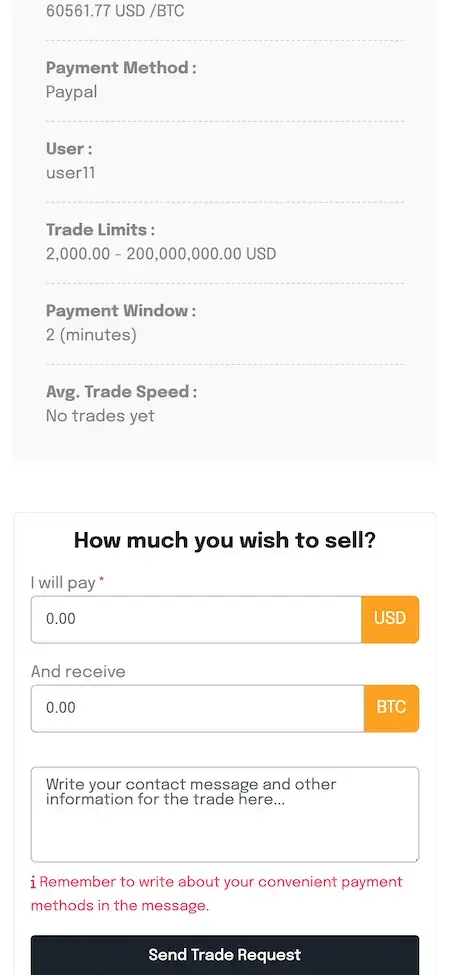
Use the Miracuves Paxful Clone demo hands-on. Logins for a customer and a seller appear on the cards, and the admin login comes with a call. Browse offers by payment method, send a trade request, check the wallets and then open the admin console to find that trade in its lists.
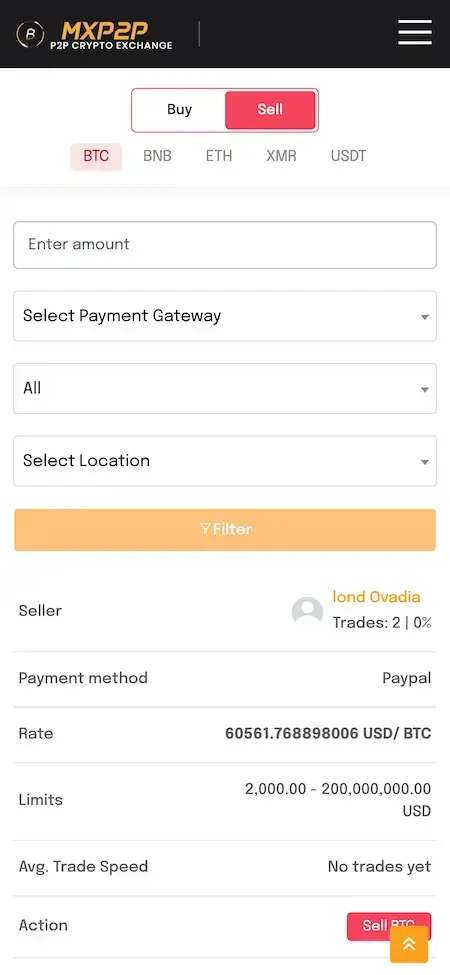

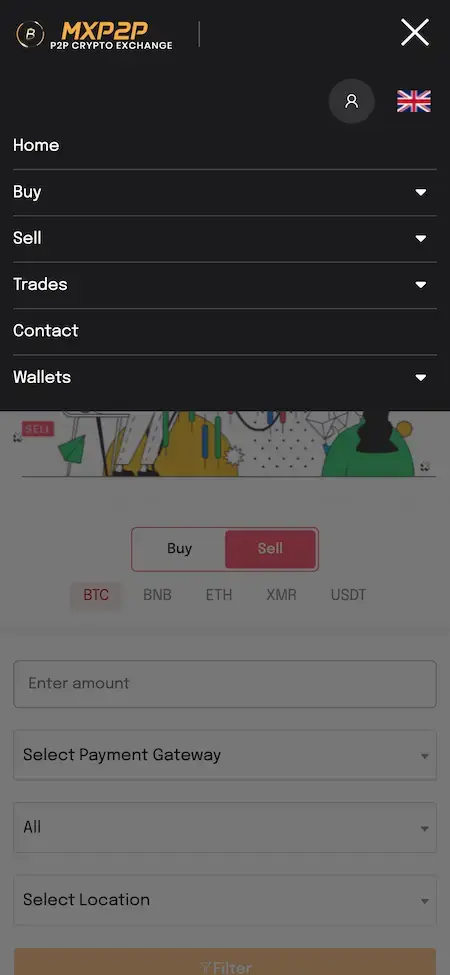
The Paxful Clone User App
This is the buyer side. Scan the offers, start a trade, watch it move toward release and keep track of your wallet balances. Because the demo apps are not on the public stores, we run the app with you during a call.
- 1Request a call and we run the app with you
- 2Use the customer login
- 3Look at: Offers, Trade request, Wallets
customer | Customer_321
The Paxful Clone Seller App
This is the seller side. Publish a sell offer with its rate and limits, choose how you want to be paid, answer trade requests and follow every trade until the coins are released. It also runs on a call, as the demo has no public store listing.
- 1Request a call and we run the seller app
- 2Use the seller login
- 3Look at: Sell offers, Trades, Wallets
seller | Seller_321
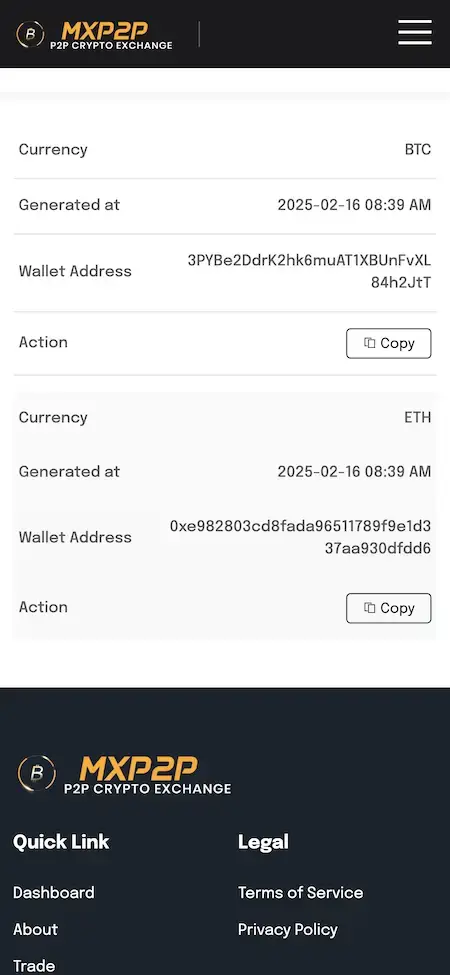
Trader Site and Seller Panel in a Browser
A responsive trader site together with a seller panel for those who like working in a desktop browser. One demo address serves both.
- 1Open the demo address
- 2Log in either as the customer or the seller
- 3Look at: Buy page, Sell page, Trades, Wallets
customer | Customer_321, seller | Seller_321
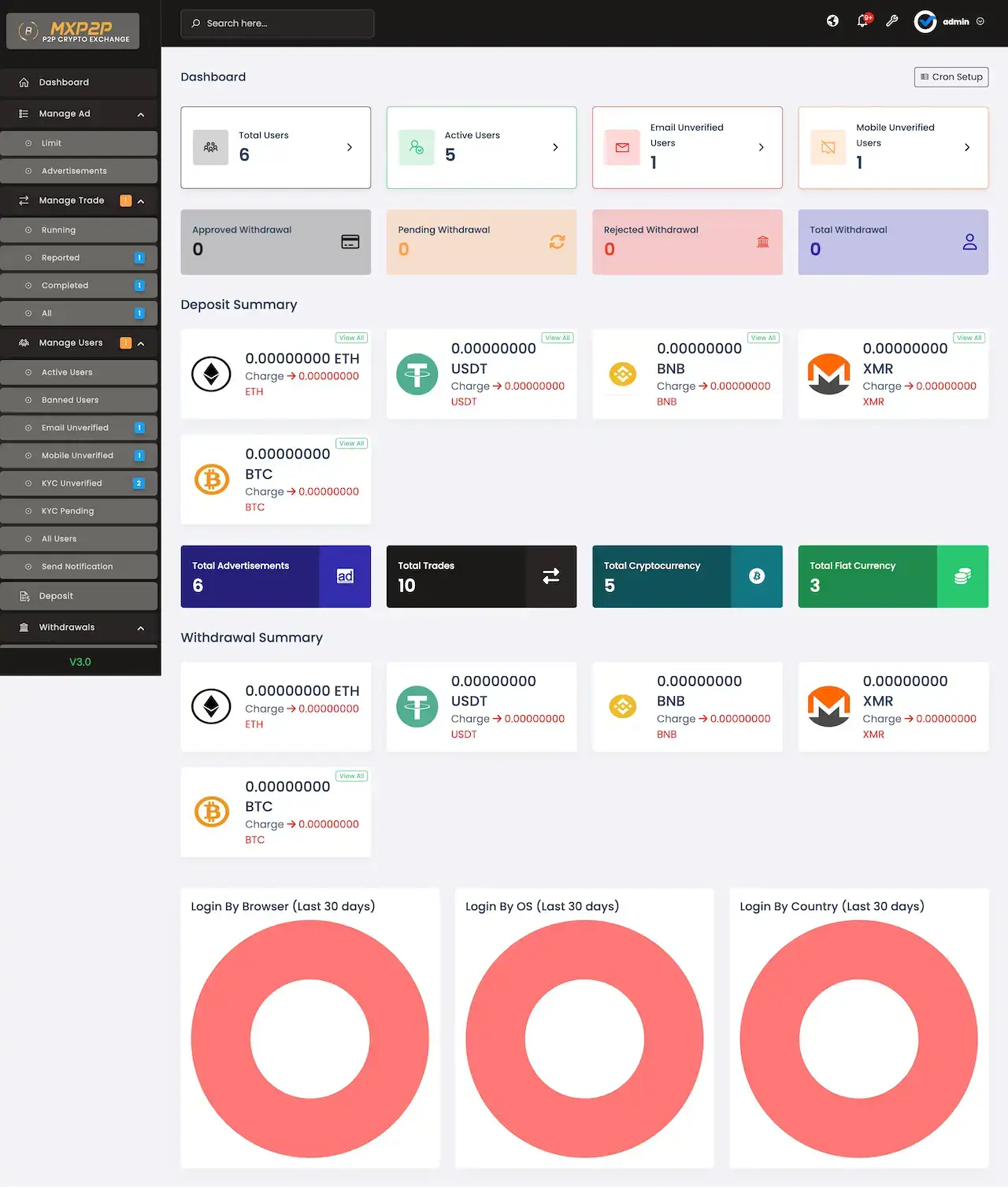
Admin Console - Offers, Trade Lists, KYC Queues & Withdrawals
The operator side of the demo. Dashboard tiles summarize users, withdrawals and coin deposits, and the menus cover ads, trades sorted as running, reported or completed, user and KYC queues, and the movement of money in and out.
- 1Go to the admin address on the demo host
- 2Ask us for the admin login during a call
- 3Look at: Dashboard, Trades, Users, Withdrawals
shared on a booked call
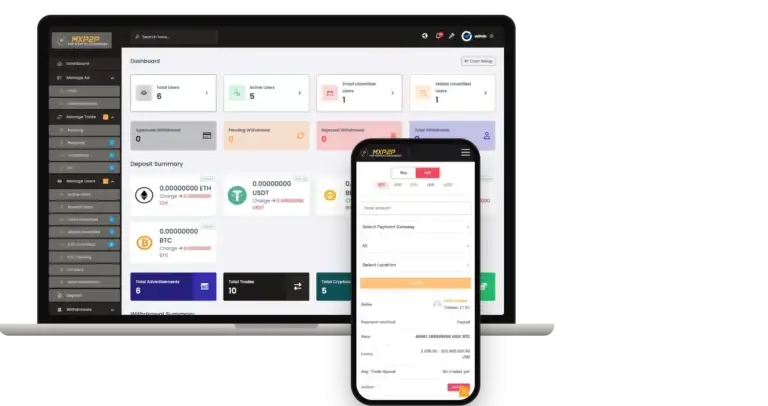
Walk Through It Live
Video Tour of a Website Like Paxful: Offers, Payment Methods, Escrow Trades & Reviews
A screen share shows how payment methods, currencies and reputation fit together faster than any page can. In about half an hour we post an offer, open a trade against it, let the coins go and leave a review, then switch to the admin panel and look at the same trade as the operator sees it. We build the session around the gateways, currencies and coins on your plan.
Book a screen-share demo call.Screen by Screen
Paxful Clone App Flows - Offer Board, Trade Request, Wallets & Admin Dashboard
Real screens from the Miracuves Paxful clone demo, arranged in the sequence of a trade. Tab one shows the trader side in a phone-sized view: the menu, the offer board, a trade request and the wallets. Tab two shows the admin dashboard that stands behind them.


Go from the menu to the offer board and its gateway filter, then to a trade request and the wallets, and end on the admin dashboard, which is where an operator follows the same activity.
02Proof
In Their Words
Paxful Clone Client Reviews - What Builders Say About Miracuves
These are real client quotes, printed exactly as their authors wrote them. They come from other Miracuves bases, among them telehealth, vehicle rental, courier dispatch, boat rental and logistics. None was written about a peer-to-peer trading marketplace.
“Every HMS I tried was built for general physicians, with no lesion mapping, no before/after tracking, and no procedure-based billing. Their MXHealth base gave us the patient app, doctor app, EMR and video consult out of the box. Front-desk time on scheduling and follow-ups is down ~70%, and we went fully digital in 9 months, where a fully custom job would have been 18.”
“Turo is the obvious reference, but the Caribbean specifics, from different insurance norms to different payment rails, meant we needed a real partner, not just a clone. Miracuves’s MXCar base covered the listing, the trip flow, and the host payouts. We launched in 6 working days and are live in three islands.”
“The team was running it on a dispatcher and a Google Sheet, and we needed a real platform quickly, because we were about to onboard a major retail client. Miracuves’s Delivery Genie base gave us the rider app, the dispatch console, and live tracking. We launched in 6 weeks and cleared 4x the previous order volume in the first month.”
“We were running it on phone calls and a paper calendar, and we were losing bookings to bigger OTAs. Miracuves’s GetmyBoat Clone base gave us the calendar, the booking flow, and the payment engine. Online bookings are up roughly 70% in the first six months, and the ops team finally has a live view of the fleet.”
“Building a compliant telehealth stack from scratch in three markets would have been a year-plus effort. Miracuves’s MXHealth base covered the patient and doctor apps, video consult, e-prescription and the pharmacy integrations. We launched in our first market in 9 weeks and rolled out to two more in the following six months.”
“We were juggling spreadsheets, a third-party GPS provider, and a phone. We needed a single operations console. Miracuves’s MXLogistics base covered the trip lifecycle, the driver app, and the customer tracking page. We’ve cut operations admin time by about 40%.”
Proof, Plainly
Paxful Clone Proof Points - What We Have Published and How to Test the Rest
The evidence that exists for this product is listed here without embellishment, together with the ways you can test it before committing.
No named client deployment of this product has been cleared for publication, so this page does not lean on another product's results. It lists what you can verify using the demo and the release notes, along with what we deliberately leave out.

- Members use many different ways to pay, and a coin seller has to trust the payment before letting go of the coins
- A stranger's record is the only guide a trader has, so reviews and trade history have to be visible
- A trade that goes wrong needs a record that both sides and the operator can read
- Post an offer, open a trade and finish it before you spend anything
- Look at the reported-trades list and the KYC queues from the admin side
- Read the release log to see what shipped, release by release
- A working demo with a customer sign-in and a seller sign-in
- An admin console on its own demo address, its login given during a call
- Release notes running from version 2.0 to 3.2
- Complete source code for a single fixed price
- Six working days of build time on our side
No client name, trading volume or member count appears here, because none has been cleared for publication. If a named deployment of this product is released, it will get its own case study.Miracuves · How we handle proof
03The product
The Basics
Inside an App Like Paxful: Offers, Payment Methods and Trades
Think of Miracuves' Paxful clone as a ready-made meeting point for people who want to swap coins for money. A trader posts an offer that states the coin, the direction, the rate, the limits and the payment method that suits them. Anyone able to pay that way starts a trade. The platform parks the coins in escrow, the pair use a chat to complete the payment, and each leaves a rating once the trade closes.


Payment Method Per Offer
Each offer names the method its owner wants to be paid through, and the offer board can be filtered by payment gateway and currency, so people find the offers they can actually use.
Reputation Is Visible
A public profile with trade reviews and average trade speed lets a stranger be judged before a request is sent, and the history stays in your database.
Add-Ons Are Labeled
Four optional modules (social trading, NFT assets, AI fraud detection and decentralized ID checks) are priced one by one, and none is presented as part of the base.
Web, Seller Panel & Apps
What Comes With the Paxful Clone Script?
Posting an offer is the simple part. The effort goes into what a trade leans on: verified members, a list of payment methods, a payment deadline, a place for the coins to wait and a record the admin can open when a deal goes wrong. These parts arrive already wired together. (In the demo, offers are called ads.)

- 01Offers that carry a rate, a range and a payment method
- 02An offer board filtered by gateway and currency
- 03Requests, escrow and a private chat for each trade
- 04Profiles that show reviews and trade speed
- 05Coin wallets, KYC lists, referrals and an admin console
What you take delivery of: the trader site, a seller panel, the admin console, two Flutter apps (one for traders, one for sellers) and every line of source that sits behind them.
Capabilities
Paxful Clone Features - Payment-Method Offers, Gateways, Reputation, Escrow, Wallets & Admin
Every capability listed for the Paxful clone, from gateway records to escrow release, can be checked on the demo screens, inside the operator console or in the release log. Anything that needs an additional module is listed further down as an add-on.
Offers & Payment Methods
An offer states which payment method its owner accepts, which turns the offer board into a catalog of ways to pay.
- The owner picks one payment method per offer
- One form creates buy and sell offers alike
- Price as a margin over market or as a fixed rate
- Each offer sets its own smallest and largest amount
- Your offers are tinted so you can spot them
- An unpublished offer shows why it was taken down
Fiat Gateways & Currencies
Admins maintain the list of fiat gateways. An entry holds a name, a logo and the currencies it supports, and offers pick from the list.
- Create and edit gateways from the admin panel
- Upload a logo for each gateway (added in 2.0)
- Choose the currencies a gateway supports (corrected in 2.1)
- A count of fiat currencies and coins on the dashboard
- Choose how currency amounts are displayed (3.0)
- An interface that can be offered in several languages
Offer Board & Filters
Two tabs, Buy and Sell, sit above a tab for every coin. Beneath them a member can cut the list down by amount, gateway, currency or place.
- BTC, BNB, ETH, XMR and USDT each get their own tab
- Filter by how much you want to trade
- Filter by gateway, so only offers payable your way remain
- Filter by currency
- Filter by location for trades near you (2.0)
- Offers also appear on the home page (fixed in 3.2)
- Members can be searched and filtered too (2.0)
Trade Requests
A trade begins with an amount, a short message to the other member and a send button. The request is measured against the limits of the offer.
- Fiat amount entered, coin amount computed alongside it
- A message that says which payment method suits you
- The maximum is enforced on every request (2.0)
- The trade page shows the payment window
- Method, limits and trade speed are visible together
Escrow & Release
Once both sides agree, the platform keeps the coins and gives them up only after each side has confirmed.
- Coins stay in escrow throughout the trade
- Release waits for both confirmations
- The admin sees trades grouped by status
- Files exchanged in the chat can be downloaded
Reputation - Profiles, Reviews & Speed
Every trader has a public profile where reviews, trade count and average speed pile up as deals close.
- Reviews left after a finished trade (from 2.0)
- A public profile for each member (from 2.0)
- The average speed of a member's trades (from 2.0)
- Seller cards display trade count and payment method
- Counterparty rating as the last trade step
Trade Chat & Notifications
Each trade carries a chat for sorting out payment details, while templates control email, SMS and on-screen alerts.
- One private chat per trade
- Chat attachments can be downloaded again (fixed in 2.0)
- Set the email sender name and address per template
- Set the SMS sender per template
- Edit the wording of each notification (3.0)
- Release 3.0 brought a redesigned on-screen toast
Reported Trades & Disputes
Report a trade and it moves to a dedicated admin list beside the running and completed ones, so a dispute starts from the trade record and its chat.
- Reported sits under Manage Trade
- Running, completed and all lists alongside it
- Open the trade and its chat from one record
- Offers can be unpublished with a stated reason
- Banned users are kept in a list of their own
Wallets, Deposits & Withdrawals
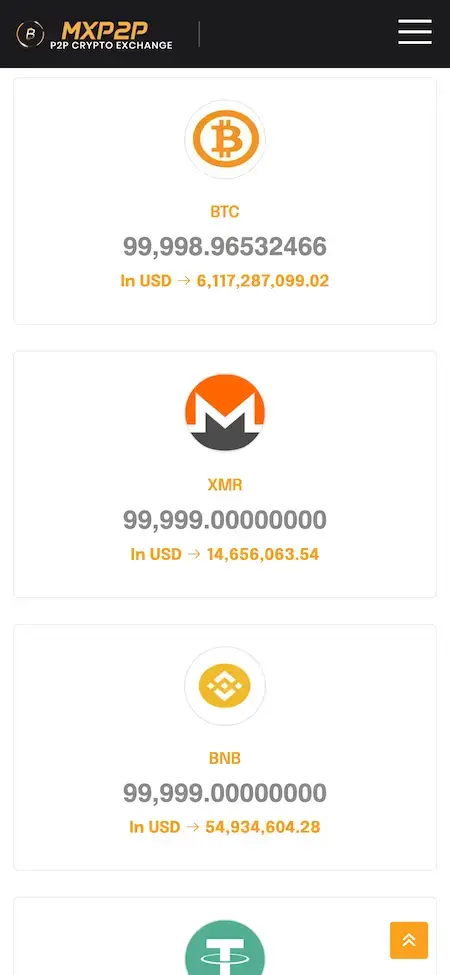
Each supported coin has its own member wallet. Deposits and withdrawals are totalled per coin with their charges, and a withdrawal moves between approved, pending and rejected.
- BTC, XMR, BNB and USDT balances on the member dashboard
- Each balance also shown in US dollars (2.1)
- Deposit addresses generated with a copy button
- Deposit and withdrawal totals per coin, with charges
- Tiles for approved, pending, rejected and total withdrawals
- Automatic deposits, with an error repaired in 3.1
KYC & Account Security
Every account is surrounded by verification steps from the start: KYC, confirmation of email and mobile, and two-factor authentication pages.
- KYC system (from 2.0)
- Email and mobile confirmation states for the admin
- Two-factor page revised in releases 3.1 and 3.2
- A countdown before a verification code can be resent (3.0)
- Maintenance mode (from 2.0)
Commission, Fees & Referrals
Operators earn from a commission on finished trades and from per-coin charges on deposits and withdrawals, and a referral system helps recruit members.
- Commission taken by the admin when a trade completes (2.0)
- Deposit charge set per coin
- Withdrawal charge set per coin
- The charge appears on member transaction rows
- Referral system (from 2.0)
- Subscriber module (from 2.2)
Operator Console
The console groups its menus by job: ads, trades, users, and money in and out. A dashboard shows live totals and 30-day login charts.
- Manage Ad: the ad list and its limits
- Manage Trade: running, reported, completed and all
- Manage Users: active, banned, unverified and KYC lists
- Counts of users, ads, trades, coins and fiat currencies on the dashboard
- Logins broken down by browser, operating system and country
- A cron setup button, plus a cron manager that can be edited
Worth checking first: What we hand over is the platform, not the accounts around it. You bring the hosting and domain, developer accounts with Apple and Google, your artwork and company details, a payment gateway that has cleared KYC and whichever third-party keys apply. Store reviews belong to Apple and Google, so they fall outside our 6-day build.
How It Earns
Paxful Clone Revenue Models - Trade Commission, Gateway Charges, Referrals & Optional Lines
A Paxful clone app from Miracuves earns in a handful of separate places, each configured independently, so adjusting one never disturbs the others. Decide the payment menu first and the rates second, because every method and currency you add widens the pool of offers a buyer can complete.
Three lines are already in the base: commission on trades, charges on deposits and withdrawals, and referrals. The remaining three are optional additions you would make yourself.
- 01
Commission on Completed Trades
When a trade completes, the admin panel can collect a commission, so income tracks the deals that close and not the size of your payroll. The rate is yours to set.
- 02
Charges on Deposits & Withdrawals
Every coin carries its own deposit and withdrawal charge in the summaries, and each member transaction row displays the charge applied.
- 03
Promoted Offers
Offers already surface on the home page. Selling a better position on the offer board to traders is a commercial rule added as scoped custom work.
- 04
Referral Rewards
A referral system ships in the base, so new members can be paid for out of the commission their trades produce instead of an advertising budget.
- 05
Paid Trader Tiers
Plans for frequent traders, with higher limits or lower fees for example, are a model you would design. These higher-limit or lower-fee plans are scoped as custom work once your frequent traders ask for them.
- 06
API Access for Partners
Offering API access to outside services is delivered as custom work under agreed terms.
| Revenue stream | How it is charged | Take rateTypical take rate | What sets the ceiling |
|---|---|---|---|
| Commission on Completed Trades | A percentage of every finished trade, collected by the admin as the trade closes. | Hodl Hodl charges 0.75%. OKX lists no platform fee. Binance P2P ran 0% to 0.35% for makers and 0% for takers. | The price traders see elsewhere, plus whatever they pay their own payment provider. A big exchange booked transaction revenue worth about 0.34% of 2025 Trading Volume (our arithmetic), a hint at where mature venues settle. |
| Deposit, Withdrawal & Fixed Charges | Deposits and withdrawals can carry a per-coin charge, or every order can carry one flat amount. | Binance P2P charges a flat 0.05 USDT taker fee on selected USDT pairs, and Hodl Hodl sets a network-based minimum that normally stays under 5 USD. | Network costs and competing venues set the limit. Small trades feel a flat amount most, so keep it light next to a typical order. |
| Referral Rewards | A fee discount or a reward for members who sign up through a referral code, funded by the commission. | Hodl Hodl charges 0.75% and lowers it to 0.5% for referred users and their referrers. | What is left once the discount is paid. A reward should never be larger than the commission that the referred member's trades bring in. |
| Paid Trader Tiers | Paid plans or services around the venue, apart from the per-trade fee. | At Coinbase, subscriptions and services produced roughly 41% of 2025 net revenue. | What busy traders would pay to stay. This line needs custom work because the base build lacks it. |
How to read this. Binance P2P numbers are drawn from two support announcements: one on maker fees (23 June 2023) and one on a flat taker fee (March 2024). Either may have been revised since. OKX states its position in a P2P help article, noting that outside payment providers may add charges of their own. Hodl Hodl's rates come from its FAQ. The Coinbase percentages are our own division of figures in its annual report for fiscal 2025, where Trading Volume includes half of the value of trades it routes elsewhere. Every entry is another company's own published price or filing. Use them as modeling inputs only. They are not a quote, not a prediction of any venue's earnings and not investment advice.
Paxful Clone Revenue Model, Stage by Stage
In the Paxful clone Miracuves delivers, earnings track the payment menu: each gateway and currency you list opens offers more buyers can complete, so the revenue lines open in that order.
Launch
List the gateways your first audience actually holds; the admin panel then collects a commission each time escrow releases the coins on a finished trade.
Traction
Per-coin charges on deposits and withdrawals start earning as balances grow, and referral rewards paid from trade commission bring in new members without an advertising budget.
Scale
Once the board is busy, promoted offers on the home page, paid tiers for frequent traders and partner API access can be built as scoped custom work.
Trade commission, per-coin wallet charges and referral rewards each sit on their own admin setting, and every dollar they bring in stays with your marketplace.
The Operator Desk
Admin Panel of a P2P Marketplace Like Paxful - Offers, Gateways, Trades, Users & Withdrawals
Each morning the console Miracuves built answers what an operator needs: which offers are live, which trades are open or reported, who is waiting for verification and which withdrawals need approval.


What the Console Contains
- 01
Dashboard & Login Charts
The top row counts all users, the active and unverified ones, withdrawals by state and deposits per coin. Doughnut charts underneath show where logins come from by browser, operating system and country across a month.
- 02
Offers & Limits
Manage Ad lists every offer members have published and has a limits screen, giving you control over how many ads each member can run.
- 03
Gateways & Currencies
Coins and fiat currencies are both administered here. Each fiat gateway has a logo and the currencies it covers, so the payment options on offer can be edited at will.
- 04
Trade Lists & Reported Trades
Manage Trade sorts trades into running, reported, completed and all, which keeps a reported deal one click away.
- 05
Users, KYC & Verification
Separate lists for active users, banned users, members missing email or mobile confirmation and those waiting on KYC, plus a screen for sending notifications.
- 06
Deposits & Withdrawals
Totals per coin for deposits and withdrawals, with counts of approved, pending, rejected and all withdrawals and the charge configured for each coin.
- 07
Notifications & Templates
Email and SMS templates each get a sender name and address of their own, alongside a notification bell and an on-screen toast.
- 08
Settings, Pages & Updates
One settings system covers policy pages (with slugs and SEO fields) and the way currency is displayed. For upkeep there is a cron setup button, a cron manager that can be edited and an uploader for system updates.
Where the Money Shows Up
The places in the console where coins and fees appear, from the first deposit to the final withdrawal.
- Each coin has a deposit summary showing its charge
- Each coin has a withdrawal summary showing its charge
- Withdrawals fall into approved, pending or rejected
- Commission earned on completed trades
Switches & Settings
The controls behind the public site and the day-to-day running of it.
- One centralized settings system
- Slugs and SEO fields for policy pages
- Cron setup button and an editable cron manager
- Automatic system updates plus an update uploader
Want the console to stretch further? Extra reports, a second sign-off on withdrawals, more languages or a house rule for reported trades are each scoped separately. Tell us what your operations team needs and we reply with a scoped quote.
04Package and pricing
The Full Package
Paxful Clone Script Package: Panels, Apps, Source Code & Deployment
Miracuves hands you a working P2P marketplace: trader site, seller panel, admin console, two apps and the source behind each of them, owned in full. Seats and runs are never billed, and there is no license to renew. Beyond the base, a written quote grows with the number of payment methods and currencies you serve, how disputes are decided, how much trust data you keep, and how many coins you list and hold.
$ git clone your-marketplace Full Source Code
The web platform and both Flutter apps, delivered unencrypted so your developers can adapt every part.
- Readable source for the web platform
- Flutter source for the trader and seller apps
- Free to modify and host wherever you like
- Delivered ready for your hosting
Trade Engine
The logic that turns an offer into a closed deal: rates, limits, requests, escrow, the trade chat and reviews.
- Margin or fixed pricing on offers
- Limit checks on trade requests
- Escrow that waits for both confirmations
- A chat and a review on every trade
Payment Gateways & Currencies
The gateway list that admins manage and offers draw from, with a name, a logo and supported currencies for each entry, plus the coin list.
- Admins add and edit gateways
- A logo for each gateway
- Supported currencies set per gateway
- Dashboard counts of coins and fiat currencies
Trader Website & Seller Panel
The public website adapts to any screen and holds the offer board with its filters, member profiles and wallets, while the seller panel handles offers from a desktop.
- Buy and Sell pages, coin tabs and filters
- Public profiles with their reviews
- Wallets, balances and addresses
- A seller panel for offers and trades

Buyer & Seller Apps
Two Flutter apps share the offers, trades and wallets of the website: one is for buyers, the other for sellers.
- One app for buyers, one for sellers
- Built with current Flutter packages
- Released from your developer accounts
- Store review is handled outside the 6 days


Admin Panel
Where the operator works: a dashboard, offer and trade lists, user and KYC queues, deposits and withdrawals.
- A dashboard with totals per coin
- Trade lists for running, reported and completed
- User lists for active, banned and KYC
- Withdrawal states and their charges
Verification & Notifications
Member checks: KYC plus confirmation of email and of mobile, two-factor pages, the lists admins review them from and the templates behind each alert.
- KYC with unverified and pending queues
- Confirmation states for email and mobile
- A two-factor security page
- Templates for email, SMS and on-screen alerts
Launch Handover
We apply your branding, install the platform, help get the apps published and back you with three support periods that start together at launch.
- Logo, icons and colors applied
- Installed on your own hosting
- Assistance publishing the apps under your developer accounts
- 60 days guidance, 6 months bug fixes, 12 months updates
Prefer to look before you buy? Open the demo as a customer or as a seller, or request a guided tour that follows one trade from the offer board to the admin lists, built around how you intend to operate.
One Price
How Much Does a White-Label P2P Crypto Marketplace Like Paxful Cost?
The white-label Paxful Clone is $2,799, fixed and ready to launch. Anything the base lacks, such as add-ons, extra integrations or new flows, is scoped first and priced before work starts.
Professional
Launch-Ready PackageChosen by: P2P crypto exchange founders, regional desks that need local payment methods, fintech and wallet brands adding member-to-member trading
Your brand goes on the platform, with your logo, icons and colors, and it runs on hosting you control. You arrange your own licenses, KYC provider and payment gateway.
Get StartedEnterprise
Bespoke Work for Bigger ScopeChosen by: Regulated exchanges, operators in several countries, groups adding P2P to a platform that already runs
Is there a flow missing from the base product? Scope and price are put in writing together before work begins.
Request a QuotePaxful Clone Development Cost in 2026
One $2,799 payment buys the white-label Paxful clone script outright: the web board where traders post offers, the seller and operator panels, both Flutter apps and the unencrypted code behind them, live under your brand with escrow and wallets switched on in six working days.
Costs that sit beside the marketplace invoice
- Your license, privacy policy and terms of use
- The KYC provider and payment gateway accounts you choose
- Hosting sized to your member count
- Store developer accounts, with app review outside the six days
- Optional modules such as AI fraud detection or social trading
Dispute rules, extra reports or custody options are quoted in writing after scoping, and custom work typically takes 2-8 weeks.
Compare Your Options
Ready-Made Paxful Clone vs Custom Development vs SaaS
A payment-method marketplace like Paxful can come from Miracuves' finished base, a commissioned build or a rented service; they differ most on how soon offers go live, who owns the code and how far the gateway list can grow.
| Criteria | MiracuvesReady-Made Paxful Clone | Custom Development | SaaS |
|---|---|---|---|
| Launch time | Offer board live in 6 working days | Scope agreed in writing, 2-8 weeks | Quick sign-up; changes wait on the provider |
| Upfront cost | $2,799, one payment | A written price after scoping | Small setup, then monthly billing |
| Source code ownership | Unencrypted source for site, panels and apps | Transferred if the contract says so | The provider keeps the code |
| Customization | Add gateways, currencies and rules in code you own | Every flow designed to order | Only toggles the platform exposes |
| Ongoing fees | No commission share or seat fee to Miracuves | Developer time or a support contract | Recurring plan, often scaled by trades |
| Branding & app-store listing | Your marketplace name on web and both Flutter apps | Your identity from the first release | Provider marks may stay visible |
| Best for | Founders opening a many-method P2P venue | Venues with unusual dispute or custody rules | Gauging demand before buying |
Same product, other editions: LocalBitcoins Clone · P2P Exchange Script · Remitano Clone · Cryptocurrency solutions · Browse all Cryptocurrency solutions
Ways to Run It
Use Cases for a White-Label Paxful Marketplace - Many-Method Marketplaces, Currency Desks & Reputation Communities
The same Paxful clone from Miracuves lets operators play to different strengths. A many-method marketplace starts from the gateway list, a regional desk from currencies and location, and a community from profiles and reviews. Which one you emphasize is a matter of configuration.
Swipe · 6
List a wide set of gateways and let each seller choose the ones they accept, so a buyer arrives with the method they hold and filters the board down to the offers that fit.

Reach a single country by adding the fiat gateways its residents use. Each carries a logo and its currencies, and members filter the board by currency and by place.

Bring several fiat currencies onto one board through gateways that each declare what they support, while wallet balances stay readable in US dollars.

A group that already trusts itself gets profiles that display each member's trade count, reviews and average speed, so everyone can be judged before a request goes out.

Grow by word of mouth: the referral system recruits members and pays the reward out of the commission their trades earn.

List several coins on a single board, each with its own wallet, a dollar balance beside it and deposit and withdrawal totals.

Paxful Clone Business Model: Three Ways to Run It
A Paxful clone business model turns payment choice into supply: sellers bring coins and the methods they accept, and Miracuves' base lets you shape that into three kinds of venue.
Many-method marketplace
A wide gateway list lets each seller pick the methods they accept, so buyers filter the board to offers they can pay and commission builds with every closed trade.
Currency-zone desk
A regional operator adds the gateways local residents use, each with its logo and currencies, and members filter offers by currency and place.
Reputation community
A group that already trusts itself leans on public profiles with trade counts, reviews and average speed, so members judge each other before sending a request.
Each venue type runs on the same MXP2P base, with only the gateway list, listed coins, commission rate and brand changing between them.
One base, six marketplaces. All six rest on the same escrow flow, offer board, wallets and admin panel. What differs is the gateway list, the coins, the commission and the brand, so there is still a single codebase to look after.
Talk to Our TeamMarket Timing
Why Launch a Peer-to-Peer Crypto Marketplace in 2026?
Buyers and sellers of coins keep searching for a place that shows them who is on the other side and lets them pay the way they like. A marketplace under your own brand gives you the offers, the members and the commission.
01Payment Choice Decides Who Can Join
People trade with whatever they can actually pay with. A marketplace that lists the gateways its audience holds can serve members whom a single-rail product turns away.
02Many Currencies, One Board
Gateways declare the currencies they support, and members filter offers by currency, so one marketplace can carry several local markets side by side.
03A Record Replaces a Famous Brand
A young venue has no famous name, so it earns trust deal by deal through the trade count, reviews and average speed shown on each public profile.
04Escrow Lets Strangers Deal
The platform keeps the coins until each side has confirmed, so nobody has to take the other's word for it.
05A Reported Trade Has a Place to Go
When a deal is contested it appears in its own admin list, with the trade and its chat, instead of disappearing into an inbox.
06Why Starting From the Base Beats Building From Scratch
The core of a marketplace like this is offers, gateways, escrow, chat, wallets and an admin console, and a white-label copy can be running on your servers six days after kickoff.
Platform by the Numbers
Coins Listed in the Demo
Surfaces on One Codebase
Versions in the Release Log
Working Days to Launch
Under the surface, a payment-method marketplace is mostly the trade life cycle: limits, payment deadlines, escrow, chat, reports and reviews. Here those pieces are already joined.
Industries
Businesses That Run a Paxful-Style Marketplace
Any business whose members should buy and sell coins directly from each other can run the Paxful Clone software. P2P crypto marketplaces list offers in several coins, regional payment desks serve one currency zone, and exchanges bolt a member desk on to their order book. Money apps and wallets give users somewhere to trade, stablecoin platforms let people exchange USDT for local money, and payment firms and digital banks extend what customers can do. Communities and clubs turn the trades they already make into something official.
shared baseMXP2P
- 01MfMarketplaces for P2P Crypto
- 02RpRegional Payment Desks
- 03EwExchanges With a Member Desk
- 04WcWallet Companies
- 05SpStablecoin Platforms
- 06FsFintech Startups
- 07PfPayment Firms
- 08DbDigital Banks
- 09BpBrokerage Platforms
- 10OcOn-Chain Communities
- 11ThToken Holder Clubs
- 12MgMerchant Groups
The outcome is a P2P base that bends to many business models, with your own name over the offer board, the escrow, the wallets and the admin panel.
06Under the hood
Follow a Trade
A Trade in the Paxful Clone - From Registration Through Offer, Escrow & Review
In Miracuves' Paxful clone a few taps carry a trade forward on screen, but underneath it follows a set order: offer, request, escrow, payment, release. Read through the steps from sign-up to a reviewed deal, then through the architecture that supports them.
The Journey of One Trade, From Sign-Up to Review
Swipe · 5
- 1Create an Account and Pass KYC
New members sign up, confirm an email address and a mobile number, and complete KYC where your rules ask for it, with two-factor pages guarding the account from then on.
- Email and mobile on registration
- KYC where you require it
- A two-factor page for the account
- 2Buy or Sell Bitcoin Through an Offer
Sellers post an offer with a rate, a range and one payment method, and buyers sort the board by coin, amount, gateway, currency and location to find one they can pay.
- Buy and Sell tabs, plus one per coin
- A margin or a fixed rate, plus limits
- Gateway, currency and place filters
3Start a Trade RequestThe buyer enters an amount, states which payment method works for them and submits the request, which is checked against the offer limits.
- Fiat amount and its coin equivalent
- A note to the counterparty
- The maximum is enforced
- 4Coins in Escrow, Payment in Chat
Escrow holds the coins while both members settle the fiat payment through the trade chat, and the coins are released once both sides confirm.
- Coins parked in escrow
- A chat that supports file downloads
- Release on double confirmation
- 5Leave Feedback and Withdraw
Each member rates the other, the rating lands on their public profile, and a withdrawal leaves once the admin approves it.
- Ratings that build up on profiles
- Wallet addresses and balances
- Admin-side withdrawal states
Behind the Screens
The Machinery Behind a Paxful-Like Platform: Surfaces, Gateways, Trade Life Cycle & Background Jobs
- 01Part 01
Three Panels, Three Logins
Members use the trader site, sellers use the seller panel and operators use the admin console. Each has a separate login and its own menus, so nobody lands in the wrong place.
- 02Part 02
A Gateway List the Admin Owns
Fiat gateways are admin-edited records carrying a name, a logo and supported currencies, and the offers on the board take their payment method from that list.
- 03Part 03
Trade Life Cycle
Every trade moves through request, escrow, payment and release, and an admin can list all of them as running, reported or completed.
- 04Part 04
Wallet Records by Coin
Deposits, withdrawals and charges are totalled coin by coin, and balances can be displayed in US dollars.
- 05Part 05
Jobs on a Schedule
Recurring background work runs on timings you set, through a cron setup button and a manageable cron.
- 06Part 06
Notice Templates
Email, SMS and on-screen notices come from templates that each have their own sender.
What It Runs On
Technology Behind an App Like Paxful - Laravel, VueJS, MySQL and Flutter
Matching people by payment method, as the Miracuves Paxful clone does, calls for a stable web layer, a database that keeps every trade and balance consistent, and phone apps that feel native. What follows is drawn from the product pages and release notes.
Website and Admin Layer
- Home of the trader site, seller panel and admin panel
- Release 3.0 brought Laravel 11 and PHP 8.3
- Release 2.2 introduced a new template
- The admin sidebar footer shows the version tag
Database
- MySQL is the database named in the stack
- Settings are centralized as of release 3.0
- The currency display format can be configured
- Installed on your hosting during deployment
Mobile Apps
- Flutter builds for Android and iOS on up-to-date packages
- One app for buyers and one for sellers
- Releases go out through developer accounts you hold
- The demo offers no public store links
Gateways & Coins
- Fiat gateways carry a logo and supported currencies
- The admin deposit summary lists five coins
- Balances can show a US dollar equivalent
- Your own gateway and wallet credentials
External Services
- Named services: Google Maps, Twilio and Firebase
- A payment gateway API and translation also appear
- Each template sets its own SMS sender
- Your own keys are needed at deployment
Source Code & Handover
- Unencrypted source for web and apps
- Your logo, icons and colors applied
- Installed on hosting you control
- Help publishing the apps
Under the hood the website and admin run on PHP with Laravel and VueJS over a MySQL database, and release 3.0 raised the stack to Laravel 11 on PHP 8.3, and the apps are written in Flutter. The services named are Google Maps, Twilio, Firebase, translation and a payment gateway API; you provide the accounts and keys when we deploy. The stack is mainstream, so hiring developers who know it is straightforward.
Headroom
Growth Headroom - Separate Surfaces, Gateway Records, Scheduled Jobs & Honest Limits
The release log gives no throughput figure for this product, so this section lists what is designed for growth and defers all figures to a load test run on your own hosting.
Three Surfaces, Three Logins. Traders, sellers and admins each get their own menus and permissions, so changing one leaves the other two alone.
Gateways Are Data. A new payment method is a record with a logo and its currencies, typed into the admin panel, and does not need a new release of the platform.
Scheduled Jobs. Recurring work is steered through a cron setup button and an editable cron manager.
Per-Coin Records. Because deposits, withdrawals and charges are totalled per coin, a new coin slots into the existing reports.
Separate Surfaces
Sign-ins and menus are kept apart for traders, sellers and admins, so one surface can be changed without touching the others.
Gateway Records
Payment options are records kept by the admin, so the list can grow without touching code.
- Gateways created and edited by the admin
- Every gateway has a logo
- Currencies chosen for each gateway (corrected in 2.1)
- Offers draw their method from the list
Settings Over Code
Routine adjustments are screens within one centralized settings system.
- Items shown per page
- How currency is displayed
- Text of notification templates
- Slugs and SEO fields of policy pages
Upgrades on Your Terms
Updates reach a deployment through an automatic updater or an uploader in the admin panel.
- Automatic update (3.0)
- Update uploader (2.2)
- Every release ships a system patch
- Every release ships a security patch
Per-Coin Records
Deposit and withdrawal totals, charges and balances are tracked coin by coin for everything the venue lists.
- Deposit totals per coin
- Withdrawal totals per coin
- Balances in US dollar equivalents
- Dashboard counts of coins and fiat currencies
Load Testing Built Into Go-Live
Because the log lists no capacity figure, capacity is measured instead of presumed: a load test on your hosting is part of the launch plan.
Open to Change. The whole source sits on a common Laravel and MySQL stack, which makes a new screen, rule or integration ordinary work that your developers or ours can take on.
Preparing a first launch? Aim for a manageable first cohort of members and coins and let it grow on one deployment. Capacity is mostly a matter of hosting and configuration, a pre-launch load test reveals the ceiling, and anything beyond the base gets its own scope and quote.
07Trust and licensing
Trust Controls
Security on a P2P Crypto Marketplace Like Paxful - Verification, Escrow, Reported Trades & Honest Limits
Members of a Paxful-style marketplace built by Miracuves entrust it with their identity, their balances and the record of every deal. The controls that count are therefore verification, the place where coins wait during a trade, and the work done before launch. The cards below separate what the platform does from the tasks that remain yours.
- 01 · AccountsAccount Verification
Members can be required to confirm an email address and a mobile number before trading. The admin panel keeps the email-unverified and mobile-unverified apart, and verification pages count down before a code can be resent.
- 02 · KYCKYC Review
KYC arrived in release 2.0. The admin panel holds queues for KYC unverified and KYC pending members, which makes identity review an ordinary work list.
- 03 · EscrowEscrow Around Each Trade
After the terms are agreed, escrow keeps the coins until both members confirm, and each trade request is tested against the maximum first.
- Reported Trades: A reported trade is given its own admin list for dispute resolution next to the running and completed trades, so a dispute can begin from the trade record and its chat.
- 04 · WalletsWallets & Withdrawals
Every coin has its own balance with deposit and withdrawal totals, and each withdrawal sits in one of three states: approved, pending or rejected.
- Withdrawal Review: Withdrawal tiles count approved, pending, rejected and all requests, so money leaving the venue is always a decision someone made.
- Not in the Base Build: If your risk policy calls for hardware wallets, multi-signature approval or MPC custody, those arrive as scoped custom work.
- 05 · AdminAdmin Controls
From separate menus an admin can ban users, moderate offers, step into trades, notify members and cap how many ads each member runs.
- Offer Moderation: Admins can read through published offers and note why one was unpublished, which keeps unreviewed listings from piling up on the board.
- 06 · UpdatesPatches & Upgrades
Every release listed in the log includes a system patch and a security patch, and the move to Laravel 11 and PHP 8.3 came with release 3.0.
- Maintenance Mode: Maintenance mode lets you pause a deployment in an orderly way when an update or a security patch has to go in.
- Pre-Launch Checklist: A written checklist for the run-up to launch covers a load test, a restore drill, penetration testing, key rotation and a review of your gateway settings.
The demo and release log display member verification, escrow, admin queues and security patches. A restore drill, a load test, key rotation and penetration tests get booked with you before launch. Independent audit partners lead you through the audit, and your company name goes on the attestation. The escrow marketplace is coded using ISO 27001, SOC 2, PCI DSS, AML/KYC and GDPR as its source of controls. Read the public audit support record.
Talk Security Before You LaunchRules of the Road
Operator Readiness for a Paxful Alternative - Software Scope Against the Duties That Stay With You
The Paxful Clone is software, and software cannot hold a license. Miracuves delivers the marketplace layer: offers that carry payment methods, trade requests, escrow, the trade chat, member profiles with reviews, per-coin wallets, KYC queues and an admin console. Because escrow means the platform holds members' coins, running it can amount to custody of customer assets, and trading venues are regulated in many jurisdictions. A license has to belong to an entity you set up or register yourself; it does not ship with the code, and Miracuves cannot hold it for you.
Ready is shorthand for a feature you can click through in the demo, such as the gateway list or the reported-trades queue. Venue licensing is arranged by your entity or a licensed partner, and this is not legal advice.
What the Software Delivers
A payment method on every offer, gateway and currency filters, trade requests, escrow, a chat per trade, profiles with reviews, wallets with per-coin deposit and withdrawal totals, KYC queues and an admin panel that has a reported-trades list. Every item arrives as source code under your ownership.
Licenses and Registrations
The route depends on your location and on what the venue actually does. It could mean VASP or CASP status (virtual asset or crypto-asset service provider), a money-transmitter license or something equivalent. Your own counsel can say which applies and from what date.
Identity & AML Policy: Yours to Write
KYC queues come with the base. An AML policy, sanctions screening and travel-rule reporting do not, and the software cannot decide whom you may accept. You draft the program, pick any providers and answer to your supervisor.
Payment Risk Stays With You
Members settle the fiat leg through the gateways your admin lists. You decide which methods to allow, how to handle payments that may be reversed and how to resolve a reported trade. Miracuves is not offering legal, licensing or investment advice on this page.
08Add more
- Offers, trades & escrow
- Gateways & wallets
- KYC & verification
- Admin console
How a module is added
- 1Choose a module
Pick fraud screening, NFT assets, social trading or identity checks, now or after launch.
- 2Scope and price first
A written scope and price come before any work begins.
- 3Delivered as code
You keep the source you have, and the module is merged into it.
Optional Modules
Optional Modules for Your Paxful-Style Venue - Social Trading, NFT Assets, Decentralized ID & AI Fraud Detection
Miracuves' base marketplace already carries a trade all the way from offer to review, as the demo shows. Four optional modules are listed below, each priced individually because its scope depends on how your marketplace operates.
Drag to explore · hover to pause
- 01Trust
AI Fraud Detection
Machine learning that watches trades and accounts for suspicious patterns, placed in front of escrow and the reported-trades list.
Risk · Screening - 02Growth
NFT Asset Integration
Members can list and swap tokenized digital assets in the same marketplace, which broadens what is offered and who is drawn to it.
Tokens · Assets
- 03Growth
Social Trading
Newcomers can follow experienced traders on the platform and copy their approach, which gives them a guide.
Copy · Trading - 04Trust
Decentralized ID Verification
A blockchain-based way to confirm who a member is, so that proof does not have to sit with a single party.
Identity · Chain
Next to the Marketplace
Looking Beyond Member-to-Member Trading? These Four Fit Naturally.
Among Miracuves' crypto and fintech products, the Paxful Clone is one of several. These four are the closest neighbors once your plans reach past members trading with members.
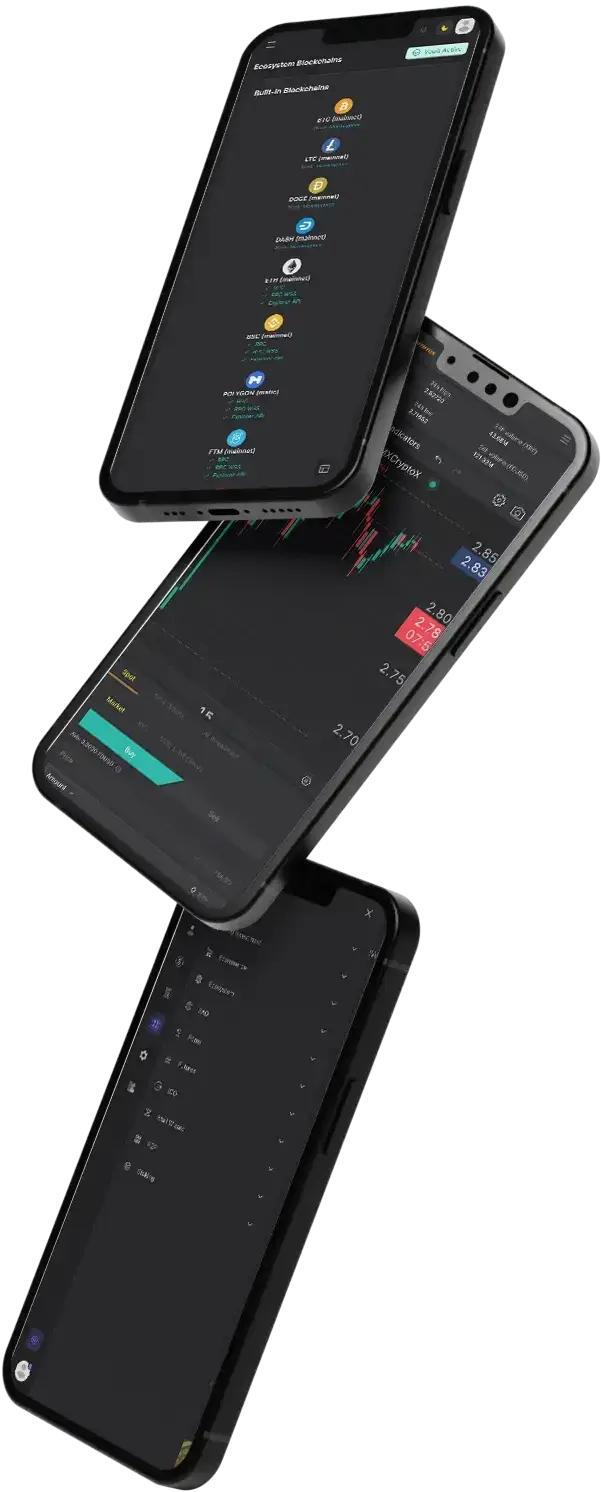
01A centralized exchange: order book, wallets for each chain, KYC and an admin console, for operators who want to run the market themselves.
Explore Solution
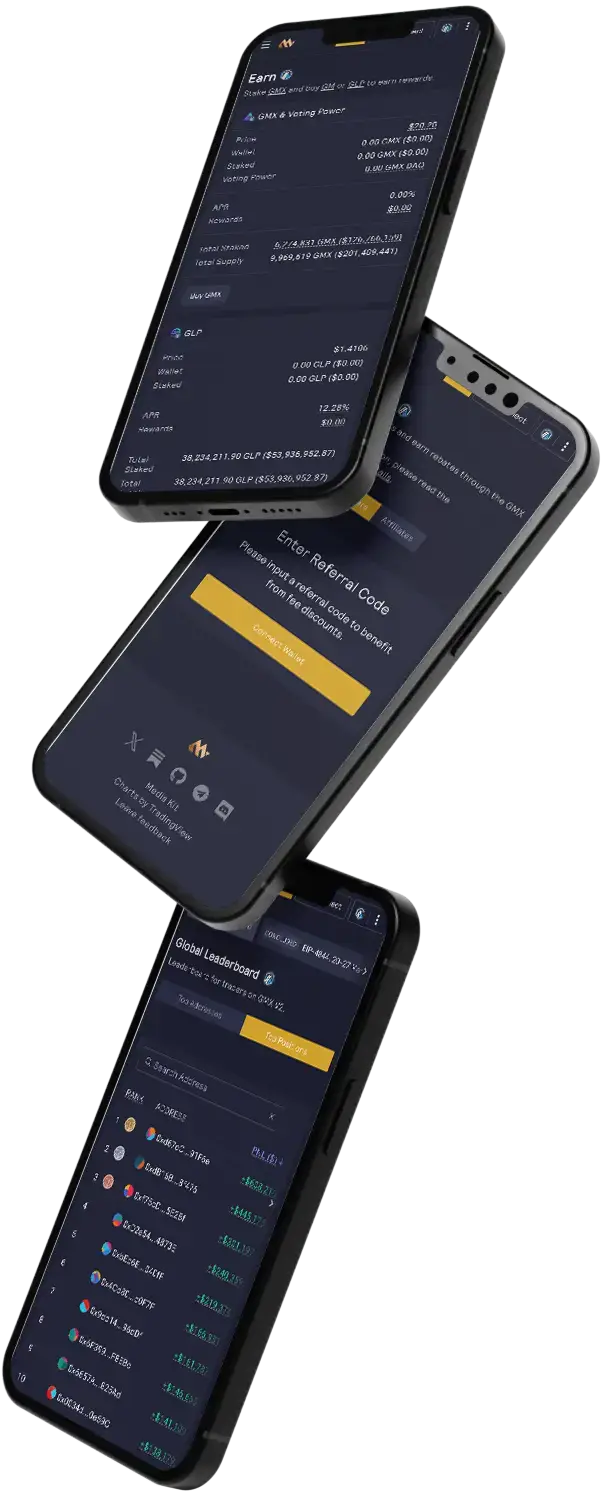
02Perpetual contracts for traders who connect their own wallets, with earn, referral and leaderboard pages.
Explore Solution
03Token sales that unfold in stages, with a dashboard for each investor showing balances and a log of activity.
Explore Solution
04Customer accounts, cards and transfers, with a console where the operator runs the bank.
Explore Solution09Money and the market
Market Benchmarks
P2P Crypto Trading Market Benchmarks - Independent 2025-2026 Data
The revenue models above are ours. The figures below are not. They are published numbers from Chainalysis, the UK Financial Conduct Authority, Pew Research Center and Coinbase's annual filing, reproduced as published. They show how large wallet-to-wallet crypto transfers are, who holds crypto, and what an exchange earns per dollar traded, so you can test a business case against sources you can check yourself.
$228.7bn Moved Wallet to Wallet Inside Countries
Chainalysis reports in its 2026 Global Crypto Adoption Index, published 23 September 2026, that value moving directly between personal wallets inside countries rose 302.9 percent, from US$56.8 billion to US$228.7 billion. Value flowing into exchanges, DeFi protocols and other businesses fell 4.3 percent to US$8.90 trillion, so peer-to-peer went from 0.6 percent of the two combined to 2.5 percent. These are wallet transfers, not marketplace volume.
73% of UK Crypto Users Buy on Centralized Exchanges
The UK Financial Conduct Authority's consumer research, published 16 December 2025, finds that 73 percent of cryptoasset users typically buy through a centralized exchange such as Coinbase, Binance or Kraken, up 4 points on 2024. A payment firm offering crypto services is next at 15 percent. Ownership among UK adults fell from 12 percent in 2024 to 8 percent in 2025.
19% of US Adults Have Invested in or Used Crypto
Pew Research Center surveyed 8,512 US adults from 20 to 26 January 2026 and reported on 8 June 2026 that about one in five (19 percent) have invested in, traded or used a cryptocurrency, about on par with 16 percent in 2021. Among men aged 18 to 29 the share is 38 percent, against 15 percent of women in the same age range.
Coinbase: $4.1bn Transaction Revenue in 2025
Coinbase's fiscal 2025 Form 10-K, filed 12 February 2026, reports net revenue of US$6.9 billion, including US$4.1 billion in transaction revenue and US$2.8 billion in subscription and services revenue, on US$1,221 billion of Trading Volume and 9.2 million average monthly transacting users. Transaction revenue is about 0.34 percent of Trading Volume (our arithmetic on reported figures).
Chainalysis, 2026 Global Crypto Adoption Index: World's Crypto Economy Held Firm Through the Bear Market, 23 September 2026 - chainalysis.com
Financial Conduct Authority, Research Note: Cryptoassets consumer research 2025, first published 16 December 2025 - fca.org.uk
Pew Research Center, About 1 in 5 Americans have used crypto; Republicans’ use has ticked up, 8 June 2026 - pewresearch.org
Coinbase Global, Inc., Form 10-K for the fiscal year ended 31 December 2025, filed 12 February 2026 - sec.gov
All figures are the publishers’ own survey results, index values and filing figures, reproduced as published. The 0.34 percent ratio is our arithmetic on reported figures: US$4.1 billion of transaction revenue divided by US$1,221 billion of Trading Volume, where Coinbase counts half the value of trades it routes off its platform. None of it is investment advice. They describe the market, not the performance of any platform Miracuves builds, and nothing here is a revenue projection for your business.
Commercial Angle
Marketability, Revenue Potential & Business Prospects
Sellers publish offers once they trust the venue, and buyers open trades once they trust it too. Each point below makes one of those choices easier and helps keep the relationship afterwards.
- 01
Commission on Every Finished Trade
More trades means more commission: income rises with the volume on the board and needs no extra headcount.
- 02
A Reputation You Own
Profiles, reviews and trade history are stored in your database, so the trust members earn stays with your venue and does not belong to someone else's listing.
- 03
Members Bring the Supply
Sellers provide coins and payment options inside their own offers, so launching never depends on you funding a trading book.
- 04
Room to Change Direction
Holding the complete code means a new host, a new team or a new direction never waits for anyone's permission.
- Commission on Completed Trades
- Charges on Deposits & Withdrawals
- Promoted Offers
- Referral Rewards
- Paid Trader Tiers
- API Access for Partners
Supply and trust defend a venue better than features do.
- 01Sellers with reviews and a trade history stay for good reason
- 02Buyers find offers in the method they hold and return
- 03Reputation builds from the first deal inside your database
- 04Tidy offers and reported trades form the second line of defense
Each case changes a single variable, the number of active traders, and points to the revenue line that leads. Treat the cases as prompts for your own planning and not as an estimate of any venue's earnings.
Commission pays the early bills.
A compact marketplace where a few dozen traders post offers and the commission on each finished trade covers running costs. Sample size only; no forecast is implied.
Commission, with wallet charges joining in.
One country, with gateways for the local payment methods driving steady volume, so the charges on deposits and withdrawals now matter beside the commission. Sample size only; no forecast is implied.
Referrals bring growth across currencies.
A hub spread over several currencies and gateways. New members arrive through the referral system and the admin dashboard points to where attention is needed. Sample size only; no forecast is implied.
10Why Miracuves
Why Miracuves
Choosing a Paxful Clone Builder: Miracuves Against the Alternatives
Three routes lead to a payment-method marketplace: tailor a generic exchange script, hire an agency or a freelancer for Paxful clone script development, or build on a finished product that another team has already put into production. Put the same questions to each: how payment methods enter the system, what protects a seller from a reversed payment, whether you can hire for the stack, who answers and how fast, and what the quote covers.
Why Founders Pick Miracuves
- 01
Gateways Are Built In
Fiat gateways with logos and currencies, offers that name a payment method, and gateway and currency filters arrive together. Generic scripts tend to revolve around an order book.
- 02
Escrow and Wallets in One Piece
During a trade the coins wait in escrow, and wallets per coin with deposit and withdrawal totals come from the same base and not from a separate project.
- 03
Reputation Comes Standard
Member profiles carry reviews, trade counts and average trade speed from the start, so you never bolt trust on later.
- 04
KYC Plus Admin Queues
The KYC lists, the reported-trades list and the withdrawal states are admin screens you can click through in the demo first.
- 05
You Own the Source
Everything arrives unencrypted with no per-seat charges, so no vendor can reprice it afterward.
- 06
Honest About the Edges
The page separates what the base does, what needs an add-on and what you must supply yourself, whether that is a license, a KYC provider, liquidity, hosting or a gateway account.
How to Choose a Paxful Clone Development Company
Ask any Paxful clone development company how payment methods enter its system.
What to look for Miracuves
- Gateways as admin records Gateways with logos and currencies, created and edited in the admin panel
- Reputation from day one Public profiles with reviews, trade counts and average speed
- Escrow joined to wallets Escrow and per-coin wallet totals in one base
- Source ownership Unencrypted source for site, panels and apps
- Support after launch Guidance for 60 days, bug fixes for 6 months and updates for 12 months
Walk away from any vendor who
- Hard-codes payment methods into the script
- Offers no public profiles or reviews
- Handles disputes in an inbox, not an admin list
- Hands over locked or encrypted code
- Quotes only per project
How the Paxful Clone Compares With Scripts and Custom Builds
| What You Compare | MiracuvesMiracuves Paxful Clone | Generic Exchange Script | Custom Agency Build |
|---|---|---|---|
| Speed to Market | Live in 6 days | Depends on your own coding time | Quoted by project, often several months |
| Code Ownership | Complete, unencrypted source | Frequently restricted or locked | Handed over at the end |
| Payment Methods | Gateway records with logos and currencies | Hard-coded in many scripts | Custom integration work |
| Trade Depth | Offers, requests, escrow, chat and reviews | Frequently just an order book | Depends on the budget |
| Reputation Tools | Profiles, reviews, trade speed | Seldom included | Built to order |
| Admin & Reports | Dashboard, trade and KYC lists, withdrawals | Limited or absent | Custom work at extra cost |
| Security & Compliance | Verification and escrow, with stated limits | Minimal | Varies with the team |
| Cost, Speed, Quality | Fixed price, fast, tested base | Cheap but riskier | Expensive and slow |
| Support & Updates | 60 days guidance, 6 months bug fixes, 12 months updates | Rarely offered | Whatever the contract says |
The table shows where the usual gaps appear. Few routes come with the whole trade life cycle already joined up.
Talk to Our TeamRelease Notes
Changelog of the P2P Marketplace - What Each Version Changed
Latest release first, running back to 2.0. The original notes give no dates, so none are shown, and their wording has been cleaned up and regrouped.
| Version | Changes | What changed |
|---|---|---|
| V3.2 | 2 new or improved, 5 repaired | New or improved Security patch System patch Repaired Broken URL on the Buy and Sell page Ads on the home page Display of the country name Home page button for starting a trade Layout of the 2FA security page on small screens |
| V3.1 | 3 repaired | Repaired Fault on the 2FA page Fault in automatic deposits Images that had not been attached |
| V3.0 | 15 new or improved | New or improved Laravel 11 and PHP 8.3 upgrade Security patch and system patch Centralized settings Automatic system updates Refreshed admin dashboard widgets, sidebar and overall interface Better menu search and select fields in the admin panel Form generator: new input types (number, URL, date, time), field width, hints and sort order, and a refreshed UI Slugs and SEO fields for policy pages Setting for items per page Setting for the currency display format Countdown before a verification code can be resent Reworked notification sending, toast and template content Email sender name and address, and SMS sender, configurable per template Support ticket attachment upload UI Google Analytics script update |
| V2.2 | 6 new or improved, 1 repaired | New or improved New template Subscriber module Cron manager you can edit Uploader for updates Patch to the advertisement module Security and system patches Repaired Fault in advertisement search and filtering |
| V2.1 | 2 new or improved, 5 repaired | New or improved Wallet balances in US dollar equivalents on the member dashboard The same equivalents on the admin's user details page Repaired Supported currencies when a fiat gateway is added or edited in the admin panel Table headings missing on the front end Offers that could not be traded appearing on the board An empty "No data found" message while paging through the ad tables A "No data found" message on the home page when the more page held data |
| V2.0 | 15 new or improved, 6 repaired | New or improved KYC system Public profile for every user Trade review system Average trade speed per user Referral system Commission for the admin on completed trades Fixed rate alongside margin on advertisements Check on the maximum when a trade is requested Removal of the advertisement limit by the admin Stated reason when an advertisement is unpublished Search by user location Search and filtering of users Distinct background for your own advertisement Logo upload for fiat gateways Maintenance mode Repaired Charge missing from the transaction table in the user panel Negative rates on user advertisements Downloading files from the trade chat Email notification shortcodes Several responsive layout issues Several wording issues |
Let's build together
Let's turn your payment-method marketplace idea into a platform members trust.
Book a free consultation for a clear timeline and plain answers about gateways, escrow, KYC and the responsibilities you keep.
- Replies in under 2 hours
- A free consultation
- No lock-in contracts
- The source code is yours
11Keep reading
From the Blog
Guides for Founders of Sites Like Paxful: Building, Launching and Avoiding Mistakes
Guides from the Miracuves blog on how to build a peer-to-peer crypto platform, what founders get wrong and how to win the first members once it is live.


The product5 questions
01Can you explain what a Paxful Clone Script is?
Think of it as a finished peer-to-peer marketplace for coins, not a toolkit. Members publish offers to buy or sell, and every offer names the payment method its owner will take. Other members open trades against those offers, escrow holds the coins while the payment is arranged, and the two sides rate each other afterwards. The white-labeled delivery contains a trader site, a seller panel, an admin console and two apps, one for buyers and one for sellers. It is neither a decentralized exchange nor an order-book exchange.
02Do the apps run on both iOS and Android?
Both apps are built with Flutter, so one codebase produces the Android and the iOS version, while the website adapts to any browser width. Publishing happens from developer accounts that belong to you. Review by Apple and Google takes whatever time it takes, and it is not counted in our 6-day build.
03Can I try a demo before I buy?
Yes. Open mxp2p.mimeld.com and sign in as a customer (customer | Customer_321) or as a seller (seller | Seller_321). The admin side lives at /admin, and we share its login during a guided call. Since the demo apps are not on the public stores, we run them for you live.
04Is it customizable to fit my branding and specific requirements?
Absolutely. We replace the logo, icons and colors across the website and both apps as part of delivery, then install everything. The source is unencrypted, so later changes to screens, flows, gateways or features can be made by your developers or by ours. Anything outside the base gets a written scope and price before work begins.
05Is it legal to launch a marketplace like this?
Selling and building this kind of software is generally lawful. The Miracuves Paxful Clone contains no code, design or content taken from Paxful, and you launch it under your own name, never under the Paxful name or logo. Running the venue is a separate question: when escrow holds members' coins, many regimes treat the operator as a virtual asset service provider, a crypto-asset service provider or a money transmitter. Registration, the AML and KYC program and your terms of use are for you and your counsel to settle. Miracuves offers no legal advice.
Offers, payment methods & escrow7 questions
06What payment methods are supported for buying?
A payment method is a fiat gateway added by your admin, and each gateway is stored with a name, a logo and its supported currencies. Sellers attach one to each offer. PayPal appears on the demo offers. There is no built-in catalog of dozens of methods; the list is whatever you configure, and the rules for methods that can be reversed are yours to write. The demo's deposit summary covers BTC, ETH, USDT, BNB and XMR.
07How do buyers purchase assets on the P2P platform?
From the offer board a buyer picks Buy or Sell, selects a coin and trims the list by amount, gateway, currency or location. Choosing an offer opens a trade request, where the buyer enters what they want to pay and writes a short note on how they will pay. The platform measures that amount against the offer's limits; once both sides agree, escrow takes hold of the coins until each has confirmed.
08Can members trade in more than one currency?
Several parts of the product point that way: a currency filter on the board, a list of supported currencies on every gateway, and admin screens for the coins and fiat currencies on offer. Balances can be shown in US dollars and the currency display format is a setting. A single deployment can therefore serve several currencies through the gateways you set up. How an offer is priced is described in the pricing answer further down.
09How do sellers list their assets for sale?
It starts with the seller opening an offer for a coin, choosing margin or fixed pricing, entering the smallest and largest amount, naming the payment method and publishing. The offer shows up on the board and on the home page, reachable through the filters. The seller's own offers are tinted differently, and an admin can take an offer down while recording the reason.
10Can sellers set different pricing strategies (fixed or variable)?
They can. A fixed rate joined the margin option in release 2.0, so an offer can follow the market with a margin on top or hold a rate that does not move. Each offer has its own range, and the maximum is checked once more when a trade request arrives.
11How do sellers receive payment from buyers?
In practice the buyer pays through the method printed on the offer, and each side confirms in the trade chat. After both confirmations the coins leave escrow. Because gateways are an admin setting, you control which options members have.
12Where do the coins sit while a trade is open?
With the platform, in escrow, from agreement until both sides confirm. In practice that makes the operator the custodian for that period, so custody, licensing and wallet security belong on your launch checklist. Hardware-wallet support, multi-signature approval and MPC custody can be scoped as custom work whenever your risk policy requires one.
Reputation & reported trades2 questions
13How does reputation work between strangers?
Every member gets a public profile (release 2.0). After a deal, the trade review system lets the parties rate each other, and the average trade speed of each user is tracked. Seller cards display the trade count and payment method, which lets a buyer size up a counterparty before sending a request. All of it is kept in your own database.
14How can I manage disputes or fraudulent activities?
When a member reports a trade, it appears under Reported in the admin panel, alongside the running and completed lists. Inside, the admin can read the chat, which also carries shared files for download, and then apply whatever house rules you write. Escrow keeps the coins put while the trade is open. The base has no arbitration module, no evidence form and no automatic reversal, and AI fraud detection is sold as an add-on.
Security, KYC & admin4 questions
15How secure is the Buyer App?
Security in the base rests on email and mobile verification, KYC, two-factor pages and escrow around every trade, with a system patch and a security patch in each release. Nothing is certified by a security framework. Before launch, put the site behind HTTPS on hosting you control, keep keys out of the code and run penetration tests; we schedule that work with you.
16What identity and AML tooling comes in the base?
Identity checks mean KYC: release 2.0 introduced it, and the admin panel has KYC unverified and KYC pending queues. AML screening, sanctions checks and travel-rule reporting are outside the base. Your team writes the AML policy and selects any provider, and we can connect whichever one you pick.
17What user management tools are included in the Admin Panel?
Admins see active and banned users, those still missing email or mobile confirmation, and those waiting on KYC, and they can send notifications from their own screen. The panel adds menus for ads, trades and money movements (deposits and withdrawals), plus tiles that total the key counts.
18Can I track platform performance and generate reports?
Dashboard tiles count users (all, active and unverified), ads, trades, coins and fiat currencies. They sit beside deposit and withdrawal totals for each coin, and charts break down logins by browser, operating system and country across the previous 30 days. Revenue reports and exports go further than the release log describes, so they would be a custom piece of work.
Income & growth2 questions
19Where does the first income come from?
The commission on finished trades is where most marketplaces start, because it requires nothing new: the first completed trade earns it. Charges on deposits and withdrawals arrive with the first wallet movements. Promoted offers, paid tiers and partner API access fall outside the base build and would require custom work plus commercial terms of your own.
20What keeps a payment-method marketplace defensible?
Supply and trust defend a venue better than features do. Sellers who have built reviews, a history and a quick trade speed on your platform have reason to stay, and buyers who find offers in the method they hold have reason to return. Reputation starts accumulating with the first deal, and the platform keeps it in your database. Tidiness is the other defense: offers and reported trades that are kept in order create trust that competitors find hard to copy.
Going live & Miracuves11 questions
21Do you provide ongoing technical support and updates?
You get three cover periods that begin together at launch and run side by side: 60 days of dedicated platform guidance, 6 months of priority bug resolution and 12 months of continuous product evolution, with no extra charge. The release log shows how often updates ship; version 3.2 is the newest on record.
22How long does deployment take?
Miracuves needs 6 days for the ready-made build. In that time we apply your branding, install the platform on your hosting and publish the apps from your developer accounts. Time spent on store review, gateway onboarding or licensing belongs to the app stores, your payment provider and your regulator, so it is not part of the 6 days. Extra work beyond the base is scoped on its own.
23Is the full source code included?
Yes. You receive the unencrypted source for the website and for both Flutter apps, without per-seat fees or a runtime license.
24Which things must I arrange before launch?
Bring a domain and hosting, an app-store developer account registered to you, your logo and company details, a payment gateway that has already completed KYC, third-party keys such as Google Maps, Twilio or Firebase, and any registration or license that your market demands. Gateway applications, licenses, a privacy policy and terms of use are not things Miracuves arranges or writes for you.
25Why build your Paxful clone with Miracuves?
The offer board, the escrow flow and the admin queues come ready and working, and the demo lets you test each one before paying. Miracuves has delivered 9,000+ projects for more than 6,000 clients, with 90+ ready-made solutions in the catalog. The price of the Paxful Clone is fixed at $2,799 and the build takes 6 working days. Support covers 60 days of guidance, 6 months of priority bug fixes and 12 months of product updates together, and a person replies in under 2 hours, Monday to Saturday, 10:00-19:00 IST.
26How much does a Paxful clone cost?
A fixed $2,799 buys the Paxful clone outright: the trader website, seller panel, admin console, buyer and seller apps and the full source, branded and installed in 6 working days. There is no monthly fee and no cut of your commission. Work outside the base, such as a new gateway flow or an add-on, gets a written price before it starts.
27Is a ready-made Paxful clone better than custom development?
When speed and certainty matter, yes. Payment-method offers, gateway filters, escrow, reputation profiles and admin queues already work together, and you can test each one in the demo before paying. A custom marketplace has to design all of that first and only knows its price after scoping. Commission custom work for rules unique to your venue, quoted on paper first.
28What is the business model of an app like Paxful?
A marketplace like Paxful earns when members close trades. The base build collects a commission on each completed trade and a per-coin charge on deposits and withdrawals, and its referral system pays for new members out of that commission. Promoted offers, paid tiers and partner API access are further lines you can add through custom work on your own terms.
29What is the step-by-step process to launch my Paxful clone?
Open the demo three times, as buyer, as seller and as admin. Then list your payment menu, coins and house rules in a short brief and share hosting access. We brand the site, panel and apps, install everything on your servers, load gateways and charges, rehearse a clean trade and a reported one, and hand over within 6 working days. Store review follows on its own schedule.
30Who can run a Paxful clone as their own marketplace?
Any business whose members should buy and sell coins directly from each other. P2P crypto marketplaces list offers in several coins, and regional payment desks serve one currency area. A many-method marketplace starts from its gateway list, a regional desk from currencies and location, and a community from profiles and reviews, all through configuration.
31Why do payment methods matter so much in a Paxful clone?
Every gateway and currency you list opens offers that more buyers can complete. Sellers bring coins and the methods they accept, so a wider payment menu widens the pool of offers. Decide the payment menu first and the rates second, because revenue lines open in that order and each can be configured independently.
More Ways to Explore Paxful Alternatives
Service pages, guides and nearby platforms that look at this product from other sides.
Crypto exchange development
See the service→GuideReasons startup choose our paxful clone over custom development
Read the guide→Business model
How a payment-method marketplace is structured, and what pays for it.
Read the guide→Also from MiracuvesCrypto Exchange Script
The wider Miracuves exchange script, for teams that want a house-run market as well as member-to-member trading.
View the platform→Disclaimer
Miracuves is an independent software development company. We are not affiliated with, connected to, sponsored by, or endorsed by Paxful.
Read our full Legal Notice & Disclaimer →“Paxful Clone” is used descriptively. It is how the software industry refers to building a platform with functionality similar to Paxful, and how clients search for it.
The entire design and codebase is built by our own team. The product contains no code, design, graphics, or content originating from the Paxful website or applications.
Paxful and all other third-party names and marks are the property of their respective owners, referenced here solely to describe the category of software offered.