
The Rise of AI Voice Cloning
We’re living in a time where artificial intelligence is no longer just hype—it’s here, and it’s changing industries in real time. One of the more fascinating and, frankly, controversial innovations is AI voice cloning. At first glance, it might sound like something pulled straight from a sci-fi movie: you feed in a few audio samples, and suddenly, a synthetic version of that voice can read scripts, answer calls, or narrate ads—almost indistinguishably from a real person.
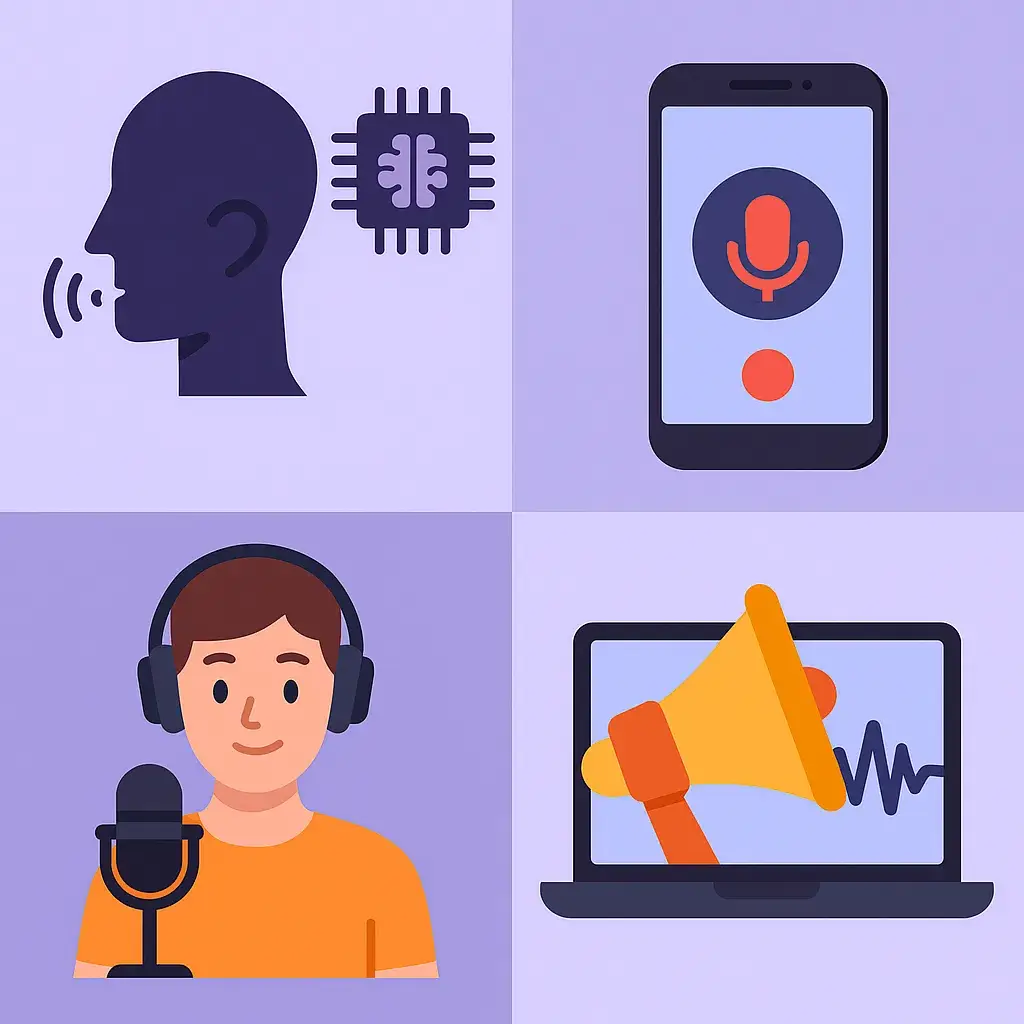
For business leaders, especially those in marketing, media, e-learning, or customer experience, this is more than just a technological curiosity. It’s a cost-saving, efficiency-boosting, personalization-enabling game changer. But it’s also a disruptor—and like all disruptors, it comes with risks, ethical questions, and a real impact on jobs.
If you’re not already evaluating where AI voice technology fits into your strategy, you could be behind the curve.
What Is AI Voice Cloning, Really?
Let’s demystify the term. AI voice cloning is the use of deep learning models—particularly neural networks and text-to-speech (TTS) engines—to replicate a human voice. Give the AI a script and a few minutes of audio from someone’s voice, and it can generate speech that mimics their tone, rhythm, and even emotional inflection.
Technologies behind this include neural TTS, transformer models, and deep neural networks, the same kind of stuff powering ChatGPT or DALL·E. The idea isn’t new, but the accuracy, realism, and accessibility have skyrocketed in just the past few years.
And the tools? They’re not hidden behind corporate doors. Platforms like ElevenLabs, Murf.ai, and Respeecher are publicly available. You can go from text to a shockingly realistic voiceover in minutes.
Why Businesses Are Embracing AI Voiceovers
So why is this catching fire in boardrooms and creative agencies alike? Simple: money, speed, and scale.
Cost Savings
Traditionally, voiceovers are expensive. Studios, microphones, voice actors, editing—all that adds up. With AI, you eliminate studio time and reshoots. Need to change a word? Just edit the text and regenerate. It’s voice production on-demand.
Speed and Scalability
Instead of waiting days or weeks for a voice actor to deliver lines, companies can produce voice content instantly. Whether you’re launching 100 personalized training videos or localizing an app into 12 languages, AI voice cloning handles the volume with ease.
Localization and Multilingual Content
Speaking of languages—AI voices can be trained to deliver the same content in multiple languages, with native-like fluency and emotion. That’s a huge win for global companies looking to create consistent experiences across regions.
Hyper-Personalization
Imagine a customer service bot that speaks in your brand ambassador’s voice, or an ad that uses a localized version of a celebrity’s voice for different cities. AI voice cloning allows for personalization at a scale that would be impossible (or unaffordable) with human talent.
Risks and Ethical Concerns
Now, let’s talk about the elephant in the room. This tech is powerful—but it’s also dangerous if used irresponsibly.
Voice Fraud and Impersonation
We’ve already seen AI-generated voices used for scams. From deepfake calls to fake celebrity endorsements, the potential for fraud is very real. Just imagine getting a phone call that sounds exactly like your CEO asking you to wire funds. Chilling, right?
Consent and IP Ownership
Whose voice is it, anyway? If an AI replicates your voice without permission, who owns it? Even if you do consent, can you later revoke that right? Legal frameworks are still scrambling to catch up.
Regulatory Uncertainty
Governments are starting to wake up to these issues, but laws around AI voice use are still inconsistent or non-existent. Businesses operating across borders may find themselves in murky waters if they’re not proactive.
Loss of Authenticity
Yes, AI voices are efficient—but are they always the right fit? A cloned voice might not carry the same soul, depth, or imperfections that make a message truly human. For some brands, this could feel cold, even robotic.
Learn More: Replace Google Assistant with ChatGPT Voice in 2024
The Impact on the Voiceover Industry
Let’s not sugarcoat it—AI voice cloning is a threat to traditional voice actors. As more businesses adopt synthetic voices, fewer opportunities remain for real humans. That’s a tough pill to swallow.
But many voice actors aren’t backing down. They’re adapting—licensing their voices to AI companies, working in hybrid models where AI handles basic content and they do premium jobs, or leaning into emotional storytelling that AI still can’t match.
That said, businesses need to be cautious. Replacing all human voices might save money in the short term, but could hurt brand warmth and loyalty in the long run.
Real-World Examples
Let’s bring this to life.
Cadbury x Respeecher
In a recent campaign, Cadbury used AI voice cloning to bring Bollywood legend Shah Rukh Khan’s voice to thousands of local businesses’ ads. The campaign personalized messages using deepfake visuals and voice, making small vendors feel like they had a superstar endorsement. Genius? Absolutely. Ethical? The jury’s out—but it was consented.
E-Learning & Training
Companies like Coursera and Udemy are using AI voices to localize and scale courses faster than ever. Instead of hiring multiple narrators for each module, they just tweak the text and let AI do the rest.
Synthetic Brand Voices
Brands are also crafting unique, AI-generated voices that become a core part of their identity. Think Alexa or Google Assistant—but for any app, ad, or platform. It’s like designing your own sonic personality.
Future Trends & How to Prepare
If this feels like the beginning of something big—it is.
Voice AI Market Growth
The AI voice market is projected to reach billions in value within the next few years. As audio becomes the next frontier for search, advertising, and interaction, voice is the new brand frontier.
Emotional & Real-Time AI
Soon, AI voices will not only sound real—they’ll feel real. With emotional AI, voices will express sadness, joy, urgency, and more. Combine that with real-time translation, and you’ve got the recipe for truly global, humanlike communication.
Looming Regulations
Expect major developments in AI legislation. Already, countries like the EU are pushing forward with AI laws, and the U.S. is considering voice IP protections. Smart businesses will start future-proofing now, not later.
Strategic Tips for Businesses
- Audit your current voice assets. Where could AI help?
- Experiment with tools like Murf or ElevenLabs before going all in.
- Develop a voice ethics policy. Consent, disclosure, and emotional health should be baked into your strategy.
- Blend human and AI voices for authenticity + scale.
Conclusion
AI voice cloning is not a gimmick. It’s a powerful tool that can transform how we communicate—especially in business. But with great power comes, well… you know the rest.
Done right, AI voiceovers offer speed, savings, and scalability. But done wrong, they could erode trust, damage brand perception, or even invite legal trouble.
The smartest move for business leaders right now? Evaluate your voice strategy. Understand what makes your voice matter to your users. Experiment, but don’t abandon the human touch.
Because in the end, people won’t just remember what your brand said—they’ll remember how it made them feel.
So go ahead. Design your voice for the future—just make sure it still speaks from the heart.
FAQs:
1. What is AI voice cloning?
It’s tech that replicates a human voice using AI from audio samples.
2. How do businesses use it?
For ads, training, customer support, and multilingual content.
3. Is it legal to clone voices?
Yes—with consent. Using a voice without permission can be illegal
4. What are the main risks?
Fraud, impersonation, brand trust loss, and legal issues.
5. Will it replace voice actors?
Partly. Routine work may go to AI, but humans still lead in emotional delivery.
6. What’s next for AI voices?
More emotion, real-time translation, and stricter regulations.
1
Related Articles:
Miracuves is an independent software development company. We are not affiliated with, connected to, sponsored by, or endorsed by any company or product named in this article.
Terms such as “X Clone” are used descriptively. It is how the software industry refers to building a platform with functionality comparable to a known service, and how clients search for it.
The entire design and codebase of our products is built by our own team. Our products contain no code, design, graphics, or content originating from any third-party website or applications.
All third-party names and marks referenced in this article are the property of their respective owners, referenced solely to identify the services discussed.