Key Takeaways
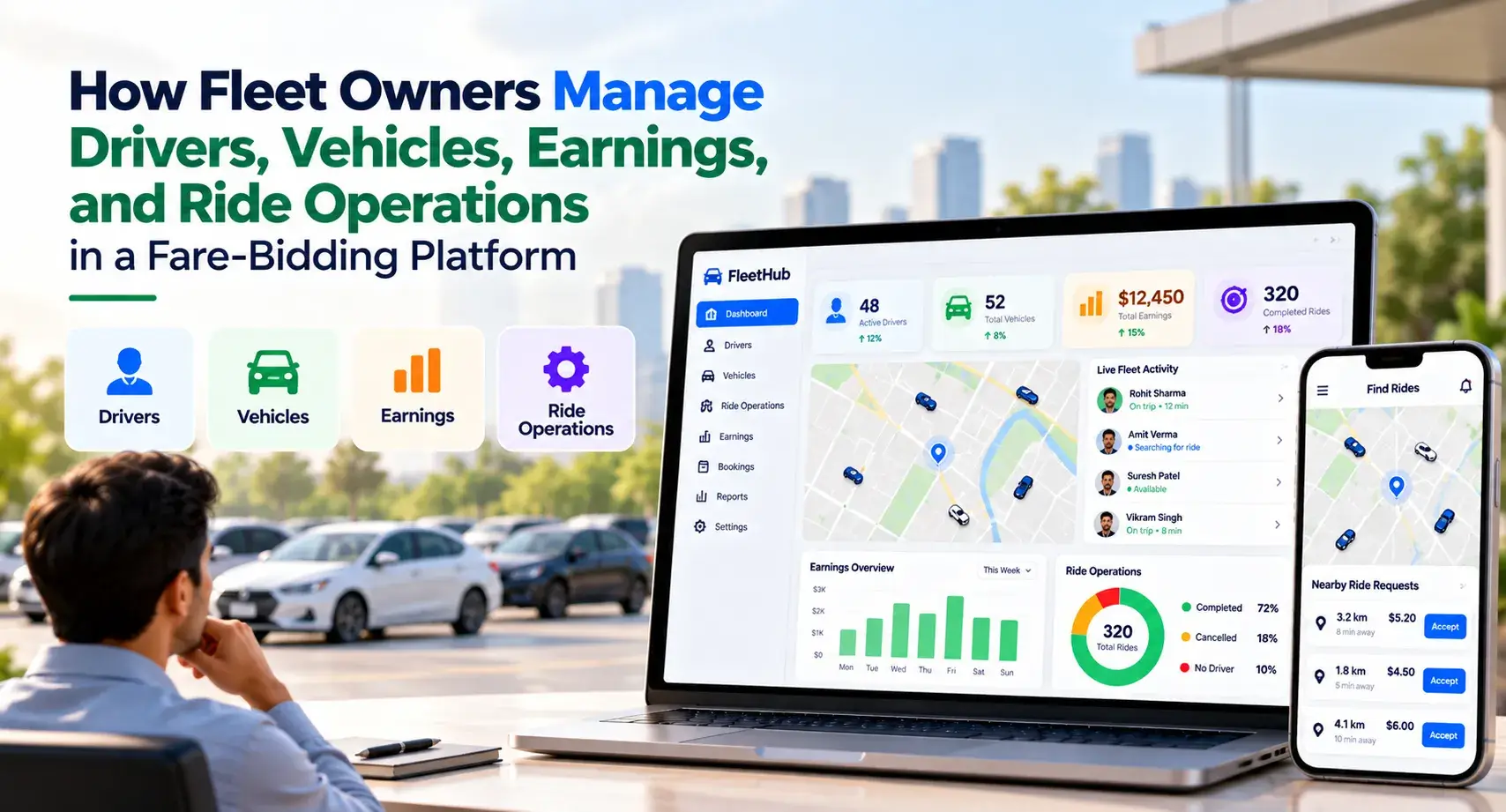
- Fleet management connects driver oversight, vehicle availability, negotiated bookings, payments, maintenance, and operational reporting.
- Fleet owners and platform operators require separate permissions because they manage different parts of the ride marketplace.
- Completed trip counts alone cannot reveal whether drivers and vehicles are producing sustainable financial results.
- Gross booking value must be separated from platform commissions, driver compensation, adjustments, and vehicle expenses.
- Reliable fleet operations depend on accurate records, clear responsibilities, consistent reconciliation, and vehicle-level performance monitoring.
Fleet Management Signals
- Maintain driver identity, licence, permit, verification, availability, vehicle assignment, and document-expiry records.
- Track whether each vehicle is available, on a trip, under maintenance, awaiting documentation, or temporarily inactive.
- Review acceptance rates, completed rides, cancellations, online hours, pickup delays, complaints, and net driver earnings together.
- Reconcile accepted fares, payment methods, cash collections, commissions, driver shares, adjustments, and fleet settlements.
- Measure vehicle utilization, trip completion, net earnings per vehicle, downtime, cancellation patterns, and settlement exceptions.
Real Insights
- A driver completing many low-value trips may generate weaker margins after pickup time, fuel use, commissions, and operating expenses.
- Increasing fleet size does not guarantee growth when vehicles remain underused or local booking demand is insufficient.
- Cash collected by a driver should not be treated as final earnings until commissions, compensation, and settlement obligations are reconciled.
- Repeated cancellations and delays should be investigated as operational patterns instead of being handled as isolated incidents.
- Miracuves develops fare-bidding ride platforms with fleet-owner tools, driver and vehicle management, negotiated booking workflows, earnings visibility, and administrative controls.
Managing a fleet of vehicles is more complicated than keeping cars on the road. Fleet owners must coordinate drivers, maintain vehicle availability, monitor trips, reconcile earnings, and resolve operational issues while keeping their business financially sustainable.
In a fare-bidding platform, these responsibilities become more dynamic because ride prices are negotiated rather than determined entirely by a fixed fare schedule. Drivers may accept a passenger’s proposed fare or submit a counteroffer, depending on the platform’s rules. This creates additional decisions around profitability, driver behavior, trip acceptance, and revenue visibility.
For fleet owners managing multiple drivers and vehicles, the challenge is to maintain consistent operational control without slowing down everyday bookings.
This guide explains how fleet owners can organize driver management, vehicle assignments, ride activity, earnings reconciliation, and performance monitoring within a negotiated-fare transport business.
What Does Fleet Management Mean in a Fare-Bidding Ride Platform?
Fleet management refers to the coordination of drivers, vehicles, bookings, payments, and operational records across a transport business.
In a traditional transport operation, fleet managers may rely on dispatch teams, manual records, and predetermined fare structures. A fare-bidding marketplace introduces another layer: riders and drivers participate in determining the accepted trip price.
This means the fleet owner needs visibility into not only completed bookings but also the operational and financial outcomes associated with those bookings.
For example, two drivers may complete a similar number of trips but generate different earnings because of the fares they accepted, time spent waiting, distance travelled to pickup locations, and operating costs.
Fleet management therefore involves making sure that driver activity translates into sustainable vehicle-level performance.
The Different Responsibilities of Fleet Owners and Platform Operators
One important distinction is that the fleet owner and the platform operator do not necessarily have the same permissions.
The platform operator typically controls marketplace-wide settings, such as bidding rules, service availability, commissions, account approvals, and dispatch permissions.
A fleet owner manages the vehicles and drivers associated with their business. Depending on the system’s access controls, this may include reviewing driver activity, managing fleet records, checking trip histories, and monitoring earnings.
Understanding these responsibilities prevents confusion when a fare dispute, driver restriction, or payout issue requires platform-level intervention.
Read More: Indrive Clone vs. Uber Clone: Which Ride-Hailing App is Better for Your Business?
How Fleet Owners Manage Multiple Drivers Efficiently
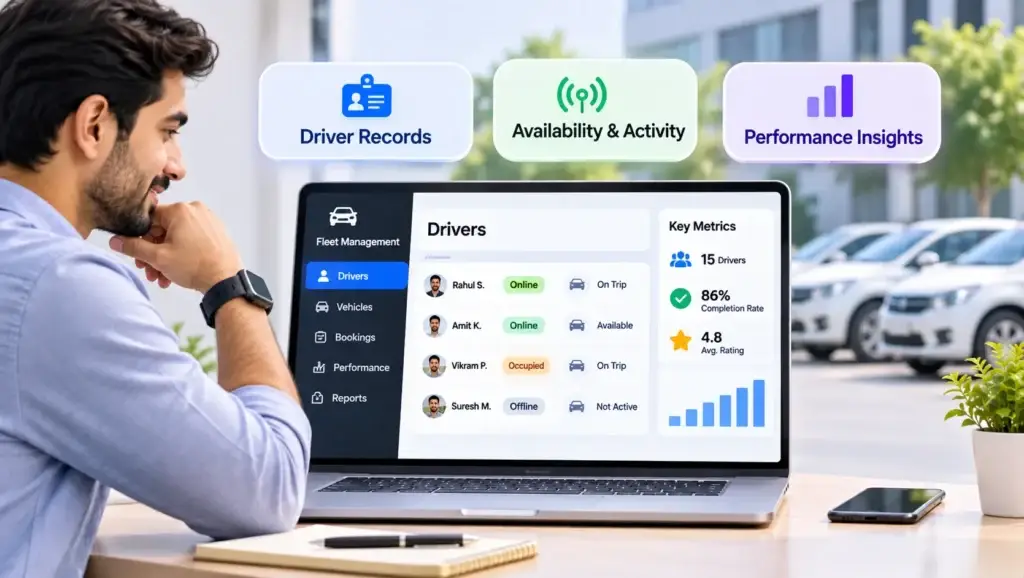
Driver management is one of the most important parts of operating a multi-vehicle transport business. Without consistent oversight, fleet owners may struggle to understand which drivers are working, which vehicles are available, and whether bookings are being completed reliably.
1. Register Drivers and Maintain Accurate Records
The management process starts with organized driver records. A fleet owner should maintain the information necessary to identify drivers, verify their eligibility, and associate them with the correct vehicles.
Depending on local requirements, this may include:
- Driver identity and contact information.
- Driving licence and applicable transport permits.
- Vehicle assignment and employment or contract status.
- Document expiry dates and verification status.
- Driver availability and operational history.
Document records should not be treated as a one-time onboarding task. Expiring licences, outdated insurance, or unapproved vehicles can interrupt operations and create legal exposure.
Fleet owners should establish a routine for reviewing these records and escalating verification issues to the authorized platform administrator.
2. Monitor Driver Availability and Activity
A driver who is registered on the platform is not necessarily available to complete bookings.
Fleet owners need to distinguish between drivers who are online, offline, occupied with a trip, or temporarily unavailable.
This visibility helps operators identify whether vehicles are being used effectively and whether enough active drivers are available during demand peaks.
For example, a fleet may have fifteen registered drivers but only nine actively accepting bookings during a busy period. The immediate operational question is not how many drivers are registered. It is why the remaining capacity is unavailable.
Possible explanations include vehicle maintenance, scheduled breaks, shift gaps, document restrictions, or insufficient booking demand.
3. Review Driver Performance Beyond Trip Counts
Completed rides are useful, but they do not provide a complete view of driver performance.
Fleet owners should also review:
- Ride acceptance and completion rates.
- Driver cancellations and their reasons.
- Online hours compared with completed trips.
- Passenger complaints and service ratings.
- Pickup delays and repeated operational incidents.
- Net earnings generated during active shifts.
These indicators should be interpreted together. A low acceptance rate, for example, may reflect unsuitable fare offers rather than poor driver discipline.
The purpose of driver monitoring should be to identify the underlying issue and improve operations, not simply penalize drivers for every unsuccessful booking.
How Vehicle Assignment and Maintenance Affect Fleet Availability
Vehicle management is directly connected to earning capacity. Every unavailable vehicle reduces the number of bookings a fleet can potentially serve.
Fleet owners therefore need an accurate record of each vehicle’s operational status, assigned driver, documentation, and maintenance requirements.
Keep Driver-to-Vehicle Assignments Updated
A vehicle assignment record identifies which driver is authorized to operate a particular vehicle during a given shift.
When drivers switch vehicles, take leave, or work in rotating shifts, assignment records should be updated before new trips begin.
This creates accountability for completed bookings, vehicle incidents, and earnings associated with each vehicle.
For fleets using shared vehicles, managers should also record handover times, vehicle condition, and unresolved maintenance issues.
Use Vehicle Status to Prevent Dispatch Problems
A practical fleet system should distinguish operationally available vehicles from those requiring attention.
| Vehicle Status | Meaning | Fleet Owner Action |
|---|---|---|
| Available | Ready for an eligible driver and booking | Confirm driver assignment |
| On Trip | Currently serving a booking | Monitor exceptions if necessary |
| Under Maintenance | Not ready for transport operations | Schedule repairs and block availability |
| Documentation Pending | Required records need review | Complete verification before activation |
| Inactive | Temporarily removed from service | Review the reason and return-to-service plan |
These statuses illustrate useful operating categories; their exact names and availability depend on the platform.
Maintenance should also be planned around vehicle usage, inspection requirements, manufacturer recommendations, and applicable regulations rather than waiting for a breakdown.
How Fare Negotiation Changes Daily Ride Operations
Fare bidding changes the relationship between booking requests and confirmed trips.
Instead of receiving only a predetermined fare, an eligible driver may review the rider’s offer and decide whether to accept it or propose another amount, subject to the marketplace’s rules.
For a fleet owner, this introduces the need to understand how negotiated fares affect completed bookings and operating margins.
Understand the Ride Lifecycle
A typical negotiated-fare booking can involve the following sequence:
- Ride request: A passenger submits a pickup location, destination, and proposed fare.
- Driver response: Available drivers review the request and may accept or counteroffer.
- Fare acceptance: The passenger selects an offer and the booking is confirmed.
- Pickup and trip: The assigned driver arrives, verifies the trip where required, and completes the journey.
- Payment recording: The final charge and payment method are recorded.
- Earnings allocation: Applicable commissions, driver shares, and fleet-owner amounts are calculated.
- Operational review: The completed trip becomes part of the fleet’s performance and settlement records.
The exact sequence varies by platform, but maintaining an accurate record of the accepted price and subsequent trip events is essential for resolving financial discrepancies.
Monitor Negotiated Fares Without Removing Driver Flexibility
Negotiated pricing can give drivers more control over the fares they accept, but a fleet business still needs visibility into whether those decisions produce sustainable earnings.
Consider a driver who accepts several low-value rides during a shift. Their trip count may appear healthy, but long pickup distances, fuel expenses, and waiting time could reduce the fleet’s actual profitability.
Fleet owners should therefore evaluate negotiated bookings using more than the accepted fare.
Useful indicators include the completed ride value, pickup distance, trip duration, vehicle operating costs, and the amount remaining after applicable deductions.
Fare guardrails are generally a platform-level responsibility. Fleet owners should use their operating data to identify pricing concerns and communicate them to the marketplace operator rather than assuming they can independently change system-wide bidding rules.
How Fleet Owners Track Ride Earnings and Driver Payouts
Revenue visibility is one of the most important financial controls in a fleet operation.
Gross booking value does not represent the amount the fleet owner ultimately retains. A completed ride may involve a platform commission, driver compensation, payment adjustments, and operating expenses.
The exact settlement process depends on the agreement between the fleet owner, drivers, and platform operator.
Separate Gross Fares From Net Fleet Earnings
For illustration, consider a completed ride with an accepted fare of $20.
| Illustrative Transaction | Amount |
|---|---|
| Completed ride fare | $20.00 |
| Illustrative platform commission (10%) | -$2.00 |
| Amount remaining after platform commission | $18.00 |
| Illustrative driver share | -$12.00 |
| Fleet share before vehicle expenses | $6.00 |
This is a hypothetical accounting example, not a quoted commission, payout rule, or Miracuves pricing schedule. Actual allocations depend on the operating agreement and payment configuration.
The remaining $6 is not necessarily profit. Vehicle financing, maintenance, insurance, fuel, taxes, and other expenses may still need to be deducted.
This distinction matters because a fleet generating significant gross fares can still experience weak margins if vehicle-related expenses or driver compensation are not managed carefully.
Reconcile Driver Wallets, Cash Collections, and Settlements
Fleet managers should maintain a clear record of the difference between earnings credited by the platform and money actually received.
Depending on supported payment methods, transactions may involve digital payments, driver-collected cash, wallet balances, or adjustments made after a completed trip.
Daily or periodic reconciliation should compare:
- Completed trip IDs and accepted fares.
- Payment methods and collection records.
- Platform commissions and adjustments.
- Driver compensation or agreed revenue shares.
- Fleet-owner settlement amounts.
- Pending, completed, or disputed payouts.
For cash trips, the person who collected the payment may not be the person entitled to retain the full amount. A proper settlement record prevents a cash collection from being mistaken for final driver or fleet earnings.
Adjustments should be traceable to the original booking, with an explanation and authorized approval where required.
How Fleet Owners Monitor Live Trips and Handle Operational Issues
Fleet operations continue after a driver accepts a booking. Vehicle delays, cancellations, passenger complaints, payment problems, and route disruptions can occur throughout the trip lifecycle.
A fleet owner should have a clear process for identifying these issues and escalating them to the appropriate team.
Track Active, Completed, and Interrupted Bookings
Operational monitoring may include current trip status, driver activity, pickup progress, completed journeys, and cancellation records.
Fleet owners should pay particular attention to repeated problems rather than treating each event in isolation.
For example, frequent cancellations associated with one pickup zone could indicate difficult access, long arrival distances, mismatched vehicle availability, or fare offers that drivers are unwilling to accept.
Identifying the pattern allows fleet managers to adjust scheduling, reposition vehicles, or raise a service-area concern with the platform operator.
Define Who Handles Each Type of Incident
A clear escalation process prevents delays when a booking problem involves several parties.
| Operational Issue | Initial Fleet-Level Action | Possible Escalation |
|---|---|---|
| Driver unavailable | Check shift and vehicle status | Dispatch team if reassignment is needed |
| Vehicle breakdown | Remove vehicle from active service | Dispatch and customer support |
| Fare dispute | Review accepted fare and trip record | Authorized platform support |
| Payout discrepancy | Compare trip and settlement records | Finance or platform administrator |
| Safety complaint | Follow immediate safety procedures | Emergency services or authorized safety team as appropriate |
The division of responsibilities should be documented before the fleet begins regular operations. Permission-based access helps prevent unapproved users from changing financial records, driver eligibility, or trip outcomes.
Which Fleet Performance Metrics Matter Most?
A fleet dashboard should do more than display large numbers. It should help owners recognize whether vehicles and drivers are producing consistent operational results.
The most useful indicators connect activity to outcomes.
| Metric | What It Reveals | Decision It Supports |
|---|---|---|
| Vehicle utilization | Share of available time vehicles spend on productive trips | Fleet allocation and scheduling |
| Trip completion rate | How often accepted bookings are completed | Service reliability improvement |
| Driver online hours | Time drivers spend available for requests | Shift planning and capacity review |
| Net earnings per vehicle | Vehicle-level earnings after defined deductions | Financial performance evaluation |
| Cancellation frequency | How often bookings fail after acceptance | Driver coaching and operational investigation |
| Settlement exceptions | Payments that require review or correction | Financial controls and reconciliation |
These metrics require consistent definitions. For example, productive vehicle time may include only passenger-carrying trips, while other systems may count pickup travel as engaged time.
Fleet owners should choose a definition, document it, and apply it consistently rather than comparing reports that measure different activities.
Why Revenue per Vehicle Matters More Than Fleet Size
Adding vehicles does not automatically improve business performance.
A larger fleet may increase maintenance obligations, driver coordination requirements, and periods of inactivity if local ride demand is insufficient.
Reviewing earnings and operating costs at the vehicle level helps owners decide whether to add capacity, redistribute vehicles, change shifts, or improve utilization before expanding.
Read More: The Future of Indrive Clone Apps: How to Stay Ahead of the Competition?
A Practical Daily Operating Routine for Fleet Owners
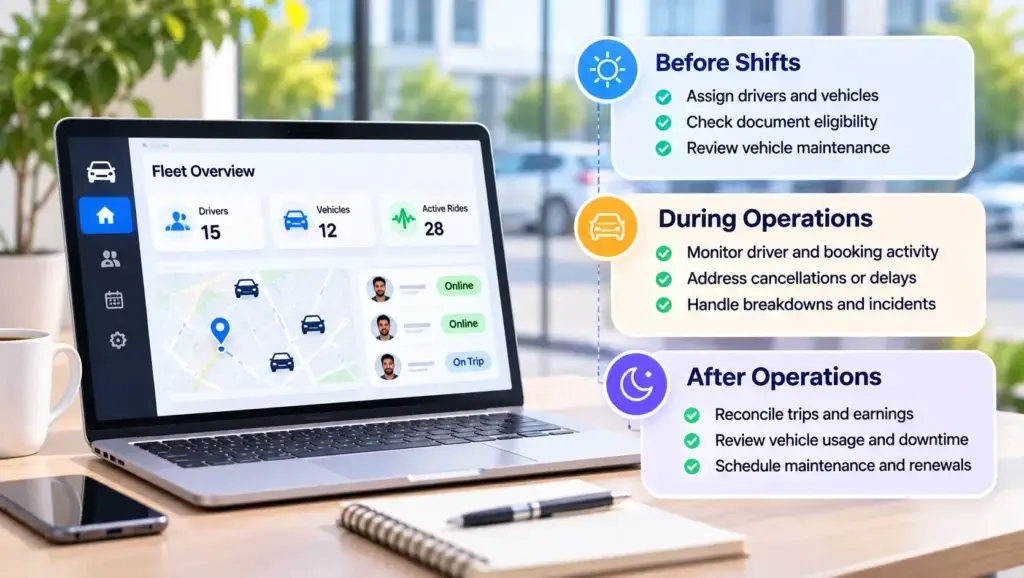
Consistent operating procedures help fleet businesses avoid relying entirely on reactive problem-solving.
Before Drivers Begin Their Shifts
- Confirm scheduled drivers and assigned vehicles.
- Review document or eligibility restrictions.
- Identify vehicles unavailable because of maintenance.
- Check unresolved incidents from previous shifts.
- Confirm that authorized dispatch and support contacts are available.
During Active Ride Operations
- Monitor driver availability and fleet booking activity.
- Investigate recurring cancellations or pickup delays.
- Coordinate vehicle changes and unexpected breakdowns.
- Escalate safety incidents and disputes promptly.
- Review demand patterns without interfering with individual driver decisions beyond authorized policies.
After the Operating Period
- Reconcile completed trips against earnings records.
- Identify cash collection and payout discrepancies.
- Review vehicle usage, cancellations, and downtime.
- Schedule maintenance and document renewals.
- Record the actions required before the next shift.
For smaller fleets, one manager may handle several of these tasks. Larger fleets may divide responsibilities among dispatch, finance, vehicle maintenance, and driver support teams.
The important principle is that every exception has an accountable owner and a clear follow-up process.
Common Fleet Management Mistakes That Reduce Operational Efficiency
Measuring Business Performance Only Through Total Bookings
A high booking count can conceal low-value rides, excessive idle time, or poor vehicle economics. Evaluate completed rides alongside net earnings and operating costs.
Ignoring Vehicle Downtime Until Bookings Are Affected
Unplanned maintenance can disrupt driver schedules and passenger commitments. Use preventive maintenance records and remove unavailable vehicles from dispatch eligibility.
Confusing Driver Collections With Fleet Revenue
Cash collected by a driver may include amounts owed to other parties. Separate collection, compensation, commissions, and final settlements in the financial records.
Allowing Unclear Permissions Across Fleet and Platform Teams
Without defined access rights, staff may attempt changes outside their authority. Use role-based permissions and documented approval procedures.
Responding to Every Cancellation Without Investigating Patterns
Repeated cancellations may result from broader issues involving routes, driver availability, pickup locations, or negotiated prices. Look for common causes before choosing corrective actions.
What Should Fleet Owners Evaluate Before Joining or Operating a Fare-Bidding Marketplace?
Fleet owners evaluating a digital transport operation should focus on whether the operating environment gives them sufficient visibility and accountability.
Useful questions include:
- Can the fleet owner identify drivers and vehicles associated with the business?
- Are trip histories and accepted fare amounts available for review?
- Can the owner distinguish gross earnings from payable balances?
- Are cash transactions and payout adjustments traceable?
- Can staff identify document expiry dates and vehicle restrictions?
- Is there a defined escalation process for dispatch, safety, and payment problems?
- Are fleet reports restricted to authorized business users?
These questions help separate a marketplace that merely connects riders and drivers from an operating environment that also supports fleet accountability.
For transport businesses exploring a broader fare-bidding ride-hailing platform, Miracuves provides a ready-made solution with fleet-owner functionality, driver workflows, and administrative controls. The business should still verify that the available permissions, reports, and settlement rules match its actual operating requirements.
The standard ready-made solution is offered with a six-working-day deployment timeline. Custom functionality and additional integrations require separate scope and delivery confirmation.
Final Thoughts: Better Fleet Visibility Leads to Better Operating Decisions
Successful fleet operations depend on coordinating people, vehicles, rides, and finances as one connected process.
In a fare-bidding marketplace, the negotiated trip price adds flexibility, but it also makes financial oversight and operating discipline more important. Fleet owners need to know which drivers are available, which vehicles are ready, what rides have been completed, how earnings are allocated, and where operational problems are emerging.
The goal is not simply to complete more rides. It is to operate a reliable fleet with clear accountability, controlled expenses, and enough information to make sound decisions as the business grows.
Bring Your Fleet Operations Into One Connected Platform
If you are planning a transport business with multiple drivers and vehicles, Miracuves can help you evaluate a ready-made platform with fleet-owner access, ride management, and operational reporting capabilities.
Explore the available workflows and confirm which functions match your fleet’s needs before deployment.
Discuss Your Fleet Requirements With Miracuves
Frequently Asked Questions
How do fleet owners manage multiple drivers in a fare-bidding platform?
Fleet owners coordinate driver records, vehicle assignments, availability, trip activity, and earnings. Depending on their permissions, they can review performance and operational issues through fleet-level reporting. Marketplace-wide bidding rules and driver approvals may remain under platform administrator control.
Can fleet owners track driver earnings separately?
A platform with driver-level financial reporting can help fleet owners review completed fares, applicable commissions, adjustments, and payout balances for individual drivers. Access to these records depends on the system’s fleet permissions and settlement configuration.
How are negotiated ride fares reflected in fleet earnings?
Once a ride is completed, its accepted fare becomes part of the transaction record. Applicable commissions, driver compensation, and other authorized adjustments determine the amounts credited or payable to each party. Vehicle operating expenses must be considered separately when calculating actual profitability.
How can fleet owners monitor vehicle availability?
Fleet owners can maintain vehicle records, check driver assignments, review active trip information, and identify vehicles that are unavailable because of maintenance or documentation restrictions. A consistent status process helps prevent unavailable vehicles from being assigned new bookings.
What happens when a fleet driver cancels an accepted ride?
The booking is updated according to the platform’s cancellation and dispatch rules. Fleet owners should review the reason, identify repeated patterns, and coordinate with authorized dispatch or support teams when reassignment or a dispute review is needed.
Which reports should a fleet owner review every day?
Useful daily records include active drivers, completed and cancelled trips, vehicle availability, gross fares, settlement adjustments, outstanding payouts, and unresolved incidents. Larger fleets should also compare vehicle-level earnings and utilization across shifts or operating areas.
Can fleet owners control the bidding rules used by drivers?
Not necessarily. Bid limits, service rules, and marketplace pricing controls are commonly managed by the platform operator. Fleet owners may be able to review trip outcomes and raise pricing concerns, but their ability to modify bidding rules depends on the permissions granted to them.
How can fleet owners improve profitability without expanding their fleet?
Fleet owners can focus on reducing vehicle downtime, improving driver scheduling, monitoring accepted fare quality, investigating cancellation patterns, and reconciling financial records accurately. Better utilization and cost control can improve financial performance without immediately adding vehicles.
Miracuves is an independent software development company. We are not affiliated with, connected to, sponsored by, or endorsed by any company or product named in this article.
Terms such as “X Clone” are used descriptively. It is how the software industry refers to building a platform with functionality comparable to a known service, and how clients search for it.
The entire design and codebase of our products is built by our own team. Our products contain no code, design, graphics, or content originating from any third-party website or applications.
All third-party names and marks referenced in this article are the property of their respective owners, referenced solely to identify the services discussed.