
Let’s be real—AI chatbot platforms like Google Gemini are the new gold rush for tech-savvy founders. Every week, a new startup crops up, promising to deliver smarter, faster, friendlier AI tools. You’ve probably seen the hype on Product Hunt, in your startup WhatsApp group, or maybe even whispered about at your coworking space.
But here’s the kicker: while ambition’s at an all-time high, so are the pitfalls. Building a Google Gemini clone isn’t just about slapping together an LLM with a slick UI and hoping users flood in. It’s about strategic architecture, flawless execution, and nailing the user experience from day one. Spoiler alert—many startups miss the mark completely.
Having helped dozens of founders bring their AI-driven platforms to life, we at Miracuves have seen the good, the bad, and the painfully expensive mistakes. Let’s break down the top five errors founders make when cloning Google Gemini—and how you can steer clear.
Mistake 1: Overestimating the Power of the Model Alone
“If we just integrate GPT-4 or Gemini Pro, we’re good to go, right?” Wrong.
One of the most common blunders is thinking that embedding a large language model (LLM) is enough to replicate Gemini’s user experience. But Gemini isn’t just a model—it’s an entire ecosystem with intelligent prompt structuring, fine-tuning, context preservation, and multimodal capabilities (text, image, code, voice, etc.).
A successful Gemini clone must consider:
- Prompt engineering frameworks
- Token window management
- Memory persistence for chat history
- Multimodal input interpretation
And here’s the kicker: Google has the advantage of tightly integrating Gemini into products like Gmail, Docs, and Search. Your clone won’t have that, so it needs to compensate with flawless UX and sticky features.
Mistake 2: Ignoring Personalization & Use-Case Targeting
“We’ll make it general-purpose—everyone can use it!” Famous last words.
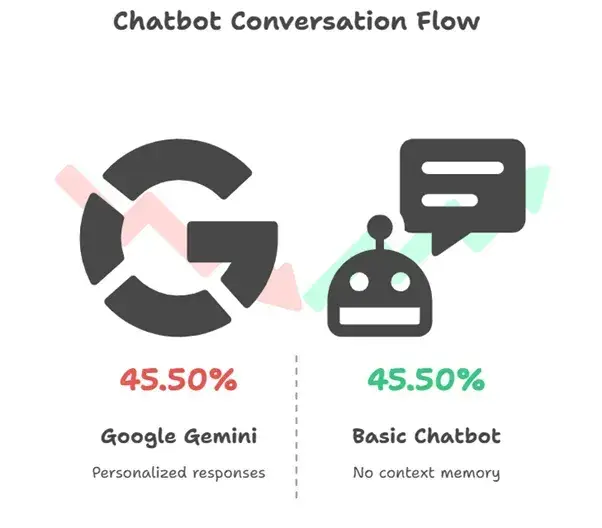
Startups often think broader = better. But Gemini stands out partly because it contextualizes output based on user data, preferences, and history. If your clone doesn’t offer some level of personalization, expect high churn.
Instead, focus on:
- Niche targeting (e.g., content creators, developers, marketers)
- Industry-specific fine-tuning
- Use-case-based onboarding flows
Real talk: a writing assistant for YouTube creators needs different behavior than a code debugger. Clone smarter, not broader.
Mistake 3: Underestimating Infrastructure & Latency
“We’ll host it on a single server and scale later.” Oh dear.
Latency kills conversation. If your Gemini alternative takes more than 1–2 seconds to respond, users will bounce—especially mobile users. Gemini’s performance is backed by Google’s global infrastructure—your clone must plan for:
- Autoscaling with GPUs
- Efficient caching strategies
- Load-balanced backend
- Fallback handling for model outages
A multimodal platform also requires handling heavy image/audio data streams in real-time. That’s not startup garage-level hosting anymore.
Mistake 4: Weak UI/UX That Doesn’t Feel “Smart”
“It works. Isn’t that enough?” Not in 2025.
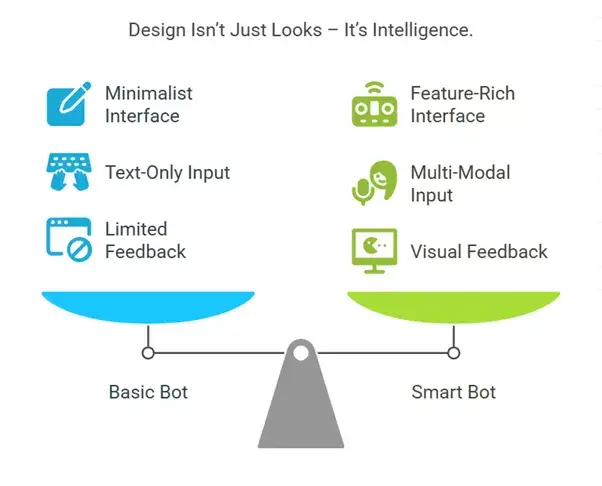
Startups often forget that Gemini clones must feel intuitive, responsive, and… well, a little magical. If your interface feels like a basic text box, you’ve already lost. Gemini uses animations, voice input, visual cues, quick replies, and intent predictions to create a premium feel.
Winning clones should:
- Enable voice input/output
- Provide visual feedback on token generation
- Include chat memory visualization
- Support drag & drop multimodal inputs
Remember, the UX should reflect the intelligence of the AI underneath. Don’t bury brilliance under blandness.
Mistake 5: Poor Monetization Strategy
“We’ll just get a million users first, then think about money.” Famous. Last. Words.
Cloning a powerful tool like Gemini without a clear revenue model is a recipe for a cash burn bonanza. Google can afford freemium because it’s part of their ecosystem. You probably can’t.
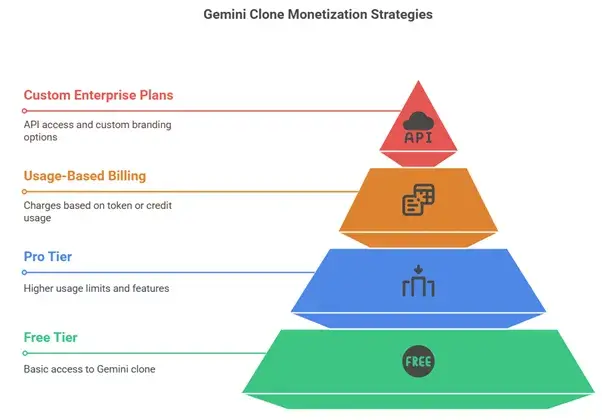
Here’s what successful Gemini clones monetize through:
- Tiered subscriptions (Basic vs. Pro features like longer context windows, file uploads)
- Credits/pay-per-use for premium tasks
- Custom fine-tuning for teams
- White-label offerings for B2B
You need monetization built-in—not bolted on. Don’t wait until your AWS bill hits five digits.
Conclusion
Building a Google Gemini clone isn’t just about replicating what Google did—it’s about understanding why they did it. Startups that treat Gemini as just an LLM frontend usually fizzle out. The winners? They understand infrastructure, UX nuance, personalization, niche targeting, and—most importantly—how to generate revenue early.
The AI boom is just beginning, and it’s not too late to build something meaningful. But you need precision, insight, and a partner who knows how to help you move fast without breaking everything.
At Miracuves, we help innovators launch high-performance app clones that are fast, scalable, and monetization-ready. Ready to turn your idea into reality? Let’s build together.
FAQs
1. What is the biggest technical challenge when cloning Google Gemini?
Scaling a multimodal LLM with low latency and high availability is a huge technical hurdle. It involves GPU orchestration, API management, and real-time load balancing.
2. How do I make my Gemini alternative stand out?
Focus on personalization, niche use cases, and UX enhancements. A “one-size-fits-all” approach rarely works in the AI space.
3. Is it legal to clone Gemini?
Cloning the functionality of Gemini is legal, as long as you don’t copy branding, content, or proprietary models. Always consult legal professionals.
4. Can I use open-source LLMs instead of Gemini or GPT-4?
Yes! Many startups use Mistral, LLaMA 3, or Claude 3 models to save costs and improve flexibility.
5. What platforms should I launch my Gemini clone on?
Start with web and Android (given smartphone dominance), then expand to iOS and browser extensions depending on usage trends.
Related Articles :
Miracuves is an independent software development company. We are not affiliated with, connected to, sponsored by, or endorsed by any company or product named in this article.
Terms such as “X Clone” are used descriptively. It is how the software industry refers to building a platform with functionality comparable to a known service, and how clients search for it.
The entire design and codebase of our products is built by our own team. Our products contain no code, design, graphics, or content originating from any third-party website or applications.
All third-party names and marks referenced in this article are the property of their respective owners, referenced solely to identify the services discussed.