Case study · 2025
A dermatology platform with lesion mapping for Dermacian.
Dermacian's founder, a dermatologist running three clinics, needed software shaped around skin-clinic work.
- Practo Clone · MXDoc
- Solution
- Practo Clone
- Product
- MXDoc
- Delivered
- 2025
- Stack
- PHP
- Base build
- 6 working days
- Blocks reused
- 21 of 26
- Source code
- Transferred
A hospital system reshaped for a skin practice.
Dr. Vivek Rungta's Dermacian clinics needed software built around dermatology; Miracuves worked on the HMS and its apps from July 2025 to April 2026, on MXDoc (MXHealth was its earlier name).
I'm a dermatologist running three clinics. Every HMS I tried was built for general physicians — no lesion mapping, no before/after tracking, no procedure-based billing. I had looked at three different vendors before I spoke with Miracuves. Their MXHealth base gave us the patient app, doctor app, EMR and video consult out of the box — that probably saved 6+ months. They rebuilt the consultation form, lesion mapping, and a custom billing layer for our treatment packages (acne programs, hair restoration cycles) exactly how dermatologists actually work. Front-desk time on scheduling and follow-ups is down ~70%, no-shows are down, and we went fully digital in 9 months — a fully custom job would have been 18.
Dr. Vivek Rungta, Founder & Chief Dermatologist, DermacianThree skin clinics, and no system that fit.
Dermacian is a dermatology practice in Jaipur whose founder, a dermatologist, was running three clinics when he came to Miracuves.
Every hospital management system he had tried was made for general physicians. None had lesion mapping, none tracked before and after results, and none billed by procedure, the way a skin clinic bills its treatments.
He had looked at three other vendors before speaking with Miracuves. The quotation of 30 June 2025 proposed a clinic management system with admin, doctor and patient web panels, Android and iOS apps, rebranding, deployment on Dermacian's own server and app store publishing.
This page covers the HMS and its apps. Dermacian's clinic website was a separate engagement and has its own case study.
Dermacian at a glance
From general-practice software to a dermatology HMS.
Software made for general physicians lacked the tools a skin clinic uses daily, so the base was reshaped around the consultation, lesion mapping and procedure billing.
Systems for general physicians
Dermacian HMS
Patient and doctor apps, EMR and video consult came ready
Who works in it
Where an Indian skin clinic goes digital.
Dermacian practices in India, and the rows below describe the rules and public programs around digital clinical work there; they are context, not claims about Dermacian.
What the clinic asked for at the start.
At the requirements meeting of 4 September 2025, Dr. Rungta and his team set out how the clinic actually works, point by point.
Reworking the details over nine months.
The minutes from September 2025 to March 2026 show the clinic refining its requests as it used the system, and each round changed the build.
Hospital software inside a clinic
The quoted system came with more than 60 hospital modules, including beds, blood bank and inpatient admissions, that a skin practice does not run.
Prescriptions doctors could write quickly
The October walkthrough asked for dosage fields in prescription templates, then in January the clinic asked to strip strength and other extra fields back out.
Finding a diagnosis by search
The doctors wanted to add and view diagnoses easily, for example every acne diagnosis for the day.
Fees for family and friends
The consultation fee was view-only, so reception could not charge family, friends or special cases a reduced amount.
Walk-in patients without email
Registration required an email, a last name and a password, a barrier for walk-in patients who may not want to log in by email, such as people from rural areas.
The base underneath, and the dermatology layer on top.
From the base came the patient and doctor apps, the EMR and video consult; on top, Miracuves rebuilt the consultation form, lesion mapping and a billing layer for treatment packages.
The Practo Clone base (MXDoc) brought a patient website and app, a Flutter doctor app, separate panels for doctors, labs and pharmacies, and an admin console, running on PHP and Laravel. Miracuves builds that base for any client in 6 working days.
The rebuilt billing handles packaged treatments, acne programs and hair restoration cycles among them. The admin dashboard tracks invoices, bills, payments and advance payments in rupees, beside counts of doctors, patients and staff by role.
The quotation scoped rebranding, deployment on Dermacian's own server, Google API setup and app store publishing, and in March 2026 Miracuves took on the server setup and the email configuration.
Built for Dermacian
Reused from the Practo Clone base
Per-client blocks on the Practo Clone base
The MXDoc base beneath the skin clinics.
Of 26 blocks in the Practo Clone base, 21 are reused as delivered.
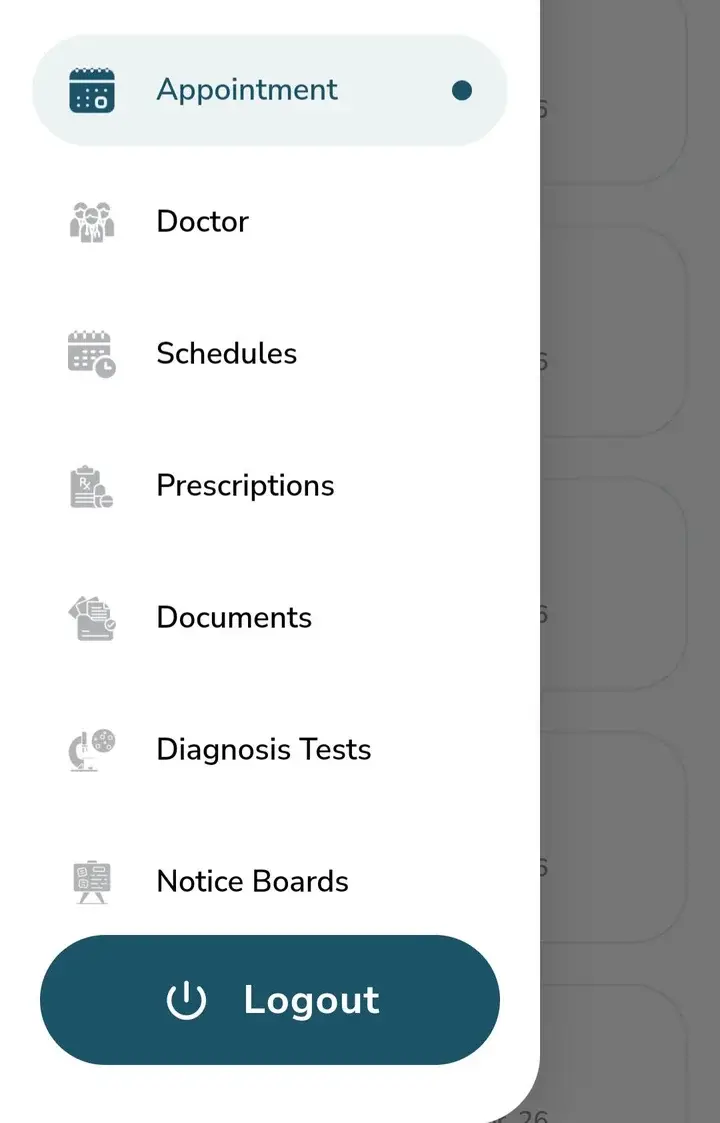
Dermacian's doctor app, as the doctors saw it.
The doctor app menu from the Dermacian app build in the project files, cropped to the menu itself.
Doctors, reception, patients and the admin.
Doctors, reception staff, patients and the admin each worked in their own view of the system.
What changed at the front desk.
About 70% less front-desk time spent on scheduling and follow-ups.
Reported by Dr. Vivek RungtaFounder & Chief Dermatologist, Dermacian
- No-shows
- Down, by the clinic's own account
- Fully digital
- In 9 months, against an estimated 18 for a fully custom job
- Source code
- Transferred to Dermacian
The 9 months is the clinic's own time to go fully digital, by its founder's estimate, not Miracuves' 6 working day base build.
Dermacian's HMS, question by question.
What did Dermacian need that general clinic software lacked?
Lesion mapping, before and after tracking and billing by procedure. Its founder found none of these in the systems he had tried, which were made for general physicians.
What came from the base, and what was rebuilt?
The patient and doctor apps, the EMR and video consult came ready in the base. On top of it, Miracuves rebuilt the consultation form, lesion mapping and a billing layer for treatment packages, all shaped for dermatology.
How long did the Dermacian HMS engagement run?
From July 2025 to April 2026. Dr. Rungta put the clinic's time to go fully digital at 9 months; the base build on its own takes 6 working days.
How did prescriptions change during the project?
The clinic first asked for dosage fields in templates, then for fewer fields, and in March 2026 for one text box with saved entries suggested as a doctor types.
What did the clinic ask for walk-in patients?
At the March 2026 meeting it asked for email, last name and password to be optional, so walk-in patients, including people from rural areas, could be entered without a login.
Is the Dermacian website part of this project?
No. The clinic website was a separate engagement with its own case study; this page covers the HMS and its apps, whose patient front is at app.dermacian.com.