Case study · 2026

A doctor-booking platform with its own payments layer, for Wellyansh Health.

Wellyansh was built to handle the full patient payment flow, not only the booking.

  • Practo Clone · MXDoc
WWellyanshPracto Clone · 2026
WWellyanshClient · Practo Clone
Solution
Practo Clone
Product
MXDoc
Delivered
2026
Stack
PHP
Base build
6 working days
Blocks reused
21 of 26
Source code
Transferred
5applications on the base
21blocks reused unchanged
5per-client blocks on this base

Wellyansh Health and MXDoc.

Wellyansh Health Pvt. Ltd took delivery of Wellyansh in 2026, a Practo Clone build on MXDoc. Miracuves added a custom payment gateway with UPI and card rails and a reconciliation module to the base. The quote below calls the base MXHealth, the earlier name of MXDoc.

Wellyansh is a doctor-booking platform with our own payment gateway sitting underneath — we handle the full patient payment flow, not just the booking. Building a healthcare product and a payment gateway at the same time is a lot, and we needed it in one quarter. Miracuves's MXHealth base gave us the doctor and patient apps, the booking flow, and the prescription module. They added our custom payment gateway with the UPI and card rails we needed, plus a reconciliation module tied to our finance stack. We launched in 11 weeks. The product is stable, the gateway is processing real volume, and our settlement times are well under what a third-party processor would have given us.

Deevakar Chand, Co-founder & CEO, Wellyansh Health Pvt. Ltd

A doctor-booking app that had to carry the payments.

Wellyansh Health Pvt. Ltd., a Kathmandu telehealth company led by co-founder and CEO Deevakar Chand, wanted doctor booking with its own payment gateway underneath.

Wellyansh set out to take a patient from booking to payment inside one product. By its own account it runs every step of a patient's payment, not only the appointment, so the care product and the gateway had to be built side by side.

The time allowed was one quarter. Work began on MXDoc, the Practo Clone base, and Miracuves' project list dates the engagement from February to April 2026.

On its public site, Wellyansh describes the wider problem in Nepal as a care journey the patient coordinates alone, moving between a doctor, a separate lab, a pharmacy and the follow-ups.

Wellyansh at a glance

ClientWellyansh Health Pvt. Ltd.
Led byDeevakar Chand, Co-founder & CEO
MarketNepal, from a base in Kathmandu
EngagementFebruary to April 2026
BasePracto Clone (MXDoc)
PaymentsIts own gateway, on UPI and card rails

From a care journey to a payment layer.

Wellyansh's service model sat on the MXDoc base, and Deevakar Chand's account names the three pieces Miracuves added beneath it.

Wellyansh's care model

Doctor consultationsbooked and held from the phone
Lab samples at homecollected at the patient's door
Medicine deliverya pharmacist calls to explain each one

The MXDoc base

Doctor and patient appsone app for each side of a visit
Booking flowpatients book against a doctor's availability
Prescription moduleprescriptions written from the consult

The Practo Clone base, built in 6 working days

Built for Wellyansh

Custom payment gatewayWellyansh's own, under the booking
UPI and card railsthe ways patients pay
Reconciliation moduletied to Wellyansh's finance stack

How Nepal pays, and where Wellyansh fits.

The first four rows come from Nepal Rastra Bank's payment systems oversight report for FY 2024/25; they describe the market, not Wellyansh's own figures.

01
RegulatorNepal Rastra Bank licenses payment system operators and payment service providers and oversees them under the NRB Act, 2002 and the Payment and Settlement Act, 2019.
02
Mobile walletsWallet users reached 26.76 million by mid-July 2025, up from 8.88 million in mid-July 2021, and wallet transactions totaled NPR 506.31 billion.
03
QR paymentsQR codes were the most widely preferred payment instrument, held by around 2.9 million merchants, and QR transaction numbers rose 92.5 percent in FY 2024/25.
04
UPI in NepalSince March 2024, Indian visitors have paid by UPI QR at 1.7 million Nepali merchants through one operator, a link launched by NPCI International and Fonepay; UPI India made up 981,654 cross-border QR transactions in FY 2024/25.
05
Wellyansh's railsInto that mix came Wellyansh's own gateway, built by Miracuves and running on UPI and card rails.

Four calls Wellyansh made before building.

Before any code, Wellyansh had settled who would hold the payment flow, how soon it had to launch and which rails its patients would pay on.

01
The gateway stays in-houseWellyansh chose to run its own payment gateway beneath the booking app and handle the whole patient payment flow itself.
02
One quarter, two productsThe healthcare product and the gateway were to be built together, and Wellyansh needed both inside a single quarter.
03
UPI and card railsPatients were to pay over UPI and card rails; Miracuves' project list files the work as a Practo Clone build with custom payment gateways.
04
Finance in the loopBeside the gateway, Wellyansh wanted a reconciliation module tied directly to its finance stack.

The payment problems, and how each was handled.

Each problem below comes from Deevakar Chand's account of the project, with the base product page showing what MXDoc already did.

A healthcare app and a gateway at once

Doing the care product and the payment gateway together was heavy work for a single quarter.

What was doneMXDoc already had the doctor and patient apps, booking and prescriptions, so the payment layer became the new work.

Payment beyond the appointment

Wellyansh wanted to own the full patient payment flow, while the base sends consultation fees through whichever gateway a client connects and keeps a payment reference.

What was doneMiracuves added Wellyansh's custom payment gateway, carrying the UPI and card rails it needed.

Reconciling its own payments

With its own gateway, reconciling patient payments became Wellyansh's job instead of a processor's.

What was doneMiracuves built a reconciliation module and tied it to Wellyansh's finance stack.

Settlement on Wellyansh's terms

An outside processor would have set how quickly Wellyansh received the money its patients paid.

What was doneWith its own gateway running, Deevakar Chand reported settlement times well below what an outside processor would have offered.

MXDoc underneath, a payment layer on top.

Wellyansh's account credits the base with the apps, booking and prescriptions, and credits Miracuves with the gateway, its rails and the reconciliation.

The base put a patient app and website, a doctor app, provider panels where doctors, labs and pharmacies work, and an operator console on one codebase. Its apps ran on Flutter over PHP 8.1, Laravel 10 and MySQL.

On the base, consultation fees pass through whatever gateway a client connects, and the platform stores a payment reference rather than a card number. For Wellyansh, Miracuves went a step further and built a gateway of its own underneath.

For every client, the base build on this family takes 6 working days; custom work such as Wellyansh's payment layer is planned and timed on its own. Wellyansh received the transferred source code.

Built for Wellyansh

GatewayWellyansh's own custom payment gateway
RailsUPI and card
ReconciliationA module tied to Wellyansh's finance stack
ScopeThe full patient payment flow, not only booking
Source codeTransferred to Wellyansh

Reused from the Practo Clone base

Patientbook, consult, records
Doctorslots, consult, prescribe
Laboratorytests, samples, reports
Pharmacydispense, deliver
Adminverification, disputes
API gatewayauth, rate limits, idempotency
Realtime channelqueue position, consult presence
Event busreminders, result fan-out
Appointment calendarslots, holds, reschedules
Practitioner directoryprofiles, specialities, availability
Consultation roomvideo, chat, notes
Patient recordhistory, reports, documents
Prescription & orderse-Rx, lab and pharmacy orders
Consent & accesswho may read a record
Payments & refundsconsult fees, settlements
Identity & verificationaccounts, credentials on file
Notificationsreminders, results ready
Analyticsutilization, no-shows
Transactional storeappointments, records, ledger
Cache & realtimesessions, slot locks
Object storagereports, scans, documents

Per-client blocks on the Practo Clone base

Specialitieswhat your network covers
Practitioner networkwho you onboard
Clinical complianceyour regulator's rules
Payment gatewaysyour providers
Brand & themingpatient and clinician apps

MXDoc beneath the payment gateway.

The Practo Clone base reuses 21 of 26 blocks unchanged.

Practo Clone architecture MXDoc / filled = per-client blocks
Practo Clone: the architecture, and one appointment traced through it 5 client surfaces reach an edge of gateway, realtime channel and event bus. The base holds 10 services, of which Appointment calendar is the source of truth, and 5 blocks are built for each client. Partner services sit behind a boundary and are chosen by the client. Underneath, one appointment is traced across 5 steps. 21 of 26 blocks are reused unchanged. Practo Clone MXDoc Four documented builds were made on this base. The filled blocks are set per client. Ships ready-made Per-client blocks Surfaces Edge The base - already built Partner boundary Data Patient book, consult, records Doctor slots, consult, prescribe Laboratory tests, samples, reports Pharmacy dispense, deliver Admin verification, disputes API gateway auth, rate limits, idempotency Realtime channel queue position, consult presence Event bus reminders, result fan-out Appointment calendar slots, holds, reschedules SOURCE OF TRUTH Practitioner directory profiles, specialities, availability Consultation room video, chat, notes Patient record history, reports, documents Prescription & orders e-Rx, lab and pharmacy orders Consent & access who may read a record Payments & refunds consult fees, settlements Identity & verification accounts, credentials on file Notifications reminders, results ready Analytics utilization, no-shows Per-client blocks Specialities what your network covers Practitioner network who you onboard Clinical compliance your regulator's rules Payment gateways your providers Brand & theming patient and clinician apps chosen by the client Payment gateway their merchant account Video consultation their room provider SMS & email their sender Maps & geocoding their key Object storage their bucket Transactional store appointments, records, ledger Cache & realtime sessions, slot locks Object storage reports, scans, documents one appointment, end to end every step below runs on blocks that already existed 1 Search speciality, location, availability 2 Book slot held, fee taken 3 Consult video, chat, notes 4 Prescribe e-Rx and orders written 5 Follow up record updated, next slot offered PHP LARAVEL · MYSQL · NODE.JS · GOOGLE MAPS 21 of 26 blocks reused unchanged 5 per-client blocks

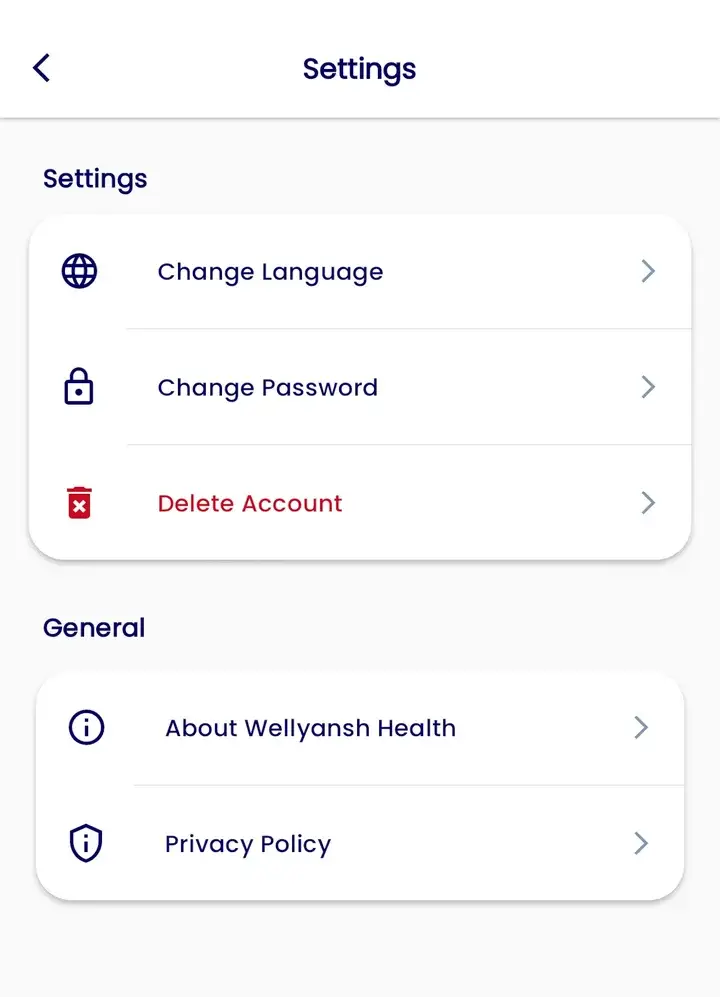
Two Wellyansh screens, doctor and patient.

Two phone screens from the Wellyansh iOS screenshots in the project files, cropped to the app and showing no patient details.
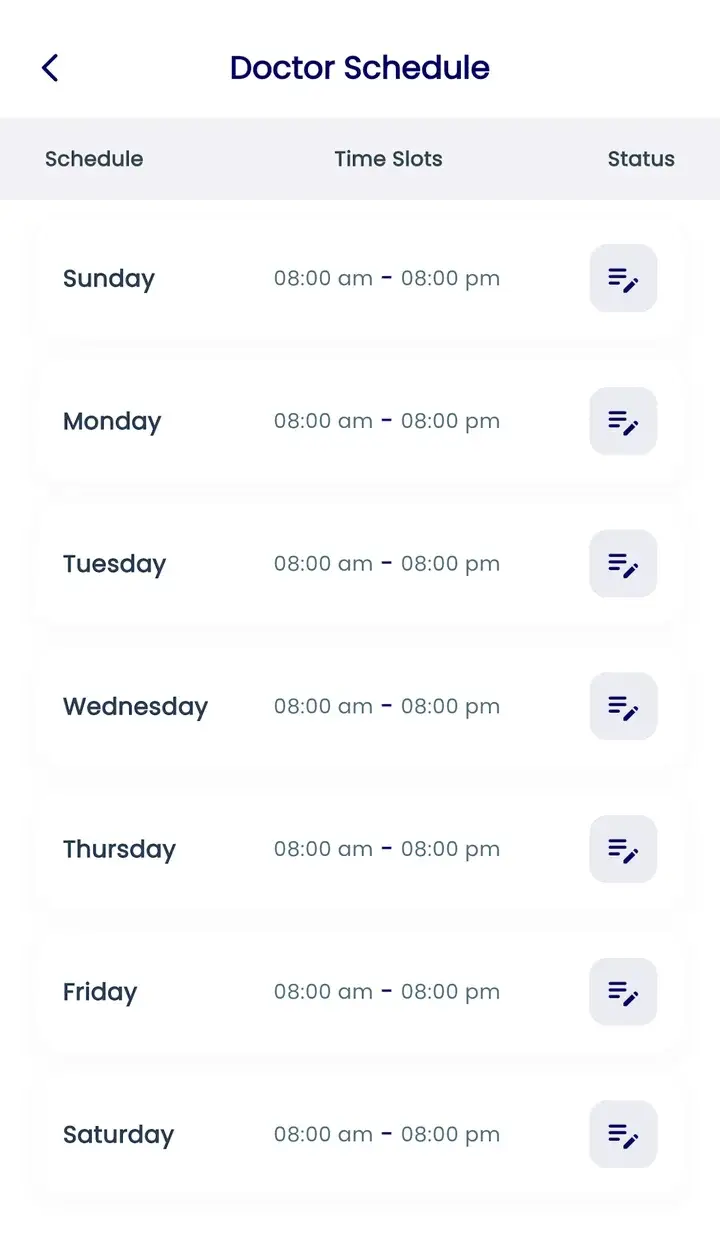
Wellyansh doctor app Doctor Schedule screen listing Sunday to Saturday, each from 08:00 am to 08:00 pm, with an edit button beside every day
Doctor scheduleA doctor's week from Sunday to Saturday, each day with its own time slot and an edit control.
Wellyansh patient app Settings screen with Change Language, Change Password and Delete Account, and a General group with About Wellyansh Health and Privacy Policy
Patient settingsLanguage, password and account deletion, with About Wellyansh Health and the privacy policy underneath.

Patients, doctors, pharmacies and hospitals on Wellyansh.

Wellyansh's public site describes four groups it serves today; these cards follow its own descriptions, not the project's build list.

01
Patients at homePatients book a general physician or specialist in the app, consult from their phone, have lab samples collected at the door and get prescribed medicines delivered.
02
Doctors on their own hoursDoctors submit their NMC registration for verification, set the days and hours they consult, and see patients over video or audio inside the Wellyansh app.
03
Pharmacies filling ordersPharmacies receive the order with its digital prescription, pack it for a Wellyansh collector to pick up, and are paid on an agreed settlement cycle.
04
Hospitals and clinicsInstitutions list departments and specialists, allocate doctors' time slots to Wellyansh patients and receive bookings and structured referrals, while keeping their own systems.

Wellyansh's launch, by its own account.

Launched in 11 weeks, with its own gateway processing real volume.

Reported by Deevakar ChandCo-founder & CEO, Wellyansh Health Pvt. Ltd

Engagement
February to April 2026
Base
Practo Clone (MXDoc)
Live at
wellyansh.com; the patient app is listed on Google Play and the App Store

11 weeks is Wellyansh's own launch time; the 6 working days cover only the MXDoc base build.

Questions about the Wellyansh build.

What is Wellyansh?

A telehealth platform from Wellyansh Health Pvt. Ltd. in Kathmandu, Nepal, run as doctor booking with Wellyansh's own payment gateway underneath. Its starting point was MXDoc, the Practo Clone base, and it is live at wellyansh.com.

What did the MXDoc base give Wellyansh?

By Deevakar Chand's account, it gave the two apps for doctors and patients, booking, and the prescription module. The same base also carried laboratory and pharmacy panels and an operator console.

What did Miracuves build on top of the base?

Wellyansh's own payment gateway, carrying UPI and card payments, and a reconciliation module tied to its finance stack.

How long did Wellyansh take to launch?

Wellyansh needed the product within one quarter and launched in 11 weeks, by its own account; the project list dates the engagement February to April 2026. The base build alone takes 6 working days.

How did the payment gateway perform after launch?

Deevakar Chand reported the gateway processing real volume, with settlement times well below what an outside processor would have offered Wellyansh.

Did Wellyansh receive the source code?

Yes. The delivery record shows the source code was transferred to Wellyansh.

Disclaimer

Miracuves is an independent software development company. We are not affiliated with, connected to, sponsored by, or endorsed by any of the brands or platforms named on this page.

Why these names

Names of the form “Brand Clone” are used descriptively. It is how the software industry refers to building a platform with functionality comparable to a known service, and how clients search for it.

Who built this

The entire design and codebase of our products is built by our own team. Our products contain no code, design, graphics, or content originating from any third-party website or application.

Trademarks

All third-party names and marks listed on this page are the property of their respective owners, referenced solely to describe the category of software offered.