
The Hidden Cost of “Free”: Is It Cheaper to Build an App Yourself?
Key Takeaways Building an app yourself may look cheaper at first, but hidden costs can increase quickly. Founders must account for design, backend, mobile apps,

Key Takeaways Building an app yourself may look cheaper at first, but hidden costs can increase quickly. Founders must account for design, backend, mobile apps,
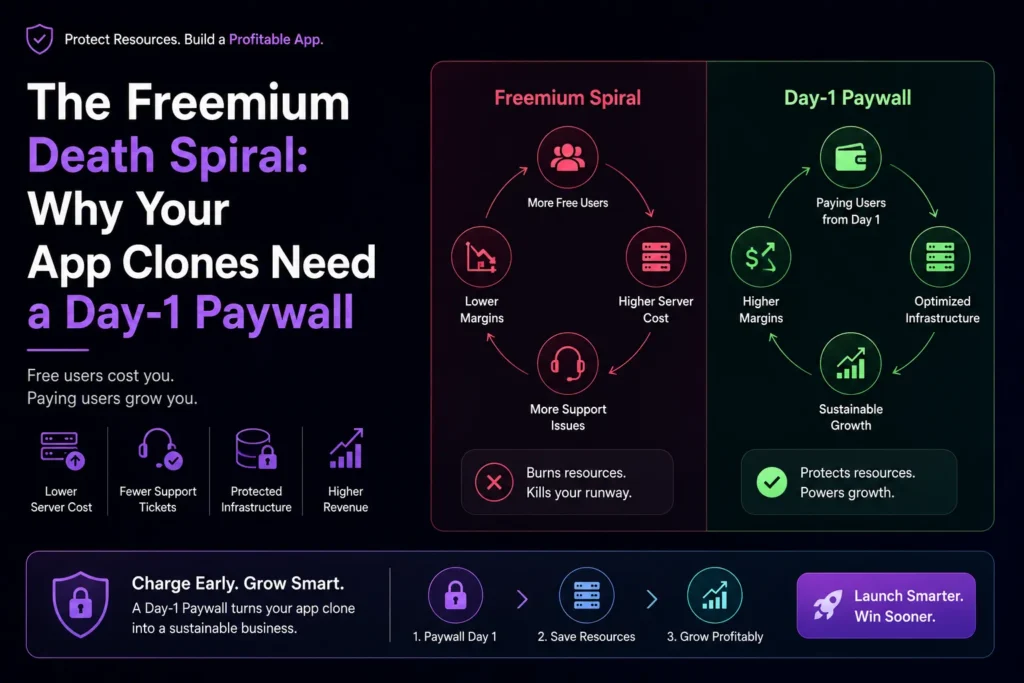
Key Takeaways Freemium app clones can drain server, support, and database resources before revenue starts. A Day-1 paywall helps founders filter serious users from casual
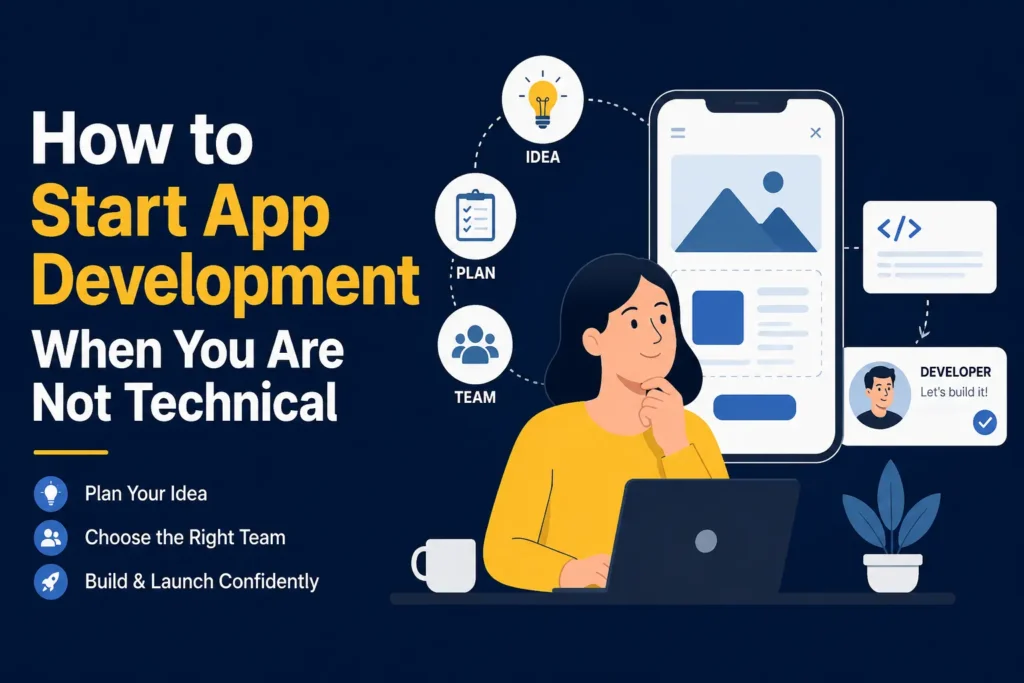
Key Takeaways What You’ll Learn Non-technical founders do not need to become developers before launching an app. Your job is to own the business logic,

Key Takeaways Poorly coded apps can create hidden API expenses. Maps, OTP, and payment APIs increase monthly costs fast. Repeated API calls waste server and

Key Takeaways A fintech clone app must balance strong security with fast payment and wallet transactions. Users, merchants, admins, banking partners, and compliance teams need

Source code ownership is one of the most overlooked decisions in app development. Many founders focus on design, features, and launch speed, but later discover that their app is tied to vendor-controlled code, hosting, or licensing terms. This creates vendor lock-in and limits future customization, migration, and scaling.
In this blog, we explain why founders should demand source code transparency from day one, how the “walled garden” trap affects long-term product control, and why Miracuves believes app development should be built on ownership, transparency, and founder independence.

Learn how a white label delivery app can help a struggling delivery startup move from a failing custom build to a launch-ready platform through a focused 6-day migration process.
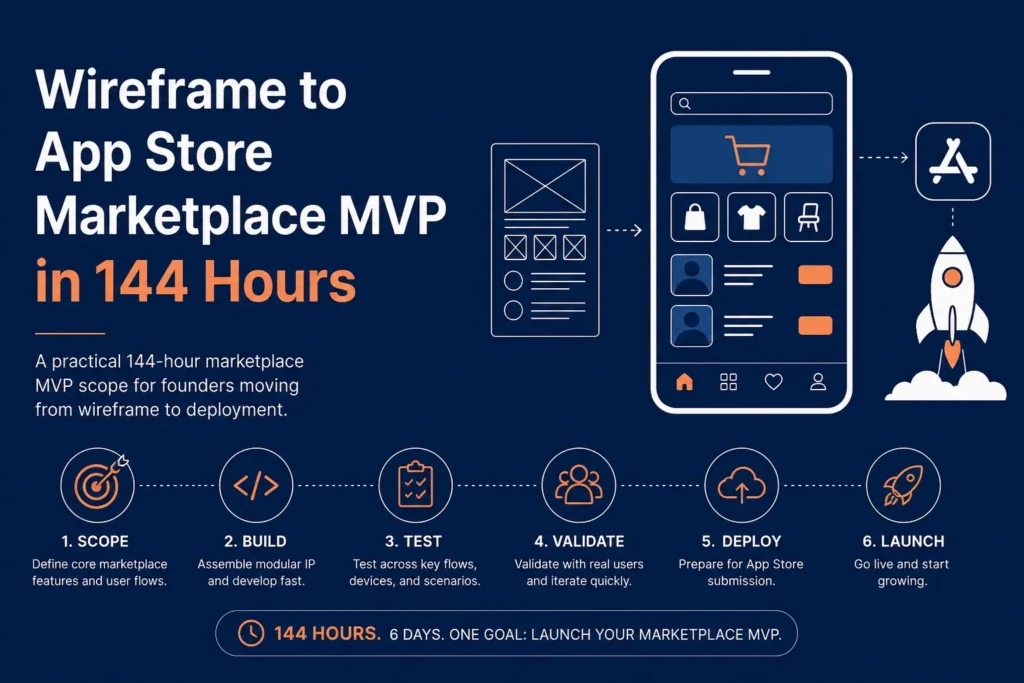
Key Takeaways A marketplace MVP scope breakdown helps founders launch faster by focusing only on the features required to validate the business idea. The 144-hour
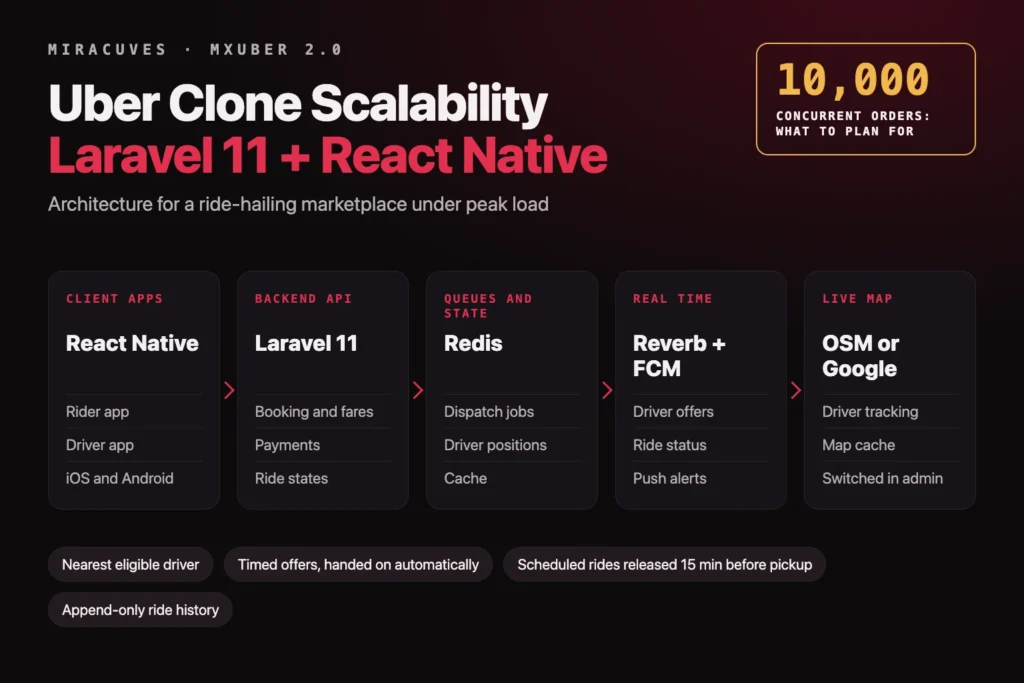
Stress-testing an Uber clone at 10,000 concurrent orders proves one thing: scalability is not about framework myths, it is about architecture discipline. This CTO-focused deep dive explains how PHP/Laravel, Redis queues, real-time dispatch workflows, and Flutter’s rendering layer can support high-density ride-hailing operations without sacrificing launch speed or product control.

How the Laravel and Flutter monolith became the secret behind the Miracuves Instant White-Label Engine. The Introduction Every tech blog on the internet will tell
Got an app in mind? Let's talk on WhatsApp.
Hi! What are you building? Pick one and a real person replies in under 2 hrs.
Hi Miracuves! I am interested in a ready-made app.
Leaving already? Take this with you.
Pick any of our 90+ ready-made solutions. We brand it, launch it and hand over 100% of the source code.

"We had a hard regulator date for a cross-border neobank. Accounts ledger, KYC and card issuing came off their shelf; we added the corridor FX engine and our partner bank's settlement layer. We hit the milestone with room to spare, which would not have happened from a standing start."
Peter Lu · Managing Director, Apex Vertex Capital Holdings Ltd




Tell us what you are building. A real person replies in under 2 hrs, Mon-Sat.
Or claim it on WhatsAppA real person replies in under 2 hrs, Mon-Sat, with your launch plan. Want it sooner? Pick a 15-minute slot.
"We had a hard regulator date for a cross-border neobank. Accounts ledger, KYC and card issuing came off their shelf; we added the corridor FX engine and our partner bank's settlement layer. We hit the milestone with room to spare, which would not have happened from a standing start."
Peter Lu · Managing Director, Apex Vertex Capital Holdings Ltd+$2,288 of launch extras, on us
Worth $2,288. Yours free.
Optional. Paying in full works too.
Live in 6 daysDemo before you paySource code is yours
30% off the published price of any ready-made solution, on orders placed by 30 November 2026. The extras are included with every ready-made solution order. We submit to your own Google Play and Apple developer accounts and fix any technical rejection until the apps are approved. Rejections over store listing details (descriptions, screenshots, policy links and other metadata) are yours to update; review times are set by Apple and Google. The 6 working days start once your branding, hosting and accounts are ready. We reply in under 2 hours, Mon-Sat.
Optional. Paying in full works too.
25% off the published price of any ready-made solution ordered by 30 October 2026. The extras are included with every ready-made solution order. We submit to your own Google Play and Apple developer accounts and fix any technical rejection until the apps are approved. Rejections over store listing details (descriptions, screenshots, policy links and other metadata) are yours to update; review times are set by Apple and Google. The 6 working days start once your branding, hosting and accounts are ready. We reply in under 2 hours, Mon-Sat.