
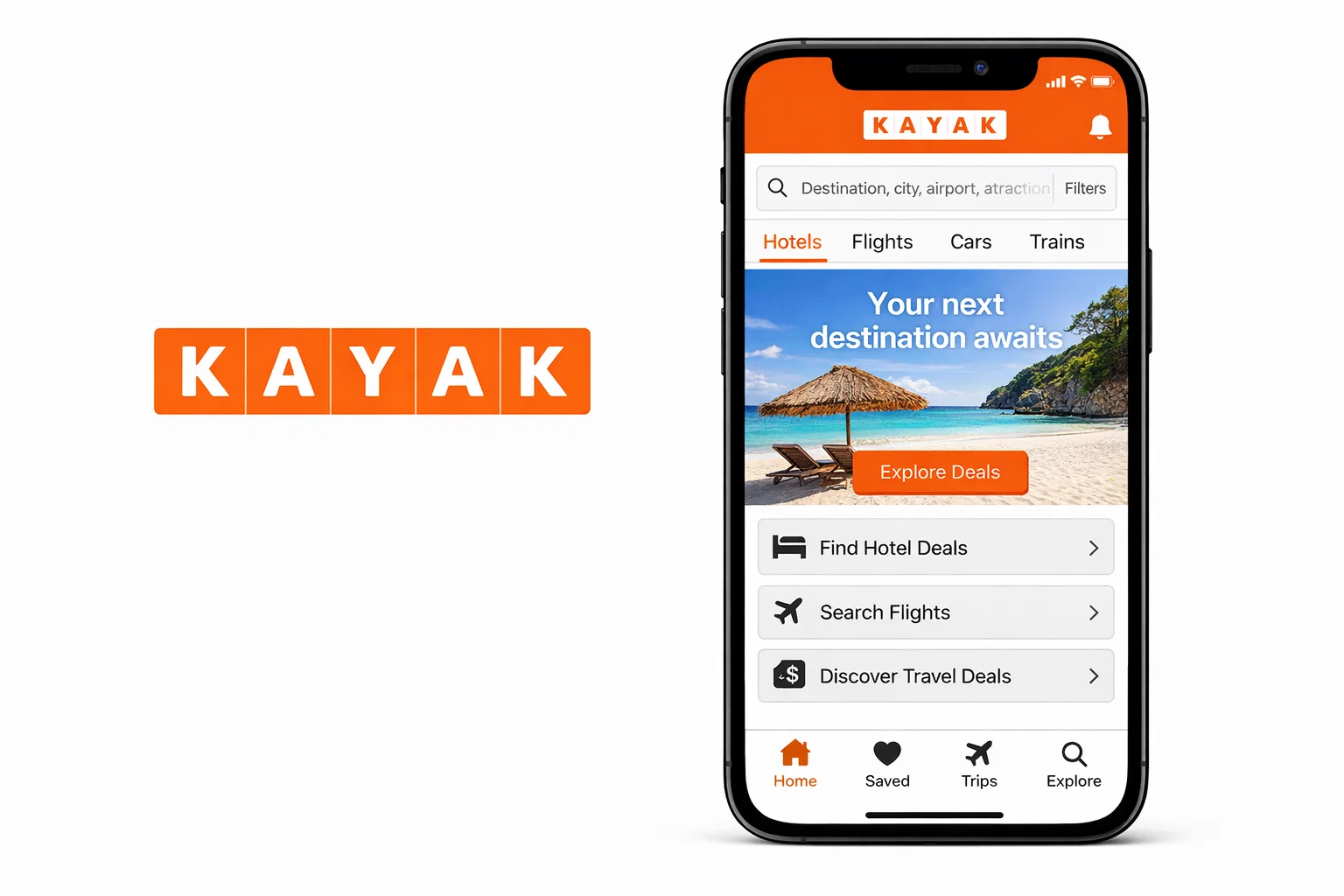
Key Takeaways
What You’ll Learn
- Kayak is a travel search platform that helps users compare flights, hotels, cars, and vacation options.
- Users search in one place and view prices from different travel providers and booking sites.
- Kayak does not usually sell inventory directly; it redirects users to partners for booking.
- Price comparison, filters, and alerts make travel planning faster and more convenient.
- Its business model depends on referrals, ads, and travel partner commissions.
Stats That Matter
- Travel metasearch platforms help users compare multiple booking options without visiting every website separately.
- Flight and hotel comparison remain two of the strongest use cases for platforms like Kayak.
- Features like price alerts, flexible dates, and filters improve user decision-making.
- Mobile travel searches continue to shape how users plan and book trips.
- Trust signals such as transparent pricing, reviews, and reliable partner listings directly affect conversions.
Real Insights
- Convenience drives usage when users can compare travel options quickly in one interface.
- A strong travel platform needs accurate data, fast search, and clean filters.
- Price transparency helps build trust before users move to a booking partner.
- Personalized alerts and recommendations can increase repeat engagement.
- Growth comes from reliable comparisons, partner coverage, and simple travel discovery.
Imagine you’re planning a trip from New York to Miami. You check one airline site, then another, then two hotel websites, then a car rental app. After half an hour, you still do not know whether you found the best option or just the first decent one.
That’s exactly the kind of problem KAYAK was built to solve.
KAYAK searches hundreds of travel sites at once and brings the results into one place so users can compare flights, hotels, rental cars, and vacation packages more easily. On its official homepage, KAYAK says it searches hundreds of other travel sites at once to help users make the right decisions on flights, hotels, and rental cars.
How KAYAK Started and Why It Matters
KAYAK has been around since 2004, and its company information describes it as a meta-search engine built around helping travelers make confident decisions. The company says it brings together hundreds of travel sites so users can compare flights, hotels, car rentals, and vacation packages in one place.
What makes KAYAK especially important is that it does not operate like a traditional online travel agency. Its About page explains that the platform was designed to be comprehensive, surfacing offers directly from airlines, hotels, car rental companies, and trusted third-party sources so travelers can see the full picture before booking. In other words, KAYAK is built to help users compare first and decide smarter before they book with a provider.
KAYAK’s scale also shows why it matters. The platform says that over 100 million travelers come to KAYAK each month to search for cheap flights, hotels, and rental cars. That makes it one of the biggest travel comparison platforms in the world.
What You’ll Learn in This Guide
By the end of this guide, you’ll understand what KAYAK is, how KAYAK works for travelers, how its business model functions, which features make it successful, what technology powers the platform, and why many businesses want to build similar travel-comparison apps. KAYAK’s live platform already shows why the model is so attractive: it combines comparison across flights, stays, cars, packages, trip planning, and newer tools like KAYAK.ai in one ecosystem.
What Is KAYAK? The Simple Explanation
What Is KAYAK ?
KAYAK is a travel search and comparison platform that helps people compare flights, hotels, rental cars, and vacation packages from many travel providers in one place. Instead of booking only from one airline or one hotel site, users can search on KAYAK, compare prices and options, and then choose the provider that fits them best. KAYAK’s own homepage says it searches hundreds of travel sites at once to help users make the right decisions on flights, hotels, and rental cars.
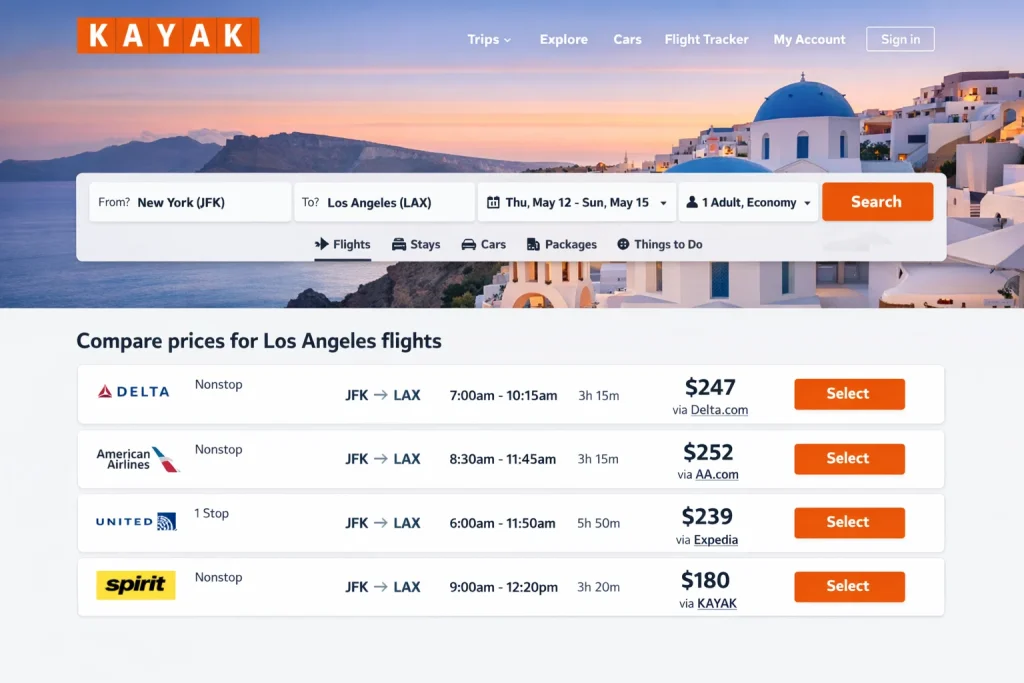
The Core Problem KAYAK Solves
Travel planning gets messy when prices are spread across too many websites. A traveler may need to check airline sites, hotel platforms, rental car brands, and online travel agencies one by one just to understand what is available.
KAYAK solves that by acting as a comparison engine. It gathers results from hundreds of travel sites and shows them in one search experience, which makes it easier to compare prices, routes, providers, dates, and trip options without repeating the same search over and over.
In simple terms, KAYAK saves time and helps travelers make smarter booking decisions.
Who Uses KAYAK?
KAYAK serves several different travel audiences:
• Budget travelers looking for cheaper flights
• Flexible travelers exploring destinations and dates
• Holiday planners comparing hotels and cars alongside flights
• Frequent travelers who want fast comparison across many providers
• People who want to research first before deciding where to book
Because KAYAK covers flights, hotels, car rentals, and packages, it works for both simple one-way searches and more complete trip planning.
KAYAK’s Market Position
KAYAK is one of the biggest travel comparison platforms in the world. On its official homepage, the company says over 100 million travelers come to KAYAK each month to search for cheap flights, hotels, and rental cars. That scale matters because it shows KAYAK is not a niche travel tool — it is a major entry point for trip planning.
Why Did KAYAK Become Successful?
KAYAK became successful because it made comparison simple.
Its growth comes from a few clear strengths:
• It searches hundreds of travel sites at once
• It helps users compare instead of forcing them into one seller
• It covers more than just flights
• It supports flexible search and planning tools
• It has strong brand recognition in travel metasearch
Its current product also goes beyond basic comparison with tools like Trips, AI Mode, and KAYAK.ai, which show the platform is evolving into a broader travel-planning assistant.
What Makes KAYAK Different from Traditional Travel Booking?
Traditional travel booking often means going to a single airline, hotel, or online travel agency and seeing only that company’s offers.
KAYAK works differently. It is built to compare offers across many providers first, then help users choose where they want to book. That makes it especially useful at the decision stage of travel planning, which is often where travelers need the most help.
How Does KAYAK Work? Step-by-Step Breakdown
KAYAK works like a travel metasearch and comparison engine. Instead of selling only its own inventory, it scans hundreds of travel sites, pulls the results into one place, and helps users compare flights, hotels, rental cars, and vacation packages before choosing where to book. KAYAK’s own company pages explain that a simple search scans prices on hundreds of travel sites in seconds and puts the deals in one place for comparison.
How KAYAK Works for Travelers
Starting a Search
• Users open the KAYAK website or app
• They choose a category like flights, hotels, rental cars, or packages
• They enter search details such as destination, dates, travelers, or pickup location
KAYAK then searches across many providers at once and shows the available results in one interface. Its homepage says it searches hundreds of other travel sites at once to help users make the right decisions on flights, hotels, and rental cars.
Comparing Flights
• Travelers search for a route and date range
• KAYAK shows results from airlines and online travel providers together
• Users can compare by price, duration, stops, airline, and other factors
KAYAK’s flight page says it compares flight deals on hundreds of airline ticket sites, while also offering tools like a price calendar to help identify cheaper days.
Comparing Hotels and Stays
• Users search a city or destination with travel dates
• KAYAK compares hotel and accommodation deals across many travel sites
• Listings can include reviews, pricing, and location-based information
KAYAK says its hotels and stays tools search hundreds of travel sites and show verified guest reviews to help users choose the right place at the right price.
Comparing Rental Cars
• Users enter pickup and drop-off information
• KAYAK compares rental car options across providers
• Results can be sorted and filtered by price, company, vehicle type, and more
That means the same comparison logic used for flights also extends into local transport planning.
Exploring Flexible Travel Options
• Travelers can use tools like Explore to search based on budget instead of a fixed destination
• They can also use flexible date tools and broader search features to spot cheaper travel opportunities
• KAYAK now also offers AI-powered discovery through features like AI Mode and KAYAK.ai
KAYAK Explore helps users find where their budget can take them, while AI Mode and KAYAK.ai let users ask travel questions in more natural language and get personalized results with live pricing.
Redirecting to the Booking Provider
• Once a user picks an option, KAYAK usually sends them to the airline, hotel site, travel agency, or rental car provider
• The actual booking and payment are generally completed with that provider
• KAYAK’s role is mainly the comparison and decision stage, not always the seller of record
That is a core part of how KAYAK works as a metasearch platform. It helps users compare first, then book with the provider they choose.
How KAYAK Helps After the Search
Trips and Booking Organization
• KAYAK also offers Trips, a free trip planner and travel assistant
• Users can save favorite results, organize itineraries, and receive real-time flight status alerts
• This helps extend the platform beyond search into trip management
That matters because it gives users a reason to stay connected to KAYAK even after they have chosen their booking provider.
How KAYAK Works Behind the Scenes
Partner Aggregation
• Airlines, hotel providers, rental car companies, and travel agencies supply pricing and availability
• KAYAK aggregates those results into one search experience
• Users compare the options, then move to the selected provider to book
This partner-based model is why KAYAK can show such a broad range of choices without needing to directly own all inventory.
Search, Filter, and Ranking Logic
• KAYAK organizes results by things like price, speed, duration, emissions, or provider
• Travelers can filter and sort to find what matters most to them
• That turns huge amounts of travel data into a much easier decision-making process
This sorting and filtering layer is what makes raw travel inventory actually usable.
Technical Overview Explained Simply
At a simple level, KAYAK works like this:
• A user enters a search
• KAYAK scans hundreds of partner travel sites
• It gathers the results into one place
• The user compares, filters, and chooses an option
• KAYAK redirects the user to the chosen provider
• The provider completes the booking
In simple terms, KAYAK helps travelers research and compare first, then book smarter with the provider they prefer.
KAYAK’s Business Model Explained
KAYAK makes money without needing to be the main seller for every trip. That is one of the most important things to understand about the platform. KAYAK’s own company and help pages explain that it is a travel search engine: users compare offers on KAYAK, then usually click through to an airline, hotel site, travel agency, or car rental provider to complete the booking. (kayak.com)
How KAYAK Makes Money
• Commissions from partner redirects and booking assists
• Advertising and sponsored placements
• Partner solutions such as affiliate and distribution products
• Commercial relationships with airlines, OTAs, hotels, car rental brands, and destinations
KAYAK explains this pretty directly in its own travel-news content: when a user clicks through to a partner and books, KAYAK may earn a commission, either per click or per booking. It also says some partners promote their results on KAYAK through sponsored listings.
Commission-Based Referral Revenue
This is the core of KAYAK’s business model.
When a traveler searches on KAYAK:
• KAYAK compares results from many providers
• The traveler selects the option they want
• KAYAK redirects them to the airline, OTA, hotel provider, or rental car company
• If the user books, KAYAK may earn a commission from that partner
Why It Matters: This keeps KAYAK free for users while turning high-intent search traffic into revenue.
Technical Innovation: Redirect, click-tracking, and partner-attribution systems connect user traffic to downstream bookings and partner payouts.
Advertising Revenue
KAYAK also runs a significant advertising business. Its Ad Solutions pages say brands can use KAYAK advertising to reach travelers at the moment they are planning and booking trips, and that campaigns can be tailored to specific goals and audiences.
Why It Matters: Advertising gives KAYAK a second major revenue stream beyond referral commissions.
Technical Innovation: Travel ad-tech products place sponsored and native-style promotional content in front of high-intent travelers while they search.
Sponsored Listings and Native Placement
KAYAK’s ad product pages specifically describe native placements that appear within search results and are designed to drive clicks and bookings.
Why It Matters: This creates a premium visibility option for partners competing for traveler attention.
Technical Innovation: Search-result advertising blends commercial promotion with intent-driven travel search behavior.
Affiliate and Partner Solutions
KAYAK also operates an affiliate network and broader partner ecosystem. Its affiliate site describes KAYAK Affiliate Network as a travel metasearch affiliate network, while its partner-facing materials highlight opportunities around advertising and commercial collaboration.
Why It Matters: This expands KAYAK beyond a consumer app into a B2B travel-distribution business.
Technical Innovation: Affiliate tracking and partner-integration systems let other businesses monetize travel intent through KAYAK-powered pathways.
Market Scale That Supports the Model
This model works because KAYAK operates at very large scale. Its homepage says over 100 million travelers come to KAYAK each month to search for cheap flights, hotels, and rental cars. That volume makes every referral, sponsored placement, and advertising impression much more valuable.
Revenue Model Breakdown
| Revenue Stream | How It Works | Why It Matters |
|---|---|---|
| Referral Commissions | Partners pay when KAYAK sends users who click or book | Core monetization engine |
| Advertising | Brands promote offers and campaigns to travelers | Adds revenue beyond search referrals |
| Sponsored Placements | Partners pay for stronger visibility in search | Improves discoverability and clicks |
| Affiliate and Partner Solutions | External partners use KAYAK’s travel search ecosystem | Expands B2B revenue opportunities |
KAYAK’s business model is powerful because it does not need to own the entire booking journey to profit from it. It wins by owning the comparison step, which is often where the traveler decides what to book and with whom.
Key Features That Make KAYAK Successful
KAYAK stays successful because it does more than show a list of prices. It helps travelers compare options, explore flexible trips, track fare changes, organize itineraries, and now even use AI tools to plan more naturally. That is why it feels less like a simple metasearch tool and more like a full travel-decision platform. On its official site, KAYAK says it searches hundreds of travel sites at once and supports flights, hotels, rental cars, packages, trip planning, and newer AI-based experiences.
Search Across Hundreds of Travel Sites
KAYAK’s core feature is broad comparison. The platform says it searches hundreds of travel sites at once for flights, hotels, and rental cars.
Why It Matters: Travelers get a wider view of prices and providers without opening dozens of tabs.
Technical Innovation: Multi-provider aggregation and ranking systems pull together travel inventory from many sources into one search layer.
Flight Comparison with Smart Sorting
KAYAK flight results let users compare options by price, duration, and other practical filters, and its flight pages highlight tools like the color-coded Price Calendar.
Why It Matters: Travelers can make faster decisions based on what matters most, not just the first fare they see.
Technical Innovation: Search-and-sort logic structures huge volumes of airfare data into easy comparison flows.
Flexible Dates and Cheapest-Day Discovery
KAYAK’s help pages explain that flexible dates let users compare prices within ±3 days of selected travel dates, while its flight pages promote price calendars to spot cheaper days.
Why It Matters: Small shifts in dates often lead to meaningful savings.
Technical Innovation: Calendar-based fare analysis turns route pricing into visual decision support.
KAYAK Explore
KAYAK Explore helps users search by budget and discover where their money can take them instead of forcing them to choose a fixed destination first.
Why It Matters: This is especially useful for flexible travelers who want inspiration as much as comparison.
Technical Innovation: Budget-led destination discovery scans route and pricing data to surface viable trip ideas.
Price Alerts and Price Forecast
KAYAK offers Price Alerts and also explains that its Price Forecast uses billions of travel-information requests across KAYAK websites and apps to predict whether prices are likely to rise or fall over the next seven days.
Why It Matters: Travelers can avoid guessing when to book.
Technical Innovation: Fare-tracking and forecast models analyze large-scale travel search data and trigger alerts through email or app notifications.
Hotels Comparison
KAYAK’s stays product searches hundreds of travel sites and includes verified guest reviews to help users compare accommodation deals.
Why It Matters: Travelers can keep hotel research in the same workflow as flight search.
Technical Innovation: Accommodation aggregation and review-layer integration make hotel comparison easier and more trustworthy.
Rental Car Comparison
KAYAK also compares rental car options worldwide.
Why It Matters: This turns KAYAK into a broader trip platform instead of a flight-only tool.
Technical Innovation: Category-specific comparison systems reuse the metasearch model for ground transportation.
Vacation Packages
KAYAK packages combine flights, accommodations, and rental cars from hundreds of sites in one search experience.
Why It Matters: Travelers planning full trips can compare bundled options instead of building everything manually.
Technical Innovation: Multi-category packaging logic connects several travel products into one decision flow.
Trips: Free Travel Assistant
KAYAK Trips lets users save favorite results, organize itineraries, share plans, and receive real-time flight status alerts.
Why It Matters: It keeps KAYAK useful after the comparison stage, not just before booking.
Technical Innovation: Booking organization, alerting, and itinerary-management tools extend the platform into trip support.
AI Mode and KAYAK.ai
KAYAK has introduced AI Mode and KAYAK.ai, which let users ask travel questions in natural language and get personalized results with real-time pricing. The company says KAYAK.ai is its travel test lab for AI-first features, while AI Mode is available through desktop and mobile browser.
Why It Matters: This makes travel planning more conversational and more intuitive.
Technical Innovation: Natural-language search, real-time pricing integration, and AI-assisted recommendation flows modernize the classic metasearch experience.
What Sets KAYAK Apart
What really sets KAYAK apart is that it combines classic travel metasearch with newer planning tools. It still does the core comparison job extremely well, but now adds Explore, Trips, Price Alerts, AI Mode, KAYAK.ai, and package search to help users not just compare faster, but plan smarter. That combination keeps KAYAK relevant even as travel search becomes more dynamic and more mobile.
The Technology Behind KAYAK
KAYAK runs on a large travel-metasearch platform built to search, compare, and organize options from many travel providers at once. Its own help pages describe it as a travel search engine that scans hundreds of travel sites, shows results side by side, and then sends users to the selected provider to complete the booking. That means the real product is not just a booking page — it is the comparison engine, ranking system, and redirect infrastructure behind the experience.
Multi-Provider Search Infrastructure
KAYAK’s core technology is built around aggregation. It searches hundreds of travel sites at once and shows results from airlines, hotels, online travel agencies, and car rental companies side by side.
Why It Matters: Travelers get a broad market view without repeating the same search across many websites.
Technical Innovation: Aggregation systems pull travel inventory from many providers into one searchable comparison layer.
Search, Filter, and Ranking Logic
KAYAK does not just collect results — it organizes them so users can compare prices, times, and features in one place. Its public product also shows separate categories for Flights, Stays, Cars, and Packages.
Why It Matters: Raw travel data is overwhelming unless it is ranked and filtered clearly.
Technical Innovation: Search indexing and comparison logic structure huge sets of provider data into usable travel results.
Redirect and Attribution Technology
KAYAK says that when users are ready to book, they click through to the partner’s site, and KAYAK does not handle the booking itself.
Why It Matters: The business model depends on reliably connecting users to the right provider at the right moment.
Technical Innovation: Redirect, click-tracking, and partner attribution systems connect search traffic to downstream bookings.
Price Forecasting and Fare Intelligence
KAYAK’s help content explains that its Price Calendar and Price Alerts use historical and real-time data to forecast whether prices may rise or fall over the next seven days, and that KAYAK analyzes over a billion travel information requests each year while monitoring prediction accuracy daily.
Why It Matters: Travelers want guidance on when to book, not just a list of current fares.
Technical Innovation: Forecasting models analyze large-scale search behavior and pricing data to support smarter booking timing.
Mobile-First Product Layer
KAYAK’s live platform includes app-centric tools and promotes travel planning across the app, with categories like Trips, Explore, Flight Tracker, and KAYAK.ai visible directly in navigation.
Why It Matters: Travel decisions often happen on mobile, and repeat engagement depends on easy app-based access.
Technical Innovation: Mobile-friendly product architecture supports alerts, saved plans, tracking, and AI-assisted discovery in one ecosystem.
Trips and Travel Management Tools
KAYAK also extends beyond search with Trips, which it describes as a trip planner to plan and manage travel.
Why It Matters: This keeps KAYAK useful after the comparison stage instead of limiting it to pre-booking search only.
Technical Innovation: Trip-organization tools create a persistent planning layer on top of search and comparison.
AI Search and Conversational Planning
KAYAK has introduced AI Mode and says it combines KAYAK’s data with ChatGPT to deliver contextual results directly from the homepage. The company also says AI Mode is available in English through desktop and mobile browsers in the U.S., while KAYAK.ai appears in the main site navigation as a beta product.
Why It Matters: This shifts travel search from form-filling into more natural conversation-based planning.
Technical Innovation: Natural-language search uses real-time pricing and KAYAK’s data systems to generate smarter, context-aware trip suggestions.
Why This Technology Matters for Business
The technology behind KAYAK matters because it lets the company own the comparison stage of travel planning at scale. By combining aggregation, ranking, forecasting, redirect infrastructure, trip management, and AI-assisted discovery, KAYAK becomes much more valuable than a simple list of links. That is a big reason it remains one of the strongest travel comparison products in the market.
KAYAK’s Impact & Market Opportunity
KAYAK has had a major impact on travel because it made comparison a normal part of trip planning. Instead of starting with one airline, one hotel site, or one rental-car brand, travelers can begin with a broader market view and make decisions with more confidence. That matters at real scale: KAYAK says more than 100 million travelers come to the platform each month, while its partner-facing and advertising pages position it as a major channel for reaching high-intent travel audiences.
How KAYAK Changed Travel Search
One of KAYAK’s biggest contributions is that it helped separate comparison from booking. Its own help pages explain that KAYAK is a travel search engine that scans hundreds of travel sites, shows the options side by side, and then usually sends users to the selected provider to complete the booking. That model changed the travel experience because users no longer had to trust the inventory or pricing of just one seller before deciding.
KAYAK also pushed travel metasearch beyond simple result pages. Features like flexible-date search, Explore, Trips, Price Alerts, Price Forecast, AI Mode, and KAYAK.ai show that the platform is now trying to help with the whole decision process, not just the first search query.
Market Size and Why the Opportunity Is So Big
The travel market is huge, and KAYAK sits at the point where intent starts. Travelers come to compare flights, stays, cars, and packages before choosing where to spend money. Because KAYAK covers multiple categories and compares options across hundreds of sites, it benefits from broad travel demand rather than relying on one narrow segment. Its homepage and core product pages show that it covers flights, hotels, rental cars, and packages in one ecosystem.
This creates a strong business opportunity because the comparison stage is incredibly valuable. KAYAK’s help and news content say it can earn money through partner commissions per click or booking, while its advertising business gives brands another reason to spend on the platform. In other words, KAYAK can monetize demand without needing to own the full booking transaction itself.
Why Travelers Keep Using It
KAYAK stays relevant because it solves several traveler problems at once:
• comparing many providers quickly
• spotting cheaper dates
• discovering destinations based on budget
• tracking prices automatically
• organizing trips after the search
Its official help and product pages make this very clear. KAYAK says its Price Forecast is built from over a billion travel information requests each year, Trips works as a free personal travel assistant with real-time flight alerts, and Explore helps users find destinations based on budget.
Why the Model Is Still Strong
KAYAK’s model is still strong because trusted comparison remains valuable even as travel products evolve. Airlines, OTAs, hotels, and car-rental brands still need qualified traffic, while travelers still want transparency and speed. KAYAK’s ad and affiliate products show that the company has expanded beyond consumer search into a broader travel-media and partner ecosystem. Its advertising business promotes custom campaign solutions, and its affiliate network calls itself the world’s first meta-search affiliate network for travel.
Opportunities for Entrepreneurs
This is exactly why so many entrepreneurs want to build KAYAK-like products. There is room for niche comparison platforms, regional travel-search apps, flight-price intelligence tools, AI-based trip-planning assistants, and vertical-specific search products for hotels or cars. The bigger lesson is simple: if a platform can own the comparison moment, it can become very valuable without needing to directly own the booking itself. KAYAK’s current product direction makes that especially clear.
This massive success is why many entrepreneurs want to create similar platforms that connect travelers with airlines, hotels, rental-car companies, and travel agencies through technology-driven comparison.
Building Your Own KAYAK-Like Platform
KAYAK’s success shows that travelers do not always need another booking engine first. What they often need is a faster, smarter way to compare options before they commit. That is why the metasearch model is so powerful. KAYAK built real value by owning the search-and-decision stage, then sending users to the provider they trust to complete the booking. Its current platform combines flights, stays, cars, packages, trip planning, and newer AI tools like AI Mode and KAYAK.ai, which makes the model even more attractive for founders.
Why Businesses Want a KAYAK Clone
Entrepreneurs are drawn to this model because it can scale without needing to become the merchant for every booking.
A KAYAK-like platform creates value in several ways:
• It attracts high-intent travel search traffic
• It monetizes through referrals and partner clicks
• It can earn from advertising and sponsored placements
• It can expand across flights, hotels, cars, and packages
• It can build repeat engagement through alerts, trip tools, and AI-assisted discovery
KAYAK’s own scale shows why this is attractive. The platform says over 100 million travelers come to KAYAK each month to search for cheap flights, hotels, and rental cars. That makes the comparison layer itself extremely valuable.
Key Considerations Before Development
Before building a KAYAK-style platform, a business needs to decide what kind of comparison engine it wants to become.
Important questions include:
• Will the platform focus only on flights, or also include hotels, rental cars, and packages?
• Will it target one geography or a global audience?
• Will it mainly compare providers, or also support post-search planning tools?
• Will revenue come from affiliate redirects, advertising, sponsored results, or a hybrid model?
• Will it include flexible features like price alerts, budget-led discovery, and date comparison?
• Will AI search or conversational planning be part of the product from the start?
These choices matter because KAYAK’s strength does not come from just showing results. It comes from making travel decisions easier through comparison, discovery, and planning support.
Miracuves Kayak-Like Platform Solution Cost and Tech Stack
Miracuves Pricing for a Kayak-Like Travel Aggregator Platform developed using Node.js / React.js Architecture is available on request. Contact Miracuves for custom pricing based on platform features, scalability requirements, integrations, and deployment scope. Estimated delivery timeline: 30 to 90 Days.
Build a powerful travel aggregation and booking platform designed for startups, travel agencies, tourism companies, and enterprise travel operations.
Core Workflows: Flight aggregation, hotel booking management, travel fare comparison, rental car listings, itinerary management, booking workflows, travel search filters, and multi-provider travel operations.
Built-in Travel Operations: Real-time pricing synchronization, booking management, commission tracking, payment workflows, travel analytics, cancellation handling, and customer reporting systems.
Management Hub: Admin dashboards, supplier management, customer booking controls, analytics reporting, document management, operational oversight tools, and centralized travel management systems.
Enterprise-Ready: Fully customizable architecture prepared for global scaling, multi-region deployment, secure payment handling, API-heavy travel operations, and long-term platform growth.
Why does a Kayak-Like Platform require Node.js / React.js architecture?
Travel aggregation platforms process massive volumes of real-time search requests, booking workflows, dynamic pricing systems, and third-party travel API operations. These platforms require scalable infrastructure, secure transaction handling, and fast dashboard performance across customers, travel providers, and administrators.
We recommend a modern JavaScript-based architecture for this type of platform because:
Built for Real-Time Operations
Node.js enables scalable backend operations for live flight searches, hotel availability updates, booking systems, pricing synchronization, and concurrent travel transactions.
Advanced Dashboard Experience
React.js supports highly interactive interfaces for travel comparison engines, itinerary management, booking dashboards, fare analytics, and customer-friendly search experiences.
Enterprise Scalability
This architecture is well-suited for handling high-volume travel inventories, multi-provider booking ecosystems, global user traffic, and complex travel workflows.
Flexible Integration Layer
Easily integrates with airline APIs, hotel management systems, payment gateways, travel insurance providers, CRM platforms, analytics systems, and customer support tools.
You get a scalable, enterprise-grade travel marketplace platform designed for long-term operational growth.
Note: Final pricing depends on platform modules, API integrations, booking engine complexity, deployment infrastructure, third-party services, and custom workflow development.
Essential Features to Include
A strong KAYAK-like platform should include:
• Multi-provider search across flights, hotels, cars, or packages
• Fast filters and sorting by price, timing, stops, provider, and other criteria
• Clear redirect flows to booking partners
• Price alerts and saved search logic
• Flexible-date and cheapest-day tools
• Budget-led destination discovery like Explore
• Mobile-first search and notification support
• Trip organization and itinerary tools
• Partner attribution and click tracking
• Admin tools for provider management and sponsored placements
More advanced features should include:
• Price forecasting
• AI-powered conversational search
• Travel assistant or trip planner features
• Sponsored native placements for partners
• Affiliate and media products for B2B growth
• Transparent fee and provider comparison layers
KAYAK’s current platform already reflects many of these features through Explore, Trips, Price Alerts, Price Forecast, AI Mode, KAYAK.ai, and advertising solutions for travel brands.
Conclusion
KAYAK proves that a travel company does not need to own the final booking to become hugely valuable. By owning the comparison stage, it helps travelers make better decisions before they ever reach an airline, hotel site, rental-car company, or online travel agency. That is why KAYAK remains so relevant: it combines large-scale comparison across flights, stays, cars, and packages with planning tools like Explore, Trips, Price Alerts, and newer AI features that make travel search feel smarter and more useful.
For entrepreneurs, the bigger lesson is simple. The strongest travel platforms reduce decision friction. When a product helps users compare faster, discover better options, and feel more confident about where to book, it creates value for both travelers and partners. That is exactly why so many founders want to build KAYAK-like platforms today.
FAQs :-
What is KAYAK?
KAYAK is a travel search and comparison platform that helps users compare flights, hotels, rental cars, and vacation packages from hundreds of travel sites in one place. It is designed to help travelers compare options first, then choose where to book.
How does KAYAK make money?
KAYAK mainly makes money through partner commissions, sponsored placements, advertising products, and affiliate or partner solutions. Its own materials explain that it may earn money when users click through to providers and book, and that travel brands can also advertise on the platform.
Is KAYAK free to use?
Yes. KAYAK’s homepage says travelers can search for cheap flights, hotels, and rental cars for free.
Does KAYAK book flights directly?
Usually no. KAYAK describes itself as a travel search engine that scans hundreds of travel sites and then typically redirects users to the provider they choose to complete the booking.
Can I compare hotels and rental cars on KAYAK too?
Yes. KAYAK supports comparison across flights, hotels, rental cars, and vacation packages, not just airfare.
Does KAYAK have price alerts?
Yes. KAYAK offers Price Alerts and Price Forecast tools to help users track fare changes and understand whether prices may rise or fall.
What is KAYAK Explore?
KAYAK Explore is a feature that helps users discover destinations based on budget rather than starting with one fixed destination. It is useful for flexible travelers who want inspiration as well as price comparison.
What is KAYAK Trips?
KAYAK Trips is a trip-planning and travel-assistant feature that helps users organize itineraries, save trip details, and get real-time flight alerts.
What is KAYAK.ai or AI Mode?
KAYAK.ai and AI Mode are KAYAK’s newer AI-powered travel planning features. They let users ask travel questions more naturally and get more contextual, personalized results with live pricing.
What makes KAYAK different from an online travel agency?
The biggest difference is that KAYAK is mainly a comparison engine, while an online travel agency usually acts as the booking seller. KAYAK helps users compare options across many providers, then usually sends them to the chosen provider to complete the booking.
Can I build a platform like KAYAK?
Yes. A KAYAK-like platform would usually need travel-inventory aggregation, provider comparison, price alerts, flexible search, redirect tracking, partner monetization, and strong mobile search tools. KAYAK’s own product setup shows that the biggest value comes from owning the comparison stage of travel planning.
Related Articles :-
Miracuves is an independent software development company. We are not affiliated with, connected to, sponsored by, or endorsed by any company or product named in this article.
Terms such as “X Clone” are used descriptively. It is how the software industry refers to building a platform with functionality comparable to a known service, and how clients search for it.
The entire design and codebase of our products is built by our own team. Our products contain no code, design, graphics, or content originating from any third-party website or applications.
All third-party names and marks referenced in this article are the property of their respective owners, referenced solely to identify the services discussed.