

Key Takeaways
- A content creation platform helps creators and brands grow audiences while monetizing directly through owned digital experiences.
- Core features include creator profiles, brand pages, video publishing, subscriptions, premium content, campaigns, and payments.
- Platform success depends on audience engagement, creator retention, brand collaboration, monetization tools, and secure transactions.
- A strong creator-brand platform foundation helps founders support community growth, recurring revenue, and partnership-driven monetization.
Monetization Signals
- Creators need content publishing, subscription tiers, fan messaging, analytics, payout visibility, and collaboration tools.
- Brands need campaign pages, creator discovery, sponsored content workflows, audience insights, approvals, and performance tracking.
- Fans need easy discovery, secure payments, premium access, live interaction, notifications, and smooth content consumption.
- Admins need control over users, creators, brands, content reports, subscriptions, payments, moderation, commissions, and analytics.
Real Insights
- Creators and brands get stronger results when audience growth, content publishing, and monetization stay inside one platform.
- Direct monetization reduces dependency on third-party algorithms by giving creators more control over fans and revenue.
- Brand partnerships work better when campaign workflows, creator analytics, payments, and approvals are clearly managed.
- Miracuves builds content creation platforms with creator tools, brand collaboration workflows, subscriptions, premium content, secure payments, analytics, and admin control.
A content creation platform is no longer just a place where creators upload videos, posts, or images. For founders, it has become a business infrastructure layer where creators grow audiences, brands discover authentic voices, fans support their favorite creators, and the platform owner earns from transactions, subscriptions, campaigns, and engagement.
This shift matters because the creator economy is moving beyond pure reach. Creators want more control over income. Brands want measurable creator partnerships. Audiences want closer access to people they trust. Platforms that only focus on content uploads miss the larger opportunity: connecting growth, community, commerce, and monetization inside one controlled ecosystem.
A strong content creation platform gives creators the tools to publish, engage, promote, sell, collaborate, and earn. For brands, it creates a structured way to find creators, run campaigns, track results, and build long-term partnerships. For founders, it creates a monetization-ready business model that can grow through multiple revenue streams instead of relying on ads alone.
Miracuves helps founders build ready-made and white-label creator platforms with branded design, admin control, monetization workflows, and source-code ownership. The goal is not to copy another platform blindly. The goal is to launch a creator ecosystem that fits a clear audience, niche, and business model.
What Is a Content Creation Platform?
A content creation platform is a digital platform that allows creators to produce, publish, manage, promote, and monetize content. Depending on the business model, it can work as a video content platform, short-form clip app, live streaming community, newsletter hub, course platform, audio network, private fan community, premium content app, digital product marketplace, or brand-sponsored content ecosystem.
For creators, the platform acts as a business hub. They can build a profile, publish content, interact with followers, sell premium access, receive tips, join brand campaigns, and track income. For brands, an influencer collaboration platform creates a structured discovery and campaign layer where they can search for creators, review audience fit, launch campaigns, approve content, and measure engagement.
For the platform owner, the real value sits between both sides. The platform earns when creators and brands transact, when fans subscribe, when users unlock premium content, when creators receive tips, when brands run campaigns, or when the platform sells premium visibility.
This is why a content creation platform should not be planned as a simple social media app. It should be planned as a creator business ecosystem.
Why Content Creation Platforms Are Becoming More Valuable
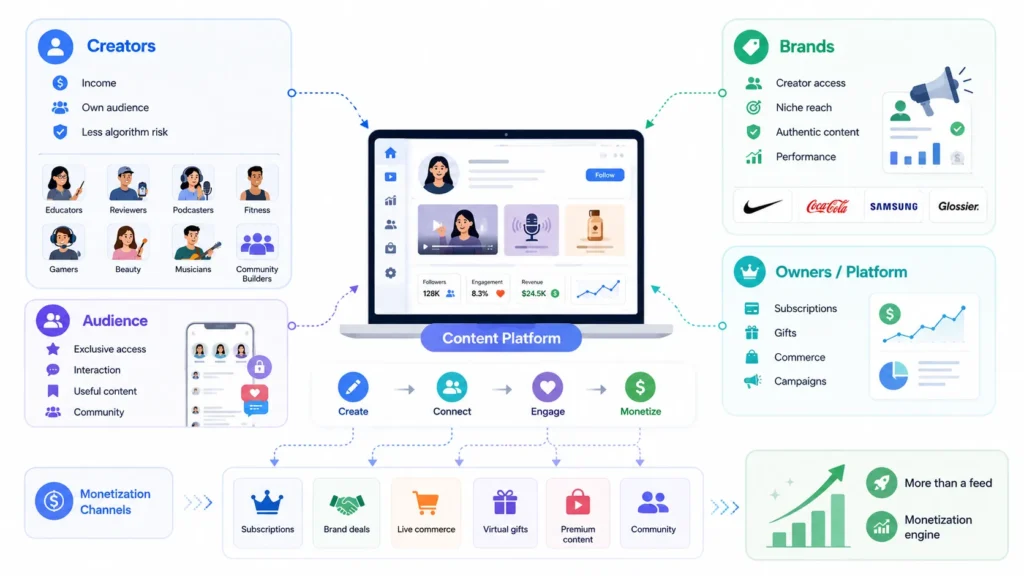
The creator economy is growing because creators are no longer only entertainers. They are educators, reviewers, podcasters, fitness coaches, gamers, finance educators, beauty experts, musicians, community builders, and niche media brands.
At the same time, brands are shifting more attention toward creator-led marketing. IAB’s 2025 creator economy ad spend report highlights deliberate brand investment in creator partnerships, including sponsored content and creator-adjacent placements. BCG’s report on India’s creator economy also points to creator-influenced commerce, subscriptions, virtual gifting, live commerce, and generative AI as important growth levers.
This creates a clear founder opportunity. A platform that helps creators grow and monetize directly can serve multiple groups at once:
- Creators want income stability, audience ownership, and tools that reduce dependence on unpredictable algorithms.
- Brands want creator access, niche reach, authentic content, and measurable campaign performance.
- Audiences want exclusive access, personal interaction, useful content, and community identity.
- Platform owners want a business model that does not depend only on advertising revenue.
When these needs are connected properly, a content creation platform becomes more than a content feed. It becomes a monetization engine built around audience ownership, direct creator income, and a focused niche creator platform strategy.
The Core Business Model: Growth First, Monetization Built In
Many creator platforms fail because they treat monetization as a feature added at the end. In reality, monetization must shape the product from day one.
A creator cannot monetize effectively without audience growth. A brand will not spend confidently without creator quality and performance data. A fan will not subscribe unless the creator offers clear value. The platform owner cannot scale revenue unless every transaction is trackable, manageable, and trusted.
That is why the best content creation platform model connects four layers:
The first layer is content creation. Creators need smooth publishing tools, media upload, editing support, profile management, and content organization.
The second layer is audience growth. The platform needs discovery feeds, recommendations, search, hashtags, categories, sharing tools, notifications, and community engagement.
The third layer is direct monetization. Creators need subscriptions, paid content, tips, PPV unlocks, live paid access, brand campaign earnings, affiliate revenue, and wallet visibility.
The fourth layer is admin control. The platform owner needs dashboards to manage users, creators, brands, payments, commissions, reports, moderation, disputes, and payouts.
If any layer is weak, the platform becomes difficult to scale.
Key Features Every Content Creation Platform Should Include
A strong content creation platform needs features for creators, audiences, brands, and admins. The founder should not only ask, “What features should we build?” A better question is, “Which feature creates business value for each side of the ecosystem?”
| Feature | Business Value | Founder Impact |
|---|---|---|
| Creator profiles | Helps creators showcase niche, content, services, memberships, and audience value | Improves creator discovery and platform supply quality |
| Content upload and publishing | Supports videos, posts, images, live content, or premium content | Creates the core content engine of the platform |
| Discovery feed | Helps audiences find relevant creators and content | Improves retention and repeat usage |
| Subscriptions | Allows creators to earn recurring income from fans | Creates predictable transaction volume |
| Paid content access | Lets creators lock premium posts, videos, templates, or tutorials | Supports direct monetization beyond ads |
| Tips and gifts | Gives fans a simple way to support creators | Encourages microtransactions and engagement |
| Brand campaign marketplace | Connects brands with relevant creators | Adds B2B revenue and commercial depth |
| Creator wallet | Tracks earnings, commissions, payouts, and adjustments | Builds financial transparency |
| Analytics dashboard | Shows creator growth, engagement, income, and campaign performance | Helps creators and brands make better decisions |
| Admin panel | Controls users, content, brands, payments, disputes, and reports | Gives the founder operational control |
These features should work together. A subscription module without discovery will struggle. Brand campaigns without analytics will feel incomplete. Creator wallets without admin controls can create payout confusion. The strongest platforms are designed as connected systems where content, analytics, wallets, subscriptions, and creator monetization models support each other.
How Creators Use the Platform to Grow Their Audience
Creators need more than a profile and upload button. They need growth loops.
A growth loop is the system that helps a creator publish content, attract viewers, convert viewers into followers, convert followers into paying fans, and bring those fans back repeatedly.
For example, a fitness creator may publish free workout clips to attract attention. Followers may then subscribe to a premium workout plan through a paid creator subscription model. Some fans may pay for live coaching sessions, while a sportswear brand may sponsor the creator after reviewing audience engagement data. The platform earns through subscription commissions, live session fees, and campaign transactions.
This is why audience growth features matter. A content creation platform should support:
- Searchable creator profiles
- Category-based discovery
- Personalized content feeds
- Content sharing
- Follow and notification systems
- Community comments
- Live sessions
- Creator recommendations
- Performance analytics
- Creator ranking or quality signals
The goal is not to make every creator viral. The goal is to help creators build repeatable engagement with the right audience.
How Brands Use the Platform for Creator Partnerships
Brands do not only want creators with large follower counts. They want creators who match their audience, voice, product category, content format, and campaign goal.
A content creation platform can help brands move from scattered outreach to structured collaboration. Instead of manually searching through social media, brands can use the platform to discover creators, filter by niche, review engagement metrics, share campaign briefs, approve deliverables, and track results.
Brand-side features may include:
- Creator discovery filters
- Campaign brief creation
- Audience and niche matching
- Content approval workflows
- Budget and offer management
- Campaign performance tracking
- Affiliate link or coupon tracking
- Creator communication tools
- Payment and payout workflows
- Brand dashboard
For founders, this brand layer is powerful because it adds business-to-business monetization. A creator platform can earn from campaign fees, commission on brand deals, premium brand subscriptions, featured campaign listings, or managed service packages.
Direct Monetization Models for a Creator Platform
A content creation platform becomes stronger when creators have more than one way to earn. Different creator categories need different monetization options. A musician, educator, gamer, fitness coach, and beauty influencer will not monetize in exactly the same way.
| Monetization Model | How It Works | Best For |
| Subscriptions | Fans pay monthly for exclusive access | Coaches, educators, artists, community creators |
| Pay-per-view content | Users pay to unlock specific content | Premium videos, tutorials, templates, private content |
| Tips and gifts | Fans send direct support to creators | Live streamers, performers, niche communities |
| Live paid sessions | Users pay to attend live content or private sessions | Fitness, education, coaching, entertainment |
| Brand campaigns | Brands pay creators for sponsored content | Influencers, reviewers, lifestyle creators |
| Affiliate commerce | Creators earn from tracked product sales | Beauty, fashion, tech, fitness, D2C brands |
| Creator stores | Creators sell digital or physical products | Merch, templates, courses, downloads |
| Platform subscriptions | Brands or creators pay for premium tools | SaaS-like creator business models |
A platform owner should avoid depending on only one monetization model. Subscriptions may work for loyal communities, especially when the business is built around a creator subscription platform where fans pay for exclusive access, premium posts, private content, and direct creator interaction. Brand deals may work for creators with strong niche influence. Tips may work for live interaction. Affiliate commerce may work when audience purchase intent is high.
The best approach is to let the platform support multiple monetization paths while keeping admin controls clear.
Founder Decision Signals
Audience Fit
If your platform targets a clear niche, creators can attract more relevant followers and brands can find better campaign matches.
Monetization Depth
If creators can earn through subscriptions, tips, paid content, and brand deals, the platform becomes more resilient than an ad-only model.
Admin Control
If the admin panel can manage creators, brands, payments, reports, disputes, and moderation, the business can scale with fewer operational gaps.
Launch Speed
If the founder needs market validation faster, a ready-made white-label foundation can reduce the delay of building every module from zero.
Content Creation Platform vs Social Media Platform
A content creation platform and a social media platform may look similar from the outside, but the business logic is different.
A social media platform usually focuses on content discovery, engagement, messaging, sharing, and network effects. Monetization often comes later through ads, promoted posts, premium features, or creator funds.
A content creation platform is more creator-business focused. It helps creators build audience relationships and earn directly through paid access, subscriptions, campaigns, commerce, and community engagement.
| Area | Social Media Platform | Content Creation Platform |
| Main goal | User engagement and content sharing | Creator growth and monetization |
| Creator role | Content contributor | Business user and revenue driver |
| Brand role | Advertiser or sponsor | Campaign partner and marketplace buyer |
| Monetization | Ads, subscriptions, promoted content | Subscriptions, PPV, tips, brand deals, affiliate sales |
| Admin priority | Content, users, moderation | Creators, brands, payments, payouts, content, disputes |
| Best fit | Broad communities and social interaction | Creator economy, influencer marketing, fan monetization |
For founders, the difference matters because the product roadmap changes. If the goal is creator monetization, payment flows, wallets, brand dashboards, and content access rules must be treated as core infrastructure.
What Admin Control Should Include
The admin panel decides whether the platform can operate smoothly after launch. Many founders focus on the user app first, but the admin layer is where real business control happens.
A strong admin panel should help the platform owner manage:
- Users and creator accounts
- Brand accounts
- Creator verification
- Campaign approvals
- Content moderation
- Payment gateway settings
- Platform commission rules
- Subscription plans
- Wallet transactions
- Payout requests
- Refunds and disputes
- Reports and analytics
- Notifications
- Featured creator placements
- Category and niche management
This is especially important for creator-brand platforms because money, content rights, brand expectations, and user trust are involved. Without admin control, every small operational issue becomes a developer dependency.
Miracuves’ white-label app approach focuses on giving founders a platform foundation with branded user experiences, monetization workflows, and admin dashboards that can be customized around the target business model.
Security, Trust, and Compliance-Ready Workflows
Creator platforms deal with user data, creator earnings, payment records, brand contracts, private content, and sometimes sensitive media. Security should be part of the foundation, not a marketing add-on.
Important trust layers include encrypted data transfer, secure payment gateway integration, role-based access control, audit logs, creator verification, content moderation, abuse reporting, wallet transaction records, payout tracking, and admin access controls.
For brand collaboration workflows, the platform should also support clear campaign terms, approval records, content status tracking, and dispute management. For paid content, the platform should protect access rules, make payment status visible to users and creators, and connect monetization workflows with reliable creator payout infrastructure.
Compliance depends on jurisdiction, content category, payment partners, privacy requirements, and the platform’s operating model. Founders should treat the app as a compliance-ready foundation and take legal guidance before launch in regulated or sensitive markets.
Mistakes Founders Should Avoid
Building only a content feed
A feed may create engagement, but it does not automatically create creator income. Monetization, wallets, subscriptions, campaigns, and analytics need to be planned from the beginning.
Ignoring creator supply quality
If the platform attracts creators but does not help audiences and brands discover the right ones, engagement and campaign value will stay weak.
Depending on one revenue stream
Ad-only or subscription-only platforms can become fragile. Multiple monetization paths help creators and platform owners build more stable income.
Underbuilding the admin panel
Creator platforms need operational controls for payouts, disputes, moderation, brand approvals, content access, and reporting. Weak admin control creates scaling problems.
How Miracuves Helps Founders Build Content Creation Platforms
Miracuves helps founders build content creation platforms that combine creator tools, brand collaboration, audience engagement, and direct monetization. The platform can be shaped around different creator economy models, including influencer marketplaces, subscription content platforms, fan communities, a video-first creator platform, short-form creator apps, and niche creator ecosystems.
A founder can start with a ready-made, white-label foundation and customize the product based on the audience, creator category, content format, monetization logic, and brand workflow. For founders who want faster validation without building every feature from zero, a ready-made app solution can provide the core product foundation while still allowing room for branding, feature customization, and business model alignment.
For creator-brand collaboration, founders can explore an influencer monetization platform that supports creator discovery, sponsored partnerships, campaign workflows, and audience-led brand engagement. If the business model is focused on paid communities, premium content, and direct fan access, an exclusive creator content platform can support subscription-led monetization. Founders comparing broader media, fan engagement, and creator economy models can also review Miracuves’ entertainment app solutions.
To strengthen the strategy further, founders can explore Miracuves resources on niche creator platform strategy, creator wallet systems, and creator payout infrastructure. These supporting guides help connect monetization, payouts, audience ownership, and platform operations into a more practical launch plan.
Final Thoughts: Build a Creator Ecosystem, Not Just a Posting App
The real opportunity in content creation platforms is not only giving creators a place to publish. It is giving them a better way to grow, earn, collaborate, and own stronger audience relationships.
For brands, the platform creates a structured path to find creators and run measurable campaigns. For audiences, it creates closer access to trusted voices. For founders, it creates a business model that can combine subscriptions, paid content, tips, live sessions, brand deals, affiliate commerce, and premium tools.
The strongest founder decision is to avoid building a generic content feed. Build a creator ecosystem with monetization, trust, analytics, and admin control from the beginning.
Miracuves helps founders turn that idea into a white-label, source-code-owned content creation platform designed for faster launch and practical market validation.
FAQs
What is a content creation platform?
A content creation platform is a digital platform where creators can publish content, grow an audience, engage followers, and monetize through subscriptions, paid content, tips, brand deals, live sessions, or product sales.
How does a content creation platform make money?
A content creation platform can make money through platform commissions, creator subscriptions, pay-per-view content, tipping fees, brand campaign commissions, affiliate transactions, featured listings, premium tools, and brand subscription plans.
What features are needed in a creator monetization platform?
Important features include creator profiles, content upload, paid content access, subscriptions, tipping, creator wallets, brand campaign tools, analytics, secure payments, payout management, content moderation, and admin dashboards.
How do brands benefit from a content creation platform?
Brands can use the platform to discover creators, launch campaigns, manage briefs, approve content, track performance, and build long-term creator partnerships with better visibility and control.
Is a content creation platform different from a social media app?
Yes. A social media app focuses mainly on networking and engagement, while a content creation platform focuses more directly on creator growth, monetization, brand collaboration, paid access, and creator-business workflows.
Can creators monetize without a large audience?
Yes, but the platform must support niche monetization. Smaller creators can earn through loyal communities, paid content, tips, subscriptions, coaching, affiliate campaigns, and brand partnerships when audience fit is strong.
Why is admin control important in a creator platform?
Admin control helps the platform owner manage creators, brands, users, content, payments, commissions, payouts, reports, moderation, and disputes. Without this layer, the business becomes harder to operate as it scales.
Can Miracuves help build a white-label creator platform?
Yes. Miracuves helps founders build white-label creator platforms with creator workflows, monetization tools, brand collaboration features, admin dashboards, custom branding, and source-code ownership.
Miracuves is an independent software development company. We are not affiliated with, connected to, sponsored by, or endorsed by any company or product named in this article.
Terms such as “X Clone” are used descriptively. It is how the software industry refers to building a platform with functionality comparable to a known service, and how clients search for it.
The entire design and codebase of our products is built by our own team. Our products contain no code, design, graphics, or content originating from any third-party website or applications.
All third-party names and marks referenced in this article are the property of their respective owners, referenced solely to identify the services discussed.