Key Takeaways
What You’ll Learn
- Mobile apps help businesses grow faster by improving speed, convenience, and customer access.
- Better engagement comes through direct communication like push notifications and personalized offers.
- Apps improve sales and retention by reducing friction in the user journey.
- Operational efficiency also improves through automation, tracking, and better team coordination.
- Long-term growth depends on the right app strategy, not just launching an app.
Stats That Matter
- The article describes mobile apps as growth engines for business expansion.
- Push notifications, in-app messaging, and personalized offers are highlighted as key engagement tools.
- One-click checkout, saved preferences, and in-app purchases are shown as ways apps increase sales.
- Automated workflows, real-time tracking, reduced manual errors, and better team coordination are listed as operational advantages.
- E-commerce, food delivery, ride-hailing, healthcare, and fintech are named as top industries using apps for growth.
Real Insights
- Apps stay closer to users than websites, which makes repeat engagement easier.
- Growth comes from combining customer convenience with operational efficiency, not from design alone.
- Higher retention is one of the biggest app advantages compared with traditional digital channels.
- Poor execution can limit results when businesses ignore UX, performance, testing, or feedback.
- The strongest business apps are built for growth, efficiency, and long-term customer value.
In today’s fast-moving digital landscape, businesses are no longer competing only on products or pricing—they are competing on experience, speed, and accessibility. Mobile apps have become one of the most powerful tools to achieve this. From startups to established enterprises, companies are leveraging apps to connect with users, streamline operations, and unlock new revenue channels.
At Miracuves, we’ve seen firsthand how businesses transform when they adopt the right mobile app strategy. Whether it’s launching an on-demand platform or building a custom solution, mobile apps are no longer optional—they are a growth accelerator.
Mobile apps allow businesses to meet these expectations efficiently, giving them a competitive edge.
How Mobile Apps Drive Business Growth
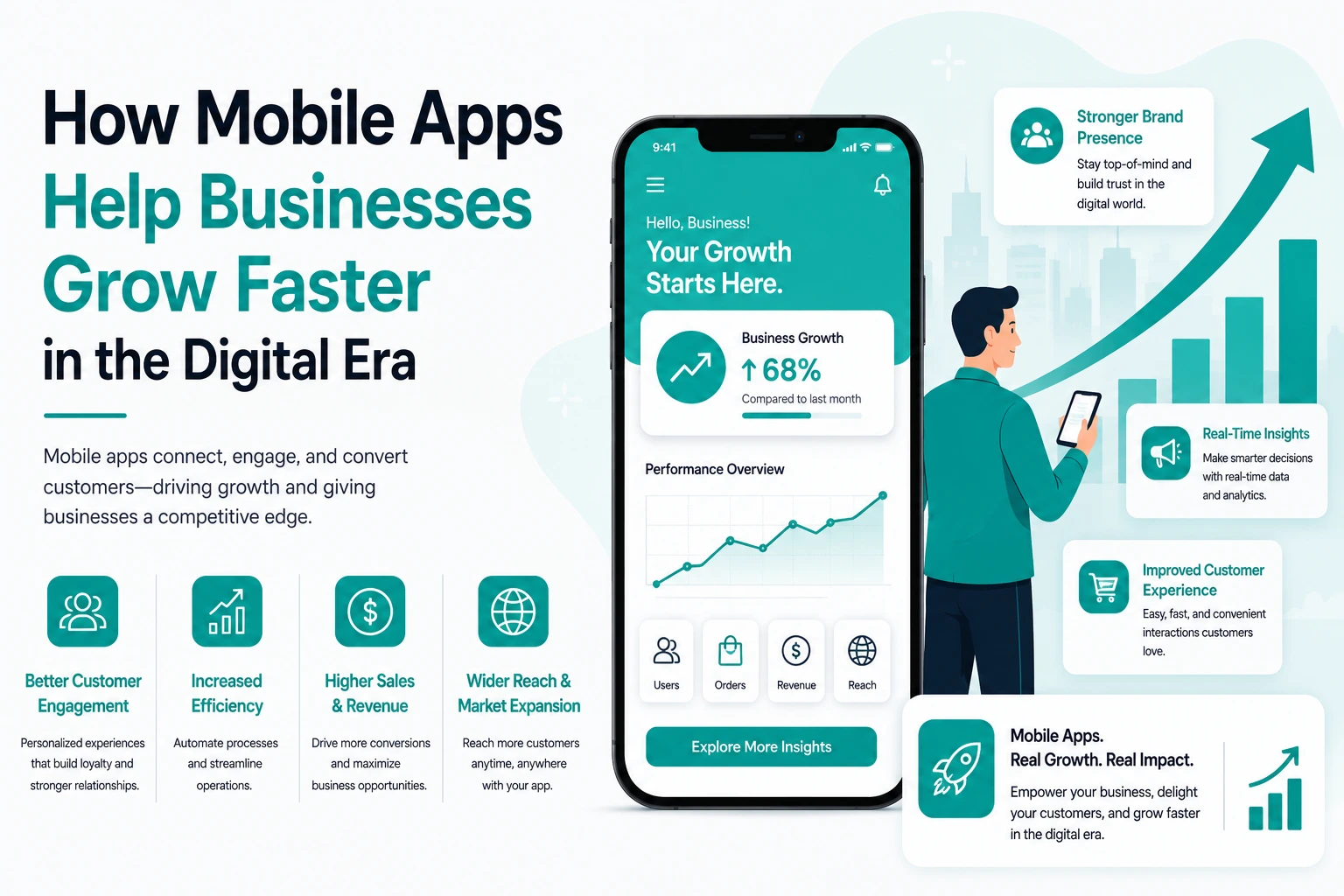
Mobile apps are not just digital tools—they are growth engines. Let’s explore how they contribute directly to business expansion.
1. Enhanced Customer Engagement
Apps provide a direct channel to interact with users through:
- Push notifications
- In-app messaging
- Personalized offers
Unlike websites, apps stay on the user’s device, making engagement more consistent and immediate.
2. Improved Customer Experience
A well-designed mobile app offers:
- Faster loading speeds
- Easy navigation
- Secure payment integration
This leads to higher user satisfaction and increased retention.
3. Strong Brand Presence
Being present on a user’s smartphone means your brand is always visible. This constant presence builds:
- Brand recognition
- Trust
- Loyalty over time
4. Increased Sales and Revenue
Mobile apps simplify the buying journey. Features like one-click checkout, saved preferences, and in-app purchases reduce friction and boost conversions.
5. Data-Driven Decision Making
Apps collect valuable user data such as:
- Behavior patterns
- Purchase history
- Preferences
Businesses can use this data to improve products, marketing strategies, and user experience.
Mobile Apps vs Traditional Business Channels
To understand the real impact, let’s compare mobile apps with traditional digital channels.
| Feature | Mobile Apps | Websites |
|---|---|---|
| Speed | High | Moderate |
| User Experience | Personalized | Limited personalization |
| Engagement | Push notifications | Email or ads |
| Accessibility | Offline features possible | Requires internet |
| Retention Rate | Higher | Lower |
This comparison clearly shows why mobile apps are becoming the preferred choice for modern businesses.
Key Features That Make Mobile Apps Powerful

A mobile app becomes powerful when it makes customer actions faster, improves business control, and creates a better digital experience. The right features help businesses increase engagement, sales, retention, and operational efficiency.
Essential Features of a Powerful Mobile App
- Simple User Interface: Helps users browse, search, book, buy, or contact the business without confusion.
- Secure Login: Allows users to access the app safely through OTP, email, phone number, or social login.
- User Profiles: Stores customer details, preferences, order history, saved addresses, and payment information.
- Push Notifications: Sends updates, offers, reminders, order alerts, and personalized messages directly to users.
- Online Payments: Supports secure transactions through cards, wallets, UPI, net banking, or local payment gateways.
- Real-Time Tracking: Useful for delivery, taxi, logistics, healthcare, and service apps where users need live updates.
- Ratings and Reviews: Builds trust and helps businesses improve service quality through customer feedback.
- Admin Dashboard: Gives business owners control over users, orders, payments, services, offers, reports, and support.
- Analytics and Reports: Helps track sales, user behavior, active customers, revenue, and business performance.
- Customer Support: Provides quick help through chat, ticket systems, FAQs, or call support.
With these features, a mobile app becomes more than a digital tool. It works as a complete business growth platform that improves customer experience, automates operations, and supports long-term scalability.
Industries Benefiting the Most from Mobile Apps
Mobile apps are transforming multiple industries by improving efficiency and customer reach.
Top Industries Using Mobile Apps for Growth
- E-commerce (Amazon-like platforms)
- Food delivery (Zomato-like apps)
- Ride-hailing (Uber-like apps)
- Healthcare (telemedicine apps)
- Fintech (digital wallets and banking apps)
Each of these industries relies heavily on convenience and speed—both of which mobile apps provide.
How Mobile Apps Improve Operational Efficiency
Beyond customer-facing benefits, mobile apps also streamline internal operations.
Operational Advantages
- Automated workflows
- Real-time tracking and reporting
- Reduced manual errors
- Better team coordination
For example, delivery apps allow businesses to track orders, drivers, and customers in real time, improving overall efficiency.
Common Mistakes Businesses Should Avoid
While mobile apps offer immense potential, poor execution can limit results.
Mistakes to Watch Out For
- Ignoring user experience design
- Overloading the app with unnecessary features
- Not optimizing for performance
- Lack of proper testing before launch
- Ignoring user feedback
Avoiding these mistakes ensures that your app truly contributes to growth.
Read more in detail : – Common Mistakes to Avoid When Building a Mobile App
Best Practices for Building a Growth-Focused Mobile App
A successful mobile app is not built only for downloads. It should help businesses attract users, improve engagement, increase conversions, and support long-term growth. To achieve this, businesses need the right strategy, technology, and user experience from the beginning.
Build Around Real User Needs
The app should solve a real problem for the target audience. Understanding customer behavior, expectations, and pain points helps businesses create features that users actually need and use regularly.
Focus on Speed and Simplicity
Users expect mobile apps to be fast and easy to use. Slow loading times, complicated navigation, or confusing interfaces can increase uninstall rates. A clean design and smooth user journey improve customer retention and satisfaction.
Choose a Scalable Technology Stack
A growth-focused app should be able to handle increasing users, orders, transactions, and traffic without performance issues. Technologies like PHP/Laravel, Flutter, cloud hosting, APIs, and secure databases help businesses scale efficiently.
Prioritize Security and Data Protection
Secure login systems, encrypted payments, protected user data, and safe API integrations help build trust with users. Security becomes even more important for industries like fintech, healthcare, and e-commerce.
Use Analytics for Better Decisions
Analytics tools help businesses understand user activity, popular features, customer retention, conversion rates, and revenue performance. These insights support smarter business and marketing decisions.
Keep Improving After Launch
Launching the app is only the beginning. Regular updates, feature improvements, performance optimization, and customer feedback analysis help businesses stay competitive and improve user experience over time.
Create Long-Term User Engagement
Features like push notifications, loyalty programs, personalized recommendations, offers, and smooth customer support help businesses keep users active and increase repeat usage.
A growth-focused mobile app should work as a complete digital business platform that supports customer engagement, operational efficiency, and scalable business expansion.
The Future of Mobile Apps in Business Growth
Mobile apps will continue to become smarter, faster, and more personalized as new technologies improve digital experiences. In the coming years, businesses will use mobile apps not only for sales and communication but also for automation, customer insights, and real-time service delivery.
Key technologies shaping the future include:
- Artificial Intelligence: Helps apps offer smart recommendations, chat support, automation, and personalized user experiences.
- Machine Learning: Studies user behavior to improve search results, offers, pricing, and customer engagement.
- Augmented Reality: Makes shopping, real estate, education, healthcare, and product demos more interactive.
- IoT Integrations: Connects apps with smart devices, vehicles, wearables, and business systems for real-time monitoring and control.
These technologies will help businesses reduce manual work, improve customer satisfaction, increase repeat usage, and make faster decisions. As a result, mobile apps will become powerful growth platforms for modern businesses.
Related reading: Advantages of Mobile Apps for Small Businesses in 2026.
Conclusion
Mobile apps have become a critical driver of business success in the digital era. They enhance customer engagement, improve user experience, streamline operations, and open new revenue opportunities. Businesses that invest in the right mobile app strategy position themselves for faster and more sustainable growth.
As competition continues to increase, having a mobile app is no longer a luxury—it’s a necessity for staying relevant and competitive.
Start Your Mobile App Journey with the Right Partner .If you’re planning to build a mobile app that truly drives growth, working with the right development partner makes all the difference. Contact Miracuves today to discuss your app idea and take the first step toward scaling your business faster.
FAQs
1. Why are mobile apps important for business growth?
Mobile apps improve customer engagement, enhance user experience, and create new revenue opportunities, helping businesses grow faster.
2. Are mobile apps suitable for small businesses?
Yes, even small businesses can benefit by reaching customers directly and offering convenient services through apps.
3. How do mobile apps increase customer retention?
Features like push notifications, personalized content, and easy access keep users engaged and encourage repeat usage.
4. What is the cost of developing a mobile app?
The cost depends on features, complexity, and platform, but starting with a basic version (MVP) can reduce initial investment.
5. How long does it take to build a mobile app?
Development time varies, but a basic app can typically be built within a few weeks to a few months depending on requirements.
Related Articles
Miracuves is an independent software development company. We are not affiliated with, connected to, sponsored by, or endorsed by any company or product named in this article.
Terms such as “X Clone” are used descriptively. It is how the software industry refers to building a platform with functionality comparable to a known service, and how clients search for it.
The entire design and codebase of our products is built by our own team. Our products contain no code, design, graphics, or content originating from any third-party website or applications.
All third-party names and marks referenced in this article are the property of their respective owners, referenced solely to identify the services discussed.