Key Takeaways
What You’ll Learn
- Mobile apps help startups reach users faster.
- Direct access improves customer engagement and retention.
- Push notifications support repeat visits and conversions.
- App data helps understand user behavior better.
- Scalable apps support startup growth and digital expansion.
Stats That Matter
- Mobile-first users expect fast and simple experiences.
- Apps improve visibility beyond websites and social media.
- Personalized experiences increase user satisfaction.
- In-app payments simplify buying and booking flows.
- Analytics dashboards help track growth, usage, and performance.
Real Insights
- A mobile app creates a direct customer channel.
- Startups need speed to compete in digital markets.
- Better UX improves trust and repeat usage.
- Apps support automation for sales, support, and operations.
- The best app strategy combines access, engagement, data, and growth.
The way businesses grow today is completely different from how startups operated even a few years ago. In a mobile-first world, customers expect speed, convenience, and instant access—and this is exactly where mobile applications come into play. Whether it’s ordering food, booking a ride, or managing finances, users are spending most of their time inside apps rather than websites.
For startups, this shift is not just a trend—it is a major opportunity. A well-built mobile app can become the core engine of growth, engagement, and revenue. Platforms that once started as small ideas have scaled globally because they leveraged mobile technology early.
At this stage, choosing the right development approach becomes critical. Many startups today are working with experienced providers like Miracuves to launch scalable, ready-to-market mobile solutions without long development cycles. Understanding why mobile apps matter is the first step toward making a smart business decision.
Understanding the Mobile-First Economy
The digital economy has shifted rapidly toward mobile usage, and this change has redefined how startups interact with customers.
Today, most users access services through their smartphones. From browsing products to completing transactions, mobile devices dominate user behavior. This means startups that rely only on websites risk losing a significant portion of their potential audience.
Mobile apps provide a more seamless and personalized experience compared to web platforms. They allow businesses to stay present on the user’s device, creating constant visibility and easier engagement.
For startups, this means one thing—if you are not mobile-first, you are already behind.
Key Benefits of Mobile Apps for Startups
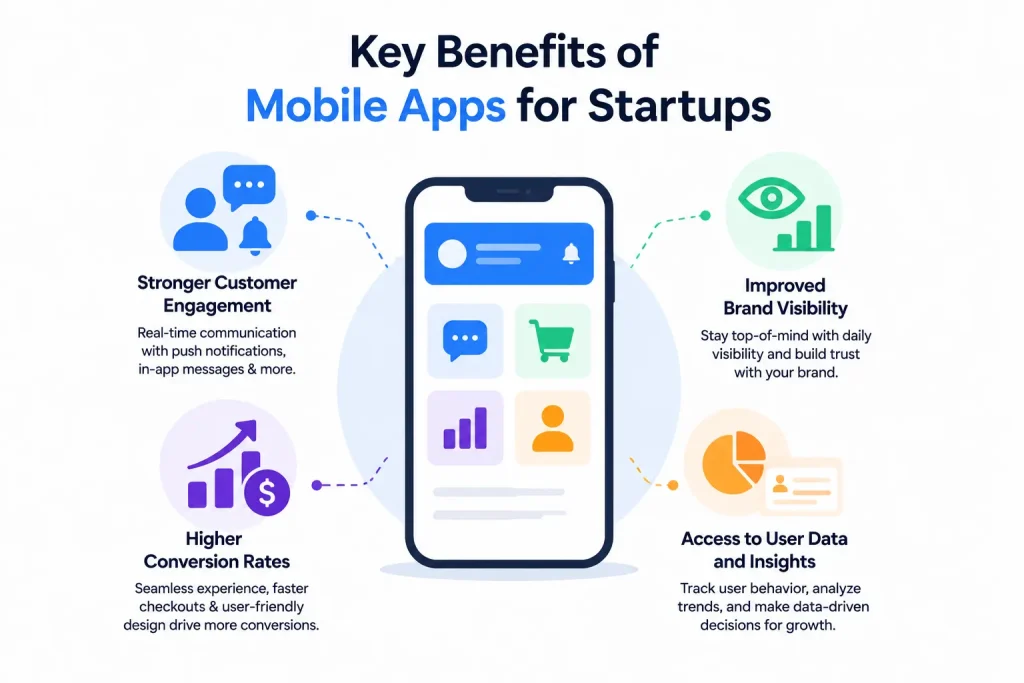
Understanding the benefits of mobile apps is essential before making an investment decision. These advantages go beyond just having a digital presence.
Stronger Customer Engagement
Mobile apps create a direct communication channel between the startup and its users. Features like push notifications, in-app messages, and personalized recommendations help businesses stay connected with their audience.
Unlike websites, apps allow startups to interact with users in real time, increasing engagement and retention.
Improved Brand Visibility
When a user installs your app, your brand becomes part of their daily routine. Every time they unlock their phone, your app icon reinforces your presence.
This repeated exposure builds familiarity and trust, which is crucial for startups trying to establish credibility.
Higher Conversion Rates
Mobile apps are designed for speed and simplicity. With saved preferences, faster checkout processes, and minimal friction, users are more likely to complete actions such as purchases or bookings.
This directly impacts revenue generation and business growth.
Access to User Data and Insights
Mobile apps provide valuable insights into user behavior. Startups can track how users interact with the app, what features they use most, and where they drop off.
This data helps in making better business decisions and improving the overall user experience.
Read more :- How to Turn Your Startup Idea Into a Mobile App
Mobile App vs Website: What’s Better for Startups?
Before investing, startups often compare whether they should build a website or a mobile app. Understanding this difference is important for making the right decision.
| Factor | Website | Mobile App |
|---|---|---|
| Accessibility | Requires browser | One-tap access |
| Speed | Moderate | Faster |
| User Experience | Limited personalization | Highly personalized |
| Engagement | Low | High |
| Notifications | Not available | Push notifications |
| Offline Access | No | Yes (limited features) |
While websites are important for visibility and SEO, mobile apps are essential for engagement and retention. The ideal strategy is to use both, but prioritize mobile apps for long-term growth.
How Mobile Apps Drive Startup Growth
Mobile apps are not just tools—they are growth engines. Understanding how they contribute to business expansion is important.
Startups using mobile apps can scale faster because they remove friction from user interactions. For example, ride-sharing platforms grew rapidly because they simplified booking into just a few taps.
Apps also enable recurring usage. A customer who installs your app is more likely to return compared to someone who visits your website occasionally.
Additionally, mobile apps support advanced features like loyalty programs, subscriptions, and real-time services, which are critical for scaling revenue.
When Should a Startup Build a Mobile App?
Timing plays a crucial role in deciding when to invest in a mobile app. Building too early or too late can both be risky.
Startups should consider building an app when:
- They have validated their idea
- They have a clear target audience
- They want to improve customer retention
- They need real-time interaction with users
- Their business model relies on frequent usage
If your startup depends on repeat users, speed, or convenience, a mobile app is not optional—it is necessary.
Cost vs ROI of Mobile Apps for Startups
One of the biggest concerns for startups is the cost of building a mobile app. However, focusing only on cost can be misleading.
Mobile apps should be viewed as an investment rather than an expense. While development requires an initial budget, the long-term returns often outweigh the cost.
Apps generate revenue through:
Moreover, apps reduce customer acquisition costs over time by improving retention.
Startups can also reduce development costs by using ready-made solutions instead of building from scratch, allowing faster market entry.
Read More: How Mobile Apps Make Money: Monetization Strategies
Common Mistakes Startups Make with Mobile Apps
Understanding common mistakes can help startups avoid costly failures.
- Many startups try to build too many features at once. This leads to complexity, higher costs, and delayed launches.
- Another common mistake is ignoring user experience. Even a powerful app will fail if it is difficult to use.
- Some startups also skip market validation and build apps based on assumptions rather than real demand.
- Lastly, choosing the wrong development partner can result in poor scalability and technical issues.
- Avoiding these mistakes is essential for building a successful mobile app.
know in deep : – Common Mistakes to Avoid When Building a Mobile App
How to Launch a Mobile App for Your Startup
Launching a mobile app requires a structured approach. Understanding the process helps startups move efficiently.
Step 1: Validate Your Idea
Ensure there is real demand for your product. Conduct market research and gather user feedback.
Step 2: Define Core Features
Focus on essential features that solve the main problem. Avoid unnecessary complexity.
Step 3: Choose the Right Development Approach
Decide between custom development and ready-made solutions based on your budget and timeline.
Step 4: Design User Experience
Create a simple and intuitive interface that enhances usability.
Step 5: Develop and Test
Build the app and conduct thorough testing to eliminate bugs and improve performance.
Step 6: Launch and Scale
Release the app and continuously improve it based on user feedback.
Why Choose Miracuves for Startup Mobile Apps
Choosing the right technology partner is one of the most important decisions for any startup. The success of your mobile app depends not just on the idea, but on how effectively it is executed.
Miracuves provides startups with ready-made and custom mobile app solutions designed for speed, scalability, and real-world performance. Instead of starting from scratch, startups can leverage proven frameworks to launch faster and reduce risk.
With experience across multiple industries and hundreds of successful deployments, Miracuves helps businesses build apps that are not just functional but also future-ready.
From initial strategy to post-launch support, the focus remains on delivering solutions that drive growth and long-term success.
Conclusion
Mobile applications have become a fundamental part of modern business strategy. For startups, they are no longer optional—they are essential tools for growth, engagement, and scalability.
In a competitive market, having a mobile app can be the difference between gaining traction and being overlooked. It enables startups to connect with users more effectively, improve customer experience, and unlock new revenue streams.
The key is not just building an app, but building the right app with the right strategy.
Contact us to explore how you can launch your startup mobile app with a scalable and future-ready approach.
FAQs
1. Do all startups need a mobile app?
Not all, but startups focused on user engagement, repeat usage, or real-time services benefit greatly from having an app.
2. Is a website enough for a startup?
A website is important, but it cannot match the engagement and retention capabilities of a mobile app.
3. How much does it cost to build a startup app?
Costs vary depending on features and complexity, but ready-made solutions can significantly reduce expenses.
4. How long does it take to develop a mobile app?
The timeline depends on the app’s features, customization needs, and overall project scope. A ready-made solution can support a much faster launch process.
5. What type of mobile app should a startup build?
It depends on the business model, but starting with a simple, scalable MVP is usually the best approach.
Related Articles
Miracuves is an independent software development company. We are not affiliated with, connected to, sponsored by, or endorsed by any company or product named in this article.
Terms such as “X Clone” are used descriptively. It is how the software industry refers to building a platform with functionality comparable to a known service, and how clients search for it.
The entire design and codebase of our products is built by our own team. Our products contain no code, design, graphics, or content originating from any third-party website or applications.
All third-party names and marks referenced in this article are the property of their respective owners, referenced solely to identify the services discussed.