Key Takeaways
What You’ll Learn
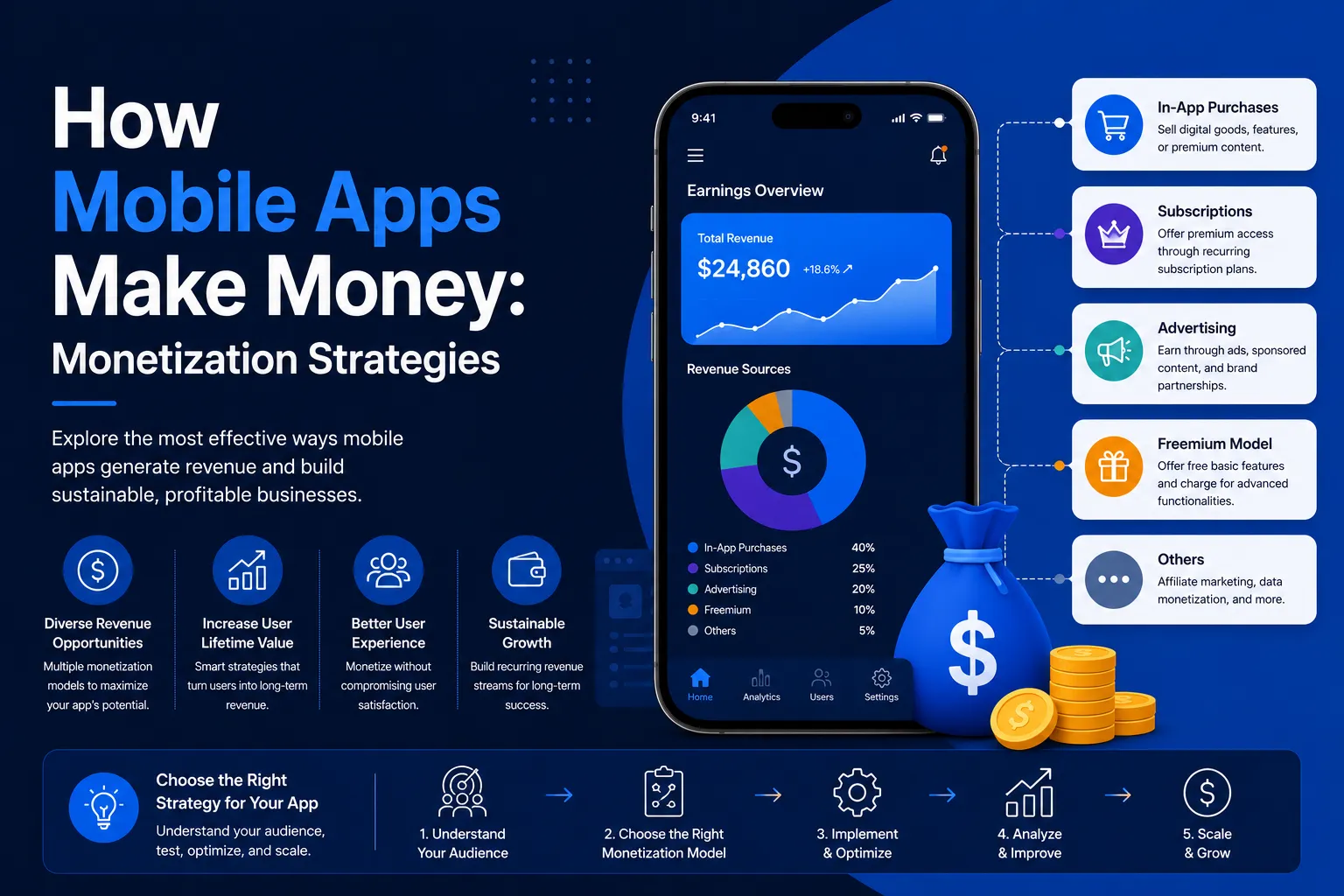
- Mobile app monetization strategies help businesses generate sustainable revenue from digital platforms.
- Popular monetization models include subscriptions, in-app purchases, advertising, and freemium plans.
- Choosing the right revenue model depends on user behavior, app category, and engagement levels.
- AI-driven personalization and targeted offers can improve monetization performance.
- Balancing user experience with revenue generation is essential for long-term app success.
Stats That Matter
- Subscription-based apps continue becoming one of the fastest-growing mobile app revenue models.
- Freemium strategies help apps attract large user bases before converting premium customers.
- In-app purchases and targeted upgrades significantly increase user lifetime value in mobile apps.
- AI-powered monetization systems are improving pricing, engagement, and personalized offers.
- Apps with diversified revenue streams are generally more resilient in competitive markets.
Real Insights
- Apps that monetize too aggressively often struggle with user retention.
- Subscription models work best when apps provide continuous value and regular updates.
- Freemium approaches help startups grow faster by reducing entry barriers for users.
- Personalized monetization strategies improve conversions without harming user experience.
- Successful mobile apps treat monetization as part of the product experience, not just a revenue layer.
Most people believe that launching a mobile app automatically leads to revenue. In reality, many apps fail because they don’t have a clear monetization strategy from day one. Building an app is only one part of the journey—turning it into a revenue-generating business is where real success lies.
For startups and entrepreneurs, understanding how mobile apps make money is essential before investing in development. Platforms built with a strong monetization foundation perform better, scale faster, and attract investors more easily. This is where companies like Miracuves help businesses not just build apps but design scalable revenue-driven digital products from the beginning.
Why App Monetization Matters Before Development
Before writing a single line of code, founders must decide how their app will generate revenue. Many startups delay this decision, which often leads to poor user experience, low retention, and weak profitability.
A clear monetization strategy helps you:
Without this clarity, even a well-designed app can struggle to sustain itself.
Read more : – How to Turn Your Startup Idea Into a Mobile App
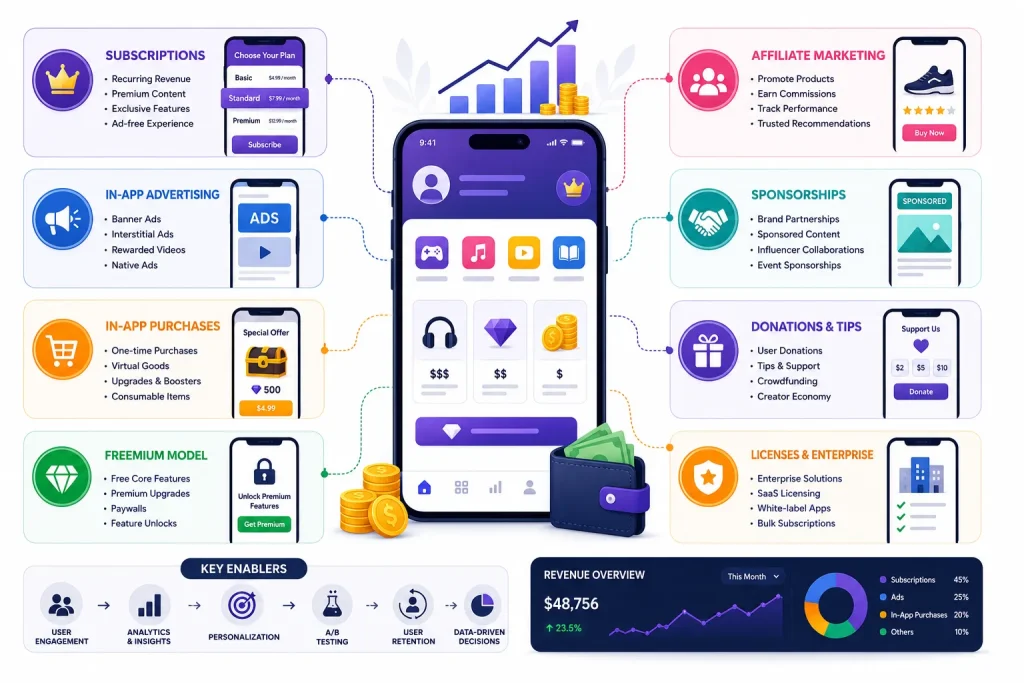
7 Proven Mobile App Monetization Strategies
In-App Advertising
In-app advertising is one of the most common ways apps generate revenue, especially for free apps with large user bases.
How It Works
Apps display ads in different formats such as banners, videos, or native placements. Revenue is generated based on impressions, clicks, or conversions.
Best For
- Social media apps
- Gaming apps
- Content platforms
Pros
- Easy to implement
- No upfront cost for users
Cons
- Can affect user experience if overused
- Requires high traffic
Subscription Model
The subscription model has become one of the most profitable monetization strategies in recent years.
How It Works
Users pay a recurring fee (monthly or yearly) to access premium features or content.
Best For
- OTT platforms
- SaaS apps
- Fitness and learning apps
Why It Works
- Predictable recurring revenue
- Higher customer lifetime value
Freemium Model
Freemium apps offer basic features for free and charge users for advanced functionalities.
How It Works
Users can use the app at no cost but are encouraged to upgrade for better features.
Best For
- Productivity apps
- SaaS platforms
- Mobile tools
Key Insight
This model works best when the free version provides real value but leaves room for upgrades.
In-App Purchases
In-app purchases allow users to buy digital goods, upgrades, or additional content within the app.
How It Works
Users spend money on features like:
- Virtual items
- Extra content
- Premium access
Best For
- Gaming apps
- Entertainment apps
Advantage
High revenue potential when combined with strong user engagement.
Transaction Fees (Commission-Based Model)
This model is widely used in marketplace and on-demand apps.
How It Works
The app takes a percentage of each transaction between users and service providers.
Best For
- Ride-sharing apps
- Food delivery platforms
- Freelance marketplaces
Why It’s Powerful
- Scales with user activity
- Directly tied to platform growth
Sponsorship and Partnerships
Brands collaborate with apps to promote products or services.
How It Works
Apps integrate sponsored content, brand placements, or co-branded features.
Best For
- Influencer platforms
- Fitness apps
- Content-driven apps
Data Monetization (Ethical Use)
Apps can generate revenue by leveraging user insights and analytics in a privacy-compliant way.
How It Works
Aggregated and anonymized data is used for:
- Market research
- Business insights
Important Note
Transparency and user consent are critical for this model.
Comparison of Monetization Strategies
| Strategy | Revenue Potential | Best For | Complexity |
|---|---|---|---|
| Advertising | Medium | High-traffic apps | Low |
| Subscription | High | SaaS, OTT | Medium |
| Freemium | High | Productivity apps | Medium |
| In-App Purchases | High | Gaming | Medium |
| Transaction Fees | Very High | Marketplaces | High |
| Sponsorship | Medium | Content apps | Medium |
| Data Monetization | Medium | Analytics platforms | High |
How to Choose the Right Monetization Strategy
Choosing the right model depends on your app’s purpose, audience, and long-term vision.
Understand Your App Type
Different app categories require different monetization approaches. For example, a marketplace app performs better with transaction fees, while a content app may rely on subscriptions.
Know Your Users
User behavior plays a major role. If your audience prefers free access, a freemium or ad-based model may work better.
Start Simple and Scale
It’s better to begin with one monetization model and expand later rather than complicating the product from the start.
Focus on User Experience
A monetization strategy should never harm usability. Long-term growth depends on user satisfaction.
Read more : – Common Mistakes to Avoid When Building a Mobile App
Real Examples of App Monetization in Action
Streaming Platforms
These apps generate revenue through subscriptions by offering exclusive content and continuous value.
Ride-Sharing Apps
They use commission-based models, earning a percentage from every ride booked.
Social Media Platforms
Revenue comes primarily from advertising, supported by massive user engagement.
Common Monetization Mistakes to Avoid
Many startups fail not because of poor ideas, but because of incorrect monetization strategies.
- Adding too many ads too early
- Setting unrealistic pricing
- Ignoring user retention
- Copying competitors without strategy
- Not testing monetization models
Avoiding these mistakes can significantly improve your app’s success rate.
How Miracuves Helps You Build Revenue-Generating Apps
Building an app is not just about features—it’s about creating a sustainable business. Miracuves provides ready-made apps, clone solutions, and scalable platforms designed with monetization in mind.
With a focus on performance, scalability, and real business outcomes, Miracuves helps entrepreneurs launch apps that are ready to generate revenue from day one.
If you’re planning to build a mobile app with a strong monetization strategy, contact Miracuves today to turn your idea into a scalable digital business.
Related reading: Advantages of Mobile Apps for Small Businesses in 2026.
Conclusion
Mobile app monetization is not a one-size-fits-all approach. The right strategy depends on your audience, product type, and long-term vision. Successful apps combine smart monetization with excellent user experience.
By choosing the right model early and refining it over time, startups can build apps that not only attract users but also generate consistent revenue.
FAQs
1. What is the most profitable app monetization strategy?
Subscription and transaction-based models are generally the most profitable due to recurring revenue.
2. Are free apps more profitable than paid apps?
Yes, free apps often generate more revenue through ads, freemium upgrades, and in-app purchases.
3. Can one app use multiple monetization strategies?
Yes, many successful apps combine multiple models such as ads, subscriptions, and purchases.
4. How do startups choose the right monetization model?
They should consider user behavior, app category, and long-term growth goals.
5. When should monetization be implemented in an app?
Monetization should be planned before development and implemented gradually after user adoption.
Related Articles
Miracuves is an independent software development company. We are not affiliated with, connected to, sponsored by, or endorsed by any company or product named in this article.
Terms such as “X Clone” are used descriptively. It is how the software industry refers to building a platform with functionality comparable to a known service, and how clients search for it.
The entire design and codebase of our products is built by our own team. Our products contain no code, design, graphics, or content originating from any third-party website or applications.
All third-party names and marks referenced in this article are the property of their respective owners, referenced solely to identify the services discussed.