Bolt Clone App - White-Label Driver-First Ride-Hailing Platform
Built by Miracuves, this driver-first Bolt clone is ready-made and white-label: you own the source code for a driver app that doubles as the fleet manager's tool, a rider app, browser booking, the operator console and a company portal, live in six working days.
Drivers sign up with documents, go online with one switch, answer ride offers that survive a dropped connection and earn through incentives and daily goals. Rider extras like in-car entertainment, a virtual guide and voice control are separately priced add-ons. A driver bonus scheme with its own payout rule is custom work, agreed in writing first and built within 2-8 weeks.
Launch in 6 Days with
- Source Code
- Driver App
- Fleet Manager Role
- Rider App
- Admin Console
- Android + iOS
StackReact Native · Laravel 11 · MySQL · Redis · Reverb · OpenStreetMap
Driver-side activity
- Driver plan renewed for the weekPlans
- Fleet manager added a driverFleet
- Trip completed and ratedTrips
- Cancellation fee credited to a driverFees
- Driver withdrawal approvedPayouts
- Surge switched on in a crowded zoneFares
- New driver added to a fleetDrivers
- Pickup request receivedRequests

- 3Driver Earning Leverssubscription plans, incentives with daily goals, and referrals
- 1Driver App for Fleets Toofleet managers run their drivers inside the same app
- 0%Revenue Share With Miracuvesno royalty on any fare or delivery, ever
- 100%Source Codehanded over unencrypted, file by file
- 6Days to Launchand if the delay is ours, we keep going free
- $3,099Paid Once, Not Rentedsource code yours, no per-seat fee, no monthly rental
Live in six working days, or we keep working free until you launch. Every build carries 60 days guidance, 6 months bug fixes and 12 months updates.Verify every figure
Documents Keep Drivers Honest
Nobody goes online until an admin approves the documents, and an expired document takes a driver off dispatch until a new copy is approved.
Aone Built on an Earlier Release
Miracuves delivered Aone in 2022 on an earlier MXUber release, with the effort spent on its own zones, vehicle classes, fare rules, gateways and theming.
Payments Stay With the Gateway
The gateway you connect holds the card data and the platform never stores a card number; drivers withdraw their earnings from the in-app wallet.
01Try it first
Hands-On Demo
Bolt Clone Demo: Rider, Driver and Web Apps & Operator Panels
Try the Miracuves Bolt Clone demo. The logins below open every part of the Miracuves Bolt clone: the rider app, the driver app, the web booking app and the admin, dispatcher and fleet consoles. Begin in the driver app: go online, wait for a ride offer, then check earnings and the wallet.
Rider App Demo
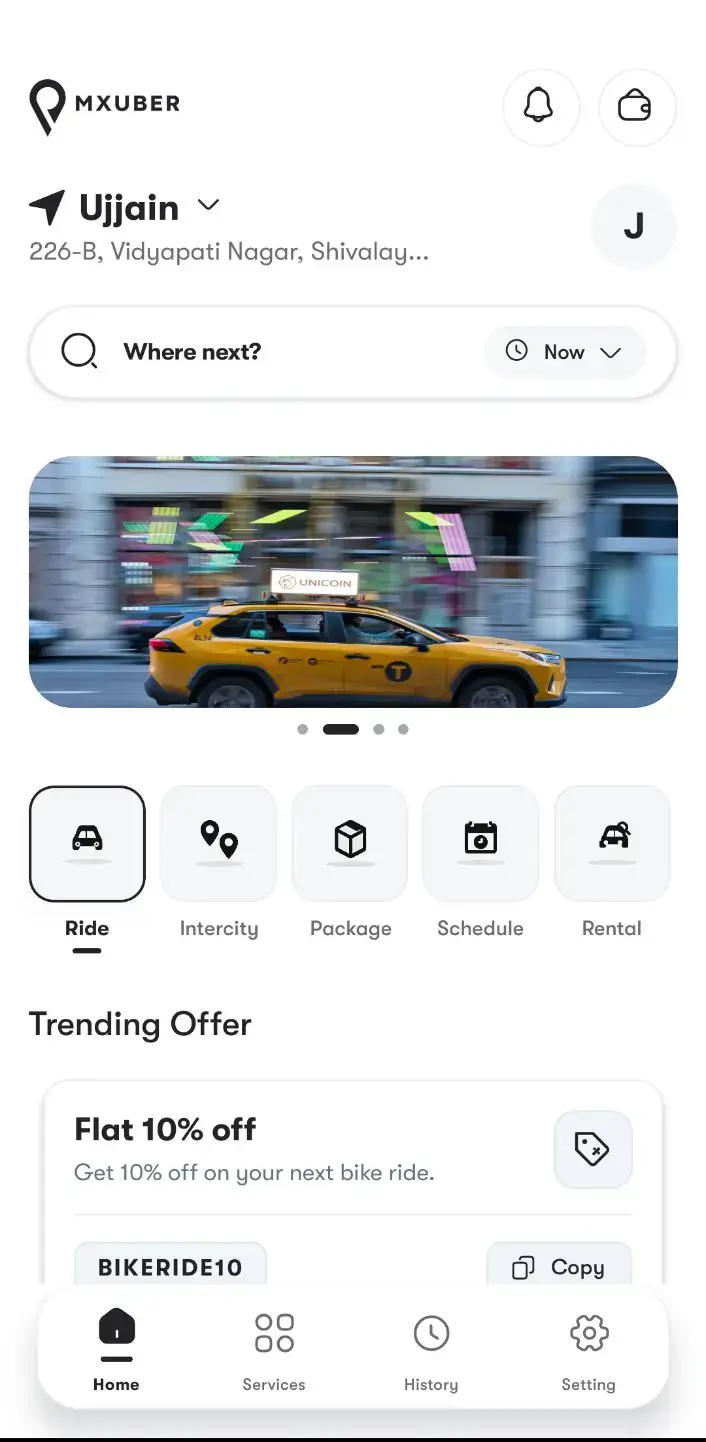
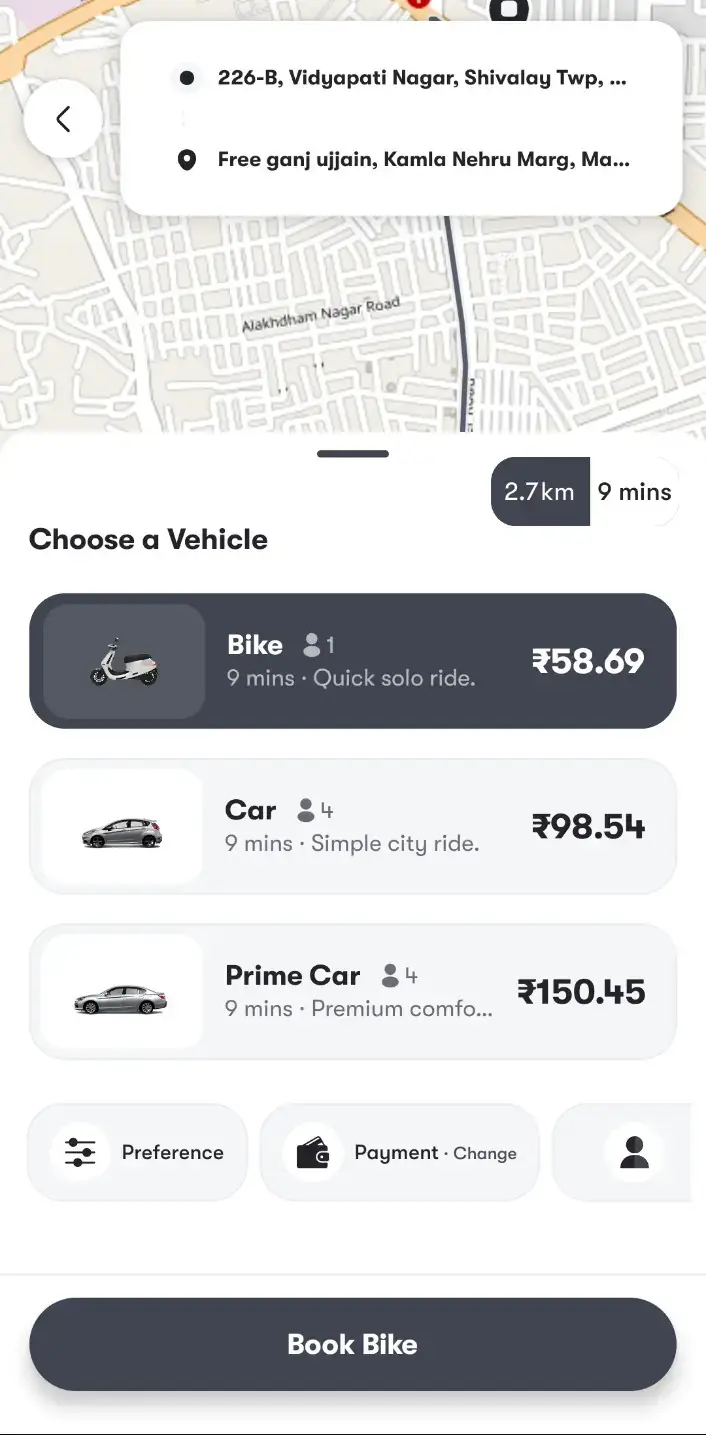
The rider side your drivers serve. Riders use OTP, Google or Apple, or look around as a guest, then pick a vehicle and see its fare before booking.
- 1Go to the app portal and choose your device
- 2Sign in with the logins listed below
- 3Look at: Home tiles, Choose a vehicle, Rebook, Time picker
+91 9876543210 | User_321- Ride offers with a ringtone
- Power-button online switch
- Earnings donut and history
- Wallet and withdrawals
Driver App Demo
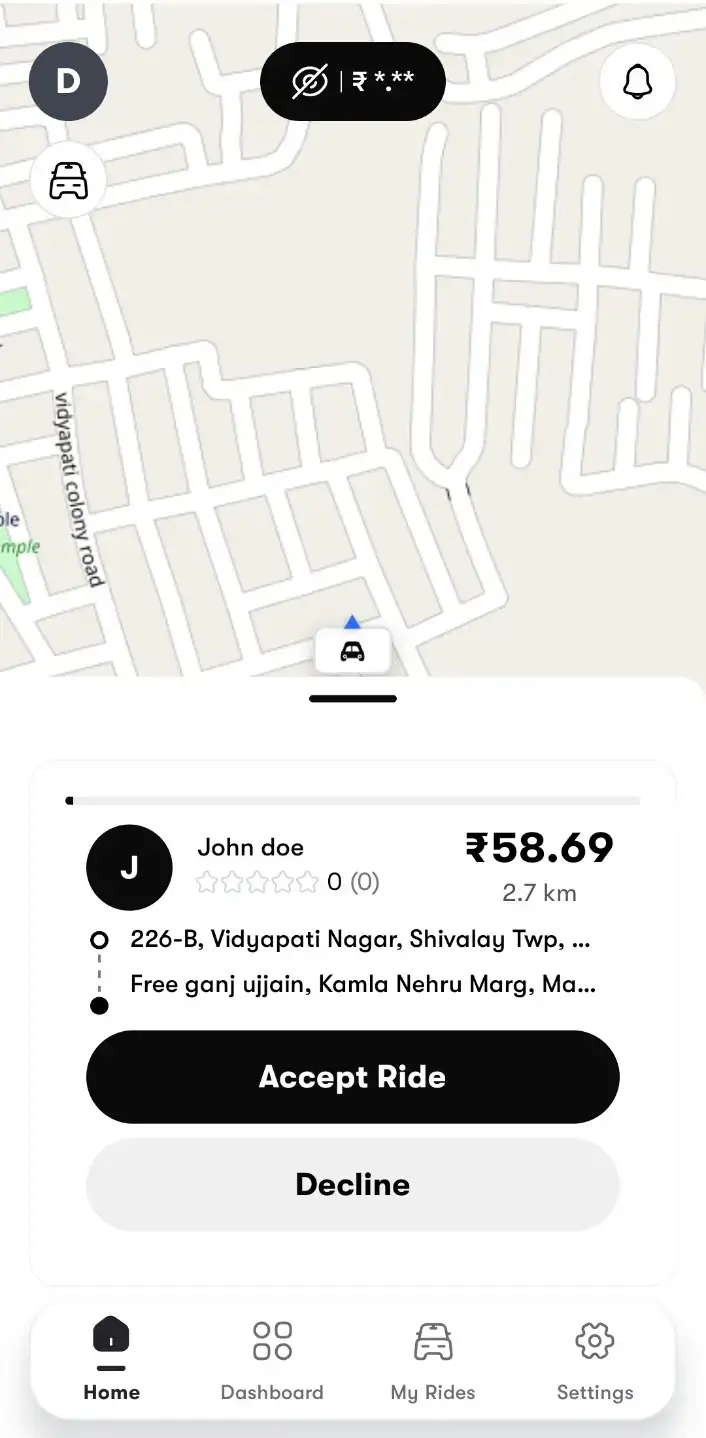
The side where your driver terms take effect. Go online with the power button, answer ride offers, send counter-bids on bidding rides, watch surge zones on the map and track earnings.
- 1Go to the driver app portal
- 2Enter the driver email and password below
- 3Look at: Online switch, Ride offers, Earnings
driver@demo.com | Driver_321
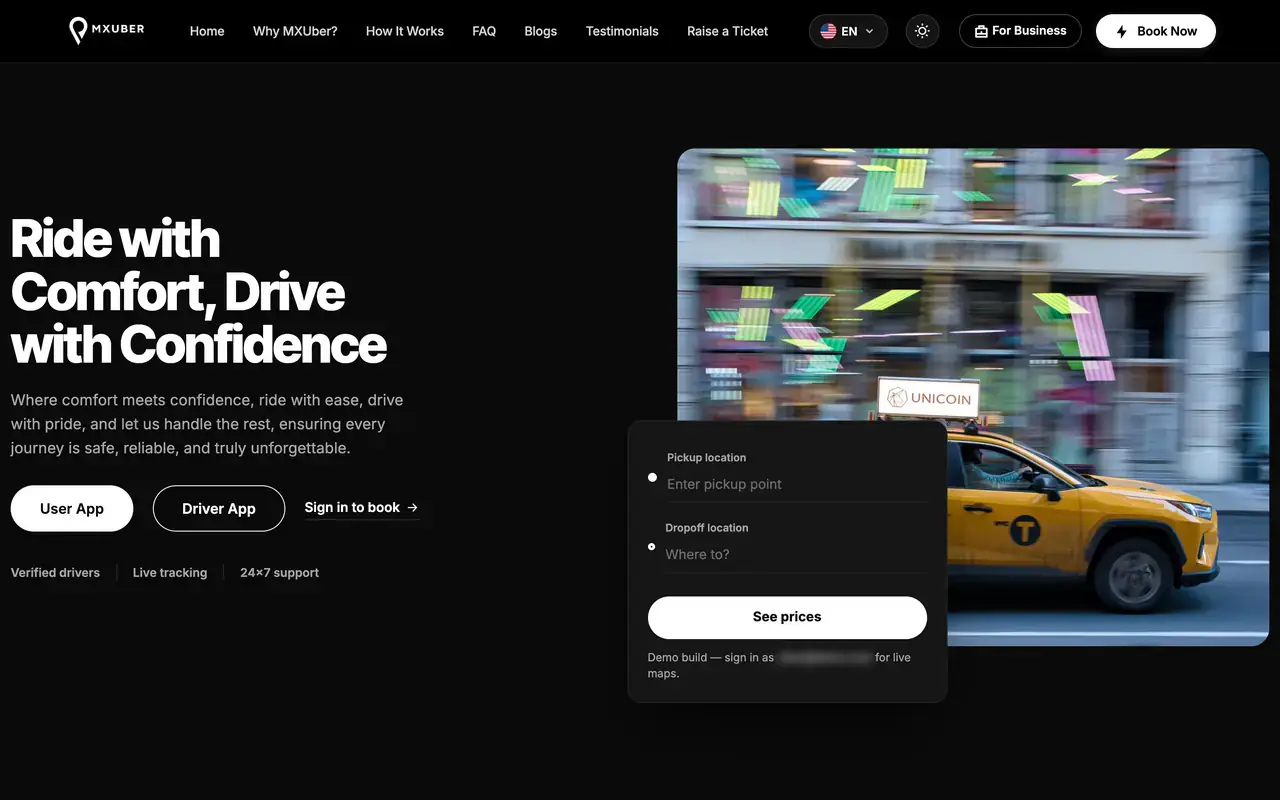
Rider Web App & Public Website
Book in a browser at /cab: pick a vehicle, pay, follow the driver live, and see history, invoices and wallet. The public site presents your service and app downloads.
- 1Go to the demo website in your browser
- 2Open the rider web app and sign in
- 3Look at: Booking, Live tracking, History
+91 9876543210 | User_321- Dispatch: assign and book rides
- Fleet: live map and earnings
- Admin: peak zones and payouts
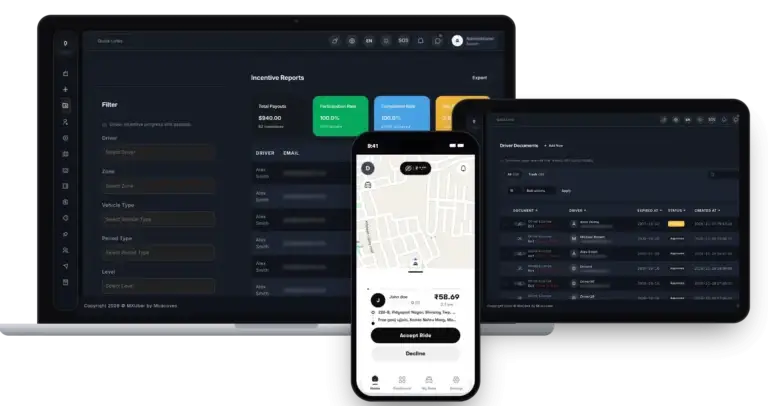
Dispatch, Fleet & Admin Consoles
Sign in with the admin, dispatcher and fleet logins. Staff place bookings and assign drivers, a fleet is walled off to its own drivers, and the admin sets fares, peak zones and payouts.
- 1Open the admin console
- 2Sign in as admin, dispatcher or fleet
- 3Look at: Ride requests, Peak zones, Fleet earnings
Admin: admin@demo.com | Admin_$321Dispatcher: dispatcher@demo.com | Dispatcher_321Fleet: fleet@demo.com | Fleet_321

Walk Through It Together
A Live Walkthrough of a Driver-First App Like Bolt: Onboarding, Fleet Tools & Payouts
The fastest way to judge the driver side is to watch it beside the rider side. In a 30-minute call we run both apps and the consoles together, then compare them with your plan: how drivers sign up and get paid, what fleets earn and when you plan to launch.
Book a live walkthroughScreens in Order
Bolt Clone App Flows - Rider and Driver Apps, Admin Panel & Website
Miracuves shows the Bolt clone in real screens, in trip order: 6 from the rider app, 6 from the driver app, 13 from the admin panel and 3 from the website.

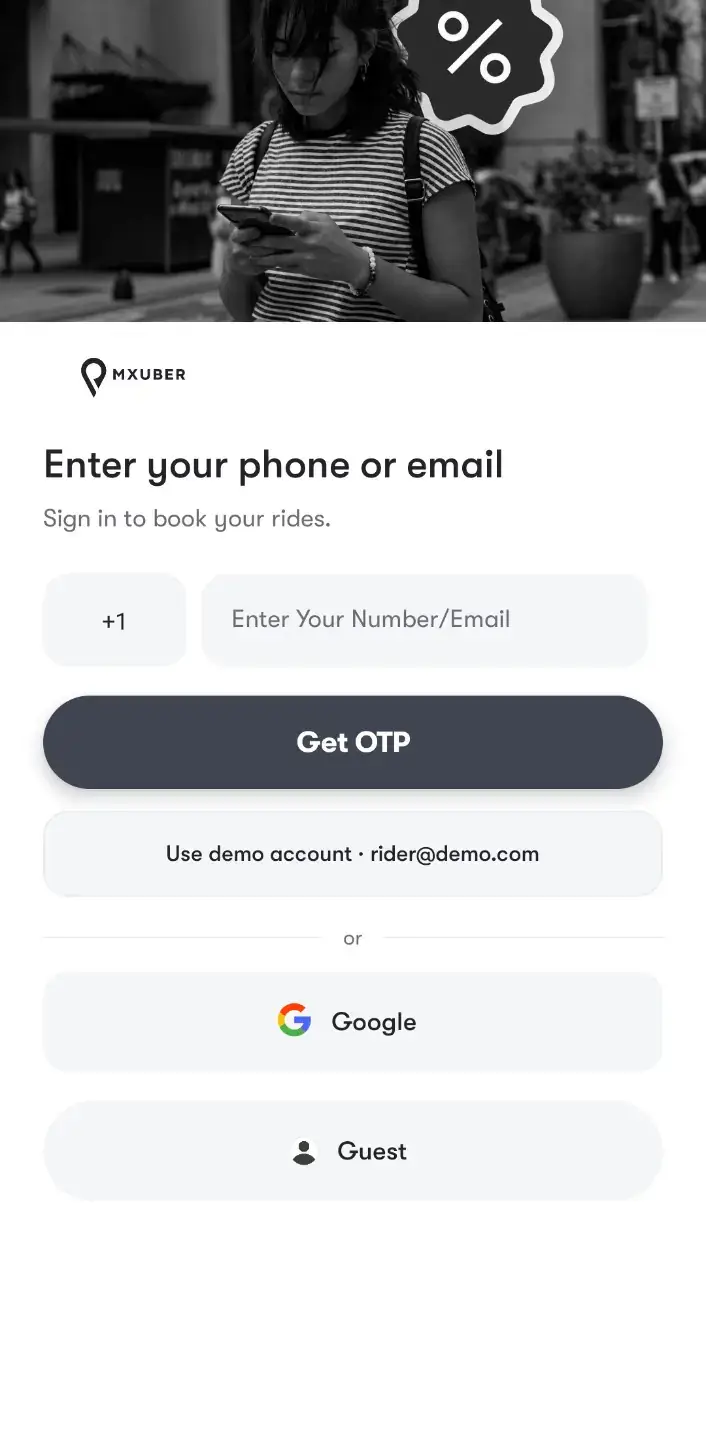
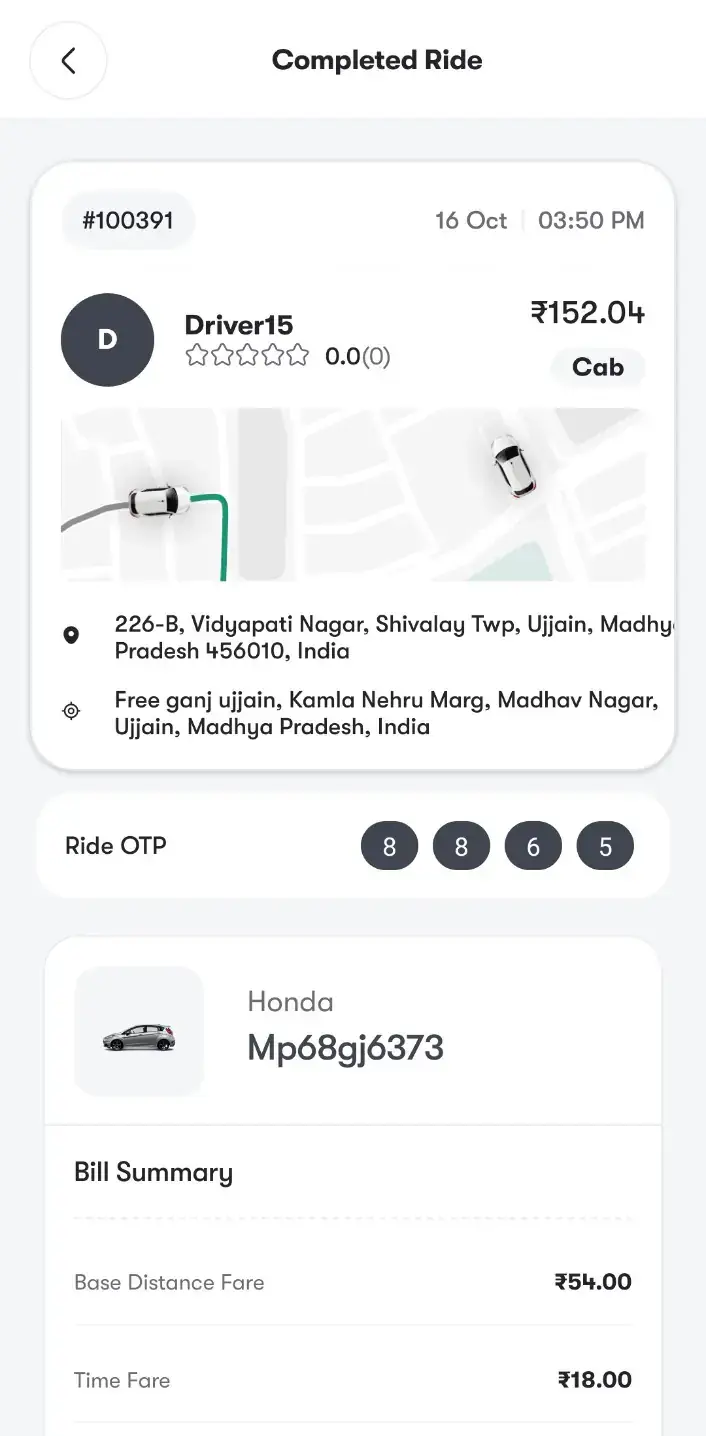
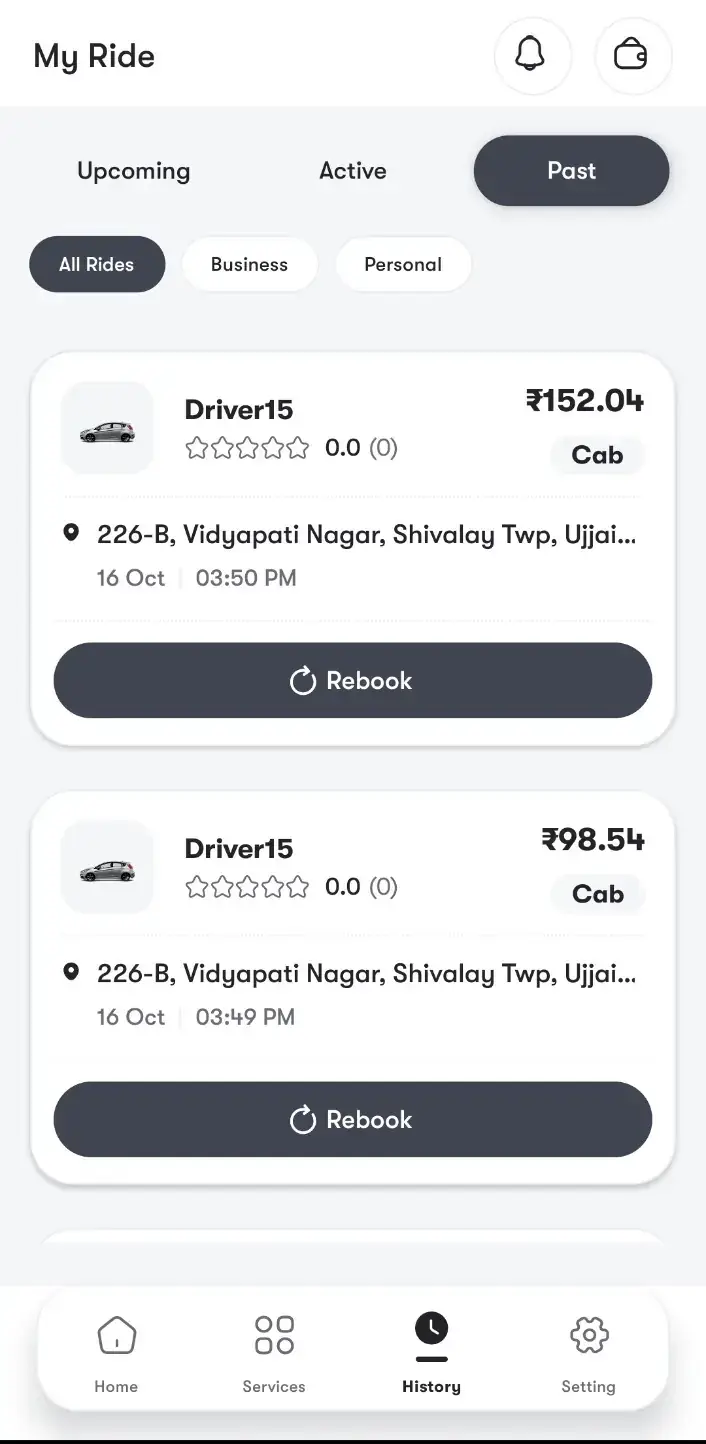
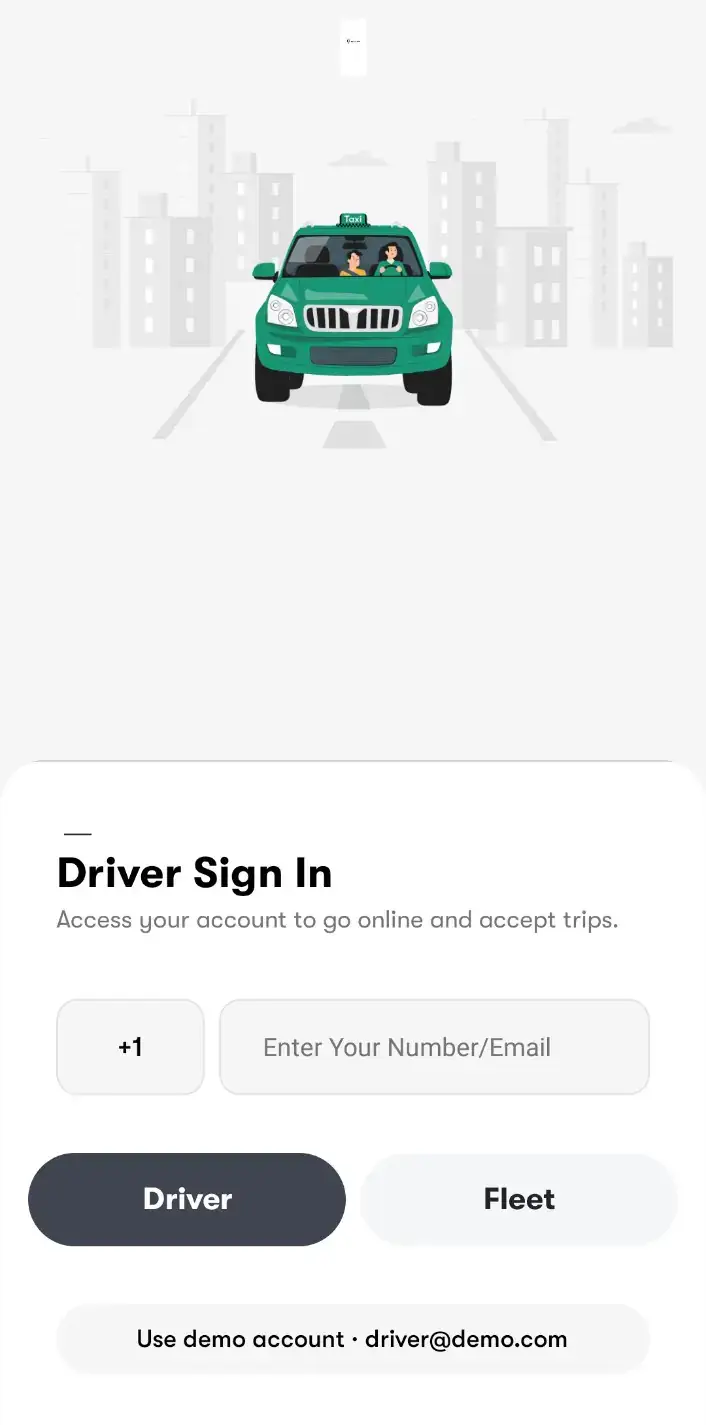
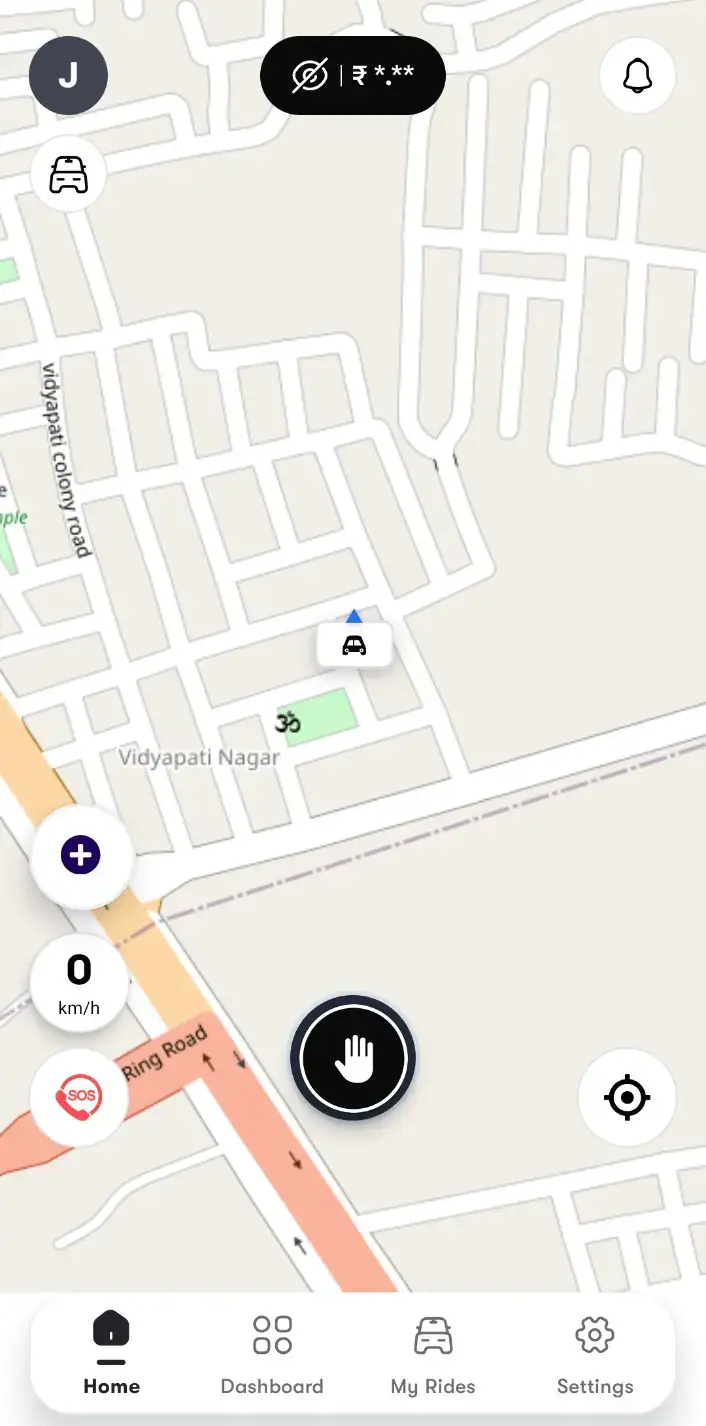
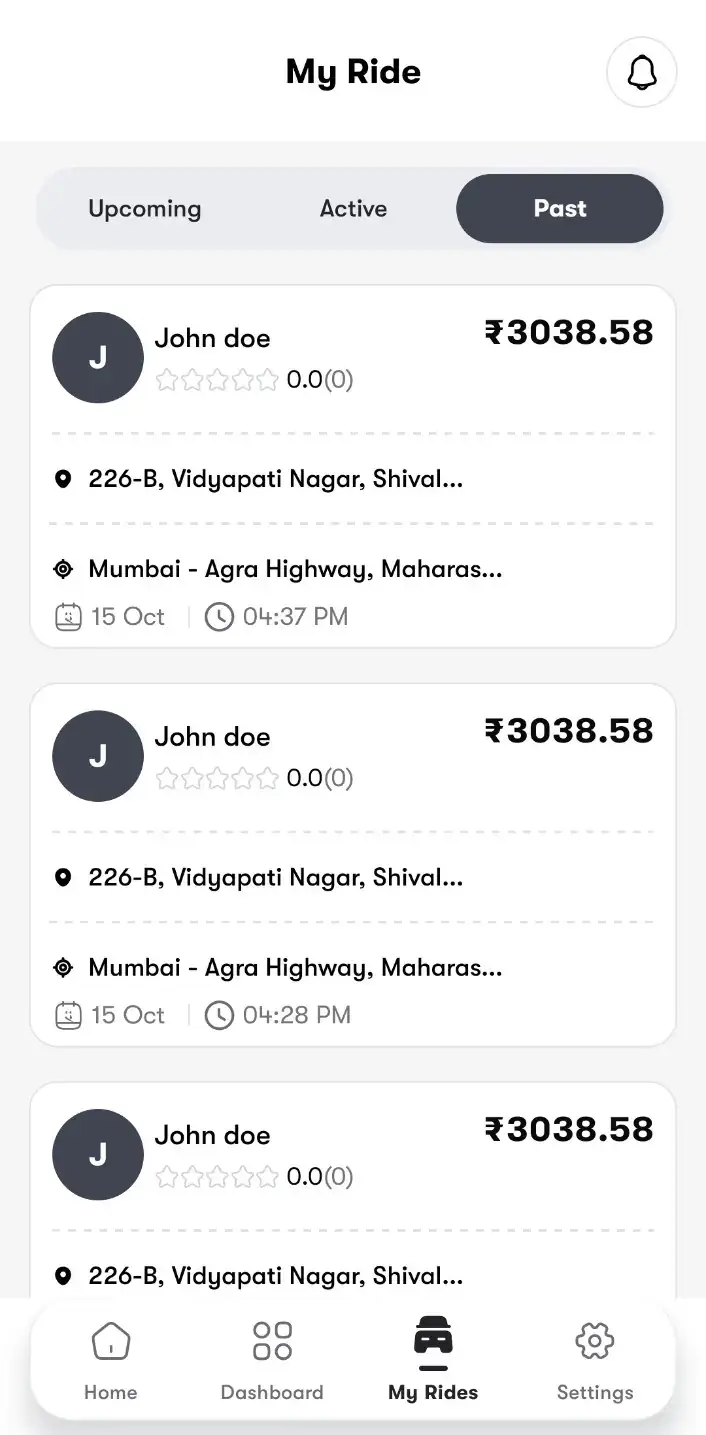
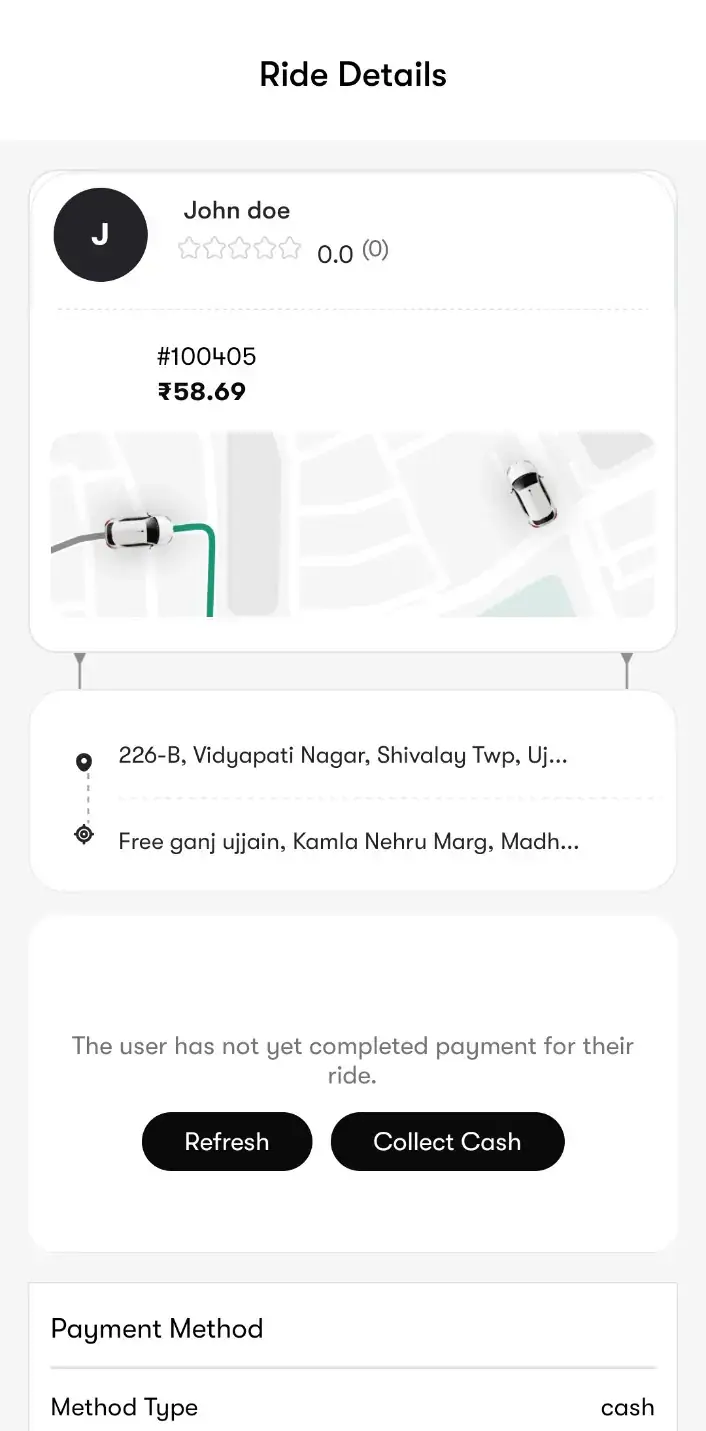
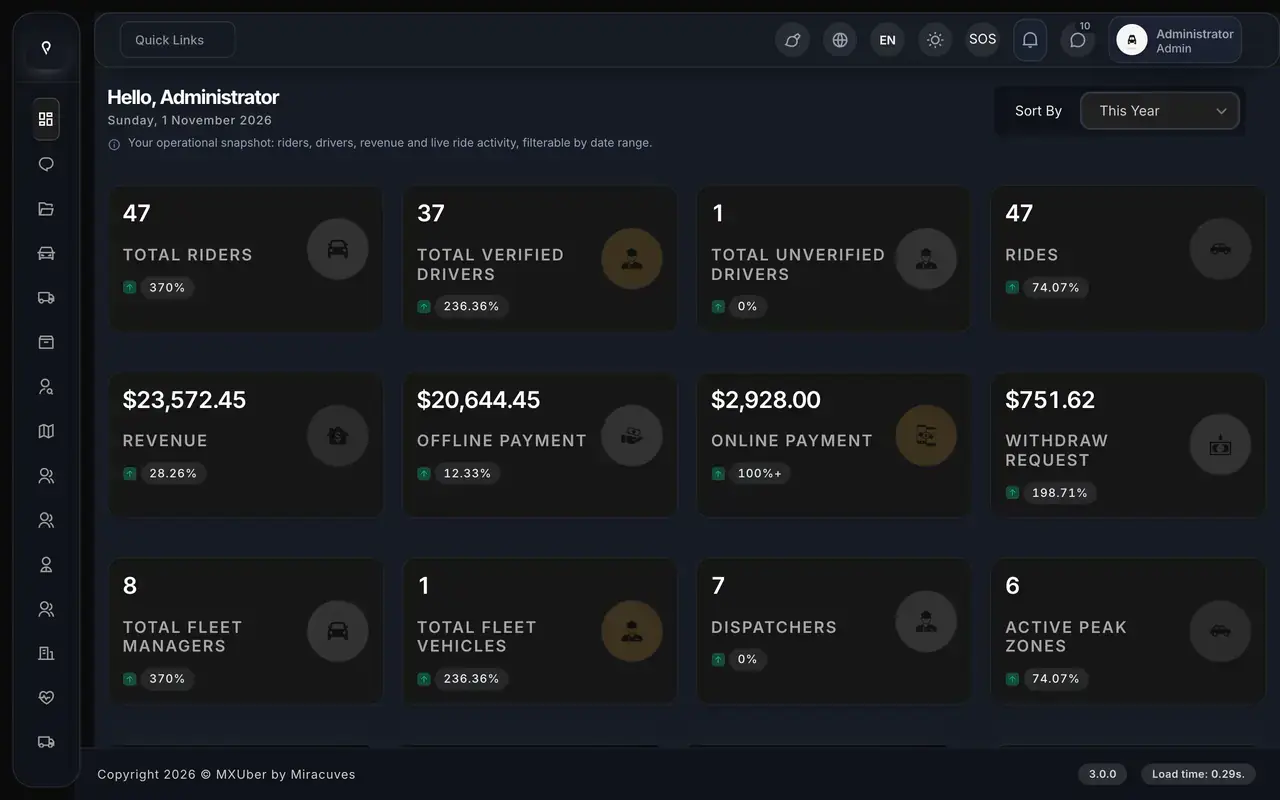
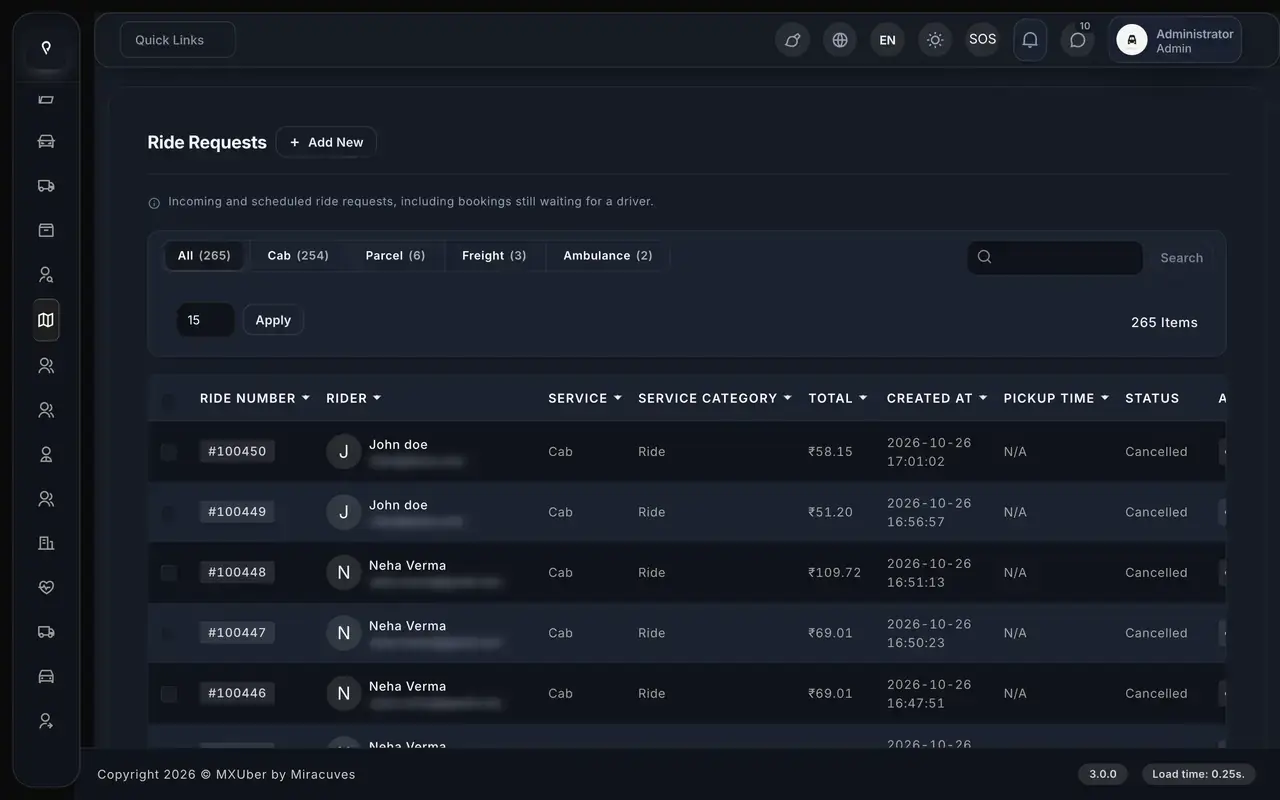
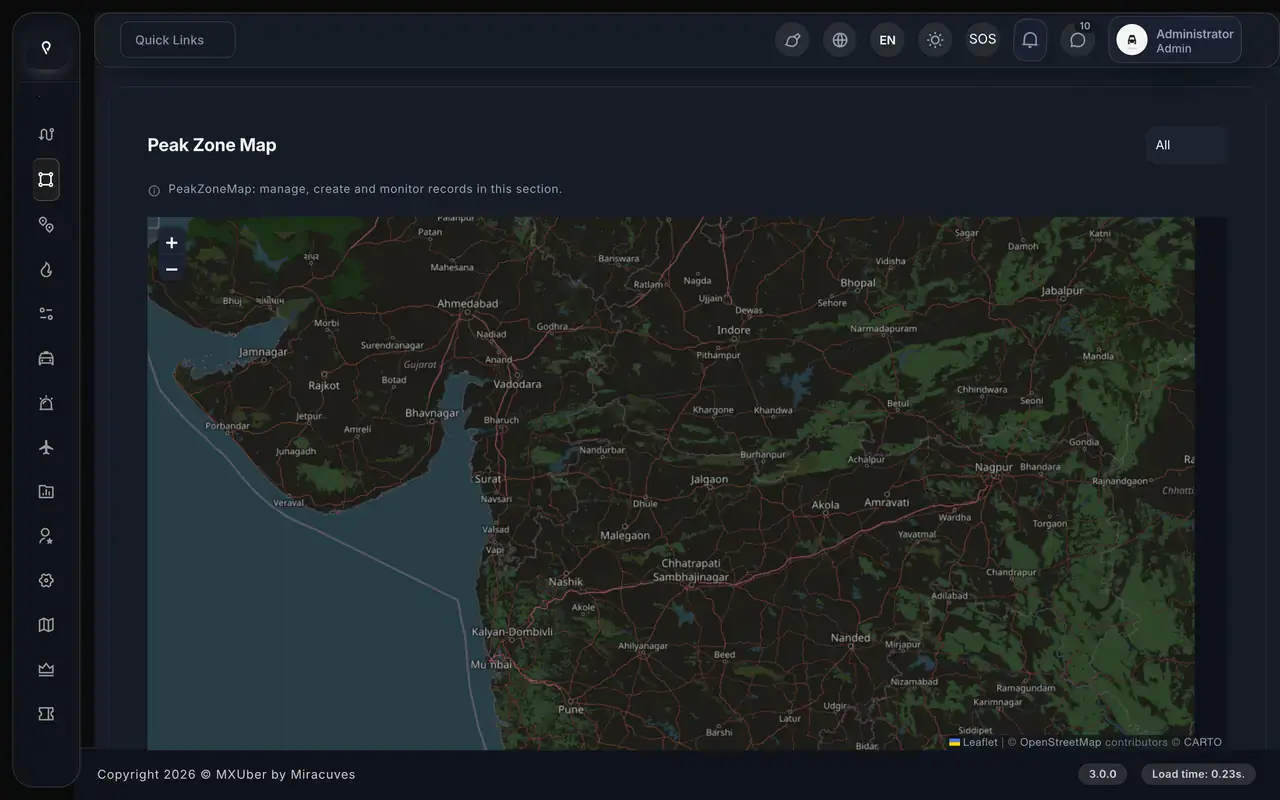
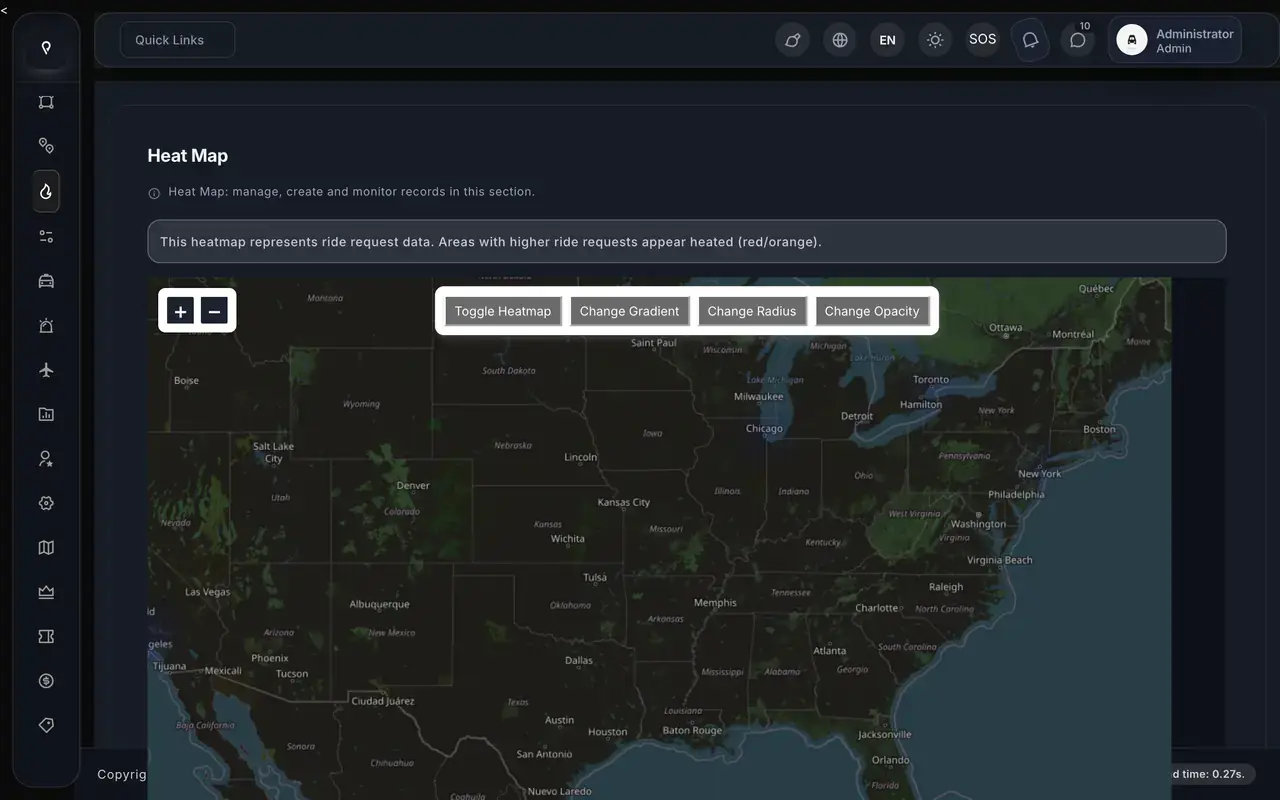
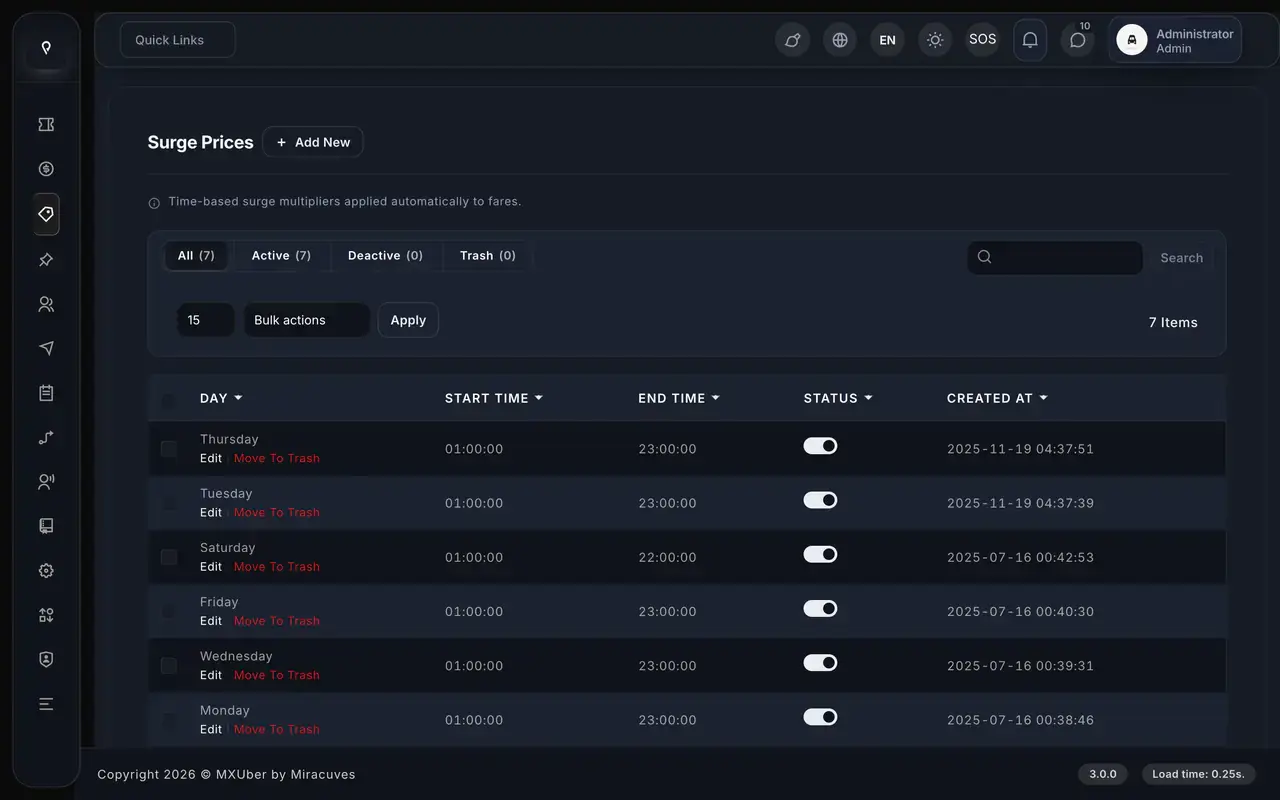
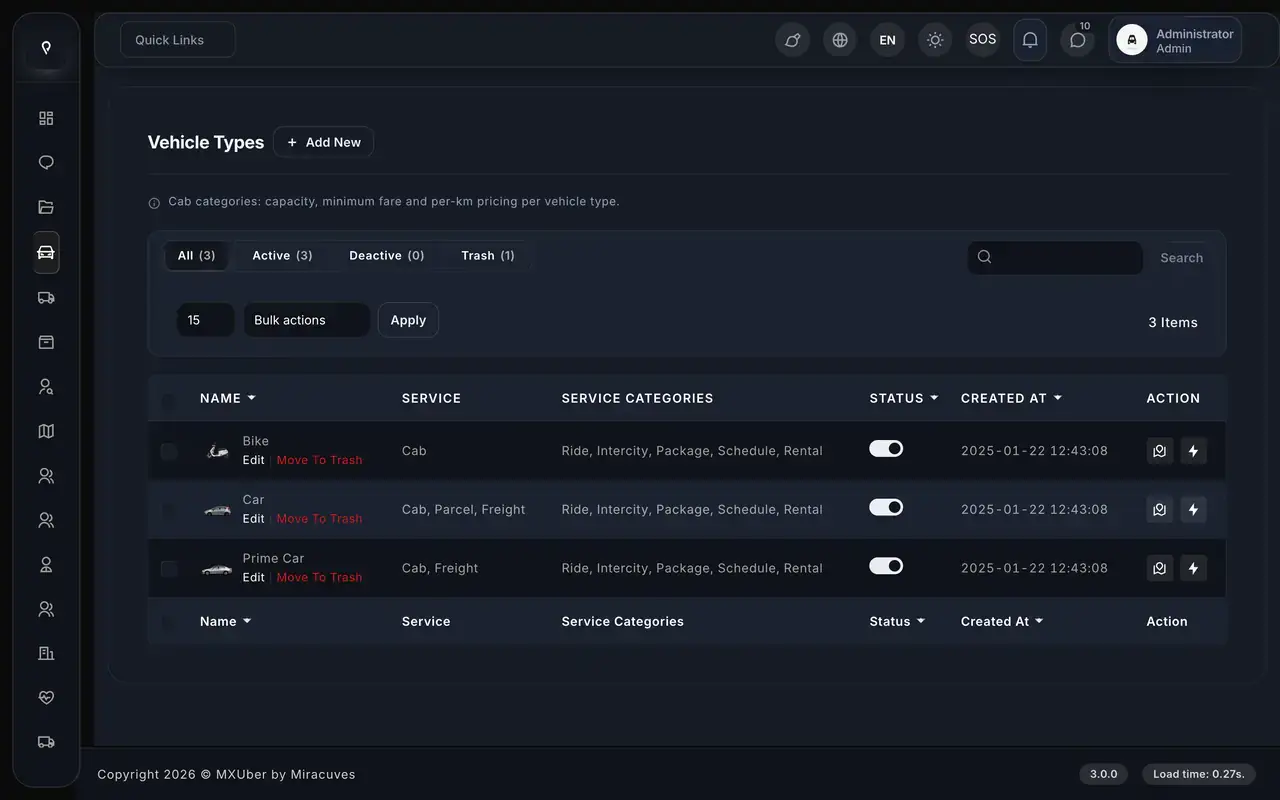
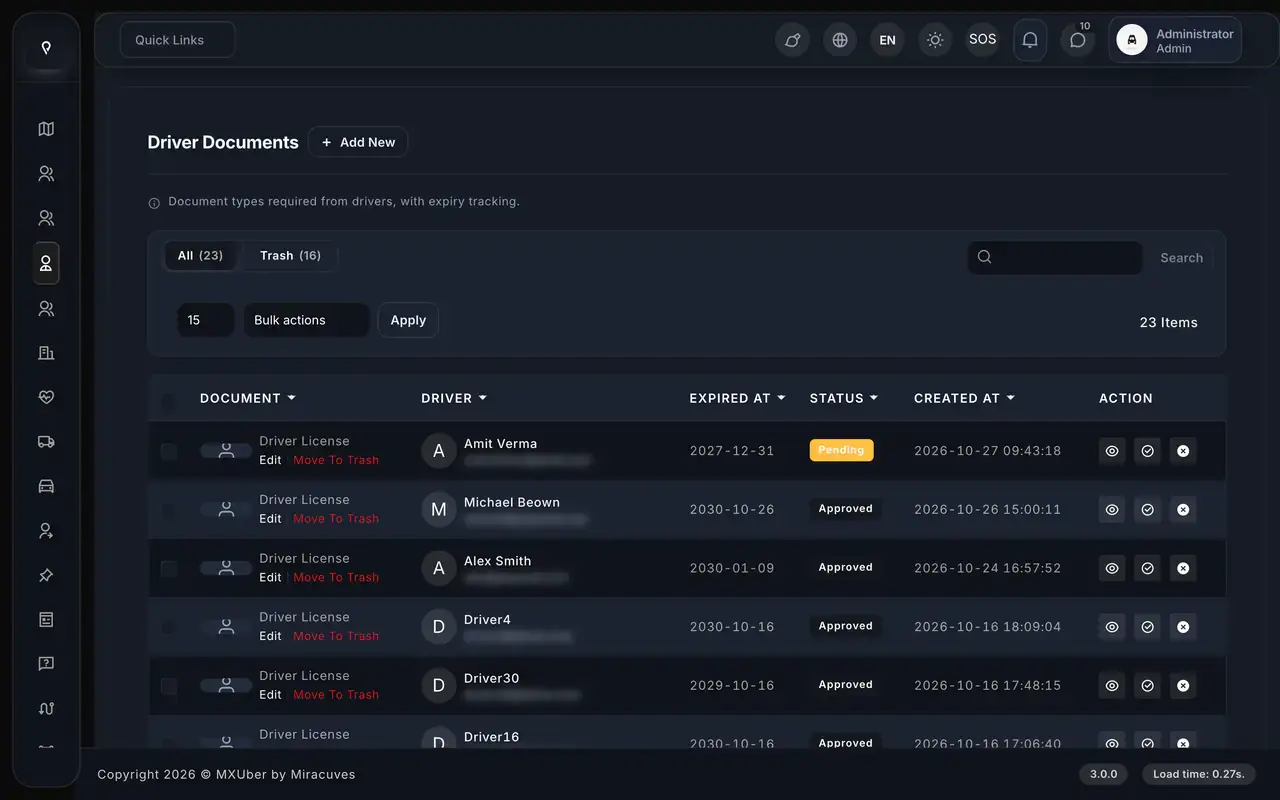
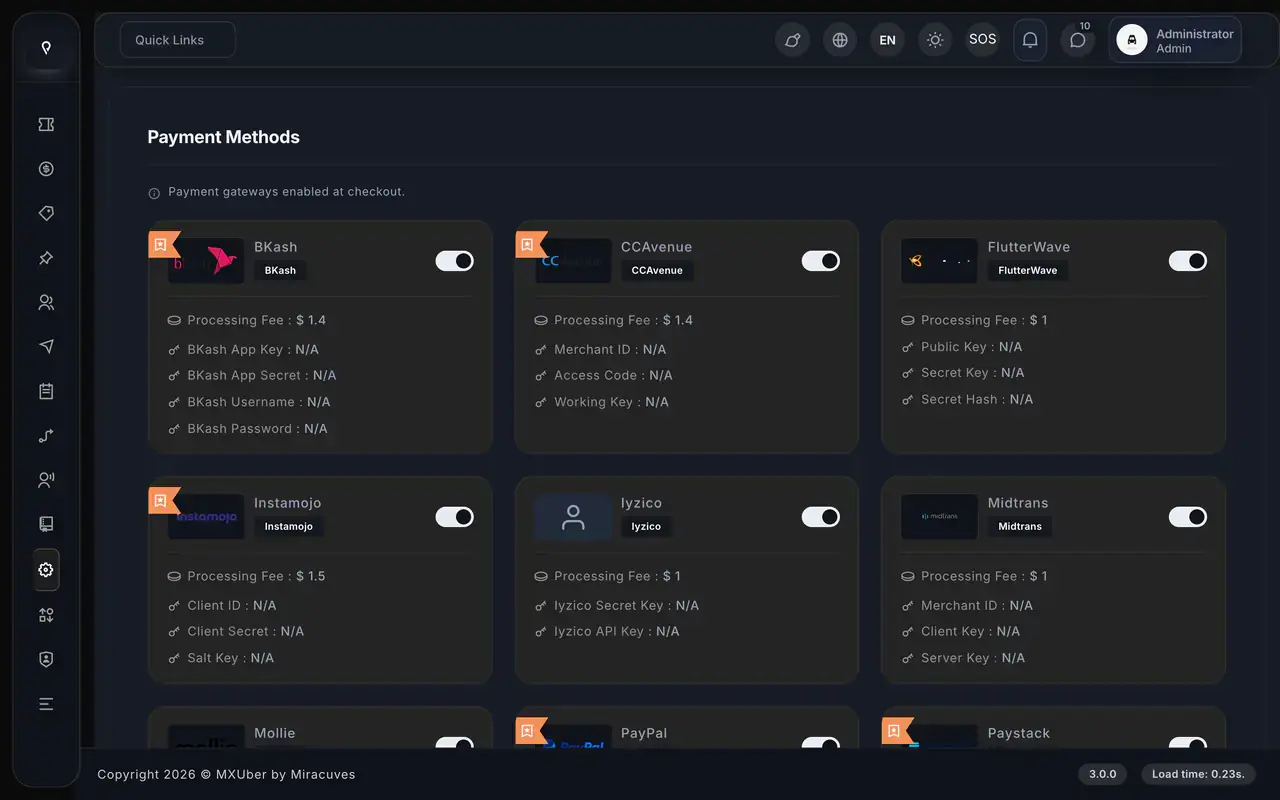
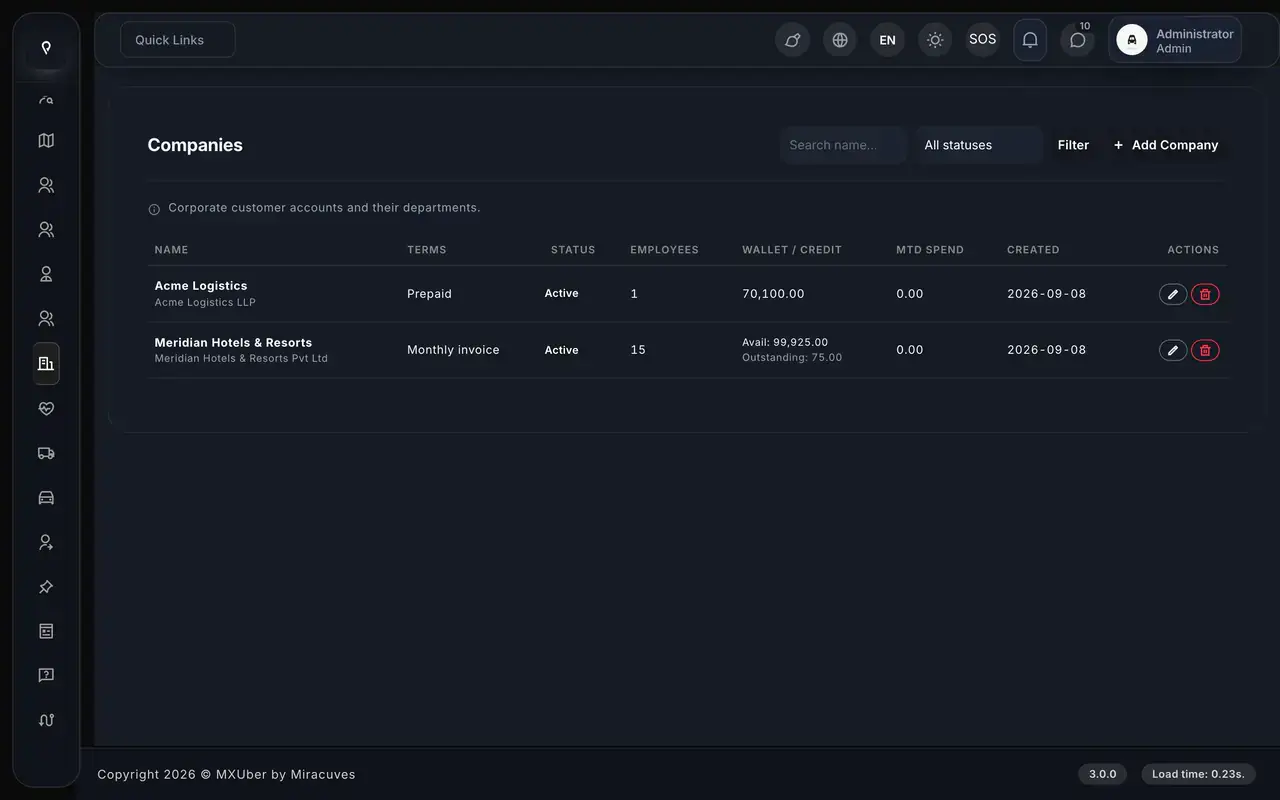
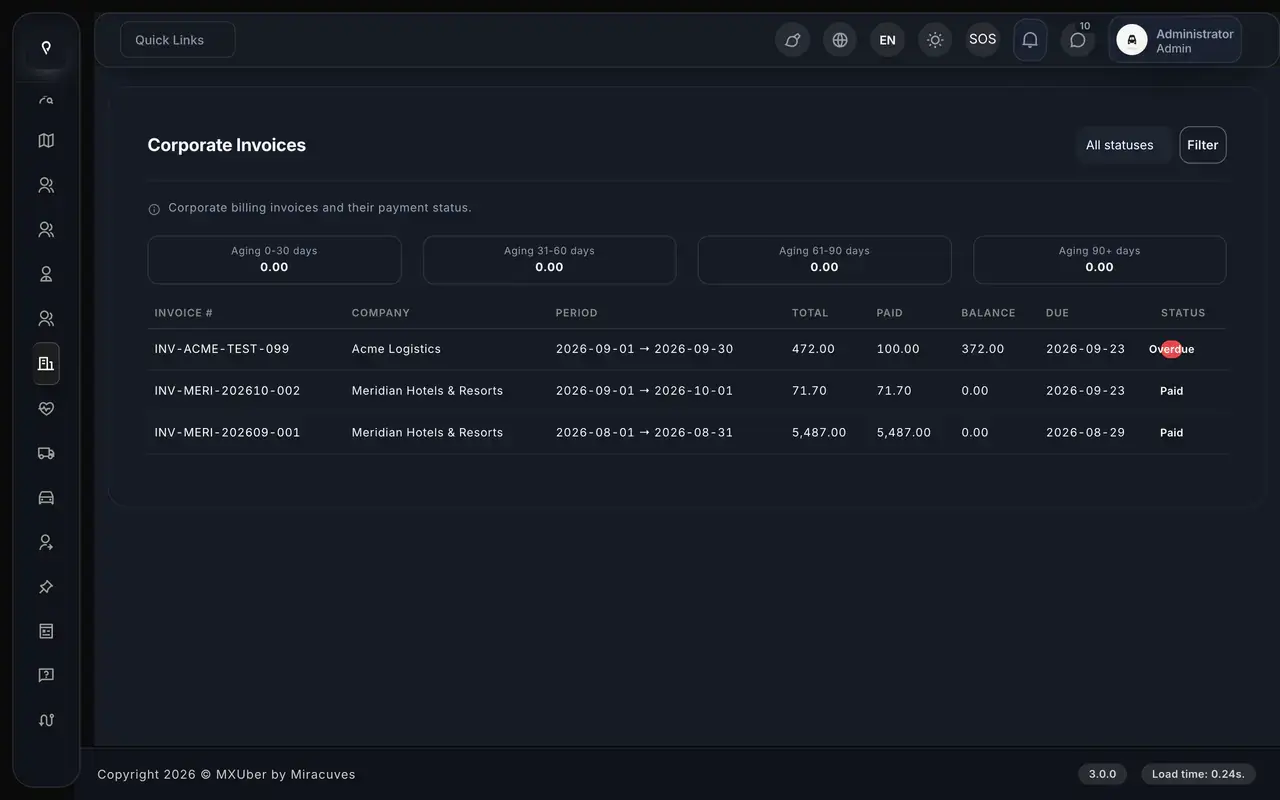
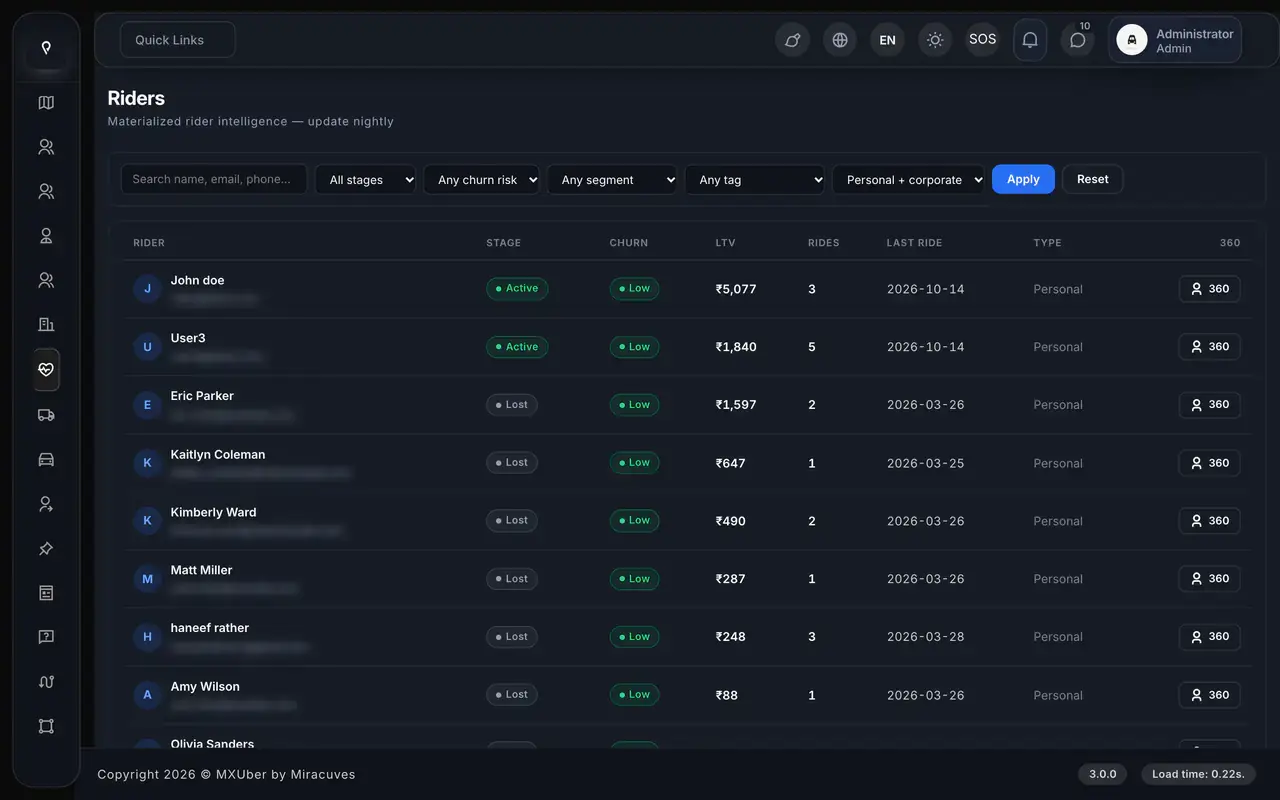
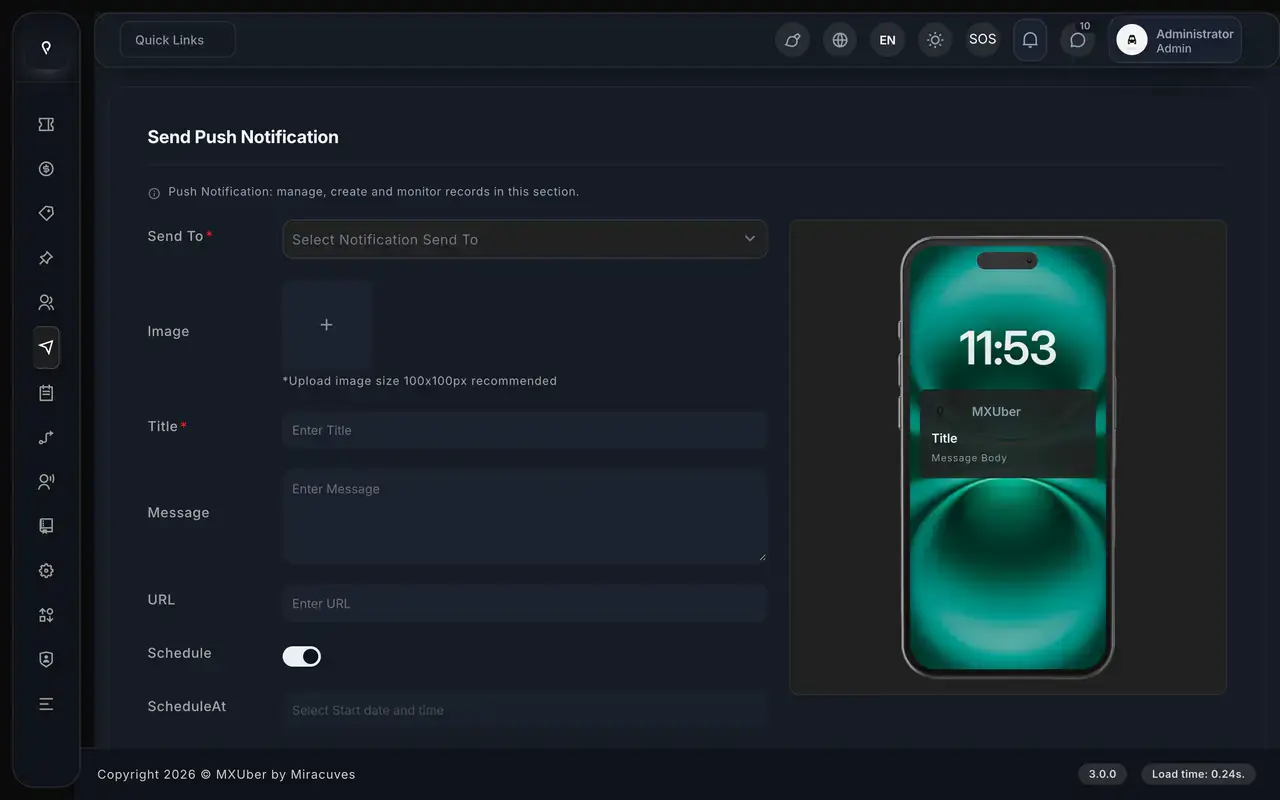
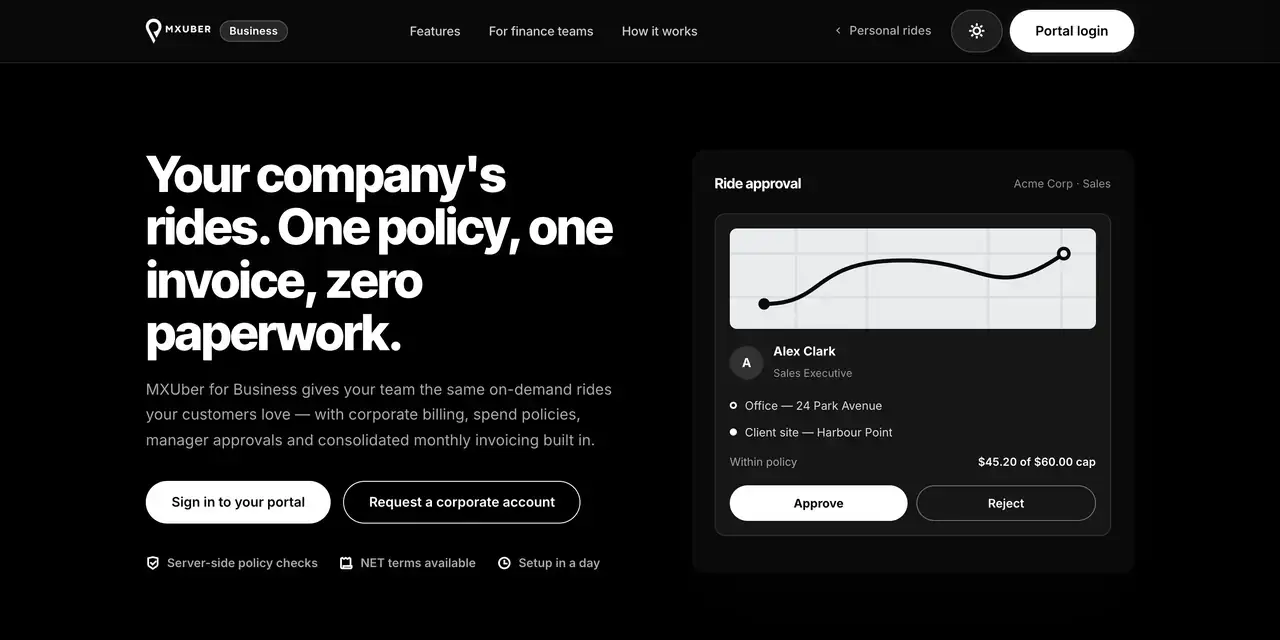
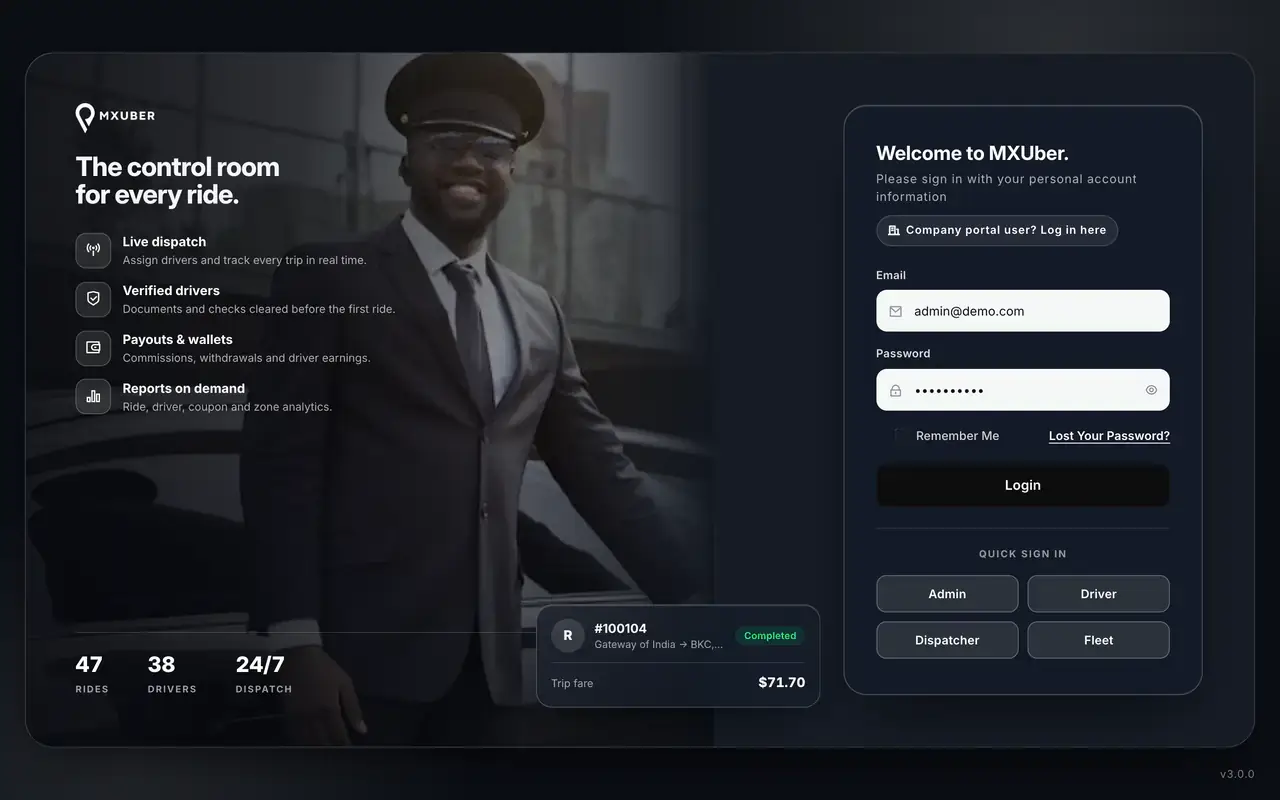


Follow a rider from sign-in to rebook, then the driver app from signup to earnings, the 13 admin screens and the website, all running on one platform.
02Client proof
Client Voices
Bolt Clone Client Reviews - Operators in Their Own Words
Moove's case only worked if the build was fast, and Aone made its window because trips began in under a month. Seven further clients, including David Subervi's rides, food and courier app, make nine operators in all.
“The base gave us matching, tracking and payouts. We reshaped dispatch around our existing driver network and their working patterns rather than forcing them onto a generic model. Live in under a month.”
“We did not need a global platform, we needed one that worked in our city with our drivers. The base covered matching, tracking and payouts, so the rest was configuration. Delivered under a month at a fraction of a custom quote.”
“Our corridor, our routes, our fares - that was our side. Matching, tracking and payouts were already solved. Live inside a month with no platform team of our own.”
“Live GPS tracking, bookings, driver and customer apps and the admin dashboard were all in place. We reshaped the workflows to our bid-and-ride model and wired in our own payments and notifications. Live inside a month on infrastructure that was already proven.”
“The business case only worked if this was fast. Matching, tracking, payouts and the ops console came ready, and we brought the market and the fares. Delivered inside a month.”
“Fares, the city and the payment partner were ours to bring. Everything underneath - matching, live tracking, driver payouts, the operations console - came ready. From kickoff to real trips was under a month, which is the only reason we made our window.”
“Both apps had to go live together, which is where these projects usually slip. The shared state model was already built, so rider and driver shipped at the same time. Live inside a month.”
“Our ops team was running last-mile on a whiteboard and a WhatsApp group. The rider app, dispatch console and live tracking came out of the box. They tuned dispatch for our COD-heavy model and added customer tracking. Where-is-my-order calls have all but stopped.”
“Rides, food and courier in one app, for a market nobody was building for properly. The rider and driver apps, dispatch and the merchant console came off a base that had already run at volume. We added local payments and the categories that matter here. Live inside a month.”
Delivered in the Field
Case Study: How Aone Was Built on the Base Behind the Bolt Clone
A ride-hailing company Miracuves built on the MXUber code sold here as the Bolt Clone. This summary draws on the published Aone case study, which records the 2022 delivery.
Aone wanted a ride-hailing platform of its own. Miracuves started from the MXUber code sold on this page, spent the effort on the choices that belonged to Aone and moved the source code into Aone's account.
- Cities, zones and vehicle classes were specific to the client
- Fare and surge rules had to match local pricing
- Payment gateways and brand theming were still to be chosen
- Reach real trips without rebuilding matching, tracking and payouts
- Spend the effort on the decisions that were the client's own
- Own the source code from day one
- Five applications and consoles, each with its own permissions
- Zones, vehicle classes, fare and surge rules, gateways and theming configured
- Five blocks built for the client, the rest reused
- Source, schema and deployment notes handed over
- MXUber base, set up in 6 working days for every client
“Fares, the city and the payment partner were ours to bring. Everything underneath - matching, live tracking, driver payouts, the operations console - came ready. From kickoff to real trips was under a month, which is the only reason we made our window.”Aone Team · Founding team, Aone
03Inside the product
What You Get
What a Ride-Sharing App Like Bolt Gives Drivers, Fleets and Riders
Think of Miracuves' Bolt clone as a ride-hailing business under your own name. Riders book a cab, a parcel, freight, an ambulance or a hired driver, drivers answer the offers, and you decide what it costs a driver to work: a subscription plan, a fleet commission and how withdrawals are handled.
Driver Terms Built In
Subscription plans, commissions, incentives and daily goals, plus withdrawals handled in admin, give you real levers when you recruit.
No Black Box
Every file arrives unencrypted, so your developers can reshape fares, plans and screens as the market responds. No per-seat license applies.
Extras Are Labeled
Chat, SOS, the fleet manager role and in-app ads are part of the product. Anything beyond that is quoted separately and labeled as an add-on.
Web, Android & iOS
What Is a Bolt Clone Script?
Ride-hailing is won on the driver side: who may go online, what a driver pays to work, what a fleet keeps and how money reaches a bank account. Those controls sit beside the rider app, built in from the start.

- 01Rider app with every trip type
- 02Driver app with offers, wallet and earnings
- 03Fleet manager role inside the driver app
- 04Dispatch desk for operator bookings
- 05Admin console for fares, peak zones and payouts
In the box: React Native apps for riders and drivers, a browser cab booking app, the admin console, plus a corporate portal and public website, with full source code.
Full Feature List
Bolt Clone Features - Driver Signup, Fleets, Wallet, Offers, Dispatch & Admin
Every capability below ships in the MXUber 2.0 build behind the Miracuves Bolt clone and was checked against the live demo. Anything that needs extra work is labeled an add-on lower on the page.
Driver Signup & Approval
Drivers sign up in the app through a five-step wizard. Nobody goes online until an admin approves the documents, and an expired document takes them off dispatch again.
- Account, documents and vehicle steps
- Vehicle for Cab, Parcel or Freight
- Fleet and bank details in the wizard
- Live document check, then admin approval
- Expired papers halt dispatch until re-approved
Fleet Manager in the App
A fleet manager works inside the same driver app with a role of their own: a live map of the fleet, driver and vehicle records, and earnings by day, week or month.
- Add or remove drivers and vehicles
- Upload vehicle and driver documents
- Live map of your fleet drivers
- Fleet earnings by day, week or month
- Each fleet sees only its own drivers
Wallet, Earnings & Withdrawals
Drivers keep a wallet, top it up and request withdrawals to a payout account. The admin console holds driver and fleet wallets, withdrawals and commissions.
- Wallet, top-up and payout accounts
- Withdrawal requests handled in admin
- Fleet withdrawals for fleet managers
- Earnings donut chart in the app
- Reports exported to CSV, Excel or PDF
Online Switch & Ride Offers
A power button puts the driver online. Offers arrive with a ringtone and vibration, and a dropped connection does not lose them: the server resends every 5 seconds while an offer is open.
- Power-button online switch
- Accept or decline each offer
- Low balance blocks going online
- Offers resent every 5 seconds
- Rider OTP to start the trip
Bids, Surge & Extra Charges
On bidding rides drivers can answer with a counter-bid. Live surge zones show on the driver map, and tolls or other extra charges are added at the end of the trip.
- Counter-bids when bidding is switched on
- Live surge zones on the driver map
- Surge by vehicle type, zone and time
- Tolls and other extra charges at the end
- Peak zones redrawn live when switched on
Dispatch Desk
A phone order is entered by staff on the Ride Requests page, and staff can pick the driver themselves. The desk will not hand a ride to anyone offline or already on a trip.
- Create bookings for phone orders
- Assign a driver by hand
- Offline or busy drivers are refused
- Other drivers told the ride is gone
Rider Booking & Fares
Riders sign in by OTP, with Google or Apple, or look around as guests, pick a vehicle, see fare and ETA first, then confirm or schedule at least 3 hours ahead.
- Guest, OTP, Google or Apple sign-in
- Fare and ETA per vehicle before booking
- Schedule rides 3 or more hours ahead
- Multi-stop rides and one-tap Rebook
- Promo codes and ride preferences
Dispatch Logic & Tracking
The engine picks the nearest eligible driver from live positions held in Redis and sends a timed offer. Riders follow the car on a live map over websockets.
- Nearest eligible driver gets the offer
- Offer times out, next driver is tried
- Search stops after 3 minutes by default
- Live ride tracking in the admin console
Cab, Parcel & Freight Trips
Beyond everyday cab rides, drivers carry parcels, freight and ambulance trips, and riders can hire a driver for their own car.
- Cab: Ride, Intercity, Package, Schedule, Rental
- Parcel with weight pricing and delivery OTP
- Cargo photo on freight
- Ambulance trips, tracked live
Safety & Support
Riders and drivers get SOS and chat with photos, a ride OTP starts every trip, and disputes carry photo evidence.
- SOS with live location
- Support tickets with images
- Disputes with up to 5 photos
- In-app chat with photo sharing
- Share-trip link with live tracking
Admin Control & Reports
One console of 52 sections runs the operation: live KPIs and heat map, zones, commissions, driver documents, reports and roles.
- Driver documents with expiry dates
- Reports to CSV, Excel or PDF
- Commissions and driver rules
- Live driver locations and heat map
- Staff roles with per-page permissions
Plans, Incentives & Ads
Beyond the trip fee, you can earn from subscription plans and reward drivers with referrals, incentives and daily goals. Google native ads in the ride screens add an operator revenue line.
- Driver subscription plans
- Referral rewards for drivers
- Incentives and daily goals
- Google native ads in the ride screens
- Drivers online too long switched offline
Before you buy, note this: Delivery covers your branding and deployment on your own hosting. On your side you need a domain, a verified store developer account, your brand and business details, a payment gateway that has finished onboarding and KYC, and any third-party keys. Store review by Apple and Google runs on their timetable, not within our 6-day build.
Where the Money Comes From
Bolt Clone Revenue Models - Commission, Driver Plans, Fleet Terms & Surge
An app like Bolt earns in several places, and Miracuves keeps each line separate, so adjusting one does not disturb the rest.
The two lines that shape driver supply are the commission you take and the plan you offer, so most operators set those first.
- 01
Trip Commission
You keep a slice of every finished trip and the driver gets the rest. Commission rules are set in admin, so you choose the percentage before launch.
- 02
Driver Subscription Plans
Drivers who prefer a known cost buy a subscription plan in the driver app, and an expired plan switches off by itself. It earns whether a given trip is long, short or canceled.
- 03
Fleet Commission Tiers
Fleets have their own wallet and withdrawals, and you set fleet commission in admin, so a fleet's terms stay separate from those of an independent driver.
- 04
Surge Margin
Surge is set by vehicle type, zone and time window in admin, and peak zones redraw live on the driver map. Busy periods lift the fare on trips that carry your commission.
- 05
Rentals & Intercity Fares
Rental, hourly package and intercity trips are separate trip types, priced apart from city rides, so longer bookings earn a margin of their own.
- 06
Driver-App Ad Income
Google native ads run on the driver app's ride screens as a revenue line for you. They are switched on or off in the admin settings.
| Revenue line | How it is billed | Take rateTypical take rate | What limits it |
|---|---|---|---|
| Trip Commission | A percentage of the final trip price, deducted from the driver's payout when the trip ends. | Bolt publishes 15%-30% depending on country and city; Uber states a 25% average in Helsinki. | What drivers will tolerate in that city. Bolt's own published bands span 15% to 30%, so a few points can decide whether a driver stays. |
| Driver Subscription Plans | A flat daily, weekly or monthly fee paid by the driver, with no per-trip cut. | Reported in India, April 2025: Rapido 29 rupees a day, Uber 9 (discounted), Namma Yatri 10-30. | How the flat fee compares with a commission on the driver's own volume. These are small daily amounts in one market, not a global rate. |
| Fleet Commission Tiers | Layers of commission on one platform: operator to fleet, then fleet to driver. | Lyft keeps about 34% of Gross Bookings and Grab about 15% of Mobility GMV (our arithmetic, 2025). | Fleet owners and drivers weigh the combined cut. Regulators add a floor: for high-volume app trips New York City requires at least $1.283 a mile and $0.681 a minute. |
| Payment & Wallet Fees | A processing fee on each card payment, absorbed or passed on to the rider. | Stripe cites 2.9% + 30c per US card payment. | The gateway for your country and the card mix. Store billing (Apple 15% or 30%; Google Play 10% + 5% on subscriptions in the US, UK and EEA since 30 June 2026) would apply only to digital items sold inside the app. |
How to read this. Bolt's commission bands come from its own help articles for general cities, Estonia, Poland and Romania and Saudi Arabia, and Uber's range from its Helsinki announcement. The daily plan fees are press reporting by Rest of World, so treat them as observed pricing in one country. The share-kept figures are our arithmetic on the Lyft 10-K and the Grab results release, the pay floor is from the NYC TLC, and the card price from Stripe, with Apple and Google Play for store billing. Use them as modeling inputs only. This table is not a quote and not a prediction of what any platform will earn, and your own terms are set in the admin panel.
Bolt Clone Revenue Model, Stage by Stage
Each line of the Bolt clone revenue model has its own setting in the admin Miracuves delivers, so a driver-first operator can lead with driver terms and layer the rest on later.
Launch
Trip commission and driver subscription plans go first, because the terms you offer drivers decide whether cars appear on the map at all.
Traction
Once company fleets join, fleet commission tiers keep their terms apart from independent drivers, and surge by zone, vehicle type and time window lifts fares in busy periods.
Scale
Across several cities, rental, hourly and intercity trips earn their own margin, and Google native ads on the driver app's ride screens add a line you switch on in admin.
Whatever stage you reach, every trip commission, driver plan fee and surge fare stays with you, with 0% to Miracuves.
Run It Daily
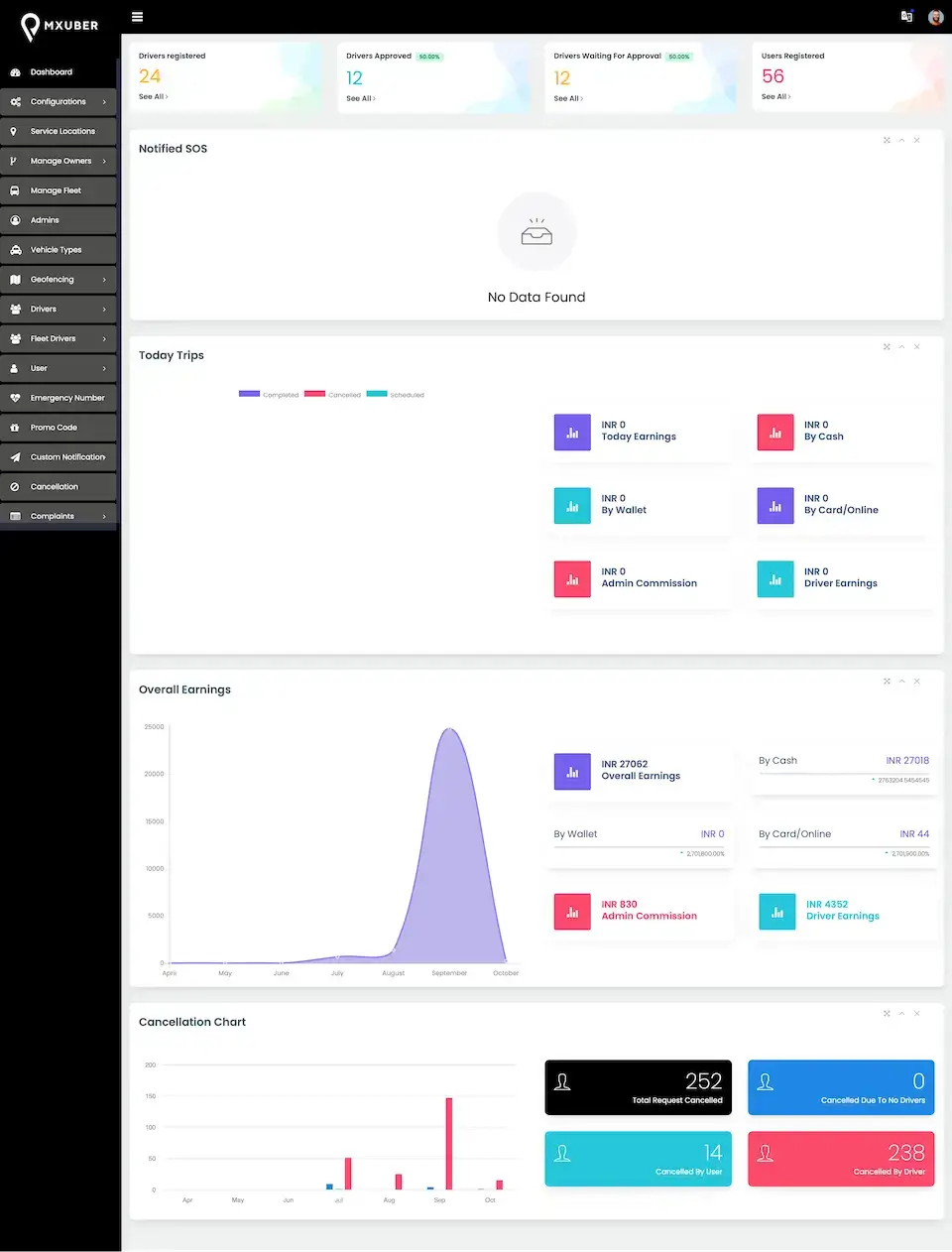
Admin Panel of a Bolt-Style Taxi Platform - Drivers, Fleets, Fares, Surge Zones & Payouts
With the Miracuves Bolt clone, an operator's whole day fits in one console of 52 sections: which drivers are approved, what each fleet earned, which surge zones are live and what is owed in withdrawals.

Admin Panel Sections
- 01
Dashboard & Reports
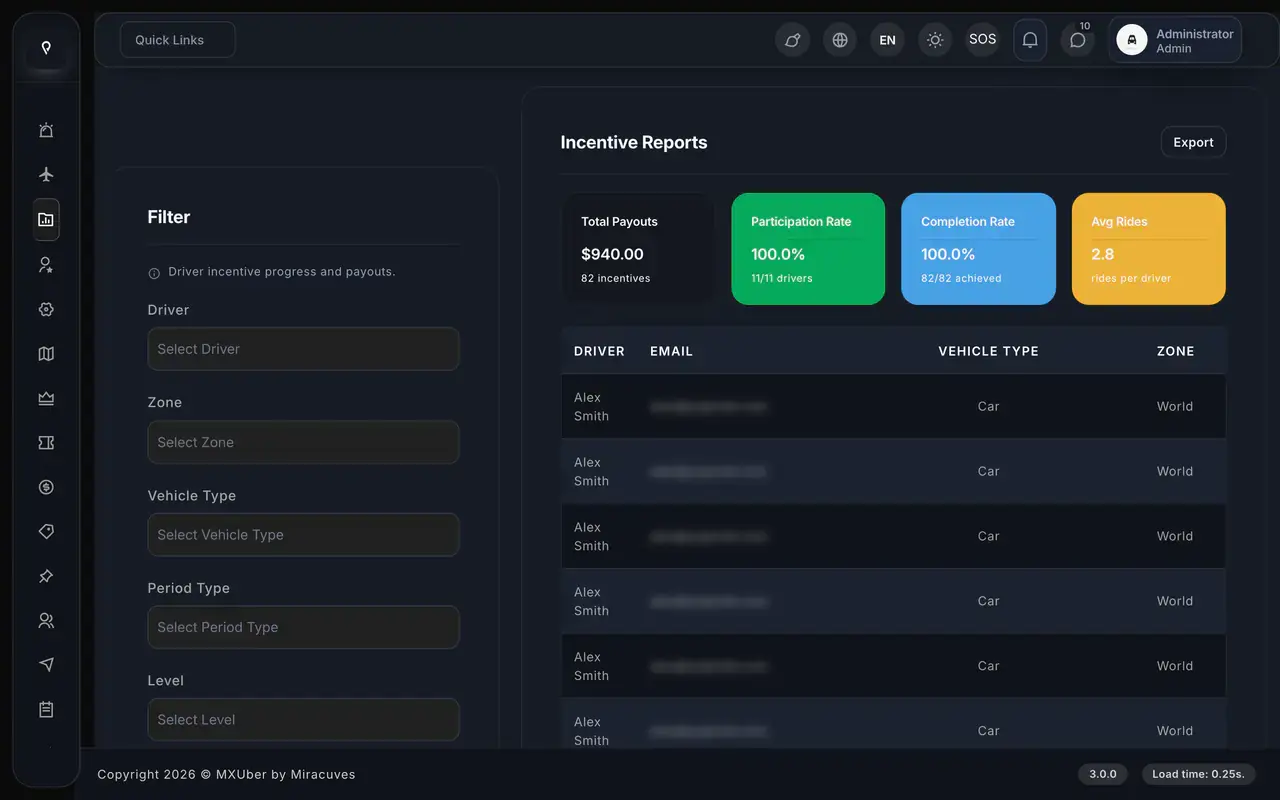
Live KPIs, a heat map and live driver locations sit up front. Reports (transaction, ride, driver, coupon, zone, incentive) export to CSV, Excel or PDF.
- 02
Drivers & Documents
Review driver sign-ups, check driver KYC documents and their expiry dates, and approve drivers before they go online.
- 03
Surge & Peak Zones
Surge can follow a time window, or a vehicle type, zone and slot together. Switch on a peak zone drawn on the map and driver maps show it live.
- 04
Fleets & Vehicles
Fleet managers sign up from the driver app. The admin sees fleet wallets and withdrawals, vehicle types and rental vehicles, and sets commissions.
- 05
Ride Oversight
Follow rides by status, track them live and assign a driver by hand from the ride or ride-request page.
- 06
Promotions
Coupons, banners and scheduled pushes bring riders back; incentive levels reward drivers.
- 07
Earnings & Payouts
Driver wallets, fleet wallets, withdrawals, commissions and plans, all in one place.
- 08
White-Label Controls
Set your own name and theme, then edit the landing page, onboarding screens, translations and about 70 switches.
Driver Money
Everything financial, from the first fare to the withdrawal that pays a driver out.
- Commissions and driver rules
- Withdrawals for drivers and fleets
- Driver and fleet wallets
- Transaction reports
Operations Desk
What the operations team keeps on screen while trips are running.
- Every running ride visible live
- Driver documents and approval
- Help desk and tickets
- Brand and theme for white-labeling
Want the console to take on something extra? Extra reports, another payout rhythm, more languages or a bespoke approval step are scoped separately. Describe what your team lacks and we send a written quote.
04Package and cost
The Full Package
What Ships in the Bolt Clone Script: Code, Apps & Deployment
What Miracuves delivers is a running ride-hailing platform, not a pile of parts: phone apps for riders and for drivers and fleets, web booking, a corporate portal, the admin console, and the code and schema behind them. Ownership is yours outright: no seat fees, no per-trip charge and no license to renew. Outside the price, the bills you settle yourself are hosting and a domain, a payment gateway, maps and routing, SMS and push, the store developer accounts, and your licenses, insurance and counsel.
$ git clone your-taxi-app Full Source Code
Every file for the web platform and admin console, plus both React Native apps, unencrypted and ready for your developers to adapt to your market.
- Laravel 11 web and console code
- React Native code for Android and iOS
- Yours to modify, extend and redeploy
- Handed to you in your own repository
Schema & Migrations
About 180 MySQL tables covering rides, fares, drivers, vehicles and payouts, supplied so you can rebuild from nothing.
- Schema with migration files
- MySQL plus Redis
- Rides, fares, drivers and fleets
- Payments, payouts and configuration
Driver App & Fleet Role
The app drivers live in: signup wizard, online switch, ride offers, earnings and wallet, plus subscription plans and the fleet manager role.
- Signup wizard with documents
- Ride offers that survive drops
- Earnings donut and history
- Subscription plan for drivers

Public Website
A responsive public website that presents your service and links to the app downloads, next to the rider web app at /cab where riders book from a browser.
- Service cards for each ride type
- Download links for both apps
- Browser booking in the rider web app
- Carries your own brand
Rider App
The rider app, written in React Native for Android and iOS, covers sign-in, the home tiles, fare and ETA per vehicle, scheduling, wallet, history and support.
- Service tiles for every trip type
- Fare estimates before booking
- Scheduled and multi-stop rides
- Released through your own store accounts


Dispatch, Fleet & Admin Consoles
Web consoles for the people who neither ride nor drive, signed in as admin, dispatcher or fleet: staff assign drivers, a fleet sees only its own, and the admin controls fares, zones, reports and payouts.
- Manual assignment with guards for offline drivers
- Fleet login limited to its own drivers
- Fare, surge and peak-zone rules and payouts
- Analytics and reports for the operator
Access & Security Layer
Token sign-in for the apps, per-page roles for staff, a sign-in rate limit of 5 per minute, and card data held by the payment gateway.
- Per-page permissions for staff roles
- Token sign-in for the apps
- Sign-in rate limit of 5 per minute
- Card details are kept by the gateway
Handover & Support
We apply your branding, deploy the platform, send a handover pack and start the three support periods together on launch day.
- Your brand on logo, icons and colors
- Deployment to your hosting
- Deployment settings and architecture notes
- 60 days guidance, 6 months bug fixes, 12 months updates
Prefer to look first? Sign in to the demo with the rider, driver, admin, dispatcher or fleet login listed above. We can also step through a booking, a driver withdrawal and a fleet setup using the numbers from your own business plan.
Transparent Pricing
What Does a Ride-Hailing App Like Bolt Cost to Build?
The launch-ready white-label Bolt Clone costs a fixed $3,099. Whatever lies beyond the base (add-ons, further integrations, custom flows) is scoped separately and quoted in writing. The development cost guide breaks the figure down.
Professional
Ready-to-Run PackageBest for: Challenger ride-hailing brands, taxi companies with fleets, operators competing for drivers on terms
You get the platform exactly as the demo shows it, carrying your logo, icons and colors, and running on your own hosting.
Get StartedEnterprise
Bespoke Builds for Bigger ScopeBest for: Cross-border mobility groups, big fleet networks, operators with unconventional driver-pay models
Need driver terms or flows the base lacks? We build to your brief, and the scope and price are agreed before any work begins.
Request a QuoteBolt Clone Development Cost in 2026
Drivers and fleet owners get everything the demo shows for one $3,099 payment, nothing held back: React Native rider and driver apps with the fleet manager role, browser booking, the admin, dispatcher and fleet consoles, the corporate portal and full source over about 180 MySQL tables, rebranded and live in six working days.
What moves your total sits outside the software invoice
- Hosting and a domain
- Payment gateway accounts in each market
- Maps and routing, SMS and push providers
- Store developer accounts for both apps
- Taxi licenses, insurance and local counsel
Custom driver-bonus payouts sit outside the base: each one gets a written quote first and takes 2-8 weeks to build.
Compare Your Options
Ready-Made Bolt Clone vs Custom Development vs SaaS
Driver-first ride apps like Bolt can be bought ready-made as a Bolt clone script from Miracuves, commissioned from scratch or rented as SaaS; here is how the three compare for an operator competing for drivers.
| Criteria | MiracuvesReady-Made Bolt Clone | Custom Development | SaaS |
|---|---|---|---|
| Launch time | 6 working days to a branded launch | Typically 2-8 weeks after a written scope | Account opens fast, changes wait |
| Upfront cost | $3,099 paid once | Priced in writing before work | Subscription billed monthly |
| Source code ownership | Full code for driver, rider and admin apps | Owned if the agreement transfers it | Not available to you |
| Customization | Driver plans, fleet commission and surge you set | Custom pay rules built to order | Fixed driver-pay models |
| Ongoing fees | No share of fares to Miracuves | Ongoing developer cost | Usage-based platform fees |
| Branding & app-store listing | Your logo on both stores and the web | Branded from the first release | Vendor branding often shows |
| Best for | Challenger brands winning drivers on terms | Unconventional driver-pay models | Short trials with few drivers |
Same product, other editions: Uber Clone · Lyft Clone · Careem Clone · White Label Taxi App · Browse all Ride-Sharing solutions
Use Cases
Use Cases for a Taxi App Like Bolt - Driver-First Taxi, Fleet Platforms, Dispatch & Delivery
Operators lean on different parts of the one Bolt clone product Miracuves ships. A challenger brand starts from driver plans and incentives, a fleet platform from the fleet manager role and a call-center business from the dispatch desk.
Swipe · 6
Enter against established apps by giving drivers a subscription plan, incentives and daily goals or a lighter commission, then watch fares, trips and withdrawals grow in the admin console.

Bring company fleets onto one platform: each fleet manager runs drivers, vehicles and withdrawals from the driver app and sees only their own drivers, while the admin keeps the whole network in view.

Take phone bookings on the Ride Requests page, assign drivers by hand and keep the rider app running next to the call center.

Run everyday taxi trips in one city with zones, surge by vehicle type and time window, and live peak zones on driver maps.

Sell hourly packages, rentals and intercity or outstation trips, priced apart from city rides and airport runs.

Parcels use weight pricing and a delivery OTP, so drivers already on the platform can carry them.

Bolt Clone Business Model: Three Ways to Run It
Drivers decide whether a Bolt clone business model works, so one install carries three kinds of mobility company, each recruiting drivers on different terms.
Driver-led challenger
A new brand enters a city held by one or two apps by offering drivers a flat subscription plan, incentives with daily goals or a lighter commission.
Fleet-owner network
Taxi companies and fleet owners bring cars in bulk, each fleet manager runs drivers and withdrawals from the driver app, and fleet commission tiers set what every company keeps.
Dispatch and delivery
A call-center business takes phone bookings on the dispatch desk, while the same drivers carry parcels and freight with weight pricing and a delivery OTP.
Subscription plan prices, fleet commission tiers and surge zones are set from the admin console in every one of these models.
One platform, six business models. Every case runs on the same rider app, driver app and admin console. Only the cities you open, the driver terms you offer, the fleets you invite and the branding differ, so a single codebase serves them all.
Talk to Our TeamMarket Timing
Why Launch a Ride-Hailing Business in 2026?
Ride-hailing is a local contest for drivers and riders, and in most cities a handful of large apps already hold both. A platform under your own name, with terms suited to the drivers you want, lets you enter without writing the software yourself.
01Drivers Are the Scarce Side
Passengers show up once cars are on the map, and cars show up once the terms make sense to the person at the wheel. An operator who can offer a different cost structure gives drivers a reason to try.
02A Flat Plan Is Easy to Explain
Some drivers prefer to know their cost in advance rather than watch a percentage leave every trip. A recurring plan gives them that and gives you a steadier income line.
03Fleet Owners Bring Cars in Bulk
One owner with ten cars means ten drivers onboarded together. Their own commission rules and earnings views make the platform workable for a company, not only for individuals.
04Passengers Judge on Arrival and Price
A clear fare estimate before booking and an arrival time on the map are the first things a rider compares. Both appear on the screens you can try in the demo.
05Your Brand, Your Driver Relationship
When the platform carries your name, the driver list, the ride history and the payout record belong to you, not to an app that charges you to reach them.
06Buying Is Faster Than Building
Matching, tracking, payouts and the back-office consoles make up most of a ride-hailing business. Six days of our build work later, a white-label copy runs on your hosting.
The Platform in Numbers
Web & App Surfaces
Ride & Delivery Services
Driver Money Levers
Days of Build Time
The difficult middle of ride-hailing is matching, fares, dispatch and payouts that agree with one another. It is already built here, so your effort goes into the driver terms that set you apart.
Sectors
Sectors and Business Models
The Bolt clone taxi app from Miracuves fits any business that moves people or parcels between two points and depends on drivers to do it. Ride-hailing brands run daily taxi trips. Taxi companies consolidate their cars on one platform. Fleet owners look after many vehicles and drivers. Call-center operators place phone bookings. Rental and out-station services sell longer journeys. Delivery and courier firms carry parcels and freight on the same network. Ambulance and hire-a-driver services use the same dispatch. Airport and corporate transfer companies take scheduled rides. Regional mobility startups cover one city or corridor under their own name.
one codebaseMXUber
- 01RhRide-Hailing
- 02TcTaxi Companies
- 03FoFleet Operators
- 04CcCall-Center Dispatch
- 05ReRentals
- 06OtOutstation Travel
- 07DcDelivery & Courier
- 08AtAirport Transfers
- 09CtCorporate Transport
- 10RmRegional Mobility
- 11HdHire a Driver
- 12CsChauffeur Services
Miracuves’ Bolt Clone suits driver-led mobility models, and the plan, the commission and the incentives carry your name from the first screen.
06How it runs
Passenger to Payout
Bolt Clone Ride Flow - Sign In, Set a Drop-Off, Compare, Book, Ride & Pay
A trip in Miracuves' Bolt clone feels like a handful of taps to the rider, but matching, fare calculation, live location and payment sit underneath. Here is the rider's path from sign-in to rebook, then the architecture underneath.
The Rider's Path: Sign-In to a Finished Ride
Swipe · 6
- 1Open the Taxi App and Sign In
Riders use a phone or email OTP, Google or Apple to sign in, or explore as a guest first.
- Video splash, then sign-in options
- Phone or email OTP
- Google, Apple or guest
- 2Pick a Ride or Delivery Service
Home shows a live map, a search bar and one tile per service: cab, parcel, freight, ambulance or a hired driver.
- Live map plus search bar
- Service tiles
- Saved places
- 3Enter Where You Are Going
Type a destination or drop a pin, add any extra stops and confirm.
- Destination search
- Pin on the map
- Multi-stop option
- 4Compare Vehicles, Fares and ETAs
Before booking, every vehicle type carries a fare and an ETA, with an itemized estimate, ride preferences and a promo code field beside it.
- Fare and ETA per vehicle
- Itemized fare estimate
- Promo codes and preferences
- 5Book a Taxi Now or Schedule One
Confirm for immediate dispatch, or schedule 3 or more hours ahead; the ride is offered to drivers 15 minutes before pickup.
- Ride Now button
- Date and time picker
- Released 15 minutes before pickup
- 6Meet the Driver, Pay & Rebook
A timed offer reaches the closest eligible driver; the rider then starts the trip with the ride OTP, watches the car arrive, pays, rates and can rebook the route in one tap.
- Timed offer, then the ride OTP
- Invoice PDFs and ride history
- Rating, tips and one-tap Rebook
Inside the Build
Architecture Behind a Bolt-Like Ride App
- 01Part 01
Separate Apps, Separate Permissions
Five applications stay apart (rider, driver, rider web, admin and corporate portal), each with separate permissions, so a driver never reaches the back office.
- 02Part 02
Driver Matching
Live positions of online drivers sit in Redis. A timed offer goes to the closest eligible driver, and a timeout hands it to the next one automatically.
- 03Part 03
Live Location Feed
Laravel Reverb websockets stream driver positions to the rider map; offers to drivers carry a 10-second recheck.
- 04Part 04
Fare, Surge & Commission Rules
Zones, surge by vehicle type and time window, and extra charges shape the fare, while commissions and plans decide how it is split between operator, fleet and driver.
- 05Part 05
Payments & Payouts
Wallets, withdrawals and payouts are logged as transactions; riders pay through 13 gateways, or by wallet, cash or corporate billing.
- 06Part 06
Alerts & Background Jobs
Push notifications through FCM carry ride updates, while queued jobs on Redis run dispatch and housekeeping every 2 hours.
Technology
Under the Hood of a White-Label Bolt App: Laravel, React Native, Redis, Maps & Gateways
Driver apps live or die on a steady backend, a fast data layer and ride offers that still reach a driver after a dropped connection, so that is where Miracuves built the Bolt clone stack. This is the stack the Bolt Clone script ships on, listed so your engineers can judge it.
Web & Admin
- One console with admin, dispatcher and fleet logins
- PHP 8.2+ runs Laravel 11
- 887+ routes serving apps and consoles
- Translations managed in admin
Data Layer
- About 180 tables for rides and fleets
- Redis holds queues, cache and driver positions
- Live driver lookup runs on Redis GEO
Mobile Apps
- Rider and driver apps in React Native
- Driver app also serves fleet managers
- Builds for Android and iOS stores
- Released through your own store accounts
Maps & Navigation
- Switch the map source in admin
- Server cache for tiles, addresses, routes
- Vendor figure: map tiles load up to 36 times faster
- Dark map to match the dark theme
Realtime & Messaging
- Five SMS gateways plus Firebase sign-in
- Reverb websockets carry live positions
- FCM push for offers and alerts
- Your own SMS and Firebase accounts
Payments
- 13 gateways, plus wallet, cash and company billing
- App projects with signing steps written down
- Database schema delivered with the source
- Setup and architecture notes passed over
Web, admin and API run on Laravel 11 over PHP 8.2 or newer. MySQL stores the data, and Redis handles queues, cache and live driver positions. The two mobile apps are React Native 0.82, with Reverb websockets and FCM push for realtime. Maps, SMS, push and payment gateways are outside services: you open the accounts and hand over the keys at deployment. The tools are mainstream, so developers are easy to find.
Room to Grow
Ready for Growth - Separate Apps, Queued Dispatch & Headroom
Miracuves runs the Bolt clone as separate applications on a Laravel backend, with Redis and queued jobs doing the heavy lifting, so taking on more drivers, fleets and trips is mostly capacity and configuration, not a rewrite.
Separate Applications. Five applications, not one block: a change to the driver app does not force a release of the rider app or the consoles.
Driver Lookup in Redis. Online drivers' positions sit in Redis GEO, so finding the nearest eligible driver is a memory lookup, not a database scan.
Websockets With a Fallback. Reverb websockets carry live positions and ride status, and ride offers get a 10-second check in case the socket drops.
History You Can Audit. Each change of ride status is appended to a history that cannot be rewritten, so a fare dispute or payout question is settled from the record.
Separate Applications
Each of the five applications is built and released alone, so one can change while the rest stay put.
Driver Dispatch
Redis GEO finds the closest eligible driver and sends a timed offer; if it times out or is declined, the next closest driver gets it.
- Nearest eligible driver first
- Offer timeout set in admin
- Decline passes it on
- Staff can assign by hand
Token Sign-In and Limits
The apps use token sign-in, capped at 5 tries a minute, and the offer buttons carry rate limits of their own.
- Token sign-in for the apps
- 5 sign-in tries per minute
- Per-page roles for staff
- OTP, Google or Apple for riders
Realtime Locations
Driver positions travel over Reverb websockets, backed up by a check in the app every 10 seconds.
- Moving driver marker for riders
- Live fleet map for fleet managers
- Live driver locations in admin
- Live ride tracking for staff
Append-Only History
Every ride status change is appended to a history that is never edited, so any trip can be traced.
- Requested to completed, logged
- Commissions set in admin
- Withdrawals handled in admin
- Reports to CSV or PDF
Documented Handover
With the source code you receive the database schema, setup steps and architecture notes, so another team can take over.
Space to Adapt. Every market ends up wanting something of its own: another payment gateway, a vehicle type, a zone, a commission rule. You hold the full source on Laravel and React Native, so adding it is ordinary development for your engineers or ours.
Only one city at first? Launch with the zones and drivers you can sign, and grow on the same deployment. As rides multiply, capacity is a hosting and configuration decision, and work beyond the base is quoted separately.
07Trust and safety
Open to Inspection
Security on a Bolt-Style Platform: Roles and Permissions, Card Data at the Gateway & the Limits We State
People's identities, live locations and payment references all pass through the Bolt clone Miracuves delivers, so three questions matter most: who can see which data, where card details end up and what is checked before launch. Below is what the platform already handles and what stays with you.
- 01 · AccessAccess by Role
Staff use sessions with per-page role permissions checked on the server, so a rider or driver account does not open a back-office page.
- Fleet Visibility: A fleet's view stops at its own drivers, vehicles and earnings, while admin staff keep the whole network in view.
- Dispatcher Access: A dispatcher can assign drivers by hand and create phone bookings, so who holds that login, and how its use is reviewed, are your decisions as operator.
- 02 · HistoryChange History
Ride status changes go into an append-only history and staff actions into an activity log, so a dispute over a fare or a canceled ride can be settled from the record.
- Driver Documents: Documents carry expiry dates; once one lapses, the driver is off dispatch until approved again. Which papers you require is the operator's call.
- 03 · TrafficTraffic & Storage
App sign-in uses tokens and allows 5 tries a minute, and the accept and decline actions have rate limits too, which slows guessing and button-mashing.
- SOS & Support: Riders and drivers have SOS, and riders can open support tickets. Staffing those channels and answering quickly is an operations job you set up, not something software can guarantee.
- 04 · KeysKey Handling
Keys for maps, SMS and payments are kept in settings on your own server, outside the code you receive.
- Go-Live Checklist: Demo mode off, keys rotated, secrets kept out of the web root and a restore drill are run with you before launch, and none is assumed done.
- 05 · PaymentsPayments Stay With the Gateway
The gateway you connect holds the card data, and the platform never stores a card number.
- Payout Controls: Drivers request withdrawals in the app and staff handle them in admin, and you set the commission and subscription fees taken before a driver is paid.
- 06 · RecoveryBackups & Restore
Backups are managed in the admin console, and before launch we try a restore, since a backup nobody has tried is only a hope.
The platform keeps an activity log and an append-only ride history that a reviewer can read. For launch we book an intrusion test, renewed credentials and a recovery rehearsal with you. The append-only ride history and activity log are coded to ISO 27001, SOC 2 and GDPR controls. Your formal audit goes ahead with independent audit partners, and your company's name appears on the attestation (ride-hailing audit record).
Talk Through SecurityOperator Readiness
Bolt-Style Operator Readiness: Software Scope Versus Your Own Tasks
A ride-hailing platform sends strangers off together in a car. Miracuves builds the booking, dispatch, fare, commission and payout tooling. Which drivers may take to the road, which cars qualify, what insurance applies and what local law demands are the operator's decisions.
Here, ready means a feature you can open in the demo or the admin console. Nothing on this page claims that the platform or Miracuves holds a license, certificate or approval, and none of it is legal advice.
Covered by the Software
Rider and driver apps with a fleet manager role, timed ride offers, fare and surge settings, driver subscription plans, fleet commission rules, an admin console with separate dispatcher and fleet logins, withdrawals, SOS, document expiry checks and exportable reports.
Left to You
Your terms of service and privacy policy, the paperwork you expect from drivers and fleets, how complaints and disputes are handled and your cancellation rules beyond the defaults you configure.
Drivers, Vehicles & Insurance
Whether a driver holds a license, whether a car qualifies and which policy covers a trip are matters for you and your drivers. The platform keeps driver and vehicle records and tracks document expiry dates, but it cannot vouch for a license or pay out a claim.
Where You Operate
Taxi and private-hire licensing, driver classification, fare regulation and consumer protection vary by country and often by city. Have qualified local advisers review each market before you accept bookings.
08Extend it
- Rider, driver & web apps
- Admin console, dispatcher & fleet logins
- Fares, surge & withdrawals
- Driver subscription plans
How a module is added
- 1Choose a module
Entertainment, tour guidance or voice, before or after launch.
- 2Agree the price
A written scope and quote exist for each module before work starts.
- 3Receive it as code
It joins the code you already own.
Go Further
Bolt-Style Add-Ons - Entertainment, a Tour Guide & Voice Commands
Out of the box, Miracuves' Bolt clone works end to end, as the demo shows. The three modules below are the extras buyers ask about most, and each is priced on its own since the work depends on your market.
Drag to explore · hover to pause
- 01Rider extras
In-Car Entertainment
Connects the trip to entertainment services, so passengers can watch, listen or stream while they ride.
Rider · Comfort
- 02Rider extras
Virtual Tour Guide
An add-on that points out landmarks and attractions as the car goes by, so a transfer doubles as a short tour.
Tour · Guide - 03Hands-free
Voice Commands
Spoken control of navigation, calls and further app actions, keeping drivers and passengers hands-free.
Voice · Hands-free
The Mobility & Delivery Suite
Building Beyond Taxi Rides? Related Platforms Are Ready.
The Bolt Clone belongs to a larger family of mobility and delivery products. These four sit naturally beside it.
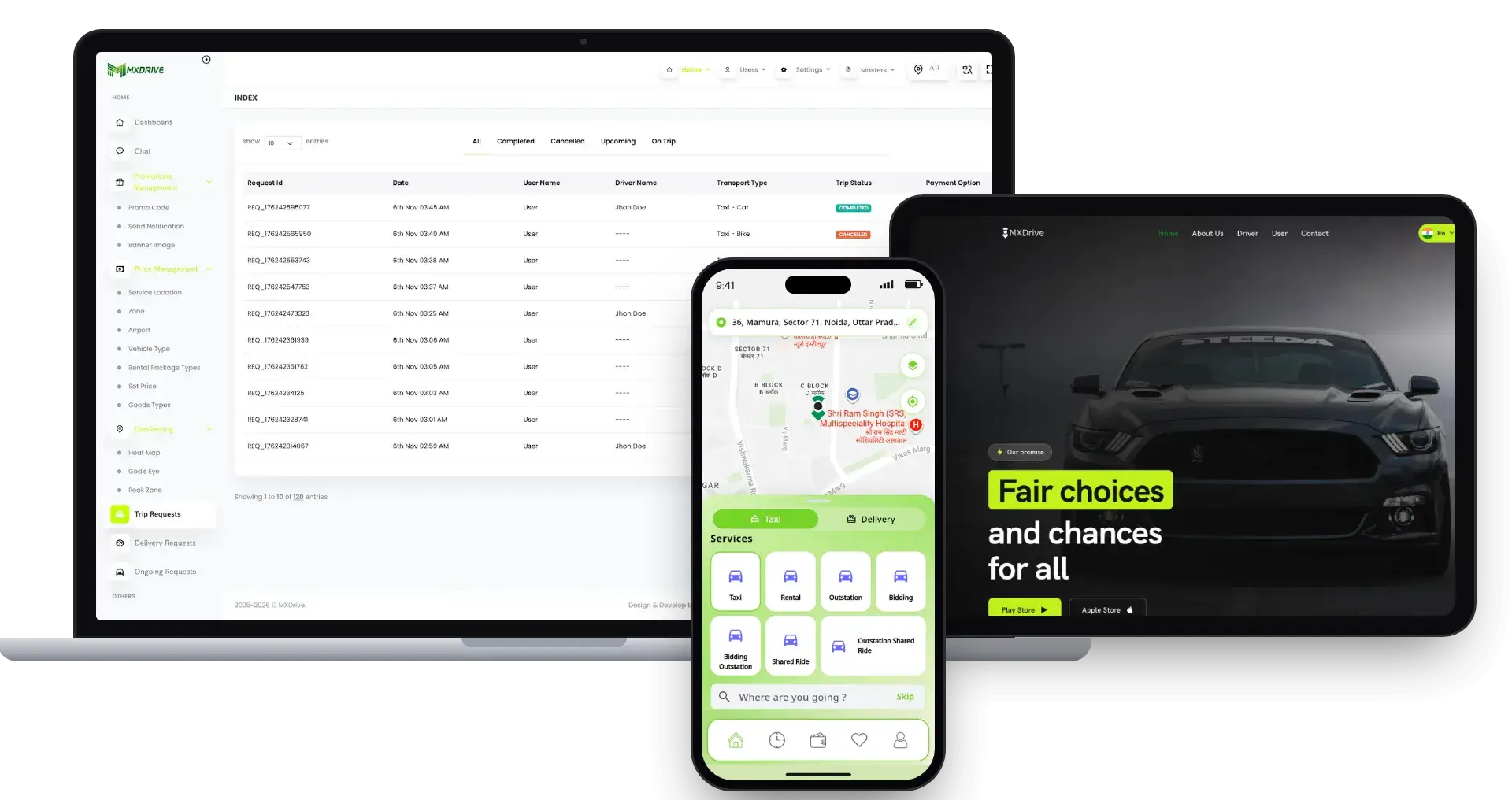
01Ride-hailing built around fare bidding between rider and driver, with rental and out-station services.
See This Solution
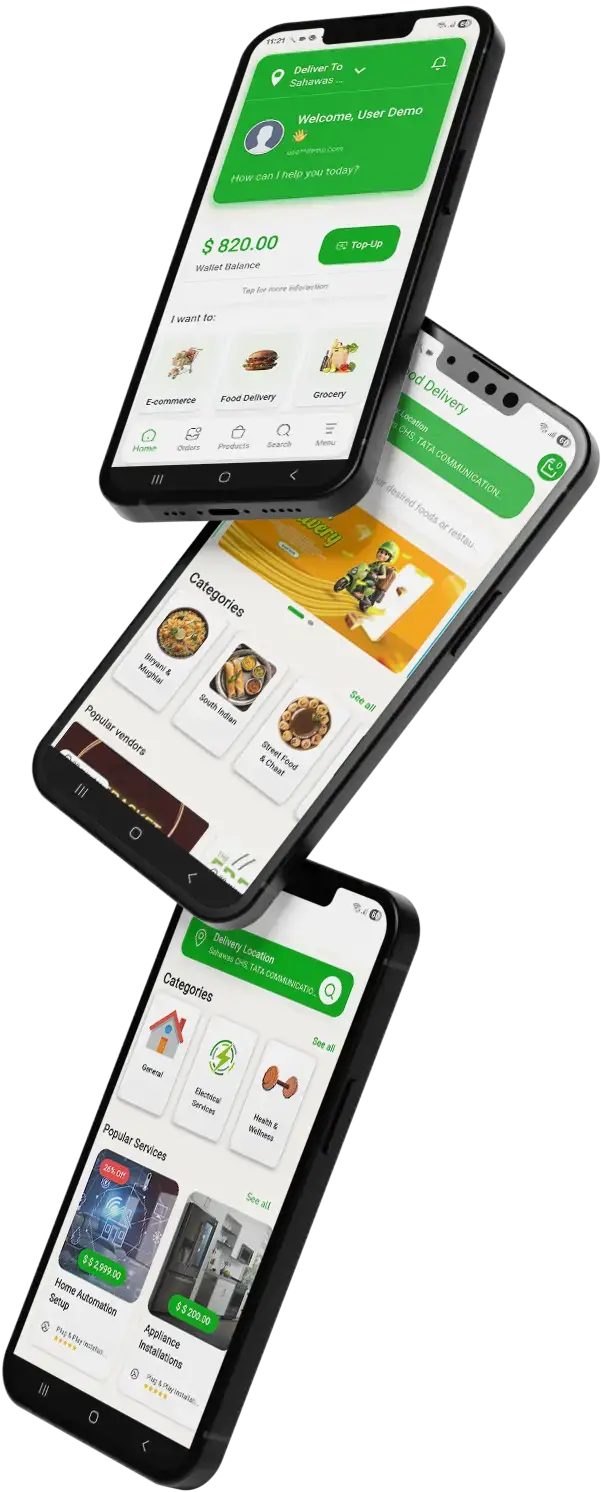
02One super app and one wallet for rides, deliveries and a range of other on-demand services.
See This Solution
03A car-sharing marketplace where owners list their cars, with trust checks and trip handling built in.
See This Solution
04A restaurant delivery marketplace with customer, restaurant and courier apps and an operations console.
See This Solution09Money matters
Market Benchmarks
Ride-Hailing Market Benchmarks - Independent 2025-2026 Data
The revenue models above are ours. The figures below are not. They come from the Uber and Lyft annual reports on Form 10-K, Grab's full-year 2025 results and the UK Department for Transport, reproduced as published. They show what ride-hailing platforms keep from each trip in the US and Southeast Asia, and how large the licensed driver base is, so you can test your own business case.
$29.7bn in Uber Mobility Revenue in 2025
Uber's annual report on Form 10-K shows Mobility segment revenue of $29.7 billion in 2025, up 18 percent from $25.1 billion in 2024. Across all its businesses Uber completed 13.6 billion trips, up 20 percent, and reported 202 million monthly active platform consumers in the fourth quarter, up 18 percent. Uber states that revenue comes from fees paid by drivers and merchants.
$18.5bn in Lyft Gross Bookings in 2025
Lyft's annual report on Form 10-K reports Gross Bookings of $18.5 billion in 2025, up 15 percent, on 945.5 million rides, up 14 percent. Revenue was $6.3 billion, up 9 percent. Revenue divided by Gross Bookings is about 34 percent (our arithmetic on reported figures), the share Lyft retains after driver earnings.
15% of Grab Mobility GMV Kept as Revenue in 2025
Grab reports that full-year 2025 Mobility revenue grew 16 percent to $1,219 million, on Mobility gross merchandise value that grew 19 percent to $7,901 million, and that Mobility segment adjusted EBITDA was $690 million. Revenue divided by GMV is about 15 percent (our arithmetic on reported figures), a lower share than Lyft retains in the US.
290,000 Licensed Private Hire Vehicles in England
The UK Department for Transport counted about 290,000 licensed private hire vehicles in England as at 1 April 2026, up 13 percent on 2024, alongside 417,300 taxi and private hire driver licenses, up 9 percent. The statistics were published on 13 August 2026 and include app-based operators, though they cannot separate app drivers.
Uber Technologies, Inc., Annual Report on Form 10-K for the year ended 31 December 2025, filed 13 February 2026 - sec.gov
Lyft, Inc., Annual Report on Form 10-K for the year ended 31 December 2025, filed 11 February 2026 - sec.gov
Grab Holdings Limited, Grab reports fourth quarter and 2025 results with first full year net profit, press release, 12 February 2026 - grab.com
Department for Transport, Taxi and private hire vehicle statistics, England: 2026, 13 August 2026 - gov.uk
All figures are the publishers’ own, reproduced as published from annual filings, a results release and official statistics. Two ratios (Lyft and Grab revenue divided by bookings or GMV) are our arithmetic on reported figures; each company defines its metrics differently. They describe the companies and country named, not any platform Miracuves builds, and nothing here is a revenue projection for your business.
Commercial Outlook
Marketability and Revenue Potential for a Ride-Hailing Operator
A ride-hailing business earns when drivers choose to stay and passengers choose to reopen the app. What follows is about making the driver decision easier and about keeping both relationships once they exist.
- 01
Commission on Every Trip
You keep a share of each completed ride, so revenue rises with trip volume, not with headcount.
- 02
Plans Beside Commission
Driver subscriptions, fleet commission, driver-app ads and incentive levels each work as a lever of their own inside one console, so you can try one without redesigning the rest. Each rate is typed into admin and booked as its own line, so a plan price can be weighed against your commission before launch and tuned later.
- 03
Drivers and Riders You Own
Driver profiles, fleet records and ride history sit in your database, so the value accumulates for you rather than for someone else's app.
- 04
Freedom to Move On
The complete source code and the schema are in your hands, so a later switch of host, team or direction asks nobody's consent.
- Trip Commission
- Driver Subscription Plans
- Fleet Commission Tiers
- Surge Margin
- Rentals & Intercity Fares
- Driver-App Ad Income
A ride-hailing platform stays ahead through its supply of drivers and the trust of riders more than through features.
- 01Drivers with verified documents, a plan and daily goals in the app seldom leave on a whim
- 02Passengers with saved addresses and past trips keep returning
- 03The record starts on launch day and stays in your own database
- 04Dependable dispatch and clear fares add a second layer of protection
The three cases differ only in the number of active drivers, and each points to the lever that leads at that size. Use them as talking points for planning, not as earnings predictions.
Commission carries early revenue.
A small operator in one city, where a first group of drivers works for commission and the margin on each completed trip covers running costs. An illustration of scale only, not a forecast.
Commission plus driver plans and fleet terms.
A regional operator where company fleets and solo drivers share the platform, so subscription plans and fleet commission begin to count beside the per-trip share. An illustration of scale only, not a forecast.
Several cities, every lever in use.
A platform across many cities, where surge margin, rentals and intercity fares, plans, fleet tiers and driver-app ads add up next to commission and the reports show where to concentrate. An illustration of scale only, not a forecast.
10Why us
Our Edge
Miracuves Compared With Other Bolt Clone Developers
Your options are a stock taxi script, a solo freelancer, a software agency or a platform that has already shipped elsewhere. Whichever you weigh, ask each one to show driver terms working rather than only a booking, to say who owns the code and its history, whether fleet owners and dispatchers get their own logins, what security work is still open, what you must bring before the clock starts and which demo items cost extra.
Why Founders Choose Miracuves
- 01
Driver Terms Included
Driver subscription plans, referrals, incentives with daily goals and fleet wallets ship in the base. Stock taxi scripts often offer a single flat commission and nothing else.
- 02
Fleet and Dispatch Consoles
Fleet managers use the driver app or their own console login and see only their own drivers; dispatchers get a login of their own.
- 03
Five Applications, One Handover
Both mobile apps, browser booking, the admin console and the corporate portal come as one delivery that already works together, not five projects to stitch up.
- 04
Code You Fully Own
Every file is delivered unencrypted, together with the schema and deployment notes, so no vendor can reprice it or rewrite the terms later.
- 05
A Proven Base
An earlier MXUber release was the base for Aone's 2022 ride-hailing build, with 20 of 25 building blocks left as they were, and the published case study includes the reuse ledger.
- 06
Plain Readiness Language
Every item on this page is marked as a base feature, an add-on or something you supply, such as hosting, gateway accounts and developer accounts for the app stores.
How to Choose a Bolt Clone Development Company
Ask any vendor to show driver plans and fleet withdrawals working in a live demo, not only a booking screen.
What to look for Miracuves
- Proof in the product Driver app login that takes a live ride offer
- Driver terms built in Subscription plans, referrals, incentives and fleet wallets
- Fleet and dispatch logins Fleet logins walled off from rival fleets; dispatch has its own
- A client on the same base Aone was delivered in 2022 on this MXUber code
- Source ownership Every file unencrypted, driver plans and fare rules included
- Support after launch 12 months of updates, 6 of bug fixes, 60 days of guidance
Walk away from any vendor who
- Offers one flat commission and no driver plans
- Loses ride offers when a connection drops
- Lets drivers go online before documents are approved
- Has no separate fleet or dispatcher login
- Keeps card numbers in its own database
How the Bolt Clone Compares With Taxi Scripts and Agencies, Item by Item
| Compared on | MiracuvesMiracuves Bolt Clone | Stock Taxi Script | Custom Agency Build |
|---|---|---|---|
| Time to Launch | Ready in 6 working days | Unknown, usually DIY | Scoped per project, often months |
| Source-Code Ownership | Full source, React Native apps | Often restricted | Usually granted |
| Driver Plans & Fleet Terms | Plans, referrals, incentives and fleet wallets | One flat commission | Built to order |
| Dispatch & Fleet Consoles | Both included | Rarely included | Built to order at extra cost |
| Payouts & Reports | Withdrawals plus CSV, Excel and PDF reports | Thin or missing | Built to order |
| Security | Role permissions, token sign-in, cards held by the gateway, limits stated | Minimal | Differs widely |
| Price, Speed & Quality | Fixed price, public demo logins | Cheap but risky | Costly and slow |
| Ongoing Support & Updates | 60 days guidance, 6 months bug fixes, 12 months updates | Seldom offered | Whatever the contract says |
Not many routes to a ride-hailing platform last through a first real month of drivers. Here is where they split.
Talk to Our TeamChangelog
Changelog for the Driver-First Platform: Versions and What Changed
Newest entries come first. Version 2.0 sits on top: React Native for the apps, Laravel 11 for the backend, a rebuilt dispatch engine and a corporate suite. Older V1.x releases are kept for reference.
| Version | Changes |
|---|---|
| V2.0 | Driver app rebuilt in React Native 0.82, with a fleet manager role Signup wizard with live document checks and expiry handling Offers resent while open and recovered after a dropped connection Incentives, daily goals, referrals and subscription plans Live surge zones on the driver map Laravel 11 backend with Redis and Reverb websockets |
| V1.13 | Moved from the older Places API to Places (new) Routes API now stands in for the Directions API Rental ride pickup confirmation screen refreshed Dark theme glitches on the OpenStreetMap view fixed Admin panel and both apps received minor corrections |
| V1.12 | PHP now at 8.2 Flutter raised to 3.24.4 Dark theme glitch fixed in the driver app Minor corrections on the server and in the apps |
| V1.11 | Flutter raised to 3.22.3 Android 14 supported Location update trouble in the driver app addressed Twilio and a second SMS gateway repaired An End all stops action added Gender can now be edited |
| V1.10 | Map and geocoding API calls tuned Delivery instant ride introduced Finishing several stops on one trip introduced Small fixes |
| V1.9 | iOS location bug fixed Live tracking now draws a route line for passengers and drivers Small fixes |
| V1.8 | Rider and driver sign-up gained a gender field Interface polish Ride preference option introduced Small fixes on the server and in the apps |
Let's build together
Let's turn your ride-hailing concept into a live platform.
Book a free consultation and you will leave with a realistic timeline and straight answers. Your trust matters more to us than a quick sale.
- Replies inside 2 hours
- Free first consultation
- No long-term lock-in
- You own the source code
11Keep reading
From the Blog
Latest Guides on How to Build an App Like Bolt
Recent articles on choosing a Bolt-style script, growing a ride-hailing app and building the platform behind it.




About the platform9 questions
01What exactly does the Bolt Clone include?
A complete ride-hailing platform, sold ready-made: rider and driver mobile apps (the driver app doubles as the fleet manager's tool), a browser booking app, an admin console that takes admin, dispatcher and fleet sign-ins, a corporate portal and a public site, all under your brand. The commercial weight sits on the driver side: subscription plans, referrals, incentives, fleet wallets and withdrawals.
02How soon can a taxi business go live on it?
Miracuves needs 6 working days to rebrand the platform, deploy it to your hosting and publish the apps from your developer accounts. Two things run on other clocks and fall outside that window: store review by Apple and Google, and gateway onboarding with your payment provider. Custom changes are scoped separately.
03Will the platform cope as I add drivers and cities?
The five applications run separately, driver positions live in Redis and dispatch jobs are queued, so adding drivers, fleets and trips comes down to hosting capacity and configuration. Anything the base lacks, such as a new integration or a special rule, is scoped and quoted on its own.
04What support comes with the purchase?
Three periods begin together on launch day: 60 days of platform guidance, 6 months of priority bug fixes and 12 months of product updates. Our first response comes inside two hours, Monday through Saturday, between 10:00 and 19:00 IST.
05Can the apps carry my own name, logo and colors?
Yes. Your logo, icons and color scheme go onto the web consoles and both apps as part of delivery. And because the source code arrives unencrypted, your developers or ours can reshape screens, fares and flows afterward.
06Is it legal to launch an app like Bolt?
Generally, yes: writing and selling software with ride-hailing features is lawful. The Miracuves Bolt Clone follows common ride-hailing patterns, takes nothing from Bolt's code, design or content, and launches under your own brand. Leave the Bolt name and logo out of your own branding, and ask local counsel about taxi and private-hire licensing, driver classification and consumer rules in each market. We are not your legal counsel.
07What must I provide before launch?
A domain and hosting, a verified developer account to publish the apps from, your brand and business details, a payment gateway that has finished onboarding with KYC, plus whatever third-party keys you need (an SMS gateway such as Twilio, Firebase for push, or Google Maps in place of OpenStreetMap, for example). Miracuves does not apply for gateways for you and does not write your terms or privacy policy.
08Do I receive the source code?
Yes, every file: the web platform and the React Native apps, none of it encrypted, plus the database schema, setup steps and architecture notes. No per-seat or per-trip fee applies, and nothing needs a renewed license to keep running.
09What makes Miracuves a good partner for a Bolt clone build?
Fleet and dispatch consoles, payout tools and the driver side all work from the first day, and Miracuves built Aone's ride-hailing service on an earlier release of this base, keeping 20 of 25 building blocks. More than 6,000 clients have trusted Miracuves with 9,000+ projects, and the catalog offers 90+ ready-made solutions. Paying the fixed $3,099 once gets you a launch inside 6 working days plus team guidance across the first 60 days, priority bug fixing through 6 months and a 12-month stream of product updates, with all three running side by side.
Passengers7 questions
10How does a passenger request a ride?
The rider signs in with a phone or email OTP, Google or Apple, or just looks around as a guest, then picks a service, sets the pickup and drop-off, then weighs vehicles by fare and ETA and confirms. The nearest eligible driver gets the offer, and the rider is matched once that driver accepts.
11Can a ride be booked for a later time?
Yes. Book a ride 3 hours or more ahead and it goes out to drivers a quarter of an hour before pickup. When no driver takes it, it is canceled and the rider gets a notice.
12How does a passenger follow the car?
Once a driver accepts, the car shows on the map in real time over websockets, and the rider can share a live tracking link. Push alerts and a ride OTP to start the trip complete the picture.
13Which ways can riders pay?
Cash, the in-app wallet and any of 13 gateways (Stripe, PayPal, Razorpay and others) can take payment. Gateway accounts and KYC are yours to arrange, and card details stay with the gateway, not in the platform.
14Can a rider cancel after booking?
Yes. Before confirming, the rider chooses a reason and is shown any cancellation fee, and you configure the cancellation rules.
15Does one ride support several stops?
Yes. A rider can put several stops on one ride and can move the pickup or drop-off while on the trip, with any extra charge quoted before confirming. The driver works through each stop to finish the trip.
16How is a fare worked out?
From distance, time and the base fare, with surge added where it applies and ride preferences priced in. Fares and surge are set in admin by zone and vehicle type.
Drivers, fleets & dispatch9 questions
17How do drivers receive and answer requests?
Each offer rings and vibrates on the nearest eligible driver's phone and is sent again every 5 seconds while open, so a weak connection does not swallow it. Bidding rides allow counter-bids.
18How and when do drivers get paid?
Earnings land in the driver's wallet, and the driver requests a withdrawal to a payout account from the app. Staff handle withdrawals in the admin console, which also holds driver wallets and reports.
19How does the driver subscription work?
Plans are defined in admin and a driver buys one in the driver app, with an expired plan switching off by itself. Price and duration are business decisions we settle with you before launch.
20Can drivers pay a plan instead of commission?
On this platform commission and driver plans are separate revenue levers, and how you combine them is up to you. Describe the model you have in mind, such as a flat plan alone or a plan beside a lighter commission, and we will confirm in writing what the base covers and what needs scoping.
21What does the dispatcher do?
A dispatcher creates bookings for phone orders from the Ride Requests page. The console lists rides by status, so booked, running and finished trips are all in view.
22What happens when a driver cancels?
A decline or timeout moves the offer to the next nearest driver, and staff can also pick the driver themselves.
23Can staff assign a driver by hand?
Yes, from the ride or ride-request page. The system turns down offline drivers and anyone on a trip already, and every other driver who saw the offer is told it is gone.
24What is the fleet console for?
Fleet managers keep the roster of drivers and vehicles, documents included, and follow them on a live fleet map. They can work in the driver app or log in to the console with the fleet login.
25Do fleet owners get earnings views and withdrawals?
Yes. Fleet earnings are viewable by day, week or month, and the fleet makes its own withdrawals. No fleet can see the drivers of another, and commission terms are set in admin.
Control & revenue6 questions
26What can the admin panel control?
Zones, surge, fares, commissions, driver documents, withdrawals, plans, incentives, reports and staff roles, across 52 sections and about 70 settings switches. Rides show live as they happen.
27Can I set surge pricing?
Yes. Surge can follow a time window alone, or vehicle type, zone and time window together. Switch a peak zone on and it is drawn live on drivers' maps.
28Can I watch rides while they are running?
Yes. Admin has live ride tracking, a driver location map and a heat map, plus ride lists by status.
29How are earnings and payouts handled?
Admin holds driver and fleet wallets, withdrawals, commissions and transaction reports, which export to CSV, Excel or PDF.
30How does a ride-hailing operator reach first revenue?
Ride-hailing operators usually begin with the commission on completed trips, because nothing extra has to be sold: the first paid ride earns it. Driver subscription plans follow once enough drivers would rather pay a known amount than a share, fleet terms come when company fleets join, and Google native ads in the driver app give you a line you switch on in admin. Licensing the white-label deployment to another operator is a deal you strike on your own terms.
31How defensible is a ride-hailing platform?
A ride-hailing platform stays ahead through its supply of drivers and the trust of riders more than through features. Drivers who joined with verified documents, a plan, referrals and daily goals seldom leave on a whim, and riders with saved places and past trips have a reason to return. The platform starts that record on launch day and keeps it in your own database. Dependable dispatch and clear fares add a second layer of protection, since an app people trust is slow to copy.
Tech & stores8 questions
32What is the Bolt Clone built with?
Laravel 11 on PHP 8.2+ serves the web and admin side; MySQL stores the data, while Redis takes queues, cache and driver positions. The Android and iOS apps are React Native 0.82. Reverb websockets and FCM push handle realtime, while maps (OpenStreetMap or Google Maps), SMS and payment gateways are outside services with your own accounts and keys.
33Can I publish on both iOS and Android?
Yes. React Native powers the rider and driver apps on Android and iOS; the rider web app and public website open in any browser. Apps are published under your own developer accounts, and store review by Apple and Google takes place outside the 6-day build.
34How much does a Bolt clone cost?
A fixed $3,099 buys the Bolt clone outright: the driver app that doubles as the fleet manager's tool, the rider app, browser booking, the operator console and the company portal, live in 6 working days with no royalty on fares. Changes such as a driver bonus scheme with its own payout rule are quoted in writing and built within 2-8 weeks.
35Is a ready-made Bolt clone better than custom development?
For an operator competing for drivers, mostly yes. Document checks, driver plans, incentives with daily goals, fleet commission and payouts already work, and Aone's 2022 build used an earlier release of this code. Building that driver economy from zero means designing all of it before the first trip, with a price nobody can fix until scoping ends. Pay for custom work only where your driver terms differ.
36What is the business model of an app like Bolt?
A driver-first platform earns commission on completed trips and lets drivers pick a subscription plan instead, so you compete on terms. Fleet owners set commission per company policy, surge adds margin in crowded zones, and ads from Google shown in the driver app can be switched on in admin. Every rate lives in the admin console, and Miracuves takes 0% of any fare or delivery.
37What is the step-by-step process to launch my Bolt clone?
Run the driver, rider and admin demos, then send your brief with cities, fares, driver terms and the accounts that set the real date. We put your identity on every surface, configure cities, fares and driver plans, stand the platform up on your hosting, submit the apps and move source, schema and notes to you in 6 working days; the store listings then wait on review by Apple and Google.
38Can I give drivers incentives on a Bolt clone?
Yes. The Bolt Clone includes incentives with daily goals and referrals, alongside driver subscription plans and document checks. You configure them in the admin console, so a challenger brand can lead with driver terms and layer other revenue on later. A bonus scheme with its own payout rule is custom work, quoted in writing first.
39Can I use the Bolt clone for more than taxi rides?
Yes. The Bolt Clone fits any business that moves people or parcels between two points and depends on drivers to do it. One install can carry a ride-hailing brand, a fleet platform built on the fleet manager role, or a call-center business run from the dispatch desk, each recruiting drivers on its own terms.
Go Deeper on Building a Ride App Like Bolt
Guides, a case study and related pages for this platform, so you can see how the pieces fit.
How to Build an App Like Bolt: Developer’s Guide to Building a Taxi App from Scratch
Read the guide→Ask an expert →Fixed price, paid once
See pricing→ServiceRide-hailing development services
View the service→IndustryTransportation and mobility
View the industry→Disclaimer
Miracuves is an independent software development company. We are not affiliated with, connected to, sponsored by, or endorsed by Bolt.
Read our full Legal Notice & Disclaimer →“Bolt Clone” is used descriptively. It is how the software industry refers to building a platform with functionality similar to Bolt, and how clients search for it.
The entire design and codebase is built by our own team. The product contains no code, design, graphics, or content originating from the Bolt website or applications.
Bolt and all other third-party names and marks are the property of their respective owners, referenced here solely to describe the category of software offered.