What Should Founders Evaluate in a Ticketing Platform? Features, Pricing Drivers, and Scalability
Key Takeaways Founders evaluating a ticketing platform should consider event discovery, seat selection, booking, payments,…

One app, many services
Rides, food, delivery and payments in a single super app, with one wallet and one operations console.
All 6 in Super App →Move people, profitably
Driver and rider apps, dispatch, fare rules and payouts, tuned for city-scale operations.
All 5 in Ride Sharing →Everything to the door
Food, grocery, pharmacy, parcel and alcohol, with dispatch, live tracking and courier payouts.
All 35 in Delivery →Book a professional in minutes
Home services, healthcare and freelance work, with scheduling, quotes and escrow.
All 13 in On Demand Services →Supply, demand, and the listing in between
Rentals, ecommerce, travel and jobs, with search, inventory and governed payouts.
All 31 in Listings →Where audiences gather
Social feeds, messaging, file sharing, AI assistants and website builders.
All 28 in Networks →Attention, monetized
Video on demand, short form, creator subscriptions and betting.
All 16 in Entertainment →Money that moves
Neobanking, brokerage, investment and cross-border remittance, built for compliance.
All 8 in Finance Investment →Exchanges, tokens and NFTs
Spot and P2P trading, launchpads and NFT marketplaces with custody and KYC.
All 14 in Blockchain →160 launch-ready platforms across 10 categories, each shipping in 6 days with full source code.
Twenty-five sectors, each with its own page naming what we have already shipped into it and what we would build from zero.
A launch-ready ticketing platform covering six content verticals – movies, events, sports, plays, activities and streaming – with real-time seat maps, four payment gateways, automated partner settlements and a four-tier loyalty programme.
Three role-based surfaces from one codebase: a customer booking experience, a vendor portal for venue operations and QR entry validation, and an admin console for catalogue, commerce and platform governance.
Go Live in 6 Days with Real-Time SeatsMulti-GatewayAuto-SettlementLoyalty-DrivenMulti-VerticalWhite-Label
⚡ Platform at a Glance
Revenue Streams
commission, booking fee, surge pricing, loyalty, add-ons
Payment Gateways
cards, UPI, wallets and Apple Pay through one checkout
Seat Conflicts
version-checked locks hold under launch-day load
Source Ownership
no per-ticket licence and no revenue share, ever
Reserved seating, open entry and timed slots run through the same booking and payment path, so films, live events, sports and activities sell from one platform instead of four.
Commission rates, booking fees, surge windows, promo codes, loyalty tiers and partner payouts are all console controls, tuned per venue and per event.
🚀 Ready to launch your own entertainment ticketing platform?







Live in Action
Don’t just take our word for it – open the Miracuves BookMyShow Clone yourself. Four live environments with real credentials for every role, no setup required. Book a seat, validate a ticket, run a settlement.
CUSTOMER WEB APP
The booking experience - discovery across six verticals, interactive seat maps, checkout, QR tickets, loyalty points and referrals.
VENDOR PORTAL
Where venues run the day - screen and seat configuration, showtime scheduling, occupancy analytics, payout balances and the QR scanner.
ADMIN CONSOLE
Full platform control - user and role management, catalogue with TMDB import, bookings and refunds, promo codes, settlements and system health.
ANDROID APP
A branded Android build of the booking experience, sharing the same platform APIs as the responsive web application.
Watch It Work
Want a guided tour? Book a 30-minute call with our team and map your ticketing launch – venue onboarding, gateway selection, commission structure, loyalty design and go-live sequencing.
Every Screen Mapped
Around 135 API endpoints across ten route families, backing a customer booking journey, a vendor operations portal and a full admin console.

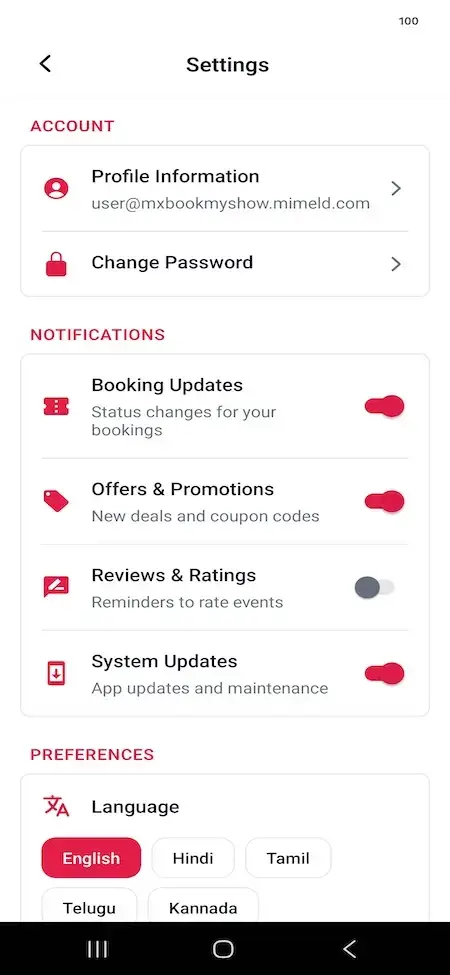
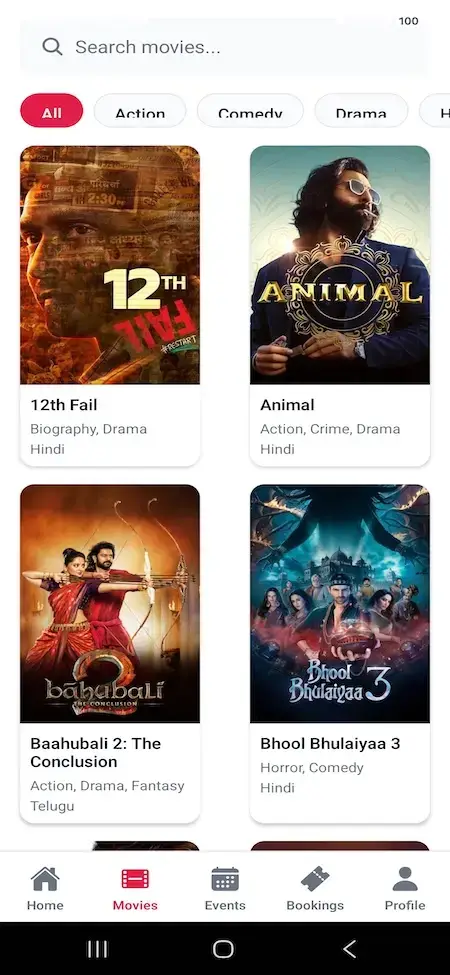
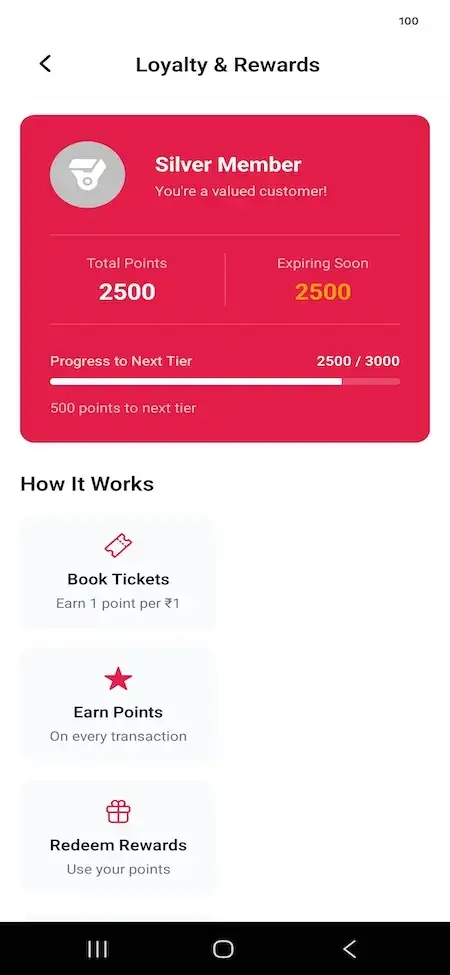
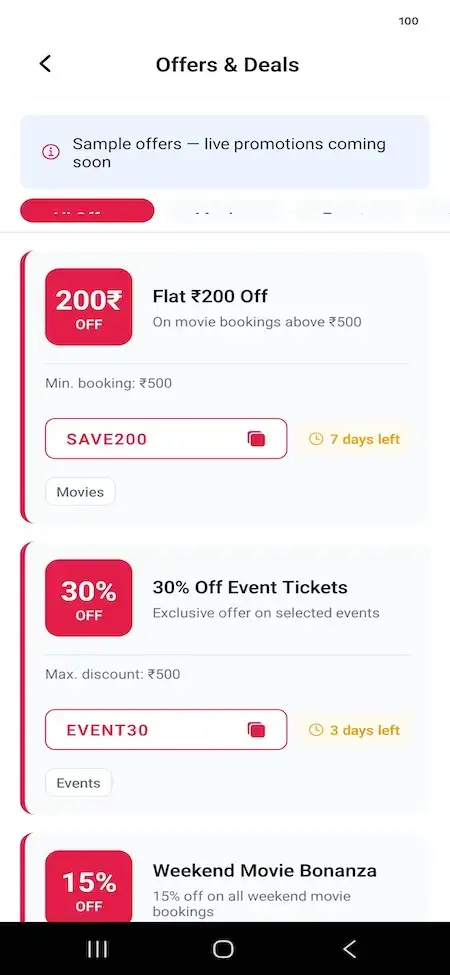
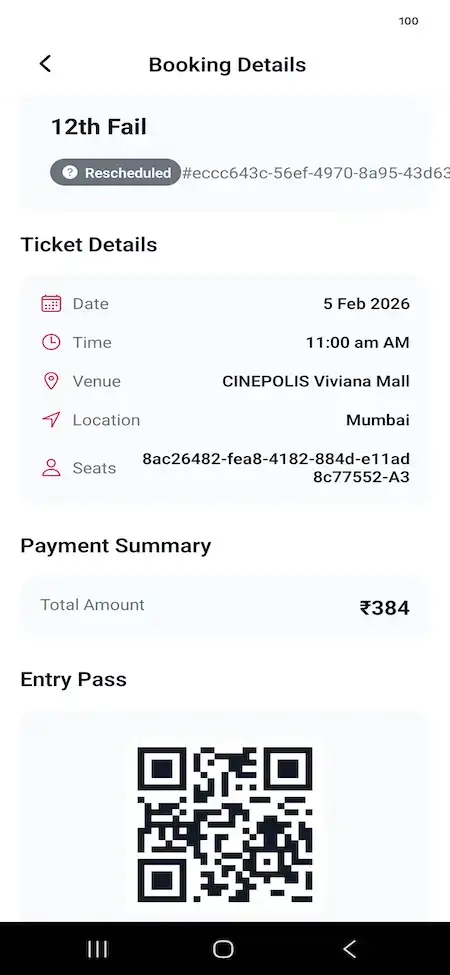
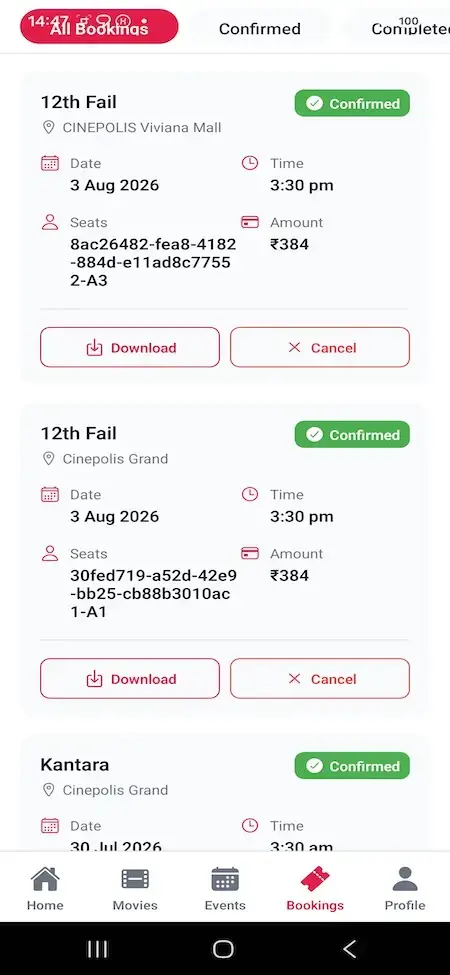
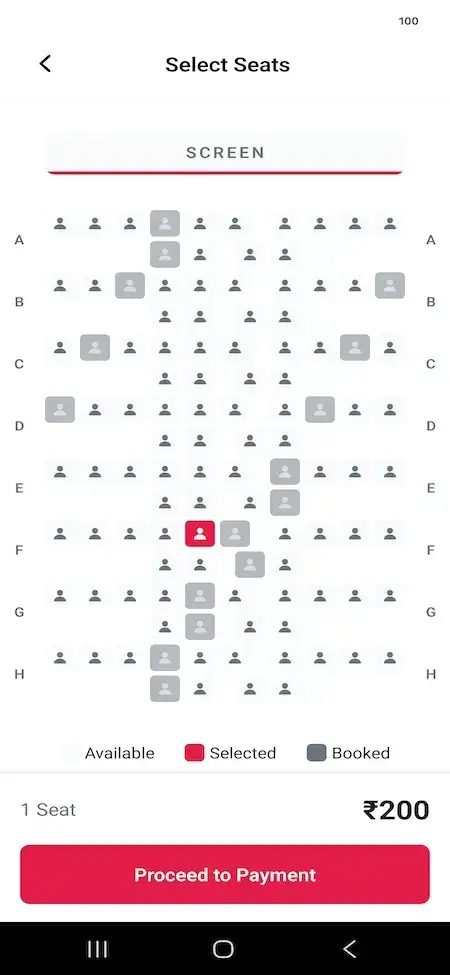
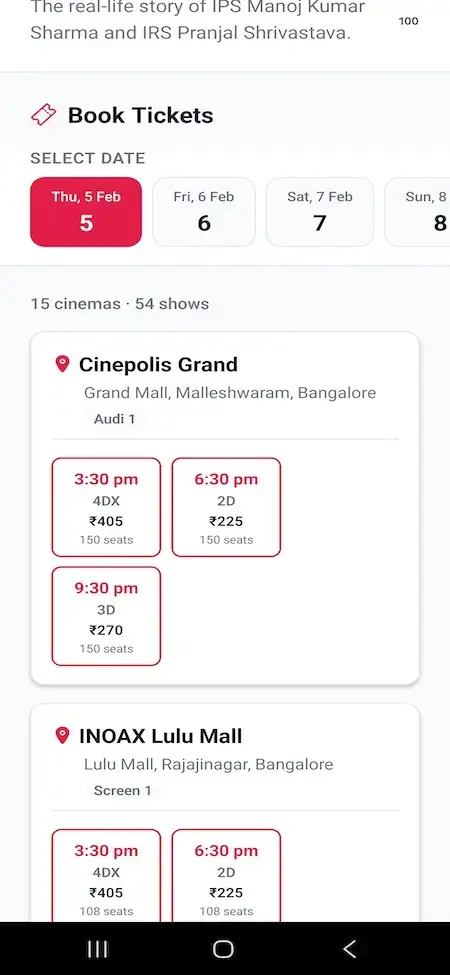
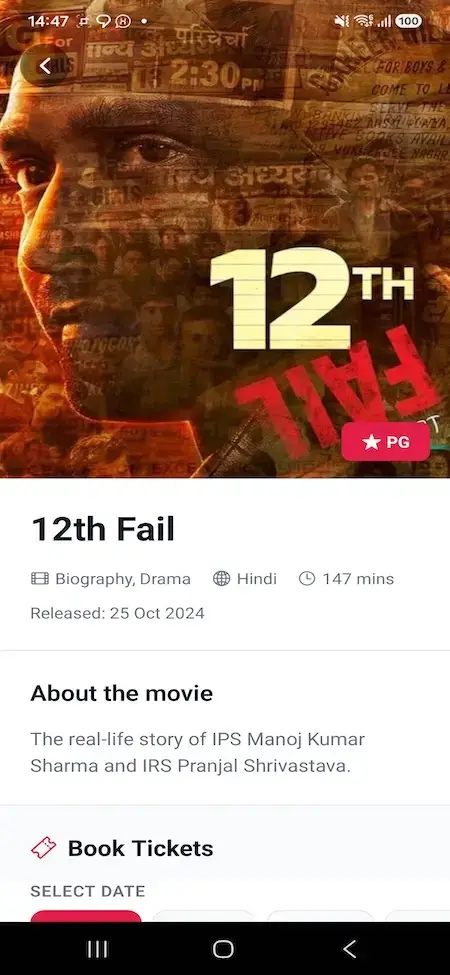
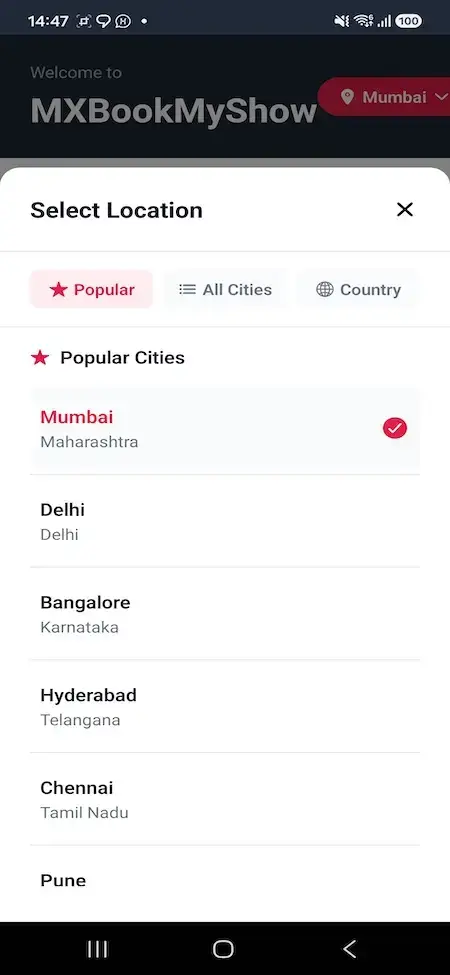
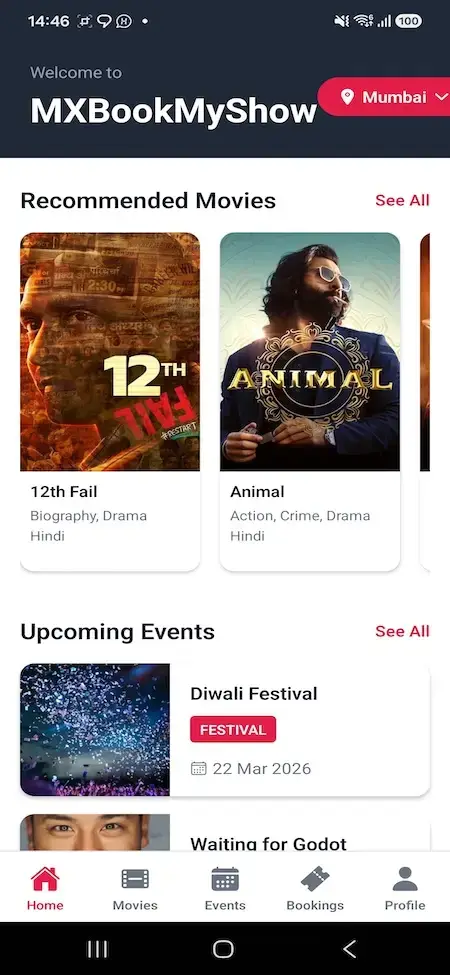
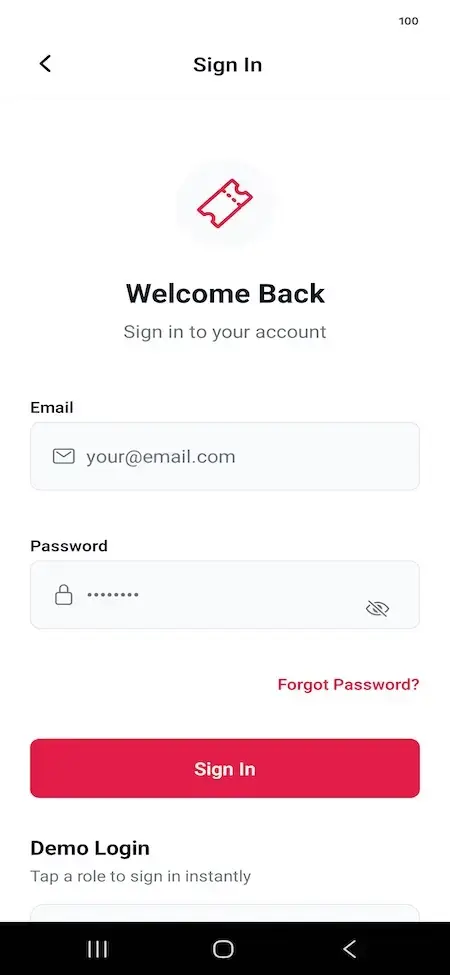
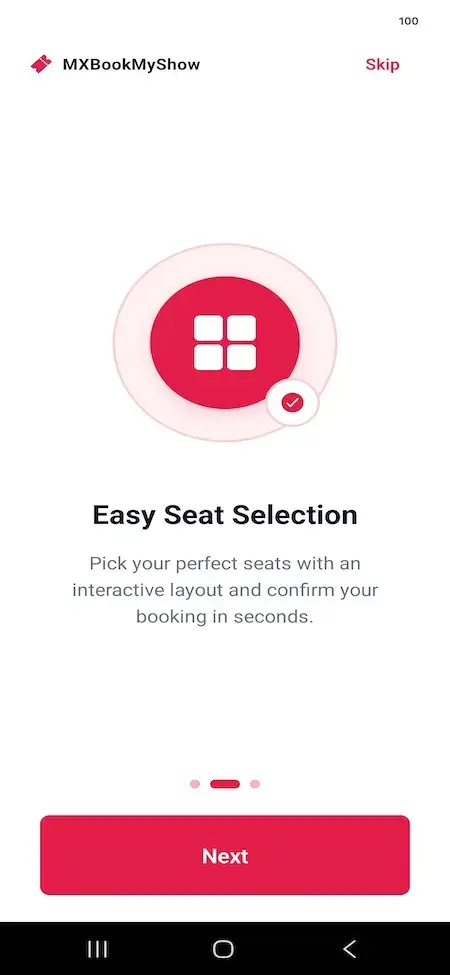
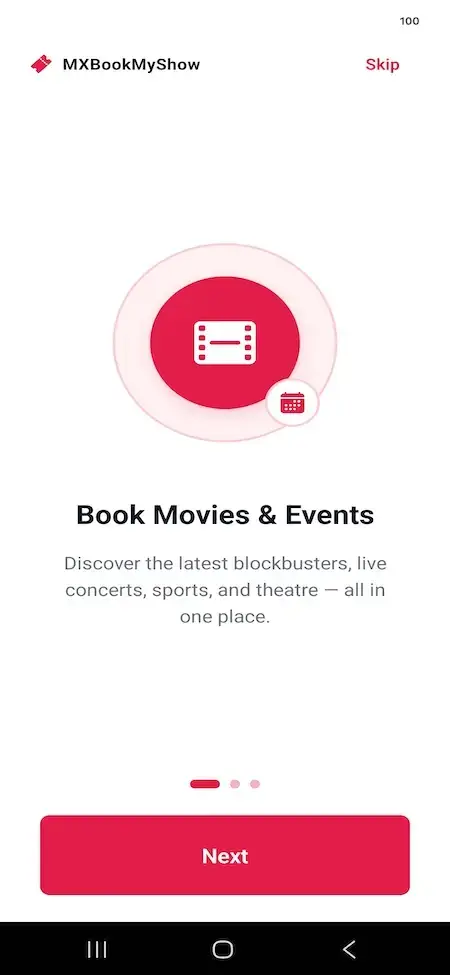
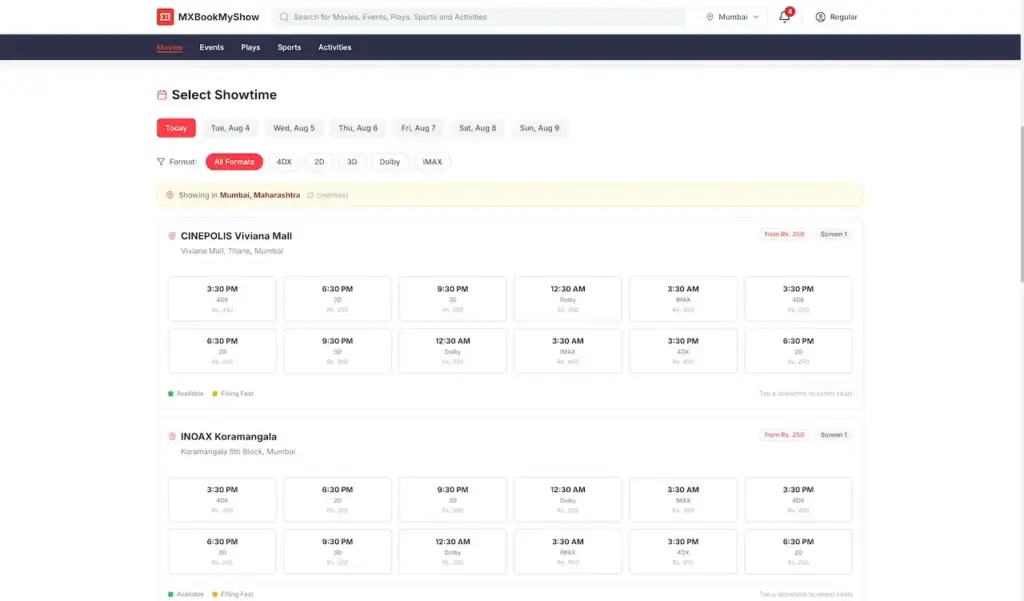
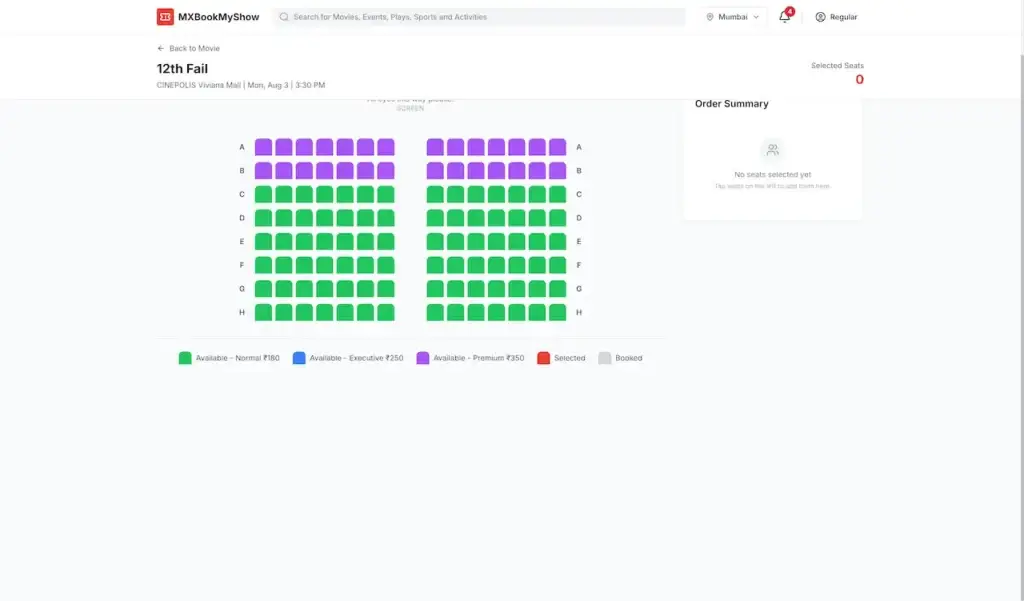
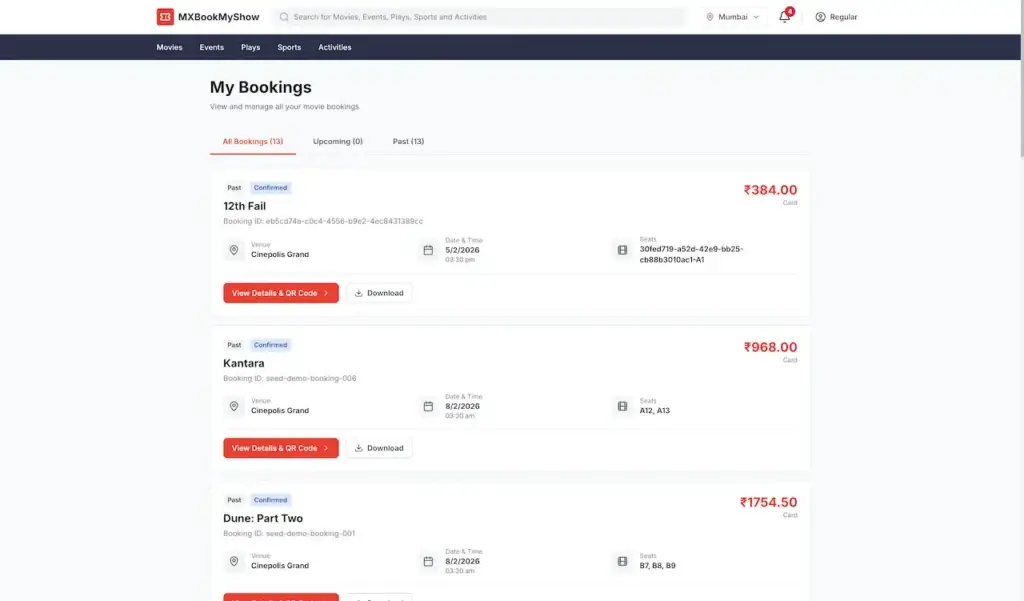
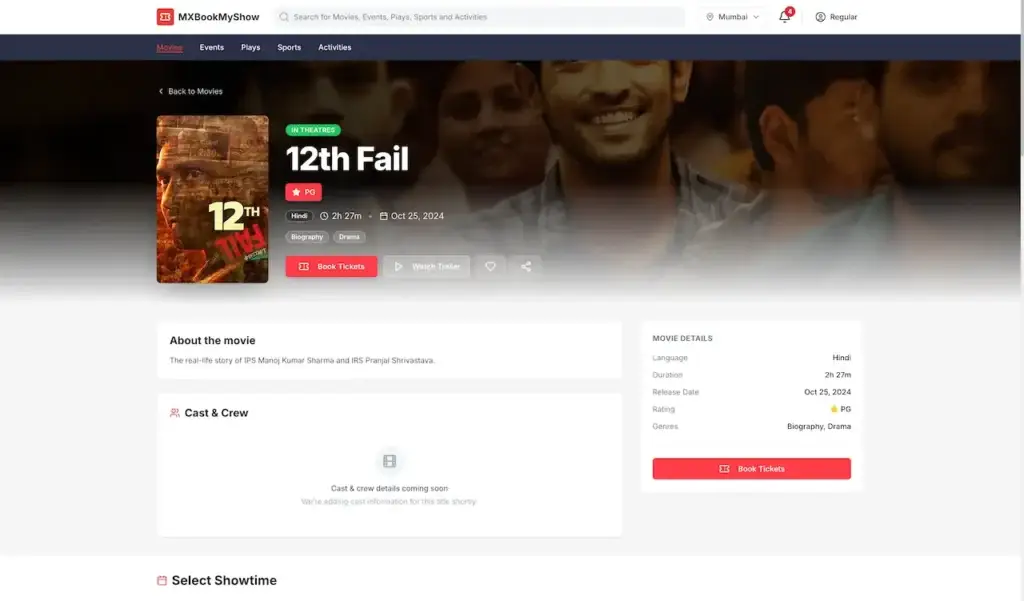
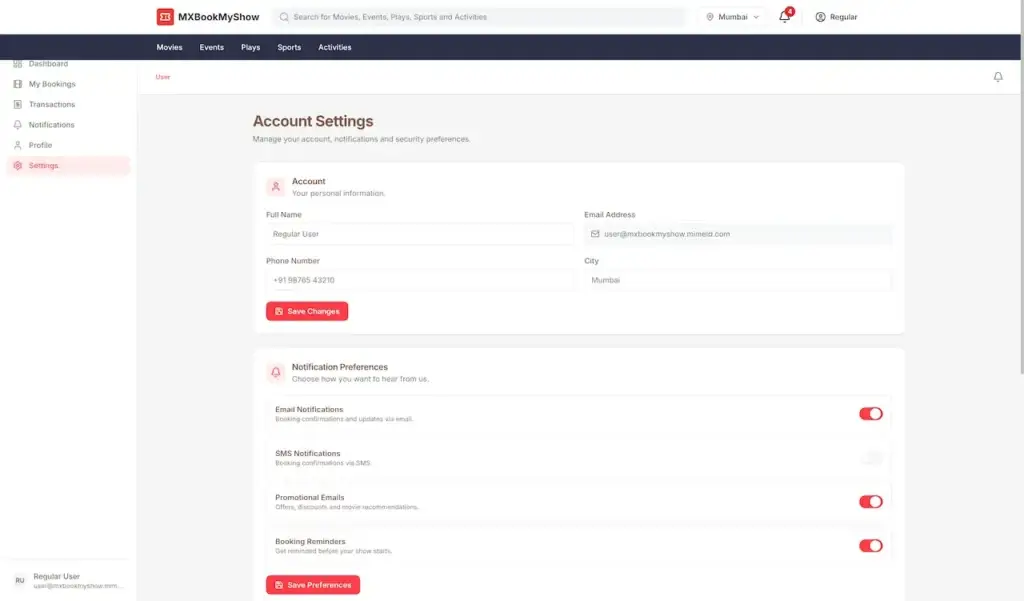
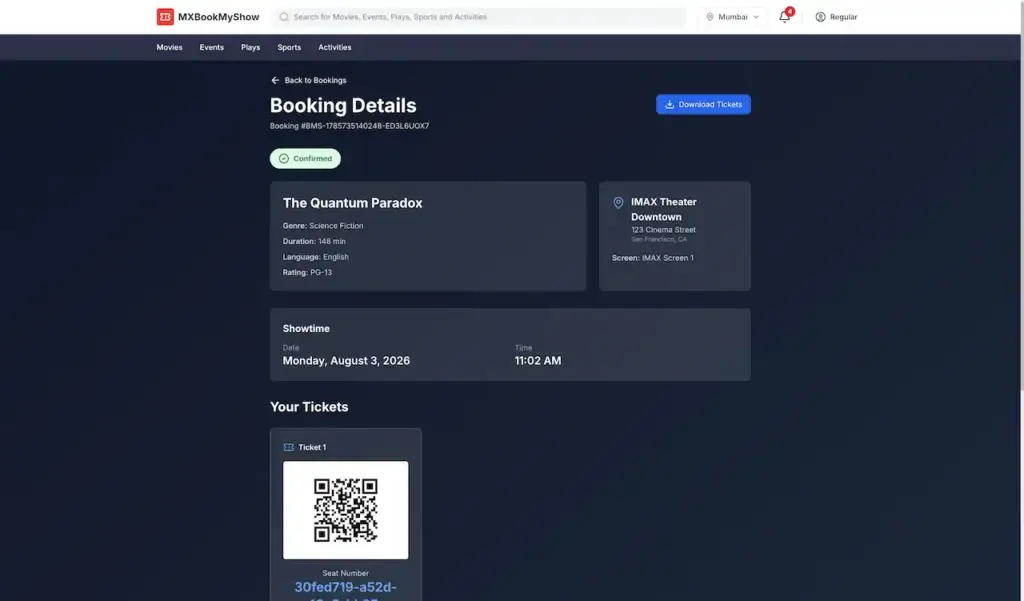
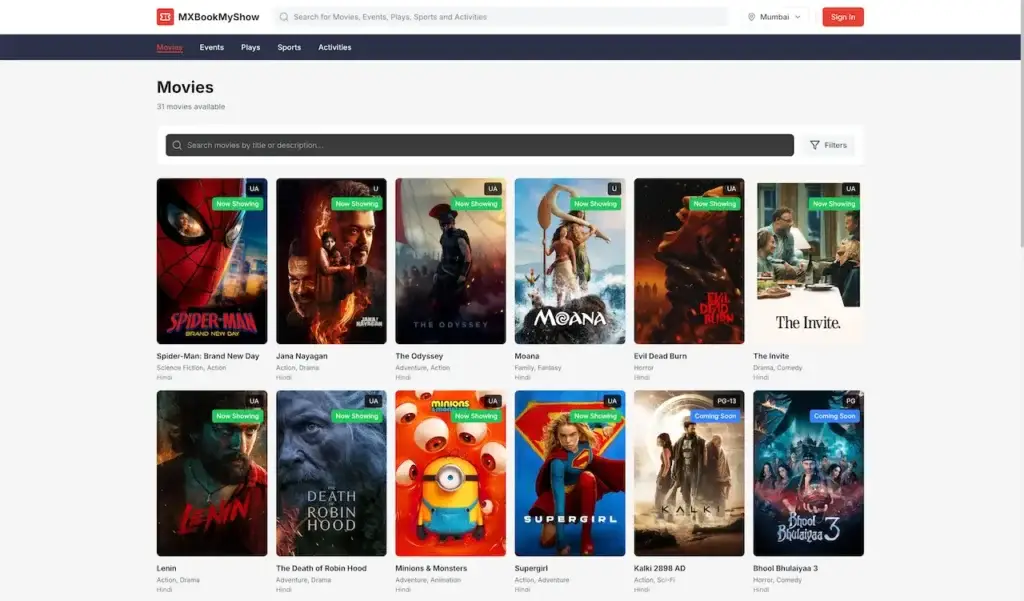
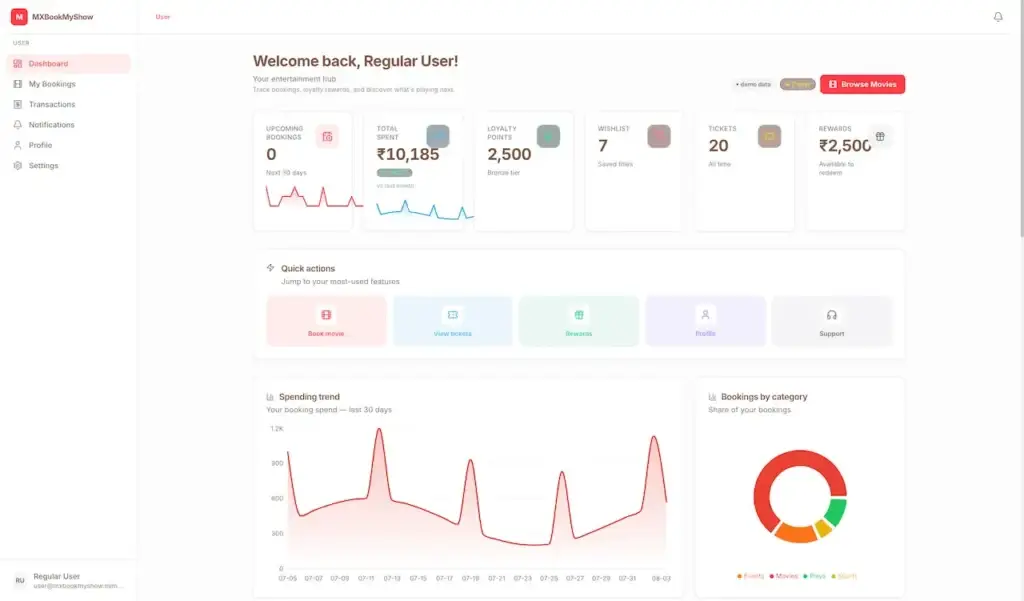
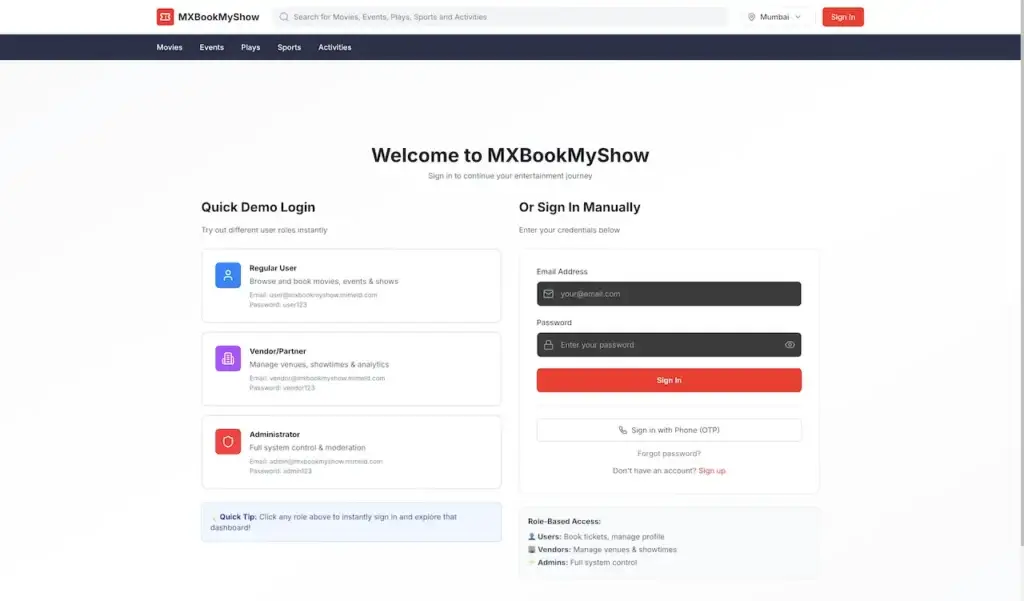
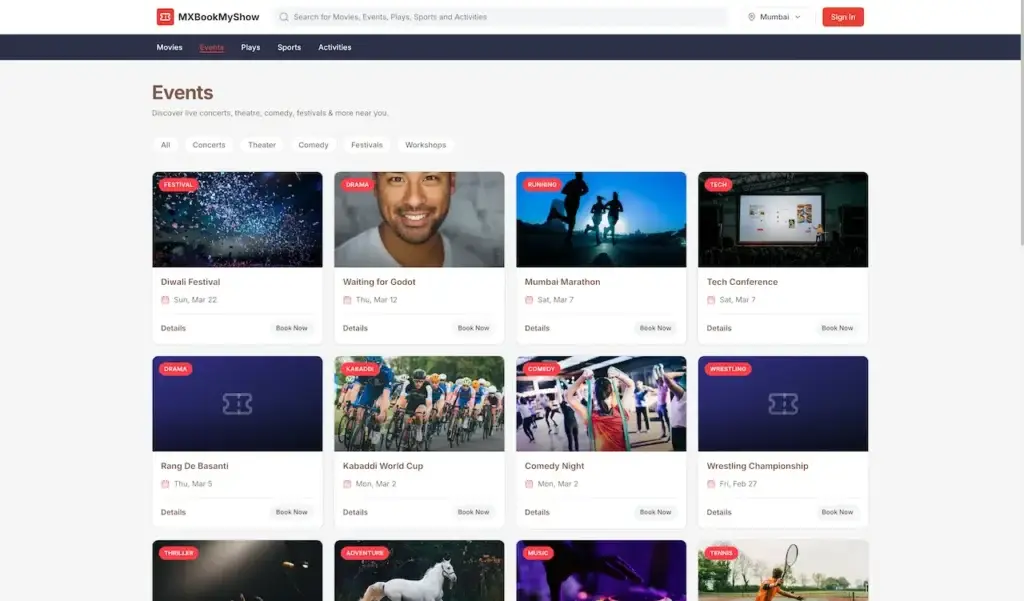
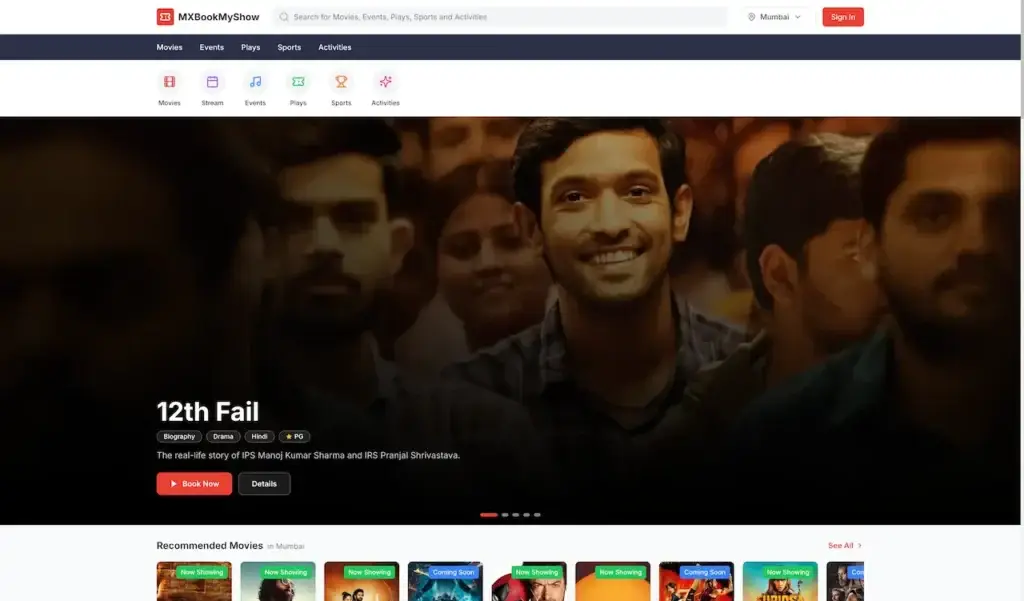
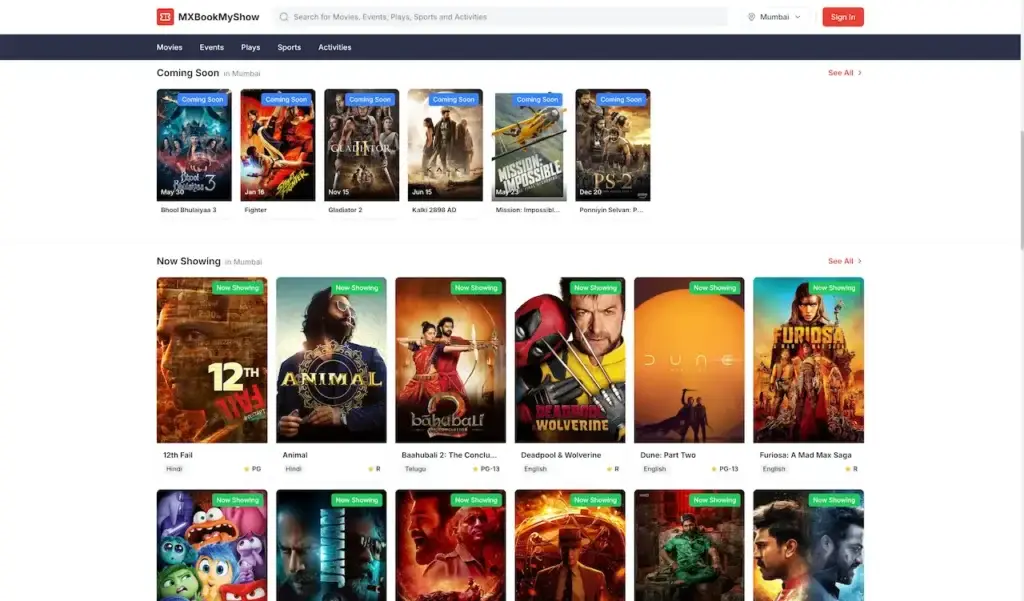
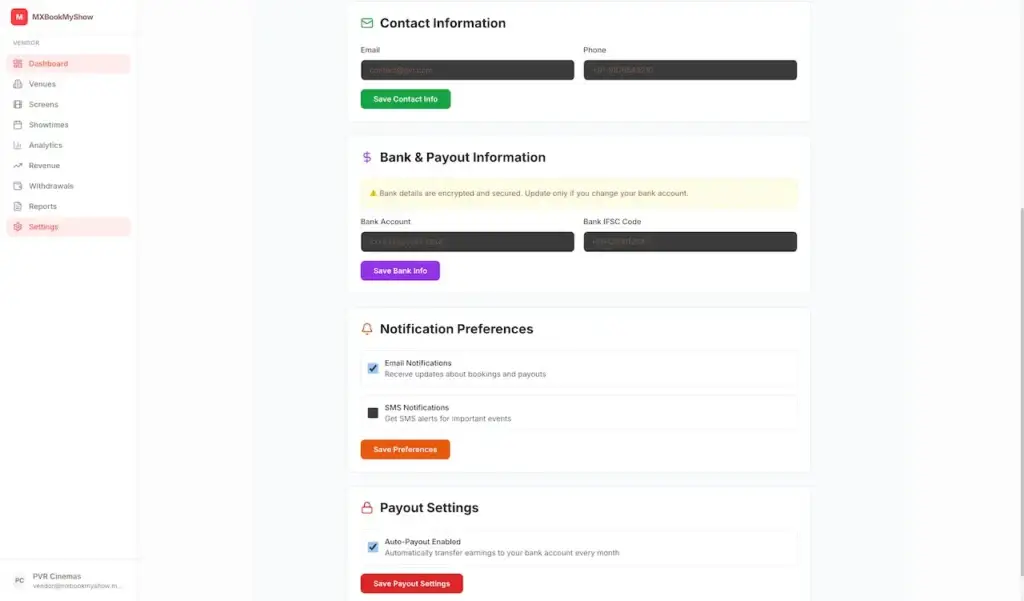
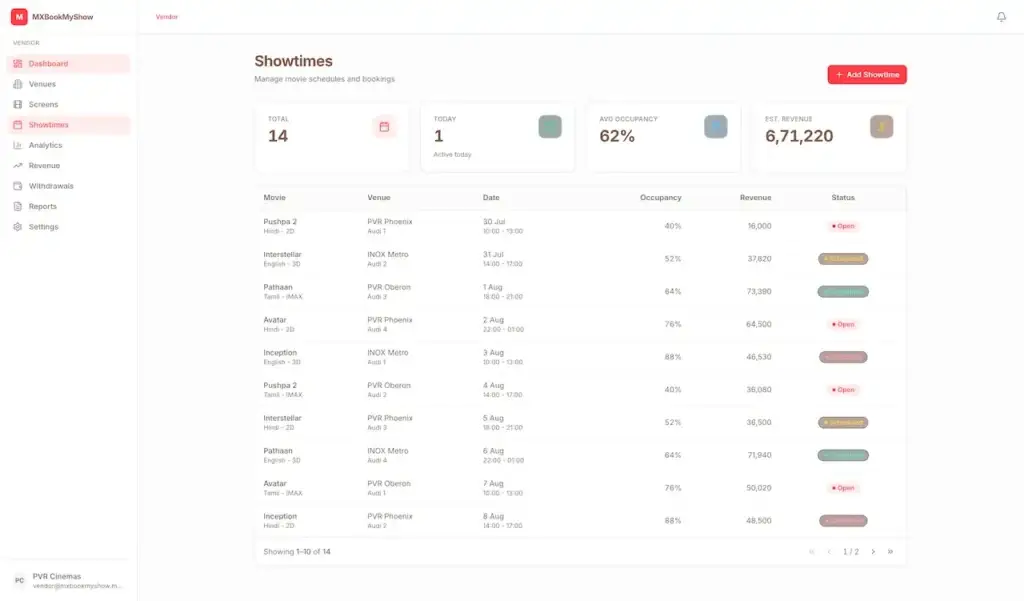
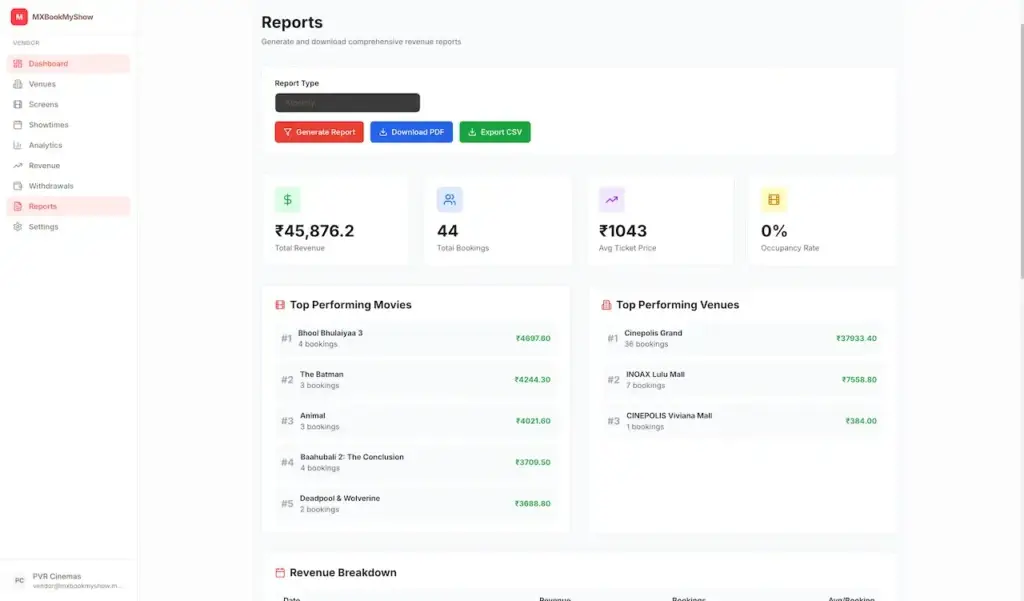
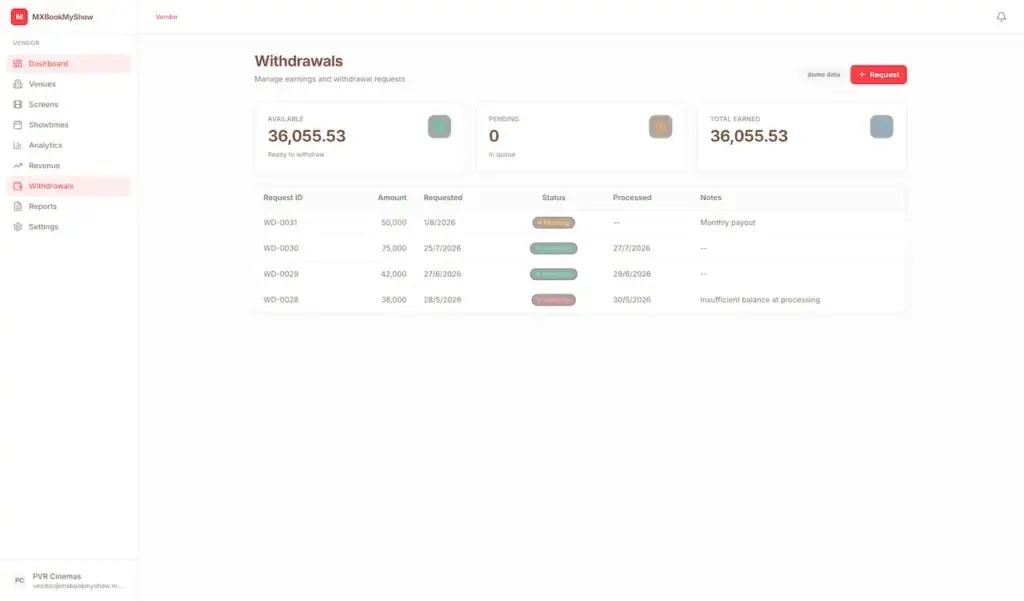
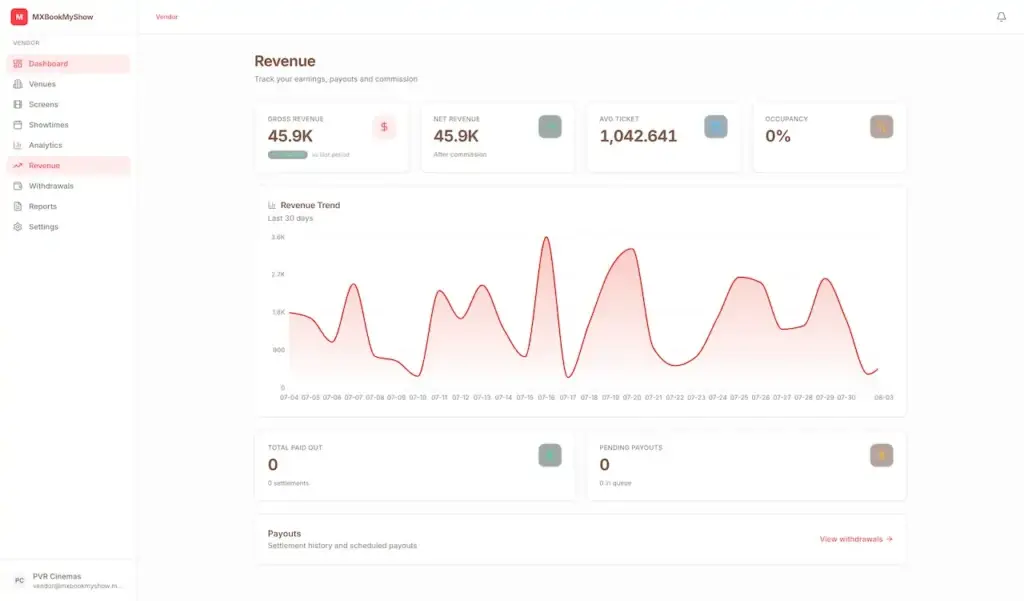
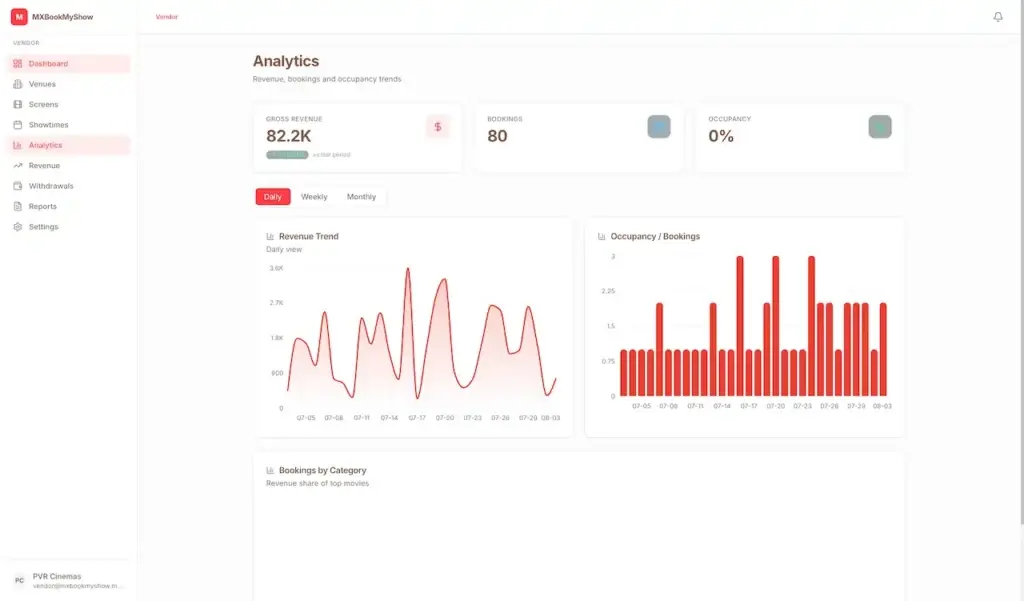
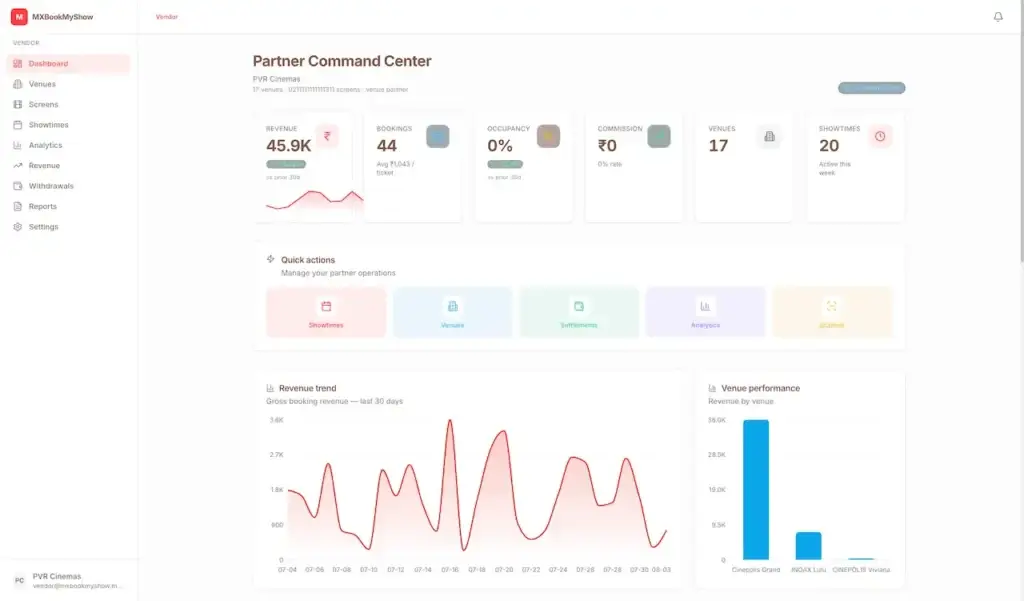
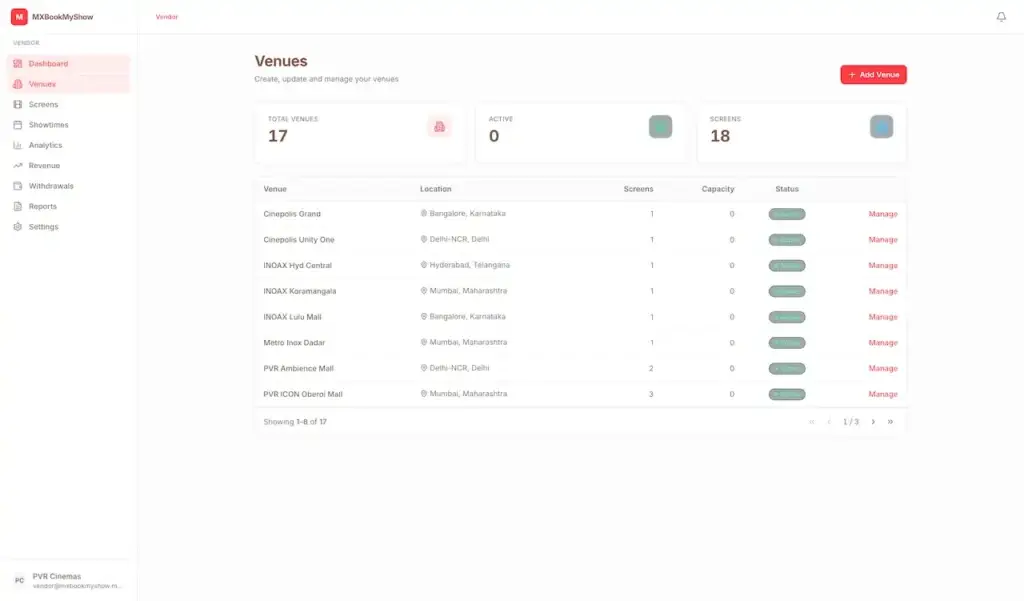
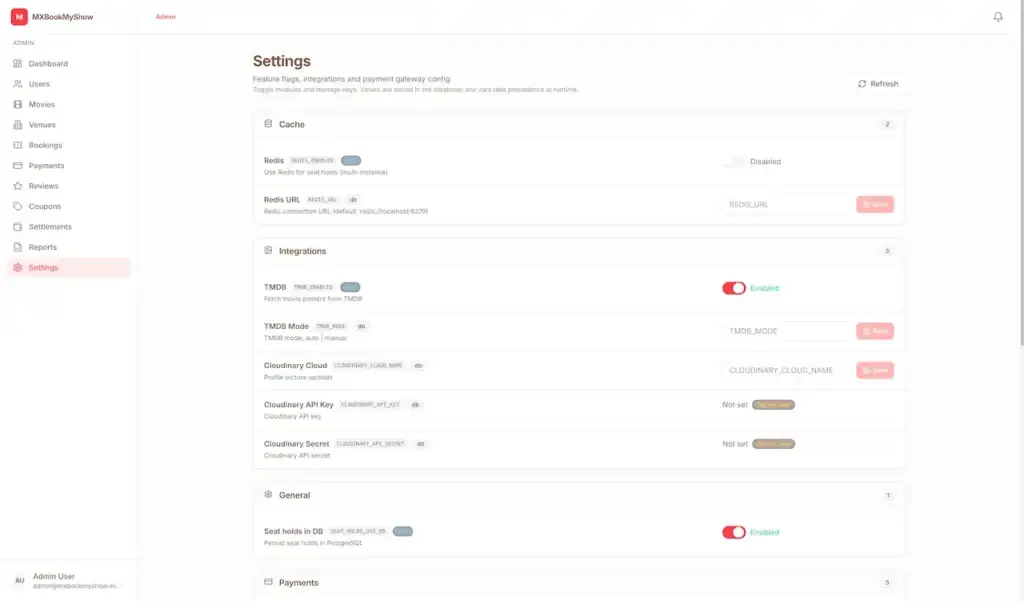
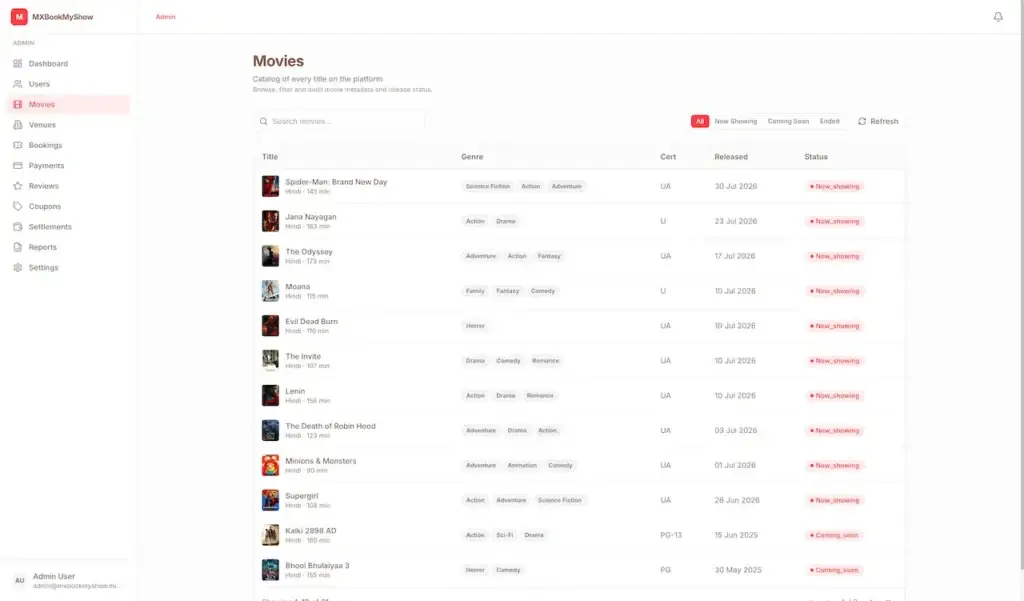
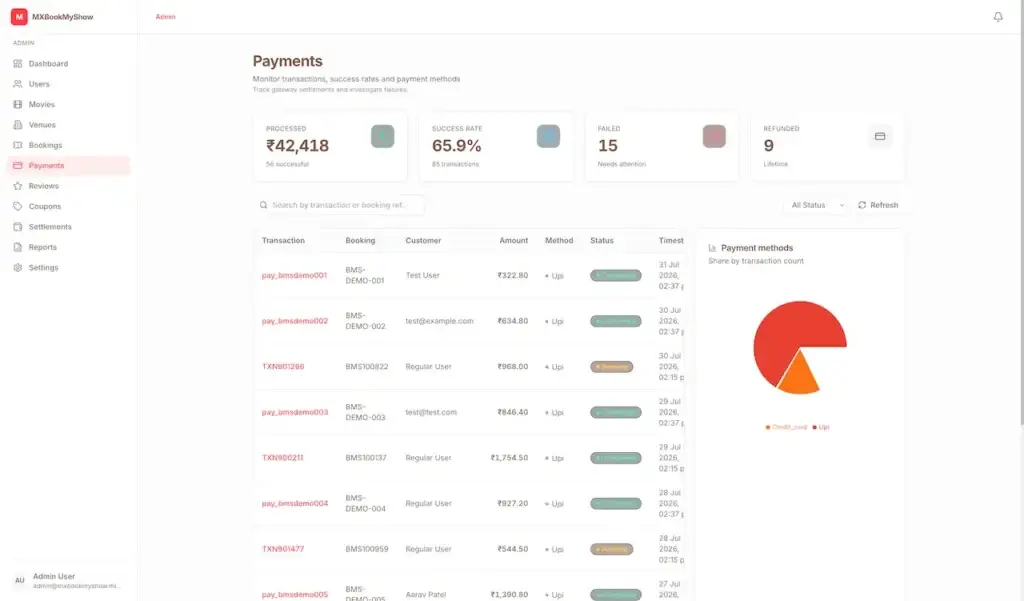
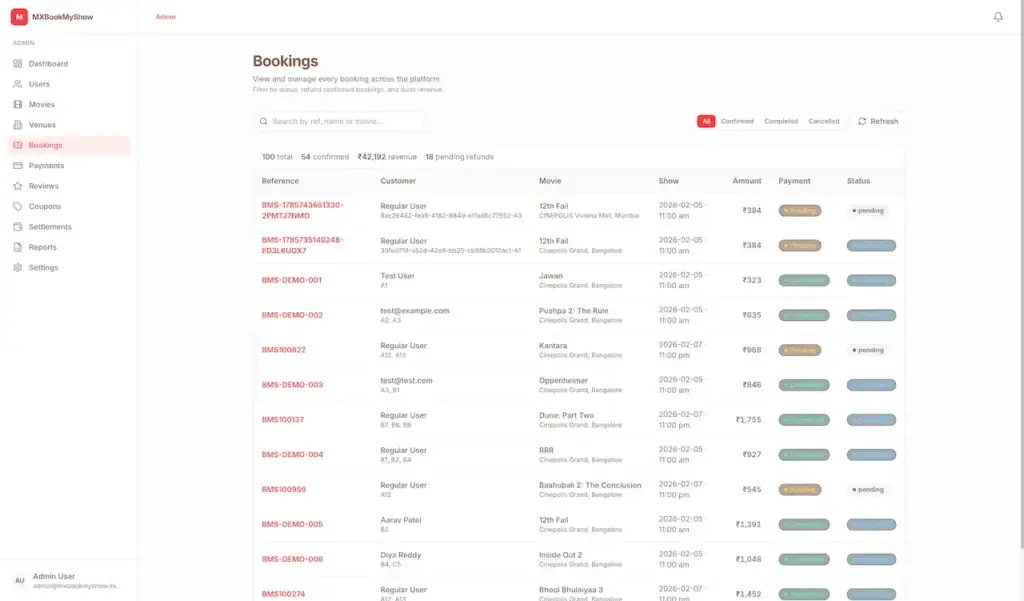
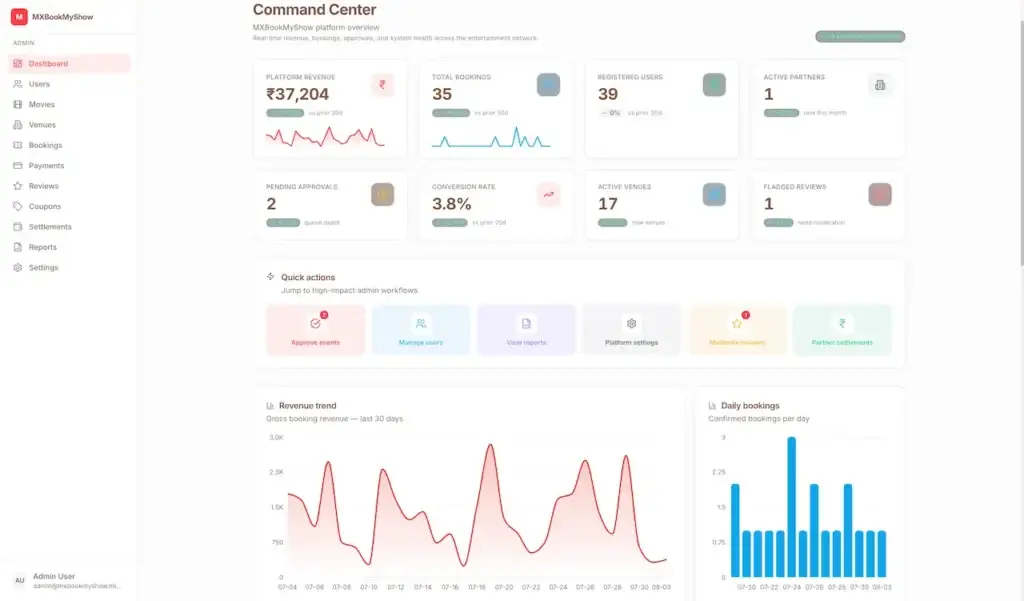
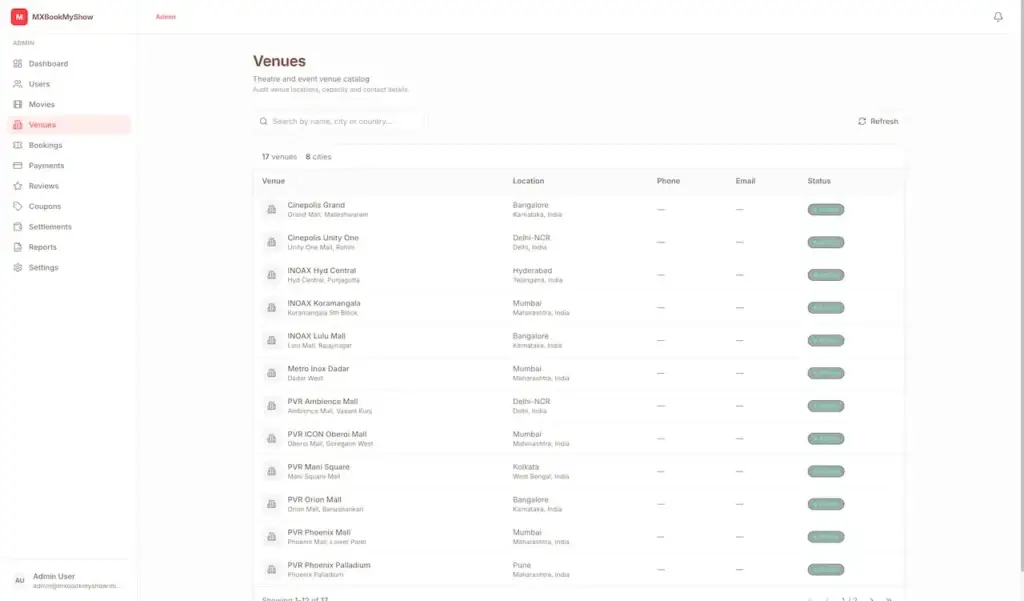
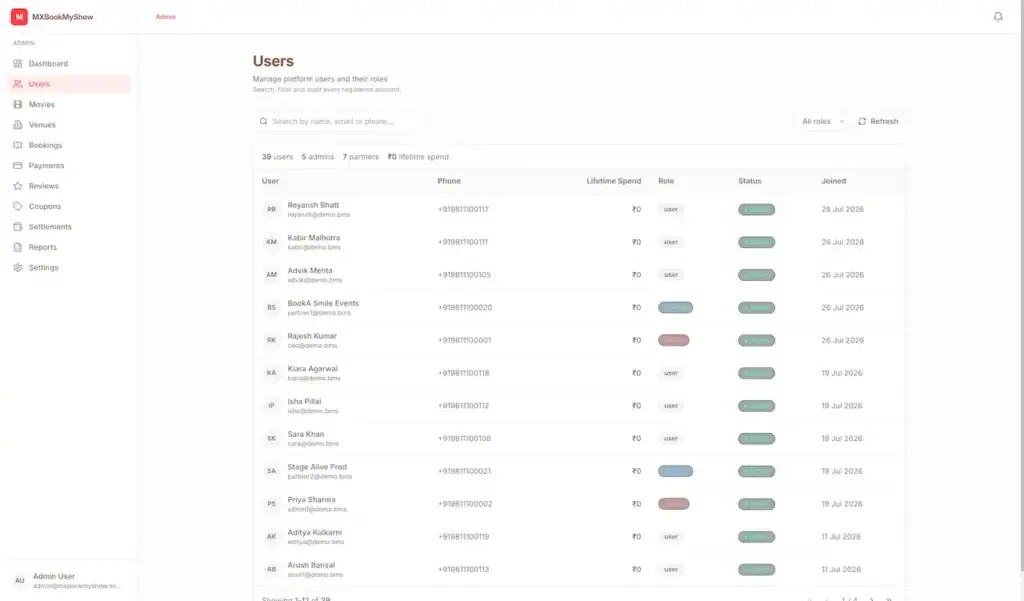
Follow a customer from discovery through seat selection to a scanned QR ticket, a vendor from screen setup to a settled payout, and an operator from catalogue import through to a processed refund.
Client Voices
Feedback from cinema and event operators who launched ticketing platforms with Miracuves. Client identities withheld under NDA.
Proof in Production
How an operator launched a regional entertainment ticketing platform on the Miracuves BookMyShow Clone. Client identity withheld under NDA.
Confidential Deployment
Multi-Venue Ticketing Platform
A regional entertainment ticketing platform launched on the Miracuves BookMyShow Clone, with real-time seat maps and automated partner payouts.
"Seat inventory held up on our first weekend on sale, which was the only thing we were worried about. Venues reconcile their own settlement now."
The Basics
A BookMyShow Clone is a ready-made entertainment ticketing platform – discovery across movies, events, sports, plays, activities and streaming, real-time seat selection, multi-gateway checkout, QR ticket validation at the door, and the operator tooling that runs behind all of it.

The value sits in the concurrency model - a versioned seat inventory row with a distributed lock and hold expiry, which is what prevents oversell under real launch-day load.
You receive the source, the schema and the migrations. No per-seat fee, no vendor roadmap dependency, and standard PostgreSQL underneath.
Payment gateways, SMS, email and push need your own provider accounts before they move real money. That is stated per capability rather than discovered after purchase.
Built for Web, Android & API
The hard part of ticketing is not the storefront. It is stopping two people buying the same seat in the same second, paying venue partners the right amount on schedule, and validating a ticket at a gate with poor signal. Those are the parts this platform has already solved.

The build ships around 40 database tables across thirteen domains, roughly 135 API endpoints, four payment gateways, a four-tier loyalty engine and separate customer, vendor and admin surfaces.
Everything Included
Every capability below is built and demonstrable in the live demo. Where a feature needs a third-party account before it moves real money or sends a real message, that is stated against the feature rather than implied away.
Movies, events, sports, plays, activities and streaming, each with its own scheduling primitive - showtimes for cinema, event instances for everything else - rather than one shape forced onto all six.
Interactive maps rendered from a stored seat layout, with live availability broadcast over WebSocket so a seat another user just took greys out on your screen.
Seat-type multipliers stacked with time-based factors for matinee, evening, weekend and surge windows, plus promo codes in percentage, fixed and buy-one-get-one forms.
An organiser invites friends, each member sees their own share, and per-member payment status is tracked so a partially paid group never silently confirms.
Stripe, Razorpay, PayPal and Adyen all wired with HMAC-verified webhooks and refund support, so a customer never abandons because their preferred method is missing.
Tickets carry a unique QR generated at confirmation, scanned at the gate to flip status to checked in, with attempt counters and audit logs behind it.
Per-partner commission with weekly, fortnightly or monthly cycles executed through Stripe Connect and PayPal Payouts, with statements generated per cycle.
Bronze to Platinum with earning multipliers and tier discounts, backed by an append-only points ledger that lets any balance be recomputed from first principles.
Both the referrer and the referred earn, with attribution captured at signup, reward released at first confirmed booking, and duplicate detection guarding the loop.
Email, SMS, push and real-time WebSocket updates orchestrated from one service, covering confirmations, reminders, refunds and loyalty events.
Venue and screen configuration, seat layout editing, showtime scheduling, occupancy analytics, payout balances and a mobile-optimized entry scanner.
Users and roles, catalogue with TMDB import, booking oversight and refunds, promo codes, review moderation, cache diagnostics and platform analytics.
Note for buyers: The platform ships complete as software. Payment gateways, SMS, email and push are integration-required – they need your own provider accounts and credentials before going live. The current build is English only; the internationalization architecture exists but is not activated. Search runs on direct database queries rather than a dedicated search engine.
How Operators Earn
Ticketing earns from several places at once, and the platform models each separately so an operator can tune one lever without disturbing the others.
A configurable percentage of gross booking value taken per partner, applied automatically at settlement rather than reconciled afterwards.
A flat service charge added at checkout, set by the operator and shown transparently in the fare breakdown alongside taxes.
Seat-type multipliers across standard, premium, VIP and recliner tiers, so the best seats in the house are priced like the best seats in the house.
Matinee discounts to fill off-peak capacity and surge multipliers on opening weekends, both configured as rules rather than manual repricing.
Tier benefits and points create a switching cost. The revenue effect is in booking frequency rather than in a line item.
Food and beverage items attached to a booking at checkout, capturing per-visit spend that would otherwise happen at the counter or not at all.
The two that move the numbers most are dynamic pricing and loyalty – one raises revenue per seat, the other raises how often a customer comes back.
Run It Without a Dev Team
The admin console covers the full operational surface – identity, catalogue, commerce, moderation and platform health – with role checks enforced at the route, the handler and the service layer rather than by hiding navigation.
Platform KPIs, pending approvals and recent activity - the surface an operations lead opens first each morning to see what needs attention.
Full user records with role assignment across customer, vendor, partner and admin, plus suspension, deletion and login history.
Movies imported straight from TMDB with metadata, posters and cast, alongside manually created events across the other five verticals.
Venue records with amenities, screen configuration by format, and the seat layout editor that drives the customer-facing map.
Calendar-based scheduling with bulk creation and duplication from existing patterns, with clash detection against runtime.
Every booking platform-wide with lifecycle status, plus full and partial refund initiation across all four gateways.
Transaction ledger with gateway health, webhook delivery history and the reconciliation view behind dispute resolution.
Creation and management of percentage, fixed and buy-one-get-one codes with usage limits, validity windows and redemption tracking.
Per-partner earnings, commission applied, payout status and manual initiation when a cycle needs to run early.
Review approval workflow alongside Redis cache diagnostics, system health and platform-wide analytics dashboards.
Need deeper governance? Single sign-on through SAML or OIDC, dedicated per-tenant databases, accounting and ERP synchronization, and streaming real-time analytics are the extensions enterprise buyers most often ask for. Tell us the requirement and we will scope it.
Transparent Pricing
Building an entertainment ticketing platform with Miracuves typically starts from around $3,399 for a launch-ready white-label BookMyShow Clone and increases based on venue count, gateway selection, loyalty configuration, integrations and infrastructure complexity.
Not sure which option
is right for you?
Talk to us - we'll understand your goals, timeline, and budget, and point you to exactly what you need. No upselling, just honest advice.
The Full Package
You receive a complete, deployable platform – the application source, the schema behind it, and the documentation a technical buyer will ask for. Everything transfers with full ownership: no runtime licence, no per-seat fee, no dependency on our roadmap.
The complete Next.js 16 and React 19 application in TypeScript - customer, vendor, admin and API surfaces in a single pnpm monorepo, yours to modify and redeploy.
Around 40 tables across thirteen domains in standard PostgreSQL, with enum-driven lifecycles, optimistic locking on seat inventory and immutable ledger tables.
Discovery across six verticals, global search, interactive seat maps, checkout, QR tickets, booking history, wishlist, rewards and referrals.
Venue and screen management, the seat layout editor, showtime scheduling, occupancy analytics, payout balances and the mobile entry scanner.
Users and roles, catalogue with TMDB import, bookings and refunds, promo codes, settlements, moderation, cache diagnostics and analytics.
Four gateway integrations with verified webhooks and refunds, plus Stripe Connect and PayPal Payouts wired for automated partner settlement.
TMDB catalogue import, Twilio SMS, SendGrid email, Firebase push, AWS S3 with CloudFront, and Redis for cache, rate limiting and pub/sub.
Entity-relationship diagram, schema interpretation guide, complete API collection, developer and security handbook, VAPT posture and product dossier.
Want to see it running first? Open the demo with any of the three role logins above, or book a walkthrough and we will take you through a live seat booking, a QR validation and a settlement run against your own venue model.
Four focused guides - features, cost, how to choose a builder, and how the business model makes money - each going deeper than this overview can.
Every feature by role - customer, vendor and venue, and admin - covering seat concurrency, 6 content verticals with their own scheduling, and 4 loyalty tiers.
See the full breakdown →Our fixed $3,399 price vs. freelancer, custom-agency, and enterprise ranges - plus the 6-day deployment timeline and what actually drives ticketing platform cost.
See exact pricing →Agency vs. freelancer vs. Miracuves compared - plus transaction-integrity checks and the red flags to run before you hire anyone.
Compare options →Five revenue lines, the realistic path to first revenue, and the three operator models the platform supports.
See the playbook →Know Your Buyer
The platform suits operators who sell seated inventory against a schedule – where the hard problems are concurrency at launch, paying venues correctly, and validating entry at the door.
If your business depends on selling scheduled or seated inventory, settling with venue partners accurately, and owning the customer relationship rather than handing it to an aggregator, a BookMyShow-style platform becomes a long-term owned asset.
Where It Fits
The same codebase serves quite different operators depending on which vertical leads. A cinema chain leans on TMDB import and seat maps; a promoter leans on promo codes and group bookings; a stadium leans on tiered pricing. Each is configuration rather than a fork.
Cinema & Multiplex Chains
Run a multiplex or independent cinema with movie catalogue imported automatically, auditorium seat maps configured per screen, and premium formats priced through seat-type multipliers.
Concerts, Comedy & Festivals
Sell concerts, comedy and festivals across multiple venues, with presale promo codes for affiliate channels, group invitations for fan communities, and seat holds that survive a launch-day rush.
Sports & Stadium Ticketing
Operate stadium seating with tiered sections and season programmes, where premium pricing and loyalty tiers together carry a meaningful share of total revenue.
Theatre & Performing Arts
Run seasonal theatre productions with membership tiers, group bookings for schools and corporate outings, and split payment that removes the coordination problem entirely.
Regional Multi-Venue Platforms
Aggregate many venues in a region under one brand, giving each partner its own operating portal and settlement cycle while the platform keeps a single customer identity.
Activities & Experiences
Sell experiences and activities that need registration and capacity rather than a numbered seat, using the same booking, payment and validation spine.
One platform, many configurations. Every use case above runs on the same schema and the same three role surfaces. What changes is which vertical you lead with, the pricing rules and the venue model – not a fork you then maintain separately.
Market Timing
Out-of-home entertainment spend keeps recovering, and the operators taking share are the ones whose booking flow completes and whose venue partners get paid correctly – not the ones with the lowest fee.
Overselling a seat destroys trust and generates refunds. Optimistic locking with hold expiry is a solved problem here rather than a launch-day discovery.
Cart abandonment from a missing payment method is invisible and expensive. Four gateways covering cards, UPI, wallets and buy-now-pay-later removes that category of loss.
Venue partners stay where settlement is accurate and on schedule. Automated cycles replace the reconciliation work that otherwise eats operations time monthly.
Repeat booking rate is the single most improvable number in ticketing, and tier benefits with points create a switching cost that discounting never does.
Customers expect movies and events in one place. Six verticals on one schema beats separate platforms per content type.
A from-scratch equivalent is most of a year across booking, payments, settlement and operator tooling. A white-label deployment is live on your server in under six days.
Building this layer from scratch is the part that consumes the year. Seat concurrency, four gateway integrations and settlement automation are unglamorous, mandatory and slow to get right.
Under the Hood
Under the hood, a ticketing platform needs seat-level concurrency, payment callbacks it can trust, and an operator console that stays up through a launch-day rush. Here is what sits behind the booking flow.
Next.js 16 App Router · React 19 · TypeScript
Drizzle ORM · Type-Safe SQL
PostgreSQL 14+ · ~40 Tables
Redis 6 · WebSocket · Pub/Sub
NextAuth · JWT · bcrypt
Four Gateways · TMDB · AWS
Note for Tech Buyers: payment capture, SMS, email, push delivery and movie metadata all connect through documented integration points using your own provider credentials – each is integration work rather than something already live. Every layer above is mainstream and widely hired for, with no proprietary framework and a schema portable to any PostgreSQL 14 instance.
End to End
Ticketing looks simple from the outside and runs on a tightly sequenced concurrency, payment and validation pipeline underneath. Here is the path from browsing to a scanned ticket and a settled payout.

Customers arrive on a catalogue spanning six verticals, with movie metadata imported automatically rather than typed in by hand.

The moment two people want the same seat is the moment most ticketing builds fail. Selection takes a distributed lock, then a conditional update that only succeeds if nobody got there first.

Fare composition is assembled transparently - base price, seat multiplier, time factor, discounts and fees - before the customer commits.

The customer picks a gateway, the gateway calls back, and only a signature-verified webhook is allowed to confirm a booking.

At the venue, a vendor scans the QR and the ticket flips state once - a second scan is recorded as an attempt rather than a second entry.

After the show, the money and the relationship both get handled - partners settle on their cycle, customers accrue points toward the next booking.
Visual Flow Diagram
Discover → Select Seats → Hold 5 min → Pay → QR Ticket → Check In
How It's Built
Customer, vendor and admin all ship from a single Next.js application with a shared database package, so there is no drift between what each surface believes is true.
Seat contention is resolved by a version column and a conditional update rather than by application-level coordination, which is what makes it correct under load.
Distributed locks, hold expiry, rate limiting and pub/sub broadcasting all run through Redis, which is also what allows the platform to scale horizontally.
A booking is only confirmed by a signature-verified gateway callback, with idempotency on the transaction identifier so duplicate deliveries cannot double-confirm.
The points ledger and audit log are append-only, so any balance or administrative action can be reconstructed rather than taken on trust.
Table definitions and services live in one workspace package consumed by the application, giving a single source of truth for types across frontend and backend.
Performance Targets
The platform runs as a Node.js server rather than a serverless deployment, which is deliberate – it keeps the WebSocket server, the cron endpoints and Redis connection pooling in one process without cold-start penalties.
Ticket launches are the stress test that breaks naive implementations, so contention is resolved at the database rather than in application code.
The concurrency model rests on:
Manual payout reconciliation is documented as consuming fifty to a hundred hours a month at scale, which is the cost the settlement engine removes.
The settlement engine covers:
Points balances that cannot be audited become a support problem, so every points movement is an append-only journal entry rather than a mutated counter.
The loyalty model provides:
Catalogue reads vastly outnumber writes, so the read path is cached in tiers while the write path stays strictly transactional.
The caching strategy runs across:
Foreign keys, status columns and date windows are indexed, with partial indexes on available seat inventory so the busiest query stays cheap.
Stateless route handlers with Redis-backed sessions, rate limiting and pub/sub mean adding instances requires no architectural change.
Gateway transaction identifiers are unique-constrained, so duplicate callbacks are safely ignored rather than double-confirming a booking.
Points balances and payout records reconcile against their append-only journals, making an audit a query rather than an investigation.
Partition the high-volume append-only tables, add read replicas for analytics, and archive aged ledger entries - each step incremental.
Structured logging, security audit events, health and metrics endpoints, plus cache diagnostics surfaced in the admin console.
Every operator ends up needing something specific to their venues or their market. The stack is conventional so extending it is ordinary work.
Adding a gateway means implementing one interface and a route handler; adding a notification channel means extending one orchestrator. Next.js, TypeScript, PostgreSQL and Redis are all widely hired for.
Note for founders and operators: You can launch lean and scale the same deployment. What changes as volume grows is instance sizing, read replicas and partitioning on the high-volume append-only tables – not the architecture underneath.
Built to Be Audited
Security posture is documented against the OWASP Top 10 in a dedicated VAPT file. For ticketing the sharper questions are payment callback integrity and whether a ticket can be forged or replayed, and both are addressed in the transaction path rather than beside it.
OWASP Top 10 Mapping
CSRF Protection
Injection Defence
Audit Logging
Data Retention & Privacy
Deployment Hardening
Every gateway webhook is HMAC-SHA256 verified against the raw body and fails closed on mismatch, so a forged callback cannot confirm a booking.
Card details never touch the servers - processing is delegated to the gateway, which keeps the deployment out of the hardest part of PCI scope.
QR validation flips a ticket to checked in once, with attempt counters and audit logs so a re-scan is recorded rather than admitting a second entry.
Role enforcement at route middleware, the API handler and the service layer, with ownership checks on customer-scoped resources.
Login attempts, OTP requests and general API traffic are throttled at documented thresholds, Redis-backed so limits hold across instances.
bcrypt password hashing at twelve rounds, AES-256-GCM for sensitive field encryption, TLS enforced with strict transport security headers.
Where hardening is deployment-governed – production secrets, origin allowlists, credential rotation, log centralization – the documentation lists it as a pre-launch checklist rather than implying coverage.
Go Further
Out of the box the platform is complete and demonstrable. The modules below are what operators most often add – either because they need a third-party account, or because their scale or procurement process demands it.
A branded Android build is available. Extending to iOS is an additive step, and the documentation is explicit that native mobile sits outside the base web scope.
Search runs on direct database queries today, which is right for a launch catalogue. Elasticsearch, Algolia or Meilisearch is the step once the catalogue grows.
Google OAuth ships with the platform. SAML and OIDC for enterprise identity providers is the module procurement teams most often require.
Dashboards poll the database today. Sub-second streaming analytics with a dedicated pipeline is available for operators who need live operational telemetry.
The internationalization architecture exists in the codebase but is not activated, and the current build is English only. Activating and translating is a scoped exercise.
Settlement and revenue data is complete and exportable. Native synchronization into QuickBooks, Xero or an enterprise ERP is an integration module.
The platform uses a shared schema with partner-scoped filtering. Dedicated per-tenant databases for enterprise isolation requirements is a deployment variant.
Four gateways ship wired. Regional rails beyond them plug into the same webhook validator interface, making each additional provider a contained piece of work.
The BookMyShow Clone is one platform in a complete entertainment and booking suite. If your roadmap extends beyond ticketing, these connect naturally.

Short-video platform with an algorithmic feed, creator tools, live streaming and virtual gifting.

Long-form video platform with channels, monetization, subscriptions and watch-time analytics.

OTT streaming platform with subscription billing, multi-device sync and content licensing workflows.

Booking marketplace with availability calendars, host onboarding, commission and automated payouts.
The Commercial Case
Out-of-home entertainment is a habitual purchase with a predictable cadence, which makes it unusually responsive to loyalty mechanics. A customer who books monthly and one who books quarterly differ by a factor that no discount reliably closes but a tier programme can.
Commission, booking fees, premium seat pricing, surge windows and concessions - revenue does not rest on a single lever or a single content type.
Repeat booking rate is the most improvable number in ticketing, and a tier programme with points creates a switching cost discounting never does.
Automated settlement and a self-service vendor portal mean venue count can grow faster than the operations team, which is the whole economics of an aggregator.
The codebase and schema are yours, running on standard PostgreSQL. There is no proprietary format to unwind and no vendor to renegotiate with.
Most operators start with a single venue or a small set of screens, wire one payment gateway rather than all four, and run the loyalty programme in its default configuration. Commission and booking fees are collectible from the first confirmed booking. Dynamic pricing and the full gateway set are usually enabled once the booking flow has been proven with real customers.
Defensibility comes from venue supply and customer habit rather than from the software. Venues consolidate where settlement is accurate and the portal is usable; customers return where their points balance lives. The platform contribution is making both of those true from the first month, and making sure the customer relationship belongs to you rather than to a white-label provider who can change terms.
Example Revenue Scenarios
The commercial argument for owning the platform is that ticketing revenue is thin per transaction and depends on volume, operational cost and partner retention – all three of which are properties of the software rather than of the deal.
Independent Operator
Screens or Venues
Booking fees and premium seat pricing carry early revenue.
A single-site or small-chain operator where the platform replaces phone bookings and a counter, and premium pricing captures value the old process could not.
Regional Chain
Screens or Venues
Commission and dynamic pricing dominate, with loyalty lifting frequency.
A multi-city operator where settlement automation and the vendor portal are what allow venue count to grow without operations headcount growing alongside.
Ticketing Aggregator
Partner Venues
Partner commission is the model, and payout accuracy decides retention.
A marketplace whose growth is supply-led, where the partner portal and settlement engine are effectively the product that venues experience.
Why Miracuves
There are many ways to get a ticketing platform: generic scripts, freelancers, agencies, or owning the infrastructure.
A versioned inventory row, a distributed lock and hold expiry. Generic scripts check availability then insert, which oversells the moment two people click together.
Stripe, Razorpay, PayPal and Adyen all wired with verified webhooks and refunds, so payment preference never becomes an abandoned cart.
Per-partner commission and cycles executed through Stripe Connect and PayPal Payouts, replacing the reconciliation work most operators do in spreadsheets.
The complete Next.js, TypeScript and PostgreSQL codebase is yours to modify and deploy. No per-seat fee, no provider who can change terms on you.
ERD, schema guide, API collection, developer and security handbook and VAPT posture - enough to pass a procurement review rather than a demo.
Included, supported, configuration required or integration required is stated per capability - including that the interface is English only today. Nothing surprises you after purchase.
| Criteria | Miracuves BookMyShow Clone | Generic Clone Script | Custom Dev Agency |
|---|---|---|---|
| Time to Launch | 6 days (Production) | Unknown / DIY | 6-9+ months |
| Source-Code Ownership | ✔ Full | Often limited / encrypted | Usually yes |
| Feature Depth (BookMyShow-like) | High (seat inventory, payments & partner settlements) | Basic (listing & feed only) | Depends on budget |
| Security & Compliance | Strong (ISO mindset, GDPR-ready) | Minimal | Varies widely |
| Scalability & Performance | Cloud & CDN-optimized | Rarely considered | Depends on architecture |
| Monetization Options | Multiple (ads, gifts, subs) | Limited / needs custom work | Custom (more time & cost) |
| Admin & Analytics | Full-fledged dashboard | Very basic or missing | Custom build (extra cost) |
| Cost vs Speed vs Quality | Balanced | Cheap but risky | High cost, slow |
| Ongoing Support & Updates | Available with clear plans | Usually none | Depends on contract |
Not every route to a ticketing platform survives its first launch-day rush. Here is where we differ.
Industries
The BookMyShow Clone suits any operator selling scheduled, seated or capacity-limited inventory. Cinema chains and independent screens use the full stack from TMDB import through to QR entry. Concert and festival promoters lean on presale promo codes, group bookings and launch-day seat holds. Sports venues run tiered stadium pricing and season programmes. Theatre groups combine membership tiers with school and corporate group bookings. Regional aggregators give each partner venue its own portal and settlement cycle. Activity and experience operators use the same spine without a numbered seat map. Comedy clubs and small venues get modern booking without an IT department. Streaming operators bundle digital access alongside physical tickets for hybrid events.
Miracuves’ BookMyShow Clone is built as a concurrency-first ticketing platform adaptable to any scheduled-inventory business – multi-venue where your footprint requires it, and white-labelled entirely under your brand.
Changelog
| Version | Date | <span style="color: rgb(6, 6, 8); font-family: Montserrat, sans-serif; font-size: 13px; font-style: normal; font-variant-ligatures: normal; font-variant-caps: normal; font-weight: 700; text-align: left; white-space-collapse: collapse; background-color: rgb(255, 255, 255);">What's New</span> |
|---|---|---|
| v2026.1 | Jul 2026 | Initial release - ticketing platform with real-time seat inventory, four gateways, automated settlements, loyalty tiers and QR validation. |
Blog & Resources
Stay updated with the latest trends, guides and case studies on ticketing technology, venue operations and entertainment commerce.
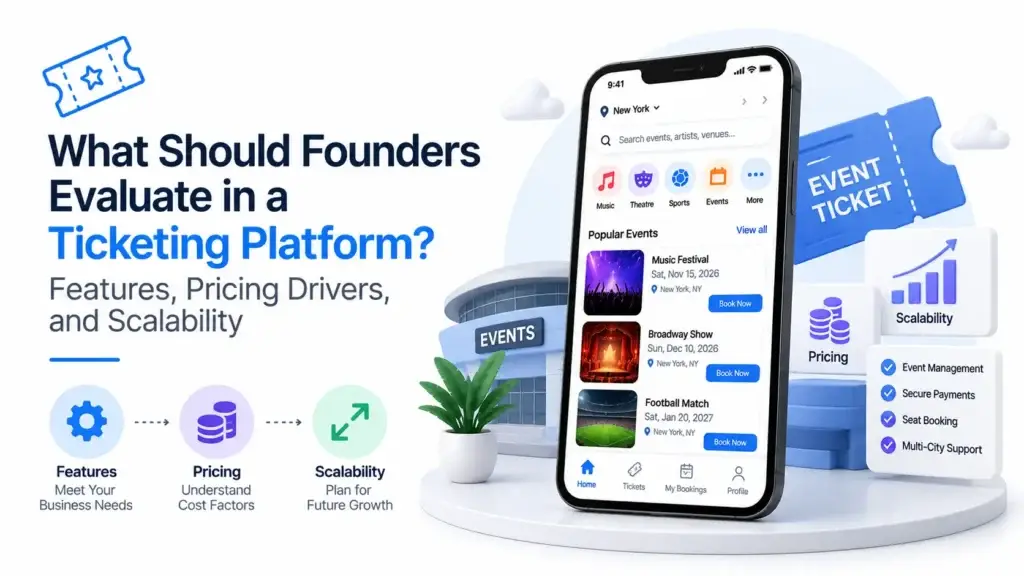
What Should Founders Evaluate in a Ticketing Platform? Features, Pricing Drivers, and Scalability
Key Takeaways Founders evaluating a ticketing platform should consider event discovery, seat selection, booking, payments,…
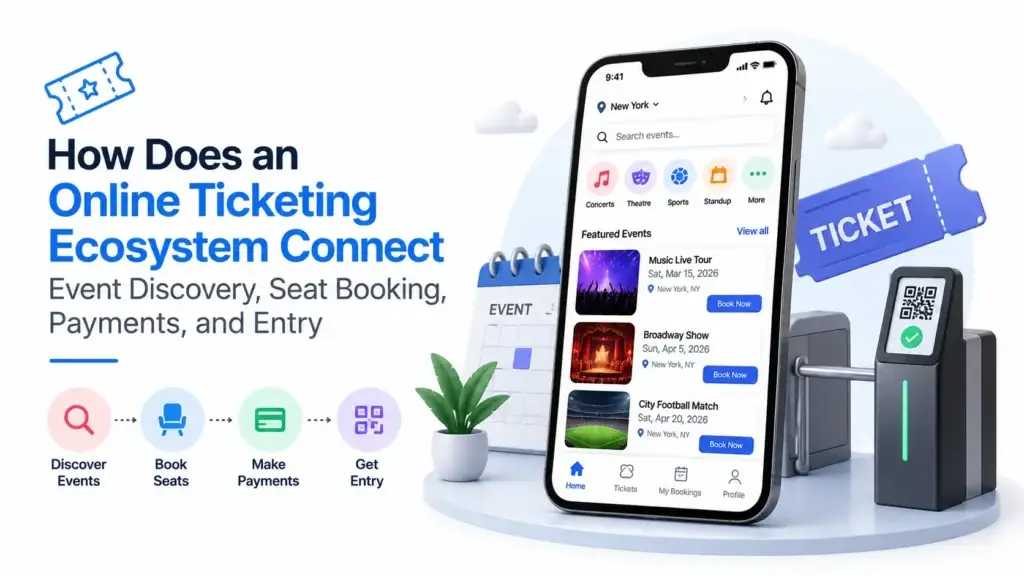
How Does an Online Ticketing Ecosystem Connect Event Discovery, Seat Booking, Payments, and Entry?
Last Updated on September 17, 2026 by Yash Narayan Key Takeaways An online ticketing ecosystem…
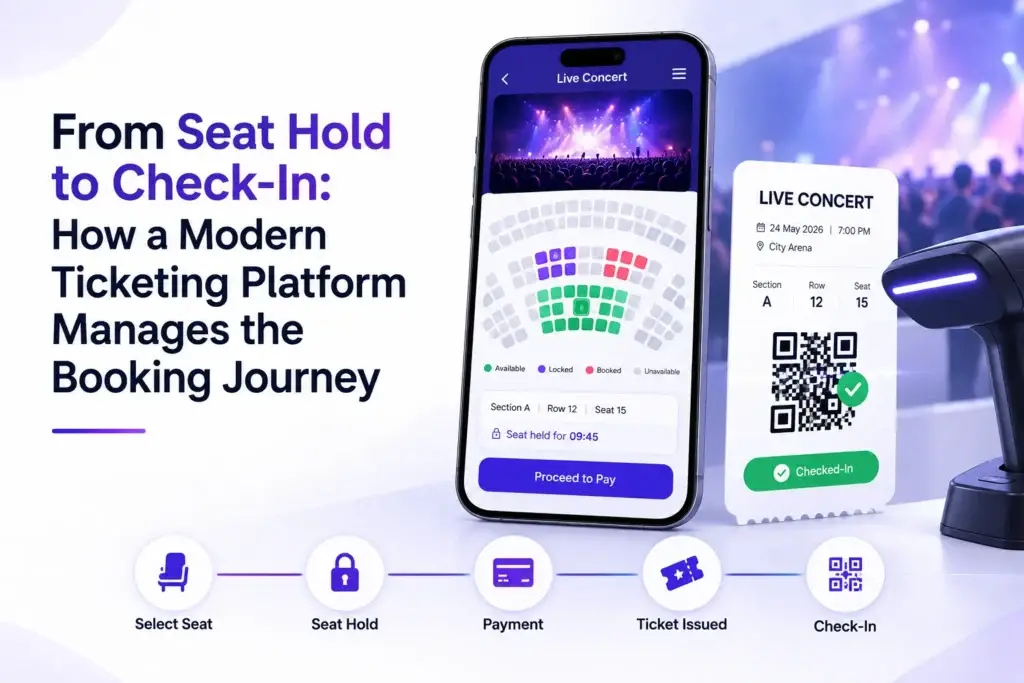
From Seat Hold to Check-In: How a Modern Ticketing Platform Manages the Booking Journey
Key Takeaways Ticket Booking Journey should connect discovery, seat selection, temporary holds, checkout, payment confirmation,…
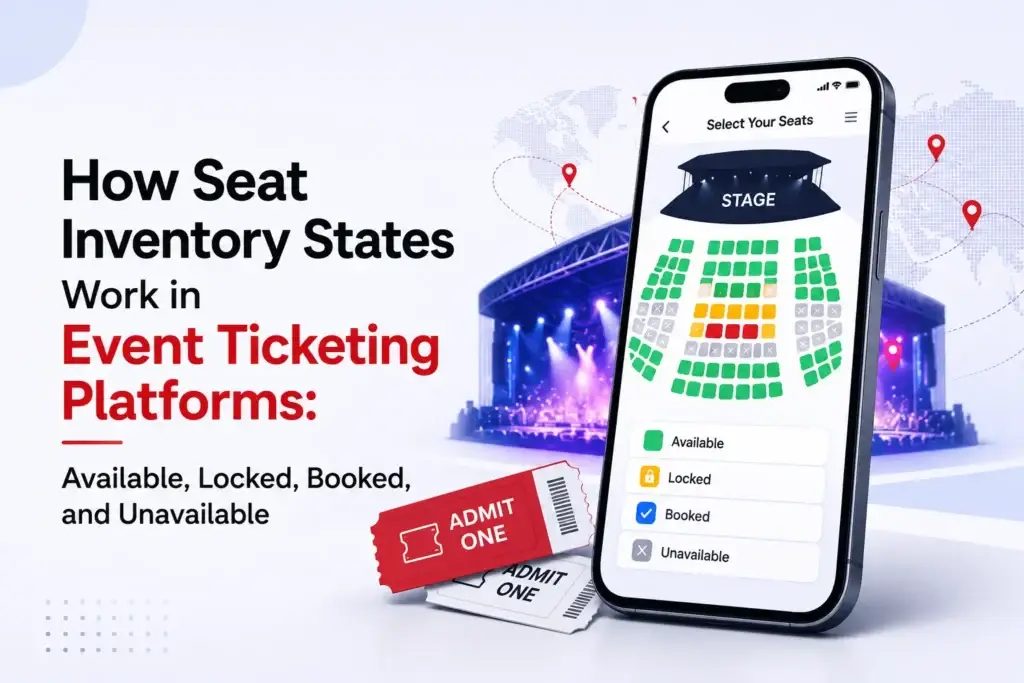
Last Updated on September 1, 2026 by samruddhi kadam Key Takeaways Seat Inventory Management should…
Best Marketing Strategies to Grow a BookMyShow Clone Ticket Booking Platform
Last Updated on August 7, 2026 by Ashish Khan Launching a BookMyShow clone is only…
FAQ
Everything you need to know about the Miracuves BookMyShow Clone.
A ready-made entertainment ticketing platform covering movies, events, sports, plays, activities and streaming – with real-time seat selection, four payment gateways, QR ticket validation, automated partner settlements, a four-tier loyalty programme, and separate customer, vendor and admin surfaces.
Yes. You launch under your own branding, catalogue and commercial terms. The product replicates common ticketing patterns rather than any protected asset, and you set your own policies for refunds, cancellation and partner agreements.
The Miracuves BookMyShow Clone starts from $3,399 for a launch-ready white-label deployment. Final scope varies with venue count, gateway selection, loyalty configuration, integrations and infrastructure.
Six days from our side. The platform is ready-made, so our work is rebranding it and deploying to your server – that is done in under six days. What extends the calendar is anything we need from you: brand assets, hosting access, venue and seat-map data, and merchant accounts for the payment gateways.
Seat selection takes a distributed lock, then performs a conditional update that only succeeds if the inventory row still carries the version the client read. If someone got there first the update affects zero rows and the second user sees a conflict immediately. Held seats carry a five-minute expiry so abandoned checkouts release automatically.
Stripe, Razorpay, PayPal and Adyen, covering cards, UPI, net banking, wallets, Apple Pay, Google Pay and buy-now-pay-later depending on the gateway. All four are wired with HMAC-verified webhooks and full and partial refunds. Going live requires your own merchant accounts and credentials.
Each partner carries a commission rate and a settlement cycle of weekly, fortnightly or monthly. A scheduled job calculates net amounts, generates a statement and executes the payout through Stripe Connect or PayPal Payouts, tracking status from pending through processing to paid.
Four tiers from Bronze to Platinum with earning multipliers and tier-based booking discounts, birthday bonuses, a rewards catalogue for redemption, and configurable annual reset. Every points movement is recorded in an append-only ledger, so any balance can be recomputed and audited.
A branded Android build is available. The documentation is explicit that native mobile apps sit outside the base web scope – the web application is fully responsive – so iOS is available as an add-on rather than something already shipped.
The current build is English only. The internationalization architecture exists in the codebase but is not activated, so adding languages is a scoped exercise rather than a configuration toggle. We state this plainly because it is the kind of thing that surprises buyers otherwise.
Yes. You receive the complete Next.js 16 and React 19 application in TypeScript, the PostgreSQL schema across roughly 40 tables, the shared database package, and all integration service code – with full ownership to modify and extend.
It ships with OWASP Top 10 mapping, HMAC verification on every payment webhook, CSRF double-submit protection, bcrypt password hashing, AES-256-GCM field encryption, layered rate limiting and structured audit logging, documented in a dedicated VAPT and compliance file. Production hardening items are listed as a pre-launch checklist.
Let's turn your idea into
a live platform.
Get a free consultation, a clear timeline, and honest answers. We'd rather earn your trust than rush a sale.
Miracuves is an independent software development company. We are not affiliated with, connected to, sponsored by, or endorsed by BookMyShow.
“BookMyShow Clone” is used descriptively. It is how the software industry refers to building a platform with functionality similar to BookMyShow, and how clients search for it.
The entire design and codebase is built by our own team. The product contains no code, design, graphics, or content originating from the BookMyShow website or applications.
BookMyShow and all other third-party names and marks are the property of their respective owners, referenced here solely to describe the category of software offered.
Build Your Branded App - Clone or Custom

Envision. Decide. Deploy.
With Perfection in Just 6 Days
90+ readymade clone apps deployed in 6 days. Schedule a Live Walkthrough Now.
Custom development from 15 days. Free consultation
Launch any ready-made solution under your own brand, now at 30% off.
30% off the published price of any ready-made solution. The 6 working days start once your branding, hosting and accounts are ready. We reply in under 2 hours, Mon-Sat.