Subtitles vs Dubbing: Which Localization Strategy Works Better for a Microdrama Streaming Platform?
Key Takeaways Microdrama Streaming Platform Localization should be planned around retention, paywall crossing, coin unlocks,…

One app, many services
Rides, food, delivery and payments in a single super app, with one wallet and one operations console.
All 6 in Super App →Move people, profitably
Driver and rider apps, dispatch, fare rules and payouts, tuned for city-scale operations.
All 5 in Ride Sharing →Everything to the door
Food, grocery, pharmacy, parcel and alcohol, with dispatch, live tracking and courier payouts.
All 35 in Delivery →Book a professional in minutes
Home services, healthcare and freelance work, with scheduling, quotes and escrow.
All 13 in On Demand Services →Supply, demand, and the listing in between
Rentals, ecommerce, travel and jobs, with search, inventory and governed payouts.
All 31 in Listings →Where audiences gather
Social feeds, messaging, file sharing, AI assistants and website builders.
All 28 in Networks →Attention, monetized
Video on demand, short form, creator subscriptions and betting.
All 16 in Entertainment →Money that moves
Neobanking, brokerage, investment and cross-border remittance, built for compliance.
All 8 in Finance Investment →Exchanges, tokens and NFTs
Spot and P2P trading, launchpads and NFT marketplaces with custody and KYC.
All 13 in Blockchain →159 launch-ready platforms across 10 categories, each shipping in 6 days with full source code.
Twenty-five sectors, each with its own page naming what we have already shipped into it and what we would build from zero.
A launch-ready short-drama platform that runs one catalog across five locales, with right-to-left layout for Hebrew and Arabic on every surface. Vertical episode playback, a free episode window, then coins, a rewarded ad or a VIP window, priced per market rather than per platform.
Three clients, one Express and MongoDB API. The operator CMS owns the interface copy itself, so opening a new language market is a console job rather than a release, and the same wallet ledger settles behind all of it.
Go Live in 6 Days with Short DramaFive LocalesRTL ReadyCoin UnlockOne CatalogWhite-Label
⚡ Platform at a Glance
Revenue Streams
coins, VIP windows, rewarded ads, episode pricing
Locales
right-to-left included, interface copy operator-owned
Revenue Share
you own the source outright, with no per-seat fee
Priced per Market
coin packs and payment rails set per territory
The same episode library launches in five locales with its own pricing, payment rails and interface copy per territory - so a new country is a configuration, not a rebuild.
Coin packs, VIP windows and rewarded ads are priced per market, because a wallet that converts in Jakarta will not convert in Riyadh or Los Angeles.
🚀 Ready to launch your own short-drama platform?







Live in Action
Open it yourself rather than taking our word for it, with working viewer and operator logins below. The demo worth running here is the language one: switch the interface to Hebrew or Arabic and watch the whole layout mirror, then look at the same catalog through a different region.
CONSUMER WEB APP
The viewer surface with the language picker live: rails and search rendered in any of five locales, right to left for Hebrew and Arabic, and a vertical player whose subtitle track is separate from the interface language.
STORE & CURRENCY
The paid surface seen from a market: coin packs and VIP plans priced in the currency catalog, with a default per market deciding what a given buyer is quoted at checkout, and the rewards ladder alongside.
ADMIN CONSOLE
Where a multi-market service is actually run: region chips per title, language flags across five locales, the app language editor that owns client copy, the currency catalog, plus analytics, staff roles and reports.
ANDROID APP
One Flutter binary carrying all five locales rather than a build per market: five tabs, episode-wise reels with comments, coin and ad unlock, wallet histories, and the same right to left handling as the web.
Watch It Work
Want a guided tour? Book a 30 minute call with our team and map your launch: catalog ingest, free episode window, coin pricing, VIP tiers, gateway selection and go-live sequencing.
Every Screen Mapped
Three surfaces reading one API: a consumer web build, a Flutter store binary and a Next.js console, with roughly 202 handlers behind them split 60 on the client router and 142 on the admin side.
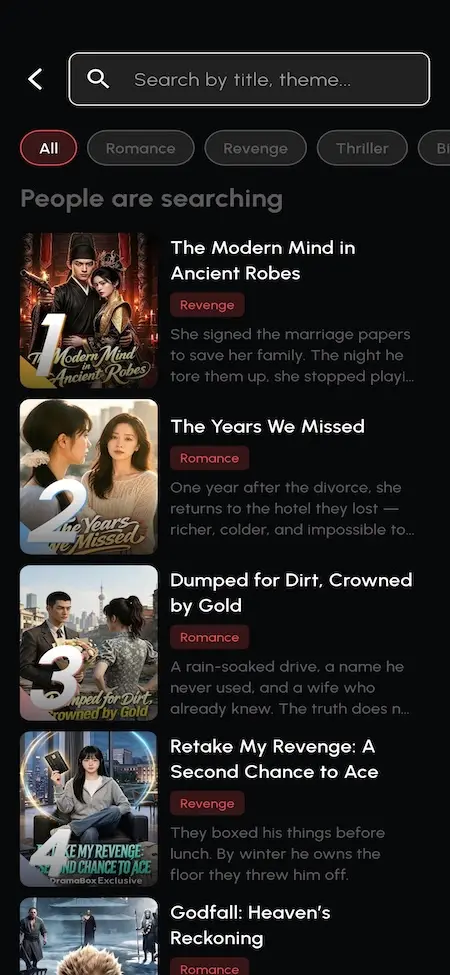
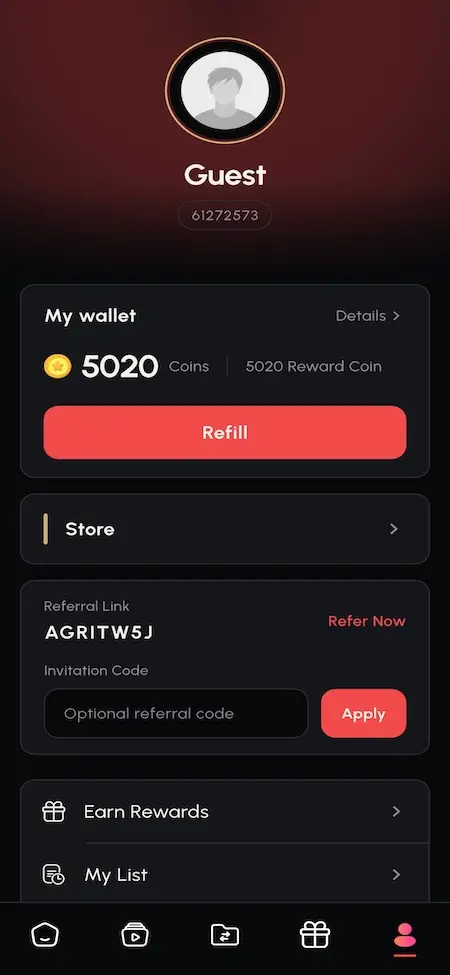
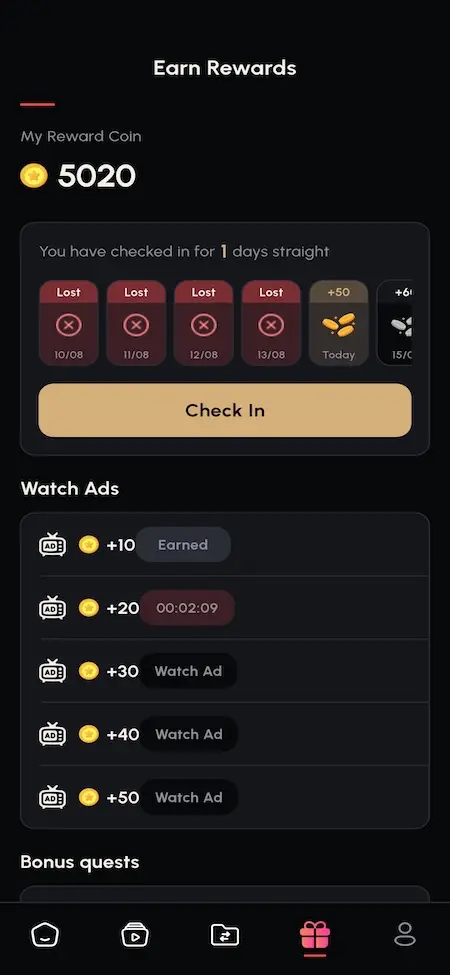
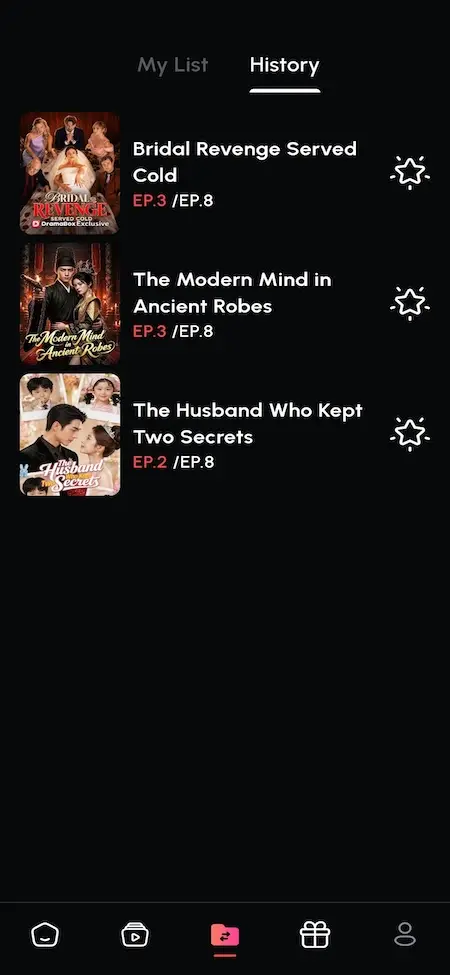
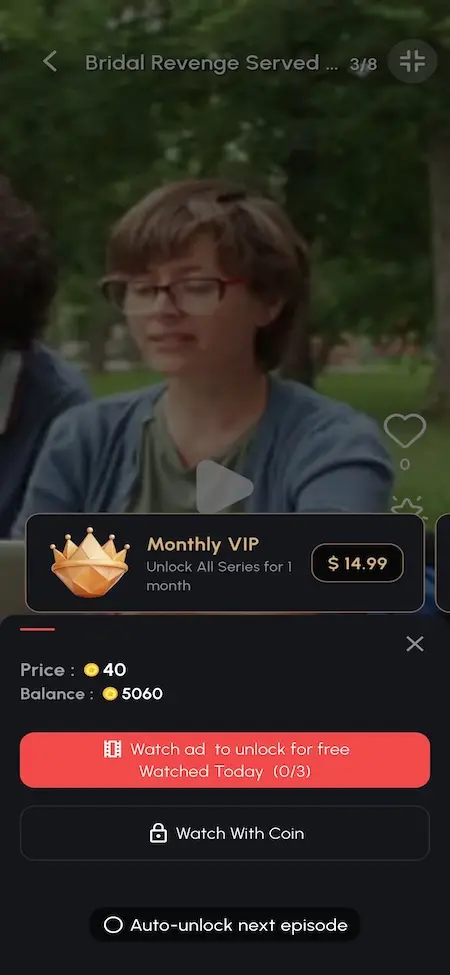
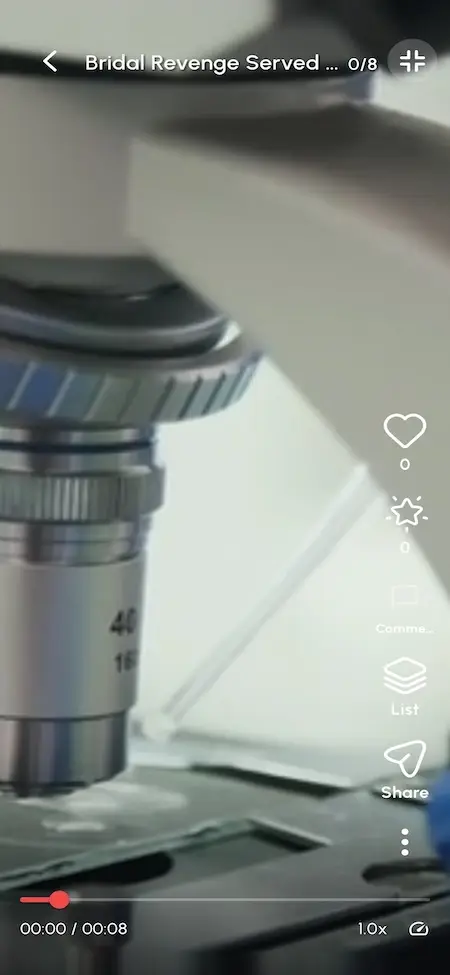
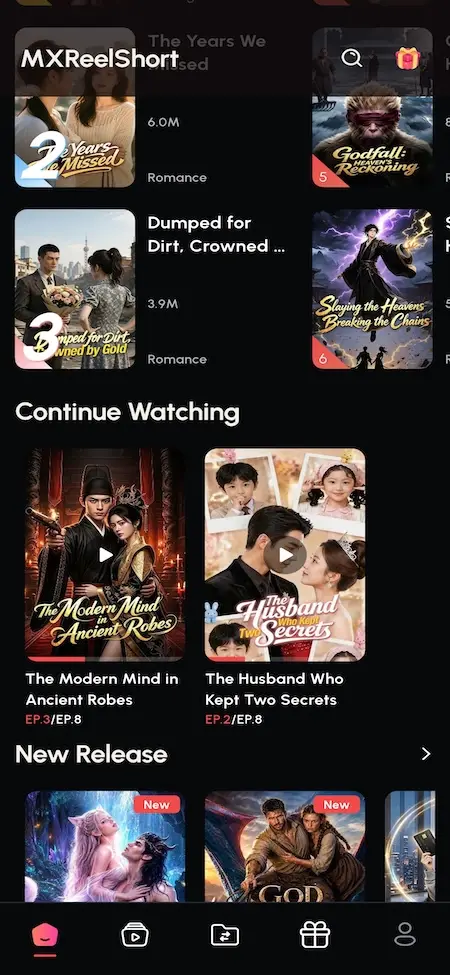
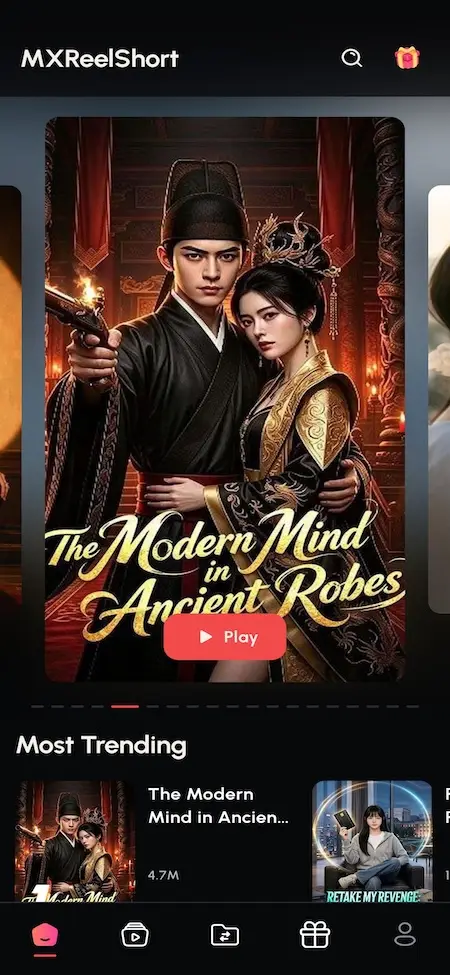
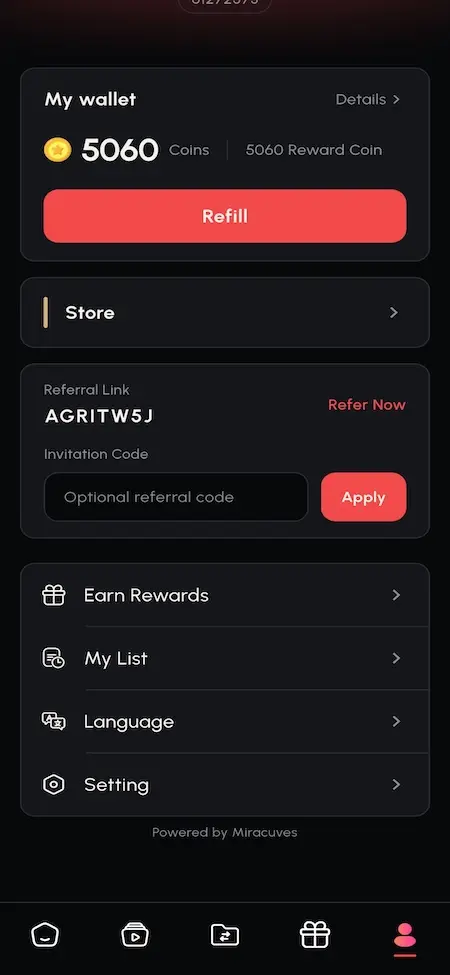
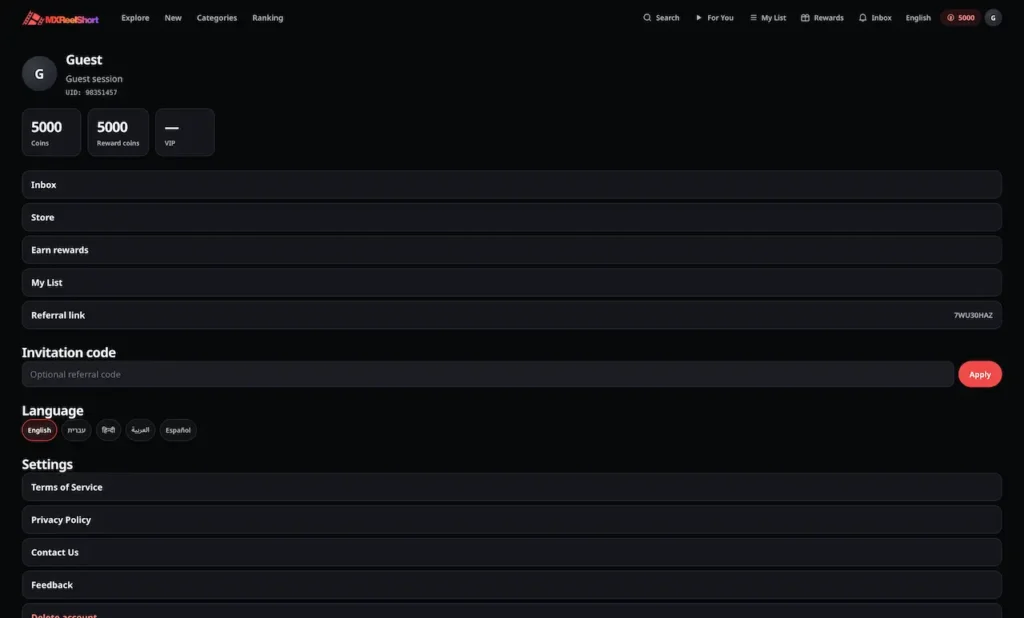
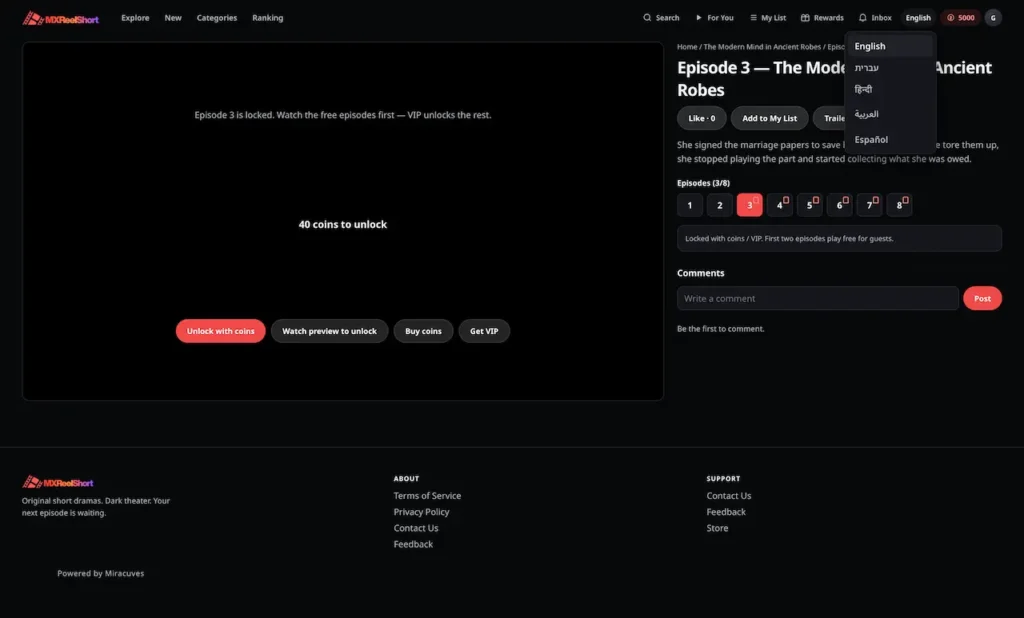
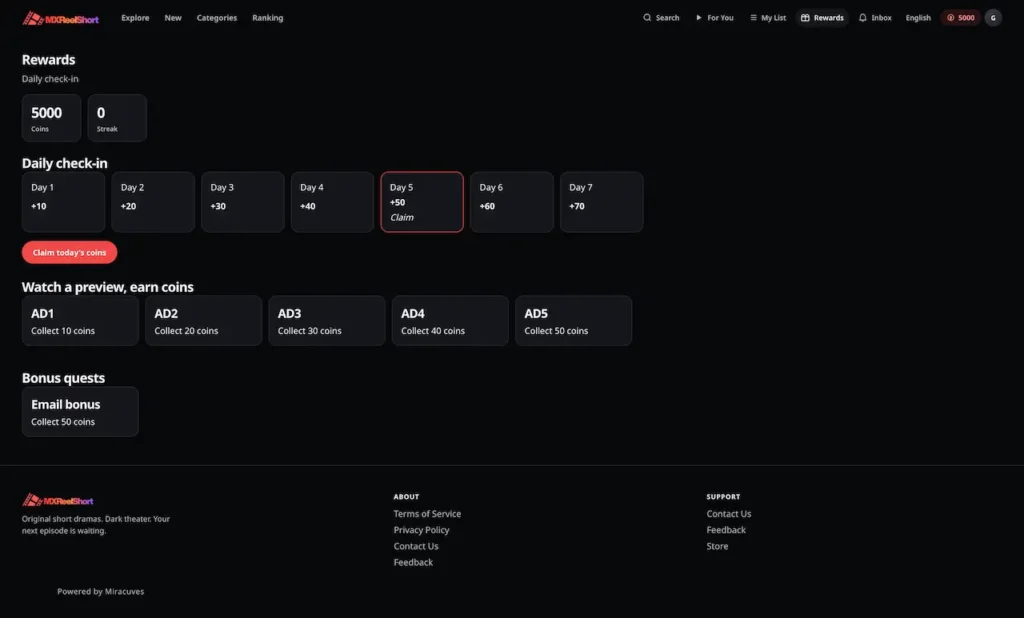
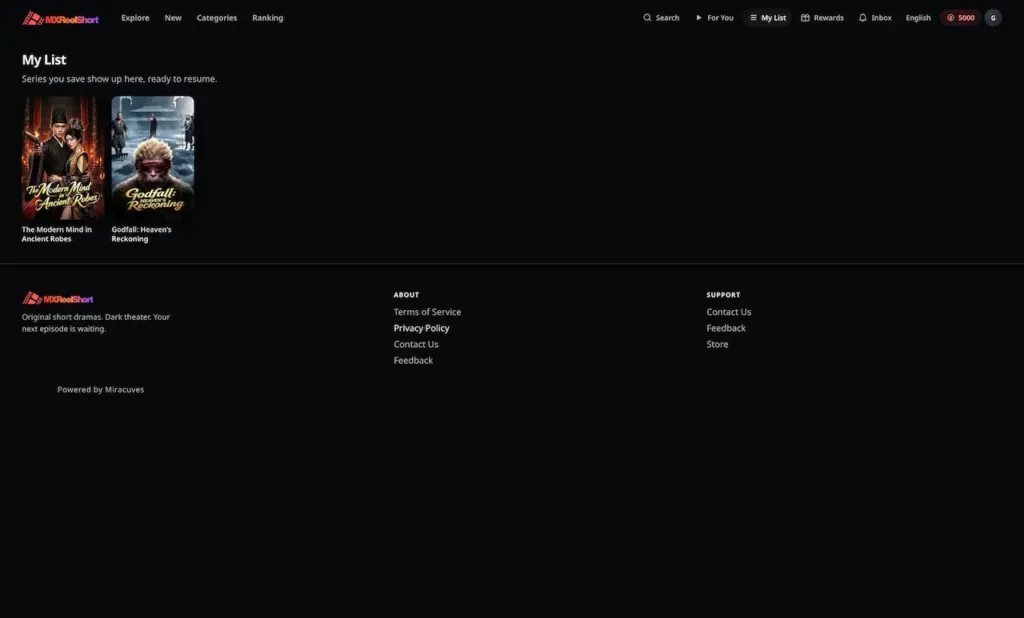
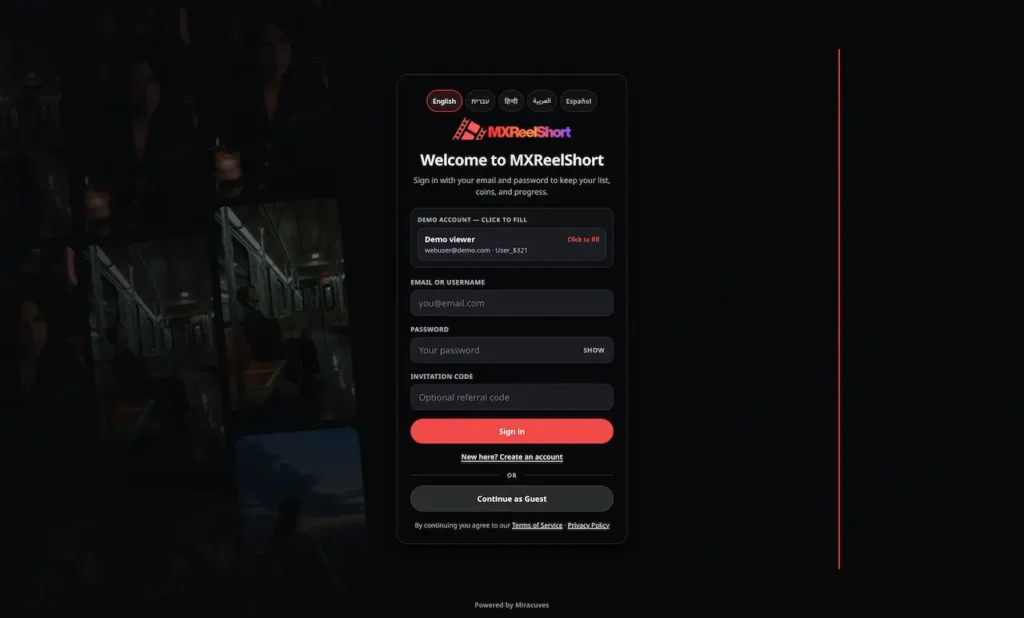
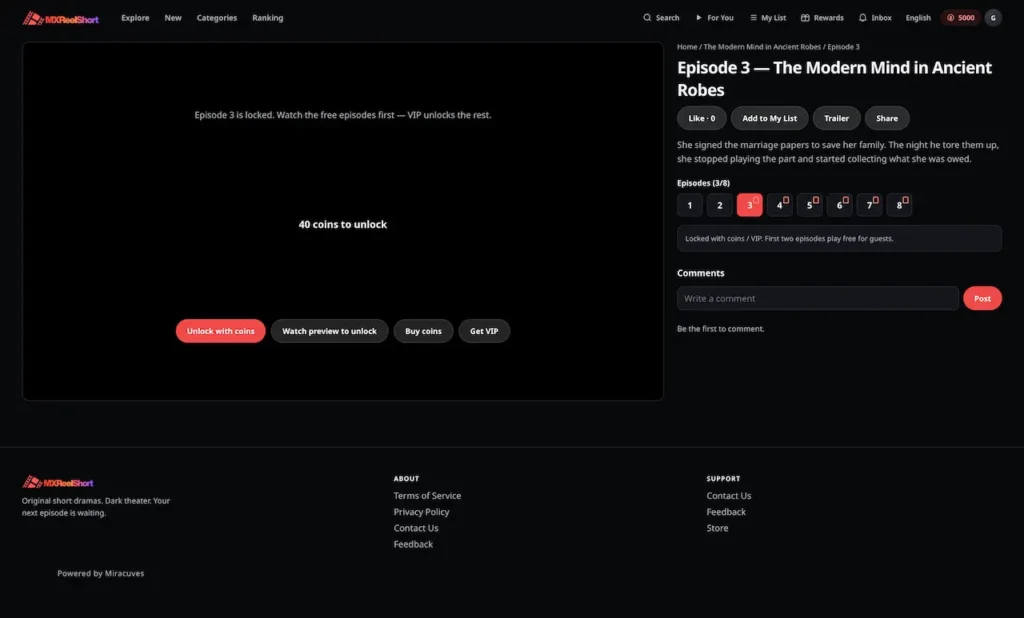
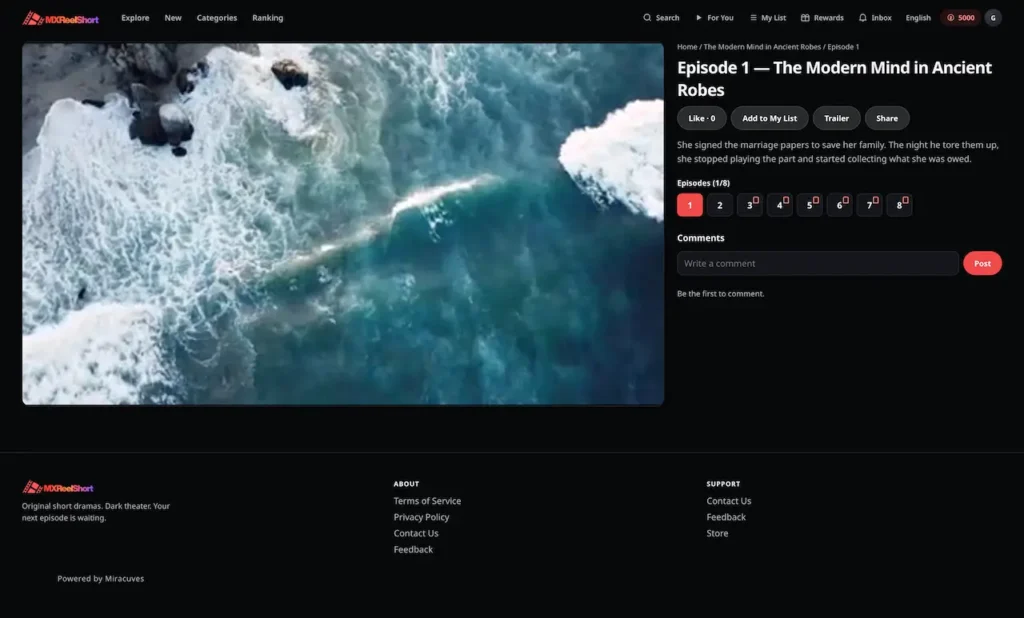
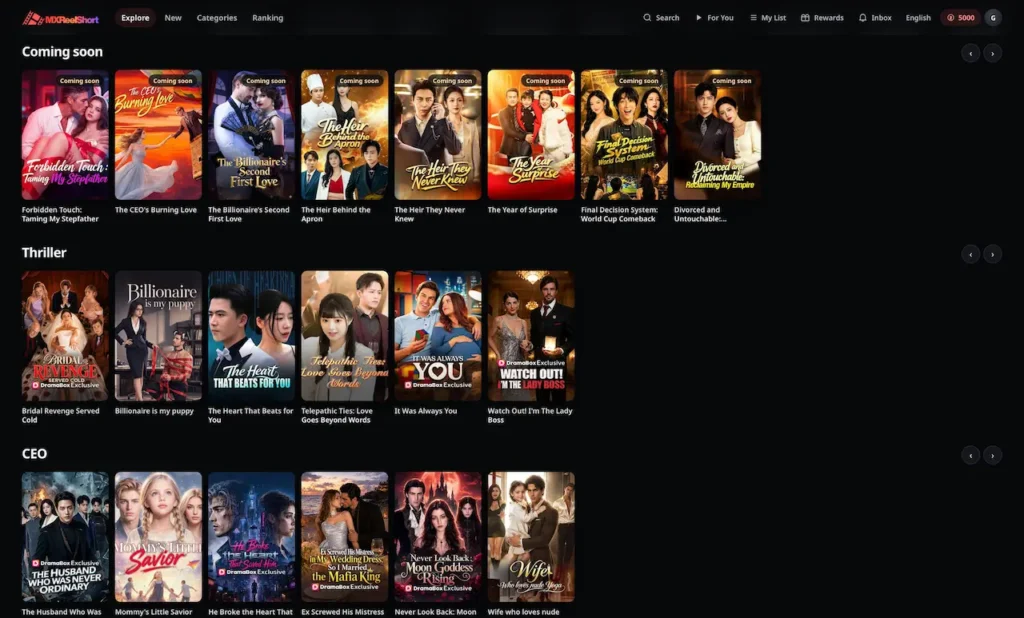
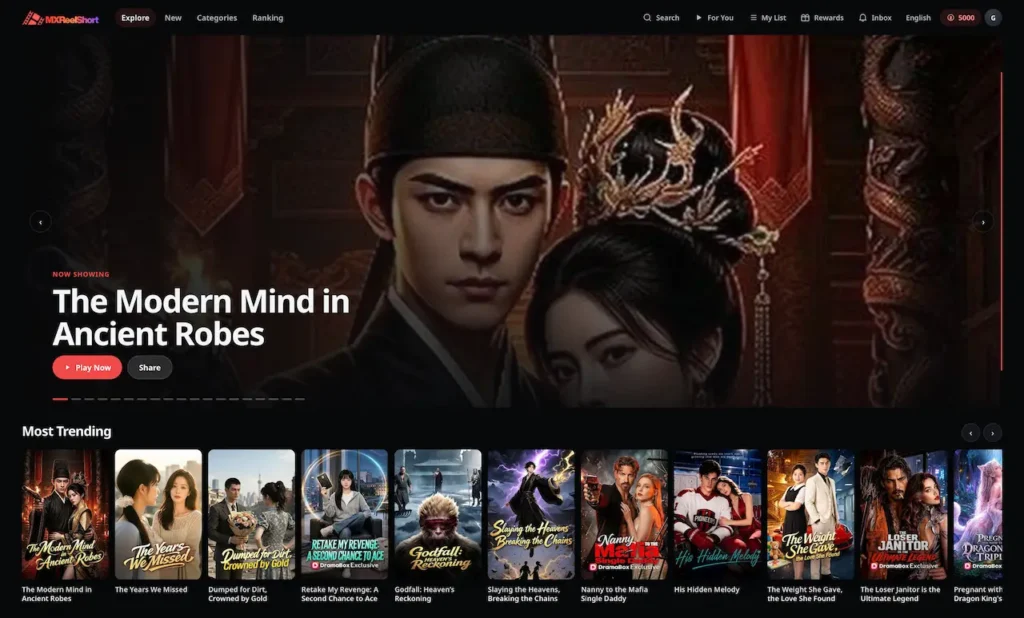
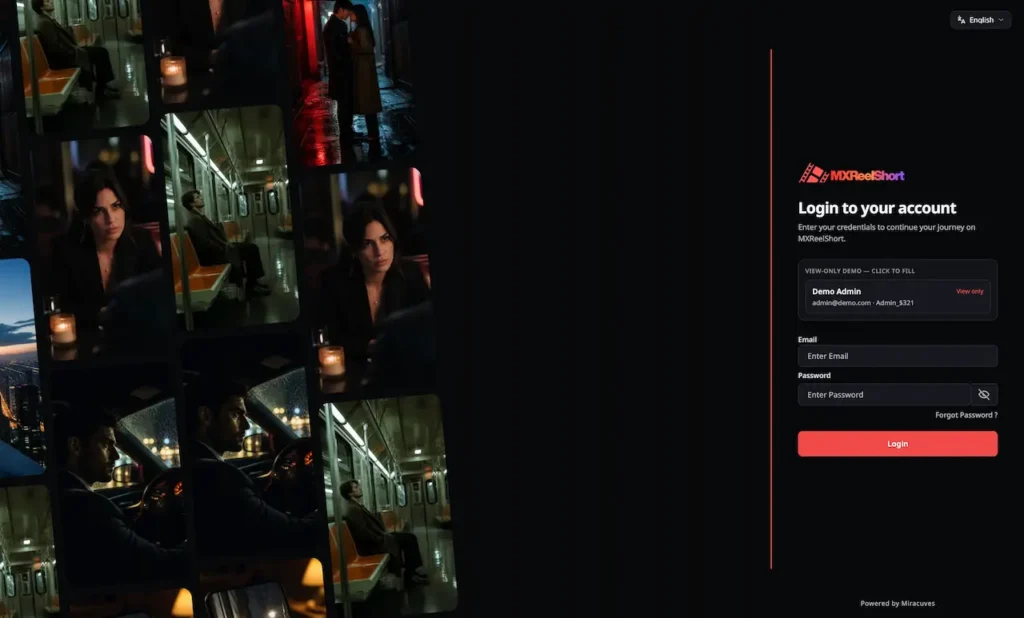
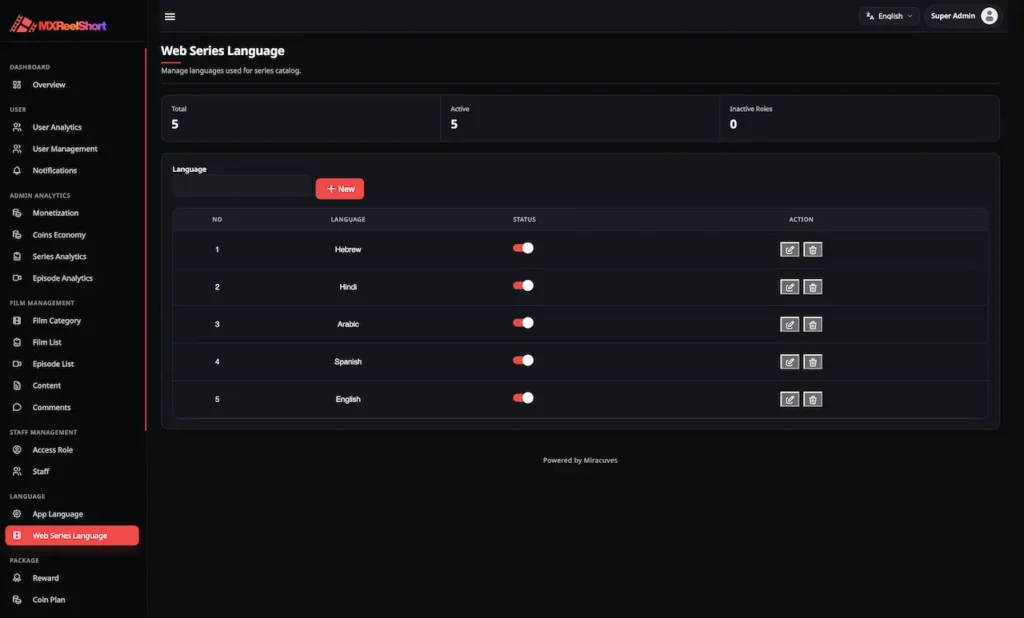
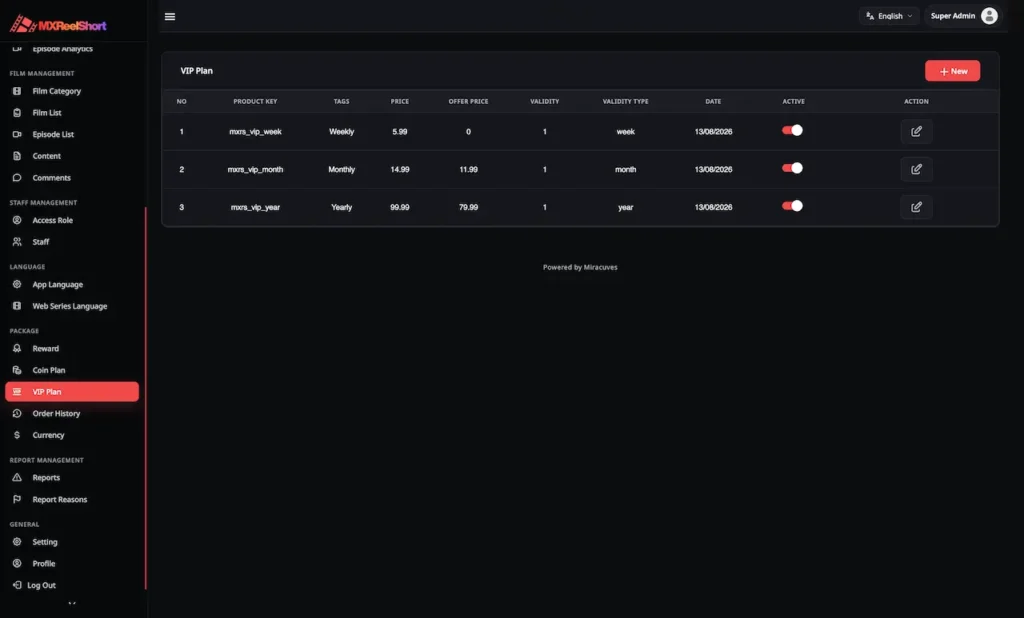
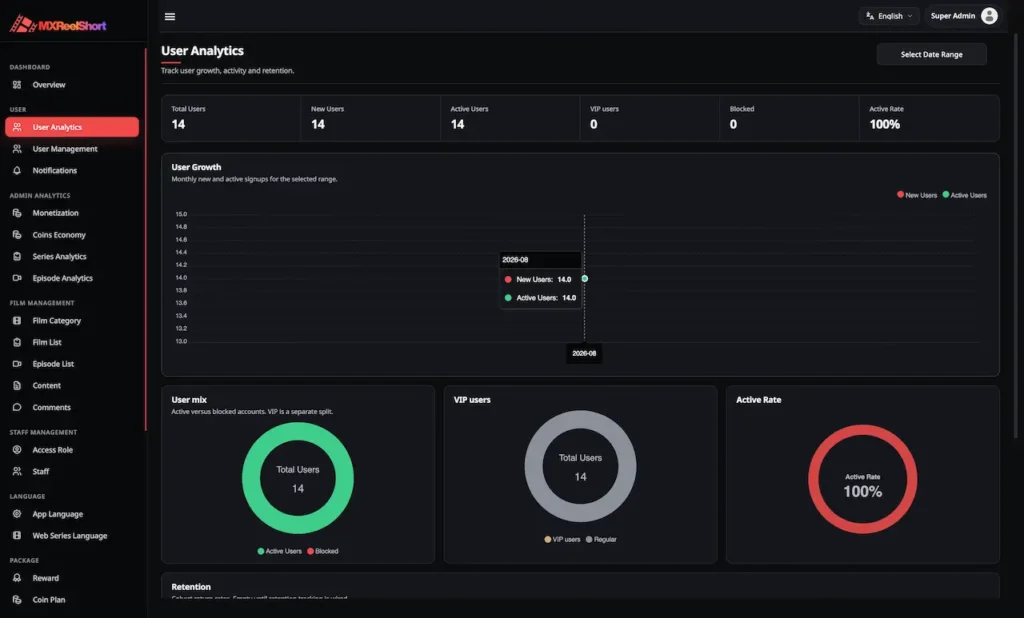
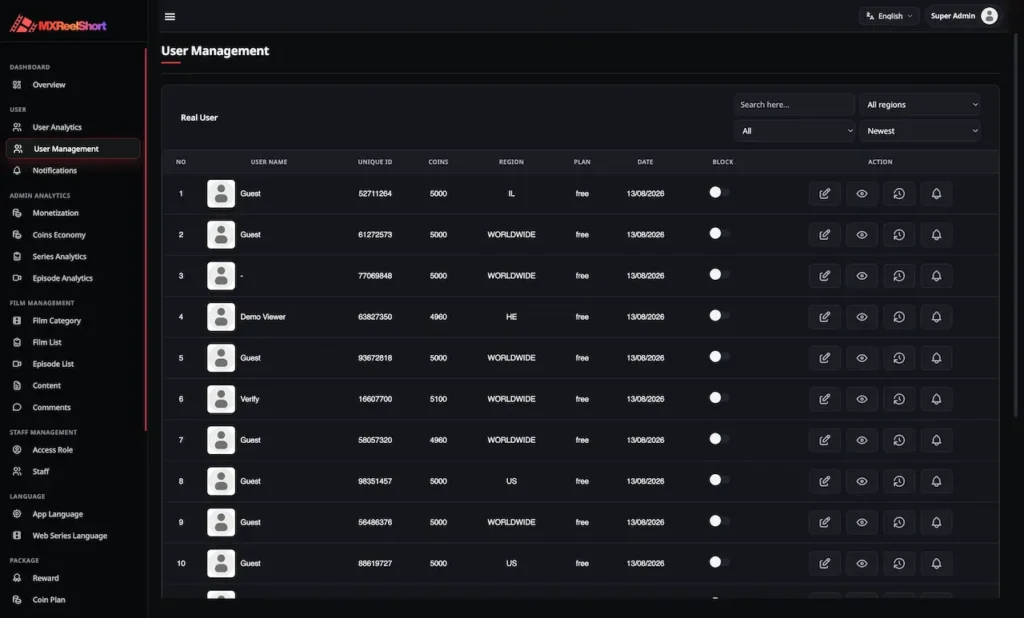
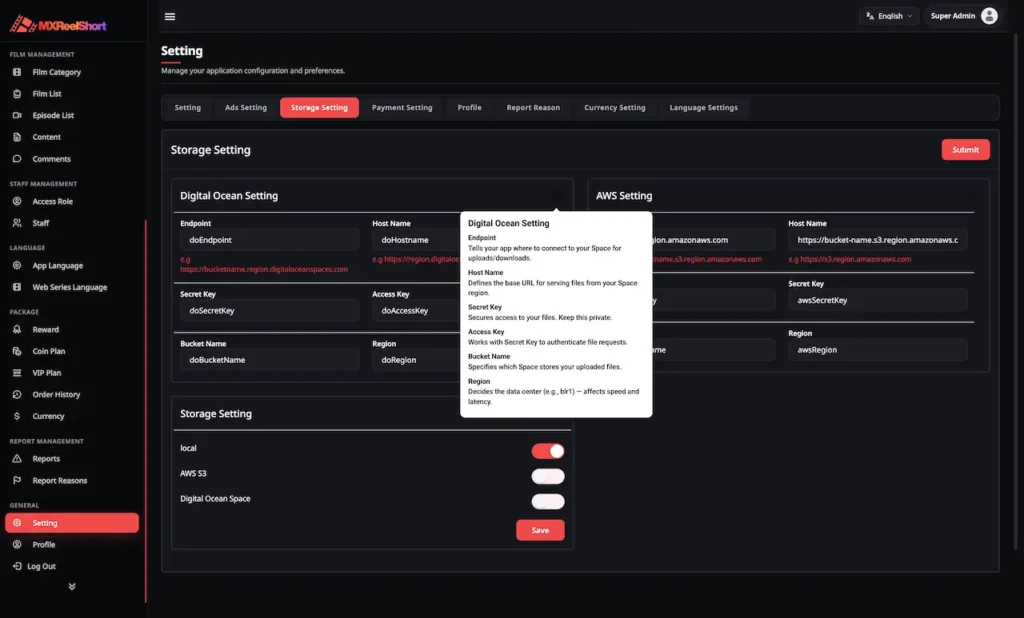
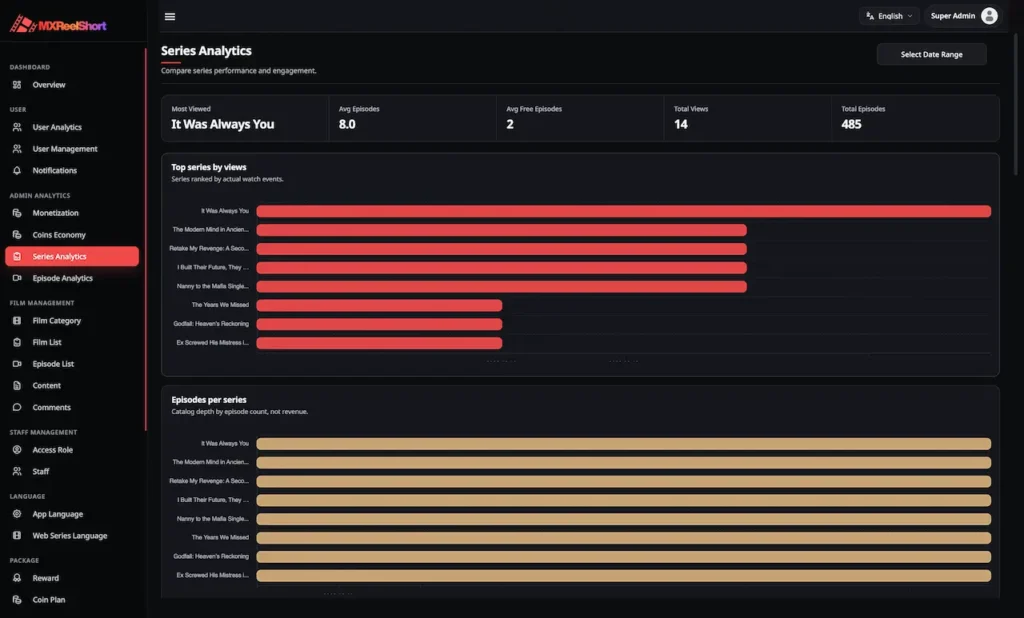
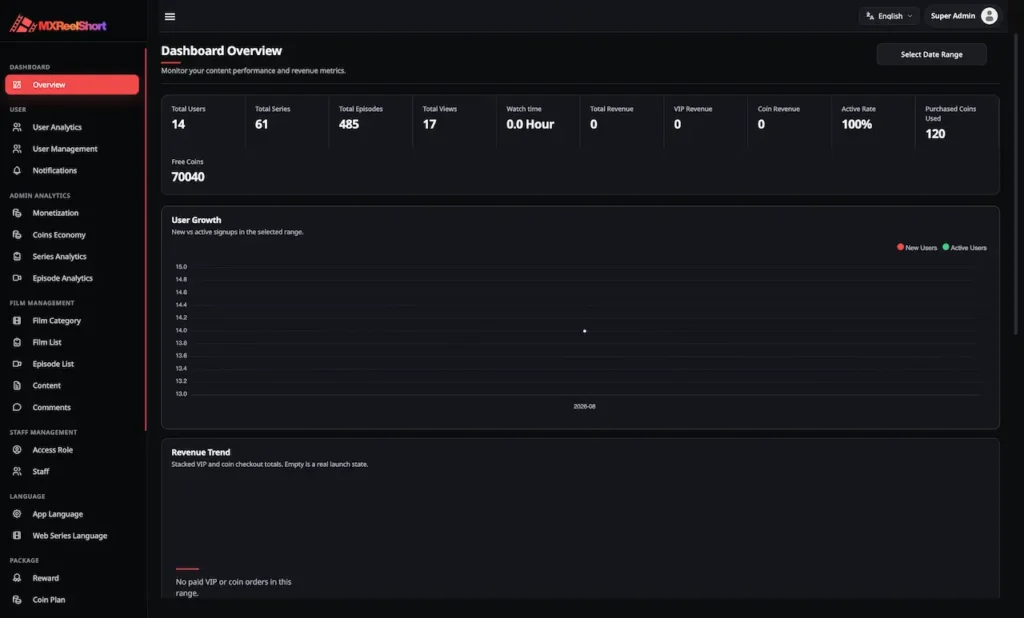
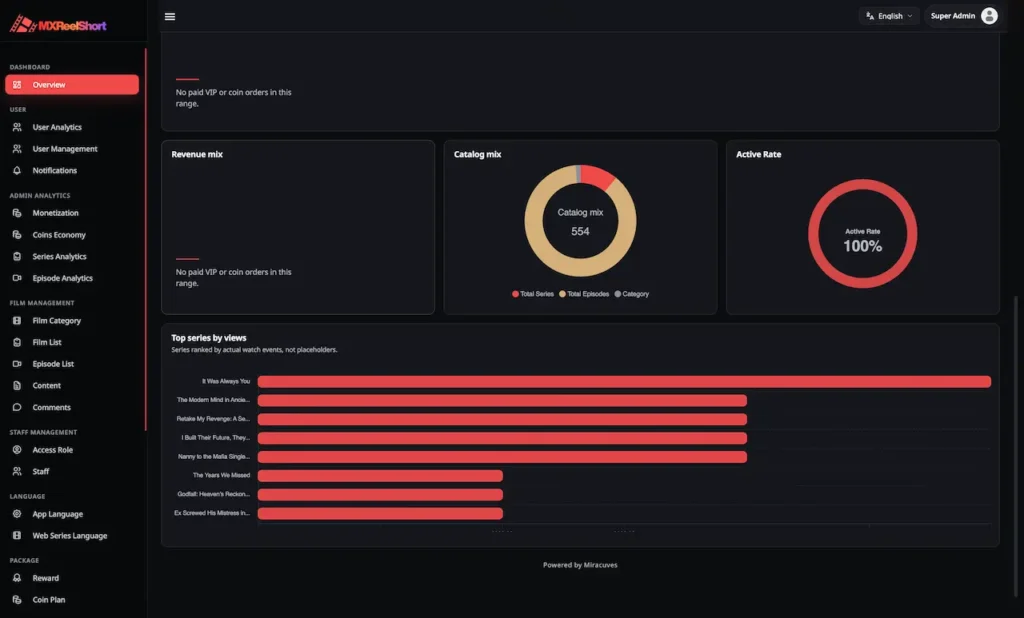
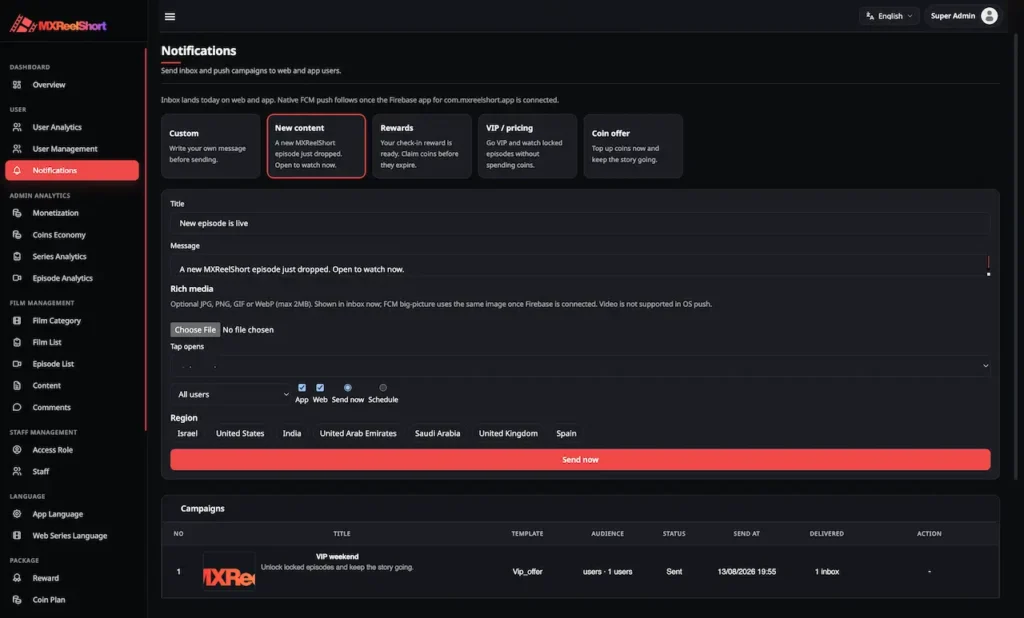
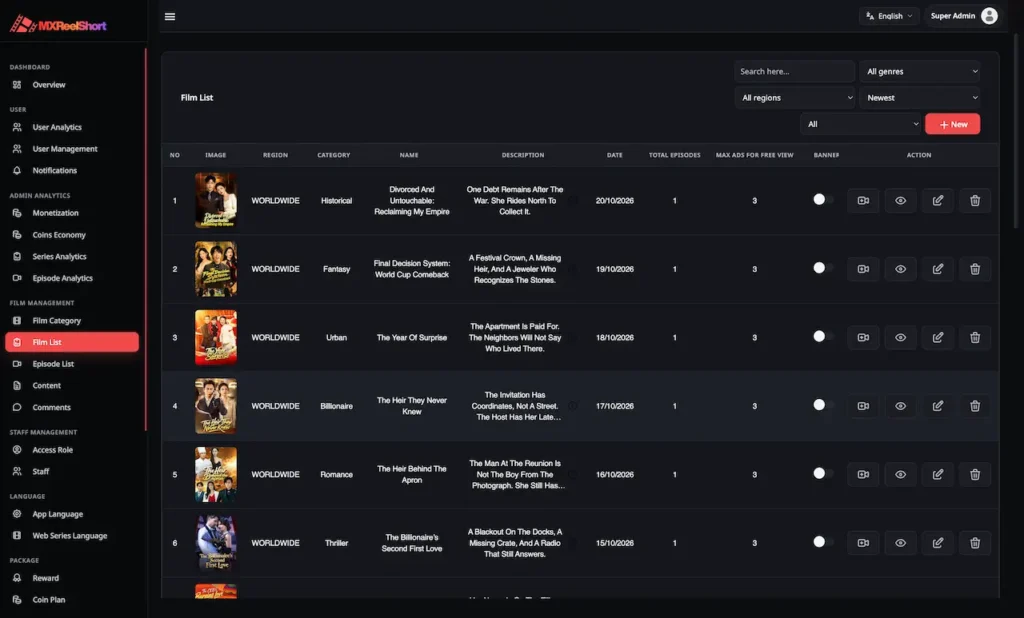
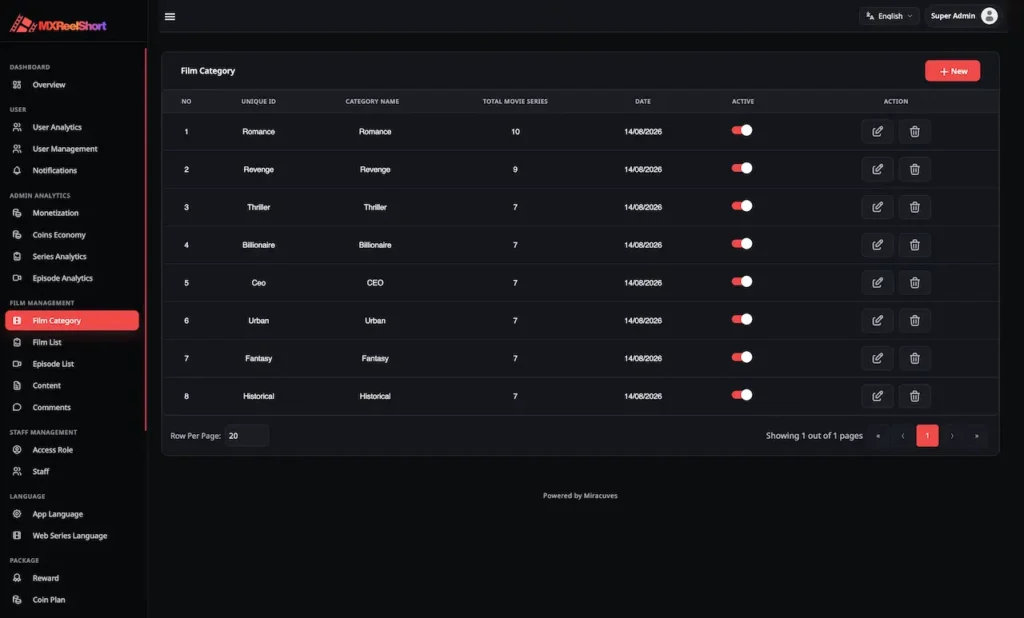
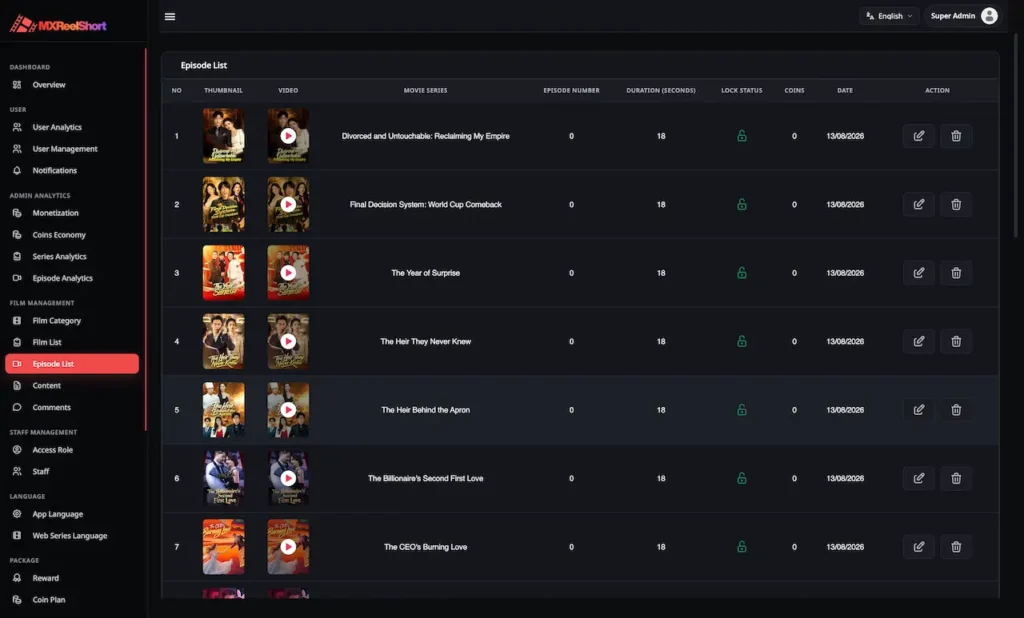
Trace one market end to end, from a viewer landing in Arabic with the layout mirrored, through a checkout quoted in that market’s default currency, to an operator changing the interface copy for that locale without waiting on a release.
Client Voices
Feedback from operators who launched short-drama platforms with Miracuves. Client identities withheld under NDA.
Proof in Production
How an operator launched a regional short-drama platform on this build. DramaBox Clone and ReelShort Clone ship from the same Miracuves short-drama codebase, so this is one deployment of that platform rather than a second, separate client. Client identity withheld under NDA.
Confidential Deployment
Short-Drama OTT Platform
A regional short-drama OTT launched on the Miracuves short-drama platform that this product ships from, with five locales, right-to-left layout, coin unlock and VIP windows live from day one.
"Coin unlock changed the economics. Viewers who would never buy a subscription still pay for the next episode."
The Basics
A DramaBox Clone is a ready-made short-drama platform built to run in more than one language market at once: one catalog of categories, titles and numbered episodes, a vertical player, and interface copy the operator owns rather than inherits.
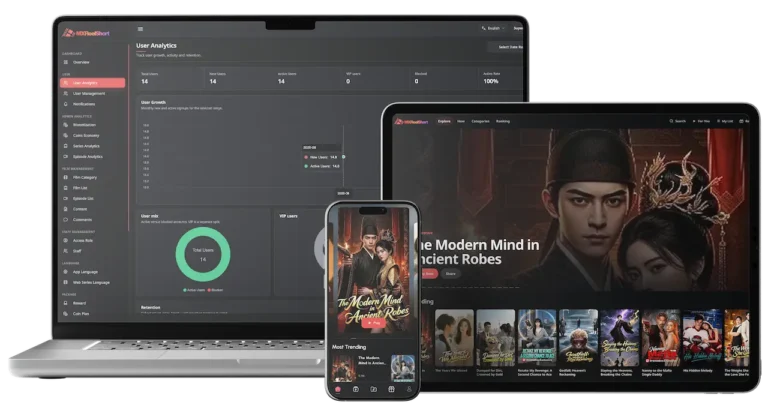
Client wording is an editable language JSON in the console, not a string table compiled into a build. A market that phrases a paywall differently is a text edit, not a release.
Hebrew and Arabic layout runs across the web app, the Flutter build and the console. Retrofitting RTL into a player after launch is what disqualifies most alternatives from these markets entirely.
Web ad unlock is a simulated preview, passwords use Cryptr rather than bcrypt, and cash-out is data architecture only. All stated here rather than discovered later.
Built for Web, Android & API
Localization is where most short-drama launches quietly fail. Translating a menu is easy. Laying out a player right-to-left, letting an operator rewrite the wording of a paywall for a market that reads it differently, targeting which titles appear in which region, and settling in a currency the buyer recognizes are four separate problems, and all four are solved here rather than left as an integration.
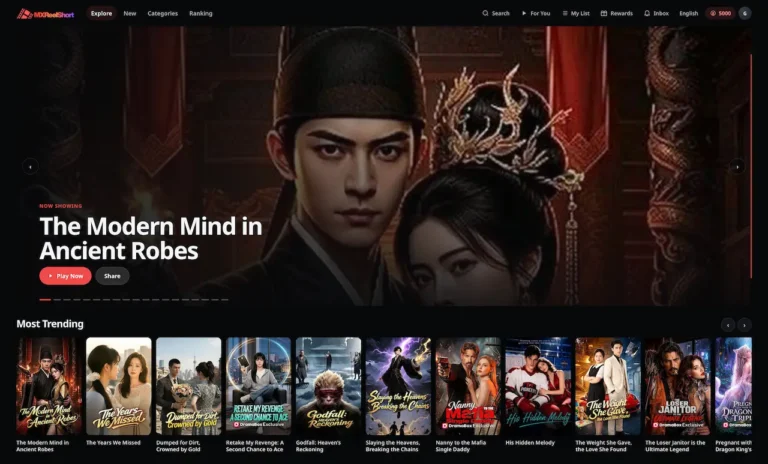
Concretely: five locales (English, Hebrew, Hindi, Arabic and Spanish) with right-to-left layout for Hebrew and Arabic, an app language JSON the operator edits from the console, region chips on the catalog, and a currency catalog whose default drives checkout. Underneath sit 45 Mongoose models on MongoDB, around 250 registered API handlers and a 33 module permission system.
Everything Included
Everything below is built and demonstrable in the live demo. Where something needs an account of yours, or ships as a preview rather than a live integration, it is marked against the feature instead of being glossed over.
English, Hebrew, Hindi, Arabic and Spanish, with the two right to left languages mirroring layout across the web app, the store build and the operator console rather than one of the three.
The app language editor puts client wording in the console as data. Changing how a market reads is an edit, not a release, which is what makes testing copy per territory practical.
The currency catalog carries operator-set rates and a default per market, so a dirham price and a riyal price are both deliberate rather than whatever a feed said this morning.
Territory targeting resolved inside the same clause that builds a rail, so a title outside its licensed market never reaches a shelf there in the first place.
Categories, titles typed as movie or web series, and numbered episodes with episode 0 held as the trailer, all published from the console.
Banner carousel, trending, new releases, coming soon and category rails, with unreleased titles deliberately excluded from every other shelf.
Sequential playback with a subtitle track that is separate from the interface language, plus likes, capped comments, reports and immersive fullscreen on the store build.
A free window set globally, coin pricing carried per episode, and rewarded ad unlock under a per-title daily cap, with auto-unlock covering the rest of a title.
Earned and purchased balances held apart with spend drawing earned first, promotional coins expiring on a set window, and seven typed codes behind every movement.
Coin SKUs with bonus coins and an offer price, VIP priced by validity window, and a currency catalog whose default decides what checkout displays.
A seven day check-in with a streak, rewarded tasks under a daily ceiling, social and email bonuses, a login bonus and a referral that credits the referrer.
33 permission modules across list, create, edit and delete, staff bound to one role, and a demo operator whose writes the server refuses rather than the interface hiding.
Note for buyers: The software is complete as it stands, and every deployment is configured for the operator. Gateways, AdMob, Firebase push, mail and object storage across eight supported providers are connected to accounts you own during delivery. Tell us which territories you are opening and we will map locales, currencies, licence windows and plan pricing to them.
How Operators Earn
What a viewer will pay, and how they expect to pay it, changes market by market. Every lever below is configured per deployment, so the same catalog can be priced one way in Madrid and another in Tel Aviv without either becoming a separate product.
Coin SKUs carry bonus coins and an offer price, and the currency catalog decides what a buyer actually sees at checkout. The same pack can be worth different money in different territories.
PayPlus hosted checkout ships alongside Stripe, Razorpay, Flutterwave and Play switches. A market that will not convert on a card rail can be settled on the one it trusts, and no card data reaches MongoDB.
Plans priced by validity and validity type, writing an entitlement window on the user record that opens locked episodes for as long as it runs.
A viewer with no money still has a route: a rewarded unit under a per-title daily cap. Note that web ad unlock is a simulated timed preview; AdMob on Flutter is the live path and needs your account.
Coin price sits on the episode, so a finale can cost more than an opener, and the free window can be widened for a market that needs more of a run before it will pay.
The seven day ladder, social bonuses and referral credits are settled in coins rather than cash, so return visits are bought with something the operator prints.
Coins are the unit that travels. A coin price is set per episode and read in whatever currency the market defaults to, which means repricing a territory never means re-cutting the catalog.
Run It Without a Dev Team
The console runs on its own subdomain with a one hour session and 33 permission modules across four actions. For a multi-market operator it is also where the market itself is defined: languages, currencies, territories and the words each audience reads.
Flags for each of the five locales, the app language editor that owns client wording, and a series language catalog kept separate from the interface layer.
The currency catalog with operator-set rates and a per-market default, alongside region chips, delivery country codes and zip allowlists.
Genre buckets and titles carrying poster, banner, type, trending, coming soon, auto-animate and active switches, with territory chips per title.
Episodes with image, video, duration, coin price and lock, drag and drop ordering that renumbers and relocks, and a subtitle upload dialogue.
Date bounded counts with user and revenue charts and a paid revenue trend, drawn from live operational data rather than a nightly warehouse job.
Viewers paginated with search and a country filter, which on a multi-market deployment is how you actually see one territory at a time, plus wallets, blocking and balance adjustment.
Paid revenue monitoring, revenue split by series, the episodes earning most, and coin economy figures tied to the seven ledger codes.
Comments listed with a hide action, and a moderation queue built on reasons you write yourself, closing with a solved state that notifies the reporter.
Coin SKUs carrying coins, bonus coins, price, offer price and a store product key, VIP defined by validity, and the order history behind both.
Roles that name their module and action grants, staff attached to one role each, and a sidebar that omits whatever a role has no claim to.
Need deeper governance? Role grants are applied in the console shell today, and extending them to every API route is a scoped customization. The documentation also names a persistent audit collection, a health probe, request throttling and an origin allow-list as work it has not done. Tell us which of those your review process asks for.
Transparent Pricing
A launch-ready white-label DramaBox Clone is $3,999 as a one-time purchase, deployed in 6 working days. That figure is fixed rather than a starting point. Quoted separately is anything beyond the base: additional locales, a live ad network, cash-out, CDN or DRM, processor-side payment verification, and store publishing scope.
Not sure which option
is right for you?
Talk to us - we'll understand your goals, timeline, and budget, and point you to exactly what you need. No upselling, just honest advice.
The Full Package
One deployment, every market it needs to serve, and the code underneath it transferred outright. No runtime licence, no seat count, and no dependency on our release schedule afterwards.
Viewer application, operator console, Express API and Flutter build, all yours to change, rebrand and redeploy with no licence conditions attached.
English, Hebrew, Hindi, Arabic and Spanish, with Hebrew and Arabic mirroring the layout on all three surfaces rather than on one of them.
An app language editor in the console means the words a market reads are data you edit, not strings frozen into a build you have to ship again.
A currency catalog with a default per market and operator-set rates, alongside region chips that keep a title inside the territories it is licensed for.
Identity, catalog, engagement, messaging, commerce and configuration collections on MongoDB, shipped with a seed script and indexed where reads concentrate.
A single binary carrying all five locales, five tabs of episode-wise reels, coin and ad unlock, wallet histories, rewards and native screenshot restriction.
Overview and analytics, catalog and episode modules, viewers and wallets, plans and orders, reports, staff roles, campaigns and every settings tab.
Entity relationship document, schema reference, the complete API collection, developer and security handbooks, VAPT posture, PRD and feature catalogue.
Want to see it running first? Use the viewer or operator login above, or book a walkthrough and we will switch the interface into Arabic, watch the layout mirror, requote a coin pack in a second currency and region-target a title, all against the markets you actually intend to open in.
Four focused guides - features, cost, how to choose a builder, and how the business model makes money - each going deeper than this overview can.
Every feature by role across 45 Mongoose models and 33 permission modules, five locales with right-to-left support, and what the base package leaves out.
See the full breakdown →Our fixed $3,999 price against agency and custom-build ranges - plus the 6-day path to live and why the number is fixed rather than "starting at".
See exact pricing →Agency vs. freelancer vs. Miracuves compared - plus the territorial-rights and money-safety checks to run before you hire anyone.
Compare options →Six revenue lines on one ledger, three ways to unlock an episode, and why one catalog across many markets changes the maths.
See the playbook →Know Your Buyer
These operators have one thing in common: the audience they are chasing does not all read the same language, and in at least one of their markets it does not read left to right.
If you are selling drama into more than one territory, the question is never whether the player works. It is whether the paywall reads naturally, whether the catalog shows the right titles, and whether the checkout is on a rail that market actually uses.
Where It Fits
Six shapes, one deployment model. What changes between them is which locales are on, which titles carry which region chips, and which rail takes the money.
Right-to-Left Market Launch
Open a market that reads right to left, with Hebrew or Arabic layout carried through the player, the store build and the console. This is the case most alternatives cannot serve at all, because RTL was never in the original build and cannot be added convincingly afterwards.
Several Territories, One Catalog
Run several territories from one catalog and one database. Region chips decide what each market sees, the currency catalog decides what they are quoted, and the gateway switch decides how they pay. Adding the third territory costs what the second did.
Diaspora and Language Communities
Serve an audience defined by language rather than borders, where the catalog is the draw but the interface copy is what makes it feel native. Because that copy is an editable JSON, the wording can be tuned by someone who speaks the language rather than someone who can rebuild the app.
Studios with Owned Catalog
Publish an owned catalog of vertical series with coin pricing per episode, a free window movable from a settings screen, and analytics showing which titles convert and where viewers stop.
Licensors with Region Rights
Distribute licensed drama with per-title region targeting that respects the territories you actually hold rights in, plus order history and series analytics you can put in front of a rights holder without exporting collections by hand.
White-Label Drama Networks
Operate several branded services, each with its own database, domain pair and store binary. There is no tenant discriminator anywhere in the schema, which is what keeps catalog and wallet isolation absolute between brands.
One platform, many configurations. Every case above runs on the same 33 model schema and the same three clients. What differs is locales, region chips, coin prices, currency and gateway, none of which is a fork you then maintain separately.
Market Timing
The English-language short-drama market is crowded and expensively fought over. The markets that are not, Hebrew, Arabic, Hindi and Spanish audiences, are underserved for a boring structural reason: most platforms were built left to right and in one language, and retrofitting that is harder than it looks.
Hebrew and Arabic layout runs through the player, the store build and the console here. Competing on a crowded English shelf is a harder business than being one of the few that reads correctly in Riyadh.
Region chips on the catalog, a currency default per market and a gateway switch per rail mean a second territory is configuration rather than a second product to maintain.
Interface wording lives in an editable JSON. Testing how a paywall should be phrased for a market is an afternoon, not a release cycle and a store review.
A coin asks about the next four minutes; a subscription asks about next month. That distinction converts viewers that subscription streaming never reaches, and it converts them at midnight.
Series and episode analytics show which titles convert and exactly where viewers stop paying, which is the feedback loop that decides what to license next quarter.
From scratch, this is most of a year across catalog, wallet, unlock, store apps and console, before a single locale is added. A white-label deployment is live on your server in under six days.
The second reason to move now is that the machinery is slow to build and identical everywhere. A wallet with two balance types, an unlock decision taking four inputs, a rewards ladder and a console are each mandatory, unglamorous, and roughly a year of work before the first territory opens.
Under the Hood
Serving several markets from one deployment puts pressure in specific places: the locale layer has to reach every surface, prices have to be expressible per market, and territory rules have to hold at read time. Here is what carries that.
React · Next.js · Flutter
MongoDB · 45 Core Models
Node.js · Express · Mongoose
MongoDB · Indexed Reads
Flutter · GetX · iOS and Android
nginx · PM2 · node-cron
Note for Tech Buyers: this is a plain request and response JSON API on a single Express service, so there is no WebSocket module and no queue to operate. Adaptive bitrate streaming and a DRM licence path are available as paid Plus modules, each mounting its own routes and switching off cleanly without touching data. Gateways, AdMob, Firebase, mail, object storage and any encoding vendor run on accounts you own and are connected during delivery.
End to End
The sequence below is identical in every market. What changes along it is the language it renders in, the direction it lays out, the titles that qualify and the currency at the end. Here is the path from a first rail to a paid unlock and a returning viewer.
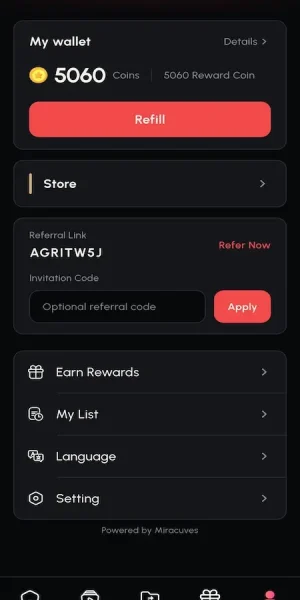
Locale is resolved before the first rail renders, from the settings default or the viewer's choice, and layout direction follows it. No account is required to get this far.
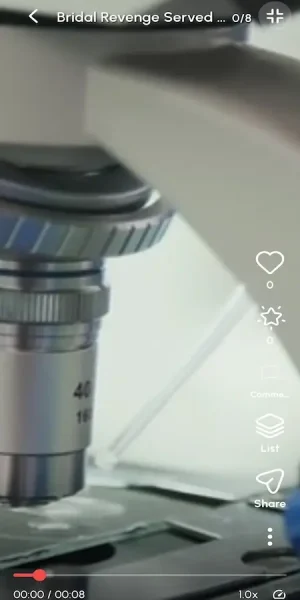
Rails are assembled from the titles this market is allowed to see, so the catalog looks curated rather than filtered.

Opening episodes play without friction. How many is one operator setting, and it is the first thing worth tuning differently per market.
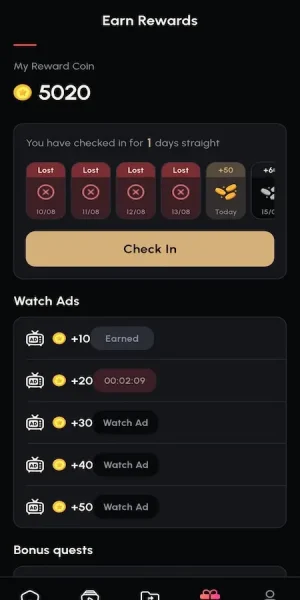
At the edge of the free run the episode locks, and the player shows every route that opens it rather than one wall.
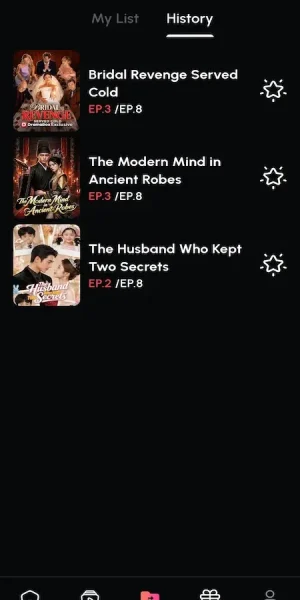
Whichever route is taken writes the same unlock row, so entitlement is identical however it was earned. What differs by market is the money.
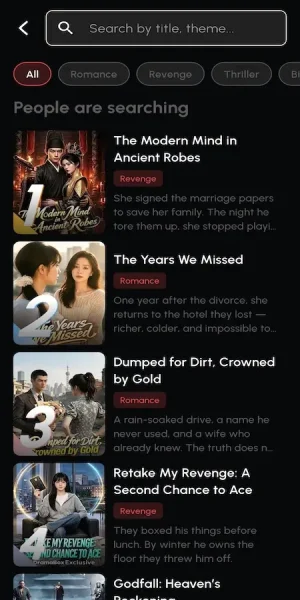
Return visits are bought with coins rather than cash, using inventory the operator prints rather than margin it spends.
Visual Flow Diagram
Discover → Watch Free → Hit Lock → Unlock → Buy Coins → Return
How It's Built
A locale provider wraps the web app, the Flutter build and the console, so direction and copy are decided once per surface rather than per screen. That is why right-to-left holds together instead of breaking on the third page.
Interface wording lives in an app language JSON, and the series language catalog is kept apart from it. Editing what a market reads never touches what the catalog contains, and neither requires a deploy.
Web, Flutter and console read the same catalog, wallet and settings contracts, which is what stops a store build and a web demo from disagreeing about what a viewer owns.
Access is decided at read time from four facts: catalog lock, free window, VIP entitlement and the per-user row. There is no second entitlement service to fall out of step.
Reward and purchased coins are separate fields under one total, with spend always drawing reward first, so promotional inventory expires without ever touching money a viewer actually paid.
One database, one settings document, one domain pair and one store binary per operator. No tenant discriminator exists, which is what makes isolation between brands absolute rather than enforced by a query filter.
Performance Targets
The topology is intentionally ordinary: a static viewer build, one Express process under a supervisor, a Next.js console, and MongoDB indexed where a multi-market catalog reads hardest.
Serving several markets from one database means every rail read has to answer a second question: is this title licensed here. That has to cost nothing.
What the read path relies on:
Language cannot be a property of one client, or the console and the store build drift away from the web app the first time copy changes.
What the locale model holds:
A currency catalog with operator-set rates means pricing per market is a decision you record rather than an exchange rate you inherit mid-campaign.
What the currency model gives you:
The application process should never be serving video, which is why storage is a switch instead of an assumption.
What the storage model offers:
Browsing never touches the API process, because the viewer application is a static bundle the proxy serves directly.
Region matching sits alongside visibility and release date in the same indexed query, so licensing rules cost nothing at read time.
Five packs shared by web, console and store build, so a copy change reaches every surface at once rather than three times.
Local disk, AWS S3 or DigitalOcean Spaces, one selected at a time, with a CDN in front of the bucket left as your decision.
Files are read at their first bytes, and executables, archives, PDFs and markup are discarded before a controller runs.
Throttling, an origin allow-list, a health probe and a log drain are each documented as scoped additions rather than quietly implied.
A sixth locale, a new territory, another gateway: none of those should be a rewrite, and the stack is ordinary precisely so they are not.
A new gateway is a switch, keys and a route. A new locale is a flag and a translation pack. Node.js, Express, MongoDB, React and Flutter are all easy to hire for.
Note for founders and operators: Launch in one market and grow into the same deployment. Volume changes how many processes sit behind the proxy, whether a CDN fronts the bucket, and how much read capacity the database has. It does not change the architecture. Throttling, an origin allow-list and a health probe are additions with names, not rewrites.
Built to Be Audited
Selling into several jurisdictions means being asked the same security questions in several languages, usually by a procurement team that will read the answer carefully. The VAPT reference exists for exactly that conversation, mapped to the OWASP Top 10, and it is unusual in one respect: only shipped controls appear in its present column, and everything else sits in a labelled hardening backlog.
Password Storage, Stated Plainly
Rate Limiting Is Not Bundled
CORS Defaults Open
Client Settings Payload
Staff Permissions Scope
Payment Proof Beyond Hosted
PayPlus hosted pages capture the card on the processor side, so no card number is written to MongoDB on that path. It is the single strongest control in the stack, and it is the one a reviewer asks about first.
Uploads are judged on their leading bytes, and only image, video and subtitle families are accepted. A renamed executable, archive, PDF or markup file is discarded before any controller sees it.
The demo operator browses the whole console and cannot write anything, refused by the server rather than concealed by the interface. That is what makes handing the console to a prospect or a partner safe.
A one hour console session, a shared client gate on consumer calls, viewer blocking, comment hiding, and a report queue carrying a resolved state that notifies the reporter.
Proxy rules returning not found for sensitive paths such as .env and .git, plus native screenshot restriction on the Flutter build.
Every admin API call from a staff account is now checked against that role rather than the menu alone, alongside an origin allow-list and a settings payload stripped of server secrets.
That distinction is worth more than a table of green ticks. The built controls are genuine: hosted checkout so no card number reaches the database, byte-level upload inspection that throws out a renamed executable, a demo operator the server refuses to let write, proxy rules covering sensitive paths, and screenshot restriction on the store build. The gaps are stated with the same directness, and we close them with you before launch.
Go Further
Five of the modules below are paid Plus add-ons, licensed on top of the platform. Each ships in its own folder across every codebase, so a client copy is delivered with exactly the modules that client bought, switched on per deployment, and turning one off never touches the data behind it. The rest are extensions we scope and build during delivery.
A bitrate ladder that adapts to the connection in front of it, which is what keeps a binge session going on a commuter network. Mux or Cloudflare Stream encoding runs on your own account, connected during delivery. Paid module.
A licence gate ahead of packaged streams, re-checking entitlement, VIP status and territory before it issues anything. Licensors that require Widevine or FairPlay get their vendor wired in during delivery. Paid module.
Polls that let the audience pick which title continues, with a daily free allowance, a larger VIP allowance and Vote Props beyond it. Turns a quiet content day into a reason to open the app. Paid module.
Pull licensed catalogue from partner APIs on a schedule; imported titles behave exactly like uploaded ones for unlocks, analytics and search. Sources, priority and field mapping are set during delivery. Paid module.
Per-country prices and currencies across coin, VIP and Premium plans, applied server-side at checkout so the charge matches the market. Edge country detection is configured during delivery. Paid module.
AdMob rewarded video on the store build under your own unit IDs, giving a coinless viewer a third way to open an episode. Placements, caps and payouts are tuned during delivery.
Withdrawal methods, thresholds and request records are already modelled. The creator-facing flow, the payout desk and your banking rails are built during delivery.
Campaigns and the in-app inbox run with nothing external attached. Reaching the lock screen needs your own Firebase project, connected during delivery.
The DramaBox Clone is one platform in a complete entertainment and video suite. If your roadmap extends beyond short drama, these connect naturally.

Short-video platform with an algorithmic feed, creator tools, live streaming and virtual gifting.
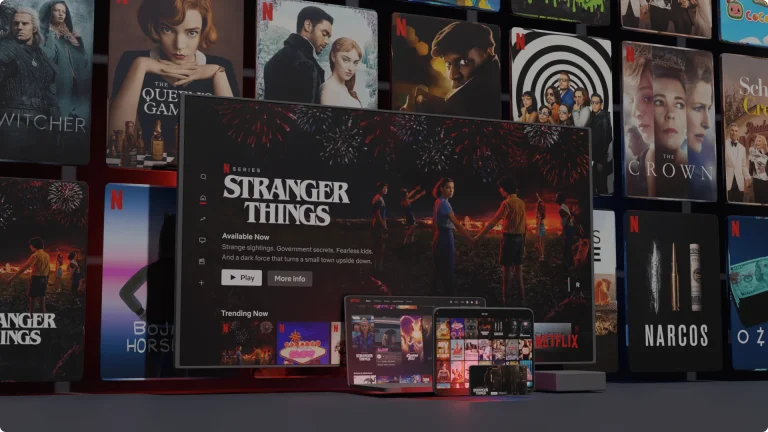
OTT streaming platform with subscription billing, multi-device sync and content licensing workflows.

Long-form video platform with channels, monetization, subscriptions and watch-time analytics.
The same short-drama platform positioned for a single-market launch, led by coin, ad and VIP economics on one episode.
The Commercial Case
The economics improve with each territory rather than each title, because the expensive part is already paid for. A second market reuses the catalog, the wallet, the console and the apps, and adds a translation pack, a currency default and a payment rail. The marginal cost of the fourth market is close to the marginal cost of the second.
A new territory costs a translation pack, a currency default and a gateway switch. The catalog, wallet, console and apps are already paid for, which is what makes the fourth market cheap.
Coin packs, VIP windows and rewarded ads reach three genuinely different buyers, so revenue never depends on converting everybody onto the same product.
Free window, coin price and which titles appear are all set per market, so a territory that needs a longer free run can have one without changing anything for the others.
The codebase and the schema are yours on standard MongoDB. No proprietary format to unwind, and no vendor whose terms can change once you have an audience.
Most operators open one language market with a modest catalog and a free window of three to five episodes, selling coin packs through a single hosted gateway. Coins are collectible from the first locked episode, usually within a day of the catalog going live. VIP arrives once repeat viewing is evident, and rewarded ads once the store build is published and an ad account exists. A second locale typically follows the first paying month, because by then you know which titles convert and translating the interface is cheaper than licensing more catalog.
Less from software than from position. Being the service that reads correctly in Arabic, prices in the local currency and settles on a rail the market trusts is a lead measured in quarters, because the incumbents cannot retrofit right-to-left cheaply and rarely think a mid-sized language market is worth the rebuild. Habit compounds on top: a viewer holding a coin balance, a My List and a check-in streak does not casually move. Owning the deployment means the catalog relationships and the payment rails stay yours rather than a platform’s.
Example Revenue Scenarios
That is the commercial case for owning the software rather than renting distribution. Pricing, the free window, the reward ladder and which market sees which title are the levers that move revenue here, and every one of them belongs to whoever controls the deployment.
First Market
Titles Live
One locale, coin packs carrying revenue.
A studio or licensor proving the model in a single language, tuning episode price and the free window weekly while VIP stays switched off until repeat viewing justifies it.
Two to Three Territories
Titles Live
Coins and VIP live, region chips doing real work.
The point where the catalog is shared but the merchandising is not: different free windows, different coin prices and different rails per market, all from one console.
Multi-Brand Network
Titles Live
VIP dominant, coins capturing impulse spend.
Several branded services on separate deployments, where the console and the analytics are what allow a small team to run far more catalog and far more markets than headcount would normally permit.
Why Miracuves
There are many ways to get a short-drama platform: generic scripts, freelancers, agencies, or owning the infrastructure.
Hebrew and Arabic layout runs through the consumer web app, the Flutter build and the operator console. Almost every alternative bolted it onto one surface, which is why their player looks right and their console does not.
Interface wording is an editable language JSON rather than a string table inside a build. Rewording a paywall for a market takes an afternoon instead of a release and a store review.
The wallet, the typed ledger and a four-input unlock decision are the actual product. A generic video script hands you a player and a subscription toggle, then leaves the economy as your problem.
Web, store app and console share the same contracts, so what a viewer owns is identical on every surface. Two backends behind a web demo and a real app is the usual and expensive failure.
Entity relationship, schema, the full API collection, a developer and security handbook and a VAPT posture: enough to survive a procurement review, not just a sales demo.
The documentation names its own gaps, including reversible password encryption, unbundled rate limiting, an unscoped settings payload and a simulated web ad preview. Nothing here surprises you after the invoice.
| Criteria | Miracuves DramaBox Clone | Generic Clone Script | Custom Dev Agency |
|---|---|---|---|
| Time to Launch | 6 days (Production) | Unknown / DIY | 6-9+ months |
| Source-Code Ownership | ✔ Full | Often limited / encrypted | Usually yes |
| Feature Depth (DramaBox-like) | High (catalog, coin unlock & VIP windows) | Basic (catalog & feed only) | Depends on budget |
| Security & Compliance | Strong (ISO mindset, GDPR-ready) | Minimal | Varies widely |
| Scalability & Performance | Cloud & CDN-optimized | Rarely considered | Depends on architecture |
| Monetization Options | Multiple (ads, gifts, subs) | Limited / needs custom work | Custom (more time & cost) |
| Admin & Analytics | Full-fledged dashboard | Very basic or missing | Custom build (extra cost) |
| Cost vs Speed vs Quality | Balanced | Cheap but risky | High cost, slow |
| Ongoing Support & Updates | Available with clear plans | Usually none | Depends on contract |
Most routes to a short-drama platform look adequate until the second territory. That is where the differences stop being cosmetic.
Industries
The DramaBox Clone fits operators whose audience does not all read the same language. MENA and RTL services get Hebrew and Arabic layout across all three clients rather than on the player alone. Multi-territory regional platforms run one catalog behind region chips, a currency default and a rail per market. Diaspora and language-community services lean hardest on interface copy the operator writes themselves. Studios with owned catalog use episode pricing and analytics that show where viewers stop paying. Licensors need per-territory targeting that respects the rights they actually hold. App publishers ship a Flutter build and a web companion against one API. White-label networks run several brands as separate deployments with no shared tenant table.
Miracuves’ DramaBox Clone is built as a multi-market short-drama platform: one catalog, several languages, priced and settled per territory, white-labelled entirely under your brand.
Changelog
| Version | Date | What's New |
|---|---|---|
| v2026.5 | Sep 2026 | Five paid Plus modules with runtime switches: streaming, DRM, voting, import, regional pricing. Staff permissions enforced on the admin API. |
| v2026.4 | Sep 2026 | Android 1.1.3 and an iOS TestFlight build: coupons, inbox, reminders, referral history, Browse tabs. Self-hosted fonts cut first paint to 1.6s. |
| v2026.3 | Sep 2026 | Gems, quests, Game Promos, Premium plan, Episode Hub, multi-track subtitles and audio, HD for VIP and interactive choice branching. |
| v2026.2 | Aug 2026 | Verified payment callbacks, server-confirmed card checkouts, CORS allow-list, scoped settings payload, magic-byte upload inspection. |
| v2026.1 | Aug 2026 | Initial release. Short-drama OTT with coin, ad and VIP unlock, rewards ladder, hosted checkout, five RTL locales and a 24 module console. |
Blog & Resources
Stay updated with the latest trends, guides and case studies on short-drama streaming, coin monetization and vertical video platforms.
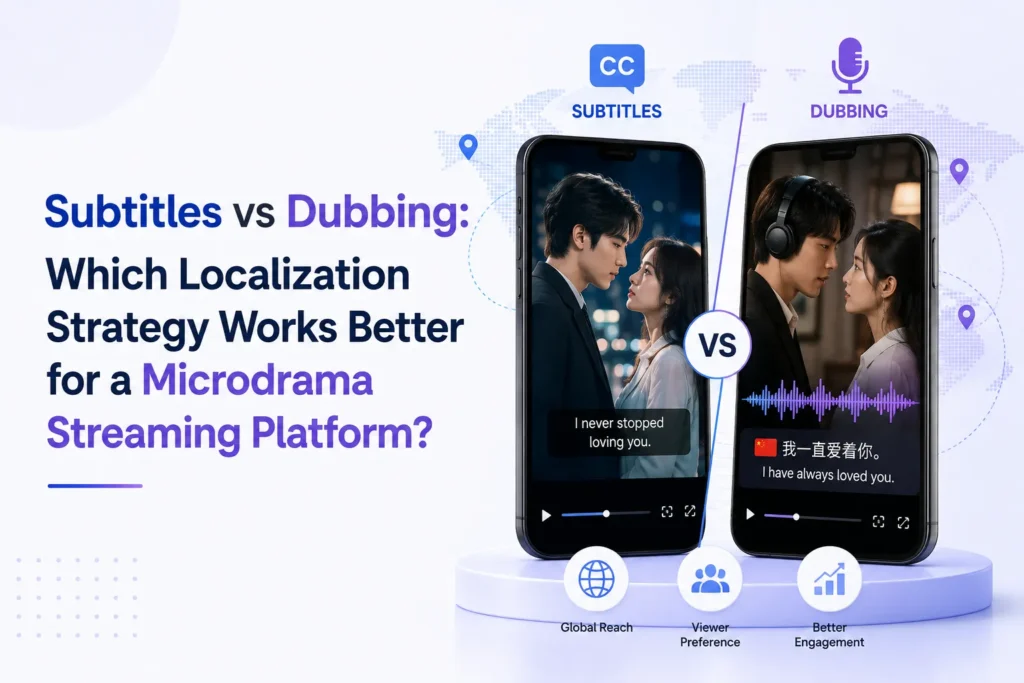
Subtitles vs Dubbing: Which Localization Strategy Works Better for a Microdrama Streaming Platform?
Key Takeaways Microdrama Streaming Platform Localization should be planned around retention, paywall crossing, coin unlocks,…
How Can a Microdrama Streaming Platform Balance Coins, VIP Access, and Rewarded Ads Across Markets
Key Takeaways Microdrama Streaming Platform Monetization works best when coins, VIP access, rewarded ads, free…
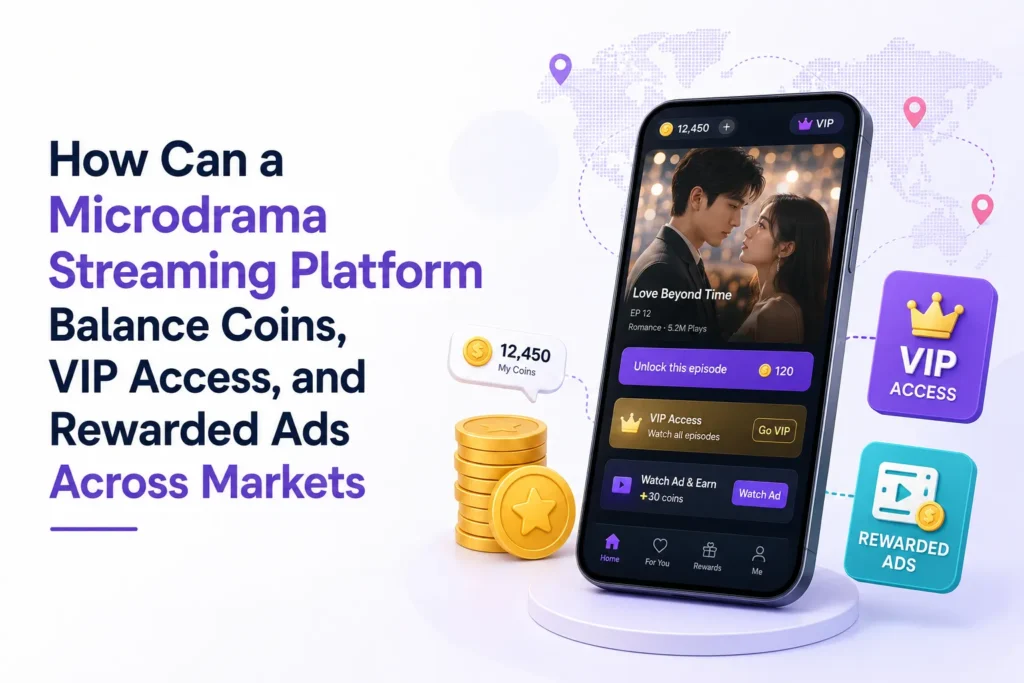
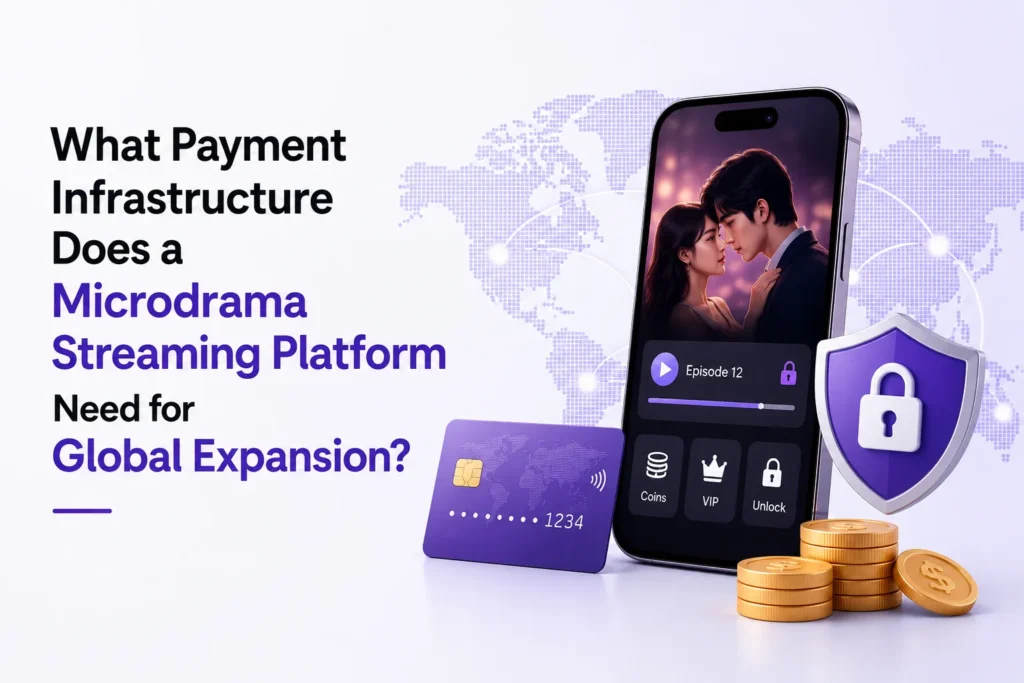
What Payment Infrastructure Does a Microdrama Streaming Platform Need for Global Expansion?
Key Takeaways Microdrama Payment Infrastructure should connect checkout, coin wallets, subscriptions, entitlement logic, refunds, fraud…
Multi-Region Microdrama GTM Strategy: How to Launch, Localize, and Monetize Across Markets
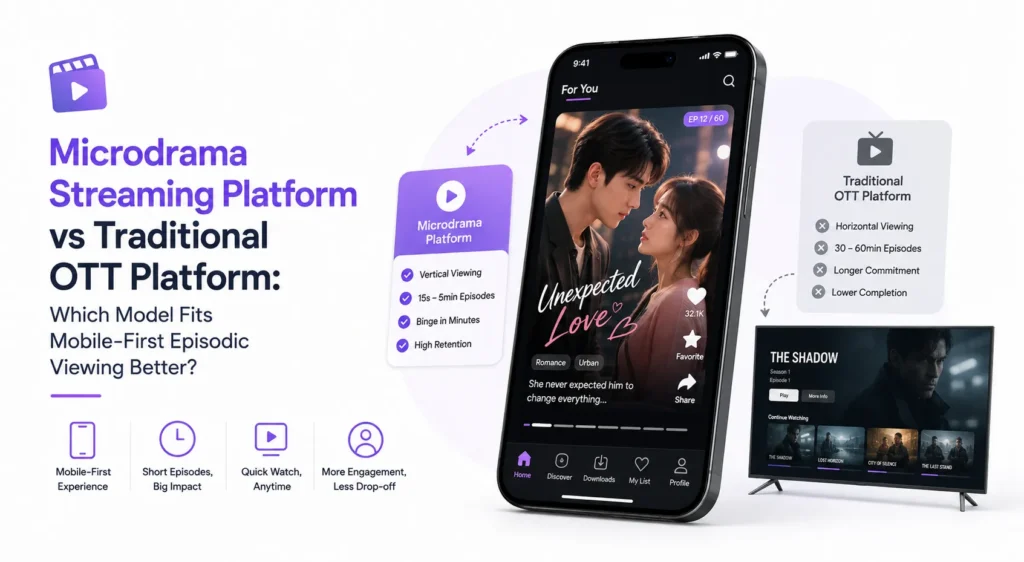
Microdrama streaming is not a normal OTT business with shorter episodes. It is a mobile-first…

Last Updated on September 3, 2026 by Yash Narayan Key Takeaways A microdrama streaming platform…
FAQ
Everything you need to know about the Miracuves DramaBox Clone.
A ready-made short-drama platform built to run several language markets from one deployment. One catalog of categories, titles and numbered episodes plays in a vertical player across five locales, with right-to-left layout for Hebrew and Arabic, region chips deciding which territory sees which title, and a currency default per market. Behind that sit a free episode window, coin, rewarded ad or VIP unlock, a two balance wallet with a typed ledger, a seven day rewards ladder, and an operator console covering catalog, economy, moderation, staff and settings across web, a Flutter store build and an API.
Same underlying platform, different operating model on the page. The ReelShort Clone is written for a single-market launch led by episode economics: coins, rewarded ads and VIP windows on one title. This page is written for operators opening several language markets at once: five locales with right-to-left layout for Hebrew and Arabic, an operator CMS that owns the interface copy, and one catalog serving every locale you switch on. If your first year involves more than one language, start here.
Yes, and that is what this configuration is for. Five locales ship, region chips on each title decide which territory sees it, the currency catalog sets what each market is quoted, and gateway switches let each settle on a rail it recognizes. All of it is one database, one catalog and one console, so opening a second territory adds a translation pack rather than a second system to keep in step. The wording itself is yours too: client copy lives in an app language JSON you edit in the console, so rephrasing a paywall or fixing a translation someone disagrees with is a text change rather than a rebuild and a store review.
It runs across all three clients: the consumer web app, the Flutter store build and the operator console, for Hebrew and Arabic. Direction is resolved once per surface by the locale provider rather than screen by screen, which is why it holds together instead of breaking on the third page. Be aware of one honest limit: some later Hindi, Arabic and Spanish web strings currently fall back to English, so completing that copy is a configuration task at launch.
The launch-ready white-label DramaBox Clone is $3,999 as a one-time purchase, and that figure is fixed rather than a starting point. Deployment takes six working days from our side. What is quoted separately is work beyond the base: extra locales, a live ad network, cash-out, CDN or DRM, and processor-side payment verification. What extends the calendar is what we need from you, meaning brand assets, hosting access, catalog files and merchant accounts.
Yes. It runs under your branding, your catalog and your commercial terms. The product reproduces common short-drama streaming patterns rather than any protected asset, and the content is yours to supply and license. The seed catalog that ships is original demo material with royalty-free stills, not licensed third-party drama.
Four facts are read together at the moment a viewer opens an episode: whether the catalog marks it locked, whether its number sits inside the free window, whether that viewer currently holds a VIP window, and whether a per-user unlock row already exists. Coins, a rewarded ad and auto-unlock all write the same row, so the entitlement is identical whichever way it was earned. Nothing about that decision changes per market; only the price and the currency do.
Five modules are licensed separately from the core platform: Adaptive Streaming (HLS), DRM Protection, Season Voting, Content Import (API) and Regional Pricing. Each lives in its own folder in every codebase, so your copy is delivered with exactly the modules you bought. Each also has a runtime switch, and switching one off never deletes its data, so you can enable Regional Pricing for a new territory and turn it off again without losing a single price row. For a multi-market operator, Regional Pricing and Content Import are usually the two that pay for themselves first.
Two balances sit on the viewer and display as one total. Coins earned through the ladder, rewarded tasks, referrals and bonuses carry an expiry window. Coins bought in a pack do not. Spending always consumes the earned side first, so promotional inventory is used up before money anybody actually paid, and every movement between them is written as one of seven typed ledger rows.
PayPlus hosted checkout is the primary path and the strongest from a compliance angle, because the card is taken on the processor side and no card number reaches the database. Stripe and Razorpay are supported too, and both are confirmed with the processor on the server before any coins or VIP days are credited. PayPlus callbacks are signature verified and can only be claimed once. Flutterwave and store billing are available, and per-country pricing across coin, VIP and Premium plans is a paid Plus module. Whichever gateways you use are connected to your own merchant accounts during delivery.
On the Android store build they can, through AdMob with unit IDs you supply, which is an integration step rather than a switch. On the web surface the ad unlock is a simulated timed preview: it demonstrates the flow faithfully and earns nothing. We state that plainly because it is exactly the kind of detail that turns into an argument three weeks after launch.
The wallet architecture supports it: withdrawal methods, minimum thresholds and request records are already modelled, and the operator sets the thresholds. The creator-facing request flow, the payout desk your team works from and the bank rails behind it are built to your markets during delivery, which matters here because payout rules differ in every territory you open.
Yes. You receive the consumer web application, the Next.js operator console, the Express API with all 45 core Mongoose models, the Flutter store app, the seed catalogue script and the deployment configuration. Any Plus modules you license arrive as their own folders and bring seven further collections with them. It is yours to modify, extend and redeploy, with no runtime licence and no per-user fee.
Yes, and it ships with the documents a reviewer asks for: a VAPT reference mapped to the OWASP Top 10, a developer security handbook and a control evidence register. Built controls include hosted checkout so no card number reaches the database, payment callbacks verified with the processor before anything is credited, magic-byte inspection that discards a renamed executable, staff permissions enforced on the admin API rather than only in the menu, an origin allow-list, a settings payload stripped of server secrets, a server-enforced view-only demo operator, and account export, anonymise and delete. Remaining hardening is itemized and completed as part of your deployment.
Yes, and the release log on this page is the record. The September 2026 wave added the five Plus modules, gems, quests, Game Promos, the Premium plan, the Episode Hub, multi-track subtitles and audio, HD for VIP, interactive choice branching, signed playback with geo and licence windows, and account export, anonymise and delete. The mobile app moved to 1.1.3 on Android with an iOS build on TestFlight, and self-hosted fonts cut first paint from 2.6 seconds to 1.6. You receive the current build, configured to your brand and territories.
Let's turn your idea into
a live platform.
Get a free consultation, a clear timeline, and honest answers. We'd rather earn your trust than rush a sale.
Miracuves is an independent software development company. We are not affiliated with, connected to, sponsored by, or endorsed by DramaBox.
“DramaBox Clone” is used descriptively. It is how the software industry refers to building a platform with functionality similar to DramaBox, and how clients search for it.
The entire design and codebase is built by our own team. The product contains no code, design, graphics, or content originating from the DramaBox website or applications.
DramaBox and all other third-party names and marks are the property of their respective owners, referenced here solely to describe the category of software offered.
Build Your Branded App - Clone or Custom
Envision. Decide. Deploy.
With Perfection in Just 6 Days
90+ readymade clone apps deployed in 6 days. Schedule a Live Walkthrough Now.
Custom development from 15 days. Free consultation
Launch a ready-made solution under your own brand in 6 working days, with a discount and two bonuses on us.
The discount applies to the published price and depends on the solution. Both bonuses are included with a ready-made solution ordered during the offer. The offer runs in 96-hour windows; the timer shows the current one. The 6 working days start once your branding, hosting and accounts are ready. We reply in under 2 hours, Mon-Sat.