Digital Collectibles App · Production Ready

OpenSea Clone App - White-Label Multi-Chain NFT Marketplace

Built by Miracuves, this white-label OpenSea clone is a ready-made multi-chain NFT marketplace with two Solidity contracts, a REST API, an operator console plus Android and iOS apps, source code yours to keep, live on your hosting within six working days.

Collectors sign a one-time wallet challenge instead of a password, then list at a fixed price, make offers or buy. On EVM chains the contract splits each sale between seller, creator royalty and your platform fee, capped at 10%. Four add-ons carry their own prices, and any license your market requires is yours to hold. Auction bidding is custom scope, agreed in writing before work starts and usually delivered in 2-8 weeks.

Launch in 6 Days with

  • Source Code
  • NFT Website
  • Admin Console
  • REST API
  • Two Contracts
  • Android + iOS Shells

StackExpo · Next.js · TypeScript · REST /api/v1 · PostgreSQL · Drizzle · Solidity

MXNFT console · MarketplaceIllustrative
Live listings20
Open offers7
Open reports3

Marketplace activity

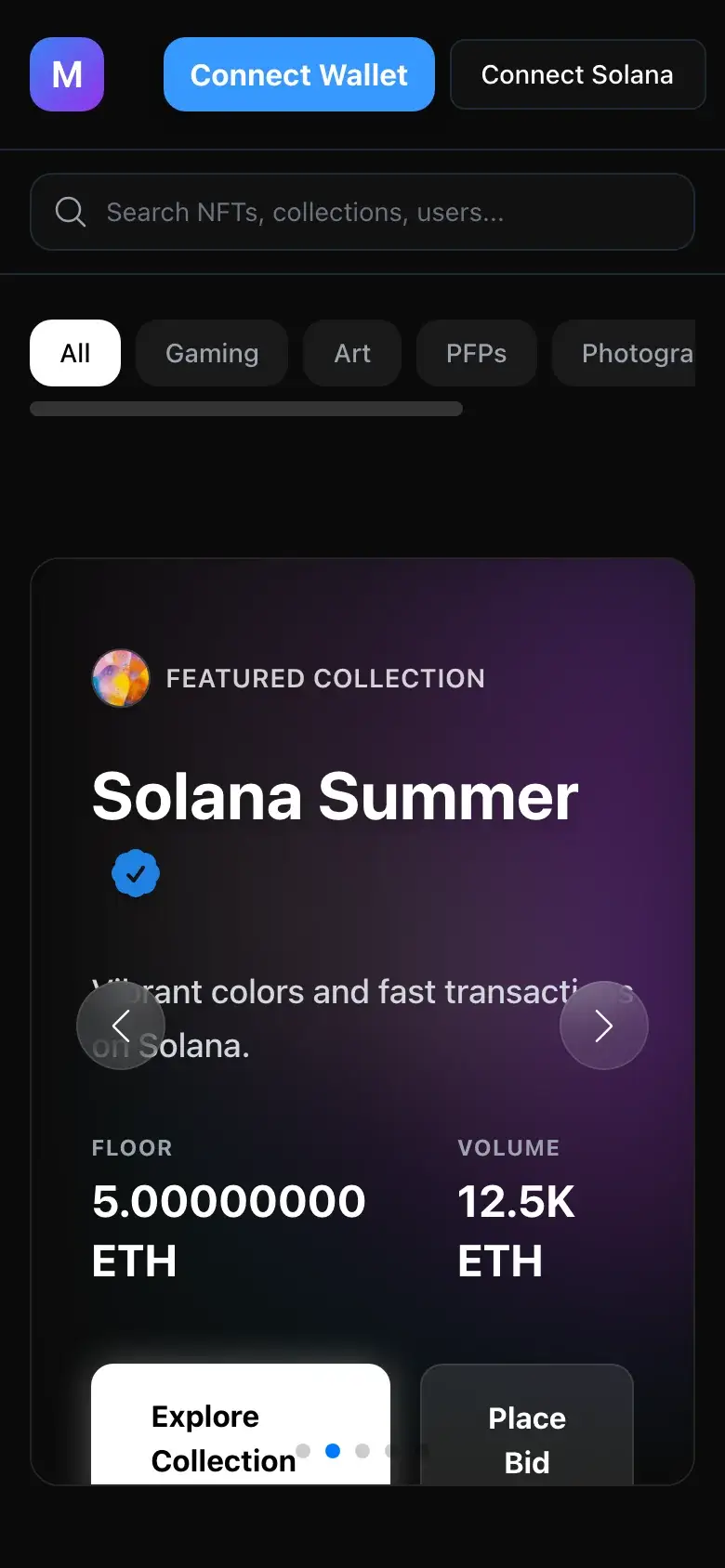
OpenSea Clone home page on a phone with category pills and a featured collection card.
Wallets sign every saleno funds held by the marketplace
  • 4Chains NamedEthereum, Polygon, Solana and BNB Chain
  • 8Catalog CategoriesArt, Collectibles, Domain Names, Music, Photography, Sports, Utility and Virtual Worlds
  • 0%Revenue Share With Miracuvesno royalty on your platform fee or referral fee, ever
  • 2Solidity Contractsan ERC-721 collection with royalties and a fixed-price marketplace
  • 6Days to Launchand if the delay is ours, we keep going free
  • $4,299Paid Once, Not Rentedsource code yours, no per-seat fee, no monthly rental

Live in six working days, or we keep working free until you launch. Every build carries 60 days guidance, 6 months bug fixes and 12 months updates.Verify every figure

Partners Connect Through the API

About 70 route handlers under /api/v1 serve listings, offers, minting and search; partners use hashed API keys, and every webhook delivery is tracked.

A Moderation Queue From Launch

Reports move through status changes and takedown records, and the schema holds KYC, sanctions and tax tables. Connecting a KYC or sanctions provider is integration work.

Buyers Pay From Their Own Wallet

Every purchase is signed in the buyer's wallet and recorded with its transaction hash, so the marketplace holds no user funds. On Solana a purchase is a direct SOL transfer to the seller.

Ready to open your own NFT marketplace?Talk to Product Expert

Chosen by 6,000+ clients across the globe

Miracuves is listed by Expertise.com as a managed IT service provider.Miracuves is an official member of the Forbes Business Council.Miracuves is a verified agency on DesignRush, listed among top design agencies in India.Miracuves is reviewed on Trustpilot as a software development company.Miracuves is listed by The Manifest among top managed software development companies.Miracuves is listed by DesignRush as a top software development company.Miracuves is recognized by GoodFirms as a top software development company.Miracuves is ranked among the top 1000 companies globally by Clutch.Miracuves is a top managed service provider in the United States on Clutch.

01See it live

Live in Action

OpenSea Clone Demo - Marketplace Website, Android App, Admin Panel & API

Try the MXNFT demo of Miracuves' OpenSea clone the way a collector would: discover and filter NFTs, open a collection and an NFT page, then connect your own wallet to sign in. The admin panel and the API walkthrough are shown on a guided call.
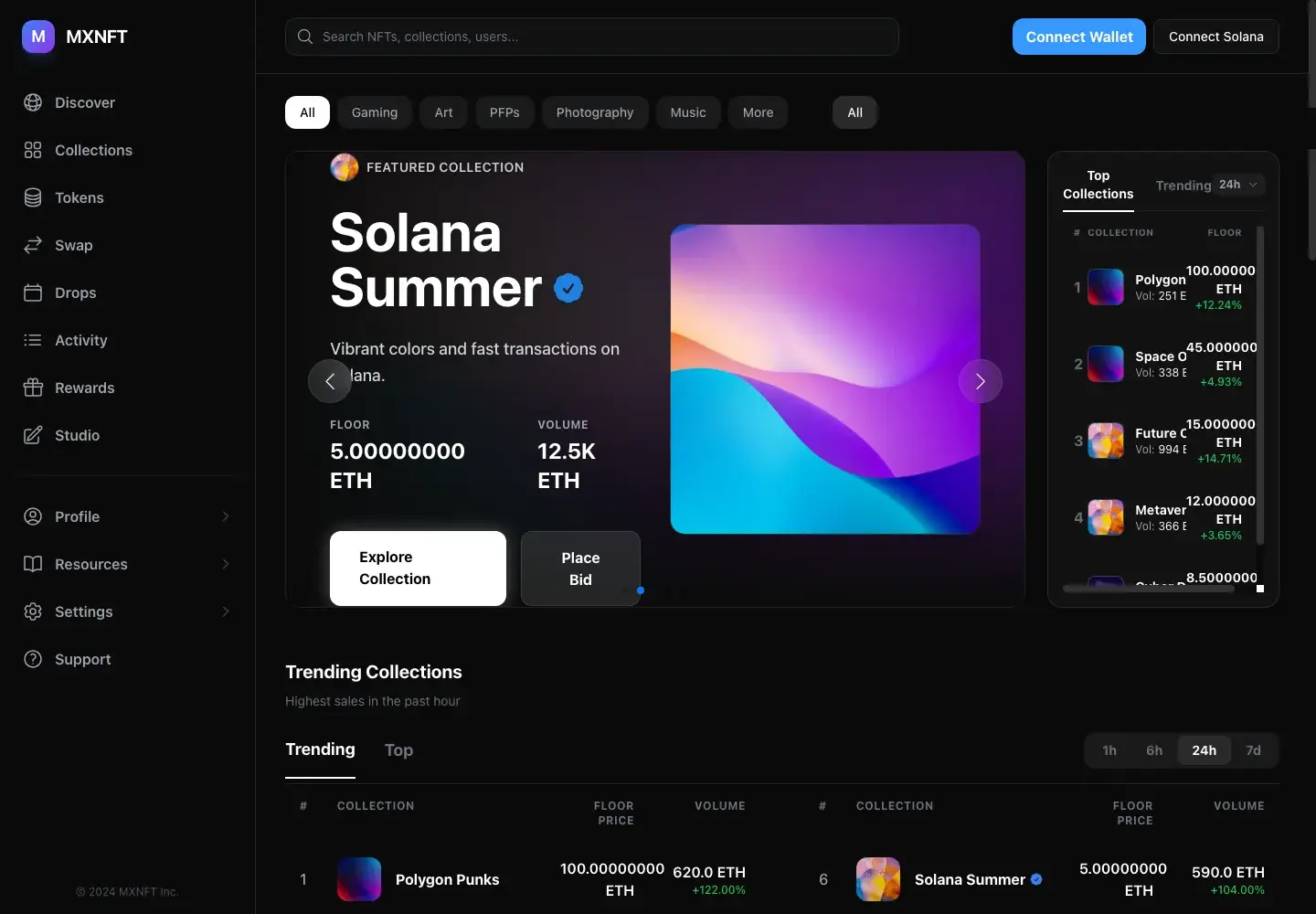
OpenSea Clone marketplace home page with a featured collection, a top collections list, a trending collections table and a Connect Wallet button.
Marketplace site

OpenSea Clone - Marketplace Website

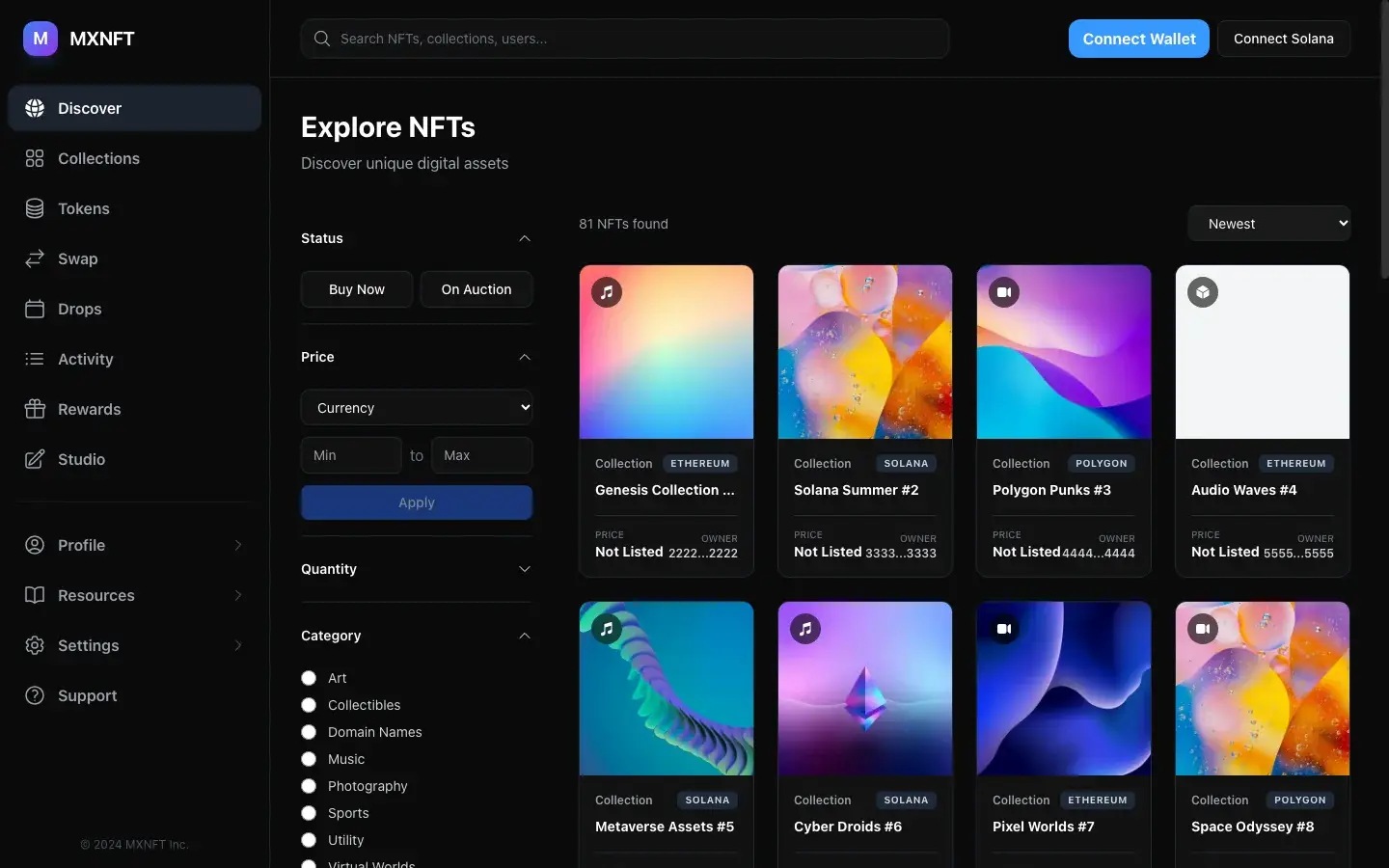
The visitor side: a featured-collection hero, trending collections, an Explore page with status, price, category and chain filters, collection pages with floor price and supply, and NFT pages with a price and a listings table.

  1. 1Open the web demo in a browser
  2. 2Browse as a visitor, no account needed
  3. 3Connect your own wallet to sign in
Sign-in:your own wallet, no password
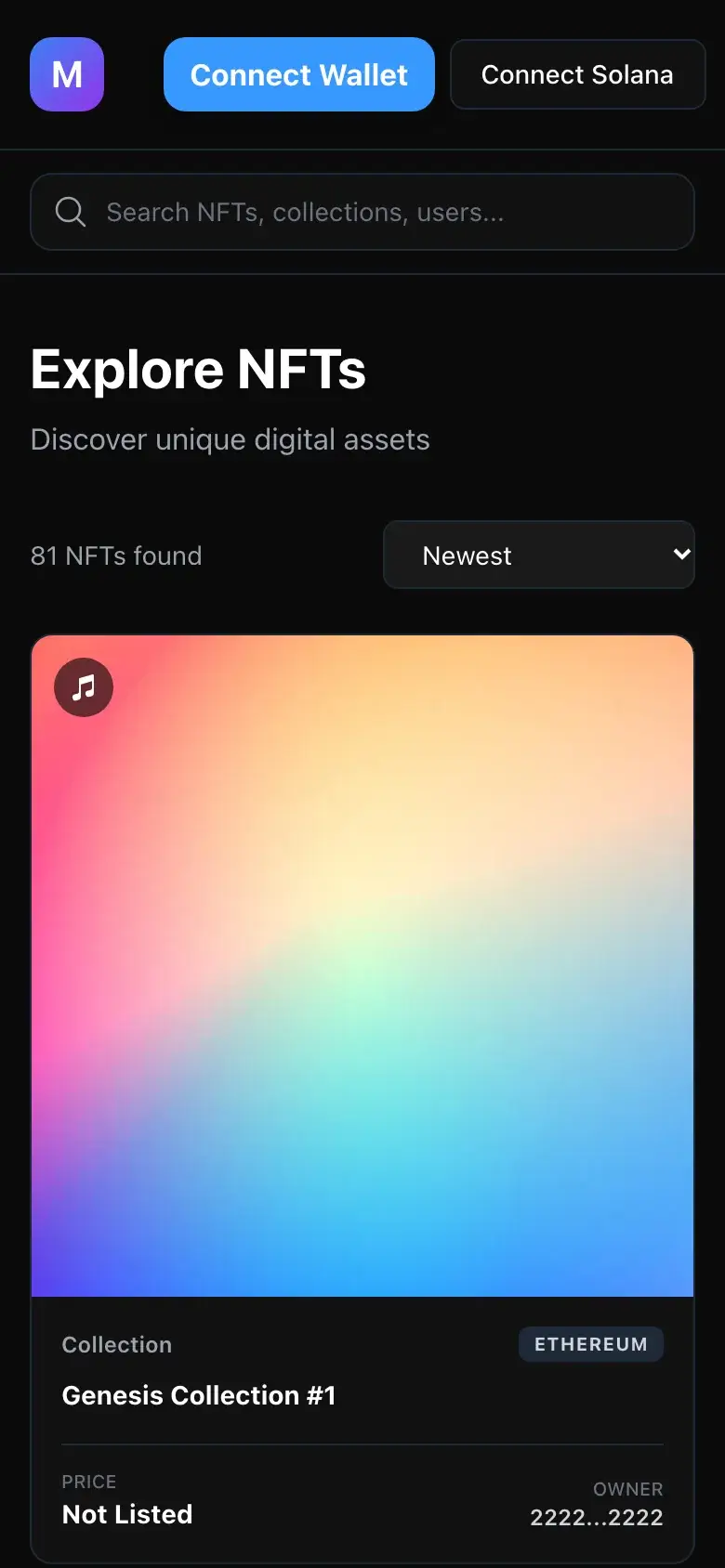
OpenSea Clone home page on a phone with category pills and a featured collection card.OpenSea Clone Explore page on a phone with filters and NFT cards.
Android app

Android Demo App

An Android NFT marketplace app that opens the marketplace inside a React Native shell. Install the demo from the apps page to see it on a phone; the website itself also reflows for a mobile browser.

  1. 1Open the apps page on an Android phone
  2. 2Download and install the demo app
  3. 3Explore: Discover, Collections, NFT page
Android:demo app from the apps page
Admin console shown on a guided call
Admin panel

Admin Panel - Collections, Drops, Users & Moderation

The operator console behind /admin: a dashboard, analytics, collections, drops, users, moderation, finance, integrations and a settings area with marketplace fees and network configuration.

  1. 1Ask for the admin demo
  2. 2Log in with the details we share
  3. 3Explore: Dashboard, Collections, Moderation, Settings
Admin login:shared on a guided call
API and contracts shown on a guided call
API & contracts

API, Webhooks & Contracts

The developer side: a REST API under /api/v1, API keys and webhooks, an embeddable NFT view, and the two Solidity contracts that handle collections, listings, fees and royalties.

  1. 1Ask for the developer walkthrough
  2. 2See the API routes and the contracts
  3. 3Explore: Listings, Webhooks, Fee settings
Where to look:API routes, contracts, admin Settings
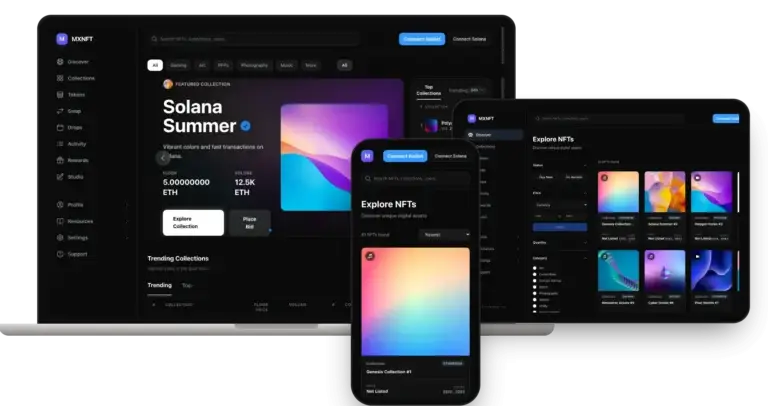
OpenSea Clone shown across a laptop, tablet and phone: the marketplace home with featured collection, the browse page with filters and the phone browse page

See It With Us

Walkthrough of an NFT Marketplace Like OpenSea: Wallet Sign-In, Listings, Offers, Fees & the Admin Panel

A guided call is the quickest way to see the whole loop. In about 30 minutes we connect a wallet and sign in, list an NFT at a fixed price, make an offer and buy, then open the admin panel and the API and set your fee, and tie each step to your own plan: your chains, your fee, your royalties and your launch date.

Schedule a live walkthrough call.

Every Screen Mapped

OpenSea-Style App Flows - Marketplace on a Phone & on the Website

Phone and desktop screens captured from the OpenSea clone demo Miracuves hosts trace a collector's route from the home page to a collection and then to a single NFT. The artwork and collection names are sample data in the demo.
OpenSea Clone home page on a phone with category pills and a featured collection card.
OpenSea Clone Explore page on a phone with filters and NFT cards.
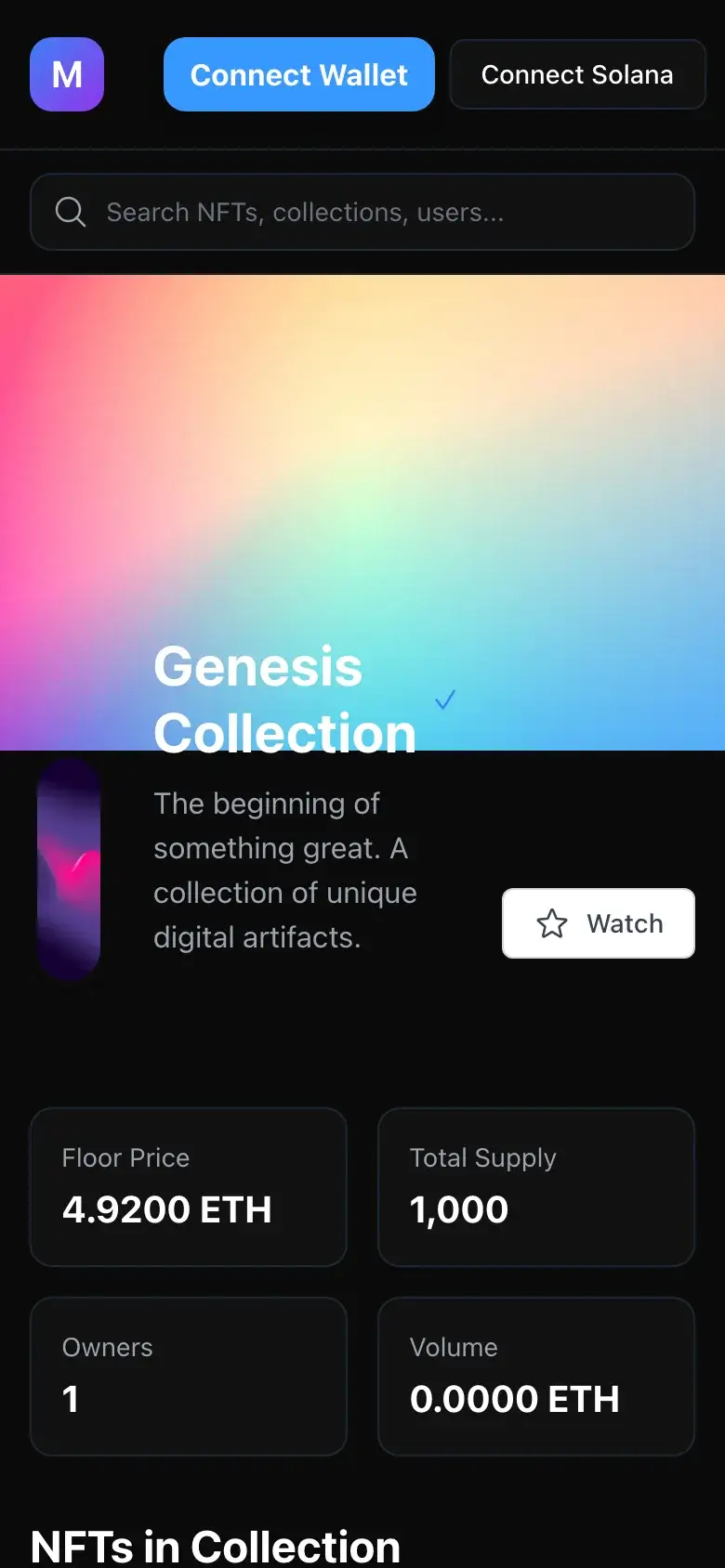
OpenSea Clone collection page on a phone with a banner, floor price, supply, owners and volume.
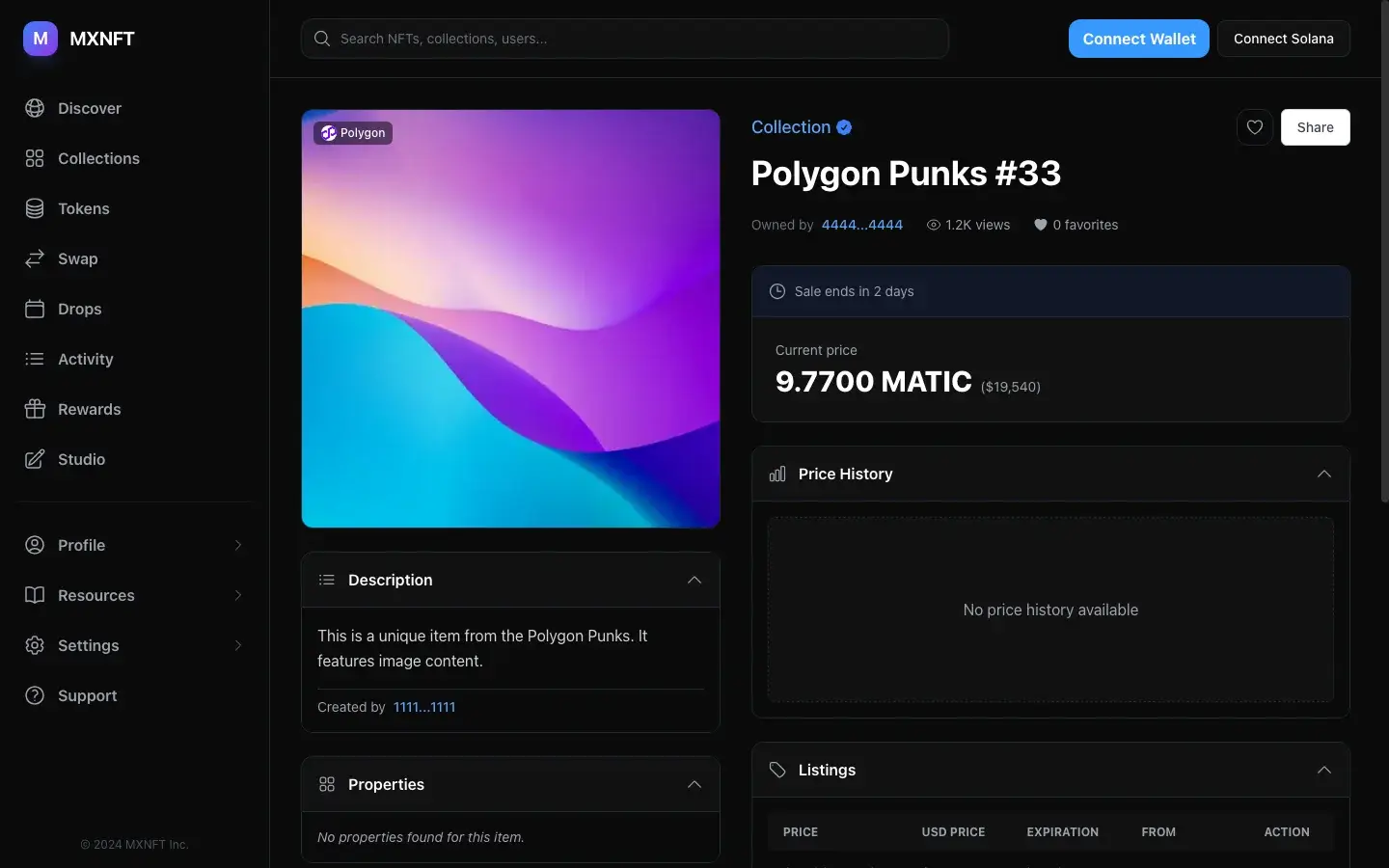
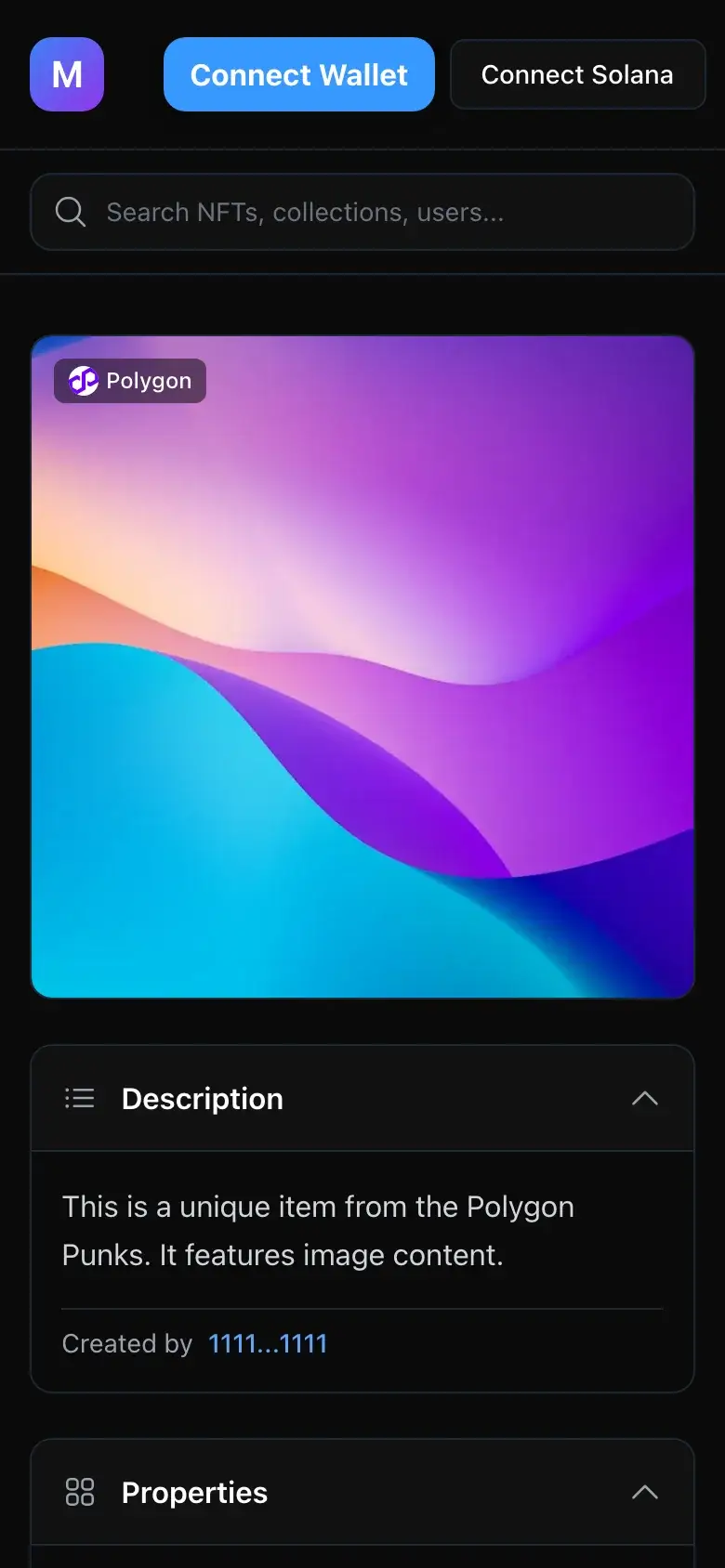
OpenSea Clone NFT page on a phone with the artwork, the chain badge and Description and Properties panels.
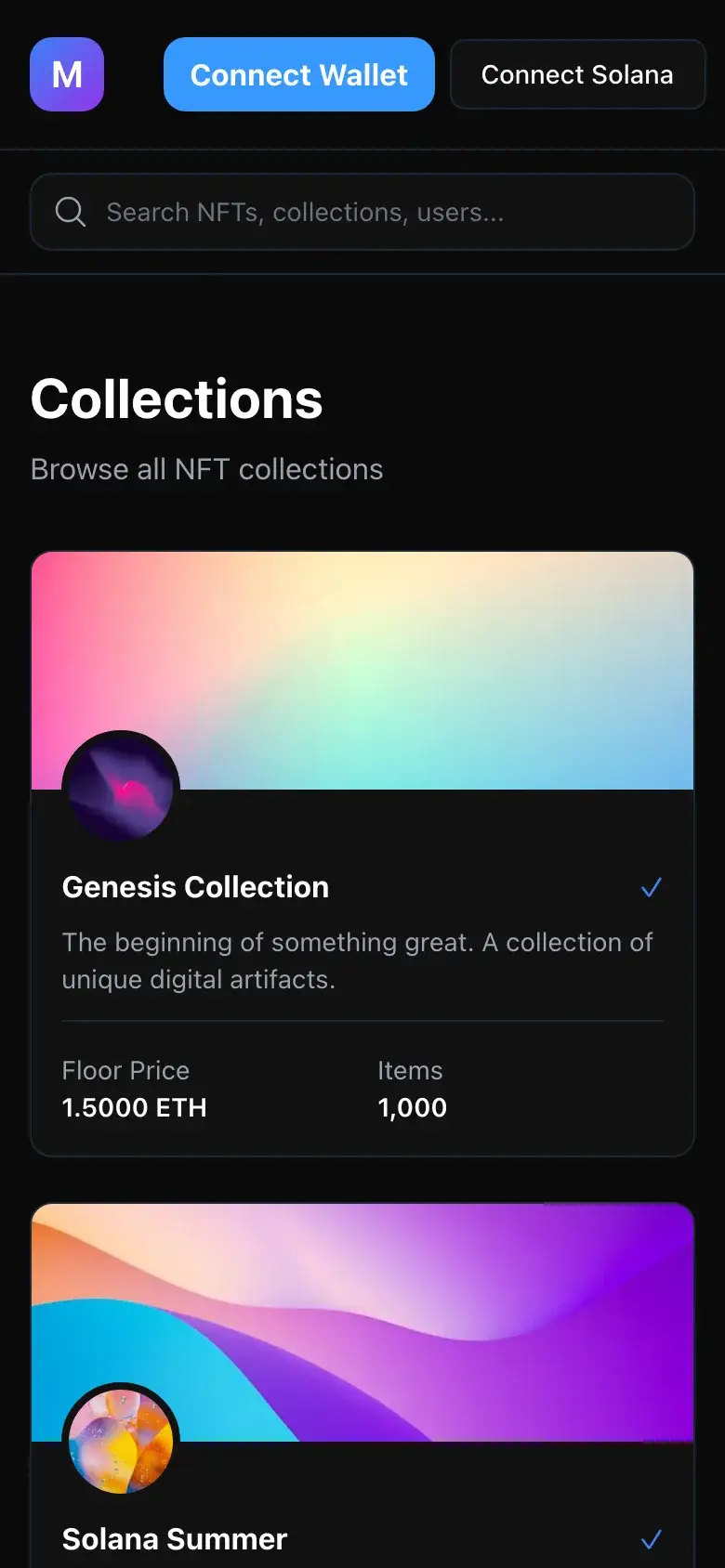
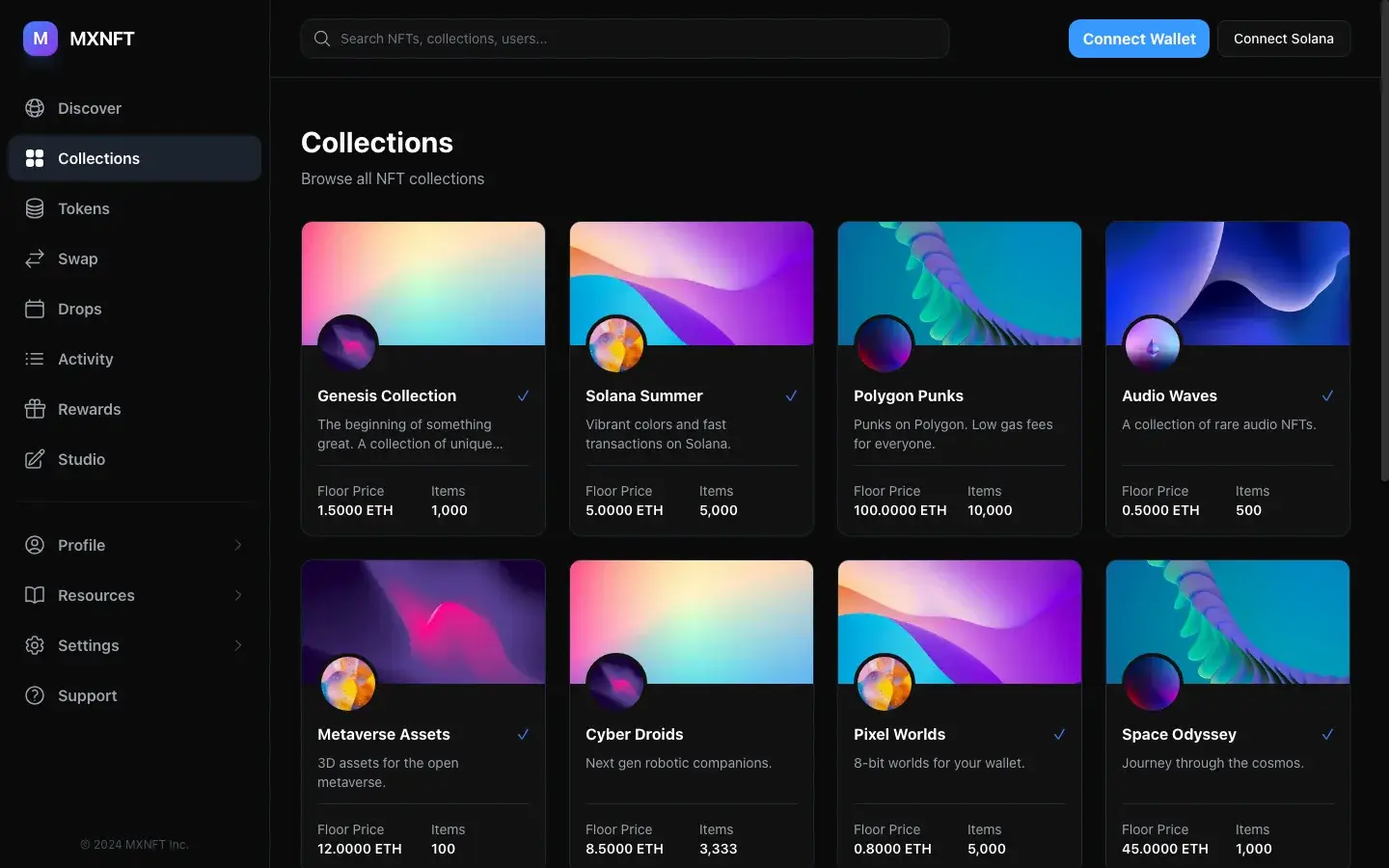
OpenSea Clone collections page on a phone with collection cards.
5 screens · scroll →
OpenSea Clone marketplace home page with a featured collection, a top collections list, a trending collections table and a Connect Wallet button.
OpenSea Clone Explore page with status, price, quantity, category and chain filters beside a grid of NFT cards.
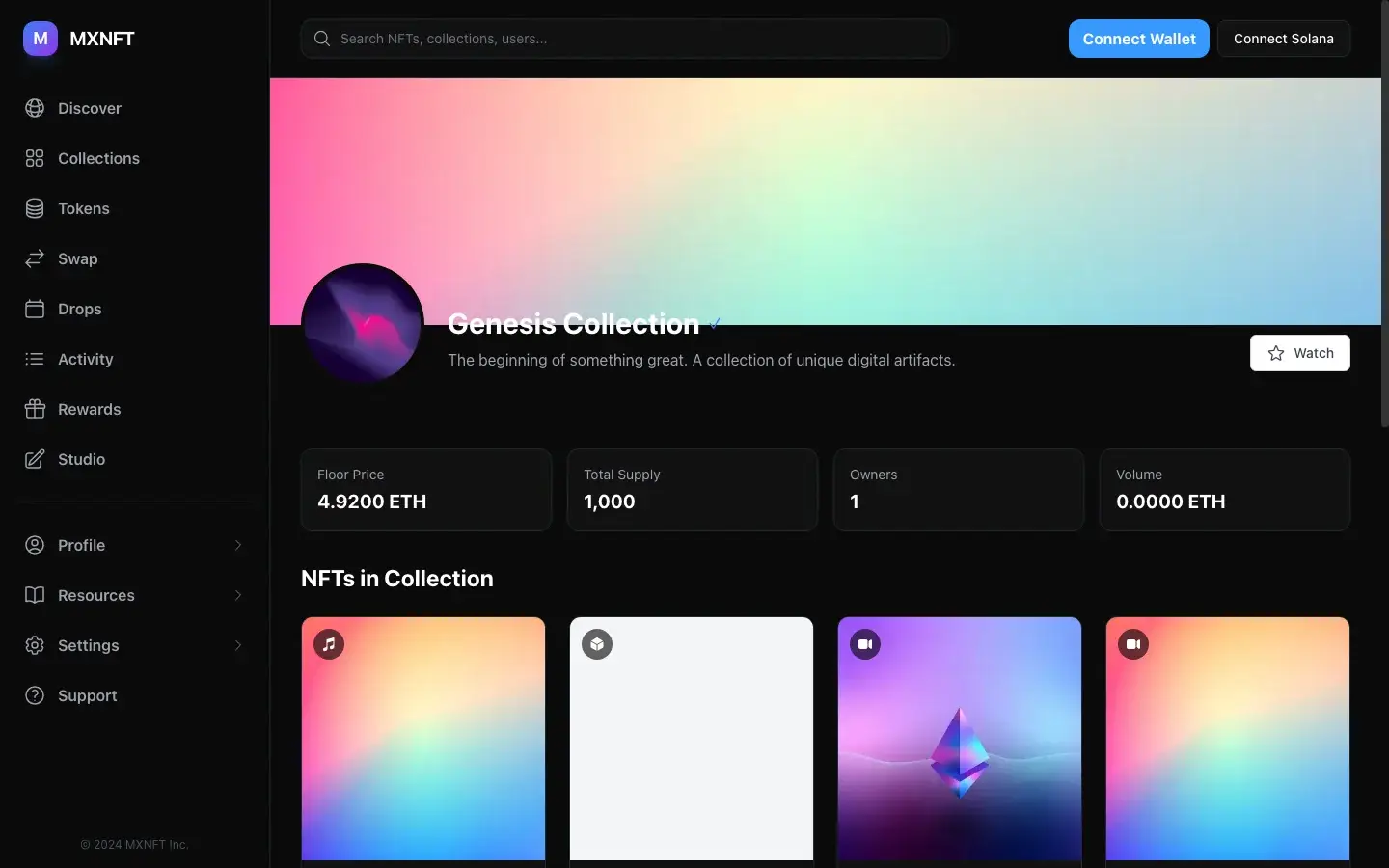
OpenSea Clone collection page with a banner, a verified collection name, a Watch button, floor price, total supply, owners and volume, and the NFTs in the collection.
OpenSea Clone NFT page with the artwork, the chain, the owner, a sale countdown, the current price in MATIC and Description, Price History and Properties panels.
OpenSea Clone collections page with collection cards showing a banner, a verified tick, a description, floor price and item count.
5 screens · scroll →

Follow a collector from the home page through the filters and a collection to an NFT page; NFT listing, offers and buying follow once a wallet is connected.

Explore Our Solutions

02Proof

Client Voices

OpenSea Clone Client Reviews - Operators in Their Own Words

What clients say about building on Miracuves bases. One speaks for a Web3 product family; the others come from other industries and are shown exactly as their authors gave them.

MMackenzie LoreeChief Product Officer, Ryke and Co
“We needed seven Web3 products off one spine rather than five engineering teams. Shared auth, KYC and wallet came from their suite. Each product landed in weeks rather than quarters, and our ops cost per product is a fraction of a stand-alone build.”
DDr. Vivek RungtaFounder & Chief Dermatologist, Dermacian
“Every HMS I tried was built for general physicians, with no lesion mapping, no before/after tracking, and no procedure-based billing. Their MXHealth base gave us the patient app, doctor app, EMR and video consult out of the box. Front-desk time on scheduling and follow-ups is down ~70%, and we went fully digital in 9 months, where a fully custom job would have been 18.”
AAndre GittensCEO, Ride Corporation
“Turo is the obvious reference, but the Caribbean specifics, from different insurance norms to different payment rails, meant we needed a real partner, not just a clone. Miracuves’s MXCar base covered the listing, the trip flow, and the host payouts. We launched in 6 working days and are live in three islands.”
MMarsha WilliamsFounder, Bmore On Demands LLC
“The team was running it on a dispatcher and a Google Sheet, and we needed a real platform quickly, because we were about to onboard a major retail client. Miracuves’s Delivery Genie base gave us the rider app, the dispatch console, and live tracking. We launched in 6 weeks and cleared 4x the previous order volume in the first month.”
TTiffany DandreaOperations Director, Best Cabo Yacht Rentals
“We were running it on phone calls and a paper calendar, and we were losing bookings to bigger OTAs. Miracuves’s GetmyBoat Clone base gave us the calendar, the booking flow, and the payment engine. Online bookings are up roughly 70% in the first six months, and the ops team finally has a live view of the fleet.”
DDr. Carlos A. PalermoCo-founder & CEO, Doctta Health
“Building a compliant telehealth stack from scratch in three markets would have been a year-plus effort. Miracuves’s MXHealth base covered the patient and doctor apps, video consult, e-prescription and the pharmacy integrations. We launched in our first market in 9 weeks and rolled out to two more in the following six months.”
BBrian LatailleVP Logistics Technology, IBC Tanks Canada
“We were juggling spreadsheets, a third-party GPS provider, and a phone. We needed a single operations console. Miracuves’s MXLogistics base covered the trip lifecycle, the driver app, and the customer tracking page. We’ve cut operations admin time by about 40%.”
Read More Client TestimonialsOperators and founders in their own words

Proof, Plainly

OpenSea Clone Case Study - What Is Published and What You Can Verify

Some product pages carry a named client. This one does not, and we would rather say so than stretch another client's results over an NFT marketplace.

Status
No Named Deployment Published

No named NFT marketplace on this product has been published by Miracuves, so this section neither lends another client's story nor makes up an outcome. What follows is what you can verify on your own.

Multi-chain NFT marketplaceModel
Ethereum, Polygon, Solana, BNB ChainChains named
Web app, admin console, APISurfaces
6 daysBuild time
4Chains named
2Contracts
Verify in the demo
  • Open the live demo and use the Explore filters for status, price, category and chain
  • Open a collection and an NFT page and read the listings table
  • Connect your own wallet and sign the sign-in challenge
  • Ask for the admin demo and open the Settings tabs
What we will not do
  • Name a client, a sales figure or a result that we cannot show
  • Call the smart contracts audited, or the platform licensed or certified
  • Promise tax, securities or consumer-law compliance in your market
  • Advise on the law where you operate
What Miracuves delivers
  • Your logo and colors across the website and admin console
  • Deployment to hosting you provide
  • The contracts deployed to the EVM network you choose
  • Complete source code with no encryption
  • Cover starts at launch: guidance (60 days), bug fixes (6 months) and updates (12 months)

03The product

The Basics

What the OpenSea Clone App Does for Creators, Collectors and Operators

Put simply, the OpenSea clone Miracuves sells is a ready-made multi-chain white-label NFT marketplace software on blockchain technology you run under your own name. Collectors connect a wallet, browse, list at a fixed price, make offers and buy; creators set up collections with royalties and run drops; the operator moderates, sets the fee and connects partners through an API.

OpenSea Clone shown across a laptop, tablet and phone: the marketplace home with featured collection, the browse page with filters and the phone browse page

More Than a Gallery

Wallet sign-in, collections, offers, drops, notifications, moderation and an API sit around the grid, so the marketplace is an operation and not only a front page.

Not a Locked Box

You get the complete source code with no encryption, so your team can change screens, fees and flows as the marketplace grows, with no per-seat charge.

Plain About What Is Extra

Layer 2 scaling, AI rarity scoring, NFT staking and a loyalty program are add-ons priced on their own. Auction bidding and subscription billing are custom scope. None of them is counted as a base feature.

Website, Admin Console & API

What Is an OpenSea Clone Script?

The storefront is the easy part. The hard part is everything around it: a sign-in that proves who a user is, contracts that split a sale between seller, creator and platform, moderation for a catalog that anyone can add to, and an API for partners. Those parts ship in the codebase.

OpenSea Clone collection page with a banner, a verified collection name, a Watch button, floor price, total supply, owners and volume, and the NFTs in the collection.
  1. 01Wallet sign-in with a signed challenge
  2. 02Explore, collections and NFT pages
  3. 03Fixed-price listings, offers and buying
  4. 04Fee and ERC-2981 royalties on the EVM contract
  5. 05Admin console, moderation and a REST API

You receive the Next.js marketplace and admin console, the API routes, the PostgreSQL schema and the two Solidity contracts, with the complete source code.

Everything Included

OpenSea Clone Features - Wallet Sign-In, Listings, Offers, Royalties, Drops & Admin

Every item below ships in Miracuves' OpenSea clone, visible either in the MXNFT demo or in the delivered source, while extras with a module of their own are flagged as add-ons further down. Media is attached by link, so file upload with IPFS pinning and a timed auction bidding flow are custom work quoted in writing, while the data model already carries auction listing types.

Feature 01 / 12

Wallet Sign-In

A visitor connects a wallet and signs a one-time challenge. The server checks the signature and the nonce, then opens a session, so there is no password and no sign-up form.

  • Connect Wallet for MetaMask and WalletConnect, Connect Solana for Phantom and Solflare
  • Signature and one-time nonce checked on the server
  • Sessions with expiry, a refresh flow and revocation
  • Sign-in attempts are rate limited
  • Role model: collector, creator, moderator and admin
Feature 02 / 12

Discover & Search

The home page opens on a featured collection with top and trending collections, and an Explore page lists NFTs with filters and sorting. A search bar looks up NFTs, collections and users.

  • Explore filters: status, price, quantity, category and chain
  • Status filter for Buy Now and On Auction
  • Sort menu and a result count
  • Search across NFTs, collections and users
  • Trending collections for 1h, 6h, 24h and 7d
Feature 03 / 12

Collections & Categories

Collection cards and pages show a floor price, supply, owners and volume, and eight categories organize the catalog.

  • Collection cards with floor price and item count
  • Collection page with floor, supply, owners and volume
  • Watch button on a collection
  • Categories: Art, Collectibles, Domain Names, Music, Photography, Sports, Utility, Virtual Worlds
  • Verified badge on collections
Feature 04 / 12

NFT Pages & Provenance

Every NFT has its own page with the media, the owner and creator, the price and a listings table, with panels for the description, properties and price history.

  • Media, name, owner and creator on each page
  • Price, expiry and a listings table
  • Description, properties and price history panels
  • Share button and a favorite heart
  • An embeddable NFT view for outside sites
Feature 05 / 12

Fixed-Price Listings

An owner lists an NFT with a price and a duration. On an EVM chain the listing can sit on the marketplace contract, and the buyer pays through it with a wallet-signed transaction.

  • List modal with a price and a duration, 7 days by default
  • Create, cancel and buy functions on the EVM marketplace contract
  • Buy button with a payment signed in the wallet
  • Each sale recorded with its transaction hash
  • On Solana a purchase is a direct SOL transfer to the seller
Feature 06 / 12

Offers

Collectors can make an offer on an item or on a whole collection, and an offer moves through pending, accepted, rejected and cancelled states in the API.

  • Make Offer on an NFT page
  • Collection offers from the collection page
  • Offer states: pending, accepted, rejected, cancelled
  • A dedicated offers API
  • Commerce events create activity and notification records
Feature 07 / 12

Fees & Royalties

The marketplace contract keeps a platform fee and pays the creator royalty in the same sale, and the admin panel carries the fee settings.

  • Platform fee in basis points on the contract, capped at 10%
  • Fee changeable by the contract owner
  • ERC-2981 royalty paid to the creator on each contract sale
  • Royalty percentage and recipient on the Create Collection form
  • Platform and referral fee settings in the admin Marketplace tab
Feature 08 / 12

Create & Mint

A Studio page holds the Create NFT and Create Collection forms for signed-in creators, and mint requests are handled through the API.

  • Studio page for NFTs and collections
  • NFT form: name, description, image or media URL, collection and chain
  • Collection form with category and royalty fields
  • Media is referenced by URL; there is no direct file upload
  • Mint request routes in the API
Feature 09 / 12

Drops & Allowlists

A Drops page lists campaigns, the admin panel creates them, and allowlist routes gate who may mint.

  • Drops page for upcoming and live drops
  • Admin page to create a drop
  • Allowlist routes for gated access
  • Mint request lifecycle in the API
  • An empty state when no drop is scheduled
Feature 10 / 12

Social & Notifications

Collectors can favorite, watch and follow, read activity feeds and manage how they are notified.

  • Favorites and watchlists
  • Follow and unfollow creators and collectors
  • Global, following and per-user activity feeds
  • Notification inbox with read state and preferences in Settings
  • Transaction history with a CSV export route
Feature 11 / 12

Moderation & Compliance Data

Operators get a moderation queue for reports and takedowns, and a data model for KYC, sanctions, tax and DMCA records. Connecting a KYC or sanctions provider is integration work.

  • Report queue with status changes
  • Takedown records and actions
  • Admin Moderation page
  • KYC, sanctions, tax and legal tables in the schema
  • Compliance export route
Feature 12 / 12

API, Webhooks & Embeds

A REST API under /api/v1 covers the catalog, listings, offers, payments, minting, search and admin, and partners connect through keys and webhooks.

  • REST routes for listings, offers, payments, minting, search and admin
  • API keys stored hashed
  • Webhooks with delivery tracking
  • Outbound Discord webhook on payments
  • Integrations tab in user Settings

A point to know before buying: We hand over the platform rebranded with your identity and running on your own hosting. Your part is to provide hosting and a domain, a PostgreSQL database, a WalletConnect project ID, RPC access for every chain, and the gas needed to deploy the contracts, since the demo configuration leaves them on a local test network. Gas fees, hosting, third-party services and any smart contract audit cost extra, and store review for an app falls outside our 6-day build time.

Talk to Our Team

How Operators Earn

OpenSea Clone Revenue Models - Platform Fee, Referrals, Drops, Featured Spots & API Access

The platform fee, referrals, drops, featured spots and API access each earn on a separate track in Miracuves' OpenSea clone, so changing one setting leaves the others as they were.

The platform fee carries the numbers first; referrals, drops, featured spots and API access are arrangements you add as activity grows.

  1. 01

    Platform Fee

    The marketplace contract keeps a platform fee, in basis points and capped at 10%, from every sale made through it. The owner can change it, and the admin Marketplace tab carries the same setting.

  2. 02

    Referral Fee

    The admin Marketplace tab also holds a referral fee setting for partners who bring buyers. How referrals are tracked and paid out is confirmed in writing at order.

  3. 03

    Drop Campaigns

    Operators can run drops with allowlists for a creator or a brand. What you charge for a campaign is your own agreement, settled outside the software.

  4. 04

    Featured Collections

    The home page opens on a featured collection beside a trending list. Whether you sell those spots is your own arrangement with the creator.

  5. 05

    API & Partner Access

    Partners connect through API keys and webhooks. Paid plans or tiers on top of that are a customization, not a base feature.

What two public NFT marketplaces list for selling fees and creator earnings, with each figure traced to a fee page.
Revenue streamHow it is chargedTake rateTypical take rateWhat sets the ceiling
Platform FeeA percentage of the sale price, taken when the sale completes.OpenSea lists 1% for selling NFTs, included in the buyer price. Rarible lists 2% on Ethereum, Base and Polygon and 1.5% on Solana, taken from seller proceeds.What sellers will accept against venues that charge less. Rarible charged 2.5% to each side before its June 2022 cut, so published rates have moved down.
Creator RoyaltiesA percentage set per collection and paid from the sale price alongside the platform fee.OpenSea describes creator earnings as enforced or optional by collection, and Rarible says royalties are set by the collection. Neither page gives one rate.What creators expect and what collectors will pay on top of the price. A royalty only pays out where the venue or contract honors it.

How to read this. The selling-fee figures come from the OpenSea help center article What fees do I pay on OpenSea? (12 May 2026) and the fee summary in the Rarible FAQ (last updated 1 September 2026). The 2.5% figure is from a Rarible post dated 20 June 2022. These are published prices of other marketplaces. Referral fees, drop campaigns, featured spots and API access are agreed case by case and have no public benchmark we could verify, so they are not in the table. Read everything here as a modeling input: it is not a quote and not a forecast of what any marketplace will earn, and your own fee is set on the contract and in the admin panel.

Revenue Model

OpenSea Clone Revenue Model, Stage by Stage

Miracuves wires the platform fee into the marketplace contract of its OpenSea clone, so the first sale earns from day one, and the other four streams come in as the catalog fills.

Launch

From the first listing, each fixed-price sale through the marketplace contract routes your fee to you as the NFT changes hands, at a rate capped at 10%, so even a small catalog starts paying its way.

Traction

Once collections compete for the home page, featured spots become worth selling, and the referral fee in the admin Marketplace tab rewards partners who bring buyers.

Scale

At scale, drop campaigns with allowlists run for creators and brands, and partners reach the catalog through API keys and webhooks, with paid API tiers available as a customization.

Creator royalties go to creators through ERC-2981, and Miracuves takes no share of your platform fee or referral fee.

Want a revenue model built around your own NFT marketplace?Design My Revenue Model

Operate It Day to Day

Admin Panel for an OpenSea-Like Marketplace - Collections, Drops, Users, Moderation & Settings

The admin console Miracuves ships covers the operator's whole day: which collections are verified, what is waiting in the moderation queue, what the fees are set to, who holds which role and which partners are connected.

Admin sections
  • Dashboard
  • Analytics
  • Collections
  • Drops
  • Moderation
  • Users
  • Finance
  • Integrations
  • Settings

Admin Panel Sections

  • 01

    Dashboard & Analytics

    An admin dashboard and an analytics page, with admin stats and collection stats routes behind them.

  • 02

    Collections

    List and review collections, change their status and verify the ones you stand behind.

  • 03

    Drops

    Create and manage drops from the admin Drops pages, with allowlists for gated access.

  • 04

    Users & Roles

    Look up users and update roles and verification state. The schema covers collector, creator, moderator and admin roles.

  • 05

    Moderation

    A report queue with status changes and takedown records, so policy decisions leave a trail.

  • 06

    Finance

    A finance page and payment records with transaction hashes, plus an export route for reporting.

  • 07

    Integrations

    API keys, webhooks and integration records, and an Integrations tab in each user's Settings.

  • 08

    Settings

    Tabs for General, Marketplace, Blockchain, Security and Notifications: site name and support email, platform and referral fee, network configuration, a global banner and email alerts. What each switch enforces is confirmed at order.

Money Movement

The money side of the console, from the fee setting to the payment record.

  • Platform and referral fee settings
  • Fee and royalty split settled by the EVM contract
  • Payment records with transaction hashes
  • Transaction and compliance exports

Settings & Tools

The controls behind the public site and the daily operation.

  • Site name and support email
  • Network configuration
  • Global banner and email alerts
  • API keys and webhooks

Need the console to do more? Extra reports, a different approval step, more languages or a changed fee model are scoped on their own. Tell us what your operations team needs and we will quote it in writing.

Talk to Our Team

04Package and price

The Full Package

Package Contents: Source Code, Contracts & Deployment for Your OpenSea Clone Script

With this OpenSea clone script, Miracuves hands over a marketplace that already trades, not loose parts: website, admin console, API, both contracts, the source code and the database schema, all yours, without seat charges, usage charges or a license to renew. Third-party running costs stay on your side: gas to deploy the contracts, RPC access for each chain, hosting, database and domain, media storage and a CDN, and a WalletConnect project.

01

Full Source Code

The complete source for the marketplace, the admin console, the API routes, the shared packages and the contracts, with no encryption, so your team can change it to suit your business.

  • Next.js marketplace and admin source, unencrypted
  • API route handlers under /api/v1
  • Shared packages for the database and chain helpers
  • Yours to modify, extend and redeploy
02

Database Schema

The PostgreSQL schema, written with Drizzle, covers collections, NFTs, listings, offers, payments, social, notifications, moderation, compliance and integrations, with migrations and a seed script.

  • Drizzle schema and migrations
  • Seed script for demo data
  • Commerce, social and governance tables
  • Indexer and blockchain event tables
03

Smart Contracts

Two Solidity contracts: an ERC-721 collection with ERC-2981 royalties and a fixed-price marketplace with a platform fee. A contract review is an available add-on that slots into the launch plan.

  • MXNFTCollection: ERC-721 with default royalty
  • MXNFTMarketplace: create, cancel and buy listings
  • Hardhat config, deploy script and tests
  • Contract review available as an add-on
OpenSea Clone marketplace home page with a featured collection, a top collections list, a trending collections table and a Connect Wallet button.
04

Marketplace Website

The responsive public site with search, filters, collection and NFT pages, the Studio, Drops and Activity pages, profiles and settings.

  • Home, Explore, Collections, NFT and profile pages
  • Studio, Drops, Activity and Settings pages
  • A layout that reflows for phones
  • An Android demo app that loads the web app
05

API & Webhooks

A REST API for the catalog, trading, minting, search and admin, with API keys and webhook delivery tracking for partners.

  • About 70 route handlers under /api/v1
  • API keys stored hashed
  • Webhook delivery tracking and a Discord hook
  • An embeddable NFT view
06

Admin Console

The operator console with a dashboard, analytics, collections, drops, users, moderation, finance, integrations and settings pages.

  • Dashboard and analytics pages
  • Collections, drops, users and moderation
  • Finance and integrations pages
  • Settings tabs for fees and networks
07

Access & Security Layer

Signed-challenge wallet sign-in, sessions and the request controls the base ships with.

  • Signed challenge with a one-time nonce
  • Sessions with refresh and revocation
  • Rate limiting on sign-in routes
  • CSRF helper and security headers
08

Handover & Support

Branding and deployment done for you, a docs folder, and the three support periods that run side by side from launch.

  • Rebranding with your logo and colors
  • Deployment to your hosting
  • Docs: PRD, schema, ERD and API notes
  • 60 days guidance, 6 months bug fixes, 12 months updates

Want to see it before deciding? Open the web demo, install the Android demo, or ask for a guided tour. We can connect a wallet, list an NFT, make an offer and open the admin console, each shown against your own marketplace plan.

Talk to Our Team

Transparent Pricing

How Much Does It Cost to Build an NFT Marketplace Like OpenSea?

The launch-ready white-label OpenSea Clone comes at one flat price: $4,299. Additions such as add-ons, extra integrations or custom flows get their own written quote. The price covers the platform and its delivery; gas fees, hosting and third-party APIs are billed apart, and a smart contract audit can be added when your launch calls for one.

Most Popular

Professional

Ready-Made Launch Package
$4,299paid once
Ships in 6 days

Built for: NFT startups, creator and brand collectible programs, gaming and metaverse communities

The platform arrives as the demo shows it, rebranded to your logo and colors, and deployed on your own hosting.

Get Started

Enterprise

Custom Builds for Larger Scope
Customquote
Go-live: based on final scope

Built for: Larger marketplaces and teams with their own auction, billing or compliance requirements

Need flows the base does not have, such as auction bidding? We build to your requirements and agree the scope and price before work starts.

Request a Quote
Development Cost

OpenSea Clone Development Cost in 2026

The OpenSea clone from Miracuves is a fixed $4,299, paid once, for the marketplace website, admin console, REST API, both Solidity contracts and Android and iOS apps, rebranded and deployed to your hosting in six working days with the complete source code. No per-seat fee or license renewal follows.

$4,299 Paid once
6 working days Rebranded and live
0% Revenue share

What moves your total sits outside the software invoice

  • Gas to deploy both contracts on each EVM network you choose
  • RPC access for every chain, plus a WalletConnect project ID
  • Hosting, a PostgreSQL database, a domain, media storage and a CDN
  • An outside review or audit of the smart contracts
  • Any of the four priced add-ons, from Layer 2 scaling to loyalty

Want timed auctions on top of fixed-price trading? Bidding screens or subscription billing are built as quoted custom work, usually in 2-8 weeks, and larger marketplaces move to the Enterprise plan.

Compare Your Options

Ready-Made OpenSea Clone vs Custom Development vs SaaS

Your NFT marketplace can come ready-made from Miracuves, be commissioned as custom NFT marketplace development from a Web3 agency or be rented from a hosted platform. This sets our OpenSea Clone, contracts included, against the other two.

CriteriaMiracuvesReady-Made OpenSea CloneCustom DevelopmentSaaS
Launch time6 working days to your hostingQuoted in writing, 2-8 weeksFast setup on the vendor platform
Upfront cost$4,299, fixed and paid onceQuoted in writing to scopeLow setup fee, then subscription
Source code ownershipFull source plus both contractsYours, if the contract says soStays with the vendor
CustomizationFour priced add-ons; custom quotedAnything, priced per changeLimited to the vendor's settings
Ongoing feesNo cut of your platform feeMaintenance retainer as agreedMonthly or usage-based fees
Branding & app-store listingYour brand; Android and iOS appsYour brand, your store accountsOften vendor-branded or shared
Best forOpen NFT marketplaces and partner platformsUnusual workflows with time and budgetTesting demand before owning anything

Where It Fits

Use Cases for an NFT Marketplace Like OpenSea - Open Marketplaces, Curated Art, Drops, Brand Storefronts & Partner Platforms

Drops and allowlists matter most to a launchpad, verification to a brand storefront and API keys to a partner platform, all inside Miracuves' OpenSea clone. A general marketplace puts the platform fee and categories first, a launchpad puts drops and allowlists first, and a brand puts verification and the embeddable view first. You set the emphasis in configuration.

GeneralMarketplaceGeneral NFT Marketplace

Run an open catalog across categories where creators mint and list, collectors browse, offer and buy, and you earn the platform fee on every sale through the contract.

01
OpenSea Clone marketplace home page with a featured collection, a top collections list, a trending collections table and a Connect Wallet button.
CuratedArtCurated Art & Photography

Verify collections before you feature them and give each artist a collection page, so the catalog reads as curated rather than open.

02
OpenSea Clone Explore page with status, price, quantity, category and chain filters beside a grid of NFT cards.
DropsLaunchpadDrop-Led Launchpad

Build the marketplace around launches: scheduled drops, allowlists and mint requests, with the Drops page as the front door.

03
OpenSea Clone collection page on a phone with a banner, floor price, supply, owners and volume.
BrandStorefrontBrand Collectible Storefront

Mint a limited run under your own brand, show a single NFT on your own site with the embeddable view and decide yourself what else may be listed.

04
OpenSea Clone NFT page with the artwork, the chain, the owner, a sale countdown, the current price in MATIC and Description, Price History and Properties panels.
GamingAssetsGaming & Metaverse Assets

Give a game community a place to buy, sell and trade items and virtual-world assets, filtered by category and chain, with a watchlist for each player.

05
OpenSea Clone Explore page on a phone with filters and NFT cards.
PartnerAPIPartner Platform

Let partners build on your catalog through API keys and webhooks, and decide yourself whether to charge for access.

06
OpenSea Clone collections page with collection cards showing a banner, a verified tick, a description, floor price and item count.
Business Model

OpenSea Clone Business Model: Three Ways to Run It

Every OpenSea clone sale settles on a contract you own, which deducts your fee as the NFT changes hands, and one deployment can serve three very different businesses.

Open marketplace

An open catalog across eight categories, where creators mint and list, collectors offer and buy, and the fee on each EVM contract sale grows with volume.

Drop launchpad

A launchpad that puts scheduled drops, allowlists and mint requests at the front door and charges creators or brands per campaign under an agreement of its own.

Partner platform

A catalog other apps build on through API keys, webhooks and the embeddable NFT view, with paid access tiers added as a customization when partners want them.

In each model you set the fee on a contract you own, up to its 10% cap, and no one else takes a cut.

One product, six ways to use it. All six cases share the marketplace website, the admin console and the API. What differs is which categories you open, which fee you set, which drops you run and how it is branded, so there is a single codebase to look after.

Talk to Our Team

Market Timing

Why Build an NFT Marketplace in 2026?

The large NFT marketplaces are general-purpose by design. That leaves room for operators who focus on one community, one kind of work or one set of rules, and who want the fee, the moderation and the creator relationship to be their own.

01

Published Fees Are Low, So Your Terms Matter

The big marketplaces list selling fees of 1% to 2%, and Rarible cut its own from 2.5% a side in 2022. A smaller marketplace competes on niche, curation and service rather than on a fee war.

02

Collectors Hold Wallets on More Than One Chain

The demo's chain filter lists ten networks and its sign-in covers EVM wallets and Solana wallets, so one catalog can meet collectors where their wallets already are.

03

Wallet Sign-In Removes the Sign-Up Wall

A visitor who already has a wallet connects and signs a challenge, which shortens the path from landing on the site to a first offer.

04

Royalties Are Part of the Deal

Creators ask where royalties are paid. The collection contract carries an ERC-2981 royalty and the marketplace contract pays it in the same sale.

05

You Decide What Carries Your Name

With verified collections, a report queue and takedown records, you choose what appears on your marketplace instead of inheriting someone else's catalog.

06

Tax Reporting Is a Planning Item From Day One

The IRS names NFTs among digital assets and says Form 1099-DA reporting applies to transactions on or after 1 January 2025. Whether that reaches your operation is a question for your own tax adviser.

Platform by the Numbers

4

Chains Named

2

Contracts

12

Feature Areas

6

Days of Build Time

Most of the effort in an NFT marketplace is the unglamorous middle: a sign-in you can trust, a sale that splits correctly between seller, creator and platform, and a console for the people who run it. Here it is already built.

Industries

Industries Launching OpenSea-Style NFT Marketplaces

Miracuves' OpenSea clone suits any business that wants a marketplace for digital collectibles under its own name. General NFT marketplaces open every category. Digital art spaces curate artists. Music and media labels release audio and video. Gaming communities trade items and avatars. Fashion and photography brands sell limited runs. Sports and metaverse projects list collectibles and virtual items. Brands launch collectibles of their own, and web3 agencies white-label the platform for clients.

  1. 01NFT Marketplaces
  2. 02Digital Art
  3. 03Music & Audio
  4. 04Gaming Items
  5. 05Avatars
  6. 06Fashion
  7. 07Photography
  8. 08Sports Collectibles
  9. 09Metaverse Items
  10. 10Brand Collectibles
  11. 11Domain Names
  12. 12Web3 Agencies

Miracuves’ OpenSea Clone is an NFT marketplace you can adapt to any collectible model, with wallet sign-in, fee and royalty handling, an admin console and an API carrying your name from the first screen.

06Under the hood

End to End

How the OpenSea Clone Works - Connect, Browse, Open, Create, Offer & Buy

To a collector, buying on the Miracuves OpenSea clone takes a few clicks. Underneath it is a chain of wallet, listing, offer, payment and record. Below is that chain from the first connection to a completed sale, followed by the architecture that carries it.

Collector Journey - From Wallet Connect to a Completed Sale

  1. OpenSea Clone home page on a phone with category pills and a featured collection card.
    1Connect a Crypto Wallet to Sign In

    A visitor taps Connect Wallet or Connect Solana; the wallet signs a one-time challenge and the server opens a session, with no password needed.

    • Connect Wallet and Connect Solana in the top bar
    • Signature and nonce checked on the server
    • Session with refresh and revocation
  2. OpenSea Clone Explore page on a phone with filters and NFT cards.
    2Explore and Filter NFTs

    The Explore page shows NFTs as cards with the chain, the collection and a price or a Not Listed label, plus filters above and to the side.

    • Status, price, category and chain filters
    • Search for NFTs, collections and users
    • Sort menu and a result count
  3. OpenSea Clone collection page on a phone with a banner, floor price, supply, owners and volume.
    3View an NFT Collection

    A collection page leads with its banner and verified badge, followed by floor price, supply, owners and volume, then the NFTs inside.

    • Banner, avatar and description
    • Floor, supply, owners and volume
    • Watch button for collectors
  4. OpenSea Clone NFT page on a phone with the artwork, the chain badge and Description and Properties panels.
    4Check the NFT Details

    An NFT page shows the media, owner, creator and price, a listings table, and panels for the description, properties and price history.

    • Price, expiry and a listings table
    • Description, properties and price history
    • Share and favorite controls
  5. OpenSea Clone collections page on a phone with collection cards.
    5Create and List an NFT for Sale

    In Studio, the creator fills in forms to set up a collection and add an NFT, then puts it on sale with a price and a duration.

    • Collection form with royalty fields
    • NFT form with image or media URL
    • List modal with price and duration
  6. OpenSea Clone NFT page on a phone with the artwork, the chain badge and Description and Properties panels.
    6Make an Offer or Buy the NFT

    A collector makes an offer or buys outright; the wallet signs the payment, the contract splits the sale and the API stores it with the transaction hash.

    • Make Offer and Buy on the NFT page
    • Payment signed in the wallet
    • Sale recorded with its transaction hash
Visual Flow DiagramConnectBrowseCollectionNFT pageCreateBuy

How It's Built

OpenSea-Style Platform Architecture & Sale Flow

Talk to Our Team
  1. Part 01

    One App, Many Routes

    The pages and the /api/v1 route handlers live in one Next.js app on top of the shared database and chain packages, so a change to a route and its page ships together.

  2. Part 02

    Listing Lifecycle

    An active listing moves to sold or cancelled, offers move through pending, accepted, rejected or cancelled, and each change can write an activity record.

  3. Part 03

    Settlement on the Contract

    On an EVM chain a purchase calls the marketplace contract, which pays the platform fee, the royalty and the seller in one transaction.

  4. Part 04

    Events & Notifications

    Commerce events create activity entries and notifications and can fan out to webhooks, including a Discord hook on payments.

  5. Part 05

    Fees & Royalties

    The contract fee is set in basis points by the owner, a royalty comes from the collection, and the admin panel carries the same fee settings.

  6. Part 06

    Records & Indexing

    Listings, offers, payments, social and governance records sit in PostgreSQL, with tables for blockchain events and indexer status.

Under the Hood

Tech Stack for an NFT Marketplace Like OpenSea - Next.js, PostgreSQL, Solidity & Wallet Adapters

An NFT marketplace needs a web tier people can browse, an API partners can call, a database that keeps listings and offers consistent, contracts that move the money and wallet connections for each chain. Here is what Miracuves built the OpenSea clone demo with.

WEB APP

Web Platform

Next.js React TypeScript Tailwind
  • App Router pages and API routes in one app
  • React Query for data fetching
  • Responsive layout that reflows for phones
  • A sidebar shell with Discover, Collections, Drops and Studio
API

REST API

Route handlers Zod api v1
  • About 70 route handlers under /api/v1
  • Zod validation on selected routes
  • API keys stored hashed
  • Webhooks with delivery tracking
DATABASE

Data Tier

PostgreSQL Drizzle ORM
  • Schema for commerce, social and governance data
  • Migrations and a seed script
  • Indexer status and blockchain event tables
  • Docker Compose path for a local database
CONTRACTS

Smart Contracts

Solidity OpenZeppelin Hardhat
  • ERC-721 collection with ERC-2981 royalties
  • Fixed-price marketplace with a platform fee
  • Deploy script and tests
  • EVM only; Solana purchases are direct transfers
WALLETS

Wallets & Chains

wagmi viem Solana wallet adapter
  • MetaMask and WalletConnect for EVM wallets
  • Phantom and Solflare for Solana
  • Chain filter with ten networks listed
  • Signature check with ethers on sign-in
MOBILE

Android Demo App

Expo React Native WebView
  • A native shell that loads the web app
  • Demo build on the apps page
  • iOS app included
  • Store publishing is your own developer account
Tech buyer notes:

The stack above is what the demo runs. A PostgreSQL database, a WalletConnect project ID, RPC access for each chain and any email or webhook accounts are your own, supplied at deployment, and their usage costs are separate from the platform price. Everything named here is mainstream and easy to hire for.

Talk to Our Team

Build to Scale

Built to Scale - Separate Contracts, Chain Choice & Growth Headroom

In the OpenSea clone Miracuves delivers, the Solidity contracts sit apart from the Next.js web app, PostgreSQL keeps tables for indexing and caching, and marketplace events fan out to partner webhooks, so more NFTs, collections and collectors call for bigger servers and settings, not new code.

Contracts Apart From the App. The two Solidity contracts live in their own folder with their own tests, so the web app can be redeployed without touching what is on chain.

Indexing Model in the Schema. Tables for blockchain events and indexer status, with admin routes to read the indexer, give a place to sync chain data; running the indexer is part of deployment.

Cache and Index Tables. Discovery and analytics cache entities give the Explore and trending pages a path to heavy traffic once you measure it.

Webhook Fan-Out. Commerce events can notify partners with delivery tracking; queue and retry policies are set to your service levels.

01

Contracts Apart From the App

The marketplace and collection contracts are separate from the web app, so the app can be redeployed without touching chain state.

02
Web appContractsChain

Chain Choice

The chain filter in the demo lists ten networks and wallets cover EVM and Solana, while contracts are deployed to the EVM networks you choose.

  • Ethereum, Polygon, Solana and BNB Chain in the footer
  • Arbitrum, Optimism, Avalanche, Base, Zora and Blast in the filter
  • EVM contracts deployed per network
  • Solana purchases are direct transfers
03

Indexer Model

Blockchain event and indexer status tables and admin routes to read the indexer give you the structure for syncing chain data.

  • Blockchain events table
  • Indexer status table
  • Admin routes for the indexer
  • Running the indexer is deployment work
04
EventsCacheHooks

Cache and Index Tables

Discovery and analytics cache entities give the Explore and trending pages a path to heavy browse traffic.

  • Trending and stats routes
  • Collection-level stats
  • Search route across entities
  • Tuned once you have traffic
05

Webhook Fan-Out

Commerce events can notify partners through webhooks with delivery tracking, including a Discord hook on payments.

  • Delivery tracking per webhook
  • Hashed API keys
  • Outbound host checks on the Discord hook
  • Retry policy set per deployment
06

Documented Hand-Over

Source, schema, contracts and docs are handed over so another team can run the platform unaided.

Room to Change and Grow. Every marketplace ends up needing something particular to its community. With the complete source code and a conventional stack, adding a screen, a rule or an integration is ordinary development work that your team or ours can carry out.

If you are launching a marketplace: Begin with the creators and the niche you can bring in, and grow on the one deployment you already have. Media is referenced by URL, so storage and a CDN are choices you make; horizontal scaling and queues are configured when traffic calls for them, and anything beyond the base is scoped and quoted on its own.

Talk to Our Team

07Security and trust

Built to Be Checked

Security in an OpenSea-Like Marketplace - Signed Sign-In, Non-Custodial Payments & Honest Limits

Miracuves' OpenSea clone holds wallet addresses, valuable files and the record of who owns what, so the controls that matter most are how a user proves who they are, where money moves and what gets reviewed before launch. This section says what the platform does and what remains your work.

  1. 01 · Sign-In
    Signed Sign-In

    A visitor signs a challenge that contains a one-time nonce. The server recovers the signer, compares it with the wallet and marks the nonce used.

    • Uniform Enforcement:
  2. 02 · Sessions
    Sessions

    Sessions carry expiry and revocation fields, and a refresh flow rotates the token.

    • Admin Switches: Two-factor and IP allowlist switches sit in the admin Security tab, and how each one applies to your team is set out in writing at order.
  3. 03 · Requests
    Request Controls

    Sign-in routes are rate limited, payment calls use a CSRF check and security headers are set in the Next.js config.

    • Logs and Alerts: Logging runs to the console as shipped, and structured logs, alerts and an incident runbook are added as launch work.
  4. 04 · Payments
    Non-Custodial Payments

    Wallets sign every purchase, so the marketplace does not hold user funds, and each sale is recorded with its transaction hash.

    • Open Minting Needs Rules: Anyone can create a collection, so verification, the report queue and your own terms are what keep infringing or unlawful work off your marketplace. The Miracuves guide on open minting covers the exposure.
  5. 05 · Contracts
    Contracts Under Your Name

    The contracts are deployed from your account to the network you choose, and the owner functions, including the fee setter, are yours.

    • Named Launch Tasks: A penetration test, a contract review and a restore drill are listed as pre-launch work and are not assumed to be done.
  6. 06 · Records
    Records

    Security events, fraud flags, reports and takedowns have tables, so a moderation or security decision can be traced.

    • Secrets and Keys: Secrets, RPC keys and API keys belong in a secret manager, and key rotation is planned with you.

Signed wallet sign-in, refreshable sessions, rate-limited login routes, non-custodial payments and moderation tables are all part of the base. A contract review and a penetration test get slots in your launch plan, billed apart when an outside firm runs them.

Discuss Security Before Launch

Marketplace Readiness

Operator Readiness for a White-Label OpenSea Marketplace - Delivered by the Software, Owned by You

An NFT marketplace brings together strangers, valuable files and wallets. Miracuves builds the listing, offer, fee and admin tooling; deciding what may be minted and sold, whether any token is a regulated instrument and what licences you need stays with you as the operator.

Built for an NFT marketplace; licensed and certified under no regime.

On this page, ready describes software you can see working in the demo or find in the source. It is not a statement that the platform or Miracuves holds any licence, registration or certification, or that any NFT sits outside securities, payments or consumer law. Nothing here is legal advice.

Built Into the Software

Wallet sign-in, collections, fixed-price listings, offers, drops with allowlists, a platform fee and ERC-2981 royalties on the EVM contract, notifications, a moderation queue, a REST API with webhooks and an admin console.

Left to the Operator

Your terms and privacy policy, what you allow to be minted and sold, takedown and dispute handling, sanctions screening and KYC through a provider you connect, tax reporting, and the accounts, keys and wallets you use.

Securities, Money & Tax

Some tokens can be treated as securities or other regulated instruments. The platform is built so that wallets sign every payment, which can reduce custody questions but does not remove licensing ones, and the route depends on your activity and country: in the US that can mean SEC analysis, state rules and IRS reporting, elsewhere a payments or crypto-asset regime. Take legal advice before launch.

Where You Operate

Consumer protection, intellectual property takedowns, minors, sanctions and advertising rules differ by country. Check each market you serve with qualified advisers before you open the marketplace. Miracuves gives no legal advice.

08Grow the platform

Included coreMXNFT
  • Wallet sign-in & profiles
  • Explore, collections & NFTs
  • Listings, offers & buying
  • Admin console & API

Adding a module

  1. 1
    Pick what you need

    Scaling, rarity, staking or loyalty, now or after launch.

  2. 2
    Price agreed first

    Each module gets its own written scope and quote before any work begins.

  3. 3
    Handed over as code

    The module is added to the source you already hold.

Ask About Custom Modules

Go Further

OpenSea-Style Marketplace Add-Ons - Layer 2, Rarity Scoring, Staking & Loyalty

As delivered, the platform works end to end and can be shown in the demo. The four modules below are the ones operators ask for next, and each is priced separately because the scope depends on your marketplace.

  • Scale

    Layer 2 Scaling

    Rollup-based scaling, such as Optimistic or zero-knowledge rollups, to bring transaction costs down and make busy periods easier on users.

    Layer 2 · Scaling
  • Scale

    AI Rarity Scoring

    AI-based scoring that rates NFTs on several factors, so collectors can compare items instead of guessing at what makes one rarer than another.

    Rarity · Scoring
  • Engagement

    NFT Staking & Farming

    Staking so that holders can earn rewards by locking their NFTs, giving collectors a reason to keep items on the marketplace.

    Staking · Farming
  • Engagement

    Loyalty & Gamification

    Loyalty points, badges and achievements for people who trade, buy and take part, built to bring them back more often.

    Loyalty · Badges

The Web3 Suite

Building More Than an NFT Marketplace? We Have the Neighbors Covered.

The OpenSea Clone is one platform in a wider Web3 suite. If your plan reaches past collectibles, these three connect naturally.
P2P exchange platform shown as a phone with a bitcoin coin beside a bank and a euro note.01
Pick it if: You want users trading coins, not collectiblesP2P Exchange Script

A peer-to-peer crypto trading platform where users trade with each other and the operator runs the marketplace and disputes.

Explore Solution
ICO Launchpad user dashboard with a token balance, a Buy Token Now button, an account status panel and token sales progress.02
Pick it if: Your plan includes launching tokensICO Launchpad Clone

A token sale platform where projects present a raise and a community takes part, with an operator console around it.

Explore Solution

A bitcoin coin standing on a laptop that shows a trading chart.03
Pick it if: You also want a trading surfaceGMX Clone

A crypto trading platform in the GMX style, aimed at operators who want a trading product beside their NFT marketplace.

Explore Solution
CatalogAll 90+ solutions

09The business case

Market Benchmarks

NFT Marketplace Benchmarks - Independent 2025-2026 Data

The revenue models above are ours. The figures below are not. They are the fee pages of OpenSea and Rarible and the IRS digital assets guidance, reproduced as published. They show what the two best-known general-purpose NFT marketplaces charge sellers today and which tax reporting rules touch NFT sales, so you can test your own business case against sources you can check yourself.

OpenSea01

1% Seller Fee on OpenSea in 2026

OpenSea's help center, dated 12 May 2026, lists a 1 percent fee for selling NFTs, included in the price shown to buyers, and a 0 percent fee for swaps, with third-party provider fees possibly applying. Creator earnings are described as enforced or optional by collection, so the creator share is set per collection rather than by one platform rate.

Rarible02

2% Marketplace Fee on Rarible's Main Chains

Rarible's FAQ, last updated 1 September 2026, lists a marketplace fee of 2 percent of the sale price on Ethereum, Base and Polygon and 1.5 percent on Solana, deducted from the seller's proceeds, with no extra buyer fee. Creator royalties are set by the collection. Rarible states that Magic Eden and Tensor charge 2 percent on listings it aggregates.

IRS03

NFTs Named in IRS Digital Asset Reporting Rules

The IRS lists non-fungible tokens (NFTs) among digital assets and states that broker reporting on Form 1099-DA is required for transactions on or after 1 January 2025. For certain NFT sales, brokers may report on an aggregate basis to the extent the sales exceed respective de minimis thresholds. The page was last reviewed on 2 September 2026.

Where each figure comes from.

OpenSea, What fees do I pay on OpenSea?, help center, 12 May 2026 - support.opensea.io

Rarible, FAQ (Fees Summary), last updated 1 September 2026 - rarible.com

Internal Revenue Service, Digital assets, page last reviewed 2 September 2026 - irs.gov

All figures are the publishers’ own published fees and rules, reproduced as published. They describe what other marketplaces charge and what regulators say, not the performance of any platform Miracuves builds, and nothing here is a revenue projection for your business.

The Commercial Case

Marketability and Revenue Potential of an NFT Marketplace Like OpenSea

An NFT marketplace earns when creators trust it enough to list and collectors trust it enough to buy, so everything below is about easing those two decisions and keeping the relationship once made. The same build can run as a curated art and photography space, a drop-led launchpad for brands and creators, or a multi-chain catalog that partner apps reach through the API.

  1. 01

    Fee on Every Contract Sale

    The marketplace contract keeps a platform fee on each sale made through it, so revenue grows with the number of NFTs and collectors rather than with headcount.

  2. 02

    Several Settings, One Console

    The platform fee, the referral fee, verified collections and drops are separate controls, so you can change one without redesigning the rest.

  3. 03

    Owned Creators and Collectors

    Accounts, collections, follows, watchlists and sale history sit in your database, so the marketplace's value builds up with you and not on someone else's platform.

  4. 04

    Exit Optionality

    You hold the complete source code, the schema and the contracts, so a future change of host, team or direction needs no one's permission.

Main Revenue Levers
  • Platform Fee
  • Referral Fee
  • Drop Campaigns
  • Featured Collections
  • API & Partner Access
Long-Term Value

Defensibility comes from creators, collectors and trust rather than features.

  1. 01Creators with collections and royalties set do not casually move
  2. 02Collectors with favorites and follows have a reason to return
  3. 03From launch day that history builds up, and it is kept in your database
  4. 04Careful verification and moderation is the second moat
Example Revenue Scenarios

These three cases differ only in how many creators are listing, and each names the lever that leads at that size. They are examples for planning conversations, not predictions of what any marketplace will earn.

Niche Art Collective10Creators Listing

The platform fee carries early revenue.

A small marketplace where a handful of artists list work and the fee on each sale covers running costs. Illustrative size, not a forecast.

Community Marketplace100Creators Listing

Platform fee plus featured collections.

A marketplace where many creators compete for attention, so a paid featured spot starts to matter beside the platform fee. Illustrative size, not a forecast.

Multi-Category Platform1,000Creators Listing

Fee, referral, drops and featured spots together.

A platform spanning several categories and chains, where referrals, drop campaigns and featured spots add up beside the platform fee, and the admin analytics show where to focus. Illustrative size, not a forecast.

10Why Miracuves

Why Miracuves

Miracuves Compared With Other OpenSea Clone Developers

Four doors lead to an NFT marketplace: a bought script, a freelance hire, an agency retainer, or a licensed base such as Miracuves' OpenSea clone, from a team with past launches. Ask each one who can change the platform fee and whether it has a ceiling, whether user funds are ever held, and whether a signed sign-in can be replayed. Here the contract owner sets a fee capped at 10%, the wallet signs every payment and a one-time nonce blocks replays.

Why Founders Choose Miracuves

  • 01

    Signed Sign-In Built In

    Wallet sign-in with a signed challenge, a one-time nonce and sessions is already there, so you are not starting from a plain login form.

  • 02

    Fee and Royalty on the Contract

    The marketplace contract pays the platform fee, the creator royalty and the seller in one sale, and the fee is a setting you control.

  • 03

    Website, Console and API Together

    The marketplace, the admin console and the REST API come as one codebase that already shares a database and a session model.

  • 04

    Full Source Code Ownership

    The whole codebase arrives unencrypted, with the schema, the contracts and the docs, so nobody can reprice it or change the terms later.

  • 05

    Honest About the Edges

    This page names what is a base feature, what is an add-on and what stays with you, including audits, gas, hosting and legal review.

  • 06

    Moderation From Day One

    A report queue, takedown records and collection verification are part of the console, so an open catalog has a way to be governed.

Development Company

How to Choose an OpenSea Clone Development Company

Before signing, connect a wallet to the vendor's OpenSea clone demo and ask who controls its contract fee.

What to look for Miracuves

  • Proof in the product A live demo you sign into with your own wallet, plus admin and API walkthroughs on a call
  • Sale logic on the contract One contract pays seller, creator royalty and a fee capped at 10%
  • No custody of user funds Buyers sign every purchase in their own wallet
  • Source ownership Complete source, schema and both contracts, unencrypted
  • Time to launch Six working days, and any delay on our side is worked off free
  • Support after launch Marketplace and contracts covered: 60-day guidance, 6-month bug fixes, 12-month updates

Walk away from any vendor who

  • Holds buyer funds in a platform wallet
  • Hard-codes a fee with no ceiling on the contract
  • Offers a password login instead of a signed wallet challenge
  • Calls its contracts audited without naming the auditor
  • Ships no report queue or takedown records

How the OpenSea Clone Stacks Up Against Scripts and Agencies, Row by Row

CriteriaMiracuvesMiracuves OpenSea CloneGeneric NFT ScriptCustom Dev Agency
Time to Launch6 days of our build timeUnknown or DIYScoped per project, usually months
Source-Code OwnershipComplete, unencryptedOften limited or lockedUsually yes
Wallet Sign-InSigned challenge with a one-time nonceOften a plain loginBuilt to order
Fee and RoyaltiesPlatform fee and ERC-2981 royalty on the EVM contractOften fixed in code or missingBuilt to order
ChainsEVM contracts plus Solana walletsUsually one chainWhatever the budget allows
Admin & ModerationConsole with a report queue, takedowns and API keysThin or absentBuilt to order, extra cost
API & WebhooksREST routes, hashed keys and webhooksRarely includedBuilt to order
Cost vs Speed vs QualityFixed price, fast, tested baseLow price, high riskExpensive and slow
Ongoing Support & Updates60 days guidance, 6 months bug fixes, 12 months updatesRarely offeredSet by the contract

Few routes to a marketplace reach a first real sale unchanged. This is where they part ways.

Talk to Our Team

Changelog

Release Log for the OpenSea-Style Marketplace - Versions & Updates

Release notes from the MXNFT project changelog. Contract deployment, a mobile app, advanced analytics and more social features are listed there as planned for a later version, so they are not counted here as released.

VersionChangesWhat changed
V1.0.0 (13 January 2025)15 updatesAdded or updated
First full release of the MXNFT marketplace
Next.js web application and admin console
Multi-chain support named for Ethereum, Polygon, Solana and BNB Chain
NFT catalog and browsing
Listings, offers and payment processing
Search and discovery
Social features
Analytics and provenance
Notifications
Moderation tools
Security features
Blockchain indexing model
API integrations
Compliance data model
PostgreSQL schema with 60+ tables, shared packages and Docker configuration

Let's build together

Let's take your NFT marketplace idea and make it a working platform.

Book a free consultation and leave with a clear timeline and straight answers about wallets, fees and what you supply. We would rather earn your trust than close a quick sale.

  • Reply in under 2 hrs
  • Free consultation
  • No lock-in contracts
  • Full source code ownership

11Learn more

Blog & Resources

Building an NFT Marketplace Like OpenSea: Newest Guides & Insights

Stay up to date with guides on what an NFT marketplace script includes, where the market is heading and how blockchain products are put to use.

The product4 questions

01What exactly is an OpenSea clone, and how does it differ from the original platform?

An OpenSea clone is a ready-made NFT marketplace that follows the same pattern as the original: creators add collections and NFTs, collectors browse, make offers and buy, and the operator earns a fee. The Miracuves OpenSea Clone ships as a Next.js marketplace with an admin console, a REST API and two Solidity contracts, white-labeled to your brand. It is not the original. It uses none of its code, design or content, it is built for one operator to run, and the features on this page are the ones the demo and the source show, which is narrower than a large public marketplace.

02Why should I invest in building my own NFT marketplace instead of using an existing platform?

Your own marketplace lets you set the platform fee, decide which collections are verified, pick a niche and keep the creator and collector relationships and their history. It also means you carry the operator duties: moderation, takedowns, taxes and any licences. A large shared marketplace is simpler to join and brings reach; your own brings control.

03Do I need technical expertise to manage and run an OpenSea clone?

Not to run it day to day. The admin console covers collections, drops, users, moderation and settings. For wallets, RPC providers and contract deployment at launch, our team supplies documentation and the support periods that come with the product.

04Can I launch an NFT marketplace like OpenSea legally?

Software that lists NFTs, takes offers and settles sales is lawful to build and sell in itself. What you do with it is the legal question: what may be minted, whether a token counts as a security, taxes and consumer rules all depend on your country. The Miracuves OpenSea Clone uses no code, design or content from OpenSea and launches under your name, so do not use the OpenSea name or logo in your own branding. Take advice from a lawyer in every market you serve. Miracuves gives no legal advice.

Wallets, minting & selling6 questions

05How do I mint or list my NFT on this marketplace?

Connect your wallet and sign the sign-in challenge, then open Studio. The collection form takes a name, a category and the royalty percentage and recipient; the NFT form takes a name, a description, an image URL or a media URL for video, audio or 3D, a collection and a chain. Media is referenced by URL, since there is no direct file upload. To sell, open the NFT, choose a price and a duration, and the listing goes live.

06What wallet options are supported, and how do I connect them?

Connect Wallet handles EVM wallets such as MetaMask and WalletConnect, and Connect Solana handles Phantom and Solflare. You approve the connection and sign a one-time challenge, and the server starts a session once it has checked the signature. Other wallet apps are not wired in the source, so support for them would be scoped on its own.

07How are transaction fees (gas fees) handled on the platform?

Network fees are charged by the blockchain, not by the marketplace, and they are paid from the buyer's or seller's own wallet when it signs a transaction. On top of that the marketplace contract keeps a platform fee, set in basis points and capped at 10%, and pays any creator royalty in the same sale. You also pay gas once to deploy the contracts to your network.

08How do listings and offers work?

An owner lists an NFT at a fixed price for a chosen duration, and a buyer pays with a wallet-signed transaction. On an EVM chain the payment can go through the marketplace contract, which splits the sale; on Solana it is a direct SOL transfer to the seller. Collectors can also make an offer on an item or on a whole collection, and an offer is pending, accepted, rejected or cancelled in the API.

09Does the clone support auctions?

Auction bidding is available as custom scope with its own written quote. Timed and open auction listing types are already modeled, the Explore page shows an On Auction filter, and the marketplace contract settles every fixed-price sale.

10Where do users' funds sit while they trade?

The marketplace is built to be non-custodial: the wallet signs each payment, so the marketplace does not hold user funds. Each sale is recorded with its transaction hash. Licensing questions can still apply depending on your activity and country, so take legal advice before launch.

Admin, fees & security8 questions

11How can I customize the branding and functionality of my NFT marketplace?

Delivery includes branding. Your logo and colors are applied to the marketplace and the admin console, and we deploy both. From the admin Settings tabs, operators control the site name and support email, the platform and referral fee, network configuration, a global banner and email alerts. Requests that go past the base receive a written scope and quote.

12Can I manage commissions and royalties within the admin panel?

The platform and referral fee are settings in the admin Marketplace tab, and the marketplace contract holds its own platform fee in basis points that its owner can change. Royalties are set per collection: the Create Collection form takes a royalty percentage and recipient, and the collection contract pays them through ERC-2981 when a sale goes through the marketplace contract.

13What security features and user management tools are available?

Sign-in uses a signed challenge with a one-time nonce, sessions can be refreshed and revoked, sign-in routes are rate limited, and security headers and a CSRF check are in place. The console manages users and roles, collections, drops and a moderation queue, and API keys are stored hashed. A smart contract review and pen test can be lined up inside your rollout, with any outside firm's fee billed on its own.

14Does the clone support more than one blockchain?

The demo footer names Ethereum, Polygon, Solana and BNB Chain, the Explore chain filter lists ten networks, and sign-in covers EVM and Solana wallets. The contracts are Solidity, so they are deployed to the EVM networks you choose; Solana purchases are direct SOL transfers without a marketplace program. Moving NFTs between chains is not part of the platform.

15Is the smart contract audited?

The two contracts, a collection and a marketplace, come with a deploy script and tests. A review by a third party is an available add-on, scheduled into your launch plan and billed separately.

16Is identity verification and KYC included?

The schema has tables for KYC records, sanctions checks and tax records, and a compliance export route exists, but connecting a KYC or sanctions provider is integration work that is scoped at order. Identity checks on their own do not satisfy anti-money-laundering rules, which depend on your country and your activity.

17What is the realistic path to first revenue?

Most NFT marketplaces start with the platform fee, because the first sale made through the contract earns it. The referral fee, drop campaigns and featured collections follow once there is enough activity to charge for. Partner sponsorships, paid API tiers and licensing the white-label deployment to another operator are commercial arrangements to agree, and paid API tiers are a customization rather than a base feature.

18How defensible is an NFT marketplace?

A marketplace is defended by its creators, collectors and trust, not by its feature list. Creators whose collections already carry royalties rarely switch on a whim, and collectors with favorites, follows and a watchlist have reasons to come back. That history begins accumulating at launch and lives in your database. Careful verification and moderation form a second moat, since a marketplace people trust is difficult to copy.

Launch & Miracuves12 questions

19How long does it take to launch, and what does it cost?

The OpenSea Clone is a fixed $4,299 and Miracuves' build takes 6 working days, with rebranding and deployment to your hosting included. Gas, hosting and outside services come on top, an optional contract audit joins as an add-on, and extras beyond the base get a written quote first.

20What do I need to supply?

Hosting and a domain, a PostgreSQL database, a WalletConnect project ID, RPC access for each chain and the gas to deploy the contracts, your logo and brand details, and your own legal documents such as terms and a privacy policy. Miracuves does not write them and does not apply for any licence on your behalf.

21Is there a native mobile app?

There is an Android demo app, built with Expo and React Native, that loads the marketplace in a native shell; you can install it from the apps page linked in the demo section. The website also reflows for mobile browsers. An iOS app is included alongside it; both are published under developer accounts you own, and store review is handled by Apple and Google and sits outside our 6-day build time.

22Which add-ons are available?

Four add-ons are offered, each priced on its own: layer 2 scaling, AI rarity scoring, NFT staking and farming, and loyalty with gamification. None of them is part of the base.

23Which support comes with the platform after launch?

Every ready-made solution carries three cover periods from launch that run side by side: 60 days of dedicated platform guidance, 6 months of priority bug resolution and 12 months of continuous product evolution. The first response comes in under 2 hours, Monday to Saturday, 10:00-19:00 IST.

24Do I get the source code?

Yes. You receive the complete source for the marketplace, the admin console, the API routes, the shared packages and the Solidity contracts, with no encryption, along with the database schema and the docs folder, so you can change it or hand it to another team.

25Why choose Miracuves to build an OpenSea clone?

Because the signed sign-in, the fee and royalty handling, the admin console and the API arrive working, and this page says plainly what is a base feature, what is an add-on and what stays with you. Miracuves has been building software since 2010, with 9,000+ projects delivered for 6,000+ clients and 90+ ready-made solutions. The OpenSea Clone is a fixed $4,299, goes live in 6 working days, and comes with 60 days of guidance, 6 months of priority bug fixes and 12 months of product updates.

26Is a ready-made OpenSea clone better than custom development?

For most NFT launches, yes. Signed wallet sign-in, fixed-price listings, offers, creator royalties, drops, the admin console and the two contracts already work, and the OpenSea Clone costs a fixed $4,299 and needs six working days to build. A from-scratch marketplace puts money logic on a chain before anyone has tested it, and its scope is quoted in writing first. Launch ready-made and spend on creators and liquidity.

27What is the business model of an NFT marketplace like OpenSea?

The marketplace earns at settlement. Its contract keeps a platform fee on every sale, capped at 10% and set by you, and referral fees, drop campaigns, featured collection spots and API access for partners add further lines as activity grows. Creator royalties are paid to creators, not the operator. Because the fee sits in a contract you own, nobody else takes a share of it.

28What is the step-by-step process to launch my OpenSea clone?

You connect a wallet in the live demo, list an NFT and open the admin console. Next, agree the chains, the platform fee and the categories, and hand over your brand assets, hosting and RPC access. We rebrand every surface, install it on your hosting and help deploy the contracts from your wallet. After a run through the sale and dispute paths, the marketplace goes live in six working days.

29Who is an OpenSea clone built for?

It suits any business that wants a marketplace for digital collectibles under its own name. General NFT marketplaces, digital art spaces, music and media labels, gaming communities, fashion and photography brands, sports and metaverse projects, brands with their own collectibles and web3 agencies that white-label the platform for clients can all run on it.

30What platform fee should my NFT marketplace charge compared with OpenSea?

You set it yourself. The fee is held in the marketplace contract in basis points and capped at 10%. Big marketplaces list selling fees of 1% to 2%: OpenSea lists 1%, while Rarible shows 2% on Ethereum, Base and Polygon, and 1.5% on Solana. A smaller marketplace usually competes on niche, curation and service rather than on a fee war.

Disclaimer

Miracuves is an independent software development company. We are not affiliated with, connected to, sponsored by, or endorsed by OpenSea.

Read our full Legal Notice & Disclaimer →
Why this name

“OpenSea Clone” is used descriptively. It is how the software industry refers to building a platform with functionality similar to OpenSea, and how clients search for it.

Who built this

The entire design and codebase is built by our own team. The product contains no code, design, graphics, or content originating from the OpenSea website or applications.

Trademarks

OpenSea and all other third-party names and marks are the property of their respective owners, referenced here solely to describe the category of software offered.