

Key Takeaways
- Subscription-based platforms are evolving from simple membership products into complete creator business ecosystems.
- Recurring memberships can provide predictable income, but creators increasingly need additional monetization options.
- Paid content, tips, private messaging, live sessions, digital products, and community access can increase revenue depth.
- Audience insights help creators understand fan preferences, purchase behavior, loyalty, and potential churn.
- Future-ready platforms must combine monetization flexibility, fan engagement, creator analytics, trust, and operational control.
Future Platform Signals
- Allow creators to combine subscriptions with pay-per-view content, tips, paid messages, live access, and digital commerce.
- Provide fan profiles, purchase histories, engagement data, renewal tracking, and loyalty segmentation.
- Use AI for relevant recommendations, audience segmentation, churn prediction, creator assistance, and moderation support.
- Protect creator accounts, private content, subscriber data, payments, payouts, and administrative actions.
- Keep monetization rules, commissions, access permissions, campaigns, and platform settings configurable as the business evolves.
Real Insights
- Monthly access alone may limit growth because different fans prefer different ways to support and engage with creators.
- Creators are more likely to remain when the platform helps them manage revenue, relationships, campaigns, and audience insights.
- AI creates value when it reduces operational effort and improves decisions—not when it is added without a practical purpose.
- A creator platform should operate as a revenue system rather than functioning only as a premium content wall.
- Miracuves develops white-label creator monetization platforms with layered revenue workflows, analytics, payments, payouts, admin controls, source-code ownership, and 6-day delivery where the ready-made scope applies.
Subscription-based platforms started with a simple value exchange: users pay a recurring fee to access premium content, private communities, exclusive updates, or creator-led experiences.
That model still works. But it is no longer enough.
Modern creators are not only publishing content. They are building independent digital businesses. Their income may come from memberships, premium posts, private messages, paid live sessions, one-time content unlocks, coaching, digital downloads, fan clubs, events, merchandise, and personalized experiences.
This changes what founders need to build.
A basic membership app may help creators charge fans, but a future-ready subscription platform must help creators understand their audience, increase fan lifetime value, reduce churn, manage payouts, protect content, automate engagement, and create multiple revenue streams from one ecosystem.
That is why the future of subscription-based platforms is not only about access. It is about monetization depth.
From Membership Access to Creator Business Infrastructure
The first generation of subscription platforms focused mainly on gated access. A fan paid monthly, unlocked content, and stayed subscribed as long as the creator kept publishing.
The next generation is more advanced.
Creators want business tools, not just content walls. They need a platform where they can manage fan relationships, segment audiences, create premium offers, track earnings, communicate directly, run campaigns, and build a brand that is not fully dependent on social media algorithms.
For founders, this is a major product strategy shift.
Instead of asking, “How do we let fans subscribe?” the better question is:
“How do we help creators earn more from the same audience while giving fans a more personalized and valuable experience?”
That question leads to a stronger platform model.
Core Monetization Layers in Modern Subscription-Based Platforms
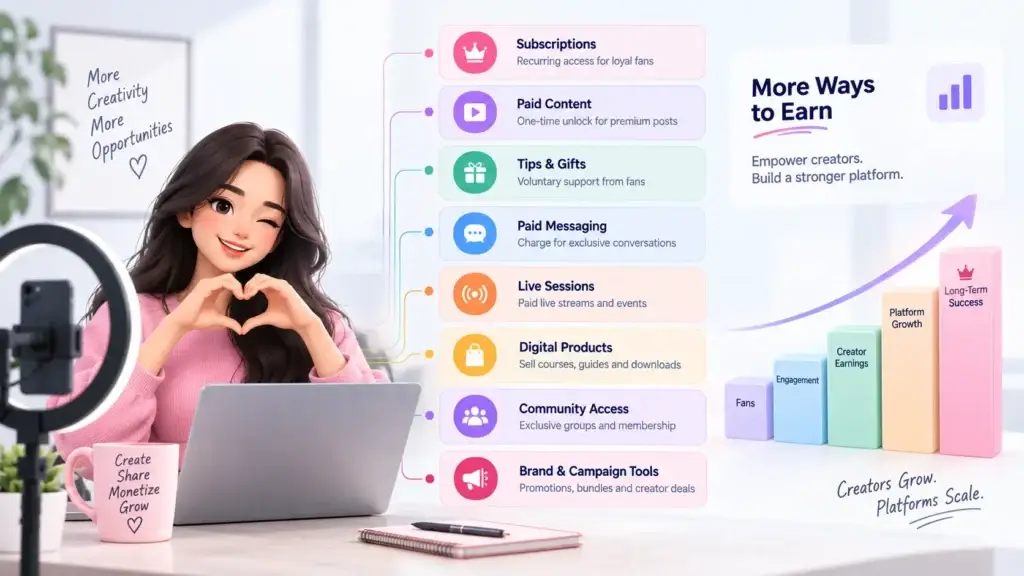
Image Source: AI-generated visual by Miracuves
A strong subscription platform should not depend on one revenue stream. Subscriptions can be the base layer, but the real growth comes when creators can combine recurring revenue with flexible monetization options.
Subscription Platform Monetization Layers
| Monetization Layer | How It Works | Founder Impact |
|---|---|---|
| Recurring Memberships | Fans pay monthly or annually for premium access. | Creates predictable revenue and improves platform retention. |
| Paid Content Unlocks | Fans pay separately for premium videos, images, posts, files, or experiences. | Helps creators monetize high-value content without changing subscription pricing. |
| Tips and Gifts | Fans send voluntary payments to support creators or reward specific content. | Adds emotional monetization and increases creator earnings from loyal fans. |
| Paid Messaging | Creators charge for private replies, priority messages, or exclusive fan conversations. | Turns creator attention into a premium revenue channel. |
| Live Sessions | Fans pay for live streams, private calls, group sessions, or virtual events. | Creates high-engagement moments and premium monetization opportunities. |
| Digital Products | Creators sell guides, courses, templates, downloads, audio files, or other assets. | Expands the platform beyond content access into creator commerce. |
| Community Access | Fans pay to join private groups, clubs, circles, or niche communities. | Improves retention because fans stay for belonging, not only content. |
| Brand and Campaign Tools | Creators run promotions, bundles, limited-time offers, and premium campaigns. | Gives platform operators more revenue levers and creator growth tools. |
When these revenue layers work together, the platform becomes more valuable to creators. Instead of forcing every creator into the same subscription model, the platform lets creators choose the monetization mix that fits their audience.
That flexibility is what separates a basic membership site from a scalable creator monetization platform.
Why Fan Ownership Is Becoming a Platform Advantage
Creators are becoming more aware of platform dependency.
When creators build their audience only on social networks, they often depend on algorithm changes, limited reach, account restrictions, and weak access to audience data. A subscription-based platform gives them a stronger relationship with paying fans.
But access alone is not the full advantage. Fan ownership becomes powerful when creators can understand and manage their audience.
Useful fan ownership features include:
- Fan profiles and engagement history
- Subscription status and renewal tracking
- Purchase history
- Content preferences
- Message activity
- Tip and unlock behavior
- Churn signals
- Loyalty segmentation
- Campaign response tracking
For creators, this creates business clarity. They can see who their most loyal fans are, what content drives revenue, which offers work, and when fans may be likely to leave.
For founders, fan ownership features increase platform stickiness. Creators are less likely to leave when the platform becomes the operating system for their fan relationships.
The Role of AI in Multi-Layer Creator Monetization
AI is becoming a practical layer inside subscription-based platforms. It should not be added only because it sounds innovative. It should solve real creator and platform problems.
Creators often struggle with time, consistency, engagement, and audience understanding. AI can help reduce that operational load.
Useful AI opportunities include:
- Personalized content recommendations
- Fan segmentation based on behavior
- Suggested premium offers
- Automated engagement prompts
- Churn prediction
- Creator reply assistance
- Content tagging and discovery
- Moderation support
- Performance insights
- Smart pricing suggestions
The founder opportunity is not to replace creators with AI. The opportunity is to help creators earn more, respond faster, understand fans better, and manage growth without doing everything manually.
This is especially important as subscription platforms become more competitive. The platform that helps creators improve revenue per fan will be more valuable than the platform that only hosts content.
What Founders Should Build Beyond Basic Subscriptions
A future-ready subscription platform needs a deeper product structure. It should serve fans, creators, and platform operators together.
Fan-Side Experience
Fans need a smooth experience that makes payments, discovery, access, and interaction easy. If the fan journey feels confusing, revenue suffers.
Important fan-side modules include:
- Creator discovery
- Subscription plans
- Premium content access
- Wallet or payment balance
- One-time unlocks
- Tips and gifts
- Private messaging
- Live session booking or access
- Notifications
- Purchase history
- Saved creators
- Account privacy controls
Creator-Side Experience
Creators need tools that help them publish, monetize, communicate, and understand performance.
Important creator-side modules include:
- Creator profile management
- Subscription plan setup
- Content upload and scheduling
- Premium content pricing
- Fan messaging
- Live session tools
- Earnings dashboard
- Payout requests
- Fan analytics
- Offer and campaign creation
- Digital product listings
- Community management
Admin-Side Control
The admin dashboard is where the business becomes manageable. Without strong admin control, the founder may struggle with disputes, payouts, abuse reports, creator approvals, commissions, and platform policies.
Important admin-side modules include:
- User and creator management
- Content moderation
- Revenue and commission settings
- Subscription and payment reports
- Wallet and payout monitoring
- Verification workflows
- Dispute management
- Abuse reporting
- Category and content controls
- Platform analytics
- Role-based admin access
- Notifications and announcements
For founders exploring a ready-made creator monetization platform, Miracuves provides a practical route to start with core creator, fan, monetization, and admin workflows instead of building every module from zero. A relevant next step is to review the white-label creator platform foundation and map which modules fit your target creator niche.
Founder Decision Signals for Subscription Platform Development
Speed
If the market opportunity is active now, waiting months for every workflow to be built from scratch can delay validation. A ready-made foundation can help founders test faster.
Monetization Depth
If the platform depends only on monthly subscriptions, revenue may be limited. Multi-layer monetization gives creators more ways to earn and gives the platform more ways to grow.
Creator Retention
Creators stay longer when the platform helps them manage fans, track revenue, launch offers, and build repeat engagement instead of simply uploading paid content.
Admin Control
Strong admin control helps the founder manage users, creators, payments, disputes, moderation, commissions, and growth decisions from one dashboard.
Why Niche Direct-to-Fan Platforms Can Build Stronger Communities
A creator subscription platform does not need to serve every type of creator. In many cases, a focused direct-to-fan platform can build stronger loyalty by designing its experience around a specific creator category and its paying audience.
A niche platform may focus on adult creators, models, entertainers, musicians, fitness personalities, lifestyle influencers, cosplay creators, performers, celebrities, or exclusive fan communities. These categories are more closely connected to the creator-fan relationship associated with platforms such as OnlyFans.
The advantage of a niche model is that every important workflow can be designed around the expectations of its audience. This includes creator onboarding, content discovery, profile presentation, subscription pricing, pay-per-view offers, private messaging, tips, livestream access, content moderation, identity verification, and community rules.
For example, a platform serving adult creators may require stronger age assurance, participant consent verification, content-review workflows, geographic restrictions, and adult-compatible payment processing. A platform serving musicians or performers may prioritize livestreams, exclusive releases, fan clubs, virtual events, and premium behind-the-scenes content.
A focused platform can also provide more relevant creator discovery. Instead of asking fans to browse a generic content marketplace, it can recommend creators, premium posts, paid experiences, and subscription offers that match a clearly defined interest.
For founders, this reduces positioning confusion. A niche direct-to-fan platform is easier to explain, market, moderate, and improve because its audience, creator needs, monetization methods, and trust requirements are clearly defined. The goal is not simply to serve fewer creators; it is to create a more relevant and valuable experience for a specific creator-fan ecosystem.
Subscription Platforms Are Becoming Revenue Operating Systems
The next stage of subscription-based platforms is not just content hosting. It is creator revenue operations.
A creator revenue operating system helps creators answer questions like:
- Which fans are most valuable?
- Which content generates the most paid unlocks?
- Which subscription tier has the strongest retention?
- Which fans are likely to cancel?
- Which offers should be promoted again?
- Which creators need growth support?
- Which payout workflows need review?
- Which communities are most engaged?
This matters because founders need more than front-end features. They need operational intelligence.
A platform may look attractive, but if the admin dashboard cannot show revenue patterns, creator activity, payout status, moderation issues, and campaign performance, the business becomes difficult to scale.
That is why analytics, reporting, and admin workflows are not optional. They are core business infrastructure.
Trust, Safety, and Privacy Matter More as Platforms Scale
Subscription-based creator platforms handle payments, private content, personal profiles, creator earnings, fan communication, and sometimes sensitive user interactions. That makes trust a core product requirement.
Founders should think carefully about:
- Encrypted data transfer
- Secure payment gateway integration
- Role-based access control
- Creator verification
- Fan account safety
- Content moderation
- Abuse reporting
- Dispute workflows
- Payout monitoring
- Activity logs
- Admin access controls
- Privacy-conscious data handling
A platform does not become trustworthy because it has a signup page and payment button. Trust comes from the systems behind the experience: who can access what, how issues are reported, how payouts are reviewed, how creators are verified, and how the admin team responds to risk.
For creator monetization products, these safety layers affect brand reputation, creator confidence, and fan retention.
Ready-Made vs Custom Development for Subscription Platforms
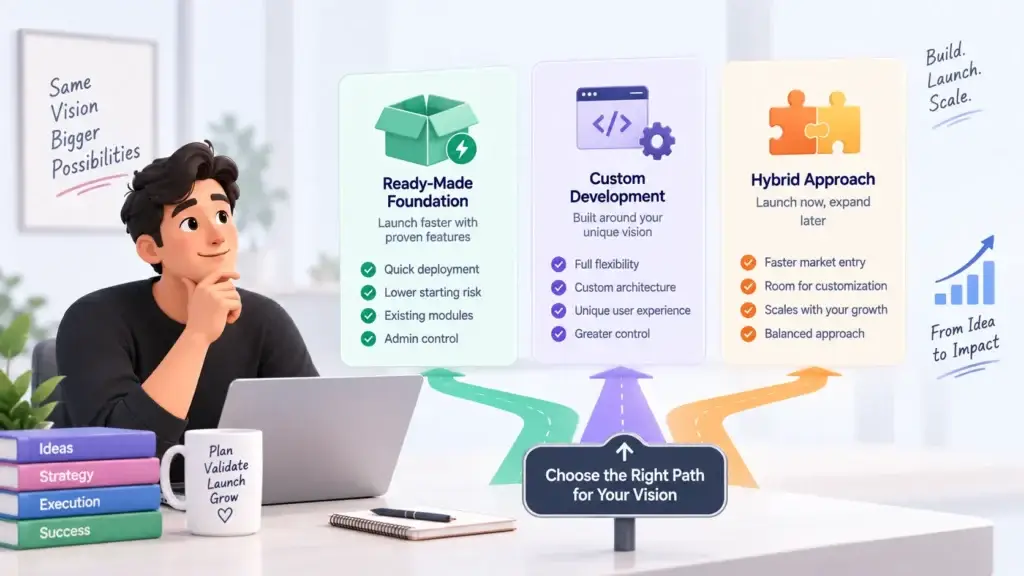
Image Source: AI-generated visual by Miracuves
Founders usually face two broad choices: build from scratch or start with a ready-made foundation.
Neither option is automatically right for every business. The better choice depends on speed, budget, differentiation, technical control, and market validation needs.
| Build Route | Best For | Strength | Limitation |
|---|---|---|---|
| Ready-made platform foundation | Founders who want to launch faster with proven subscription and monetization workflows | Faster deployment, lower starting risk, existing app modules, admin control | May need customization for unique business logic |
| Fully custom development | Founders with highly specific product models, unique UX, or complex integrations | Deep flexibility and custom architecture | Longer timeline, higher planning needs, greater initial build effort |
| Hybrid approach | Founders who want speed first and customization over time | Balances launch speed with future differentiation | Requires clear roadmap and feature prioritization |
For many founders, the most practical path is to launch with a strong foundation, validate creator demand, understand fan behavior, and then customize based on real usage.
Miracuves supports this approach with ready-made and white-label app foundations that help founders move from idea to launch faster while keeping room for branding, source-code ownership, admin control, and business model customization.
Mistakes Founders Should Avoid
Building Only a Subscription Paywall
A simple subscription wall may work at the start, but creators need more ways to earn. Without paid unlocks, tips, messaging, live sessions, digital products, and analytics, the platform may struggle to retain serious creators.
Ignoring Admin Operations
Founders often focus on fan-facing design and forget the backend control layer. Weak admin tools can create problems around payouts, creator verification, disputes, reporting, moderation, and commission management.
Choosing Features Without a Monetization Strategy
Every feature should support a business goal. A live session module, paid message flow, or wallet system only creates value when it fits the creator niche and fan spending behavior.
Delaying Launch Until the Product Is Too Large
Trying to build every possible creator economy feature before launch can slow validation. A stronger approach is to launch the right core platform, measure behavior, and expand based on actual creator and fan demand.
How Miracuves Helps Founders Launch Subscription-Based Creator Platforms Faster
Building a creator monetization platform requires more than attractive screens. The product needs subscription flows, premium content access, creator profiles, fan accounts, wallet logic, payment integrations, messaging, live engagement, moderation, reporting, and admin control.
Miracuves helps founders start with a ready-made, white-label creator app foundation designed for faster market entry. Where the ready-made scope fits, Miracuves can support 6-day solution delivery, helping founders move from planning to launch without waiting months for every module to be built from zero.
With Miracuves, founders can move faster because the platform foundation supports:
- Subscription and membership workflows for recurring creator income.
- Premium content and PPV access for extra monetization beyond monthly plans.
- Creator profiles and fan accounts to build structured creator-audience relationships.
- Private messaging and engagement tools for direct fan interaction.
- Wallet, payment, and payout workflows to manage revenue movement.
- Admin dashboard control for users, creators, content, commissions, reports, and disputes.
- Branding and niche customization for different creator categories and fan communities.
- Source-code ownership for future customization, integrations, and platform independence.
- Faster validation of creator acquisition, fan engagement, pricing, and retention.
If you are exploring a subscription-based fan platform, you can review Miracuves’ creator monetization app solution to understand how subscriptions, PPV, wallet workflows, creator tools, and admin controls can fit into your launch plan.
Final Thoughts: The Future Belongs to Platforms That Help Creators Earn in More Than One Way
The future of subscription-based platforms is not limited to monthly memberships. The stronger opportunity is multi-layer creator monetization: recurring access, paid content, tips, live sessions, private messages, communities, digital products, AI-powered engagement, and better audience ownership.
For creators, this means more control over income and fan relationships. For fans, it means more ways to connect with the creators they value. For founders, it means the product must be built as a creator business engine, not just a content access tool.
The winners in this category will be platforms that combine monetization flexibility, trust, admin control, creator analytics, fan engagement, and faster execution.
Miracuves helps founders move in that direction with launch-ready creator monetization solutions built for branding, source-code ownership, admin visibility, and faster deployment. If your goal is to build a modern subscription-based platform, the smartest starting point is not copying a single model. It is building a flexible foundation that creators can grow with.
FAQs
What are subscription-based platforms?
Subscription-based platforms are digital products where users pay recurring fees to access premium content, communities, services, tools, or creator experiences. In the creator economy, these platforms help creators monetize loyal fans through memberships and additional paid engagement options.
How are subscription-based platforms changing?
They are moving from simple membership access to multi-layer monetization. Modern platforms now include subscriptions, paid content unlocks, tips, live sessions, private messaging, communities, digital products, analytics, and AI-powered engagement tools.
Why do creators need more than subscriptions?
Subscriptions create recurring revenue, but not every fan wants the same level of access. Some fans prefer one-time purchases, tips, private sessions, premium messages, or digital products. Multiple monetization layers help creators increase revenue without depending on one pricing model.
What features should a creator monetization platform include?
A strong creator monetization platform should include creator profiles, fan accounts, subscription plans, premium content access, paid messaging, tips, live sessions, payment workflows, wallet or payout systems, analytics, content moderation, and admin controls.
How can AI improve subscription platform monetization?
AI can help with personalized recommendations, fan segmentation, churn prediction, automated engagement prompts, content discovery, creator assistance, and moderation support. The goal is to help creators understand fans better and manage engagement more efficiently.
Is a niche subscription platform better than a broad creator platform?
A niche platform can be stronger when it serves a specific creator category or fan community. Focused positioning can improve creator onboarding, fan loyalty, pricing strategy, platform rules, and marketing clarity.
Should founders build a subscription platform from scratch?
Building from scratch may make sense for highly unique product models. But founders who want faster validation can start with a ready-made or white-label platform foundation, then customize based on market feedback and creator demand.
How does Miracuves support subscription-based creator platform launches?
Miracuves helps founders build ready-made and white-label creator monetization platforms with source code, branded design, admin dashboards, subscription workflows, premium content features, and faster launch support. Where the ready-made scope fits, Miracuves can support 6-day solution delivery.
Miracuves is an independent software development company. We are not affiliated with, connected to, sponsored by, or endorsed by any company or product named in this article.
Terms such as “X Clone” are used descriptively. It is how the software industry refers to building a platform with functionality comparable to a known service, and how clients search for it.
The entire design and codebase of our products is built by our own team. Our products contain no code, design, graphics, or content originating from any third-party website or applications.
All third-party names and marks referenced in this article are the property of their respective owners, referenced solely to identify the services discussed.