


Key Takeaways
- A subscription-based platform should combine creator onboarding, memberships, paid content, messaging, payments, payouts, access controls, analytics, and admin management within one connected product.
- Core development scope depends on membership tiers, recurring billing, PPV content, live sessions, creator dashboards, subscriber workflows, moderation, notifications, and monetization requirements.
- Development cost is influenced by feature depth, web and mobile scope, payment integrations, content delivery, security, scalability, third-party APIs, customization, and ongoing platform operations.
Feature & Cost Signals
- Essential features may include creator profiles, subscriber accounts, membership plans, recurring payments, locked content, PPV purchases, messaging, notifications, and creator payouts.
- Cost can increase with live streaming, advanced recommendations, multi-currency payments, complex payout logic, content protection, identity verification, automation, analytics, and custom integrations.
- Infrastructure choices such as media storage, CDN delivery, databases, cloud hosting, security monitoring, backups, API services, and scalable architecture also affect total development and operating cost.
Founder Planning Insights
- Founders should define target users, creator workflows, pricing tiers, revenue model, payment routes, payout rules, content access logic, compliance needs, and MVP scope before estimating cost.
- A phased roadmap can prioritize onboarding, subscriptions, payments, paid content, and admin workflows first, then add live access, recommendations, loyalty, automation, and advanced analytics later.
- Miracuves develops customizable subscription-based platforms with memberships, paid content, recurring billing, creator payouts, messaging, live access, analytics, security, integrations, and admin controls.
Building a subscription-based platform is not just about letting creators upload content and collect monthly payments. For founders, the real challenge is creating a system where creators can earn consistently, subscribers can access paid content smoothly, and the platform operator can manage payments, policies, disputes, moderation, analytics, and growth from one reliable backend.
The creator economy has made subscription platforms attractive for independent creators, influencers, models, performers, creator agencies, entertainment personalities, and niche fan communities. But many founders underestimate how many moving parts are involved before launch. A successful product needs more than attractive screens. It needs creator workflows, subscriber access rules, payment logic, payout controls, admin visibility, privacy settings, moderation systems, and monetization flexibility. Founders who want to move faster can also explore a creator monetization platform foundation that supports paid content, subscriptions, creator earnings, and admin control.
This guide breaks down what founders should plan before investing in subscription-based platform development, how core features affect cost, and when a ready-made foundation from Miracuves can help reduce time-to-market while keeping room for customization.
Why Founders Are Exploring Subscription-Based Creator Platforms
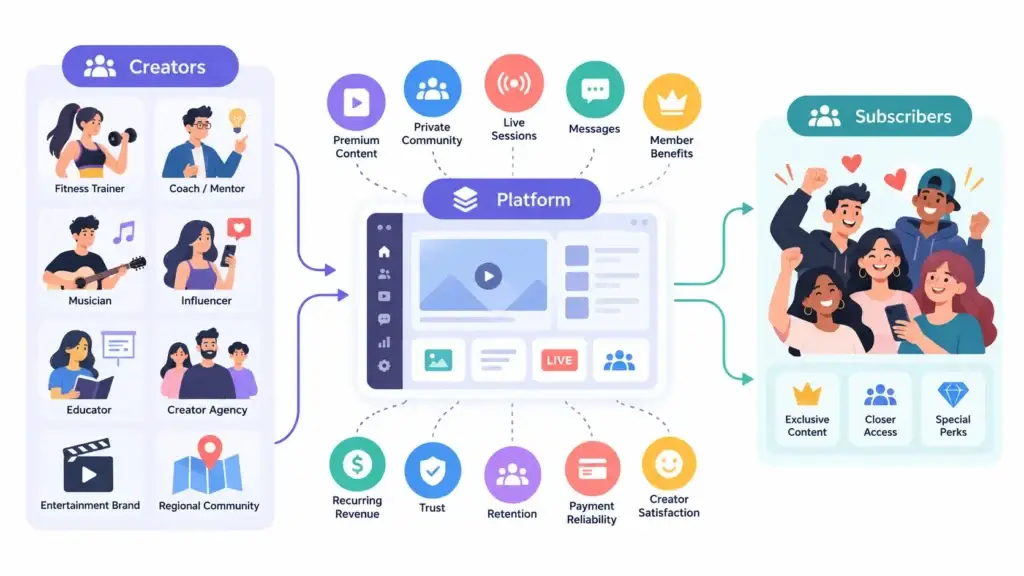
A subscription-based platform gives creators a direct way to monetize their audience instead of depending only on social media reach, ads, sponsorships, or algorithm-driven visibility. For subscribers, the value is access: exclusive content, closer creator interaction, private communities, premium media, live sessions, personalized messages, or member-only benefits.
For founders, the opportunity is not simply copying an existing business model. The stronger opportunity is choosing a focused niche and building a monetization-ready platform around it.
A founder may build a platform for:
- Independent creators offering exclusive photos, videos, and subscriber-only content
- Models and influencers monetizing exclusive fan memberships and private content
- Musicians sharing private releases and backstage content
- Influencers monetizing fan access
- Creator agencies managing multiple profiles
- Entertainment brands building paid membership communities
- Regional creator networks serving local audiences
- Premium creators offering subscriber-only media, PPV content, paid messages, and personalized fan experiences
This is also why founders are studying broader creator-led platform models instead of building generic subscription sites with no clear niche, community angle, or monetization strategy.
The business model is attractive because recurring revenue can improve predictability. But recurring revenue only works when the product experience supports retention, trust, content quality, payment reliability, and creator satisfaction.
What a Subscription-Based Platform Actually Needs to Work
At the surface level, a subscription platform may look simple: creators publish content, subscribers pay, and the platform earns a commission. In practice, the system needs multiple connected layers.
A strong platform usually includes:
- Creator layer: profile setup, content posting, pricing, fan management, earnings, payout requests, analytics, and communication tools.
- Subscriber layer: discovery, subscriptions, saved creators, payment methods, paid content access, messages, notifications, and account settings.
- Admin layer: user control, creator verification, reports, content moderation, commissions, payments, payouts, analytics, and platform settings.
- Payment layer: subscriptions, one-time purchases, wallet balances, tips, refunds, payout records, and gateway integrations.
- Trust layer: verification, age-gating where relevant, content rules, reporting, moderation queues, privacy settings, and abuse handling.
- Growth layer: referrals, promotions, creator onboarding campaigns, analytics, engagement tools, and retention features.
When founders only plan the visible app screens, they often miss the operational systems that determine whether the platform can actually run at scale.
Core Creator Features Founders Should Plan First
Creators are the supply side of the platform. If creators do not feel they can earn, manage fans, protect their content, and understand performance, they will not stay active.
Before finalizing the launch scope, founders should map the complete creator platform feature set, including profile controls, paid content access, messaging, subscriptions, wallets, payouts, moderation, and admin workflows.
Creator Profile and Branding Controls
Creators need profile pages that clearly show their bio, content category, subscription offer, media previews, pricing, and engagement options. This is where subscribers decide whether the creator feels worth paying for.
Useful creator profile elements include:
- Profile photo and cover image
- Bio and category tags
- Subscription pricing
- Free or paid profile status
- Preview content
- Social links where relevant
- Verification badge
- Content gallery
- Follower and subscriber indicators
- Call-to-action buttons for subscribing, tipping, or messaging
For founders, profile flexibility matters because different creator categories sell differently. A premium creator may need locked media previews and subscription offers. An influencer may need exclusive posts, fan interaction options, and premium content highlights. A creator agency may need managed profile controls.
Content Upload and Access Rules
The content system is the heart of a paid creator platform. It should support different media formats and access permissions without creating confusion for creators or subscribers.
Important content workflows include:
- Image upload
- Video upload
- Text posts
- Locked posts
- Subscriber-only posts
- Pay-per-view content
- Scheduled posts
- Draft saving
- Content categories
- Media library or vault
- Reported content review
Access rules decide who can see what. A basic subscriber may access standard posts, while premium subscribers may unlock higher-value content. Some content may be available through one-time payment instead of subscription.
This access logic directly affects development cost because it touches content storage, payments, user permissions, frontend display, backend rules, and admin moderation.
Creator Earnings and Payout Dashboard
Creators need transparency around earnings. If the payout experience feels unclear, trust breaks quickly.
A useful creator earnings dashboard should show:
- Subscription revenue
- Paid content revenue
- Tips and gifts
- Paid messages
- Platform commission deductions
- Pending balance
- Available balance
- Payout request status
- Transaction history
- Refund or dispute adjustments where relevant
This is not just a finance feature. It is a creator retention feature. When creators understand their income clearly, they are more likely to keep publishing and promoting their profile.
Subscriber Features That Improve Conversion and Retention
Subscribers are paying for ease, access, and interaction. If the payment experience is confusing or content access feels unreliable, churn increases.
Smooth Onboarding and Discovery
Subscriber onboarding should be simple enough for casual users while still supporting privacy, verification, and payment safety.
Useful subscriber-side features include:
- Email or phone signup
- Social login where relevant
- Profile setup
- Creator search
- Category browsing
- Recommended creators
- Featured creators
- Subscription plan comparison
- Saved creators
- Notifications
- Payment method management
Discovery matters because new subscribers rarely know every creator on the platform. Search, categories, recommendations, and featured placements help users find creators worth paying for. Long-term growth also depends on subscriber loyalty in creator platforms, especially through personalization, engagement reminders, creator updates, and smooth renewal experiences.
Subscription Management
Subscription management must be clear. Subscribers should know what they are paying for, when billing happens, how to cancel, and what content is included.
Important subscription features include:
- Monthly plans
- Tiered membership plans
- Renewal reminders
- Subscription history
- Upgrade and downgrade options
- Cancellation flow
- Failed payment handling
- Access expiration rules
- Receipts and invoices where relevant
Founders should avoid unclear subscription rules. Confusing billing can lead to disputes, payment issues, support tickets, and trust problems.
Paid Interactions and Premium Access
Recurring subscriptions can be supported by additional paid interactions. This helps creators earn more and gives subscribers flexible ways to engage without committing to higher monthly plans.
Premium interaction features may include:
- Paid messages
- Pay-per-view media
- Tips
- Gifts
- Paid live sessions
- Private audio or video calls
- Special requests
- Paid custom content requests
- Premium fan badges
Each additional monetization feature adds product value, but it can also increase development complexity because payment flows, permissions, records, notifications, and admin controls must work together.
Admin Dashboard: The Feature Founders Should Not Treat as Optional
Many founders focus heavily on the mobile app and underestimate the admin dashboard. That is risky. The admin dashboard is where the platform operator controls the business.
A subscription-based platform needs admin control over:
- Users and creators
- Creator verification
- Content approvals
- Reported content
- Subscription plans
- Platform commissions
- Payment records
- Payout requests
- Refund and dispute workflows
- Categories and homepage placements
- Notifications
- Promotions
- Platform policies
- Analytics
- Role-based staff permissions
Without a strong admin dashboard, even small operational tasks become developer-dependent. The founder may need technical help to change commissions, review reports, manage payouts, deactivate suspicious accounts, or resolve payment disputes.
For a serious creator monetization business, admin control is not a backend extra. It is the operating system of the platform.
Core Features and Their Business Value
| Feature Area | Business Value | Founder Impact |
|---|---|---|
| Creator profiles | Helps creators present their offer clearly | Improves creator onboarding and subscriber conversion |
| Subscription plans | Creates predictable recurring revenue | Supports monthly monetization and retention tracking |
| Pay-per-view content | Adds one-time purchase revenue | Helps creators monetize premium content beyond subscriptions |
| Paid messaging | Turns private engagement into a revenue channel | Increases creator earnings and fan interaction |
| Wallet and payments | Supports transactions, spending, and payout visibility | Reduces payment confusion and improves trust |
| Admin dashboard | Controls users, content, payments, commissions, and reports | Gives the operator practical control over the platform |
| Moderation workflows | Protects users, creators, and platform reputation | Supports safer scaling and policy enforcement |
| Analytics | Shows revenue, engagement, creator activity, and churn signals | Helps founders make better product and growth decisions |
What Actually Drives Subscription-Based Platform Development Cost?
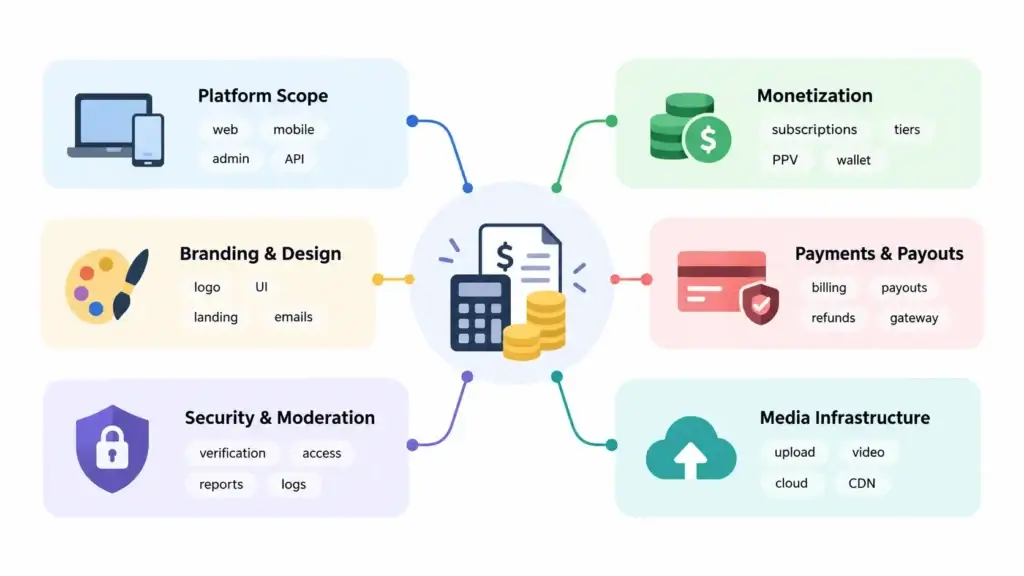
The cost of building a subscription-based platform depends on how deep the product needs to go. A simple content membership app costs less than a full creator monetization ecosystem with mobile apps, web access, wallet flows, subscriptions, PPV content, live engagement, verification, moderation, analytics, and custom admin controls.
Instead of asking only, “How much does it cost?”, founders should ask, “Which modules do we need for launch, which can wait, and which are essential for trust?” For a more pricing-focused view, this creator platform development cost breakdown explains how features, delivery scope, customization, source code, and launch readiness influence the final investment.
1. Platform Scope
A web-only platform usually has a different cost structure than a full product with iOS, Android, web app, admin dashboard, and APIs. If you want subscribers and creators to use the platform on mobile, mobile experience becomes a major cost factor.
Common scope options include:
- Web platform only
- Mobile app only
- Web + mobile app
- Admin dashboard
- Creator web panel
- Unified creator and subscriber app
- Separate panels for different user roles
- API-ready architecture for future integrations
The wider the scope, the more design, development, testing, deployment, and maintenance work is required.
2. Monetization Complexity
A basic subscription flow is only one revenue model. Many founders want multiple monetization layers from day one.
Cost increases when the platform includes:
- Monthly subscriptions
- Multiple subscription tiers
- Pay-per-view unlocks
- Wallet payments
- Tips and gifts
- Paid messages
- Paid calls
- Live sessions
- Creator shop
- Platform commissions
- Referral rewards
- Promotional campaigns
Each monetization layer requires payment logic, user permissions, transaction records, creator earnings, admin reporting, and payout handling.
3. Payment Gateway and Payout Requirements
Payment integration is one of the most important cost drivers. Subscription platforms often need recurring billing, wallet balances, creator payouts, failed payment handling, refund logic, and transaction records.
Founders should plan:
- Which payment gateways are available in the target market
- Whether the business category is supported by the payment provider
- How creator payouts will be processed
- Whether wallet credits are needed
- How refunds and chargebacks will be handled
- What tax, invoice, or reporting workflows may be required
- Whether multiple currencies are needed
Payment provider approval depends on the business category, geography, provider policies, and operating model. The software can support integration workflows, but founders should verify provider requirements before launch.
4. Media Infrastructure
Subscription-based platforms often depend on images, videos, previews, locked media, paid media messages, and possibly live content. Media handling can affect both development cost and ongoing infrastructure cost.
Important media decisions include:
- Image and video upload limits
- File compression
- Video processing
- Secure media access
- Watermarking options
- Preview vs locked content rules
- Cloud storage
- CDN delivery
- Content removal workflows
- Live streaming or call infrastructure
A lightweight creator community may not need complex media infrastructure at launch. A video-heavy platform will need stronger planning from the beginning.
5. Security, Privacy, and Moderation
Security should be treated as a product foundation, not a final-stage add-on. Subscription-based platforms handle user accounts, payments, creator content, private messages, and sensitive platform activity.
Important trust and safety layers include:
- Encrypted data transfer
- Secure payment gateway integration
- Role-based access control
- Creator verification
- Subscriber account protection
- Content reporting
- Abuse handling
- Admin moderation queues
- Activity logs
- Payout monitoring
- Privacy-conscious data handling
- Permission-based dashboards
For a deeper operational view, founders can review this guide on paid content platform security, including account protection, secure payment workflows, access control, fraud monitoring, and admin moderation.
Compliance requirements depend on jurisdiction, content category, payment partners, user age, verification rules, and operating model. Founders should take legal guidance before launch and configure workflows around the target market.
6. Custom Design and Branding
A white-label foundation can reduce development time, but branding decisions still matter. The platform should feel like the founder’s own product, not a generic template.
Branding work may include:
- App name and logo
- Color system
- Splash screens
- Landing pages
- Creator profile design
- Subscriber dashboard design
- Email templates
- Notification style
- Custom domain
- Content policy pages
- App store assets
The more customized the product experience, the more design and implementation effort is required.
Miracuves Subscription-Based Platform Solution Cost and Tech Stack
Miracuves Pricing for a Subscription-Based Platform developed in PHP For $3,699 USD (One-Time Price) in just 6 days
Get a fully developed, deployment-ready subscription platform built for SaaS founders, membership businesses, creator platforms, digital service providers, online communities, and companies planning to monetize access through recurring plans. Built on a stable PHP foundation, this complete package includes everything you need to launch and scale:
Core Workflows: User registration, subscription plan selection, recurring billing, account management, plan upgrades and downgrades, free trials, renewals, cancellations, payment history, and customer notifications.
Built-in Revenue Logic: Monthly subscriptions, annual plans, tiered pricing, premium memberships, paid add-ons, usage-based upgrades, trial-to-paid conversion, referral programs, and platform service fees.
Management Hub: Centralized admin dashboard, user management, subscription tracking, plan management, payment records, billing controls, coupon management, cancellation monitoring, support handling, and revenue analytics.
Launch-Ready: Fully prepared for your custom branding, configuration, payment gateway setup, subscription plan creation, billing rules, user onboarding, and immediate market entry.
Why Is Subscription-Based Platform Development More Affordable?
Most subscription platforms become expensive when businesses choose fully custom development from scratch. Building separate workflows for users, recurring payments, plan management, renewals, cancellations, trials, billing records, notifications, access controls, and admin operations can significantly increase cost, timeline, and technical complexity.
We took a smarter, more practical approach:
You Aren’t Paying for Ground-Up Development: Our subscription platform engine is already developed, tested, and ready to deploy. You skip the inflated cost and long development cycles normally associated with building a complete recurring-revenue platform from scratch.
The Power of PHP: We built this solution on a reliable and cost-effective PHP architecture. This keeps the upfront price affordable while supporting essential subscription workflows, recurring billing, member management, plan controls, payment operations, and administrative functions.
You get a launch-ready subscription-based platform with practical billing, membership, monetization, retention, and management features, source code access, and faster deployment without the high custom development price tag.
Note: This cost is for the solution, re-branding, deployment, and source code only.
Ready-Made Foundation vs Custom Development: Which Route Makes Sense?
Founders usually choose between two development paths: building from scratch or starting with a ready-made product foundation.
A custom build gives maximum flexibility but requires more time, planning, budget, and technical oversight. It may be suitable when the business model is highly unique or the platform requires unusual workflows.
A ready-made foundation is useful when the core business model already follows a proven pattern: creators publish content, subscribers pay for access, and the platform manages monetization, moderation, payments, and admin control.
| Build Approach | Best For | Strength | Tradeoff |
|---|---|---|---|
| Custom development | Highly unique product models | Maximum flexibility | Longer timeline and higher planning complexity |
| Ready-made foundation | Founders who want faster market validation | Faster launch with existing core modules | Needs customization for brand, policies, and niche |
| Hybrid approach | Founders who need speed plus custom workflows | Balanced speed and flexibility | Requires clear prioritization |
When choosing a build route, founders should also evaluate whether their subscription platform development partner understands creator monetization, payment workflows, moderation, source-code ownership, admin operations, and post-launch support.
For founders who want to move faster, Miracuves offers a launch-ready creator monetization solution that can be customized with white-label branding, admin controls, subscription workflows, paid content features, and source-code ownership. This makes it easier to validate the business without building every module from zero.
Founder Decision Signals
Speed
If your priority is fast market validation, a ready-made subscription platform foundation can reduce the time spent building standard creator, subscriber, payment, and admin workflows.
Cost
If your budget is limited, define must-have launch modules first. Advanced features such as live sessions, AI engagement, custom gateways, or complex analytics can be phased in later.
Scalability
If your platform will rely on video-heavy content, paid messaging, and active creator communities, plan media storage, CDN, backend performance, and moderation workflows early.
Market Fit
If your niche is not validated yet, prioritize creator onboarding, subscription conversion, payment reliability, and admin visibility over building every advanced feature at launch.
Suggested Launch Feature Priorities
Not every feature needs to be built on day one. A better approach is to separate launch-critical features from growth features.
Launch-Critical Features
These features help the platform operate from the beginning:
- Subscriber signup and login
- Creator registration and profile setup
- Subscription plans
- Paid content access
- Payment gateway integration
- Creator earnings dashboard
- Payout request workflow
- Admin dashboard
- Content reporting
- User and creator management
- Basic analytics
- Notification system
- Terms, privacy, and content policy pages
Growth Features
These features can improve monetization and engagement after the core platform is validated:
- Paid private messaging
- Tips and gifts
- Creator vault
- Paid live sessions
- Audio and video calls
- Creator shop
- Referral programs
- Advanced analytics
- Creator agency tools
- AI-powered fan engagement
- Advanced moderation rules
- Multi-currency payments
- Regional payment gateways
- Loyalty or membership rewards
This phased approach keeps the launch focused while still leaving room for product expansion.
Monetization Models Founders Can Plan Around
Subscription revenue is the foundation, but it should not be the only revenue stream. A creator platform becomes more resilient when it supports different earning paths for creators and the platform operator.
Before adding every possible revenue stream, founders should define the creator platform business model around subscriptions, PPV content, paid messages, tips, wallet flows, platform commissions, payout timing, and creator retention.
| Monetization Model | How It Works | Why It Matters |
|---|---|---|
| Monthly subscriptions | Subscribers pay recurring fees for creator access | Builds predictable revenue |
| Platform commission | The platform takes a percentage of creator earnings | Aligns platform growth with creator success |
| Pay-per-view content | Subscribers unlock individual posts or media | Helps creators sell premium content separately |
| Paid messages | Fans pay to send or unlock private content | Adds direct engagement revenue |
| Tips and gifts | Subscribers support creators with voluntary payments | Encourages lightweight spending |
| Live sessions | Creators charge for live access or private sessions | Increases high-value interaction |
| Creator shop | Creators sell digital or physical products | Expands commerce potential |
| Featured placement | Creators pay or qualify for promotional visibility | Adds platform-side revenue options |
Once subscriptions are active, founders can expand revenue by building a repeat fan spending model through PPV unlocks, paid messages, tips, live sessions, premium requests, and creator-led engagement loops.
Founders should choose monetization models based on their niche. A coaching platform may rely on subscriptions and paid calls. A music community may use memberships, PPV releases, and live sessions. A creator agency platform may prioritize subscriptions, messaging, and performance analytics.
Mistakes Founders Should Avoid Before Development
Building Without Clear Subscription Rules
Before development begins, define subscription tiers, renewal rules, cancellation logic, creator commissions, payout timing, and access expiration. Unclear rules create payment confusion and support issues.
Treating Moderation as a Later Problem
Moderation affects creator trust, subscriber safety, payment partner confidence, and brand reputation. Reporting, review queues, verification, and admin actions should be planned early.
Ignoring Payment Provider Requirements
Payment providers may have category, geography, and compliance requirements. Founders should confirm supported payment flows before committing to a launch plan.
Overbuilding Before Market Validation
Advanced features are useful, but launching with every possible module can slow execution. Start with the features needed to prove demand, then expand based on real creator and subscriber behavior.
How Miracuves Helps Founders Launch Faster
A subscription-based platform has many connected systems: creator profiles, subscriber access, content monetization, payment flows, payout tracking, admin governance, reporting, and moderation. Building everything from zero can delay market validation and increase development risk.
Miracuves helps founders start with a ready-made, white-label product foundation that can be customized around the brand, niche, content rules, monetization model, and launch goals. Where applicable, Miracuves supports 6-day solution delivery so founders can move faster while still keeping control over branding, admin operations, and source-code ownership.
This approach is useful for founders who already know they want to launch a paid creator, fan engagement, or premium content platform but do not want to spend months rebuilding standard workflows before testing the market. Founders exploring adjacent creator, influencer, video, and entertainment-led models can also browse Miracuves’ digital entertainment solutions for related launch-ready platform ideas.
Final Thoughts: Plan the Platform Before You Price the Build
The cost of a subscription-based platform is not determined by one feature or one screen. It is shaped by the full product system: creator tools, subscriber experience, payment flows, content access, admin control, moderation, security, analytics, and future scalability.
For founders, the smartest decision is to plan the business model before choosing the build path. Define who the platform serves, what creators will sell, how subscribers will pay, how payouts will work, what policies need to be enforced, and which features are essential for launch.
A ready-made foundation from Miracuves can help reduce development time when the goal is to launch faster, validate demand, and customize around a focused creator economy niche without starting from zero.
FAQs
How much does it cost to develop a subscription-based platform?
The cost depends on platform scope, features, payment gateway requirements, mobile and web app needs, media infrastructure, admin controls, security, moderation, and customization. A simple subscription app costs less than a full creator monetization platform with paid content, messaging, wallets, live sessions, payouts, and advanced analytics.
What features should a subscription-based creator platform include?
A strong platform should include creator profiles, subscriber accounts, subscription plans, paid content access, payment integration, payout tracking, creator earnings, private messaging, admin dashboard, moderation tools, notifications, analytics, and security controls.
Can I launch a subscription platform without building from scratch?
Yes. Founders can use a ready-made, white-label platform foundation and customize it for their brand, creator niche, content rules, payment flows, and monetization model. This can reduce launch time compared with building every module from zero.
Why is admin control important in a paid creator platform?
Admin control helps the platform operator manage users, creators, payments, payouts, commissions, reports, content moderation, platform settings, disputes, and analytics. Without it, daily operations become difficult and developer-dependent.
What monetization models can a subscription platform support?
Common monetization models include monthly subscriptions, platform commissions, pay-per-view content, paid messages, tips, gifts, live sessions, private calls, creator shop sales, featured placements, and referral-driven growth models.
Should founders build all advanced features at launch?
Not always. It is usually better to launch with the core features needed for market validation, then add advanced features after understanding creator activity, subscriber behavior, retention, and revenue patterns.
Is payment integration difficult for subscription-based platforms?
Payment integration can be complex because it may involve recurring billing, one-time purchases, wallet balances, creator payouts, failed payments, refunds, chargebacks, and provider approval requirements. Founders should plan payment flows early.
How can Miracuves help with subscription-based platform development?
Miracuves helps founders launch white-label, source-code-owned creator monetization platforms with branded design, admin dashboards, subscription workflows, paid content features, payment integration support, and faster deployment where applicable.
Miracuves is an independent software development company. We are not affiliated with, connected to, sponsored by, or endorsed by any company or product named in this article.
Terms such as “X Clone” are used descriptively. It is how the software industry refers to building a platform with functionality comparable to a known service, and how clients search for it.
The entire design and codebase of our products is built by our own team. Our products contain no code, design, graphics, or content originating from any third-party website or applications.
All third-party names and marks referenced in this article are the property of their respective owners, referenced solely to identify the services discussed.



