
Buying a yacht is rarely a simple “browse, inquire, and purchase” journey. A serious buyer usually needs more than a listing page. They may need a marine surveyor, transport estimate, insurance guidance, finance support, documentation help, valuation input, and sometimes marina or storage support before they can move forward with confidence.
That is why modern online yacht marketplaces are becoming more than listing platforms. The strongest platforms help buyers move from discovery to decision by connecting them with trusted service providers around the purchase journey.
For founders, brokers, dealers, and marine businesses, this creates a useful opportunity. A yacht marketplace can generate value not only from listings and subscriptions, but also from structured service leads. When buyer requests for surveys, transport, insurance, and finance are captured inside the platform, the operator gains better visibility, better partner control, and additional monetization opportunities.
This blog explains how online yacht marketplaces connect buyers with service providers, why these workflows matter, and what founders should consider before adding partner-service modules to a yacht marketplace platform.
Key Takeaways
- Online yacht marketplace services help buyers move beyond listings by connecting them with surveyors, transport providers, insurance partners, and finance providers.
- Service workflows should capture structured buyer demand through forms, reference codes, partner routing, and admin queues.
- The platform should facilitate leads carefully without claiming to approve loans, bind insurance, certify surveys, or guarantee transport.
- For founders, adjacent service leads can become an important revenue layer beyond listing fees and dealer subscriptions.
- Miracuves helps founders move from idea to launch faster with ready-made, white-label, and source-code-owned marketplace solutions.
Why Yacht Buyers Need More Than Listings
Yacht buying is a high-consideration process. Buyers are not only comparing photos, prices, locations, yacht size, year, builder, engine hours, cabins, and condition. They are also evaluating risk.
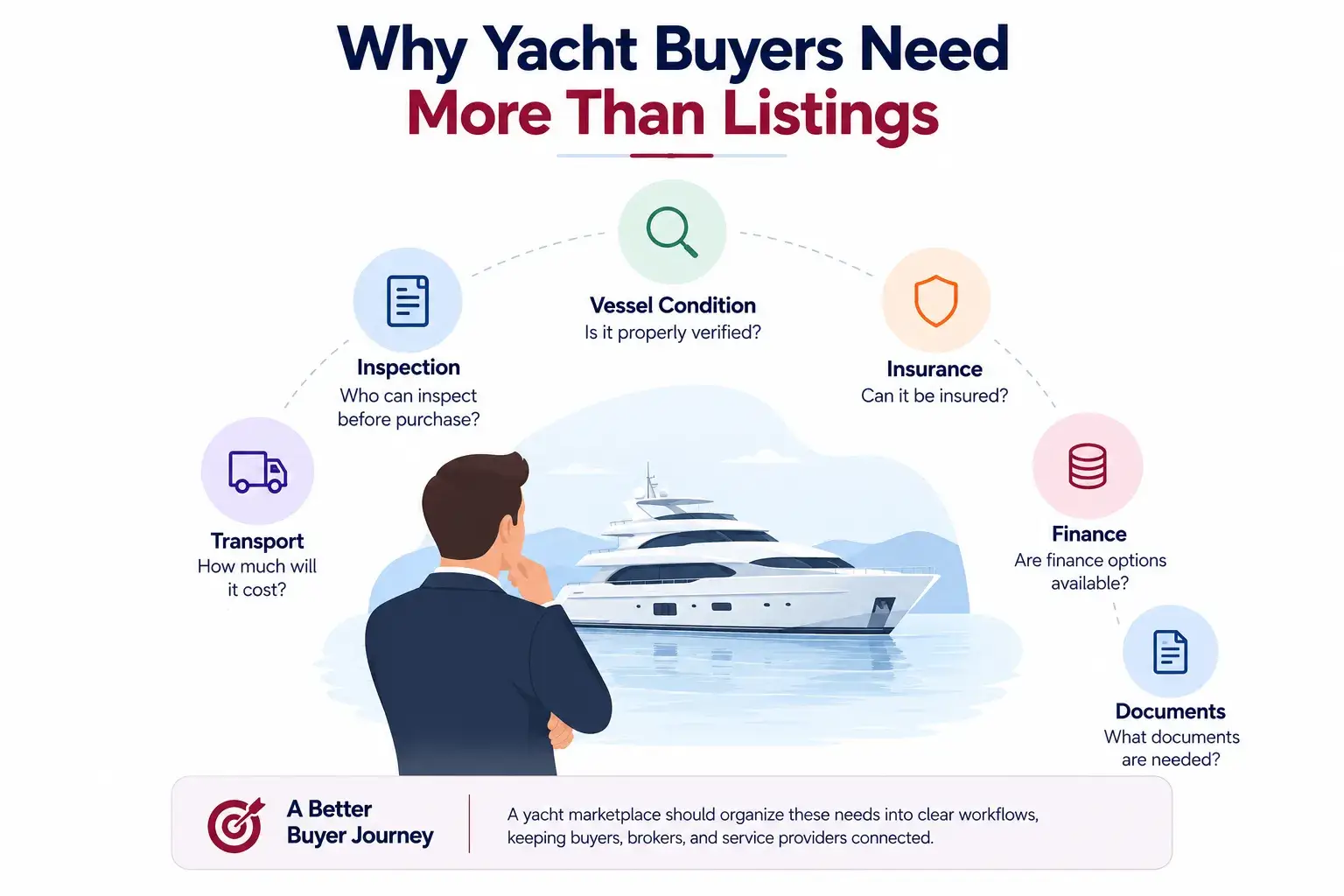
A buyer may ask:
- Is the vessel condition properly verified?
- Who can inspect the yacht before purchase?
- How much will transport cost if the vessel is in another city or country?
- Can the yacht be insured based on age, usage, and location?
- Are marine finance options available?
- What documents are needed before ownership transfer?
If the marketplace only provides a basic contact form, the buyer is pushed outside the platform for every next step. That creates leakage. The platform loses visibility, the broker loses context, and service providers receive unstructured inquiries through calls, emails, or messaging apps.
A stronger yacht marketplace keeps the buyer journey organized by turning these needs into clear workflows. The platform does not need to become the lender, insurer, shipping company, or survey authority. It simply needs to capture demand, route it to the right partner, and help the operator track what happened next.
How Service Provider Connections Work Inside an Online Yacht Marketplace
The service layer usually starts after a buyer shows serious interest in a listing. Instead of leaving the buyer to search separately for every professional, the platform can present relevant service options based on vessel type, location, buyer requirement, and purchase stage.
For example, a buyer viewing a yacht listing may see options such as:
- Request a marine survey
- Get a transport quote
- Ask for insurance guidance
- Request finance pre-qualification
- Get valuation support
- Speak with a broker or dealer
Each request should open a structured intake form. This form collects the details the partner actually needs, such as vessel location, size, model, asking price, intended use, delivery destination, preferred timeline, buyer contact details, and special requirements.
Once submitted, the request enters an admin queue. The operator can assign it to a verified partner, update the status, track response time, and maintain a record of the lead. This is where a marketplace becomes operationally stronger than a static directory.
The Four Service Categories That Matter Most in Yacht Buying
Not every service module needs to be launched at once. For most online yacht marketplaces, the strongest starting point is the set of services that naturally appear during serious purchase intent: survey, transport, insurance, and finance.
Core Yacht Buyer Service Workflows
| Service Category | Buyer Need | Marketplace Workflow | Business Value |
|---|---|---|---|
| Marine Surveyors | Condition inspection before purchase | Survey request form, location matching, document upload, partner queue | Helps buyers move forward with more confidence and creates a qualified service lead |
| Transport Providers | Moving the yacht by road, sea, or specialist carrier | Pickup and destination details, vessel dimensions, timeline, quote request | Supports long-distance buying and keeps logistics demand inside the platform |
| Marine Insurance Providers | Coverage guidance based on vessel, location, and usage | Insurance intake, vessel details, buyer profile, partner routing | Turns insurance interest into a trackable partner opportunity |
| Finance Providers | Loan or pre-qualification support | Finance inquiry, budget range, vessel price, buyer consent, lender routing | Helps buyers understand affordability while generating high-intent finance leads |
How Surveyor Connections Build Trust in the Buying Process
A yacht buyer may love the listing, but a professional inspection often decides whether the deal moves forward. Surveyors help assess vessel condition, structural concerns, equipment status, safety issues, and valuation factors. For used vessels especially, this step can influence negotiations, insurance requirements, and final buyer confidence.
A marketplace can support this by allowing buyers to request surveyor assistance directly from the listing page or buyer dashboard. The form should collect practical details such as vessel location, vessel size, preferred inspection window, buyer contact details, and whether the request is for a pre-purchase inspection, valuation, or insurance-related review.
The important point is scope. The platform should not claim that it certifies the survey or guarantees the result. It should facilitate the connection and allow qualified survey professionals to handle the actual service. This protects the platform while still making the buyer journey smoother.
How Transport Workflows Help Buyers Consider More Listings
Yacht location can limit buyer interest. A buyer may find the right vessel but hesitate because it is located far away. Transport quotes help reduce this friction.
A transport module can ask for:
- Current vessel location
- Destination marina, city, or country
- Vessel dimensions and weight details
- Preferred transport method
- Target delivery timeline
- Special handling requirements
This helps transport providers respond with more useful estimates. It also helps the marketplace understand which listings create logistics demand. Over time, that data can show which regions, vessel types, or listing categories generate the strongest transport opportunities.
For founders, this matters because transport is not just a support service. It can expand marketplace liquidity. If buyers can estimate transport earlier, they may consider vessels outside their immediate geography.
How Insurance Lead Routing Supports Safer Buyer Decisions
Marine insurance is a sensitive workflow because coverage depends on vessel condition, age, location, navigation area, buyer profile, intended use, and insurer requirements. The marketplace should therefore avoid making insurance promises.
The right approach is to offer an insurance inquiry workflow. The buyer submits vessel and usage details. The platform routes the request to a relevant partner or internal operator queue. The insurance provider then handles eligibility, quote discussion, underwriting, and policy terms separately.
This structure gives the buyer a convenient starting point without creating misleading expectations. It also gives the marketplace operator a clean record of the request, partner assignment, and follow-up status.
How Finance Provider Connections Reduce Purchase Friction
Finance support can help serious buyers understand whether a target vessel fits their budget. However, finance workflows need careful wording and proper partner handling. A marketplace should not suggest that every buyer will be approved or that the platform itself provides lending unless that is officially true.
A finance module should collect only the details required to route the inquiry responsibly. Depending on the business model, this may include vessel price range, buyer location, preferred down payment range, consent to be contacted, and basic purchase timeline.
Sensitive financial data should be handled only through secure, compliant partner workflows. For the marketplace operator, finance inquiries are valuable because they indicate serious purchase intent. A casual visitor may browse photos. A buyer requesting finance support is usually much closer to making a decision.
Why Admin Queues Are the Real Engine Behind Service Leads
Many marketplace founders think the service layer is just a set of buttons on the listing page. In reality, the admin queue is what makes the workflow useful.
Without an operator queue, service inquiries can become messy. A buyer submits a form, the request goes to an inbox, a team member forwards it manually, and no one knows whether the partner responded. That creates missed leads and weak accountability.
A strong admin queue gives the operator control over:
- New service requests
- Assigned partners
- Lead status
- Response time
- Reference codes
- Buyer communication history
- Partner performance
- Dispute or support escalation
This is also where monetization becomes measurable. If the marketplace charges per lead, per qualified request, or through a partner subscription, the operator needs a reliable record of the request and outcome.
Service Leads Can Become a Second Revenue Layer for Yacht Marketplaces
Most founders understand listing revenue. Dealers or brokers pay to list inventory, upgrade visibility, or access lead-management tools. But yacht buying creates additional demand around every serious transaction.
Survey, transport, insurance, finance, and valuation requests can become a separate revenue layer when managed correctly.
Common service-led monetization models include:
- Pay-per-lead: Partners pay for qualified buyer inquiries.
- Partner subscription: Service providers pay for visibility and lead access.
- Featured provider placement: Verified partners pay for priority positioning in selected regions or service categories.
- Referral fee: The marketplace earns a fee when a partner converts a lead, subject to local rules and agreements.
- Brokerage support package: Dealer groups pay for service-routing tools as part of a broader platform plan.
The safest model depends on jurisdiction, partner contracts, disclosure requirements, and the platform’s operating role. Founders should avoid overpromising. The platform can facilitate demand, but fulfilment belongs to qualified providers.
Founder Decision Signals
Speed
If buyers already ask brokers for surveys, transport, insurance, and finance, service modules can be added as structured workflows instead of scattered manual referrals.
Cost
Building every fulfilment workflow from scratch can increase complexity. Start with intake, routing, admin queues, and partner status tracking before adding deeper integrations.
Scalability
Manual partner referrals may work for a small brokerage, but a growing marketplace needs status tracking, assignment rules, role-based access, and reporting.
Market Fit
Strong service-lead demand is a sign that buyers want transaction support, not just inventory discovery. This can help founders validate the platform’s value beyond listings.
What Buyers Should Experience on the Frontend
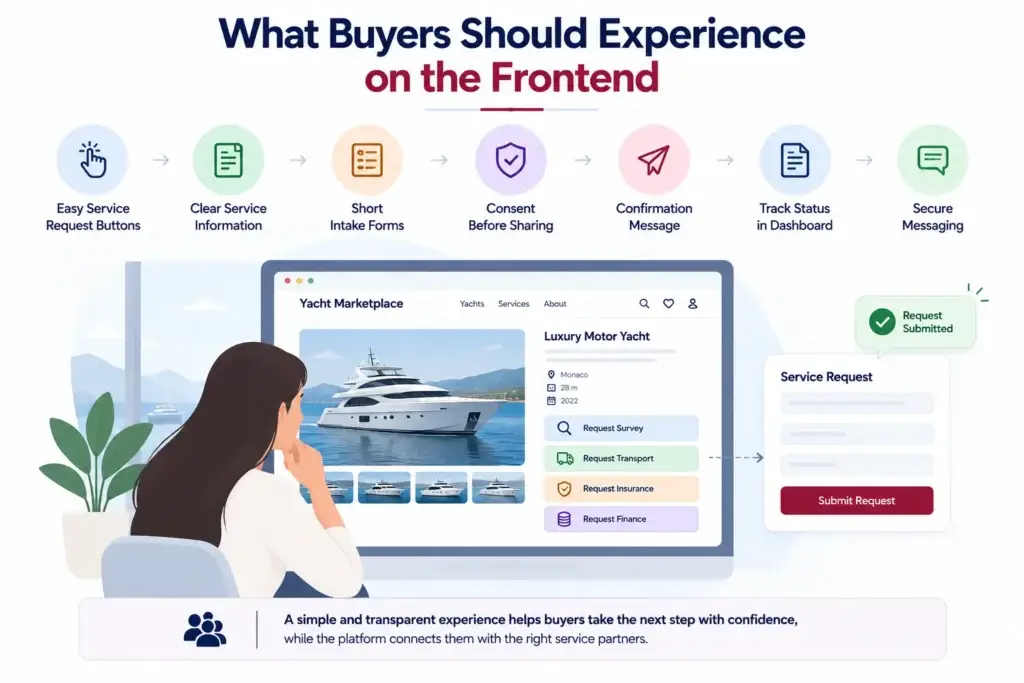
For buyers, service workflows should feel simple. The buyer should not need to understand the platform’s backend, partner logic, or monetization model. They only need clear next steps.
A smooth buyer-side experience may include:
- Service request buttons placed near listing details
- Clear explanation of what each service request does
- Short intake forms with only relevant fields
- Consent checkbox before sharing details with partners
- Confirmation message after request submission
- Status visibility inside the buyer dashboard
- Secure messaging or follow-up instructions
The marketplace should also make its role clear. It can say that it helps route inquiries to suitable partners or service professionals. It should not say that it guarantees approval, coverage, delivery timelines, or survey outcomes.
What Brokers and Dealers Need From Service Workflows
Brokers and dealers benefit when service requests stay connected to the listing and buyer profile. Without this connection, they may know a buyer clicked a listing but not whether the buyer requested a survey, asked about transport, or explored finance.
A broker-friendly marketplace should help teams see:
- Which listing generated the service request
- Which buyer submitted it
- Which partner received it
- Whether the request is pending, assigned, contacted, completed, or closed
- Whether the service workflow influenced the deal stage
This gives brokers better context when they follow up. Instead of sending a generic message, they can respond with practical support based on the buyer’s actual request.
Security and Compliance Considerations for Partner Services
Service-provider workflows involve personal details, financial interest, asset information, location data, and sometimes documents. That means the platform should treat security as a foundation, not a final add-on.
Important safeguards include:
- Encrypted data transfer
- Role-based access control
- Admin activity logs
- Consent-based information sharing
- Secure document upload where needed
- Partner verification workflows
- Clear status history
- Dispute and support management
Finance and insurance workflows require especially careful handling. The platform should support compliance-ready workflows, but final compliance depends on jurisdiction, partner agreements, legal review, integrations, and the operating model.
Where Miracuves Fits Into Yacht Marketplace Service Workflows
Miracuves helps founders launch ready-made and white-label marketplace platforms with source-code ownership, branded design, admin control, and monetization-ready workflows.
For yacht marketplace founders, the key is not only building a listing interface. The real value is in connecting inventory, buyers, brokers, service providers, and operator controls into one structured system.
If you are planning a yacht-focused marketplace, you can explore the yacht marketplace platform by Miracuves to understand how listings, buyer inquiries, service modules, and admin workflows can fit together.
For a deeper view of platform capability, the yacht marketplace features breakdown explains how listing management, lead capture, service queues, and admin controls support a scalable marketplace operation.
If your priority is monetization, the yacht marketplace business model guide can help you understand how subscriptions, listing upgrades, and service-lead revenue can work together without forcing every transaction into a checkout model.
Mistakes Founders Should Avoid When Adding Service Provider Modules
Mistakes Founders Should Avoid
Turning every service into a full integration too early
Founders often try to automate insurance, finance, transport, and survey fulfilment from day one. A smarter first step is structured intake, partner routing, status tracking, and admin control. Deeper integrations can come after demand is validated.
Making promises that belong to partners
A marketplace should not claim that it approves finance, binds insurance, certifies surveys, or guarantees transport. It should clearly position itself as a facilitator unless it is legally and operationally responsible for fulfilment.
Ignoring admin visibility
Service requests without dashboards, assignment rules, and status history quickly become scattered messages. Without visibility, the operator cannot measure partner performance or revenue potential.
Adding partner links without buyer context
A static provider directory is useful, but a structured request form is stronger. It captures vessel details, buyer intent, and service requirements before the partner receives the lead.
How to Prioritize Service Modules Before Launch
Not every marketplace needs every module immediately. The best launch scope depends on geography, buyer type, partner availability, and how complex the sale process is in your target market.
A practical prioritization path is:
- Start with survey and transport requests because they are common buyer needs after serious listing interest.
- Add insurance and finance inquiry forms once partner relationships and compliance wording are clear.
- Introduce valuation and documentation support where buyers need more confidence around pricing and ownership transfer.
- Build partner dashboards later when request volume justifies direct provider access.
- Use analytics to improve routing based on region, service type, response time, and conversion quality.
This phased approach helps founders avoid unnecessary complexity. It also allows the platform to validate which service categories create the strongest demand before investing in deeper workflows.
When Should Founders Estimate Development Cost?
Cost planning should happen after the founder defines the service workflow depth. A simple intake-and-routing module costs less than a full partner portal with verification, documents, quote management, service-level tracking, and API integrations.
The main cost drivers include:
- Number of service categories
- Buyer intake form complexity
- Partner verification workflow
- Admin queue and status logic
- Broker and dealer dashboard requirements
- Document upload and security needs
- Payment, subscription, or lead-fee logic
- Third-party integrations
- Custom branding and mobile app scope
If budgeting is your next step, the yacht marketplace development cost guide can help you evaluate what affects pricing before finalizing the build scope.
Final Thoughts: The Strongest Yacht Marketplaces Support the Full Buyer Journey
A yacht marketplace becomes more valuable when it supports the real buying journey. Listings create discovery, but service workflows create movement. Surveyors, transport providers, insurance partners, finance providers, and valuation professionals help buyers move from interest to decision.
For founders, the opportunity is not to overbuild every fulfilment layer from day one. The opportunity is to capture structured demand, route it responsibly, track partner activity, and create a marketplace experience that feels organized from the buyer’s first inquiry to the next serious step.
Miracuves can help founders build a launch-ready yacht marketplace foundation with listing workflows, service-lead capture, admin queues, partner routing, branded design, and source-code ownership. That gives you a stronger starting point than building every module from zero while still leaving room for custom workflows as your business grows.
FAQs
How do online yacht marketplaces connect buyers with surveyors?
They usually use a structured survey request form connected to a listing or buyer profile. The request is routed to an admin queue or verified survey partner, allowing the marketplace operator to track status, assignment, and follow-up.
Can a yacht marketplace offer transport quotes?
Yes, a yacht marketplace can collect transport requirements such as vessel location, destination, size, timeline, and handling needs. The actual quote and fulfilment should be managed by the transport provider unless the platform is officially responsible for that service.
Should a yacht marketplace provide insurance directly?
Not unless it is legally set up to do so. A safer model is to collect insurance inquiries and route them to approved marine insurance partners. The platform should avoid claiming that coverage is guaranteed.
How do finance leads work in a yacht marketplace?
Finance leads can be captured through inquiry forms that collect purchase intent, vessel price range, buyer consent, and basic contact details. The request can then be routed to finance partners who handle eligibility, documentation, and approval discussions.
Why are service-provider workflows important for marketplace monetization?
Service workflows capture high-intent buyer demand that would otherwise leave the platform. Survey, transport, insurance, and finance inquiries can support lead fees, partner subscriptions, featured placements, or referral-based revenue models where legally appropriate.
What is the safest way to launch service modules?
Start with intake forms, admin queues, partner routing, and status tracking. Avoid promising fulfilment outcomes until partner contracts, legal requirements, and operating responsibilities are clearly defined.
Do yacht marketplaces need partner dashboards?
Partner dashboards are useful once request volume increases. In the early stage, an operator-managed admin queue may be enough. Later, partner dashboards can help providers manage leads, update status, upload documents, and measure response performance.
Miracuves is an independent software development company. We are not affiliated with, connected to, sponsored by, or endorsed by any company or product named in this article.
Terms such as “X Clone” are used descriptively. It is how the software industry refers to building a platform with functionality comparable to a known service, and how clients search for it.
The entire design and codebase of our products is built by our own team. Our products contain no code, design, graphics, or content originating from any third-party website or applications.
All third-party names and marks referenced in this article are the property of their respective owners, referenced solely to identify the services discussed.