YachtWorld Clone App - White-Label Yacht Marketplace & Brokerage Platform

A launch-ready marine marketplace covering the whole pre-transaction lifecycle: specification-rich vessel listings with media, video and price history, technical and geographic search, favourites, compare and saved-search alerts, a structured inquiry pipeline with response-time measurement, inquiry-scoped messaging, a dealer CRM with client budgets and curated shortlists, configurable subscription plans and listing upgrades, and eight adjacent marine service modules from charter through survey and valuation.

Three surfaces from one platform. Buyers and brokers use a 46-route web app and an Expo mobile build, operators run a role-restricted admin console, and everything sits on 203 API handlers across 35 modules and 40 relational tables.

Go Live in 6 Days with Broker-ReadySpec-RichLead-DisciplinedMulti-CurrencyWhite-LabelAPI-Complete

⚡ Platform at a Glance

Inventory Built for Six-Figure Decisions

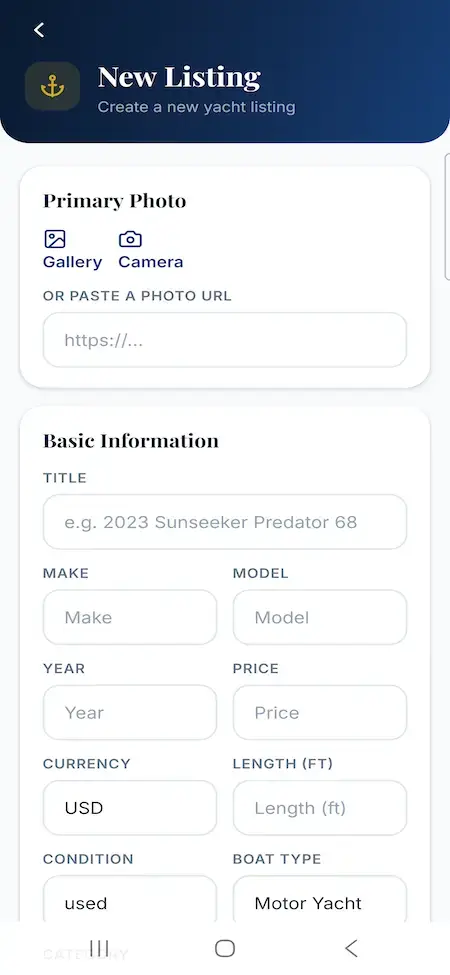
Make, model, year, length, beam, draft, displacement, engine hours, horsepower, cabins, berths, hull material, keel and rig, plus ordered photo galleries, video tours and append-only price history. A yacht is not a commodity SKU and the schema does not pretend otherwise.

Leads That Cannot Quietly Die

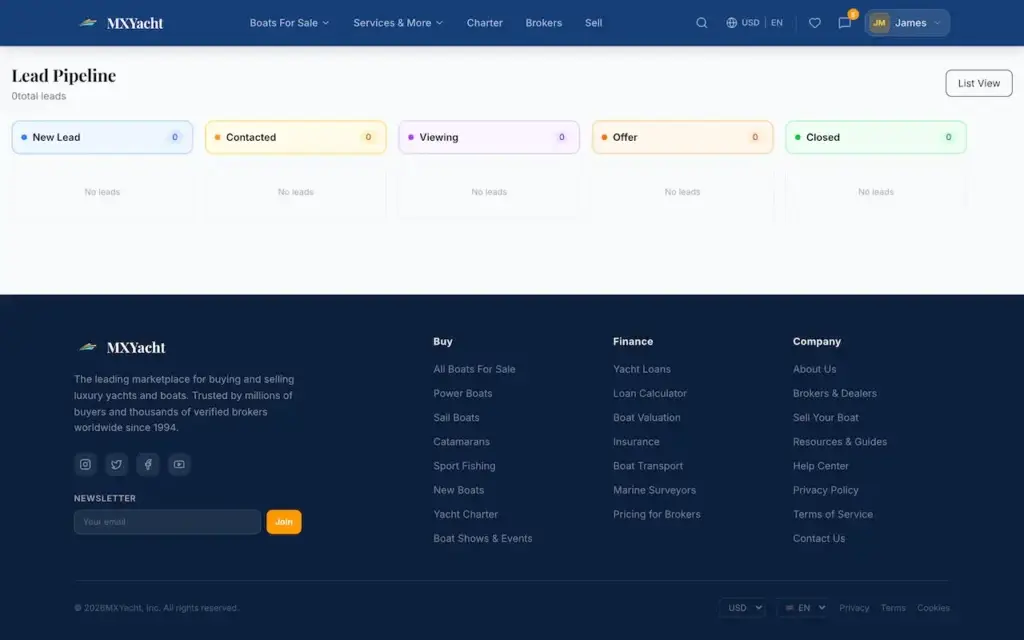
Every inquiry carries source, intent, status, stage, notes and a response timestamp, so response time is measured rather than assumed. A kanban pipeline shows the whole desk at once instead of scattered inboxes.

A CRM Brokers Will Actually Open

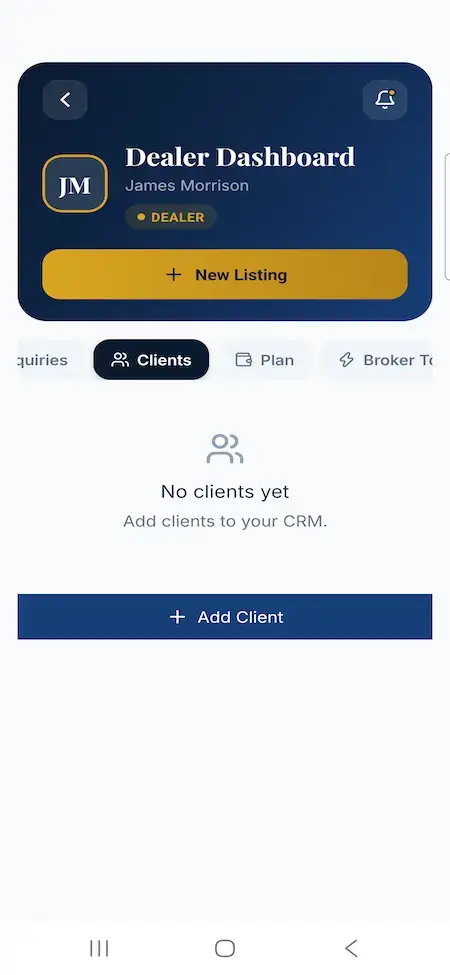
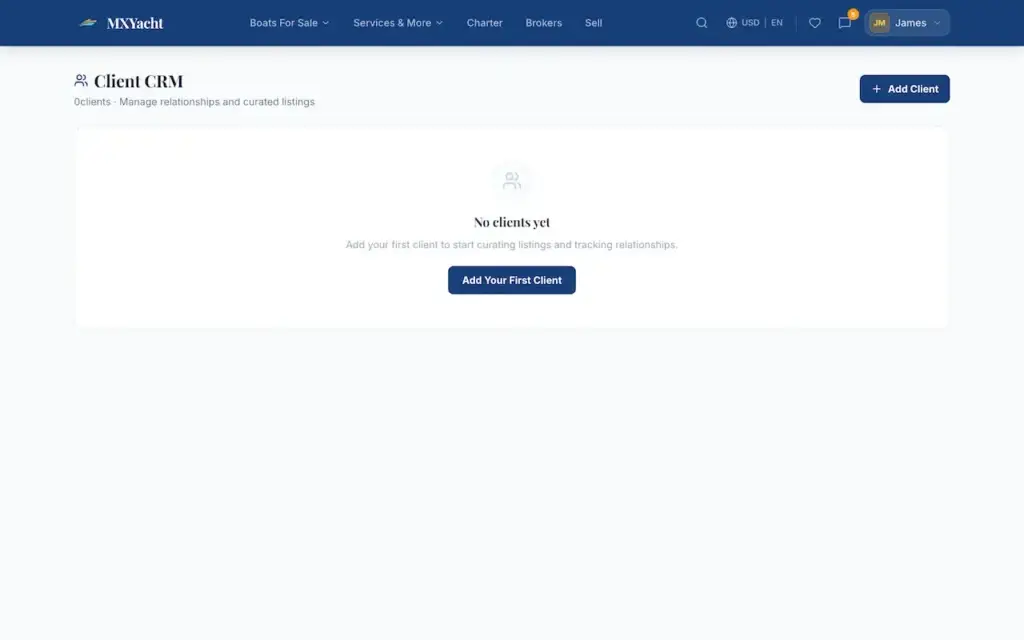
Dealer-owned clients with budgets, status and private notes, plus curated listing shortlists attached per client. It lives in the same interface where brokers reply to messages, so it does not need a separate seat.

Eight Adjacent Service Lines

Charter, insurance, transport, finance, surveyors, valuations, boat shows and sell leads each ship with an intake form, a reference code where implemented, and an operator queue. That is a second revenue line beyond listing fees.

Discovery That Keeps Buyers Coming Back

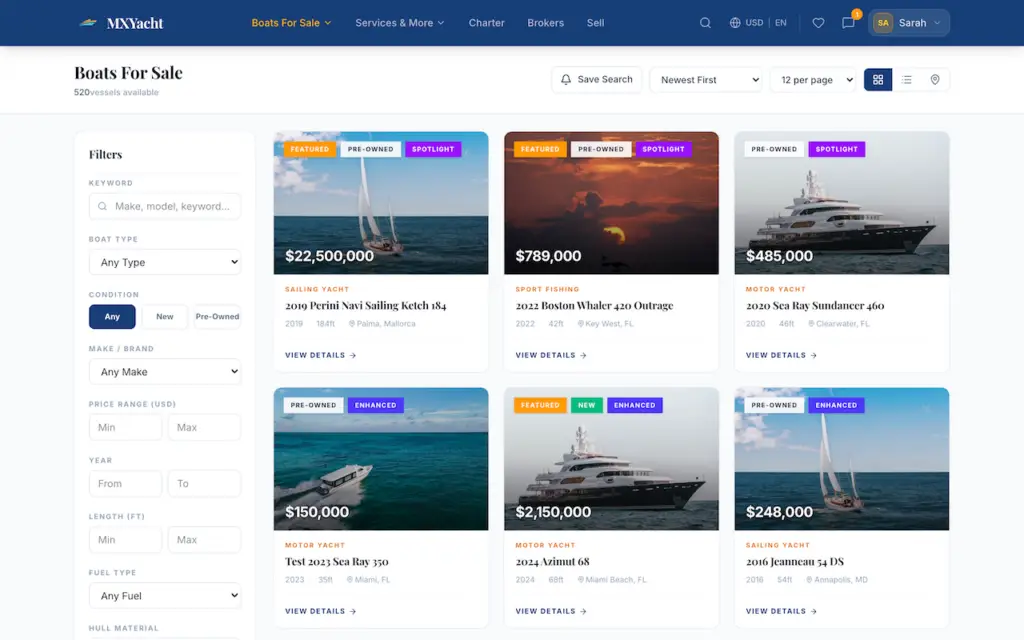
Keyword, technical range and geospatial radius filters, facet APIs, favourites, side-by-side compare, named saved searches with daily or weekly alert cadence, and a background job that emails new matches.

Operator Governance From Day One

Listing moderation, user and dealer administration, plan CRUD, taxonomy and platform settings, service queues, support tickets, disputes with evidence, GDPR export and erasure, and TOTP two-factor.

🚀 Ready to launch your own yacht marketplace and brokerage platform?

More than 6,000+ Companies Trust us Worldwide

Live in Action

YachtWorld Clone Demo - Buyer App, Broker Workspace, Admin & Android

Don’t just take our word for it. Open the Miracuves YachtWorld Clone yourself. Every role has a working login and no setup is required. Search the inventory as a buyer, send an inquiry, then pick it up in the broker workspace and watch the same lead appear in the operator console.

BUYER WEB APP

YachtWorld Clone - Buyer Experience

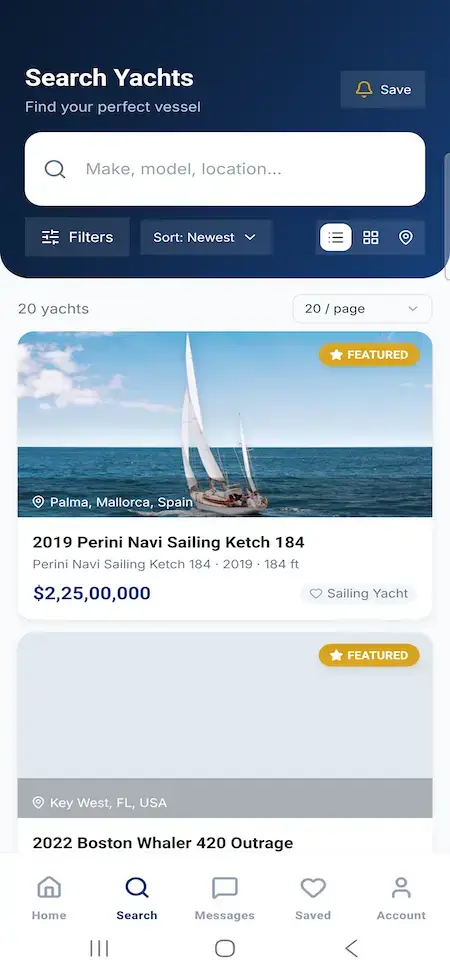
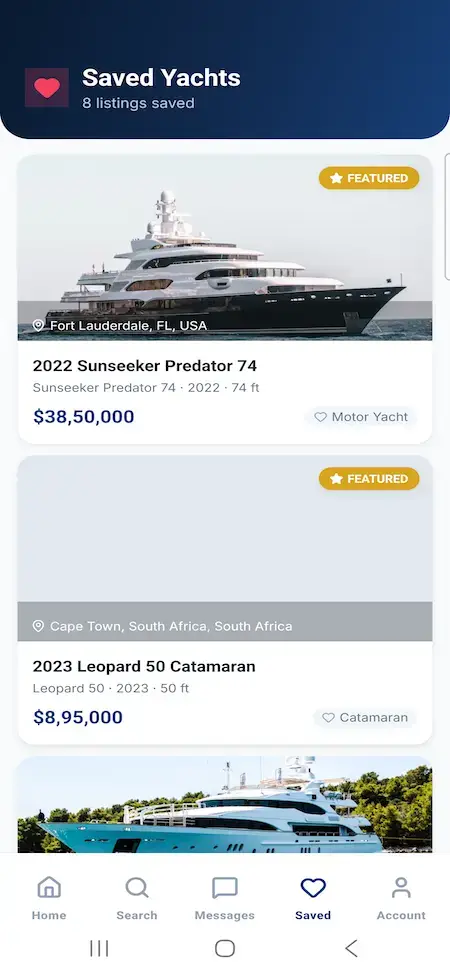
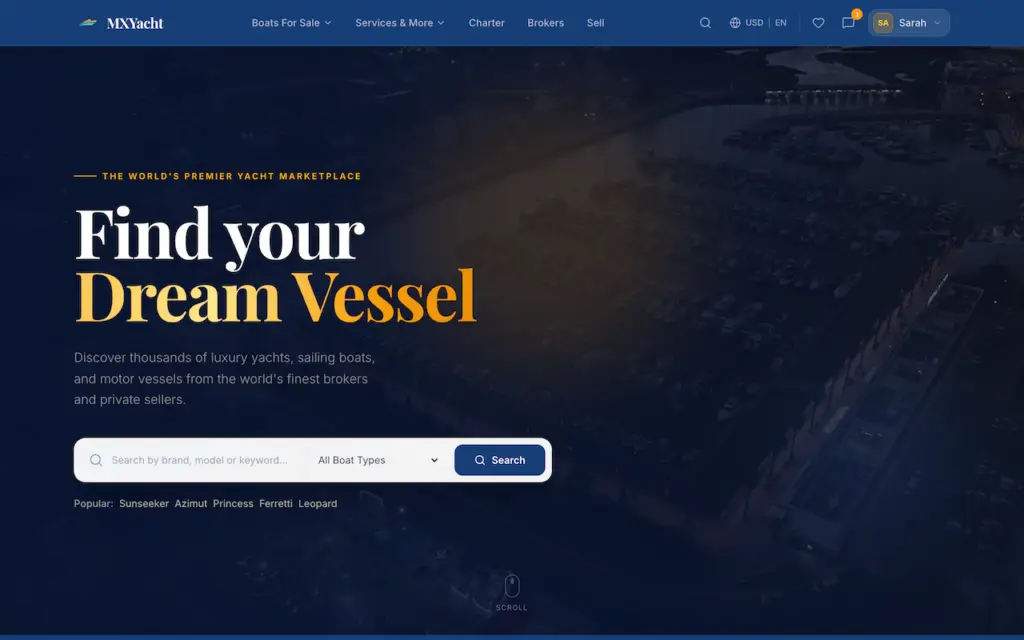
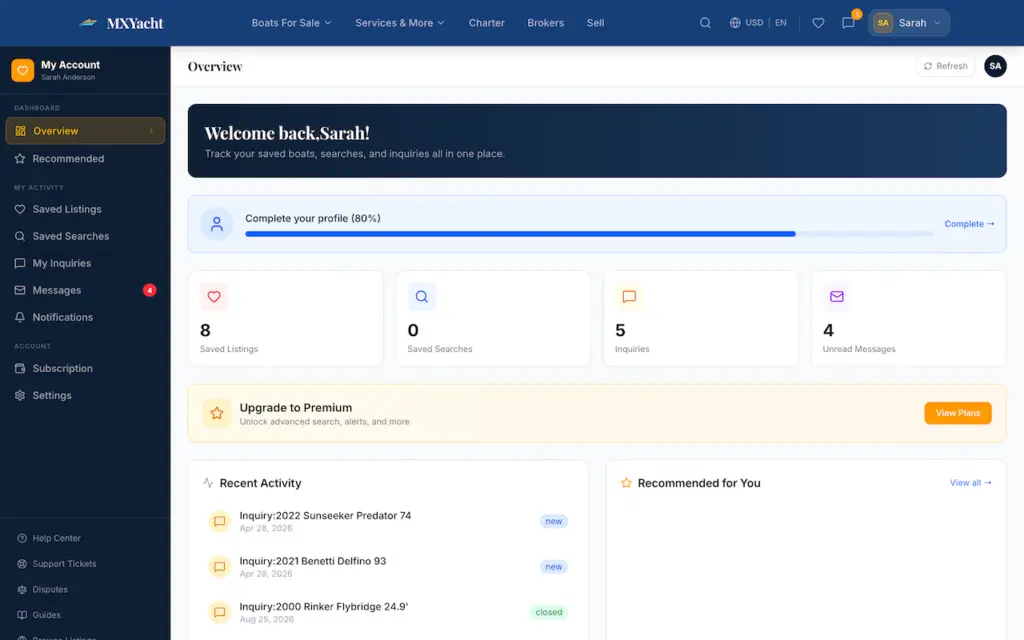
The consumer surface across 46 routes. Technical and geographic search, full-screen galleries with video, side-by-side compare, favourites, saved searches with alert cadence, inquiry submission and the authenticated message inbox.

  • Open the web app in your browser
  • Login with the demo credentials below
  • Explore: Search, Compare, Favourites, Inquiries, Inbox
  • Try: buyer@yacht.mimeld.com | password

BROKER WORKSPACE

Inventory, Pipeline, CRM & Market Tools

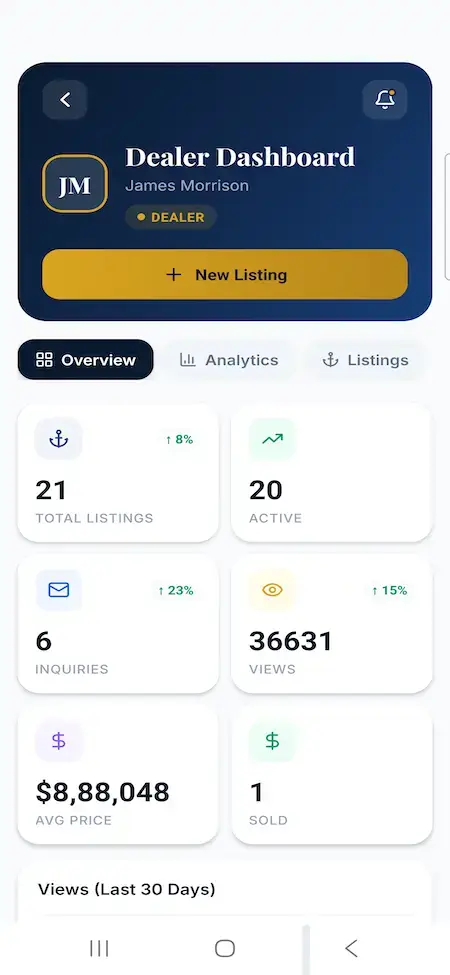
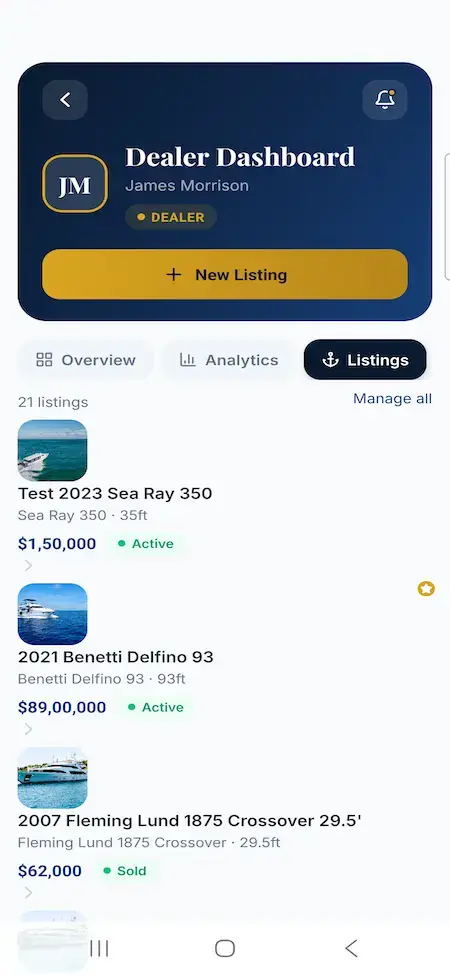
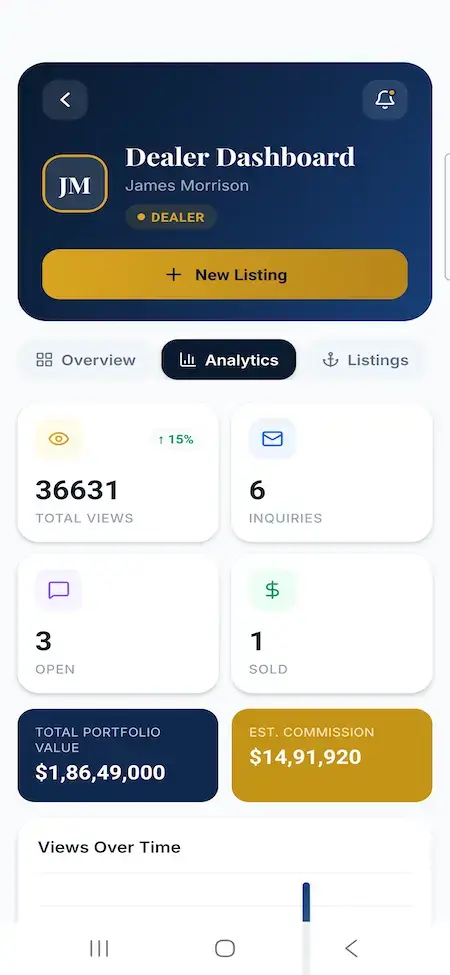
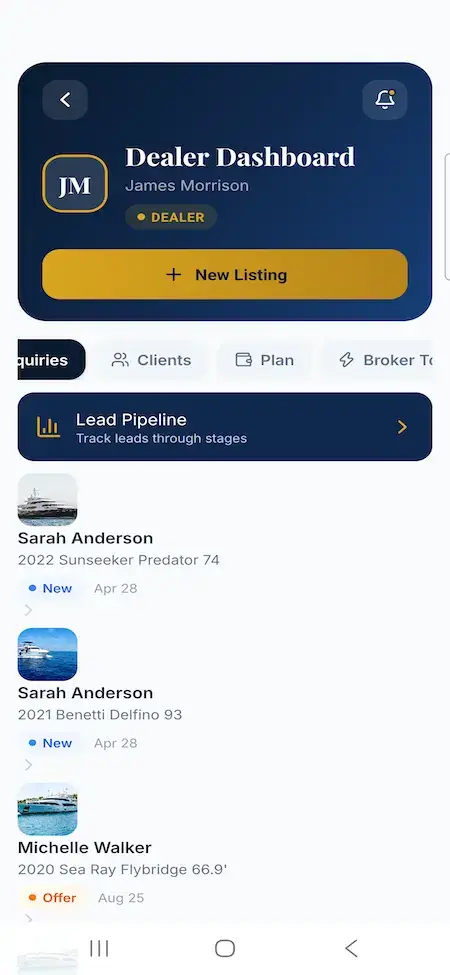
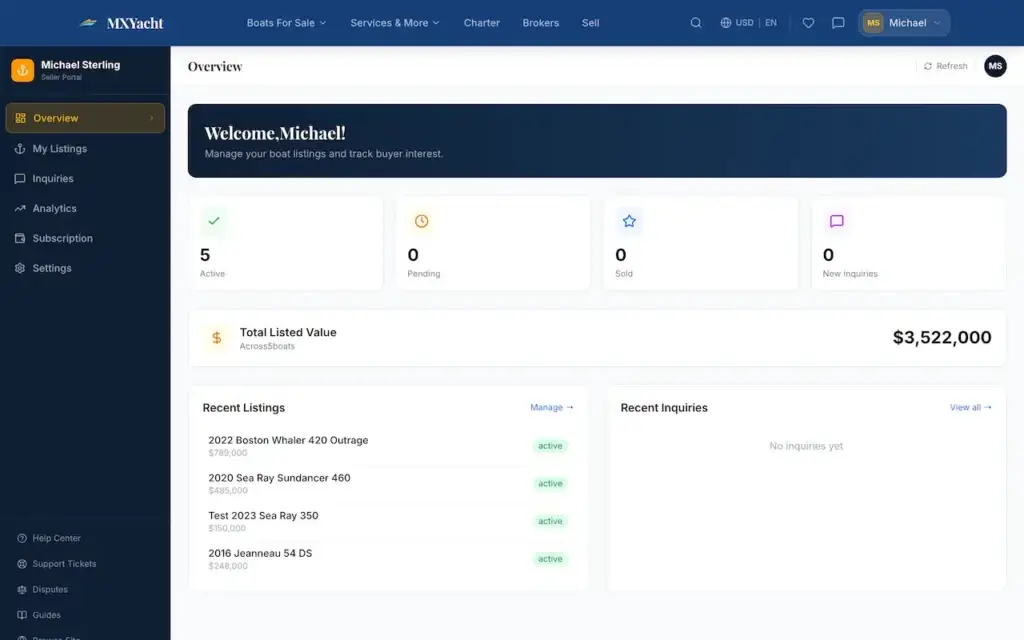
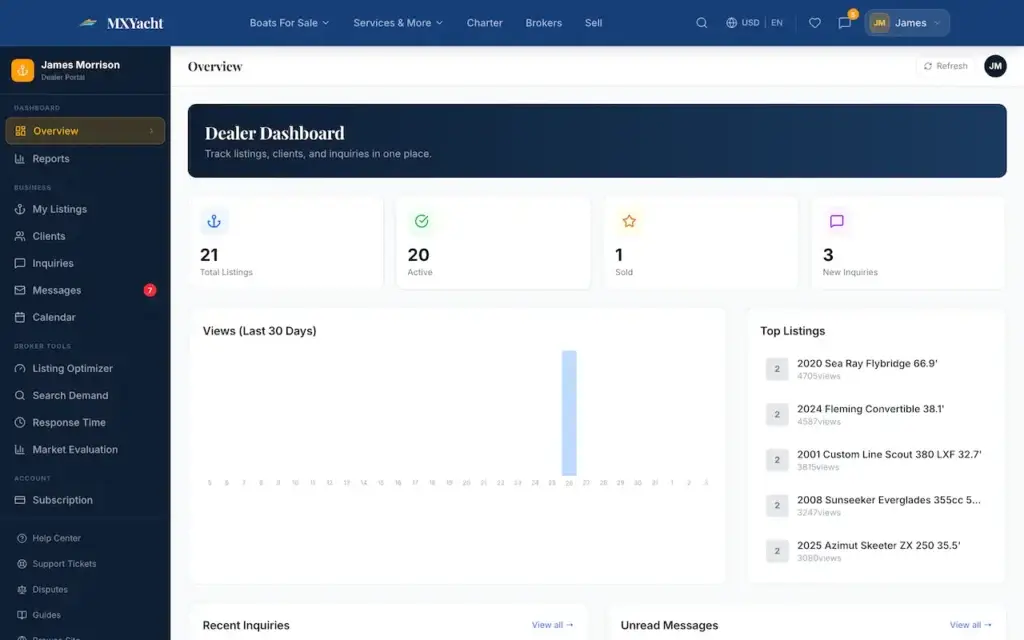
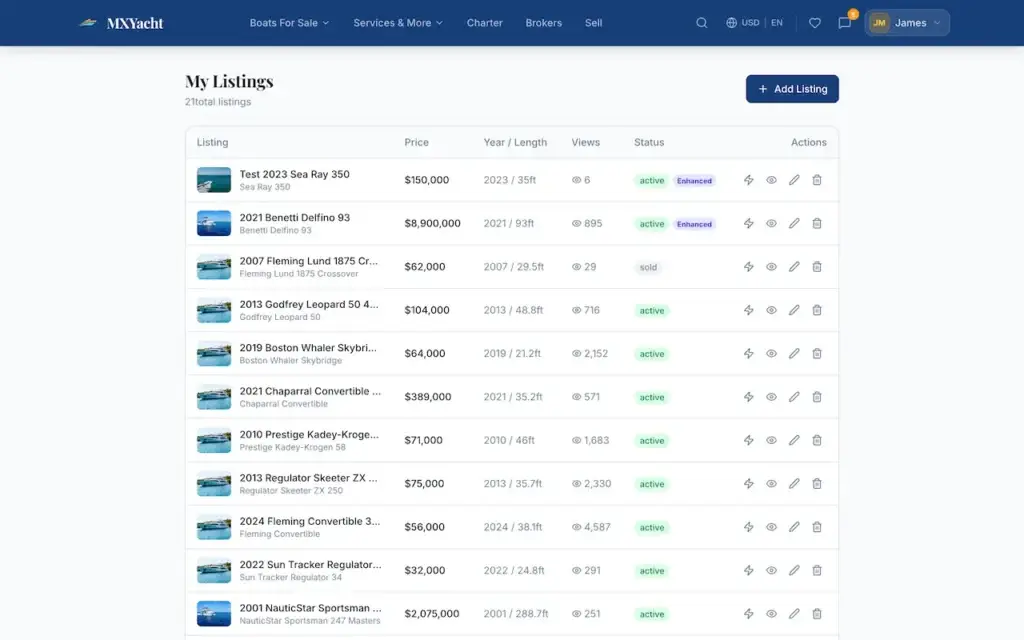
The dealer surface. Listing manager with photo and upgrade control, the kanban inquiry pipeline with stage and notes, inquiry-scoped replies, CRM clients with budgets and curated shortlists, LeadSmart questionnaire review, the listing optimizer and response-time reporting.

  • Open the broker workspace
  • Login with the dealer credentials below
  • Explore: Listings, Pipeline, Clients, Broker Tools
  • Try: dealer@yacht.mimeld.com | password

ADMIN CONSOLE

Moderation, Plans, Service Queues & Analytics

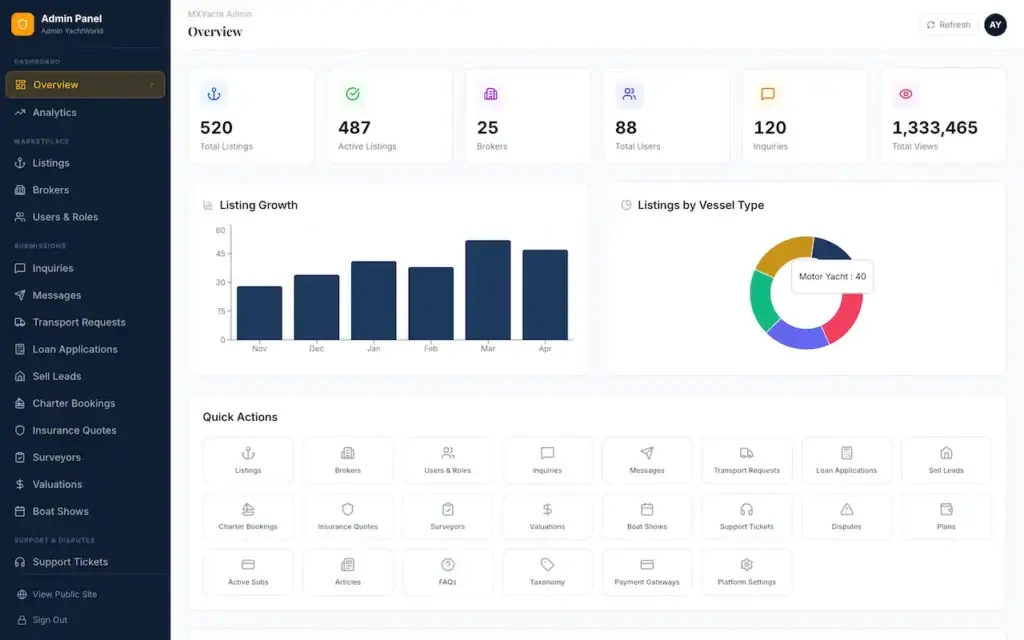
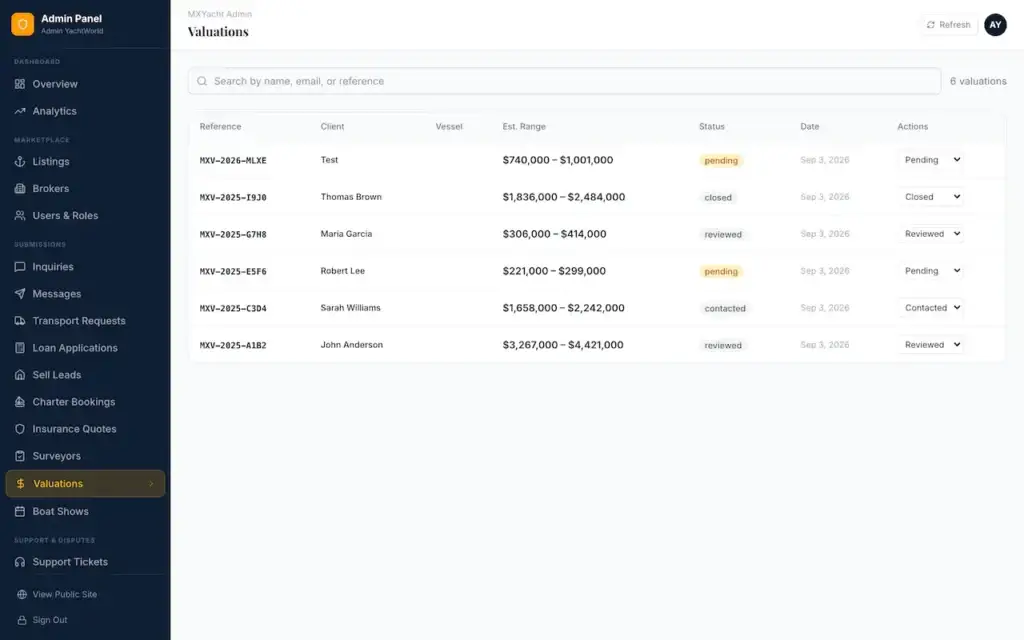
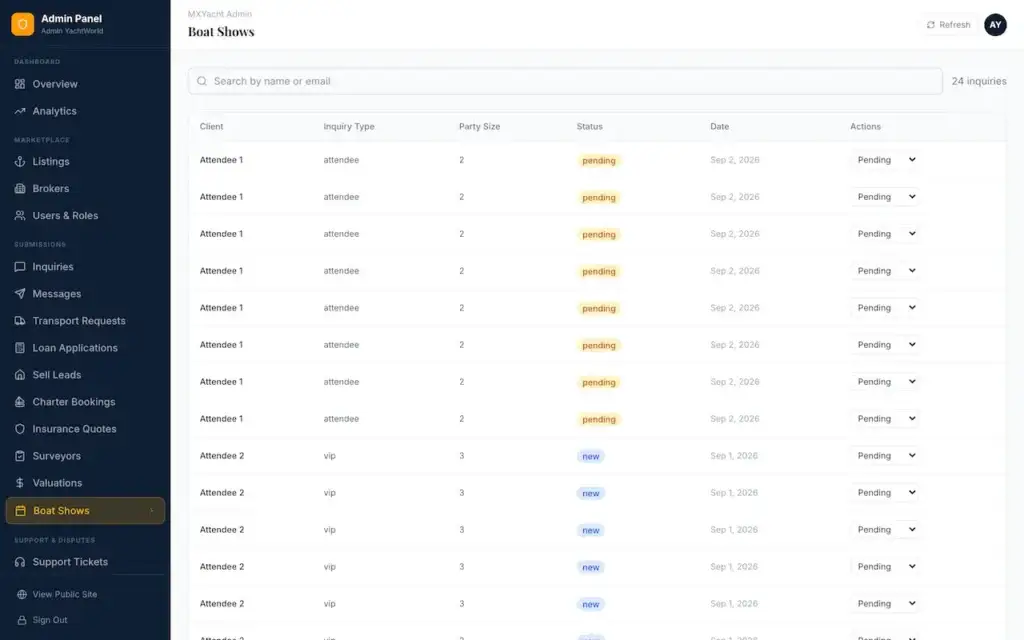
Operator governance. Users and dealers, listing moderation, plan CRUD with activate toggles and subscriber counts, taxonomy and platform settings, the eight marine service queues, articles and FAQs, support tickets, disputes and the analytics dashboard.

  • Open the operator console
  • Login with the admin credentials below
  • Explore: Moderation, Plans, Service Queues, Analytics
  • Try: admin@yacht.mimeld.com | password

ANDROID APP

Expo Build - Search, Favourites & Messages On Mobile

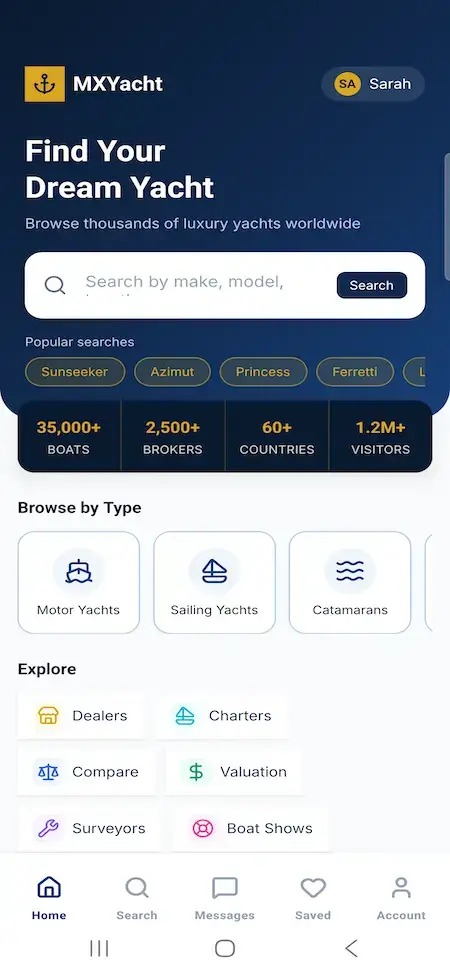
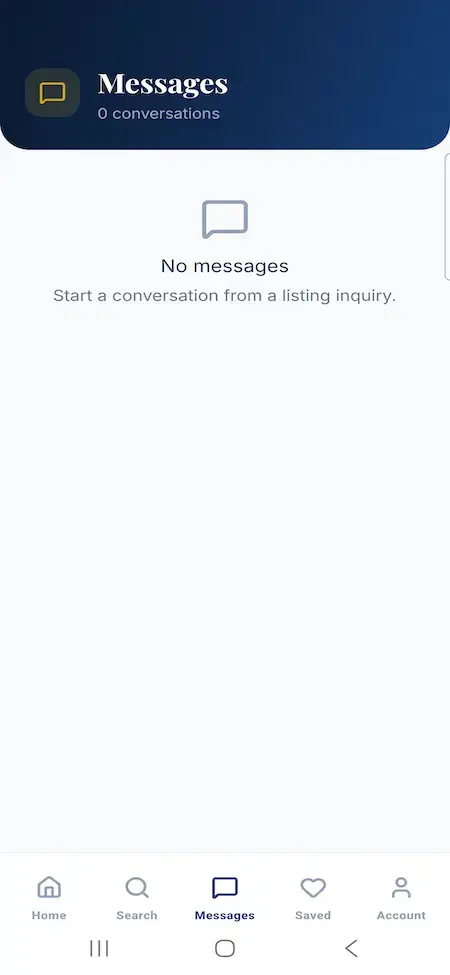
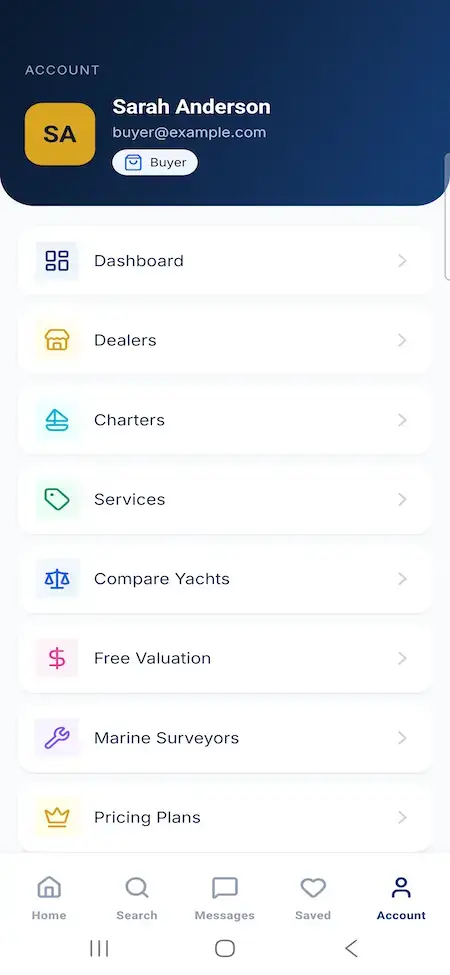
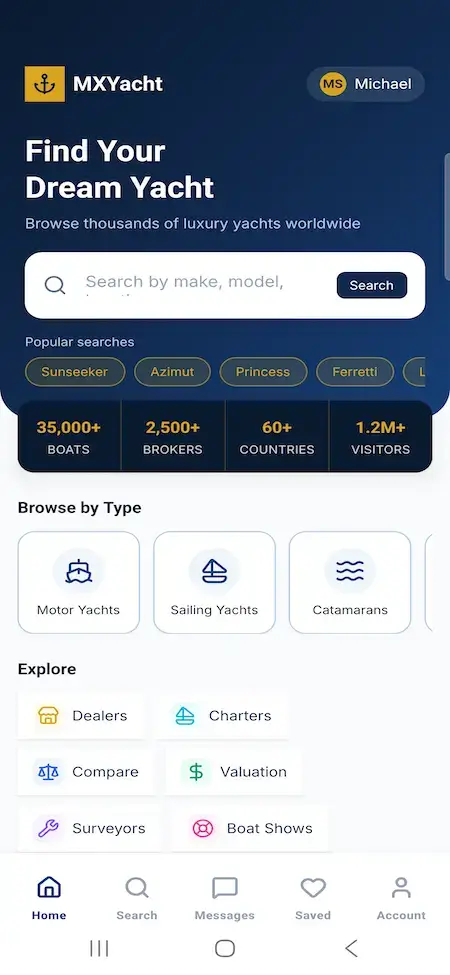
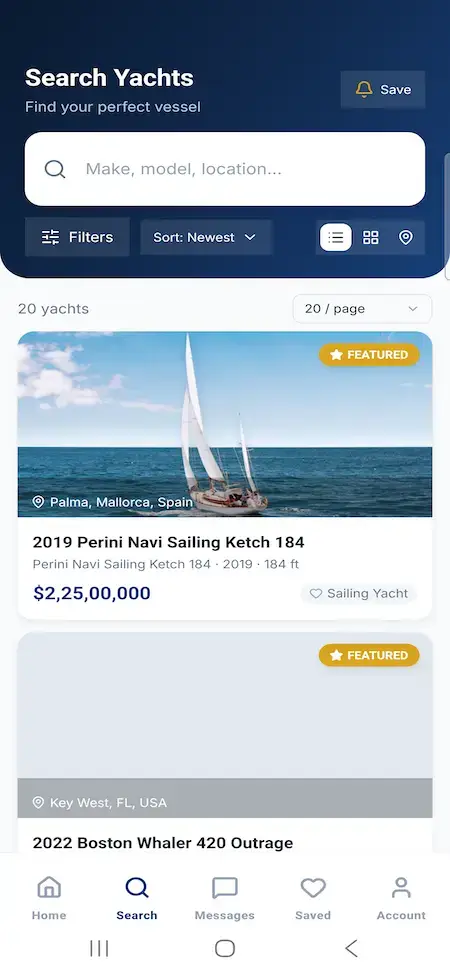
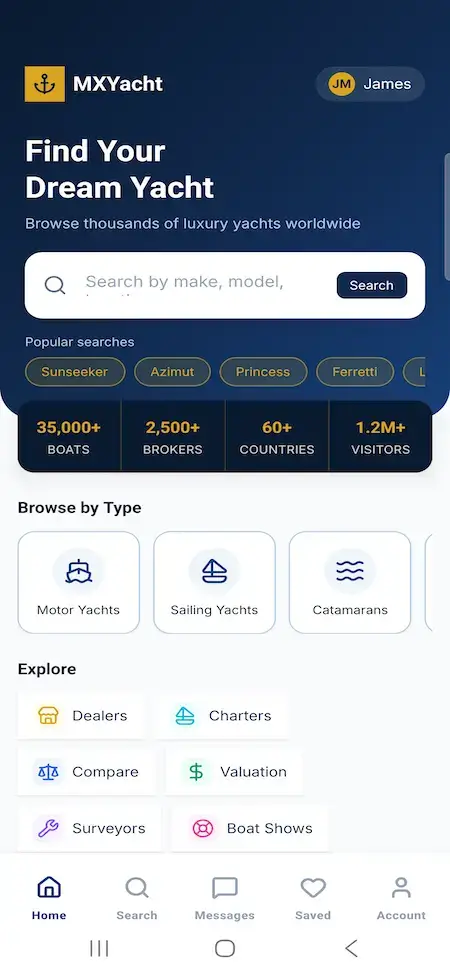
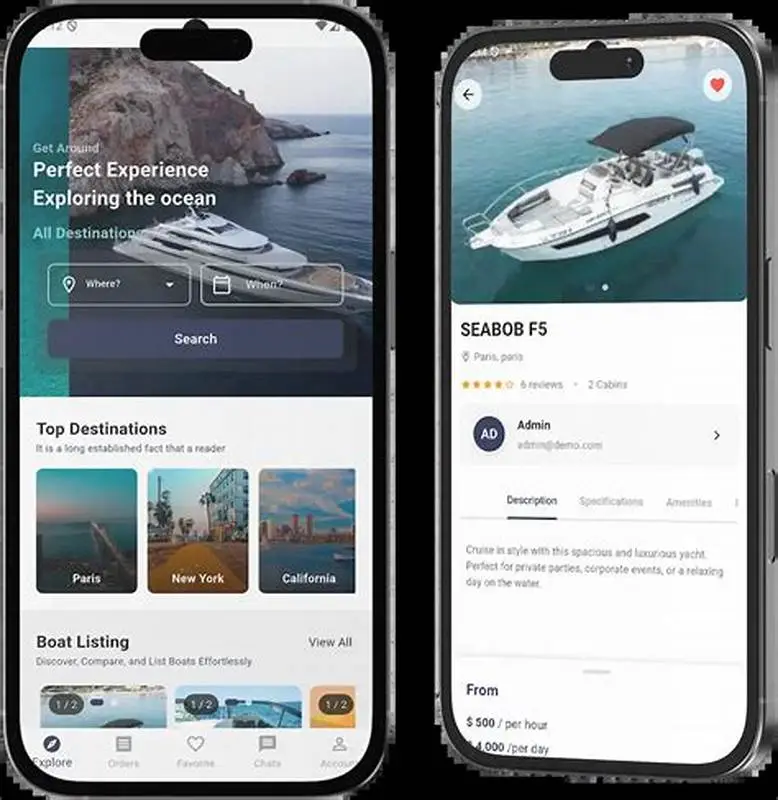
The Expo React Native build with tabbed navigation across Home, Search, Favourites, Messages and Account, plus listing, dealer, charter, boat-show, surveyor, valuation, compare and role-dashboard screens running against the same API as the web app.

  • Download the Android build
  • Sign in with the seller credentials below
  • Explore: Search, Favourites, Messages, Account
  • Try: seller@yacht.mimeld.com | password

Watch It Work

YachtWorld Clone Video Demo: Listings, Pipeline, CRM & Service Queues

A walkthrough of the platform as an operator sees it, rather than a feature reel. It opens on the search results with technical range filters applied, moves into a listing detail with the gallery, specification sections and price history, saves a search and sets an alert cadence, then submits an inquiry. The same lead is picked up in the broker workspace, staged on the kanban pipeline, answered through inquiry-scoped messaging, and a curated shortlist is attached to the client record. It closes on the operator console with listing moderation, a plan being edited, and the insurance and transport queues showing live intake. Where a step needs a provider account before it works in production, the video says so rather than glossing over it.

Every Screen Mapped

YachtWorld Clone App Flows - Search, Inquiry, Broker Desk & Operator Screens

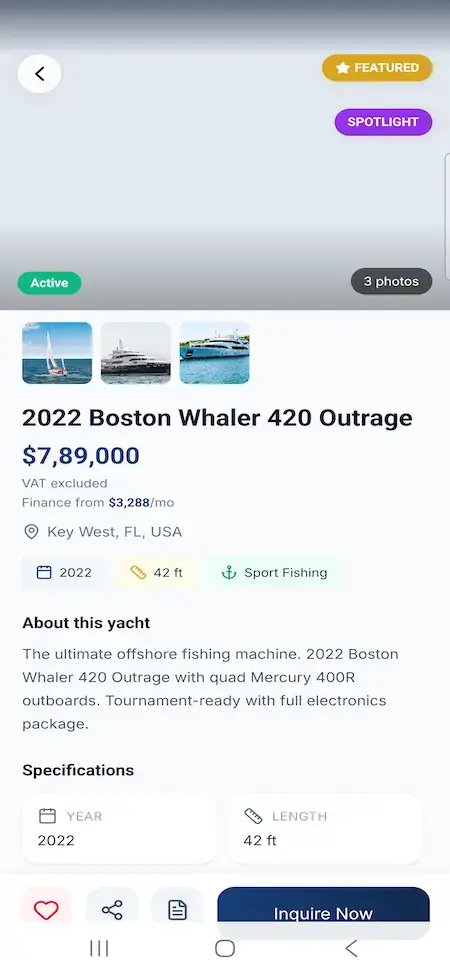
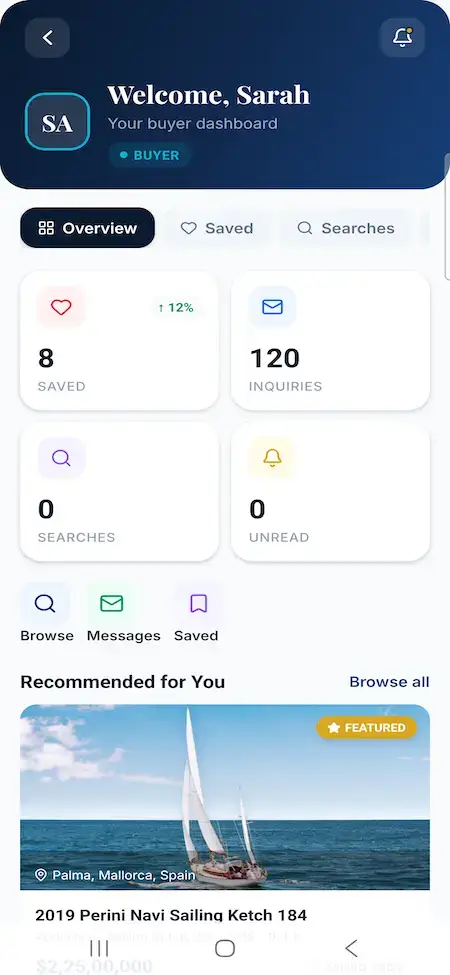
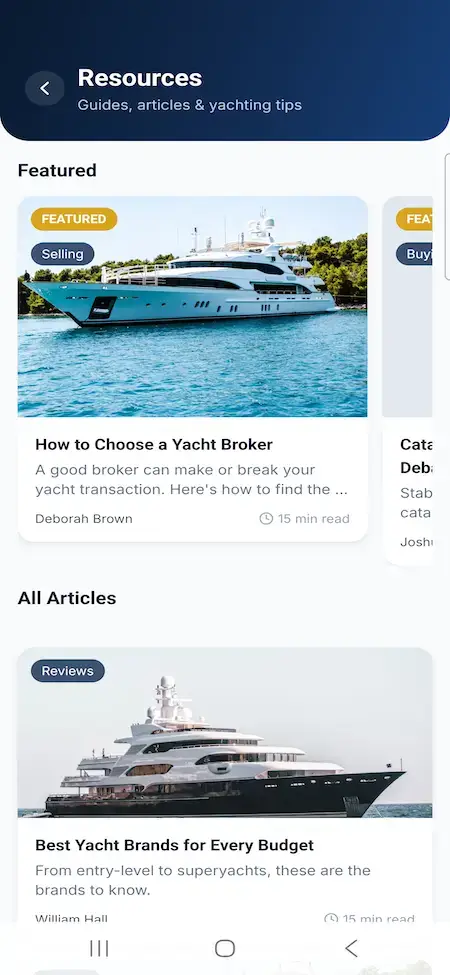
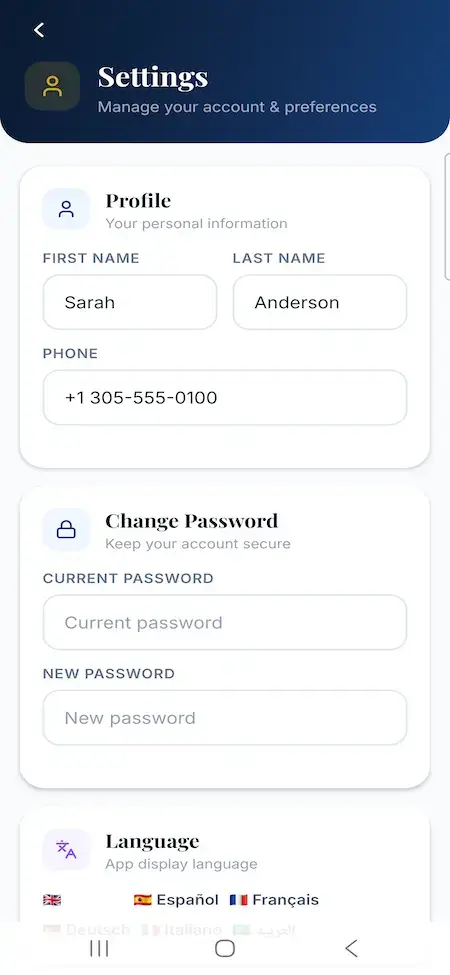
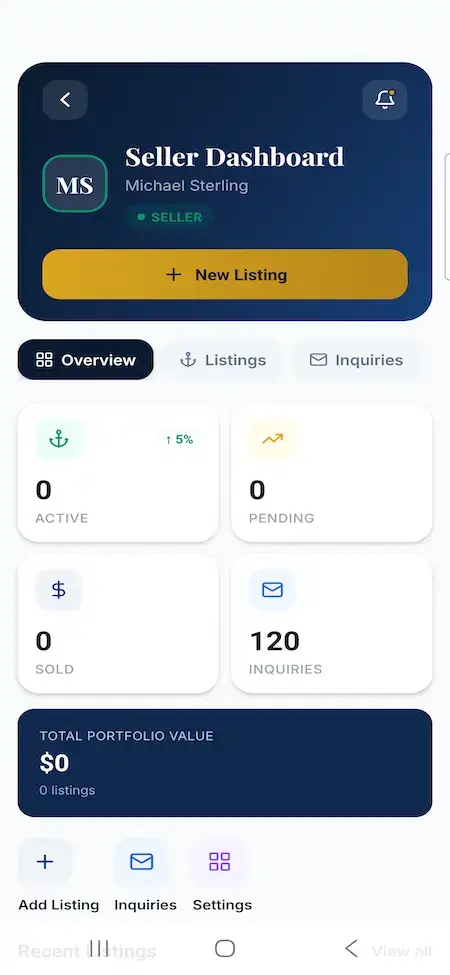
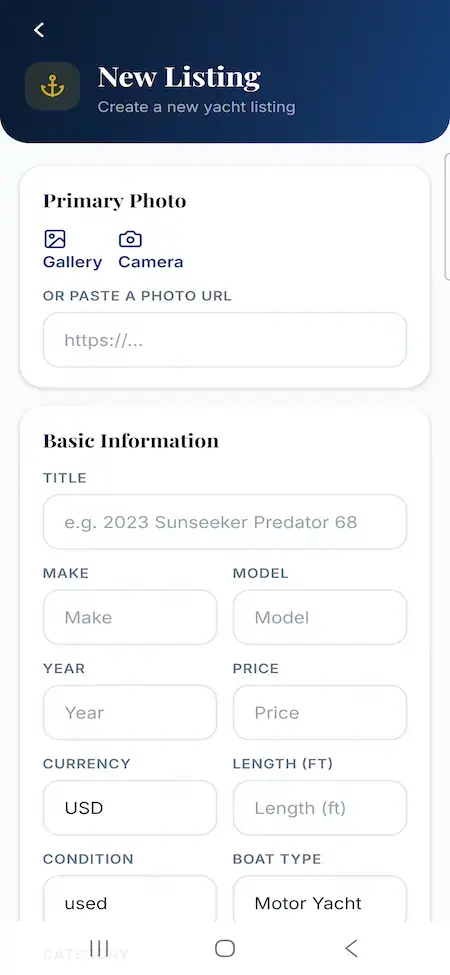
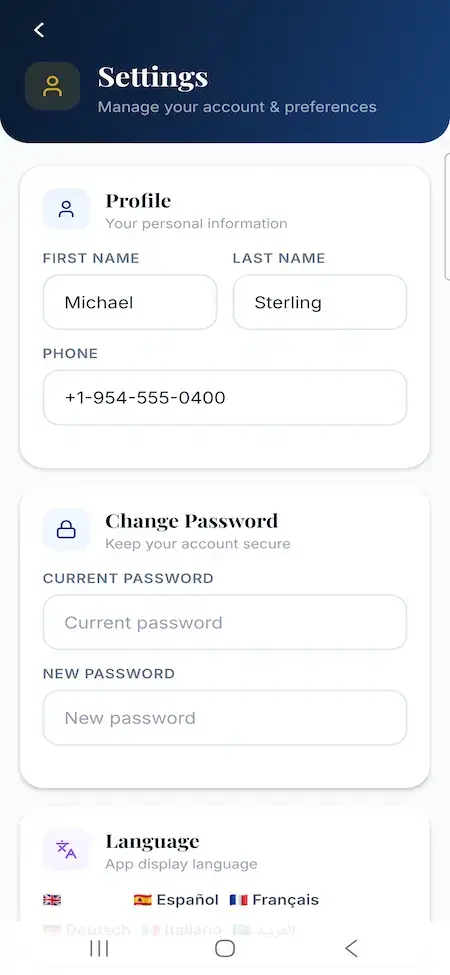
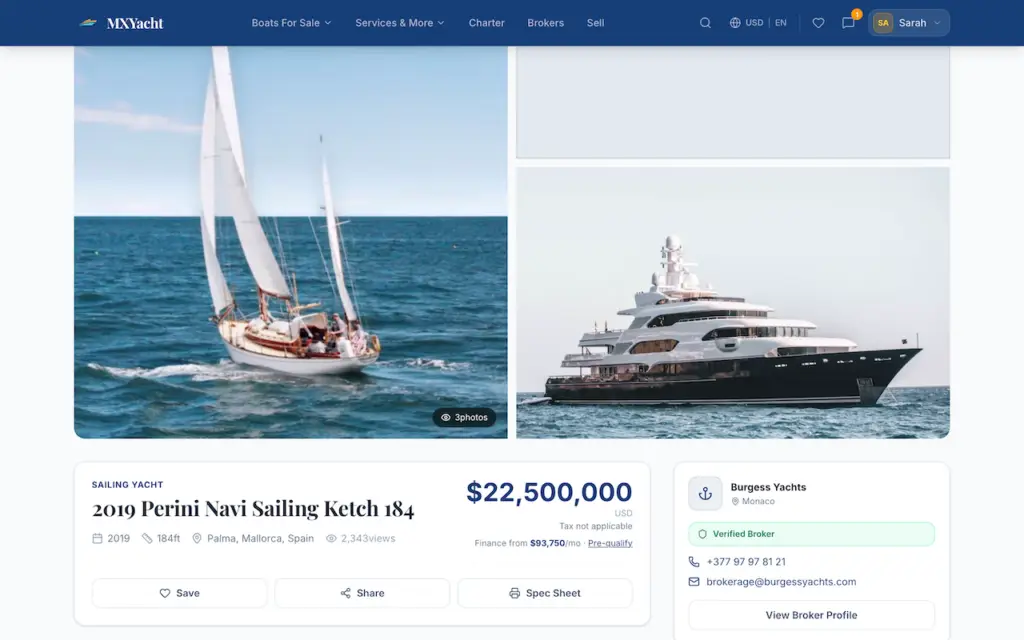
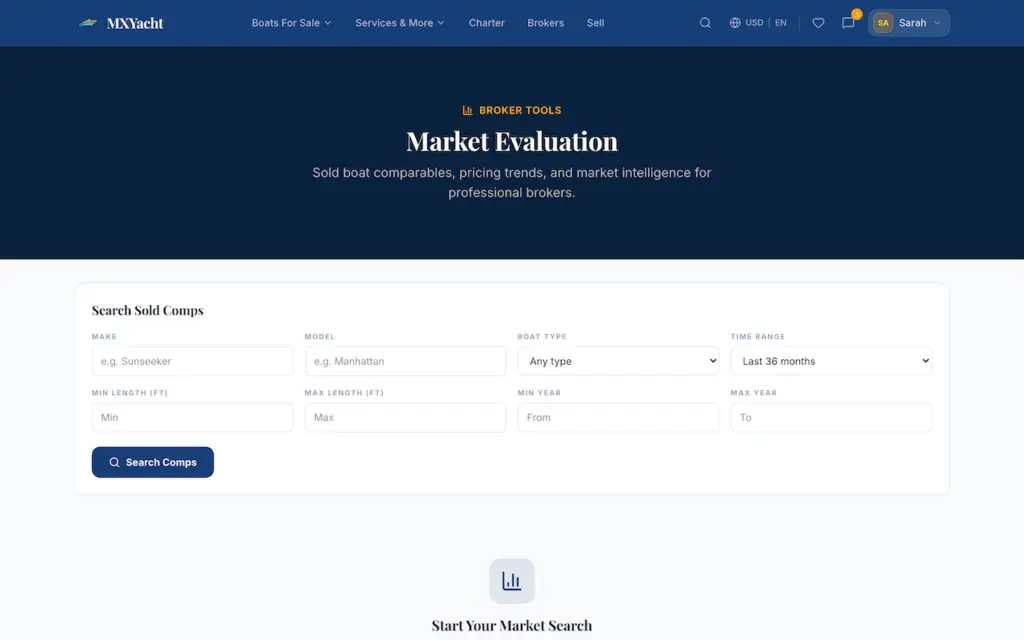
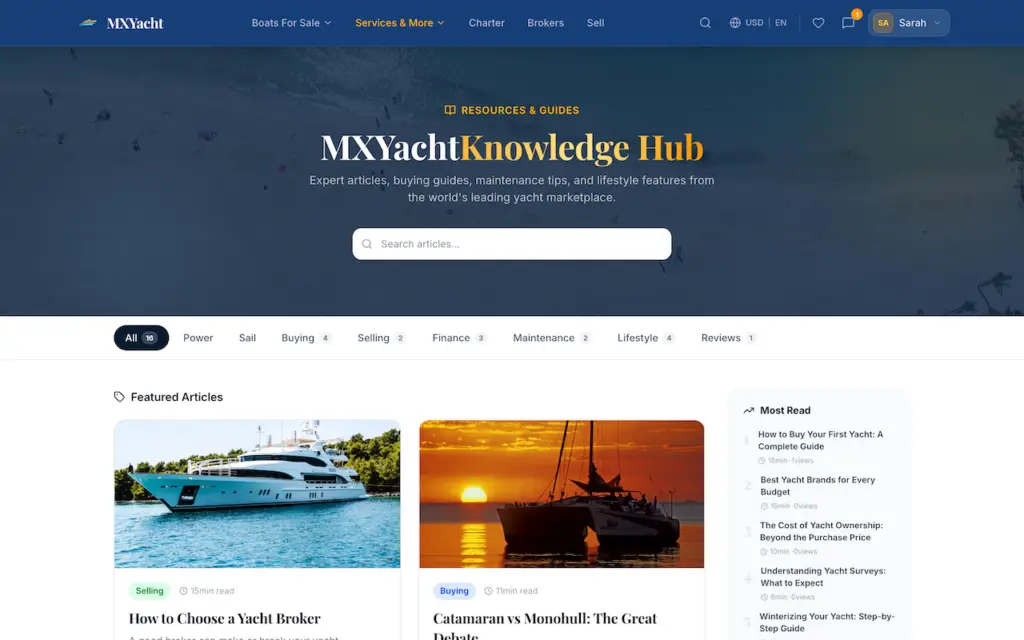
The interface across the surfaces that matter: search results with facets and range filters, the listing detail with gallery, specifications, price history and dealer context, the compare view, the saved-search and alert manager, the buyer inbox, the broker listing manager and kanban pipeline, CRM clients with curated shortlists, the LeadSmart review, market evaluation and reports, and the operator console with moderation, plans, taxonomy and the eight service queues.

Plus custom device
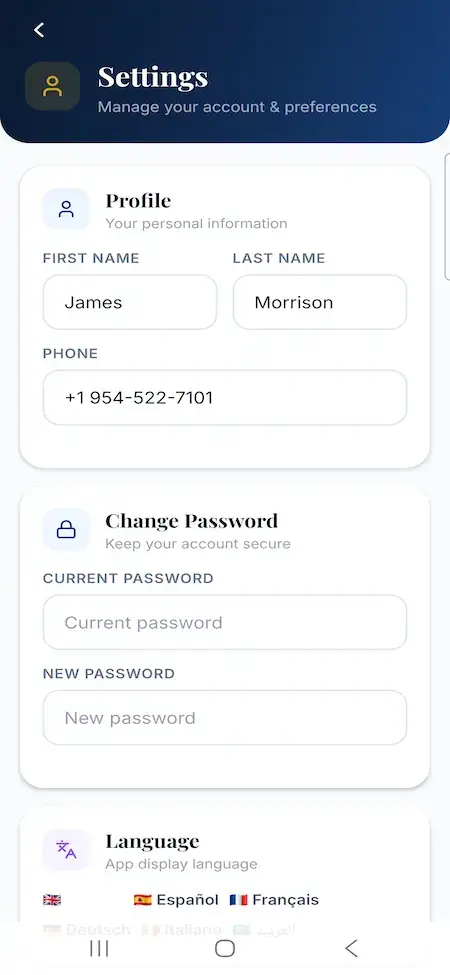
09 settings 1
08 resources
07 buyer dashboard
06 account
05 messages 2
04 favorites
03 listing detail
02 search
01 home
Plus custom device
09 settings 2
08 search
07 home
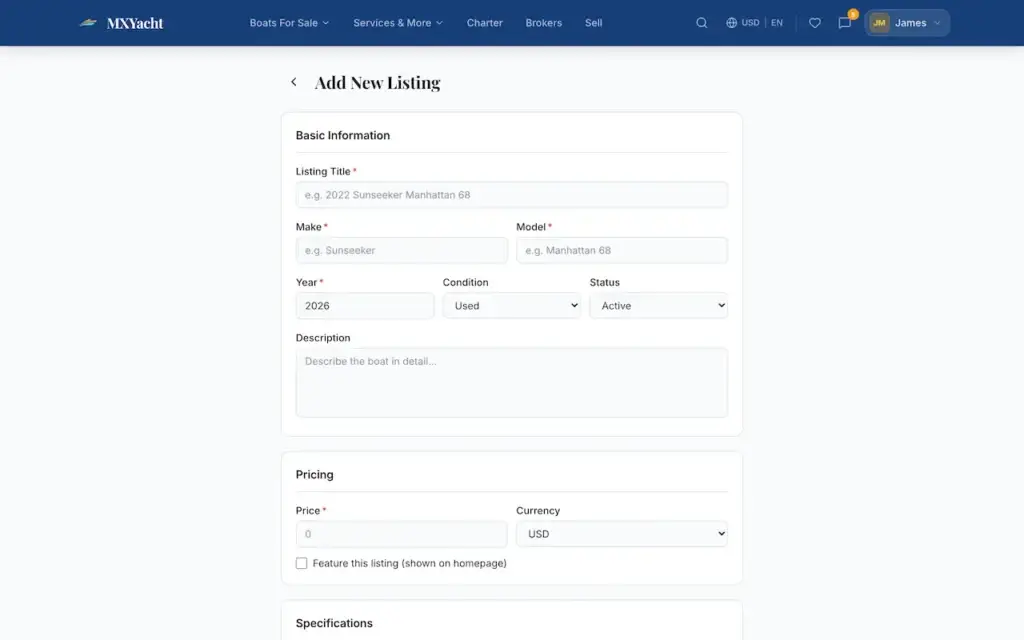
06 new listing
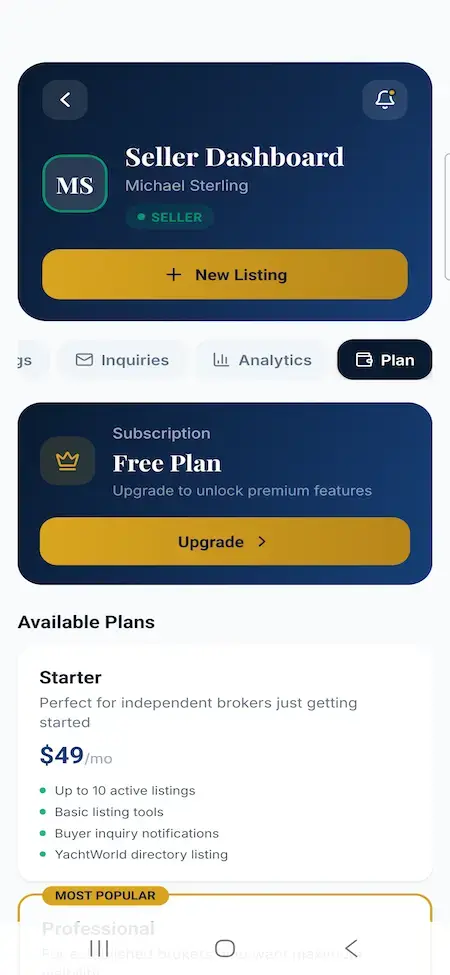
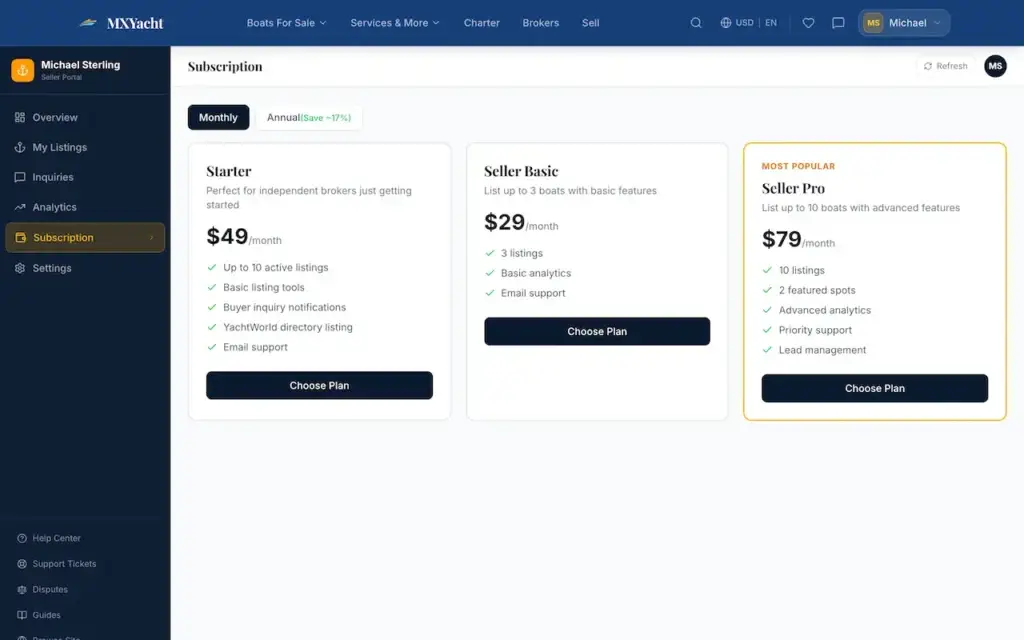
05 subscription
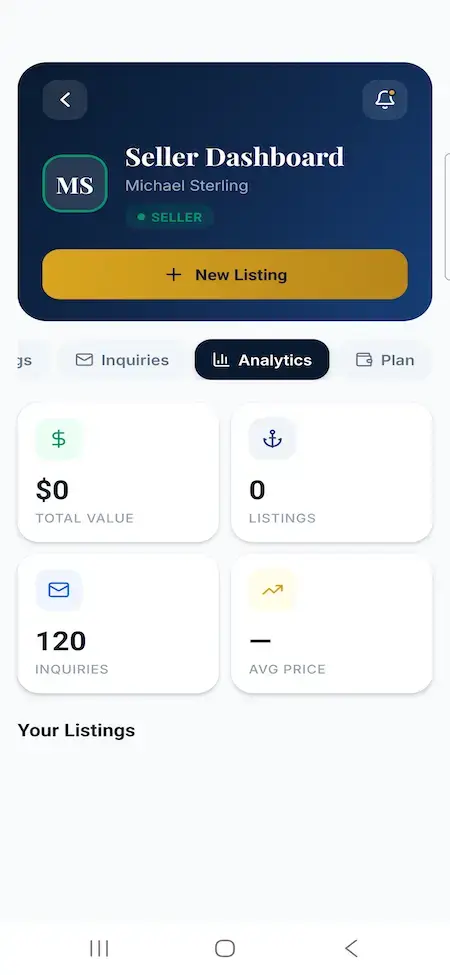
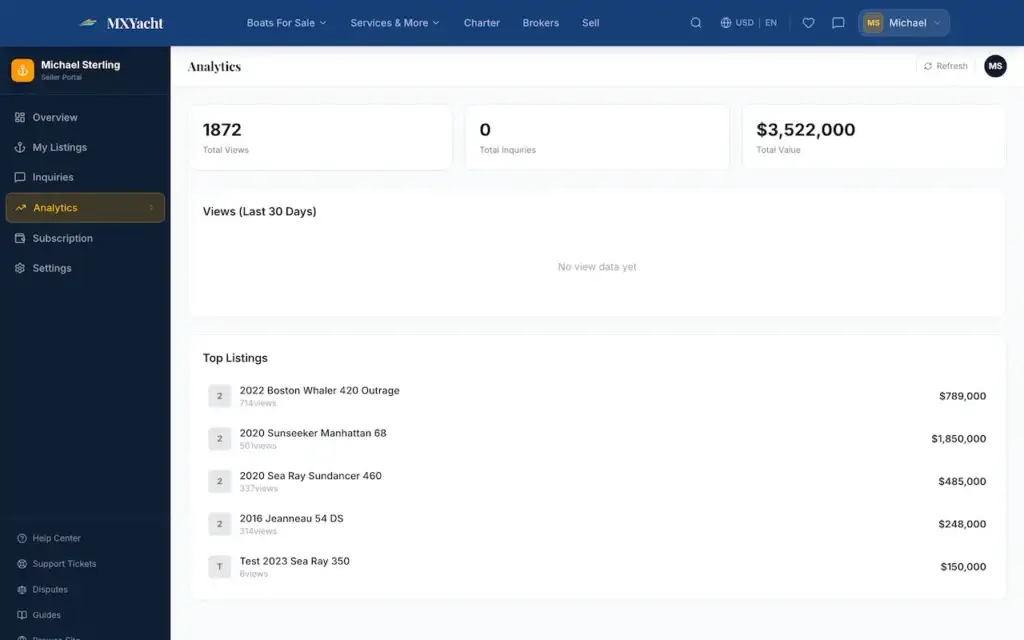
04 analytics
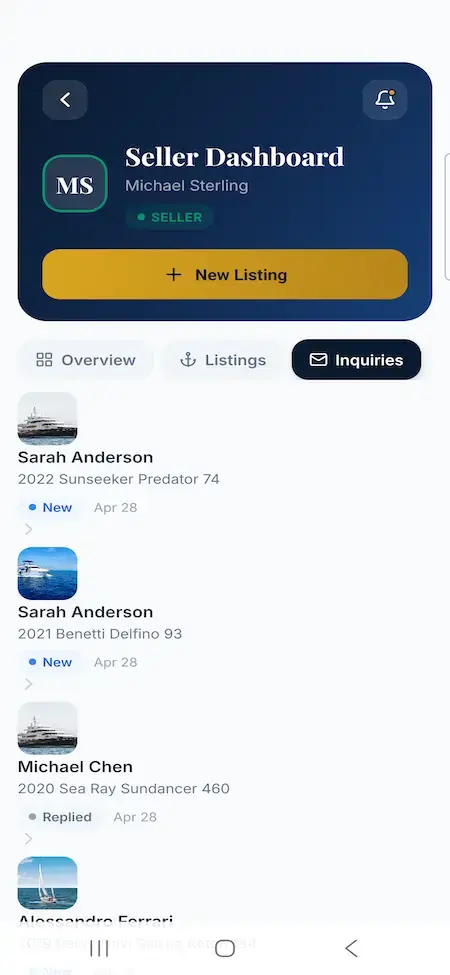
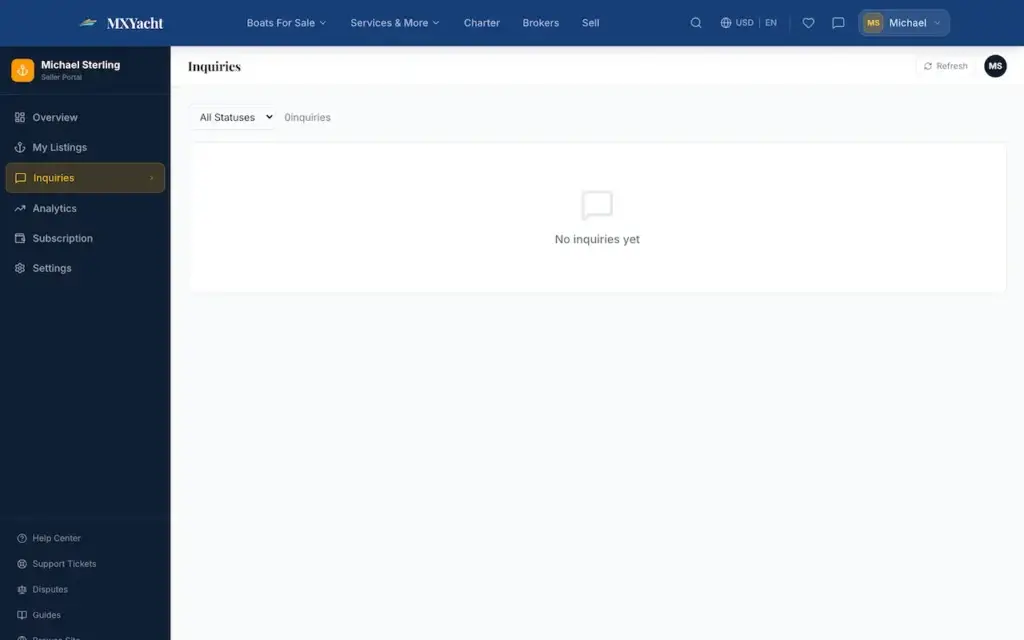
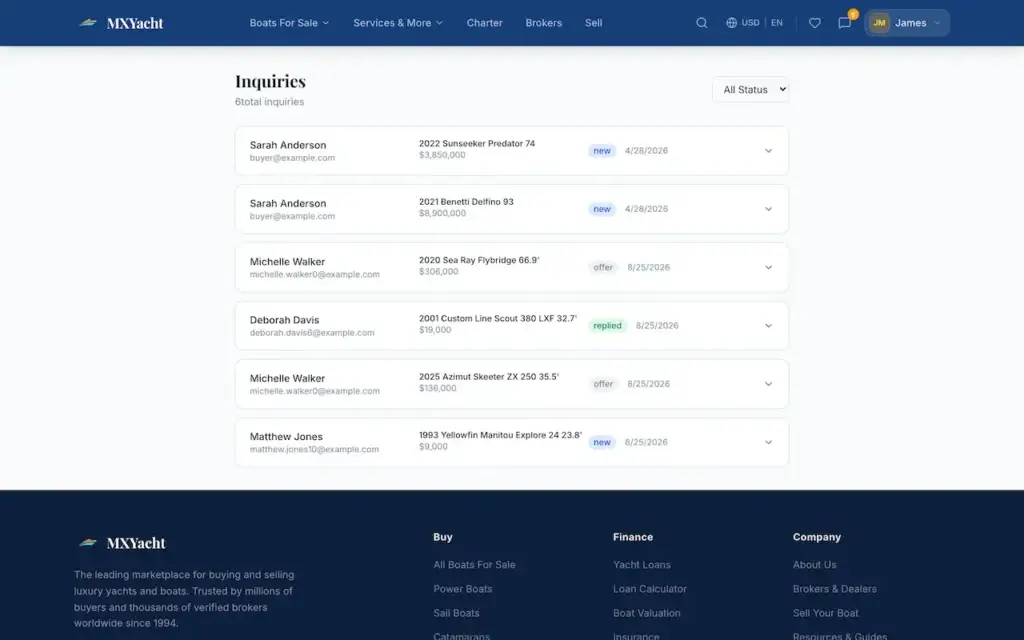
03 inquiries
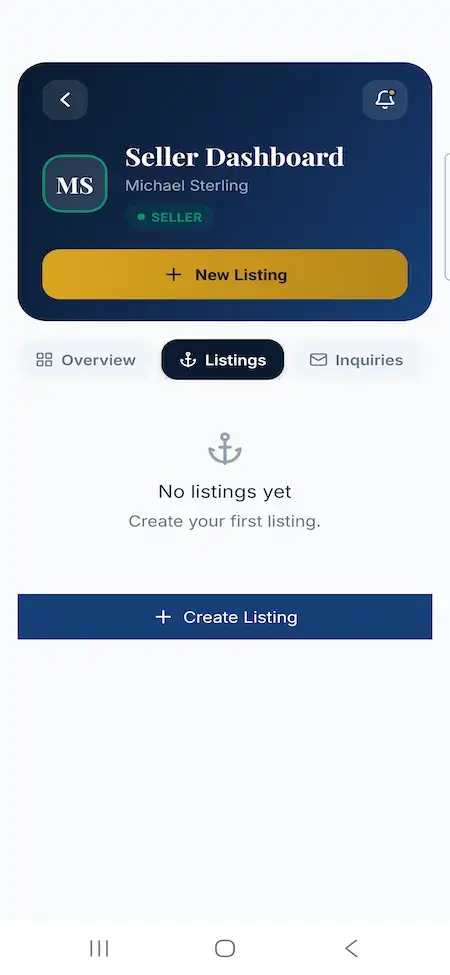
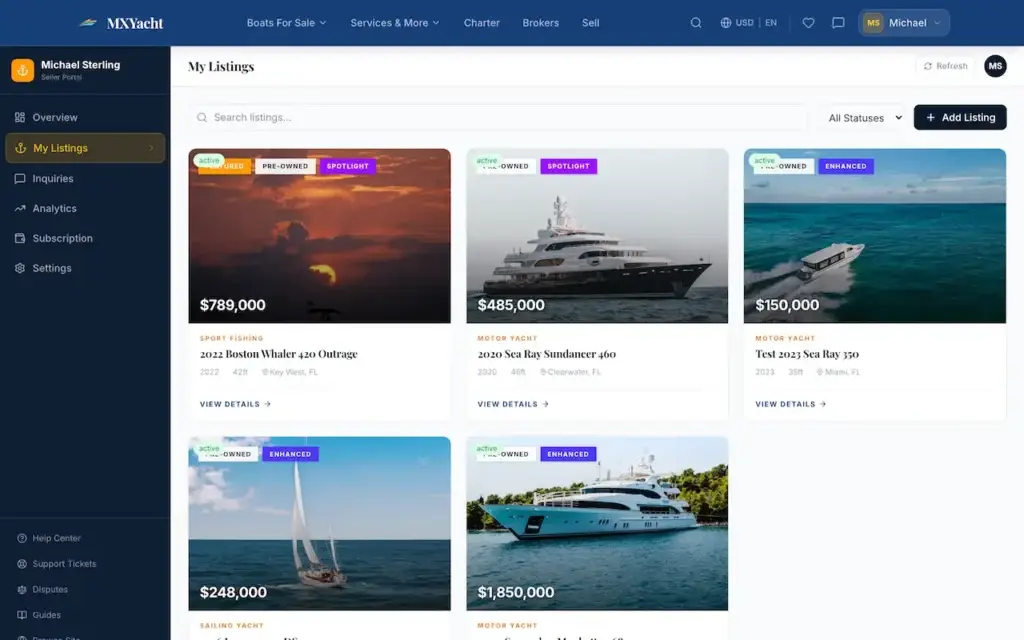
02 seller listings
01 seller dashboard
Plus custom device
01 dealer dashboard
09 settings
08 home
07 new listing
06 subscription
05 clients
04 inquiries
03 analytics
02 dealer listings
06-admin-boat-shows
05-admin-valuations
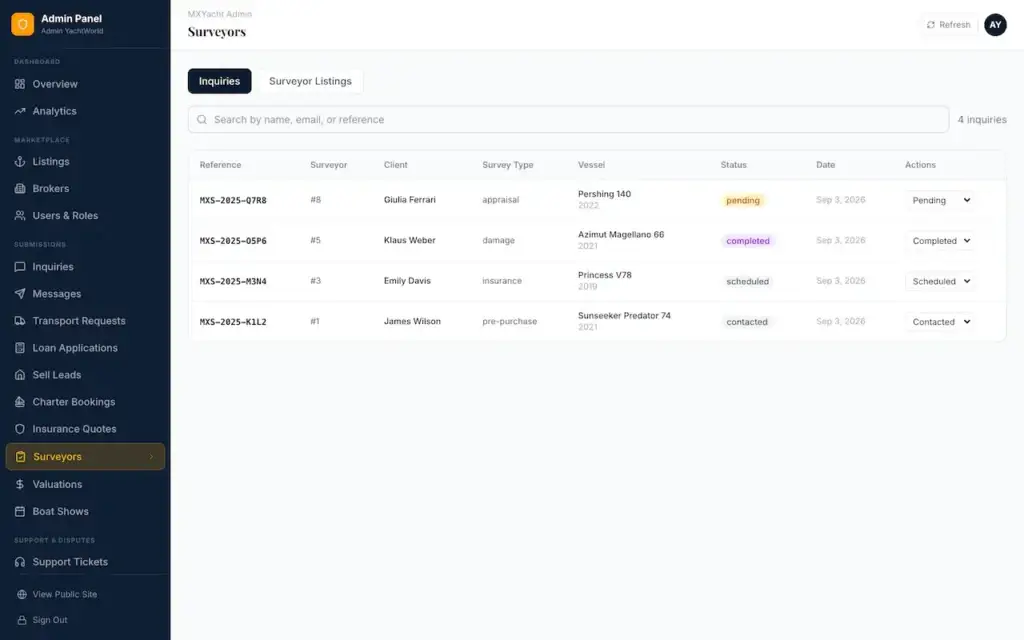
04-admin-surveyors
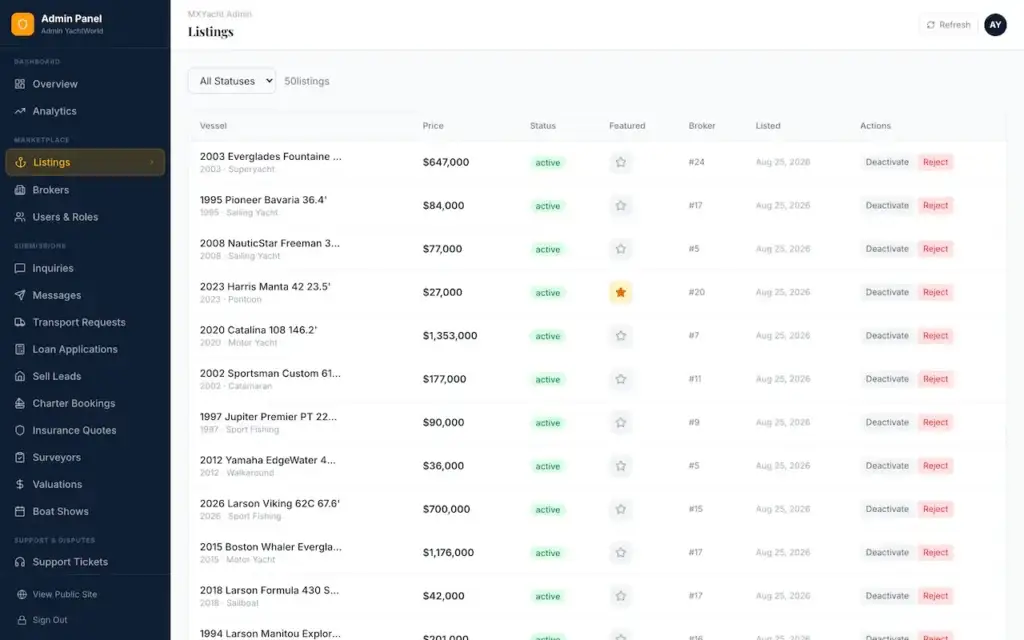
03-admin-listings
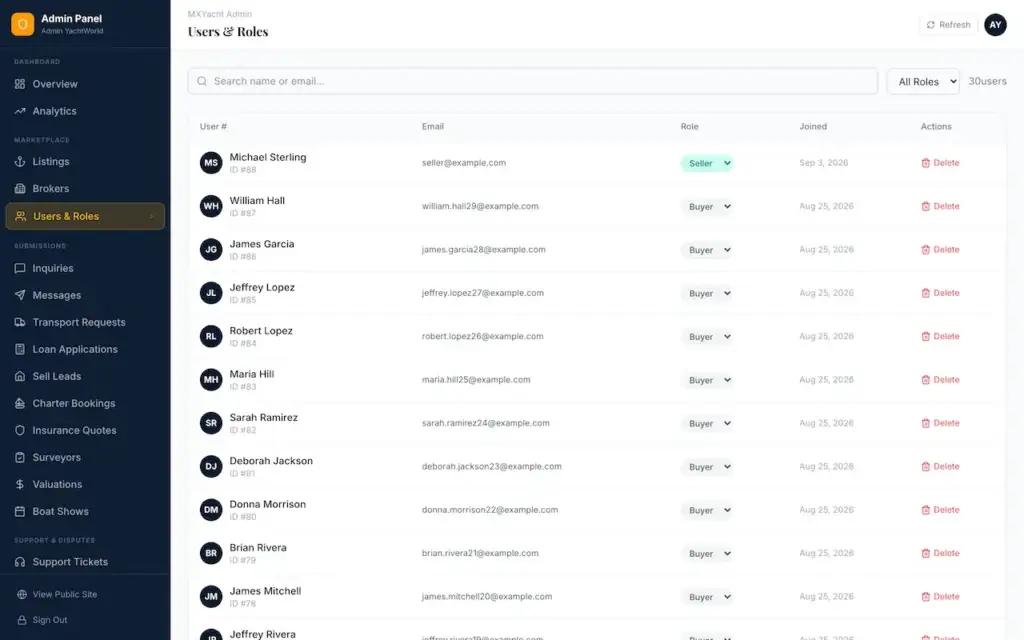
02-admin-users
01-admin-dashboard
06-resources
05-market-evaluation
04-buyer-dashboard
03-listing-detail
02-search
01-home
06-seller-settings
05-seller-subscription
04-seller-analytics
03-seller-inquiries
02-seller-listings
01-seller-dashboard
06-listing-form
05-inquiries
04-clients
02-dealer-listings
03-lead-pipeline
01-dealer-dashboard

Follow a buyer from first search through favouriting, comparing, saving a search, receiving an alert match, submitting an inquiry and answering the LeadSmart questionnaire, then follow the same lead into the broker desk where it is staged, answered and enriched with a curated shortlist. Web and mobile run the same flows against the same API, so an inquiry sent on the phone appears in the broker pipeline without a second integration. Want a guided walkthrough of a specific flow? Book a call and we will open the surface you care about with live data in it.

Straight Answers

YachtWorld Clone Deployment References - What the Platform Actually Does

Miracuves has shipped marketplace, rental and listing platforms, and those engagements are published in the portfolio with their own figures. There is no YachtWorld-class marine brokerage deployment among them yet, so rather than dress the platform in borrowed proof, the statements below are properties of the build, each demonstrable in the live demo above.

Illustrative Scenario

YachtWorld Clone Modelled Reference - Marine Brokerage Marketplace Deployment

A modelled reference deployment showing how the Miracuves YachtWorld Clone is configured for a brokerage group. This is not a client engagement and the figures are properties of the platform rather than results reported by a customer.

Modelled Reference Deployment

Marine Sector
Brokerage Marketplace and Dealer Network

How this platform is configured for a brokerage group whose leads currently arrive by email and WhatsApp, and where inventory, inquiry pipeline, broker CRM and adjacent marine services need to sit in one system rather than five.

Illustrative scenario Not a client engagement
Marine marketplace Market modelled
Yacht Brokerage, Lead Pipeline and Marine Services Industry
203
API handlers in the base build
40
Relational tables shipped
6 days
Deployment window
Challenges
  • Leads arriving by email and WhatsApp, then getting lost, duplicated or left unanswered
  • No single view of inventory, clients or broker performance across offices
  • Adjacent services like insurance, transport and finance captured on paper with no queue
🎯 Goal
  • One system holding listings, inquiry pipeline, messaging and broker CRM together
  • Response-time measurement that makes broker accountability visible rather than assumed
  • Eight marine service modules turning adjacent demand into a second revenue line
🛠 Solution by Miracuves
  • Specification-rich listings with 40+ vessel fields, media, video and price history
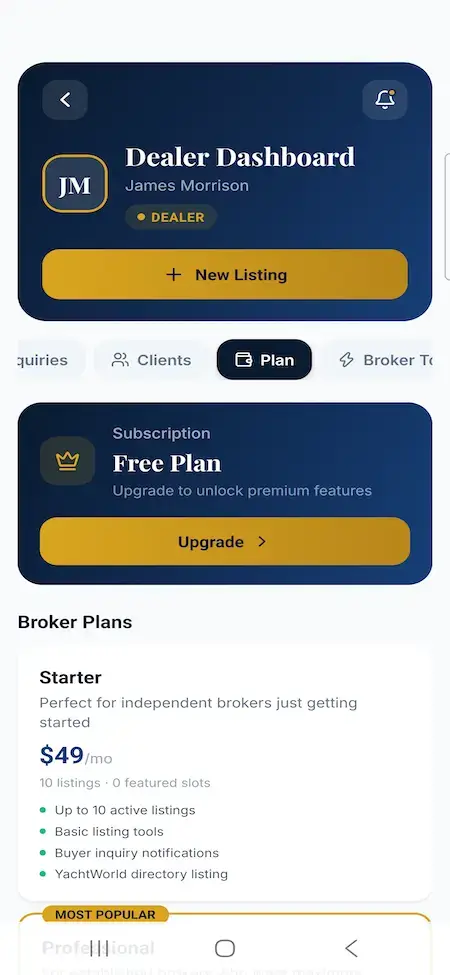
  • Configurable dealer plans with listing limits, featured slots and spotlight upgrades
  • Six display currencies and five UI locales for international buyers
  • Favourites, side-by-side compare, saved searches and cadence-based email alerts
  • Docker, Nginx and PM2 deployment assets with a documented horizontal-scale path

This is a modelled reference deployment, not a client engagement. Every capability listed above ships in the base build and is demonstrable in the live demo. The figures are properties of the platform, not results reported by a customer.

OY
Named client deployments are published separately See the Miracuves portfolio for real engagements with their own reported figures.
Model this against your own brokerage We will map inventory, the inquiry pipeline, broker CRM and the marine service modules against your own dealer network.
Book a consultation

The Basics

What Is a YachtWorld Clone App?

A YachtWorld Clone is a ready-made yacht and marine marketplace. Buyers search vessels by make, length, draft, engine hours and location, compare shortlists side by side, save searches that email them new matches, and send an inquiry that lands as a structured lead rather than an email. Brokers manage inventory, stage that lead through a pipeline, reply inside a threaded conversation, and attach curated alternatives from their own client records. Operators moderate supply, configure plans, and run eight adjacent marine service queues.

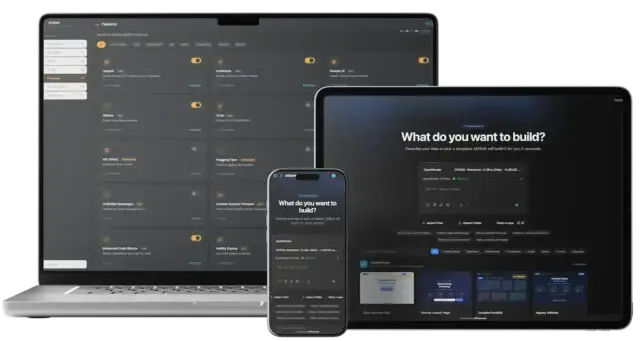
Yachtworld Clone cross-platform solution with web, mobile, broker listings, yacht search, and an admin management dashboard.

Not a Classifieds Template

The value sits in the lead lifecycle, the broker CRM and the service queues. A classifieds template gives you a listing grid and leaves qualification, response discipline and adjacent monetization as your problem.

Not a Rental Platform

You receive the full monorepo, the Drizzle schema and the migration path. No per-seat fee, no vendor roadmap dependency, and standard PostgreSQL underneath.

Marine-Specific by Design

Boat type, hull material, keel and rig, displacement, berths and engine hours are first-class fields with their own filters. This is not a real-estate template with the labels changed, and it is not a charter booking tool.

Built for Web, Mobile & API

What Is a YachtWorld Clone Script?

The category is genuinely hard in specific places, and those are the places this platform has already solved: a listing schema rich enough for a seven-figure asset, search that handles technical ranges and geospatial radius together, a lead object that survives being passed between people, and an admin console usable by someone who is not an engineer.

  • Specification-rich vessel listings with media, video and price history
  • Technical, geographic and status search with facets and sorting
  • Structured inquiry pipeline with response-time measurement
  • Dealer CRM with client budgets and curated shortlists
  • Eight adjacent marine service modules with operator queues
  • Configurable plans, listing upgrades and white-label settings
03 listing detail

It is a marketplace and brokerage engine, not a charter booking product. Charter is present as one of eight adjacent service modules with its own catalogue and inquiry flow, but the centre of gravity is buying and selling vessels.

Everything Included

YachtWorld Clone Features - Listings, Search, Leads, CRM & Services

Every capability below is built and demonstrable in the live demo. Where a feature needs a third-party account or a deployment decision before it works in production, that is stated against the feature rather than implied away.

Identity & Accounts

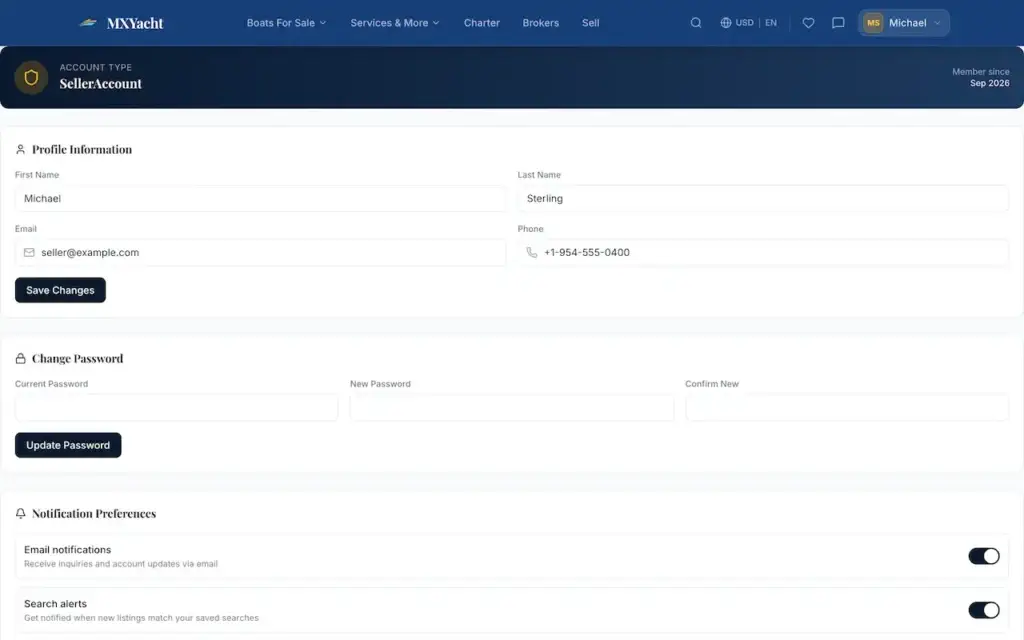
Registration with role selection, bearer JWT sessions, bcrypt hashing, password reset and email verification across buyer, seller, dealer and admin.

  • Email registration with first and last name and role selection
  • Bcrypt password hashing and bearer JWT login with 7-day expiry
  • Password change, forgot and reset with a time-limited token
  • Email verification flow and profile phone and avatar support
  • Role claims across buyer, seller, dealer and admin
  • TOTP two-factor enable, verify, disable and login challenge
  • GDPR JSON export that strips password and reset fields
  • Password-confirmed account deletion
  • Dealer association middleware gating every dealer route
  • Mobile JWT persistence via Expo SecureStore

Privacy & Two-Factor

TOTP two-factor, GDPR JSON export that strips secrets, password-confirmed erasure and dealer-association gating on every broker route.

  • Title, make, model, year, price and source currency
  • Length, beam, draft and displacement
  • Condition, boat type, category, fuel and hull material
  • Engine description, count, hours and horsepower
  • Cabins, berths, bathrooms, cruising and max speed
  • Fuel and water capacity, keel and rig
  • Location, country, state and latitude and longitude

Vessel Specification

Over forty first-class fields spanning identity, dimensions, machinery, accommodation, performance, tankage, rig and geography.

  • Ordered photo CRUD with captions and a primary flag
  • Multipart upload endpoint with size and extension checks
  • Video tour URL with in-gallery playback
  • Full-screen gallery with thumbnails, keyboard nav, swipe and zoom
  • Share modal with social URL and a printable spec sheet
  • Listing SEO metadata and JSON-LD on public pages

Media & Presentation

Ordered photo CRUD with captions, video tours, a full-screen gallery with zoom, share URLs, printable spec sheets and JSON-LD.

  • Active, under-offer and sold status with sold price and date
  • Append-only price-history events with price-drop badges
  • Featured, spotlight and enhanced flags with expiry
  • View counter and time-series listing view events
  • Similar-listing retrieval by category, location and price
  • Listing create, update and delete for dealers and admins

Listing Lifecycle

Active, under-offer and sold states with sold price and date, append-only price history, price-drop badges and upgrade flags with expiry.

  • Keyword search across text, make and model
  • Boat type, category, condition and make filters
  • Range filters on price, year, length, beam, draft and engine hours
  • Fuel and hull material filters
  • Country, state, location and geospatial radius search
  • Price-drop-only, under-offer and with-video toggles
  • Sorting, pagination and distinct make, type and location facet APIs

Search & Filtering

Keyword, taxonomy, numeric range and geospatial radius filtering with facet APIs, sorting and stable pagination.

  • Favourites list, add and remove
  • Side-by-side compare interface on web and mobile
  • Saved-search CRUD with named JSON criteria
  • Alert enabled flag with daily or weekly frequency
  • Search-alert background job emailing recent matches (SMTP configuration required)
  • Authenticated recommendation endpoint
  • Six display currencies and five UI locales

Intent & Retention

Favourites, side-by-side compare, named saved searches with alert cadence, a matching background job and a recommendation endpoint.

  • Rate-limited listing inquiry capture with guest contact context
  • Lead subject, message, source and intent
  • Inquiry status, stage, notes and reply fields
  • Response timestamp and a dealer response-time endpoint
  • Kanban-style dealer pipeline
  • Dealer inquiry list and update

Inquiry Pipeline

Rate-limited capture with source and intent, status and stage, private notes, a kanban board and measured first-response time.

  • Inquiry-scoped message create and list with conversation summaries
  • Authenticated inbox with unread count and mark-read
  • Sender identity, role, name and timestamp on every message
  • Per-user SSE stream with typed events and a 30-second heartbeat
  • Process-local SSE delivery, documented as such rather than sold as a durable queue
  • Web Push subscribe, unsubscribe and per-user fan-out (VAPID keys required)

Messaging & Realtime

Inquiry-scoped threads, an authenticated inbox with unread counts, per-user SSE with heartbeat, and Web Push once VAPID is configured.

  • Dealer directory and detail with slug, branding, bio and contacts
  • Dealer geography, specializations and languages
  • Ratings, review counts and verification presentation
  • Dealer dashboard totals, views and activity
  • CRM client list, detail, create, update and delete
  • Client email, phone, budget, status and private notes
  • Curated listing attachments per client with notes

Broker CRM & Curation

Dealer-owned clients with budgets, status and private notes, plus curated listing shortlists attached per client with their own notes.

  • LeadSmart public questionnaire retrieval
  • LeadSmart authenticated response submission
  • Inquiry-linked LeadSmart review for brokers
  • Dealer-configurable intent threshold
  • Listing optimizer completeness scoring and recommendations
  • Market evaluation and insights endpoints with sold comparables
  • Public market-report list and detail with broker report screens

Broker Intelligence

LeadSmart qualification with a configurable intent threshold, listing optimizer scoring, response-time benchmarking, market evaluation and sold comparables.

  • Public active plan list and detail with tier and target audience
  • Monthly and annual displayed amounts with ordering and popular flags
  • Listing and featured limits held in plan feature JSON
  • Broker and user subscription records with period, cycle and status
  • Broker and user checkout, update and cancel
  • Listing upgrade inspect, create and cancel
  • Admin plan CRUD with activate toggle and subscriber counts

Commerce & Services

Configurable plans with limits, listing upgrades, and eight marine service modules each with intake, reference codes and an operator queue.

  • Sell lead intake with vessel, contact and expectation fields
  • Charter catalogue and detail with rates, specification and media
  • Charter inquiry with dates, party size and message
  • Insurance quote request with option catalogue, reference code and my-quotes view
  • Transport quote with vessel, origin, destination and timing
  • Finance loan application with applicant, vessel, amount, term and income
  • Surveyor directory, filter, detail and reference-coded inquiry
  • Valuation request with estimated range and status
  • Boat-show event list and detail with rate-limited RSVP and interest capture

Note for buyers: every capability above is white-label and can be enabled, disabled or re-labelled per deployment through plans, settings and taxonomy. Where something is not in this list, it is usually still buildable. Tell us what your brokerage needs and we will scope it, include what makes sense in the deployment, and quote the rest in writing.

How Operators Earn

YachtWorld Clone Revenue Models - Subscriptions, Upgrades, Leads & Licensing

A marine marketplace earns from several places at once, and this platform models each separately so an operator can tune one lever without disturbing the others. The two that move the numbers most are dealer subscriptions and listing upgrades: one is recurring and predictable, the other scales with how much inventory brokers want in front of buyers.

Dealer Subscription Plans

Audience-targeted tiers with feature JSON, listing limits and featured slots. Broker and user subscription records carry status, period and billing cycle, and the admin console exposes plan CRUD with subscriber counts.

Listing Upgrades

Spotlight and enhanced promotion lifecycles with start and end dates, surfaced in search and on listing detail. This is the per-listing upsell that sits alongside the recurring plan.

Service Lead Fees

Charter, insurance, transport, finance, surveyor, valuation and boat-show intake can be monetized through partner referral fees, per-lead charges or lead packages. The platform supplies intake and queue; the commercial terms are yours.

Boat-Show Activations

Event listings with RSVP and interest capture feed an operator queue, which is the surface event organisers sell exhibitor presence and lead packages against.

Premium Broker Tools

LeadSmart, the listing optimizer, response-time analytics and market reports package naturally into higher dealer tiers rather than being given away at every level.

White-Label Licensing

Branding, taxonomy, plans, content, currency, locale and enabled modules are all configurable, which is what makes reselling branded regional instances a commercial rather than an engineering exercise.

Commerce boundary: plan selection, billing-cycle records, checkout and cancellation are implemented, and invoice history is a generated six-entry mock. Connecting a live payment provider such as Stripe or Adyen is a standard configuration step, not a platform gap, and we quote it as part of your deployment.

Run It Without a Dev Team

YachtWorld Clone Admin Console - Moderation, Plans, Queues & Analytics

The operator console covers users and dealers, listing moderation, commercial packaging, taxonomy and settings, all eight service queues, content, trust cases and analytics, which is the surface most marketplace builds defer and then never finish.

Admin Console Coverage

Overview Counts

Listings, active listings, dealers, users, inquiries, messages, views and subscription records on a single dashboard.

Growth Series

Six-month user and listing growth trends derived from stored data rather than a separate reporting copy.

Conversion Analytics

Inquiry-to-message, message-to-sold and overall conversion calculations across the whole marketplace.

Top Broker View

Listing, inquiry and plan-amount comparison across dealers, which makes broker performance conversations concrete.

User & Dealer Admin

Search, pagination, update and delete on users, plus dealer records and their listing moderation.

Listing Moderation

The admin listing collection with moderation actions on supply that should not be public yet.

Plans & Subscriptions

Plan CRUD with activate toggles, subscriber counts and both broker and user subscription record lists.

Eight Service Queues

Insurance, transport, loans, charters, surveyors, valuations, boat shows and sell leads with status workflow on each.

Content & Taxonomy

Articles, FAQs, help content, platform settings, and taxonomy for boat types, categories, conditions and features.

  • User list, search, pagination, update and delete
  • Dealer list, update and listing moderation
  • Listing collection with moderation actions
  • Plan CRUD with an activate toggle and subscriber counts
  • Broker and user subscription record lists
  • Sell-inquiry, inquiry and message collections

Support & Disputes

Tickets with category, priority, assignment, attachments and threaded replies, plus disputes with evidence and operator resolution.

  • Insurance, transport, loan, charter, surveyor, valuation and event queues
  • Article and FAQ create, update and delete with a publishing surface
  • Surveyor and boat-show CRUD
  • Platform setting list, update and category retrieval
  • Taxonomy retrieval and update for boat types, categories, conditions and features
  • Support tickets and disputes with assignment, status and resolution

Stated plainly: only platform settings round-trips are confirmed persistent, a small number of decorative admin controls are presentation only, and the six-month subscription amount trend is a modelled monthly-equivalent series rather than settled cash. The security handbook names each one, and we would rather you read it than discover it.

Transparent Pricing

How Much Does It Cost to Build a Yacht Marketplace Like YachtWorld in 2026?

Building a yacht marketplace and brokerage platform with Miracuves typically starts from around $4,299 for a launch-ready white-label YachtWorld Clone and increases based on payment-provider integration, partner fulfilment workflows, mobile scope, data migration from an existing inventory system and infrastructure complexity.

Most Popular
Professional
ReadyMade Turnkey Solution
$4,299/- one-time
⚡ Go-live: 6 days
Best for: Brokerage groups, marine portals & regional marketplace operators
You get the solution as you see our demo with your own branding and self-hosted on your end.
Get Started →
Enterprise
Custom, Compliance & High-Scale
Custom quote
⚡ Go-live: Based on final scope
Best for: Dealer networks, marine media groups, banks, insurers & white-label partners
Get it built as you situation demand and business need , as per custom needs.
Request a Quote →
Still deciding?

Not sure which option
is right for you?

Talk to us - we'll understand your goals, timeline, and budget, and point you to exactly what you need. No upselling, just honest advice.

Free 30-min call
Reply within 24 hrs
No pressure, no commitment

The Full Package

What's Included - YachtWorld Clone Source Code, Apps & Deployment

You receive a complete, deployable platform: the application source, the schema behind it, and the documentation a technical buyer will ask for. Everything transfers with full ownership, with no runtime licence, no per-seat fee and no dependency on our roadmap.

Web Application

The React and Vite SPA across 46 routes with TypeScript, Tailwind and generated query hooks.

  • React and Vite web application across 46 routes
  • TypeScript throughout with a Tailwind component library
  • Public, auth, marketplace, service and dashboard route groups
  • Skeletons, empty states and error boundaries

Mobile Application

The Expo React Native build with tabbed navigation, deep screens and EAS build profiles.

  • TanStack Query hooks generated by Orval from the OpenAPI contract
  • Generated Zod schemas kept in step with the same contract
  • Centralized custom fetch with token injection
  • Mobile copy of the spec and its generated client

Admin Console

The role-restricted operator surface covering moderation, plans, taxonomy, queues and analytics.

  • Expo and React Native mobile app with Expo Router tabs
  • Listing, dealer, charter, boat-show, surveyor and valuation screens
  • Role dashboards for buyer, seller, dealer and admin
  • JWT persistence via Expo SecureStore

API & Contract

203 handlers across 35 modules with the OpenAPI YAML and its generated React Query and Zod clients.

  • Express 5 API with 203 handlers across 35 route modules
  • Bearer JWT with role and dealer-association middleware
  • Global and route-specific rate limiting
  • Pino structured request logging with query redaction

Database Schema

Forty PostgreSQL tables across thirty Drizzle schema modules, with JSONB where flexibility is needed.

  • Drizzle ORM with a typed PostgreSQL schema of 40 tables
  • Thirty exported schema modules with JSONB for flexible fields
  • Append-only price history and time-series listing views
  • Search-alert background job

Deployment Assets

Docker, Compose, Nginx, PM2 and EAS profiles, so going live is configuration rather than packaging.

  • Multi-stage Docker image on Node 24 and pnpm
  • Docker Compose publishing the app alongside Nginx
  • Nginx reverse proxy with gzip, immutable caching and baseline headers
  • PM2 fork configuration as a non-container alternative

Documentation Set

Ten documents covering requirements, data model, API surface, security posture and compliance.

  • EAS development, preview and production build profiles
  • Health endpoint for probes and monitoring
  • Documented horizontal-scale path for rate limiting, SSE and storage
  • Six days to deployment on your infrastructure

Support Window

Sixty days of platform guidance, six months of priority bug fixes and twelve months of product evolution.

  • Full source ownership with no runtime licence
  • Product requirements document and ERD
  • Schema reference and API collection
  • Developer and security handbook plus VAPT posture document

Want to see exactly what transfers? we will walk the repository, the schema and the documentation set with your technical lead before anything is signed, and tell you plainly which integrations are configuration and which are quoted work.

Know Your Buyer

Who Is Our YachtWorld Clone App Built For?

The platform suits operators whose supply is high-value and whose buyers take months rather than minutes to decide, and who need that long consideration period to stay inside one system.

If your business depends on lead quality, on broker responsiveness, and on adjacent services that currently leak to partners with no record, a YachtWorld-style platform becomes a long-term owned asset rather than a brochure site with a contact form.

Where It Fits

YachtWorld Clone Use Cases - Brokerage, Marketplace, Services & Events

The same platform serves quite different operators depending on which module leads. A brokerage group leans on inventory, pipeline and CRM. An independent marketplace leans on plans and upgrades. A services business leans on the eight intake queues. Each is configuration rather than a different build.

Brokerage-Owned Marketplace

Because taxonomy, plans, content, currency, locale and enabled modules are all operator-controlled, the same codebase can present as a premium single-brand brokerage portal in one deployment and a neutral multi-dealer aggregator in the next.

Independent Listing Aggregator

Run a single-brand portal where every listing belongs to your own offices, with dealer association routing leads to the right desk and admin moderation holding the quality line across the whole group.

Marine Services Lead Engine

Operate a neutral aggregator that invites dealers and private sellers under subscription tiers, and monetize featured placement and spotlight upgrades rather than taking a cut of a transaction you do not process.
Charter-Led Operator

Lead with services instead of inventory: insurance, transport, finance, survey and valuation intake each carry their own form, reference code and operator queue, which is enough to run a marine services lead engine on its own.

Boat Show & Event Activation

Publish a seasonal charter catalogue alongside brokerage stock, capturing dates and party size as structured intent so booking agents receive a qualified enquiry rather than a contact-form message.

White-Label Regional OEM

Run boat shows and regattas as first-class events with slug detail pages and rate-limited RSVP capture, then distribute qualified attendee interest to exhibitors from the admin queue.

License branded regional instances to banks, insurers, marina groups or marine brands, with their own domain, taxonomy, plans and enabled modules, as a commercial exercise rather than a fork of the codebase.

Market Timing

Why Launch a Yacht Marketplace in 2026?

Premium marine has been underserved by generic classified software for a long time. A yacht is not a commodity SKU: photographs, technical specifications, service history, survey evidence, provenance and broker reputation all carry weight, and platforms that compress that into a price and three images produce buyer uncertainty and broker inefficiency at every step.

Consideration Is Long

A six-figure purchase takes months, which means the platform that keeps the buyer engaged across that period with saved searches, alerts and a broker relationship is the one that gets the transaction.

Leads Are the Product

In brokerage the inventory is often shared across portals. What differentiates an operator is qualification speed and response discipline, which is exactly what the pipeline and response-time measurement address.
Adjacent Services Compound

Insurance, transport, finance, survey and valuation demand arrives with every vessel sale. Capturing it in the same system turns one transaction into several revenue events.
Multi-Currency Is Table Stakes

Marine buyers are international by default. Six display currencies and five UI locales ship in the base build rather than arriving as a phase-two project.
Own the Buyer Relationship

Syndicating inventory to third-party portals rents you reach and keeps none of the data. A platform you own keeps the search history, the saved criteria and the conversation.

Broker Productivity Is Margin

Every hour a broker spends reconstructing context from an inbox is margin lost. CRM, curated shortlists and a staged pipeline turn that time back into selling time.

Platform by the Numbers

203
API Handlers
40
Database Tables
46
Web App Routes
35
API Modules

Building the layer that handles it properly is what consumes the years. A listing schema rich enough for the asset class, search that combines technical ranges with geospatial radius, a lead object that survives being handed between people, and an admin console a non-engineer can run are each unglamorous, mandatory and slow to get right.

Under the Hood

YachtWorld Clone Tech Stack - Express 5, PostgreSQL, Drizzle & Expo

Under the hood, a marketplace needs a schema indexed for the queries search actually makes, a contract that keeps three clients in step, and deployment assets that do not need reinventing. Here is what sits behind it.

Web Application

React · Vite · TypeScript

  • 46 routes across public, auth, marketplace, service and dashboard surfaces
  • Tailwind with a component library
  • TanStack Query hooks generated by Orval
  • Skeletons, empty states and error boundaries
  • SEO canonical, social metadata and JSON-LD

Mobile Application

Expo · React Native · NativeWind

  • Expo Router tabs: Home, Search, Favourites, Messages, Account
  • Listing, dealer, charter, boat-show, surveyor and valuation screens
  • JWT persistence via Expo SecureStore
  • AsyncStorage query cache for offline-tolerant reads, not offline mutation sync
  • EAS development, preview and production profiles

API Layer

Express 5 · OpenAPI 3 · Zod

  • 203 handlers across 35 registered route modules
  • Bearer JWT with role and dealer-association middleware
  • Global 100-per-15-minute IP limiter plus route-specific limits
  • Pino structured logging with query redaction
  • Health endpoint and separately mounted SSE route

Data Layer

PostgreSQL · Drizzle ORM

  • 40 relational tables across 30 exported schema modules
  • JSONB for plan features, listing features and saved-search criteria
  • Append-only price history and time-series listing views
  • Parameterized queries throughout

Contract & Codegen

OpenAPI · Orval · Zod

  • OpenAPI YAML as the single source for both clients
  • Generated React Query hooks for web
  • Generated Zod schemas for validation parity
  • Runtime stays authoritative; spec parity belongs in CI

Deployment

Docker · Nginx · PM2 · EAS

  • Multi-stage Docker image on Node 24 with pnpm
  • Compose publishing app plus Nginx
  • Nginx gzip, immutable static caching and baseline headers
  • PM2 fork with restart, memory and log policy
  • Documented horizontal-scale path via shared rate-limit store and object storage

Note for Tech Buyers: the YachtWorld Clone is structured so your team can extend it without fighting it. Thirty-five route modules each own their handlers and schema, the OpenAPI contract regenerates both clients, and every integration point (payments, SMTP, VAPID, exchange rates, object storage) is a documented seam rather than a hard-coded provider.

End to End

How the YachtWorld Clone Works - Search, Inquire, Qualify, Convert

A marine marketplace looks like a listing grid from the outside and runs on a tightly sequenced discovery, qualification, conversation and governance pipeline underneath. Here is the path from first search to a vessel under offer.

Buyer to Broker - From First Search to Under Offer

01-home
Discovery & Search

A buyer arrives from search or an alert and narrows a large catalogue down to a handful of candidates.

  • Keyword search across text, make and model with facet APIs for make, type and location
  • Range filters on price, year, length, beam, draft and engine hours
  • Country, state and geospatial radius filtering with sorting and pagination
  • Price-drop, under-offer and with-video toggles for behavioural signals
1
01-home
03-listing-detail
Intent & Retention

Explicit intent is captured so the buyer can be brought back without paid re-acquisition.

  • Favourites and a side-by-side compare interface for high-consideration decisions
  • Named saved searches stored as JSON criteria with a daily or weekly alert cadence
  • Background job matching new inventory and emailing recent matches
  • Authenticated recommendation endpoint for personalized surfacing
2
03-listing-detail
08-resources
Inquiry & Qualification

Interest becomes a structured lead rather than an email, and the broker gets context before replying.

  • Rate-limited inquiry capture carrying subject, message, source and intent
  • Guest inquiry supported with contact context to widen the top of funnel
  • LeadSmart questionnaire responses linked to the inquiry for qualification
  • Dealer-configurable intent threshold for scoring which leads get worked first
3
08-resources
04-inquiries
Broker Response

The lead is staged, answered and measured, which is where most brokerage operations leak value.

  • Kanban pipeline with status, stage and private notes
  • Inquiry-scoped threaded messaging with an authenticated inbox and unread counts
  • Response timestamp captured and surfaced through a response-time endpoint
  • Near-real-time delivery over per-user SSE, with Web Push where VAPID is configured
4
04-inquiries
08-resources
Relationship & Curation

The conversation becomes a managed client record rather than one thread in an inbox.

  • CRM clients with email, phone, budget, status and private notes
  • Curated listing shortlists attached per client with notes
  • Listing optimizer scoring to improve inventory quality
  • Market evaluation, insights and sold comparables for pricing conversations
5
08-resources
04-analytics
Conversion & Governance

The listing moves through its lifecycle and the operator retains control of supply and trust.

  • Active, under-offer and sold states with sold price and date
  • Append-only price history events and price-drop badges
  • Listing moderation, user and dealer administration in the operator console
  • Support tickets and disputes with evidence, threaded replies and resolution
6
04-analytics

Visual Flow Diagram

Search Shortlist Save Alert Inquire Qualify Converse Under Offer

How It's Built

YachtWorld Clone Platform Architecture & Backend Flow

Contract-First by Design

An OpenAPI YAML generates the web React Query client, the mobile client and the Zod schemas, so three surfaces cannot quietly drift apart. Runtime remains authoritative and spec parity belongs in CI.

Thirty-Five Route Modules

Each API family carries its own handlers and schema module, so adding a capability is a new module rather than a change threaded through a monolith.

One Listing Aggregate

Photos, price history, views, upgrades and inquiries all hang off the listing record, which is what lets a broker dashboard, a search facet and a price-drop badge be produced without joining external systems.

Separated Realtime Path

SSE is mounted before the aggregate router with its own heartbeat and disconnect cleanup. Delivery is process-local by design, and the scale-up path to shared pub/sub is documented rather than implied.

Typed Data Access

Drizzle gives a typed schema and parameterized queries across all forty tables, with JSONB reserved for the places that genuinely need flexible shape.

Role-Aware Everywhere

Role claims in the JWT plus dealer-association middleware gate the broker surface, and UI visibility is never treated as an authorization boundary.

Performance Targets

Built to Scale - Indexed Reads, Stateless API & Growth Headroom

The architecture is deliberately conventional at the edges and specific where a high-consideration marketplace demands it: a stateless API tier, a relational model indexed for the queries search actually makes, and an explicit, documented path from single-node launch to horizontal scale.

Search at Catalogue Volume

Search combines keyword matching, taxonomy filters, numeric ranges and geospatial radius in a single query path, which is the query shape that decides whether a marketplace feels fast at ten thousand listings or at two hundred thousand.

Facet APIs for make, type and location are served separately so the filter UI does not force a full result recount on every interaction.

  • Range filters across price, year, length, beam, draft and engine hours
  • Distinct facet endpoints rather than client-side aggregation
  • Stable pagination for SEO-friendly deep browsing

A Stateless API Tier

Nothing is held in process memory except the SSE connection map, which is precisely why the documented scale path replaces it with shared pub/sub rather than pinning users to a node with sticky sessions.

Rate limiting is in-process at launch and moves to a shared store when you run more than one instance. The documentation says so rather than presenting the single-node build as infinitely elastic.

  • Bearer tokens rather than server-side session state
  • Shared rate-limit store as the first horizontal-scale step
  • Shared pub/sub for SSE fan-out across instances

Media and Storage Growth

Listing media is the first thing to outgrow an application server. Uploads run through a size and extension checked endpoint, and the documented next step is S3-compatible object storage with a CDN in front.

Because uploads already go through a single endpoint, moving them is an adapter change rather than a rewrite of every listing form.

  • Single upload seam for web, mobile and admin
  • Object storage and CDN as the documented growth step
  • Nginx immutable caching for static assets in the meantime

Production Hardening Before Load

The schema ships as a working foundation, and production hardening adds the constraints that keep it correct under concurrency and make the query planner predictable.

These are named in the handbook as pre-launch work rather than left for an incident to reveal.

  • Comprehensive foreign keys, checks and status enums
  • Measured indexes on the filter columns search actually uses
  • Backups with tested restore drills and monitoring

Indexed for the Real Query

Production hardening adds foreign keys, check constraints, status enums and measured indexes on the columns search actually filters.

Stateless API Tier

Bearer tokens rather than server-side sessions, so scaling out is adding instances rather than adding sticky routing.

Media Off the App Server

A single size and extension checked upload seam, with object storage and a CDN as the documented step once media volume grows.

Documented Scale Path

Shared rate-limit store, shared pub/sub for SSE and object storage, named explicitly instead of implied by the word cloud-ready.

Deployment Choice

Docker Compose with Nginx, or PM2 on a VM, or your own Kubernetes manifests. The assets for the first two ship with the build.

Honest Ceilings

Process-local SSE and in-process rate limiting are stated as single-node characteristics rather than described as enterprise messaging.

Realtime Without Overpromising

Server-sent events give near-real-time inquiry and message delivery with a 30-second heartbeat and disconnect cleanup, which is the right amount of machinery for a marketplace where a lead arriving two seconds later changes nothing.

Delivery is process-local, so a second instance needs shared pub/sub before every user sees every event. That is stated in the documentation rather than left for you to discover when you scale out.

  • Per-user SSE stream with typed events
  • Web Push fan-out once VAPID keys are configured
  • Shared pub/sub named as the multi-instance requirement

Where this starts: single-node deployment is ready at launch through the included Docker Compose and Nginx template, or PM2 for operators who prefer a process manager over containers. Everything above is the path from there, not a prerequisite for going live.

Built to Be Audited

YachtWorld Clone Security & Platform Trust

A marketplace holds identities, private client notes, inquiry history and commercial terms, so the security posture is documented rather than asserted. The build ships with a developer and security handbook and a VAPT compliance document, both of which are candid about what is implemented and what is operator work.

Authentication & Access

Bcrypt hashing at cost 12, bearer JWT with 7-day expiry, TOTP two-factor enable, verify, disable and login challenge, and role plus dealer-association middleware.

Abuse & Rate Limiting

A global 100-per-15-minute IP limiter with tighter route-specific limits on inquiry, RSVP and other submission endpoints.

Injection Resistance

Parameterized Drizzle queries throughout and selected update allowlists on mutable routes, so a stray field cannot become a write.

Privacy & Erasure

GDPR JSON export that strips password and reset fields, and password-confirmed account deletion that cascades through related records.

Logging Discipline

Pino structured request logging with query-string redaction, so tokens and personal data do not end up in log aggregation.

Disclosed Hardening List

The pre-launch gates are published rather than hidden, which is the difference between a transparent foundation and a surprise during procurement. No certification or vulnerability-free claim is made.

Note for Serious Operators: the handbook maps every control to the file that implements it and marks each one as implemented or as a pre-launch hardening item. The named release gates include eliminating the fallback JWT secret, completing object-level ownership checks on every identifier-bearing route, encrypting TOTP secrets, hashing reset tokens, private scanned uploads and a full privacy review across all forty tables. We would rather hand you that list than let an independent tester find it.

Go Further

YachtWorld Clone Add-Ons - Payments, Partners, Enterprise & Scale

Out of the box the platform is complete and demonstrable. The modules below are what operators most often add, either because they need a third-party account, or because their scale, security review or procurement process demands it. Tell us which of these you need and we will scope it; some are included in the deployment and others are quoted, but none of them are rebuilds.

Live Payment Processing

Connecting Stripe, Adyen or a regional provider to the existing plan and subscription records, with hosted fields, webhooks, settlement, refunds, tax and real invoicing replacing the generated mock history.

Partner Fulfilment Workflows

Routing insurance, transport, finance, survey and valuation leads into partner systems with contracts, SLAs and status callbacks, rather than stopping at the operator queue.

Object Storage & CDN

Moving listing media off the application server onto S3-compatible storage with a CDN in front, which is the first thing to change once media volume grows.

Enterprise SSO & Audit

SAML or OIDC for staff access, immutable audit logging and access review evidence for operators whose procurement requires it.

Dedicated Search Engine

Moving faceted search onto a dedicated engine when the catalogue size and query concurrency outgrow relational filtering.

Inventory Data Migration

Importing an existing listing catalogue, media library, dealer records and historical inquiries from your current platform.

Feed Syndication

Publishing your inventory out to third-party marine portals, and ingesting dealer feeds in, on whatever schedule and format the partner requires.

Multi-Region Deployment

Separate regional instances or a shared multi-tenant deployment with per-region taxonomy, currency defaults and enabled service modules.

Building in Marine & Marketplaces? We Have the Whole Market Covered.

The YachtWorld Clone is one platform in a complete marketplace and rental suite. If your roadmap extends beyond vessel brokerage, these connect naturally.

GetMyBoat Clone
GetMyBoat Clone

Peer-to-peer boat rental marketplace with trip booking, owner listings and captain options.

Explore Solution
Airbnb Clone Script, Vacational Rentals by Miracuves
Dream Yacht Charter Clone

Yacht charter booking platform with fleet catalogue, availability and crewed or bareboat options.

Explore Solution
Turo Clone Banner Car keys to Client
Turo Clone

High-value asset rental marketplace with owner onboarding, trust workflows and trip management.

Explore Solution
Buildium Clone, Appfolio Clone, greystar script, blueground clone, blue ground clone, habyt clone
Zillow Clone

Listings marketplace with agent profiles, saved searches and a broker-driven lead pipeline.

Explore Solution

The Commercial Case

Marketability, Revenue Potential & Business Prospects

Marine marketplace economics are unusual because the asset value is enormous and the transaction count is small. A platform does not need volume to be valuable; it needs to not lose the few high-value leads it gets. That is why the lead object, the response-time metric and the CRM matter more here than they would in a high-frequency marketplace.

Recurring Plus Transactional

Dealer subscriptions give predictable recurring revenue while listing upgrades scale with inventory pressure, so the model does not depend on a single lever.

Second Revenue Line Built In

Eight service modules mean insurance, transport, finance, survey and valuation demand is captured rather than leaking to partners with no record and no fee.

Low Marginal Cost per Deal

Because the platform is owned outright with no per-seat fee and no revenue share, incremental dealers and listings do not carry a licence cost.

Commerce-Ready Structure

Plan, subscription and upgrade records already exist with periods, cycles and status, so connecting a payment provider is wiring rather than redesign.

What actually drives revenue here?

Dealer subscriptions are the recurring line and listing upgrades are the line that scales with inventory. Service lead fees are the third, and they are the one most operators underestimate because insurance, transport and finance demand arrives with every vessel sale whether or not you capture it.

In brokerage the same vessel is often listed on several portals, so the differentiator is not supply, it is who replies first with context. The platform measures first-response time per dealer and surfaces it on the dashboard, which turns an invisible habit into a managed metric.

Branding, taxonomy for boat types and categories, plan tiers with their limits and displayed amounts, content and FAQs, currency and locale defaults, support categories and dispute reasons, and which of the eight service modules are enabled at all.

Plan selection, billing-cycle records, checkout and cancellation are implemented, and invoice history is a generated six-entry mock. Connecting a live payment provider is a standard configuration step and is quoted as part of your deployment rather than treated as a platform limitation.

Yes. Dealer association sits on both users and listings, dashboards are role-aware, and admin moderation spans the whole network, which is what a multi-office brokerage group needs on day one.

No, and we will not present them as such. They are arithmetic on plan values you set yourself, included to show which levers move together. Miracuves has no YachtWorld-class brokerage deployment to cite yet, and the portfolio publishes the engagements that do exist with their own figures.

Example Revenue Scenarios

The commercial argument for owning the platform is that in brokerage the inventory is frequently syndicated across several portals, so the durable asset is not the listing. It is the buyer relationship, the qualification data and the response discipline, and all three live in software you either own or rent.

Scenario A: Single Brokerage Desk

25 brokers

Recurring plus upgrades

Internal seats rather than paid tiers, with revenue arriving as retained commission on faster, better-qualified conversion.

The lever here is response time and curation, not subscription income. Illustrative model only, not a forecast or an observed result.

Scenario B: Regional Marketplace

150 dealers

Tiered dealer plans

Dealers on basic and pro tiers with listing and featured limits, plus spotlight upgrades bought per listing during peak season.

Multiply your own plan prices by your own dealer count; the platform supplies the mechanism, you set the numbers. Illustrative model only.

Scenario C: Multi-Region Network

500+ dealers

Plans, upgrades and service leads

Subscriptions and upgrades across regions, with the eight service modules contributing per-lead or referral revenue on top.

At this size the service lines and white-label licensing usually matter as much as dealer plans. Illustrative model only.

Why Miracuves

Miracuves vs Other YachtWorld Clone Developers

There are many ways to get a yacht marketplace: generic classifieds scripts, freelancers, agencies, or owning the infrastructure.

Why Founders Choose Miracuves

Marine-Specific Schema

Boat type, hull material, keel and rig, displacement, berths and engine hours are first-class fields with their own filters, not a real-estate template with the labels changed.

Broker Workflow Included

Inquiry pipeline, CRM, LeadSmart qualification, optimizer and response-time reporting ship together. This is the layer generic marketplace kits leave as your problem.

Operator Console Included

Moderation, plans, taxonomy, settings, eight service queues, support and disputes. Admin tooling is the part usually deferred and then never finished.

Full Source Ownership

The monorepo, schema and generated clients transfer outright on standard PostgreSQL, with no runtime licence, no per-seat fee and no revenue share.

Contract-First Integration

OpenAPI with generated React Query and Zod clients lowers the cost of the integrations a brokerage always ends up needing.

Honest Boundaries

Payment integration, partner fulfilment and app-store distribution are named as configuration steps up front rather than discovered after the invoice.

Compare & Discover Why Clients Choose Us as
#1 Ready-Made Clone Solution Partner

Criteria Miracuves YachtWorld Clone Generic Clone Script Custom Dev Agency
Time to Launch 6 days (Production) Unknown / DIY 6-9+ months
Source-Code Ownership ✔ Full Often limited / encrypted Usually yes
Feature Depth (YachtWorld-like) High (listings, pipeline, CRM, services) Basic (listing grid only) Depends on budget
Security & Compliance Documented controls, GDPR-ready Minimal Varies widely
Scalability & Performance Documented horizontal-scale path Rarely considered Depends on architecture
Monetization Options Plans, upgrades, service lead fees Limited / needs custom work Custom (more time & cost)
Admin & Analytics Full-fledged dashboard Very basic or missing Custom build (extra cost)
Cost vs Speed vs Quality Balanced Cheap but risky High cost, slow
Ongoing Support & Updates Available with clear plans Usually none Depends on contract

Not every route to a marine marketplace survives its first dealer network. A classifieds script gives you a listing grid without a lead lifecycle. A freelancer build gives you the pages you specified and no admin console. An agency build gives you both and a twelve-month timeline. What follows is what separates them once real inventory and real brokers are on the platform.

Industries

Industries We Serve

The YachtWorld Clone suits any operator whose supply is high-value, specification-heavy and sold through people rather than a checkout. Yacht brokerages use the full stack from inventory through CRM. Marine portals lean on plans, upgrades and service lead fees. Charter managers use the charter catalogue alongside brokerage inventory. Insurance, transport and finance businesses use the intake queues as a lead engine. Surveyors and valuers use the specialist directory. Boat show organisers use events and RSVP capture. Marinas and dealer groups use multi-dealer inventory and moderation. Banks and insurers white-label it as a co-branded pre-qualification portal. Marine publishers monetize audience through service leads and market reports. Systems integrators deliver client builds on a documented API.

Miracuves’ YachtWorld Clone is built as a marketplace-first brokerage platform adaptable to any high-consideration asset category, multi-region where your footprint requires it, and white-labelled entirely under your brand.

Changelog

YachtWorld Clone Release Log - Version History & Updates

Version Date <span style="color: rgb(6, 6, 8); font-family: Montserrat, sans-serif; font-size: 13px; font-style: normal; font-variant-ligatures: normal; font-variant-caps: normal; font-weight: 700; text-align: left; white-space-collapse: collapse; background-color: rgb(255, 255, 255);">What's New</span>
v2026.1 Sep 2026 Initial release. 35 API modules, 203 handlers, 40 tables, 46 web routes, Expo mobile app, admin console and eight marine service modules.

Blog & Resources

YachtWorld Clone App - Latest Insights & Guides

Stay updated with the latest trends, guides and case studies on yacht marketplaces, marine brokerage, charter platforms and boat rental businesses.

FAQ

YachtWorld Clone FAQ - Pricing, Payments, Brokers & Deployment

Everything you need to know about the Miracuves YachtWorld Clone.

What is a YachtWorld Clone App?

A ready-made yacht and marine marketplace. Buyers search vessels by make, length, draft, engine hours and location, shortlist and compare them, save searches that email new matches, and send inquiries that arrive as structured leads. Brokers manage inventory, stage those leads through a pipeline, reply in threaded conversations and attach curated shortlists from their own client records. Operators moderate supply, configure plans and run eight adjacent marine service queues. It ships with the web app, an Expo mobile build, the admin console, the OpenAPI contract and full source ownership.

The launch-ready white-label build starts from $4,299. That covers the complete platform: 46-route web application, Expo mobile app, admin console, 203 API handlers across 35 modules, the 40-table PostgreSQL schema, deployment assets and the full documentation set, with deployment in six working days. Cost increases with payment-provider integration, partner fulfilment workflows, data migration from an existing inventory system and infrastructure complexity.

Plan selection, billing-cycle records, checkout and cancellation are implemented, and the invoice history is a generated six-entry mock. Connecting a live payment provider such as Stripe or Adyen is a standard configuration step, and we quote it as part of your deployment. We state this plainly rather than implying live card processing ships in the base build.

Not primarily. This is a brokerage marketplace for buying and selling vessels, with dealer CRM and a lead pipeline at its centre. Charter is one of eight adjacent service modules and has its own catalogue and date and party-size inquiry flow. If charter booking is your core business, the Dream Yacht Charter Clone or GetMyBoat Clone is the closer fit and we will tell you so.

Five: guest, buyer, seller, dealer or broker, and admin. Role claims sit in the JWT and dealer association is enforced by middleware on dealer routes. Each role has its own dashboard, and all four authenticated roles have a working login in the live demo above.

Sell leads, charter, insurance, transport, finance, surveyors, valuations and boat shows. Each ships with a public intake form, a reference code where implemented, a status workflow and an operator queue in the admin console. They facilitate leads; they do not bind insurance, approve credit, guarantee transport or certify surveys, and the platform never claims otherwise.

Yes. Dealers get a listing manager with photo and upgrade control, a kanban inquiry pipeline with status, stage and private notes, inquiry-scoped messaging, a CRM holding clients with budgets and notes, curated listing shortlists per client, LeadSmart questionnaire review with a configurable intent threshold, listing optimizer scoring and a response-time endpoint.

Yes. The Expo React Native build uses Expo Router with tabs for Home, Search, Favourites, Messages and Account, plus listing, dealer, charter, boat-show, surveyor, valuation, compare and role-dashboard screens, all running against the same API as the web app. EAS build profiles are included. App-store distribution requires your own developer accounts and signing, which is a standard prerequisite rather than a platform blocker.

How does search handle technical yacht criteria?

Range filters cover price, year, length, beam, draft and engine hours, alongside boat type, category, condition, make, fuel and hull material filters, country, state and geospatial radius, and price-drop, under-offer and with-video toggles. Distinct facet APIs for make, type and location serve the filter UI so refinement does not force a full recount.

Six display currencies ship in the base build: USD, EUR, GBP, AUD, CAD and AED, backed by a cached exchange-rate API whose provider you configure. Five UI locale dictionaries ship: English, Spanish, French, German and Italian. Both are operator-configurable defaults.

Per-user server-sent events deliver typed events with a 30-second heartbeat and disconnect cleanup, and Web Push fan-out is supported once you configure VAPID keys. SSE delivery is process-local rather than a durable queue, and the documented scale-up path is shared pub/sub. We name that limitation rather than describing it as enterprise messaging.

Yes. The monorepo transfers with full ownership: the React and Vite web app, the Expo mobile app, the Express 5 API, the Drizzle schema across 40 tables and 30 schema modules, the OpenAPI contract with its generated clients, the search-alert job and the Docker, Nginx, PM2 and EAS deployment assets. No runtime licence, no per-seat fee, no revenue share and no dependency on our roadmap.

Bcrypt hashing, bearer JWT with role and dealer-association middleware, TOTP two-factor, global and route-specific rate limiting, parameterized Drizzle queries, update allowlists, request logging with query redaction, password-confirmed deletion and upload size and extension checks. The security handbook maps each control to its source file and publishes the pre-launch hardening list rather than hiding it. No certification or vulnerability-free claim is made.

Yes. Branding, taxonomy for boat types and categories, plan tiers with limits and displayed amounts, articles and FAQs, currency and locale defaults, support categories and dispute reasons, and which service modules are enabled at all are operator-controlled. Deeper brand and workflow changes are customization services and we scope them with you.

Six working days for the ready-made build on your infrastructure. Custom work sits at two to eight weeks depending on scope, and anything larger is scoped and quoted in writing before it starts.

Tell us. The base build is a foundation, not a ceiling. Data migration from your current inventory system, feed syndication to third-party portals, partner fulfilment workflows, a dedicated search engine, enterprise SSO and object storage are all things we have scoped before. Some get included in the deployment and others are quoted, but the conversation starts with what your brokerage actually needs.

Let's build together

Let's turn your idea into
a live platform.

Get a free consultation, a clear timeline, and honest answers. We'd rather earn your trust than rush a sale.

Reply in 24 hrs
Free consultation
No lock-in contracts
Full source code ownership
Disclaimer

Miracuves is an independent software development company. We are not affiliated with, connected to, sponsored by, or endorsed by YachtWorld.

Why this name

YachtWorld Clone” is used descriptively. It is how the software industry refers to building a platform with functionality similar to YachtWorld, and how clients search for it.

Who built this

The entire design and codebase is built by our own team. The product contains no code, design, graphics, or content originating from the YachtWorld website or applications.

Trademarks

YachtWorld and all other third-party names and marks are the property of their respective owners, referenced here solely to describe the category of software offered.