

Live streaming transformed social media by turning everyday users into real-time broadcasters. Periscope was one of the first platforms to popularize live video at scale, influencing how creators interact with audiences across social networks.
For founders and product builders, Periscope’s model demonstrates how creator economies, real-time engagement, and digital tipping systems can evolve into powerful monetization engines.
Periscope Revenue Overview — The Big Picture
Periscope operates as a live streaming platform where creators broadcast video content in real time while audiences interact through comments, reactions, and digital gifts.
The platform’s business model focuses on:
- creator monetization
- digital tipping
- advertising
- premium engagement tools
2026 Estimated Snapshot
| Metric | Value |
|---|---|
| Estimated Revenue (2026) | ~$500M |
| YoY Growth | ~8–10% |
| Platform Focus | Live streaming and creator monetization |
| Creator Ecosystem | Influencers, journalists, streamers |
| Core Revenue Model | Creator economy tools |
Periscope helped pioneer the live streaming category, later influencing major platforms such as:
- YouTube Live
- Instagram Live
- TikTok Live
- Twitch
Despite heavy competition, live video remains one of the most engaging content formats on the internet.
Read More: How Safe is a White-Label Periscope App? Security Guide 2026
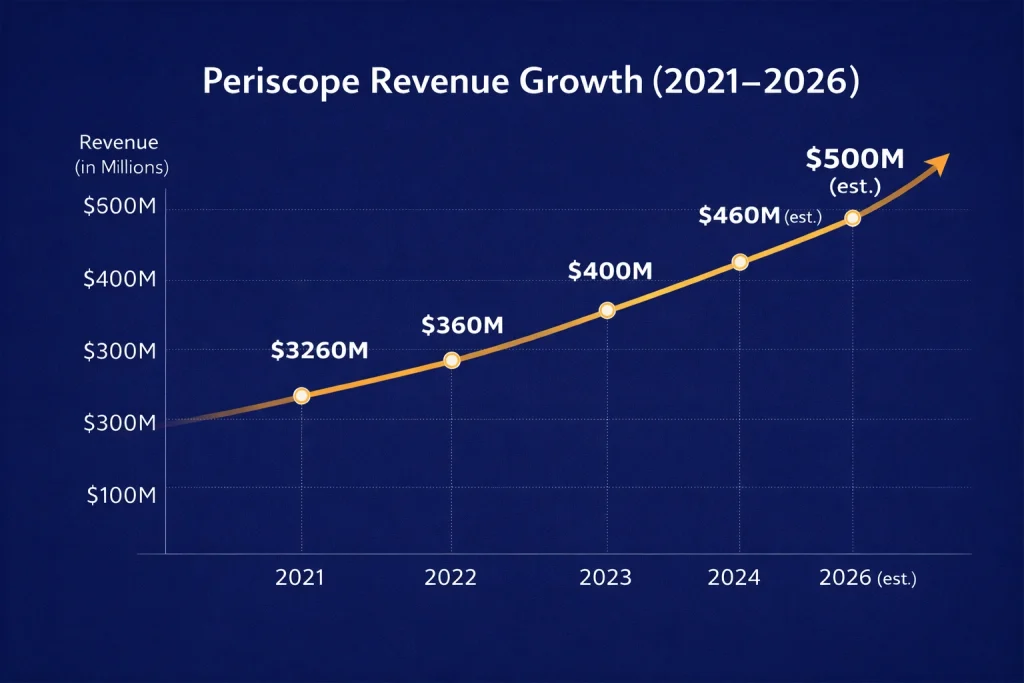
Estimated trajectory:
| Year | Revenue |
|---|---|
| 2021 | ~$320M |
| 2022 | ~$360M |
| 2023 | ~$400M |
| 2025 | ~$460M (est.) |
| 2026 | ~$500M (est.) |
Primary Revenue Streams Deep Dive
Periscope monetizes primarily through creator-driven engagement and advertising.
Digital Gifts and Virtual Tipping
One of the most important monetization mechanisms is digital gifting.
Viewers can send creators virtual gifts during live streams. These gifts are purchased using platform credits.
Creators can convert these credits into real earnings.
Typical revenue split:
Platform share: ~20–30%
Estimated revenue contribution: ~40–45%
Advertising Revenue
Periscope monetizes live streams through advertising.
Ad formats may include:
- pre-roll video ads
- sponsored live streams
- display ads within the interface
Brands often collaborate with popular creators for sponsored broadcasts.
Estimated revenue contribution: ~25–30%
Creator Subscriptions
Periscope also supports paid subscriptions for exclusive content.
Subscribers may receive:
- exclusive live streams
- special chat privileges
- private content access
Typical monthly pricing:
$4–$10 per subscriber
Estimated revenue contribution: ~12–15%
Sponsored Broadcasts
Brands frequently partner with creators to host live events.
Examples include:
- product launches
- influencer marketing streams
- live Q&A sessions
These collaborations generate revenue through brand sponsorships.
Estimated revenue contribution: ~8–10%
Premium Streaming Tools
Professional creators and organizations can access advanced broadcasting tools.
Examples include:
- analytics dashboards
- higher-quality streaming
- event monetization features
Estimated revenue contribution: ~5–7%
Revenue Streams Breakdown (Latest Available Data)
| Revenue Stream | Description | Estimated Revenue Share | Pricing Model |
|---|---|---|---|
| Digital Gifts | Viewer tipping to creators | 40–45% | Platform commission |
| Advertising | Video and display ads | 25–30% | CPM / sponsorship |
| Creator Subscriptions | Paid exclusive content | 12–15% | Monthly subscription |
| Sponsored Streams | Brand partnerships | 8–10% | Sponsorship deals |
| Premium Tools | Creator monetization features | 5–7% | Subscription tools |
The Fee Structure Explained
Periscope uses a creator economy monetization model, where revenue flows through multiple user interactions.
Platform Fee Structure (Latest Available Data)
| User Type | Fee Type | Typical Fee Range | Notes |
|---|---|---|---|
| Viewers | Digital gifts | Variable | Purchased through platform credits |
| Creators | Platform commission | ~20–30% | Deducted from tips |
| Brands | Sponsored streams | Variable | Influencer partnerships |
| Advertisers | Ad placements | CPM-based | Live video ads |
| Creators | Premium tools | $10–$50/month | Streaming features |
This model ensures revenue flows from:
How Periscope Maximizes Revenue Per User
Periscope leverages several engagement strategies to increase revenue.
Real-Time Engagement
Live streaming creates urgency and engagement.
Higher engagement leads to:
- more digital gifts
- higher ad impressions
Creator Economy Flywheel
Popular creators attract larger audiences.
Larger audiences lead to:
- higher tips
- increased ad revenue
- brand sponsorship deals
Gamification
Platforms often add gamified features such as:
- badges
- leaderboards
- special gifts
These features encourage users to spend more.
Exclusive Content
Paid subscriptions allow creators to monetize their most loyal audiences.
This increases average revenue per user (ARPU).
Cost Structure & Profit Margins
Live streaming platforms have significant infrastructure costs.
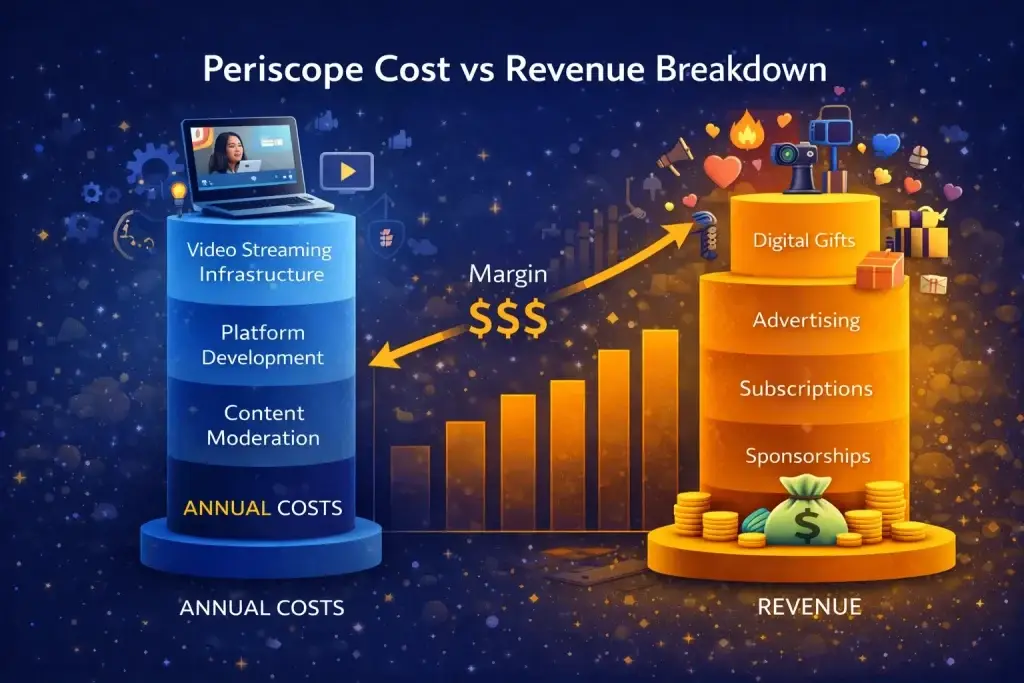
Major cost areas include:
Video Infrastructure
Streaming video requires:
- high bandwidth
- content delivery networks
- real-time encoding
Platform Development
Continuous product development focuses on:
- streaming quality improvements
- moderation tools
- creator monetization features
Content Moderation
Live video requires strict moderation systems to prevent abuse and harmful content.
Marketing and Creator Partnerships
Platforms often invest heavily in attracting and retaining popular creators.
Read More: Business Model of Periscope: Complete Strategy Breakdown
Future Revenue Opportunities (2026–2028 Outlook)
The live streaming industry continues to expand rapidly.
AI-Powered Content Discovery
AI can improve live stream discovery by recommending relevant creators to viewers.
Virtual Events
Platforms may host:
- concerts
- conferences
- paid virtual experiences
These events create premium monetization opportunities.
Creator Commerce
Creators may sell products directly during live streams.
This live commerce model is growing rapidly in many markets.
Integrated Digital Economies
Future live streaming platforms may integrate:
- NFTs
- digital assets
- virtual communities
Lessons for Entrepreneurs
Periscope highlights several key lessons for startup founders.
What Works Well
- real-time engagement
- creator-driven monetization
- digital tipping economies
What Startups Can Replicate
Founders can replicate the creator economy model in areas such as:
- education streaming platforms
- gaming communities
- niche creator platforms
Market Opportunities
Emerging opportunities exist in:
- AI-powered live content platforms
- niche creator communities
- live shopping platforms
Final Thought
Periscope helped pioneer the live streaming revolution and demonstrated how real-time video can evolve into a creator-driven monetization ecosystem. The lessons from its business model continue to influence modern social platforms and creator economies.
What made Periscope particularly impactful was its early understanding of real-time engagement as a monetization driver. Unlike traditional content platforms, live streaming creates urgency and emotional connection, which naturally drives higher interaction, tipping behavior, and viewer retention. This laid the foundation for today’s creator economy models seen across multiple platforms.
Another key insight is how Periscope introduced the concept of direct audience-to-creator monetization through digital gifting. This shifted the power dynamic—creators no longer depended solely on ads but could earn directly from their audience, unlocking new revenue streams and stronger community loyalty.
FAQs
1. How much does Periscope make per transaction?
Periscope typically earns 20–30% commission on digital gifts sent to creators.
2. What is the most profitable revenue stream for Periscope?
Digital tipping and gifting remain the largest revenue contributor.
3. How does Periscope pricing compare to competitors?
Its monetization model is similar to platforms like Twitch and TikTok Live.
4. What percentage does the platform take from creators?
The platform typically takes 20–30% of gift revenue.
5. How has the revenue model evolved?
Periscope expanded from simple live streaming into a creator monetization platform.
6. Can startups replicate this model?
Yes, especially in niche creator communities and live commerce platforms.
7. What scale is needed for profitability?
Live platforms require large audiences to generate sustainable advertising and tipping revenue.
8. How can founders build a similar platform?
Focus on real-time engagement, creator monetization tools, and community-driven growth.
9. What alternatives exist to this model today?
Alternative approaches include live commerce platforms, subscription communities, and creator SaaS tools.
Miracuves is an independent software development company. We are not affiliated with, connected to, sponsored by, or endorsed by any company or product named in this article.
Terms such as “X Clone” are used descriptively. It is how the software industry refers to building a platform with functionality comparable to a known service, and how clients search for it.
The entire design and codebase of our products is built by our own team. Our products contain no code, design, graphics, or content originating from any third-party website or applications.
All third-party names and marks referenced in this article are the property of their respective owners, referenced solely to identify the services discussed.