
Key Takeaways
- Ready-made vs custom short-form video platform development is mainly a choice between faster market entry and complete product-specific engineering from the ground up.
- A ready-made foundation can provide existing modules for vertical feeds, video uploads, creator profiles, engagement, recommendations, moderation, monetization, and admin management.
- Custom development may offer deeper architectural freedom, but it can require more time, engineering effort, testing, infrastructure planning, and long-term maintenance before market validation begins.
Development Approach Signals
- Ready-made platforms suit startups that need proven core workflows while still customizing branding, feed logic, creator tools, monetization, integrations, moderation, and user experience.
- Custom development can make more sense when the product depends on unusual recommendation systems, proprietary workflows, specialized infrastructure, unique monetization, or highly differentiated creator experiences.
- Founders should compare source-code ownership, customization depth, video infrastructure, scalability, security, third-party integrations, maintenance responsibility, and total cost of ownership.
Startup Decision Insights
- Startups focused on faster validation may prefer a customizable ready-made foundation, while teams with highly specific technical requirements may benefit from a custom engineering roadmap.
- The decision should consider launch goals, available budget, internal technical resources, expected traffic, content strategy, monetization plans, future feature expansion, and operational complexity.
- Miracuves develops customizable short-form video platforms with vertical feeds, creator tools, video processing, recommendations, engagement features, monetization, moderation, analytics, and admin controls.
Short-form video platforms look simple from the outside. A user opens the app, scrolls through vertical videos, follows creators, reacts to content, and shares clips. But behind that smooth experience is a complex product system involving video uploads, processing, feed logic, creator tools, moderation, analytics, monetization, cloud infrastructure, and admin control.
For startups, the biggest question is not only how to build a short-form video app. The more important question is which development approach fits the business stage: a custom build, a branded creator platform, or a ready-made video sharing platform that helps founders move faster without building every core module from zero.
Should you start with a ready-made short-video platform that can be branded, configured, and launched faster? Or should you invest in custom short-form video platform development from the ground up?
Both approaches can work. The right decision depends on your budget, timeline, technical ambition, product differentiation, and how quickly you need real market feedback.
What Ready-Made Short-Form Video Platform Development Means
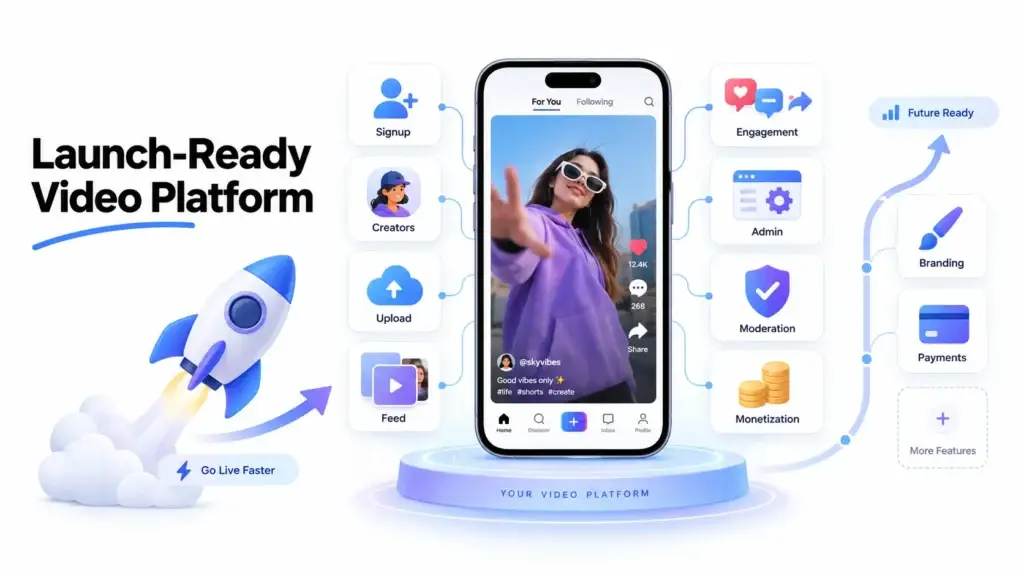
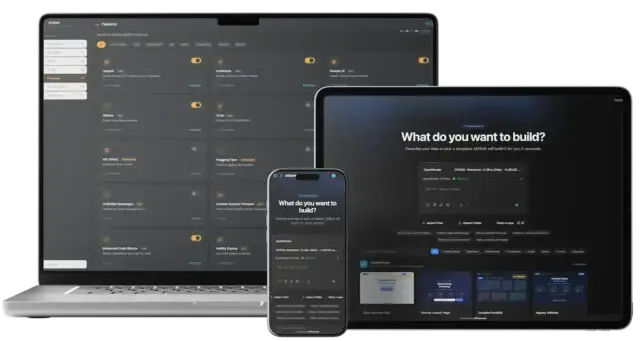
A ready-made short-form video platform is a pre-built app foundation that already includes the core modules needed to run a vertical video experience. Instead of starting with blank wireframes, empty backend logic, and months of development planning, the startup begins with a working product base.
This usually includes user registration, creator profiles, video upload, content feed, likes, comments, sharing, admin controls, moderation workflows, and monetization settings. The platform can then be customized with brand identity, feature adjustments, language preferences, payment integrations, creator tools, and business-specific workflows.
For founders, the value is speed and reduced uncertainty. A ready-made approach allows the team to spend less time rebuilding standard product flows and more time validating positioning, onboarding creators, testing monetization, and learning what users actually watch.
A startup exploring a launch-ready short-form video app foundation can use this route to move from idea to market faster while still keeping room for branding and future upgrades.
What Custom Short-Form Video Platform Development Involves
Custom development means building the entire platform from the ground up. Every screen, user journey, backend module, API, database structure, moderation process, media pipeline, and admin workflow is planned and developed separately.
This gives maximum flexibility. If your startup needs a completely original discovery engine, a niche creator economy model, complex monetization rules, unusual content formats, or proprietary engagement mechanics, custom development may be the better long-term path.
But the flexibility comes with higher planning effort, more development time, deeper testing requirements, and larger technical responsibility. Short-form video apps are media-heavy products. Even small user actions create backend events: uploads, views, watch time, pauses, rewatches, skips, likes, comments, shares, follows, reports, payouts, and notifications.
That is why custom development should be chosen carefully. It is powerful when the product vision is already validated and the startup has the resources to support a longer build cycle. It can become risky when the team is still testing whether the market wants the product.
Ready-Made vs Custom Development: Startup Comparison Table
Ready-Made vs Custom Short-Form Video Platform Development
| Decision Factor | Ready-Made Platform | Custom Development |
|---|---|---|
| Best For | Startups that want faster market entry and early validation | Funded teams with highly unique product requirements |
| Launch Speed | Faster because core modules are already available | Slower because every module starts from zero |
| Development Cost | More cost-efficient for early-stage launch scope | Higher because planning, design, development, and testing are custom |
| Branding | Can be customized with logo, colors, app name, and UI preferences | Fully designed from scratch around brand and product strategy |
| Feature Flexibility | Flexible within the available foundation and customization scope | Maximum flexibility for unique workflows and advanced logic |
| Technical Risk | Lower because standard modules are already built and tested | Higher because architecture, performance, and integrations must be proven during development |
| Scalability | Strong when the base platform supports cloud, CDN, admin, and upgrade flexibility | Strong when architecture is planned properly from the beginning |
| Startup Fit | Better for founders who need launch speed, cost control, and market feedback | Better for businesses with validated demand and deeper technical budgets |
Why Ready-Made Platforms Often Fit Early-Stage Startups Better
Early-stage startups usually do not need every advanced feature on day one. They need a working product, a clear audience, creator participation, feedback loops, and enough monetization structure to test commercial viability.
A ready-made short-video platform helps founders avoid spending too much time on basic infrastructure before proving demand. Instead of building registration, video upload, feed layout, creator profiles, reactions, admin control, and moderation from scratch, the team can begin with a launch-ready foundation and focus on the business layer.
This matters because product success is not decided only by development quality. It is also shaped by creator acquisition, content supply, niche positioning, audience retention, community rules, and monetization timing.
A ready-made approach is especially useful when the startup wants to:
- launch a niche creator community
- test a regional short-video audience
- build a branded entertainment app
- validate a social commerce video idea
- experiment with creator monetization
- reduce early-stage product risk
- collect real user behavior before deeper investment
Once the first version is ready, founders also need a clear short-form video startup launch strategy covering creator onboarding, content supply, audience testing, early retention, and monetization experiments.
Miracuves supports this path with ready-made and white-label video platform solutions that can be branded, configured, and delivered faster than a full custom build. For relevant launch-ready scopes, Miracuves can support 6-day solution delivery with source code, rebranding, admin control, and deployment support.
When Custom Development Becomes the Better Choice
Custom short-form video platform development makes sense when the startup is not simply testing an idea but building a differentiated product system from the beginning. In that case, founders should also evaluate the right short-video development partner before committing to a longer build cycle.
This usually applies when the platform needs original logic that cannot be handled through a ready-made foundation. For example, a startup may need a proprietary recommendation engine, custom creator monetization model, advanced moderation workflow, unusual community structure, specialized content format, or deep integrations with existing media, commerce, or learning systems.
Custom development is also better when the founder already has validated demand, funding, a product team, and a long-term technical roadmap. In that situation, the longer development cycle may be justified because the product requires deeper originality from day one.
However, custom development should not be chosen only because it sounds more premium. For many startups, building everything from scratch too early can delay market learning and increase cost before the business has proof that users will return, creators will publish, and monetization will work.
The Real Cost Difference Is Not Only Development Hours
Founders often compare ready-made and custom development only by asking which one costs less. That is too narrow. A better approach is to evaluate short-form video development cost factors such as feature scope, video processing, hosting, CDN usage, admin controls, integrations, customization, and post-launch support.
The real cost includes product planning, UI/UX design, backend engineering, cloud setup, media storage, video processing, testing, deployment, quality assurance, app publishing, bug fixing, maintenance, security updates, and post-launch iteration.
In custom development, each of these areas requires separate work. The team must define requirements, build modules, connect systems, test performance, and fix issues before launch. In a short-form video product, the cost can grow quickly because video platforms require more infrastructure planning than basic content apps.
Ready-made development reduces some of this burden because the core product foundation already exists. Founders still need customization, branding, deployment, QA, content strategy, and future upgrades, but they are not paying to recreate every standard module from zero.
This is why a ready-made vertical video platform can be a practical starting point for founders who want cost control without giving up the ability to customize later.
Feature Depth: What Startups Should Check Before Choosing Either Approach
The development approach matters, but the feature foundation matters more. A startup should not choose a ready-made app only because it is faster, and it should not choose custom development only because it sounds flexible.
The smarter question is: does the approach support the features needed for launch, learning, and growth?
Before choosing either path, founders should review a practical short-video platform feature checklist to understand which user, creator, admin, moderation, engagement, and monetization modules are essential for a launch-ready creator platform.
A strong short-form video platform should include:
- user onboarding and profile management
- creator profiles and publishing workflows
- vertical video feed
- video upload and processing
- likes, comments, follows, shares, and saves
- content categories and discovery controls
- admin dashboard
- content moderation and abuse reporting
- analytics and engagement tracking
- push notifications
- monetization options
- cloud storage, CDN readiness, and video hosting architecture for short-form platforms
- payment or wallet integration where relevant
- source-code access for long-term flexibility
For a startup, these features are not just technical checkboxes. They define how users discover content, how creators stay active, how the team manages platform quality, and how the business experiments with monetization.
Founder Decision Signals
Speed
Choose a ready-made platform when launch timing matters more than building every module from scratch. This is useful when you need real users, creator feedback, and early engagement data quickly.
Cost
Choose ready-made when you want to reduce upfront development effort. Choose custom when your budget supports a longer discovery, design, engineering, and testing cycle.
Scalability
Choose either approach only if the platform can support video processing, storage, CDN delivery, admin controls, moderation, and future feature upgrades.
Market Fit
If your audience, niche, or creator supply is still unproven, a ready-made foundation can help you validate faster. If demand is already proven, custom development may support deeper differentiation.
Why Source-Code Ownership Matters for Short-Form Video Startups
A short-form video platform is not a one-time launch project. It needs regular improvements as users, creators, content volume, monetization models, and moderation needs grow.
That is why source-code ownership matters. Without access to the source code, founders may depend on a vendor for every feature change, integration, UI adjustment, security update, or scaling improvement. That can slow down growth and increase long-term operating friction.
With source-code ownership, the business has more control over the roadmap. The founder can extend the platform, bring in an internal team later, audit the codebase, integrate new tools, improve performance, and adapt the product based on user feedback.
For startups, this is especially important because the first launch version rarely stays the final version. The market teaches you what to improve. Source-code access gives you the flexibility to act on that learning.
Monetization Readiness: Another Key Difference Startups Should Evaluate
Many founders think monetization can be added later. That is partly true, but the platform still needs the right foundation to support monetization when the business is ready. Founders should compare creator monetization and revenue model options before deciding whether ads, subscriptions, gifting, commissions, social commerce, or brand partnerships should come first.
A short-form video platform can generate revenue through multiple models:
| Monetization Model | How It Works | Startup Fit |
|---|---|---|
| In-app ads | Brands pay for visibility inside the feed or content sections | Useful when user engagement starts growing |
| Creator subscriptions | Users pay for premium creator content or community access | Strong for niche creator ecosystems |
| Virtual gifts | Users buy credits or gifts to support creators | Useful for live engagement and fan communities |
| Brand collaborations | Creators partner with brands through the platform | Better when creator quality is strong |
| Social commerce | Products are promoted or tagged inside videos | Useful for commerce-led video platforms |
| Featured creator promotion | Creators pay or qualify for better visibility | Works when the creator base grows |
| Platform commission | The platform takes a share of transactions or creator earnings | Useful for marketplace-style creator models |
A ready-made platform should support basic monetization workflows or allow them to be configured. Custom development gives deeper control when monetization logic is highly specific. The right choice depends on whether the startup needs standard monetization faster or original monetization architecture from day one.
Admin Control Is Where Startup Operations Become Scalable
The user-facing app gets most of the attention, but the admin dashboard often decides whether the platform can operate smoothly.
A founder needs control over users, creators, content, categories, reports, moderation queues, monetization settings, payouts, analytics, and platform configuration. Without strong admin control, even a polished video app can become hard to manage after launch.
For ready-made platforms, founders should check whether the admin dashboard is already included and whether it can be customized. For custom development, founders must ensure admin workflows are not treated as an afterthought.
Important admin features include:
- user and creator management
- content approval and takedown controls
- abuse reporting and moderation queues
- dashboard analytics
- payment and payout visibility
- category and content management
- push notification control
- role-based admin access
- platform settings
- support and dispute workflows
This is one reason startups should evaluate a branded short-video platform solution based on operational readiness, not only app screens.
Security, Moderation, and Trust Should Be Planned From the Start
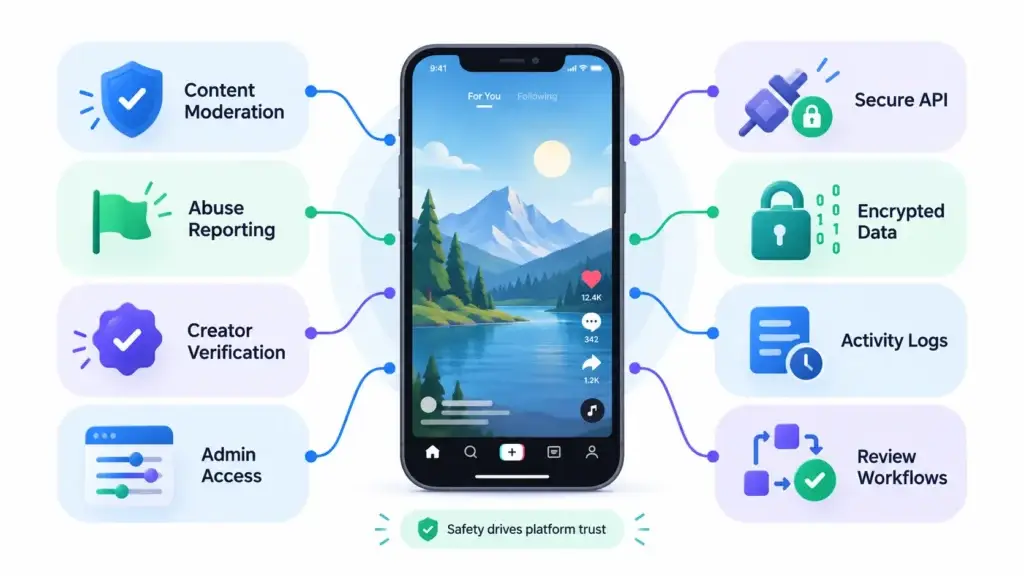
Short-form video platforms depend heavily on user-generated content. That makes moderation, abuse reporting, creator verification, privacy-aware data handling, and admin review workflows essential from the beginning. For deeper planning, founders can review this short-video app security and moderation guide before finalizing trust and safety workflows.
Startups should not treat safety as a future feature. If content quality drops, spam grows, or users feel unsafe, retention can decline quickly. Trust also affects creator participation, advertiser interest, and long-term brand reputation.
A practical launch plan should include:
- content moderation tools
- abuse and spam reporting
- creator verification options
- role-based admin access
- secure API integration
- encrypted data transfer
- activity logs
- payment safety where monetization exists
- clear community rules
- manual and automated review workflows
Custom development gives full control over these systems. A ready-made platform can still work well if it includes moderation foundations and allows further configuration as the platform grows.
Common Mistakes Founders Should Avoid
Choosing custom development before validating demand
A fully custom build can be powerful, but it can also delay market learning. If the startup has not proven its audience, creator supply, or retention loop, building everything from zero may increase risk.
Buying a ready-made app without checking scalability
Speed is valuable only when the platform foundation is strong. Founders should check video processing, admin control, source-code access, moderation, cloud readiness, and upgrade flexibility.
Ignoring creator onboarding
A short-form video platform needs content supply. Even the best app will struggle if creators do not understand why they should publish, engage, and build an audience there.
Treating monetization as only an ad problem
Ads are only one model. Creator subscriptions, gifting, commerce, commissions, promotions, and brand collaborations may fit different niches better.
Which Approach Should a Startup Choose?
A ready-made short-form video platform is usually the stronger fit when the startup wants to launch faster, control development cost, test a niche, onboard creators, and collect real market feedback before investing deeply in original architecture.
Custom development is the stronger fit when the startup already has validated demand, a clear product moat, a larger budget, and a need for unique technical logic that cannot be handled through customization.
The decision should not be framed as “ready-made is basic” and “custom is advanced.” A better way to think about it is stage fit.
If your main goal is learning, validation, and faster launch, ready-made usually fits better. If your main goal is deep originality from day one, custom may be worth the extra time and budget.
How Miracuves Helps Startups Move Faster
Miracuves helps founders build ready-made and white-label short-form video platforms with source-code ownership, branded design, admin control, creator workflows, monetization readiness, and faster deployment.
For founders who do not want to wait months before testing the market, Miracuves’ launch-ready approach can reduce development complexity. Relevant ready-made solution scopes can be delivered in 6 days, with rebranding, source code, admin controls, and launch support depending on the selected requirements.
This gives startups a practical middle path: launch faster with a proven platform foundation, then customize based on creator behavior, audience feedback, monetization performance, and long-term growth priorities.
Final Thoughts: Start With the Approach That Matches Your Stage
The right short-form video platform development approach depends on where your startup stands today.
If you are still validating the audience, testing creator supply, exploring monetization, or trying to enter the market quickly, a ready-made platform can be the more practical choice. It helps reduce early-stage development pressure and gives you a faster path to real user feedback.
If you already have validated demand, clear funding, and a highly differentiated product vision, custom development can give you deeper control over architecture, features, and long-term product logic.
For most startup founders, the smarter path is not always the longest build. It is the path that gets the right product into the market at the right time, with enough control to improve after launch. After the build decision is clear, founders should also plan a short-form video platform growth strategy around creator acquisition, repeat viewing, retention, community quality, and content distribution.
FAQs
What is short-form video platform development?
Short-form video platform development is the process of building an app where users can create, upload, watch, share, and engage with short vertical videos. It includes user profiles, creator tools, video feeds, upload systems, moderation, admin controls, analytics, and monetization features.
Is a ready-made short-video platform better than custom development?
A ready-made short-video platform is usually better for startups that need faster launch, lower early-stage risk, and a working product foundation. Custom development is better when the platform requires unique workflows, proprietary recommendation logic, or highly specific business features.
How does a ready-made video platform save development time?
A ready-made video platform saves time because core modules such as user onboarding, video upload, feed structure, creator profiles, engagement tools, admin dashboard, and moderation workflows are already built. The startup can focus on branding, configuration, testing, and launch preparation.
When should a startup choose custom video platform development?
A startup should choose custom development when it has validated demand, a clear product strategy, sufficient budget, and requirements that cannot be handled through a ready-made or white-label foundation. This may include custom discovery logic, advanced monetization, unique content formats, or complex integrations.
Can a ready-made short-form video platform be customized?
Yes. A good ready-made platform can be customized with brand identity, UI changes, creator workflows, monetization settings, language options, payment integrations, admin controls, and future feature upgrades. The level of customization depends on the solution and source-code access.
Why is source-code ownership important for a short-video startup?
Source-code ownership gives founders long-term control over upgrades, integrations, audits, performance improvements, security updates, and custom feature development. It reduces dependency and helps the platform evolve as users, creators, and monetization needs grow.
Does Miracuves offer faster delivery for short-form video platforms?
Yes. For relevant ready-made solution scopes, Miracuves can support 6-day delivery with white-label branding, source code, admin controls, and deployment support. Final scope, customization, integrations, and launch requirements should be confirmed before development begins.
What is the best development approach for a startup with a limited budget?
A ready-made or white-label short-form video platform is usually more suitable for startups with limited budgets because it reduces the need to build every module from scratch. It allows founders to validate demand first and invest deeper once the market response is clearer.
Miracuves is an independent software development company. We are not affiliated with, connected to, sponsored by, or endorsed by any company or product named in this article.
Terms such as “X Clone” are used descriptively. It is how the software industry refers to building a platform with functionality comparable to a known service, and how clients search for it.
The entire design and codebase of our products is built by our own team. Our products contain no code, design, graphics, or content originating from any third-party website or applications.
All third-party names and marks referenced in this article are the property of their respective owners, referenced solely to identify the services discussed.