Dark store, partner or hybrid
Whether you hold stock, pick from partner shelves, or both. This decides your inventory accuracy and your capital requirements.
Scoped upfront
Mira AI
AI you own, from day one. Ready-made AI platforms live in 6 working days, or custom AI built by our engineers.
Explore Mira AINot sure where AI fits? Talk it through with an engineer, free.
Talk to an AI engineerFrom a first assistant to agents that run whole workflows. Full source code on every build.
Machine learning, computer vision and language models, on data pipelines built to last.
Production-ready AI products with apps, admin and full source code, branded as yours.
Where AI earns its keep in your market, with the platforms we have already built there.
Bring in AI engineers by the month, or hand us the whole build.
What we have learned shipping AI products, from our blog.
Prompt-to-app generation, credits and an admin console, with the full source code.
Explore the Bolt.new clone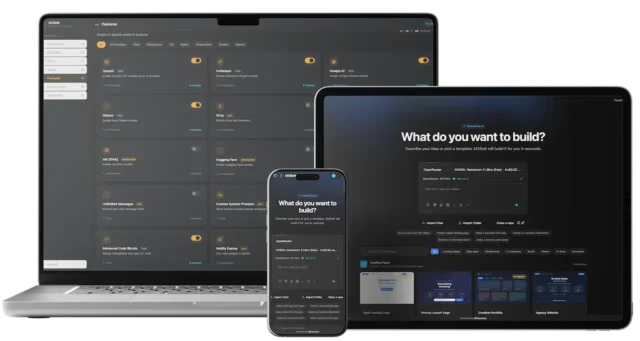
8 ready-made AI platforms24 AI and data services100% source code ownership6 working days to launch
Launch a complete grocery delivery platform - customer app, shopper app and admin panel - on a Miracuves ready-made grocery base in 6 working days, from $2,499. Multi-store catalogs, substitution flows, live tracking and 100% of the source code.





Miracuves launches grocery delivery businesses - multi-store baskets, dark-store quick commerce and scheduled slots - from ready-made bases that ship a customer app, a shopper app and an admin panel. Bases start from $2,499, built in 6 working days, and the full source code becomes yours at handover. ERP, warehouse or multi-city work is scoped separately at 2-8 weeks, quoted in writing.
Our Approach
A grocery launch with Miracuves begins on a working base: the basket, the shopper's pick list, substitutions, payments and the admin console are already wired together, drawn from the same practice behind 9,000+ delivered projects. Your time goes into your stores, your catalog and the delivery promise you make, instead of a six-month build from an empty repository.
Who this is for: supermarket groups, dark-store startups and distributors who want delivery running under their own brand, at a published price, with the code in their own repository and a company that stays accountable through app review. Pick-to-doorstep flows are tested on real Android phones and iPhones before handover, and the API keys, push credentials and admin logins go into your delivery pack, so your team can run the platform without us.
Grocery work begins once the NDA is signed and the scope is on paper: the base, the payment provider, the number of stores and zones, your branding, and the developer accounts the apps will publish from. Substitution rules, weight adjustments, store commissions and payment webhooks are checked on release builds before handover, and the team remains on call while Apple and Google review the apps and for 60 days after launch.
When a clone may not fit: Not ideal when you require deep WMS/ERP customization beyond API sync, or perishable compliance workflows that differ materially from standard shopper-substitution flows.
Decisions First
Grocery is the hardest delivery category: perishable stock, substitutions, and baskets where one missing item spoils the whole order.
Whether you hold stock, pick from partner shelves, or both. This decides your inventory accuracy and your capital requirements.
Scoped upfrontScheduled windows or on-demand. Promising speed you cannot sustain at peak is how grocery operations come apart.
Scoped upfrontRules agreed with the customer upfront, because unexpected substitutions generate refunds and lost customers.
Scoped upfrontLive availability reflecting what is actually on the shelf, since grocery baskets are large and one wrong item affects the entire order.
In the baseChilled and frozen items carry a flag from the shelf to the door, so shoppers and riders keep them apart. Refrigerated vehicles and temperature logging sit with your fleet and are scoped if you need them.
Flag in the baseVariable-weight products priced and charged correctly at pick time, which generic delivery platforms handle badly.
In the baseGrocery Clone Solutions
Six of our 90+ ready-made platforms, each shipping with its apps and admin panel in 6 days.
View All 90+ SolutionsShopper picking, substitutions, and multi-retailer catalog.
Dark-store quick commerce with dispatch by zone and a short delivery promise you set per zone.
Slot booking, subscription baskets, and FMCG catalog.
Hyperlocal micro-fulfillment for metro quick commerce.
Perishables-focused catalog with cold-chain flags.
Subscribe & save, pantry staples, and express slots.
What's Included
Every grocery deployment includes three complete applications - 45 production features across catalog, picking, and operations, not a stripped MVP. Miracuves confirms grocery delivery scope, integrations, and timeline in writing before payment.
Pick Your Starting Point
Three routes to a grocery delivery service. They differ in what you own, how soon you take orders, and who controls the catalog and the store integrations.
Instacart or Blinkit base, in your brand
Your picking and stock model, built new
A hosted grocery platform, rented
your model is partner stores, dark stores or scheduled slots, and you want the code in your own repository from the start. Compare the Instacart Clone and Blinkit Clone bases.
your stock logic lives in an ERP or warehouse system the platform must write back to (custom, scoped against its API documentation), or you only want to trial delivery in one area before owning a product (white-label).
Before You Build
The questions that decide which base you start from, what you pay, and which parts of running a grocery business stay with you.
Start from where the stock sits. If shoppers pick from shelves in stores you partner with, the Instacart base fits: multi-store baskets, shopper pick lists, barcode checks and the substitution workflow, at $2,499 today. If you hold the stock in your own small warehouses and promise short delivery windows by zone, the Blinkit base fits, at $2,499.
If your customers plan ahead, with pantry staples on repeat and a booked slot, look at the subscribe-and-save model on the Amazon Fresh base, at $2,799. A hybrid of partner shelves and your own dark stores is common, and the split is agreed in the written scope before payment.
A ready-made grocery base is a one-time price shown on its product page, from $2,499 today. It covers the customer app, the shopper app and the admin panel, set up in your brand, deployed to your hosting, with the source code transferred to your account.
What moves the price is integration, not the apps. Two-way sync with a POS, ERP or warehouse system, multi-city rollouts and custom pricing rules are quoted after scoping and usually need 2-8 weeks. Third-party services are paid to their providers and named in the quote: maps, SMS, payment processing and hosting. Each quote is written before any money changes hands.
Miracuves needs 6 working days for the build, and that number does not stretch. What can add calendar time is on your side, so start these early:
The platform records what those rules depend on: the weight actually picked and the price charged for it, the customer's substitution consent against each item, refunds for anything short, a flag on chilled and frozen goods, and identity documents for shoppers and riders before they go online.
The licences belong to the business that sells the food. Food business registration for each store or dark store (such as FSSAI in India), weights and measures rules for goods sold by weight, age checks on restricted items, temperature control in your vehicles, sales tax, and how you engage shoppers and riders all sit with you and your advisers. Where a rule needs a new screen or check, it is scoped as custom work rather than assumed in the base price.
No project on the Instacart or Blinkit base is published in the Miracuves portfolio yet, so this page does not show one as a case study. Grocery does appear in the portfolio on neighboring delivery bases, where the same questions of substitutions, weights and store onboarding came up:
How It Works
One basket moves through all three apps, from the first item added to the hand-off at the door.
Aisle search, barcode scan, and substitution preferences set before checkout.
Batch picking by zone with barcode verification and replacement approval workflow.
Customer approves swaps in-app or via pre-set rules - chat available for edge cases.
Weight-adjusted totals, tips, and split payouts between platform, store, and shopper.
Weekly reorder lists and loyalty points drive retention without re-entering SKUs.
Multi-store browse, substitutions set, slot selected.
Barcode verify, swap approval, and chat in one flow.
Platform, store, and shopper settled per admin rules.
Revenue Model
Each fee line below is set up in the admin console and can be switched on from launch day.
Take rate on grocery GMV - configurable per store chain or category.
Example: 12-22% per orderExpress, scheduled slot, and minimum-order fees retained by platform.
Example: $3-8 per deliveryMonthly SaaS for chains wanting premium placement and analytics.
Example: $199/mo per store groupBrands pay for featured SKUs and search boost in customer app.
Example: CPM or flat monthlyAnnual fee for free delivery - a recurring line alongside per-order fees.
Example: $79-99/year per householdLicense grocery stack to regional retailers under your brand.
Example: enterprise customFor sizing only: the example rates are what grocery platforms commonly charge, shown to help size the model. They are not a Miracuves client's results; your numbers depend on basket size, delivery density and local competition.
Who This Is For
Four grocery businesses that get the most out of an owned delivery app.
Own the delivery channel instead of paying aggregator fees on every basket, with each branch's catalog, slots and shoppers run from one console.
Regional grocersDark stores you stock yourself, dispatch by zone, and a delivery promise set per zone so the speed you advertise is one each store can keep at peak.
Metro q-commercePut the range you already sell to retailers in front of households under your own brand, imported by CSV and priced for single-basket orders.
DistributorsEach city runs as its own zone with local stores, fees and managers, while one brand and one codebase serve every territory.
Emerging marketsWhy Miracuves
A cheap grocery quote often leaves out the shopper app or the admin console. Line the vendors up on what you actually receive and own:
Hidden pricing wastes time and signals weak delivery confidence. Miracuves publishes rates because scoped clone deployments have known effort - not open-ended custom builds sold through negotiation traps.
Some vendors retain partial rights or lock you into their hosting. Miracuves transfers 100% IP - you can take the codebase to any developer at any time.
Competitors often quote the customer app cheap, then charge extra for admin and provider apps. Miracuves includes the full platform in the base price for Grocery Delivery deployments.
Emulator-only testing misses GPS drift, push notification failures, and payment edge cases. Every Miracuves build is QA'd on physical iOS and Android hardware.
Miracuves commits to 6 working days of build time on a ready-made base and 2-8 weeks for custom scope; if a brief needs longer, the new date is agreed on paper before you pay - not surprise SOWs mid-project.
Architecture
The platform is split so each part can change without breaking the others: two phone apps, a browser console, an order service that keeps them in step, and payments kept apart from the rest.
One codebase for iOS and Android: basket, substitutions and tracking on the customer side; pick lists, barcode checks and proof of delivery on the shopper side.
Stores, catalog, zones, fees, disputes and reports in the browser, included in the base price rather than sold as a second phase.
Keeps the basket, the shopper's picks and the rider's position in step, and retries messages so a weak signal in an aisle does not lose a swap approval.
Your payment provider, connected with verified webhooks; weight-adjusted totals, tips and the store and shopper shares reconcile in admin.
Built withFlutter App DevelopmentNode.js Development90+ ready-made solutions
Technology Stack
The services under the three grocery apps, listed for your technical team; the architecture notes come with the handover pack.
Quality Standards
A grocery build is signed off on real phones with real baskets, through the six gates below - never on an emulator alone.
Delivery Gates
Every build tested on real iOS and Android hardware - GPS, push, payments, and background modes behave differently on emulators; Miracuves does not sign off emulator-only.
Performance measured on release builds - not debug - before store submission. A long pick list has to scroll smoothly on a mid-range phone before it passes.
No secrets in source; API keys via environment config. Admin routes auth-gated; payment webhooks verified with idempotency keys.
Provisioning, privacy questionnaires, and listing copy coordinated for App Store and Play Store - rejections in scope fixed during 60-day support window.
Repository, env setup guide, admin credentials, API docs, and post-launch runbook - not repository-only drops.
Crash and payment regressions addressed when caused by in-scope configuration - Miracuves stays reachable through store review, not only launch day.
Delivery Process
SKU import, substitution rules, shopper zones, and device QA on pick-to-delivery flows. NDA, written scope, milestone visibility, and source handoff are standard - not optional add-ons.
Share your concept on WhatsApp. NDA signed same day. Miracuves confirms the base and the customization scope.
Brand applied, payment gateway configured, integrations set up, admin populated with initial data.
Scope-specific modifications: custom flows, integrations, UI adjustments, language/RTL support.
Physical iPhones and Android phones run a full basket: picking, a substitution, a weight adjustment and payment, all on release builds.
The apps go to the stores from your developer accounts, and you receive the code, documentation and logins. From here review timing belongs to Apple and Google, and 60 days of guidance begin.
The six days are ours, and they do not run past six. What can add time sits on your side: developer account verification, merchant onboarding and compliance approvals are controlled by the app stores and your payment provider, not by us. We list exactly what you need ready on the first call so you can start those in parallel.
Cost & Pricing
Published prices. No request-a-quote wall. Grocery bases from $2,499; the Amazon Fresh base is $2,799.
$2,499 /from
6 working days · scoped
Custom Quote
Scoped before build · milestone billing
Enterprise
Multi-market · SLA · compliance
Cost factors that change the pricePOS/WMS integrations and perishable compliance workflows scoped before payment.
Ready-made grocery base pricing stays fixed when scope matches the published base. Custom integrations, multi-city zones, and compliance workflows are quoted before payment.
Custom build: scoped quote · milestone billing.
Enterprise: multi-region, SLA, compliance - contact for written scope.
Example engagement
An illustrative example of a typical project of this kind, with client details anonymized. Figures show what this kind of build targets, not a named client's results.
A Melbourne independent supermarket group wanted owned delivery before a national aggregator entered their state: the Instacart base, set up for 12 stores in 6 working days of Miracuves build time.
12 stores, no mobile team, needed substitution UX and same-day slots before competitor launch.
Instacart Clone with CSV catalog import, shopper app, Stripe AU, substitution presets.
Handed over after 6 working days of build time; the apps went to store review from the group's own accounts, with substitutions tested on real phones first.
Client Reviews
Three clients who launched delivery platforms on Miracuves bases, in their own words: grocery alongside food in two markets, and a same-day courier network.
"The team was running it on a dispatcher and a Google Sheet, and we needed a real platform - fast, because we were about to onboard a major retail client. Miracuves's Delivery Genie base gave us the rider app, the dispatch console, and live tracking."
"Talokitoko is grocery and food delivery for the African diaspora market in Europe. The rider app, dispatch and the merchant console were already built, so we spent the engagement on our own local payment mix, the vendor onboarding flow and the regions we actually operate in."
"Two order types, one courier fleet. The base handled multi-vertical ordering, so the work was our merchant mix and the grocery-specific substitution and weight rules."
Why Miracuves
Each one is either run by someone else or open to anyone. Check them in any order; the whole list takes about a minute.
Why clients choose MiracuvesMiracuves Solutions Pvt. Ltd., CIN U62099MH2023PTC406639. Search the CIN on the Ministry of Corporate Affairs portal.
mca.gov.in 02Projects, clients, prices and timelines, each one defined and sourced on our public facts ledger.
miracuves.com/facts 03Client reviews published by Clutch, an independent B2B review platform, not by us.
clutch.co 04A second, separate review platform. Read what clients wrote there too.
goodfirms.co 05Web app, admin panel and APK with printed credentials. Try the real thing before a single call.
miracuves.com/solutions 06Named clients describing their launches, in their own words.
miracuves.com/client-testimonialsEvery promise on this site rests on these three. Each one is something you can check, not something you have to take on trust.
Our leadership is public, with real LinkedIn profiles, not a stock-photo team page. A named team works your build and sends you progress on WhatsApp every working day.
Meet the leadershipEvery number we publish, pricing, timelines, project counts, is defined and sourced on a public facts ledger. If we can't back a claim, we don't make it.
Read the facts ledgerReady-made platforms go from kickoff to live deployment in 6 working days, guaranteed: miss it for reasons on our side and we work free until launch. Custom builds get a fixed quote after a free feasibility study.
Get a feasibility studyExplore Miracuves
Beyond grocery: the full product catalog, the technology pages your engineers will want, and team models for work outside a ready-made base.
Related Solutions
Clone solutions, technology development, and vertical platforms - cross-linked across Miracuves' published service catalog.
Frequently Asked
Something not covered here? Ask on WhatsApp and you will usually have an answer within two hours.
Ask us directlyA ready-made grocery base - customer, shopper and admin - takes 6 working days of Miracuves build time; custom work takes 2-8 weeks, and store review runs on Apple's and Google's clock. Miracuves configures multi-store browse, substitution rules, shopper dispatch, and slot scheduling during the configuration sprint. Device QA verifies pick-to-delivery flows before App Store submission.
Instacart-style multi-store picking, Blinkit and Zepto quick-commerce, BigBasket scheduled delivery, FreshDirect perishables, and Amazon Fresh subscribe-and-save models are available as published clones. Miracuves selects the base matching your model - supermarket chain, dark store, or hybrid - on Day 0.
Customers set per-item preferences (approve similar, refund, or contact). Shoppers propose swaps in-app with photos; customers approve in real time or via pre-set rules. Admin logs substitution rates by store for merchandising decisions. This flow is pre-built - not a custom add-on.
Yes. CSV and bulk SKU import ship in standard admin. ERP, POS, and WMS API integrations are custom scope when documentation is available. A CSV with SKUs, prices, units and image links is the fastest way to get a catalog in for launch.
Stripe, Razorpay, Paystack, cash-on-delivery, and wallet top-up are supported. Weight-adjusted totals and tips settle per configured split between platform, store, and shopper. Miracuves tests refund flows for partial picks on physical devices.
Ready-made grocery bases start from $2,499: the Instacart base is $2,499, the Blinkit base $2,499 and the Amazon Fresh base $2,799. Custom integrations and multi-city rollouts are quoted in writing after scoping, and Miracuves confirms the exact price against your brief before any payment - no surprise upsells at handoff.
100% IP transfer with repositories, environment docs, and deployment credentials at handoff. You are not locked to Miracuves hosting or per-order licensing. Franchise operators white-label the same codebase per territory with separate admin zones.
60-day post-launch support covers defects and store compliance updates. Catalog sync changes and new PSP regions are retainer or change-request work. Miracuves documents shopper onboarding and substitution policy setup so your ops team can run day two without vendor dependency.
Yes - store submission is included in every standard deployment. Miracuves manages provisioning profiles, signing certificates, listing copy, screenshot requirements, privacy questionnaire answers, and review coordination for iOS and Android. Rejections caused by configuration within the agreed scope are addressed during the 60-day support window at no additional cost.
Freelancers typically rebuild dispatch, payments, admin, and store pipelines from scratch - high risk and unpredictable timelines. Miracuves starts from ready-made bases already proven in production across 9,000+ delivered projects, with NDA, IP assignment, published pricing, and company-backed support. You launch in days with owned source code, not a six-month solo build that may never reach the stores.
Yes. The customer orders an approximate quantity, the shopper records the actual weight at the shelf, and the final charge is adjusted before the order settles, with any difference shown to the customer. Weight and quantity tools are part of the shopper app in the base; custom pricing rules, such as per-store weight tolerances, are scoped separately.
The build price covers the three apps, set up and deployed, with the source code transferred to you. Third-party services are billed by their providers and listed before you pay: maps and routing, SMS and OTP, payment processing, push notifications at volume, and your hosting. Apple and Google developer accounts are held in your own company's name.
Get Started
Describe your stores, slots, and market - Miracuves confirms the Instacart or Blinkit base and the price, from $2,499.
NDA signed before we discuss your project
Page reviewed by Miracuves Grocery & Quick-Commerce Team · Last updated June 2026 · Clutch & Google Reviews
Miracuves is an independent software development company. We are not affiliated with, connected to, sponsored by, or endorsed by any of the brands or platforms named on this page.
Names of the form “Brand Clone” are used descriptively. It is how the software industry refers to building a platform with functionality comparable to a known service, and how clients search for it.
The entire design and codebase of our products is built by our own team. Our products contain no code, design, graphics, or content originating from any third-party website or application.
All third-party names and marks listed on this page are the property of their respective owners, referenced solely to describe the category of software offered.

Launch a ready-made solution under your own brand in 6 working days, with a discount and two bonuses on us.
The discount applies to the published price and depends on the solution. Both bonuses are included with a ready-made solution ordered during the offer. The offer runs in 96-hour windows; the timer shows the current one. The 6 working days start once your branding, hosting and accounts are ready. We reply in under 2 hours, Mon-Sat.