How Text-First Social Apps Work: Feeds, Replies, Communities, and User Engagement
Last Updated on August 21, 2026 by Yash Narayan Key Takeaways A text-first social app…

One app, many services
Rides, food, delivery and payments in a single super app, with one wallet and one operations console.
All 6 in Super App →Move people, profitably
Driver and rider apps, dispatch, fare rules and payouts, tuned for city-scale operations.
All 5 in Ride Sharing →Everything to the door
Food, grocery, pharmacy, parcel and alcohol, with dispatch, live tracking and courier payouts.
All 35 in Delivery →Book a professional in minutes
Home services, healthcare and freelance work, with scheduling, quotes and escrow.
All 13 in On Demand Services →Supply, demand, and the listing in between
Rentals, ecommerce, travel and jobs, with search, inventory and governed payouts.
All 31 in Listings →Where audiences gather
Social feeds, messaging, file sharing, AI assistants and website builders.
All 28 in Networks →Attention, monetized
Video on demand, short form, creator subscriptions and betting.
All 16 in Entertainment →Money that moves
Neobanking, brokerage, investment and cross-border remittance, built for compliance.
All 8 in Finance Investment →Exchanges, tokens and NFTs
Spot and P2P trading, launchpads and NFT marketplaces with custody and KYC.
All 13 in Blockchain →159 launch-ready platforms across 10 categories, each shipping in 6 days with full source code.
Twenty-five sectors, each with its own page naming what we have already shipped into it and what we would build from zero.
A launch-ready text-first social platform – publishing with media, polls and threaded replies, four feed variants, realtime direct and group messaging with consent-gated requests, hashtag discovery and trending, and a monetization stack of ads, verification subscriptions and creator bonuses.
Three role scopes from one codebase: members publish and connect, creators monetize and measure, and admin and superadmin operators run moderation, KYC review, ad review and platform policy from a dedicated console.
Go Live in 6 Days with Text-FirstRealtime ChatCreator-ReadyConsent-Gated DMsOperator-GovernedWhite-Label
⚡ Platform at a Glance
Revenue Streams
ads, verification, promoted posts, creator payouts
Own Ad Server
campaigns, budgets and billing built in, no network cut
Revenue Share
you own the source outright, with no per-seat fee
Runtime Re-Skin
name, logo, palette and copy change from the console
Most text-social builds ship a feed and add revenue a year later. This one launches with an ad engine, paid verification, promoted placement and a creator bonus pool already wired to billing.
Report queues, appeals, KYC review, rate limits and consent-gated messaging run from an operator console, so moderation is a workflow your team runs rather than a database query.
🚀 Ready to launch your own social network?








Live in Action
Don’t just take our word for it – open the Miracuves Threads Clone yourself. Five working logins across every role, no setup required. Publish a thread, send a message request, launch a campaign, resolve a report.
MEMBER APP
The core social experience - compose threads with media and polls, reply, repost, quote and save, across for-you, following, ghost and public feeds.
MESSAGING & GROUPS
Direct and group messaging with consent-gated requests, message reactions, and realtime typing, delivery and read signals over Socket.io.
CREATOR TOOLS
The creator surface - post and profile analytics, verification plan subscription through Stripe, KYC submission, and creator bonus enrolment.
ADS MANAGER
The advertiser surface - provision an ad account, build campaigns and creatives, set targeting, fund through Stripe and track event-based spend.
ADMIN CONSOLE
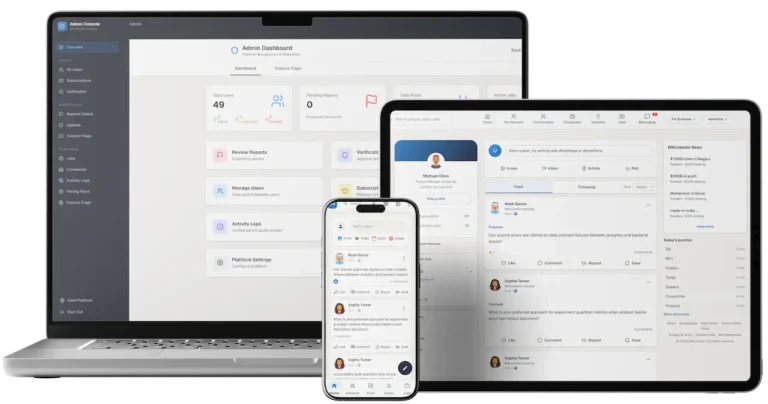
Operator governance - dashboard stats, user and content moderation, report triage, KYC and ad review queues, IP blocking, branding and payment settings.
ANDROID APP
A branded Android build of the member experience, sharing the same API and Socket.io contracts as the responsive web application.
Watch It Work
Want a guided tour? Book a 30-minute call with our team and map your launch – community model, moderation policy, verification tiers, ad economics and go-live sequencing.
Every Screen Mapped
Sixteen API route families spanning auth, users, follow, posts, feed, messages, groups, notifications, search, hashtags, analytics, ads, verification, KYC, platform and admin – with a Socket.io event channel alongside them for realtime messaging.

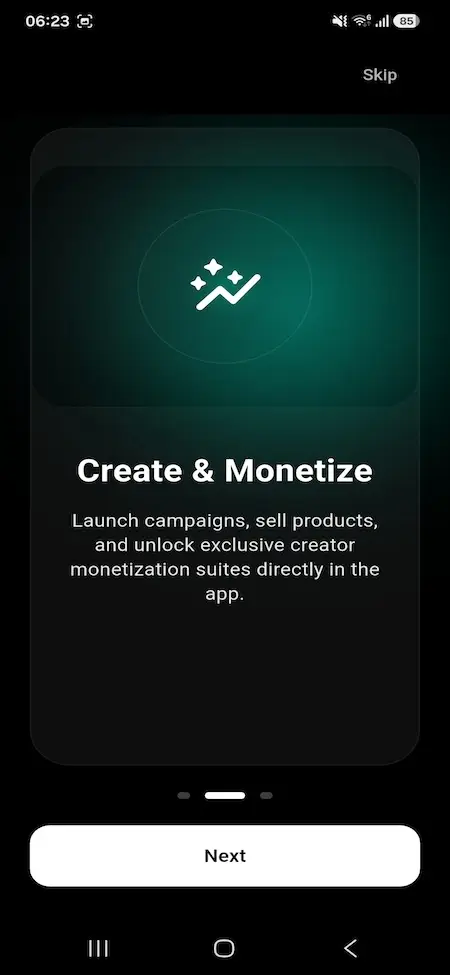
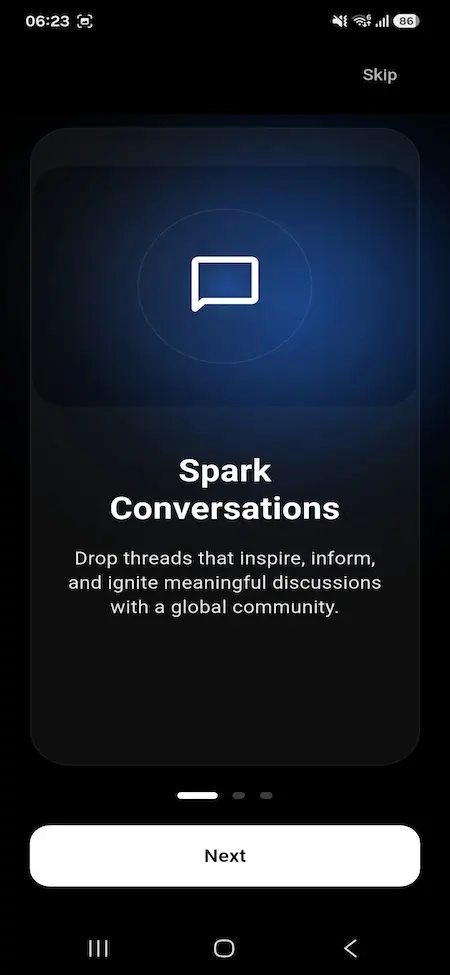
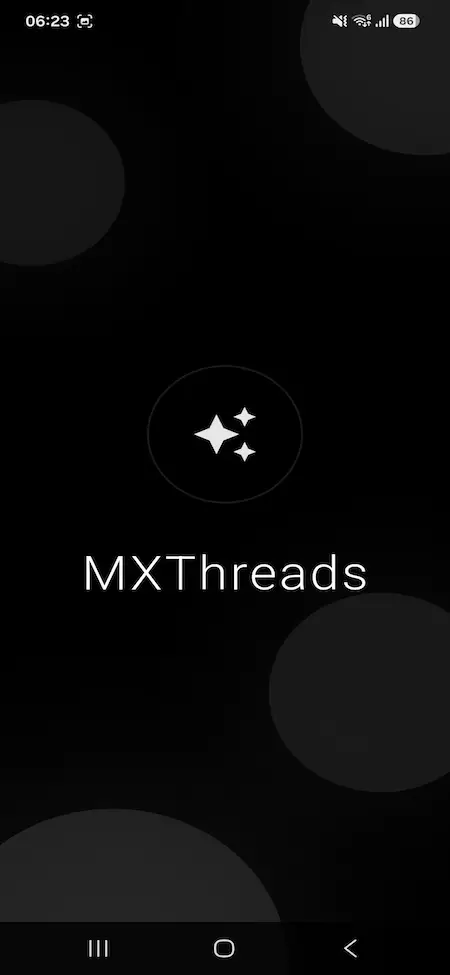
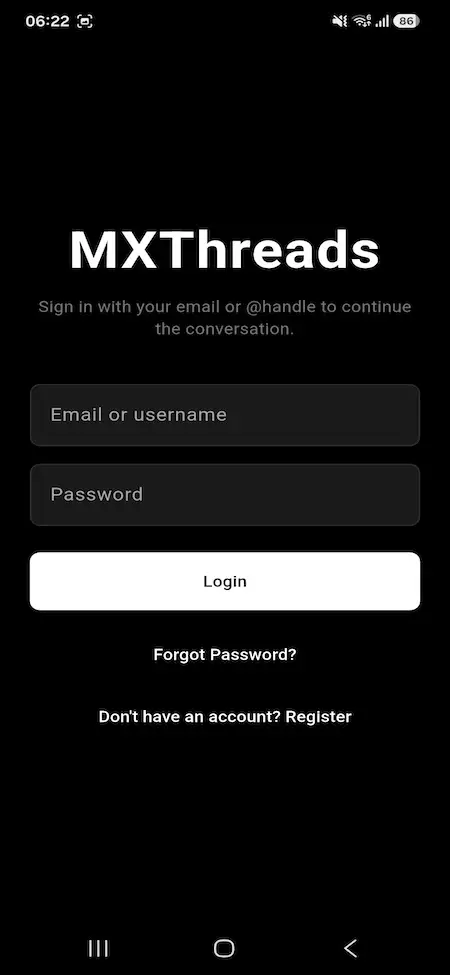

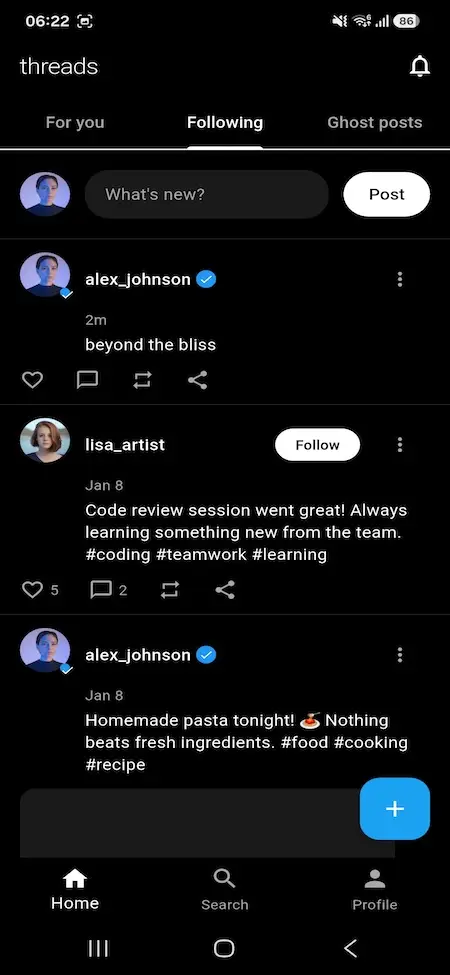
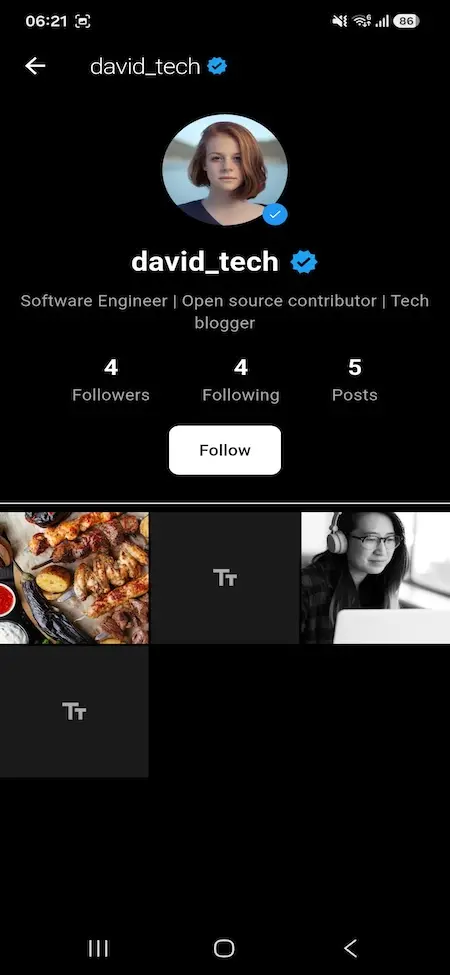
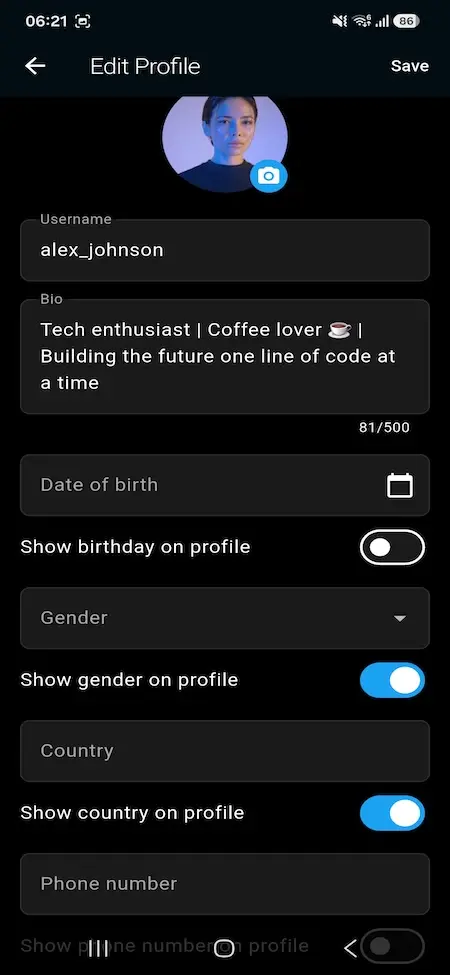
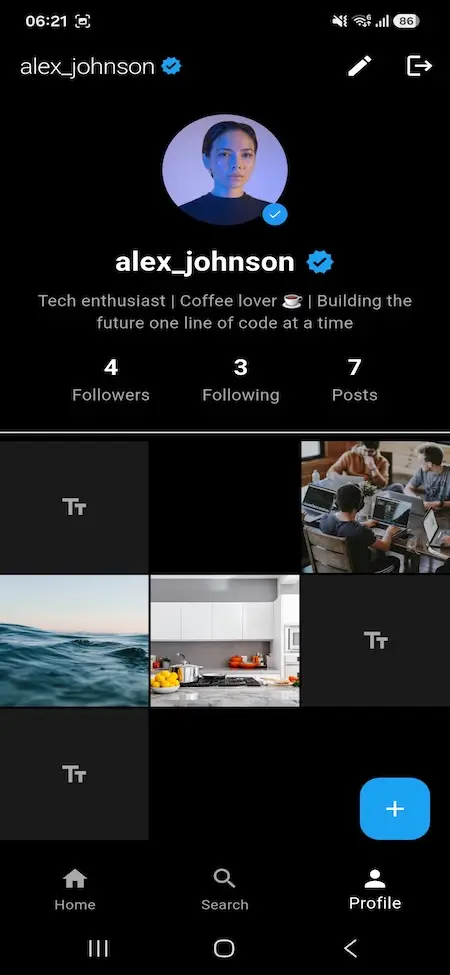

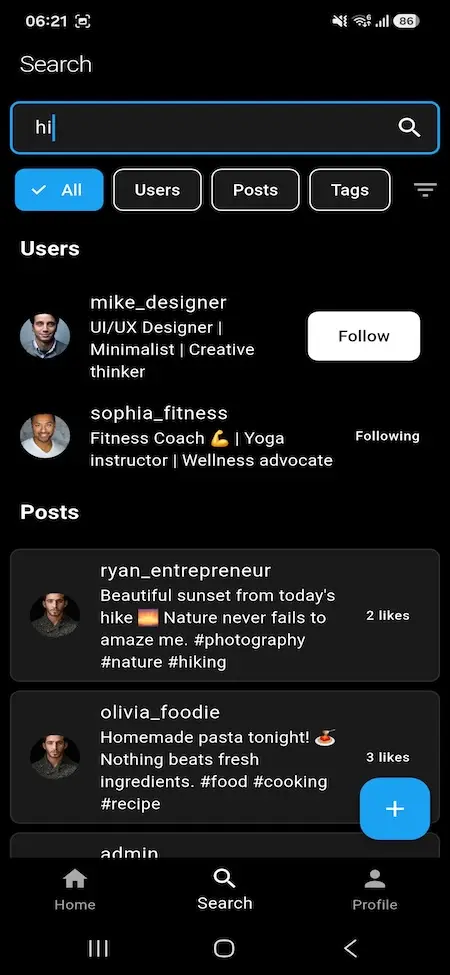
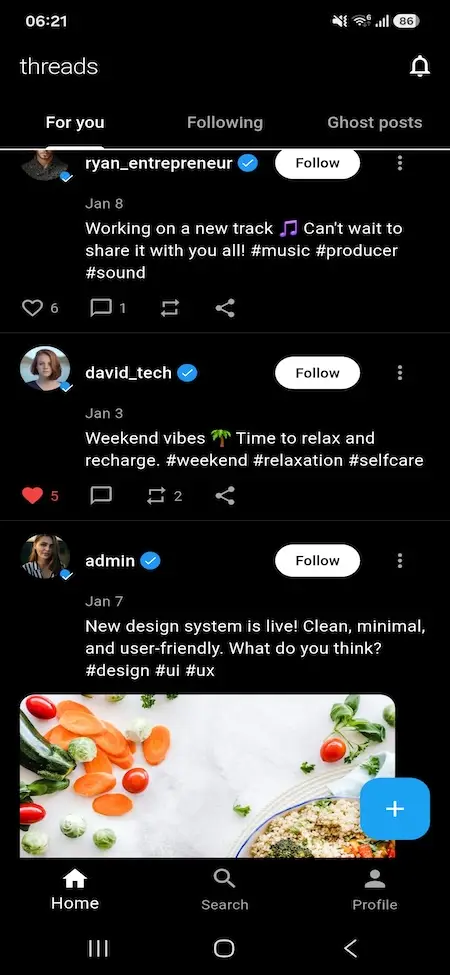
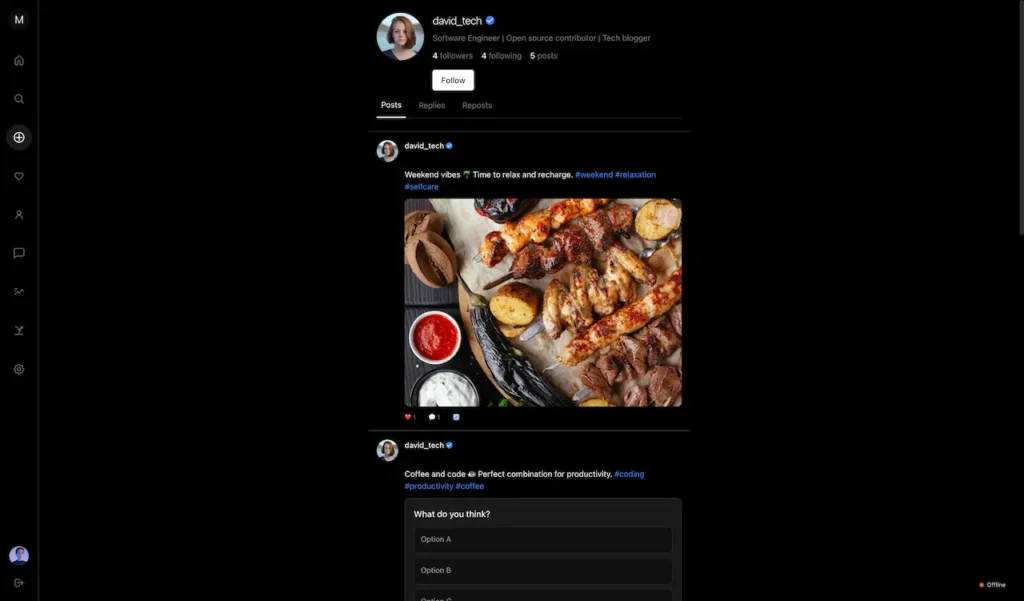
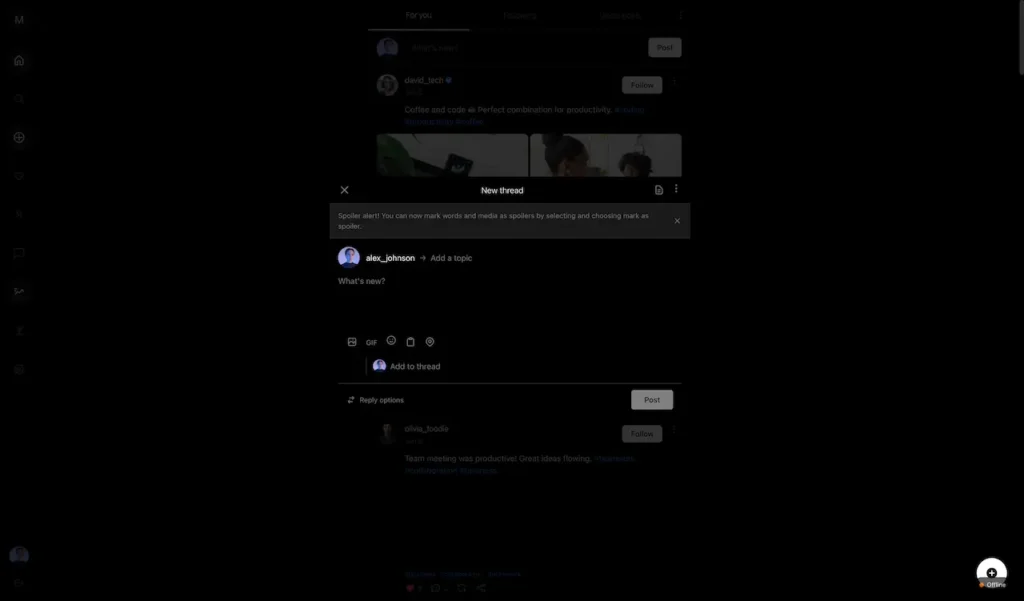
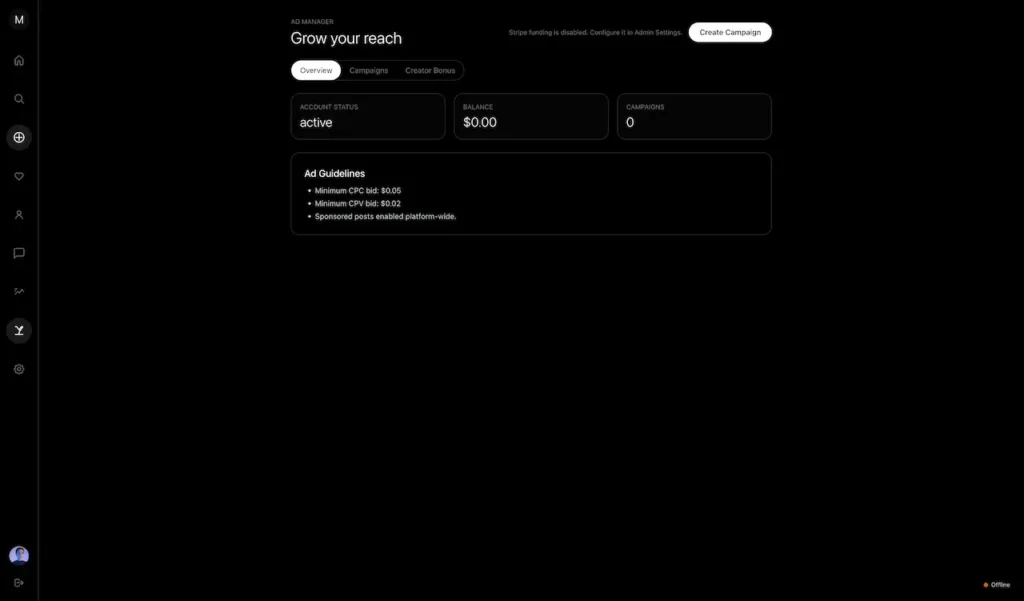
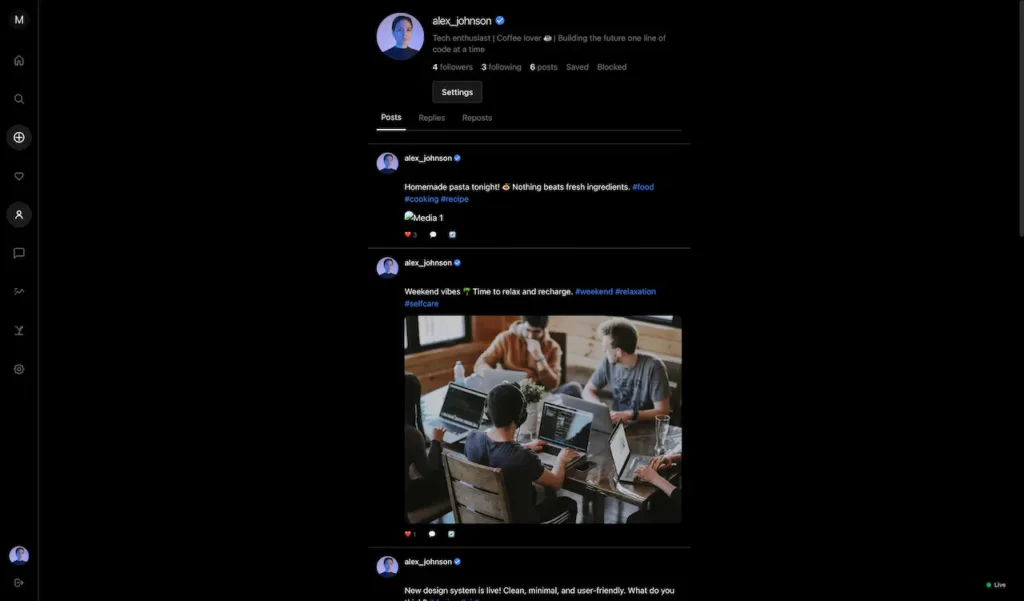
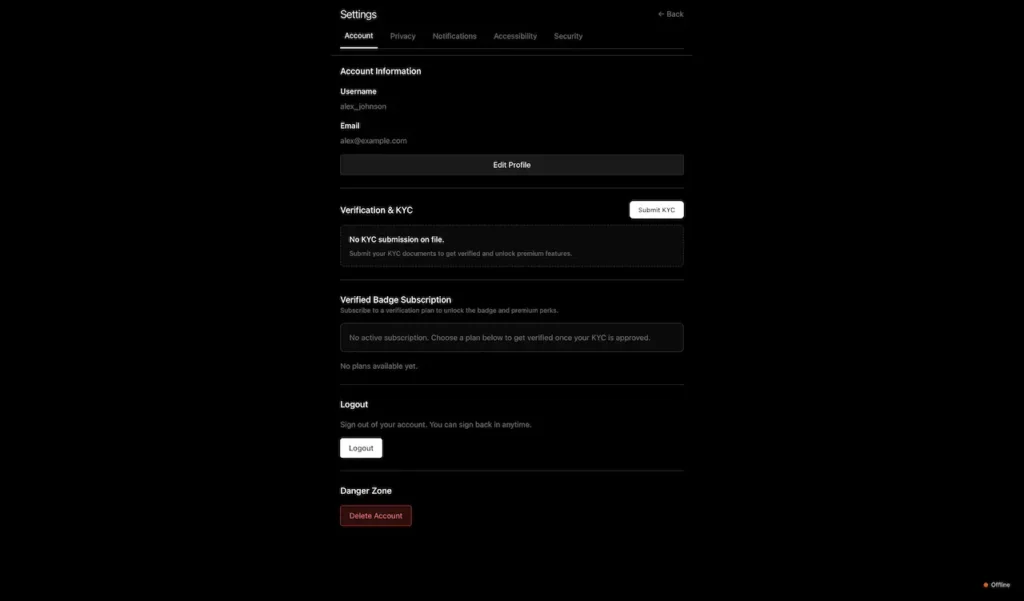
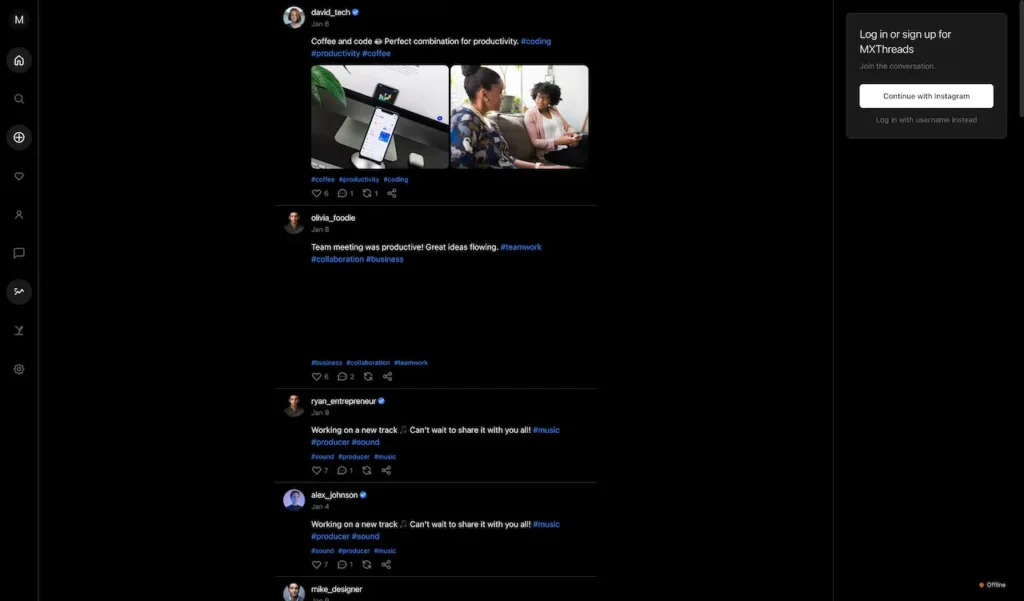
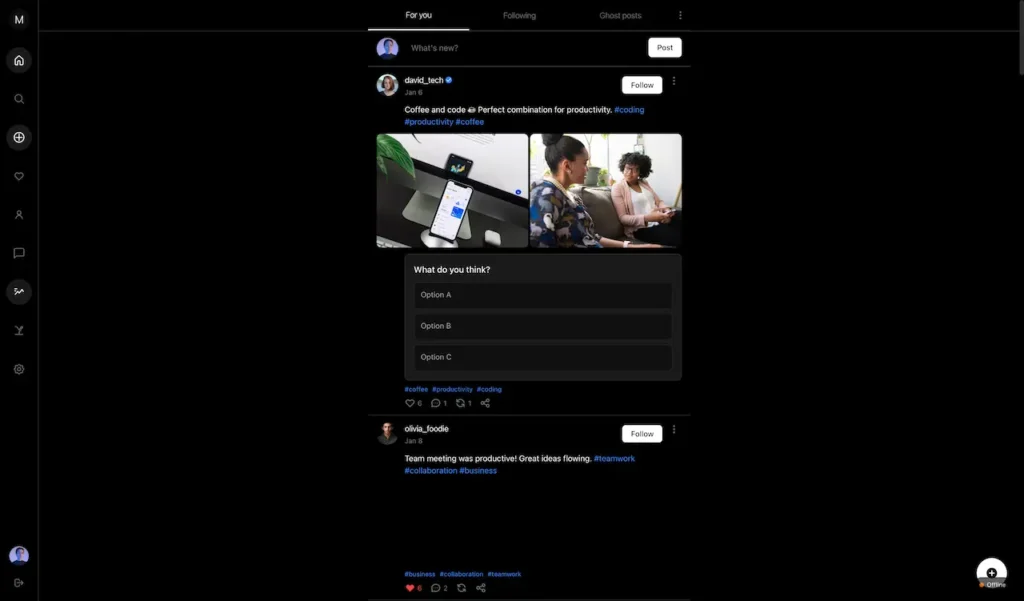
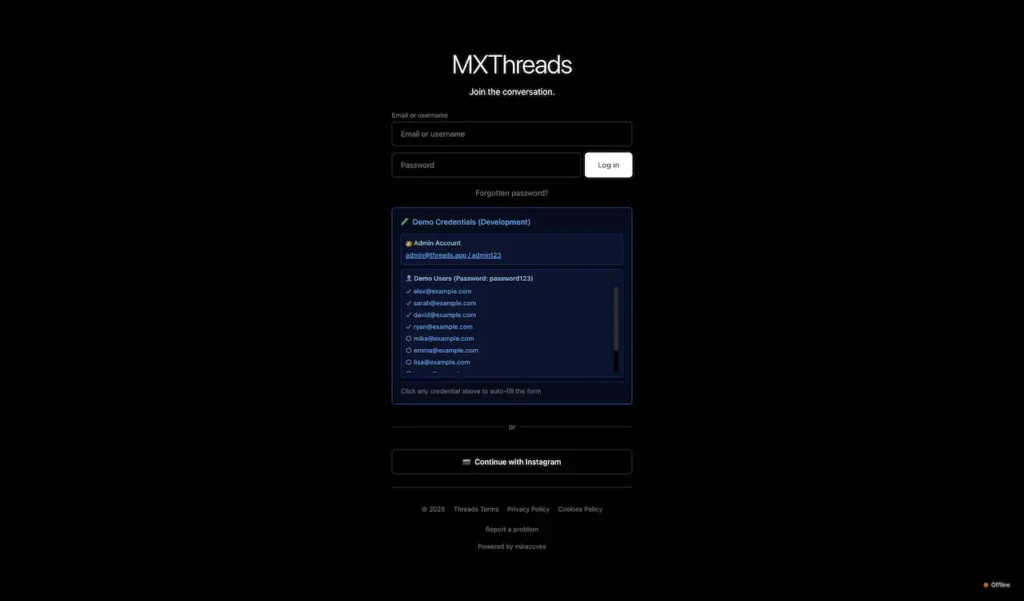
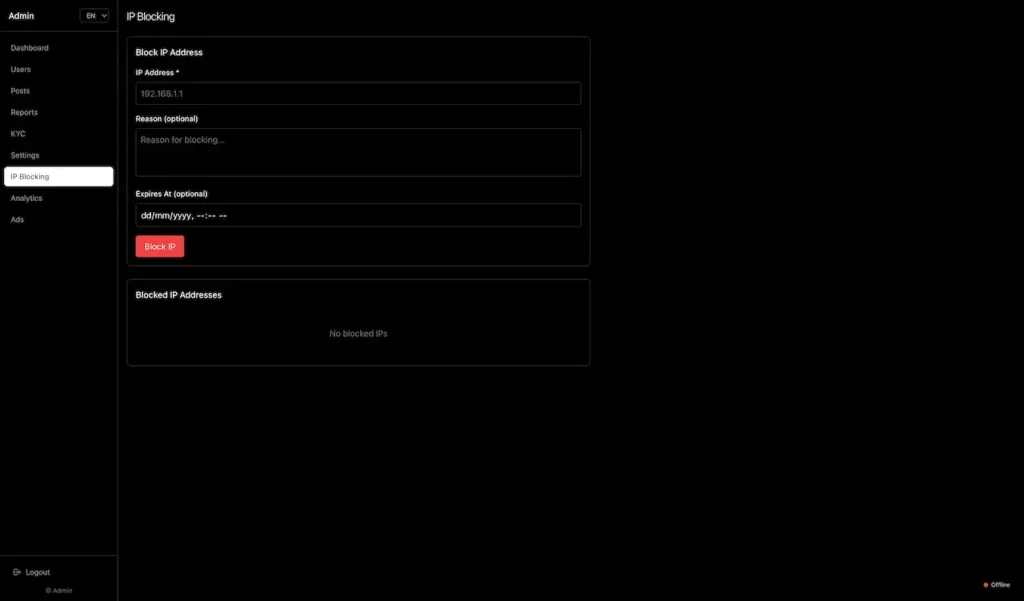
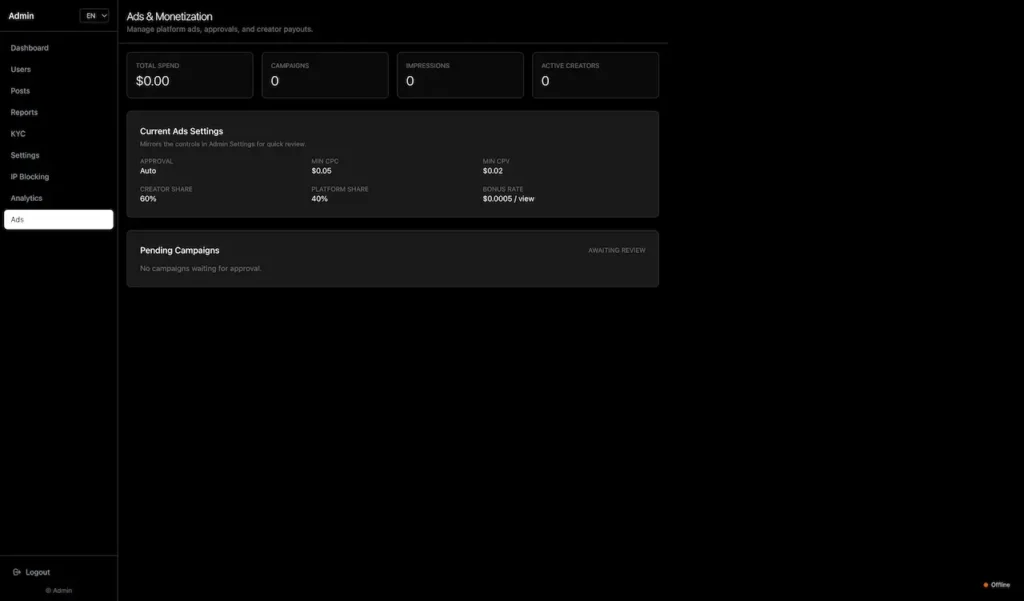
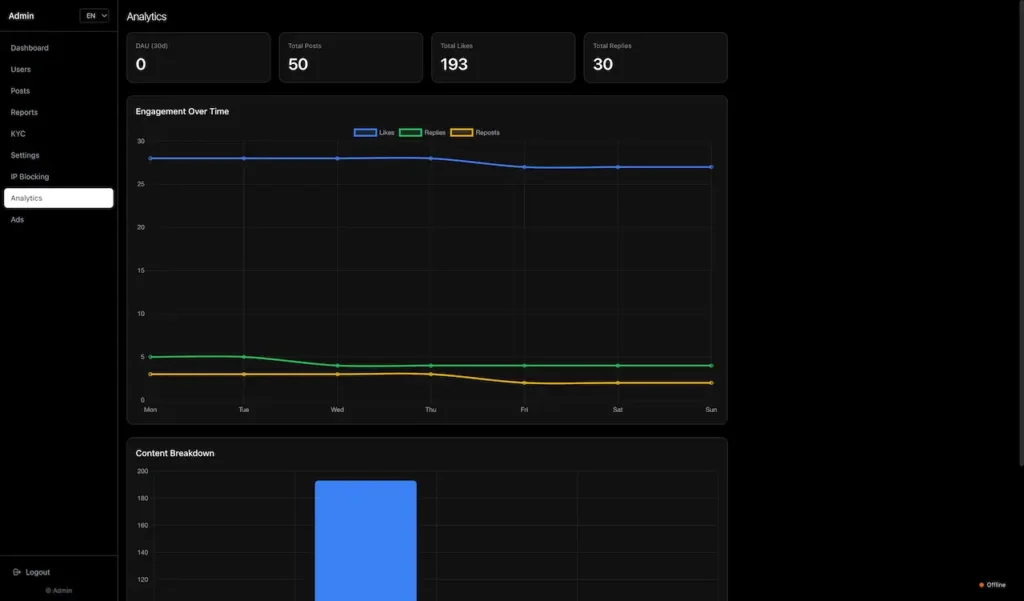
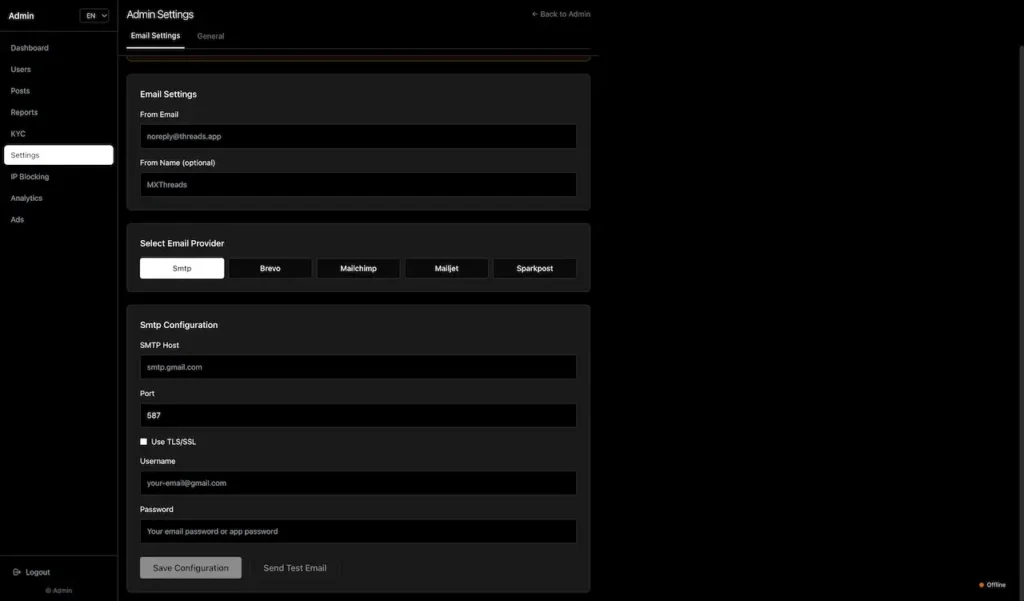
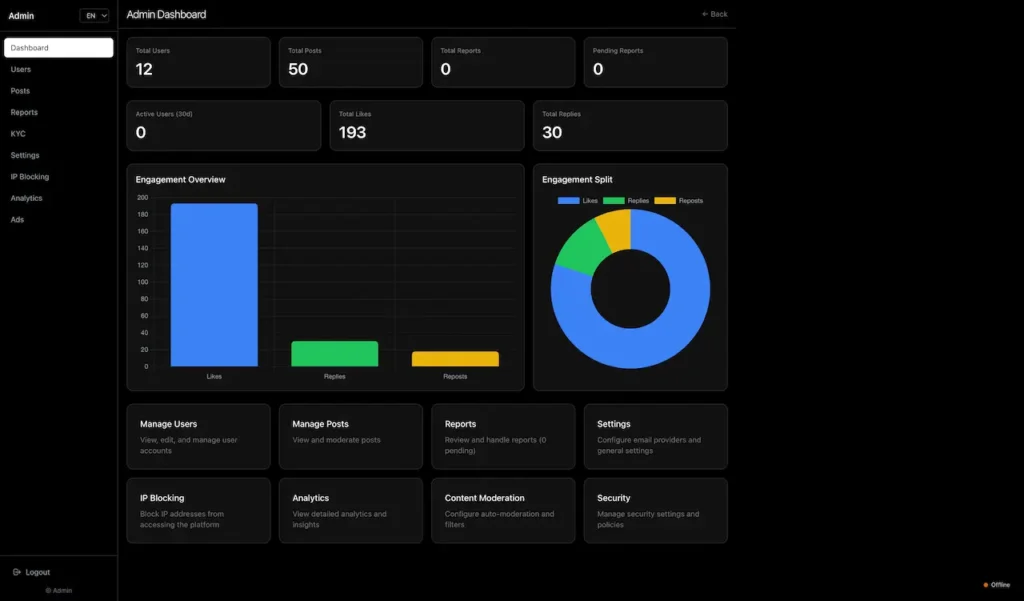
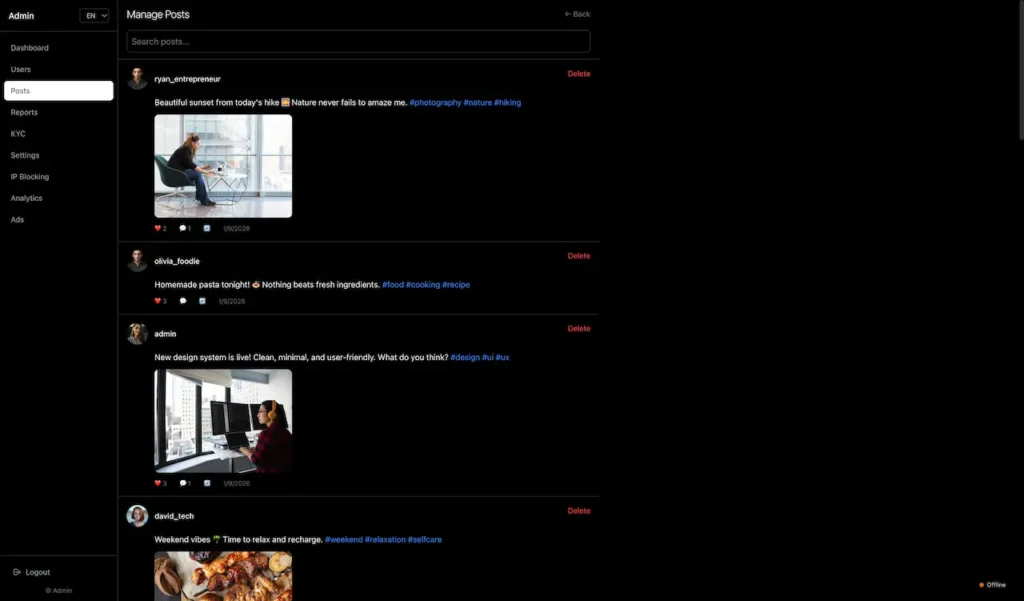
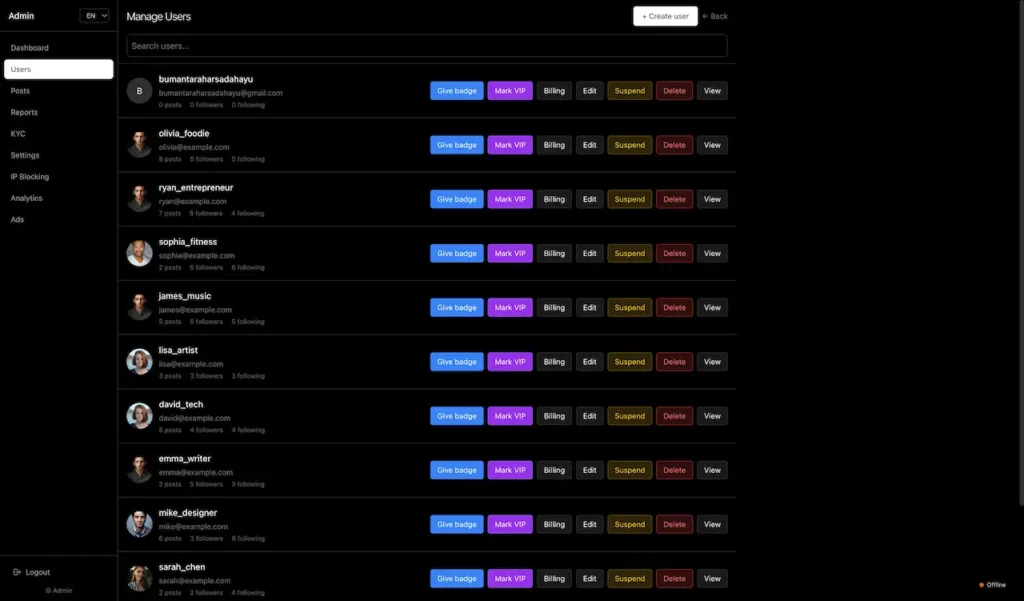
Follow a member from registration through a published thread to a resolved reply, a creator from analytics to an active verification subscription, an advertiser from ad account to funded campaign, and an operator from a filed report to a moderation decision.
Client Voices
Feedback from operators who launched branded social products with Miracuves. Client identities withheld under NDA.
Proof in Production
How an operator launched a branded text-first social network on the Miracuves Threads Clone. Client identity withheld under NDA.
Confidential Deployment
Branded Community Platform
A branded text-first social network launched on the Miracuves Threads Clone, with creator monetization and an operator moderation console from day one.
"The moderation console is what let us open registration. Without it we would still be invite-only."
The Basics
A Threads Clone is a ready-made text-first social network – threaded publishing with media and polls, personalized and chronological feeds, realtime direct and group messaging, hashtag discovery, and the creator monetization and operator governance layers that a real community needs around them.
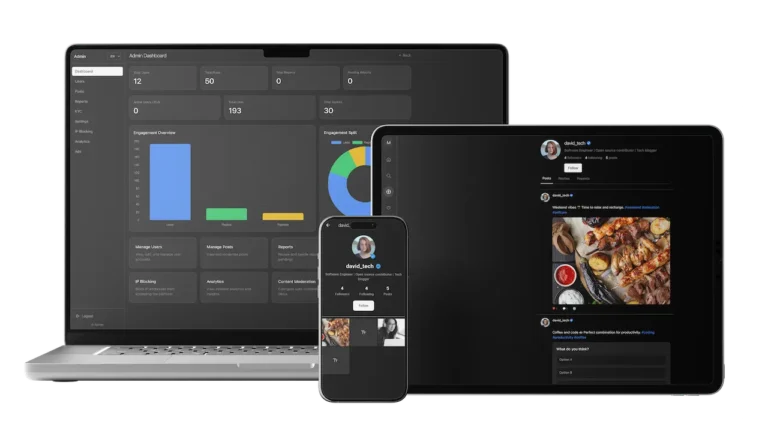
The value sits in what surrounds the feed - consent-gated messaging, moderation queues with real lifecycle states, KYC review, ad review and operator policy controls.
You receive the source, the Prisma schema and the migrations. No per-seat fee, no vendor roadmap dependency, and standard PostgreSQL underneath.
Stripe needs your own account and webhook verification, scheduled-post execution needs a worker wired at deploy, and strict CORS, secret rotation and centralized telemetry are deployment tasks. Stated here, not discovered later.
Built for Web, Android & API
The hard part of a social product is never the feed. It is keeping direct messages usable as you grow, giving moderators tools that scale past a spreadsheet, and having somewhere for revenue to come from before the audience is large. Those three are already built here.
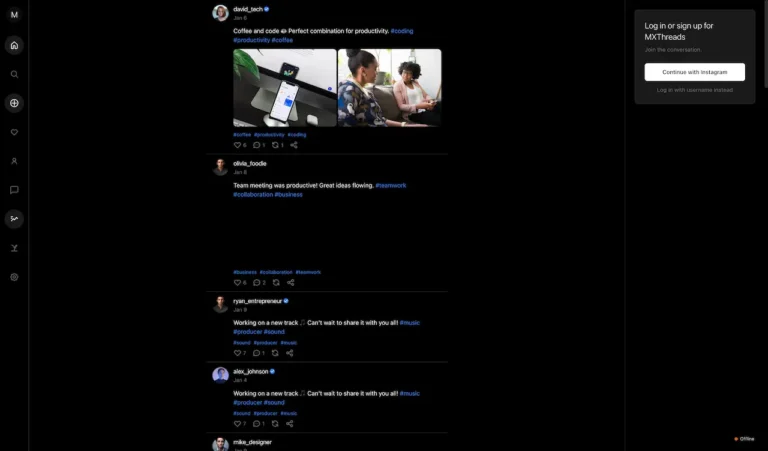
The build ships a Prisma and PostgreSQL schema of 40+ models, sixteen API route families with role and ownership guards, a Socket.io realtime layer, and a monetization stack covering ads, verification subscriptions and creator bonuses.
Everything Included
Every capability below is built and demonstrable in the live demo. Where a feature needs a third-party account or a deployment-time decision before it works in production, that is stated against the feature rather than implied away.
Registration, login and password recovery with JWT bearer auth, algorithm-constrained token verification, and optional TOTP second factor for accounts that need it.
Profile editing with avatar and media, public or private account behaviour, per-surface visibility toggles, and a genuine account deletion pathway.
Follow and unfollow with follower views, plus block, restrict and report primitives that are enforced at the query layer rather than only hidden in the interface.
Posts with media, polls, hashtags and mentions, nested reply chains, and per-post reply and quote restrictions so a creator can govern their own conversation.
Draft posts and scheduled post entities with publish times. The data model ships complete; the execution worker is wired during deployment.
For-you personalized ranking, following chronological, ghost and public feeds - one content graph serving discovery, recency and logged-out browsing.
Direct messages from non-mutuals arrive as requests with pending, accepted, declined and reported states, alongside group chats with member roles.
Socket.io rooms with authentication before join, carrying typing indicators, delivery confirmation and read status on stable, versionable event names.
Search across users and content with history and saved searches, hashtag follow and detail pages, and trending topics backed by score and count fields.
Ad accounts, campaigns, creatives and targeting with event-based spend accounting, Stripe funding, transaction records and an operator ad review queue.
Data-driven verification plans with Stripe subscriptions and a billing portal, plus creator bonus enrolment and payout records for participation incentives.
Report triage across pending, reviewed, resolved and dismissed, a KYC submission and review pipeline, abuse detection, and IP block controls with expiry.
Note for buyers: The platform ships complete as software. Stripe billing needs your own account and webhook signature verification configured at deployment. Scheduled-post entities are included but the execution worker is wired during deployment. Native mobile packaging and push notification delivery are configuration-required, as are strict production CORS, secret rotation, a distributed rate-limit backing store, a persistent audit datastore, and retention and export automation.
How Operators Earn
A social platform earns from several places at once, and this one models each separately so an operator can tune one lever without disturbing the others.
Advertisers fund an ad account through Stripe and spend against campaigns, with CPC and CPV economics and operator-configurable price floors set in ad settings.
Data-driven plans with monthly pricing, Stripe-backed recurring billing, lifecycle status tracking and a self-service billing portal for members.
Enrolment and payout records with policy-driven economics the operator configures - an incentive lever that buys creator supply rather than audience.
Ad settings expose revenue-share controls, so the split between platform and creator is a policy decision rather than a code change.
The campaign and creative model supports paid distribution within the feed surfaces, monetizing attention that organic reach would otherwise give away.
Branding, media policy and ad economics are runtime settings, so the same deployment can be licensed to another operator under their own identity.
The two that move the numbers most are the ad platform and verification subscriptions – one scales with audience, the other with trust and status.
Run It Without a Dev Team
The operator surface spans moderation, trust review, commercial policy and platform configuration, with role guards at user, admin and superadmin level enforced on protected route families rather than by hiding navigation.
Platform-level oversight metrics and recent activity - the surface a community lead opens first to see what needs attention today.
Full account records with role assignment, suspension and lifecycle control actions across the member, admin and superadmin scopes.
Filed reports moving through pending, reviewed, resolved and dismissed, so moderation is a workflow with disposition rather than a flat list of flags.
Post-level review and removal actions tied into the report lifecycle, with the moderation decision recorded against the content.
Submissions with approve and reject dispositions and rejection rationale preserved, feeding the trust and verification pathway.
Campaign and creative approval gating before spend begins, with pending, approved and rejected states on each review record.
Create and manage subscription tiers with pricing and Stripe price linkage, so commercial packaging is an operator decision.
Branding singletons for name, tagline, logo and favicons, alongside media policy controls for upload size, type and count.
Price floors, revenue-share configuration and payment gateway settings, including encrypted storage for gateway secrets.
Block list management with expiry policies, backed by suspicious-activity detection that can trigger defensive action automatically.
Need deeper governance? A persistent audit datastore, centralized telemetry and SIEM forwarding, retention and export automation, and distributed rate-limit backing are the extensions enterprise buyers most often require. All four are named as configuration-required in the documentation. Tell us the requirement and we will scope it.
Transparent Pricing
Building a text-first social network with Miracuves typically starts from around $2,799 for a launch-ready white-label Threads Clone and increases based on moderation depth, monetization configuration, mobile scope, integrations and infrastructure complexity.
Not sure which option
is right for you?
Talk to us - we'll understand your goals, timeline, and budget, and point you to exactly what you need. No upselling, just honest advice.
The Full Package
You receive a complete, deployable platform – the application source, the schema behind it, and the documentation a technical buyer will ask for. Everything transfers with full ownership: no runtime licence, no per-seat fee, no dependency on our roadmap.
The complete Next.js and React web application plus the Express and TypeScript API service, layered route to middleware to controller to service, yours to modify and redeploy.
40+ models across identity, content, messaging, discovery, notifications, ads, billing, governance, creator economy, config and analytics, with migrations and seed.
Feed surfaces, compose with media and polls, threaded replies, reposts and quotes, profile and privacy, search with saved queries, and the notification centre.
Socket.io rooms with authentication before join, carrying direct and group chat, message requests, reactions, and typing, delivery and read signals.
Ad accounts, campaigns, creatives, events and transactions, verification plans with Stripe subscriptions and billing portal, and creator bonus enrolment and payouts.
Moderation and report triage, KYC and ad review queues, verification plan management, platform, media and ad settings, IP blocking and payment configuration.
Helmet headers, layered rate limiters for auth, registration, reset and upload, Zod validation, magic-byte upload checks, and abuse detection with IP controls.
Entity-relationship document, deep schema interpretation, API collection, developer and security handbook, VAPT and compliance posture, PRD and technical dossier.
Want to see it running first? Open the demo with any of the five role logins above, or book a walkthrough and we will take you through a published thread, a consent-gated message request, a funded campaign and a resolved report against your own community model.
Four focused guides - features, cost, how to choose a builder, and how the business model makes money - each going deeper than this overview can.
Every feature by role - member, creator, and operator - covering four feed variants as distinct surfaces, threaded replies, and a four-state DM request lifecycle.
See the full breakdown →Our fixed $2,799 price vs. freelancer, custom-agency, and enterprise ranges - plus the 6-day deployment timeline and what actually drives social platform cost.
See exact pricing →Agency vs. freelancer vs. Miracuves compared - plus the trust and community-safety checks to run before you hire anyone.
Compare options →Three revenue streams with separate audiences, which one to switch on first, and the three operator models the platform supports.
See the playbook →Know Your Buyer
The platform suits operators building an owned community rather than renting an audience on someone else’s network – where the deciding factors are moderation capability, creator economics, and control of the member relationship.
If your business depends on an engaged community, direct creator relationships, or conversation you actually own and govern, a Threads-style platform becomes a long-term owned asset rather than a channel that can change its terms on you.
Where It Fits
The same codebase serves quite different operators depending on which layer leads. A creator network leans on monetization and analytics; a publisher leans on moderation depth; a professional body leans on verification and KYC. Each is configuration rather than a fork.
Creator Networks
Run a creator network where verification tiers, the bonus programme and post analytics are the tools that attract creators before the audience is large enough to pay them through advertising alone.
Media & Publishing Communities
Build a discussion layer around published journalism, with report triage, per-post reply restrictions and IP-level abuse controls carrying the moderation load that comments sections usually lose to.
Branded Member Communities
Operate a branded member community under your own name and policy, with runtime branding, private-account behaviour and consent-gated messaging protecting the member experience.
Professional & Membership Bodies
Serve a professional or membership body where KYC review and verification subscriptions are the membership mechanism itself, and private profiles are the default rather than an option.
Regional Social Products
Launch a regional social product with your own moderation policy, commercial terms and language of discourse, on infrastructure you control rather than an API you rent.
Enterprise & Internal Networks
Stand up an internal or partner-facing network where role separation between member, admin and superadmin, plus deployment control, are procurement requirements.
One platform, many configurations. Every use case above runs on the same Prisma schema and the same three role scopes. What changes is the moderation policy, the verification tiers, the ad economics and the branding – not a fork you then maintain separately.
Market Timing
Audiences built on someone else’s network are rented, not owned – reach, terms and monetization can all change without notice. The operators moving now are the ones who decided the member relationship was too important to keep leasing.
Algorithm changes and policy shifts on a borrowed platform are existential. Owning the graph, the content and the member relationship removes that dependency entirely.
Every community that grows hits the point where invite-only ends. A real report queue with triage states is what makes public registration survivable.
Creator supply goes where the economics are. Verification tiers and a bonus programme available at launch are what attract them before ad revenue can.
An open inbox is the first thing abused at scale. Consent-gated message requests solve it structurally rather than through filtering after the fact.
A conversation platform has none of the transcoding, storage or bandwidth economics of video, which makes the unit cost of an engaged member dramatically lower.
A from-scratch equivalent is most of a year across feed, messaging, moderation, ads and billing. A white-label deployment is live on your server in under six days.
Building this layer from scratch is what consumes the year. Feed surfaces, realtime messaging, a moderation console, an ad platform and subscription billing are each unglamorous, mandatory and slow to get right.
Under the Hood
Under the hood, a social platform needs a relational model that can hold a social graph honestly, a realtime layer that survives reconnects, and middleware that assumes the internet is hostile. Here is what sits behind the feed.
Next.js · React · TypeScript
Node.js · Express · TypeScript
PostgreSQL · Prisma · 40+ Models
Socket.io · Rooms & Events
Helmet · JWT · TOTP · Zod
Stripe · Email · Instagram
Note for Tech Buyers: Stripe billing requires your own account, and the documentation states webhook signature verification is a deployment requirement rather than something pre-wired. Scheduled-post entities ship in the schema, but execution orchestration is deployment-specific and the worker is configured at rollout. Strict production CORS allow-listing, secret management and rotation, a distributed rate-limit and cache backing store, a persistent audit datastore, and centralized telemetry or SIEM forwarding are all named configuration-required items. Every layer above is mainstream and widely hired for, with no proprietary framework and a schema portable to any PostgreSQL instance.
End to End
A social product looks simple from the outside and runs on a tightly sequenced identity, publishing, distribution and governance pipeline underneath. Here is the path from registration to a monetized creator and a governed platform.
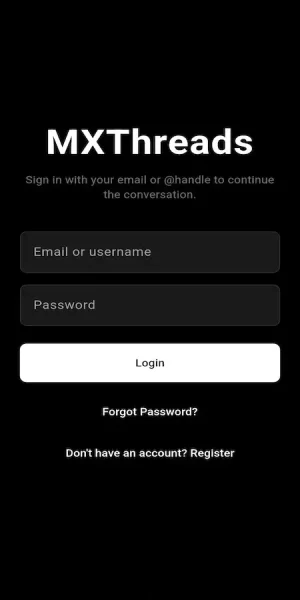
A member registers, optionally hardens the account, and lands on a feed that already has something in it - the first session decides retention more than any later feature.

Composing is the core loop. A post carries media, polls, hashtags and mentions, and the author controls who may reply or quote it.
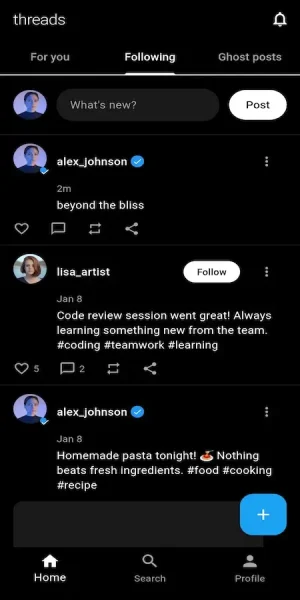
Distribution runs across four distinct feed surfaces plus hashtag and trend pathways, so content reaches beyond the author's existing followers.
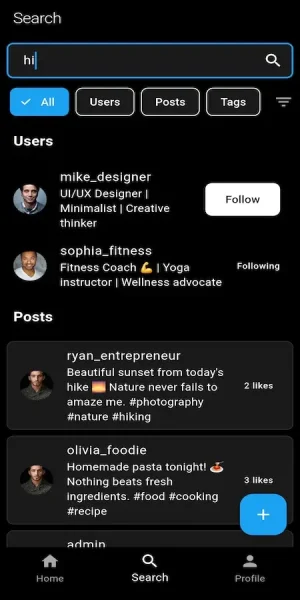
Conversation moves private. A message from a non-mutual becomes a request rather than an inbox item, which is what keeps direct messaging usable as the network grows.
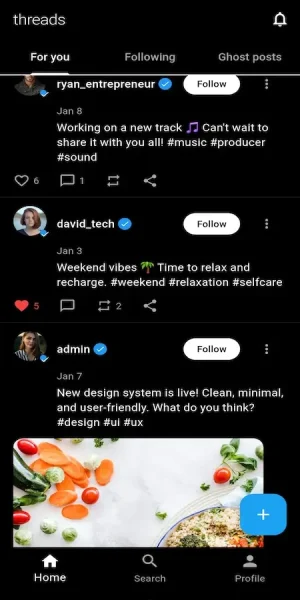
Revenue arrives from three directions at once - advertisers buying attention, members buying verification, and creators earning through the bonus programme.
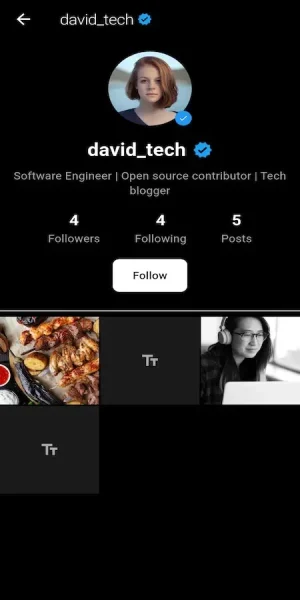
Everything above generates work for an operator. Reports, KYC submissions and ad reviews each move through their own queue with an explicit disposition.
Visual Flow Diagram
Join → Publish → Engage → Message → Monetize → Govern
How It's Built
Every request runs route to middleware to controller to service before touching data, so validation, rate limiting and role checks are structural rather than sprinkled through handlers.
Join models are declared rather than implicit, with uniqueness constraints on the bridges - which is what makes follow, block, save and group membership behave predictably at scale.
Reports, message requests, KYC submissions, ad reviews and subscriptions each carry explicit lifecycle states, so workflows are queryable rather than inferred.
Socket.io carries messaging signals alongside the REST families rather than replacing them, keeping the API deterministic while chat stays low-latency.
Platform, media and ad settings are singleton rows read at runtime, so branding, upload policy and ad economics change without a deploy or a schema migration.
User-scoped resources carry explicit owner fields and relation filters, which is the control that prevents cross-user leakage in a graph this interconnected.
Performance Targets
The architecture is deliberately conventional: stateless Express handlers behind a load balancer, a relational graph with indexed access paths, and a realtime layer whose scaling story is an adapter choice rather than a rewrite.
Feed generation is the read-heavy path in any social product, so the model is normalized with indexed access paths rather than denormalized early.
The read path rests on:
A single-node socket server is fine until it is not, and the transition is where naive implementations break.
The realtime model provides:
Open registration invites automated abuse immediately, so the limiters and detection paths are part of the middleware chain rather than an afterthought.
The abuse posture covers:
Ad spend and subscription state are the two places where a social platform quietly loses money if the records drift.
The commercial model keeps:
Horizontal growth is an instance-count decision, because request handling holds no local state and authentication travels in the token.
Foreign keys and status predicates are indexed throughout, with explicit join models keeping the social graph queries predictable as the relationship count grows.
Multi-instance realtime is a documented adapter choice at deployment rather than a redesign of the messaging layer.
Separate limiters for general traffic, auth, registration, reset and upload, with a distributed backing store as the documented step at scale.
Subscription state is driven by Stripe webhook lifecycle events, so the platform record and the payment processor do not drift apart.
Strict CORS, secret rotation, persistent audit storage and centralized telemetry are enumerated as an explicit enterprise rollout checklist.
Every operator ends up needing something specific to their community or their market. The stack is conventional so extending it is ordinary work.
Adding a module means a new route family with the shared middleware chain, a migration with lifecycle fields planned in, and the same role and ownership guards. Next.js, Express, TypeScript, PostgreSQL and Prisma are all widely hired for.
Note for founders and operators: You can launch lean and scale the same deployment. What changes as volume grows is instance count behind the load balancer, a distributed backing store for rate limiting and cache, a socket adapter for multi-instance realtime, and a persistent audit datastore – each named in the documentation as configuration-required rather than as an architectural change.
Built to Be Audited
Security posture is mapped against the OWASP Top 10 in a dedicated VAPT document, and the controls that carry the most weight for a social product are the ones most often missing: upload validation that checks magic bytes rather than trusting an extension, and abuse detection that can act before a human notices.
OWASP Top 10 Mapping
Validation Middleware
Webhook Integrity
Trust & Moderation Workflows
Privacy Controls
Named Configuration Items
Token verification constrains the signing algorithm explicitly and validates expiry in middleware, closing the algorithm-confusion class of attack outright.
Secure password hashing with a controlled reset token lifecycle, plus optional TOTP second factor with setup, verify and disable routes.
Route guards across user, admin and superadmin, combined with ownership checks and strict relation filters that prevent cross-user data leakage.
Extension, MIME type and file signature are all checked, so a renamed binary is rejected rather than stored - with size and count limits from media settings.
Distinct limiters for general, auth, registration, reset and upload traffic, with suspicious-activity detection and IP block controls carrying expiry policies.
HTTP hardening headers applied through security middleware, with production-safe error responses that keep stack traces server-side.
The documentation is explicit about the boundary between what ships and what is deployment work. Auth, authorization, validation, upload safety and abuse controls are marked Included. Auditability is marked Supported – event logging exists, a persistent audit datastore is recommended. Strict CORS, secret rotation, distributed rate limiting, centralized telemetry and compliance automation are marked Configuration required, and we complete them with you at rollout.
Go Further
Out of the box the platform is complete and demonstrable. The modules below are what operators most often add – either because they need a third-party account, or because their scale, security review or procurement process demands it.
A branded Android build is available and the API and socket contracts are platform-neutral. An iOS build is an additive step, and the documentation is explicit that native packaging is configuration-required.
The notification model and preferences ship complete. Native push registration and delivery through APNs or FCM are named as configuration-required integration work.
Draft and scheduled post entities are included in the schema. The execution worker that publishes on time is deployment-specific and wired during rollout.
Event logging is present and auditability is marked Supported. A dedicated audit datastore with retention schedules, export tooling and legal hold is the enterprise module.
Rate limiting and cache run in-process by default. A shared backing store, plus a socket adapter for multi-instance realtime, is the documented step at scale.
Health endpoints and application logging are included. Centralized log shipping, alerting on auth and webhook failures, and SIEM federation are configuration-required.
Authentication is email, password and optional TOTP today. SAML or OIDC for enterprise identity providers is the module procurement teams most often require.
Search runs on relational queries with history and saved-search persistence, which is right for a launch community. A dedicated search engine is the step once content volume grows.
The Threads Clone is one platform in a complete social and community suite. If your roadmap extends beyond text-first conversation, these connect naturally.

Microblogging platform with timelines, trends, lists and realtime public conversation at scale.

Full social network with profiles, groups, pages, events and a multi-format news feed.
Professional network with career profiles, connections, job listings and industry publishing.

Short-video platform with an algorithmic feed, creator tools, live streaming and virtual gifting.
The Commercial Case
Text-first social has unusually favourable economics. There is no transcoding pipeline, no storage curve driven by video, and no bandwidth bill that scales with watch time – so the marginal cost of an engaged member is a fraction of what a video platform carries.
Ad campaigns, verification subscriptions and the creator bonus programme are separate levers with separate audiences, not one model with three names.
Text-first conversation avoids the transcoding, storage and bandwidth economics of video, which is what makes a small paying share able to fund the platform.
The social graph, the content and the member relationship sit in your database, so reach and monetization are not subject to another company's policy change.
The codebase and Prisma schema are yours, running on standard PostgreSQL. There is no proprietary format to unwind and no vendor to renegotiate with.
Most operators launch with verification subscriptions rather than advertising, because a plan can be sold to a community of a few thousand while advertisers need scale to be interested. Plans are data-driven, so pricing and tiers are an operator decision from day one. The ad platform and the creator bonus programme typically activate once the audience is large enough that advertiser demand and creator supply both exist – the entities are already in the schema, so switching them on is configuration rather than development.
Defensibility in social comes from the graph and from switching cost, not from features. A member with followers, saved posts, group memberships and message history does not casually move. The platform contribution is making that accumulation start immediately – and making sure the graph lives in your database rather than in a third party who can change API terms, pricing or reach at any point. Moderation quality is the second moat: communities consolidate where the experience stays usable as they grow.
Example Revenue Scenarios
The commercial argument for owning the platform is that in social, the asset is the graph and the member relationship. Both belong to whoever operates the infrastructure, which is precisely why renting an audience on someone else’s network has a ceiling.
Niche Community
Active Members
Verification subscriptions carry early revenue.
A focused community where a small paying share funds operations, and the ad platform stays dormant until the audience justifies advertiser interest.
Creator Network
Active Members
Ads and creator bonus both active, subscriptions compounding.
A creator-led platform where the bonus programme buys supply and the ad platform starts monetizing the attention that supply attracts.
Regional Platform
Active Members
Ad revenue dominates, with subscriptions as high-margin baseline.
A market-scale social product where advertiser demand is the primary engine and operator-configurable price floors set the economics.
Why Miracuves
There are many ways to get a social platform: generic scripts, freelancers, agencies, or owning the infrastructure.
Report triage, KYC review, ad review and IP controls are real screens with lifecycle states. Generic social scripts give you a feed and leave moderation as your problem.
Ad accounts, campaigns, events, subscriptions and creator payouts are first-class schema entities, not a payment button bolted onto a template.
Message requests with a proper accept, decline and report lifecycle. Most clones ship an open inbox and discover the spam problem in production.
The complete Next.js, Express, TypeScript and PostgreSQL codebase is yours to modify and deploy. No per-seat fee, no provider who can change terms on you.
ERD, deep schema interpretation, API collection, developer and security handbook and VAPT posture - enough to pass a procurement review rather than a demo.
Included, Supported and Configuration required are stated per capability - including that the scheduler worker and push delivery are deployment work. Nothing surprises you after purchase.
| Criteria | Miracuves Threads Clone | Generic Clone Script | Custom Dev Agency |
|---|---|---|---|
| Time to Launch | 6 days (Production) | Unknown / DIY | 6-9+ months |
| Source-Code Ownership | ✔ Full | Often limited / encrypted | Usually yes |
| Feature Depth (Threads-like) | High (feed, messaging & creator monetization) | Basic (publish & feed only) | Depends on budget |
| Security & Compliance | Strong (ISO mindset, GDPR-ready) | Minimal | Varies widely |
| Scalability & Performance | Cloud & CDN-optimized | Rarely considered | Depends on architecture |
| Monetization Options | Multiple (ads, gifts, subs) | Limited / needs custom work | Custom (more time & cost) |
| Admin & Analytics | Full-fledged dashboard | Very basic or missing | Custom build (extra cost) |
| Cost vs Speed vs Quality | Balanced | Cheap but risky | High cost, slow |
| Ongoing Support & Updates | Available with clear plans | Usually none | Depends on contract |
Not every route to a social platform survives its first thousand real members. Here is where we differ.
Industries
The Threads Clone suits any organization whose value depends on an owned, governed conversation. Creator platforms use verification tiers and the bonus programme to attract supply. Media brands build a discussion layer around journalism with moderation depth behind it. Consumer brands run member communities under their own name and policy. Professional bodies use KYC and verification as the membership mechanism itself. Education and alumni networks rely on private-account behaviour and consent-gated messaging. Regional operators serve markets global networks underserve, on their own commercial terms. Sports and fandom communities use groups and trending to concentrate attention around moments. Enterprises stand up internal or partner networks where role separation and deployment control are procurement conditions.
Miracuves’ Threads Clone is built as a governance-first social platform adaptable to any community model – monetized where your business requires it, and white-labelled entirely under your brand.
Changelog
| Version | Date | <span style="color: rgb(6, 6, 8); font-family: Montserrat, sans-serif; font-size: 13px; font-style: normal; font-variant-ligatures: normal; font-variant-caps: normal; font-weight: 700; text-align: left; white-space-collapse: collapse; background-color: rgb(255, 255, 255);">What's New</span> |
|---|---|---|
| v2026.1 | Jul 2026 | Initial release - text-first social platform with threaded publishing, four feed variants, consent-gated messaging, ads and moderation. |
Blog & Resources
Stay updated with the latest trends, guides and case studies on social platform development, community moderation and creator monetization.
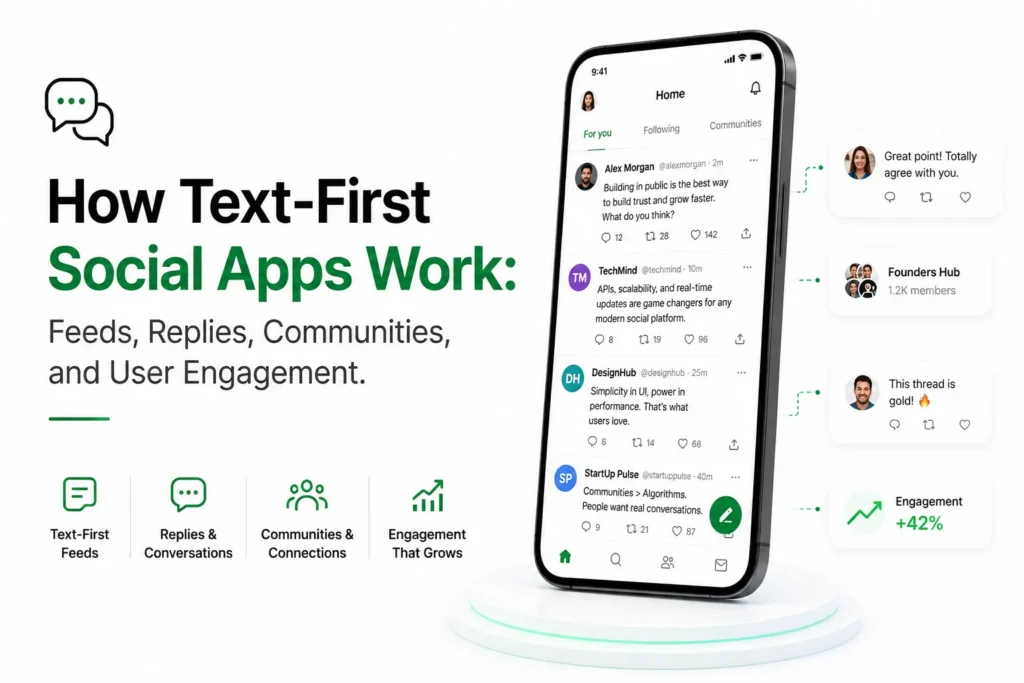
How Text-First Social Apps Work: Feeds, Replies, Communities, and User Engagement
Last Updated on August 21, 2026 by Yash Narayan Key Takeaways A text-first social app…
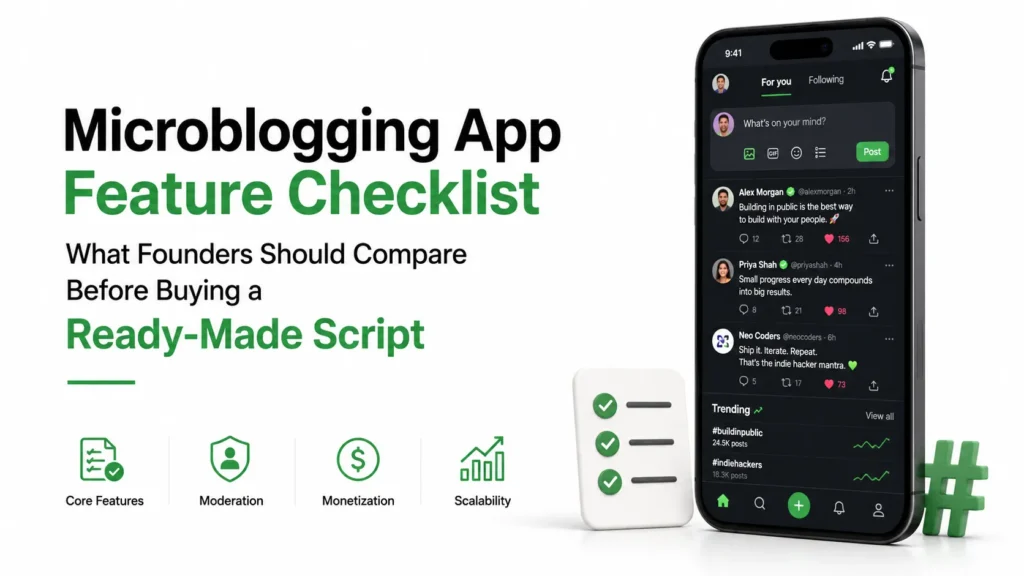
Microblogging App Feature Checklist: What Founders Should Compare Before Buying a Ready-Made Script
Last Updated on August 21, 2026 by Yash Narayan Key Takeaways A microblogging app needs…
Why Startups Choose a Ready-Made Microblogging Platform Over Custom Development
Last Updated on September 21, 2026 by Ashish Khan Launching a microblogging platform can look…

Last Updated on September 22, 2026 by Yash Narayan Key Takeaways A microblogging platform growth…

FAQ
Everything you need to know about the Miracuves Threads Clone.
A ready-made text-first social network – threaded publishing with media and polls, four feed variants, realtime direct and group messaging with consent-gated requests, hashtag discovery and trending, plus a monetization stack of ads, verification subscriptions and creator bonuses, and an operator console for moderation, KYC and platform policy.
Yes. You launch under your own branding, community rules and commercial terms. The product replicates common social networking patterns rather than any protected asset, and you set your own policies for moderation, verification and monetization.
The Miracuves Threads Clone starts from $2,799 for a launch-ready white-label deployment. Final scope varies with moderation depth, monetization configuration, mobile scope, integrations and infrastructure.
Six days from our side. The platform is ready-made, so our work is rebranding it and deploying to your server – that is done in under six days. What extends the calendar is anything we need from you: brand assets, hosting access, community policy decisions, and a Stripe account if you are enabling billing at launch.
A message from someone you do not follow arrives as a message request rather than in your inbox, carrying pending, accepted, declined and reported states. You choose whether the conversation opens at all, and reporting from that screen feeds the moderation queue. This is structural rather than filtering after the fact, which is why it holds up as the network grows.
A report queue with pending, reviewed, resolved and dismissed states, user account moderation and suspension, post-level review actions, a KYC review queue with approve and reject dispositions, an ad review queue gating campaign spend, and IP block controls with expiry policies. Abuse detection can trigger defensive action automatically.
Three separate streams. Advertisers fund an ad account through Stripe and spend against campaigns with event-based accounting and operator-set price floors. Members subscribe to data-driven verification plans through Stripe with a self-service billing portal. Creators enrol in a bonus programme with payout records and operator-configured economics. All three are in the schema rather than bolted on.
The draft and scheduled post entities ship complete in the schema and the composer supports them. The documentation is explicit that execution orchestration is deployment-specific, so the worker that actually publishes on schedule is configured during rollout. We state this plainly because it is the kind of thing that surprises buyers otherwise.
A branded Android build is available, and the API and Socket.io contracts are platform-neutral so mobile parity is architecturally supported. Native packaging and push notification delivery are documented as configuration-required, so iOS and push are additive steps rather than things already shipped.
Your own Stripe account with webhook signature verification, a strict production CORS allow-list, strong secrets with a rotation policy, and the scheduler worker if you are using scheduled posts. At scale you will also want a distributed backing store for rate limiting and cache, a socket adapter for multi-instance realtime, and a persistent audit datastore. All of these are named in the documentation as configuration-required.
Yes. You receive the complete Next.js and React web application, the Express and TypeScript API service, the Prisma schema with 40+ models plus its migrations and seed workflow, the Socket.io realtime layer and all integration service code – with full ownership to modify and extend.
It ships with a dedicated VAPT and compliance document mapping the OWASP Top 10, algorithm-pinned JWT verification, password hashing with optional TOTP two-factor, role and ownership guards, Zod validation middleware, upload checks on extension, MIME and magic bytes, Helmet security headers and layered rate limiting with IP controls. The document marks auditability as Supported rather than Included, and lists strict CORS, secret rotation, persistent audit storage and SIEM forwarding as configuration-required hardening.
Let's turn your idea into
a live platform.
Get a free consultation, a clear timeline, and honest answers. We'd rather earn your trust than rush a sale.
Miracuves is an independent software development company. We are not affiliated with, connected to, sponsored by, or endorsed by Threads.
“Threads Clone” is used descriptively. It is how the software industry refers to building a platform with functionality similar to Threads, and how clients search for it.
The entire design and codebase is built by our own team. The product contains no code, design, graphics, or content originating from the Threads website or applications.
Threads and all other third-party names and marks are the property of their respective owners, referenced here solely to describe the category of software offered.
Build Your Branded App - Clone or Custom

Envision. Decide. Deploy.
With Perfection in Just 6 Days
90+ readymade clone apps deployed in 6 days. Schedule a Live Walkthrough Now.
Custom development from 15 days. Free consultation
Launch a ready-made solution under your own brand in 6 working days, with a discount and two bonuses on us.
The discount applies to the published price and depends on the solution. Both bonuses are included with a ready-made solution ordered during the offer. The offer runs in 96-hour windows; the timer shows the current one. The 6 working days start once your branding, hosting and accounts are ready. We reply in under 2 hours, Mon-Sat.