

LinkedIn Clone App: White-Label Professional Network Platform
A launch-ready professional network where the profile is the product. Identity, the connection graph, the feed and messaging sit on one Next.js and Prisma backend, and the workflows that make a professional network worth paying for, hiring, sales prospecting and learning, run against the same identity rather than beside it.
One codebase, five entitlement tiers and a full operator console. Members, recruiters, sales teams, company admins and moderators each get their own surface, and every one of them is gated by the same tier and role model.
Go Live in 6 Days with Professional ProfilesConnection GraphHiring PipelineSales NavigatorLearning & CredentialsWhite-Label
⚡ Platform at a Glance
6
Revenue Streams
member plans, recruiter seats, sales seats, credits
5
Paid Tiers
member, recruiter, sales, business and enterprise
0
Revenue Share
you own the source outright, with no per-seat fee
100%
Metered Seats
every tier billed and enforced inside the platform
Seats Are Where the Money Is
A professional network earns from recruiters and sellers, not from members. Recruiter seats, sales seats, company pages and communication credits all ship metered and billable on day one.
Useful Before the Network Is Big
Profiles, endorsements, job posts and applicant tracking are complete from launch, so early members get value out of the platform before network effects have had time to arrive.
🚀 Ready to launch your own LinkedIn-style professional network?




Live in Action
LinkedIn Clone Demo: Six Surfaces, One Identity Model
Every surface below runs on the same deployment and the same database. One sign-in URL, six role logins. Use the credentials on each card to see exactly what that tier unlocks and what it does not, because the entitlement boundary is the product.
MEMBER & PREMIUM
The Profile, the Network, and the Upgrade Boundary
One card, two accounts, because the boundary between them is the product. Sign in as the free member to build a profile across every section, connect and follow, post to the feed and message inside your network. Then sign in as Premium to see what the paid tier actually unlocks: expanded search, who viewed your profile, saved searches, InMail credits for outreach beyond your network, and the analytics a member pays for. The limits on the free account are visible rather than hidden, which is exactly how an operator prices the upgrade.
-
Open the web app and sign in as the free member
-
Then sign in again with the Premium credentials
-
Compare: Search, Profile Views, InMail, Analytics
-
Free: sarah.anderson@demo.com | Premium: michael.chen@demo.com | demo1234
BUSINESS
Company Page, Brand and Audience
The employer-brand surface: company profile and admins, followers, company posts with their own engagement, culture and testimonial modules, employee highlights and reviews. This is where an organization stops being a logo on a profile and becomes an audience you own.
-
Sign in as a Business account
-
Login with the business credentials below
-
Explore: Company Page, Posts, Followers, Culture
-
Try: jessica.martinez@demo.com | demo1234
SALES NAVIGATOR
Leads, Lists, Team and CRM Sync
The revenue surface: lead records with activity history, lead lists and segmentation, saved sales searches, notes and tags, team membership with shared leads, and CRM integration with sync logs so a failed push is visible rather than silent.
-
Sign in as a Sales Navigator user
-
Login with the sales credentials below
-
Explore: Leads, Lists, Activities, Team, CRM Sync
-
Try: james.rodriguez@demo.com | demo1234
RECRUITER
Jobs, Candidates and Interviews
The hiring surface: post a role, work the applicant pipeline through its seven states, save candidates, set recruiter preferences, schedule interviews and issue assessments. Everything a hiring workflow needs stays attached to the same profile the candidate already maintains.
-
Sign in as a Recruiter
-
Login with the recruiter credentials below
-
Explore: Jobs, Applications, Interviews, Assessments
-
Try: david.thompson@demo.com | demo1234
ADMIN CONSOLE
Moderation, Appeals and Feature Flags
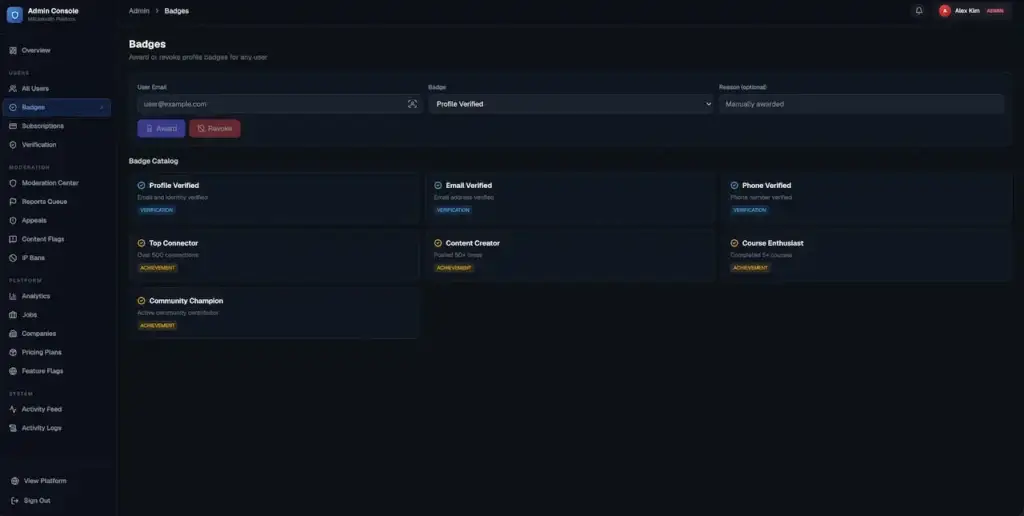
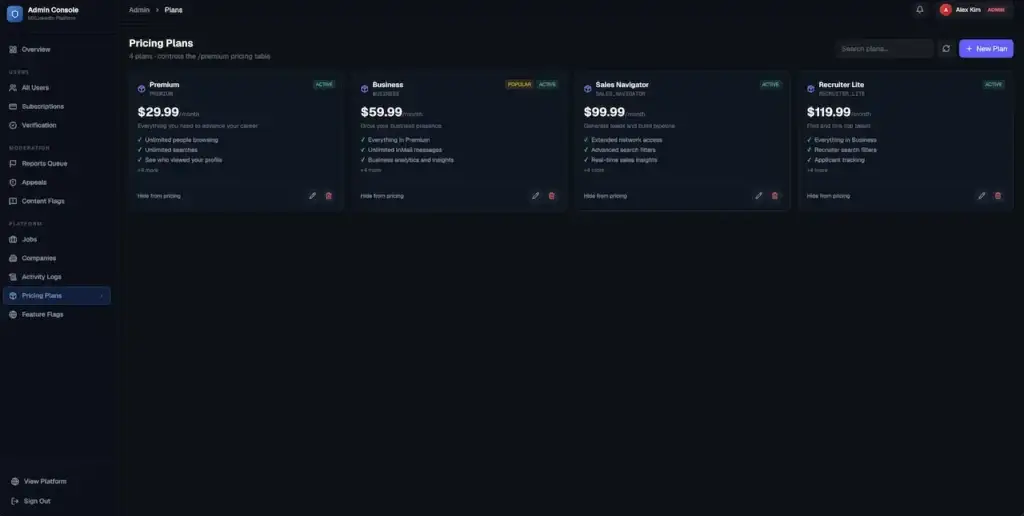
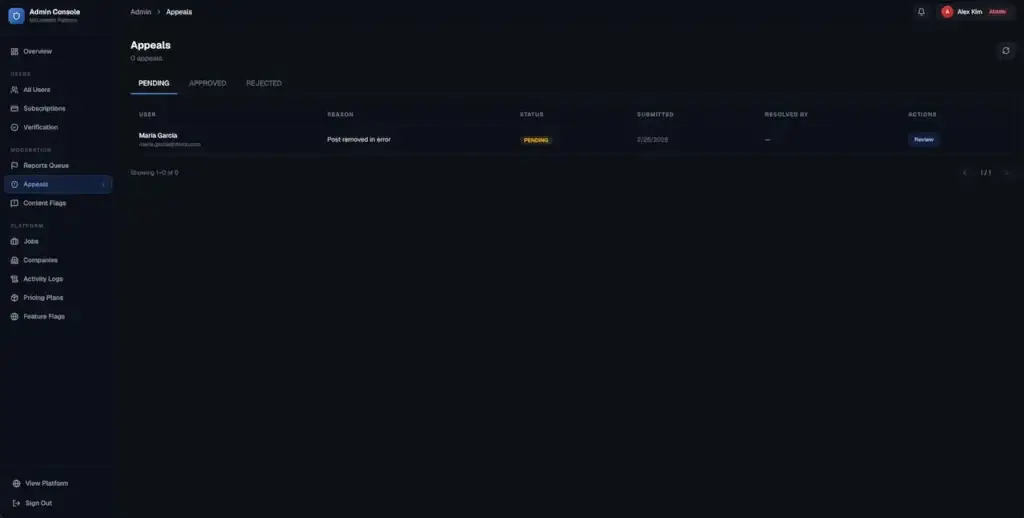
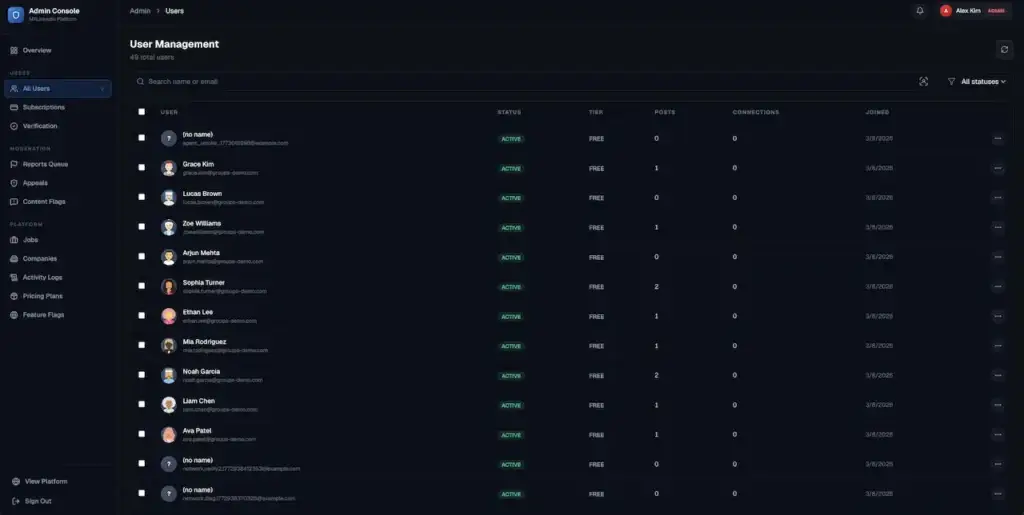
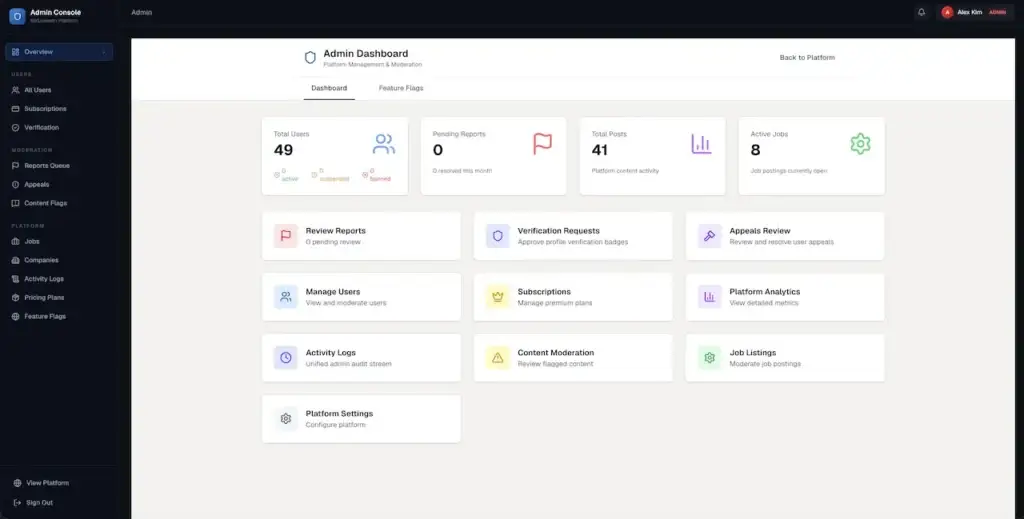
The operator cockpit: user role and status interventions, the report queue and moderation actions, the appeal lifecycle, IP bans, subscription visibility and a feature-flag control plane for staged rollout. Every action leaves a log entry behind it.
-
Open the admin console and sign in
-
Login with the admin credentials below
-
Explore: Reports, Moderation, Appeals, Flags, Users
-
Try: alex.kim@demo.com | demo1234
ANDROID APP
The Network on Android
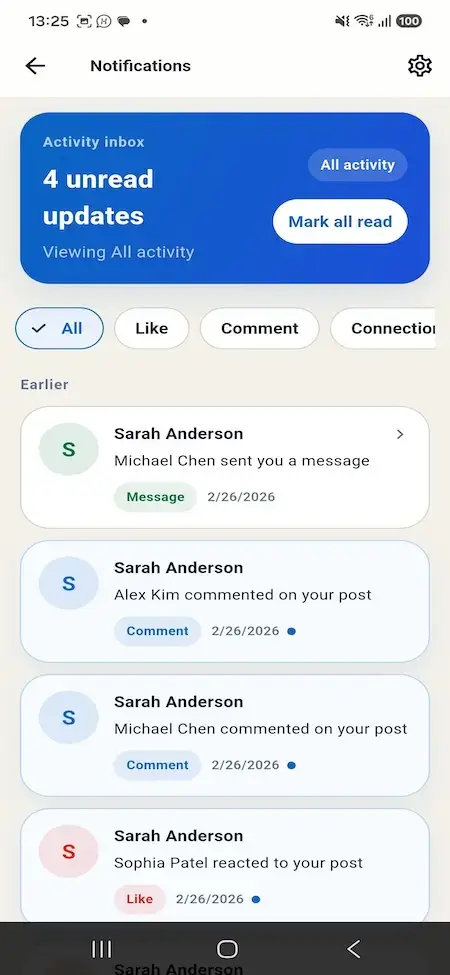
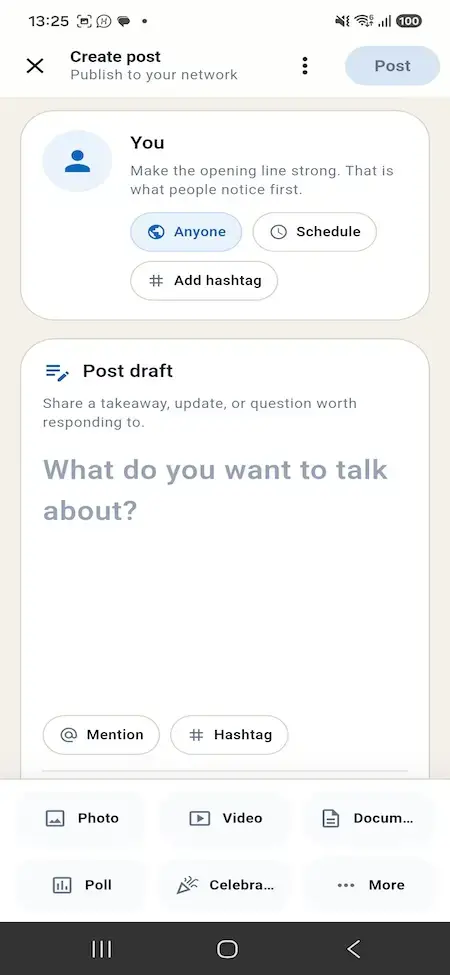
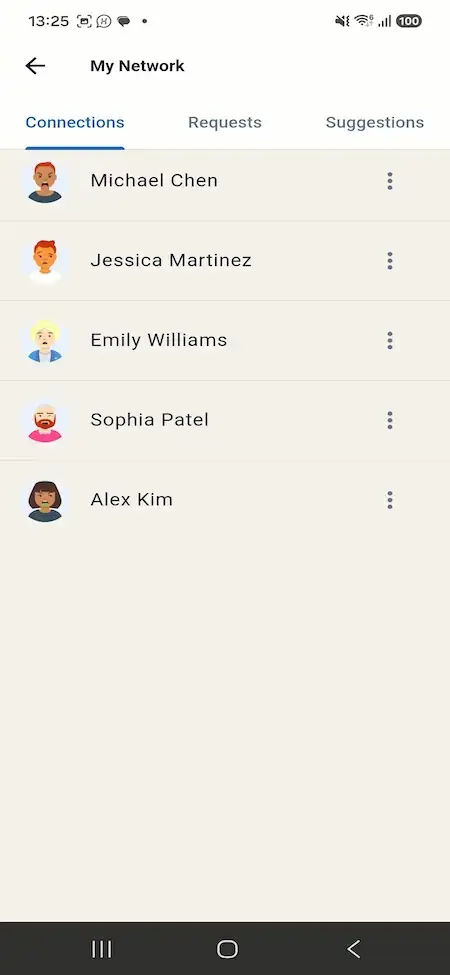
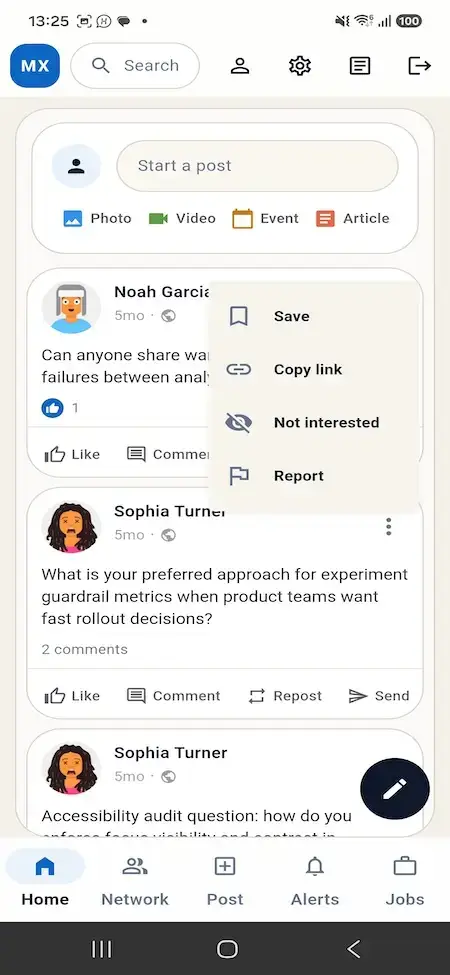
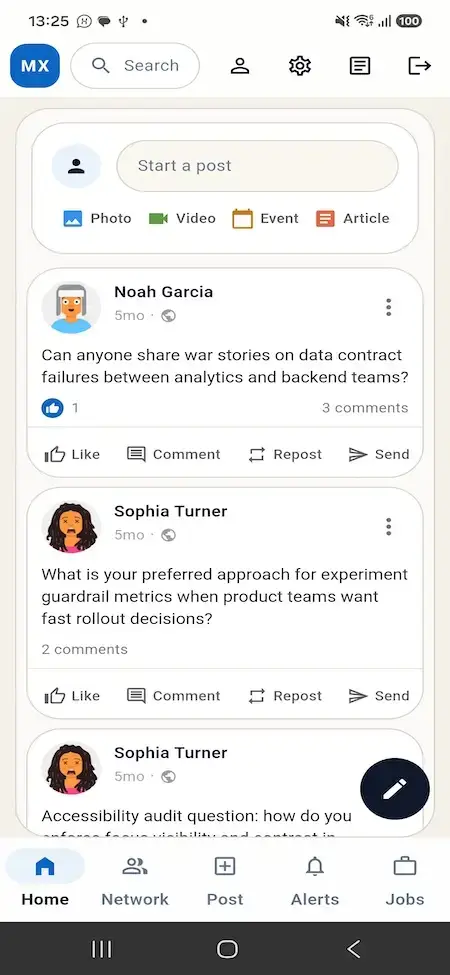
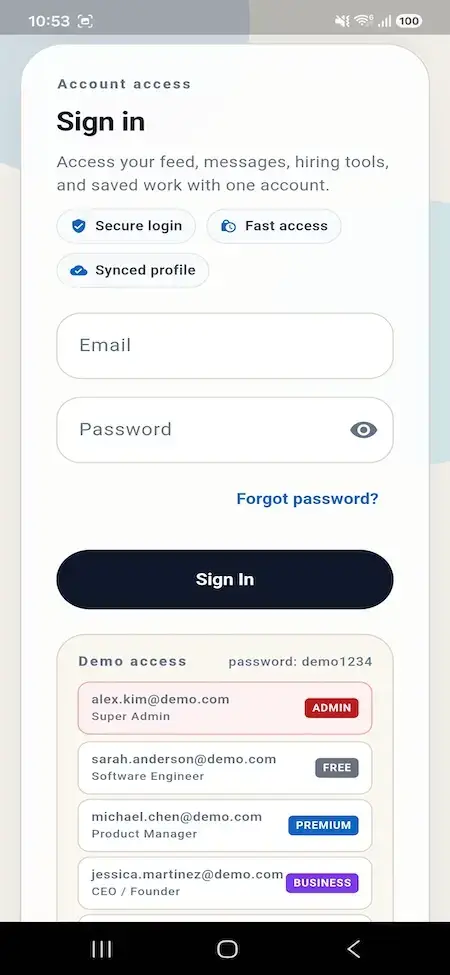
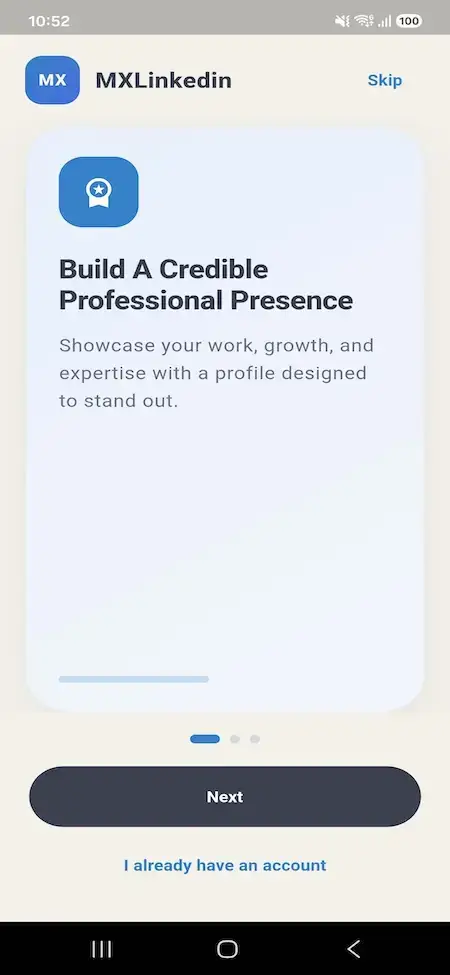
The Android build against the same REST API: profile, feed, network, messaging, notifications and jobs on mobile. The web app is also an installable progressive web app with a service worker and offline routes, so members on other platforms are not left out.
-
Download the Android build
-
Sign in with any of the credentials above
-
Explore: Feed, Network, Messaging, Jobs, Notifications
-
Try: sarah.anderson@demo.com | demo1234
Video Walkthrough
LinkedIn Clone Video Demo: Profile, Hiring, Sales and Governance
A walkthrough of the platform as an operator sees it rather than a feature reel. It starts with a profile being built out section by section, then follows the same identity into the feed, into a job application, and into a recruiter’s pipeline, so the point that everything hangs off one profile is visible rather than asserted. The sales surface follows with leads, lists and a CRM sync log, then the tier boundaries are shown by switching accounts, and it closes in the admin console with a report moving through moderation to an appeal. If a specific flow matters more than the tour, ask and we will open it live with data in it.
App Flows
LinkedIn Clone App Screens: Member, Recruiter, Sales and Operator
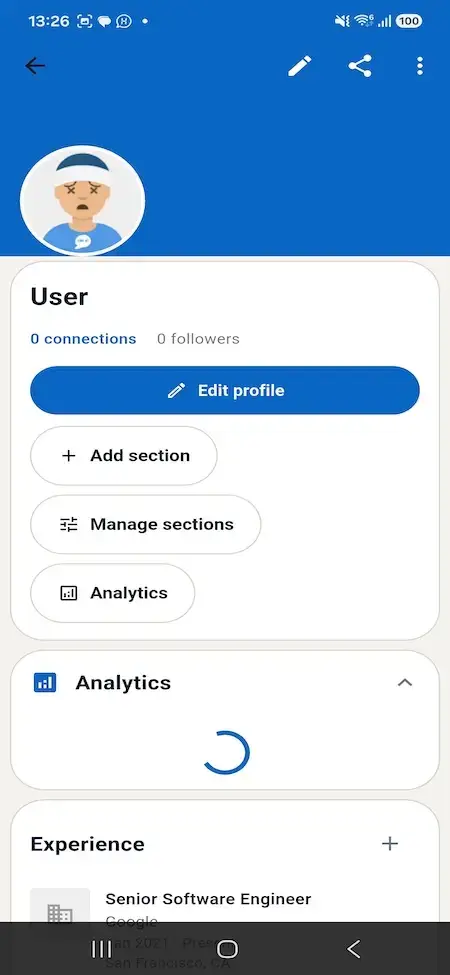
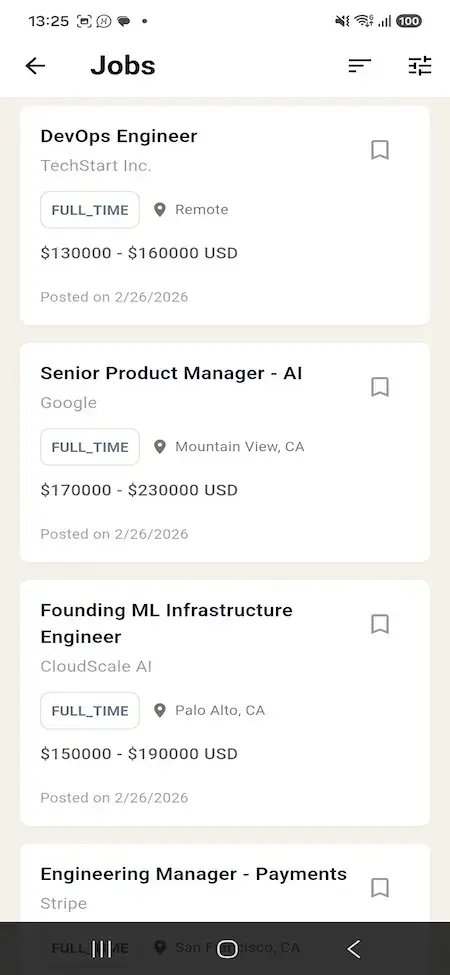
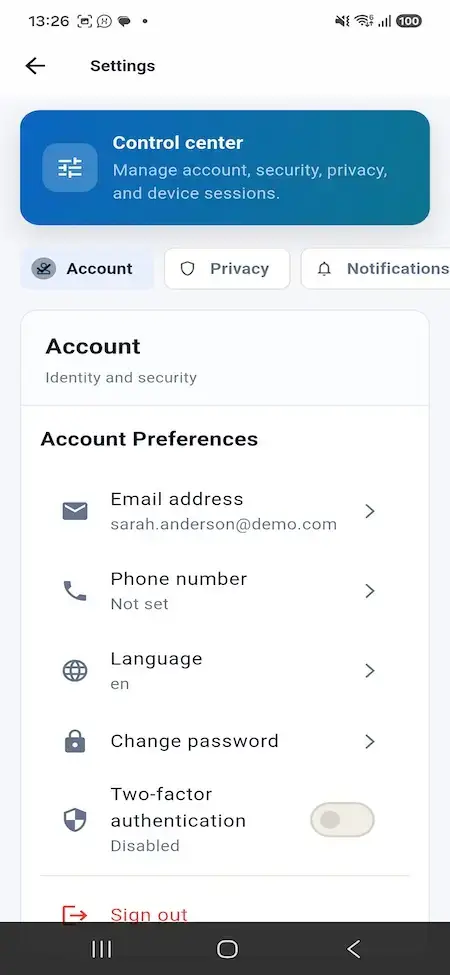
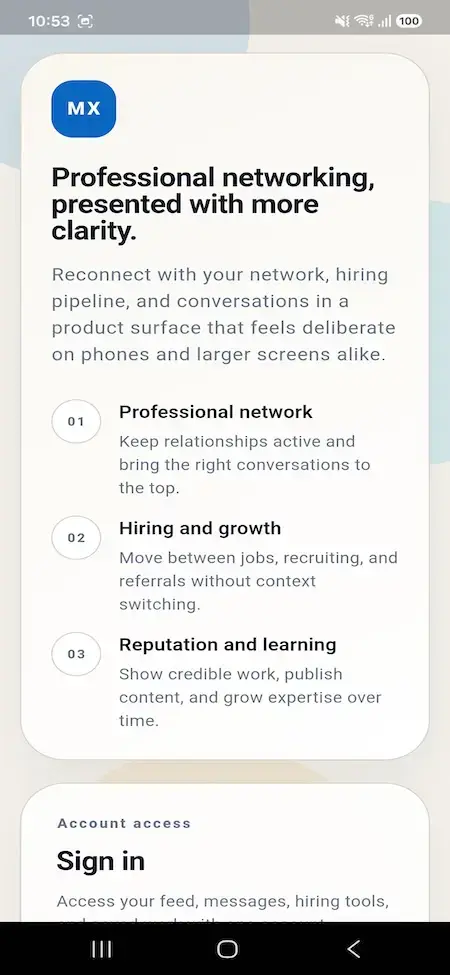
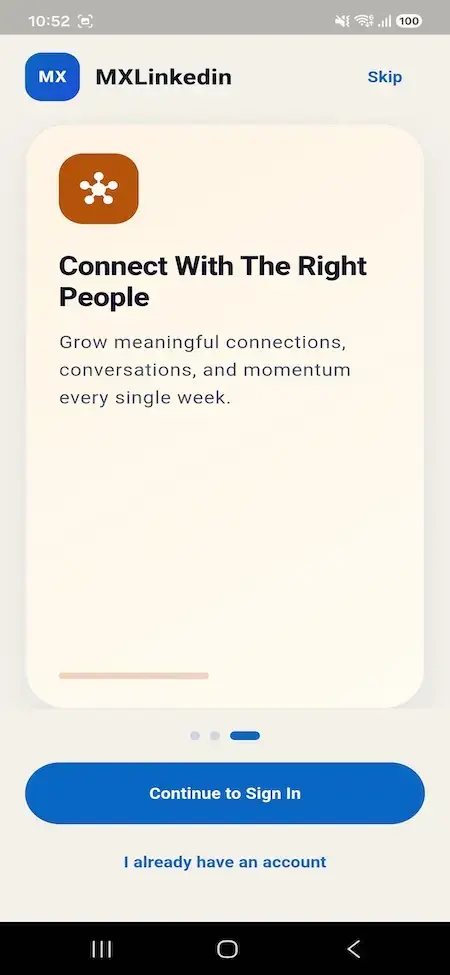
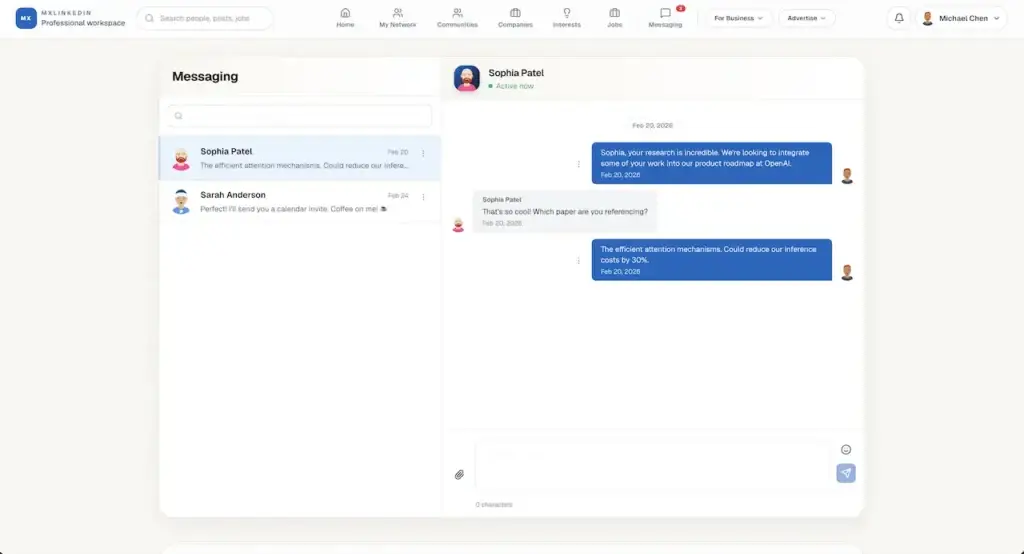
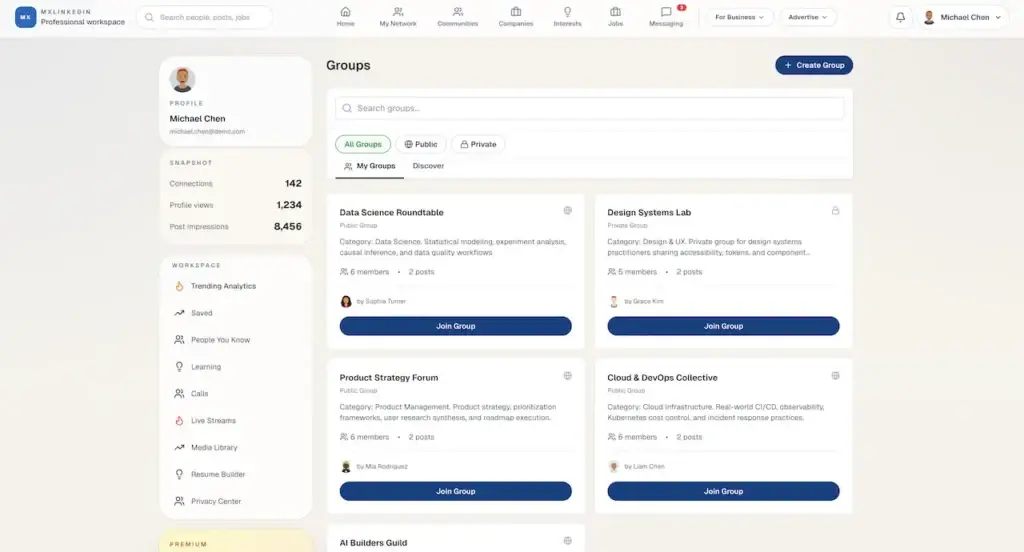
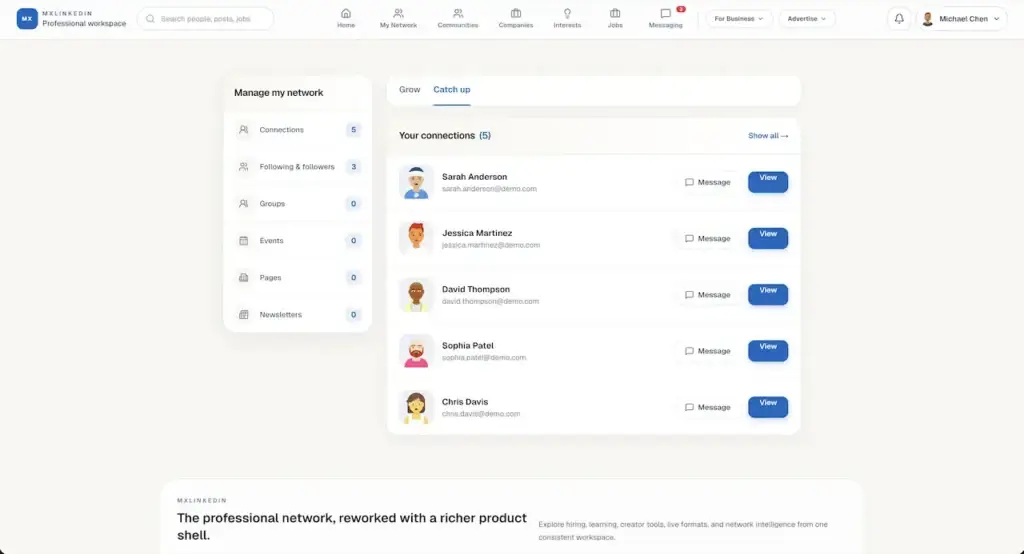
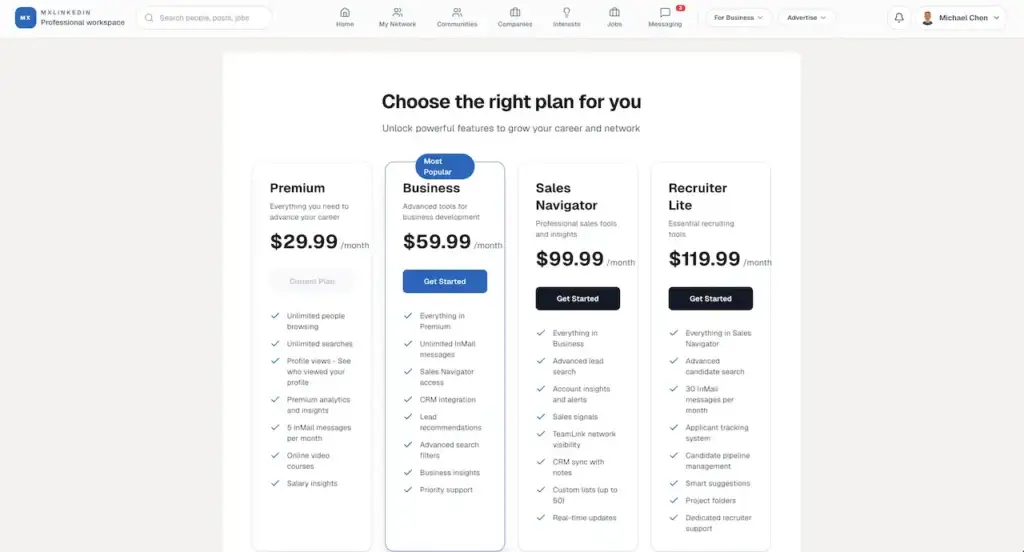
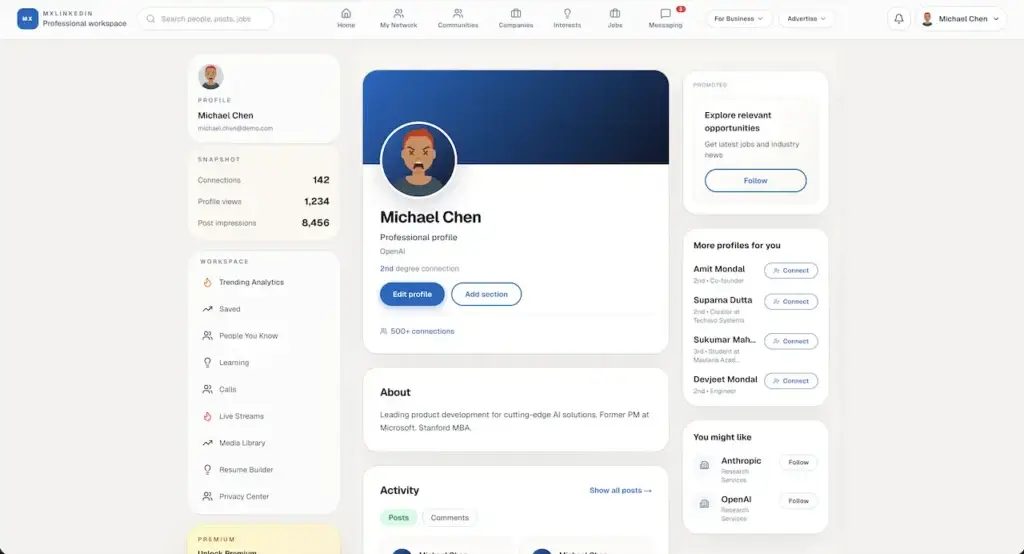
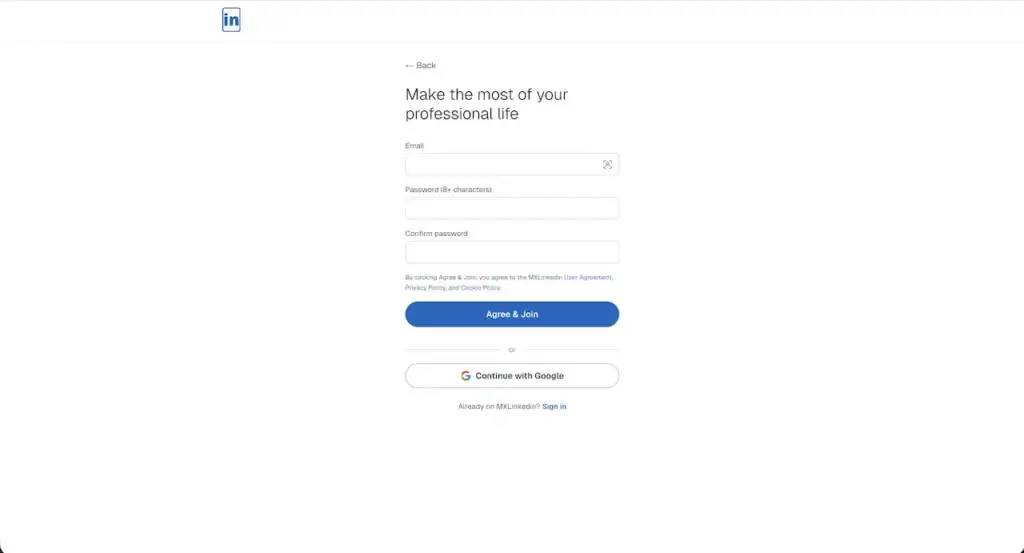
The interface across the surfaces that matter: the profile and its sections, the feed and post composer, the connection and network views, messaging with InMail, the job and application screens, the recruiter pipeline, the sales lead workspace, and the operator console.

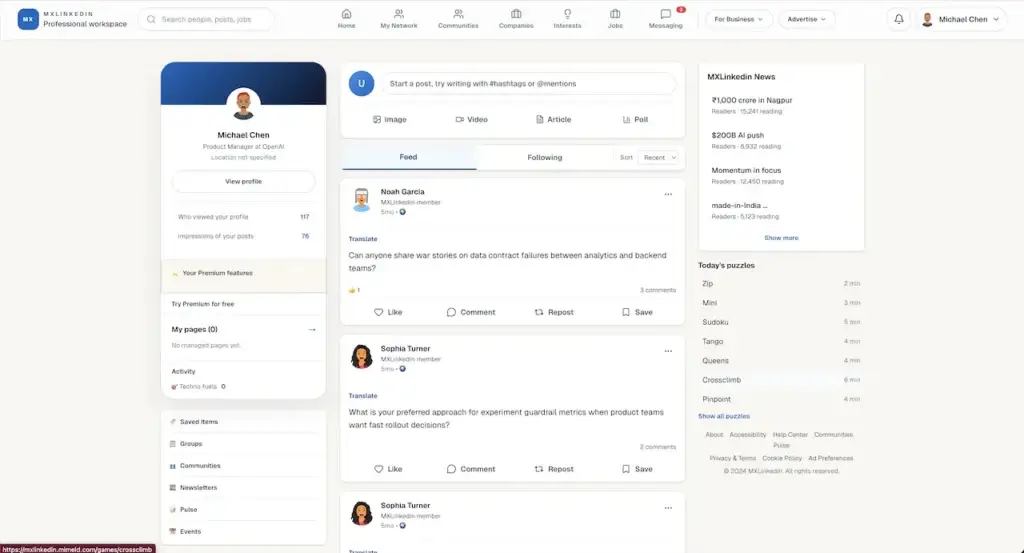
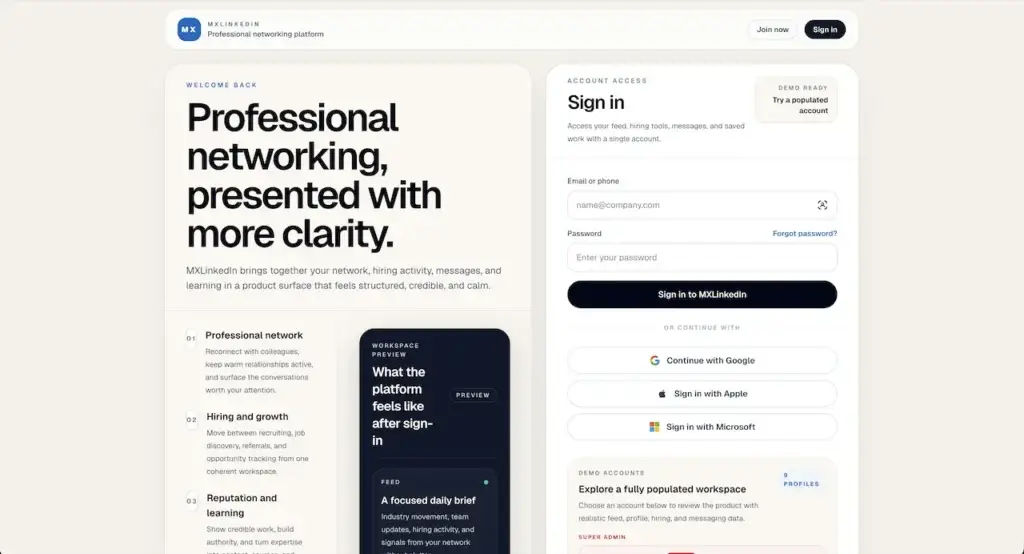
Want a guided walkthrough of a specific flow? Book a call and we will open the surface you care about with live data in it.
Client Reviews
Platform Builds We Have Shipped
We have not yet deployed this professional network platform for a named client, so nothing below is presented as a LinkedIn Clone reference. These are approved quotes from operators who launched other Miracuves platforms built on the same foundations: a shared identity model, role-scoped consoles, tiered entitlements and an operator surface for governance.
Reference Deployment
LinkedIn Clone Reference Deployment: A Modelled Sector Network
We have not yet deployed this platform for a named client, so the scenario below is authored rather than reported. It shows how the LinkedIn Clone would be configured for a sector where a professional profile has to carry verified credentials, and every figure in it is a property of the shipped platform rather than a result a customer has claimed. Real, named engagements with their own reported figures are published in the portfolio.
Regulated Sector
Professional Network and Talent Pool
How this platform is configured for a sector where a professional profile has to carry verified credentials, and where hiring, learning and outreach all need to happen inside one system.
- Credentials that members assert but nobody verifies, so the profile carries no weight with employers
- Recruiters working the network from a spreadsheet because the hiring pipeline lives somewhere else
- Training completed off-platform, so it never becomes a signal a hiring manager can filter on
- One profile that carries verified skills, endorsements and completed credentials together
- A hiring pipeline that stays inside the platform from posting to interview
- Tiers that let members, recruiters and sales teams pay for different things
- Profile sections for experience, education, certifications, projects and publications
- Skill endorsements and recommendations tied to the identity that earned them
- Courses, learning paths and certificates that write back to the profile
- Job posting through application, interview and assessment on one pipeline
- Reports, moderation actions and appeals with an audit trail behind them
This is a modelled reference deployment, not a client engagement. Every capability listed above ships in the base build and is demonstrable in the live demo. The figures are properties of the platform, not results reported by a customer.
The Basics
What Is a LinkedIn Clone App?
A LinkedIn Clone is a ready-made professional network: members build a credible profile, connect and follow, publish and engage, and message each other, while recruiters hire, sales teams prospect and operators govern, all against the same identity. The backend is Next.js with Prisma over PostgreSQL, and the same API serves the web app, an installable progressive web app and an Android build.

Network
Profiles with every professional section, connections and follows, recommendations, profile views, mentions and a feed with posts, comments, reactions, polls and collections.
Conversion
Jobs through to interviews and assessments, sales leads with lists and team sharing, InMail credits for outreach, and learning that writes credentials back to the profile.
Control
Five entitlement tiers checked in middleware, reports and moderation actions with appeals, IP bans, feature flags and GDPR export and deletion pathways.
Built for Web, Android and API
What Is a LinkedIn Clone Script?
The hard part of a professional network is not the profile page. It is everything that has to agree afterwards: an entitlement model that decides what each tier can see and send, a hiring pipeline that keeps its state through seven transitions, outreach metered against a credit wallet, CRM pushes that log their failures, and a moderation system where a report, an action and an appeal are separate records with an audit trail. That is the part this platform has already solved.
-
Web application for members, recruiters, sales and companies
-
Installable progressive web app with offline routes
-
Android build against the same REST API
-
Operator console with role-scoped admin access
-
Domain-grouped API with webhooks and scheduled jobs

Everything on this page is in the base build unless it is labelled configuration-required or integration-required. Stripe keys, CRM credentials, OAuth apps, mail and push providers are operator-supplied because they are your accounts, not ours.
Features
LinkedIn Clone Features: Profile, Network, Hiring, Sales and Learning
Everything below is in the base build and demonstrable in the live demo. Modules you do not need are switched off through the feature-flag console without touching code.
Profile Depth
Experience, education, skills, certifications, projects, publications, patents, volunteering and languages, with a completeness indicator driving members toward a usable profile.
- Profile sections for experience, education and skills
- Certifications, projects, publications, patents and volunteering
- Languages, honours and a completeness indicator
- Profile views, badges and visibility settings
Connection Graph
Mutual connections with explicit states alongside directional follows, plus recommendations, profile views and mentions as first-class records.
- Connection requests with pending and accepted states
- Directional follows for people and companies
- Suggested people and alumni exploration
- Recommendations given and received, tied to identity
Feed and Content
Posts with media, comments with threaded replies, reactions, polls, hashtags, saved posts and curated collections other members can follow.
- Posts with media, mentions and hashtags
- Comments with threaded replies and reactions
- Polls with options and vote records
- Saved posts, collections and collection followers
Messaging
Conversations with participants, read state, reactions and attachments, message templates for repeat outreach, and call pathways behind tier and flag checks.
- Conversations with participant management
- Read state, reactions and attachments per message
- Message templates for repeat outreach
- Audio and video call pathways, tier and flag aware
InMail Credits
Outreach beyond the network metered against a credit wallet with a send log, so the limit is an operator setting rather than a hard-coded rule.
- InMail credits held as a metered wallet
- Outreach beyond the network gated by credit balance
- InMail logs recording every send
- Operator-set credit allowances per tier
Jobs and Applications
Job posting with a status lifecycle, search and filters, saved jobs, alerts, and applications that move through seven explicit states.
- Job posting with a full status lifecycle
- Search and filtering across roles
- Saved jobs and job alerts per member
- Applications moving through seven states
Interviews and Assessments
Interview records and assessment tests with attempt tracking, saved candidates and recruiter preferences, attached to the same profile.
- Interview scheduling attached to the application
- Assessment tests with attempt records
- Saved candidates and recruiter preferences
- Hiring analytics on jobs and applications
Company Pages
Company profiles with admins and followers, company posts with engagement, culture and testimonial modules, employee highlights and reviews.
- Company pages with admins and followers
- Company posts with their own reactions and comments
- Culture modules, testimonials and employee highlights
- Company reviews and employer-brand surfaces
Sales Navigator
Leads with activity history, lists and tags, saved searches, notes, sales teams with shared leads, and CRM integration with sync logs.
- Leads with full activity history
- Lead lists, items and segmentation tags
- Saved sales searches and notes
- Sales teams with members and shared leads
Learning and Credentials
Courses, lessons, enrollments, progress, learning paths and certificates, plus discussions, assignments and peer review.
- Courses and lessons with progress tracking
- Learning paths bundling courses together
- Certificates written back to the profile
- Discussions, assignments and peer review
Moderation and Appeals
Reports with reasons and statuses, moderation actions written to a log, appeals as reviewable records, and IP bans with expiry.
- Reports with reason and status lifecycle
- Moderation actions written to a log
- Appeals as their own reviewable records
- IP bans with reason and expiry
Analytics and Trends
Profile, post and job analytics alongside trending topics, hashtag metrics, influencer activity and alerting models.
- Profile, post and job analytics models
- Trending topics and hashtag metrics
- Influencer activity and sentiment models
- Alerting on trend and opportunity signals
Note for buyers: every module above can be enabled or disabled per deployment from the feature-flag console. Nothing in this list requires a code change to turn off.
Monetization
LinkedIn Clone Revenue Models: Tiers, Credits, Recruiter and Company
Six revenue lines run against one entitlement model, and they combine. The same member can sit on a paid tier, spend InMail credits, and belong to a company paying for an employer-brand presence.
Member Subscriptions
Premium as the individual upgrade: expanded search, profile-view visibility, saved searches and analytics, billed on a subscription with a full lifecycle.
Recruiter Seats
Recruiter Lite as a hiring-side plan covering job posting, candidate saving, pipeline management and interview workflows.
Sales Seats
Sales Navigator as a revenue-team plan covering leads, lists, saved searches, team sharing and CRM synchronization.
Business and Company
Business tier and company pages as the employer-brand line, covering audience, posts, culture modules and review surfaces.
Communication Credits
InMail credits sold and metered per send, which prices outreach directly rather than bundling it invisibly into a tier.
White-Label Deployment
The platform itself can be resold. Associations, sector bodies and enterprises run a branded network per community or per territory.
Want a tier model that fits your market? the five tiers, their prices and what each unlocks are all operator-set. Book a call and we will map the boundaries against the audience you actually have.
Control Center
LinkedIn Clone Admin Console: Trust, Moderation, Tiers and Flags
The operator console is where a professional network stays credible. Every module sits behind an admin role check, so a trust analyst can action reports without reaching billing, and a billing operator can intervene on a subscription without touching moderation.
Operator Control
Member Directory
Every account with its tier, status and history, with warn, suspend, ban and unban interventions available and each one written to a log.
Report Queue
Reports with a reason and a status lifecycle, routed to moderators, with the content and the reporter both in view before an action is taken.
Moderation Actions
Actions recorded against the moderator who took them, so a decision can be reviewed later rather than reconstructed from memory.
Appeals
Appeals as their own records with their own status, which is what stops a ban from being final by accident.
IP Bans
Network-level blocks with a reason and an expiry, for abuse that survives account deletion.
Feature Flags
A control plane for staged rollout, so a module can be dark-launched to a tier or a cohort before it reaches the whole network.
Subscription Controls
Plan state, payment failures and manual intervention, with the entitlement effect visible immediately rather than after a sync.
Company Oversight
Company pages, admins and claims, so employer-brand surfaces do not become an unmoderated channel.
Data Rights
GDPR export and account deletion request handling, with the deletion pathway separated from the request intake.
- Members, tiers and account status at a glance
- Open reports and appeals surfaced as action queues
- Subscription state and payment failures visible
- Feature-flag state across the deployment
Analytics and Reports
Profile, post and job analytics with trend and influencer models behind them, exportable for stakeholder reporting.
- Per-route SEO metadata and robots directives
- Analytics event capture for engagement reporting
- Trend and hashtag metrics for editorial decisions
- Health and liveness endpoints for uptime checks
Need deeper governance? credential verification workflows, sector-specific badge schemes, four-eyes approval on bans or an escalation tier above moderation can all be added as custom modules. Ask and we will scope it.
Pricing
How Much Does It Cost to Build a LinkedIn Clone App in 2026?
The white-label platform is $4,599 as a one-time purchase, deployed in six working days. That covers the source code, the web application, the progressive web app, the Android build and the operator console, installed on your infrastructure under your branding. Building the same surface from scratch is a multi-year programme with a senior team, because the expensive part is not the profile page but the entitlement model, the hiring pipeline and the governance layer underneath it. What the fixed price does not include is anything that is yours to own: Stripe credentials, CRM and ATS keys, OAuth apps for contact import, a mail and push provider, your member data and your tier pricing. Custom modules and deeper changes are quoted separately after scoping, typically two to eight weeks.
Not sure which option
is right for you?
Talk to us - we'll understand your goals, timeline, and budget, and point you to exactly what you need. No upselling, just honest advice.
Deliverables
What's Included: LinkedIn Clone Source Code, Apps and Deployment
The handover is the whole system, not a licence to run somebody else’s platform.
Full Source Code
The complete Next.js application and Prisma schema transferred to your repository, unobfuscated, with no licence callback.
- Full Next.js and React source, unobfuscated
- TypeScript throughout with the Prisma schema
- Reversible migrations for the whole data model
- No licence callback and no encrypted files
Web Application
Member, company, recruiter and sales surfaces on one build, with role-aware navigation and protected routes throughout.
- Web application for members and companies
- Recruiter and sales surfaces on the same build
- Role-aware navigation and protected routes
- Responsive across desktop, tablet and mobile
Progressive Web App
Installable with a service worker, offline routes and a deferred action queue, so mobile members are covered without a store submission.
- Installable progressive web app
- Service worker with offline route support
- Push-ready architecture and manifest
- Offline action queue for deferred replay
Android Build
A branded Android application against the same REST API, carrying profile, feed, network, messaging, notifications and jobs.
- Branded Android build against the same API
- Profile, feed, network and messaging on mobile
- Notifications and jobs in the app
- Signed and ready for your Play Console
Operator Console
Moderation, appeals, member interventions, feature flags and subscription controls, with role-scoped staff accounts from day one.
- Operator console with role-scoped staff access
- Moderation, appeals and trust controls
- Feature-flag control plane
- Subscription visibility and intervention
REST API
Domain-grouped route families with session and bearer auth, outbound webhook subscriptions and a cron family for scheduled work.
- Domain-grouped REST API across every module
- Session-first auth with bearer fallback
- Webhook subscriptions with delivery tracking
- Cron route family for scheduled processing
White-Label Branding
Logo, colours, favicon, email templates and custom domain, applied across every surface rather than a theme layer.
- App name, logo, colour theme and favicon
- Branded transactional email templates
- Custom domain configuration
- Full white-label across every surface
Deployment and Handover
Installed with the database migrated and the scheduler wired, then an admin walkthrough and the configuration checklist.
- Deployment on your infrastructure or Vercel
- Database provisioning and migration run
- 60 days of launch guidance
- 6 months of priority bug fixes, 12 months of updates
Want to see exactly what you get? book a walkthrough and we will open the member, recruiter, sales and operator surfaces with live data, then show you the repository structure and the Prisma schema you would be taking ownership of.
Explore Every Angle of the LinkedIn Clone
Four focused guides covering features, cost, how to choose a builder, and how the business model makes money, each going deeper than this overview can.
Features
Every feature by role and by tier: what a free member sees, what Premium, Business, Sales Navigator and Recruiter Lite each unlock, and exactly where the entitlement boundary sits.
See the full breakdown→Development Cost
Our fixed $4,599 against freelancer, agency and build-from-scratch ranges, plus the 6-day deployment window and the integration and content work that runs alongside it.
See exact pricing→Development Company
Agency vs. freelancer vs. Miracuves compared, plus source-code ownership, entitlement-model depth and the checks worth running before you hire anyone.
Compare options→Business Model
Six revenue lines on one entitlement model: member subscriptions, recruiter and sales seats, company presence, InMail credits and white-label deployment.
See the playbook→Built For
Who Is Our LinkedIn Clone App Built For?
The platform suits operators who already have a community, a candidate pool or a sector, and need the network and the workflows rather than the audience.
Vertical Network Founders
Industry Associations
Recruitment Groups
Training and Credentialing Bodies
Enterprise Talent Platforms
Regional Network Operators
If your business depends on professional identity, hiring or member subscriptions, this platform is the substrate. Book a call and we will tell you honestly whether it fits your model or whether one of our adjacent solutions is the better start.
Where It Fits
LinkedIn Clone Use Cases: Vertical Networks, Hiring and Alumni
The platform is the same in every case below. What changes is which modules are switched on and which part of the model leads.
Sector Professional Network
A network for one field, where the profile carries the credentials that field actually recognizes. Members join for the directory and the peer visibility, and the operator monetizes through tiers and a job board that is relevant precisely because the audience is narrow.
Recruitment and Talent Platform
A candidate network the agency owns rather than rents. Recruiters work the pipeline from posting through application, interview and assessment inside the platform, and the candidate profile persists between roles instead of being re-keyed per vacancy.
Association and Membership Body
A membership body already has the members and the authority. What it usually lacks is a directory worth logging into, a credential that is visible outside a PDF, and a jobs surface. All three ship here, under the association brand.
Alumni and Institution Network
Alumni networks fail when they are a mailing list. Profiles, a feed, mentoring connections and a jobs board give graduates a reason to return, and the institution keeps the relationship rather than losing it to a general network.
Enterprise Internal Network
An enterprise running the same model internally: an employee directory with real skill data, internal mobility through the jobs module, mentoring through connections, and learning that writes credentials back to the profile.
Learning-Led Community
A community built around courses rather than employment, where learning paths and certificates are the spine and the network forms around cohorts. The hiring module can stay switched off entirely.
Not sure which of these you are? most operators are a blend of two. Book a call and we will map your audience, your credential model and your revenue expectation against what the platform already does.
Why Now
Why Launch a Professional Network in 2026?
The case is rarely that the world needs another general professional network. It is that a specific audience is badly served by one, and somebody already has that audience.
You Own the Graph
The connection data, the profiles and the messages sit in your database. That is the asset, and on a general network you are renting access to your own community.
A Narrow Audience Converts
A sector network with ten thousand relevant members is worth more to a recruiter than a general one with millions, because relevance is what the buyer is paying for.
Credentials Nobody Else Verifies
If your organization is already the body that certifies people, putting that credential on a searchable profile is a moat a general network cannot copy.
Hiring Is the Revenue
Professional networks monetize through hiring and outreach far more than advertising. Both are built here rather than bolted on later.
Governance as a Selling Point
Enterprises and regulated sectors ask about moderation, appeals, audit and data rights during procurement. Having answers shortens the sale.
One Substrate, Not Five
Network, hiring, sales, learning and governance in one codebase means one data model and one security review rather than five of each.
Why Launch
The numbers below are platform facts, not market projections: they describe what ships in the build rather than what the sector is forecast to do. Market sizing varies by source and we would rather quote our own schema than someone else forecast.
Tech Stack
LinkedIn Clone Tech Stack: Next.js, Prisma, PostgreSQL and Stripe
A modern, hireable stack. Nothing here is exotic, which is deliberate: the developers who maintain this after handover should already know it.
Application and Rendering
Next.js 16 · React 19 · TypeScript
- App Router with route-level module partitioning
- Server and client component composition
- Role-aware navigation and protected route patterns
- Installable PWA with a service worker and offline routes
Data and Domain Model
Prisma ORM · PostgreSQL
- User as the relational hub across every module
- Enum-driven lifecycle states for hiring, billing and moderation
- Reversible migrations with the schema in the repository
- Selected raw SQL for compliance and operational tables
Identity and Access
NextAuth v5 · JWT · RBAC
- Session-first web auth with a bearer fallback for API clients
- Credentials and OAuth provider pathways
- Admin RBAC helpers alongside an isAdmin authority check
- Premium middleware enforcing tier entitlements per feature
Communication and Realtime
Socket.io · Web Push · SendGrid
- Socket.io for conversations and event-style updates
- In-app notifications with channel preferences
- Web push subscriptions for browser delivery
- SendGrid or Nodemailer for transactional email
Billing and Integrations
Stripe · Salesforce · HubSpot
- Stripe subscriptions with webhook-driven state synchronization
- Inbound CRM webhooks from Salesforce and HubSpot
- ATS and calendar connector modules
- Outbound webhook subscriptions with delivery tracking
Storage and Operations
S3-compatible · Sentry · Cron
- Local uploads or presigned S3-compatible object storage
- Magic-byte validation and dangerous-pattern scanning on upload
- Sentry instrumentation with health and liveness endpoints
- Cron route family for digests, trend sync and cleanup
Note for tech buyers: the LinkedIn Clone is structured so your own team can take it over. Standard Next.js conventions, a documented Prisma schema, reversible migrations and a service layer for anything cross-module.
How It Works
How the LinkedIn Clone Works: Profile, Network, Hire and Govern
One member, followed end to end, from an empty profile through to a hire and the governance behind it.
How It Works

Join and Build a Profile
A member arrives and the platform pushes toward a profile worth having.
- Credentials or an OAuth provider for sign-in
- Profile sections for experience, education and skills
- Certifications, projects, publications and languages
- A completeness indicator driving the profile toward usable

Connect and Follow
The graph forms through two different relationships, deliberately.
- Connection requests with pending and accepted states
- Directional follows for people and company pages
- Suggested people and alumni exploration surfaces
- Recommendations and endorsements attached to identity

Publish and Engage
Content is what brings a member back between job searches.
- Posts with media, mentions and hashtags
- Comments with threaded replies and reactions
- Polls, saved posts and curated collections
- Scheduled publishing for operators and creators

Discover and Apply
The network converts into an opportunity.
- Job search with filters, saved jobs and alerts
- Application submitted against the existing profile
- Status moving through seven explicit states
- Recruiter reviews, shortlists and saves the candidate

Interview and Assess
The hiring workflow stays inside the platform.
- Interviews scheduled against the application record
- Assessment tests issued with attempt tracking
- Outreach through InMail metered against a credit wallet
- Hiring analytics on the job and the pipeline

Moderate and Account
Trust runs in parallel with everything above.
- Reports raised with a reason and a status
- Moderation actions written to a log against the moderator
- Appeals reviewed as separate records
- GDPR export and deletion pathways for data rights
Visual Flow Diagram
Sign Up → Build Profile → Connect → Engage → Apply → Interview → Hired → Govern
Architecture
LinkedIn Clone Platform Architecture and Backend Flow
App Router Backend
Route handlers as domain entry points under app/api, grouped by product domain, with shared services and helpers in a lib layer rather than duplicated per route.
Layered Authorization
Four gates in order: authentication, role, entitlement tier, then optional ownership through the secure route wrapper. Sensitive endpoints apply all four.
User-Centric Schema
User is the relational hub, with each module holding its own child tables and pivots. That is what makes account-level export, deletion and entitlement checks tractable.
Enum State Machines
Applications, reports, appeals, subscriptions and surveys each carry an explicit enum lifecycle, so the API and UI can enforce valid transitions rather than infer them.
Async and Scheduled
A cron route family handles digests, trend sync, scheduled publishing and cleanup, with a queue utility for process-local async work and a client-side offline replay queue.
Horizontal Scale
A stateless application tier behind a load balancer, PostgreSQL with indexed relational access, object storage for media, and a distributed queue as the documented next step.
Build to Scale
Built to Scale: Graph Depth, Feed Load and Search
The scaling questions on a professional network are specific: a connection graph that grows superlinearly, a feed that must rank against it, and search that gets asked harder questions as the member count rises. Each has an answer in the build, and an honest limit.
Graph and Profile Reads
Connections, follows, profile views and recommendations are indexed join tables rather than derived at read time, and unique constraints stop duplicate edges forming. Profile reads pull from normalized sections instead of one wide row, which keeps a profile page cheap even as members fill in every section available to them.
Feed and Engagement
Posts, comments, reactions and saves are separate models with their own indexes, so the feed query does not widen as engagement grows. Analytics models for posts and profiles are written alongside rather than computed on read, which is what keeps a dashboard from turning into a table scan.
Search Beyond the Database
Search and advanced filtering run against PostgreSQL with a service-layer abstraction in front of them. That is enough for a focused network, and the abstraction is deliberate: an external index can be introduced behind the same interface when query volume justifies it, without rewriting the callers.
Async and Scheduled Work
Notification digests, trend synchronization, scheduled publishing and cleanup run on a cron route family rather than inside a request. A queue utility handles process-local async work, and the documented next step at scale is replacing it with distributed queue infrastructure rather than pretending it already is one.
Indexed Graph Tables
Connections, follows, views and recommendations are indexed joins with unique constraints, so the graph does not degrade into duplicate edges as it grows.
Normalized Profiles
Profile sections are separate models rather than one wide row, keeping a fully completed profile as cheap to read as an empty one.
Precomputed Analytics
Post, profile and job analytics are written alongside the events rather than computed on read, which is what keeps dashboards responsive.
Search Abstraction
Database search sits behind a service interface, so an external index can be introduced later without changing the callers.
Scheduled Off-Request
Digests, trend sync, scheduled posts and cleanup all run on cron routes rather than inside a member request.
Named Ceilings
The in-process queue and database search are documented as the first two components to replace at scale, rather than presented as unlimited.
Where the Honest Limit Sits
The in-process queue and database-backed search are the two components that will need replacing first at high scale, and both are called out in the technical dossier rather than buried. Everything else, the schema, the API layering and the stateless app tier, scales horizontally without redesign.
Note for founders and CTOs: you can start on a single modest instance and still be on a credible path to scale. The two components with a ceiling are named, and neither requires touching the data model to replace.
Security
LinkedIn Clone Security: OWASP-Mapped, GDPR-Ready and VAPT-Ready
Security on a professional network is a different problem from security on a marketplace. The sensitive asset is not a card number, it is the graph: who knows whom, who is quietly looking for a role, who a recruiter has viewed, and what a member has written in a private conversation. The platform answers that with layered authorization rather than a perimeter. Four gates run in order on sensitive routes, authentication, then role, then entitlement tier, then ownership, so a member cannot read another member’s messages by changing an id, and a paid tier cannot reach an admin surface by guessing a path. Uploads are checked by magic byte rather than by extension, webhooks are signature-verified before they are trusted, and moderation actions, appeals and IP bans are written records rather than support-inbox decisions.
Rate limiting is a framework, not yet a blanket
Security headers are yours after handover
Two-factor is supported, not mandatory
Retention needs a scheduler
The in-process queue is not durable
Dependency audits are a standing task
Layered Authorization
Authentication, then role, then entitlement tier, then ownership. Applying all four is what stops an id change from becoming a data leak on a graph-heavy product.
GDPR-Ready
An authenticated data export route, an account deletion request flow, and compliance utilities for the data lifecycle, with the request intake separated from the deletion execution.
Upload Safety
Size limits, a MIME allowlist, magic-byte validation, dangerous-pattern scanning, sanitized filenames and constrained S3 presign, so an extension rename is not an attack path.
Webhook Integrity
Stripe, Salesforce and HubSpot callbacks are signature-verified before any state changes, and outbound subscriptions track their own deliveries.
Audit Trail
Moderation actions, appeals, IP bans and admin interventions are records with an actor and a timestamp, which is what makes a decision reviewable later.
Secrets and Headers
Production environment validation for auth secrets, JWT verification with algorithm restrictions, security headers at the proxy layer, and API keys with expiry and revocation.
The honest position on certification: the controls below are built, and the platform is ready for a penetration test and for the evidence-gathering that ISO 27001 or SOC 2 require. Neither certificate is held, and neither is claimed. The platform’s own security review is equally direct that the large API surface would benefit from applying the secure route wrapper and rate limiting uniformly rather than selectively, and that is named below rather than hidden.
Advance Add-Ons
LinkedIn Clone Add-Ons: Verification, Search, Video and Enterprise
The base build covers the network. These are the extensions operators ask for once the member count justifies them, quoted after scoping rather than bundled.
Credential Verification
A workflow where a licensing body, registrar or employer confirms a claim, turning an asserted credential into a verified badge that recruiters can filter on.
External Search Index
Elasticsearch or a managed equivalent behind the existing search service, for member and job search at a volume where PostgreSQL filtering stops being comfortable.
Video and Live Sessions
Group video, webinars and live sessions for community programming, layered over the existing call pathways and event models.
AI Matching and Ranking
Candidate-to-role and member-to-member matching, feed ranking and semantic search, built on the engagement and profile signals the platform already records.
Enterprise SSO
SAML or OIDC single sign-on with directory sync, which is normally the first procurement requirement for an internal or enterprise-facing deployment.
Events and Ticketing
Professional events with registration, attendance and ticketing, tied to the same profile and used as a membership benefit.
Advanced Analytics
Cohort retention, graph density and hiring funnel analysis on a read replica, beyond the standard profile, post and job analytics.
iOS Build
The mobile client compiled, signed and submitted for the App Store, with the review cycle and store assets handled alongside.
Building in Professional Networks and Hiring? We Have the Whole Market Covered.
The same foundations under this platform carry several adjacent products. If your model is closer to one of these, start there instead.

Indeed Clone
Job board and hiring marketplace with employer postings, candidate applications and search-led discovery.

Glassdoor Clone
Employer reviews, salary transparency and company ratings, built around anonymous member contributions.

Upwork Clone
Freelance marketplace with proposals, contracts, milestones and escrow between clients and professionals.

Facebook Clone
General social network with profiles, friends, groups, pages and a ranked feed for a non-professional audience.
Marketability
Marketability, Revenue Potential and Business Prospects
What the platform is worth to an operator depends almost entirely on whether they already have the audience. The scenarios below are illustrative arithmetic on operator-set inputs, not a forecast and not a promise.
Subscriptions Compound
Five tiers means five prices rather than one. A member, a recruiter and a sales team are different buyers on the same platform, and each has a different willingness to pay.
Hiring Is the Anchor
Professional networks earn far more from hiring and outreach than from advertising, and both are built here rather than deferred to a later phase.
Credits Price Outreach Directly
InMail credits turn messaging into a metered line rather than an invisible tier benefit, which is a lever you can move without repricing a plan.
The Asset Is the Graph
Profiles, connections and credentials are worth more than the software. The platform is what lets you own them rather than rent access to them.
- Member subscriptions on the Premium tier
- Recruiter seats for hiring-side access
- Sales Navigator seats for revenue teams
- Business tier and company page presence
- InMail credits metered and sold per send
- White-label deployment per community or territory
- A connection graph and member database you own outright
- Credentials and endorsements that only exist on your platform
- A hiring pipeline that keeps recruiters inside the product
- Tier boundaries you set rather than ones set for you
- Source code that can be extended, licensed or resold
- Governance evidence that shortens enterprise procurement
Example Revenue Scenarios
On these numbers: each scenario is arithmetic on inputs an operator chooses, shown to make the levers concrete. They are not projections, and Miracuves does not guarantee any commercial outcome. The six days is our deployment window for the base platform, not your route to market.
Association with an existing membership
Entitlement tiers to price against
A body with an existing member base turns its directory into a network, and prices a paid tier above the free listing it already offers.
The tier boundaries, the prices and what each unlocks are all operator-set. The platform cost is one-time; what recurs is hosting, Stripe fees and the team running the community.
Sector talent platform
Application states from draft to hired
A recruitment group builds a candidate network it owns, and runs its pipeline inside the platform rather than across a spreadsheet and an inbox.
Recruiter seats and job posting are the revenue lines here. Candidate acquisition remains the operator work and sets the real timeline.
Enterprise internal network
Working days to deployment
A large employer runs the same model internally for mobility, mentoring and internal hiring, with data control as the reason it is not a public network.
Deployment time is our build time on the base. SSO, directory sync and security review are the enterprise additions that sit outside it.
Why Miracuves
Miracuves vs Other LinkedIn Clone Developers
There are many ways to get a professional network: generic social scripts, freelancers, agencies, or owning the platform outright.
Why Founders Choose Miracuves
Fixed Price, Not a Range
The number is $4,599 rather than "starting at". Scope is written down before anything is built, and changes to it are quoted rather than absorbed silently.
Five Tiers, Already Built
Most scripts ship one paid plan bolted on late. The entitlement model here is a primitive on the user, checked in middleware, which is why adding a tier is configuration rather than surgery.
Hiring and Sales Included
A network without a hiring pipeline and prospecting tools is a directory. Both modules are in the base build rather than a phase two.
Source Code on Handover
The full application and Prisma schema transfer to your repository. No obfuscated files, no licence server, no dependency on us to keep running.
A Hireable Stack
Next.js, React, TypeScript, Prisma and PostgreSQL. Whoever maintains this after us can be recruited normally rather than found through us.
Honest Readiness Labels
Configuration-required and integration-required items are marked as such throughout this page, including the two components that need replacing at high scale.
Compare & Discover Why Operators Choose Us for Professional Networks
| Criteria | Miracuves LinkedIn Clone | Generic Clone Script | Custom Dev Agency |
|---|---|---|---|
| Time to Launch | 6 days (Production) | Unknown / DIY | 6-9+ months |
| Source-Code Ownership | ✔ Full | Often limited / encrypted | Usually yes |
| Feature Depth (LinkedIn-like) | High (network, hiring, sales, learning) | Basic (profiles and a feed only) | Depends on budget |
| Security & Compliance | Strong (built to the controls, GDPR-ready) | Minimal | Varies widely |
| Scalability & Performance | Cloud & CDN-optimized | Rarely considered | Depends on architecture |
| Monetization Options | Multiple (five tiers, credits, recruiter) | Usually subscriptions only | Custom (more time & cost) |
| Admin & Analytics | Full-fledged dashboard | Very basic or missing | Custom build (extra cost) |
| Cost vs Speed vs Quality | Balanced | Cheap but risky | High cost, slow |
| Ongoing Support & Updates | Available with clear plans | Usually none | Depends on contract |
Most comparisons on this page are about depth. A social script with profiles and a feed, and a platform with an entitlement model, a hiring pipeline and a moderation system, are not the same product, and the difference shows up at the first procurement conversation rather than in week one.
Industries
Industries We Serve
The LinkedIn Clone suits any organization whose members have a professional identity worth maintaining. Industry associations use the directory and the credential model. Recruitment groups use the candidate network and the hiring pipeline. Training bodies use courses and certificates that write back to a profile. Universities and schools use alumni networks with mentoring and a jobs board. Healthcare, engineering and legal bodies use verification because a licence is the credential that matters. Enterprises run the same model internally for mobility and mentoring. Sector media and communities use the feed and events to hold an audience they already have.
- 🏢 Industry Associations
- 🎯 Recruitment & Talent
- 🎓 Alumni Networks
- ⚕️ Healthcare Professionals
- ⚖️ Legal & Compliance
- 🏗️ Engineering & Trades
- 📚 Training & Credentialing
- 💼 Enterprise Internal
- 🌍 Regional Networks
- 📰 Sector Communities
Miracuves’ LinkedIn Clone is built as an identity-first professional platform adaptable to any community where the profile carries weight, monetized by your own tier model and white-labelled entirely under your brand.
Version History
Release Log
| Version | Date | What's New |
|---|---|---|
| v4.0 | Aug 2026 | Next.js 16 and React 19 upgrade. Sales Navigator module and CRM sync logs added. Five-tier entitlement model. |
| v3.6 | 2025 | Learning paths, certificates and peer review. Certificates write back to the profile. |
| v3.4 | 2025 | Recruiter workflows: assessments, saved candidates and interview scheduling on the application record. |
| v3.0 | 2024 | Moderation, appeals and IP bans as first-class models with an audit trail behind admin actions. |
Blog & Resources
LinkedIn Clone App: Latest Insights and Guides
Guides on network economics, tier design, hiring workflows and the decisions that matter before you launch.
Why Niche Professional Networking Platforms Can Create More Value Than Broad Social Networks
Last Updated on September 27, 2026 by Ashish Khan For years, social-network growth has been…

Last Updated on September 27, 2026 by Ashish Khan A professional networking platform becomes significantly…

Last Updated on September 27, 2026 by Ashish Khan A professional networking platform may look…

Last Updated on September 27, 2026 by Ashish Khan A professional networking platform runs on…

Last Updated on September 27, 2026 by Ashish Khan A professional networking platform is easy…

FAQ
LinkedIn Clone FAQ: Pricing, Tiers, Hiring and Deployment
Everything you need to know about the Miracuves LinkedIn Clone App.
A ready-made professional network where members build a credible profile, connect and follow, publish and message, while recruiters hire, sales teams prospect and operators govern, all against the same identity. It ships with a web application, an installable progressive web app, an Android build and an operator console, on a Next.js and Prisma backend over PostgreSQL.
The white-label platform is $4,599 as a one-time purchase, deployed in six working days on your infrastructure with your branding. Custom modules and deeper changes are scoped and quoted separately, typically two to eight weeks depending on what you need.
Yes. The full Next.js application and the Prisma schema transfer to your repository on handover. Nothing is obfuscated, there is no licence callback, and you are not dependent on us to keep the platform running.
Free, Premium, Business, Sales Navigator and Recruiter Lite. They are entitlement states on the user checked by middleware, so renaming them, repricing them or changing what each unlocks is configuration rather than a rewrite. Adding a sixth is a small change.
Actually built. A job has a status lifecycle, an application moves through seven states from draft to accepted or withdrawn, and interviews and assessment tests are their own records attached to the application. Recruiters also get saved candidates and preferences.
Lead records with activity history, lead lists and segmentation tags, saved sales searches, notes, sales teams with shared leads, and CRM integration with sync logs so a failed push to Salesforce or HubSpot is visible rather than silent.
Outreach beyond a member’s network is metered against a credit wallet, with every send written to a log. The allowance per tier is an operator setting, which lets you price outreach directly instead of burying it inside a plan.
There is an Android build against the same REST API, and the web application is an installable progressive web app with a service worker and offline routes. iOS is quoted as an add-on because the App Store review cycle and developer account are separate work.
Members can add certifications, and skills can be endorsed by connections. A verification workflow where a licensing body or employer confirms a claim is an add-on rather than base, and it is the first thing we recommend for a regulated sector.
A report queue with reasons and statuses, moderation actions logged against the moderator who took them, appeals as separate reviewable records, IP bans with expiry, and a feature-flag console for staged rollout.
There is an authenticated data export route and an account deletion request flow, with compliance utilities behind them. Executing retention on a schedule is a runtime job you configure, and the retention periods themselves are a policy decision.
The controls are built: layered authorization, upload validation by magic byte, webhook signature verification, security headers and audit-capable moderation. It is ready for a penetration test and for ISO 27001 or SOC 2 evidence gathering. Neither certificate is held, and we do not claim either.
Anything that is yours: Stripe credentials, CRM and ATS keys, OAuth apps for contact import, a mail and push provider, your member data, your tier pricing and App Store review. Six days is our deployment window for the base platform, not your route to market.
Let's turn your idea into
a live platform.
Get a free consultation, a clear timeline, and honest answers. We'd rather earn your trust than rush a sale.
Go deeper on this platform
The detail pages, the guides behind it, and where it fits.
Social media app development
See the service→ ProductDevelopment Company
Agency vs. freelancer vs. Miracuves compared, plus source-code ownership, entitlement-model depth and the checks worth running before you hire anyone.
Compare options→Business model
How this kind of platform is structured and where its revenue comes from.
Read the guide→ ProductFeatures
Every feature by role and by tier: what a free member sees, what Premium, Business, Sales Navigator and Recruiter Lite each unlock, and exactly where the entitlement boundary sits.
See the full breakdown→ ProductBusiness Model
Six revenue lines on one entitlement model: member subscriptions, recruiter and sales seats, company presence, InMail credits and white-label deployment.
See the playbook→Media and entertainment
See the industry→ GuideHow it works
The user journey, the core mechanics and what sits behind them.
Read the guide→ GuideDeveloper guide
Architecture, stack and build steps for this kind of app.
Read the guide→Development Cost
Our fixed $4,599 against freelancer, agency and build-from-scratch ranges, plus the 6-day deployment window and the integration and content work that runs alongside it.
See exact pricing→ GuideRevenue model
The income streams and fee structure, broken down.
Read the guide→ Talk to an expert →Miracuves is an independent software development company. We are not affiliated with, connected to, sponsored by, or endorsed by LinkedIn.
“LinkedIn Clone” is used descriptively. It is how the software industry refers to building a platform with functionality similar to LinkedIn, and how clients search for it.
The entire design and codebase is built by our own team. The product contains no code, design, graphics, or content originating from the LinkedIn website or applications.
LinkedIn and all other third-party names and marks are the property of their respective owners, referenced here solely to describe the category of software offered.
