Uber Delivery Clone App - White-Label Package Delivery App
Built by Miracuves, the ready-made, white-label Uber Delivery clone comes with source code you keep for Flutter sender and courier apps on Android and iOS, a customer website and an admin panel, rebranded as your parcel service and live within six working days.
Senders pick a package card, see distance, fee and tip on one form and choose who pays; couriers accept jobs, chat and navigate, and every hand-over closes with a delivery code, an electronic signature and a photo. Smart routing and lockers are quoted add-ons. A new package type is a setting, while a bespoke courier approval step is custom work, scoped in writing and usually ready in 2-8 weeks.
Launch in 6 Days with
- Source Code
- Sender App
- Courier App
- Customer Website
- Admin Panel
- Android + iOS
StackFlutter · PHP · Bootstrap · MySQL · Google Maps · Firebase
Live activity
- OTP confirmed at the doorOTP
- Documents parcel sent, 2.4 kmRequest
- Priority parcel marked on the mapPriority
- Out for delivery, 9 min awayTracking
- Signature and photo stored with the orderProof
- Fragile electronics note addedPackage
- Merchant invoice created for the weekInvoices
- Statement opened in the appStatements

- 4Package TypesPackage, Gifts, Electronics and Documents cards
- 3Hand-Over Proofsa delivery OTP, a signature and a photo
- 0%Revenue Share With Miracuvesno cut of any parcel fee or courier commission
- 100%Source Codeunencrypted web platform plus Flutter apps, handed into your repository
- 6Days to Launchand if the delay is ours, we keep going free
- $2,499Paid Once, Not Rentedsource code yours, no per-seat fee, no monthly rental
Live in six working days, or we keep working free until you launch. Every build carries 60 days guidance, 6 months bug fixes and 12 months updates.Verify every figure
Package Rules Up Front
Every package card carries a rule line, such as no food and no more than 5 kg, so a sender knows the limits before booking.
Invoices for Regular Shippers
Merchants get their own invoices and wallets, load parcels in bulk and print labels in batches, so a shop that ships daily is billed, not charged per order.
Cards Stay With Your Gateway
Razorpay arrived as a gateway in the release log and cash on delivery can be charged to sender or receiver; card details stay with your gateway, never stored as card numbers.
01Try it live
Try It Yourself
Uber Delivery Clone Demo - Try the Sender App, the Courier App, the Web Panels and the Admin Login
Get a feel for the Miracuves Uber Delivery Clone before you talk to anyone. Miracuves set up this demo so the first phone login sends a parcel as a customer, the second plays the courier, the web version loads in any browser and the owner's panel opens with our team on a call. Merchant accounts and their invoices sit outside the public logins, so we open them for you on a call.


Uber Delivery Clone App for Senders
The customer's handset. Choose Package, Gifts, Electronics or Documents, enter both parties, read the distance and delivery fee, settle the tip and the payer, and confirm the order.
- 1Choose a platform on the app portal
- 2Use the sender login listed here
- 3Look through Home, Request, Orders and the account Menu
+91 9876543210 | User_321

Uber Delivery Clone App for Couriers
The courier's handset. New jobs can be accepted or declined, directions are built into the app, a message thread links courier and customer, and a signature plus a photo wrap up the drop.
- 1Choose a platform on the app portal
- 2Use the delivery login listed here
- 3Look through Requests, Directions, Chat and Proof
+91 9876543211 | Driver_321
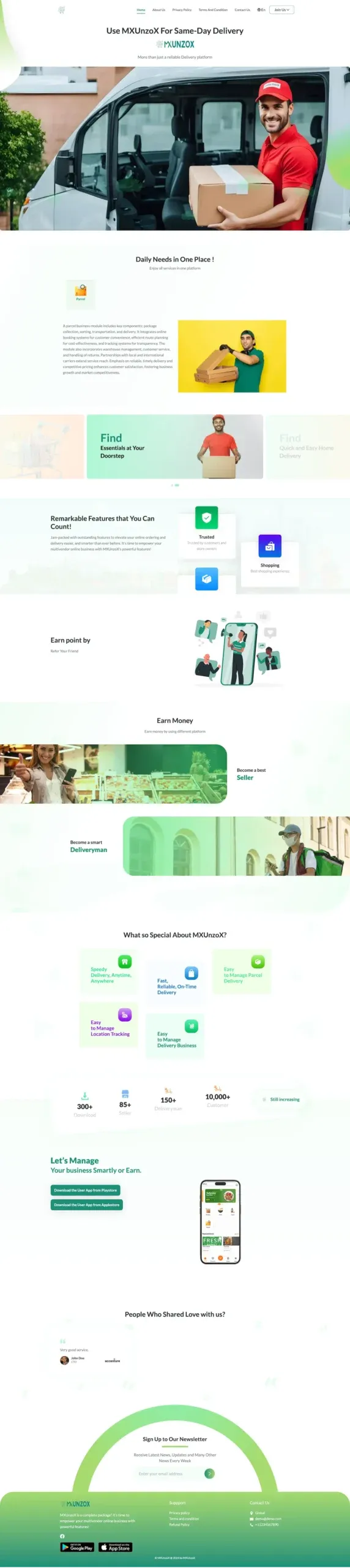
Web Storefront and Courier Desk
A website for customers who would sooner book on a larger screen, plus a web panel for delivery staff who work at a desk.
- 1Visit the demo address in a new browser tab
- 2Select either the customer or the delivery login
- 3Explore bookings, order lists and parcel pages
mxunzox.mimeld.com
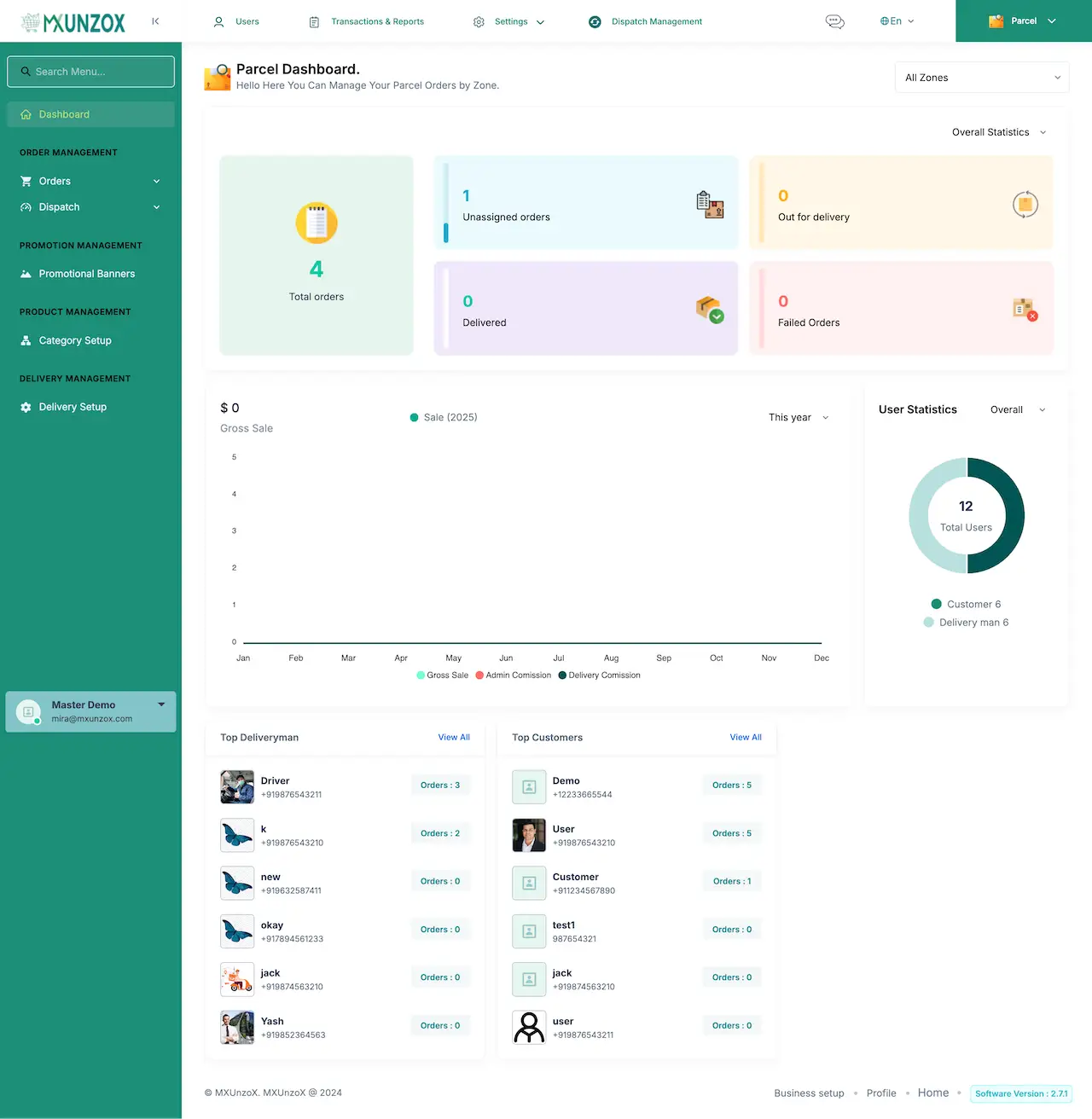
Uber Delivery Clone Back Office
The owner's workspace. A parcel dashboard with a zone filter, order lists, dispatch, delivery rules, categories, banners, user lists and money reports are all within reach.
- 1Open the admin login
- 2Request the credentials from our team
- 3Browse Dashboard, Orders, Dispatch and Reports
credentials given on a call
See It Run Live
Walkthrough of an App Like Uber Delivery: Sending a Parcel, the OTP at the Door & the Invoice Afterwards
Nothing explains a parcel flow like watching one run. On a short call we send a test package from the app, follow it to the door, close it with the verification code and then open the matching invoice, after which we line each screen up against your package types, vehicle classes and go-live date.
Book a guided demo.Every Screen
Courier Delivery App Flows - Sender App, Order Details & OTP, Account Menu, Admin Dashboard & Website
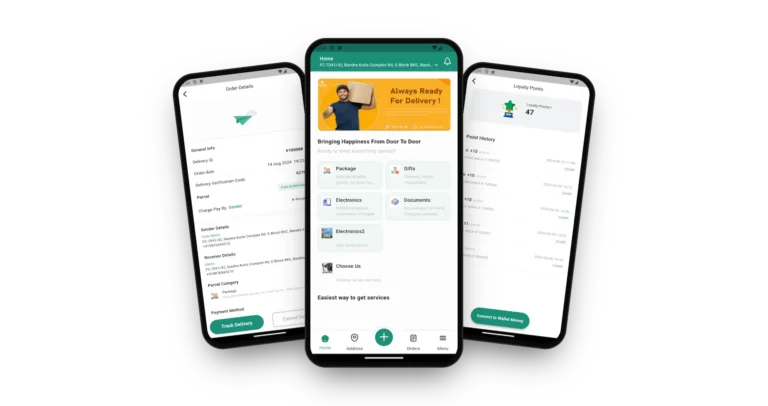
Every screen here comes from the Miracuves Uber Delivery clone demo: the admin parcel dashboard, the customer website, the account menu with its wallet and loyalty entries, and the sender app in the order a parcel moves, ending on the order page and its OTP.




A package's whole trip through the sender app, in order: home screen with package cards, request form showing fee and tip, pending state, tracker, and the order page where the OTP is shown.
02Proof
Client Voices
Uber Delivery Clone Client Reviews - Courier and Logistics Teams on Building with Miracuves
What clients say after building on Miracuves bases. Four of these eight describe courier, delivery or logistics platforms, and the other four come from different industries and are printed just as their authors wrote them.
“The team was running it on a dispatcher and a Google Sheet, and we needed a real platform quickly, because we were about to onboard a major retail client. Miracuves’s Delivery Genie base gave us the rider app, the dispatch console, and live tracking. We launched in 6 weeks and cleared 4x the previous order volume in the first month.”
“Floaters is a hyperlocal on-demand delivery service in Baltimore — same-day parcels, small-business drops, and a courier network. The team was running it on a dispatcher and a Google Sheet, and we needed a real platform — fast, because we were about to onboard a major retail client. Miracuves's Delivery Genie base gave us the rider app, the dispatch console, and live tracking. We added a multi-tenant layer for our B2B clients, our branded customer tracking page, and a custom COD/settlement module. We launched in 6 weeks. The retail client came on board, and we cleared 4x the previous order volume in the first month.”
“We were juggling spreadsheets, a third-party GPS provider, and a phone. We needed a single operations console. Miracuves’s MXLogistics base covered the trip lifecycle, the driver app, and the customer tracking page. We’ve cut operations admin time by about 40%.”
“Speedyven is a hyperlocal courier network — packages, food, and same-day essentials across a few metros. The dispatch and rider app were the parts where we needed to move fastest, because riders have low tolerance for clunky tools. Miracuves's Delivery Genie base gave us the rider app, the dispatch console, and live tracking. We added our custom surge-pricing engine, our multi-merchant order router, and a custom rider-incentives module. We launched in 7 weeks. Rider activation is high and the platform's been stable through weekend peaks.”
“Turo is the obvious reference, but the Caribbean specifics, from different insurance norms to different payment rails, meant we needed a real partner, not just a clone. Miracuves’s MXCar base covered the listing, the trip flow, and the host payouts. We launched in 6 working days and are live in three islands.”
“We were running it on phone calls and a paper calendar, and we were losing bookings to bigger OTAs. Miracuves’s GetmyBoat Clone base gave us the calendar, the booking flow, and the payment engine. Online bookings are up roughly 70% in the first six months, and the ops team finally has a live view of the fleet.”
“Every HMS I tried was built for general physicians, with no lesion mapping, no before/after tracking, and no procedure-based billing. Their MXHealth base gave us the patient app, doctor app, EMR and video consult out of the box. Front-desk time on scheduling and follow-ups is down ~70%, and we went fully digital in 9 months, where a fully custom job would have been 18.”
“Building a compliant telehealth stack from scratch in three markets would have been a year-plus effort. Miracuves’s MXHealth base covered the patient and doctor apps, video consult, e-prescription and the pharmacy integrations. We launched in our first market in 9 weeks and rolled out to two more in the following six months.”
Open to Verification
Uber Delivery Clone Case Study - What Is Public and What You Can Verify Yourself
Because no named client runs this parcel base in public, there is no story to retell. You can inspect the demo and the release log instead, and the cards below explain how.
There is no public client network on this parcel base for us to point at, and we would never invent one. The evidence we can offer is the working demo and the dated release log, and either can be checked by you.

- Send a test parcel from the sender app using the demo login
- Find the OTP on the order details page
- Sign in to the delivery app and view the same job from the courier end
- Read the release log in order, date by date
- Attach a client name to this page without that client's consent
- Borrow a quote or a figure that belongs to another product
- Present an add-on as though it were part of the base package
- Your logo, icons and colors go onto the apps and the web platform
- Package types, vehicle classes and fares are set up for your market
- Installation on your own hosting plus the complete source
- Base build time: 6 working days
A named client will be listed here once one agrees to be named and a case study has been written.Miracuves · Our position on case studies
03Inside the platform
The Basics
The Uber Delivery Clone App Explained for Senders, Couriers and Owners
An Uber Delivery clone is a ready-made parcel-sending platform for on-demand parcel delivery, and Miracuves shapes its version around package rules, a delivery OTP and invoiced business senders. Senders describe a package and the two addresses, a courier on a bike, car, van or truck takes the job, and the person who owns the service watches orders, fares and invoices from an admin panel.

Package Rules Before the Booking
Each category card tells the sender what may go in the parcel, so limits such as weight or fragility are seen before the order is made.
A Code at the Door
An order carries its own delivery verification code, and couriers can finish a job by adding a signature and a photograph.
Add-Ons Stay Add-Ons
Routing intelligence, AR guidance, package sensors and lockers are optional modules, quoted one at a time and kept out of the base price.
Android, iOS & Web
What Is an Uber Delivery Clone Script, Exactly?
Taking a booking is the easy half. The harder half is everything after it: deciding what a package may contain, giving the recipient a code that proves the right person received it and then billing the businesses that send every day. That groundwork is already in place and running.

- 01Package types with a short rule line each
- 02Fee, tip and payer shown on one request form
- 03Five-stage tracking and a delivery OTP
- 04Delivery app with jobs, chat and navigation
- 05Invoices, wallets and an admin panel with reports
The customer website and app, the delivery app and the admin panel are included, built in Flutter and a web stack, along with the complete source code.
Feature Tour
Uber Delivery Clone Features - Package Types, Delivery OTP, Vehicle Classes, Invoices & Admin Tools
Every parcel feature Miracuves names for this Uber Delivery clone is visible on a real screen, in the console or in the dated release notes; paid extras are listed separately as add-ons.
Package Types & Their Rules
A sender starts by saying what is in the parcel. Every type is a card with a short rule line under it, which means limits on contents and weight are read before an order exists.
- Package, Gifts, Electronics and Documents cards ship in the demo
- The Package card says no food and no more than 5 kg
- Electronics asks for bubble wrap and a comment on fragile items
- Documents excludes passports and bank cheques
- Category Setup in the admin panel is where types and rule lines are edited
- More types can be added without touching the apps
The Sending Form
A single screen carries the whole request: who sends, who receives, the distance and the price. Instructions and a tip can be added before the sender confirms.
- Sender and receiver details on the same form
- Distance and delivery fee visible before the order is sent
- An Add More Delivery Instruction row for the courier
- Tip options: Not now, $10, $15, $20, $40 or a custom amount
- Charge Pay By lets the sender or the receiver settle the bill
- A Save for later box and a Confirm Parcel Request button
- Order history keeps earlier orders and their details at hand
Vehicle Classes
Load size picks the vehicle. The platform lists bikes, motorcycles, cars, vans and trucks, with bicycles added in the product FAQ for light, short trips.
- Two-wheeler, car, van and truck jobs on one platform
- In the user flow the vehicle step comes after the package delivery details
- Commission can be set by vehicle type
- It can also depend on distance or on a promotion
- The settings live under Delivery Setup and Fare Management
Hand-Over by OTP, Signature & Photo
A parcel is not finished until the right person holds it. Each order has a verification code, and the courier can attach a signature and a photograph to it.
- A Delivery Verification Code on the order details page
- Delivery OTP appears in the delivery app's function list
- An electronic signature recorded at the customer end
- A photo uploaded with the same proof
- Both remain attached to the order record
- A notification tells the customer the delivery is complete
Tracking & Alerts
After a courier accepts, the sender can follow the job on a map. A message arrives at every stage, and the order screen admits it when nobody has taken the job yet.
- Five stages, from Order Placed through Order Confirmed and Preparing Item to Delivery on the way and Delivered
- A map under the tracker and a Track Delivery button on the order
- A note shown while no delivery person is assigned
- Alerts for confirmation, assignment and completion
- Delivery people can enable location from their phones
- Admins can follow an assigned delivery person live
Couriers & the Delivery App
Couriers sign up in the app and wait to be approved. Once approved they pick the jobs they want, follow directions and message the customer.
- Identity proof, vehicle registration papers and insurance at sign-up
- Papers uploaded in the app and checked by an admin
- Any request can be accepted or declined
- Assigned parcels shown in route order
- Navigation help and a chat thread with the customer in the app
- Customers and delivery people rate each other
Payments & Wallets
A parcel can be paid for in cash at the door or from a wallet balance. The payer is chosen for each order, and a card gateway handles card payments.
- Cash on Delivery appears on an order, with the payer under Charge Pay By
- Razorpay added as a payment gateway, per the release log
- A wallet for merchants and one for the admin
- Wallets switched on one merchant at a time
- A parcel can be created from a wallet balance
- Card details are left with your gateway
Invoices & Statements
Customers who send parcels all month settle on paper and not at each door. The release log names the invoice and statement pieces one at a time.
- Invoices generated merchant by merchant
- Picking an invoice under merchant payments flips its status to paid
- Invoice totals included in the Excel export
- An invoice list and invoice details in the mobile app
- Payment requests created and listed in the app
- Balance details and statements inside the app
- A smoother invoice system arrived in the 03 July 2024 release
Merchant Accounts & Bulk Upload
Shops that ship every day get an account of their own and stop retyping addresses for each parcel. The panel takes care of batches, labels and logs.
- A dashboard for every merchant
- Addresses imported in bulk from Google Maps
- A bulk modal for loading many parcels together
- Labels printed in batches from the admin and merchant panels
- A label print size you can change
- Parcel logs that keep a history of every job
Support, Ratings & SMS
Problems become tickets with a visible status, and each delivery can be rated from both ends. Codes and messages go out through an SMS gateway.
- A ticket moves from Pending to Processing and on to Resolved or Closed
- A customer can report a damaged or lost parcel
- Two-way ratings and feedback
- Twilio and Nexmo listed as SMS gateways in the release log
- A push notification fix logged in April 2023
Parcel Dashboard
The admin lands on a one-screen summary of the day, narrowed by a zone selector. It shows where parcels are, how many are stuck and what each side earned.
- Status tiles: total, unassigned, on the road, delivered, failed
- A zone selector with an All Zones choice
- A Gross Sale chart dividing the admin cut from the delivery cut
- Counts of customers and of delivery people
- Leaderboards for the best delivery person and the biggest customers
- Order Management and Dispatch Management in the top bar
Branding, Languages & Promotions
The admin panel also dresses the product with colors, languages, a ready website template and banners, and the account screen carries coupon, loyalty and referral entries.
- French, Spanish and Chinese added to English
- Country symbols can sit beside prices
- Front-end colors adjusted by the admin
- A ready website template
- Banners managed in Promotion Management
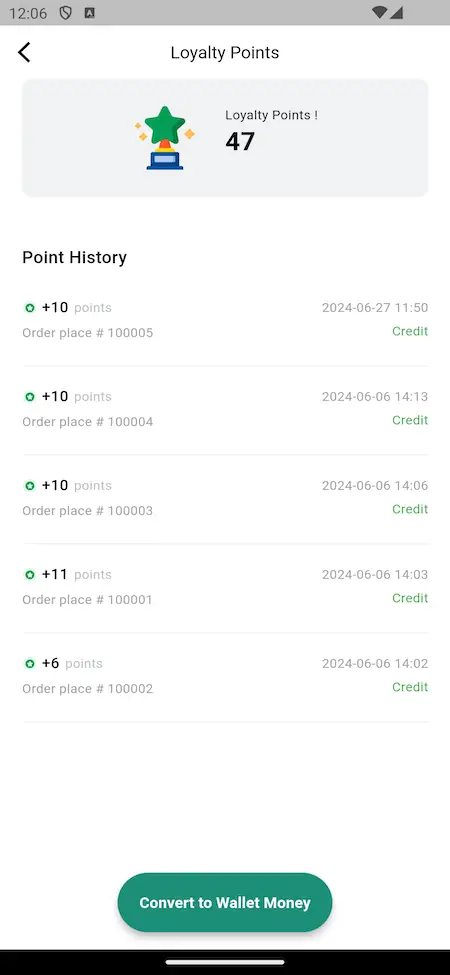
- Coupon, loyalty points, wallet and refer-and-earn entries on the account screen
Worth knowing first: the platform reaches you complete and in your branding. On your list: a server, a domain name, Apple and Google seller accounts, logos, company details, a gateway past KYC, and map plus SMS credentials in your name. Store review follows Apple and Google timing, separate from the 6 build days.
Where the Income Comes From
Uber Delivery Clone Revenue Models - Per-Parcel Fees, Distance Fares, Priority Surcharges and Invoiced Business Accounts
A parcel platform earns with every order, and Miracuves made every stream below a control of its own in the admin panel, so adjusting one leaves the others alone.
Two streams usually do most of the work: the fee on every parcel, and the invoices raised for high-volume business accounts.
- 01
Parcel Delivery Fee
Each order carries a delivery fee that the sender reads before confirming. Because commission can follow vehicle type, a motorcycle errand and a van load do not have to cost the same.
- 02
Distance-Based Fares
Through Delivery Setup, distance-based fares can rise with the kilometers covered, so a cross-town run earns more than a neighborhood drop under the same rules.
- 03
Priority Parcel Surcharge
Parcels flagged as priority stand out on the delivery person's map, and urgency is a natural reason to ask for a higher charge.
- 04
Business Invoicing
A shop that sends daily gets a wallet and its own invoice, so you can bill by cycle instead of collecting at every door.
- 05
Commission Share
The dashboard chart divides gross sale between the admin's commission and the delivery commission, which makes your share and the courier's share two separate lines.
- 06
Banner Placement
Banner space is controlled in Promotion Management and can be offered to a nearby business as a paid slot.
| Revenue line | Charged how | RateReference rate | What caps it |
|---|---|---|---|
| Parcel Delivery Fee | A single amount per order, shown to the sender ahead of confirmation; commission by vehicle type is stored in the admin panel. | Uber Direct lists per-delivery pricing from $6.99 that varies by distance, speed and region, with 0% commissions. | What courier APIs already bill in your city. Because that pricing carries no commission, a merchant can set it beside yours without effort. |
| Distance-Based Fares | An opening amount, followed by a rate for every kilometer or mile. | In Australia, Uber Direct bills a base of A$10 and A$1.10 per km before GST; DoorDash Drive bills $9.75 for the first 5 miles, then $0.75 for each additional mile. | How far buyers will pay to send. DoorDash limits the distance fee to 15 miles and charges 60% of the original delivery fee if a parcel goes back to its pickup point, and Uber bills extra for waiting beyond 10 minutes. |
| Priority Parcel Surcharge | A further charge on parcels marked as priority, plus whatever surcharge your fare rules already hold. | UPS reported fuel surcharge revenue up by $282 million in 2025; FedEx ties the surcharge it applies to a fuel price that is reset weekly. | How far customers will tolerate a higher charge. The filings explain a mechanism and publish no flat percentage, so any rate you choose is yours to test. |
| Business Invoicing | Each business account receives an invoice for the parcels it sent, and wallet balances and invoice statuses are tracked. | In 2025 UPS US Domestic averaged $13.21 a piece; USPS works out near $4.77 and the UK market at GBP 3.13 a parcel. | Whatever the shipper already pays its carrier. Ofcom puts UK revenue per parcel 7.3% lower in real terms while UPS US Domestic revenue per piece rose 7.1%, so the spread is large. |
| Commission Share | You retain a share of each fee, and the payment gateway subtracts its processing charge from the payout. | No dated courier commission page turned up. For cards, Stripe lists 2.9% plus 30c in the US and 1.5% plus 20p for standard UK cards. | The pay level at which couriers walk away, plus the country your gateway sits in. App stores charge on digital goods and not physical parcels, so what you should budget for is the card processing fee. |
Where the numbers come from. The delivery and mileage prices above are listed by DoorDash Drive and Uber Direct for their own customers, and the Australian rate sits on Uber's regional page. Per-parcel revenue and surcharge data were read in the annual reports of UPS and FedEx, in the USPS fiscal 2025 results and in the Ofcom postal report; we calculated the USPS per-piece figure ourselves from two reported totals. Card fees are taken from Stripe's US pricing and UK pricing, and Apple's program overview confirms that store commission covers digital goods only. Each number belongs to another company and is supplied as raw material for your model, not as a quotation or a forecast of what your service will earn.
Uber Delivery Clone Revenue Model, Stage by Stage
Per-order fees, business invoicing, priority surcharges and banner space are each their own control in the Uber Delivery clone admin panel, so a parcel service turns them on as its sender base matures.
Launch
Lead with the per-order fee: the sender reads it beside the distance before confirming, and receiver-pays orders let gifts go out without the sender covering the charge.
Traction
As shops start sending every day, give them business accounts with wallets and one invoice per cycle, then flag it paid once the money is in.
Scale
With volume, priority surcharges on urgent runs, distance fares on cross-town jobs and banner space sold to nearby businesses bring in income beside the parcel fee.
The commission chart keeps your share and the courier's share on separate lines, and Miracuves claims no percentage of either.
Daily Control
Parcel Dispatch Admin Panel - Orders, Dispatch, Package Types, Fares & Invoices
Miracuves fits the owner's whole working day into one panel: orders still waiting for a courier, orders on the move, deliveries completed, failures and what each business account owes.


What the Panel Contains
- 01
Parcel Dashboard
Counters for unassigned, moving, delivered and failed parcels sit beside the year's gross sale chart and a user count, with one zone filter reshaping all of it.
- 02
Orders & Dispatch
Every parcel is listed in Order Management, while Dispatch Management in the top menu is where jobs go to couriers and are tracked until they close.
- 03
Delivery Setup & Fares
Fees, discounts and the pricing structure are defined here, together with commission rules that follow vehicle type or distance.
- 04
Package Types
Category Setup controls the options senders see and what each one says about contents and weight. The demo ships four of them: Package, Gifts, Electronics and Documents.
- 05
Customers, Couriers & Merchants
The panel counts customers and delivery people, ranks the best of each, approves new couriers once their documents are checked and stores merchant accounts with their wallets.
- 06
Promotions
Promotion Management holds banners and marketing tools, useful for bringing back customers who have gone quiet.
- 07
Transactions & Reports
The transactions and reports area of the top menu holds merchant invoices, their paid statuses and payment requests.
- 08
Settings, Languages & Support
Business setup, general settings, languages, public-site colors and a support desk whose tickets carry four statuses.
Money Trail
The finance side of the panel, tracing money from a paid delivery fee to a merchant invoice that has been settled.
- Money screens one click from the top menu
- Wallet balances shown next to invoice status
- A sales chart with admin and delivery commission kept apart
- Invoice totals exported to Excel
Setup & Housekeeping
Controls behind the public site and everyday upkeep.
- Menus for business setup and profiles
- Cron job guidance within General Settings
- A language picker in the page header
- Software version printed at the bottom
Missing something in the panel? Extra reports, a different settlement cycle, further languages or a bespoke courier approval step can all be scoped separately. Say what your operations team needs and a written quote follows.
04Package & pricing
Package Contents
Parcel Delivery App Script Package - Source Code, Both Apps, Admin Panel & Deployment
Miracuves hands over a parcel business that already runs: booking site, sender and courier apps, admin panel, source code and database design, none of it encrypted, so you can operate and alter it freely. Providers bill you directly after launch, with no Miracuves markup: server and backups, card processing, OTP texts and push, map usage, the store memberships and any courier insurance you choose.
$ git clone your-parcel-app Full Source Code
The full source of the web platform and of both mobile apps comes unencrypted, so your developers can bend it to your business.
- Unencrypted source code for the web platform
- Flutter source covering both Android and iOS
- Change, extend and redeploy at will
- Handed into your own repository
Database & Schema
Table designs for parcels, merchants, branches, couriers, invoices and wallets are supplied, so the database can be rebuilt from scratch.
- Schema supplied alongside the source
- Data layer lists MySQL
- Tables for parcels, merchants, branches and delivery people
- Tables covering invoices, wallets and payment requests
Alerts, Chat & SMS
Order alerts, a message thread linking customer and courier, and the SMS gateways that deliver SMS alerts and verification codes and texts.
- Alerts when an order is confirmed, assigned or completed
- Customer and courier can message inside the app
- SMS through Twilio or Nexmo
- One verification code generated per order

Website & Staff Panels
A customer website that adapts to any screen, a front-end template with colors you choose, and separate web panels for customers and for delivery staff.
- Place and track parcels in a browser
- Theme colors for the front end are yours
- A panel built for delivery staff
- English, plus French, Spanish and Chinese
Sender & Delivery Apps
Two Flutter apps built for different people: senders use one to order and track, carriers use the other for directions, messaging and proof of delivery.
- For senders: requests, orders, tracking
- For couriers: requests, directions, chat
- Signature and photo kept as proof
- Publishing to the stores uses your developer accounts


Admin Panel
The owner's control room, with a parcel dashboard, order lists, dispatch, delivery setup, promotions, user lists, transactions and reports.
- Dashboard narrowed by zone
- Orders, dispatch and delivery fees
- Categories for packages, plus banners
- Users, payments, reports, settings
Access & OTP Layer
Separate logins for customer, courier and admin, along with the hand-over verification and courier document upload that the product already contains.
- Screens divided by role
- A verification code at hand-over
- Courier papers uploaded for review
- Card payments handled by your gateway
Delivery & Support
Rebranding and deployment are ours to do, your team receives a notes pack, and three support periods begin together on launch day.
- Your logo, icons and colors applied throughout
- Installation onto whichever hosting you pick
- Configuration notes handed to your team
- Side-by-side support: 2-month guidance, 6-month fixes, 1-year updates
Prefer to look before deciding? Try the demo as a sender or a courier, or book a guided tour in which we send a test parcel, close it with the verification code and map each screen onto your own city and fares.
Fixed Price
What Will an App Like Uber Delivery Cost You to Launch?
A fixed $2,499 buys the launch-ready white-label Uber Delivery Clone. Whatever falls outside the base package, whether an add-on, an extra integration or a custom flow, is written up as a scope of its own and priced as a separate item.
Professional
Ready-to-Launch PackageSuited to: Courier startups, shops with their own delivery arm, entrepreneurs adding parcel pickup to an existing business
Expect the platform to match the demo, carrying your branding and running on hosting you control.
Get StartedEnterprise
Bespoke Builds for Wider ScopeSuited to: Multi-city networks, carriers with hand-over rules of their own, platforms that need unusual flows
Want parcel flows the base lacks? Send your brief, and the scope and price come back on paper before anything is built.
Request a QuoteUber Delivery Clone Development Cost in 2026
$2,499, paid once, buys the parcel platform you tried in the demo: sender and courier apps built in Flutter for both phone stores, the booking website, the admin parcel dashboard, database design and unencrypted source, which Miracuves rebrands and puts live within six working days.
Bills that reach you from providers, not from Miracuves
- Server hosting and backups
- Card processing through a gateway registered to you, with KYC finished
- OTP texts, push messages and map usage on your own keys
- Store memberships for the sender and courier apps
- Any courier insurance you choose and any optional parcel module
A fifth package card is added in Category Setup, while a flow the demo lacks, such as extra courier vetting, is scoped in writing and usually ready in 2-8 weeks.
Compare Your Options
Ready-Made Uber Delivery Clone vs Custom Development vs SaaS
OTP hand-overs, package types and invoiced business senders can come from rented software, a custom build or the Miracuves platform you own. Here is the comparison for an Uber-style parcel service.
| Criteria | MiracuvesReady-Made Uber Delivery Clone | Custom Development | SaaS |
|---|---|---|---|
| Launch time | Branded launch in 6 working days | Quoted in writing, 2-8 weeks | Same-day sandbox account |
| Upfront cost | $2,499 one time | Quote agreed before work | Ongoing subscription |
| Source code ownership | Web, sender and courier app source, unencrypted | Per your contract terms | Not transferred |
| Customization | Package types, OTP flow and fares adjustable | Scoped and billed separately | Toggle-level changes |
| Ongoing fees | No license, nothing per parcel | Agency support fees | Per-shipment pricing |
| Branding & app-store listing | Sender and courier apps under your name | Your name, after a long build | Provider-branded |
| Best for | Parcel startups needing OTP proof and invoicing | Complex freight networks | Low-volume tests |
Same product, other editions: Dunzo Clone · Lalamove Clone · White Label Courier App · Browse all Parcel Delivery solutions
Put to Work
Parcel Courier App Use Cases - Boxed Parcels, Document Runs, Fragile Electronics, Gifts, Invoiced Senders & OTP Drops
Parcel services running on the Miracuves build differ in what they carry. A gift courier cares about category cards and orders the receiver pays for, a document runner about restrictions and a shop about merchant accounts and invoices. Each of those is configuration inside one product.
Swipe · 6
Use the Package card for everyday boxes: the sender sees the weight line, enters both addresses and reads the fee, and a bike or car takes the job.

Offer a Documents card with its own restrictions, so contracts and forms travel quickly and senders know that passports and bank cheques are not accepted.

The Electronics card asks for bubble wrap and a comment on anything delicate, and the photo taken at the door gives you a record of how the parcel arrived.

Gifts of flowers, cards or chocolates can be sent with the receiver covering the charge, since each order has a Charge Pay By choice.

Give a shop a merchant account and a wallet, let it bulk-load addresses and bill it with one invoice per cycle, marking each as paid when the money lands.

Pair the delivery verification code with a signature and a photo for items people will ask about afterwards, so every handover can be reviewed.

Uber Delivery Clone Business Model: Three Ways to Run It
Each package card fixes its contents and weight rules before a booking exists, and three kinds of parcel business run on that same Uber Delivery clone base.
Consumer parcel service
Individuals send boxes under 5 kg, documents and gifts across town, pay per order or let the receiver pay, and every drop closes on a delivery OTP.
Business sender accounts
Shops and offices get merchant accounts with wallets, bulk-loaded addresses and an invoice per cycle, which turns frequent senders into predictable billing.
Multi-branch network
A business with several branches keeps branch records, links delivery people to each one and bills every merchant separately from one admin panel.
Package rules, fares and commission are yours to edit in each model, with nothing owed per parcel.
A single platform that runs six ways. Whichever model you choose, the base is the same: one customer site, one pair of apps and one admin panel. What varies is your choice of package types and their rules, allowed vehicles, fare and commission settings, and the brand layered on top, so there is only one codebase to maintain.
Discuss It With Our TeamMarket Timing
Why Launch a Parcel Delivery App in 2026?
People sending a parcel expect a price, a limit and a record they can trust, and the Miracuves parcel app gives them all three. An owner who passes jobs out by phone spends the day answering questions that a branded app answers unaided, and keeps no customer data besides.
01Senders Want the Rules Before They Book
A package type that states its weight limit and excluded items saves the sender from a refused pickup and saves your courier from an argument on the doorstep.
02A Code Settles Who Received It
When a delivery OTP is checked at the door and a signature and photo are saved, the question of whether the parcel arrived can be answered from the order itself.
03Businesses Expect a Paper Trail
Shops that send daily want one invoice and a statement they can reconcile, not a payment request after every parcel. A merchant account gives them that.
04Receiver-Pays Opens More Orders
With a Charge Pay By choice on each order, gifts and returns can be sent without the sender covering the fee, and cash on delivery sits in the same flow.
05One App Handles Light and Heavy Loads
Since bikes, cars, vans and trucks share the booking flow, the same service can carry an envelope at noon and a bulky box in the evening.
06A Ready Base Saves Months
Writing the booking form, dispatch, courier app, hand-over proof and admin console from scratch takes many months, whereas placing a white-label copy on your hosting takes 6 working days.
Platform by the Numbers
Package Types
Hand-Over Proofs
Tracker Stages
Days to Launch
Most courier projects stumble on the dull parts: package rules, finding someone for the job, proving the parcel was received and sending the bill. In this platform those parts are done.
Industries
Industries We Serve
Whenever a package has to get from one person to another, the Uber Delivery Clone applies. Courier firms take bookings around the clock, florists and gift sellers deliver to recipients who sometimes pay, electronics stores want a careful handover, and document services run errands for offices. Web shops and retail chains add their own delivery arm, print shops ship finished jobs, and franchise groups give each branch separate records.
one platformMXUnzoX
- 01CsCourier Services
- 02DeDocument Errands
- 03GfGift & Flower Delivery
- 04ErElectronics Retail
- 05EcE-Commerce Sellers
- 06RcRetail Chains
- 07PsPrint & Stationery
- 08HsHardware & Spares
- 09OsOffice Supplies
- 10NsNeighborhood Shops
- 11BnBranch Networks
- 12MbMarketplace Builders
In whatever line of business you work, the Miracuves Uber Delivery Clone carries your brand on the sending form, the real-time parcel tracker, the OTP hand-over and the admin panel from the first screen onward.
06Behind the scenes
End to End
The Uber Delivery Clone From Sign-Up to OTP - Choosing a Package, Sending, Paying, Following and Verifying
Sending a parcel through Miracuves' Uber Delivery clone takes only a few taps, but behind them is a fixed sequence: request, assignment, tracking, hand-over. The walk-through below runs from the home screen to a confirmed delivery, and the architecture follows it.
The Sender's Path - Home Screen to Confirmed Delivery
Swipe · 6
1Sign Up & Send a ParcelNew senders register, sign in with email or mobile number and open straight onto your list of package types.
- Registration using personal details
- Login with an email or a phone number
- Package cards on the home screen
2Choose a Package SizeAn up-sliding sheet asks about the shipment, and each card explains what that package category accepts.
- Package, Gifts, Electronics and Documents
- A one-line rule beneath every card
- The cards are set up by the admin
3Send the Courier RequestSender, recipient, distance and fee sit on one form with an optional tip and a choice of who pays, followed by the vehicle class.
- Sender and receiver details
- Distance, fee and tip amounts
- Who pays: sender or receiver
4Review & Pay for DeliveryA final check, a payment method and a tap to confirm; a progress bar marks the order pending until a courier picks it up.
- A summary of the order to check
- A choice of payment method
- Pending state on the home screen
5Follow the Courier in Real TimeFive tracker stages run above the local map, which also states plainly while no courier is assigned.
- Status moves from Order Placed through to Delivered
- The local map behind the tracker
- A notice while no courier is assigned
6Verify with the Delivery OTP & RateThe Delivery Verification Code on the order page closes the job at the doorstep, after which a completion alert arrives and the sender can rate the courier.
- Delivery ID and verification code on the order
- A notification when delivery completes
- An optional rating with feedback
Under the Surface
Architecture of an Uber-Style Parcel Platform & Hand-Over Logic
- 01Stage 01
A Login for Each Role
Customers, couriers and admins sign in apart and are shown different screens, so the owner's panel never reaches a courier's phone.
- 02Stage 02
Order Status Chain
The tracker draws five labels in sequence: it begins at Order Placed, passes through Order Confirmed, Preparing Item and Delivery on the way, and ends at Delivered.
- 03Stage 03
Handing Out Jobs
A fresh order is counted as unassigned until dispatch gives it to a delivery person, and any parcel marked priority is highlighted on that person's map.
- 04Stage 04
Fare & Commission Rules
Fees, discounts and commission structures sit in admin settings, kept apart from the booking screens where the result is displayed.
- 05Stage 05
Payments & Invoices
Each order stores how it was paid, whether cash on delivery applies, and any merchant wallet and invoice lines tied to it, so statements can be audited afterwards.
- 06Stage 06
The Hand-Over Record
To close a job the courier checks the verification code and records a signature and a photograph, and the three together are kept on the order as evidence.
Technology Choices
Parcel Courier Tech Stack - Flutter Apps, PHP Web Layer, MySQL Data, Payment Gateways
The last-mile parcel delivery software Miracuves ships leans on a PHP web tier, MySQL data that stays consistent for every order and Flutter apps that behave natively on phones. Listed below are the building blocks, using the names the product pages use.
Web & Admin
- One customer site, a delivery web panel and an admin panel
- Pages that adapt to any screen through Bootstrap
- A front-end template with switchable theme colors
- The admin footer prints version 2.7.1
Data Storage
- Parcels, merchants, branches and couriers are stored here
- The schema is part of the delivery
- A blank database can be rebuilt from that schema
Phone Apps
- Flutter builds using current dependencies
- A sender app plus a separate delivery app
- Home, Address, Orders and Menu tabs in the app
- Store publishing runs through your own developer accounts
Money Layer
- Razorpay was added as a gateway, as the release log shows
- Cash on Delivery with sender or receiver as payer
- Merchants and the admin each have a wallet
- The gateway account is opened and verified by you
Integrations Used
- Google Maps provides addresses, routing and map views
- SMS traffic travels over Twilio and Nexmo
- Firebase is one of the listed integrations
- Translation and payment gateway APIs make up the rest
Source Handover
- The application source comes with its history
- The mobile projects have their signing steps written down
- Documentation covers the cron job and the deployment
- Your engineers receive notes on the architecture
On the web and admin side the product uses PHP with Bootstrap above MySQL, and the apps are written in Flutter. Google Maps, Twilio, Firebase, translation and multiple payment gateways work through accounts and keys that you create and give us at deployment. Every one of these is a mainstream tool, so hiring engineers who know them is straightforward.
Growth Path
Built to Scale - Zones, an Unassigned Queue, Merchant Batches & Headroom
The surfaces stay separate and the core beneath them is shared, so more districts, couriers and parcels become a matter of capacity and configuration instead of a rebuild.
Open Zones One by One. A zone filter on the dashboard lets you run and measure a single district before the next one is switched on.
The Unassigned Counter. Orders that no courier has accepted are counted separately, so the dispatcher can see where to look first.
Batches for Business Senders. Bulk address import, label sheets and a separate invoice for each merchant stop the heaviest senders from holding up everyone else.
Totals You Can Check. Each job keeps its order, wallet, invoice and commission lines, which lets you compare dashboard figures with statements.
Zone-Based Growth
Every district can be run as a separate zone, and an All Zones view gives the big picture, which lets you open and watch districts in turn.
Unassigned Queue
An order without a courier waits on the dashboard until a delivery person accepts it, and priority parcels are highlighted on that person's map.
- Unassigned-order counter
- Priority markers on parcels
- Route-ordered assigned parcels
- Real-time view of assignments
Separate Surfaces
Senders, couriers and admins get their own screens and permissions, so one group can change without disturbing the other two.
- A separate login per role
- A separate set of screens per role
- An API behind the mobile apps
- Web panels beside the apps
Merchant Batches
A shop with a large parcel count remains manageable through Google Maps address import, label printing in bulk and a separate invoice for each merchant.
- Bulk parcel loading
- Bulk labels from admin and merchant panels
- One invoice per merchant
- Parcels created from wallet funds
Settlement Records
Each merchant and each order has its wallet balance, payment requests, statements and invoice status written down.
- One wallet for merchants, another for the admin
- Requests for payment, plus statements
- Each invoice marked paid or unpaid
- COD noted against the order
Documented Handover
Source, schema, set-up notes and cron job details are passed on, so a different team can run the platform without help.
Space for Local Rules. Every market eventually wants something of its own, whether a pricing rule, a package type or a settlement custom. With the complete code and an ordinary stack, a new screen or integration is routine development for your engineers or ours.
Close to launch? Start in the district, and with the couriers, that you can look after properly, then grow on the same installation. Adding capacity afterwards is a hosting and configuration decision, while anything past the base package gets its own scope and price.
07Security and trust
Security Posture
OTP Courier App Security - Role Separation, OTP Hand-Over, Gateway-Held Card Data & Honest Limits
A parcel app holds names, phone numbers, drop-off addresses and payment references, and its couriers carry property that belongs to others. Miracuves answers three questions first: which role sees which data, how a hand-over is evidenced and what happens before launch. The sections below set out what the product does today and what is left to you.
- 01 · RolesRole Separation
Customers, couriers and admins have their own logins and screens, and each sees just what the role calls for, so no one wanders into the owner's panel.
- Disputes & Claims: Support tickets progress from Pending through Processing to Resolved or Closed. Compensation for lost or damaged goods is your call; the software logs the case and does not insure anything.
- 02 · OTPDelivery OTP & Proof
Orders carry a delivery verification code, and the courier app puts a signature and a photograph on top of it, which lets you settle a disputed hand-over from the record.
- OTP & Proof Retention: A hand-over signature and photo are saved against the order. The retention period, and who is allowed to open them, belong in your privacy policy.
- 03 · CouriersCourier Documents
Couriers submit identity proof, the vehicle's registration and its insurance when they sign up, and an admin looks them over and approves them inside the panel.
- Courier Verification: Documents that couriers upload are stored by the platform. Which couriers you accept, and how often their papers are re-checked, is set by your own onboarding policy.
- 04 · KeysKey Management
Maps, SMS and payment gateway keys are intended to sit in server configuration under your control and not inside the repository you receive. We go through this with you during deployment.
- Pre-Launch Tasks: Before going live you still have to rotate keys, run penetration tests, rehearse a restore and verify your payment and SMS settings. None of this is presumed done.
- 05 · CardsCard Data Stays at the Gateway
Card details travel directly to the payment provider you choose. The platform itself keeps the order and its payment status and never a card number.
- Gateway Readiness: Live payments need a gateway account registered to you with KYC finished, and your SMS and maps keys must be your own as well.
- Commission Settings: Fare and commission structures are kept in admin settings, which leaves a courier's earnings on each job in your hands and open to change.
- 06 · BackupsBackups & Restore
A backup schedule belongs to the deployment plan, and before launch a trial restore shows that the backups work, because an untested backup is just wishful thinking.
What you receive is a functioning product with the safeguards described above. Every other item is reviewed with you before launch, and the go-live schedule books key rotation, penetration testing and a restore test side by side. Miracuves builds the delivery platform to SOC 2, ISO 27001 and GDPR controls; the review is run with independent audit partners, and your company, not Miracuves, is issued the attestation (delivery audit record).
Review Security With UsBefore You Operate
Your White-Label Uber Delivery App in Operation - Software Duties and Owner Duties
A parcel service moves strangers' property in vehicles driven by people you take on. Miracuves supplies the booking, hand-over, invoicing and payment tooling, while the questions of who may drive, which goods may travel, what insurance applies and which local rules bind you remain with you as the operator.
Ready, in this list, simply marks a feature the demo or admin panel visibly shows. Licensing for parcel operations belongs to your own entity, and this list is not legal advice.
Built Into the Software
Package cards with rule lines, a request form for fee, tip and payer, a tracker with five stages, a verification code backed by signature and photo, courier papers and jobs that can be accepted or declined, merchant wallets and invoices, ticket statuses and an admin panel that reports.
Left to the Operator
Your own terms and privacy policy, how couriers are selected and vetted, which goods you will not carry, your compensation rules for lost or broken parcels, and any refund or cancel terms beyond the defaults you set.
Couriers & Vehicles
Driver licensing, vehicle roadworthiness and insurance, and whether couriers are contractors or employees depend on local law and your policy. The app collects identity, registration and insurance papers without judging them.
Where You Operate
Rules on prohibited items, courier permits, cash handling, taxation and personal data differ across countries and frequently across cities. Ask qualified local advisers to look at every market before bookings are accepted.
08Extend the platform
- Package cards & fares
- Tracker & delivery OTP
- Courier app & invoices
- Admin panel & reports
Adding a module
- 1Choose a module
Pick routing, AR guidance, package sensing or lockers, now or once you are live.
- 2Price agreed first
A written scope and a price reach you before anyone writes code.
- 3Shipped as source
The completed module becomes part of the code that is already yours.
Optional Extras
Optional Parcel Modules - Route Intelligence, Augmented Reality Guidance, Package Sensing and Locker Pickup
Today the base package runs from end to end and can be demonstrated. The four optional modules described here are scoped one by one for operators wanting sharper routes or extra care with fragile parcels, and each is priced once your market is clear.
Drag to explore · hover to pause
- 01Navigation
Smart Route Optimization
A routing layer driven by AI that takes traffic, weather and parcel priority into account when picking a courier's path, going further than the GPS and in-app directions the delivery app has today.
Route · Engine - 02Navigation
Augmented Reality Navigation
Directions painted over the courier's live camera view in augmented reality, easing the final stretch to a gate, a lobby or a loading bay.
AR · Navigation
- 03Package care
Smart Package Monitoring
Internet-connected sensors track temperature, humidity and rough handling inside a parcel and warn the customer and the courier as it happens when contents must stay cool or still.
Package · Sensors - 04Package care
Automated Delivery Lockers
Lockers placed at chosen sites let recipients collect a parcel whenever they like, shortening waits and removing the face-to-face exchange.
Lockers · Pickup
Sister Platforms
Need to Carry Meals, Groceries or Medicine Instead? Meet Four Sister Platforms.
The Uber Delivery Clone is for packages that travel from a sender to a recipient. When your plan reaches into meals, groceries or medicines, these four platforms cover that work in their own ways.
01A food ordering platform with restaurant listings, menus, a checkout and a rider app, designed for meals that are cooked to order.
Explore Solution
02A quick-commerce platform that picks everyday goods from a catalog, packs them at a store and has them at the door in a matter of minutes.
Explore Solution
03A grocery marketplace built on store catalogs, personal shoppers and orders that customers can schedule ahead.
Explore Solution
04Medicine ordering and delivery for pharmacies, bound by separate rules on which products may be sold.
Explore Solution09Making money
Market Benchmarks
Courier & Parcel Delivery Market Benchmarks - Independent 2025-2026 Data
The revenue models above are ours. The figures below are not. They come from Ofcom, the UPS and FedEx annual reports on Form 10-K and the US Postal Service fiscal 2025 results, reproduced as published. Together they show how large parcel volumes are and what carriers earn per package in the UK and US, so you can test your own delivery pricing against numbers you can check.
4.2bn Parcels Delivered in the UK in 2024-25
Ofcom reports that total measured parcel volumes rose 7.1 percent to 4.2 billion items in 2024-25, and that measured parcel revenues were GBP 13.2 billion, down 0.8 percent in real terms. Real-term average revenue per parcel fell 7.3 percent, from GBP 3.38 to GBP 3.13, so volume grew while the price paid per parcel did not keep pace.
$88.7bn UPS Revenue on 20.8m Packages a Day
UPS reports total revenue of $88.7 billion in 2025 and an average of 20.8 million packages per day, 5.2 billion over the year, in its annual report on Form 10-K. In its US Domestic segment, average revenue per piece rose 7.1 percent to $13.21 while average daily package volume fell 8.6 percent to 17.5 million.
$94.7bn FedEx Revenue in Fiscal 2026
FedEx reports consolidated revenue of $94,720 million for the fiscal year ended 31 May 2026, up 8 percent from $87,926 million in fiscal 2025, in its annual report on Form 10-K. It attributes higher operating income mainly to improved base yields for its package services, and notes its indexed fuel surcharge on Express US Domestic shipments.
$32.6bn Shipping and Packages Revenue at USPS
The US Postal Service reports Shipping and Packages revenue of $32,580 million on 6,837 million pieces in fiscal 2025. Revenue rose $315 million, or 1.0 percent, while volume fell 415 million pieces, or 5.7 percent. Dividing the two reported figures gives about $4.77 of revenue per piece, with USPS Ground Advantage cited as the growth driver.
Ofcom, Post monitoring report: Postal services in the financial year 2024-25, 3 December 2025 - ofcom.org.uk
United Parcel Service, Inc., Annual Report on Form 10-K for the year ended 31 December 2025, filed 17 February 2026 - sec.gov
FedEx Corporation, Annual Report on Form 10-K for the fiscal year ended 31 May 2026, filed 20 July 2026 - sec.gov
United States Postal Service, U.S. Postal Service Reports Fiscal Year 2025 Results, 14 November 2025 - about.usps.com
All figures are the publishers’ own, reproduced as published from a regulator report, annual filings and a results release. The USPS revenue-per-piece figure of about $4.77 is our arithmetic on two reported figures. Carriers define volume and revenue differently and are as each publisher states them. They describe the organizations named, not any platform Miracuves builds, and nothing here is a revenue projection for your business.
Commercial Case
How a Parcel App Like Uber Delivery Earns - Marketability & Prospects
Parcel platforms make money when senders trust them with packages and couriers trust them with their time. The points below are meant to ease both decisions and to keep both relationships with you after they begin.
- 01
A Fee on Each Parcel
The operator earns a commission on the fee that every delivery generates, so income grows with every parcel handled and has nothing to do with office size.
- 02
Several Controls, One Panel
Fares, priority surcharges, business invoicing and banners are separate settings in one console. Parcel operators usually lead with the per-order fee, invoice shops that send every day once they sign up, then add priority surcharges for urgent runs, and Miracuves claims no percentage of any of it.
- 03
Customers and Couriers Stay Yours
Customer accounts, couriers, order history and merchant balances are stored in a database that you control, which means the value accumulates with you and not with an intermediary.
- 04
Free to Move On
Because you hold the full source and schema, moving to another host, team or direction later needs no one's approval.
- Parcel Delivery Fee
- Distance-Based Fares
- Priority Parcel Surcharge
- Business Invoicing
- Commission Share
- Banner Placement
A parcel service is protected by the couriers it can rely on and the trust of the people who send with it more than by any feature.
- 01Couriers who know your zones take long to copy
- 02Customers with verified hand-overs have reason to stay
- 03Your record starts on launch day in your own database
- 04Fast assignment and fair earnings keep couriers
The three cases vary a single thing, the number of active couriers, and name the lever that counts most at each size. Use them to open a planning discussion; none of them is a promise about what any parcel service will earn.
Early income comes from the fee on each order.
A single district served by a few couriers on nearby jobs, with every parcel's fee meeting its running cost. Scale illustration only, not a prediction.
Order fees plus merchant invoices.
A city split into zones, with daily-sending shops invoiced and priority surcharges beginning to matter alongside the base fee. Scale illustration only, not a prediction.
Many cities, invoicing and banners both running.
A network of cities where invoices, surcharges and banner slots stack on the order fee and the dashboard reveals which zones need more couriers. Scale illustration only, not a prediction.
10Why Miracuves
The Case for Miracuves
Miracuves Versus Other Uber Delivery Clone Developers
Parcel founders typically consider a boxed courier delivery app clone script, a freelance developer, an agency or the proven base Miracuves offers. Test each one by sending a parcel in its demo, asking for its list of exclusions and confirming unencrypted source; the rows below show how this base answers.
Why Founders Choose Miracuves
- 01
Package Rules Come Built In
Editable cards for Package, Gifts, Electronics and Documents carry their own rule lines, something most generic delivery scripts omit.
- 02
An OTP at the Door
Every order receives a verification code, and the courier app stores a signature and a photo, which gives a contested parcel its own paper trail.
- 03
Invoicing Built In
Business customers ask first about invoicing, and the base package supplies the whole chain: merchant accounts, wallets, labels sent in bulk, imported addresses and the invoices themselves.
- 04
You Own the Source
The code is delivered unencrypted alongside the schema and set-up notes, so no vendor can reprice it or alter the terms afterwards.
- 05
A Dated History
The log runs from January 2023 to July 2024 and lets you read each change in sequence.
- 06
Plain Readiness Wording
Base features, add-ons and the tasks that fall to you appear separately here, and those tasks cover the gateway account, the hosting and your store developer logins.
How to Choose an Uber Delivery Clone Development Company
Ask any parcel vendor to run one real order, package card to doorstep OTP.
What to look for Miracuves
- Package rules in the product Editable package cards, each with its own rule line
- Proof at the door A delivery OTP, backed by a signature and a photo
- Business invoicing Merchant accounts, wallets and invoices in the base
- Open source handover Unencrypted source for web and both apps, plus schema
- A launch date you can hold Live in six working days, or we work on at no charge
- Aftercare 12 months of updates, 6 months of bug fixes and 60 days of guidance
Walk away from any vendor who
- Lets senders book with no package rules
- Closes a drop without a code, signature or photo
- Bills business senders parcel by parcel
- Charges a fee on every shipment
- Hides its exclusions
Uber Delivery Clone Compared With Scripts and Agencies
| What You Compare | MiracuvesMiracuves Uber Delivery Clone | Boxed Script | Agency Build |
|---|---|---|---|
| Time to Launch | 6 working days of build | Unclear, or self-assembly | Priced per project, frequently months |
| Source-Code Ownership | Whole codebase, unencrypted | Frequently partial or locked | Normally yes |
| Parcel Depth | Package types, tracker, OTP with signature and photo, merchant invoices | A booking form and not much else | As deep as the budget permits |
| Courier Tools | A delivery app for jobs, maps and chat | Seldom present | Developed when requested |
| Payments & Wallets | Razorpay, wallets, cash on delivery | Varies by script | Wired up one project at a time |
| Admin & Reports | Zone dashboard, dispatch, reports | Thin or absent | Custom work at additional cost |
| Security & Compliance | Separate logins per role, card data at the gateway, limits spelled out | The bare minimum | Differs between vendors |
| Cost vs Speed vs Quality | Fixed price, rapid delivery, tested base | Cheap but risky | Expensive and slow |
| Ongoing Support & Updates | 60 days guidance, 6 months bug fixes, 12 months updates | Rarely offered | Whatever the contract says |
Hardly any route to a parcel platform survives a busy first month without damage, and the table shows where each one gives way.
Discuss It With Our TeamRelease History
Parcel Platform Release History - Dated Changes & Fixes
Entries are listed by date and cover the web platform and both apps. The wording has been tidied, and nothing from another product is included.
| Release date | Items | What changed |
|---|---|---|
| 03 July 2024 | 17 updates | Web platform The parcel store no longer shows wallet problems An error on the parcel index page was cleared The 500 error that followed a language switch was cleared A blank white page on parcel logs no longer appears The bank name field on the merchant account is back A stray $ sign was taken out of the merchant dashboard and merchant view Failures from the Twilio SMS API were cleared A bug in registration was cleared The invoice system now runs more smoothly The Excel export now carries the invoice total Parcel tracking ids are shorter Each merchant can have its own invoice generated Under merchant payments, choosing an invoice sets it to paid General Settings now explains how to set up the cron job Label print size has a design setting A parcel can be created by spending wallet balance Mobile apps Parcel status changes from the delivery apps work again |
| 28 Oct 2023 | 16 updates | Web platform An installation fault was cleared The bulk modal for parcels works again The merchant payment account shows its bank list again Switching language works again Google Maps was added to the Parcel, Branch and Deliveryman screens The Google Maps key became a setting A priority system for parcels was introduced Delivery man maps display priority parcels An assigned delivery man can be tracked live by admins The admin got a wallet system Merchants got a wallet system Wallets can be enabled merchant by merchant Addresses can be imported in bulk from Google Maps Mobile apps Customers receive proof of delivery as an electronic signature with a photo upload Delivery men see their assigned parcels in route order Delivery men can activate location from their phones |
| 20 Jun 2023 | 16 updates | Web platform Languages added: French, Spanish and Chinese Country symbols added Admin and merchant panels can print several labels in one go Support tickets show a status: Pending, Processing, Resolved or Closed A front-end template was added The admin panel can recolor the front end The API serving the mobile app arrived Mobile apps Balance details arrived Clearable parcels arrived Parcel details arrived The merchant account list arrived The invoice list and invoice details arrived Parcel statuses and parcels grouped by status arrived Analytics for parcels arrived Payment requests can be created and viewed in a list Statements arrived |
| 16 April 2023 | 7 updates | Fixed Alert trouble Trouble in the index file Push notification trouble Added Support for add-ons Razorpay payments Nexmo for SMS Twilio for SMS |
| 21 Feb 2023 | 1 update | Maintenance Assorted bug repairs |
| 1 Jan 2023 | 1 update | Launch Initial release |
Ready when you are
Let's make your parcel idea a service people rely on.
A free consultation gets you a concrete parcel launch timeline and frank answers, with zero pressure to sign.
- We reply within 2 hours
- A free introductory call
- No lock-in contract
- The source code is yours
11Learn more
On the Blog
Uber Delivery Clone App: Fresh Reading and Guides
Recent articles on the way a parcel delivery app is assembled, the reasons founders pick a ready-made base before a custom build, and what launching costs.

The basics6 questions
01What exactly comes with the Uber Delivery Clone?
Miracuves hands you a finished parcel delivery platform. Senders use a customer website and app to choose a package type, enter two addresses and pay, couriers use their own delivery app, and you run orders, fares and invoices from an admin panel. Everything is white-labeled and arrives with the complete source code.
02Can I launch an app like Uber Delivery without legal trouble?
Developing and selling parcel-delivery software is lawful, and this clone borrows no code, design or content from Uber. It runs under your name and on your own terms. Do not show the Uber name or logo anywhere in your branding, and before you enter a market ask a local adviser to explain the licences couriers need, which goods are banned and how couriers are regulated there. We are unable to provide legal advice.
03To what extent can I put my own brand on it?
Branding is part of the delivery. Your logo, icons and color scheme are applied across the web platform and both apps, and then we deploy them. The source is unencrypted, so later changes to fares, flows, screens or features can be made by your engineers or by ours, with any work beyond the base package scoped and priced in writing beforehand.
04Do the apps support both Android and iOS?
Yes. The sender app and the delivery app are Flutter builds for Android and iOS. The website works in any browser, and the admin panel is a web application. You publish the apps from your own developer accounts, and the waiting time for Apple and Google review is not part of our 6-day build.
05What is covered by the one-time price?
A fixed $2,499 pays for the customer website and app, the delivery app, the admin panel and the whole source code without encryption, together with rebranding, deployment and publishing help. Support comes as three periods that run side by side: 60 days of platform guidance, 6 months of priority bug fixes and 12 months of updates. Smart routing, AR navigation, package monitoring and lockers are optional add-ons with their own quotes.
06Why choose Miracuves to build an Uber Delivery clone for your business?
We have focused on ready-made platforms, with 9,000+ projects done for 6,000+ clients. With this clone you can try a live demo today, read a dated release log from January 2023 to July 2024, get the full source at one fixed price and go live in 6 working days. Expect a reply within 2 hours, Monday to Saturday, 10:00-19:00 IST.
Sending, OTP & packages9 questions
07How does a sender place an order?
Once registered and logged in, the sender sees package cards on the home screen. Picking one leads to the request form, where both parties are entered, the distance and fee are shown, a tip can be added and the payer is chosen before confirming. The order then waits as pending until a courier accepts, and the tracker follows from there.
08Which package types and weight limits appear in the demo?
Four cards are shown: Package, Gifts, Electronics and Documents, each with a one-line rule. The Package card asks for non-perishable goods with no food and a maximum of 5 kg. Electronics requests bubble wrapping and a comment about fragile items, and Documents excludes passports and bank cheques. Admins edit both the types and the rule lines in Category Setup. Pricing is driven by vehicle type and distance, so weight-based fares are not part of the base.
09What vehicles can carry a parcel?
The platform supports bikes, motorcycles, cars, vans and trucks, and the product FAQ lists bicycles as well. In the user flow, vehicle selection follows the delivery details, and the admin panel lets commission depend on vehicle type, distance or a promotion.
10How does the delivery OTP work?
The order details page displays a Delivery Verification Code for each order, and Delivery OTP appears among the functions of the delivery app. Checking that code at the door is how the parcel is matched with its intended recipient. In addition, the release log records that the delivery app can take an electronic signature and a photo, which are saved with the order.
11Is there a QR code step at hand-over?
The demo and the release log show a verification code, an electronic signature and a photo, and no QR scan. Should you want one, it would be a custom change with a written scope and a quote agreed before any building starts.
12Can senders watch their parcel on a map?
They can. A tracker with five stages is laid over a map and runs from Order Placed through to Delivered, and it admits openly when no courier has accepted yet. After acceptance the job can be followed, and alerts reach the customer at confirmation, at assignment and at completion.
13What payment options does the platform offer?
The product lists cards, digital wallets and cash on delivery. Each order carries a Charge Pay By setting, so either the sender or the receiver can bear the fee. The demo contains a cash-on-delivery order, and according to the release log Razorpay was added as a gateway. Which gateways you can actually use depends on the accounts you link.
14Can a sender schedule a parcel for later?
Orders are built for immediate dispatch, although the request screen has a Save for later checkbox. If fixed pickup windows matter to your service, raise it with us ahead of launch and we will draft a scope, leaving nothing to chance.
15What if a parcel is damaged or lost?
The customer raises a support ticket, which moves through the statuses Pending, Processing, Resolved and Closed. Whether you pay compensation is your decision. The software keeps the record of the case and does not offer insurance on parcels.
Couriers, invoices & businesses7 questions
16How do couriers join the network?
Couriers register inside the delivery app and send identity proof, vehicle registration papers and insurance details. An admin approves them from the panel before any job is offered. How demanding that screening is depends on your onboarding rules.
17Can a courier decline a delivery request?
Yes. Requests can be accepted or declined. What the courier accepts forms a route-ordered list of assigned parcels, with directions and a chat thread with the customer available in the app.
18How is courier pay calculated?
Pay follows the fare and commission rules you set in the admin panel. The apps display balance details, payment requests and statements, and you decide the payout schedule and the receiving accounts.
19Is there a rating system?
Yes, both ways. Customers rate couriers and couriers rate customers, adding written feedback if they wish, so you can see service quality at a glance.
20How are business senders invoiced?
Each business sender holds a merchant account, and invoices are generated merchant by merchant. Choosing an invoice under merchant payments sets it to paid, and its total reaches the Excel export. In the mobile app, an invoice list with details sits next to payment requests and statements.
21Does it produce e-receipts for each order?
The release log names merchant invoices, an invoice list with details in the mobile app, payment requests and statements. A dedicated e-receipt for every single-sender order is not visible in the demo. If you need one, we scope it and quote it in writing.
22Can a shop upload many parcels at once?
Yes, according to the release log, which lists merchant dashboards, bulk import of addresses from Google Maps, a bulk parcel modal, printing of several labels at once and parcel creation from wallet balance. We demonstrate merchant accounts during a guided call, because the public demo logins do not cover them.
Admin, rollout & ownership14 questions
23What does the admin panel cover?
The panel opens on a dashboard with parcel counts per status (total, unassigned, delivered, failed and on the road) and a gross sale plot. Elsewhere you will find orders and dispatch, delivery fees, package categories, banners and promotions, general settings, languages, support tickets, transaction reports, and lists of customers and couriers.
24Can I run several cities from one panel?
The parcel dashboard offers a zone filter plus an All Zones option for the whole operation. Fares and commission are configured in the admin panel, so if each city requires its own pricing, settle that with us while planning the rollout.
25Where do I set what couriers earn per job?
Commission structures are defined in the admin panel and may depend on vehicle type, delivery distance or a promotion. On the dashboard, the sales chart shows the admin commission and the delivery commission as separate amounts.
26Can I watch live deliveries from the panel?
Yes. Unassigned orders and parcels out for delivery are counted on the dashboard, and admins use Dispatch Management to follow each job and see a courier being assigned in real time. Priority parcels are marked on the delivery person map.
27Can I add other payment gateways or analytics tools?
Google Maps, Firebase, Twilio, payment gateway APIs and translation are already integrated, and the release log adds Razorpay, Nexmo and Twilio SMS. Anything further, such as a different gateway, an analytics tool or a support system, counts as integration work that we scope and quote separately, running on accounts and keys that you own.
28What do I need to arrange before launch?
Prepare hosting and a domain, Apple and Google developer accounts, brand assets, a payment gateway account with KYC passed, Firebase, SMS and Google Maps keys of your own, and any policies your business needs. Rebranding and deployment are our part.
29What security work is still open before launch?
Three logins are kept separate in the base, card details stay with your payment gateway and proof of delivery is stored on the order. The pre-launch plan covers rotating keys, penetration tests, a restore rehearsal and a check of payment and SMS settings, while you choose the courier vetting rules and the retention period for data.
30Where would the first revenue come from?
For most parcel operators the first income is the fee on an order, since nothing else has to exist for it: one paid delivery is enough. Invoicing businesses comes next, once shops that send every day have signed up and a billing cycle is worth running. Priority surcharges and banner slots follow when there is enough volume to attach them to. Selling on the white-label installation, or licensing regions to other operators, would rest on commercial arrangements of your own, agreed separately and not part of the product.
31How hard is it to copy a branded parcel app?
A parcel service is protected by the couriers it can rely on and the trust of the people who send with it more than by any feature. A group of couriers who know your zones, and customers with a history of verified hand-overs, take a long time to copy. The platform starts that record on launch day, stores it in your own database and attaches a code and proof to each order. Fast assignment and fair earnings for couriers add a second layer of defense, because couriers go where steady work is.
32Is a ready-made Uber Delivery clone better than custom development?
Usually, if you want to move parcels this quarter. Package types, vehicle classes, OTP hand-over, live tracking and invoices for business senders already work, and launch lands 6 working days from your brief. Writing a parcel app from a blank page needs its own estimate and around 2-8 weeks of engineering, so custom spend is best kept for what only your market needs.
33How long until my Uber Delivery clone is live on the App Store and Google Play?
Our build window is 6 working days: branding, deployment to your servers and preparation of the sender and courier Flutter apps. Both apps are then filed from your Apple and Google developer accounts, and each store sets its own approval pace beyond those days. Senders can book on the website while the listings are reviewed.
34What is the business model of an app like Uber Delivery?
An app like Uber Delivery charges per parcel, priced by package type, distance and vehicle, and keeps a commission before paying the courier. Shops that send daily are invoiced as business accounts, while urgent-run surcharges, banners and wallet incentives bring extra margin. Each rate is set in the admin panel, city by city.
35What is the step-by-step process to launch my Uber Delivery clone?
Start by sending a test parcel in the demo and closing it with the OTP. Next, share your brand, service zones, package types, fares and gateway. Miracuves then brands and installs the website, both apps and the admin panel on your hosting. Store submissions leave from your accounts. Allow 6 working days for us, plus whatever review time Apple and Google need.
36Is the Uber Delivery clone a food delivery app like Uber Eats?
No. It is a parcel courier platform, and its Package card even asks for non-perishable goods with no food. Senders choose a package type, enter two addresses and pay, while couriers carry the parcel. Restaurant menus and food ordering are not part of it, so a food marketplace would be a separate product.
Go Deeper on Courier Delivery App Development
Find a Miracuves service, its industry, its catalog category, the fixed price and background reading here.
Building logistics apps
Read about the service→GuideHow it is built
The stack, the data model and the build order of an on-demand parcel delivery app, step by step.
Read the guide→Business model comparison
Two delivery business models set next to each other: how each is organized and where its income comes from.
Read the guide→CategoryParcel delivery solutions
Other ready-made platforms in the parcel delivery category, side by side.
Browse the category→Disclaimer
Miracuves is an independent software development company. We are not affiliated with, connected to, sponsored by, or endorsed by Uber Delivery.
Read our full Legal Notice & Disclaimer →“Uber Delivery Clone” is used descriptively. It is how the software industry refers to building a platform with functionality similar to Uber Delivery, and how clients search for it.
The entire design and codebase is built by our own team. The product contains no code, design, graphics, or content originating from the Uber Delivery website or applications.
Uber Delivery and all other third-party names and marks are the property of their respective owners, referenced here solely to describe the category of software offered.