
White Label Trading Platform for Multi-Broker Investing
Launch your own trading platform under your brand, powered by eight broker integrations, real-time WebSocket market data and a built-in algorithmic trading engine. Live in six working days.
Equity and F&O through commodities, currency, ETFs, IPOs, mutual funds and bonds: every Indian market segment sits behind one platform, ready to extend internationally when you are.
Go Live in 6 Days with Multi-BrokerAlgo-ReadyReal-TimeSEBI-AlignedWhite-LabelAPI-First
⚡ Platform at a Glance
6
Revenue Streams
brokerage, subscriptions, API tiers, referrals
8
Brokers Wired
Zerodha, Upstox, Angel One, 5 Paisa and more
0
Revenue Share
you own the source outright, with no per-seat fee
100%
Your Brand
no supplier name in the product or the app stores
Your Platform, Their Execution Rails
Orders route to the broker a trader already holds an account with, so you launch a branded trading product without becoming a broker or holding client funds yourself.
An SDK Ecosystem Is a Revenue Line
Seven language SDKs and tiered API access turn the platform into something developers build on, and those tiers bill on their own alongside brokerage and subscriptions.
🚀 Ready to launch your own trading platform under your brand?









Live in Action
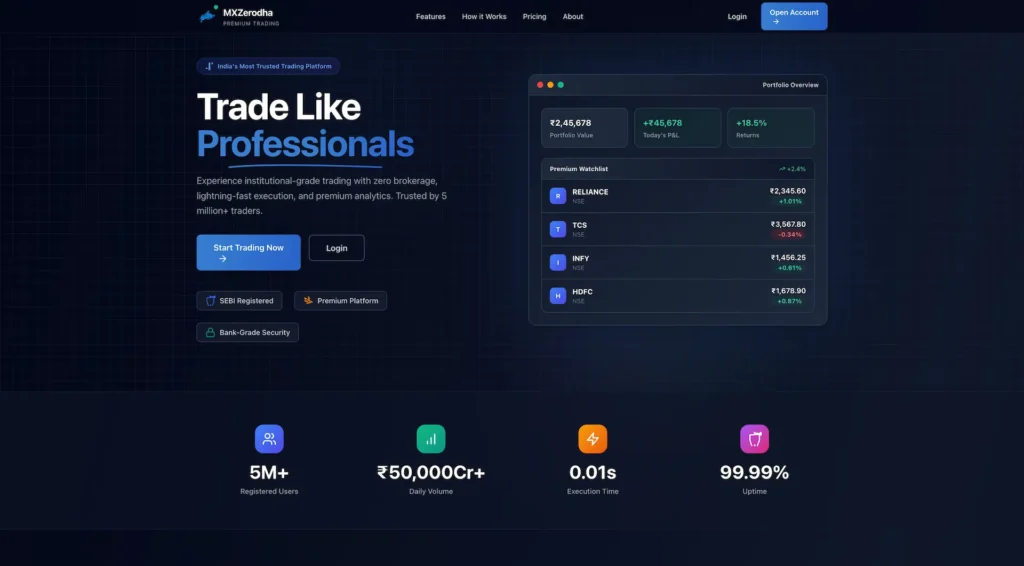
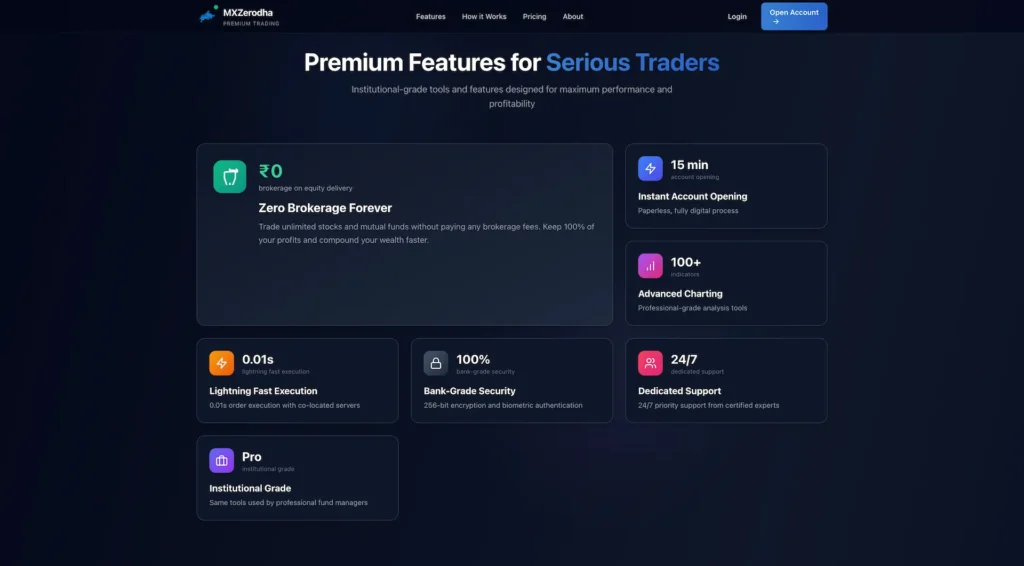
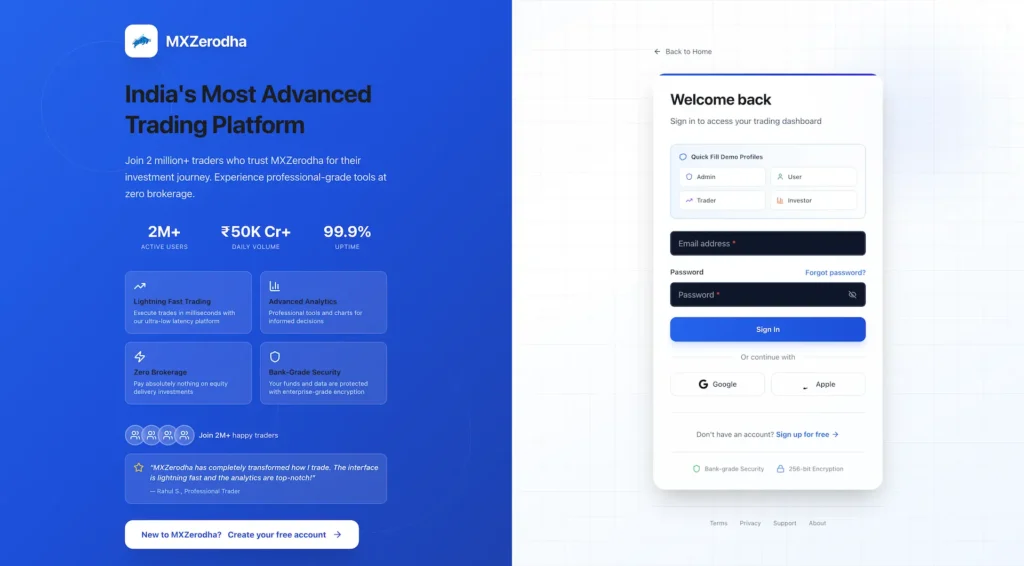
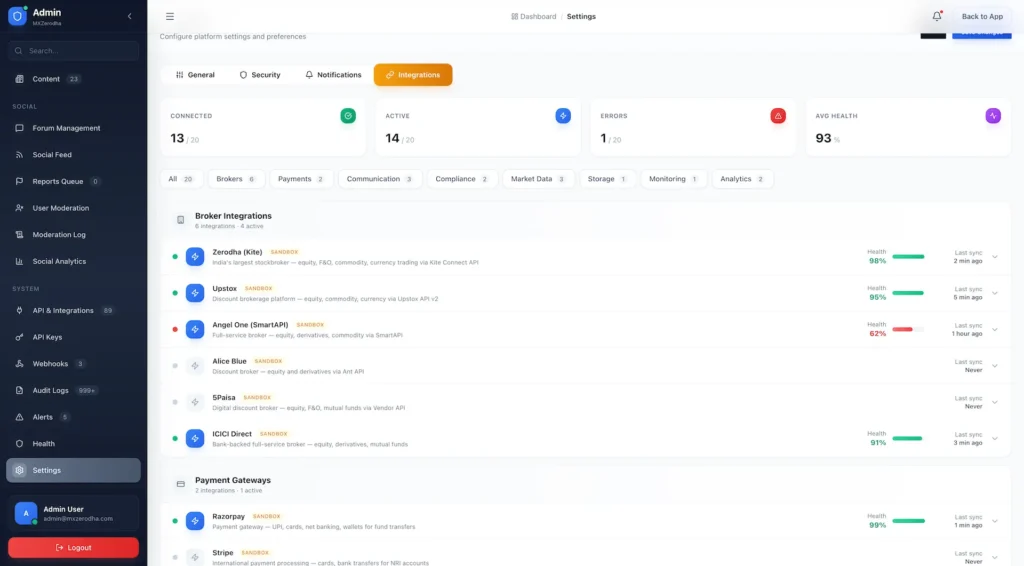
Trading Platform Demo - Live Platform, Admin Dashboard, Investor Portal & Android App
Rather than take our word for it, open the platform yourself. Four live environments, real credentials, nothing to set up. Explore every layer before committing.
TRADER WEB APP
Trader Web App
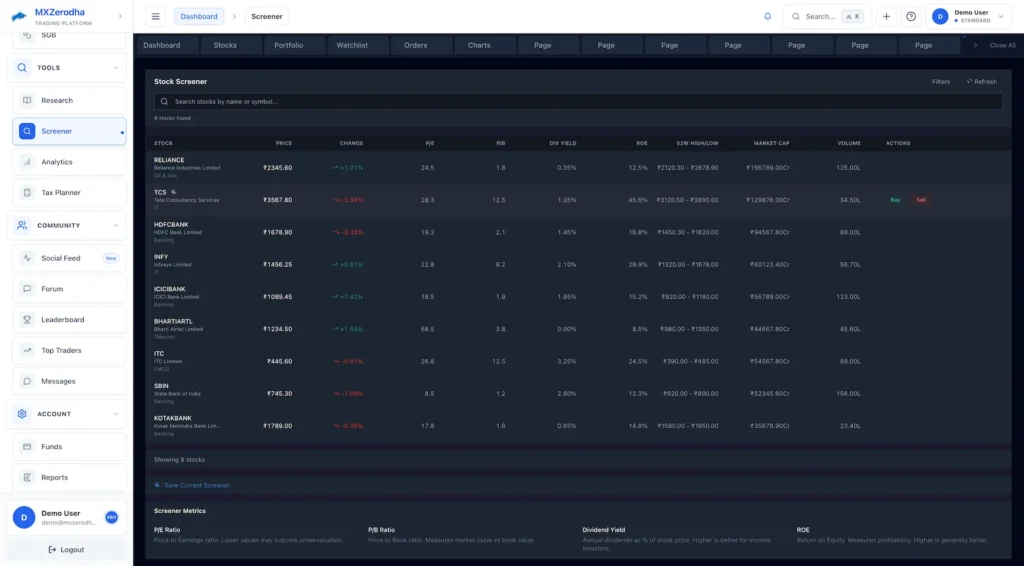
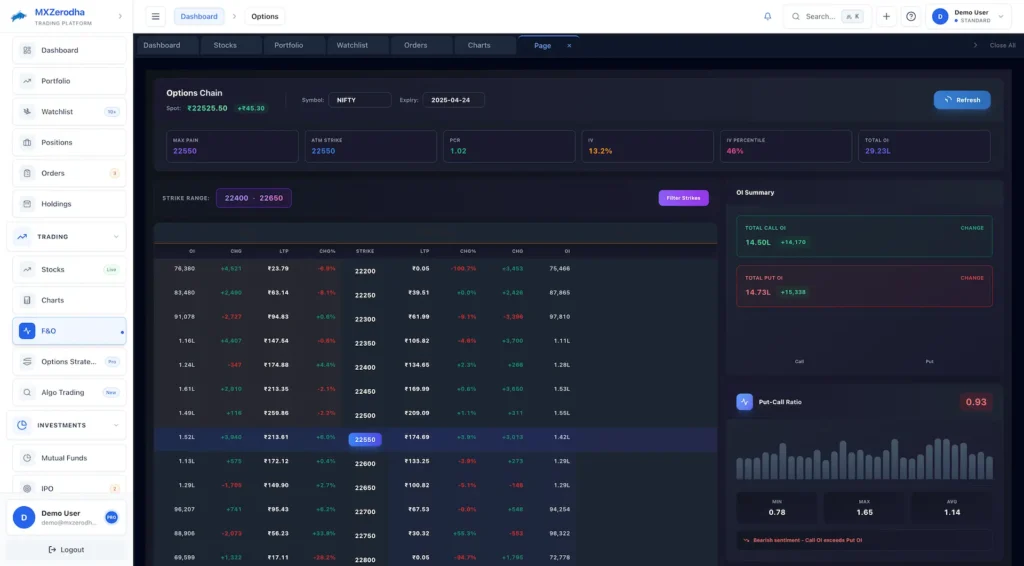
The full trading terminal: live order entry, market depth, options chain, positions, holdings and real-time profit and loss across every connected broker.
-
Open the web app in your browser
-
Login with the demo credentials below
-
Explore: Order entry, Positions, Holdings, GTT
-
Try: trader@mxzodha.com | Demo@123
INVESTOR PORTAL
Long-Term Investor Portal
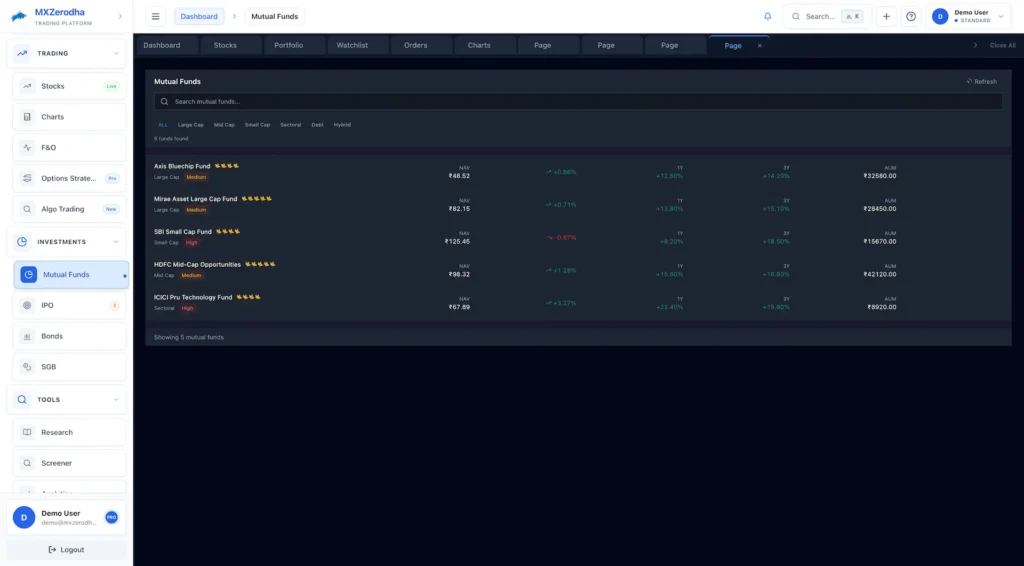
Built for delivery investors: mutual fund SIPs, IPO applications, portfolio analytics, tax reporting and sector allocation in a single view.
-
Open the investor portal in your browser
-
Login with the demo credentials below
-
Explore: Holdings, SIPs, IPOs, Tax reports
-
Try: investor@mxzodha.com | Demo@123
ADMIN DASHBOARD
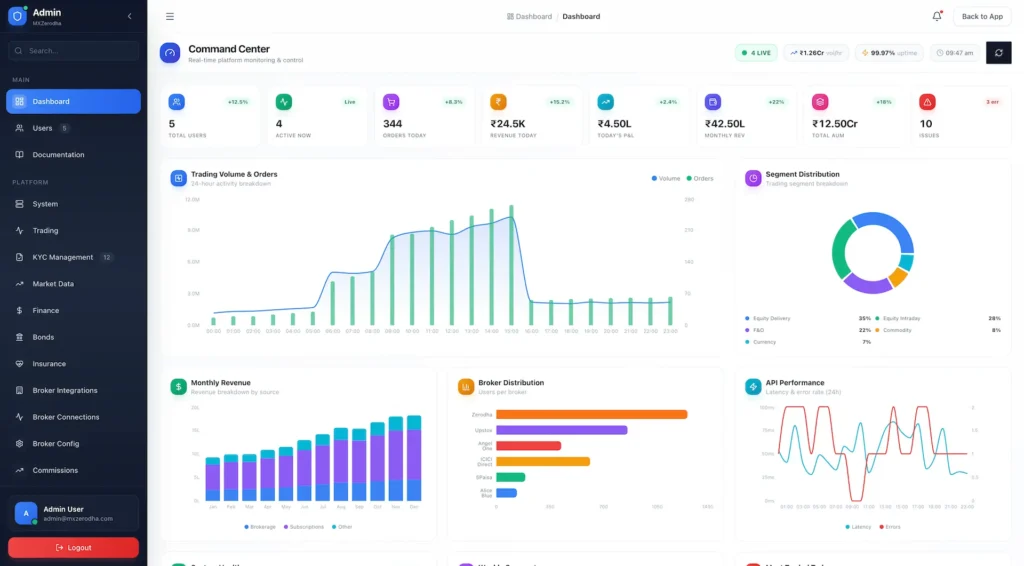
Web-Based Admin Dashboard
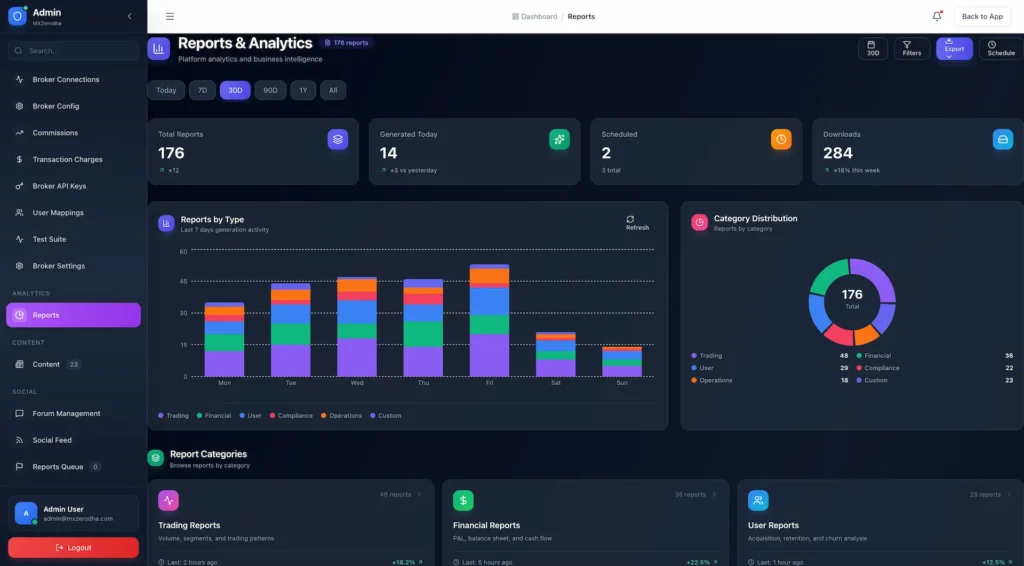
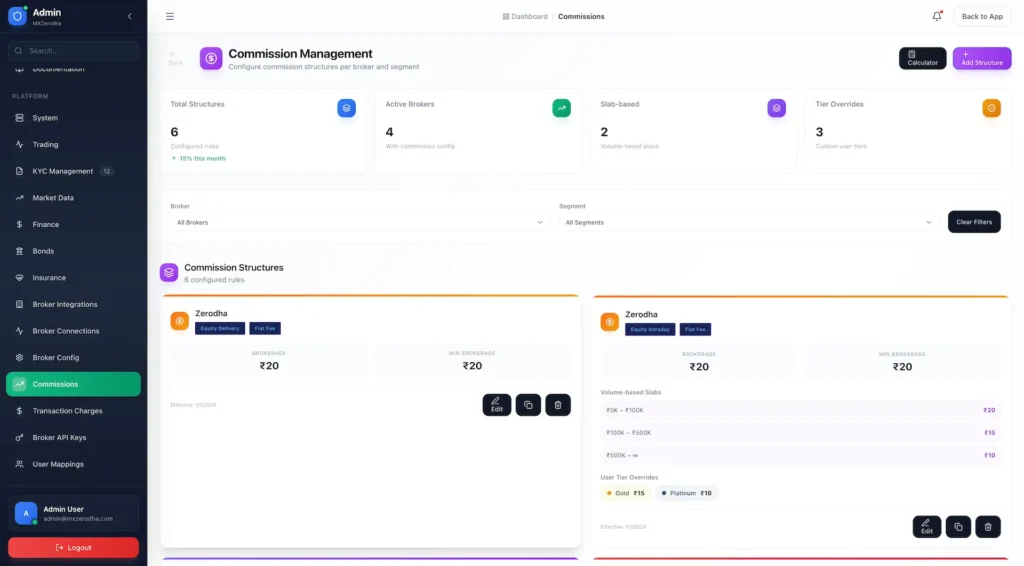
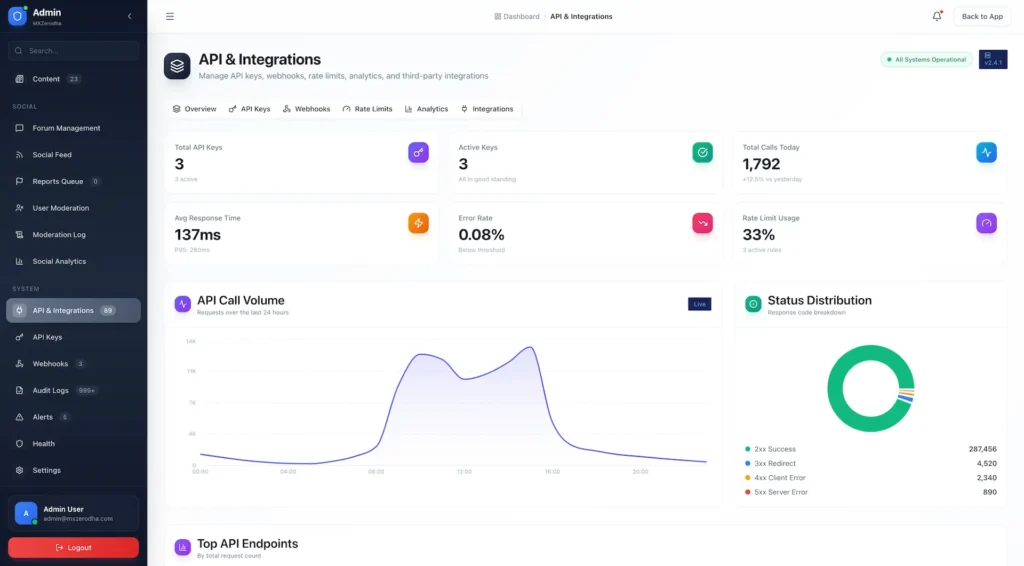
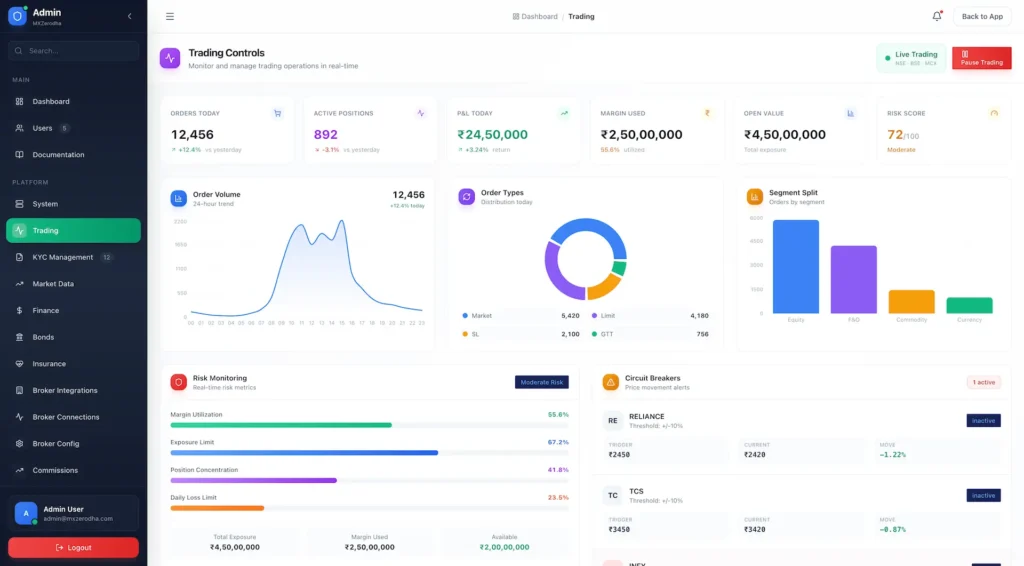
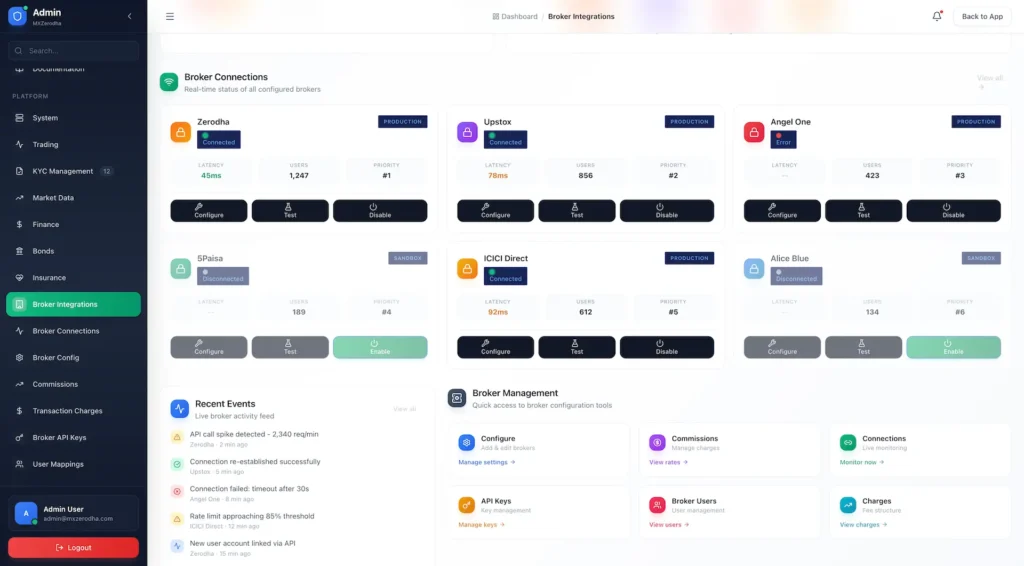
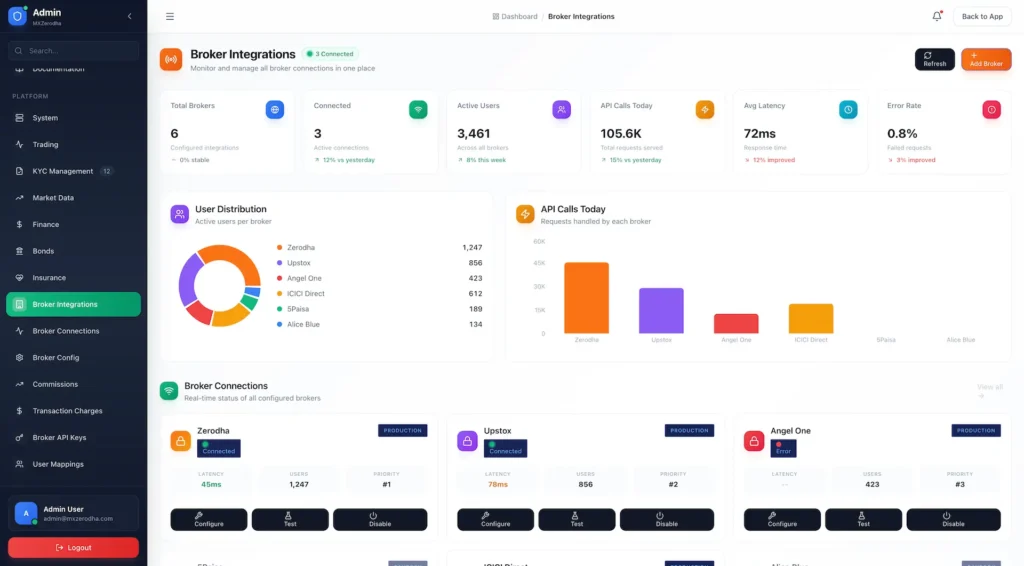
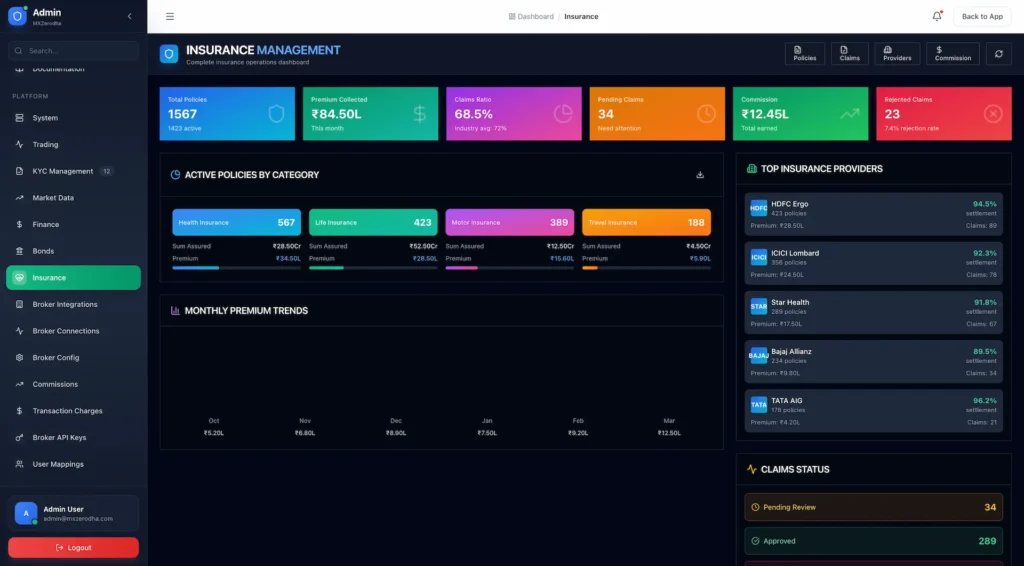
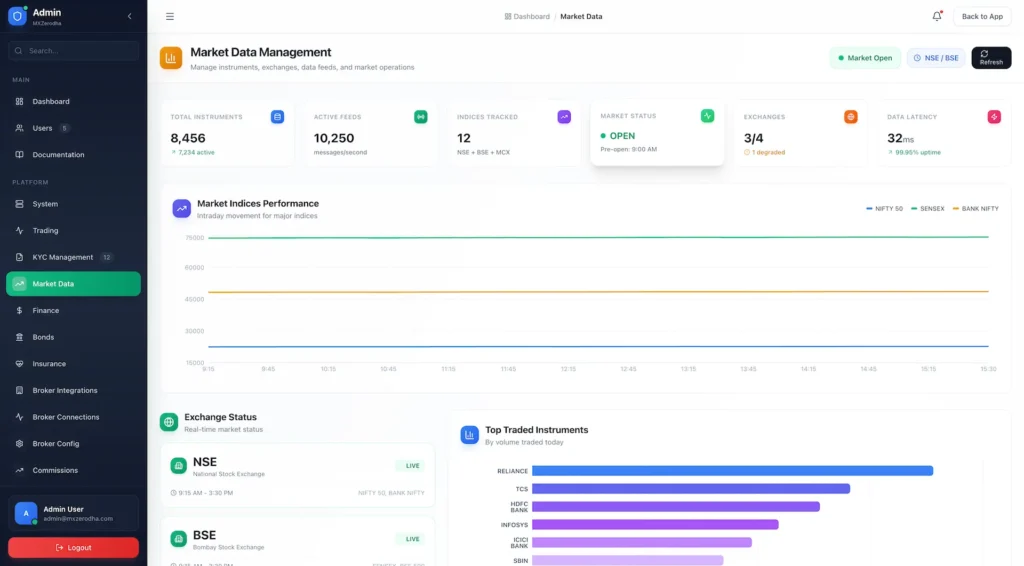
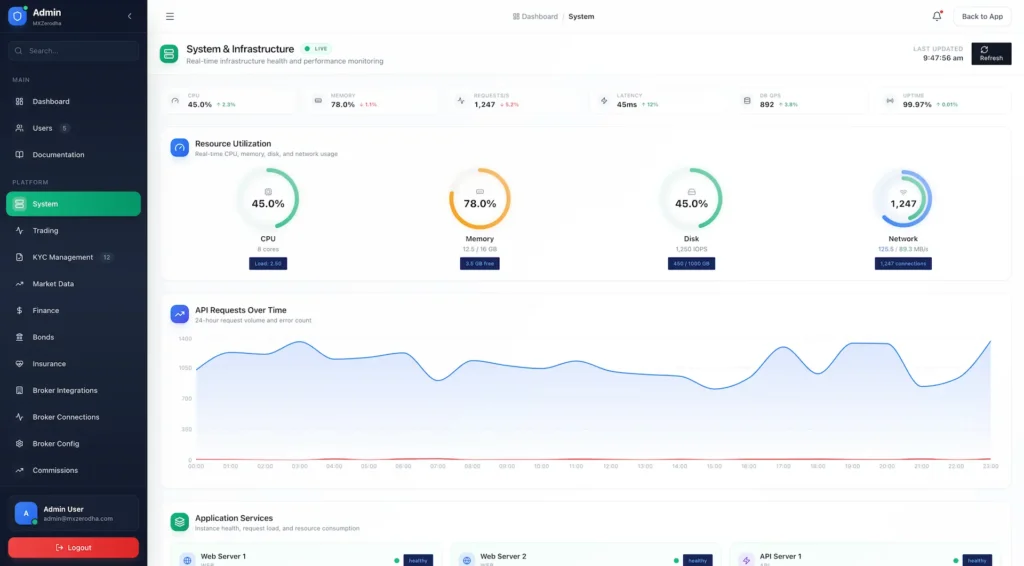
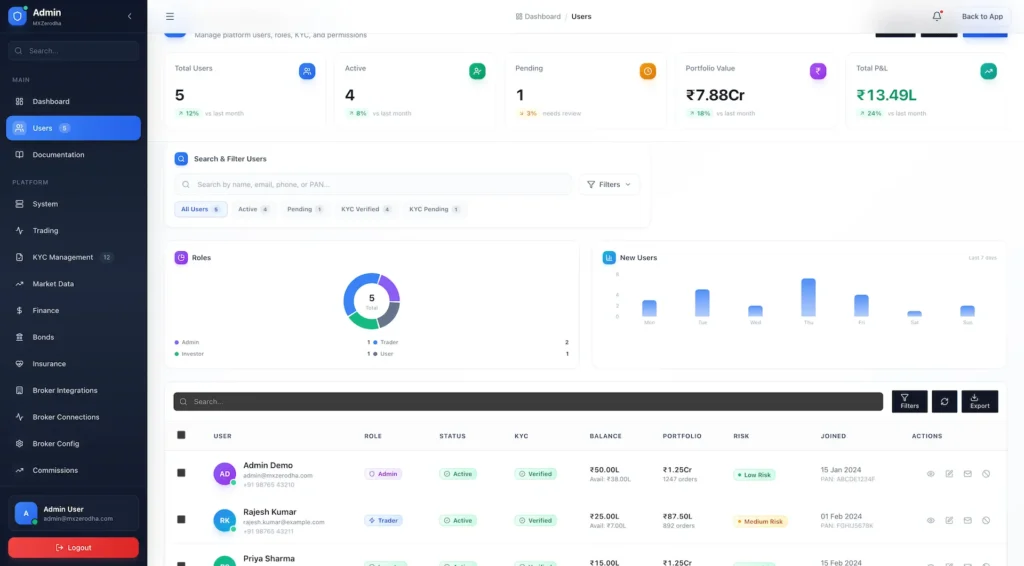
Twenty-eight-plus operational sections covering user and KYC management, broker connections, risk controls, finance, audit logs and system health.
-
Open the admin panel in your browser
-
Login with the demo credentials below
-
Explore: Users, KYC, Brokers, Risk, Finance
-
Try: admin@mxzodha.com | Demo@123
ANDROID APP
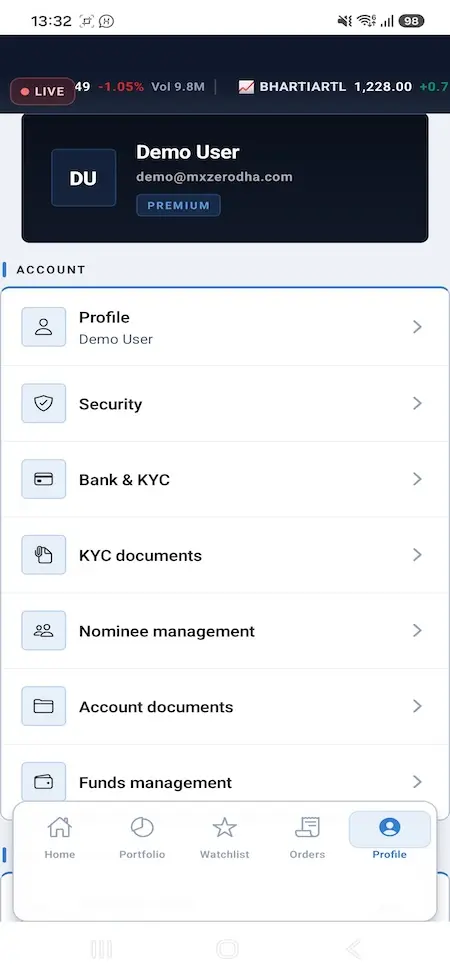
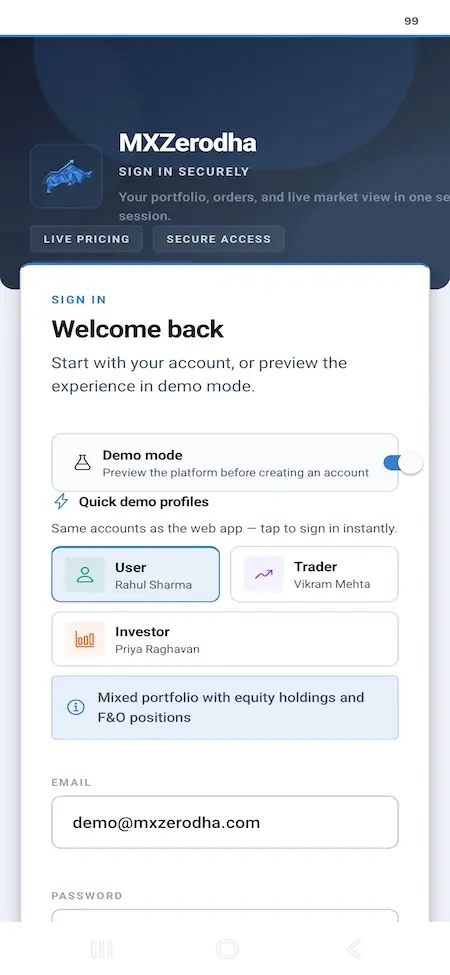
Android App
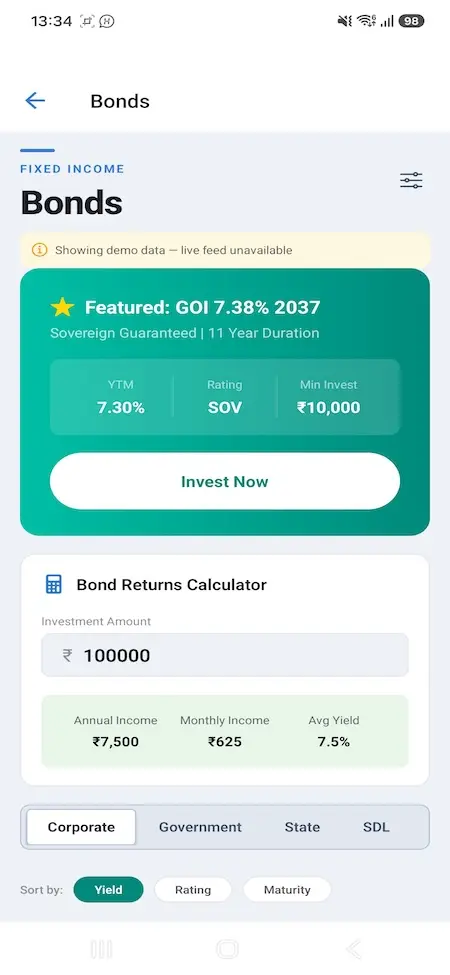
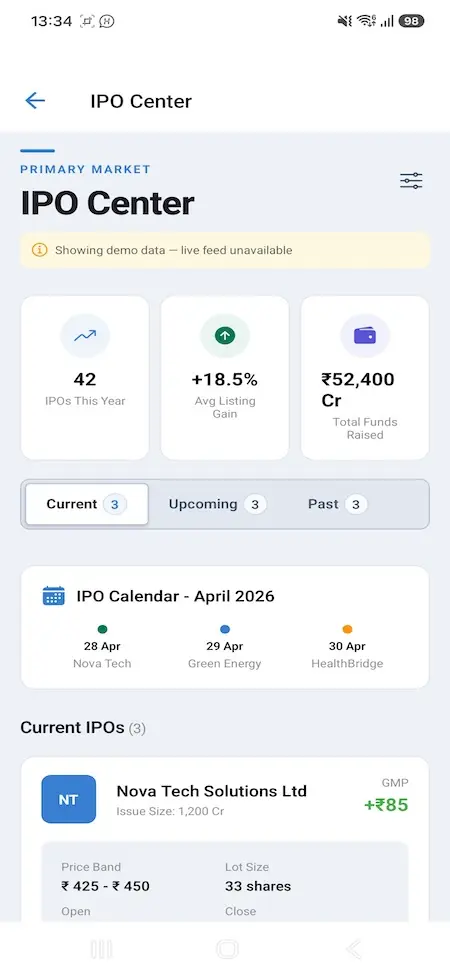
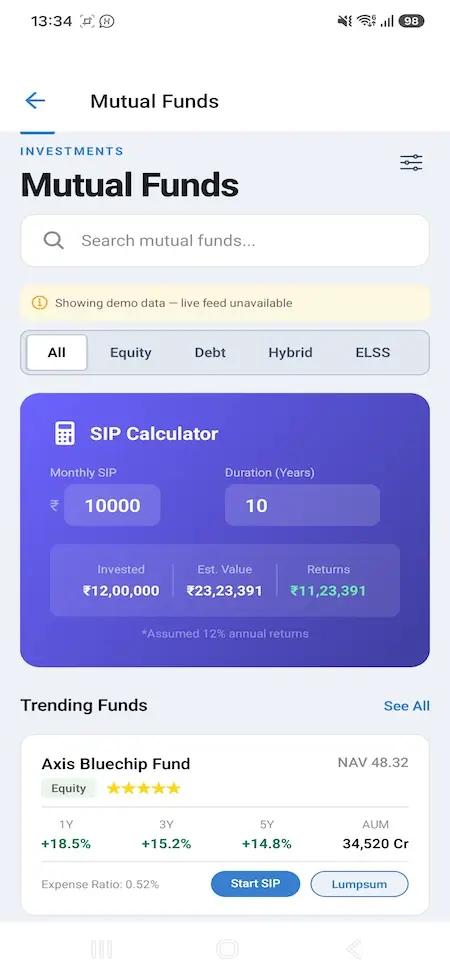
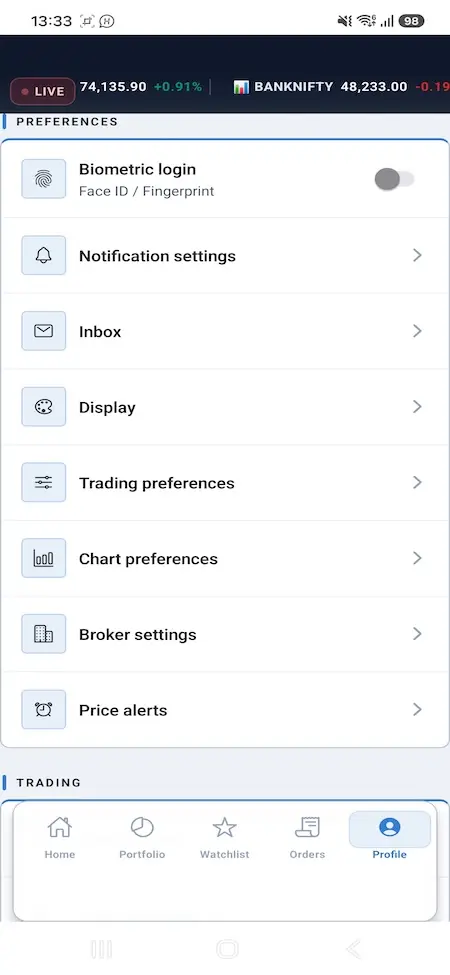
Branded mobile trading with push notifications for fills, price alerts and margin calls, plus biometric sign-in and an offline portfolio view.
-
Download the app to your Android device
-
Login with the demo credentials below
-
Explore: Orders, Positions, Alerts, Portfolio
-
Try: demo@mxzodha.com | Demo@123
Watch It Work
Video Demo: Multi-Broker Flow, Algo Engine & Admin Walkthrough
Prefer a guided walkthrough? Book thirty minutes with the team and map the launch – broker set, market segments, algo strategies and go-live timeline.
Every Screen Mapped
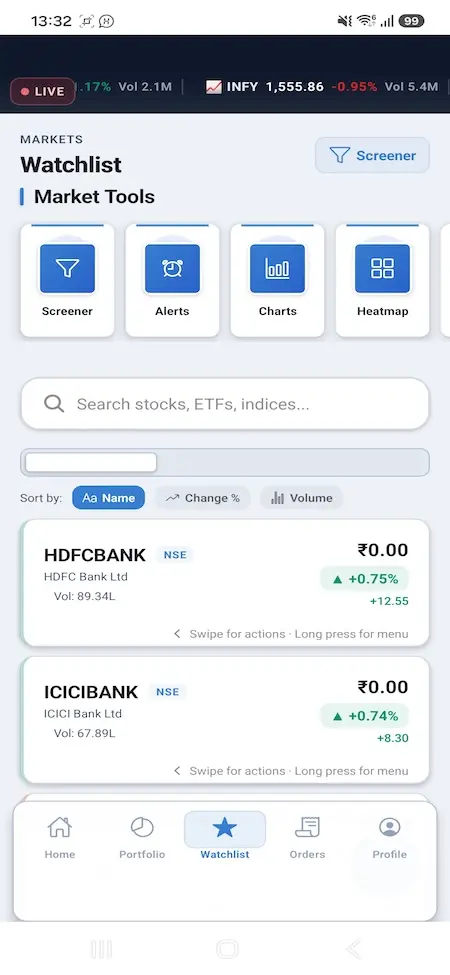
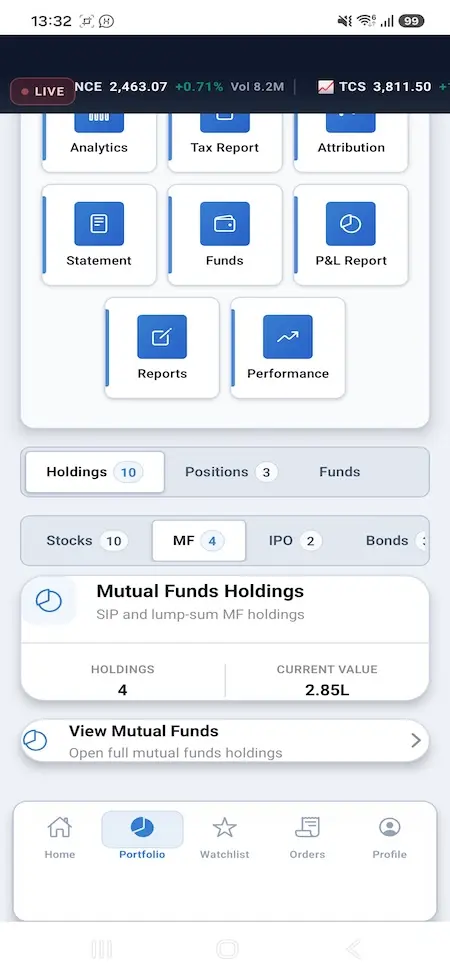
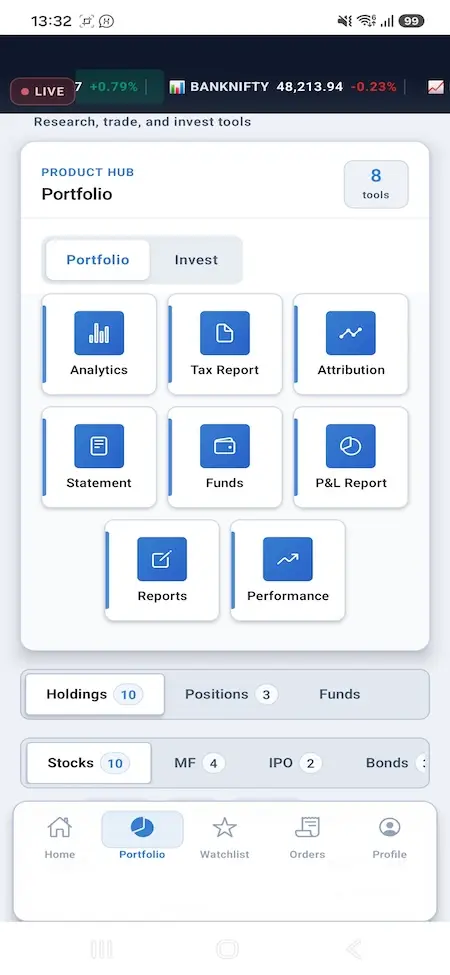
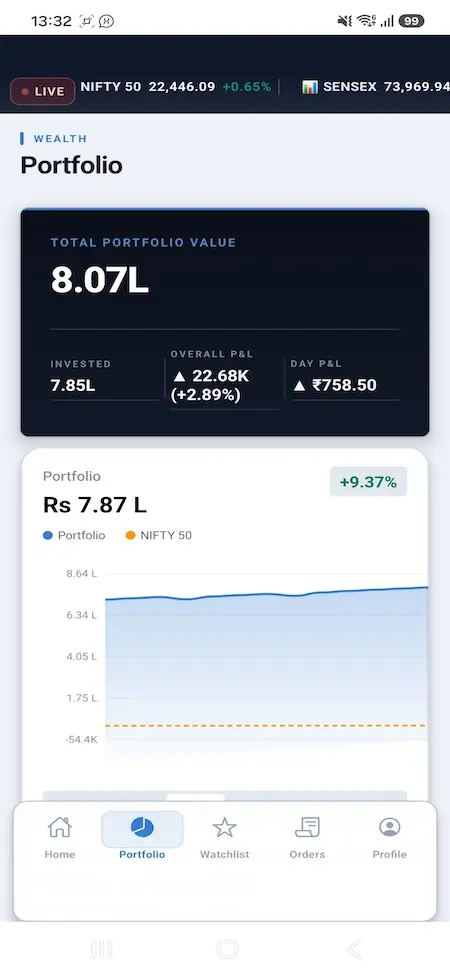
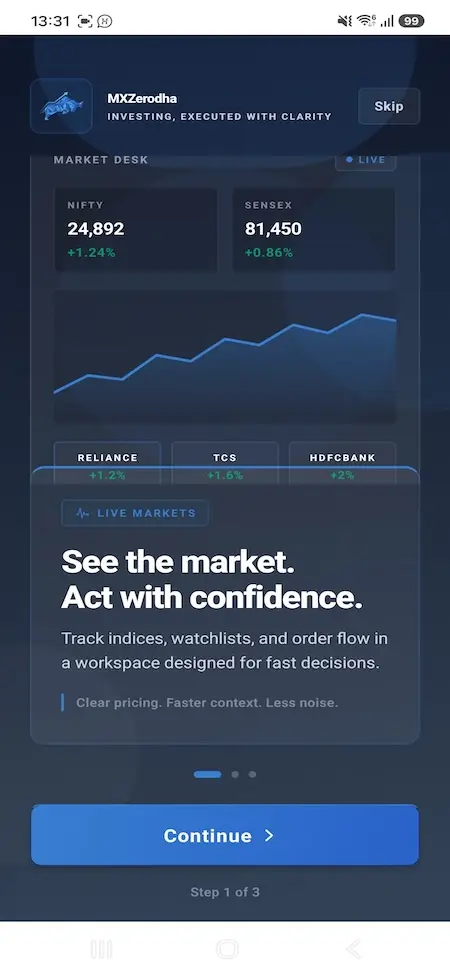
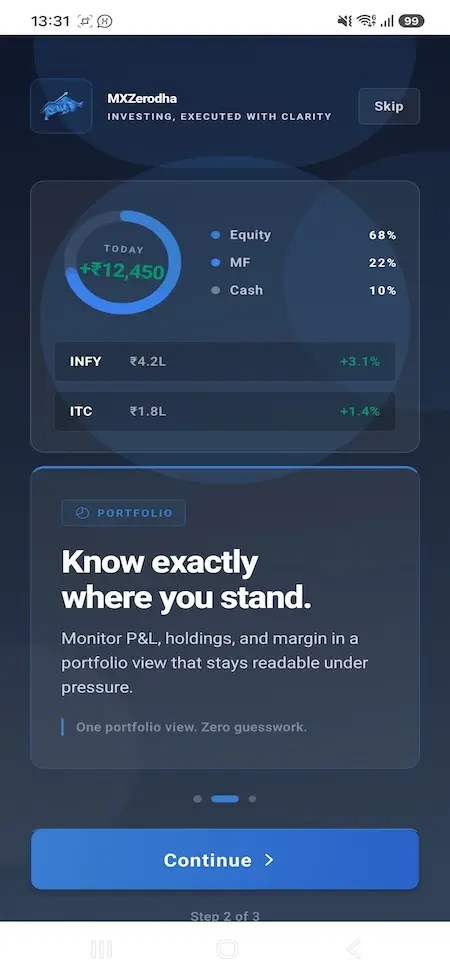
App Flows - Trader, Investor, Admin & Broker Screens
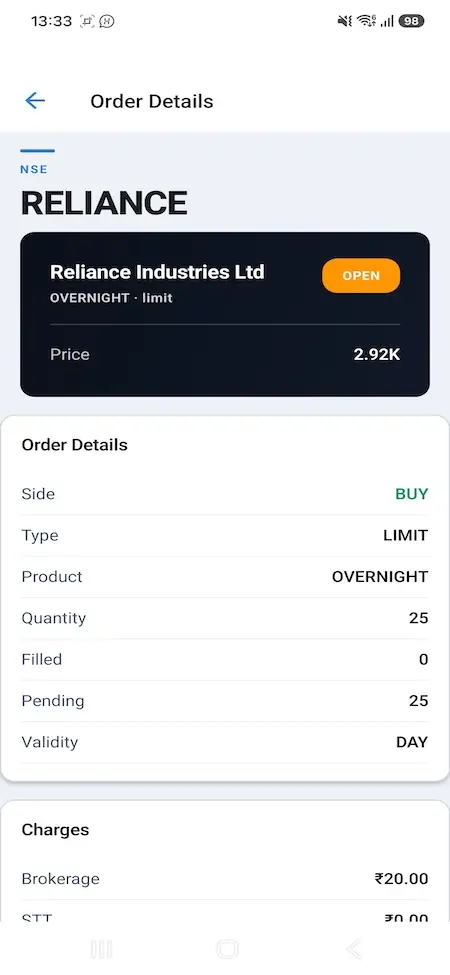
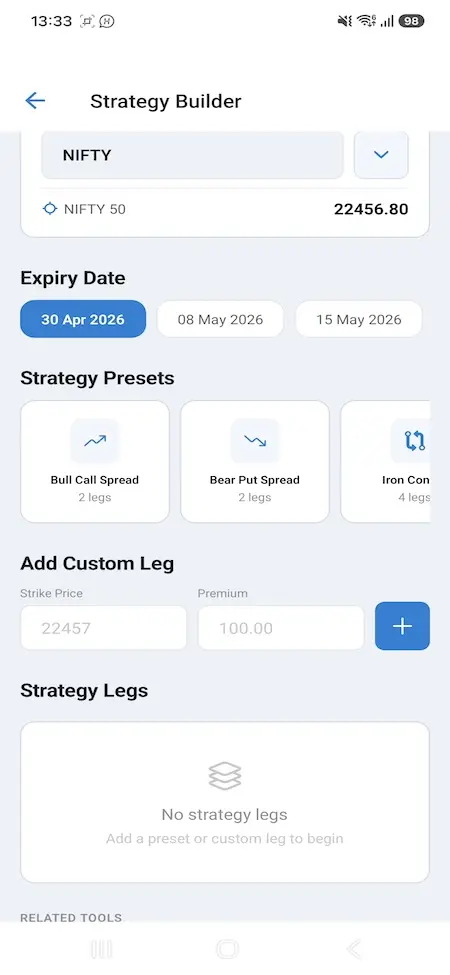
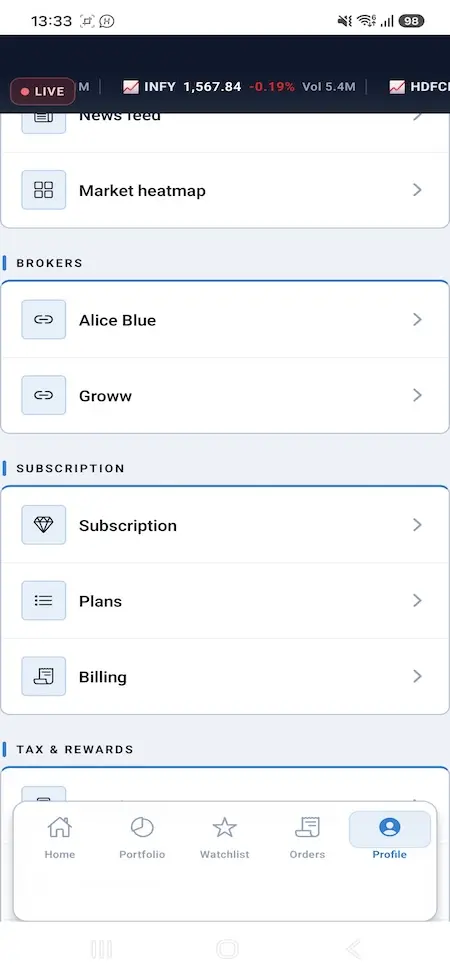
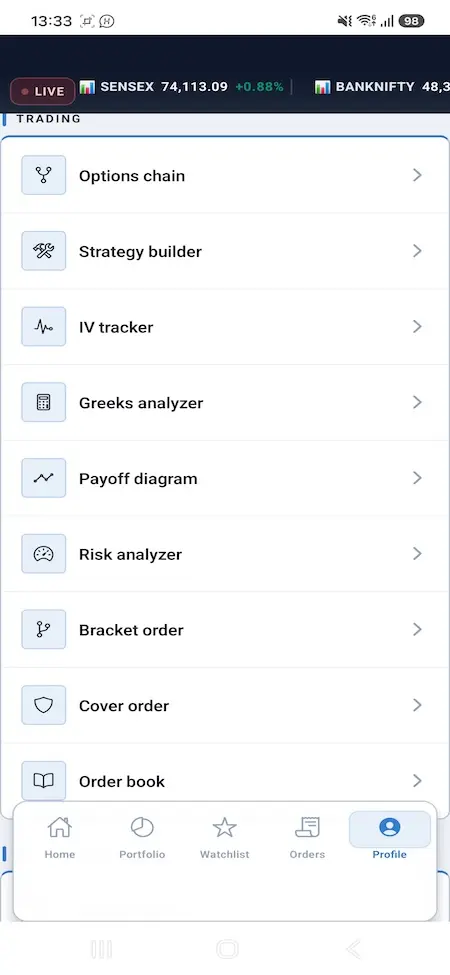
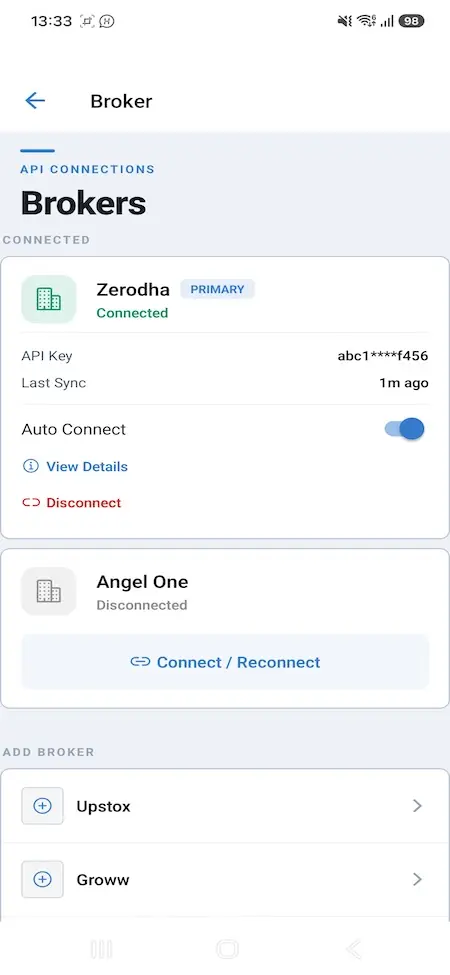
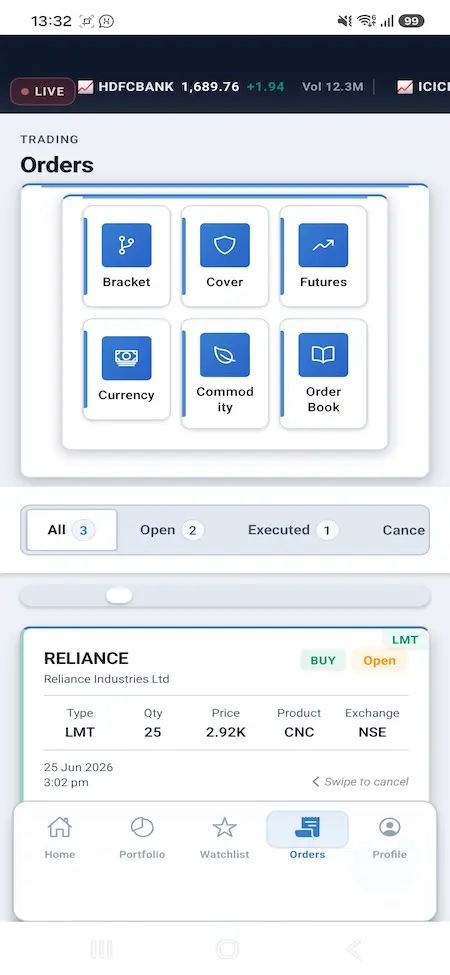
See precisely how each part behaves. The step-by-step flows cover traders, investors, administrators and broker operators in turn.

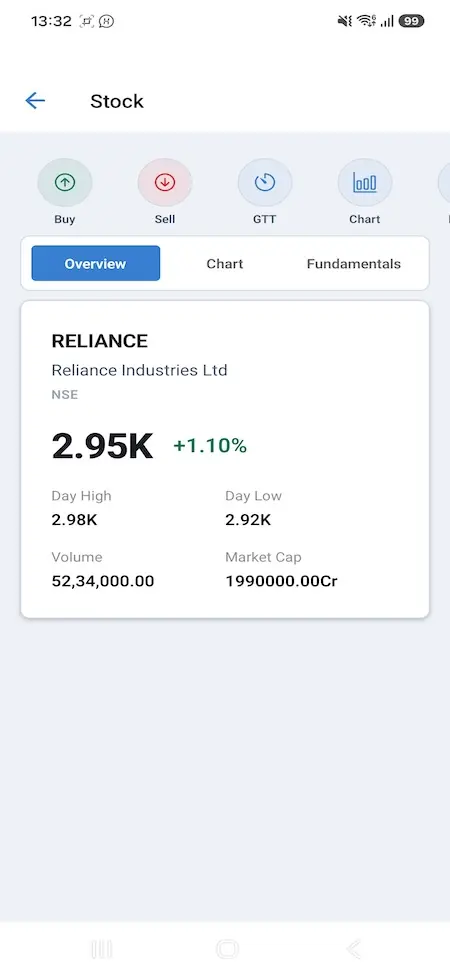
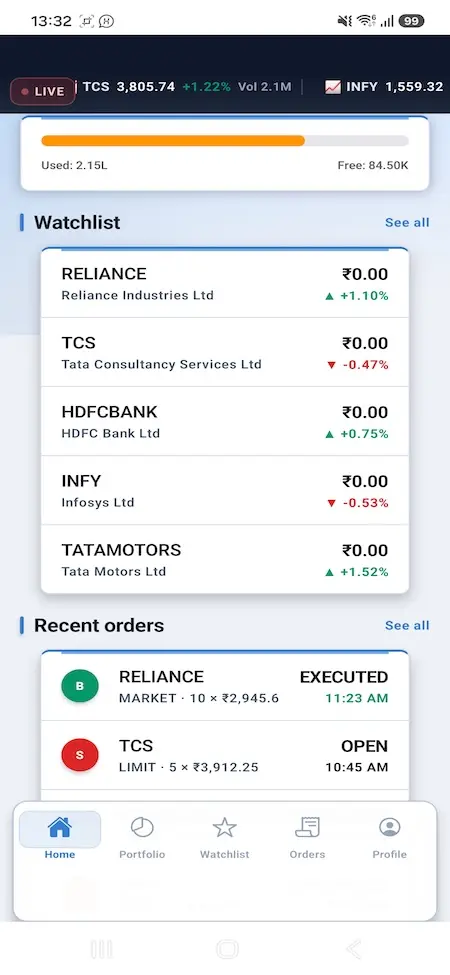
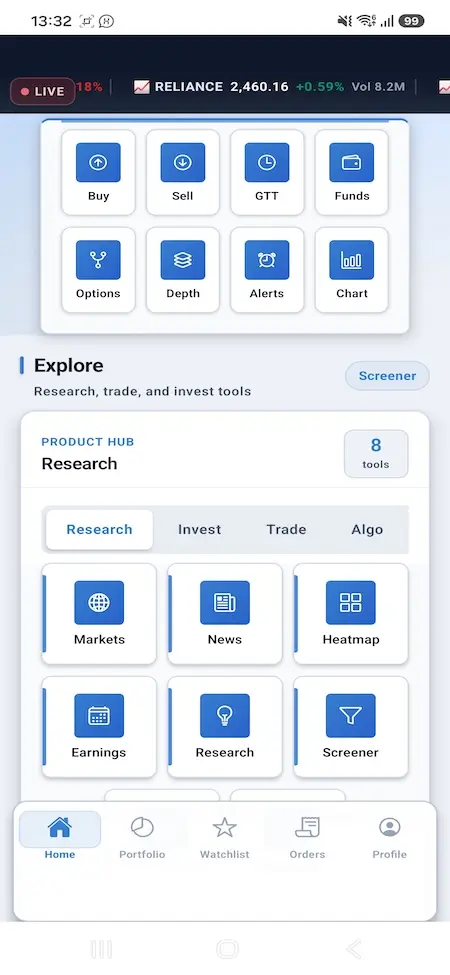
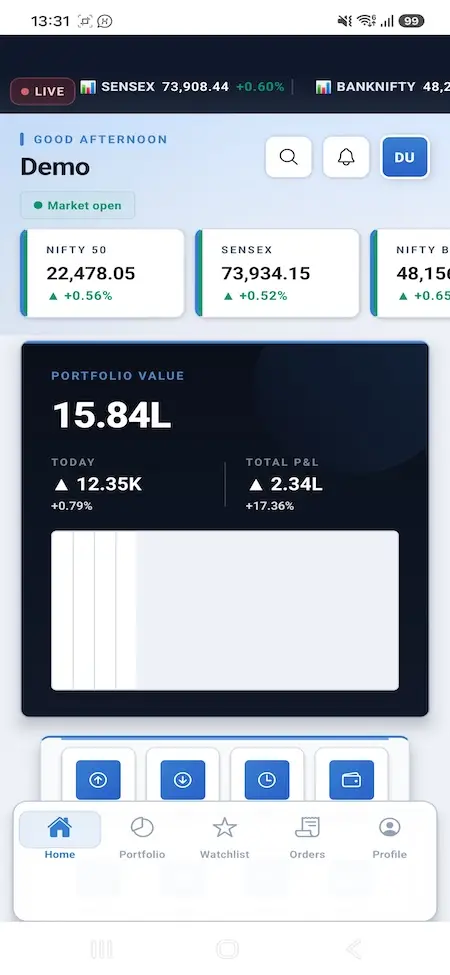
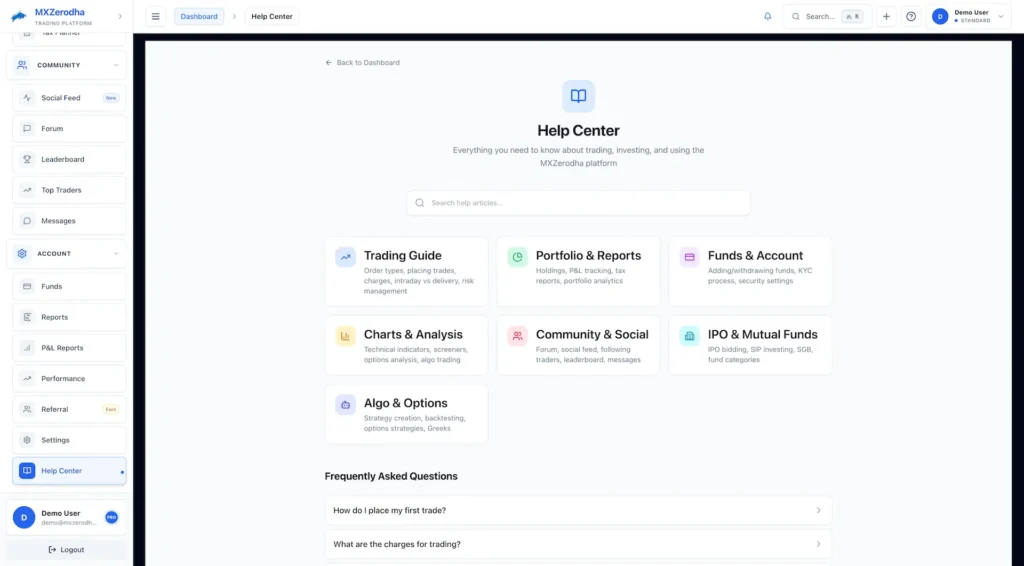
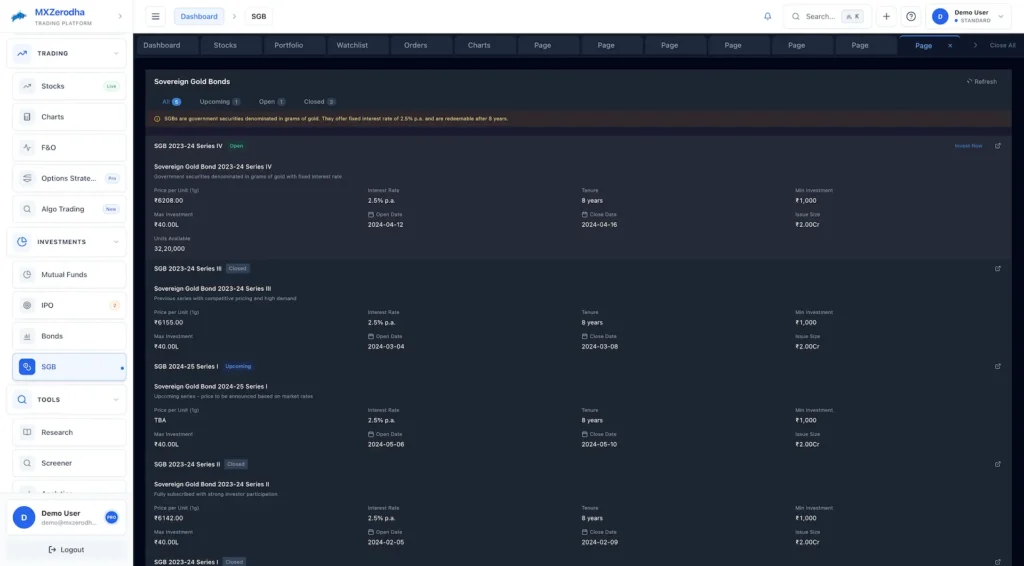
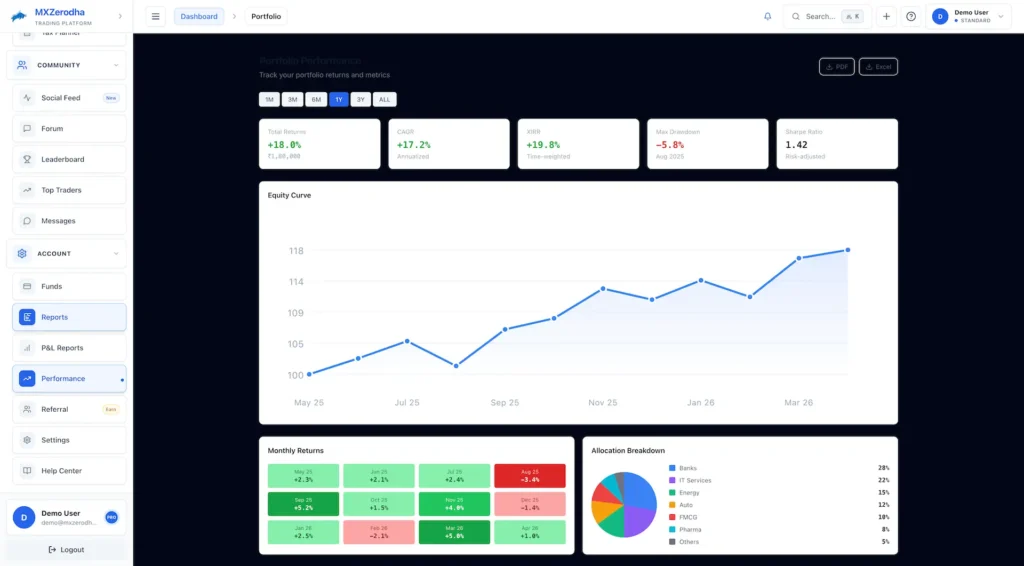
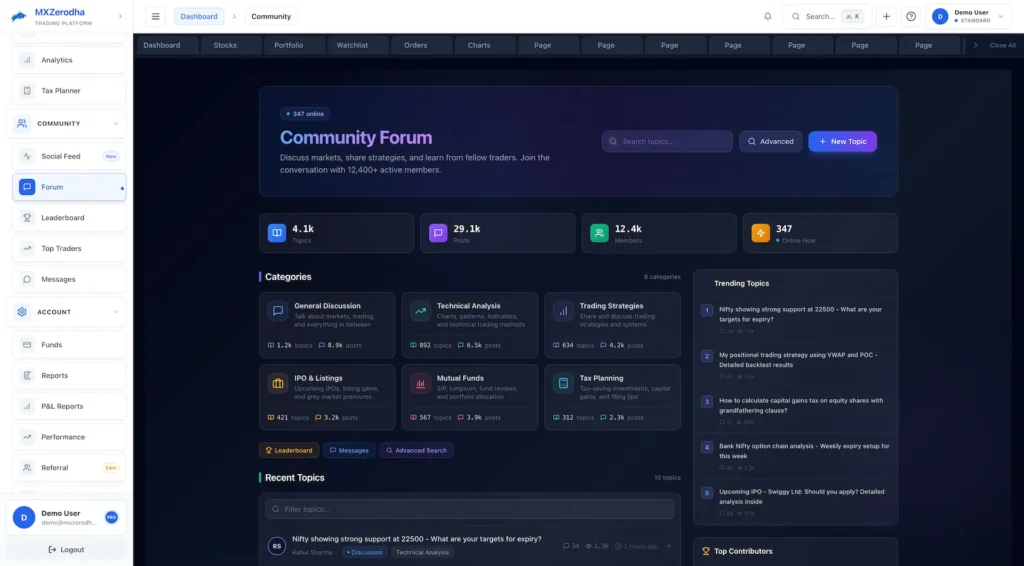
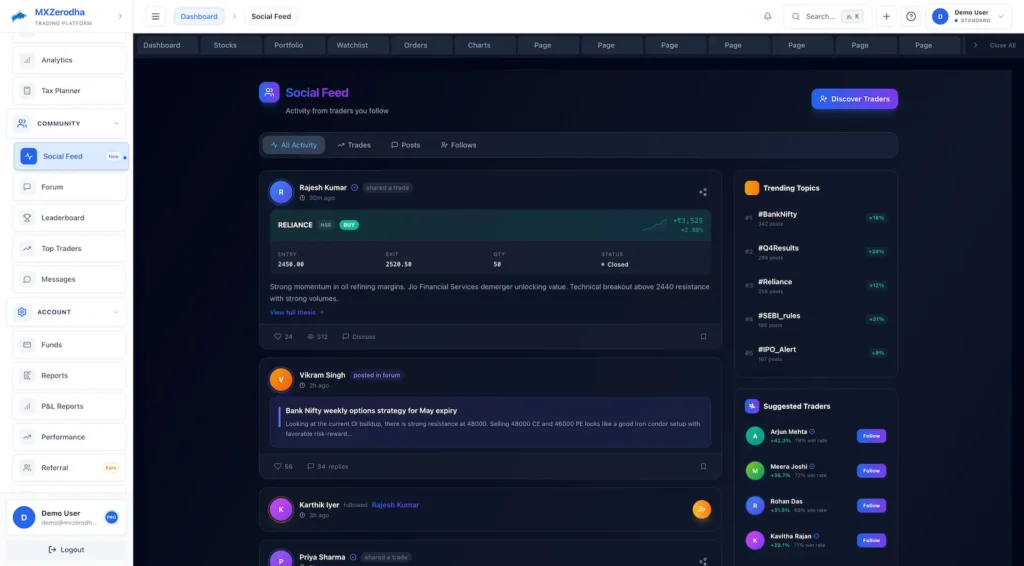
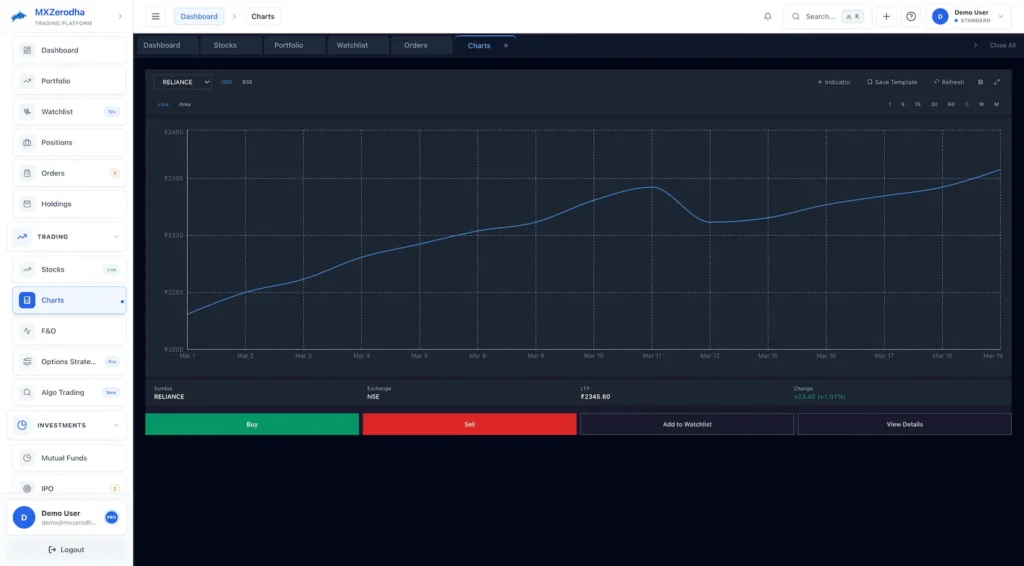
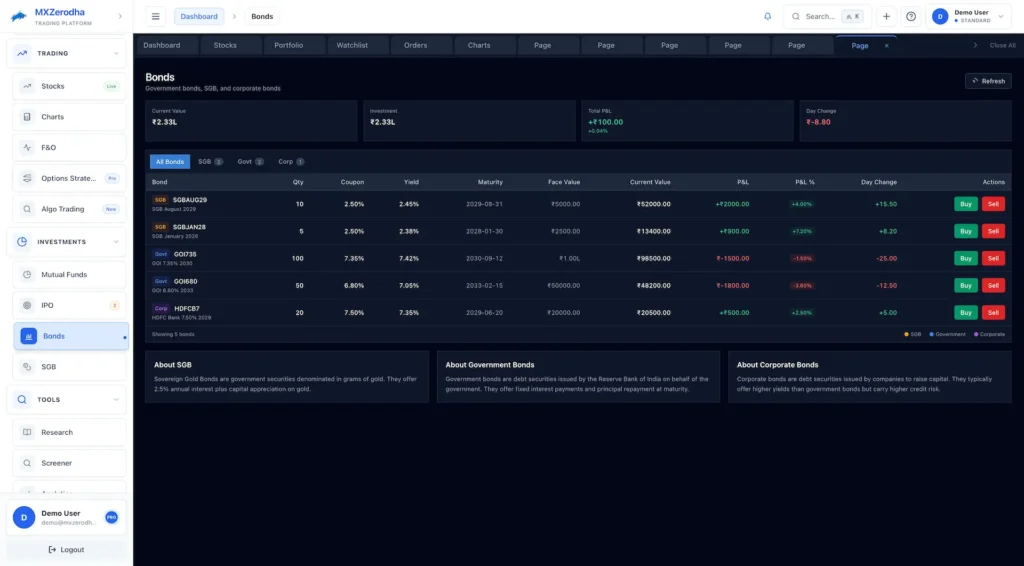
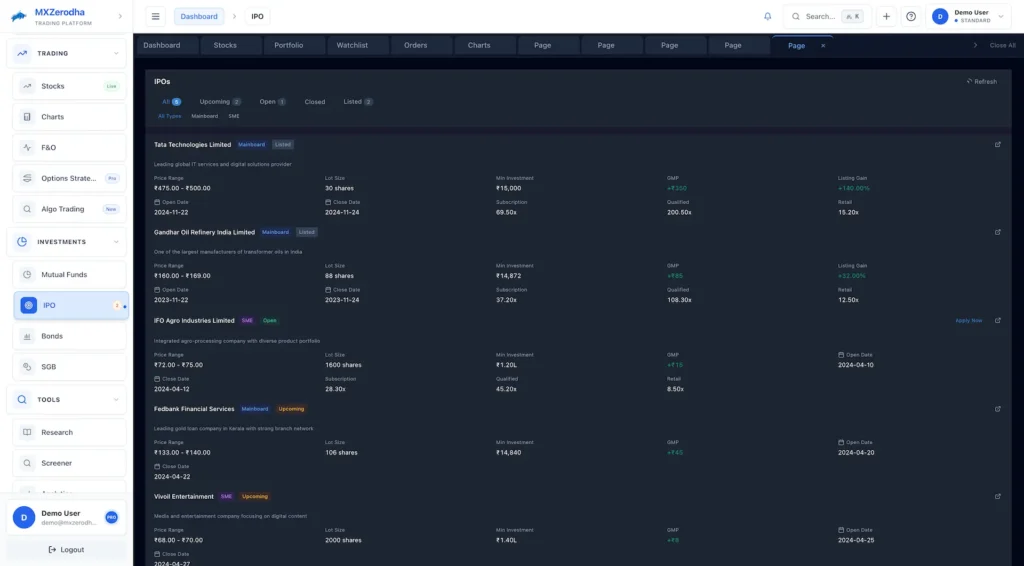
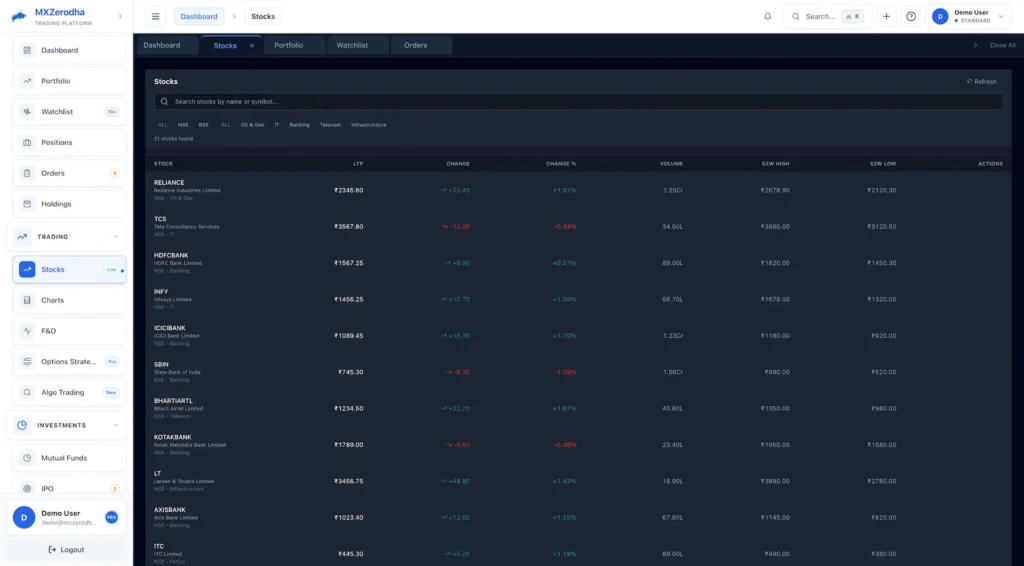
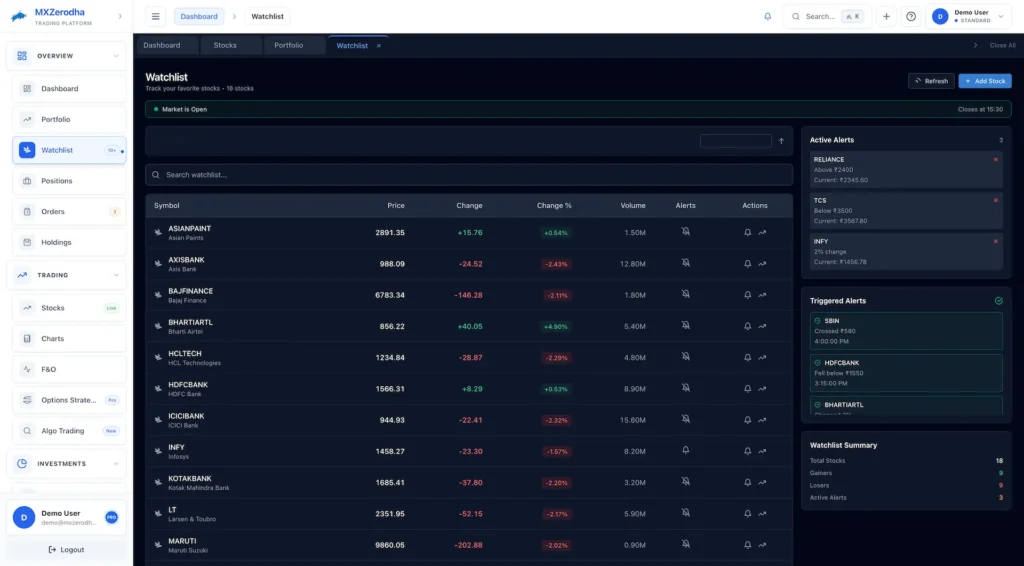
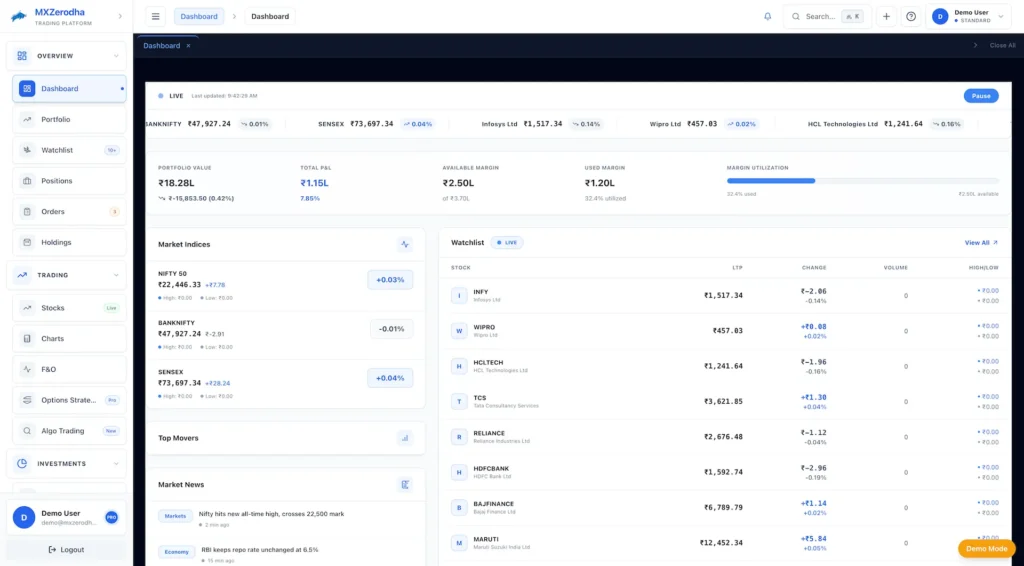
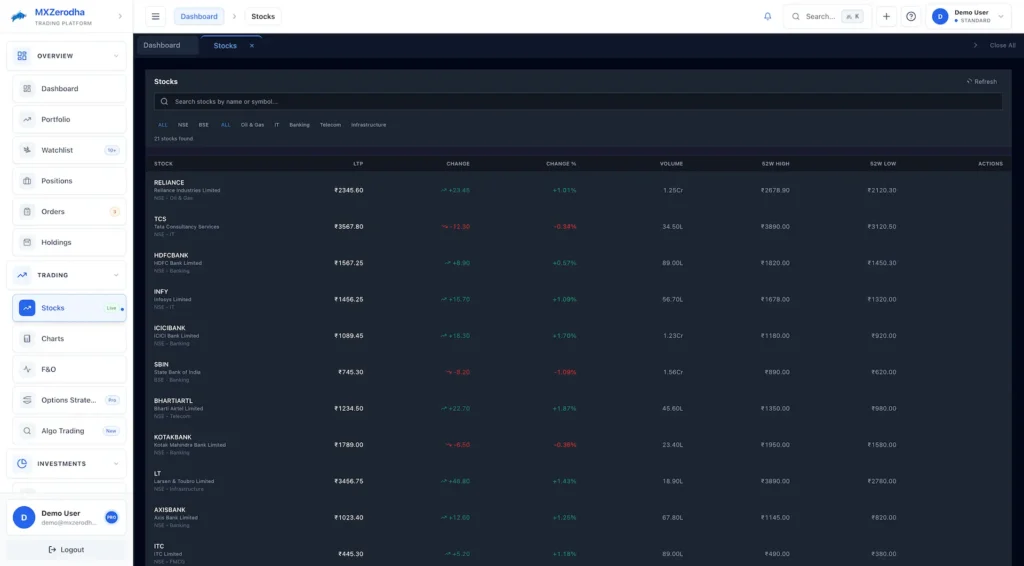
Want a guided walkthrough of any specific flow?
Client Voices
Client Reviews - Real Platforms, Real Results
Feedback from founders and brokerages who launched trading platforms with Miracuves. Client identities withheld under NDA.


Proof in Production
Case Study - Multi-Broker Trading Platform Deployment
How a trading operator launched a multi-broker platform on the Miracuves stack. Client identity withheld under NDA.
Confidential Deployment
Multi-Broker Trading Platform
A production trading platform connecting multiple Indian brokers under one unified order layer.
- Maintaining eight broker integrations without a dedicated team
- Unified portfolio and P&L across separate broker accounts
- SEBI-aligned KYC, audit trails and retention from day one
- Launch a multi-broker trading platform without building integrations
- Give traders one order book across every broker they already use
- Give the operations team one console for orders, risk and reconciliation
- A unified order layer routing to eight broker APIs
- Consolidated portfolio and P&L across every linked account
- Strategy builder with paper trading before live deployment
- KYC, audit trail and retention workflows aligned to SEBI
- Auto-scaling infrastructure sized for market-open load
"Eight broker connections behind one order screen is what our desk actually needed. The consolidated P&L ended the morning reconciliation spreadsheet."
The Basics
What Is White Label Trading Software?
What carries your brand. The web platform, the branded Android build, the operator console, and every transactional email and statement a trader receives. The app reaches the store under your own developer account, and nothing in the interface points back to us.
What you own outright. The complete monorepo: Next.js frontend, NestJS backend, Prisma schema, shared packages and all seven SDKs, with no encrypted files. The PostgreSQL database and every record in it. The broker API credentials and gateway accounts, because those agreements are yours to hold.
What white label does not mean. It is not a hosted tenancy on somebody else’s brokerage stack, and not a reskin rented by the month. If a provider keeps the source, controls the deployment, or takes a share of your brokerage, that is a SaaS licence with your logo on it. This is a handover.
White label trading software is a ready-made brokerage platform you launch under your own name. It carries what traders now expect as standard: order placement, live market data, portfolio tracking, watchlists and charting, together with capabilities that single-broker applications rarely offer. This is a working product foundation rather than a demonstration.
Web, Mobile & Programmatic
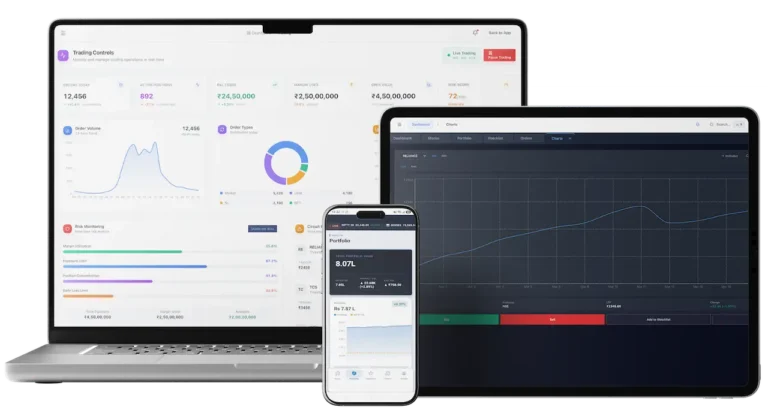
A responsive web platform, a branded Android app and an SDK in seven languages, all served by one backend.
Every Indian Market Segment
Equity, futures, options, commodities, currency, ETFs, IPOs, mutual funds and bonds under one login.
Broker-Agnostic by Design
Adding a broker means writing one adapter - orders, trades and positions never change.
Built for Web, Android & API
What Is It?
The architecture is where the commercial difference sits. Instead of tying your platform to a single brokerage, it sits above eight broker APIs behind one abstraction layer. Users connect the accounts they already hold and see a single portfolio, a single order book and a single profit-and-loss position across all of them. Adding another broker is a configuration exercise rather than a rebuild.
-
8 broker integrations, one order layer
-
5 algo strategies with paper trading
-
Real-time data from 5 aggregated sources
-
28+ admin sections, no custom tooling
-
Cloud, on-premise or hybrid deployment
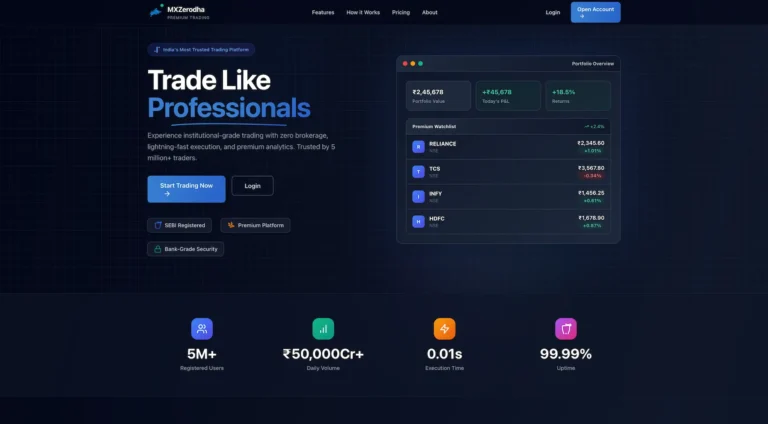
What a working trading operation needs arrives as one system: algorithmic execution with five prebuilt strategies, real-time WebSocket data aggregated from five sources, social and copy trading, two payment gateways, full reporting, and an admin console running to twenty-eight sections. Because everything shares one data model, those parts actually talk to each other rather than being stitched together after the fact.
Everything Included
Trading Features - Multi-Broker Orders, Algo Engine & Real-Time Market Data
The platform ships with what traders expect from a modern Indian broking product, and what operators need in order to run one profitably from the first day.
Complete Order Suite
Market, limit, stop-loss and SL-M orders carrying day and IOC validity, with modification and instant cancellation.
- Market, limit, SL and SL-M order types
- Day and IOC validity
- Modify price, quantity and disclosed quantity
- Cancel in real time
Advanced Order Types
Bracket, cover, AMO, basket, iceberg and smart-routed orders for disciplined execution and lower market impact.
- Bracket orders with target and stop-loss legs
- Cover orders with mandatory SL
- AMO for after-hours placement
- Basket and iceberg execution
GTT - Good Till Triggered
Server-side triggers that fire while the user is offline, supporting single-leg, two-leg and OCO conditions.
- Single-leg, two-leg and OCO trigger conditions
- Server-side evaluation
- Fires when the user is offline
- Full trigger history retained
Multi-Broker Connectivity
Eight broker integrations behind a single order layer. Adding another leaves order, trade and position logic untouched.
- Zerodha, Upstox, 5 Paisa, Alice Blue
- Angel One, ICICI Direct, Groww
- Demo broker for onboarding
- One adapter interface per broker
Algo Trading Engine
Five prebuilt strategies with visual configuration, paper trading, live deployment and real-time performance dashboards.
- Breakout, mean reversion, momentum
- Grid and scalping strategies
- Paper trading before live capital
- Pause and resume without losing config
Real-Time Market Data
Five aggregated sources, WebSocket delivery under 200ms, 5x5 market depth and several candle timeframes.
- NSE, Yahoo, AlphaVantage, TradingView, Investing
- WebSocket delivery with Redis fan-out
- 5×5 market depth
- Automatic source failover
Options Chain & Greeks
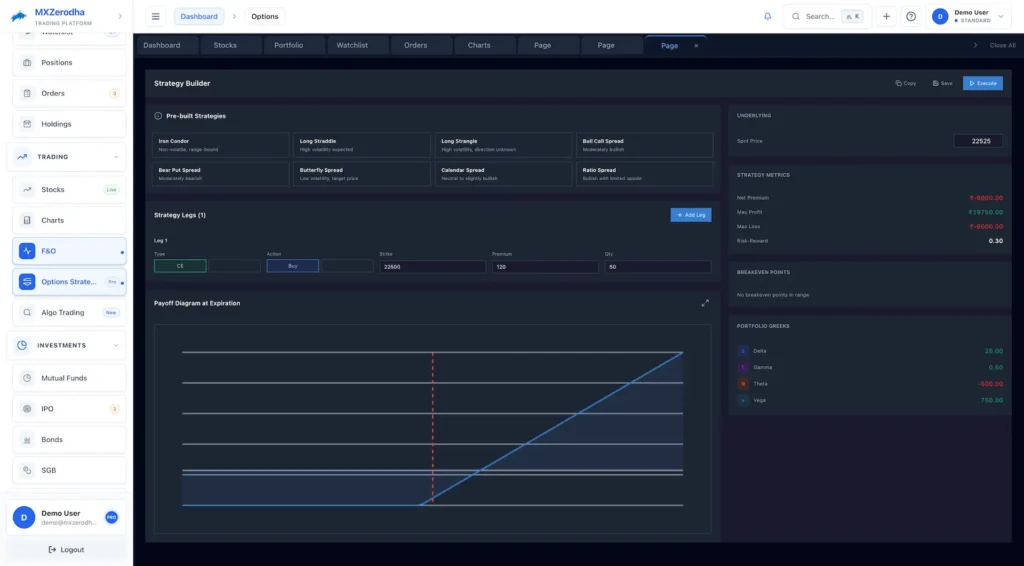
A full options chain with delta, gamma, theta and vega per position, IV rank, and a multi-leg strategy builder.
- Full chain with strike selection
- Delta, gamma, theta and vega per position
- IV rank and percentiles
- Multi-leg strategy builder
Unified Portfolio View
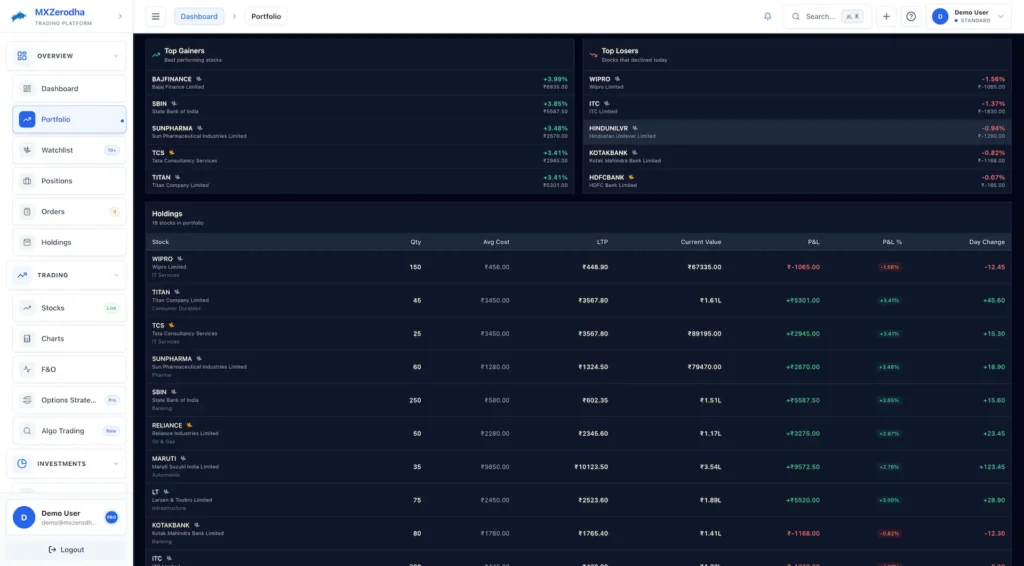
Holdings, positions and margin aggregated across every connected broker, with live mark-to-market profit and loss.
- Holdings and positions across all brokers
- Live mark-to-market P&L
- Average cost and day change
- Sector allocation breakdown
Risk & Margin Engine
Per-user limits, progressive margin warnings at 80, 90 and 100 per cent, automated square-off and a complete audit trail.
- Per-user position and order value caps
- Margin warnings at 80/90/100%
- Automated square-off on shortfall
- Immutable square-off audit
Social & Copy Trading
Community feed, forum, leaderboard and copy trading with position sizing and risk limits you configure.
- Community feed and threaded forum
- Performance leaderboard
- Copy trading with risk limits
- Direct messaging between users
Reports & Tax
P&L statements, capital gains, turnover and tax reports exportable to PDF, Excel and CSV.
- Realized and unrealized P&L
- Short and long-term capital gains
- Turnover and tax reports
- PDF, Excel and CSV export
7-Language SDK
JavaScript, Python, Ruby, PHP, Java, C# and Go, with API keys, scopes, rate limits and webhooks.
- JavaScript, Python, Ruby, PHP
- Java, C# and Go clients
- Scoped API keys with rate limits
- Outbound webhooks for platform events
Everything above sits in the base platform. No feature gating, and no per-module licensing.
How Operators Earn
Revenue Models - Brokerage, Subscriptions, API Tiers & Referrals
Brokerage is only one of the ways a trading platform earns, and operators who do well tend to build several lines rather than lean on transaction volume. Every lever below is native to the platform and configured from the admin console.
Per-Trade Brokerage
Brokerage set per segment and per broker, with slab structures and tier overrides configured in admin.
Subscription Tiers
Plans from free to institutional, gating broker count, algo strategies, order limits and API access.
API Access Tiers
Programmatic access sold by rate limit and scope, a natural B2B line for algo traders and partners.
Broker Referral Revenue
Recurring income when users open broker accounts through your platform, by volume or flat referral fee.
Payment Gateway Margin
Transaction fees applied on deposits and withdrawals across Razorpay, Stripe and direct UPI rails.
White-Label Sub-Licensing
Licence your branded platform onward to partner brokers, priced by usage so it scales as they do.
None of that needs a code change or a redeployment. Brokerage slabs, subscription tiers, API rate limits and referral arrangements are operator-configurable, so pricing can move as you learn what your market actually pays for.
Run It Without a Dev Team
Admin Dashboard - Users, KYC, Brokers, Risk & Compliance
A trading platform only becomes commercially useful once operating it is straightforward. The admin console runs to twenty-eight-plus sections, so a small team can run a multi-broker operation without building internal tooling first.
Admin Dashboard Sections
User & Role Management
Create, suspend and delete accounts, assign roles, force logout, and export user data when compliance asks.
KYC Review Workflow
Preview documents, approve or reject against reason codes, request resubmission and follow status per user.
Broker Configuration
Add credentials, test connections, set commission structures and watch broker API health in real time.
Trading Oversight
View every order and position platform-wide, with cancel authority and full audit attribution.
Risk Management
Position size caps, daily loss limits, margin thresholds and automated square-off rules, set per user.
Finance & Ledger
Double-entry ledger, brokerage revenue, invoice generation and payment gateway configuration.
Market Data Control
Configure and test the five sources, order the failover chain and maintain the instrument master.
System Health
Database, Redis, WebSocket and BullMQ job status with queue depth and failed-job recovery.
Feature Flags
Toggle features per environment with percentage rollouts and A/B variants, without a deployment.
- Permission checked on every administrative action
- Written through to an immutable audit log
- Before and after state captured on each change
- Actor and timestamp recorded per entry
Audit & Compliance
An immutable log of every admin action with before and after state, filterable and exportable for regulators.
- Broker connection health at a glance
- Queue depth and processing lag
- Database and cache status
- All on one operations dashboard
Feature flags roll changes out gradually, by environment or user segment, with no deployment involved.
Transparent Pricing
How Much Does White Label Trading Software Cost in 2026?
A multi-broker trading platform from Miracuves typically starts around $15,999 for a launch-ready white-label deployment, rising with features, broker count, compliance scope and infrastructure. Building equivalent capability in-house usually runs into crores across twelve to eighteen months.
Not sure which option
is right for you?
Talk to us - we'll understand your goals, timeline, and budget, and point you to exactly what you need. No upselling, just honest advice.
The Full Package
What's Included - Full Source Code, Apps & Deployment
What you receive is not a single build. It is a complete, deployable trading system with source code and documentation.
Trader Web Platform
Next.js 16 frontend with 70+ pages covering trading, portfolio, markets, social and payments.
- Next.js 16 with the App Router
- Seventy-plus pages across trading, portfolio, markets, social and payments
- Tailwind with Shadcn UI
- Responsive throughout
Android App
Branded mobile trading with push notifications, biometric login and offline portfolio caching.
- Branded Android build
- Push notifications on fills and alerts
- Biometric sign-in
- Portfolio cached for offline viewing
NestJS Backend
Sixty-plus modules spanning orders, positions, holdings, brokers, market data, risk, payments and social.
- NestJS across sixty-plus modules
- Orders, positions, holdings and brokers
- Market data, risk, payments and social
- REST documented through Swagger
Admin Console
28+ operational sections with role-based access and complete audit logging.
- Twenty-eight-plus admin sections
- Role-based access control
- Audit logging throughout
- Feature flag management
Full Source Code
pnpm + Turborepo monorepo with shared type, UI, database and order packages - yours to modify.
- pnpm workspaces on Turborepo
- Shared type, UI, database and order packages
- Prisma schema with migrations
- Yours to change
7-Language SDK
JavaScript, Python, Ruby, PHP, Java, C# and Go client libraries with generated API docs.
- JavaScript, Python, Ruby, PHP, Java, C#, Go
- Generated API documentation
- Published to package registries
- Versioned releases
Technical Documentation
ERD, schema interpretation, API collection, developer handbook, VAPT posture and whitepaper.
- ERD with schema interpretation
- API collection
- Developer and security handbook
- VAPT posture document and whitepaper
Deployment & Support
Docker and Kubernetes configs for cloud, on-premise or hybrid, with launch support included.
- Docker and Kubernetes configuration
- Cloud, on-premise or hybrid
- Health and readiness probes
- Launch support included
The whole thing is handed over. Once you are live there is no hosted dependency on us.
Know Your Buyer
Who Is This Trading Platform Built For?
This is built for operators who want trading infrastructure without constructing it themselves – from fintech founders launching their first product to established brokerages modernizing their stack.
Fintech Founders & Neo-Brokers
Broker-Dealers Modernizing
Proprietary Trading Desks
Family Offices & RIAs
Algo & Quant Traders
Platform Builders & Agencies
Where a business turns on market access, execution quality, client trust and recurring revenue, the trading platform is infrastructure – not a feature.
Where It Fits
Use Cases - Neo-Broking, Prop Desks & Wealth Platforms
Run a low-cost broking product on your own brokerage structure, aimed at retail traders who want a modern interface and every market segment behind one login. Pricing, positioning and the customer relationship all stay with you.
Multi-Broker Aggregation Platform
Serve traders already holding two or three broker accounts and reconciling by hand. One order book, one consolidated profit-and-loss position, one watchlist across every connection: the gap no mainstream Indian platform has closed.
Algo & Quant Trading Product
Package the algo engine and SDK as a product in its own right for quantitative traders. Monetise through strategy slots, API rate tiers and paper-trading access, aimed at people currently maintaining their own broker connectors.
Advisory & Managed Accounts Desk
Give advisors running multiple client accounts bulk order placement, per-client portfolio segmentation and consolidated compliance-ready reporting. The time recovered on daily reconciliation is usually what closes the deal.
Social & Copy Trading Network
Build a community-first product around the leaderboard, activity feed and copy-trading engine. Social features carry retention and referral in a category where acquisition is expensive and switching is otherwise easy.
White-Label for Partner Brokerages
Deploy under a partner brokerage name, with their broker set, their fee structure and their compliance posture. White-label licensing turns the platform into infrastructure others build on, at materially higher contract values.
Education, Research & Portfolio Tools
The same engine covers adjacent models too: trading education businesses that need a working product beside their content, research and advisory firms distributing calls through a real interface, and broker-agnostic portfolio tools.
Trading is no longer niche behaviour for Indian consumers. It is mainstream, and in a mainstream market whoever owns the interface owns the relationship, the data and the pricing power.
Market Timing
Why Launch a Trading Platform in 2026?
Retail participation in Indian markets has grown sharply, algorithmic execution keeps taking a larger share of volume, and newer traders treat real-time, mobile-first, socially connected platforms as the baseline rather than something special. Operators still running older infrastructure are structurally behind before they start.
Own the Relationship, Not Rent It
Run a branded platform where the interface, the fee structure, the customer data and the pricing power are yours, rather than renting distribution from an incumbent.
Multi-Broker Is the Unmet Need
No mainstream Indian platform unifies broker accounts. Traders holding two or three logins reconcile portfolios by hand, which is a real problem nobody has solved.
Algo Access Is Still a Gap
Algo traders at retail level either write their own broker connectors or pay heavily for third-party platforms with thin coverage. Prebuilt strategies and an SDK remove both.
Compliance Becomes a Moat
KYC, retention and audit infrastructure aligned to SEBI is painful to bolt on later and slow for anyone to copy. Having it from day one lasts.
Revenue Beyond Brokerage
Subscription tiers, API plans and broker referral income spread the business away from per-trade economics, which matters when volume is seasonal and pricing compresses.
Skip Twelve to Eighteen Months
Broker integrations, live market data, order management and risk enforcement are already written, tested and documented. That is reliably the part teams underestimate.
Platform by the Numbers
Timing is not neutral here. Acquisition in fintech is expensive and compounds: platforms that launch something credible early collect attention and word of mouth that later entrants have to buy back with marketing budget. Eight to twelve months of delay is measured in the users a competitor signs while you build.
Under the Hood
Tech Stack - Next.js, NestJS, PostgreSQL & WebSocket Infrastructure
Under the hood a trading platform needs low-latency market data, transactional integrity and horizontally scalable APIs. The stack here is modern and deployment-ready, chosen for order throughput rather than novelty.
Mobile & Web Experience
Next.js 16 (Web) · Android (Mobile)
- App Router running React 18 server components
- Instrument and marketing pages indexable by search
- Branded Android build with push and biometrics
API & Business Logic
NestJS (TypeScript)
- 60+ modules across orders, positions and risk
- Typed DTO validation on every endpoint
- Swagger-documented REST for SDK generation
User, Order & Transaction Data
PostgreSQL 16 / Prisma
- ACID-compliant order, trade and ledger records
- Versioned migrations across environments
- Indexed for fast portfolio and report queries
Real-Time Market Data
Socket.io · Redis Pub/Sub
- Quotes, depth and order status streamed live
- Redis fan-out carrying horizontal WebSocket scale
- Automatic reconnect with delta sync after a drop
Async Processing & Queues
BullMQ · Redis
- Order execution kept off the blocking path
- Notifications, reports and audit sync queued
- Exponential backoff with dead-letter handling
Infrastructure & Delivery
Docker · Turborepo · CDN
- Cloud, on-premise or hybrid deployment
- Health and readiness probes for orchestration
- CDN assets, TLS enforced, five-layer rate limits
For technical buyers: the stack is deliberately unexciting. Next.js, NestJS, PostgreSQL and Redis. Your own team can extend modules, add broker adapters and integrate third-party services without learning anything proprietary first.
End to End
How It Works - Onboarding, Broker Link, Order Flow & Settlement
A trading platform looks simple from the front and runs a structured pipeline behind it. This is the path from signup through to settled trade.
User Journey - From Signup to First Trade
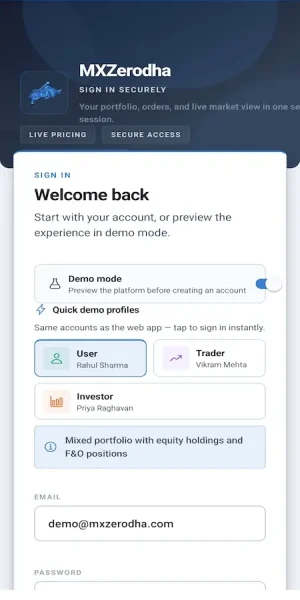
Register & Verify Identity
New users create an account and complete regulatory KYC before any trading permission is granted.
- Email or mobile sign-up with verification token
- TOTP two-factor enrolment via any authenticator app
- PAN, Aadhaar, bank and address verified as separate gates
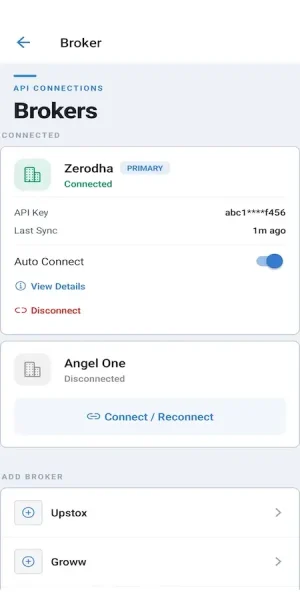
Connect a Broker Account
The trader links any of the eight supported brokers and the platform validates the connection immediately.
- OAuth where the broker supports it, API key where it does not
- Credentials encrypted at rest and never written to logs
- Capability flags record which features that broker allows
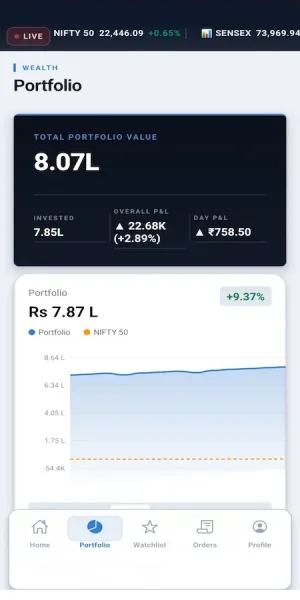
Synchronize the Portfolio
Holdings, positions, margin and fund balances are pulled from every connected broker into one unified model.
- Consolidated holdings and open positions in a single view
- Margin state and available funds aggregated per broker
- Corporate actions applied automatically to delivery holdings
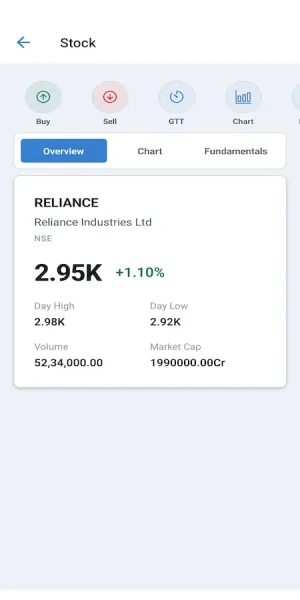
Place an Order
Before anything reaches the exchange, the order passes pre-trade risk and margin validation.
- Market, limit, SL, SL-M plus bracket, cover, AMO and GTT
- Risk limits and available margin checked before submission
- Live status streamed over WebSocket as the order fills
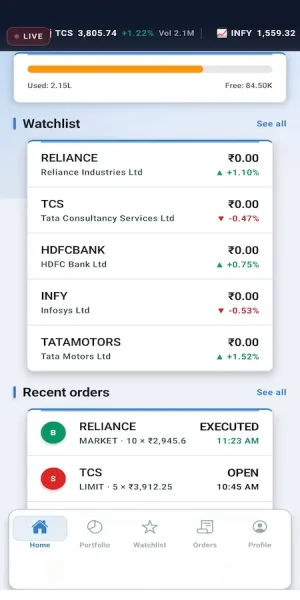
Execution & Position Update
Each fill writes an immutable trade record with the complete charge breakdown.
- Brokerage, STT, transaction charges and GST itemized per trade
- Positions revalue tick by tick through the session
- Partial fills tracked with pending quantity maintained
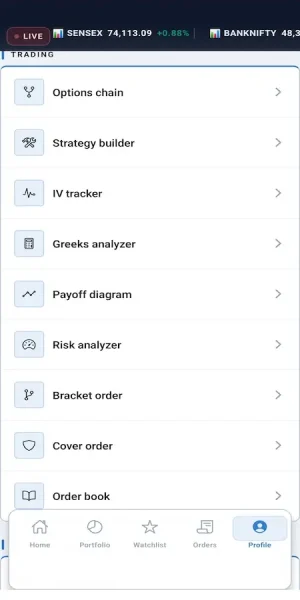
Settle, Report & Reconcile
T+1 settlement flows into holdings and every record becomes export-ready for tax and audit.
- T+1 quantities tracked into demat holdings
- P&L, capital gains and turnover reports on demand
- PDF, Excel and CSV export for filing and reconciliation
Visual Flow Diagram
Trader Login → Broker Setup → Live Market Data → Order Execution → Positions & Holdings → Risk & Ledger → Reports & Analytics
How It's Built
Platform Architecture & Backend Flow
Broker Abstraction Layer
Every broker implements one adapter interface. Orders, trades and positions never change when a broker is added or swapped.
Order Management Pipeline
Validation → risk check → margin verification → broker submission → fill reconciliation, each stage independently observable.
Real-Time Data Fan-Out
Five sources aggregate into Redis, then fan out over Socket.io to subscribed clients with automatic source failover.
Async Job Processing
BullMQ queues separate order execution, market data, notifications, reporting and audit sync by priority.
Dual-Gateway Payments
A unified payment record abstracts Razorpay and Stripe, so the margin engine never depends on a processor.
Immutable Audit Layer
Fund transactions, trade records and audit logs are append-only, giving forensic-grade traceability for regulators.
Performance Targets
Built to Scale - Low-Latency Execution, WebSocket Fan-Out & High Order Volume
Trading platforms are judged in public. When markets gap at the open, or a results announcement drives volume through one scrip, the platform is judged on its worst thirty seconds rather than its average. What follows is designed around exactly that.
Order placement targets under 500ms from click to broker acknowledgement, with API reads below 100ms and writes below 300ms at the 95th percentile. The order path deliberately carries nothing it does not need: market data enrichment, notifications and analytics all run outside it.
WebSocket capacity reaches 10,000 concurrent connections per instance and scales horizontally through the Redis adapter, so several server processes share room state. Clients reconnect on their own with exponential backoff and perform a delta sync on return.
Market data targets under 200ms end to end, from exchange feed to the dashboard in front of the trader. Five sources sit behind a single interface, and a degraded primary fails over to a secondary inside five seconds, because nobody should be trading against a stale price.
API servers and queue workers hold no state, so each scales independently of the other. More order-execution workers run through the session and fewer overnight, while reporting and audit-sync workers run on the opposite rhythm. Capacity follows the market rather than the clock.
Sub-500ms Order Placement
Click to broker acknowledgement stays under 500ms, with API reads below 100ms and writes below 300ms at the 95th percentile.
10,000 Concurrent WebSockets
Per instance, scaled sideways through the Redis adapter, with automatic reconnect and delta sync so a dropped client is never left on a stale price.
Market Data Under 200ms
End to end from exchange feed to dashboard, with failover to a secondary source inside five seconds when the primary degrades.
Stateless Horizontal Scale
API servers and queue workers scale apart: more execution workers through the session, more reporting workers overnight, capacity tracking the market.
Partitioned High-Volume Tables
Orders, trades, OHLCV candles and audit logs are built for time-based partitioning from the start, because retrofitting that onto a live trading database is unpleasant.
99.5% Uptime Target
Graceful degradation when one broker API fails, health and readiness probes for orchestration, and queued retry with backoff instead of dropped orders.
The high-volume tables, orders and trades alongside OHLCV candles and audit logs, are built for time-based partitioning from the outset. One instrument on one-minute candles produces roughly 288 rows a trading day; multiply that across a few thousand instruments and the reasoning becomes obvious quickly.
For founders and technical leads: a single node is a perfectly reasonable starting point, and scaling out later needs no re-architecture. Nothing here assumes a fixed topology, one region or a particular cloud. The same codebase runs on one container or across a fleet.
Built to Be Audited
Security - OWASP-Mapped, VAPT-Ready & SEBI-Aligned
Running a trading platform means holding client funds, KYC documents and order flow. Security is designed in from the data model upward, and documented thoroughly enough to survive enterprise procurement.
SEBI-Aligned Operational Compliance
Payment Security & PCI Scope Reduction
Multi-Layer Rate Limiting & Abuse Prevention
Input Protection & Injection Defence
Data Privacy, Export & Erasure
Broker Credential Vault
OWASP Top 10 (2021) Mapped
Every category, from broken access control through to SSRF, mapped to an implemented control with evidence.
VAPT-Ready Documentation
A full security posture document for buyer due diligence, backed by annual third-party penetration testing.
Encrypted Data & Secure Config
AES-256 at rest, TLS 1.2+ in transit, bcrypt password hashing and no card data stored locally.
Multi-Layer Authentication
Fifteen-minute JWT tokens, refresh rotation, TOTP two-factor, OAuth, progressive lockout and login anomaly detection.
Role-Based Access Control
A four-tier model, USER through BROKER_ADMIN, ADMIN and SUPERADMIN, enforced server-side through named route guards.
Immutable Audit Trail
Append-only logs covering every admin action, KYC transition and broker connection, with retention you configure.
For operators handling real money: client funds, KYC documents, broker credentials and order flow are each encrypted, access-controlled and written to an audit log.
Go Further
Add-Ons - International Markets, Custom Brokers & Advanced Analytics
The platform is complete and launch-ready as it stands. What follows are the modules operators most often add once they understand their market, either to reach a segment the base product does not cover or to pull away from competitors.
Native iOS & Android Apps
Fully native mobile clients built as a separate project alongside the responsive web application included in the base platform.
International Markets & Multi-Currency
Reach beyond INR into US equities and other international segments, with multi-currency positions, settlement and reporting throughout.
Mutual Fund SIP Automation
Mandate setup is in the base product. Full auto-debit execution against a recurring SIP schedule is the add-on that finishes the flow.
IPO Financing & Margin Funding
Leveraged IPO applications and margin funding against existing holdings, with the exposure, limit and repayment logic that lending demands.
Options Greeks Auto-Hedging
Automated delta and gamma hedging against a live options book, extending the Greeks the platform already calculates and surfaces.
Strategy Marketplace
A two-sided market where quantitative traders publish strategies and subscribers deploy them, with revenue share handled on-platform.
Institutional Risk Analytics
Basel-aligned exposure reporting, stress testing and capital-adequacy analytics for deployments serving institutional desks.
Additional Brokers & Languages
Adapters beyond the eight shipped connections, plus interface languages beyond English and Hindi, built to the existing adapter and locale patterns.
Building in the Fintech Space? We Have the Entire Financial Ecosystem Covered.
This is one platform within a broader financial technology suite. If your roadmap runs past trading, these connect naturally.
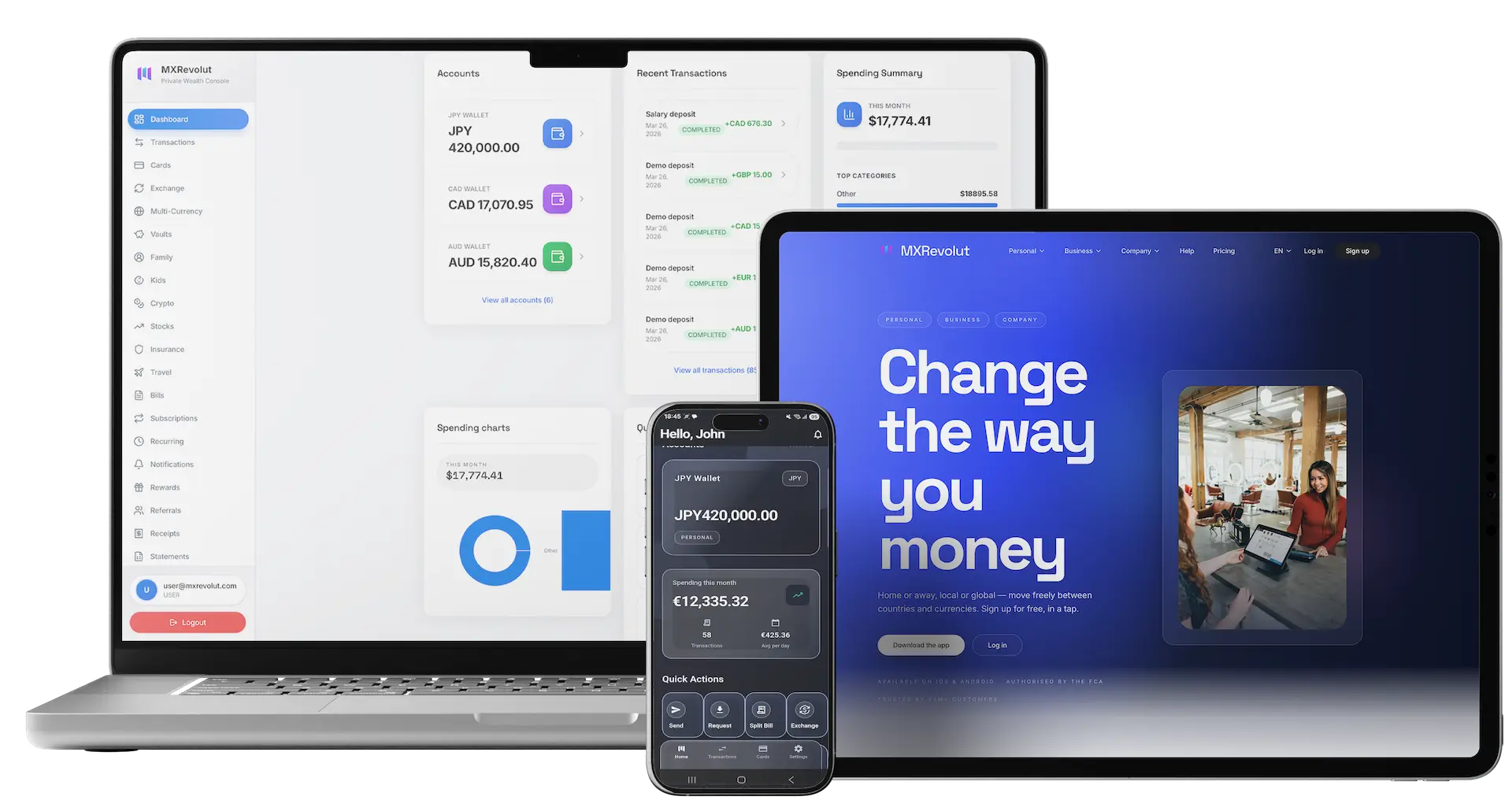
Revolut Clone
Full digital banking and BaaS platform - multi-currency accounts, cards, FX and compliance controls.
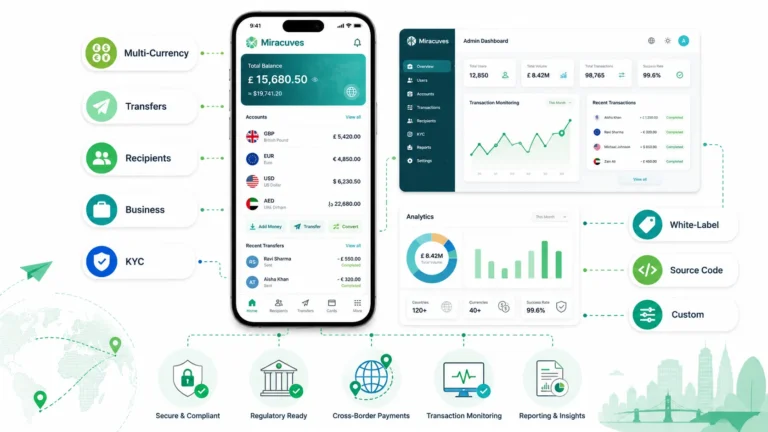
Wise Clone
Cross-border remittance with multi-currency wallets, transparent FX and KYC-ready onboarding.

Neobank Clone
Branded digital-first banking for regional and niche market launches.

Binance Clone
Crypto exchange platform for operators adding digital assets alongside equities.
The Commercial Case
Marketability, Revenue Potential & Business Prospects
A trading platform is a recurring-revenue business with unusually high switching costs rather than simply a technology product. Once someone has connected brokers, built watchlists, set alerts and deployed strategies, leaving means rebuilding all of it. Retention compounds in a way it does not for most consumer software.
High Switching Cost
Connected brokers, established watchlists and running strategies make leaving genuinely painful. Retention compounds.
Multiple Revenue Lines
Brokerage, subscriptions, API tiers, referral income and payment margin, diversified from the first day.
Structural Market Tailwind
Retail participation and algo share are both climbing in Indian markets, widening the addressable base.
Enterprise Upsell Path
Launch retail first, then licence the platform onward to partner brokers at materially higher contract values.
Brokerage per trade, set by segment. Subscription tiers gating broker count and algo access. API plans priced by rate limit. A share of broker referrals. Margin on deposit and withdrawal transactions.
Each connected broker deepens the lock-in. Each deployed strategy raises the cost of leaving. Each white-label partner turns the platform into infrastructure somebody else builds on.
The web platform, the Android build, the operator console and every transactional email and statement a trader sees. The app ships to the store under your own developer account. Broker connections and gateway credentials stay in your name throughout, because those agreements are between you and them.
Example Revenue Scenarios
These are patterns rather than promises. What any operator reaches depends on active-trader base, pricing, broker partnerships, API adoption and execution in their market.
Tier One: Focused Broking Product
Subscriptions alongside brokerage
At this stage revenue arrives through monthly subscription tiers, per-trade brokerage, premium analytics, and paid alert packs.
Best suited for niche broking startups, regional trading platforms, advisory-led communities, trading educators, and early-stage operators validating demand before scaling acquisition.
Tier Two: Multi-Broker Aggregator
Subscriptions, API access and referrals
Revenue here spreads across tiered subscriptions, API access plans, broker referral share, premium data packs, and copy-trading fees.
Best suited for funded fintech startups, multi-broker aggregators, algo communities, wealth platforms, and operators scaling beyond an initial trader base.
Tier Three: Enterprise & White-Label
The full revenue engine in play
Revenue draws on a fuller mix of subscriptions, brokerage, API tiers, white-label licensing, enterprise deployments, and partner revenue sharing.
Best suited for established brokerages, financial institutions, large fintech brands, prop desks, and SaaS operators licensing the platform onward to their own clients.
Why Miracuves
Miracuves vs Other Trading Platform Providers
There are many ways to build a trading platform: generic scripts, freelancers, agencies, or white-label infrastructure.
Why Founders Choose Miracuves
Launch in Weeks, Not Months
Six days to deployment against 12-18 months for an internal build of equivalent scope.
Real Multi-Broker Architecture
Eight integrations already absorbed - the part teams consistently underestimate and most scripts skip entirely.
Full Source Code Ownership
The complete monorepo is yours to modify, extend and deploy. No vendor lock-in, no roadmap dependency.
Documented to Enterprise Standard
ERD, schema, API collection, developer handbook and VAPT posture - enough to pass procurement review.
Security Designed In
OWASP-mapped controls, encrypted broker credentials and immutable audit trails, not bolted on afterwards.
Deployment Flexibility
Cloud, on-premise or hybrid - including Indian data residency for operators with regulatory constraints.
Compare & Discover Why Clients Choose Us as
#1 Ready-Made Clone Solution Partner
| Criteria | Miracuves Zerodha Clone | Generic Clone Script | Custom Dev Agency |
|---|---|---|---|
| Time to Launch | 6 days (Production) | Unknown / DIY | 6-9+ months |
| Source-Code Ownership | ✔ Full | Often limited / encrypted | Usually yes |
| Feature Depth (Zerodha-like) | High (multi-broker, algo, real-time data) | Basic (basic order & feed only) | Depends on budget |
| Security & Compliance | Strong (ISO mindset, GDPR-ready) | Minimal | Varies widely |
| Scalability & Performance | Cloud & CDN-optimized | Rarely considered | Depends on architecture |
| Monetization Options | Multiple (ads, gifts, subs) | Limited / needs custom work | Custom (more time & cost) |
| Admin & Analytics | Full-fledged dashboard | Very basic or missing | Custom build (extra cost) |
| Cost vs Speed vs Quality | Balanced | Cheap but risky | High cost, slow |
| Ongoing Support & Updates | Available with clear plans | Usually none | Depends on contract |
Not every route to a trading platform ends in a product you can actually operate. Here is where we differ.
Industries
Industries We Serve
The platform suits any operator entering or expanding within trading, investment and financial technology. Stock trading startups launch branded products for retail participants. Fintech companies add a trading surface to something they already run. Advisory firms and prop desks bring execution in-house rather than renting it.
- 📈 Discount Broking
- 🏦 Full-Service Brokerages
- 💼 Wealth Management
- 🧮 Proprietary Trading Desks
- 👨👩👧 Family Offices
- 🤖 Algo & Quant Funds
- 🚀 Fintech Startups
- 📊 Investment Advisory (RIA)
- 🌍 Cross-Border Brokerage
- 🪙 Multi-Asset Platforms
- 🎓 Trading Education
- 🏢 Enterprise White-Label
Miracuves builds this as a high-performance, broker-agnostic trading platform that adapts to whichever market you actually operate in: Indian capital markets by default, with international exchange integrations available as a scoped extension.
Changelog
Release Log - Version History & Updates
| Version | Date | <span style="color: rgb(6, 6, 8); font-family: Montserrat, sans-serif; font-size: 13px; font-style: normal; font-variant-ligatures: normal; font-variant-caps: normal; font-weight: 700; text-align: left; white-space-collapse: collapse; background-color: rgb(255, 255, 255);">What's New</span> |
|---|---|---|
| v2026.3 | May 2026 | Stability release - bug fixes across order management, WebSocket reconnection and portfolio sync reconciliation. |
| v2026.2 | Mar 2026 | Added three broker integrations - Alice Blue, Groww and Demo broker - bringing total supported brokers to eight. |
| v2026.1 | Feb 2026 | Initial release - multi-broker trading platform with five broker integrations, algo engine, real-time market data and full admin console. |
Blog & Resources
Trading Platform - Latest Insights & Guides
Stay updated with the latest trends, guides and case studies on trading platform development and multi-broker infrastructure.
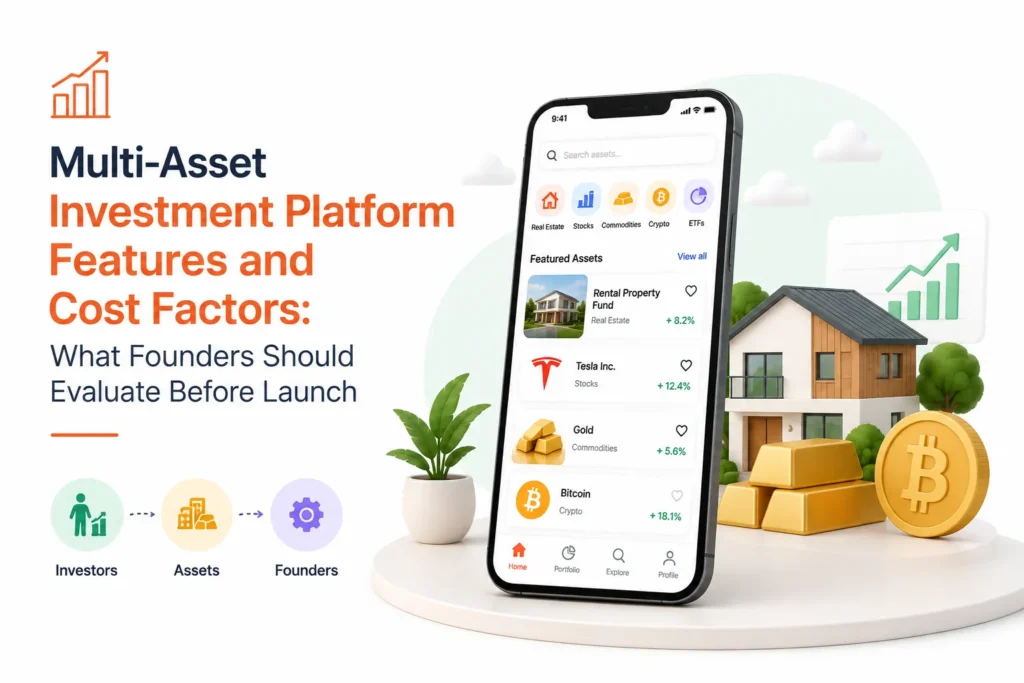
Last Updated on September 7, 2026 by Yash Narayan Key Takeaways A multi-asset investment platform…
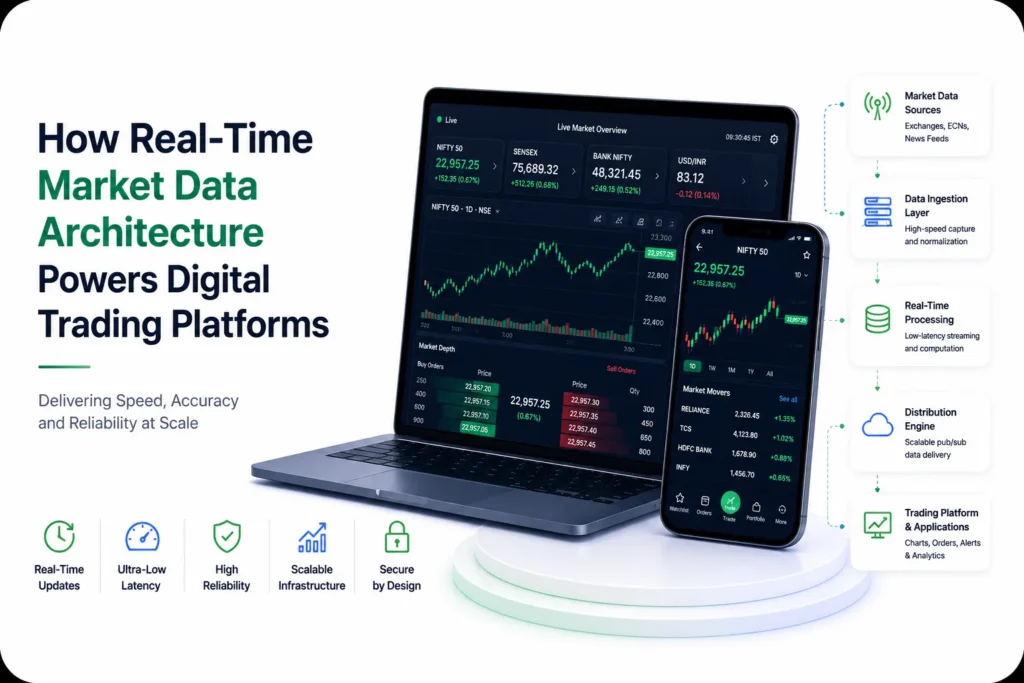
How Real-Time Market Data Architecture Powers Digital Trading Platforms
Last Updated on August 26, 2026 by Yash Narayan Key Takeaways Real-time market data architecture…
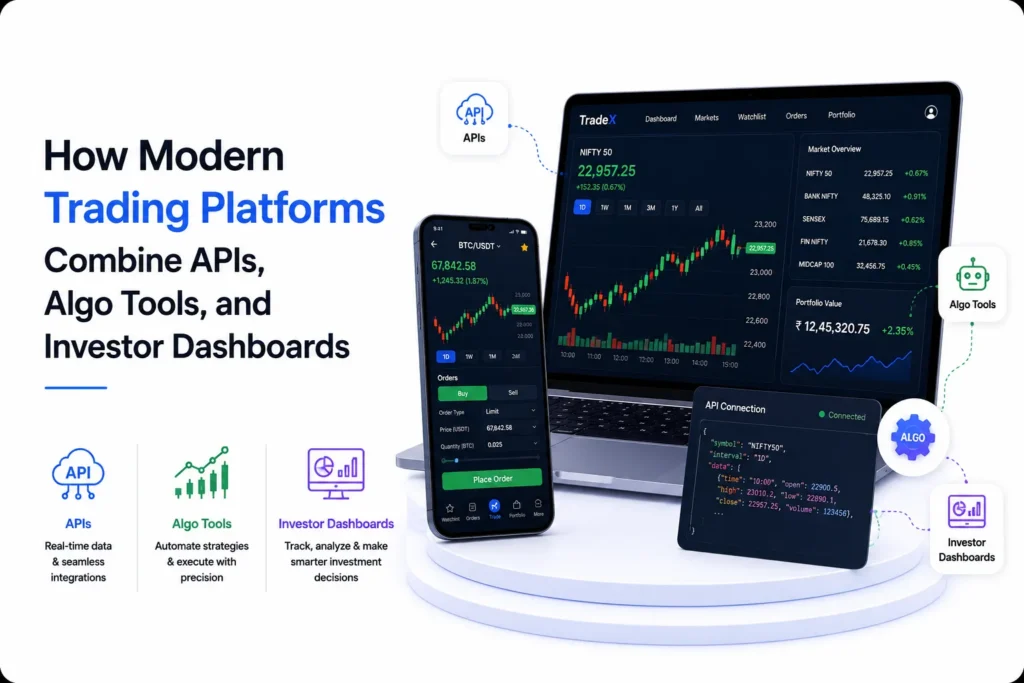
How Modern Trading Platforms Combine APIs, Algo Tools, and Investor Dashboards
Last Updated on August 20, 2026 by Yash Narayan Key Takeaways Modern trading platforms combine…
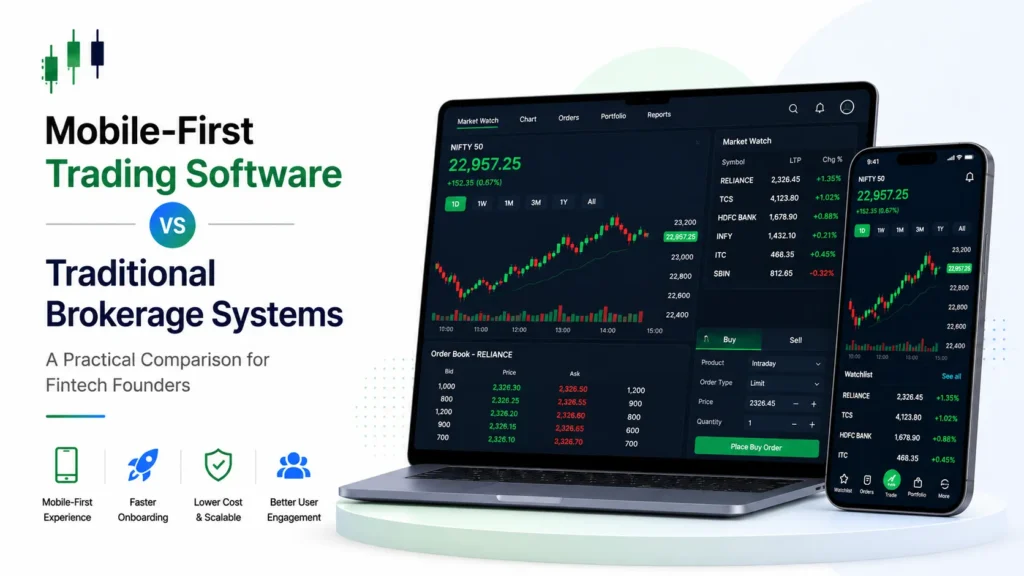
Key Takeaways Mobile-first trading software is designed around digital onboarding, real-time market access, app-based order…
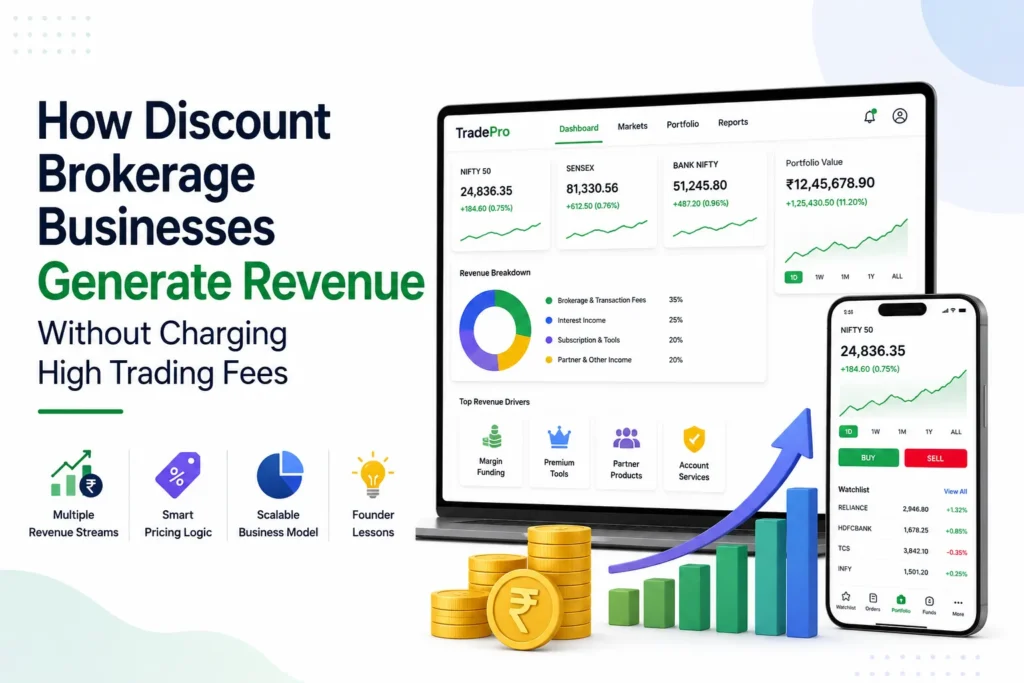
How Discount Brokerage Businesses Generate Revenue Without Charging High Trading Fees
Last Updated on August 20, 2026 by Yash Narayan Key Takeaways Discount brokerage platforms can…
FAQ
FAQ - Pricing, Brokers, Compliance & Deployment
Everything you need to know about the Miracuves trading platform.
A ready-made trading platform you launch under your own name, carrying order management, live market data, portfolio tracking and algorithmic execution – connected to eight Indian brokers through one unified layer.
Yes. The platform runs under your own branding and assets, connects to brokers through their official public APIs, and you comply with whichever SEBI requirements apply to your operating model.
The platform starts from $15,999 for a launch-ready white-label deployment. Building equivalent capability internally typically runs into crores over 12-18 months.
Six working days on our side, covering rebranding and deployment to your server. What sits outside that is anything on your side – brand assets, hosting access and broker API credentials – and, for a regulated deployment, your own SEBI registration and compliance sign-off, which run on their own timeline.
Zerodha, Upstox, 5 Paisa, Alice Blue, Angel One, ICICI Direct, Groww, and a Demo broker for testing and onboarding.
Yes. Every broker sits behind one adapter interface. Adding another means writing that adapter and nothing else; order, trade and position logic stay untouched.
Indian markets are supported out of the box. International integrations – Dow Jones, NASDAQ, NYSE and others – are available as a customization.
Yes. The complete monorepo transfers to you: Next.js frontend, NestJS backend, Prisma schema, shared packages and all seven SDKs, owned outright.
It ships with OWASP Top 10 mapping, a VAPT posture document, AES-256 encryption, TOTP two-factor, role-based access control and immutable audit logs, all documented for procurement review.
Brokerage per trade, subscription tiers, API access plans, broker referral revenue and payment margin – all configurable from the admin console.
Yes. Cloud, on-premise and hybrid deployments are all supported, including Indian data residency for operators with regulatory requirements.
Deployment assistance, technical documentation, and post-launch support. Extended support and dedicated VAPT are available as add-ons.
Let's turn your idea into
a live platform.
Get a free consultation, a clear timeline, and honest answers. We'd rather earn your trust than rush a sale.
Miracuves is an independent software development company. We are not affiliated with, connected to, sponsored by, or endorsed by Zerodha, Blueberry Markets, or any other broker or trading service.
“White label trading platform” describes a category of product, not any one company. Brand names appear elsewhere on this site only to describe the kind of platform being built and the terms buyers search for.
The entire design and codebase is built by our own team. The product contains no code, design, graphics, or content originating from any third-party broker website or application.
All third-party names and marks are the property of their respective owners, referenced here solely to describe the category of software offered.